CVC (oder Church Village Collective in vollem Wortlaut) stammt aus einem verschlafenen Dorf 10 Meilen nördlich von Cardiff, das auf einem Hügel in den walisischen Tälern liegt. CVC besteht aus Sänger Francesco Orsi, Bassist Ben Thorne, Schlagzeuger Tom Fry, Keyboarder Daniel `Nanial' Jones und den singenden Gitarristen David Bassey und Elliott Bradfield. Es ist erwähnenswert, dass die beiden Letztgenannten, obwohl sie sich nie begegnet sind, mit der walisischen Ikone Dame Shirley Bassey und James Dean Bradfield (Manic Street Preachers) verwandt sind. Vielleicht liegt es an den Genen, wenn Bassey sagt: "I don't think I'd be able to not do this, I don't actively choose to, I'm just drawn to it". Ihre üppigen dreistimmigen Harmonien spiegeln die Musik wider, mit der sie aufgewachsen sind - die Bausteine des zeitgenössischen Pop: die Beatles, Neil Young und die Beach Boys - reiche, melodische und unverfälschte Musik, die in der Rockgeschichte verwurzelt ist. Get Real, das 11-Track-Debütalbum von CVC, bringt einen Hauch von Laurel Canyon in die Täler. In vier sonnenverwöhnten Wochen (als die Zeit abgelaufen war, mischte Ross Orton (Arctic Monkeys) das fertige Produkt) haben sie es in Bradfields Wohnzimmer aufgenommen!
Cerca:daniel david
Yellow Vinyl
CVC (oder Church Village Collective in vollem Wortlaut) stammt aus einem verschlafenen Dorf 10 Meilen nördlich von Cardiff, das auf einem Hügel in den walisischen Tälern liegt. CVC besteht aus Sänger Francesco Orsi, Bassist Ben Thorne, Schlagzeuger Tom Fry, Keyboarder Daniel `Nanial' Jones und den singenden Gitarristen David Bassey und Elliott Bradfield. Es ist erwähnenswert, dass die beiden Letztgenannten, obwohl sie sich nie begegnet sind, mit der walisischen Ikone Dame Shirley Bassey und James Dean Bradfield (Manic Street Preachers) verwandt sind. Vielleicht liegt es an den Genen, wenn Bassey sagt: "I don't think I'd be able to not do this, I don't actively choose to, I'm just drawn to it". Ihre üppigen dreistimmigen Harmonien spiegeln die Musik wider, mit der sie aufgewachsen sind - die Bausteine des zeitgenössischen Pop: die Beatles, Neil Young und die Beach Boys - reiche, melodische und unverfälschte Musik, die in der Rockgeschichte verwurzelt ist. Get Real, das 11-Track-Debütalbum von CVC, bringt einen Hauch von Laurel Canyon in die Täler. In vier sonnenverwöhnten Wochen (als die Zeit abgelaufen war, mischte Ross Orton (Arctic Monkeys) das fertige Produkt) haben sie es in Bradfields Wohnzimmer aufgenommen!
CVC (or Church Village Collective in full) hail from a sleepy village 10 miles north of Cardiff, nestling atop a hill in the Welsh valleys.
CVC is comprised of singer Francesco Orsi, bassist Ben Thorne, drummer Tom Fry, keyboardist Daniel ‘Naniel’ Jones and singing guitarists David Bassey and Elliott Bradfield. (It’s worth noting that the latter two, despite never having met them, are related to Welsh royalty Dame Shirley Bassey and Manic Street Preachers’ James Dean Bradfield.)
Maybe owing to genetics, Bassey states “I don’t think I’d be able to not do this, I don’t actively choose to, I’m just drawn to it.”
Their lush three-part harmonies echo the music they grew up on - contemporary pop’s building blocks: the Beatles, Neil Young and the Beach Boys - rich, melodic and pristine music that’s steeped in rock’s history.
‘Get Real’, CVC’s 11-track debut album, brings a touch of Laurel Canyon to the valleys. Made over four sun-baked weeks (once their time was up, Ross Orton Arctic Monkeys mixed the finished product), they kept it local by recording it in Bradfields’ living room.
- 1: Jean-Jacques Perrey - E.v.a
- 1: 2 Janko Nilovic - Drug Song
- 1: 3 Vladimir Cosma - Exkalibur (O.s.t. "Sam Et Sally")
- 1: 4 Michel Magne & David Gilmour - I Must Tell You Why (O.s
- 1: 5 Syntaxe - L'anthropofemme (Chanson)
- 1: 6 Philippe Sarde - L'appartement (O.s.t. "Deux Hommes Dan
- 1: 7 Paul Martin & Jean-Pierre Castaldi - Le Troublant Témoi
- 1: 8 Bernard Lloret - Digen
- 1: 9 Jacques Arconte - Movie Town
- 1: 0 Cliff Cardwin - Work City
- 1: Janko Nilovic - Soul Impressions
- 1: 2 Jean-Claude Pierric - Move Man
- 2: 1 Edition Spéciale - Monsieur Business
- 2: Jean-Claude Petit - Skyway
- 2: 3 Christian Chevalier - Tecumseh
- 2: 4 Francis Lai - Somewhere In The Night (O.s.t. "Madly")
- 2: 5 Eden Rose - Reinyet Number
- 2: 6 Karl-Heinz Schäfer - Kidnapping (O.s.t. "Les Gants Blan
- 2: 7 Bruno Leys - Dans La Galaxie
- 2: 8 Francis Lai - Young Freedom
- 2: 9 Daniel Janin & Jean Luc Ferré - Dig Yourself Up
- 2: 10 Le Patchwork - Patchwork
- 2: 11 Roger Renaud - Turn Me On
Rare Groove Collection Explore the fusion of world music with soul, funk and disco through the Rare Groove Collection. With this new volume, discover unique groove tracks straight from Jamaica! Fully remastered original versions French RARE GROOVE This "French Rare Groove" volume offers us a oneâÇ`way ticket to France from the late 60"s to the early 80"s. From confidential releases to forgotten movie soundtracks, discover the grooviest tracks from the french scene. Have a good trip!
Die neue Ausgabe der Bootleg Series von Bob Dylan, "Fragments - Time Out Of Mind Sessions (1996-1997): The Bootleg Series Vol. 17" erscheint als 5 CDs umfassendes Deluxe Boxset sowie als Standard-Version auf 2 CDs oder 4 LPs. Sie enthält in der Standardversion das Album "Time Out Of Mind" in einem 2022er Remix sowie zwölf ausgewählten Outtakes und Alternativversionen. Volume 17 der gefeierten Dylan-Reihe wirft 25 Jahre nach seiner Erstveröffentlichung einen neuen Blick auf das Meisterwerk "Time Out Of Mind" und zeichnet dessen Entstehung nach. Angefangen bei den bislang unveröffentlichten Song-Fassungen aus den 1996er Teatro-Sessions mit Dylan (Gesang, Gitarre, Piano), Daniel Lanois (Gitarre, Orgel), Tony Garnier (Bass) und Tony Mangurian (Schlagzeug, Percussion) bis hin zu (ebenfalls unveröffentlichten) Live-Mitschnitten aus den Jahren 1998-2001. Anfang 1996 begann Dylan, der seit der 1990er LP Under The Red Sky kein Album mit Eigenkompositionen veröffentlicht hatte, mit der Arbeit an neuen Songs. Von August bis Oktober ging er mit Daniel Lanois, der sein 1989er Album Oh Mercyproduziert hatte, ins Teatro Studio in Oxnard/CA, um dort Demos für eine mögliche neue LP aufzunehmen. Als die Songs im Januar des Folgejahres Form angenommen hatten, zog man ins Criteria Studio in Miami/FL um. Die Studiobesetzung wurde aufgestockt, und so fand sich in Florida ein illustrer Mix aus Session-Musikern und Mitgliedern von Dylans Tourband ein: Bucky Baxter (Akustikgitarre, Pedal Steel), Duke Robillard (E-Gitarre/Gibson L-5), Robert Britt (Martin Akustikgitarre, Fender Stratocaster), Cindy Cashdollar (Slide Gitarre), Tony Garnier (Bass, Kontrabass), Augie Meyers (Vox Orgel, Hammond B3, Akkordeon), Jim Dickinson (Keyboards, Wurlitzer E-Piano, Pumporgel) sowie die Schlagzeuger Jim Keltner, Brian Blade und David Kemper. Das Album "Time Out Of Mind", der schließlich aus diesen Sessions entstand, avancierte zu einem Dylan-Klassiker. Songs wie "Love Sick", "Can't Wait" oder "Not Dark Yet" wurden zu Lieblingsstücken der Fans. Mit "Make You Feel My Love" gelang Dylan sogar das Kunststück, dem Great American Songbook einen neuen zeitgenössischen Standard hinzuzufügen. Zahllose Künstler, darunter Billy Joel, Neil Diamond oder Adele, haben diesen Song gecovert. Bei den Grammy Awards 1998 gewann "Time Out Of Mind" in den Kategorien 'Album of the Year' und 'Best Contemporary Folk Album'.
Black Vinyl[24,79 €]
Blue Curacao Vinyl[24,33 €]
Black Vinyl[23,95 €]
Red Vinyl[23,95 €]
Pumpkin Orange Vinyl[26,85 €]
After 45 years, the most acclaimed, revered horror franchise in film history reaches its epic, terrifying conclusion as Laurie Strode faces off for the last time against the embodiment of evil, Michael Myers, in a final confrontation unlike any captured on-screen before, one where only one of them will survive.
When the franchise relaunched in 2018, Halloweenshattered box office records, becoming the franchise’s highest-grossing chapter and set a new record for the biggest opening weekend for a horror film starring a woman. In 2021, Halloween Killsearned the biggest opening weekend for any horror film in the pandemic era and simultaneously set a new record for a non-live event premiere streaming on Peacock.
As Halloween Endsmarks the last chapter of the David Gordon Green trilogy, so it ushers the essential return of original director and composer John Carpenter to score the iconically hair-raising soundtrack alongside Cody Carpenter and Daniel Davies. Together they once again bring the celebrated music score to the horror movie series, one of the most distinctive aspects of the franchise to date
Similarly to the last two soundtracks, Halloween Endswas recorded in its entirety at John Carpenter’s home studio and Daniel’s studio. “The three of us compose,perform, and record all the music, and everything is mixed by Daniel together with John Spiker” says John Carpenter.
The unmistakable mix of software synths, vintage analogue equipment, and live instrumentation is utilized once again to provide the signature sound of Halloween. However, rumors have it that Halloween Ends is going to be somewhat different from the previous two films in the trilogy. With that comes an expanded soundtrack, one that matches the tone of a tangible rise in stakes and conveys the climatic feel of the film. The soundtrack of the third installment broadens old themes whilst creating new ones
Black Vinyl[24,79 €]
Blue Curacao Vinyl[24,33 €]
Black Vinyl[23,95 €]
Red Vinyl[23,95 €]
Black Vinyl[26,85 €]
After 45 years, the most acclaimed, revered horror franchise in film history reaches its epic, terrifying conclusion as Laurie Strode faces off for the last time against the embodiment of evil, Michael Myers, in a final confrontation unlike any captured on-screen before, one where only one of them will survive.
When the franchise relaunched in 2018, Halloweenshattered box office records, becoming the franchise’s highest-grossing chapter and set a new record for the biggest opening weekend for a horror film starring a woman. In 2021, Halloween Killsearned the biggest opening weekend for any horror film in the pandemic era and simultaneously set a new record for a non-live event premiere streaming on Peacock.
As Halloween Endsmarks the last chapter of the David Gordon Green trilogy, so it ushers the essential return of original director and composer John Carpenter to score the iconically hair-raising soundtrack alongside Cody Carpenter and Daniel Davies. Together they once again bring the celebrated music score to the horror movie series, one of the most distinctive aspects of the franchise to date
Similarly to the last two soundtracks, Halloween Endswas recorded in its entirety at John Carpenter’s home studio and Daniel’s studio. “The three of us compose,perform, and record all the music, and everything is mixed by Daniel together with John Spiker” says John Carpenter.
The unmistakable mix of software synths, vintage analogue equipment, and live instrumentation is utilized once again to provide the signature sound of Halloween. However, rumors have it that Halloween Ends is going to be somewhat different from the previous two films in the trilogy. With that comes an expanded soundtrack, one that matches the tone of a tangible rise in stakes and conveys the climatic feel of the film. The soundtrack of the third installment broadens old themes whilst creating new ones
PUMPKIN ORANGE VINYL
Fan favorite dark dance outfit Boy Harsher have contributed a sumptuously eerie track for the David Gordon Green directed finale to the iconic Halloween franchise. Sacred Bones and Nude Club (Boy Harsher's imprint) are joining forces and releasing a proper 12" maxi single containing four versions of the track "Burn it Down," to be released in tandem with the original score provided by John Carpenter, Cody Carpenter, and Daniel Davies. Boy Harsher said of the experience: "During an extremely brief period of rest between tours, we got this call from the music supervisor of Halloween. The director, David Gordon Green, had listened to our music and wanted to use something for the final installment in the trilogy - Halloween Ends. We flew to New York the next day to meet the team and discuss the possibilities. It was totally surreal. Obviously we're huge fans of Carpenter and the franchise is a fav, but to work with Gordon Green was also so special, his early films (George Washington, Undertow, Snow Angels) were heavy influences on our work. The real kicker is that Halloween Ends was shot in Savannah, GA - the birthplace of Boy Harsher and where we met. Unbelievable. It all felt too synchronous, and we knew we had to make something work although we were about to leave for a multi-month tour that week. We flew home to Massachusetts, dug through old demos, and found "Burn It Down". In the end it was the perfect energy for the bittersweet love affair between Allyson and Corey, so during a couple days off - we cleaned it up and made it come alive."
- 1: Where Is Jeremy?
- 2: Halloween Ends (Main Title)
- 3: Laurie's Theme Ends
- 4: The Cave
- 5: Cool Kid
- 6: Drags To The Cave
- 7: Evil Eyes
- 8: Transformation
- 9: Because Of You
- 10: Requiem For Jeremy
- 11: Kill The Cop
- 12: Corey And Michael
- 13: Corey's Requiem
- 14: The Junk Yard
- 15: Where Are You?
- 16: Bye Bye Corey
- 17: The Fight
- 18: Before Her Eyes
- 19: The Procession
- 20: Cherry Blossoms
- 21: Halloween Ends
BLUE MOON PHASE VINYL
After 45 years, the most acclaimed, revered horror franchise in film history reaches its epic, terrifying conclusion as Laurie Strode faces off for the last time against the embodiment of evil, Michael Myers, in a final confrontation unlike any captured on-screen before, one where only one of them will survive. As Halloween Ends marks the last chapter of the David Gordon Green trilogy, so it ushers the essential return of original director and composer John Carpenter to score the iconically hair-raising soundtrack alongside Cody Carpenter and Daniel Davies. Recorded in its entirety at Carpenter's home studio and Davies' studio, the unmistakable mix of software synths, vintage analogue equipment, and live instrumentation once again provides the signature sound of Halloween, one of the most distinctive aspects of the movie franchise to date. The soundtrack was tracked scene by scene but the album itself plays like a standalone piece of music. The general atmosphere is one of dread yet the record includes some groove laden moments reminiscent of Escape From New York or some of Carpenter's other more dance-able scores. Exquisite and delicate ambient pieces weave their way between some of the score's more arresting moments and yet maintain a subtle pop sensibility. The overall achievement showcases three master musicians, one of whom invented the entire horror-synth genre, crafting an evocative, playful and deeply listenable score that honors a legacy and expands on the decades of work that have been leading to this triumphant climax. Halloween Ends is the soundtrack of the final battle against evil. Watch your back this Halloween, Michael may be near you.
- 1: Where Is Jeremy?
- 2: Halloween Ends (Main Title)
- 3: Laurie's Theme Ends
- 4: The Cave
- 5: Cool Kid
- 6: Drags To The Cave
- 7: Evil Eyes
- 8: Transformation
- 9: Because Of You
- 10: Requiem For Jeremy
- 11: Kill The Cop
- 12: Corey And Michael
- 13: Corey's Requiem
- 14: The Junk Yard
- 15: Where Are You?
- 16: Bye Bye Corey
- 17: The Fight
- 18: Before Her Eyes
- 19: The Procession
- 20: Cherry Blossoms
- 21: Halloween Ends
After 45 years, the most acclaimed, revered horror franchise in film history reaches its epic, terrifying conclusion as Laurie Strode faces off for the last time against the embodiment of evil, Michael Myers, in a final confrontation unlike any captured on-screen before, one where only one of them will survive. As Halloween Ends marks the last chapter of the David Gordon Green trilogy, so it ushers the essential return of original director and composer John Carpenter to score the iconically hair-raising soundtrack alongside Cody Carpenter and Daniel Davies. Recorded in its entirety at Carpenter's home studio and Davies' studio, the unmistakable mix of software synths, vintage analogue equipment, and live instrumentation once again provides the signature sound of Halloween, one of the most distinctive aspects of the movie franchise to date. The soundtrack was tracked scene by scene but the album itself plays like a standalone piece of music. The general atmosphere is one of dread yet the record includes some groove laden moments reminiscent of Escape From New York or some of Carpenter's other more dance-able scores. Exquisite and delicate ambient pieces weave their way between some of the score's more arresting moments and yet maintain a subtle pop sensibility. The overall achievement showcases three master musicians, one of whom invented the entire horror-synth genre, crafting an evocative, playful and deeply listenable score that honors a legacy and expands on the decades of work that have been leading to this triumphant climax. Halloween Ends is the soundtrack of the final battle against evil. Watch your back this Halloween, Michael may be near you.
- 1: Where Is Jeremy?
- 2: Halloween Ends (Main Title)
- 3: Laurie's Theme Ends
- 4: The Cave
- 5: Cool Kid
- 6: Drags To The Cave
- 7: Evil Eyes
- 8: Transformation
- 9: Because Of You
- 10: Requiem For Jeremy
- 11: Kill The Cop
- 12: Corey And Michael
- 13: Corey's Requiem
- 14: The Junk Yard
- 15: Where Are You?
- 16: Bye Bye Corey
- 17: The Fight
- 18: Before Her Eyes
- 19: The Procession
- 20: Cherry Blossoms
- 21: Halloween Ends
Orange Vinyl
After 45 years, the most acclaimed, revered horror franchise in film history reaches its epic, terrifying conclusion as Laurie Strode faces off for the last time against the embodiment of evil, Michael Myers, in a final confrontation unlike any captured on-screen before, one where only one of them will survive. As Halloween Ends marks the last chapter of the David Gordon Green trilogy, so it ushers the essential return of original director and composer John Carpenter to score the iconically hair-raising soundtrack alongside Cody Carpenter and Daniel Davies. Recorded in its entirety at Carpenter's home studio and Davies' studio, the unmistakable mix of software synths, vintage analogue equipment, and live instrumentation once again provides the signature sound of Halloween, one of the most distinctive aspects of the movie franchise to date. The soundtrack was tracked scene by scene but the album itself plays like a standalone piece of music. The general atmosphere is one of dread yet the record includes some groove laden moments reminiscent of Escape From New York or some of Carpenter's other more dance-able scores. Exquisite and delicate ambient pieces weave their way between some of the score's more arresting moments and yet maintain a subtle pop sensibility. The overall achievement showcases three master musicians, one of whom invented the entire horror-synth genre, crafting an evocative, playful and deeply listenable score that honors a legacy and expands on the decades of work that have been leading to this triumphant climax. Halloween Ends is the soundtrack of the final battle against evil. Watch your back this Halloween, Michael may be near you.
Love And Rockets are the seminal groundbreaking trio of
Daniel Ash (vocals and guitar), David J (vocals and bass)
and Kevin Haskins (drums). They formed in 1985 after the
first split of their band, Bauhaus. Love and Rockets
provided a clean slate and an opportunity to plumb the
depths of imagination and influences.
The band’s 1985 debut album, ‘Seventh Dream of
Teenage Heaven’, was an unashamedly psychedelic
adventure, far removed from the dark, angular
soundscapes of Bauhaus. Yet they had to fight hard to
avoid being branded ‘goth’, citing Syd Barrett, Marc Bolan
and the later period Beatles as primary influences. This is
a single black LP with a gatefold sleeve.
Love And Rockets are the seminal groundbreaking trio of
Daniel Ash (vocals and guitar), David J (vocals and bass)
and Kevin Haskins (drums). They formed in 1985 after the
first split of their band, Bauhaus. Love and Rockets
provided a clean slate and an opportunity to plumb the
depths of imagination and influences.
‘Express’ is a unique, mystical and transcendental
travelogue of sorts. The original press release for the
album said that “the balance of light and dark, positive and
negative, yin and yang, is a recurring theme.” In 2020,
NPR, referring to the album, stated that their “psychedelic
train ride laid the foundation for alt-rock.” This is a single
black LP with a standard sleeve
A deranged cacophony straight out of London, England. On their debut, self-titled release, VIOLIN blend elements of Swedish masters TOTALITÄR and HEADCLEANERS with the muscle and swagger of Boston 82 and the panicked power of NYHC in the mid 80s. The end result is a Mind numbingly fast and concise pure hardcore punk that is all together contemporary, edging in at times on the learned idiocy of Toronto’s S.H.I.T. VIOLIN is the brainchild of Lindsay Corstorphine (SAUNA YOUTH, MONOTONY, PRIMITIVE PARTS etc) who has written, mixed and recorded everything on this stellar release, with the exception of the drums, here carried out by the inimitable Jonah Falco of FUCKED UP fame. Pinning Falco’s drumming to Corstorphine's vision has nailed a sound which is at once huge and perfectly audible, whilst remaining brutal and ugly in tone. There are moments of genuine innovation on display as is evident on the track ‘Empty Mind’ which begins with discordant noise, before building from a mid-paced swing into frantic lunacy, and then introducing a harrowing and unexpected synthesiser. The stark black and white artwork, carried out by Daniel David Freeman, provides a perfectly abstract and menacing back drop to this slab of primitive hardcore.
Limited Edition Double LP Box Set with 108 page Hardcover Libretto Book and CD (500 copies).
Alphabet of Wrongdoing was set in motion a few years ago when Daniela was invited by Toronto songwriter Jennifer Castle to sing “‘a couple of acapella prayers to clear the space” ahead of her LA show. It was the first time Daniela had sung Jewish ceremonial prayers outside of a ritual context. Audience members were enthralled and stayed for hours after the show to ask questions about what they had heard and experienced. The title of the project comes from the prayer Ashamnu, or Alphabet of Wrongdoing. In a ritual context, a congregation would stand and recite, in alphabetical order, beating their chests with each admittance, all of the ways they may have missed the mark in the past year. This communal act of forgiveness is a form of spiritual accounting. “This music is for challenging junctures,” says Daniela, “when we have more questions than answers. I consult tradition when I am at such an impasse; It provides an antidote to the constant content update or disappointment of the news cycle. To make an album of reimagined Jewish liturgy is my way of saying we can re-work, but we cannot obliterate; matter just does not behave that way. We know what we have destroyed, but we don’t yet know what we will create. This is me hitting pause before we re-build -- consulting tradition, listening to my tradition, in case it carries any hints.” The accompanying video was directed and filmed by Johnny Spence and features dancers Erin Poole and Devon Snell. The video depicts two figures dressed in warm pinks and reds traverse a stark, barren snowscape. They are followed and encircled by iridescent color trails that appear at times to be celebratory shadows, at times prayer shawls, at times pestering consciences. A dual Canadian-American citizen, Daniela Gesundheit is a vocalist, composer, and cantor. As a member of Snowblink, Daniela writes non-denominational devotional pop music. She is also a member of the band Hydra, a collaboration between Feist and LaForce. She was a featured vocalist alongside Brian Eno on Owen Pallet’s In Conflict and on astronaut Chris Hadfield’s Songs From a Tin Can- the first record ever to be recorded in space. She sings traditional Jewish liturgy for Shir Libeynu, the first queer-inclusive synagogue in Toronto and officiates lifecycle rituals throughout the US and Canada.
Track list: 1. Thirteen Qualities - Adonai Adonai 2. Our Father Our King - Avinu Malkeinu 3. In the New Year - B'Rosh Hashanah 4. My Cup Overflows - Cosi Revaya 5. All Our Vows - Kol Nidre 6. Alphabet of Wrongdoing – Ashamnu 7. Self-Seclusion – Hitbodedut 8. The Great Confession - Al Cheyt 9. All Our Departed - El Malei Rachamim 10. Psalm of David - Mizmor L'David 11. She is a Tree of Life - Etz Hayim Hi 12. Who is Like You - Mi Chamocha 13. Opposite the Seraphim 14. Priestly Blessing II - Birkat Kohanim 15. Blessing for New Experiences – Shehechiyanu 16. Filled With Motherlove the Thousands Within – Shema 17. Priestly Blessing - Birkat Kohanot 18. The Just Will Blossom Like the Date Palm - Psalm 92 - Tzadik Ka'Tamar
- A1: Rival Consoles - Them Is Us
- A2: The Art Ensemble Of Chicago - Mama Koko (Feat Moor Mot
- A3: Bell Orchestre - The Stars In His Head / Bernard 33- Da
- B4: Masayoshi Fujita - Book Of Life
- B5: Hatis Noit - Aura
- B6: Anne Müller - Nummer 2
- C7: Lubomyr Melnyk - Son Of Parasol
- C8: Daniel Brandt - Flamingo
- C9: Ben Lukas Boysen - Clarion (Kiasmos Remix)
- C10: Crayon - Ithinkso (Feat Bastien Brison)
- D11: Penguin Cafe - Harry Piers 2021
- D12: Peter Broderick - Sonata For The Sirius
- D13: Qasim Naqvi - Aftertouched
- D14: Kevin Richard Martin & Hatis Noit - After The Storm
- E15: Rival Consoles - I Love This, I Love You
- E16: Douglas Dare - Heavenly Bodies (Feat London Contempora
- E17: Roedelius & Story Spirit - Clock
- E18: Högni - Anda _Inn Gud (Feat Hatis Noit)
- E19: Daniel Thorne - From The Other Side Of The World
- F20: Michael Price - Sandham (Feat Shards)
- F21: Shards Inner - Counterpoint
- F22: David Allred - The Garden
- F23: Nils Frahm - O I End
A new compilation titled Erased Tapes _+ù_¦ö, encompassing a two hour cross-section of the label"s 15-year history including hidden gems and previously unreleased material, will be available on November 4 to coincide with specially curated festivals in London and Berlin. The first offering comes from UK producer Kevin Richard Martin aka The Bug and Japanese voice artist Hatis Noit who share their paranormal first collaborative cut After the Storm amongst other unique pairings such as The Art Ensemble of Chicago featuring Moor Mother, Bell Orchestre interpreted by Colin Stetson, Douglas Dare joined by The London Contemporary Orchestra and Ben Lukas Boysen remixed by Kiasmos. Premiered exclusively via The Wire magazine in form of a free download ahead of their debut live performance at Le Guess Who? Festival 2019 in Utrecht, the track is now finally made available on vinyl and streaming platforms alongside other previously unreleased pieces from electronic producer Ryan Lee West aka Rival Consoles and Icelandic composer Högni. "As a solo vocalist and voice artist, I"d always dreamed of floating and being drowned in a beautiful sonic storm. And then I met Kevin Martin" - Hatis Noit The artwork is composed of the Japanese kanji for "15" - calligraphed by label founder Robert Raths and designed by Munich-based artist Bernd Kuchenbeiser.
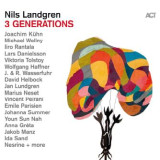
Nils Landgren war und ist das Rückgrat der ACT-Familie. 40
Alben als Leader und weitere 20 als Produzent und Solist
sind bisher auf dem Label erschienen. All diese Rollen und
damit verbundenen Qualitäten kommen auf ‘3 Generations‘
parallel zum Tragen: Zusammen mit ACT-Gründer und
Produzent Siƽi Loch bringt Landgren, anlässlich des
30-jährigen Label-Jubiläums, drei Generationen von ACTKünstler*innen in verschiedenen Besetzungen zusammen.
Im Jahre 1994, nur zwei Jahre nach Label-Gründung, begegneten sich Siƽi Loch und Nils Landgren erstmals. Kurz
darauf wurde Landgren exklusiver ACT-Künstler. Über sein
Netzwerk kamen in der Folge Künstler*innen wie Esbjörn
Svensson, Viktoria Tolstoy, Rigmor Gustafsson, Ida Sand
oder Wolfgang Haffner zum Label. Auf '3 Generations' sind
Joachim Kühn, Michael Wollny, Iiro Rantala, Lars Danielsson, Viktoria Tolstoy, Wolfgang Haffner, Julian & Roman
Wasserfuhr, David Helbock, Jan Lundgren, Marius Neset,
Vincent Peirani, Emile Parisien u.v.m. zu hören.
Italian legend Daniele Baldelli & DJ Rocca team up for ‘Cielarko’ on Gottwax this May.
Often mentioned in the same breath as DJing pioneers Francis Grasso, David Mancuso and Nicky Siano, Baldelli’s storied history includes his various long-running residencies, the most well-known being the legendary Cosmic club in Italy, and establishing the now world-renowned ‘cosmic sound’. Teaming up here with his regular production partner DJ Rocca, the duo reunite for four immaculately produced and colourful tracks for Gottwax Records, the record label from the UK’s Gottwood Festival.
Leading the release, ‘Blanka’ brings rolling low end and psychedelic synth work together with floaty yet punchy percussion for a mid-tempo trip. ‘Flava’ follows with sharp staccato drum hits and Italo disco inspired leads, making for a light and playful closer to the A-side. On the flip, ‘Verdeta’ brings twisted basslines, FX-laden licks and wonky drums for a fun and enjoyable track before ‘Helblua’ rounds out the release with light keys, chugging percussion, and catchy riffs.
- 1: Intro
- 2: Halloween Theme
- 3: Laurie's Theme
- 4: Prison Montage
- 5: Michael Kills
- 6: Michael Kills Again
- 7: The Shape Returns
- 8: The Bogeyman
- 9: The Shape Kills
- 10: Laurie Sees The Shape
- 11: Wrought Iron Fence
- 12: The Shape Hunts Allyson
- 13: Allyson Discovered
- 14: Say Something
- 15: Ray's Goodbye
- 16: The Shape Is Monumental
- 17: The Shape And Laurie Fight
- 18: The Grind
- 19: Trap The Shape
- 20: The Shape Burns
- 21: Halloween Triumphant
The 2018 Halloween movie has the distinction of being the first film in the series with creator John Carpenter's direct involvement since 1982's Halloween III: Season of the Witch. Carpenter serves on the new David Gordon Green-directed installment as an executive producer, a creative consultant, and, thrillingly, as a soundtrack composer, alongside his collaborators from his three recent solo albums, Cody Carpenter and Daniel Davies.The new soundtrack pays homage to the classic Halloween score that Carpenter composed and recorded in 1978, when he forever changed the course of horror cinema and synthesizer music with his low-budget masterpiece. Several new versions of the iconic main theme serve as the pulse of Green's film, its familiar 5/4 refrain stabbing through the soundtrack like the Shape's knife. The rest of the soundtrack is just as enthralling, incorporating everything from atmospheric synth whooshes to eerie piano-driven pieces to skittering electronic percussion. While the new score was made with a few more resources than Carpenter's famously shoestring original, its musical spirit was preserved.
‘Reich’s music expands from minimalist austerity to more full-bodied passages and back again. Reminiscent of his earliest work, it is very beautiful.’ – Financial Times
‘The music has tender energy, and an undercurrent of melancholy. Its droning tones sometimes seem to be pulling apart – like taffy, or like Richter’s stretching spaghetti stripes of color.’ – New York Times
Nonesuch Records releases the first recording of Steve Reich’s Reich/Richter, performed by Ensemble intercontemporain and conducted by George Jackson. The composition was originally written to be performed with German visual artist Gerhard Richter and Corinna Belz’s film Moving Picture (946-3).
Reich describes Richter’s book Patterns, which served as source material for the film: “It starts with one of his abstract paintings from the ’90s. He scanned a photo of the painting into a computer and then cut the scan in half and took each half, cut that in half and two of the four quarters he reversed into mirror images. He then repeated this process of ‘divide, mirror, repeat’ from half to quarter, eighth, sixteenth, thirty-second, all the way up to 4096th. The net effect is to go from an abstract painting to a series of gradually smaller anthropomorphic ‘creatures’ (since the mirroring produces bilateral symmetry) to still smaller very fine stripes.
“Belz described the film in terms of ‘pixels’. It begins with two-‘pixel’ stripes and the music begins with a two-sixteenth note oscillating pattern. When the film moves to four ‘pixels’, the music moves to a four-sixteenth note pattern, then to eight, and sixteen,” the composer continues. “After that, I began introducing longer note values – initially eighth notes, and later to quarter notes. By the middle of the film, when the images move from 512 to 1064 pixels, the music really slows to dotted half notes. Finally, as the ‘pixel’ count begins to diminish, the music moves back into more rapid eighths and then ending with the most intense rapid sixteenth movement.”
After more than one hundred performances of Reich/Richter at The Shed in New York in 2019, it was performed in London at the Barbican by the Britten Sinfonia conducted by Colin Currie and then in Paris at the Philharmonie, where this recording was made. The Austrian ensemble Windkraft Tirol, led by Kasper de Roo, will perform Reich/Richter on September 8 at Szentrum, Silbersaal in Schwaz, and the LA Phil New Music Group, led by Brad Lubman, performs the piece, accompanied by Richter and Belz’s film, at Walt Disney Concert Hall in Los Angeles on April 1, 2023.
Nonesuch has recorded every new piece of music by Steve Reich since 1985, beginning with The Desert Music and continuing through 2018’s Pulse/Quartet, resulting in twenty-two albums and the two box sets Phases in 2006 and Works: 1965-1995 in 1997. The label will put out a collection of his complete works in 2023.
Reich released a book last month, Conversations, that includes dialogues with past collaborators, fellow composers, musicians, and visual artists who have been influenced by his work, including: David Lang, Brian Eno, Richard Serra, Michael Gordon, Michael Tilson Thomas, Russell Hartenberger, Robert Hurwitz, Stephen Sondheim, Jonny Greenwood, David Harrington, Elizabeth Lim-Dutton, David Robertson, Micaela Haslam, Anne Teresa de Keersmaeker, Julia Wolfe, Nico Muhly, Beryl Korot, Colin Currie, and Brad Lubman. Booklist said in its review, ‘Iconoclastic American composer Steve Reich is singular in his own right, and when he is in conversation with other equally iconoclastic composers, conductors, sculptors, musicians, percussionists, and video artists, sparks not only fly, they sparkle. Reich and his colleagues conduct lovely give-and-takes during which they share stories, creative approaches, and viewpoints. Reich's Conversations is the best kind of eavesdropping.’
Steve Reich has been called ‘America’s greatest living composer’ (Village Voice), ‘the most original musical thinker of our time’ (New Yorker), and ‘among the great composers of the century’ (New York Times). His music has influenced composers and mainstream musicians all over the world. Music for 18 Musicians and Different Trains have earned him two Grammy Awards, and in 2009, his Double Sextet won the Pulitzer Prize. Reich’s documentary video opera works – The Cave and Three Tales, done in collaboration with video artist Beryl Korot – have been performed on four continents. His recent work Quartet, for percussionist Colin Currie, sold out two consecutive concerts at Queen Elizabeth Hall in London shortly after tens of thousands at the Glastonbury Festival heard Jonny Greenwood (of Radiohead) perform Electric Counterpoint followed by the London Sinfonietta performing his Music for 18 Musicians.
In 2012, Reich was awarded the Gold Medal in Music by the American Academy of Arts and Letters. He has additionally received the Praemium Imperiale in Tokyo, the Polar Music Prize in Stockholm, the BBVA Award in Madrid, and the Golden Lion at the Venice Biennale. He has been named Commandeur de l’Ordre des Arts et des Lettres and has been awarded honorary doctorates by the Royal College of Music in London, The Juilliard School, and the Liszt Academy in Budapest, among others. ‘There’s just a handful of living composers who can legitimately claim to have altered the direction of musical history and Steve Reich is one of them’, states the Guardian.
Pierre Boulez founded the Ensemble intercontemporain in 1976 with the support of Michel Guy (who was France’s Minister of Culture at the time) and the collaboration of Nicholas Snowman. The Ensemble’s thirty-one soloists share a passion for twentieth and twenty-first century music. Under the artistic direction of Matthias Pintscher, the musicians work in close collaboration with composers, exploring instrumental techniques and developing projects that interweave music, dance, theater, film, video and visual arts. In collaboration with IRCAM (Institut de Recherche et Coordination Acoustique/Musique), the Ensemble intercontemporain is also active in the field of synthetic sound generation. New pieces are commissioned and performed on a regular basis. Resident of the Cité de la musique – Philharmonie de Paris, the Ensemble performs and records in France and abroad, taking part in major festivals worldwide.
George Jackson, winner of the 2015 Aspen Conducting Prize, came to attention after stepping in at short notice with Orchestre de Paris, where he stepped in for Daniel Harding. Recent highlights include leading Ensemble intercontemporain at Festival Romaeuropa, the Rainy Days Festival in Luxembourg, and Festival D’Automne in Paris, as well as conducting the RTÉ National Symphony Orchestra, the orchestra of Opéra de Rouen and the world premiere of Tscho Theissing’s Genia with Theater an der Wien. His varied operatic experience includes performances at Opera North, Hamburg State Opera and Opera Holland Park, as well as conducting a new production of Hänsel und Gretel at Grange Park Opera.

Ferocious JP / US free jazz bomb. A rare meeting between the NYC free jazz scene and the Japanese free music scene. Old-style Gatefold LP, with rare photographs & liner notes by Alan Cummings.
Following hot on the heels of the first, mid-sixties generation of Japanese free jazz players like Kaoru Abe, Masayuki Takayanagi, Yōsuke Yamashita, Motoharu Yoshizawa, etc., an exciting second wave of younger players began to emerge in the seventies. Two of its leading members were the saxophonist Kazutoki Umezu and multi-instrumentalist Yoriyuki Harada. Both were post-war babies and immigrants to the city, Umezu from Sendai in the north and Harada from Shimane in the west. They first met as students in the clarinet department at the Kunitachi College of Music, a well-known conservatory in western Tokyo. Harada was already securing sideman gigs on bass with professional jazz groups and was active in student politics, making good use of his connections to set up jazz concerts on campus. It was around this time that the two began to play together in an improvised duo, with Umezu on clarinet and bass clarinet and Harada on piano. They also experimented with graphic scores and prepared piano.
These experiments eventually led to the creation of a trio, with a high-school student called Tetsuya Morimura on drums, that they decided to name Seikatsu Kōjyō Iinkai (Lifestyle Improvement Committee) in joking reference to the Marxist discourse of the student radicals of the time. Around 1973, Umezu and Harada decided to call it a day and go their separate ways. Umezu began playing with the Toshinori Kondo Unit and Harada with the Tadashi Yoshida Quintet. In 1974 Harada formed his own trio and began to play at jazz coffeehouses across Japan.
Then, in September 1974 Umezu travelled alone to New York, where he set about building connections with the loft jazz scene in the city. It was a fortuitous moment to arrive in New York. Rents were cheap in the Lower East Side, possibilities for squatting existed, so many musicians and artists had moved to the area. Umezu soon became known on the scene as Kappo and he started to make connections with some of the young musicians like David Murray, Arthur Blythe, and Oliver Lake. He recalls making the rounds of the lofts every evening, checking out the performances, and getting the chance to sit in with many groups including Juma Sultan’s Aboriginal Music Society and trumpeter Ted Daniel’s orchestra.
Things were going so well that Umezu wrote to Harada and invited him to come to New York. He accepted and arrived in the city in July 1975. Harada and Umezu took the opportunity to resume their artistic collaboration. Their first concert together in over two years took place on July 20th at another loft, Sunrise Studios at 122 2nd Avenue. Umezu remembers Sunrise as an unusually sunny loft with the rarest of things, a grand piano. He invited along Ahmed Abdullah, a trumpeter he had got to know while playing with Ted Daniel. Abdullah led his own group and was a long-term Sun Ra sideman. William Parker, one of the key figures in the loft jazz scene of the period, was on bass. Abdullah also brought along Rashid Sinan on drums. Sinan drummed in Abdullah’s units throughout the seventies, but he had also played on Frank Lowe’s immortal Black Beings album and collaborated with Arthur Doyle, playing on Doyle’s Alabama Feeling album. By all accounts the evening was a huge success, with speed and dynamism of Harada’s piano playing gaining him lots of support.
Since they had managed to save some money from their day jobs, Umezu and Harada decided to set up a recording session with the same line-up on August 11 at Studio We, where there was a well-equipped studio on the third floor. Umezu recalls the session as follows, Of course, we recorded our performances in one take, with zero retakes as far as I remember. On all the tracks we recorded, we moved as one unit, sharp and fast. That was the nature of Lifestyle Improvement Committee, New York Branch.
Umezu and Harada would later become known for the elements of parody and entertainment that they brought to their music, a freewheeling blend of pastiche, humour and on-stage performativity that paralleled the approaches of the Art Ensemble, Sun Ra, and Holland’s ICP. But here, on their first recordings, the humour element is not yet present. Instead, there is a febrile sense of joy in creation and connection. On the Umezu-penned “Kim”, for example, Harada opens the piece with a speedy exploration of the full-range of the keyboard, hitting hard on the bass keys to create a rhythmic bed out of which patterns begin to emerge. Umezu enters at a much slower pace, longer held notes that at first float weightlessly over the urgency of the piano before they begin in splinter and accelerate. When Parker and Sinan kick in, it’s a rollicking tempo with Parker plucking deep and hard and the left-handed Sinan skittering hard across the topside of his kit. Abdullah kicks in a glorious solo twelve minutes in, bright and breathy at once. The piece slows and grows more spacious towards the end, giving Parker a chance to showcase some arco work that shades beautifully into the air against Abdullah’s trumpet.
Lambke creates a DIY and artist- first free space on the margins of an industry driven by sales and a particular kind of recognition, careful about how he embodies his practice of art-making, and the work his music is doing in the world. On Volcano Volcano he is joined by long-time collaborators Daniel Romano and David Nardi (also of Daniel Romano's Outift), and emerging superstar songwriter Carson McHone (Merge Records) for a joy-filled album rich in poetry and guitars,
community and friendship, and dreaming together a new world 're-ordered from below'.
A few years back I had this dream: I was walking through vast grasslands
towards a solitary hill
On top of the hill was a movie house. On the marquee: History of Jazz.I kept
thinking about it. What was in the movie house? What happened before? What
followed? Why was I going there? Why "History of Jazz"? To reach some kind of
insight, I began a film script, extending the dream tenfold. The script morphed
into a novella-sized book, a series of songs, and finally, a "mind-movie" podcast,
forming this labyrinthine, multi- medium story – equal parts dream, film and
waking life. Figuring out how to transcend the traditional parameters of the album
to create a more panoramic story- vision is something I've been unconsciously
trying to do for some time. I've been pushing against the edges – toying with
narrative, characters and visuals with Easterween and Niagara, a weird children's
book Daydreams for Night – but the scope of life behind Rialto felt too
irrepressible and expansive to be boxed in an album. The book and podcast have
kicked open the doors – allowing the album to lead or serve where it should.In
Rialto's extended narrative, Klaus (loner, insomniac) is working a stint as a driver
for a small town writer's festival. Following a series of unsettling paranormal
events, he finds himself agreeing to a strange request - to deliver a film reel in
time for its premiere at a secluded movie house - the Rialto. The journey leads
him through a circuit of strangely located, oracular movie houses, screening a mix
of dreams, fantasies, memories and prophecies - numinous films of personal
revelation. Inhabiting the movie houses are underworld characters and spirits
with ambiguous motivations, some helping and some hindering Klaus's quest. It's
a Dantesque, deep cleanse pilgrimage to untangle bitterness and trauma,
rediscover a lost clairvoyance, ancestry, and ultimately, the medicinal source of
eternal youth. A metaphysical noir. A hyperstition.Rialto's album stars seven
singer-artists playing characters alongside mine: Tamara Lindeman (The Weather
Station), Daniel Knox, Thom Gill (Owen Pallet, Beverly Glenn- Copeland), Ryan
Driver (Jennifer Castle), Felicity Williams (Bahamas), Robin Dann (Bernice) and
Martin Tielli (Rheostatics). All Toronto- based like me except Daniel (Chicago).
Performed by the Venuti String Quartet with arrangements by Andrew Downing.
Produced by Jean Martin (Tanya Tagaq). It's my 13th album and fourth on Tin
Angel - previous releases on Tin Angel: Miracle In The Night (2019), Small Town
Water Tower (2016), and Niagara (2014). Each of Rialto's eight podcast episodes
features a chapter from the book performed by a cast of twenty five - made up
almost entirely of musicians – including the speaking voices of the
aforementioned singers, as well as Meg Remy (U.S. Girls), Claudia Dey, Veda Hille,
Devon Sproule, Luka Kuplowsky and others. Rialto is available as a 101-page eBook (illustrations by David Ouimet) on Sud de Valeur Press. Premiere
performances begin fourth quarter 2021. Happy Rialto listening, reading,
watching, dreaming...
Modern Woman have announced details of their track ‘Juniper’ along with details of their debut EP ‘Dogs Fighting In My Dream’
out September 17th (digital, physical out Feb 25th) via End of the Road Records, the recently launched label arm of the British festival. The EP wasrecorded and mixed by Shuta Shinoda (Anna Meredith, Jehnny Beth, Hot Chip) and mastered by Jason Mitchell (PJ Harvey,Aldous Harding, Dry Cleaning).
London based Modern Woman began life as the songwriting project of Sophie Harris, a literature graduate who started playing
the songs solo at spoken word nights she ran. “I had a firm idea of the direction I wanted the project to go in, and I knew that
couldn’t be achieved without a full band.” Harris says speaking ofthe band’s beginnings. “It was important to me to keep the
tenderness and lyricism of folk music but blend this with heavier and weirder experimental elements.”
An introduction through a mutual friend led her to meeting David Denyer, an Anglo-German-Armenian composer by trade
whose interests include Merzbow records and building his own instruments and pedals. The two started playing together with
Denyer playing an array of homemade violins, synths, effects and percussion - including a battered wooden table with a metal
colander nailed into it and jagged remnants of cymbals that take a pummeling throughout the band’s live show. Explaining the
set up Denyer says; “We always talked about being influenced a lot by Tom Waits and there are lots of stories of him smashing
up doors and using it as percussion so we gave it a shot. Thecolander was Sophie’s idea. I love pasta though so it sits really

well with me.”
This is the second issue of the new We Jazz Magazine, 128 pages 174 x 250 mm in size and printed on 140g Edixion paper with laminated 300g Invercote covers. All articles presented IN ENGLISH. Includes inspiring stories on music including John Coltrane by Ashley Kahn, Irreversible Entanglements by Daniel Spicer, Ben Lamar Gay by Stewart Smith, Linda Fredriksson by Arttu Tolonen, Marshall Allen by David Mittleman, French Caribbean Music by Markus Karlqvist, Pablo Held by HT Nuotio, record reviews, book reviews, plus more. This is a magazine put together by a quality cast of writers and illustrators/photographers with references such as The Wire, The Quietus, Pitchfork, Jazzwise, etc.
Late 1980’s to early 90’s guitar pop/rock n roll band from Dunedin, New Zealand. Stephen featured David Kilgour, Alf Danielson, Geoff Hoani, and Stephen Kilroy.
Formed by David Kilgour after The Clean first split. They released an EP on Flying Nun records in 1988 as a three piece, later added another guitarist and recorded for a record that didn’t happen. Remastered, rescued and compiled for this release. New art and liner notes, insert with prev. unseen photos and fliers. Tracks from the Dumb EP, Radar of Small Dogs, as well as studio tracks from sessions towards the never-completed LP.
Interview with David Kilgour about the band coming up in the next Maggot Brain issue.
"Stephen Kilroy recently reminded me that my idea for the band was to have no aspirations, apart from making new music, and that it was a casual experiment. I’d forgotten that. I remember having a long break after the Clean first split. I wanted to keep making music in a low-key way, and with other musicians I could write and share the spotlight with. I’ve always wanted to be in someone else’s band." - David Kilgour, from the Maggot Brain interview.
On the heels of his breakout year, Swiss indie rocker Sam Himself - New Yorker by choice, ‘Fondue Western’ baritone by trade - prepares to release his debut album, Power Ballads (October 8th). The Brooklyn-based songwriter, performer and multi-instrumentalist has been sounding the bell for his first LP with a number of singles.
This full-length debut follows last year’s acclaimed Slow Drugs EP, the artist’s third which earned him the Swiss National Broadcasting Service’s Best Talent Award in 2020 and a nomination in 2021 for a Swiss Music Award, the most prestigious national prize of its kind in Sam’s home country.
Power Ballads marks the latest collaboration between Sam and his longtime producer, mixing engineer Daniel Schlett (The War On Drugs; Iggy Pop), as well as mastering legend Greg Calbi (Bruce Springsteen; David Bowie). Sam plays most of the instruments on Power Ballads himself, with producer Schlett adding sounds, textures and of course his singular mixing style (as heard recently e.g. on Iggy Pop's cover of The Velvet Underground's European Son).
Sam Himself is set to tour in support of his debut album well into the spring of next year, with some 30+ European dates in Switzerland, Germany, Austria, the Netherlands and beyond (US-dates in planning).
1. Some records hit you with an instant impression of timeless brilliance, and Low Life’s Dogging is one of those records, what the wise call “an instant classic”. 2. From Squats to Lots: The Agony and the XTC of Low Life is more like their second album Downer Edn (read Edition), a little more withdrawn, a little more textured. Complex. Rich. Which is to say: you’re going to need some time with it. 3. Some show, some grow. Low Life have done both. This one is a grower. Spend some time with this one. It’s got that nuanced flavour. Don’t guzzle. Sip. Savour. 4. Sip it, and sense the recurring brilliance of Mitch Tolman’s lyrics, exploring the usual territory of gutter life, lad life, punk life, low life. The dirge. Disgust and shame in white Australia. Council housing, bills piled to the neck, substance abuse and rehabilitation, the fallen lads and lasses who stood too close to the flame, loss and loneliness, from squats to lots. Un-Australian gutter symphony. 5. There is a celebration of resilience and that’s a central theme of this record and a time like ours needs a record like Agony & XTC. Low times are coming through, but if you’re low they won’t get to you. 6. Iggy Pop’s Bowie produced studio rock masterpieces ‘The Idiot’ and ‘Lust For Life’ are important reference points to the 3rd album sounds of Low Life. Here comes success! 7. ‘The Agony and Ecstasy’ is a 1985 novel by Irving Stone about the life of Italian Renaissance painter Michelangelo. Stone wrote another novel about the single eared painter Vincent Van Gogh called ‘Lust For Life’. This synchronicity hit me. 8. Iggy and the Stooges are a pretty safe reference for Low Life (and all good rock music). Iggy and the Stooges are a low life’s Michelangelo, but solo Iggy like Lust for Life is a better reference for this particular incarnation of Low Life, which is to say they are studio rock albums. 9. Bowie later referred to this period of his life as profoundly nihilistic. But Iggy looked at it as the period of his life that saved him from an early grave. This confrontation is Low life lore. 10. Let’s stick to this, because there’s something about this era of Bowie that makes sense with Low Life’s new album, particularly Low. One should never miss the Low in our new album from Low Life. Producer and studio boss Mickey Grossman has the ear for the Low, and he has carved out a little statue of David right here. 11. Mickey’s ears are recording, mixing and producing the best of Sydney, most notably the Oily Boys Cro Memory Grin. A great companion record to this one. Use Agony & XTC AFTER Oily Boys. Not on an empty stomach, and don’t try to operate heavy machinery (bobcat, bulldozer etc). 12. The relationship between Low Life and Sydney hardcore should not be understated, but it also shouldn’t guide how to listen to Agony & XTC. This is not austere, disciplined music. 13. Think, like, if Poison Idea were given the kind of studio time and budget as Happy Mondays. You wouldn’t play it to a teenager. It’s not for children. This is a mature flavour, one for the adults who have had to contend with failure and hardship, medical bills and disappointed family members, betrayed lovers and worrisome growths, police brutality and tooth decay, humiliating bowels and collapsed septums, detoxing and drying out, for those who have seen themselves as corrupted and putrid and unloveable, for those who endure all of this and aren’t willing to lie down and cop it sweet: Low Life are still here and they ain’t going nowhere. NOTES ON HOW NOT TO LISTEN TO AGONY AND XTC OF LOW LIFE: 1. Don’t think of shoe-gaze. It suggests a safe passage to 90’s reminiscences, a vogue style of our time, but nothing to do with Low Life style. Low Life style is always of its time. The content changes. Agony & XTC shares weight of records like My Bloody Valentine’s Loveless and Slowdive’s Kebab, records that were laboured on after the songs were recorded, songs that were written as they were recorded. 2. We can call these “studio albums” as opposed to albums built in the heat of live performance. Studio albums from the 90’s are called shoe-gaze by some journalist nerds, but we know better than to use words like this. 3. Studio albums are excessive and, at the same time, so empty. Agony & XTC, Loveless, Kebab, Rumours: excessive! And empty. This is not to suggest this is Low Lite, some throwback, soft. A band like Low Life can make an overproduced studio rock album without having to use the word shoe-gaze. So, don’t think studio albums mean anything especially 90’s. Don’t look back. 4. Let’s lose these distasteful labels, like “shoe-gaze”, “rehab rock”, “stab”, “guitar OD overdrive”, “western Sydney wonder”. They can fade out. A low life was once referred to as a vagabond. Who uses this term today? Nobody. Language can murder. Words can die. Kill ‘em all! - Daniel 'DX' Stewart, Melbourne, 2021.
Diving into the archives of Alter Ego - the experimental ensemble of Manuel Zurria, Paolo Ravaglia, Aldo Campagnari, Francesco Dillon, Oscar Pizzo, Fulvia Ricevuto, and Eugenio Vatta - Die Schachtel is thrilled to present Pranam - A(Round) Giacinto Scelsi, a never before released body of recordings interpreting the works of the legendary Italian composer Giacinto Scelsi, made with Matmos (Martin Schmidt and Drew Daniel) in 2005. Resting at the outer reaches of avant-garde chamber and electronic music - moving at a glacial pace of tightly wound energy - Pranam’s two sides radically rethink the terms electroacoustic music in ways that still feel radically ahead of their time, more than 15 years after they were first laid to tape.
A modular chamber ensemble with a pointedly anti-academic approach to music, over the course of its activities - running roughly between 1990 and 2010 - Alter Ego developed a devoted following among some of the most forward thinking voices in experimental music, all the while collaborating widely with artists spanning a vast range of practices and disciplines, including Robin Rimbaud, Philip Jeck, Pan Sonic, Matmos, Gavin Bryars, Andrew Hooker, William Basinski, David Moss, Alvin Curran, Terry Riley, and near countless number of others.
Alter Ego’s diverse activities can be understood as interventions with the disposition toward formality within contemporary chamber music, often pairing themselves with artists working well beyond their own context as a means to develop highly original interpretations of a specific composer’s work. In 2005, this process led them to invite Matmos, the American duo of Drew Daniel, Martin Schmidt - acclaimed for a body of visionary albums at the vanguard of electronic process and sampling - to collaborate on a series of interpretations of works by the legendary Italian composer Giacinto Scelsi.
Realized in collaboration with The Fondazione Isabella Scelsi, which holds Giacinto Scelsi’s archives, and performed at the Festival Roma Europa and the Festival Aeterforum during May of 2005, the album’s four works - Estratti dal Quartetto per archi n.3 (1963), Ko-Lho (1966), Riti: I Funerali di Carlo Magno A.D. 814 (1976), Aitsi (1974) - shift the boundaries of 20th Century chamber music toward markedly new and contemporary terms, incorporating everything from the sounds of the Revox tape machine that Scelsi used to record his own improvisations and processed electronics, to the plastic trumpets used by fans during football matches.
From intertwining, shifting lone-tones that render startling resonances and dissonances, to passages guided by a vast pallet of electronics and flurries of acoustic sounds, joined as a single ensemble, across the two sides of Pranam, Alter Ego and Matmos infuse these four works by Scelsi with humor and playfulness, while retaining all the urgency and rigour with which they were initially composed.
Delicate and meditative, while tightly wound and brooding, Pranam brings the works of Giacinto Scelsi to life in ways that almost no group ever has. Riveting and immersive from start to finish, Die Schachtel is thrilled to present these never before heard recordings from the archives of Alter Ego. Pranam is available on black vinyl, in a limited edition of 350 copies.
- 1: Mohammed Rafi – Jaan Pehechaan Ho
- 2: Vanilla, Jade And Ebony – Graduation Rap
- 3: Skip James – Devil Got My Woman
- 4: Vince Giordano And The Nighthawks – I Must Have It
- 5: Lionel Belasco – Miranda
- 6: Blueshammer – Pickin' Cotton Blues
- 7: Mr. Freddie – Let's Go Riding
- 8: Vince Giordano And The Nighthawks – Georgia On My Mind
- 9: Lionel Belasco – Las Palmas De Maracaibo
- 10: Vince Giordano And The Nighthawks – Clarice
- 11: Craig Ventresco – Scalding Hot Coffee Rag
- 12: Vince Giordano And The Nighthawks – You're Just My Type
- 13: Lionel Belasco – Venezuela
- 14: Joe Calicott – Fare Thee Well Blues
- 15: Pink Anderson & Simmie Dooley – C. C. & O. Blues
- 16: Mcgee Bros – C-H-I-C-K-E-N Spells Chicken
- 17: Robert Wilkins – That's No Way To Get Along
- 18: Dallas String Band – So Tired
- 19: Little Hat Jones – Bye Bye Baby Blues
- 20: David Kitay – Theme From Ghost World
Cinema Paradiso is proud to present the Ghost World soundtrack, released on vinyl for the very first time, as a double gatefold LP.
A film adaptation of the popular Daniel Clowes comic of the same name, Ghost World starred Scarlett Johannson, Thora Birch and Steve Buscemi, becoming a critically acclaimed cult favourite immediately upon its release in 2001. As he did with Crumb, director Terry Zwigoff has created a soundtrack as eclectic and riveting as his movie subjects. The sounds of early jazz and blues play a crucial role in the events of Ghost World - the music heard here is some of the best ever recorded.
Skip James's classic "Devil Got My Woman" from 1931 may be the best-known work on this soundtrack, but it hardly steals the show. Three tracks from weird but riveting jazz-meets-calypso bandleader Lionel Belasco are included; the 70-year-old recordings are so original, they sound timeless. The same praise can be stated of film opener "Jaan Pehechaan Ho" a Bollywood rarity that has elements of surf music, funk, and garage rock. Of course, we also have to hear "Graduation Rap" and Blueshammer's "Pickin' Cotton Blues" two intentionally bad contemporary tracks that make the characters in the movie (and anyone listening to this soundtrack) feel out of place in today's pop culture.
Zwigoff wisely fills out the LP with tracks from his personal 78 record collection, a mix of '20s and '30s string band and blues tunes that are seldom found in compilations (including great cuts by the Dallas String Band, Joe Calicott, and McGee Bros).
The haunting "Theme from Ghost World" composed by David Kitay, finishes off the second LP, perfectly capturing all the bittersweet moods found in the film.
First new release from Lizard Music in over two decades Since their hiatus, band members have joined Wilco, become the musical director for Cat Power, been a featured guest on RuPaul’s Drag Race, and worked with artists including Lana Del Rey, Brian Wilson, The Monkees, and more! Available on CD, Digital, and double-LP What Lizard Music says about Arizone! This collection of buzzy, whirly pop songs from a parallel dimension is a testament to Martin Short, Martin Sheen, Sheena Easton, Tina Turner, and Tiny Tim. Arizone! is better than discovering never-before seen discs for a View-Master. Arizone! is the sound of four old friends who spent their formative years playing music, traveling, and learning about the world, reuniting after a 25 year hiatus to compare notes and wound up with a one-way ticket to Arizone! Lizard Music began in Atlantic Highlands, NJ in 1989 when high school friends Mikael Jorgensen and Erik Paparozzi started learning and writing songs with a four-track. They pillaged their parents' record collections and discovered the musical universes of The Beatles, Frank Zappa, Captain Beefheart, XTC, James Brown and The Meters. In the fall of 1990, Lizard Music (named after the book by Daniel Pinkwater) was hired to be the backing band for David Peel and The Lower East Side at the recently-closed Brighton Bar in Long Branch, NJ, which would serve as the unofficial home base for the band for the next five years.
- A1: Logos Kill
- A2: Halloween Kills (Main Title)
- A3: The Myer's House
- A4: First Attack
- A5: Stand Off
- A6: Let It Burn
- A7: He Appears
- A8: From The Fire
- A9: Strodes At The Hospital
- A10: Cruel Intentions
- B1: Gather The Mob
- B2: Rampage
- B3: Frank & Laurie
- B4: Hallway Madness
- B5: It Needs To Die
- B6: Reflection
- B7: Unkillable
- B8: Payback
- B9: Michael's Legend
- B10: Halloween Kills (End Titles)
Orange vinyl[22,48 €]
Der renommierte Komponist/Regisseur John Carpenter und seine kreativen Mitstreiter Cody Carpenter und Daniel Davies haben auch zum zweiten Teil der neuen "Halloween"-Trilogie, "Halloween Kills", den Soundtrack beigetragen. Wie der Film selbst bleibt auch Carpenters Filmmusik dem Geist dessen treu, was das Original von 1978 so großartig gemacht hat, und bringt es gleichzeitig fest in die Gegenwart. Die Musik ist unverkennbar John Carpenter: die düsteren Vintage-Synthesizer-Klänge, das atemberaubende Gefühl der Bedrohung, das mit nur wenigen dissonanten Tönen hervorgerufen wird. Doch mit einer breiteren Klangpalette, neuen digitalen Techniken und einem tieferen Sinn für Musikalität ist der Score zu "Halloween Kills" das Werk eines Meisters, der auch nach fast 50 Jahren in seiner Karriere immer wieder an seine kreativen Grenzen geht und neue Wege findet, seine Fans zu begeistern und zu erschrecken. John Carpenters hypnotisches Thema zu seinem Horror-Meisterwerk "Halloween" aus dem Jahr 1978 hat mittlerweile für Generationen von Kinobesuchern die Angst vor Slasher-Stalkern verkörpert und sich so sehr in die Popkultur eingewoben, dass es zum musikalischen Kürzel für das gesamte Horror-Genre geworden ist. Es sind nur fünf Noten, die auf einem Klavier gezupft werden, so spärlich arrangiert, dass es sich wie kaum mehr als eine Skizze anfühlt, so einfach, dass ein ungeübter Spieler es leicht aufschnappen kann, aber es ist eine der größten musikalischen Errungenschaften des Kinos. 2018 kehrte Carpenter zum ersten Mal seit "Halloween III: Season of the Witch" von 1982 zu dem Franchise zurück, das er mit seiner ikonischen Schöpfung ins Leben gerufen hatte, ließ die 40 Jahre an Fortsetzungen und Reboots unter anderen Filmemachern hinter sich und kehrte zu seiner ursprünglichen Vision zurück. Während David Gordon Green die Regie für den neuen "Halloween"-Film und seine Fortsetzungen übernommen hat, ist Carpenter geblieben, um ihnen ihre unverwechselbare akustische Identität zu verleihen, die zu "Halloween" gehört wie die Totenmaske und das schimmernde Schlachtermesser von Michael Myers.
- A1: Logos Kill
- A2: Halloween Kills (Main Title)
- A3: The Myer's House
- A4: First Attack
- A5: Stand Off
- A6: Let It Burn
- A7: He Appears
- A8: From The Fire
- A9: Strodes At The Hospital
- A10: Cruel Intentions
- A11: Gather The Mob
- A12: Rampage
- A13: Frank & Laurie
- B1: Hallway Madness
- B2: It Needs To Die
- B3: Reflection
- B4: Unkillable
- B5: Payback
- B6: Michael's Legend
- B7: Halloween Kills (End Titles)
Orange vinyl[22,48 €]
Der renommierte Komponist/Regisseur John Carpenter und seine kreativen Mitstreiter Cody Carpenter und Daniel Davies haben auch zum zweiten Teil der neuen "Halloween"-Trilogie, "Halloween Kills", den Soundtrack beigetragen. Wie der Film selbst bleibt auch Carpenters Filmmusik dem Geist dessen treu, was das Original von 1978 so großartig gemacht hat, und bringt es gleichzeitig fest in die Gegenwart. Die Musik ist unverkennbar John Carpenter: die düsteren Vintage-Synthesizer-Klänge, das atemberaubende Gefühl der Bedrohung, das mit nur wenigen dissonanten Tönen hervorgerufen wird. Doch mit einer breiteren Klangpalette, neuen digitalen Techniken und einem tieferen Sinn für Musikalität ist der Score zu "Halloween Kills" das Werk eines Meisters, der auch nach fast 50 Jahren in seiner Karriere immer wieder an seine kreativen Grenzen geht und neue Wege findet, seine Fans zu begeistern und zu erschrecken. John Carpenters hypnotisches Thema zu seinem Horror-Meisterwerk "Halloween" aus dem Jahr 1978 hat mittlerweile für Generationen von Kinobesuchern die Angst vor Slasher-Stalkern verkörpert und sich so sehr in die Popkultur eingewoben, dass es zum musikalischen Kürzel für das gesamte Horror-Genre geworden ist. Es sind nur fünf Noten, die auf einem Klavier gezupft werden, so spärlich arrangiert, dass es sich wie kaum mehr als eine Skizze anfühlt, so einfach, dass ein ungeübter Spieler es leicht aufschnappen kann, aber es ist eine der größten musikalischen Errungenschaften des Kinos. 2018 kehrte Carpenter zum ersten Mal seit "Halloween III: Season of the Witch" von 1982 zu dem Franchise zurück, das er mit seiner ikonischen Schöpfung ins Leben gerufen hatte, ließ die 40 Jahre an Fortsetzungen und Reboots unter anderen Filmemachern hinter sich und kehrte zu seiner ursprünglichen Vision zurück. Während David Gordon Green die Regie für den neuen "Halloween"-Film und seine Fortsetzungen übernommen hat, ist Carpenter geblieben, um ihnen ihre unverwechselbare akustische Identität zu verleihen, die zu "Halloween" gehört wie die Totenmaske und das schimmernde Schlachtermesser von Michael Myers.
- A1: Here We Go!
- A2: On The Run
- A3: Journey To Bastion
- A4: I Think He’s Dead
- A5: A Walk Alone
- A6: Jordan’s Return
- A7: Getting Intimate 1
- A8: Manhunt
- A9: Making Plans
- A10: Downstream
- B1: Thinking Of Bastion
- B2: Get Ready
- B3: Get Rid Of Him
- B4: Let’s Get Out Of Here
- B5: Dream
- B6: Anger Builds Inside Jordan
- B7: Did They Catch Him?
- B8: Getting Intimate 2
- B9: Seeing Things
- B10: Tooling Up
- B11: Bastion’s Revenge
- B12: Here We Go Again!
Adam Gibbons, the artist & producer behind Lack of Afro and The Damn Straights, is set to release The Last Bastion OST, a cinematic, funk & soul soundtrack to a film that has yet, and may never, be made. Encompassing lush string and horn arrangements, the project will be released in three parts, with the full soundtrack coming out on limited edition, red vinyl this summer. Having originally got into music with the idea of scoring for films, The Last Bastion sees Adam fulfilling something of a long-held ambition.
"Long before all the Lack of Afro stuff took over, being a film composer was all I wanted to do. All my heroes were composers - guys like John Barry, John Williams & Thomas Newman and more recently David Holmes, Daniel Pemberton and Ludwig Goransson. There is something magical about a great film score - it adds so much to the cinematic experience in every way imaginable. I was always drawn to what the music was doing and I was fascinated by the guys who were the composers of the magic.”
In celebration of the 20th Anniversary of the release of
legendary singer / guitarist Thalia Zedek’s ‘Been Here
and Gone’, Thrill Jockey are proud to present the
album on vinyl for the very first time, remastered by
Sarah Register.
Thalia Zedek has been one of the most enduring rock
musicians of the past four decades. From her
auspicious beginnings in bands Uzi, Live Skull and
Dangerous Birds to her wider recognition in Come,
Zedek established herself as a singular voice accruing
accolades from critics and contemporaries including J.
Mascis, Kurt Cobain and Bob Mould.
‘Been Here and Gone’, her debut solo release,
originally released on Matador in 2001 on CD, marked
a turning point in Zedek’s music. As Come were
coming to a close, Zedek began exploring writing and
performing as a solo artist, eventually backed by violist
David Curry, pianist Mel Lederman (both went on to
perform with Zedek for two decades), as well as former
Come bandmates Chris Brokaw and Daniel Coughlin.
The idiosyncrasies of her voice were laid bare for the
first time, revealing an even greater depth to her
unique songwriting. The more spacious and rich
arrangements sprawl and whisper with powerful
vulnerability.
Deluxe packaging featuring photos of the recording
session on the inner sleeve. Includes digital download
card.
In celebration of the 20th anniversary of the release legendary singer/ guitarist Thalia Zedek's Been Here and Gone, Thrill Jockey is proud to present the album unlike it has ever been heard before: on vinyl, re-mastered by Sarah Register. Thalia Zedek has been one of the most enduring rock musicians of the past four decades. From her auspicious beginnings in bands Uzi, Live Skull, and Dangerous Birds to her wider recognition in Come, Zedek established herself as a singular voice accruing accolades from critics and contemporaries including J. Mascis, Kurt Cobain, and Bob Mould. Been Here and Gone, her debut solo release originally released on Matador in 2001 on CD, marked a turning point in Zedek's music. As Come was coming to a close, Zedek began exploring writing and performing as a solo artist, eventually backed by violist David Curry, pianist Mel Lederman (both of which went on to perform with Zedek for two decades), as well as former Come bandmates Chris Brokaw and Daniel Coughlin. The idiosyncrasies of her voice were laid bare for the first time, revealing an even greater depth to her unique songwriting. The more spacious and rich arrangements sprawl and whisper with powerful vulnerability. "There was definitely something magical about the making of Been Here and Gone," says Zedek. "I'm not sure if it was because it was made at a studio called Higher Power in a recently desanctified church in Stuyvesant, NY, or if it was because it was the end of a century, not to mention a millennium, the end of a decade of being in Come, the longest running band I'd had up to that point, and the end of 5 years of unhappy breakups and tumultuous relationships in my personal life." The eleven tracks that comprise Been Here and Gone embody that tension of uncertainty with a hopeful edge of renewal. Zedek's indelible resilience lifts even the somberest laments into triumphs. Even on the album's three cover tunes, including a haunting rendition of Leonard Cohen's "Dance Me to the End of Love," Zedek's voice and guitar color every note with raw emotion, making each passing gesture personal. Been Here and Gone channels the thunder and roar of Zedek's past into a fragile magnificence.
- 1: I’m An Ohio Boy
- 2: Son Of The South
- 3: 59 Cadillac, 57 Chevrolet
- 4: Wreckless
- 5: Nothing To Lose
- 6: When I Was A Young Man
- 7: If That Ain’t Country (Part Ii)
- 8: Only God Knows Why
- 9: Single Father
- 10: Drank My Wife Away
- 11: A Harley Someday
- 12: Panheads Forever
- 13: Take This Job And Shove It
- 14: The Ride
- 15: You Never Even Called Me By My Name
- 16: Amanda
If there’s ever been a way to describe David Allan Coe, it’s got to be his ability to defy categorization. With over six decades of following his musical muse wherever it’s led, this craggy voiced outlaw has crossed the panorama of American roots music. As well as being a singer, guitarist, songwriter, David is also a magician and a ventriloquist, deep sea treasure hunter, and movie star. His movies included Stagecoach, The Last Days Of Frank and Jesse James, Lady Grey, Buckstone County Prison, Take This Job and Shove It, to mention a few. David signed with Sun Records in 1968 and recorded his first album Penitentiary Blues, all songs that David had written in prison. In 1973, Columbia Records bought David’s contract from Sun Records and he recorded his first Columbia album, titled “The Mysterious Rhinestone Cowboy”, several years before Glen Campbell had a hit with the song, “Rhinestone Cowboy.” Much has been written about David’s past and his lifestyle, but not much about his achievements over the years. From performing on Farm Aid to touring with Neil Young, Kid Rock and Willie Nelson. David’s song, “Take This Job and Shove It” has received multi-million airplays certificate from BMI. His “Greatest Hits” album is multi-platinum and his “First Ten Years” album is gold. David has had sixty three songs on the Billboard Singles Charts, including, “Mona Lisa Lost Her Smile”, “The Ride”, “Please Come To Boston”, “Willie, Waylon and Me”, “Jack Daniels If You Please” and “You Never Even Called Me By My Name” to name a few. David has written songs for Johnny Paycheck, Tanya Tucker, George Jones, Willie Nelson, Leon Russell, Charlie Louvin, Del Reeves, Tamy Wynette, Melba Montgomery, Stoney Edwards, The Oak Ridge Boys and Kid Rock. Both “Would You Lay With Me” and “Take This Job and Shove It” are multi- million seller songs penned by David. Johnny Cash has also recorded David’s songs including “Would You Lay With Me” on his chart topping album entitled, Cash. David has been through a lot in his life but has managed to put his past behind him and move forward with his life. This album was recorded in 2001 live from the Iron Horse Saloon in Daytona, Beach Florida and includes the only recorded version of, I’m An Ohio Boy.
Backed by members of the David Nance Group, Rosali (Long Hots, Wandering Shade, Monocot) wades through the emotional mire with infectious, earworm melodies led by her luminous voice. With their rich, raw instrumentation, these rock ballads sound like the resilience discovered in facing one’s darkest moments, the assurance of the calm and clarity that comes after the storm. As she sings on the second track, “Bones,” “Through the darkness of the field / I walk through without yielding / To the rest of the feelings / I’m carrying.” With her confident song craft, Rosali illustrates the ability to push through, moving toward something greater without being destroyed by the weight of trauma.
Engineered by James Shroeder and featuring Kevin Donahue (Simon Joyner), James Shroeder (Simon Joyner, DNG, Connor Oberst), David Nance, Noah Sterba, Colin Duckworth, and Daniel Knapp, the album was recorded in ten days and the raw immediacy of the music is palpable across these ten tracks. Added adornment was contributed by Philadelphia's Robbie Bennett (War on Drugs) on organ and keys, and Matt Barrick (The Walkmen, Jonathan Fire Eater, Muzz) makes a percussion cameo on “Whisper,”which was tracked at Philly’s Silent Partner Studio, where No Medium was mixed by Quentin Stoltzfus (Mazarin, Light Heat). The open creative collaboration elevated the songs, resulting in the exciting, vibrant sound of the album.
Rosali wrote the bulk of these songs in January of 2019 while on a self-imposed two week residency in the hills of South Carolina. Alone in an old farmhouse, she experienced supernatural events and faced her own demons in the deepest darkness. Perhaps as a result, there is a boldness that permeates the album, a daring vulnerability in both the lyrical themes and their musical accompaniment. Rosali says, “I approach guitar playing the same intuitive way I sing, which is profoundly spiritual for me. Where words fail, the guitar becomes the conduit for raw feelings, providing a direct connection to them. I’m constantly working on being fearless in my work, which means showing the rough side, the mistakes along with the triumphs.”
While writing No Medium, Rosali was inspired by harmonographs—swinging pendulums that create beautiful illustrations of the mathematics of music—considering how the mind, too, creates images through song. She imagined herself as the swinging pendulum—“a body suspended from a fixed point” (Encyclopedia Britannica), governed by the forces surrounding her. She thought about the pendulum’s relationship to time, movement, and even its use in divination practices. The album’s title, lifted from Charlotte Brontë’s, Jane Eyre, resonated with this vision: “I know no medium: I never in my life have known any medium in my dealings with positive, hard characters, antagonistic to my own, between absolute submission and determined revolt. I have always faithfully observed the one, up to the very moment of bursting, sometimes with volcanic vehemence, into the other.” With the multiple meanings of “medium”—as middle ground, a term for psychics, and as the material of artistic expression—No Medium felt like the appropriate name, describing how the self is shaped by the patterns of life .
The influences for the sound of No Medium reflect this pairing of assured vulnerability, in the stylistic coherence of Bob Dylan’s Desire, the tender delivery in Iain Matthews’ Journey From Gospel Oak, the strut and swagger of Bowie’s Hunky Dory, the ambition and beauty of Gene Clark’s No Other, and the playful catharsis of Harry Nilsson’s Nilsson Schmilsson. The Richard and Linda Thompson-esque album opener “Mouth,” places Rosali within both a physical and emotional space. “East of the river I was travelling on / watch me lie, undone / rest me in a forest, overgrown / until I am free of all that I’ve known,” she sings. There is movement, both within a cityscape, and in her outlook on love. Speaking of her thought process when writing the song, she says, “I imagine confidently walking away from the past, toward a new approach to love and intimacy to achieve a closer relationship with myself.”
In “Pour Over Ice,” Rosali explores her relationship with alcohol and her former reliance upon it as a social lubricant to quell her social anxiety, an energizer to keep moving, a means to cope and self-medicate, and most addictively, to lure out her wild side as a free flowing, good time girl. While drinking helped her through some shitty times, it eventually got the upper hand and became an insatiable hole within. She says, “The ‘you’ in the song is really me, talking to that component of myself struggling with drinking and self-sabotage, caught up in the cycle, and all the bad choices I made.” She sings, “Maybe I didn’t care enough / or can’t remember / chasing small pleasures / making fire from embers.” Rosali wanted her lead guitar on this track to simultaneously sound like a slow motion car crash propelling her through the day, and the sound of a gnawing hunger for something more.
Rosali’s alliance with the Omaha musicians that orbit David Nance Group (including Nance himself) came about while on a Long Hots / DNG tour in the summer of 2019. Great friendships formed and one night after playing in Detroit, Dave suggested they be her backing band. The pairing was effortless and natural, and in November of the same year, they were recording No Medium in a basement in Omaha.