I’m Jimmy Reed underlined the very raw nature of the recordings, yet it immediately showed
why his music was embraced so much by others as the songs offered more melody and variety
than other Blues players. Ain't That Lovin' You Baby has fine melodic hooks that could easily
be transcribed into rocking versions, while Boogie In The Dark set the template for so many
groups in the sixties. The slower tracks like You Got Me Crying and Little Rain provided useful
contrasts, while Honest I Do gives added meaning to the phrase 'stripped down'. Jimmy Reed
was easily the most commercially successful Bluesman in America during the 1950s, and as
such his material was readily available to be plundered by artists wanting to enrich their live
repertoire. This reached its height during the UK Beat boom when virtually every working group
included his songs in their sets. The Rolling Stones, The Yardbirds, Them and The Animals all
covered his songs liberally during the first half of the sixties. In his homeland, The Grateful
Dead, The Steve Miller Band, Johnny Winter, Wishbone Ash and, bizarrely, even Bill Cosby
followed suit!
Cerca:dark embrace
Since the release of Superstition back in 2018, FUNERAL CHIC has been through something of a metamorphosis, a rebirth if you will. With renewed purpose and a line up that has been solidified along the way, the four piece are preparing to release their third full length album, Roman Candle, this summer. Holding no desire to make the same album twice, they have eschewed the punk-led powerviolence that informed their previous work and have embraced the great tradition of American rock and roll - but given it a very distinctive FUNERAL CHIC twist. The swagger of proto-punk forefathers The Stooges and The New York Dolls imbues the darkest, grittiest corners of their reinvigorated sound, and can also be found on their cover of Roky Erickson’s Two Headed Dog. The caustic energy of early thrash and black metal scenes is also present, flickering with unmistakable incandescence throughout. Having previously led with their outspoken politics, this time the lyrics are refracted through a more personal - but no less fervoured - lens. With members of the band taking a path of sobriety in recent years, the knot of rage that was previously doused with alcohol has been channeled into the lyrics on Roman Candle instead. Ten tales of sweat and pungent aggression dripping into a powder keg of a global identity crisis weave throughout the album’s length. Recorded at Legit Biz, in Greensboro, NC with engineer, Kris Hilbert, FUNERAL CHIC guitarist, Robert Stroud, oversaw production, before the album was mixed by Matt Russell and mastered by Brad Boatright at Audiosiege. Throughout the process of creating Roman Candle, FUNERAL CHIC has - without ceremony - sloughed away old skin to reveal something new beneath. The volatile and unpredictable experience of living in modern day America is distilled via the mercurial sound of aggressive punk, sleazy Americana, and raw heavy metal. Roman Candle marks the beginning of the next blistering chapter for FUNERAL CHIC.
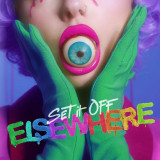
"From the time they were formed, Set It Off have never been your standard emo band. Or pop group. Or pop-punk band. They are all of those things and more. Just listen to the lead single “Skeleton” from their new album Elsewhere – moody, melodious pop-rock with fast rapping tearing up the break. The song is about embracing who you are unapologetically and without filters. “Skeleton” epitomizes Set It Off now – a group both fully committed to its roots and diving into its future by embracing inevitable change.
While the band’s full-length debut album ‘Cinematic’s in 2012 embraced their moodier rock side, later efforts took on an upbeat pop twist that culminated in a darker synergy of those styles on their last album Midnight. ‘Elsewhere’ is a transitional, moody, and forward thinking release, one in which they have faced their demons and come out happier and more full of life than ever before."
Surfacing from ethereal and dreamier planes, UK shoegaze and
dreampop act GRAYWAVE are one of the latest additions to the Church
Road Records roster
Following on from their 2021 debut EP proper, Planetary Shift, GRAYWAVE is set
to release their second extended play, Rebirth, on June 24.Formed in Birmingham,
UK in 2019 as a solo venture and creative outlet for Jess Webberley, GRAYWAVE
has already amassed a steady stream of singles and qualitative short form
releases - drip feeding fans a highly ambitious and modern take on dreampop and
shoegaze’s storied sonic spectrum. Returning in 2022, Rebirth is the most
revealing and entrancing look into GRAYWAVE’s evolution as an artist. Trading in
some of the lo- fi tendencies of her earlier output, Rebirth sees Webberley
embrace darker soundscapes and sonic weight across the release’s five
tracks.GRAYWAVE’s latest effort is a confident seizing of identity and assured
meeting point for the project’s initial potential and newfound blossoming. Opener,
Build, and Rebirth’s title track rattle with rhythmic unease and confrontation, as
Webberley’s voice drifts between somnolent hypnosis and arresting command.
Elsewhere, Closer and Exoplanet effortlessly tie together 90s influence in the vein
of Cocteau Twins and Drop Nineteens with a modern touch similar to US
contemporaries Citizen.Following their recent union with Church Road Records,
2022 will see GRAYWAVE continue to shine across the UK live circuit. Having
already sold out hometown shows, as well as getting through to the latter stages
of the Isle of Wight Festival’s ongoing musical showcase that offers a spot on the
festival’s New Blood stage, and performing with UK hardcore upstarts Cruelty.
Living up to its name, Rebirth is already proving to be a fruitful time of growth for
Webberley and GRAYWAVE’s creative self- actualisation - offering fans new and
old the most conceptually realised iteration of the project’s limitless avenues of
artistic promise yet.
"The letter X marks the spot, crosses over, literally with a cross. It’s the former, the ex-. The ex-lover known simply as “an ex”. Ex- is the latin prefix meaning “out”. Exterior, an exit. Extraordinary. Excellent. It’s exciting. Generation X. X-files. X is the unknown. X is Extreme“
Extreme is Molly Nilsson’s tenth studio album. Recorded in 2019 and throughout the 2020 global pandemic at home in Berlin, Extreme is a departure for Nilsson, an explosion of angry love. It’s an album of anthems for the jilted generation, soaked with joy and offering solace, bristling with distorted, Metal guitars and planet-sized choruses that bring light to the dark centre of the galaxy. It’s an album of the times, by the times and for the people. It’s a record about power. About how to fight it, how to take it and how to share it.
Absolute Power explodes with massive guitars, double kick beats and the instantly iconic line “It’s me versus the black hole at the centre of the galaxy.” Nilsson’s performance itself portrays absolute power in its confidence but the song is a call-to-arms, an entreaty to grasp the here and now, to take the power back. It’s Nilsson pacing the ring and we’re instantly in her corner. Earth Girls takes familiar Molly Nilsson themes - female empowerment and subverting the patriarchy - but casually throws in one of the choruses of her career. “Women have no place in this world” she sings, but it’s the world that isn’t good enough. Stadium-sized but still warmly hazy, Earth Girls has its fists in the air, glorifying in harmony, almost ecstatic in its feeling good. Nilsson’s Springsteen-level conviction and righteousness bleeds through the speaker cones, the cognitive dissonance between the song’s cadences and angry lyrics redolent of Bruce in his prime. Female empowerment isn’t always an angry energy on Extreme, however. On Fearless Like A Child, Nilsson’s anthem to the female body and women’s sovereignty of it, she croons over a mid-80s blue-eyed Soul groove. It sets a nocturnal scene as the narrator surveys her past and her surroundings. Before we’re fully submerged in a dreamlike, Steve McQueen-era Prefab Sprout poem to learning from your mistakes the song erupts into one of those lines only Molly Nilsson can get away with: “I love my womb, come inside I feel so alive” she fervently sings. Against the backdrop of ever-encroaching, conservative rulings on women’s reproductive rights in places like Texas, it’s simultaneously angry and full of love.
Every song on Extreme is a gleaming gem in a pouch of jewels. On Kids Today, Nilsson is the voice of wisdom, archly commenting on the eternal struggle between youth and authority. Wisdom infuses Sweet Smell Of Success with a transcendent love that forgives the narrator’s shortcomings and celebrates the moment, it’s a letter to the author from the author that asks “what is success” and concludes that this is it, this song, this moment. It’s a rare moment of simple reflection that is generous in its insight to Nilsson’s inner life. “Success” is a tool of power and we don’t need it… We need power tools and there are moments on Extreme where it feels like Nilsson is showing us how to find them. It's an open conversation through out Extreme. She’s a warm, comforting presence through out the album and specially on these songs of encouragement, songs perhaps sang to a younger Molly Nilsson or, really, to whomever needs to hear them. “They’ll praise your efforts, they’ll call you slurs a rebel, a master, an amateur / Merely with your own existence, you already offer your resistance.” On Avoid Heaven she’s even more direct, pleading with us to avoid concepts of purity and to embrace the glorious, ebullient, emotional mess we’re often in as a method of upending the power structures who need things to be perfect.
They Will Pay brings back the big, distorted power chords in the form of a agit-punk, pop slammer. Of course, when Molly Nilsson does punk pop we get the catchiest chorus this side of The Bangles or The Nerves. It’s rendered in an off the cuff, throwaway manner that is just perfect in its roughness. However, it’s on Pompeii that Nilsson delivers the album’s epic, emotional heartbreaker. Like 1995 on Nilsson’s album Zenith, or Days Of Dust on Twenty Twenty, the lyrics of Pompeii are heavy with a transcendent sadness, an aching poetry that cuts to the truth of the heart like the best Leonard Cohen lines, though here delivered with an uplifting, life-affirming love. It contains the most personal moments of Extreme, a song lit by the dying embers of romance. Yet it’s here where the alchemy at the base of all Nilsson’s best work is found. Turning small nuggets of personal truth into big, generous universal moments that invite everyone to cry, to love and to fight the power. In an album of jewels, it might be the shining star.
Molly Nilsson’s biggest, boldest and most vital album to date, Extreme is about power. Against the love of power and for the power of love.
- 1: Arrival
- 1: 2Sonovabitch
- 1: 3Cistern / Old On Lens
- 1: 4Swab Dog Swab / Seagull / Winslow's Story
- 1: 5Curse Your Name / Dirty Weather
- 1: 6Murder / Mermaid / Heavy Labour
- 1: 7Stranded
- 1: 8The Sea King's Fury
- 1: 9Mermaid Lust / Stabbing The Charm
- 1: 0Why'd Ya Spill Your Beans?
- 1: Filthy Dog
- 1: 2The Light Belongs To Me
- 1: 3Into The Light
Mark Korven's original soundtrack for 'The Lighthouse,' starring Robert Pattinson and Willem Dafoe, marks his second collaboration with director Robert Eggers (The Witch).
"Robert Eggers and I were rather like the two wickies that went insane in The Lighthouse, musically speaking. We travelled to some very dark harmonic and textural places. We both enjoy not just breaking the rules, but blowing them to smithereens. The spirit of experimentation was always present."
-Composer Mark Korven
"Composer Mark Korven and I developed a shorthand working together on The Witch. This made collaborating on The Lighthouse an incredibly enjoyable process. But it was not without its many challenges. Originally, I wanted a score with no strings at all. The Witch soundtrack was so string-prominent that I wanted a full departure. I only wanted horns, pipes, conch shells, concertina - things that sounded like the sea - or the lighthouse station's ominous foghorn. It would be a minimalist aleatoric soundtrack with a nod to sea shanties and ancient Greek music. As Mark and I embraced the sound of big brass sections, it quickly became a maximalist aleatoric soundtrack.
40-plus years since its original release, the pop-punk-new wave inventions of Anthony
Moore’s ‘Flying Doesn’t Help’ are freshly remastered, blasting the sparkling, angular
sounds into today with perfect vitality.
After spending the early years of the 1970s making experimental music first as a solo
artist, then with Slapp Happy and Henry Cow, 1976’s ‘OUT’ sessions had reinvigorated
Anthony’s youthful love of the naive pop melodies of pop radio, the undeniable excitement
of songs. While ‘OUT’ ultimately went unreleased at the time, the iconoclasm clouding the
late ’70s air was addictive and transformative for Anthony. England seemed to be roiled
as violently as it had been in counter-cultural days a decade earlier; the UK pop charts
breathlessly reflected the changing spectrum with equal parts aging hippie and prog
delicacies alongside new ascendant sounds: rough-hewn pub and punk rock, plus dub
reggae and disco and ska and Stiff and Krautrock. This proved to be an ideal environment
for Anthony to make records by exploring, as he puts it, the “deep connection between
minimalism, repetition, working with tape and celluloid and forming the modules of a
three-minute pop song.”
Caught up in a no-holds-barred era, Anthony was more than happy to play the out-of-hishead madman, raving through outrageous exchanges with the press, while ‘Judy Get
Down’ received Single Of The Week honours from the NME (with review penned by Brian
Eno). Represented by Blackhill Enterprises, Anthony did production work throughout
1978-1979, on Kevin Ayers’ ‘Rainbow Takeaway’, Manfred Mann’s Earth Band’s ‘Angel
Station’ and the first This Heat album, meanwhile cutting his own songs on a dead time
deal at Workhouse Studio with engineer / producer Laurie Latham. Through the wee
hours of countless nights, the two pieced together ‘Flying Doesn’t Help’, with a little help
from friends (an inspired bunch, including Bob Shilling, Charles Hayward, Chris Slade,
Robert Vogel, Festus, Matt Irving, Sam Harley, Bernie Clark, Edwin Cross and Martine
Moore on the telephone).
Building upon the axis of pop and experimental impulses that distinguished ‘OUT’, and
informed further by the raw sensibilities exploding everywhere, ‘Flying Doesn’t Help’
blasts out of the speakers with its own unique blend of sophistication and aggression,
Anthony’s keyboard flashes between arpeggiations and outright stabs among the noise of
slicing guitars, funk basslines and the reverbed blare of the drumkit. Opening with
Anthony’s greatest hit, ‘Judy Get Down’, and containing a noise-laden remake of the
Slapp Happy/Henry Cow number, ‘War’, among other delightful sweet-and-salty
confections, ‘Flying Doesn’t Help’ never stops moving, fuelled with raw outrage and dark
satirical intent, churning with the energy of next-gen types like Tubeway Army and DEVO,
while shimmering with the elegance of the still-challenging old guard types, like Cale and
Bowie.
Clearly, ‘Flying Doesn’t Help’ was steeped in the time, and the original release reflected a
deep mistrust of the corporation mindset. Information was a dubious concept, and
connections to any recognizable organization were seen as untrustworthy, so facts like
musician credits were left out of the package, and even Anthony’s name was altered (he
was credited as A. More on the album and Tony More on a single release). The label
name QUANGO was conceptual as well, standing for ‘Quasi Autonomous NonGovernmental Organization’; each record was sealed with red tape that the listener was
required to cut through in order to get to the music. Rather than recreate the conditions of
the original release of ‘Flying Doesn’t Help’, this reissue instead embraces the changed
environment of the current time and place: instead of no credits, now they are complete,
with Anthony’s full name restored and even the artwork subtly ‘relocated’ to reflect a new
set of relationships. All of which brings the forward-looking sounds of ‘Flying Doesn’t Help’
into the more independent-minded 21st Century syntax where it belongs.
Peer through the windows of the sun-dappled homes in Sicily and you will be faced with a small, strange ceramic object adorning each hallway. It is a glistening pine cone standing upright – a pigna – the longstanding symbol of Sicilian openness and welcome hospitality.
The pigna is a delightfully unusual and yet apt symbol for the title of the third record from Benjamin Harris, AKA Yarni. Ever since his debut LP release in 2017, Yarni has established a following committed to his musical openness, an intuitive curiosity that has spanned everything from house and techno to cinematic ambience and Japanese percussion, as well as jazz horns and afrobeat fanfares. For Yarni, anything goes and everyone is welcome. Now, Pigna sees Yarni reach his fullest and most musically diverse expression, taking its name and ethos from Sicily, but finding a sonic home in the luscious orchestration of a new ensemble of musicians.
Here, at the helm of a nine-person ensemble, Yarni artfully pieces together live improvisations to create the warmth of a seasoned group performing deep within the groove. Opener “Midnight Getaway” places the listener squarely within the disco-funk of Daft Punk as Yarni’s top-line synth intersects with a rolling bassline and a lyrical flute solo from Rachel Shirley. This optimistic tone of sunlit spaciousness is then heightened on “Utopia”, as Yarni’s horn section comes to the fore to pay homage to the ineffable syncopations of Fela Kuti’s pioneering afrobeat.
Rather than scratch at the surface of these musical genres, Yarni’s attuned ear embodies the emotive essence of his various sounds by paying intimate attention to their creation. There is the punch of that afrobeat sax on “Utopia”; the rhythmic skitter of breakbeats on “The Astral”; the sludging thump of funk in the bassline on “Nova”. Collaborators are given free reign, too, to incorporate their own unique stylings into this remarkable whole, from vocalist Emily Marks’ languid tone on “In A Dream”, to saxophonist Jonoa’s innate swing on “Cherub”, and the metronomic movement of bassist Ally McMahon’s playing throughout.
Listening to Pigna is ultimately to find yourself squarely within the comforting embrace of Yarni’s musical mind. It is a truly LP experience – a record to be placed on the turntable’s platter and then left to play, allowing yourself an immersion in these journeying soundscapes. It is no wonder fellow sonic travellers such as the late Andrew Weatherall and DJ Harvey have been supporters of Yarni’s work, since here is a kindred spirit – an artist shaped in the form of radical openness, speaking the hospitable, universal language of beautiful music.
Peer through the windows of the sun-dappled homes in Sicily and you will be faced with a small, strange ceramic object adorning each hallway. It is a glistening pine cone standing upright – a pigna – the longstanding symbol of Sicilian openness and welcome hospitality.
The pigna is a delightfully unusual and yet apt symbol for the title of the third record from Benjamin Harris, AKA Yarni. Ever since his debut LP release in 2017, Yarni has established a following committed to his musical openness, an intuitive curiosity that has spanned everything from house and techno to cinematic ambience and Japanese percussion, as well as jazz horns and afrobeat fanfares. For Yarni, anything goes and everyone is welcome. Now, Pigna sees Yarni reach his fullest and most musically diverse expression, taking its name and ethos from Sicily, but finding a sonic home in the luscious orchestration of a new ensemble of musicians.
Here, at the helm of a nine-person ensemble, Yarni artfully pieces together live improvisations to create the warmth of a seasoned group performing deep within the groove. Opener “Midnight Getaway” places the listener squarely within the disco-funk of Daft Punk as Yarni’s top-line synth intersects with a rolling bassline and a lyrical flute solo from Rachel Shirley. This optimistic tone of sunlit spaciousness is then heightened on “Utopia”, as Yarni’s horn section comes to the fore to pay homage to the ineffable syncopations of Fela Kuti’s pioneering afrobeat.
Rather than scratch at the surface of these musical genres, Yarni’s attuned ear embodies the emotive essence of his various sounds by paying intimate attention to their creation. There is the punch of that afrobeat sax on “Utopia”; the rhythmic skitter of breakbeats on “The Astral”; the sludging thump of funk in the bassline on “Nova”. Collaborators are given free reign, too, to incorporate their own unique stylings into this remarkable whole, from vocalist Emily Marks’ languid tone on “In A Dream”, to saxophonist Jonoa’s innate swing on “Cherub”, and the metronomic movement of bassist Ally McMahon’s playing throughout.
Listening to Pigna is ultimately to find yourself squarely within the comforting embrace of Yarni’s musical mind. It is a truly LP experience – a record to be placed on the turntable’s platter and then left to play, allowing yourself an immersion in these journeying soundscapes. It is no wonder fellow sonic travellers such as the late Andrew Weatherall and DJ Harvey have been supporters of Yarni’s work, since here is a kindred spirit – an artist shaped in the form of radical openness, speaking the hospitable, universal language of beautiful music.
»Darkness & Abstract Art« is the debut single by Berlin based producer and songwriter Venetian Green. And what a debut it is. Two pop-pearls from a parallel universe, in which grand pop gestures of past decades live in harmony with the more bleak and disturbing emotional rollercoasters of recent times. The songs embrace a deep sense of nostalgia, while remaining firmly and confidently rooted within a contemporary pop context.
»Darkness« may be the most uplifting pop song ever that deals with mental health issues and depression. A topic that many can surely associate with after a challenging period of lockdowns and lack of perspective. The opening moments seem like a flirty exchange between an early Vince Clarke and Jake Shears but with a more bouncy and ›present-day‹ sound aesthetic. The bridge, »Was I ever in control, did my feelings just go rogue. Is it you or is it me, you’ve stolen my identity«, brings some major glam moments front and center and finally culminates in a heartbreaking auto-tuned chorus, an ode to the »Darkness« in all of our hearts.
In »Abstract Art«, we are jumping effortlessly between different musical eras. From late Roxy Music elegance to the plasticy melancholy of early Robyn all the way to the slow-rolling pop anthems of Christine and the Queens. A classic pop song about intimacy, trust, boundary issues and physical connection. Easy to imagine the line »You watch me dance with someone else, cause only you have me in strings and belts« on a sweaty recently re-opened dancefloor celebrating the return to a ›new normal‹.
New York’s Straw Man Army return with 'SOS', the follow-up to their 2020 debut LP, 'Age of Exile'. Emerging from the D4MT Labs group that also includes Kaleidoscope and Tower 7, Straw Man Army’s delicate musical touch, embrace of melody, and rapid-fire, clearly articulated vocals separate them from the louder and noisier end of New York’s fertile punk scene. While 'Age of Exile' examined the legacy of colonialism through the musical milieu of melodic anarcho-punk, 'SOS' turns its attention to the increasingly bleak prospects for the human race and planet earth. While Straw Man Army’s lyrical approach remains dense and thought provoking on 'SOS', their musical scope grows wider, encompassing 'Age of Exile’s' melodic take on anarcho, bleak and brooding post-punk, psychedelic instrumental excursions, and even the wistful pop of album highlight 'Beware'. 'SOS' is everything Straw Man Army’s fans could have hoped for in a follow-up and so much more, cementing the band’s status as one of the most original, exciting, and important groups in the contemporary punk underground.
With her second album SODA, Belia Winnewisser continues on the path she has been following for quite some time. Few share the Swiss artist’s knack for combining a sensibility to the enthusiastic potential of pop with an interest in niche references of experimental sound design. In recent years, her feel for this fusion brought Winnewisser to the attention of the electronic club music scene. This world and the various genres related to it leave their mark on SODA: sing-along anthems like “So Real” and the densely layered drone of “They Cry of the Sirens” stand alongside the feverish dance track that gives the album its name and rave bombs like “Solen.” A year without club nights allowed Winnewisser to fully embrace her flair for pop and experimentalism, which resulted in more than a mere series of nods to different genres and acts. SODA—both as a resonant title and as a collection of music—is a direct call without hidden meanings or implicit references. It’s simply the path she’s on and the way she’s going.
Constructed in the initial chaos of the pandemic, Baby Blue’s dystopian debut LP “End Of Sleep” finds solace in the unearthly home of Planet Euphorique. 7 offerings from the Canadian artiste dive deep into a heightened reflective state; an amalgamation of memories stitched together via looped dissonance and destruction. A contrast of lightness and dark constantly working against each other and at times in harmony; a familiar connection that can be found in complex electronic music and mental states alike. Strap in and be guided through a wormhole of cyber analog journeys, thematic explorations and catastrophic calls to celestial beings.
Ethereal echoes of LSG break in the opening of the record, fleeting cries nodding to ancestry; yet A Rainy Trip To Netherworld Sequence embraces the storm. Knee jerk kick distortions disrupt the angelic hypnosis; reality rolling through the clouds. The sequential energy continues through A2 and A3, driving and rolling viciously with heavy contorted noise infiltrating the low end whilst flickers of melodious song sail unbothered, thriving amongst the destruction. The Spring Is Coming feels like a seasonal change, a melting and defrosting; thawed harmony shining through; textural and flowing with movement, a perfect bridge.
An arguably more delicate chaos emerges on the B side, elongated pads stream endlessly whilst drums cultivate and expand into sudden frisson. Fragile voices begin to gate and sweep in Equal Parts Damaged, lingering and ringing through ear drums whilst glued in rhythmic unison to induce a state of floating, a game of elevated push and pull. Syncopated howls of distortion leads the closing track, Violet summarizing the brilliantly confronting conversations pulsating through the record.
PE016 urges you to join the otherworldly personal journey and sufferings of Baby Blue, a moment to connect with her meditative dreams and struggles; sonic synergy expanding to anyone with the invitation to surrender.
The classic second Big Thief LP originally released in 2017, limited repress at a decent price! Gatefold LP & download code, don’t miss out.
The trails that Brooklyn's Big Thief -- Adrianne Lenker (guitar, vocals), Buck Meek (guitar), Max Oleartchik (bass), and James Krivchenia (drums) -- take us down on Capacity, the band's highly anticipated second record out 6/9 on Saddle Creek, are overgrown with the wilderness of pumping souls. After last year's stunning Masterpiece, Capacity was recorded in a snowy winter nest in upstate New York at Outlier Studio with producer Andrew Sarlo. The album jumps right into lives marked up and nipped in surprisingly swift fashion. They are peopled and unpeopled, spooked and soothed, regenerating back into a state where they can once again be vulnerable. Lenker's songs introduce us to a gallery of multifacted women and deal with the complicated matters of identity — at once dangerous and curious, though never unbelievable. Lenker shows us the gentle side of being ripped open. Tricked into love, done in and then witnessing the second act of pulling oneself back together to prepare for it to all happen again, but this time to a sturdier soul, one who is going to take the punches better than ever before and deal some jabs and roundhouses of their own. The album is thick with raw, un-doctored beauty: most of the songs on Capacity were played for the first time in the studio and were recorded the same day. There is a darker darkness and a lighter light on this album,' Lenker explains. The songs search for a deeper level of self-acceptance, to embrace the world within and without. I think Masterpiece began that process, as a reaction from inside the pain, whereas I feel Capacity examines the pain from the outside.'
Meaning all things magick and supernatural, the root of the word occult is that which is hidden, concealed, beyond the limits of our minds. If this is occult, then the Occult Architecture of Moon Duo’s fourth album - a psychedelic opus in two separate volumes released in 2017 - is an intricately woven hymn to the invisible structures found in the cycle of seasons and the journey of day into night, dark into light.
Offering a cosmic glimpse into the hidden patterning embedded in everything, Occult Architecture reflects the harmonious duality of these light and dark ener¬gies through the Chinese theory of Yin and Yang.
In Chinese, Yin means “the shady side of the hill” and is associated with the feminine, darkness, night, earth. Following this logic, Vol. 1 embraces and embod¬ies Moon Duo’s darker qualities — released appropriately on February 3, in the heart of winter in the Northern Hemisphere.
According to guitarist Ripley Johnson, “the concept of the dark/light, two-part album came as we were recording and mixing the songs, beginning in the dead of winter and continuing into the rebirth and blossoming of the spring. There’s something really powerful about the changing of the seasons in the Northwest, the physical and psychic impact it has on you, especially after we spent so many years in the seasonal void of California. I became interested in gnostic and her¬metic literature around that time, especially the relationship between music and occult qualities and that fed into the whole vibe.”
Adds keyboardist Sanae Yamada, “the two parts are also intended to represent inverted components of a singular entity, like two faces on the same head which stare always in opposite directions but are inextricably driven by the same brain.”
Lauded London 6-piece Melt Yourself Down are back armed with a new approach for their fourth studio album Pray For Me I Don’t Fit In. Created for misfits, by misfits, Pray For Me I Don’t Fit In sees Melt Yourself Down embrace a celebratory punk agenda. Having realised they are never going to fit the mould, the group deliberately draw on their myriad influences, speaking all languages musically and lyrically. Led by the potent sounds of Sax pioneer Pete Wareham, the punchy sax hooks pay homage to the traditional horn sections of late 60’s early 70’s era of Jazz, Soul and Rock n Roll, while showcasing African pentatonic scales and dance-inducing rhythms with raw 70’s rock and punk. This album sees vocalist Kushal Gaya celebrate his diversity - tonally, texturally, and emotionally while embracing lyrical depth. Recorded and produced by band favourite Ben Hillier (Blur, Depeche Mode & Nadine Shah), delivering his distinct musical depth, resonance, and dark drive so essential to Melt Yourself Down’s sound. This album is the band’s most cohesive work to date.
- A1: End Transmission (Album Version)
- A2: Too Little Too Late
- A3: Ashes
- A4: Mother
- B1: White Cells
- B2: Avissos
- B3: Womb
- C1: Neon Dream
- C2: All Else Fails
- C3: Time To Die
- D1: End Transmission (John Beltran's Sweet Sunny Mix)
- D2: White Cells (Yui Onodera Remix)
- D3: Neon Dream (Elwd Vinyl Edit)
- D4: Time To Die (Heathered Pearls Remix)
Stelios Vassiloudis enters an inspiring new phase as he unveils his sophomore LP All Else Fails available March 25th via Balance Music.
Hailing from Athens, Greece, Stelios Vassiloudis poses a triple threat as a composer, producer and DJ. Having been active in the electronic music scene since the early 2000s he has cultivated his own brand of distinctive ambience reflective of his rich and diverse musical background; transcending the dance floor via an emotional narrative of complex soundscapes, intricate harmonies and hypnotic rhythms. Over the past decade Stelios has released music under various other monikers, yet this new endeavour is his most diligent to date - allowing him to rediscover his love for making music during the process, "I'm more hopeful, inspired and determined than ever before."
Ten years on from the release of his debut LP, Stelios' detail-oriented offerings remain incomprehensibly thought-provoking and thorough with this new album. Noticeably dissimilar to any previous efforts, Stelios consciously took a step back from the pressure of maintaining a steadily flowing supply of functional, club-oriented music and as the world stood still amidst the pandemic, he embraced the opportunity to reconnect and express himself with a broader musical vocabulary. He admits that: "with the world around us seemingly on the fast track to Armageddon, the music ended up being very much reflective of the sadness and helplessness I felt."
All Else Fails is a stimulating odyssey to anyone listening. Harmonically dense, arcadian glistens seep throughout the ten tracks, each complementary to the next. Bask in the wistful iridescence and you won't be disappointed.
Stelios carved his way into electronic music by traversing around the globe as a DJ and performer - performing at intimate underground bars in Beirut, festivals in Miami, after-hours in Tokyo, beaches in Goa and mega clubs in Argentina. Having developed a formidable discography on esteemed labels such as Bedrock, Poker Flat, Ovum, Constant Sound and Darkroom Dubs, among others, Stelios' studio prowess and coveted productions cemented his reputation as a versatile and acclaimed artist. His intense passion and drive for innovation in music serves as the fuel to keep him inspired and relevant, qualities that no doubt ensure his reputation as an artist of the highest calibre, will endure.
Take cover: there’s a storm coming !
With its lyrical thunderbolts, lightning-flash fretwork and ground-shaking grooves, Black Wind Howlin’ is a record to blow your roof off – and Samantha Fish is stood at the eye of the hurricane. Released on September 20th through Ruf Records, Black Wind Howlin’ flips a finger at the cliché of the ‘difficult second album’, firing off 12 classic tracks that chart Samantha’s evolution as songwriter, gunslinger
and lyricist. While lesser artists work to a template or settle into a pigeonhole, Samantha shifts her shape across the Black Wind Howlin’ tracklisting. She can be brutally rocking on cuts like the tourbus snapshot of Miles To Go (“Twelve hours to Reno/ten hours til the next show”), the swaggering Sucker Born (“Vegas left me weary, LA bled me dry/skating on fumes as I crossed the Nevada line…”) and the
venomous Go To Hell (“Oh, this ain’t my first rodeo/You hit yourself a dead end/ Your voodoo eyes, ain’t gonna cast a spell/ So you can go to hell!”). And yet, elsewhere, backed by the versatile production of Royal Southern Brotherhood guitarist and longtime collaborator Mike Zito, you’ll find Samantha shifting gears to the aching slide- guitar balladry of Over You (“Echoing words, said I’d never make it on my own…”) and the redemptive country strum Last September (“Don’t
remember the curves of my face/Can’t feel the warmth in my embrace/Well I’m here to remind you…”). She might stop off for a gritty cover of Howlin’ Wolf’s.
Who’s Been Talkin’, and co- wrote Go To Hell with Zito, but all other tracks are Samantha’s self-penned originals, and it’s a mix to keep listeners on their toes. “I wanted this record to have a modern rocking sound,” she explains of the lightfooted vibe. “I also wanted it to have elements of Americana, country and roots.”
Therefore she had support from a first- call band that included Royal Southern Brotherhood rhythm section Yonrico Scott (drums) and Charlie Wooton (bass), back- up guitar and vocals from Zito, plus guest appearances from Johnny Sansone (harmonica), Bo Thomas (fiddle on Last September) and Paul Thorn (vocals on Go To Hell). So here it is. Harder, darker, bolder and better than even its revered predecessor (Runaway), this is the sound of an artist on the brink of the huge-time with both hands on the wheel.
Loss and hope, isolation and communion, the cessation and renewal of purpose. Timeless and
salient, these themes echo throughout the fifth album from Midlake, their first since ‘Antiphon’
in 2013.
From the cover to the title and beyond, a longing to reconnect with that which seems lost and
seek purpose in its passing sits at the record’s core. The cover star is keyboardist/flautist Jesse
Chandler’s father, who, tragically, passed away in 2018. As singer Eric Pulido explains, “He
was a lovely human, and it was really heavy and sad, and he came to Jesse in a dream. I
reference it in a song. He said, ‘Hey, Jesse, you need to get the band back together.’ I didn’t
take that lightly.”
A desire to commune with the past and connect with present, lived experience asserts itself
from the opening of the album. ‘Bethel Woods’ sustains and develops that reconnection,
evoking the steadfast and contemplative urgency of ‘The Trials of Van Occupanther’ to back a
lyric steeped in yearning for a paradisal time and place of hope and optimism. Soaring guitars
and atmospheric noise effects extend a sonic scope further developed by ‘Glistening,’ where
arpeggios dance like light glancing off a lake. In just three songs, Midlake reintroduce
themselves and reach out into fresh territory with a richly intuitive dynamism, honouring their
past as a seedbed of possibility.
Elsewhere, the prog-enhanced funk-rock of ‘Gone’ seeks to find hope in relationships that
seem fragile. The ELO-esque ‘Meanwhile…’ draws inspiration from what happened when
Midlake paused after ‘Antiphon’, developing universal resonance as a song about the beautiful
growths that can emerge from the cracks and gaps between things. ‘Dawning’ draws on 1970s
soft-rock stylings for another song searching for hope, its keyboard line reaching out towards
an uncertain future while everything seems to collapse around it; ‘The End’ reflects on the
difficulties of partings.
On-hand was new collaborator John Congleton, who produced, engineered and mixed the
album, marking Midlake’s first record with an outside producer. “I can’t say enough just how
much his influence brought our music to another sonic place than we would have,” says Pulido.
“I don’t want to record without a producer again. Part of that is the health of the band, because
as you get older you get more opinionated and you kind of need that person who says, ‘No, it’s
going to be this way!’ It’s hard to do that with your friends.”
The result is a powerful, warming expression of resolve and renewal for Midlake, opening up
new futures for the band and honouring their storied history. Formed in the small town of
Denton, with roots in the University of North Texas College of Music, Midlake delivered an
auspicious debut with 2004’s ‘Bamnan and Slivercork’. For the follow-up, they looked further
afield and deeper within to deliver 2006’s wondrous ‘The Trials of Van Occupanther’, a modern
classic pitched between 1871, 1971 and somewhere out of time: between Henry David
Thoreau and Neil Young’s ‘After the Gold Rush’, between 1970s Laurel Canyon thinking and a
longing for something more mysterious.
Confidence bolstered by a growing fanbase and a developed sense of their own far-reaching
abilities, Midlake - a band acutely attuned to seasonal shifts - then embraced change. In 2010,
they visited darker psych-folk thickets for ‘The Courage of Others’ and backed John Grant on
his lustrously spiky breakthrough album, ‘Queen of Denmark’. When singer Tim Smith departed
Midlake in 2012, Pulido stepped up to the lead vocal role for 2013’s freshly exploratory
‘Antiphon’, teasing out singular routes through vintage electric-folk pastures.
In reuniting, the bandmates were adamant that Midlake needed their absolute focus. The result
is an album of tremendously engaged thematic and sonic reach with a warm, wise sense of
intimacy at its heart: an album to break bread and commune with, honour the past and travel
onwards with. In ‘Bethel Woods’, Pulido sings of gathering seeds. On ‘For the Sake of Bethel
Woods’, those seeds are lovingly nurtured, taking rich and spectacular bloom.
LP pressed on 180g vinyl in a gatefold sleeve printed on matt card and printed inner sleeve
with lyrics and digital download card.
Loss and hope, isolation and communion, the cessation and renewal of purpose. Timeless and
salient, these themes echo throughout the fifth album from Midlake, their first since ‘Antiphon’
in 2013.
From the cover to the title and beyond, a longing to reconnect with that which seems lost and
seek purpose in its passing sits at the record’s core. The cover star is keyboardist/flautist Jesse
Chandler’s father, who, tragically, passed away in 2018. As singer Eric Pulido explains, “He
was a lovely human, and it was really heavy and sad, and he came to Jesse in a dream. I
reference it in a song. He said, ‘Hey, Jesse, you need to get the band back together.’ I didn’t
take that lightly.”
A desire to commune with the past and connect with present, lived experience asserts itself
from the opening of the album. ‘Bethel Woods’ sustains and develops that reconnection,
evoking the steadfast and contemplative urgency of ‘The Trials of Van Occupanther’ to back a
lyric steeped in yearning for a paradisal time and place of hope and optimism. Soaring guitars
and atmospheric noise effects extend a sonic scope further developed by ‘Glistening,’ where
arpeggios dance like light glancing off a lake. In just three songs, Midlake reintroduce
themselves and reach out into fresh territory with a richly intuitive dynamism, honouring their
past as a seedbed of possibility.
Elsewhere, the prog-enhanced funk-rock of ‘Gone’ seeks to find hope in relationships that
seem fragile. The ELO-esque ‘Meanwhile…’ draws inspiration from what happened when
Midlake paused after ‘Antiphon’, developing universal resonance as a song about the beautiful
growths that can emerge from the cracks and gaps between things. ‘Dawning’ draws on 1970s
soft-rock stylings for another song searching for hope, its keyboard line reaching out towards
an uncertain future while everything seems to collapse around it; ‘The End’ reflects on the
difficulties of partings.
On-hand was new collaborator John Congleton, who produced, engineered and mixed the
album, marking Midlake’s first record with an outside producer. “I can’t say enough just how
much his influence brought our music to another sonic place than we would have,” says Pulido.
“I don’t want to record without a producer again. Part of that is the health of the band, because
as you get older you get more opinionated and you kind of need that person who says, ‘No, it’s
going to be this way!’ It’s hard to do that with your friends.”
The result is a powerful, warming expression of resolve and renewal for Midlake, opening up
new futures for the band and honouring their storied history. Formed in the small town of
Denton, with roots in the University of North Texas College of Music, Midlake delivered an
auspicious debut with 2004’s ‘Bamnan and Slivercork’. For the follow-up, they looked further
afield and deeper within to deliver 2006’s wondrous ‘The Trials of Van Occupanther’, a modern
classic pitched between 1871, 1971 and somewhere out of time: between Henry David
Thoreau and Neil Young’s ‘After the Gold Rush’, between 1970s Laurel Canyon thinking and a
longing for something more mysterious.
Confidence bolstered by a growing fanbase and a developed sense of their own far-reaching
abilities, Midlake - a band acutely attuned to seasonal shifts - then embraced change. In 2010,
they visited darker psych-folk thickets for ‘The Courage of Others’ and backed John Grant on
his lustrously spiky breakthrough album, ‘Queen of Denmark’. When singer Tim Smith departed
Midlake in 2012, Pulido stepped up to the lead vocal role for 2013’s freshly exploratory
‘Antiphon’, teasing out singular routes through vintage electric-folk pastures.
In reuniting, the bandmates were adamant that Midlake needed their absolute focus. The result
is an album of tremendously engaged thematic and sonic reach with a warm, wise sense of
intimacy at its heart: an album to break bread and commune with, honour the past and travel
onwards with. In ‘Bethel Woods’, Pulido sings of gathering seeds. On ‘For the Sake of Bethel
Woods’, those seeds are lovingly nurtured, taking rich and spectacular bloom.
LP pressed on 180g vinyl in a gatefold sleeve printed on matt card and printed inner sleeve
with lyrics and digital download card.
"This is the kind of songwriting I've always been drawn to," says Jeremy Ivey. "The perpetual motion, the intricate melodies, the sprawling arrangements. This album is the real me." Juxtaposing raw, unflinching personal reckonings with jaunty, buoyant melodies and rich, kaleidoscopic production, Invisible Pictures, Ivey's third album for ANTI- Records, is indeed a revelation. Though the songs are rooted in a 21st century swirl of chaos and uncertainty, the record is, at its core, an undeniably feel-good collection, one that refuses to surrender to the existential ache it so artfully captures. Instead, Ivey embraces the sheer, unmitigated joy of creative freedom and sonic exploration here, drawing on everything from flamenco and classical music to vintage indie rock and British Invasion tunes to craft a passionate, transcendent album more reminiscent of John Lennon or Elliott Smith than anything coming out of Nashville these days. "I try to put a little bit of hope into everything I do," Ivey reflects. "No matter how heavy, no matter how dark things may get, there's always a little bit of light shining through."
- 01: Los Gatos - Tiggy
- 02: Los Joviales - Libre De Ti
- 03: Los Geminis - Eres Algo Salvaje
- 04: Los Gatos Negros - Ring Dag Doo (Anillo De Voodoo)
- 05: Los Tiburones - Tacones Altos
- 06: Los Bohemios - QuÉ Chica Tan Formal
- 07: Els 4 Gats - El Miner
- 08: Los Pirombodas - EsperarÉ
- 09: Los Watts - Al Rojo Vivo
- 10: Los Flecos - Correr
- 11: Locomocion - Mentirosa
- 12: Es Amics - Un RomÁNtico Amor
- 13: Els Xocs - Mes ÉNllÀ
- 14: Los Pasos - NacÍ De Pie
- 15: Los Diana - Minifalda
- 16: Los Pajaros Locos - Silvia
- 17: Los Nivram - Un Amor Sin Igual
- 18: Los Brujos - Solo Quiero Amor
- 19: Los Shakers - Me ReirÉ
- 20: Los Yunios's - Miguel
- 21: Los Zooms - Algo MÁS
- 22: EscÚChame Atardecer
- 23: Los Protones - No Te DejarÉ
- 24: Los Yetis - MontaÑA Y Mar
- 25: Los No - La Llave
- 26: Bertas - Me Has Perdonado Por Fin
- 27: Los Faros - Golpes
- 28: Los Watusi - Bohemio
The long awaited third volume of our "Algo salvaje" series, featuring untamed 1960s beat and garage nuggets from Spain. "Algo salvaje" is an anthology devoted to a rich period when hundreds of bands appeared all over Spain and, after paying attention to what their US and British contemporaries were doing, found their own way to vent their teenage rebellion through loud guitars. With amazing results! Many of the 28 tracks are reissued for the first time, including very hard-to-find records. This double LP gatefold package includes extensive notes by Vicente Fabuel featuring all the original record sleeves and artist photos. "Algo salvaje" ("Something Wild"), now reaching its third volume, celebrates the darkest, neglected and rebellious side of Spanish beat. Internationally labelled as nuggets (after the original compilation of the same name concocted by Jac Holzman and Lenny Kaye in 1972 for the Elektra label), the more common garage rock label has been used to place and describe one of the most fertile chapters of rock & roll history during its most creative years. An underground story which has luckily become known, with participants from all around the globe which included anonymous musicians, independent record labels with impossible names and ridiculously limited pressings, often not more than a few hundred copies. The tracks chosen for the occasion, a selection filtered strictly by their musical value, adhere to the rules of the classic nugget genre while demonstrating the permeability of garage sound and its inevitable evolution at the turn of the decade (1967-1974) through mixes that embraced psychedelia, soul and even prog rock. Epic and pretty wild. Just the kind of material that this record label usually handles. Many of the 28 tracks are reissued for the first time, including extremely hard-to-find records. This double-LP package includes extensive notes by genre-expert Vicente Fabuel featuring all the original record sleeves and artist photos. So let the band play...
Hangman's Chair, formed in 2005 in Paris, are one of the most unique sounding doom rock bands currently active. Through the years, they have found and fine-tuned their own sonic brand, somewhere at the crossroads between Type O Negative, Alice In Chains and Sisters of Mercy, to name a few, mixed with a certain street credibility connected to the group’s roots in hardcore, and even tinges of shoegaze. ‘Cold Doom’ as the band likes to call it.
Each album takes its strength and essence from the band members’s life experiences, which they portrait with unflinching honesty. Whether it is the loss of band members, drug overdoses or the hardships of living in suburban Paris, all those human emotions resonate within each of their songs as they embrace the darkness and transform it into something beautiful, heavy and melancholic.
After five studio albums and a handful of splits / EPs, Hangman's Chair is releasing their sixth studio album, "A Loner", their first record on Germany based, worldwide leading metal label Nuclear Blast. Telling tales about loneliness in all its forms, this record has all the trademarks that makes Hangman's Chair’s music so visceral, and will keep you in its tight grip from the very first listen.
Boy Harsher’s latest release, ‘The Runner (Original Soundtrack)’, is an exorcism.
Augustus Muller and Jae Matthews’ fifth release entitled ‘The Runner (Original Soundtrack)’ is not a traditional album. Rather, it is the soundtrack to a short film, also entitled ‘The Runner’. The film, written, produced, and directed by the duo, is a searching horror film, attached to a meta-style “documentary” about Boy Harsher’s recording process. The album includes several distinct components: cinematic arrangements, vocal features, and of course classic Boy Harsher dark pop.
Both the album and short film will be released in January 2022.
Last year, in the midst of the obvious chaos (the global pandemic), but additionally with Jae’s MS diagnosis, Augustus started working on moody, cinematic sketches. It was uncertain what these pieces would become, other than catharsis. In Jae’s period of convalescence, she kept thinking about this sinister character: a woman running through the woods. Together, they developed this idea further into a film. They were unable to tour, a drastic (and isolating) shift in their career, and making ‘club music’ did not feel right. But there was so much they needed to get out. The next Boy Harsher release would be a reconciliation of this time. The album processes feelings of universal anxiety and the confrontation of at home illness. A necessary expulsion during a time of unrest.
The album opens with “Tower”. The only track on ‘The Runner (Original Soundtrack)’ that Boy Harsher has previously played live, but never recorded. The song is an incantation, with its pulsing synth and Jae’s begging vocals. A spell about desire and impending destruction. Jae asks 'But are you honest? Do you trust? You trust in me?' Questions answered by her desperate yells. It starts both the film and the soundtrack with a heavy presence.
Two songs on ‘The Runner (Original Soundtrack)’ feature vocalists other than Jae Matthews. He allows a distinct sound for both vocalists and really leans into the possibility of divergent genres. “Machina”, is a HI-NRG homage, performed by Mariana Saldaña of Boan, and “Autonomy” a new wave tribute, performed by Cooper B. Handy of Lucy. Augustus Muller fully embraces the soundtrack ethos, by creating fictional ‘bands’ to generate additional content.
‘The Runner (Original Soundtrack)’ is exactly what’s in the name: a soundtrack. At first the shape of the release was nebulous - yet once realized the album is dynamic. It serves as the story of the running figure and her musical accompaniment. Those expecting a traditional release will be surprised, but not disappointed.
Fine Place is a new duo comprising Frankie Rose (Vivian Girls, Crystal Stilts, Dum Dum Girls) and Matthew Hord (Running, Pop. 1280, Brandy). Based in Brooklyn, NYC together they’ve crafted a crystalline full length of nocturnal, electronic pop music that charts a way out the post-global, cyberpunk dystopian environment it was crafted in. Their debut album This New Heaven drenches minimalist song structures in post-industrial washes of sixstring delay and gothic post-punk synths. Presiding over it is the most evocative, emotive vocal performance Frankie
Rose has committed to tape to date.
Following Hord’s relocation from Chicago, the pair wanted to explore new avenues apart from their respective bands or solo projects. “The sound we were going for was an attempt to capture the dystopian feel of New York during a period of desertion by the wealthy. It was produced in a time-frame saturated in both uncertainty and serenity, and the soundscapes we created felt fitting and almost organic as a response to our surroundings. The title also reflects this in an arguably literal, maybe even satirical way.” Sonically, Fine Place references the pioneering mid-to-late 80s pioneers of icy melodrama The Cure and Cocteau Twins, while reflecting both the individuals’; music trajectories thus far. Modular synthesis triggers rhythm boxes and fluttery arps chirp around clanging 808-patterning as Rose’s reverb-laden vocal layering envelops the remaining headroom. The result is massive; a towering, shadowy music that embraces darkness while offering Rose’s bright vocal as chinks of light in the cracks; the production filling the head space of the beholder with preternatural imagery and emotional resonances that are real but not quite defined.
The title song propels forth out of the fog, scintillating with delayed guitar before the reverb-immersed vocal injects the human drama. The chorus constantly teases a big release but holds back creating a taut, dynamic tension. Cover Blind’s slow march makes full use of Rose’s layered vocal sinking and emerging from Hord’s bank of synths. Stand out It’s Your House is pure honey pouring from the speaker on a bank of of arps and near-hymnal vocal layering, a syrupy light offering in the mist. It’s an emotive highlight that only increases as the album progresses; Impressions Of Me is the Lynchian ballad that glides onward into the sunset. The album finishes on a choice re-interpretation of the 1989 track The Party Is Over by Belgian group Adult Fantasies, one of the great over-looked ballads of the era given an almost ecclesiastical makeover by Matthew Hord and Frankie Rose in 2021.
Says Hord: “This record was an incredibly challenging endeavor to make, as I had just come home from a European tour with another music project and wanted to invest into and focus on this collaboration with Frankie. I essentially reimagined how to approach writing basic sequences with the synthesizers I had been rehearsing and performing with for months prior to make something more accessible and pop- like for Frankie to build upon. Frankie is an unsung hero when it comes to mixing, and she was constantly mixing down and processing elements of the tracks to create different atmospheres as we forged forward with every song.”
This New Heaven is an ecstasy of sorts, a half-dream in the border between sleep and daylight.
- A1: Alpha – Anteludium – Omega Alive
- A2: Abyss Of Time – Countdown To Singularity – Omega Alive
- A3: The Skeleton Key – Omega Alive
- A4: Unchain Utopia – Omega Alive
- B1: The Obsessive Devotion – Omega Alive
- B2: In All Conscience – Omega Alive
- B3: Victims Of Contingency – Omega Alive
- C1: Kingdom Of Heaven Pt 1 – A New Age Dawns Part V – Omega Alive
- D1: Kingdom Of Heaven Pt 3 – The Antediluvian Universe – Omega Alive
- E1: Rivers – A Capella – Omega Alive
- E2: Once Upon A Nightmare – Omega Alive
- E3: Freedom – The Wolves Within – Omega Alive
- F1: Cry For The Moon – The Embrace That Smothers Part Iv – Omega Alive
- F2: Beyond The Matrix – Omega Alive
- F3: Omega – Sovereign Of The Sun Spheres – Omega Alive
For many years now, the comparative of epic has simply been EPICA. Since their formation in 2002 and their quick ascension to stalwarts of symphonic metal noblesse with trailblazing masterpieces “The Divine Conspiracy” (2007) or “Requiem for the Indifferent” (2012), Dutch metal titans only knew one way: Up. Especially with their last three releases “The Quantum Enigma”, “The Holographic Principle” and this years’ “Ωmega”, forming a metaphysical trilogy that’s both alpha and omega of all things symphonic metal, EPICA became rightful monarchs of a genre they themselves helped made become a global phenomenon.
Yet, as every other band, EPICA couldn’t take their latest installment of breathtaking cinematic grandeur to the seven corners of the world as they would have normally done. You know why. Thus, plans have been made and visions fulfilled to produce a once-in-a-lifetime event that couldn’t be further away from yet another streaming show. What EPICA unleashed upon the world on Saturday, June 12th, 2021, was a monument to their music, their career, and their enduring legacy as forebears of a whole genre. Now finally being released on Blu-ray and DVD and various audio formats, “Ωmega Alive” is the EPICA show of your wildest dreams, brought to life by blood, sweat, tears and a healthy dose of megalomania. Think Marvel meeting Cirque de Soleil in a Tim Burton universe.
Celebrating the release of their gargantuan new opus magnum, „Ωmega“, the streaming event saw fans from over a 100 countries flock to the screens to witness a show that has proven to be the defining moment in EPICA‘s concert history. A show that’s nothing short of the band’s most explosive performance to date, brought to life with an enormous production on an ever-evolving stage setting that’s full of visual surprises. For the first time ever, EPICA performed songs like ‘The Skeleton Key’ or the insanely monumental “Kingdom of Heaven Part 3” from “Ωmega”, alongside the band’s most popular songs, rare songs, fan favorites and huge surprises. “What started as a basic idea to do an online release show for “Ωmega” quickly spiraled out of control and became our most ambitious project to date,” creative director and keyboard wizard Coen Janssen says. “As usual, we wanted to push the boundaries, explore the limits, and think outside the box. We found ourselves back in our happy place. This concert film, our ray of light for you in the dark times that we have all been living in.”
For half a year, the band worked tirelessly on a show that’s been setting a new standard for concert films and streaming events. “What we wanted to do was the ultimate EPICA show where we could fulfill every dream we ever had, where there was room for all the ideas, effects and props that are just too big to be taken on tour.” Far from your usual streaming concert, the band developed a trademark feature called a “living backdrop.” Coen explains: “We built another stage right behind our stage where lots of things were going on the whole time. And we meant that very literally,” he laughs. “Every song got something extra, something unique that was fitting its world.”
He can say that again: Elaborate visuals, tailor-made videos and graphic effects, fire, and flames on a Nibelungen level, dancers and actors, artistic performances or fire performers all add to the aura of symbolism and cinematic splendor, setting the stage for a band that can’t be happier to finally bring their new album to life, harmonizing wonderfully and giving their A game for a show to remember. “It was so great finally playing with the band again, actually standing on stage with them. Boy, did we miss this,” Coen emphasizes and adds: “We also built a pretty cool new stage with some fire-breathing snakes and lots of rotating elements. Good thing is, we might also take it on the road when we can finally tour again.”
Until then, “Ωmega Alive” will be a more than efficient remedy against no-concerteritis – for bands, fans, and crew alike who all look back on an extra-long dry spell. Divided into five acts as there are letters in EPICA and “Ωmega”, each part gets a different theme, look, and feel, complemented with references to the history of EPICA, the symbolism of the band and the videos they did. It’s, in short, the best show they ever did, a two-hour spectacle spanning their storied career up to their latest endeavors and graced by Simone Simons’ breathtaking a-cappella rendition of ‘Rivers’ from “Ωmega” complete with choir, easily the most emotional and achingly beautiful moment in their entire career. Frankly, you don’t see this on a normal tour.
What EPICA brought to life here with the help of 75 artists and crew members is a testimony to their burning will to take their band ever higher – even now, in the darkest of times we ever had to endure. Let “Ωmega Alive” be your ray of light as it was theirs, a journey into the heart, body and soul of one of the most passionate and visionary metal bands alive today.
Red Vinyl
nown for her delicate compositions, soaked in dream-like surrealism, Icelandic musician Sóley has attracted a huge following since launching her solo career back in 2010. Her 2012 single ‘Pretty Face’ went on to generate an enormous amount of buzz, and quickly became a viral sensation. Now, with three solo LPs under her belt, Sóley is preparing to debut a completely new sound via the release of her new concept album, Mother Melancholia, on October 22nd.
Described by the artist as "Nosferatu meets Thelma and Louise in a vampire church under the watchful eye of David Lynch", Mother Melancholia is the soundtrack to the end of the world as we know it. As a self-confessed news addict, Sóley became obsessed with the idea that the world is ending. Having surrounded herself with real-life stories of global warming and patriarchal politics she couldn’t shake the feeling that she was going to die. This feeling was so all encompassing that it sparked the idea for a new project. Could there be a soundtrack for the last days of humans on earth? How would that sound?
“I read books about possible dystopian worlds and started writing poems about irrational and in love characters who live in gray and cold imaginary loneliness. In each other’s burning arms. Walking in circles with no way out” she explains. “After all, the album reflects our life here and now. Our life and reality is a kind of dystopian world.”
Whilst writing the album, which serves as a tongue-in-cheek eulogy to our planet, Sóley began reading about ecofeminism, a branch of feminism which uses the concept of gender to analyse the relationship between humans and the natural world. Ecofeminism emphasizes that both women and nature must be respected but also separated. Since the beginning of time, the natural world has been synonymous with female identity, phrases like Mother Nature are commonplace. “The patriarchy views women as volatile and hysterical. Earth and women are either our saviours or our destroyers,” explains Sóley. “It’s so easy to abuse the earth, like the patriarchy has abused women since the dawn of time, then ask for forgiveness afterwards and promise they´ll never do it again”.
The new album sees Sóley move away from the indie-pop of her previous releases. She began by experimenting with writing songs on the accordion, allowing her a new sense of freedom in her writing. The process allowed her to broaden her horizons even further and experiment with a whole range of new and exciting sounds. “I bought myself a theremin as I was really excited about the unpitched sound and there is no perfect pitch during the end of days,” she laughs. “I also bought a mellotron, my first moog and a cello and taught myself how to play each of them. All of these new instruments are particularly suitable for the kinds of aesthetic inconveniences which I have learned to embrace.”
Album opener ‘Sunrise Skulls’, one of the most cinematic moments on the album, was inspired by the Me Too and SlutWalk movements and tells the story of a group of women who rise up and fight the patriarchy. ‘Blows Up’, a track that would be at home on any horror soundtrack, is a sarcastic love letter from the Earth to humans. Standout track ‘Desert’ is an incredibly moving song dedicated to the next generation. “It’s about the guilt you feel, as a mother, for having children and leaving them on the frontline. My daughter, for example, will take over this inevitable war” explains Sóley.
In true soundtrack style, the album flows through the end of the world in chronological order, closing with the Earth’s final moments. ‘Sundown’ is a dark piano ballad detailing human kind’s final day on Earth. “And everyday, I dig my own grave, and as I dive in you´ll hold my hand” she sings, over twinkling piano and swirling synths. We then hear the world end on ‘XXX’, a dark and swirling soundscape that swells before fading to silence. On ‘Elegía’ the silence then turns to the sound of the ocean, as we hear the Earth, like a woman finally free from a violent relationship, healing on her own.
Mother Melancholia is the mark of an artist confidently striding into more experimental territory. With a lengthy and successful career behind her, Sóley felt compelled to try something new and express the real her. The music might be shrouded in darkness but it’s a move that fills her with joy and freedom. “I hope that people not only enjoy the new sound, but also that Mother Melancholia might raise some questions in people, particularly women,” she says. “I’m under no illusions that this album will change the world but I hope that people can connect with the idea”.
Bassist Luke Stewart was called “one of the 25 most influential jazz artists of his generation” by Downbeat Magazine. Here he teams up with co-bandleader/sitarist Jarvis Earnshaw, drummer Ryan Sawyer and alto saxophonist Devin Waldan for a rich, expansive and mercurial set. Recorded at Pioneer Works in Red Hook, Brooklyn towards the end of the dark winter of 2021, the six performances explore and embrace chaos, ultimately finding a serenity made only more striking by what precedes it. The calm after the storm.
Simply calling Curtis Harding a soul man feels reductive. Harding's voice conveys pain, pleasure, longing, tenderness, sadness and strength-a full gamut of emotions. Today his voice takes on an optimistic lilt with his his new album, If Words Were Flowers. If Words Were Flowers is Harding's first new music since 2018, a follow up to his critically acclaimed 'Face Your Fears" album. It features songs like " Hopeful" , where Harding croons with devotion over a classic soul groove, textured with infectious horn playing, background singers and modern psychedelic flourishes. Harding fuels his psychedelic sound with the essence of Soul but isn't bound by it. Instead, his songs convey an eclectic blend of genres leaping from the many musical lives he has lived from following his evangelical Gospel-singing mother on tour around the country as a child to rapping in Atlanta, forming a garage band with The Black Lips' Cole Alexander to singing back-up for Cee Lo Green. Through these experiences he fully embraces life's darkest intricacies and conjures dynamic, addictive melodies.
Swedish power trio MONOLORD return with their highly anticipated new album, Your Time to Shine. Recorded by MONOLORD drummer Esben Willems at Studio Berserk, Your Time to Shine sees the trio looking inward, cultivating the elements that take their monstrous, heavy riffing to new heights with a darker edge. A five-track journey that spans across crushing doom rock to more spacey, groove laden opuses, Your Time to Shine is MONOLORD at their most unfiltered and focused. Out of the gate, MONOLORD kick-off a wild ride with the soaring, fist-raising opener “The Weary” and its insanely catchy melodies. Elsewhere, the stop/start switch between sweetness and abrasiveness of “To Each Their Own” showcases a new element to the band’s repertoire. MONOLORD embraces the power of the riff with pulsating chugs on “I’ll Be Damned” and the mind-expanding title-track, whose final section brings back some of the band's spaced-out rock n’ roll beginnings. Everything culminates in their new epic, “The Siren Of Yersinia”, whose lonesome call can be heard in each feedback-ridden note and in each pained, buried vocal line. Your Time to Shine is yet another turn for MONOLORD. While the band clearly stays on “Riff Street”, they are poised to find darker avenues.
Ultimately, Can't Swim feel that Change of Plans is "the most Can't Swim record yet." LoPorto says, "All of our endeavours as a band have led us to make what I think is the most honest and transparent album in our discography. We spent way less time recording what we thought we should be writing and put down whatever came naturally. The recording process was certainly the easiest to date as well — we knew what we wanted going into it. I'm constantly writing songs and some of the tracks on Change of Plans have been in the demo stage for almost four years now so it feels great to finally have them all together on one release." Change of Plans was produced, mixed, and mastered by Will Putney (A Day to Remember, Every Time I Die, Body Count, Knocked Loose) of Graphic Nature Audio and is the culmination of everything Can't Swim have been building and exploring over the last six years, combining their signature visceral lyricism and cathartic rock sound with influences ranging from the worlds of folk to EDM. One could say it's a little bit of everything all rolled into one, and in a way, that's true. When life is more unpredictable than ever, Can't Swim are striking the perfect balance of hope and realism by writing songs that embrace the chaos of life. They want to find and harness a vibe that makes living a bit easier for everyone, and with each release, they're getting closer to that goal.
Love returns with 'Lavender', the follow up to the Canadian crooner’s LP, 'Night Songs' (Taxi Gauche Records, February 2020).
A reflective timeline of dusty folk, 'Lavender' aims to capture the modern loneliness of the 21st century. A sorrowful soundtrack, inspired by the production of great crooners and folk artists of the 70s/80s like Cohen, Lightfoot, and Nick Drake, to name a few, Love achieves a similar quality on Lavender. Like a Chris Isaak trapped in a David Lynch film, Love’s haunted
vocals guide the listener through poetic verses on the archetypes of love and truth, posthumous poetry by his grandfather circa 1930s, and escapism, all melting and flowing into a pool of celestial wisdom.
Acoustic guitars sweep across desolate sonic landscapes of global narcissism, social media and the universal need for connection. Hypnotic bass grooves and lush 3D string ensembles, wrap the listener in a familiar cinematic romance, embraced and mystified. 'Lavender' explores the universal threads that make us feel and experience what we do, in a time when the need to peer into ourselves has never been more important. 'Lavender' draws you inwards, like staring up at the stars at night, or standing alone with the silence of the forest, 'Lavender' wants you to find your own meaning. Self-recorded in a variety of spaces through out Turtle Island (Canada & The USA). Specifically, Toronto Island, a basement in Edmonton, AB, various apartments and motels in Los Angeles and around the United States, on a road trip west via the Trans-Canada highway and ending at a cabin in the foothills of the Rocky Mountains.

“There’s a lonesome vibe to his brand of heartland rock, evoking late nights on a deserted road, or neon-lit streets just after a rainstorm.” (Brooklyn Vegan)
"Just Valance being Valance, I'm no underground glitch legend or pioneer as I never cared for a title, just an individual who puts sounds together and embraces the outcome whether it's light or dark. Capturing emotions from complex patterns. I don't betray myself. Not for status. Not for power. Not for money. Not to fit into a stereotype. Not to look a certain way. Not for approval as patience and sacrifice is required to build anything.
Some aspects of the world are getting uglier every day and every ray of hope is vital to tilt the balance."
- Valance Drakes
English thrash metal outfit Xentrix is commonly referred to as one of the “big four” of English thrash metal, given their popularity in the underground metal scene of the 1980s to mid-1990s. The band released their second studio album For Whose Advantage? in 1990. It gave them even more interest than their debut, and it marked the first time the band got to shoot a music video – for the title track. It also gave Xentrix the opportunity to tour with Skyclad and play shows with world famous metal bands such as Slayer and Sepultura. And rightfully so, as this album belongs in any headbanger’s collection.
For Whose Advantage? is available as a limited edition of 1500 individually numbered copies on translucent blue coloured vinyl.
A DAY IN THE LIFE – is the first chapter of a dedicated series fully curated by Steve Bicknell for KR3.
This bold new work by the veteran English artist provides an insight into the mind of the artist.
Side A features three tracks by The Evader, another face of Steve Bicknell.
An obscure intro leads us straight to the point: 4/4 sounds, repetitive and hypnotic, not afraid to be heavy.
In fact, that’s the point: to take everything that is a burden to us and embrace it. After all, there can be no light without darkness.
On Side B, Steve Bicknell has a killer approach. A parallel rail to Side A, with a more furious, still gloomy attitude. He moves in the same direction but vents different emotions. The sound is harder, rawer, faster and more impetuous. An outro ends the EP, as if to represent a circle closing: The first lap inside A Day in the Life.
- A1: All Ausländer Go To Heaven (Reprise) 05 42
- A2: Deutsche Pässe 02 01
- A3: Professional People 01 53
- A4: The Price Of Teilhabe 03 02
- A5: Automobile Love 02 27
- B1: Bürogebäude In Und Um Frankfurt 04 57
- B2: Dark Boys 01 52
- B3: Freizeit ´20 03 15
- B4: The Good Policeman 03 01
- B5: Proposal For A Worker`s Anthem At Dmu2 Daglfing 02 44
- C1: Doggerland 03 43
- C2: All We'll Ever Need 03 18
- C3: In Every City, In Every Aldi The Blood Of My Brothers And Sisters Taints Your Spargel 03 11
- C4: The Crowd 02 12
- C5: Home 02 59
- D1: Soziokultur 02 10
- D2: Transatlantic Ideology 02 58
- D3: Mjunikcentral Is A Dangerous Place, We Need More Guns To Keep You Safe 3 45
- D4: Wohlfahrt 03 45
In view of the immense Black Lives Matter mobilisation in reaction to the murder of George Floyd and the comparatively meagre societal reaction to the attack in Hanau, the question arises: How come our society does not show the same empathy and solidarity towards its own fellow citizens with Kurdish, Turkish, Bulgarian, Bosnian, Afghan migrant backgrounds or members of the Roma and Sinti?
How limited is our postcolonial discourse if we are unable to address the racist exploitation of those who repair our cars, deliver our parcels or harvest our asparagus?
It’s all a sham. Shake it off like a biometric photograph. Shake off that false consciousness. The Black Diaspora is a transatlantic lie invented by music curators and journalists. Embrace this nuanced return to structures and superstructures, to articulations and historical constellations as analytical tools.
Allow me to dampen your expectations. This is not the sound of decolonisation. This is no compilation of BLM protest songs. This is no celebration of Black emancipatory struggles. You will not be able to play this at your hip post-pandemic house party. This will not go down well with your woke friends. This is music for the square in the room. For that reluctant BAME/Person of Color repelled by your fetishisation of the African-American experience.
This is music for gated communities. This is Fehler Kuti singing of class relations, not of identities and positionalities. This is Fehler Kuti resisting.
Listen to these songs of infrastructure and appraisal of the welfare state. Join me in mourning the broken promises of prosperity for all. Send that “Ausländer“ of your mind to heaven. Colonialism fucked you up. Platform Capitalism is keeping you in chains. Are we to unionise all human and non-human workers at Amazon? Will modernity always have that "forever nigger“? What about those dispossessed field hands harvesting your asparagus?
All is lost. The system is rigged. Because all histories, gestures and identities have been absorbed into this late capitalist apparatus we call diversity. It can integrate anything and anyone. It made me. It is the price of the ticket. And it is unable to challenge its own premise of an atomised society. As if you and I had so little in common.
They will try and help you. They will build a museum for your history and a scholarship program for your future. I warn you. Don‘t let them give you a name. Resist appellation. Don’t get that German passport. Don‘t eat asparagus.
Fehler Kuti, Spring 2021
All songs by Julian Warner. Produced by Markus Acher and Tobias Siegert.
Markus Acher – drums, percussion, backing vocals Micha Acher – sousaphone, trumpet Cico Beck – synthesizer Jenny Bohn – backing vocals Pacifico Boy – vocals Katja Kobolt – spoken word Theresa Loibl – bass clarinet, backing vocals Sascha Schwegeler – steeldrum, kalimba, percussion, backing vocals Tobias Siegert – bass, synthesizers, percussion, backing vocals Julian Warner – piano, memotron, vocals
recorded and mixed by Tobias Siegert at Minga Records, july – december 2020 mastered by Moritz Illner at Duophonic
Cover art and photography by Andreas Neumeister. Layout by Sascha Schwegeler.
Fehler Kuti “Professional People” is part of the same multiverse as “The History of the Federal Republic of Germany as told by Fehler Kuti und die Polizei”. A production by Julian Warner. In cooperation with Münchner Kammerspiele. Funded by the Department of Arts and Culture of the City of Munich. Released by Alien Transistor.
City Slang is thrilled to welcome Pom Pom Squad into the City Slang family. The way Mia can nod to her influences, be they of the iconic 60’s girl group, characters from a John Waters film, or cutting edge fashion from today, while simultaneously spinning a beautiful and original story in her songs, is absolutely thrilling. This is the kind of record that makes you not only excited to see what you can do with an artist in a post-pandemic future, but also how you can build their career in the present circumstances. We cannot wait for you to hear this record in its entirety!
Produced by Sarah Tudzin of Illuminati Hotties and co-produced by Berrin herself, it’s a record that plays out like an exorcism in front of your bathroom mirror -- confronting the dark we’ve had planted within us and then ripping it out, all while watching every second of it. It’s vulnerable yet triumphant, deliciously irreverent & inviting yet sneering in the faces of those that had once tried to define her. First single “Lux” was unanimously praised by press including Stereogum who called it “a serrated blast of noise in which Berrin takes someone to task with glee” and The Fader who said “come for the scrappy punk reimagining of The Virgin Suicides, stay for Pom Pom Squad's galvanizing treatise on feminine awakening in a world that would rather keep your eyes shut.”
Mia Berrin spent her childhood trying to find where she fit right in the world, looking to the pop culture icons on TV in hopes of finding an image she connected to. She connected with the films of John Waters and David Lynch, loved the dark campiness found in Heathers, was in awe of the power of women like Courtney Love and Kathleen Hanna. Growing up as a female of color who would later in her life unearth and embrace her queerness, discussing and reconciling
- A1: One Dark Knight (Intro)
- A2: From The Shadows (Plains Of Passage)
- A3: Boss Victory
- A4: The Magic Mirror (Tower Hub)
- A5: The Lonely Parapet
- A6: Tools Of War (Clockwork Tower)
- A7: Aqua Vitae (Explodatorium)
- B1: Facing The Task (Lost City)
- B2: Both Eyes Open
- B3: A Cargo Of Fineries (Flying Machine)
- B4: The Price Of Doing Business (Iron Whale)
- B5: The Struggle Never Ends
- C1: A Wintry Paradise (Stranded Ship)
- C2: In The Halls Of The King (Pridemoor Keep)
- C3: Hidden By Night (Lich Yard)
- C4: Boss - Embraced By Darkness
- C5: Hitting Close To Home
- D1: Boss - Go No Further!
- D2: A Fool's Wager
- D3: Incompleto Sin Ti
- D4: Fate Approaches
- D5: Know Thy True Self
- D6: Final Redemption
- D7: An Imposition Of Order (Ending)
- D8: Trailer - Specter Of Torment
Maze & Lindholm, widely critically acclaimed since their first LPWhere The Wolf Has Been Seen-released by Aurora Borealis in 2018-bring out yet another aspect of their ever fruitful collaboration.While their debut album was constantly balancing between contemplation and anxiety (never quitepitch dark but often on the fence between extremelycontrasted moods) the live rendition of theirnew opus offers a profound sonic meditation.
A River Flowing Home To The Seanever tries tocompete with the world's deafening din nor embraces its inherent violence-as "Where The Wolf Has Been Seen" often did-but rather emphasises a certain relation to silence while magnifying it.Celebrating its rarity and approaching its own production as an intimate yet enthralling experience. As opposed to a river forming into a torrent, the piece flows at a quiet paceand invites us toexperience a state of inner tranquility.