Throughout the last decade, Strange Ranger have been crafting seamless
indie music that feels both already classic and precisely of its time
From Daymoon's strains of the Microphones by way of the Pacific Northwest-era
indie scene to the dark elation and Cure-reminiscent stylings of Remembering the
Rockets' they've become one of the rare standouts of a crop of bands that have
managed to grow up with us. More than just a stopgap along that progression,
the new mixtape entitled No Light In Heaven holds some of the band's most
experimental and ambitious work yet. Stitched together through a series of
sessions at both a house in rural NY and Strange Ranger's home studios in both
Philadelphia and NYC (where Eiger and Woodman moved in 2021, the mixtape
possesses something both abstract and astute; the product of a band in
transition and a group of people making something effortlessly transcendental
out of their new surroundings. Heralded as unpredictable and expansive, a
thrilling document of a band with an ever- changing muse,with songs that are
packed with hooks and an abundance of feeling (Stereogum). This outpouring of
evocative emotion makes the band's more traditional song structures read like a
new breed of pop music in its purest form. From Needing You 's effervescent
euphoria to string- laden album close It's You, the record seamlessly fuses
together a multitude of genres, where the industrial punch of In Hell sits
alongside the chopped up vocals and melodic keys of Get Right Up to the Mic.
"No Light in Heaven" marks the beginning of a bold new era for the band & the
groups first release with Fire Talk.
Suche:dark get out
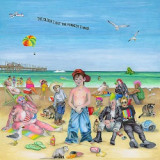
The Older I Get, the Funnier I Was, which follows Thomas’ brilliant 2020 HBO special The Golden One and his Can't Believe You're Happy Here EP released earlier this year, surveys a range of emotion and offers a broad sonic palette, moving between pop punk, electro, and the obvious influence of the singer-songwriters he grew up listening to in early childhood. It conjures the ennui of Bright Eyes alongside the barefaced storytelling of John Prine, the overstuffed lists of Fred Thomas with the lackadaisical humor of Colleen Green, among many others.
Thomas attributes the dexterity of the record to Duterte, who recorded and engineered most of it in addition to serving up plenty of encouragement when Thomas got down on the process. “As a comic, I used to test out new songs during sets to see if the funny bits were hitting, but since I wrote this in isolation I ended up writing lyrics and worrying less about making jokes,” Thomas says. That said, the album’s plenty funny. Stand-out and lead single “Rigamarole” opens with a Thomas-voiced infomercial that recalls his oft-cited lookalike Jim Carrey as the Grinch, before launching into a buoyant pop song about being depressed.
Whitmer Thomas will admit that when he traveled home to small town Gulf Shores, Alabama to record his HBO stand-up special, The Golden One, he expected to be greeted as a returning hero, a conquering king, or at minimum, a guy with a moderately successful career as an entertainer in Los Angeles. “I expected a big welcome home, open arms, but when I went back I realized: nobody fucking knows me. Nobody remembers me,” Thomas says. “In the years I’d been performing that show, I’d been romanticizing my childhood in this mythologized place, but the visit made me see that I’m not really from there anymore.”
The sense of alienation compounded when Thomas recognized how few people in town remembered his mom, to whom The Golden One is dedicated and largely about. Thomas grew up watching her perform with her twin sister at the legendary Flora-Bama Lounge, where he set the special, and still counts her as one of his musical influences. His new album, The Older I Get, the Funnier I Was, isn’t overtly about his mom, her presence is deeply felt throughout. While in Gulf Shores, Thomas discovered dozens of her old recordings, all of which had been wrecked by Katrina, but upon returning to LA, Thomas paid “a fancy place in Hollywood” to fix the tapes and hired Melina Duterte (Jay Som, Bachelor, Routine) to mix them. The two struck up a collaborative friendship, and Thomas had the sound of his mom’s voice back. “I was listening to songs she recorded when she was about my age, just these heartfelt, sweet Americana songs,” he says. “I decided then that I wanted to lose the Ian Curtis voice I always sing with; I wanted to do what came naturally, because my mom always sounded like herself, even when she was singing some cheesy reggae song about, like, Jamaica.”
Thus he went into The Older I Get, the Funnier I Was knowing it was time to retire his darkwave persona, and leaning into his natural, chirpier voice, which he says sounds “like a 12-year-old’s.” It makes sense: much of the album chronicles what Thomas calls “being a kid and feeling like you have no control and overcompensating by being annoying.” “So much of the album is about witnessing drug and alcohol addiction as a kid and seeing what it does to people, but also realizing that there's nothing you can do about it,” Thomas says. It’s familiar territory (see: “Partied to Death”) but the methodology is different this time around; true to its title, The Older I Get, the Funnier I Was isn’t always looking for laughs. Thomas might’ve left his hometown behind, but his kid self is still tagging along, a Peter Pan shadow he can’t untether himself from. The first line he sings on The Older I Get, the Funnier I Was is: “There should be a room at every party where you can just sit and watch a movie.” Find a 12-year-old who wouldn’t say the same.
Jan Anderzén and his partners celebrate the transcendental power of ecstatic music. Alas Rattoisaa Virtaa is the first Kemialliset Ystävät album in four years. It is the result of chance enhancing online collaboration methods, desire to get lost in the sound archives and the high art of meticulous editing. The album title is from visions of rivers running down from Heart of Darkness to the City of Joyful Noise. If contemporary music is a high speed train passing by then KY's music would be an orgy of light under a railway bridge.
A band member Lars Mattila experiences the music of Alas Rattoisaa Virtaa in spatial terms:
"There are worlds accessed only through our auditory system. I hear a Wunderkammer of freestanding sound objects. Rhythms like sequences of seemingly random stuff laid out on the forest floor: a pair of thrones, a Henry Moore sculpture, a watermelon, two thrones, a Moore sculpture, a melon... I trust the path to go on even if I can't see behind the hill. There's motion, wether it be drunk driving or super human rapid eye movement. The sheer amount of detail makes it impossible to take everything in at once. One's perception and shifting focus reshape the experience on each listen. I remember my visit to Cappella Palatina in Palermo where Normann architecture, Arabic arches and Byzantine dome form a harmonious whole. Various cultural and spiritual influences are recognized as equals. The sense of space also brings to mind the end scene of The Lawnmower Man when the dude is trying to escape the virtual world."
Hand Stamped, Hand numbered, Limited press, with insert.
An oddly familiar/familiarly odd entity floating about the relatively cohesive surface of contemporary electronic music, Belgium-via-Italy based duo Front De Cadeau has been knocking genres askew and blowing overused terminologies out of the water with unrelenting panache over the past decade. Championing a sound unmoored by vanishing trends and cross-pollinating approaches, F2C punch back in on Antinote with their anticipated debut album, “We Slowly Riot”, an 8-track mishmash of tunes previously released and not.
Bastardizing tried-and-tested rave tropes by slowing the tempo down to barely recognizable shapes and contours, Hugo Sanchez and Maurizio Ferrara dish out a new high in their ever expanding discography. Free-falling down the K-hole with no parachute on, “La Ketamine” burns slow but steady. A practically immersive dub filled with processed minutiae and vibrational drums out a mystic forest, it’s a helluva trippy post-industrial joint that unfolds, heady and empyreumatic to the bone. “We Slowly Rot” puts on offer a buggy script-like swing, adorned with F2C’s trademark blend of spoken word and jacuzzi-warm vibes, whereas “There is Something Wrong” steers us into further sizzling, syncopated groove territories through a fevered meshwork of sliced-and-diced vox samples, overheated machine talk and primitive percussions on a African Headcharge tip.
Draped in eerie, 8-bit-infused layers and Arabian Nights ambiences, “Slam is Slam” treats us to a spookily fun Oriental mix of hot-tempered darbukkahs and FX-soaked riffs. The outrageously sensual “Ouvre Ta Bouche” is a tactile invitation to get down in some dark alcove of sorts and more if you hit it off. A steely dub primed for post-party divagations, “Climate Change” slowly veers off into verbed-out industrial jazz as bars run by, while “Legal Illegal” cuts a path of acid-dipped dancehall from outer-space across the club. Last but not least, Jewish clarinets quietly move along waves of sedated bass on “Casa Gaza”, rounding it all off on a dreamy, cinematic note that serenely phases into a liquid-like roller over one solidly deeper-than-deep home stretch.
Over the past two decades, Dez Mona never ceased to surprise audiences. Less than a year after “Lucy”, a 'worldly oratorio' in collaboration with the Antwerp Baroque Orchestration X, singer Gregory Frateur and his companions now knock on the door with the cosmopolitan “Loose Ends”.
On the group's ninth studio album, rugged funk often alternates with bouncing disco pop. 'After the dark ballads from our previous projects, we consciously chose to make a cheerful, straightforward record', says Frateur. 'This time I didn't want to exhaust myself too much in metaphors: the lyrics had to be simple and 'in your face'.
On a compositional level, Gregory Frateur gave the steering wheel this time to guitarist Sjoerd Bruil and accordionist Roel Van Camp. This contributed to Dez Mona stepping out of their comfort zone on Loose Ends and experimenting with a new sound. On the new album, for example, Van Camp plays the piano more often than the accordion. Leaning towards a more electronic sound, some songs gravitate and take you on a fantastical, abstract journey. ’Indeed, sometimes Sjoerd adds strange angles in his compositions', the singer concludes. 'During performances, they force me to put myself aside as a singer and get completely absorbed in the instrumental trip'.
The emphasis is more than ever on the rhythm and groove. Drummer Karel De Backer, the newcomer in the band, gives the music extra punch, while the absence of a bassist is ingeniously compensated by Bruil and Van Camp. 'On Loose Ends we go 'back to basics', admits Gregory Frateur. “But without losing our recognisability.”
Multi-instrumentalist Tijs Delbeke, who was part of Dez Mona for many years, but has moved to Balthazar, was responsible for the production. Frateur prefers to surround himself with people with whom he feels at ease and who carry the DNA of Dez Mona.
Based in Winnipeg, Manitoba, an "inland island that floats on infinite
prairie ground," Living Hour has always been a band that's thrived in
seclusion.Helping to foster a thriving local community, and taking
inspiration from the faces and places of their hometown, the band have
always been motivated by the belief that their own music only gets more
interesting when it includes other voices
For their new album, Living Hour called upon friends from near and far.
The result is "Someday Is Today", the band's third full-length effort and the muchanticipated follow- up to their 2019 "Softer Faces" LP, acclaimed by the likes of
NPR, Stereogum, Paste, Vice, Bandcamp, and more. On "Someday Is Today", the
group's sound is collaborated with a variety of drummers including Jason Tait
(The Weakerthans, Broken Social Scene) and is fleshed out further with the help
of three producers: Melina Duterte (Jay Som, Bachelor, Chastity Belt), Jonathan
Schenke (Parquet Courts, Snail Mail, The Drums), and Samur Khouja (Cate le Bon,
Deerhunter, Regina Spektor) all of whom impart their own backgrounds on the
album's finished glow.
"Someday Is Today" is Living Hour at their most pensive and longing. It was
recorded over seven straight days during the dark depths of a Manitoba winter,
with the band cocooned in the sounds they were making as the temperature hit
-30 outside the door. The album thrives by keeping just enough connection
across its varied palettes to feel like one cohesive world. Whether it's the album's
soft and gorgeous harmonies or the captured sound of wind tubes being swung
above their heads, the songs here feel bound by something bigger than
themselves; an energy that flourished in spite of it all, a human connection that
grips just strongly enough even when pushed to its frayed, unreachable extremes.
With Panorama, Frank Maston pays homage to the classic era of library records and Italian soundtracks of the 70s. A blissed-out, grooving collection of filmic cues, it continues the unique brilliance of Tulips and Darkland. Elegant and easy, subtle and stylish, breezy and beautiful; this is his Maston-piece. Commissioned by legendary label KPM, Panorama cements Maston as a master of modern classics and the most mesmeric of contemporary composers.
In early 2020, Be With suggested to Frank that he should make a KPM record. He wasn't aware that they were still putting out new library records - but he was super keen: "It was completely surreal and it still hasn't fully sank in that I have a record in that catalog, sitting alongside those incredible albums that were so influential to me."
Frank was visiting family in his hometown of LA in March 2020 when the world ground to a halt so the KPM project arrived at a fortuitous moment. Having fantasised about committing to a record with no distractions, with a proper budget, access to his gear and space to work in - to really dig in and try to write and arrange the best work he could possibly make - it was a real "be careful what you wish for" moment. But, as Frank explained, "it completely saved my year and sanity to have something to focus on and get excited about. It was my lifeline." He spent seven months on it, working almost every day.
Maston had already been making library-influenced music so when KPM outlined the criteria for the tracks it was exactly what he had been doing all along. He thought the best approach would be to make a follow-up to Tulips that had a parallel life as a KPM record. Enjoying complete creative freedom, “gave me the drive to power through and dig in deep. I'm not sure if I could have kept myself on such a rigorous recording schedule under my own steam, and I think the momentum I had writing and recording it is part of the strength of this record."
Maston’s sleek retro-groove instrumentals emulate the classic KPM “Greensleeve” reel-to-reel recordings that provided mood-setting music for mid-century cinema, television, and radio programs. Apparently in close conversation with the John Cameron-Keith Mansfield KPM pastoral masterclass Voices In Harmony, Maston's Panorama could be heard as that record's funky follow-up. Yes, it's *that good*. Another reference point from the hallowed library would be Francis Coppieter's wonderful Piano Viberations.
Opener "First Class" is a blissed-out groove, featuring the soothing vocals of Molly Lewis and a glistening harp over drums, a two-note bass motif (from Eli Ghersinu of L'Eclair) and an assemblage of guitars, synths, French horn and glowing vibraphone. Acid Lounge, anyone? The irresistibly funky "Easy Money" is a gorgeous cut led by more of Molly's vocals, pastoral flute and Rhodes, underpinned by drums and percussion, grooving bass, chilled guitars and synth strings. Kicking the tempo up, the percussive "Storm" is a vibin' filmic-fusion jam where psychedelic guitars (courtesy of Pedrum of Allah Las/Paint) organ, jazzy flute, Rhodes and vibes all compete for a place in the sun, over drums and walking bassline.
The heavenly "You Shouldn't Have" is a delicate, melancholic wonder; a dreamy instrumental where the melody is shared by a whistle, harpsichord and celeste, over a cyclical piano chord sequence and bass, synths, guitars, organ and distant French horn. The tempo rises again with the passionate, sticky "Fling", a summery, nostalgic groove with skipping drums and percussion, warm bass and electric guitar, yearning flute and synth strings. The brilliantly titled "Fool Moon" has that Voices In Harmony sound down pat. A romantic slow-mo dreamscape of Rhodes and harpsichord, piano, light drums and softly strummed acoustic guitar.
Side B opens with "Medusa", a hopeful, mellowed-out track with shuffling drums, feel-good flute, muted horns, glowing Rhodes and synth strings. The soft and gentle "Morning Paper" is an elegant way to start the day; a beatless blend of flute, guitar, percussion, ambient synths and vibes. The upbeat head-nod jam "Scenic" has that widescreen car-chase feel, uptempo drums and percussion, grooving bass, piano, synths and ambient electric guitar. "Adieu" is a smooth summer vibe, relaxing with brushed drums, Rhodes, flutes and horns. Molly Lewis's gorgeous vocals steal the show, alongside vibes, jamming organ and synth strings.
"Hydra" is another laid-back 70s-sounding retro cinema cue with light drums and percussion, walking bass, spacey synths, clavinet, glowing vibraphone, vintage organ and electric guitar. Closer "Jet Lag" is a laconic bow out; bass-driven drum machine soul, featuring hand percussion, Rhodes, vibes, synths and organ.
Multi-instrumentalist Frank played a bit of everything across Panorama. Yet, humble as ever, he believes the time, energy, and enthusiasm of all of the musicians invited to the sessions helped him realise his vision: "There were two Italian flautists who really understood what I was going for. Two french horn players, cor anglais, a vibraphonist and a flügel horn player. I've never involved this many people in my projects before, and yet the result is the most "me" record I've ever made."
Musically, a strong Italian theme runs through the record. Frank is fascinated by ancient Rome and both his parents are Italian (Maston was originally Mastrantonio before anglicisation). So, it felt natural to fully embrace these strands and tie everything together with the striking artwork. The Romans were influenced by Greek culture, emulating their art and architecture, which, in turn, influenced Renaissance era artists. Frank acknowledged this tradition when reflecting on his place in the lineage of library and soundtrack composers. He then asked his friend Mattea Perrotta, a painter and sculptor, for some sketches. What he received was exactly what he had in mind: "Especially the theater mask, which really captures the range of moods on the album". Frank arranged them as per the cover and it soon felt right: "I wanted to make a cover that was reminiscent of the classic KPM albums without making it too pastiche - so it has its own identity and looks at home alongside other library records, while still fitting in nicely in the KPM catalogue." The last step was for us to introduce Frank to Be With-KPM’s Rich Robinson, who helped put together the back and centre labels and align it all within the KPM standard.
Panorama is a perfect title for the album. With no opportunity to travel for tours or recording projects, Frank arranged postcards from his collection on his desk with beautiful views of the mediterranean coast, the Roman Colosseum and Cinque Terre. These also served as visual prompts: "That was part of the sonic concept - imagining myself driving down the mediterranean coast with this music on, with the top down." Additionally, the range of moods and vibes - "I tried to make each song very different from the previous one in terms of tempo and arrangement and feeling" - speaks to the idea of a Panorama of music and sounds and emotions. The last track was originally called Panorama, but KPM already had that title in their catalogue so it was changed to "Jet Lag", which, as Frank notes, "is perhaps even more fitting, since the trip is over".
- 1: The King For A 000 Years
- 2: The Invisible Man
- 3: Born On Judgment Day
- 4: Pleasure Drone
- 5: Mrs. God
- 6: Silent Rain
- 7: Occasion Avenue
- 8: Light The Universe
- 9: Do You Know What You Are Fighting For
- 10: Come Alive
- 11: The Shade In The Shadow
- 12: Get It Up
- 13: My Life For One More Day
- 14: Run (The Name Of Your Enemy)
- 15: Revolution
red orange/white marbled vinyl[32,73 €]
After the release of their highly successful self-titled album in summer 2021 (#1 in Germany and Spain etc.), HELLOWEEN -- one of the most respectable German metal exports and pioneers of German melodic speed metal -- are finally bringing their new anthems to the packed arenas, leading them all around the globe with their »United Forces« tour. The creators of the albums »Keeper Of The Seven Keys, Pt. I & II« (87‘/88‘), which are considered to be among the most successful German metal records of all time and are reckoned internationally as absolute milestones of power metal, haven’t only cemented but even expanded their status as giants of the scene. Caused by the pumpkinheads‘ aforementioned triumphant wave of success, the group’s back catalogue albums are also more in demand than ever which is why Atomic Fire are now set to release a series of brand new vinyl editions including the following hot HELLOWEEN records: »The Dark Ride« (2000), »Rabbit Don’t Come Easy« (2003), »Keeper Of The Seven Keys - The Legacy« (2005), »Gambling With The Devil« (2007), »Straight Out Of Hell« (2013), »My God-Given Right« (2015), and last but not least their latest offering »Helloween« (2021).
There’s no escaping the motherlode - that eternal continuum of high drama and overheated amp stacks fit to raise the pulse and revivify the spirits. It’s merely an unmistakable band chemistry that transforms base hard rock into gemstones, and this process is an increasingly rare phenomenon in the here and now. Luckily for Stockholm’s alchemists LUGNET, they are one of the few. Here in these steamrollering grooves and strident anthems is just the kind of swagger and bravado on which rock built its foundations in the ‘70s, yet without any of the cliches or the bloated self-importance. The roots of LUGNET may be visible to see, and the primal stomp of early Deep Purple, the apocalyptic sermonising of Black Sabbath and the cinematic majesty of Rainbow can easily be detected in the almighty sturm-und-drang. Yet this sound is delivered with charisma and maverick energy that effortlessly summons fresh vibrant life to a classic form. The spark that lit LUGNET originates in 2009, when Fredrik Jansson-Punkka (also drummer of Angel Witch, and whose storied history includes stints in Witchcraft, Abramis Brama and Count Raven) met bassist Lennart ‘Z’ Zethzon at Sweden Rock Festival and the two first discussed getting together to jam. Three years later this finally came to fruition and guitarists Bonden Jansson and Mackan Holten joined the fray, alongside vocalist Roger Solander. An original plan to play ‘70s blues-rock with Swedish lyrics was ultimately warped and transformed into the monumental attack of 2016’s self-titled debut proper on Pride & Joy Music. The road to ‘Nightwalker’ saw changes afoot in the band, as Solander was replaced by the soulful pipes of Johan Fahlberg, who matches the swashbuckling charm of the Dio/Coverdale tradition with flourishes and personality all his own, whilst Bonden Jansson made way for wunderkind new guitarist Matti Norlin. This was a quantum leap on from the debut, replete with fiery interplay and incisive song writing, from the slow Zeppelin-esque catharsis of ‘Death Laughs At You’ to the monstrous ‘Stargazer’-esque grandeur of the mellotron-assisted finale ‘Kill Us All’. The aftermath saw Lugnet traverse from strength to strength, a notable highlight being packing out their tent at Sweden Rock Festival in 2018 even whilst a certain Birmingham-birthed Prince Of Darkness himself occupied the main stage across the field. Michael Linder (formerly of Troubled Horse) soon replaced Mackan Holten, and this line-up has subsequently amassed enough material for two albums, with all members throwing their hat into the ring song writing-wise. One of these ‘Tales From The Great Beyond’ has already been recorded at SolnaSound Recording with the dream-team of Simon Johansson (Wolf/ Soilwork) and Mike Wead (King Diamond/ Mercyful Fate) at the helm / mixed by Marcus Jidell (Avatarium/ Candlemass). Just like for the debut album, the front cover artwork was designed by Vance Kelly. Whatever the future holds for Lugnet, only a fool would bet on the result not being a spectacular explosion of righteousness. This machine is firing on all cylinders, and rockers of all persuasions would be well advised to get on board or get out of the way. Track listing: Still A Sinner; In Harvest Time; Another World; Out Of My System; Svarv; Eaten Alive; Pale Design; I Can’t Wait; Black Sails; Tåsjö Kyrkmarsch
Limited repress
AZOTO is a Celso Valli’s project, one of the most important exponents of Italo-disco. He pioneered the whole italo sound, with incredibly ahead of their time productions going right back back too ’70’s. “DISCO FIZZ” contain ‘San Salvador’, one of the most covered disco tracks of all time, which has reared its head under countless of remixes and cover versions, however if you dig a little deeper this album is packed full of incredible and timeless italo disco: ‘Anytime Or Place’ literally jumps out the speakers to get you moving, while ‘Exalt-Exalt’ showcases their take on the darker side of electronic disco. “DISCO FIZZ” bridging traditional disco from america ‘s 70s with the spaceage syntheziser/vocoder powered Italian brand of Disco that was beginning to invade with new innovations at that time (1979).
The record is officially reprinted on LP for the 1st time from original master tapes, and includes a sticker inside. A must-have for any DJs.
- A1: Cook Strummer - For Berlin
- A2: Los Cabra & Manuel Sahagun - Italian Groove (Vinyl Edit)
- A3: Freudenthal Feat Nowhere People - Cipher (Vinyl Edit)
- A4: Marvin Jam & Le Mythe - Bad Karma (Vinyl Edit)
- B1: Daniel Jaeger & Valenti - Quarantine Cowboys (Vinyl Edit)
- B2: Air Horse One - Out Of The Blue (Vinyl Edit)
- B3: Dramasquad - Ziggy (Vinyl Edit)
- B4: Abayomi – Juba
- C1: Keene - Ecoute (Vinyl Edit)
- C2: Dan Buri - Zion (Vinyl Edit)
- C3: Max Joni & Mukkimiau - Everafter (Vinyl Edit)
- C4: Red Pig Flower & Lulla - Radioactive (Vinyl Edit)
- D1: Mike Book - Ready To Go (Vinyl Edit)
- D2: Freedomb - State Of Shock (Vinyl Edit)
- D3: Electronic Elephant - Ask Yourself (Vinyl Edit)
Three years after Reno Wurzbacher’s entry into the series, Cook Strummer now offers up his own Berlin Gets Physical, a collection of all-new and exclusive tracks.
Berlin-based, Belgium-born Strummer has been a Get Physical associate for several years. He has dropped various singles including the standout 'Rising' which also featured on the Words Don't Come Easy series, and always crafts the perfect mix of rhythm and melody with plenty of hints of his homeland's famous cold wave sound. He often uses his own voice, drum machines, synths and guitars in his music, and since his debut album in 2018 on LOK Recordings, he has had high profile support from the likes of Laurent Garnier, Adam Port and Ame. This summer, he dropped 'Atmosphere' on Obsolet Records which proved another successful outing and now Berlin Gets Physical finds him digging deep into the famous city's freshest and most essential house sounds across 15 well-sequenced tracks.
His own new offering 'For Berlin' kicks off with a dark and edgy vibe, gothic vocals and tense drums. Glitchy hits and blurting synths add to the prickly atmosphere and immediately lock you in while Los Cabra & Manuel Sahagun's 'Italian Groove' then takes off on waves of serrated dark disco synths and Freudenthal feat. Nowhere People continue that macho disco vibe with the rugged chug and cosmic rays of 'Cipher.'
The twinkling 'Bad Karma' by Marvin Jam & Le Mythe then allows you to catch your breath with a slower, more spacious dub disco sound and the twanging bass riffs and exotic effects of Daniel Jaeger & Valenti's 'Quarantine Cowboys' rebuilds the atmosphere with some innovative house blues. The mid-section brings brain-frying synth work on 'Out Of The Blue', bubbling dub house and disco courtesy of dramasquad's sprawling 'ziggy' and percussive deep house looseness from 'Abayomi.'
After KEENE's rubbery and rolling Afro sounds comes more cosmic house richness from Dan Buri and Max Joni & MUKKIMIAU, the driving tech of Red Pig Flower & Lulla and heady sounds of Mike Book. There is a raw house heaviness to FreedomB's 'State of Shock' and things shut down with Electronic Elephant's tightly coiled minimal drum funk on 'Ask Yourself'.
This on point collection is an authentic snapshot of the contemporary underground sound of the Berlin.
El Goodo guitarist and songwriter 'Pixy Jones' has announced that his debut album entitled 'Bits n Bobs' is due for release on 16th of September via Strangetown Records.
After 4 albums with El Goodo, Welsh psych scene stalwart Pixy Jones has himself compiled a truly remarkable collection of tracks that fluctuate from 60's harmony-rich psych pop, to Alt-Country with ringing tremelo guitar.
The swaggering 'I'm Not There' is the first single to be taken from 'Bits n Bobs' accompanied by a magical version of Beatles track 'And Your Bird Can Sing' as it's B SIde, which will be released digitally on Friday 1st of July.
Pixy had this to say about the release:
The album was originally intended as a solo project under the pseudonym of “Wallace Russell”. I recorded it alongside the recording of Zombie (El Goodo) whenever I could get in the studio. There are some really old songs that have always been overlooked for 'El Goodo' albums for one reason or another, a few new ones which I wrote specifically for this, and a couple that would have probably ended up on the intended double album version of Zombie if we’d kept going with the double album idea. I’ve since ditched the 'Wallace Russell' name and gone back to 'Pixy Jones' as I figured there’s no need to have a pseudonym if nobody knows who you are in the first place. Even though I dropped the name I’ve kept the walrus mask for now as it is more photogenic than my actual face.
I had no recording budget so I had to fund it by quitting smoking and saving the money up to pay for studio time. It took, I think, two and a half years to record, which is by far the quickest I’ve ever recorded an album.
Originally I wanted it to just be a quickly recorded slap dash and get it out sort of thing but I had a year and a half during Covid to think about it a bit more and ended up taking more care to get it done properly. It was just me there so I played most of it myself apart from Stephen Black (Sweet Baboo) who played brass and woodwind on one song and Rhodri Brooks (AhGeeBe) plays some pedal steel on a couple.
Elliott and Canny from 'El Goodo' played drums and bass on Wind Street during the ‘Zombie’ recording sessions.
The album was recorded and mixed in Aerial Studios with Tim Lewis, (Thighpaulsandra), a couple of songs were finished in the house during the lockdowns.
Temples is a tempting invitation into another world, full of light and movement. From the second the synth comes in this track has got us deep in its pocket. Shotter manages something that is hard to achieve - he has us floating completely, yet steadily carried by tip-toeing metallic rhythm elements and the relentless swells of bright synths. The game changer in the second half is a new, gritty bass quality, which couldn't roll in any more fiercely. At its fullest the track has us in an uncompromising trance, a relentless movement that we don't ever want to escape from. Breaking back down to pleasantly gentle hi-hat reverb-tails and inducing synth patterns Temples lets us down easy, with the unspoken promise to return.
Ueno claims the room to itself completely and immediately. The rise and fall of melodic synth lines lead us through a labyrinth at first, leaving plenty of space for imagination. Before we notice playful call-and-response rhythms are teasing our ears, until the track surrenders itself to an ever-growing wave of synth patterns and their behind-the-beat-delay. It climaxes into a haunting silence with tenuous high-pitched sounds and a clear outer space feel. Finally, all elements lock into a comforting groove, driving us forward, not too fast, not too slow - exactly right.
The track starts off with a blissfully nostalgic vintage-feel - slightly muffled, like the humbling quality you get from an old Technics playing your favourite LP. But don't be fooled, Cube March is bold. And unexpected. Stomping rhythms take over quickly and full-blown gritty synth-stabs cut the air effortlessly, like blades. An unapologetic and careless pumping bass line makes us want to move with every cell in our body. Shotter demonstrates his fearlessness in experimenting with heavy contrasts and elements from different genres here. A break with tastefully placed repetitive rhythm elements is complemented by the constant ebb and flow of melody lines. Both in volume and presence they fluctuate, one handing over the spotlight to the other seamlessly, keeping us hooked until the very end.
This remix lures you away from reality in a matter of seconds, with Definition's signature heavy hitting bass dominating. He expertly weaves shimmery fills into buoyant synth lines and brings us a skilful mix of dark minimal techno, breaks and infectious monster synth lines. Every so often, he adds a new layer, increasing the depth of the track, before letting it all crumble in a breakdown where time stops and tension grows, as we impatiently await the next rise to carry us away. The lengthy build-ups give this remix the energy to fill any room, easily. It is subtle, yet propulsive, too - a lane that Definition seems to manage regularly.
Marisa Anderson is one of the most eminent guitarists working today. Her lucid, eloquent approach to guitar music and composition has established her as an unparalleled artist and an insightful, coveted collaborator. Anderson"s work draws on a mosaic of folk musics and lives in conversation with myriad musical traditions. Her music is inviting and candid, beckoning the listener into sprawling ecosystems and intimate corners alike, from barren landscapes to verdant thickets, impassioned communal experiences to pensive reclusions. As a master of her instrument, Anderson translates abstractions into undeniably moving music, tracing through traditional folk tunes, imagined Sci-Fi films, and foggy sanctuaries of sound. Still, Here is Anderson at her most direct, laying bare her practice of processing and understanding the world through music and distilling that practice into pieces as expressive as they are transfixing. The pieces of Still, Here center around Anderson"s present. The album is a compendium of living moments captured by her preternatural ability to mold human realities into enduring, lyrical compositions. Away from the road for the longest stretch of her career, the making of Still, Here affirmed for Anderson the role of the guitar as an essential tool in processing external and internal realities. "I don"t get ideas and then turn to the guitar, rather I turn to the guitar to find out what my ideas are. I turn towards it for meaning." The discordance of protest and upheaval emanates from a propulsive acoustic ostinato and mournful dueling pedal steel guitars on "The Fire This Time," pausing only to allow space for the blare of sirens on the Portland street near Anderson"s studio. "The Crack Where the Light Gets In" rapturously revels in the glimmers of hope that peek through a pall of darkness. Across Still, Here, Anderson"s playing transmutes the tributaries of fluctuating emotions into a unified flow, stirring and sublime.
zake & Wayne Robert Thomas come together to serve up a thoughtful and healing deep dive into "what it means to continue living life in the face of loss and uncertainty." Their album is one of great depth emotional and full of subtle struggles that we can all relate to. 'To Those Who Dwelt in a Land of Deep Darkness' was first put out as a 10" lathe but now gets pressed dup properly to 12" vinyl with three extra tracks taken from the original recording sessions. They say the best art comes out of adversity and that is certainly true here.
Arma X burst onto the hardcore scene in 2019 with a demo that made people take notice from day one, seemingly coming out of nowhere, along with a whole host of new bands from Madrid. Taking the best of heavy hardcore styles, whether it’s Cleveland Straight Edge or NYHC Beatdown, Arma X are making it their own with tunes breathing new life into the genre in their debut album, Violento Ritual. Not for the faint of heart, the band are also redefining just how many dive bombs and breakdowns you can have in one song thanks to guitarists Yoshi and Rodri, and we are here for it! Vocalist Leo sings in Spanish, because there will be no appeasing to the English speaking hardcore masses here and rightly so. The result is vocals that just get taken to another level, delivered with Leo’s huge rasping voice not too dissimilar to Integrity’s Dwid, commanding over what sounds like a straight up war zone. Lyrically Arma X rock about the Straight Edge, naturally, as a true form of outsider behaviour within punk and also dark moments of anger in one’s personal life through occult imagery. Meanwhile drummer Tania and bassist Iker waste no time in pummelling out beats you want to smash heads to in the pit. The group are all hard working members of the Madrid hardcore community keeping their local scene vibrant and inclusive for all, reflected in the band themselves. Thanks to that hard work, along with many others from this new generation, the Madrid scene has been growing from strength to strength for the past 3 years. Arma X are part of this new wave of bands and DIY ethic that is selling out local only shows and making a community that stands strong. XXX. For Fans of Bulldoze, Confront, Integrity, Merauder. Genre: Alternative / Punk & Hardcore
A multi-layered kaleidoscopic musical ride that will take you to places no other soundtrack has ever taken you before. Uplifting latin funk, melancholic chanson, dark synth drone, biguine punk, acid techno and a few absolutely indescribable hybrids, the songs created by Figueira to back the images of the film where he also plays the main character, are very impactful and cover an impressive array of influences and musical languages, put together in exquisite cinematic fashion.
After 5 highly acclaimed singles under his own name, the unpredictable, “out there” song writing and production style of Figueira is displayed here from a new perspective. Composing expressively for specific moments of the film, he has allowed yet new elements arise in his already extensive palette of sounds.
Relying once again exclusively on himself to get the job done, he has assembled a collection of songs that portrait many different emotions. Happiness, awe, fear, paranoia, helplessness, disappointment, excitement… are all evoked, reflecting all key twists and turns of the short-film directed by Mateo Fava and Dave Postma.
Limited cassette release (99 copies) with exclusive dialogue excerpts from the film (not included in the digital version). Hand-numbered, beautiful risographed foldable inlay, drawn by Kevin Mancera.
"Kontakt Audio and Infinite Fog Productions proudly present the 25-th anniversary reissue of the one of most unique albums on avantgarde/neoclassic music – Ihor Tsymbrovsky – Come, Angel.
Recorded in 1995 in Ukraine and released in 1996 just as a small run on cassette on Polish label Koka Records, the album without any promotion little by little became legendary and madly wanted by many fans all around the world. And from the first seconds, you can hear why it is so. Pretty hard to explain what songs play Ihor, moreover that would be senseless. “Come, Angel” is one of those albums which are so unique that takes you in a vacuum of verbal forms in an attempt to describe the record. In a few words, this is definitely very intimate and deeply emotional music with an absolutely incredible voice. The first associations could forward you to Antony Hegarty from Antony And The Johnsons, Marc Almond, Arthur Russell, Baby Dee, Bjork. Experienced listener familiar with these great artist knows that all of them are inimitable and Ihor Tsymbrovsky is totally inimitable as well.
In 2016 well-known German label Offen Music published 3 tracks from the album “Come, Angel” which brought a lot of attention to Ihor’s music. This time we’re excited to announce the first full album reissue on CD, Double vinyl, and tapes. Beside the full version of the album, you’ll find an exclusive bonus song from the cult compilation “Music The World Does Not See” – Nefryt Records 2000.
~
“For me, music is a certain way of cultural survival. Here I do not set myself theoretical problems or experiments.
The connotations of life are important: rhythms, melodies, their connection with language, poetry, real life, virtual or imaginary space. It is very important to me how the recitation of work sounds, how consonant and vowel sounds dissolve in singing, how they combine musically. I understand sound space as a field of my interpretations, preferences, priorities, and I do not use direct imitation. If I hear a melody or a musical phrase, and it is fixed in my memory, later I extract it in my own interpretation, as already formed by this field. In art, the goal is in the work itself, not outside it. For me, the expression “To be is to create a new reality” is another winged reality.” – Ihor Tsymbrovsky
~~
“Tsymbrovsky – an architect, musician, a poet, an artist; one of the most underestimated musicians in Ukraine’s artistic world. Many critics pulled their hair out trying to get to the bottom of Tsymbrovsky’s music. It has been inspired by jazz, minimal, modern, ethnic, and meditation music. Tsymbrovsky is not a virtuoso, however, he creates whole worlds with his astonishing falsetto. Although Cymbrovsky’s music is simple it is made of many elements. Filled with magic and unusual sensitivity and warmth it can be therapeutic for the listener. This is that kind of music, which can be listened to many times – in a different way each time.” – Koka Records.
~~~
“Igor Tsymbrovsky’s only album “Come Angel” (1995) still remains perhaps the most bizarre phenomenon in Ukrainian music since independence. The story of its author is a vivid example of cultural amnesia. In the pre-Internet era, Tsymbrovsky was a prominent figure in the Ukrainian underground, performed on the “Red Route”, went on tour in Germany. However, he left a minimum of evidence of his activity and became a silent legend for a few. We talked to Igor to find out where he came from and where he was going.
The album “Come Angel” is eight compositions performed with a falsetto to the accompaniment of a piano. (Tsymbrovsky’s falsetto is a legacy of the Lviv Dudaryk choir, where he sang as a child.) It would seem that it could be easier. But, despite such ascetic tools, Tsymbrovsky managed to create a phenomenon unique to Ukrainian culture. Some people compare him to Benjamin Clementine and Anthony Hegarty, but no comparison will be exhaustive. The lyrics of the songs attract special attention: two of them were written by Tsymbrovsky himself, the others demonstrate his remarkable literary knowledge. Here and Guillaume Apollinaire, and Mikhaijl Semenko, and even less obvious poets, such as Mykola Vorobyov or Jozsef Attila.
The young performer’s first performance took place in 1987 in the club of the Forestry Institute. It is quite symbolic that this room used to be a Jesuit church because such a chamber environment suits his songs about angels much better than the noise of big festivals. However, there were also many festivals in Tsymbrovsky’s career: in 1989, Chorna Rada and Chervona Ruta, in 1991, Kharkiv’s Nova Scena and Ukrainian Nights in Gdansk, Alternativa in Lviv. Ihor calls his first performances musical performances and notes that they sounded completely different. Unfortunately, we will never know exactly how.” – Amnesia
~~~~
“The magicians at Dusseldorf’s Offen Music pluck a madly beguiling pearl of late-night songcraft by Ukraine’s Ihor Tsymbrovsky to follow their vital releases by Toresch and Rex Ilusivii. Come Angel was first recorded in Lviv, Ukraine, in 1995, and issued on cassette by Poland’s Koka Records in 1996. There appears to be no prior mention of the release or artist on the internet and quite how it came into of Offen Music possession is not disclosed, and that only ratchets the record’s enigma to astonishing degrees once you’ve heard the music. In a quivering, high register, androgynous trill, Ihor Tsymbrovsky beckons heavenly beings in the remarkable A-side Come, Angel against a swirling backdrop of phasing, subtly delayed organ. It was recorded in one take (this is the 2nd version), and, if we’re not mistaken, you can hear the keys being pressed rhythmically in the background, which seems to be the song’s only tangible connection to this mortal world as Ihor vaults octaves high and close-in-the-mix with the sort of alien, dreamlike vocal that requires pinching oneself to make sure you’re awake. Spellbinding is definitely the word. On the other side he (we’re assured it is a ‘he’ in the promo text) sets two poems by Mykola Vorobyov and Mykhal Semenko, respectively, to emphatic piano keys, this time more shy of FX save for some delay, placing that willowing, avian vocal at a dreamy arms reach in Roses for the Poet, and with a sort of liturgical dark jazz feel, sorta like Lewis repenting his sins as a castrato monk, in the spare atmosphere in By the Sea. This is gold-seal business, we tell ya. Clock the clips and clear some swooning room.” – Boomkat
credits:
Music By – Ihor Tsymbrovsky
Lyrics By: Ihor Tsymbrovsky (tracks: C2, D1)
Atilla Joszef (tracks: B1)
Mychajl Semenko (tracks: B2, C1,C3, D2)
Mykoła Worobjow (tracks: A1,A2)
Engineer – Edward Hryhorjew
Remastering – Ihor Tsymbrovsky"
- 1: The Secrecies Of Horror
- 2: Bitterness
- 3: Twisted Truth
- 4: Darkening
- 5: Lost Souls
- 6: Blood
- 7: Land Of Tears
- 8: Free Us From Temptation
- 9: Prophetic Revelations
- 10: Impure
- 11: Testimony
- 12: Soulless
- 13: Presence Of The Dead
- 14: Mindwarp
- 15: Stigmatized
- 16: In Sorrow
- 1: Dehydrated
- 2: Chemo Therapy
- 3: Presence Of The Dead
- 4: The Process Of Suffocation
- 5: Lost Souls
- 6: Twisted Truth
- 7: Testimony
- 8: Chronic Infection
- 9: Stigmatized
- 10: Out Of The Body
- 11: Darkening
- 12: Presence Of The Dead
- 13: Prophetic Revelations
- 14: Suspended Animation
- 15: The Secrecies Of Horror
- 16: The Trauma
- 17: Land Of Tears
An iconic landmark album within Death Metal. “Testinomy of the Ancients” gets the well-deserved reissue! Two years after releasing one of the best death metal albums ever to surface from The Netherlands, Pestilence hit jackpot again with their 1991 album “Testimony Of The Ancients”. The biggest differences with their previous effort “Consuming Impulse” are simple: The production is more clean, short intermezzos between all the songs, the average pace is lower and Patrick Mameli has taken over lead vocals. Pestilence has had a well-deserved place in the first wave death metal elite, mentioned in one breath with the likes of Death, Sepultura, Cynic, Atheist and the likes. Rightly so, because their progression up untill this album is comparable to, say, Carcass. With every album they developed their sound so no release sounds alike but still stays Pestilence undeniably. Their previous album “Consuming Impulse” was unprecedented in brutality and morbidness. ‘Testimony of the Ancients” is less relentless, but it makes up for that with an onimous dose of morbid melodies, great lyrics and an all out Lovecraftian atmosphere. The highlight of this album is definately the guitars. Patrick Mameli and Patrick Uterwijk are a great tandem, combining melodic (twin) soloing with screeches and crashes of tremolo filled chaos. Take for example the song “Land Of Tears”. The guitar solo starts out very emotional, almost ballad like and then switches into high gear, so that all listeners who were dreaming away immediately abbandon all hope for solution of the saddening first guitar part. Noteworthy also are the supportive keyboard samples, never obnoxious, always morbid. Other album highlights are the title track (with truly frightening and insane lyrics), ‘Twisted Truth’ with its catchy dynamics, ‘Profetic Revelations’ (excellent chorus) and basically the whole album is perfect. Special attention to the final track (the album sticks together with samples, which are all great by the way) ‘Stigmatized’. This is death metal perfection, combining Slayer, Death and even Iron Maiden to create a masterpiece of metal.