Looky Looky is the new project from Jeffrey Sfire and Ian Clark, both residing in Detroit, Michigan. The pair met in the late 90s when Ian was performing as one half of Le Car with Adam Miller of ADULT. Ian also recorded under the moniker Perspects, and released on Clone, Ersatz Audio and Interdimensional Transmissions. Jeffrey has released a series of singles and remix EPs with Samuel Long as Sfire on CockTail d'Amore Music and Ultramajic.
.
The duo released their 8-track debut album 'Part Flamingo' in 2016. All 8 tracks represent one body of work but are presented as 2 distinct concept EP's: 'Part Flamingo' and 'Nurse Coven'. They're loose, fun pastiches of 80's movie soundtracks with accompanying imagery. For the 'Flamingo Boots' EP we chose 4 songs from the album which the pair extended for maxi 12' throbbing dance mixes. Looky Looky describe the project as equal parts light and dark, a contemporary recasting of Italo, Hi-NRG and electro. The songs infuse bright '80s sonic textures with a seedy, sweaty thump. The Motor City duo is about a year into the project, but is already known for their hardware-heavy live set after playing the Honcho Summer Campout last year and the 2017 edition of Gays Hate Techno in northern California.
Cerca:dark m
Dark Entries present the sophomore album from Austin, Texas analogue hardware enthusiast Bill Converse. Immersed in the early days of the 90s midwest rave scene, Bill began DJing at a young age in Lansing, Michigan. Luminaries such as Claude Young, Traxx, and Derrick May were key early influences. Techno, noise, ambient and tape processing are all part of his uncanny sound palette. His debut album 'Meditations/Industry' was released on cassette in 2013 and edited for a vinyl release in January 2016 followed by two 12' singles 'Warehouse Invocation' and '7 of 9' the same year.
'The Shape Of Things To Come' is a 70 minute journey spread across two pieces of vinyl. It's comprised of seven tracks recorded directly to tape with no overdubs, made at Converse's home studio. At the time of recording, Bill was sending this material to Josh Vance (Josua Dorje Ngodup) for feedback. Most of the time Josh would respond in the form of artwork, and then Bill would create another track inspired by this feedback chain. Converse has dedicated this series of tracks to him. The songs on this album reveal a sublime influence from Detroit techno, early Chicago house, and Acid. For this album Converse slightly bumped up the tempos geared for dancefloor energy. Built around vintage synthesizer lines and gritty drum machine percussion, the tracks evoke how things have changed and how they have come to be.'
All songs were mastered for vinyl by George Horn at Fantasy Studios in Berkeley. Each LP is housed in a gatefold jacket with a painted photograph portrait by Dietmar Busse and layout design by Eloise Leigh. The gatefold conceals an otherworldly collage made by Josua Dorje Ngodup. Each copy includes a postcard featuring artwork from Bill's sister with notes.
Rich La Bonte is a musician, writer and editor from upstate New York born in 1946. At age 11 he figured out how to record a piano backwards with his first tape deck and discovered Monk, Mingus and Art Blakey. In 1965 Rich moved to Ithaca, bought an electric guitar and started singing in garage rock band the huns. After the band dissolved, he moved to NYC and played bass and sang in the original cast production of the musical Godspell. In the late 70s La Bonte moved to Hollywood with Shari Famous, released a a few 7' singles as Dada2, and started fLAtDiSk Records, a vinyl subsidiary of Dave Gibson's Moxie Record Company.
Rich released his debut solo album 'Mayan Canals' in 1981. The seven songs were recorded between 1973 and 1980 while living in New York, Pennsylvania and Hollywood. Influenced by everything from Apple Records to Zappa, the album veers from oozy psychedelia to synthesized breezy folk. Vocally Rich sounds like a cross between Tom Verlaine and Lou Reed. Some tracks feature an EMS Synthi A synthesizer, known to generate the sci-fi sounds from Dr. Who. Other songs utilize feedback from a Maestro Fuzztone box into a TEAC 4-track SimulSync tape recorder. Lyrically La Bonte tackles themes of dying celestial bodies, the birth of his daughter, and a critique of Bowie's character in The Man Who Fell To Earth. Included on this reissue are two bonus tracks originally released on the double A side 7' single Chance Circumstance/Drums Along The Maple Wood, a tribute to Irwin Chusid, the eminent WFMU DJ, with vocals by Shari Famous.
All songs have been remastered from original tapes by George Horn at Fantasy Studios in Berkeley. The jacket features a replica of the original jacket with a Mayan figure screen printed using the original rubber stamps from Rich's archives. Each copy includes a 6-page xeroxed booklet with lyrics, never before seen photos, and liner notes by Rich La Bonte.
Pristine sci-fi manoeuvres across 4 killer tracks. Dark hypnotic electro ('radius') leads us into the reverb soaked space-house jack of 'further out'. Flip for the classic tech funk groove of 'blueshift' before closing with the remarkable 'final orbit', widescreen dub sonics with a sideways glance at the artcore days of DnB. Essential stuff from Dark Arts.
To mark the release of their sophomore album, Dark Sky present a pair of remixes of their latest tracks. Brace yourself for a double treat of raw dancefloor virtuosity via Miami and Munich.
Omnidisc labelhead Danny Daze takes on the atmospheric march of - The Walker', creating an eerie and intensely long build-up that eventually gives way to a slamming yet ethereal EBM finish.
Next up are Munich's techno overlords the Zenker Brothers. They infuse - Kilter' with some genuine breakbeat magic and hard-hitting industrial vibes while brilliantly reinventing the original track's melodic themes. Spot-on.
De-Bons-en-Pierre is a project from Beau Wanzer & Maoupa Mazzocchetti. Beau Wanzer spends the majority of his days sifting through paraffin embedded animal tissues and reading old issues of Fangoria, occasionally breaking his monotonous routine to record in various fits and bursts. As well as solo material, he is also in numerous projects including Streetwalker, Mutant Beat Dance, Civil Duty, and Corporate Park. He's released on many labels including; Diagonal, L.I.E.S, Cititrax, Nation, Rush Hour, and Light Sounds Dark. Maoupa Mazzocchetti is the pseudonym of Florent Mazzocchetti, a French producer based in Brussels. Florent is strictly devoted to a DIY mentality around music production and his sound revives the electro-industrial aesthetic of the late 70s and early 80s. He's released notable productions on labels such as Unknown Precept, PRR! PRR!, Knekelhuis and Mannequin Records.
While Beau was visiting Brussels he stopped by Maoupa's house to jam for a bit. All songs were recorded on April 4, 2016 between 11:00am and 11:00pm, as single live takes.'Crepes' is a 6-track EP, titled so because they ate crepes the majority of the session. Beau says, "There was a bit of a language barrier. We'd mostly just laugh and nod when something sounded cool to us." The equipment set up included a Roland TR-808, TR-606, SH-101, CR-78, CR-8000, two Syncussions and effects. Over 23 minutes of garbles, sludgy synths and leviathan rhythms. Surfing the slippery slope between industrial and electro, but never quite falling in, just a dip of your pinky toe to to test the temperature.
All songs are mastered by George Horn at Fantasy Studios in Berkeley. Housed in a sewage green/blue jacket featuring a crepe-masked duo reminiscent of pulpy VHS covers. Designed by Eloise Leigh and Florent Mazzocchetti. Each copy includes a 2-sided postcard with a photo taken during the recording session.
Espen Beranek Holm is a Norwegian musician and comedian, born 1960 and began his music career as a clarinetist. Inspired by early synthesizer bands Kraftwerk and The Residents, he began making experimental pop music. His debut single Dra te' hælvete' was released in 1981 and was immediately banned by national TV/radio channel NRK due to explicit lyrics. This gave the young artist tons of publicity, helping the single spend almost 6 months on the national charts.
Beranek returned to the Starholm Studios in Oslo from June - September 1981 to record nine new compositions. His debut album, Sound of Danger', was released on Mind Expanding Records in November 1981. Nowhere near as accessible as the previous single, the album fared poorly commercially. Withdrawing from the single's fun, kitsch pop, the album is cool and static, driven by thin rhythm boxes, cold synths, and glacial guitars. Taking heavy cues from David Bowie, all of the songs are sung in a nasally English accent, a rare occurrence in Norway at the time. The lyrics are melancholic, but tinged with paranoia. There are also upbeat tracks that evoke a prog or glam sensibility a la King Crimson, Alan Parsons, or Roxy Music.
All songs have been remastered for vinyl by George Horn at Fantasy Studios in Berkeley. Housed in the original jacket featuring red, black, and white lines that evoke a visualized Richter Scale designed by Monica Moltzau. Each copy includes a 2-sided 8x11' insert with lyrics and an autographed press photo of Beranek.
East Wall was an Italian electronic dark wave band formed by Fabrizio Chiari (ex keyboardist of Kirlian Camera) and Wilma Notari in 1982. After a series of demos and live performances, the duo recruited Angelo Bergamini of Kirlian Camera to help with arrangement and synthesizers. In September 1984 they booked a recording time at Master Studio 33 in Cremona Italy. Working with produced Ray Masola, they recorded their debut single 'Eyes Of Glass', which was released on No Comment in early 1985. The equipment set up was a PPG Wave 2, Roland ProMars, Roland Juno 60, Simmons drum, and an upright piano. 'Eyes Of Glass' is an outstanding example of 1980s Italo disco full of dark, moody atmosphere and depth. Wilma Notari's coy vocals cast a spell on the listener as she weaves a story about lost love and 'bitter tears'. Included here are the original extended 12' mix and instrumental version with mid-song breakdown and dubbed out chorus.
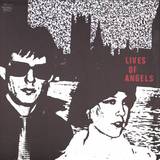
Phantom Forth were the brother sister team of Paul Luker (Guitar, Bass, Vocals), Debbie Luker (Drums, Guitar, Vocals) and Lorraine Steele (Keyboards, Percussion, Vocals). They formed in 1981 in Auckland, New Zealand. Paul began recording his own music after purchasing a 2-track from Oceania Sound. He formed a band with his flatmate and eventually met Lorraine through Debbie. With a shared love of Young Marble Giants and Cabaret Voltaire they started to rehearse at LAB Studio.
'The EEPP' was recorded in 1983 within a few weeks at Progressive Music Studios. Slated for release in February 1984, the mini-album finally appeared in November on Flying Nun Records. It contained seven moody sketches of Auckland. Their sound blends cold wave guitars, drum-machine propelled post-punk with female vocals. The core recording set up was a Casio-Tone VL, Boss DR-55 Dr. Rhythm, Roland TR-606 and an acoustic Yamaha bass. All original vinyl copies contained many clicks and pops and due to paper bits from previous jobs that pressing plant melted down. Included with this reissue are two early demos recorded at LAB in 1982, made prior to Lorraine joining the band, plus a recording from the Flying Nun live compilation 'The Last Rumba'.
All songs have been remastered from the original master tapes for vinyl by George Horn at Fantasy Studios in Berkeley. The vinyl comes housed in sleeve with original artwork collage designed by Paul Lurker. Each LP includes a two-sided 8.5x11 poster with notes and photos.
Dark Entries returns to the New Jersey basement studio of Smersh to unearth a 4-track selection from the 'Deep House Anthems' cassette. Smersh was the duo of Mike Mangino and Chris Shepard, who began making music together in 1978. They were uninterested in traditional notions of songwriting or live performance. Recording in a domestic setting necessitated the abandonment of live drums for rhythm machines, and the Smersh sound would gradually change with each new bit of gear they acquired. The Electro-Harmonic Rhythm 12 gave way to TR606, TB303, and SH-09. Most Monday nights, they would write a new song from scratch. A couple hours later, the song was recorded, never to be performed again. By 1988, they had already put out at least 16 different tapes on their own Atlas King imprint. They would be followed by as many more. Some of those (subsequent) tapes there were less than 10 copies that got made because nobody wanted them. They couldn't get reviewed,' says Mike Mangino. As these tapes traded their way across continents, Smersh developed a devoted following in places far beyond Piscataway, leading to releases on dozens of other labels from around the globe. Smersh's sound is a lush hybrid of techno, industrial, dance, and experimental. Most songs revolve around driving EBM style beats, intricate industrial noise manipulation and synth melodies. For 'Selected Deep House Anthems' we selected 4 tracks of pulsating acid techno, which were recorded live, direct to DAT. All songs were originally recorded and released in 1991, and this the first time all but one of these songs are appearing on vinyl.
Diseño Corbusier is the avant-garde electronics duo of Javier G. Marín and Ani Zinc, formed in Granada, Spain 1981. Like Sheffield's relation to London during the punk explosion in the UK, Granada developed an experimental music scene 400 kilometers south of Madrid. As a child, there were no records in Ani's house, so she grew up listening to the radio and was hypnotized after hearing 'Remember Love', by Yoko Ono. While attending university in Granada she responded to an ad in a music magazine by Javier, If you're into bands like Cabaret Voltaire or Flying Lizards, call me'.
The duo recorded their debut album Stadia' in 1982 and self-released as a limited edition cassette on their label Auxilio de Cientos. They drew influences from contemporaries like SPK, Throbbing Gristle, Esplendor Geométrico and DAF. They employed the 'cut-up' technique William Burroughs used to write his books to splicing their magnetic tape loops. Instruments used included a Korg Lambda, Boss DR-55 drum machine, Roland SH 101, and MFB 501 drum machine. The lack of money to buy more expensive instruments forced the duo to be more creative. Everything was recorded directly to a cassette player that was plugged into a Revox B77 reel to reel tape machine to add echo. Ani manipulated and treated her naive, menacing vocals to match Javier's processed rhythms. These early sketches contain atonal, arhythmic, thick shifting curtains of synth, loops and radio samples. For this reissue we've added 7 bonus tracks taken from various cassette compilations, as well as three previously unreleased songs. Elements of industrial music, primitivistic techno and vocal manipulation are fused with a Dadaist approach utilizing modern technology.
All songs were remastered for vinyl by George Horn at Fantasy Studios in Berkeley. The front cover is an exact replica of the band's original design, restored by Eloise Leigh. Each copy includes a 4 page xeroxed booklet with photos, press clippings and liner notes from Javier. Powerful and evocative, soundtrack music for a rising storm or revolt.' Sound of Pig magazine 1985
Bocal 5 were a No Wave art group composed of Doc Pilot (synths, vocals), Zouka Dzaza (bass), Florian Guillou (synths), Mickey Lepron (electronic drums, bass) and Evy Tinguette (lead vocals). The project was born in November 1980 in Tours, France as the brain child of Doc Pilot. Between 1981 to 1986 Bocal 5 recorded one 7' single and a cassette-only album before taking a year off in 1984 to launch X-Ray Pop. Influenced by Erik Satie, Brigitte Bardot, Suicide and Young Marble Giants, they call their music "minimum naive new wave."
Musique Électronique' is a 19-track compilation of songs recorded across 1983, most of which have never been released on vinyl before. 16 tracks appeared on the From Bocal 5 To X-Ray Pop' album originally released on cassette by Sound of Pig in 1984. Both tracks from their debut 7' originally released in MB5 1984 are included and show a progression in sound as a result of newer recoding equipment and techniques. Also present is a song from the tape compilation Andreas N°3 L'Animal" released by Fraction Studio in 1984. Armed with a Korg 770, MS-10, Prophet Pro-One, Roland TR-707 and TB-808 they crafted their own brand of quirky synthesized electronic pop. Songs are short, concise and well structured, richly textured, moving at a quick speed with hardly a pause. Evy's pouting, tongue-in-cheek vocals (sung in French) come together for a catchy, sensuous, danceable, eccentric psychedelic ride. This collection shows the group's sense of humor, vitality and carefree playfulness.
All songs have been remastered for vinyl by George Horn at Fantasy Studios in Berkeley. Each jacket displays a bright neon green collage of photos and ephemera from the band's archives designed by Eloise Leigh that exudes the project's DIY spirit. Each copy includes a 6-page xeroxed booklet with photos, original artwork and press clippings.
New Portland based label, Dark Leader, emerges with it's premier release featuring two gritty masterpieces to lose your mind to on the dance floor. 'Reasons for War,' a heavy techno track by DRVG CVLTVRE, transports you to the iconic volleyball scene from, 'Top Gun,' if it were being played by a group of ruthless Terminators. EMILE STRUNZ's track, 'Bubastis,' named after the ancient city of the cat goddess Bast, will lure you into a sweaty, Egyptian-tinged hypnosis. Limited release worldwide, Dark Leader 001 is housed in full color jackets featuring artwork by Koen Delaere, designed by Eric Adrian Lee and mastered by Timothy Stollenwerk.
Executive Slacks began in the hot, humid summer of 1980 Philadelphia by Matt Marello, John Young and Albert Ganss, three bored, broke, anxious art students. Starting out with performance art in subways, they soon took their angst-ridden act to galleries and night clubs. The band found their moniker in a run-down bookstore after seeing an ad for men
Lunapark is the trio of Burkhard Ballein, Klaus "Schlips" Gebauer, Reinhard "Zoppen" Benisch from Wuppertal, Germany. Formed in 1981 when the boys were dissatisfied with their surrounding musical environment. They packed their instruments and a cassette recorder and set off to create their own brand of Neue Deutsche Welle (NDW "New German Wave'). Their influences included The Beatles, Colloseum, Roxy Music, Frank Zappa as well as Sex Pistols, Ian Dury & The Blockheads, Blondie and The Cure. Gefangene Vögel' ('Prisoner Birds') is their debut album released by Intakt Records, Stuttgart in 1982. Utilizing a simple set up of guitar, bass, drums, drum-computer, Korg MS-10 and Korg MS-20 they recorded 10 tracks that make up the album. Songs bridge the Belgian-type industrial and cold sounds with NDW quirkiness. In the vein of Sad Lovers and Giants, and Schleimer K they blend post-punk and new wave music with electronic influences. All songs are sung in German with monotone vocals and epitomized the urban Zeitgeist of the Cold War. All songs have been remastered for vinyl by George Horn at Fantasy Studios in Berkeley. The vinyl comes housed in a replica of the original jacket design, which features a drawing of birds on a grid. There are 4 different color versions of the screen printed jacket: blue, yellow, magenta and turquoise. Each LP includes a copy of the double sided 11x11 insert that was included with the original pressing with lyrics and photos.
Immersed in the early days of the 90s midwest rave scene, Bill Converse began DJing at a young age in Lansing, Michigan. Luminaries such as Claude Young, Traxx, and Twonz were key early influences. Since moving to Texas in 1998, he has experimented with analog techniques in varied studio bunkers. Early techno, noise, ambient, tape, and paranormal processing are all part of his uncanny sound palette. Warehouse Invocation' is Converse's debut 12 release, collecting material from a cassette release on Obsolete Future plus a new unreleased song. Three of the tracks, Warehouse Invocation', Senys Magick' and Consulted Acid', were recorded in Austin TX between 2012-2013 at home and direct to tape with no overdubs or multi-tracking. Riverbank' was also recorded at home in early 2014 in one take with a mic placed outside of the window to record the the sounds of the river late at night. Bill is informed by his surroundings, influenced by scenes of desolation in nature, the sea, the desert, and places of industry, like power stations, old factories, and warehouses. The songs on this EP length reveal a sublime influence from Detroit techno, early Chicago house, and Acid. The album was recorded and mixed by Bill at his home studio in Austin and mastered by Dave Alex. All songs were EQed for vinyl by George Horn at Fantasy Studios in Berkeley. A custom-made jacket designed by Eloise Leigh features a mystical collage by Josua Dorje Ngodup with acid yellow hues on a deep blue-purple background. Each copy includes a postcard with notes and a Buddhist mandala
Series-A was the duo of Sam Anderson aka DJ Maestro and Dave Webb aka Kid Fresh. Sam and Dave both grew up listening to the sounds of the Electrifying Mojo on WJLB in Detroit. They met in 1983 at a DJ gig that they were both hired to play. In 1986, they collaborated on the Nu-Sound II Crew project. After developing a friendship with Juan Atkins, they became hip to the emerging new club sounds that were to become electro and techno.Their subsequent project, Series-A, was named after different car model numbers, but also hints at the evolution of humankind into a new species.
In 1987, Series-A recorded the single Evolution 5 Technology' at Spectrum Sounds Studio in St. Clair Shores, Michigan. Their set up was a vocoder, E-mu Emulator III, Roland 909 drum machine, and an Otari 24-Track recorder. They landed a record deal with Satellite Records in Burbank, California, which had been founded by Pete Moore of The Miracles. After pressing 50 promotional copies, the label ran into financial problems, and the record never reached a full release. Taking cues Kraftwerk, Grand Master DST, Grandmaster Flash & Jam Master Jay, Series-A created dark electro beats in an era when sampling appeared to be the future of music. Lyrically the song addresses our species' entry into the technological age. For this EP reissue, the 7' Mix and Dub Mix are included on the A-side. On the flip is a new remix by prolific Ann Arbor producer JTC, an alias of Tadd Mullinix (aka Dabrye, SK-1, & Charles Manier). JTC speeds up and expands the song to seven minutes. Drawing on influences from Ron Hardy to Jeff Mills, he drives around suburban techno landscapes while simultaneously launching the listener into deep space.
All songs have been remastered for vinyl by George Horn at Fantasy Studios in Berkeley. The jacket is specially designed by Eloise Leigh and features a cyborg fossil motif with RGB color band and gradients. Each copy includes a post card with with notes.