
vorbestellen19.12.2026
erscheint voraussichtlich am 19.12.2026
22,65 €
erscheint voraussichtlich am 19.12.2026
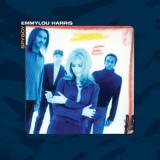
“A good song can survive and shine in different ways in the hands of different musicians,” says Emmylou Harris. “It can have different meanings at different times in your life. A good song can travel with you anywhere.” That philosophy has guided her fifty-year career in country music, during which she has covered countless songs across countless genres and put her own indelible stamp on each one. More specifically, it’s the philosophy that animates both Spyboy, her touring band in the late 1990s, and Spyboy, the 1998 live album that demonstrates how these musicians made her songs shine. Sequencing old songs alongside new ones, the album tests the tensile strength of each one, pushing them into wilder and more psychedelic territory while remaining grounded in earthy country music. It’s completely unique in her catalog, a crucial document of an important chapter in her career, and it’s finally getting reissued after years of being unavailable. “It’s such a special record,” she says. “Well, they all are, but this one is really, really special. That was such a fantastic band and such an amazing time.”
Spyboy grew out of Wrecking Ball, Harris’ groundbreaking 1995 collaboration with producer Daniel Lanois. In 1996 and 1997 together with Buddy Miller, Brady Blade and Daryl Johnson, The band, also named Spyboy, toured America and Europe together, never playing a song the same way twice. Buddy Miller brought along his recording gear and recorded nearly every show on the tour. When their time on the road ended, Miller and Harris sat down together and they culled through hundreds of tracks to choose the ones that best represented the Spyboy ethos of endless possibility. They whittled the original release down to 14 tracks and in 1998 Eminent Records released Spyboy on CD.
erscheint voraussichtlich am 07.11.2025

Sunset edition - 300 copies
Driving is Sam Wilkes’ Indie Rock record. Iit is the first release on Wilkes Records, an imprint borne of the artist’s emergent need to self-release. The songs presented here exist comfortably within the ever-expanding Wilkesian cosmos, characterized as they are by virtuosity, torqued experimentalism, and collaboration with a range of talented musicians. But Driving’s influences, its sincerity, and its allegiance to a certain pop sensibility reflects a departure for an artist who has primarily staked his claim within the experimental jazz idiom.
Take the first track, “Folk Home,” which inaugurates the album’s fecundity—a bright, green, humid, summer feel. A swirling, freakout coda of reversed vocals gives way, in no short order, to a caterwaul of flute work that conjures Van Morrison’s (in)famous Astral Weeks sessions. Standing beside Morrison, the usual suspects are all present, if somewhat abstractedly. Dylan, The Dead, Joni, the Fab Four. Wilkes has developed a reputation as an experimental jazz luminary, but his deep affinity for the pop/rock/folk idiom of the latter twentieth century rings clear throughout Driving. More so than any Wilkes release to date, Driving is a collection guided by and dedicated to the man’s attention to songcraft.
Written and recorded during a period of rain-damage induced renter’s itinerance (and the attendant desire to produce a kind of therapeutic, self-soothing, home-feeling music), Driving loosely charts the trajectory/experience of “a protagonist,” both Wilkes and not, “who has figured out how to live an enlightened and fulfilled life, but is unable to do so because he thinks about it too much.” This friction is surely relatable — a symptom of our compulsively self-aware present. But Wilkes avoids the obvious pitfalls of public hand-wringing. Rather, Driving’s nine tracks evince a genuine, and mature searching-ness, both sonically and lyrically. The ending refrain of “Own” serves like something close to a thesis— “Letting go // isn’t a concept // it’s an action.” In an attempt to beat back ego, hyper-cogitation, language itself, Wilkes arrives at an axiom that feels so true and familiar, you’d swear you’d heard it one hundred times before.
Driving’s final third is, fittingly, its most emotive and cathartic. Tracks seven and eight, “Again, Again” and “And Again,” form a diptych, joined most obviously by the jangling, recursive grooves of guitarist Daryl Johns. Wilkes is said to have encouraged Johns to go “full Lindsey Buckingham” (clearly a welcome and resonant prompt), but one also catches stray Knopfler vibes, some intermittent Fripp, and (perhaps more-so in tone than technique) the spirit of DIY prophet and jangling man himself, Martin Newell (the Cleaners from Venus). Wilkes has stated that he finds joy in creating musical environments suitable to the contribution and flourishing of his favorite musicians. Throughout Driving, and in these two tracks especially, he has more than succeeded.
The record closes with the titular track: a story-song that, according to Wilkes, poured out of him (melody, composition, and lyrics) in a single sitting. The tale is told plainly, bravely, starkly; a mistake was made, regrets have been had, and all is wrapped up in the recollection of a deeply felt adolescent heartsickness—a time when the narrator was first afire with music and automotive freedom. The song captures the moment when meaning inexplicably falls into place, when a long-nagging memory suddenly assumes narrative form, and the subsequent sense of lightness and unburdening. It is fitting that Driving, a record conceived as a form of self-therapy, should culminate with a sense of humble revelation. That Wilkes is plainly eager to share the vulnerable fruits of this labor constitutes Driving’s joyful offering.
Words by Emmett Shoemaker
erscheint voraussichtlich am 28.03.2025

Reissue of George Duke's classic 1976 jazz-funk-fusion album 'Liberate Fantasies'
This 1976 album, the last one of the MPS fusion series, continues George Duke's tendency to couple his fusion world with accessible R&B songs. Once again, he shows a discernible vocal development. In "Tryin' And Cryin" the Californian together with rock singer Napoleon Brock overlays multiple vocal tracks.
On "Seeing You" Duke lays on a glaze of soulful tenderness, whereas "What The…" is 30 seconds of frivolous funning around. "Back to Where We Never Left" is a witty gem in which Duke bundles his pool of synthesizers into a united groove, whereas "I C'n Hear That" shows off synth and marimba tonal colors in dialogue, with the bass riffing on the bottom.
The album flows into the final bend carrying along the sonorous richness of Brazil. "After the Love" plays with the languorous erotic colours of the tropics, whereas all the band members are allowed to shine on the epic circa ten minute title track with its hot samba flair: the rhythm section with "Ndugu", Al Johnson, and Airto Moreira's percussion arsenal, Daryl Stuermer with his rock interludes on guitar, and Duke himself with inspired virtuosity on all sorts of synths and
keyboards.
Bestelle jetzt und wir bestellen den Artikel für dich beim Lieferanten.

Reissue of George Duke's classic 1975 jazz-funk-fusion album 'I Love The
Blues'
On the fourth album of his fusion cycle, George Duke substantially expanded the
number of his colleagues. As before, drummer Leon "Ndugu" Chancler beats as
the heart of the rhythm section, and the Brazilian couple, Airto and Flora are again
on board. The ten tracks perform a stylistic balancing act. The jittery funk of
"Chariot" and the smooth ballad "Someday" show off Duke's soulful vocal flair.
Flora Purim crowns the complex "Look Into Her Eyes" with her spheric sound as
she and guitarist George Johnson take care of business on this stratospheric
piece with its bluesy electric shuffle. With two high- voltage guitarists (Daryl
Stuermer and Byron Miller), "That's What She Said" points to the tie between rock
and funk. The most eye- opening outing occurs with star guitarist Lee Ritenour
stomping on "Rokkinrowl, I Don't Know", and its Hendrix parody. "Sister Sirene"
shows that, naturally, the typical dreamy Duke instrumentals are not left off the
album. An almost animistic soundscape is woven into the fabric of "Mashavu",
and "Giant Child Within Us - Ego" is a small fusion suite encompassing the
spectrum from the classical to the Zappaesque finale. The title piece is indeed a
blues, dished out pure and simple - a far cry from the sounds of the preceding
piece with its mountains of synthesizers. Rather, the sultry delta heat, the
acoustic simplicity and raw truth of the song prevail - the blues.
erscheint voraussichtlich am 25.02.2022

Alto saxophonist Immanuel Wilkins follows-up his acclaimed debut Omega (NY Times Best Jazz Album of 2020) with another striking album featuring his remarkable quartet with Micah Thomas on piano, Daryl Johns on bass, and Kweku Sumbry on drums plus special guest appearances by flutist Elena Pinderhughes and the Farafina Kan Percussion Ensemble The album consists of an hour-long suite comprised of seven movements that strive to bring the quartet closer to complete vesselhood by the end, where the music would be entirely improvised, channeled collectively. The title is derived from a question steeped in Biblical symbolism: If the number six represents the extent of human possibility, Wilkins wondered how it would sound to invoke divine intervention and allow that seventh element to possess his quartet. “It’s the idea of being a conduit for the music as a higher power that actually influences what we’re playing,” he says.
erscheint voraussichtlich am 28.01.2022

Emmylou Harris made her Nonesuch Records debut with the release of her album Red Dirt Girl 20 years ago, in September 2000. To mark its twentieth anniversary, Nonesuch releases the album – which won the Grammy Award for Best Contemporary Folk Album – on limited-edition, translucent red vinyl.
Harris – whom the Los Angeles Times dubbed ‘the most captivating female artist ever in country music’ – wrote all but one of the twelve tracks on Red Dirt Girl, marking only the second time in her career that she had been so involved in the composition of an album. ‘In songs about lonely journeys and lost companions,’ said the New York Times, ‘Ms. Harris has found herself.’
Red Dirt Girl was produced by Malcolm Burn, who had worked with Harris engineering and mixing her previous solo studio recording, 1995's Wrecking Ball, and features Burn on piano, guitar, and bass; Buddy Miller on lead guitar; Daryl Johnson on bass and drums; and Ethan Johns on drums, guitar, and other miscellaneous instruments. Dave Matthews sings a duet with Harris on the album, and Bruce Springsteen, Patti Scialfa, and Patty Griffin also contribute vocals.
Commenting on her new label and record back in 2000, Harris said: "I take pride in my new association with Nonesuch, a label for whom I have great admiration. Red Dirt Girl is a very meaningful record for me. I’ve only written this much for an album once before – The Ballad of Sally Rose – and I’m very pleased as well with what we have accomplished in the studio."
Nonesuch Records President David Bither said at the time: "We have had the privilege over many years to work with some of the most creative and influential artists and producers in music. This launches a new area of musical exploration for Nonesuch, and we are thrilled that Emmylou is the artist to open this door for us. It is an honor to work with an artist who has such a formidable body of work behind her, but who is now creating possibly the best music of her career."
Harris has since released three additional solo studio albums on Nonesuch, Stumble into Grace (2003), All I Intended to Be (2008), Hard Bargain (2011); reissues of Wrecking Ball (2014) and her 1992 album with the Nash Ramblers, At the Ryman (2017); two duo albums with Rodney Crowell, the Grammy-winning Old Yellow Moon (2013) and The Traveling Kind (2015); two releases in 2006 with Marc Knopfler, All the Roadrunning and Real Live Roadrunning; and vinyl box sets of her early albums, in 2017 and 2019.
erscheint voraussichtlich am 19.02.2021
