Originally released in 1972, You Are the Music... We're Just the Band was recorded with producer Neil Slaven. The line-up of Glenn Hughes (Deep Purple), Mel Galley (Whitesnake), and Dave Holland (Judas Priest) recorded this album before disbanding later that year when Hughes left in 1973 to join Deep Purple. You Are the Music... We're Just the Band also featured a wide range of guest performers, including guitarist B. J. Cole, pianist Rod Argent and saxophonist Jimmy Hastings. You Are the Music... We're Just the Band has not been released on vinyl since 1978 and now has been fully remastered and comes on white, red and black twist 180-gram vinyl and beautifully repackaged (limited to 250 copies pressed – gatefold sleeve).
Поиск:dave bo
Все
When Paul Murphy released his critically acclaimed debut solo album, Claremont 56, in 2006, many thought it would be the first of many. In a way, it was, as in the years since he’s released a string of collaborative sets alongside Benjamin J Smith (as Smith & Mudd), and as part of underground ‘supergroups’ Paqua, Bison and Hillside. But that second solo album? Well, it just had to wait. In early 2023, Murphy finally decided to scratch that itch, roping in some of his most trusted collaborators (keyboardist and bassist Michele Chiavarini, percussionist Patrick Dawes, guitarist Dave Noble and HF International’s Kashif included) to lay down a sumptuous set of tracks that not only showcases his now familiar (bit hard to pigeonhole) neo-Balearic sound, but also proves how much he has matured as a writer and producer since 2006.
In The Garden of Mindfulness is richly musically detailed, expertly arranged and full to bursting with fluid instrumental solos, with Murphy and his collaborators serving up tracks that brilliantly blur the boundaries between languid jazz-funk, downtempo, vintage synth-laden krautrock, dubby grooves and sun-splashed soundscapes. It simply sparkles from the moment that opener ‘Eighty Three’ slowly rises like the morning sun, with gentle, undulating synth sounds ushering in a slow-motion jazz-funk excursion rich in twinkling electronics, spacey pads and warming bass. Recent single ‘Katanaboy’, a lusciously layered dub disco-infused dancefloor excursion in Murphy’s familiar style, raises the temperature a touch, before ‘Bonne Anse’ and the sublime ‘Unka Paw’ (whose combination of evocative fretless bass, extended electric piano solos, Clavinet licks and acoustic guitars is genuinely spellbinding) invite a combination of wavy shuffling and flat-on-the-back, eyes-closed appreciation.
And so it continues, with gorgeous title track ‘In The Garden of Mindfulness’ making way for the boogie-influenced, Japanese-British brilliance of ‘Hangsang’ (check the jaunty pianos, yearning breakdown and exotic melodies). Murphy’s long held love of warm, weighty bass, hypnotic disco grooves, colourful analogue synth sounds and jazzy guitars once again comes to the fore on ‘Way Of The Hollow’ before the album reaches a fittingly triumphant conclusion with ‘Late In March’.
A neat sonic summary of all that makes the set such a rewarding and entertaining experience, repeat listens reveals a wealth of musical details, from off-kilter triple-time drums and surprise bass guitar solos, to impeccable piano solos (provided by the immensely talented Chiavarini), fizzing jazz-funk synth doodles and stirring synth-strings. It’s a breathlessly brilliant way to end an album that was genuinely worth waiting for.
Harm’s Way is Duck Ltd.’s most intuitive and organic album yet, the result of keen observation, self-possessed songwriting, and a collaborative spirit. Building on the successes of their previous releases, the deeply relatable album displays a band operating at a nuanced, lyrical and musical best.
Ducks Ltd. make inviting and frenetic guitar pop for when life feels overwhelming. While the band’s songs are ostensibly breezy, a palpable anxiety boils underneath that communicates something deeper about everyday existence. On their latest album Harm’s Way, the Toronto duo of Tom McGreevy and Evan Lewis hones in on interpersonal and societal collapses, urban decay, and the near-impossibility of keeping a level head when everything around you seems to be falling apart.
“They’re songs about struggling,” says singer and lyricist McGreevy (who also plays bass and rhythm guitar). “About watching people I care for suffer, and trying to figure out how to be there for them. And about the strain of living in the world when it feels like it's ready to collapse.”
Even with its often dark subject matter, Harm’s Way is Ducks Ltd.’s most vividly rendered and collaborative collection yet. It’s an undeniable evolution for the band, not just in how these songs soar, but in their entire writing and recording processes. Composed on tour while supporting acts like Nation of Language, Illuminati Hotties, and Archers of Loaf, the album displays the band’s finely tuned songcraft and well-earned, road-tested confidence. “When we got signed, we had played maybe five or six shows ever. After last year, it’s in the hundreds. That experience can change your perception of your own music and songwriting,” says McGreevy. “In the past when we got stuck on a song we had a tendency to look at our favourite records to see how they tackled it. But now, instead of asking ‘what would Orange Juice do?’, we’d ask, ‘what would we do?’.” Lewis adds, “We have this really great thing where every decision with the band is filtered through both of us. Here especially, we really figured out how to make something that truly sounds like us.”
The band, fortified by this strong sense of sonic identity and a self-assurance in their new material—and in contrast to their critically acclaimed 2021 debut Modern Fiction and 2019 EP Get Bleak, both self-recorded and self-produced in a Toronto basement—wanted to bring Harm’s Way to life in a new city, with an outside producer, and with some of their favourite musicians. “We realised that so many of our favourite bands who are making guitar music right now are from Chicago,” says McGreevy. Working with producer Dave Vettraino (Dehd, Deeper, Lala Lala), they enlisted a marquee cast of Windy City collaborators to round out the tracks on Harm’s Way, including: Finom’s Macie Stewart (violin, string arrangements); Ratboys’ Marcus Nuccio (drums on most tracks); Dehd’s Jason Balla (who helped arrange the backing vocals, to which he also contributed); and backing vocals from Julia Steiner (Ratboys), Nathan O’Dell (Dummy), Margaret McCarthy (Moontype), Rui De Magalhaes (Lawn), and Lindsey-Paige McCloy (Patio). The band’s touring drummer, Jonathan Pappo, and bassist Julia Wittman also appear on the LP.
Ducks Ltd. are a band that already thrives on skirting the edges of buoyant jangle pop and driving power pop, and the duo credits these collaborators with helping to push their sound even further. “Historically our process has been really tightly controlled and insular. On this record, we worked with people who we trusted with a pretty wide range of musical backgrounds and they had approaches and ideas that helped open up the record's sonic palette,” explains McGreevy. “Jason thinks about backing vocals in a totally different way than I do and is super intuitive with melodic ideas. Julia and Margaret have a really deeo understanding of harmony. Macie and Dave were comfortable with the idea of improvising string parts which took some of those layers in some surprising directions. Dave also has an amazing ability to create atmosphere on a recording, and encouraged us to use a bunch of different techniques, tones, and processes to achieve that.”
Harm’s Way’s lush, melodic swagger is clear from the first notes of opener “Hollowed Out.” A song about living with decline (inspired by a Toronto sinkhole), its bright, indelible catchiness serves in contrast to its lyrical unease. Anchored by Lewis’ shimmering electric guitar, “The Main Thing” laments growing apart from a person whose views you once shared while managing to toss in references to both the unglamorous lives of middle relief baseball pitchers and the occult. Other songs split the difference between country and krautrock, like the rollicking “Train Full of Gasoline,” which uses the 2013 Lac-Mégantic rail disaster in Quebec as a metaphor for self-destructive patterns. Meanwhile, “Deleted Scenes” mourns the absence of someone no longer in your life (even if for very good reasons) and recalls The Cure at their most direct, and closer “Heavy Bag” employs enveloping, mournful strings to evoke a sense of how misery frequently loves company.
Mandalaband began life in the early 1970's, gaining cult status as one of the most forward-thinking prog outfits of the time. The brainchild of David Rohl, who formed a lineup featuring future Sad Cafe members Vic Emerson (keyboards), Ashley Mulford (guitars), John Stimpson (bass guitar and backing vocals), Tony Cresswell (drums) and vocalist Dave Durant.
Mandalaband received critical acclaim with legendary BBC radio presenter John Peel playing the entire album on his show before promptly re-broadcasting the whole thing immediately after. Unfortunately, at the time, this didn't translate to sales and Mandalaband fell into obscurity. However, with the advent of the internet, their legend grew, exciting a new generation of prog fans.
We are now pleased to make these recordings available again and offer a chance to dig into some of the most interesting progressive music of the '70s. As well as presenting the original album remastered, David gained access to the original 24-track analogue master tapes, having them restored and digitised at Abbey Road Studios before reinforcing the sound and instrumentation before remixing the entire album.
Nearly fifty years on, a veil of sonic mist has been lifted from these unique recordings.
Format: 2LP 180g gatefold edition featuring the original album and David Rohl 2024 remix of entire album, both remastered at AIR Mastering, with rare bonus track. Includes newly written liner notes.
- A1: Brainticket - Places Of Light
- A2: T.j. Lawrence - Fireplay
- A3: Robert Rental - Double Heart
- B1: African Head Charge - No, Don't Follow Fashion
- B2: Keith Hudson - Nuh Skin Up Dub
- C1: Smokin' Cheeba - When I Was A Youth
- C2: The Wad - 15 Inches
- D1: Idjut Boys & Laj - Foolin' (Beatin On Dave)
- D2: Jbb Et Soprann - Tibi Lap
Part 2.[29,83 €]
Optimo (Espacio) started life as a weekly club night. It was born at The Sub Club in Glasgow on a wet, windy, wintry November Sunday night in 1997. Run by JD Twitch and partner in crime Jonnie Wilkes. Optimo was a reaction against what felt like an increasingly conservative musical soundtrack in clubs here at that time. Clubland felt as if it had become very bland and a bit too serious; it was the era of the dawn of the Superstar DJ. Clubs often felt like bastions of male energy. It seemed dance music and culture was going somewhere far, far away from where it was meant to be. The notion of fun had got lost.
It was no longer the world they had devoted ten years of their lives to already, and lots of their friends felt the same. When the opportunity came up to do a Sunday night at The Sub Club it felt like the perfect opportunity to rip it all up and start again. So they did. There was nothing in the city (or possibly anywhere) like it. As the club believed wholeheartedly in what they were doing, there was no pressure from The Sub Club to fill the club. So, they embraced the freedom. Groups of people who had never been in the same room at the same time before came together. A community of kindred spirits started to emerge.
Word spread, slowly. Lots of people checked it out. Many loved it, some hated it. The core of the Optimo idea was to embrace music they loved that might work on the dancefloor from whatever era or genre they thought felt right. It might not seem very radical now but at that time it was revolutionary.
After about a year and a half, the club went from having 100 people attending most nights to suddenly one week having 500 people turn up. It was very weird. It was as if a collective light bulb went off in people’s heads in Glasgow. From that week on, until the very last weekly Sunday night at the Sub Club, in 2010, over a decade later, it was packed.
There were 550 Sunday Optimo nights. A LOT of music was played. So, what was the music? People often find it hard to pin down exactly what Optimo is. This has been a positive but also a negative as we live in a world where people want easily defined “brand identities”. The simplest definition of the music played is “music for dancing”, which of course is a very broad definition. Even better than trying to define it in words, we have these 2 volumes of music that give a hint of what that might be.
This is not a “Best of Optimo” or a “Greatest Hits of Optimo” compilation. For people who come to, or used to come to the nights there are of course “Greatest Hits”. But, over such a long timespan they are “hits” belonging to a certain moment in time and space. Someone who came to Optimo in 1997 would have a completely different notion of the big tracks at the club to someone coming in 2003, or 2010, or today. This compilation is just a snap shot missing several genres that might make up the DNA of Optimo. There is though a broad sweep through lots of music Optimo loves, that they believe is amazing. Music that they know will rock a dancefloor, that they have played between 1997 and 2023. Of course Optimo nights were not all about rocking the dancefloor. The first hour was always a time for them to play music they loved that often was far removed from the dance. Side 1, Volume 1 of this compilation is the kind of music one might hear at the very start of an Optimo night.
Optimo have always loved a good slogan. The most long lived, and fitting Optimo slogan is "We Love Your Ears", which is in essence what it is all about to them.
The acclaimed Cleveland-born saxophonist Joe Lovano came to Blue Note Records in 1990 and over the next 25 years became one of the most recorded artists in the label’s history, building a formidable and far-ranging catalog that explored the full breadth of his artistry. Recorded in September 1997, Trio Fascination: Edition One stands out as one of the more remarkable sessions in Lovano’s discography with the saxophonist joining forces with two all-time legends—bassist Dave Holland and drummer Elvin Jones—in a spare trio setting that finds these three masters conversing freely. Throughout Lovano can be heard on tenor, soprano, alto, and straight alto saxophones, as well as alto clarinet, and the set consists of nine creative Lovano originals including the pulsing opener “New York Fascination,” the spacious “Sanctuary Park,” the Sam Rivers tribute “Studio Rivbea,” and a stunning rendition of the lone standard “Ghost of a Chance.” This Tone Poet Vinyl Edition marks the album’s first-ever release on vinyl.
The Tone Poet Audiophile Vinyl Reissue Series was born out of Blue Note President Don Was’ admiration for the exceptional audiophile Blue Note LP reissues presented by Music Matters. Was brought Joe Harley, a.k.a. the “Tone Poet,” on board to curate and supervise a series of reissues from the Blue Note family of labels.
Extreme attention to detail has been paid to getting these right in every conceivable way, from the jacket graphics and printing quality to superior LP mastering (direct from the master tapes) by Kevin Gray to superb 180g audiophile LP pressings by Record Technology Inc. Every aspect of these Tone Poet releases is done to the highest possible standard. It means that you will never find a superior version. This is IT.
This stereo Tone Poet Vinyl Edition was produced by Joe Harley, mastered by Kevin Gray (Cohearent Audio) from the original analog master tapes, pressed on 180g vinyl at Record Technology Inc. (RTI), and packaged in a deluxe gatefold tip-on jacket.
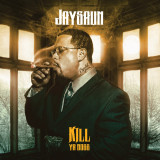
- A1: Anything Ft. Slaine (Produced By Marco Polo)
- A2: Kill Ya Boss (Produced By Teddy Roxpin)
- A3: Bad Luck Ft. Wris P & Larry Cheeba (Produced By Nox Beatz)
- A4: Hitg (Produced By Stu Bangaz)
- A5: Strawberry (Produced By Marco Polo)
- A6: It Don't Matter Ft. Rex X Edo.g (Produced Supa Dave)
- B1: Voltron Ft. Edo.g X Slaine (Produced By Teddy Roxpin)
- B2: Suicide (Produced By Falside)
- B3: Boston/Ct/Philly Ft. Blacastan & Reef The Lost Cauze (Produced By David Gunkel)
- B4: Part Of The Game (Remix) Ft. Craig G & Larry O/Lo (Produced By Skip Whitman)
- B5: Divorced (Produced By Audible Doctor)
- B6: Kings (Produced By Statik Selektah)
FOLLOWING THEIR RECENT REUNION, THE DELGADOS REISSUE THEIR FOURTH STUDIO ALBUM HATE ON COLOURED VINYL AND CD TO MARK ITS 21st ANNIVERSARY
Ushering in a new era of emotionally vulnerable and cinematic songwriting for celebrated Glasgow group The Delgados, 2002’s Hate is the group’s most ambitious recorded statement to date. Recorded amidst a backdrop of personal change and international crisis, Hate’s internal alchemy transmogrifies darkness into light. It’s an enclosed universe full of tragedy and magic, a swirling galaxy of lush orchestration, misanthropy dealt with kindness and black humour. Above all it showed a band coming to terms with their fragility with a new power and grace.
In Hate, the band’s ambition saw them striving to reflect the breadth of human experience, both the joy and tragedy of living in tumultuous times. Initially commissioned by The Barbican in London to compose music for a film about artist Joe Coleman, the instrumental music that instigated Hate was laden with darkness from the outset. The Delgados’ worldview has always been informed by nuance, an oblique but incisive lyrical perspective but on Hate a new rawness is woven throughout the songs. Coleman’s original subject matter - portraits of troubled historical figures like Ed Gein, Mary Bell and Jayne Mansfield - influenced the tonality of the music but the songs were written against a backdrop of international tumult and personal life changes for the band members. Beginning writing sessions following a family bereavement in drummer Paul Savage’s family, Hate was then recorded while both Alun Woodward and co-singer/guitarist Emma Pollock were expecting new additions to their young families, the latter with drummer Paul Savage. In the background to the recording process were the attacks on the World Trade Center of September 2001 and their aftermath. In this context, it’s remarkable that an album was made at all, let alone one so grand and compassionate. It’s a masterclass in restraint and imagination.
Hate sounds like the world in all its ugly glory. Recorded in Glasgow and New York with Tony Doogan, Dave Fridmann and the band as producers and using over 20 additional musicians, Hate grabs the baton from the group’s breakthrough critical and commercial success The Great Eastern. Bolder, broader and more all-encompassing than anything the band had previously attempted, the album’s palette is furnished by a string section, brass and reed instrumentation, a choir and electronic elements augmenting the core group of Emma Pollock, Alun Woodward, Paul Savage and Stewart Henderson. Far from being over the top, the group’s skill is in attention to detail, in honing and refining each arrangement, allowing each element its space.
It’s a fine balancing act that pays massive dividends. Woodward’s new lyrical vulnerability is spotlighted on tracks like The Drowning Years, which throws elegiac string arrangements against the narrative of characters living in darkness, punctuated by couplets that bring a real-life documentary feel to the narrative. All Rise brings a black comedy to the idea of a confessional before a transcendent, choir-led refrain brings ecstatic resolution to Woodward’s vocal in its highest register. On the single All You Need Is Hate, Woodward’s trick of subverting the Beatles standard showcases the dark humour at the centre of Hate. Here The Delgados’ perversity is in full flow, nurturing a glowing light from darkness, the resolving melody and Fridmann production recalling contemporaries The Flaming Lips (whose Michael Ivins assisted in mixing) or Mercury Rev. The perversity is the surging serotonin induced by the group while singing the lines “Hate is everywhere, inside your mother’s heart and you will find it there. You ask me what you need? Hate is all you need.”
It’s a dark magic that pervades Hate, indeed it’s almost the driving force throughout the album. Flipping minor to major and back again, Favours is fuelled by fear and violence before blasting into the heavens with the gauche line “and you’re feeling fine,” operating in stark contrast to the verses’ tone. Album opener The Light Before We Land finds Emma Pollock in the aftermath of recent family trauma. Her vocal is effortless; a study in steady restraint against the massive, Fridmann-patented drum sound powering Savage’s playing and Henderson’s instantly recognisable melodic basslines. Coming In from the Cold is Pollock in full flight, lifted to the heavens by wide-screen, instrumental texture. Her presence on Hate highlights her knack for lyrical impressionism, the timbre of her voice lending itself to drama while always retaining a mystique. Never Look At The Sun, inspired by the Coleman painting The Big Bang Theory (itself an explosives-themed study), revels in paranoia, her performance ringing out in the eye of the storm conjured by the swirling arrangements. It reaches the peak of a redemptive arc while seemingly parodying the very idea of redemption.
Hate was the sound of The Delgados completely fulfilling their potential, a fully realised vision buoyed by the weight of coming through a darkness into light. For its 21st anniversary, the album is being reissued on the band’s own Chemikal Underground on coloured vinyl and CD. Hate is all you need
All true improvisation involves an element of chance: the coming together of a nexus of influences impulses and actions that result in spontaneous creation. Often in the world of jazz these creative sparks blaze briefly in performance, and then disappear as the sonic vibrations fade from the air, but sometimes chance intervenes again, and moments thought to be gone forever can resurface in unexpected ways. As master drummer Jeff Williams sorted through his archive of cassette tapes from his extensive international career, he had no idea that hidden within it would be a recording of a 1991 evening when he joined storied NYC legend David Liebman for a set of spontaneous performances. Reunited together fifteen years after the breakup of their seminal band Lookout Farm in 1976, the two players reaffirmed their deep musical bond with a set of free-flowing exploratory dialogues in front of a receptive audience. Believed lost for many years, these performances can now be experienced again, with all their fearless freshness and pure committed musicianship undimmed by the passage of time.
Jeff Williams has established a formidable reputation as a drummer, composer, educator and bandleader on both sides of the Atlantic. His relationship with Liebman was forged in the exciting, expansive atmosphere of the New York scene in the early 70s: the meeting of Williams, the laid back Midwesterner, and Liebman, the mercurial, quintessential New Yorker, was an inspired coming together of opposites that always made the creative sparks fly. Williams remembers the journey that led to the Bar Room 432 on that 1991 evening:
“Just as I was leaving my home town of Oberlin, Ohio to move to New York City in 1971, I was given David Liebman’s phone number by someone who told me that Dave had started an organisation for jazz musicians there. I knew of Dave, from Ten Wheel Drive and John McLaughin’s My Goals Beyond, but I couldn’t have imagined what a significant role he would play in my musical life. Shortly afterwards, Dave would leave Elvin Jones and Miles Davis to start his own band, with Richie Beirach, Frank Tusa, and myself, (later adding Badal Roy), naming it Lookout Farm. We released two albums on ECM and one on A&M to wide critical acclaim, and toured across Europe, Japan, India and the US.”
“Following the dissolution of Lookout Farm, Dave and I embarked on a short duo tour opening for Gary Burton. That would be the last time the two of us would play until the occasion of this recording, fifteen years later.”
“Fast forward to 1991 when I discovered an attractive bar located on the far West Side of 14th Street in Manhattan. Bar Room 432 would become a six night a week jazz club for a few years, providing me, and many others, with the opportunity to perform our music. Catching wind of this, Dave suggested we do a duo performance there.”
“Luckily, I recorded it.There was no preparation, no set music to be played - we simply improvised, picking up where we’d left off. David’s mastery of the soprano saxophone is in full bloom here, as well as his incredibly resourceful musical mind.”
The performances are revelatory, moving in pure improvisation from clear, songlike melody to furious density, from ambience to pulsing groove, from light into darkness and back again. Cleaned up and remastered by Alex Bonney, the sound of the tape captures the warm, wood-lined ambience of the room, allowing the full power and dynamics of William’s drums and the warmth and fullness of Liebmans’ soprano sax to sing out, engaging the contemporary listener just as it engaged the hip Manhattan crowd thirty three years ago.
Hiyo is a coming out party in a lot of ways for a band that has been a staple of the American Folk Music scene for over two decades. Co-Produced and engineered by Nashville's Rachael Moore and including performances by Jamie Dick (Drums), John Mailander (fiddle) and Maya de Vitry (vocals), the album Hiyo pushes the sound of CCL past anywhere it has been before. For a band that spent 15 years performing around a single microphone, CCL has found new inspiration in all of the sounds the world has to offer. "Synthesizers, drum machines, banjo...the world is really open right now to what constitutes folk music and we are grabbing on to that inspiration with both hands and not letting go," says leader Dave Wilson. Produced by Rachael Moore & Dave Wilson. Recorded & Mixed by Rachael Moore (George & Tammy) at Echo Mountain in Asheville, NC. Mastered by Nathan Dantzler at The Hit Lab in Nashville, TN.
As the BBE Music J Jazz Masterclass Series hits its 19th title, the milestone is suitably matched by a collaboration between two giants of jazz brought together to deliver an exceptional album, working with a band of the very best Japanese jazz musicians. ‘Reminicent Suite’ by American pianist Mal Waldron and Japanese trumpeter Terumasa Hino was originally released in 1973 on the famed Victor label and was one of several Japan-only albums recorded and released by Waldron over a thirty-year period, most of which have never been available outside Japan. ‘Reminicent Suite’ comprises two extended tracks, both taking up a side each. The title track on Side A is composed by Waldron, and is a dark, brooding heavy groove typical of his early 70s sound. ‘Black Forest’ on side B is written by Hino and is a vivid and energetic piece, layered and textured with dense percussion and Hino’s signature trumpet tone. Mal Waldron started out in the early 1950s working extensively on the Prestige label with notable figures such as Gene Ammons, Jackie McLean and Charles Mingus. Most famously, he worked with Billie Holiday before leaving the States in the mid-60s and relocating to Europe where he established himself as a major figure working across many countries including France, Italy, and Germany, where he made his home in Munich. In 1969, Waldron recorded the first releases for two major European jazz labels, ECM and Enja, before visiting Japan on tour for the first time in 1970. Waldron instantly fell in love with Japan and, over the next three decades, extensively toured and recorded there for numerous labels. Terumasa Hino is one of the towering figures of post-war modern jazz in Japan. Coming to prominence via the Hideto Shiraki and Sadao Watanabe bands in the mid-60s, Hino soon emerged as one of the prime movers in new jazz generation that changed the direction of jazz in Japan. He explored a more open, freer, and improvised sound, mixing psychedelic and rock elements with freeform and post-bop jazz. Hino recorded for many of the leading jazz labels of the era including Columbia, Three Blind Mice, and East Wind and would go on to relocate to the US in the mid-70s, immersing himself with the leading fusion players of the New York scene including Larry Corryell, Mtume, Al Foster, Dave Liebman and many more. In the early 80s, Hino’s jazz funk tracks were dancefloor smashes on the UK jazz dance scene. Joining Waldron and Hino on ‘Reminicient Suite’ is a band made up of the very best Japanese jazzman of their day: Takeo Uematsu on sax, Terumasa’s brother, Motohiko Hino, on drums, and the legendary bass master, Isao Suzuki. Together, they deliver one of the very best albums of the era, a richly articulated and dynamic session that exemplifies the very best that the Japanese jazz scene was doing in the early 1970s. ‘Reminicent Suite’ is pressed on 200g vinyl presented in a gatefold sleeve plus obi strip, with new photos by Tadayuki Naito; translated original sleeve notes; and a 7500-word essay including interview with Terumasa Hino from Tony Higgins, co-curator of the J Jazz Masterclass Series. This is the first time this album has been available outside of Japan
Ourtime Music returns with three fresh tracks from Dave Ball's archive.
A stunning EP of soulful Techno, emotive melodies and lopsided club grooves.
'Moments' and 'Fall' take us on melancholic, deep Techno journeys to the outer realms and beyond, before finally closing with 'IAM Pro', a minimal claustrophobic Techno track to jam your box !​
VERY Limited copies.
*Limited to 150 copies worldwide*
Dave Wallace and Shaun O’Hara created Mad Dog as their first collaboration project back in 1992, later to go on and also form Fugitive – both projects being released in the early 90’s by Bournemouth based Underdog Recordings.
In 2018 Vinyl Fanatiks repressed their first EP and in 2019 Mad Dog 2 was re-released. This 7” is the 7” edits of Mad Dog 2 – a huge release back in the day and more recently for us, selling out in a few months.
This jukebox holed release is one for the collectors and those who like to drop 7” selections in their sets.
King of the mini platters…
Sourced from the Original Master Tapes and Presented in Audiophile Sound for the First Time: Mobile Fidelity’s Numbered-Edition 180g SuperVinyl LP Plays with Riveting Detail
Three decades before he released The Philosophy of Modern Song — an insightful book devoted to 66 tunes that both impacted his career and the music world at large — Bob Dylan issued Good As I Been to You. The under-heralded 1992 album, Dylan’s first solo acoustic album in nearly 30 years and first all-covers effort in nearly 20 years, can be seen as a prophetic prelude to what has become the Nobel Laureate’s celebrated late-career arc. It’s also an absorbing continuation of the custom Dylan has embraced since he first picked up a guitar.
Sourced from the original master tapes, pressed at RTI, and housed in a Stoughton jacket, Mobile Fidelity's numbered-edition 180g SuperVinyl LP of Good As I Been to You reveals the immediacy, detail, and stripped-down nature of recording sessions that took place in Dylan’s garage studio in California. Simple, raw, and unplugged, the record presents Dylan in peak form — and showcases a diversity of vocal phrasing, soulful chording, harmonica accents, and close-up ambience that on this reissue emerge like never before. As the first-ever audiophile edition of this almost-lost classic, this LP also benefits from SuperVinyl’s extraordinary properties: a nearly inaudible noise floor, superb groove definition, and dead-quiet surfaces among them.
Recorded and mixed by Micajah Ryan, and supervised by Debbie Gold, Good As I Been to You took shape at Dylan’s home shortly after the singer-songwriter completed sessions in Chicago with a full band. Unaccompanied, he again gravitated to existing works — in this case, traditional folk music — and, with Gold serving as a trusted advisor, performed the songs in multiple keys and tempos until he arrived at what he desired. That careful, determined albeit loose, organic approach emanates from this reissue, on which each note, movement, and space come across more directly, fully, and immediately than on the original formats. It helps draw a through-line to Another Side of Bob Dylan (1964) as well as the similarly themed follow-up, World Gone Wrong (1993) and immersive old-world storytelling of Tempest (2012) and Rough and Rowdy Ways (2020).
Well before Dylan made those renowned 21st century LPs, however, he needed to find a way out of a funk that — save for his 1989 collaboration with Daniel Lanois, Oh Mercy — followed him for years. As author Clinton Heylin reported Dylan admitting in 1997: “My influences have not changed — and any time they have done, the music goes off to a wrong place. That’s why I recorded two LPs of old songs, so I could personally get back to the music that’s true for me.”
Truth: Few, if any, concepts better encapsulate Good As I Been to You. It resonates with the same originality, honesty, resolve, and age- and time-defying relevance as the seminal Anthology of American Folk Music that fired Dylan’s imagination as a kid in small-town Minnesota and, later, per Greil Marcus’ That Old Weird America book, informed Dylan and the Band’s Basement Tapes sessions. This record also contains the type of music Dylan was playing during his acoustic sets at his period Never Ending Tour shows; within a year of the record’s release, Dylan would play half the album’s songs live.
As for those songs: Rife with strange mystery, common circumstance, and epic adventure, the stories appeal to our base instincts. Their themes — jealousy, temptation, sacrifice, love, revenge, identity, opportunity — operate on a fundamentally human level immune to trends, generations, or eras. They’re ancient and modern, serious and comical, open and disguised, simple and multi-layered. They talk of vengeance and justice (“Frankie & Albert”; “Jim Jones”), romance and tenderness (“Tomorrow Night,” “Froggie Went a Courtin’”), the troubled and trouble-free (“Hard Times,” “Sittin’ on Top of the World”). They lend voice to lovers scorned and freed (“Blackjack Davey”), the used and users (“Diamond Joe”), the powerful and powerless (“Arthur McBride,” “Canadee-I-O”), the followed and followers (“Little Maggie”). And akin to much of Dylan’s finest output, things are not always what they appear to be.
Spanning country, folk, sea shanty, bluegrass, and blues motifs, Good As I Been to You re-confirms Dylan’s position as an elite interpreter and sculptor — not of just structure but emotion. Dylan delivers the tunes as if he’s known them forever. He plays with a subtle sense of mischievousness and retains a largely upbeat demeanour; his eyes seemingly twinkle as he sings and picks. His guitar serves as the guidepost for shuffles, boogies, ballads, and mess-arounds while his innate feel for each specific arrangement and melody helps inform pacing, tone, attack.
Like a great author, he understands the importance of adhering to concision, luring an audience, holding their attention, and maximizing the impact of details, actions, and unexpected turns. Though already coarse and ragged, his voice feels ideal for the subject matter and his phrasing — from the clever ways he stretches syllables to underline meanings on the surprise twists of “Canadee-I-O” to the sheer delight he gets from singing “rowdy-dow-dow” on the protest song “Arthur McBride” — outstanding.

- Louis Armstrong- - When You're Smiling
- Aretha Franklin- - God Bless The Child
- Chet Baker- - I Fall In Love Too Easily
- Chris Connor- - Lullaby Of Birdland
- Ella Fitzgerald- - My Funny Valentine
- Julie London- - Cry Me A River
- Lena Horne- - Stormy Weather
- Esther Phillips- - Release Me
- Billie Holiday- - Blue Moon
- Doris Day- - Keep Smilin', Keep Laughin', Be Happy
- Nat King Cole- - Unforgettable
- Peggy Lee- - Black Coffee
- Della Reese- - Whatever Lola Wants
- Harry Belafonte- - Day O (The Banana Boat Song)
- Frank Sinatra- - The Lady Is A Tramp
- Etta James- - At Last
- Nina Simone- - Stomping At The Savoy
- Dinah Washington- - Mad About The Boy
- Anita O'day- - Sing, Sing, Sing
- The Dave Brubeck Quartet With Carmen Mcrae- - Take Five
- Sarah Vaughan- - All Of Me
- Dakota Staton- - The Song Is Ended
- Miles Davis- - Ascenseur Pour L'échafaud (Générique)
- Duke Ellington, John Coltrane- - In A Sentimental Mood
- Dean Martin- - You're Nobody Till Somebody Loves You
- Charles Mingus- - Boogie Stop Shuffle
- 4: Thelonious Monk- - Monk's Dream
- John Coltrane- - Giant Steps
- Quincy Jones- - Soul Bossa Nova
- Dizzy Gillespie- - Manteca
- Charlie Parker- - Ko Ko
- Gerry Mulligan, Stan Getz- - Anything Goes
- Count Basie Orchestra- - Whirly Bird
- Sidney Bechet- - Twelfth Street Rag
- Bud Powell- - Parisian Thoroughfare
- Erroll Garner- - You Are My Sunshine
- The Horace Silver Trio- - Opus De Funk
- Herbie Hancock- - Watermelon Man
- Django Reinhardt, Quintette Du Hot Club De France- - Mi
- The Bobby Timmons Trio- - This Here
The birth point of ecstasy in British music is usually credited to acid house and the second summer of love: a cemented vision of kids sweating and vibrating in clubs, fields and warehouses in 1988, united by universal empathy and mind-popping sounds. However, in 1981, a couple of young men from Leeds went to New York, discovered the drug in its infancy, fused its’ gritty synth pop to acid house’s squelchy 303 groove and recorded an album: Soft Cell’s Non-Stop Erotic Cabaret. The rest, as they say, is history.
Shortly before that Soft Cell’s debut single Memorabilia was born. Originally recorded a decade before the explosion of acid house and rooted in predominantly black NYC, Chicago and Detroit gay clubs, Memorabilia is a seminal early prelude to rave culture. Merging a
strutting disco bass line with a futuristic proto acid-techno beat, Marc Almond has past described Memorabilia as “the first acid house techno record ever”.
Dave Ball remembers: “Memorabilia got to about number 99 in the charts, but the clubs picked up on it. In NME or Sounds they had a chart for the Danceteria in New York, and we were in it. Our label Phonogram saw this and thought: ‘why is this weird little duo from Leeds that no one’s heard of suddenly getting played in one of the hippest clubs in New York?’ So I think they thought: ‘we’ll give them another chance’.”
Berlin’s very own upcomers Wally Funk round off the remix package, upping the original tempo slightly, while combining elements the of original production with the later Non-Stop Ecstatic Dancing version to create a new hybrid, best played extremely loud!
Coltrane, Shorter, Hubbard, Davis & Perkins from a Latin perspective! The Mantecas represent one of the finest concentrations of experience and talent in Latin and Jazz music ever to be based in the UK. A pure uplifting Latin Jazz music celebration. NOT-TO-BE-MISSED!! Recorded at different locations in London during 2022/23. Mixed at Abbey Road Studios in March 2023. The Mantecas (formerly known as "Manteca") is an eight piece, London-based, Latin Jazz, Soul and Boogaloo band well known for creating a party mood at festivals and gigs everywhere they go, from Glastonbury, Ealing Festival and Tropical Pressure Festival to The 606 Club and The Jazz Café in London. They have a particular ability for bridging the culture gap with any audience getting all crowds up hitting the dance floor in a jive. The Mantecas will blow your mind with a mesmerising mix of salsa, Cumbia, Funk, Latin jazz and Boogaloo. For this new release album, the band is exploring the legacy of some of the Jazz giants through a Latin lens, reworking timeless pieces by Coltrane, Shorter, Davis, Hubbard and Perkins, giving them the infusion of Latin rhythms while remaining true to the Jazz language. The band is made up of some of the best musicians in the Latin, Jazz and Pop scenes in London: TRYPL HORNS: Paul Booth (Incognito/Brand New Heavies), Trevor Mires (Jamiroquai/Incognito), Ryan Quigley (Gregory Porter/Beverly Knight) Dave Oliver: Keys (Lisa Stansfield/Snowboy) Satin Singh: Percussion (Jazz Jamaica/Roberto Pla/Pucho and the Latin Brothers) Javier Fioramonti: Bass and arrangements, MD (Alex Wilson/Jack Costanzo/Joe Bataan/Salsa Celtica) Flavio Correa: Vocals (Omar Puente/New Regency Orchestra) Will Fry: Percussion (Tom Misch, Tony Allen) Rob Luft: Guitar (Dave O'Higgins, Byron Wallen) "Expect loads of hard-hitting salsa, exploding drums and outrageously funky boogaloo". Time Out * "Ripping new Latin Jazz band from the finest musicians of London". Fact Magazine * "One of the best Latin Jazz-funk bands working the scene today". The Jazz Café, London Ltd Ed.
- A1: Glory Road (Warren Haynes Feat Ray Sisk)
- A2: I'm Telling You (Planet Of The Abts)
- A3: Underground Umbrella (Kevn Kinney, Jamey Johnson & The Christmas Jam Band)
- A4: Straight To Hell (Kevn Kinney, Jamey Johnson & The Christmas Jam Band)
- B1 10: 00 Black Birds (Tyler Ramsey)
- B2: The Nightbird (Tyler Ramsey)
- B3: If Heartaches Were Nickels (Warren Haynes & Joe Bonamassa)
- B4: Crazy Sometimes (Mike Gordon & Scott Murawski)
- C1: Captured (Warren Haynes & Jim James)
- C2: Gold Dust Woman (Warren Haynes, Jim James & Grace Potter)
- C3: Times Like These (Dave Grohl & Warren Haynes)
- C4: Everlong (Dave Grohl)
- D1: Time > Breathe (Reprise) (Gov't Mule)
- D2: Money (Govt Mule)
- D3: Comfortably Numb (Gov't Mule)