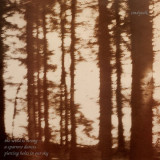
Cindytalk is the mercurial, expressionist outlet of Scottish artist Cinder. An evolution of her early 1980's Edinburgh-based punk band The Freeze, she launched the project upon moving to London, inspired by the crossroads of exploratory UK post-punk and early European industrial. Her work thrives on chance and transformation, collaging elements of noise, balladry, soundtrack, catharsis, and improvisation. After a series of celebrated albums for the Midnight Music label as well as collaborations with This Mortal Coil and Cocteau Twins, Cinder migrated to the United States, becoming involved with various underground techno collectives around the Midwest and West Coast. Subsequent relocations to Hong Kong and Japan further expanded Cindytalk's horizons, resulting in a fruitful partnership with Viennese experimental institution Editions Mego, for whom she released five full-lengths of swooning, granular atmosphere. 2021 finds her as engaged as ever, at the precipice of long-awaited back catalog reissues alongside multiple new works, guided by her lasting love of discovery and deviation: “new pathways always being uncovered.”
The 3rd album by Scottish industrial enigma Cinder aka Cindytalk began life as the soundtrack to an experimental film by English director Ivan Unnwin entitled Eclipse (The Amateur Enthusiast's Guide To Virus Deployment), and was originally slated for release via Factory Records' video division, Ikon. Inspired heavily by Alan Splet's eerily disembodied sound design in David Lynch's Eraserhead, the collection's 15 pieces seethe between field recordings, wistful piano vignettes, and lurking metallic haze – a hybrid palette Cinder characterized at the time as “ambi-dustrial.” Unfortunately Ikon collapsed on the eve of the project's completion so the film was never distributed, but the Midnight Music imprint repackaged Cindytalk's score as an LP in 1990 under the name The Wind Is Strong... (full title: The Wind Is Strong - A Sparrow Dances, Piercing Holes in Our Sky).
Поиск:david ch
Все
Cindytalk is the mercurial, expressionist outlet of Scottish artist Cinder. An evolution of her early 1980's Edinburgh-based punk band The Freeze, she launched the project upon moving to London, inspired by the crossroads of exploratory UK post-punk and early European industrial. Her work thrives on chance and transformation, collaging elements of noise, balladry, soundtrack, catharsis, and improvisation. After a series of celebrated albums for the Midnight Music label as well as collaborations with This Mortal Coil and Cocteau Twins, Cinder migrated to the United States, becoming involved with various underground techno collectives around the Midwest and West Coast. Subsequent relocations to Hong Kong and Japan further expanded Cindytalk's horizons, resulting in a fruitful partnership with Viennese experimental institution Editions Mego, for whom she released five full-lengths of swooning, granular atmosphere. 2021 finds her as engaged as ever, at the precipice of long-awaited back catalog reissues alongside multiple new works, guided by her lasting love of discovery and deviation: “new pathways always being uncovered.”
The 3rd album by Scottish industrial enigma Cinder aka Cindytalk began life as the soundtrack to an experimental film by English director Ivan Unnwin entitled Eclipse (The Amateur Enthusiast's Guide To Virus Deployment), and was originally slated for release via Factory Records' video division, Ikon. Inspired heavily by Alan Splet's eerily disembodied sound design in David Lynch's Eraserhead, the collection's 15 pieces seethe between field recordings, wistful piano vignettes, and lurking metallic haze – a hybrid palette Cinder characterized at the time as “ambi-dustrial.” Unfortunately Ikon collapsed on the eve of the project's completion so the film was never distributed, but the Midnight Music imprint repackaged Cindytalk's score as an LP in 1990 under the name The Wind Is Strong... (full title: The Wind Is Strong - A Sparrow Dances, Piercing Holes in Our Sky).
- A1: A Los Soneros
- A2: Brisa Mananera (Mambo Man Film Version)
- A3: Cada Vez Que Te Veo
- A4: Carretero
- A5: Como Las
- B1: De Cauto Cristo A Rio Cauto
- B2: De Cuba Vengo Y Cubano Soy
- B3: Descarga Cubana
- B4: Finca Santaelena
- B5: La
- C1: Maidel Mambo
- C2: Mambo Man (Also Known As Ella Es Asi) (Also Known As Ella Es Asi)
- C3: Nada De Ti
- C4: No Critiques Al Nene
- C5: Pa Apartar Lo Malo
- C6: Quiero Cantar Son Del Llano
- D1: Romance
- D2: Son Para Envidiosos
- D3: There Is Still Hope
- D4: Yo Quiero Gozar
Re-mastering by: Ray Staff at Air Mastering, Lyndhurst Hall, London
With the Buena Vista Stars, including Candido Fabre. Based on a true story and filmed in the exotic countryside outside Havana, this remarkable and engaging film will move both your spirit and your feet with its unforgettable passion and intoxicating music. The soundtrack and live performances in the film include some of the legendary Cuban artists who appeared in the box office smash, Buena Vista Social Club.
MAMBO MAN is packed with musical contributions from Cuban legends including; Candido Fabre, Maria Ochoa, Alma Latina, David Alvarez, Arturo Jorge, Omara Portuondo, Eliades Ochoa, Juan De Marcos Gonzalez and the Afro-Cuban All Stars.
REVIEWS Rome Prisma Independent Film Awards
“There is rather the mature and conscious gaze of two authors who want to represent Cuba, and the story of the protagonist, with truth and love. With this awareness, each shot conveys a charm superior to that of a good staging. This film, made with passion, penetrates the audience to the rhythm of music and tells us about a whole, small, precious universe, absorbing its beauty and misery. “Mambo Man” is a bit like Cuba: beautiful, kind and melancholic.”
J.B. Spins, Joe Bendel
“It’s a dynamic, colourful film, with bustling markets, lively clubs, friendly outdoor cafes, and—best of all—a remarkable soundtrack of classic Cuban music, which is a focal point of the film.”
Kim Wilde became an overnight sensation back in 1981 courtesy of the worldwide success of her single ‘Kids In America’, which offered a very British twist on the new wave energy and glamour of Blondie. In due course, Kim would enjoy numerous hits throughout the 1980s, first on RAK Records (with help from father Marty and brother Ricky) and then later on MCA (when she took up songwriting herself and toured with Michael Jackson and David Bowie).
- 1: Low On Love
- 2: I Will Avenge You (Feat. Ryan Scott)
- 3: You Didn't Know
- 4: I Wish (Feat. Cory Wong, Justin Stanton & Michael League)
- 5: True Minds
- 6: Between Me & You
- 7: Good Stuff
- 8: Feels Like This
- 9: Slow Burn (Feat. Jacob Collier)
- 10: Charlemagne (Feat. Alan Hampton)
- 1: Never Mine
- 2: Response To Criticism (Feat. Roosevelt Collier)
- 3: Halfway (Feat. Laura Perrudin)
- 4: Heather's Letters To Her Mother (Feat. David Crosby, Michelle Willis, & Mike "Maz" Maher)
Since making her debut with the 2011 album Weightless, singer/songwriter/multi-instrumentalist Becca Stevens has tested the limits of musical identity, mining everything from jazz to Irish folk to indie-rock in her striving for complete and authentic expression. In her latest musical endeavor—the five-track EP WONDERBLOOM and a soon-to-follow full-length of the same name—the North Carolina-bred, Brooklyn-based artist again defies all expectation, this time dreaming up a groove-heavy, dance-ready sound infused with elements of pop and funk and R&B. But despite its brighter textures and uptempo rhythms, WONDERBLOOM finds Stevens achieving a profound complexity in her lyrics, ultimately redefining what’s possible in creating music that elevates and edifies. Centered on the captivating vocal presence she’s showcased as a member of David Crosby’s Lighthouse Band, WONDERBLOOM telegraphs an unabashed joy that Stevens partly attributes to the project’s production. In a bold new turn for her musical career, Stevens co-produced and co-engineered WONDERBLOOM alongside Nic Hard (Snarky Puppy, Ghost-Note, The Church), overseeing every aspect of the recording and claiming a sense of agency that had long eluded her in the studio. “Nic and I were truly working as equals and trusting each other to get the job done, and it was an incredibly empowering experience for me,” she says. In another major departure, Stevens purposely brought a communal sensibility to the making of WONDERBLOOM —an undertaking that resulted in more than 40 musicians contributing to the album, including Vulfpeck guitarist Cory Wong, Jacob Collier, and all of her Lighthouse bandmates (i.e., keyboardist Michelle Willis, Snarky Puppy bandleader Michael League, and David Crosby himself).
The third release from Fred Laird was recorded during the period June 2020 and January 2021 on 24trk home studio recording. It is also the first album recorded purely as a solo artist with the occasional guest and draws more from a roots style music (trad it isn’t) than previous more psychedelic releases.
‘Inspiration for the album came from listening to the self-recorded primal music of Hasil Adkins and the first solo Link Wray album for Polydor. The idea of these guys just doing what they wanted back of beyond seemed more akin to me sat in a box room during lockdown feeding off a diet of Billy Chong Kung Fu horror flicks, David Lynch, Noir crime movies, Jean Cocteau and the works of Yukio Mishima.
Musically the sound draws from early Bad Seeds or Crime and the City Solution, Gallon Drunk, Bohren and Der Club of Gore, The Cramps, Hasil Adkins and various other trash inspired twilight creatures. I also wanted to try and create that spooky organ sound that dominates the midnight movie classic ‘Carnival Of Souls’, so there’s quite a lot of organ and piano going on. I also got my hands on a baritone guitar to give the songs more of a deep growly twang!
Vocals are provided by Daisy Atkinson for the Jean Cocteau dedication ‘Orphee’ which is the nearest thing to a pop song on the album and the echoey almost Sister Lover’s sound of the title track. I got sick of my own shit voice and I just thought a female voice would give it a more fragile ethereal vibe.
Mike Blatchford provides formidable saxophone to the album’s last three tracks which were recorded on his mobile phone 300 miles away and synched into the music. The big blasted swing blues of ‘The Big Duvall’ is a dedication to Andy Duvall of Carlton Melton – a big guy who needed a big song. Who knows how big the song could have been in a proper studio. I could have dedicated it to John Wayne but Wayne couldn’t chop down trees with his bare hands like Andy can….’
In celebration of the 20th Anniversary of the release of
legendary singer / guitarist Thalia Zedek’s ‘Been Here
and Gone’, Thrill Jockey are proud to present the
album on vinyl for the very first time, remastered by
Sarah Register.
Thalia Zedek has been one of the most enduring rock
musicians of the past four decades. From her
auspicious beginnings in bands Uzi, Live Skull and
Dangerous Birds to her wider recognition in Come,
Zedek established herself as a singular voice accruing
accolades from critics and contemporaries including J.
Mascis, Kurt Cobain and Bob Mould.
‘Been Here and Gone’, her debut solo release,
originally released on Matador in 2001 on CD, marked
a turning point in Zedek’s music. As Come were
coming to a close, Zedek began exploring writing and
performing as a solo artist, eventually backed by violist
David Curry, pianist Mel Lederman (both went on to
perform with Zedek for two decades), as well as former
Come bandmates Chris Brokaw and Daniel Coughlin.
The idiosyncrasies of her voice were laid bare for the
first time, revealing an even greater depth to her
unique songwriting. The more spacious and rich
arrangements sprawl and whisper with powerful
vulnerability.
Deluxe packaging featuring photos of the recording
session on the inner sleeve. Includes digital download
card.
In celebration of the 20th anniversary of the release legendary singer/ guitarist Thalia Zedek's Been Here and Gone, Thrill Jockey is proud to present the album unlike it has ever been heard before: on vinyl, re-mastered by Sarah Register. Thalia Zedek has been one of the most enduring rock musicians of the past four decades. From her auspicious beginnings in bands Uzi, Live Skull, and Dangerous Birds to her wider recognition in Come, Zedek established herself as a singular voice accruing accolades from critics and contemporaries including J. Mascis, Kurt Cobain, and Bob Mould. Been Here and Gone, her debut solo release originally released on Matador in 2001 on CD, marked a turning point in Zedek's music. As Come was coming to a close, Zedek began exploring writing and performing as a solo artist, eventually backed by violist David Curry, pianist Mel Lederman (both of which went on to perform with Zedek for two decades), as well as former Come bandmates Chris Brokaw and Daniel Coughlin. The idiosyncrasies of her voice were laid bare for the first time, revealing an even greater depth to her unique songwriting. The more spacious and rich arrangements sprawl and whisper with powerful vulnerability. "There was definitely something magical about the making of Been Here and Gone," says Zedek. "I'm not sure if it was because it was made at a studio called Higher Power in a recently desanctified church in Stuyvesant, NY, or if it was because it was the end of a century, not to mention a millennium, the end of a decade of being in Come, the longest running band I'd had up to that point, and the end of 5 years of unhappy breakups and tumultuous relationships in my personal life." The eleven tracks that comprise Been Here and Gone embody that tension of uncertainty with a hopeful edge of renewal. Zedek's indelible resilience lifts even the somberest laments into triumphs. Even on the album's three cover tunes, including a haunting rendition of Leonard Cohen's "Dance Me to the End of Love," Zedek's voice and guitar color every note with raw emotion, making each passing gesture personal. Been Here and Gone channels the thunder and roar of Zedek's past into a fragile magnificence.
Four awesome artists from the Italian scene collaborated in “Abyssal Void”: the first Electro oriented VA by Suburban Avenue. 051 Destroyer, 2030, Davide Piras and Pearl River Sound leave us four classy Electro beauties with some drexciyan, atmospheric and electronic touches. Are you afraid of Evolution?
Born At Midnite is the faux-vanity project of Amery Sandford and David Carriere. Jamming strictly ‘post-party’ with a fnish line posture – either completing or scrapping a song in a single evening – the Montreal based duo began writing together in late 2018.
Employing samplers, tape machines, and an extemporaneous approach to songwriting, the duo establish an eerily familiar atmosphere through an unpolished lens of thin ice. Playing into whilst poking fun at our era’s omnipresent narcissism and self indulgence, the group stitch together an unsponsored sort of ‘product-placement-punk’.
● Double A-side single w/ limited edition 7” pressing.
● Follow up to 2020's debut 7”.
● Past campaign includes coverage from Gorilla vs Bear, The FADER. Past playlisting at Spotify includes Montreal Chill (79k followers), Fresh Finds: Indie (90k followers).
● Features Amery Sandford (Alpen Glow), and David Carriere (TOPS, producer of Sorry Girls, Marcii, TOPS)
- The Moment
- Number 2 Ft. Future & 21 Savage
- Patience Ft. Yungblud And Polo G
- You
- Don’t Play W/ Anne-Marie & Digital Farm Animals
- Really Love Ft. Craig David & Digital Farm Animals
- Gang Gang Ft. Jay1 & Deno
- Madness
- Silly Ft. Bugzy Malone
- Rent Free Ft. Gracey
- Flash It Ft. Rico Love
- No Time Ft. Lil Durk
- Smoke Ft. Nevve
- Sleeping With The Enemy Ft. S-X
Hitting number two in the UK album chart and with over a billion streams, in Dissimulation KSI creates space for both his public persona and the personal: big hit features with the likes of Rick Ross and Lil Baby (Down Like That) and AJ Tracey (Tides) sit alongside more intimate, honest tracks. No stranger to defying expectations, Dissimulation received critical acclaim. Clash labelled it “an excellent body of work”; “he’s absolutely smashed it” proclaimed Metro.
It’s no surprise that KSI has been seen on the cover of The Sunday Times Magazine and Music Week; The Observer Magazine, Viper and Notion. Other labels and artists want a piece of the KSI pie too: just look to the success of his features on S1mba’s Loose and Nathan Dawe’s BRIT nominated Lighter.
With his second album on the horizon, a 2021 tour which sold out in seconds, the launch of his own label and a single with Craig David (Really Love), Anne-Marie (Don’t Play) and YUNGBLUD (Patience), KSI is proving that music is very much his domain.
KSI brings with him the unrelenting work ethic and infectious energy which YouTube instilled in him. Despite his debut’s success, he’s certain Dissimulation just scratched the surface: the next record, he’s clear, will showcase his artistry’s further progression again. Given FAULT Magazine described KSI as “one of 2019’s biggest success stories - “an emergent hip-hop star” said The i - all eyes will be on his follow up. KSI’s task - writes The Observer - is “not just to make “YouTube rap” but the real thing”. Their verdict? “Mission accomplished.”
- 1: Trenchtown Rock – Feat Ziggy Marley
- 2: Man Next Door – Feat Santigold
- 3: Rule The Nation – Feat Shaggy
- 4: Tom Drunk – Feat Tarrus Riley
- 5: Wake The Town
- 6: Stop That Train – Feat Rygin King
- 7: Soul Rebel – Feat David Hinds
- 8: Queen Majesty /Chalice In The Palace
- Feat Robbie Shakespeare
- 9: Small Axe – Feat Jesse Royal
- 10: Wear You To The Ball – Feat Richie Spice
- 11: Every Knee Shall Bow – Feat Big Youth & Mick Jones
- 12: Every Knee Shall Bow (Scientist Dub)
TROJAN JAMAICA / BMG is proud to announce the release of U-ROY’s final full-length, SOLID GOLD U-ROY. The album was originally set to come out in 2020 with plans for a worldwide tour in support, but unfortunately, the pandemic delayed the release. Now, with the heartbreaking loss of U-ROY on February 17, the album has become a celebration of one of the most profoundly influential reggae stars of his generation. An originator of the chatty rhythmic vocal style known as toasting — a key foundational element in the development of rap in its nascent stages in the 1970s — U-ROY left behind an unmatched legacy which is clearly on display on SOLID GOLD U-ROY, with its guest appearances including ZIGGY MARLEY, SHAGGY, MICK JONES of THE CLASH, SANTIGOLD, SLY & ROBBIE, DAVID HINDS of STEEL PULSE, and more. The album arrives on
July 16, 2021.
SOLID GOLD U-ROY is being heralded today by the release of “MAN NEXT DOOR” (Feat. SANTIGOLD). One of the great reggae songs of all time, the track features an indelible guest appearance by the incomparable Santigold. “Man Next Door” is a beloved reggae standard written by John Holt and released in 1968 by his group The Paragons. U-ROY sampled the song in 1982 for “Peace and Love in the Ghetto” on his Original DJ album. Pre-orders of SOLID GOLD U-ROY will come with an instant grat download of “MAN NEXT DOOR”
- A1: Green (Vincent’s Tune) Featuring Roomful Of Teeth
- A2: O’neill’s Cavalry March Featuring Martin Hayes
- A3: Little Birdie Featuring Sarah Jarosz
- A4: Ichichila Featuring Toumani Diabaté & Balla Kouyaté
- B1: Sadila Jana Featuring Black Sea Hotel
- B2: Shingashi Song Featuring Kaoru Watanabe
- B3: Madhoushi Featuring Shujaat Khan
- C1: Wedding Featuring Dima Orsho
- C2: Going Home Featuring Abigail Washburn
- C3: Cabaliño Featuring Roberto Comesaña, Anxo Pintos & Davide Salvado
- D1: St. James Infirmary Blues (Featuring Rhiannon
- Giddens, Michael Ward-Bergeman & Reylon Yount)
- D2: If You Shall Return... Featuring Bill Frisell
- D3: Heart And Soul Featuring Lisa Fischer & Gregory Porter
Green Vinyl[43,28 €]
American cellist prodigy Yo-Yo Ma recorded Sing Me Home with the Silk Road Ensemble, a musical collective with performers and composers from all over the world. The album features guest appearances by Grammy Award winning artists Toumani Diabaté, Gregory Porter, Lisa Fischer, Bill Frisell and many more.
Released in 2016, Sing Me Home was meant to open hearts, ears and minds during a time of tragedy and political turmoil. “All around the world, people constantly meet the unfamiliar through change,” Yo-Yo Ma said of the album. “Rapid or dramatic change can feel threatening, tempting us to build walls to defend against the unknown. At Silk Road we build bridges. In the face of change and difference, we find ways to integrate and synthesize, to forge relationships, and to create joy and meaning.”
Bringing together the cultural backgrounds of the musicians, Sing Me Home is a culturally conscious album, reflecting on modern globalisation and collaboration. From Macedonian folk to traditional music from Mali, and from Irish fiddle to Indian sitar: it all comes together wonderfully. Critics agreed, and the album went on to win the Grammy Award for Best World Music Album in 2017.
During 2019, Blondie was invited to perform in Havana, Cuba as part of a cultural exchange through the Cuban Ministry of Culture. This was a 40 year ambition come especially for songwriter & guitarist Chris Stein, who had longed to visit Cuba for most of his life. Artist and director Rob Roth documented this special moment and career highlight by shooting a short film titled “BLONDIE: VIVIR EN LA HABANA”.
The film is broken up into 3 parts — Water, Fire and Air — and present a meditation on the experience as well as highlights from the two-night live musical performances with special guests Alain Perez, David Torrens and Cuban Fusion Pioneers Sintesís at Havana’s famous Teatro Mella.
With narration from Blondie founding members Debbie Harry, Chris Stein, and Clem Burke, providing a glimpse into the passion and beauty they discovered in Havana and the magic moments of performing alongside incredible Cuban artists. “BLONDIE: VIVIR EN LA HABANA” goes beyond the atypical short form film and live music documentary by presenting a portrait of the legendary band’s first experience in Havana and of the magical exchange between musicians from the two cities each call home and their intertwined influences.
The sound track for the film features Cuban musicians Carlos Alfonso, Ele Valdés, María del Carmen Ávila, Alejandro Delgado, Juan Carlos Marin, Jamil Schery, Degnis Bofill, Adel González
Released in July on limited edition pale blue vinyl to accompany the film which will feature throughout 2021 in many prominent Film Festivals inc the Tribeca Film Festival.
Über den Zeitraum von mehreren Wochen während des Lockdowns entstanden, präsentieren Nick Cave & Warren Ellis in dieser Woche ihr neues Gemeinschaftsalbum: Carnage – was zu Deutsch so viel wie Blutbad oder Gemetzel heißt. Cave beschreibt das Gemeinschaftswerk denn auch als „eine brutale, aber wunderschöne Aufnahme, eingebettet in eine gemeinschaftliche Katastrophe.“ Obwohl die beiden schon viele Soundtracks zusammen komponiert und aufgenommen haben, und Ellis zudem seit geraumer Zeit Mitglied von The Bad Seeds ist, handelt es sich bei Carnage tatsächlich um den ersten Longplayer, den sie auch offiziell als Duo eingespielt haben.
„Die Arbeit an Carnage war eine komprimierte Phase intensivster Kreativität“, sagt Ellis, „denn es dauerte gerade mal zweieinhalb Tage, bis diese acht Songs in irgendeiner Form standen. Dann erst sagten wir uns: ‘Ach komm, lass uns doch ein Album machen!’ Das alles war also nicht sonderlich geplant.“
Das Klangspektrum der neuen Aufnahmen reicht vom düsteren, elektronischen Puls des Stücks „Old Time“ bis hin zum sehnsuchtsvoll-wunderschönen „Albuquerque“, einer klassischen Ballade, die auf einer kreisförmigen Klavierfigur basiert, überzogen mit hypnotischen Streicherparts. Insgesamt hat das Album eine etwas rastlose Energie, die Perspektive ist im Vergleich zum gefeierten Nick Cave & The Bad Seeds-Vorgänger Ghosteen eher nach außen gerichtet – wobei die beiden auch dieses Mal versuchen, die Grenzen des Songformats zu verschieben, immer wieder neu auszuloten, was ein Song eigentlich alles sein kann…
Während die eigentlichen Aufnahmen in recht kurzer Zeit stattfanden, waren die Songs von Carnage schon davor länger herangereift, in den ersten Lockdown-Wochen, die Cave damit verbracht hatte, „zu lesen, regelrecht zwanghaft zu schreiben und einfach nur auf meinem Balkon zu sitzen und über die Dinge nachzudenken.“ An ein Album dachten die beiden denn auch gar nicht, als sie zusammen ins Studio gingen, um zu jammen. „Das Album“, so Cave, „ist dann einfach so vom Himmel gefallen. Es war ein Geschenk.“
Carnage ist die Fortsetzung jenes kollektiven Improvisationsansatzes, auf den die beiden schon für Ghosteen gesetzt hatten – was Cave zugleich erlaubte, das klassische, eher narrativ strukturierte Songwriting hinter sich zu lassen. Als Rohmaterial dienen ihnen Textideen, die Cave zuvor über einen längeren Zeitraum verfasst und verfeinert; sie handeln zumeist von wenigen Kerngedanken und -themen, einzelnen Bildern und Metaphern, die er mit Worten umkreist. Die eigentlichen Songs entstehen dann in ausgedehnten Improvisations-Sessions im Studio: Anfangs sehe das so aus, wie Ellis berichtet, dass „da zwei Menschen im Raum sitzen und sich etwas trauen, indem sie erst mal einfach passieren lassen, was gerade passiert“. Ihre endgültige Form bekommen die Stücke daraufhin erst durch intensives Editieren und Filtern, wenn Musik und Text zu einer Art Klangcollage zusammenkommen. Das Element der Überraschung spielt bei jedem dieser Schritte eine zentrale Rolle, und mal geht alles ganz schnell – „Shattered Ground“, zum Beispiel, sei, so Ellis, „gleich im ersten Take fertig“ gewesen, während andere, wie beispielsweise der Titelsong, „sich erst kurz vor dem Abschluss der Mixing-Phase zu erkennen geben sollten.“
Wenn man bedenkt, dass Carnage in relativ kurzer Zeit entstanden ist, wirkt die enorme Bandbreite an Themen und Stimmungen um so beeindruckender, denn das Resultat klingt einerseits absolut eindringlich („Old Time“), andererseits auch zutiefst kontemplativ („Lavender Fields“). Wie sich die Stimmungen und Energien verschieben und überlagern, erkennt man auch daran, wie die beiden gewisse Zeilen, Refrains und flüchtige Bilder auf immer neue Weise in den verschiedenen Songs wieder auftauchen lassen, was dem Album insgesamt etwas Kaleidoskopisches gibt. In Songs wie dem aufrüttelnd-aufgebrachten „White Elephant“ und dem fast schon fiebrig-psychedelischen „Balcony Man“ kollidieren surreale Bildwelten, so dass die Zeilen nicht mehr wörtlich zu verstehen sind und an ihre Stelle etwas Suggestives, Impressionistisches tritt.
Die einzigartige kreative Chemie zwischen Cave und Ellis basiert auf einer langen gemeinsamen Geschichte, die sie als Kollegen und Solokünstler verbindet: Erstmals begegneten sich die zwei schon 1993, als Ellis die Geigenparts für einige Songs von Let Love In einspielen sollte, das achte Album von Nick Cave & The Bad Seeds. Wenig später schaute Cave bei einem Konzert von Ellis’ Band Dirty Three in Brisbane vorbei – und landete schließlich auch selbst auf der Bühne, wo sie gemeinsam Interpretationen von Neil Youngs „Helpless“ und Roy Orbisons „Running Scared“ zum Besten gaben. „Damit fing das alles an“, erinnert sich Ellis, der schließlich selbst festes Mitglied von The Bad Seeds wurde. Auch beim 2006 gegründeten Bandprojekt Grinderman arbeiteten sie zusammen, was laut Nick Cave ein Ventil für „die beste Midlife-Krise war, die sich ein Mann wünschen kann“. In dieser Konstellation sollten sie zwei Alben aufnehmen, Grinderman 1 und 2, bis sie die Band dann 2011 wieder auflösten.
Seit 2005 haben Cave und Ellis zudem an etlichen Soundtracks für Film, TV und Theater gearbeitet – u.a. für The Road (2009) und Lawless (Die Gesetzlosen; 2012), beide entstanden unter der Regie von John Hillcoat, sowie für David MacKenzies Hell or High Water (2016) und Taylor Sheridans Wind River (2017). Das gemeinsame Erschaffen derart atmosphärischer Instrumental-Scores, wobei oftmals elektronische Loops von Ellis als Ausgangspunkt fungierten, über denen Cave am Klavier improvisieren sollte, hat ihre Arbeitsweise und ihr Songwriting nachhaltig geprägt.
Mit Carnage legen sie das nächste Kapitel ihres musikalischen Abenteuers vor: Ein Album, das quasi aus Versehen entstehen sollte, während des langen, weltweiten Stillstands der Pandemie-Monate. Die verschiedenen Stimmungen und auch das Rastlose an diesen Aufnahmen spiegelt die existentielle Ungewissheit wider, aber zugleich flackern auch immer wieder Momente der Ruhe auf, Augenblicke der meditativen Selbstbesinnung. Unterm Strich ist es ein Album, entstanden in und gemacht für diese unbeständigen Zeiten, das durchsetzt ist mit Augenblicken konzentrierter Schönheit. Aufnahmen, die ihre unumstößliche Zuversicht fast schon trotzig zum Ausdruck bringen.
Tonnon produced the album with longtime collaborator, and The Beths’ guitarist and producer, Jonathan Pearce. Tonnon wrote the bulk of the songs during an extensive period of touring after the release of Successor - a period where Tonnon performed with Nadia Reid in Europe, The Veils in the USA, and The Chills, The Phoenix Foundation and Don McGlashan in New Zealand. The pair workshopped songs between tours, often recording new parts as the live versions developed.
Tonnon and Pearce recorded between 2017 and 2020, and in that time, Tonnon’s practise evolved heavily. He incorporated new technology into his set, including the Wellington-designed Synthstrom Deluge, which allowed him to adapt his set for new performance environments;Art Galleries, Museums, even New Zealand Fashion Week. He took that technology further when he collaborated with the Otago Museum on the immersive show for Planetariums, A Synthesized Universe, which travelled to Arts Festivals around New Zealand in 2019.
Creating a music video for ‘Old Images,’ which explored a lost passenger train network, Tonnon came to the idea for a new experience-based show called Rail Land. It took audiences on railways to reach distant community halls around Aotearoa. The show saw Tonnon combine historical research and spoken word narrative, with the immersive lighting and musical technology he developed for A Synthesized Universe. In March, Rail Land finished a three-night run at Auckland Arts Festival, cementing Tonnon’s move to the concept show.
Over time, Tonnon and Pearce’s production moved further from the traditional rhythm sections that powered songs like Successor’s ‘Water Underground.’ In their place came off kilter electronic rhythms, like the beat in ‘Two Free Hands,’ and textures that blur lines between organic and synthesized sound. Guitars are set against synthesizers, and drums against drum machines in ‘Entertainment’ and ‘Peacetime Orders,’ which Tonnon also used in his soundtrack for RNZ’s 80s spy-themed podcast The Service. In ‘Leave Love Out Of This,’ a ballad starts with a piano and a string quartet, but ends in a wall of electronic sound.
The constant has been Tonnon’s lyrics. Whether singing about evolution and the future of work in ‘Two Free Hands,’ the television industry in ‘Entertainment,’ or environmental disaster and regulatory failure in ‘Mataura Paper Mill,’ Tonnon has followed a distinct approach to subject matter, description and phrasing that have seen him longlisted for the APRA Silver Scroll three times.
Tonnon’s explorations of local government and civic infrastructure in his work - an unusual preoccupation for a songwriter, have taken new meaning in his adopted home of Whanganui, where last year, he was elected by councillors as Whanganui District Council’s representative for public transport.
After Tonnon moved to Whanganui, and Pearce toured almost constantly after the success of The Beths’ first album, the pair conducted their collaboration over distance, but with key sessions at Pearce’s Karangahape Road studio, including drums and bass with long time band members Stuart Harwood and David Flyger, a string quartet led by Charmian Keay and arranged by Matthew Bodman, and additional drums with The Beths’ Tristan Deck.
As Leave Love Out Of This is released, Tonnon and Pearce find themselves in very different places to where they started, working on Auckland’s Karangahape Road, close to the venues like Wine Cellar and Whammy Bar where they regularly performed. Back in New Zealand since Covid, Pearce has had to adjust to being in one of Aotearoa’s best-known bands, while Tonnon, when not working on conceptual shows, wrestles with how to restore civic infrastructure to a post industrial city in the regions.
Created over a life-altering period of, Leave Love Out Of This is the culmination of years of experimentation and development - with new technology, new sounds, and new ways of creating, and performing music.
Here is the the effortless work of a band entirely confident in their own craft - the consolidation of nearly three decades of peerless songwriting and almost telepathic musicianship amongst the band's three founder members: Norman Blake, Raymond McGinley and Gerard Love. Recorded with the band’s soundman David Henderson alongside regular drummer Francis Macdonald and keyboard player Dave McGowan in three distinctly different environments (initially at Vega in rural Provence, then at Raymond’s home in Glasgow before mixing at Clouds Hill in the industrial heart of Hamburg), it’s a record that embraces maturity and experience and hugs them close.
As ever, song-wise the Fanclub present a textbook representation of democracy in action, the record offering four each by Blake, Love and McGinley. From the almighty chime of opener I’m In Love through The First Sight’s ecstatic soul-search and the paean to unerring friendship With You, Here is a a collection of twelve songs about the only things that truly matter - life and love.
Teenage Fanclub will be touring the UK extensively throughout the Autumn, including two London shows – Islington Assembly Hall and Electric Ballroom – both of which sold out within days of going on sale. Glasgow's finest will also be making an exclusive appearance at this year's End Of The Road festival in early September.
Director David Lynch once said "I long for a kind of quiet where I can just drift and dream. I always say getting inspiration is like fishing. If you're quiet and sitting there and you have the right bait, you're going to catch a fish eventually. Ideas are sort of like that. You never know when they're going to hit you." Inspired by this quote in both name and spirit, Hollie Kenniff's The Quiet Drift is an ambient gallery of cloudlike synths, seraphic strings, echoing guitars, and other celestial textures guided to cohesion by Hollie's own wordless singing. Though the album certainly creates (and originates from) the kind of space where Lynch's proverbial "fish" can be caught, The Quiet Drift is a fitting title for Hollie's own history, both recent and distant. During the course of the album's creation, Hollie and her family moved cross-country from an island in Washington state, to an island in Maine before ultimately relocating to Canada. "As a child I visited Ontario year-round," she explains in her own words. She continues "More than any other landscape, I think the lake, rivers, and woods there left the most enduring impression on me. The landscape and pace of life of these places will always stay with me." But the reverberant spaces Hollie crafts need no physical headquarters. Instead of conjuring views of nature at the ground level, her sound more readily evokes a top-down perspective, with the distinct features of the land shrinking underfoot as the listener becomes untethered from geography altogether. The Quiet Drift belongs more to the liminal spaces between life and afterlife, memory and fantasy, landscape and dreamscape, than any mappable locale. Describing her formative years, Hollie says "As a dual US/Canadian citizen who spent my childhood in a rural town-- one that I haven't returned to in many years - I have a sense of not entirely belonging anywhere. When I was a teenager my close friends were male musicians, so I was also an outsider to the degree that they were wild and anarchic in a way that I wasn't. I was a quiet book reader and avid music listener who enjoyed being around a creative group. I was also a radio DJ for alternative and punk music throughout high school." In this light, The Quiet Drift attests that creativity is placeless, and calls into question the stereotype of artists as scene-centric city dwellers. Having come of age in the absence of metropolitan sensory overload, Hollie learned to spot the muse in nature, and within herself, instead of the echo chamber of a frenzied peer group. On The Quiet Drift Hollie Kenniff wholly escapes from such pop-culture feedback loops into transcendent, shimmering realms, and she brings the listener along with her. In this age in which we have all been called to reevaluate our relationship to indoor spaces, and seek refuge in the great outdoors, The Quiet Drift provides an apt soundtrack for such rebalancing.
Joey Negro! Michael Gray! Moplen! Massivedrum! David Penn! Mighty Mouse! Ben Liebrand! They are all there!
Thirty-Five years after the release of Volume 4, High Fashion Music are back with the aptly named – Vol 5! And Ben Liebrand returns once again to flawlessly mix these remixed pieces together in one continues mix.
“High Fashion Dance Music” mix-albums were incredibly popular in the during the ’80s, showcasing essential cuts from legendary dance artists from the time.
Volume 5 is back pumping and loaded with the recent remixed and timeless cuts from Blueboy (David Penn remix), T-Connection (Moplen remix), Karen Young (Joey Negro remix), Disco Dandies, Ashford & Simpson (Joey Negro remixes) and Johnny Guitar Watson (Ben Liebrand remix) are joined on the Dancefloor by hot new versions of classics like Bucketheads’ “The Bomb” and is the at the same time presenting the new and upcoming singles from contemporary artists including S.O.S Band (remixed by Ben Liebrand), Bucketheads (Remixed by Massivedrum) HP Vince, and Who’s Who (remixed by Mighty Mouse).
Volume 5 also has the eye-catching retro styling with detail from OG’s in the scene. Curated by experts, Volume 5 will also be available on various music formats, each having it’s unique playing-time, including Vinyl LP, Compact Disc, the good old MusiCassette and even on DCC! (Such in close cooperation with the DCC Museum in Los Angeles)
Mix Tracklist:
A-1 The S.O.S. Band – Just Get Ready (Remix – Ben Liebrand) 4:29
A-2 Delia Renee – You're Gonna Want Me Back (Remix – Joey Negro) 5 :49
A-3 Disco Dandies – Inside Your Love 1:36
A-4 Johnny Guitar Watson – Real Mother For 'Ya (Go To A Disco) (Remix – Ben Liebrand) 3:30
A-5 Advance – Take Me To The Top (Remix – Michael Gray) 3:28
A-6 T-Connection – Do What You Wanna Do (Remix – Moplen) 5:16
A-7 Ashford & Simpson – Over & Over (Remix – Joey Negro) 3:34
A-8 Roog – If Everything Went My Way (Remix – Earth N Days) 2:52
A-9 Blue Boy – Remember Me (Remix – David Penn) 3:49
A-10 Ashford & Simpson – Found A Cure (Remix – Joey Negro) 4:29
B-1 Brooklyn Express – Sixty-Nine (Remix – H.P. Vince) 3:17
B-2 Viola Wills – If You Could Read My Mind (Remix – Massivedrum) 5:43
B-3 Karen Young – Hot Shot (Remix – Joey Negro) 4:10
B-4 Michael Gray – The Weekend (Remix – Michael Gray) 5:28
B-5 Ashford & Simpson – Love Will Make It Right (Remix – Joey Negro) 4:25
B-6 Johnny Hammond – Los Conquistadores Chocolates (Remix – Moplen) 4:02
B-7 The Bucketheads – The Bomb (Remix – Massivedrum) 3:19
B-8 Who's Who – Palace Palace (Remix – Mighty Mouse) 3:25
B-9 H.P. Vince – We Came Here To Party 2:47
B-10 Delia Renee– You're Gonna Want Me Back (Reprise) (Remix – Ben Liebrand) 1:40
LIMITED UCKE YELLOW VINYL.
Xardinal Coffee is a debut album that is a strikingly contemporary record of slick hip hop, rich textures, idiosyncratic grooves and electronic-tinged wonky R&B. It’s an album that feels intricate and busy but also manages to retain a sense of space and looseness, allowing hypnotic rhythms to unfurl with grace. EXUM, aka Antone Chavez Exum Jr. credits the 'genius' of his two producers, Erik Samkopf and Dex Barstad, who he works closely with.
Samkopf being the producer responsible for Xardinal Coffee respectively. 'Sam and I don’t really like doing anything that doesn’t have an ückean effect. We’re not from here you know, we’re just getting adjusted’, says EXUM of the album’s eclectic sonic palate. 'We love to push the envelope on what is considered quirky, but try not to think about it too much. If me and another are walking down a street, who's going to be first to try something spectacular? Them. My walk will speak.’
However, any sense of weirdness is also married with an infectious and accessible quality. Tracks such as Arrest the Dancer - 'a David Bowie/Lady Gaga-type beat we got from YouTube by a producer named Raixsa' - comes alive with an irresistible funk strut, almost recalling Prince in the swaggering bounce of it. On top of this, EXUM’s vocals offer versatility and flexibility, moving from caramel smooth croons to tight rap flows and to enthusiastic bursts of singing.
A sense of texture is palpable throughout too. Portabella Mushroom was recorded on a rare magic mushrooms trip and retains a lysergic and psychedelic quality, sucking the listener up into its swirling atmospheres. Whereas the sparse, minimal and slightly eerie beats of Wolves Eat Wolves was recorded in pitch black and the song takes on that kind of crepuscular vibe, which interspersed with the song’s dark lyrical content - touching upon sex trafficking - further cements this. ‘I take no form’, the artist says, and his formless nature speaks to his willingness to constantly recreate himself as an artist.
A love of words is also clear in EXUM’s delivery, with them being carefully placed and sequenced amidst the ambitious soundscapes of the record. 'Writing is precious to me', he says. 'The vulnerability to bleed on paper. While playing with words, styling the same outfit for the 7th day in a row.'
Initially EXUM looked up producer Erik Samkopf to work with when he’d had a temporary falling out with his previous producer Barstad. In love with Samkopf’s work with Pen Gutt, EXUM took a punt and flew from his hometown of Richmond, Virginia to Oslo, Norway to work with him. As EXUM and Barstad patched things up, EXUM and Samkopf were building chemistry, creating something truly unique. 'Dex and Sam never cease to amaze me', he says. 'They’re versed and creative beyond measure, they both have an immense amount of musicality, and most of all, their love for music is sweaty.’
However adding to the legend, EXUM took a little detour on his musical journey, spending years as a professional footballer in the NFL, for teams such as the San Francisco 49ers and the Minnesota Vikings. Now leaving that chapter of his life behind, EXUM has returned to the true love held dear to him ever since he can remember: music.
EXUM is not simply trying his hand at music though; he is crafting every part of his artistic journey, from carefully selected contributors (such as string composer Christian Balvig) and overseas producers, to shaping his own brilliant music videos with directors such as Allison Bunce and Rosabel Ferber. Both of whom occupy creative space in his art world, which goes by the name of ücke. He has effectively created his own musical ecosystem. 'You’ve got to create your own world and live highly in that first', he says. 'Making it inevitable for other worlds to not be touched by what’s vibrating through you. In my world I’m already a massively iconic artist.'