Cerca:david glass

Generi
Tutto
Kronos Quartet - Kronos Quartet Performs Philip Glass LP 2x12"
  • A1: String Quartet No. 5 I
  • A2: String Quartet No. 5 Ii
  • A3: String Quartet No. 5 Iii
  • A4: String Quartet No. 5 Iv
  • A5: String Quartet No. 5 V
  • B1: String Quartet No. 4 (Buczak) I
  • B2: String Quartet No. 4 (Buczak) Ii
  • B3: String Quartet No. 4 (Buczak) Iii
  • C1: String Quartet No. 2 (Company) I
  • C2: String Quartet No. 2 (Company) Ii
  • C3: String Quartet No. 2 (Company) Iii
  • C4: String Quartet No. 2 (Company) Iv
  • D1: String Quartet No. 3 (Mishima) 1957 – Award Montage
  • D2: String Quartet No. 3 (Mishima) November 25 – Ichigaya
  • D3: String Quartet No. 3 (Mishima) 1934 – Grandmother And Kimitake
  • D4: String Quartet No. 3 (Mishima) 1962 – Body Building
  • D5: String Quartet No. 3 (Mishima) Blood Oath
  • D6: String Quartet No. 3 (Mishima) Mishima/Closing

When Kronos plays a piece, they become fellow composers, true collaborators. Without them, we wouldn’t have the kind of string quartet playing that we find around us today. There are two kinds of string quartet playing: the ‘Before Kronos’ and the ‘After Kronos’.” – Philip Glass

‘Kronos Quartet has broken the boundaries of what string quartets can do.’ – New York Times

Nonesuch releases Kronos Quartet’s acclaimed album Kronos Quartet Performs Philip Glass on vinyl for the first time to coincide with Kronos Quartet: Five Decades, a year-long celebration marking the quartet’s 50th anniversary. Originally released in 1995, the album features David Harrington (violin), John Sherba, (violin), Hank Dutt (viola) and Joan Jeanrenaud (cello) performing Quartet No. 2 (Company) (1983), No. 3 (Mishima) (1985), No. 4 (Buczak) (1990), and No. 5 (1991), the first piece Glass wrote especially for Kronos. Recorded at Skywalker Sound in California, the album was produced by Judith Sherman, Kurt Munkacsi and Philip Glass. The cover art features Francesco Clemente’s painting The Four Corners (1985). At the time of the album’s release, the New York Times said, ‘It contains some of Glass's best music since Koyaanisqatsi. His ear for sumptuous string sonorities is undeniable,’ while the Washington Post called it ‘An ideal combination of composer and performers.’ It was a top 10 hit on Billboard’s Top Classical Albums, and spent 12 weeks on Billboard’s Classical chart.


In his original liner note, critic Mark Swed wrote, ‘Glass’ string quartets may contain his most intimate music. They are works through which a very public composer, perhaps the most important opera reformer of our age and a longstanding collaborator in large-scale music theater, holds up a mirror to himself and his way of composing. “In an odd way,” Glass explains, “string quartets have always functioned like that for composers. I don’t really know why, but it’s almost impossible to get away from it. It’s the way composers of the past have thought and that’s no less true for me. It’s almost as if we say we’re going to write a string quartet, we take a deep breath, and we wade in to try to write the most serious, significant piece that we can.” Glass says that as he sat down to write String Quartet No. 5, he had discovered that perhaps not taking a serious tone might be the most serious way to deal with it. “I was thinking that I had really gone beyond the need to write a serious string quartet and that I could write a quartet that is about musicality, which in a certain way is the most serious subject.”’


Glass’ first numbered quartet was written in 1966; however, he did not return to the string quartet medium until 1983, when he provided incidental music for a dramatization of Samuel Beckett’s prose poem, Company. During those 17 years, Glass had formed an ensemble and developed his style in a series of increasingly elaborate pieces for it. String Quartet No. 3 is also adapted to dramatic music, this time from his score to the 1985 Paul Schrader film, Mishima. It was with the music of Mishima that Kronos became associated with Glass, recording the string quartet sections of the soundtrack and subsequently working extensively with the composer on all five of his numbered quartets. Kronos also gave the first concert performances of Company and Mishima. String Quartet No. 4 was composed in remembrance of the artist Brian Buczak, who died of AIDS in 1988.


As Kronos’ anniversary season continues with further concerts around the world, Nonesuch will reissue Black Angels on vinyl on February 16. First released in 1990, the award-winning album includes George Crumb’s title piece, which inspired David Harrington to found the quartet. Called ‘an unusually elevated and searing Vietnam War protest’ by the New York Times, it sets a dark, powerful tone for this collection, which addresses the political/physical/spiritual consequences of war. Also featured are works by Charles Ives, István Márta, Thomas Tallis, and Dmitri Shostakovich. ‘Stylishly packaged, intelligently programmed, superbly recorded and brilliantly performed,’ proclaimed Gramophone. ‘In short, very much the sort of disc we’ve come to expect from the talented and imaginative Kronos Quartet.’ The Evening Standard included it among its ‘100 Definitive Classical Albums of the 20th Century’.


Born in Baltimore, Maryland, in 1937, Philip Glass is a graduate of the University of Chicago and the Juilliard School. By 1974, he had created a large collection of music for The Philip Glass Ensemble. The period culminated in the landmark opera, Einstein on the Beach. Since Einstein, Glass’s repertoire has grown to include music for opera, dance, theatre, orchestra, and film. His scores have received Academy Award nominations (including Kundun and The Hours, as well as Notes on a Scandal) and a Golden Globe (The Truman Show). Recent works include his memoir, Words Without Music, his first Piano Sonata, opera Circus Days and Nights, and Symphony No. 14. Glass received the Praemium Imperiale in 2012, the US National Medal of the Arts from President Barack Obama in 2016, and 41st Kennedy Center Honors in 2018.


Nonesuch’s relationship with Glass began in 1985, with the release of the score for Paul Schrader’s Mishima featuring Kronos Quartet. Over the years other Glass works on Nonesuch have included Einstein on the Beach (1993), Kronos Quartet Performs Philip Glass (1995), Music in Twelve Parts (1996), Glass Box (2008), as well as the soundtracks for Powaqqatsi (1988), Kundun (1997), Koyaanisqatsi (1998), and The Hours (2002), amongst others.


For 50 years, San Francisco’s Kronos Quartet – David Harrington (violin), John Sherba (violin), Hank Dutt (viola), and Paul Wiancko (cello) – has challenged and reimagined what a string quartet can be. Founded at a time when the form was largely centred on long-established, Western European traditions, Kronos has been at the forefront of revolutionizing the string quartet into a living art form that responds to the people and issues of our time. In the process, Kronos has become one of the most celebrated and influential groups of our era, performing thousands of concerts worldwide, releasing more than 70 recordings of extraordinary breadth and creativity, and collaborating with many of the world’s most accomplished composers and performers. Through its nonprofit organization, Kronos Performing Arts Association, Kronos has commissioned more than 1,000 works and arrangements for string quartet – including the Kronos Fifty for the Future library of free, educational repertoire. Kronos has received more than 40 awards, including three Grammy Awards and the Polar Music, Avery Fisher, and Edison Klassiek Oeuvre Prizes.


Kronos is prolific and wide-ranging on recordings. The ensemble’s expansive discography on Nonesuch includes three Grammy-winning albums: Terry Riley’s Sun Rings (2019), Landfall with Laurie Anderson (2018), and Alban Berg’s Lyric Suite featuring soprano Dawn Upshaw (2003); the 40th-anniversary boxed set Kronos Explorer Series; Nuevo (2002), a Grammy- and Latin Grammy–nominated celebration of Mexican culture; Pieces of Africa (1992), a showcase of African-born composers that simultaneously topped Billboard’s Classical and World Music charts; and Folk Songs (2017), Nonesuch’s 50th album with Kronos, which featured Sam Amidon, Olivia Chaney, Rhiannon Giddens, and Natalie Merchant singing traditional folk songs.

non in magazzino

Ordina ora e ordineremo l'articolo per te presso il nostro fornitore.

39,45

Last In: 2 years ago
Grateful Dead - Without a Net LP 3x12"

Available on 140-Gram, black vinyl, this release of Without A Net has been newly mastered by GRAMMY® Award-winning engineer David Glasser, produced for release by the Dead’s Audio Archivist and Legacy Manager, David Lemieux. Without A Net is the eighth live album from the band

pre-ordina ora10.11.2023

dovrebbe essere pubblicato su 10.11.2023

77,10
Augustus Muller (Boy Harsher) - Cellulosed Bodies -Original Score LP

Ltd Edition!

Crash und Automation demonstrieren Mullers Beherrschung strenger, industrieller Klangwelten. Muller geht jedoch noch einen Schritt weiter, indem er Club-Elemente wie Nu-Disco-Tendenzen und Vocal-Samples einführt. Auf diese Weise greift er das Thema Körper und Maschine auf, das auch in den visuellen Inhalten der Filme behandelt wird. Crash ist eine Hommage an David Cronenbergs gleichnamigen Film von 1996. Sowohl Ashley als auch Cronenberg erforschen die Erotik von Autounfällen, ein Fetisch, der sowohl mechanisch als auch blutig wirkt. Diese gewalttätige Gegenüberstellung ist die eigentliche Inspiration für Muller. Body and Machine" aus Crash ist eine pulsierende Synthie-Hymne, die sowohl synthetische Echos als auch verspielte Highlights enthält. "Perverse Technology" ist eine groovige und disharmonische Nummer, während "Sharing a Smoke" eine düstere Strenge hat, man kann fast sehen, wie die Hände über Ledersitze gleiten, Glasscherben auf verschwitzte Körper prallen und Küsse mit offenem Mund im Scheinwerferlicht.

non in magazzino

Ordina ora e ordineremo l'articolo per te presso il nostro fornitore.

26,85

Last In: 2 years ago
CIRCUS UNDERWATER - CIRCUS UNDERWATER LP 2x12"
  • A1: Big Buck Meets The Perpendicular Fish
  • A2: Trees Walk
  • A3: The Surface Of The Water
  • A4: Rugaru By Itself
  • B 1: I Wash My Hair With Limes
  • B2: She Dreams Of Golden Gloves Dancing
  • B3: Entrance Of The Deacon
  • C1: Weeping Of Electric Sheep
  • C2: First Hump Of Stately Plump
  • C3: Thunder Daughters Underwater
  • D1: Requiem For The Glass Trapeze
  • D2: Muddy Ghosts Running From Rain
  • D3: Behind The Altar There Is A Carousel

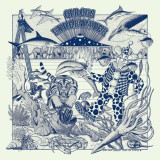
Soundway presents Circus Underwater’s 1984 self-titled masterpiece. Remastered and extended to a double LP, this deluxe version includes six unreleased tracks unearthed from the original ¼” tapes, and presented with an insert, including never-before-seen photos and the fascinating story behind the music.

Featuring artwork from Grateful Dead collaborator, David Lundquist, the album encapsulates a unique moment in time. Echoing the story of a generation that grew up in the 50s and 60s where music was everything, two friends embark on a journey of experimentation which begins in the beatnik suburbs of Washington DC and travels to the heart of hippie San Francisco.

The result is an opus that fearlessly blurs the boundaries of genres and embraces diverse influences. Elements of prog, rock, ambient and wave music culminate in an odyssey that seamlessly bridges the gap between the spaced-out creativity of the 70s and electronic music of today

pre-ordina ora15.09.2023

dovrebbe essere pubblicato su 15.09.2023

17,77
Augustus Muller - Cellulosed Bodies OST

Augustus Muller (Boy Harsher) hat sich erneut mit Four Chambers zusammengetan, um CELLULOSED BODIES zu veröffentlichen, das die beiden Scores Crash und Automation enthält und über das Label Nude Club Records erscheint. Four Chambers ist das "Projekt" der experimentellen Pornografin Vex Ashley, Filmemacher, Fotograf und kulturelles Phänomen, wie er selbst sagt.
Beide Partituren dienen als Begleitmusik zu Filmen, die Ashley letztes Jahr über Four Chambers veröffentlicht hat.
Crash und Automation demonstrieren Mullers Beherrschung strenger, industrieller Klangwelten. Muller geht jedoch noch einen Schritt weiter, indem er Club-Elemente wie Nu-Disco-Tendenzen und Vocal-Samples einführt. Auf diese Weise greift er das Thema Körper und Maschine auf, das auch in den visuellen Inhalten der Filme behandelt wird. Crash ist eine Hommage an David Cronenbergs gleichnamigen Film von 1996. Sowohl Ashley als auch Cronenberg erforschen die Erotik von Autounfällen, ein Fetisch, der sowohl mechanisch als auch blutig wirkt. Diese gewalttätige Gegenüberstellung ist die eigentliche Inspiration für Muller. Body and Machine" aus Crash ist eine pulsierende Synthie-Hymne, die sowohl synthetische Echos als auch verspielte Highlights enthält. "Perverse Technology" ist eine groovige und disharmonische Nummer, während "Sharing a Smoke" eine düstere Strenge hat, man kann fast sehen, wie die Hände über Ledersitze gleiten, Glasscherben auf verschwitzte Körper prallen und Küsse mit offenem Mund im Scheinwerferlicht.

pre-ordina ora25.08.2023

dovrebbe essere pubblicato su 25.08.2023

26,85
Natalie Rose LeBrecht - Holy Prana Open Game
  • 1: Home
  • 2: Prana 10:9
  • 3: Holy 0:58
  • 4: Amok
  • 5: Open
  • 6: Game Over

When I first heard Natalie Rose LeBrecht's time-suspending, air-ionizing music, more than twenty years ago, I thought "this kid is on to something." She's been proving that thought right ever since. Her recordings, from the teenage 4-track tapes she made as Greenpot Bluepot to the recent albums under her own name, have been fascinating dispatches from her progressively deeper dives into her gorgeous, weird, wildly idiomatic aesthetic. Holy Prana Open Game is a jewel of intensely personal cosmic music, created through a remarkable process of openness, craftiness, addition and subtraction. It belongs to a tradition of albums that document a rich, meditative sound as it rises up to join the world outside its creators' minds: Alice Coltrane's Universal Consciousness, Harmonia's Musik von Harmonia, Philip Glass's North Star, Talk Talk's Laughing Stock.

"Meditative" is specifically the idea here: Holy Prana Open Game had its origins in the fourteen days LeBrecht spent silently meditating in her home's small music room in the summer of 2019. "I came out of that bursting with the will to create new music," she says, and she created it sound-first. LeBrecht taught herself to program an analog synthesizer's timbres from scratch, and built a new set of glacial, heady compositions out of them, eventually singing to accompany the keyboard parts she was playing.

Then she closed her eyes at her computer, "let my mind be clear and open, imagined light pouring down through me, and began auto-writing to my memory of the music playing through my mind. Most of the lyrics emerged this way, and then I used my conscious mind to refine them a bit at the end." One other song came along with LeBrecht's new pieces, a cover that seems wildly unlikely from the outside and makes total sense in its context: it's a version of Atoms for Peace's "Amok" (which had been created by improvisation and editing, too), mutated into her own idiolect.

In early March of 2020, LeBrecht recorded Holy Prana Open Game's analog synth parts with Martin Bisi at his studio in Brooklyn--and then the world shut down. As you may have gathered, LeBrecht is very much a spiritual, head-in-the-stars type. She is also extremely hardcore, and if making the art she wants to make means doing things the hard way, she cracks her knuckles and gets down to it. Within weeks, she had taught herself how to record, mix and edit with a digital audio workstation. She recorded her vocal parts (sometimes multi-tracked into a radiant choir) at home, assembled a rough mix of the album, and sent it off to her collaborators.

LeBrecht spent some years studying with and assisting La Monte Young and Marian Zazeela at their legendary sound-and-light installation, the Dream House. As with their work, her singular, precisely focused vision is shored up by its openness to artistic voices beyond her own. For Holy Prana Open Game, she worked with the Australian guitarist Mick Turner and drummer Jim White (both of Dirty Three, the Tren Brothers and innumerable other projects), as well as woodwind player David Lackner, a longtime presence on her recordings.

Turner and White have been playing together in one context or another since 1985; in the summer of 2020, they were only blocks from each other in Melbourne, Australia, whose strict lockdown meant they couldn't meet up to record together. So both of them, as well as Lackner, recorded their improvisational additions to LeBrecht's rough mixes individually, often without hearing each other's contributions. "I had asked them to play as much as they could on each track," she says, "and told them that I would edit it all down in post, so I had a lot of source material of theirs to work with."

LeBrecht arranged and edited the recordings from all four of their homes to flow together like breath across the duration of her suite. Prana, one of the album's central conceits, is in fact the Sanskrit word for breath, with the connotation of the breath of life. Like LeBrecht's music, prana flows at its own pace, and demands stillness to take in fully--but it's also subtly playful and surprising, a force that can be as light as air or as immersive as the atmosphere itself.

pre-ordina ora23.06.2023

dovrebbe essere pubblicato su 23.06.2023

22,82
Jonathan Bree - PRE-CODE HOLLYWOOD

Opaque White Vinyl Jonathan Bree's fifth studio album Pre-Code Hollywood is described as a "dark disco" album full of "sad bangers". Jonathan Bree has been called a "master craftsman" by Allmusic and on his fifth solo album he has synthesized his concept into refined and focused pop songs that bring a sense of immediate nostalgia one might get when listening to a John Hughes movie soundtrack or classic pop of a bygone era. Bree sent a brave email to David Bowie's Lets Dance and China Girl producer "The Hitmaker" Nile Rodgers. Whether through good fortune, fate or sheer luck - this resulted in the two collaborating on title track Pre-Code Hollywood and superb single Miss You with Nile Rodgers producing and performing guitar.

pre-ordina ora12.05.2023

dovrebbe essere pubblicato su 12.05.2023

24,75
Grateful Dead - History of the Grateful Dead Vol.1 (Bear's Choice) LP

Bear's Choice, das erste echte Archivalbum von The Grateful Dead, wurde als Tribut an Pigpen kurz nach dessen Tod von keinem Geringeren als dem ursprünglichen Tonmann und Wohltäter der Dead, Owsley Stanley, alias Bear, liebevoll produziert. Bear's Choice basiert auf Liveshows, die Bear drei Jahre zuvor im Fillmore East in New York City aufgenommen hatte, und fängt die Dead in einem entscheidenden Moment ihrer Geschichte ein, als sie gerade Workingman's Dead (und
kurz darauf American Beauty) aufnahmen und sich zu Americana-Pionieren entwickelten, dabei aber nie den Kontakt zu ihren psychedelischen Improvisationswurzeln verloren.
Drei der acht Songs auf dem Album werden von Pigpen gesungen, wobei Seite 1 das definitive Beispiel für die frühen Acoustic Dead ist und Seite 2 aus elektrischem Blues und Rock 'n' Roll besteht, wobei Pigpen bei beiden Stücken auf der zweiten Seite den Ton angibt.

Dieses Album wurde von David Glasser mit Plangent Processes
von den originalen analogen 2-Spur-Bändern, die von Bear live aufgenommen wurden, neu gemastert und hat noch nie besser geklungen.

non in magazzino

Ordina ora e ordineremo l'articolo per te presso il nostro fornitore.

30,21

Last In: 2 years ago
Soothsayers & Victor Rice - Soothsayers Meets Victor Rice and Friends (Vol.2)

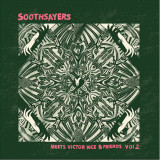
“On new album, Brixton’s dub/jazz/Afrobeat stalwarts Soothsayers offer 11 emotive instrumentals, their sonic textures afforded greater depth through the input of some of São Paulo’s finest musicians, including Criolo’s drummer, Bruno Buarque, and renowned guitarist/soundtrack composer Joao Erbetta of production team Capitão Monga. Led by the distinctive melodies of saxophonist Idris Rahman and trumpeter Robin Hopcraft, and supported by various colleagues in the UK and Brazil, the instrumentally-charged music is balm for the soul in these challenging times and the absence of vocal distractions allow the listener to fully absorb the group’s superb musicianship; there are 11 hefty companion dubs too, expertly crafted by the renowned producer and dub remixer, Victor Rice, resulting in what is easily the unit’s most instrumentally compelling release to date. ........David Katz”

pre-ordina ora28.04.2023

dovrebbe essere pubblicato su 28.04.2023

22,65
Arthur Russell - ‘Love Is Overtaking Me’ LP 2x12"

"Love Is Overtaking Me", originally released in 2008 comprises 21 demos and home recordings of unreleased pop, folk and country songs from Arthur"s vast catalogue. While much critical and popular affection for Russell"s music has come about well after his untimely death from AIDS in 1992, many fellow artists believed in his genius and were drawn to collaborate with him during his lifetime. The legendary producer John Hammond (Billie Holiday, Bob Dylan, Bruce Springsteen) recorded Russell on several occasions; a number of these recordings can be heard on "Love Is Overtaking Me". Alongside songs recorded with various incarnations of The Flying Hearts, a group formed by Russell with Ernie Brooks whose shifting line up included, by turns, Jerry Harrison, Rhys Chatham, Jon Gibson, Peter Gordon and Peter Zummo as well as Larry Saltzman and David Van Tieghem. Several other Russell projects are represented on Love Is Overtaking Me, including The Sailboats, Turbo Sporty and Bright & Early. Compiled from over eight hours of material, "Love Is Overtaking Me" reaches back further to Russell"s first compositions from the early `70s and spans forward to his very last recordings, made at home in 1991. Chris Taylor of Grizzly Bear contributed mixing, restoration and editing to the album, whose tracks were selected by Audika"s Steve Knutson, Ernie Brooks and Russell"s companion, Tom Lee. Several songs feature prominently in Matt Wolf"s film "Wild Combination: A Portrait of Arthur Russell". Extensive "Love Is Overtaking Me" liner notes by Tom Lee provide an intimate perspective on Russell"s diverse catalogue, which spanned an extraordinary diversity of styles and won the love of artistic communities that would seem utterly disparate, from Philip Glass, John Cage and Allen Ginsberg to rock bands like The Talking Heads and The Modern Lovers; the pre-Studio 54 disco-party scene of Nicky Siano"s Gallery and David Mancuso"s Loft; and DJ-producers like Francois Kevorkian and Larry Levan, among others.

pre-ordina ora02.12.2022

dovrebbe essere pubblicato su 02.12.2022

28,36
David Lance Callahan - English Primitive II

“Arguably his generation’s best lyricist” – Mojo // “The year’s stand-out album for me” – Stewart Lee // “A sort of modern-day pastoral” – Simon Armitage, Poet Laureate // The follow-up to last year’s first volume, English Primitive II continues the themes introduced previously in a harder, more electric and psychedelic style. The songs were mostly recorded during the same sessions but, if EPII showcased the ‘songs of innocence’, this new set comprises ‘songs of experience’. Callahan's lyrical themes here are frequently the sleaze and corruption of our ‘betters’, the intentional and unintentional brutality meted out on those weaker and the sometimes perverse ways in which this happens. There are moments of reflection among the broken mirrors, but they allow scant solace or reassurance. Dressed in another of Scottish artist Pinkie McClure’s witty and detailed stained glass creations and recorded at home and under a railway arch, EPII rises above its origins and invades the wider world, in all its colour, gritand glory. Each song serves as a monument to its internal tale – in fact, the whole LP is as much a collection of musical short stories as it is an album of songs. Opening with Invisible Man, the impression of a regular person with hidden grievances, biding his time and waiting to lash out is given. Waves of distant samples ebb and fall as the warped guitars swell and crash behind the main themes. We don’t know when this explosion will happen – we only know it will. A sleazy celebration of Britain’s position as the laundering capital of the world follows in the form of Beautiful Launderette. It’s good that we keep everything nice and clean for the whole planet, isn’t it? Business as usual, keeping the globe turning – that’s our role and we love it. The Parrot rocks like only a prolonged evisceration of governmental mouthpieces and their court stenographers can. It’s a thankless task making sure that the powers that be retain their authority in all things and patrolling the borders of what is allowed to be said and believed, but somebody’s got to do it. If you’re providing a service, you’ll need to present a united front against the grievances of the public, so you’ll need The Scapegoat. Mistakes and accidents can’t be the company’s fault, so you’ll need to pay someone to be publicly and repeatedly sacked to make it appear as if you’re solving problems and getting better. Lessons will be learned, going forward. The disturbing tale of Bear Factory begins side two and is the real-life story of the murder of one of the singer’s primary-school classmates in the 1970s, and true in every detail. The victim’s body was never found but the killer justifiably imprisoned for life. A more ancient scent of death pervades The Burnet Rose. This ground-hugging plant covers the graves of the victims in a seventeenth-century plague village on the Yorkshire coast to this day, commemorating their sacrifices when all around have forgotten. It’s this particular songwriter’s favourite flower. Orgy of the Ancients describes the intimate intricacies of ageing politicians and the press as they decide whether to go to war. In grotesque scenarios worthy of Caligula, they decide the fates of our children. And it’s not even half the truth. To finish, the songwriter looks back to an admired predecessor, when he sets William Blake’s famous poem London in a groovier setting than we’re used to – in the form of London by Blakelight. If London swings, it’s from the Tyburn tree. Tracks: Invisible Man / Beautiful Launderette / The Parrot / The Scapegoat / Bear Factory / The Burnet Rose / Orgy Of The Ancients / London By Blakelight

pre-ordina ora25.11.2022

dovrebbe essere pubblicato su 25.11.2022

23,10
Dickie Landry - Solos LP 2x12"

Broadway in Soho to perform a wholly improvised concert. This ensemble’s solos spring from collective improvisations and a tumultuous backbeat, loosely inspired by the creations of Coltrane, Coleman, Albert Ayler, and their brethren. The de facto leader was Richard “Dickie” Landry, a saxophonist and keyboardist who joined composer Philip Glass’s group in 1969. Landry had become a fixture in downtown New York’s loft and art scenes at the close of the 1960s, after he high-tailed it by car from Louisiana to the Lower East Side and auspiciously encountered Ornette Coleman at the Village Gate the night of his arrival.

For this concert, fellow Glass reedists Jon Smith and Richard Peck joined in, alongside Rusty Gilder and Robert Prado, both doubling on bass (upright and electric) and trumpet. The drum chair was occupied by New Orleans firecracker David Lee, Jr., who brought alto saxophonist Alan Braufman along for the session (Braufman was the only non-Louisiana player in the band). The ensemble stretched

out in the gallery for several hours in a configuration reflecting those that took place at Landry’s Chinatown loft, documented in photos by artists Tina Girouard and Suzanne Harris that adorn the inside of the original gatefold album jacket. Recorded live by Glass’ sound engineer Kurt Munkacsi, the album was released as a double LP on Chatham Square, the small imprint Landry and Glass co-ran, in a stark greyscale cover and simply titled Solos. The order of the players’ improvisations was laid out on the album inner labels, though unsurprisingly there’s a fair amount of blend. At the end of the day Solos is beyond category, a rousing exploration of instrumentation, rhythm, and life.

pre-ordina ora18.11.2022

dovrebbe essere pubblicato su 18.11.2022

32,14
Katatonia - Dead End Kings LP

Katatonia

Dead End Kings LP

12inch1089821PEV
Peaceville
11.11.2022

‘Dead End Kings‘, eines der ehrgeizigsten Werke der Band,
wurde in den Ghost Ward Studios und in The City Of Glass
aufgenommen. Anders Nyström und Jonas Renkse kümmerten sich um die Produktion des Albums, während David
Castillo, der für seine früheren Kooperationen mit Katatonia
sowie Opeth und Bloodbath bekannt ist, für den Mix des
Albums verantwortlich war. ‘Dead End Kings‘ war das
Aufnahmedebüt von Gitarrist Per Eriksson für die Band,
zusammen mit dem neuen Bassisten Niklas Sandin.

pre-ordina ora11.11.2022

dovrebbe essere pubblicato su 11.11.2022

27,27
Hazel Dickens & Alice Gerrard - Who's That Knocking?

Unavailable on vinyl for decades, 'Who's That Knocking?', Hazel and
Alice's debut, initially released in 1965, was remastered in 2021 by its
original producer Peter K Siegel, and has been reissued with its original
artwork and liner notes
With this trailblazing record, Hazel and Alice shattered the glass ceiling of maledominated bluegrass, which had typically relegated women to minor musical
roles at best. Hazel and Alice's hard-edged, soulful harmonies were firmly rooted
in the older music traditions of the rural South. Their steadfast devotion to their
powerful, driving style inspired generations of women in bluegrass, country
music, and even punk. They are accompanied on this album by Chubby Wise,
arguably the architect of bluegrass fiddling; David Grisman, whose mandolin
improvisations changed the landscape of acoustic music; and Lamar Grier, who
played banjo as a member of Bill Monroe's Blue Grass Boys in the 1960s.
Tracks: Walkin' In My Sleep / Can't You Hear Me Calling / Darling Nellie Across
the Sea / Difficult Run / Coal Miner's Blues / Gabriel's Call / Just Another Broken
Heart / Take Me Back to Tulsa / Who's That Knocking? / Cowboy Jim / Long
Black Veil / Lee Highway Blues / Lover's Return / Gonna Lay Down My Old Guitar /
I Hear a Sweet Voice Calling

pre-ordina ora30.10.2022

dovrebbe essere pubblicato su 30.10.2022

26,01
HARKIN - S/T

Harkin

S/T

12inchHM01
HAND MIRROR RECORDS
28.10.2022

Debut Harkin LP now available via Forte: Recorded at: Seahorse Sound, Los Angeles USA (Carlos Gonzalez), Tesla Studios, Sheffield UK (Richard Formby and David Glover), Echo Canyon West, New Jersey USA (John Agnello), Spirit Level, Peak District UK (Harkin). Additional recording by Jeff T Smith at The Bungalow, Leeds UK. Mixed by John Agnello at Water Music, New Jersey USA Mastered by Heba Kadry

pre-ordina ora28.10.2022

dovrebbe essere pubblicato su 28.10.2022

22,48
Philip Glass - The Hours OST 2x12"

Philip Glass

The Hours OST 2x12"

2x12inch0075597910292
Nonesuch
30.09.2022

‘Was there ever a more perfect film for Glass’s lyrical manner? He refers to his own past, but the way in which the material is treated transforms it inevitably into that eternal present. Such a feeling of fragile beauty is a rare achievement.’ – Gramophone

‘Simple and complex by turn, Glass’s score adds dignity and depth to the movie, and to the tragedies and triumphs, big or small, of ordinary life.’
– Guardian

‘Underpinning the anguish at the heart of The Hours a beautiful score. Glass’s motifs capture the passage of time and the universality of human experience.’ – Classic FM’s Best Soundtracks

Nonesuch releases Philip Glass’s award-winning soundtrack to The Hours on vinyl for the first time to coincide with its 20th anniversary and Glass’ 85th birthday concert season. Originally released in December 2002, Glass’s score to the Academy Award-winning film was itself nominated for an Academy Award, as well as a Golden Globe and a Grammy, and went on to win a BAFTA and a Classical BRIT.

Directed by Stephen Daldry, The Hours is the story of three women searching for more potent, meaningful lives. Based on Michael Cunningham’s 1999 Pulitzer Prize–winning novel, with a screenplay by David Hare, the film interweaves the stories of three women – a book editor in New York (Meryl Streep), a young mother in California (Julianne Moore), and the author Virginia Woolf (Nicole Kidman). Their stories intertwine, and finally come together in a surprising, transcendent moment of shared recognition.

Philip Glass’s score was conducted by Nick Ingman, with Michael Reisman on piano and the Lyric Quartet, and recorded at Abbey Road Studios and Air Studios, London. The score was a key element in this acclaimed triptych of dramatic tales. ‘The inter-cutting of personal stories over a wide span of time,’ said NPR, ‘is held together by a single music approach.’

In his original liner note, Michael Cunningham wrote, ‘Each novel I’ve written has developed a soundtrack of sorts; a body of music that subtly but palpably helped shape the book in question. The one constant since I started trying to write novels, however – my only ongoing act of listening fidelity – has been the work of Philip Glass. I love Glass’s music almost as much as I love Woolf’s Mrs. Dalloway. Glass, like Woolf, is more interested in that which continues than he is in that which begins, climaxes, and ends; he insists, as did Woolf, that beauty often resides more squarely in the present than it does in the present’s relationship to past or future. So, when I heard he’d agreed to contribute the music to the film version of The Hours, it seemed both inevitable and too good to be true. I’m not sure if I can offer any higher praise than this: When I saw the movie with the music added, I thought automatically of how I could use the soundtrack, when it came out, to help me finish my next book.’

“This is a movie about art and how art affects life," explains Philip Glass. “The story is very complicated and the music could take on a very important role in the film, as I saw it – to make it viewable, to make it comprehensible, so the stories of the three women in the film didn’t seem separate, that they were tied together. The music had to be the thread that tied the movie together. There’s no question that the emotional point of view is conveyed by the music. Music is the arrow you shoot in the air. Everything follows that.’

Born in Baltimore, Maryland, in 1937, Philip Glass is a graduate of the University of Chicago and the Juilliard School. By 1974, Glass had created a large collection of music for The Philip Glass Ensemble. The period culminated in the landmark opera, Einstein on the Beach. Since Einstein, Glass’s repertoire has grown to include music for opera, dance, theater, orchestra, and film. His scores have received Academy Award nominations (including Kundun and The Hours, both released on Nonesuch, as well as Notes on a Scandal) and a Golden Globe (The Truman Show). Recent works include Glass’s memoir, Words Without Music, Glass’s first Piano Sonata, opera Circus Days and Nights, and Symphony No. 14. Glass received the Praemium Imperiale in 2012, the US National Medal of the Arts from President Barack Obama in 2016, and 41st Kennedy Center Honors in 2018.

Nonesuch’s relationship with Glass began in 1985, with the release of the score for Paul Schrader’s Mishima. In addition to The Hours (2002) and Kundun (1997), over the years other Glass works on Nonesuch have included Einstein on the Beach (1993), Music in Twelve Parts (1996), the soundtracks for Powaqqatsi (1988) and Koyaanisqatsi (1998), Glass Box (2008), and Kronos Quartet’s Performs Philip Glass (1995), amongst others.

pre-ordina ora30.09.2022

dovrebbe essere pubblicato su 30.09.2022

43,66
Blondie - Vivir en la Habana

Originally released in July 2021 on blue vinyl – this is a yellow vinyl re-press – original notes below

During 2019, Blondie was invited to perform in Havana, Cuba as part of a cultural exchange through the Cuban Ministry of Culture. This was a 40 year ambition come especially for songwriter & guitarist Chris Stein, who had longed to visit Cuba for most of his life. Artist and director Rob Roth documented this special moment and career highlight by shooting a short film titled “BLONDIE: VIVIR EN LA HABANA”.
The film is broken up into 3 parts — Water, Fire and Air — and present a meditation on the experience as well as highlights from the two-night live musical performances with special guests Alain Perez, David Torrens and Cuban Fusion Pioneers Sintesís at Havana’s famous Teatro Mella.
With narration from Blondie founding members Debbie Harry, Chris Stein, and Clem Burke, providing a glimpse into the passion and beauty they discovered in Havana and the magic moments of performing alongside incredible Cuban artists. “BLONDIE: VIVIR EN LA HABANA” goes beyond the atypical short form film and live music documentary by presenting a portrait of the legendary band’s first experience in Havana and of the magical exchange between musicians from the two cities each call home and their intertwined influences.

The sound track for the film features Cuban musicians Carlos Alfonso, Ele Valdés, María del Carmen Ávila, Alejandro Delgado, Juan Carlos Marin, Jamil Schery, Degnis Bofill, Adel González

Released in July on limited edition pale blue vinyl to accompany the film which will feature throughout 2021 in many prominent Film Festivals inc the Tribeca Film Festival.

pre-ordina ora12.08.2022

dovrebbe essere pubblicato su 12.08.2022

18,45
Grateful Dead - Europe ‘72 50th Anniversary (3x12")

The Grateful Dead’s first tour outside of North America was immortalized on Europe ’72, a triple live album that distilled peak moments from the 22 shows the band played in six countries for thousands of Europeans. A triumph critically and commercially when it was released in November 1972, today the double-platinum album is an integral part of the Dead’s live legacy and beloved by generations of fans. Appreciation for the extraordinary tour grew in 2011 when every show was released in the unprecedented, 73-CD boxed set, Europe ’72: The Complete Recordings.
Today is the 50th anniversary of the first show from the Dead’s European adventure. It took place on April 7, 1972, at Wembley Empire Pool in London. To mark the milestone, Rhino and Dead are announcing a series of upcoming releases and events connected to the celebrated tour.
A newly remastered version of the original Europe ’72 album will be available on July 29. EUROPE ’72 (50th ANNIVERSARY EDITION) arrives in 3-LP. All of the new 50th anniversary editions were mastered by Grammy® Award winning engineer David Glasser with newly restored audio by Plangent Processes.

pre-ordina ora29.07.2022

dovrebbe essere pubblicato su 29.07.2022

65,97
MELAINE DALIBERT - SHIMMERING

Dalibert who hides badly behind the simplicity of facade of these eight pieces all the rare elegance which emerges from this set. The pianist goes well beyond the codes of the genre, certainly one will think sometimes of harold bad of avalon sutra to philipp glass of metamorphosis but Melaine Dalibert, by his singularity and his clairvoyance, reminds us that the music is nothing more than an arithmetic of the sensitivity, an addition of the possible ones. His fifth album "Shimmering" recently enriched the Mind Travels collection of the label Ici d'Ailleurs, but the magnetic mantras, that French pianist Melaine Dalibert forges on his appreciated concerts, already attracted many lovers of contemporary piano minimalism, due to the way by which this composer manages to integrate an algorithmic approach to composition with popular motifs and influence. His alloy of personalistic flow and technical skills is so strong that even what sounded like pure exercises, such as "Six+Six", one of the more interesting compositions (dedicated to David Sylvian), can titillate listener's soul. These eight haunting, wordless pop songs, snapshots of a melancholy mood, owe as much to Morton Feldman or Philip Glass as to Ryuichi Sakamoto or Peter Broderick. They nonetheless reveal a highly singular musical personality. These eight new white pebbles extend the fascinating journey of an artist who, if the title of his very beautiful record is to be believed, loves nothing more than to illuminate the path.

pre-ordina ora11.06.2022

dovrebbe essere pubblicato su 11.06.2022

17,23
Decapitated - Cancer Culture

Decapitated

Cancer Culture

12inch4065629605285
Nuclear Blast
27.05.2022

Across eight studio albums, DECAPITATED grew from the adolescent dream of teenagers from a small Central European town to one of the leaders of the metal genre. Each successive album further expands the band’s sound with genre-bending authenticity and integrity. As Metal Injection rightfully observed, “any self-respecting death metalhead knows the name well.”

DECAPITATED’s music is a weapon forged by four young men from a historic medieval-fortified town in Poland, which catapulted them to the top of a worldwide subculture. Like a rose in the devil’s garden, the DECAPITATED story builds triumph from tragedy. The gleeful grotesquery of extreme metal imagery and rifftastic bludgeoning beckons listeners to uncover broader truths.Upon the release of 2017’s Anticult, Metal Hammer declared DECAPITATED “a serious successor to the likes of Pantera and Lamb Of God – a band who can draw new legions into the metal world as its new champions.” Their diverse follow-up, 2022’s Cancer Culture, delivers on that promise.

Instantly recognizable devastation and deceptively sinister hooks abound. Freshly minted DECAPITATED anthems like “Last Supper,” “Hello Death,” “Just Cigarette,” “No Cure,” “Iconoclast,” and “Cancer Culture” shimmer with sonically sharp production and unrelenting bombast. There’s also a newly increased emphasis on melody, even venturing into darkly romantic territory. Wacław "Vogg" Kiełtyka (guitar), Rafał "Rasta" Piotrowski (vocals), Paweł Pasek (bass), and James Stewart (drums) are at the top of their game, delivering the goods at peak performance. Jinjer vocalist Tatiana Shmayluk and Machine Head frontman Robb Flynn make guest appearances.

Set on the descending plains of a mountain range amid a dense forest, Krosno boasts a 14th-century Gothic church, a Subcarpathian museum, and stunning artisan glassware. In this Polish town, teenage music student Wacław "Vogg" Kiełtyka discovered records from bands like Morbid Angel, Cannibal Corpse, Metallica, and Machine Head. The guitarist and his younger brother, drummer Witold “Vitek” Kiełtyka, cofounded DECAPITATED in 1996, inspired by a wide range of technical death, blackened thrash, and local heroes, like KAT and the world-renowned Vader. Death and black metal reigned supreme in the Polish scene of the 1990s, where Behemoth originated as well. In fact, a Vader song called “Decapitated Saints” inspired the band’s moniker.
The organic musical chemistry between the Kiełtykas was akin to the brotherly connectivity and vibe driving Pantera, Gojira, and the classic era of Sepultura. In 2006, Kerrang! praised the first three DECAPITATED albums - Winds of Creation (2000), Nihility (2002), and The Negation (2004) – as “superbly conceived and executed eruptions of technical brilliance and razor-sharp songwriting that turned these youthful Poles into one of the genre’s most widely respected bands.” That year’s Organic Hallucinosis further perfected Vogg’s penchant for blending extremity with catchy hooks.

The rule-breaking ferocity and invention of the first four albums reinvigorated death metal, as DECAPITATED inspired a new generation of bands who followed suit. Sadly, this era came to a shocking end in late 2007. While touring Russia, the band’s bus collided with a large truck near the border with Belarus. Both Vitak and then-singer Adrian “Covan” Kowanek sustained severe head injuries. Tragically, Vitak passed away in a Russian hospital a few days later. He was just 23.Vogg summoned the courage to continue, in honor of his brother and what they created, and returned with a new incarnation of DECAPITATED and the fiercely adventurous comeback album, Carnival is Forever (2011) featuring new vocalist Rafał "Rasta" Piotrowski. Blood Mantra (2014) introduced bassist, Paweł Pasek. Blabbermouth declared it “perhaps the most poised and gutsy” DECAPITATED album, adding “its courageous bends make it a turbulent but pleasurable ride.”

Cancer Culture sounds brilliant, modern, and tasty. “There is no place for any fake, plastic, bullshit drum machine or anything like that,” Vogg insists. “It’s all organic, pure, and clear, showing the true face of the band. Vogg and company entrusted the Cancer Culture mix to David Castillo at Sweden’s Fascination Street Studios / Studio Gröndahl (Sepultura, Carcass, Opeth, Katatonia), and legendary American producer Ted Jensen (Metallica, Slipknot, Pantera, Machine Head, Korn).
The devoted supporters who traveled to see DECAPITATED on international tours with the likes of Lamb Of God, Meshuggah, Soulfly, Fear Factory, and Suffocation over the years will recognize the ever-present pummeling backbone. Longtime fans and newcomers alike will connect to the variety of atmospheric depth throughout Cancer Culture’s ten boundlessly energetic and creative tracks.
“If you told me 25 years ago, in my neighborhood in the South of Poland, that I would be in Machine Head, sharing riffs with Robb Flynn,” Vogg marvels. “It’s simply incredible. It means that everything is possible in your life. That gives me the faith to believe that I can achieve even more in my career. The dreams we have when we are kids, things we can barely imagine, can happen.” Flynn contributes a hauntingly beautiful vocal to the Cancer Culture track “Iconoclast.” “Clean vocal singing is a really new thing in DECAPITATED,” Vogg notes. “It’s really unique and amazing.”

Driven by Vogg’s passion and integrity, the dual emphasis on creative invention and technical prowess maintains DECAPITATED’s stature as genre-leaders in 2022 and beyond. The band’s supporters continually demonstrate confidence and absolute certainty DECAPITATED will deliver.

pre-ordina ora27.05.2022

dovrebbe essere pubblicato su 27.05.2022

30,88
Articoli per pagina:
N/ABPM
Vinyl