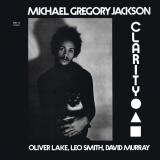
Mit verschiedenen Ensembles wie seinem World Saxophone Quartet hat US-Saxofonist David Murray Jazz
und Avantgarde zusammengebracht und das Genre über Jahrzehnte hinweg immer wieder maßgeblich
geprägt. Letztes Jahr hat er mit Pianistin Marta Sanchez, Bassist Luke Stewart und Schlagzeuger Russell Carter ein neues Quartett gegründet und einen Vertrag mit dem legendären Coltrane-Label Impulse!
Records abgeschlossen.
Für sein dortiges Label-Debüt hat er sich von Musik inspirieren lassen, die älter als die Menschheit ist:
dem Vogelgesang. “Birdly Serenade” ist Teil des Grammy-ausgezeichneten “Birdsong Project”, sechs der
acht Originale komponierte Murray in einem Künstler-Retreat in den Adirondack Mountains, inmitten
von Seen, Wäldern und endlosem Himmel. Am Anfang des Schreibprozesses standen drei Gedichte von
Francesca Cinelli, die auf dem Album auch mit einer Spoken-Word-Performance zu hören ist. Weiterer
Gaststar ist Sängerin Ekep Nkwelle.
Wer zartes Flötenspiel und “Jazz-Gezwitscher” erwartet, den wird der kraftvolle Saxofon-Sound des im
berühmten Van Gelder Studio aufgenommenen Albums eines Besseren belehen.
Поиск:david murray
Все
- 1
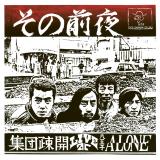
First time reissue of JP free jazz rarity, pre-Seikatsu Kōjyō Iinkai group.
The single album self-released by the quartet Shūdan Sokai in 1977 is one of the most vital documents of mid-seventies Japanese free jazz, documenting Tokyo’s free scene at the precise moment when it began to shift to a handful of tiny venues on the western fringes of the city. In Free Jazz in Japan, Teruto Soejima identifies the extant venue Aketa no Mise in Nishi-Ogikubo as the pioneer of this decamping from the centre: a cramped basement beneath a rice shop, seating just 20 people. Musician-run, operated on a shoestring, these spaces offered a vital site for community, creativity, and a small measure of financial independence — “even though it was in a basement, in spirit it was a loft.”
Among the most active of the new venues was Alone in Hachiōji, nearly an hour from Shinjuku, in a district shaped by universities, lower rents, and a thriving counterculture. Originally opened in 1973 as a jazu kissa, Alone was unusually spacious and equipped with a stage, grand piano, and drum kit. Around 1974, Junji Mori and Yasuhiro Sakakibara began working there, booking free jazz players on weekends and establishing the venue as a crucial hub. Mori recalls early appearances by figures including Kazutoki Umezu, Toshinori Kondo, and others who would define the scene.
In early 1976, Umezu and pianist Yoriyuki Harada — recently returned from New York’s loft jazz environment, where they had played with musicians such as David Murray and William Parker — formed Shūdan Sokai with Mori and drummer Takashi Kikuchi. The name, meaning “mass evacuation,” pointed to their self-chosen exile in Hachiōji. With Alone as their home base, the quartet developed a music characterized by an infectious sense of enjoyment and a willingness to integrate free jazz with elements of song structure. Harada switched between piano and bass; the group experimented with rap-like vocal pieces, jabbering nursery rhymes over bass rhythms.
They returned to Alone on December 24 to record Sono zen’ya (Eve), releasing it on their own Des Chonboo Records, partially funded by advertisements from local businesses printed on the rear cover. The closing “Ballad for Seshiru,” dedicated to Harada’s newborn son, unfolds over a delicate piano melody that moves into emphatic chords as intertwining alto lines rise and spiral.
Alone closed in September 1977, and Shūdan Sokai soon dissolved, later morphing into the expanded Seikatsu Kōjyō Iinkai Orchestra. What remains is a recording rooted in a specific place and moment: a fiercely independent scene sustained by small rooms, close listening, and collective commitment.
- This Day (Soul Of Africa)
- Home For Dinner
- Grazing In The Grass
- Until Then
- Jackpot
- Let's Get Lost
- Ca Purange
- Death In The Arena
- Jazz Ska
- Humungous Blues
- Tenha Fe
- Mack The Knife
- Do It Good
Produziert und gemischt von Roger Rivas (The Aggrolites), zeigt ,Home For Dinner" den Saxophonisten David Hillyard und seine genreübergreifende Band Rocksteady 7 in Bestform. Das Album mischt Einflüsse aus Ska, Jazz, afro-kubanischer Musik und Reggae mit einer All-Star-Besetzung, darunter die Percussion-Legende Larry McDonald, den Sängern Chris Murray und B Negao sowie Mitgliedern von The Slackers und The Aggrolites. Von groovigen Eigenkompositionen bis hin zu kreativen Interpretationen von ,Ca Purange", ,Mack the Knife" und ,Jackpot" ist ,Home For Dinner" eine Meisterklasse in Sachen Groove, Melodie und kultureller Fusion.
- 1: The Song Of Yamato-Minzoku
- 2: Free Fight
- 3: The Thrilling Corner
- 4: Ellen David
- 5: Yellow Monk
- 6: La Pasionaria
- 7: Nbagi
- 8: Monster's Teardrops
- 9: Another Country
BBE Music’s acclaimed J Jazz Masterclass returns with its 20th release, a super rare private press from one of the more laudable female jazz figures of Japan, saxophonist and composer Sachi Hayasaka, together with her band, Stir Up! Released in 1988 on the private label Mobys, Free Fight was Hayasaka’s debut album and announced the arrival of an essential and primal force onto the Japanese jazz scene. Part free jazz, part post-bop, and part heavy groove, Free Fight is one of the most varied yet engaging albums BBE Music has reissued in the J Jazz Masterclass Series, showcasing Hayasaka’s inventive and muscular playing as well as her highly original and surprising compositional powers. Given the album’s eclectic yet cohesive sound, it’s no surprise that it originally found a home at Mobys, the label established by esteemed jazz critic and promoter Teruto Soejima. Mobys only issued a handful of albums from some of the leading free and open players including J Jazz Masterclass alumnus, pianist Aki Takase, as well as free jazz guitar icon Masayuki Takayanagi, and free jazz figureheads Itaru Oki and the great Masahiko Satoh. Born in Tokyo in 1960, Hayasaka took lessons from saxophonist and recording artist Toki Hidefumi and fully immersed herself in the jazz life, working part-time at various jazz kissas including Peter-Cat, a kissa managed by novelist Haruki Murakami. She has performed regularly across Japan at venues like the famous Pit Inn and formed a strong alliance with the classic Tokyo jazz kissa Paper Moon, which continues to this day. Heavily influenced by players such as Roland Kirk, David Murray and Ornette Coleman, Hayasaka has played with free jazz legend Yosuke Yamashita and performed around the world (as well as up Mount Fuji!). In the late 1980s she moved to New York for several years and worked with notable musicians including drummer Pheeroan akLaff and pianist Cliff Korman. She has recorded a number of albums to her name for Japanese jazz labels such as Three Blind Mice and Kitty as well as leading European imprints such as Enja.
„Wenn alle verschwunden sind, wer fliegt dann dieses Ding?“ Demon Records präsentiert ein exklusives Audio-Abenteuer für den zehnten Doctor, geschrieben von Dan Abnett und gelesen von David Tennant, begleitet von Murray Golds mitreißender Version des bekannten Doctor Who-Themas. Die Tardis materialisiert an Bord eines bahnbrechenden Weltraumkreuzers, der von der Erde zum Planeten Eternity reist. Als plötzlich Passagiere und Besatzung verschwinden, müssen der Doctor und Flugbegleiterin Sugar verhindern, dass das Schiff abstürzt. Doch auf Eternity erwartet sie etwas Schreckliches… „…ein straff strukturiertes und durchweg unterhaltsames Sci-Fi-Thriller-Abenteuer… und das alles getragen von einer gewohnt energiegeladenen Lesung von David Tennant.“ – SFX Magazin Diese spannende Geschichte erscheint als 2LP auf durchscheinend gelbem Vinyl in einer breiten Hülle mit illustrierten Innenhüllen – exklusiv zum Record Store Day Black Friday Event.
We Jazz Magazine, Issue 15 / Summer 2025 "Forfolks" for Jeff Parker. 128 pages, 170 x 240 mm in size and printed on 140g Edixion paper with laminated 300g Invercote covers. All articles presented in English. Jeff Parker by Andy Beta, Peter Margasak & Scott McNiece, Elaine Brown by Pierre Crépon, David Murray by Bret Sjerven, Adele Sauros by Wif Stenger, Rafael Toral by HT Nuotio, Lush Life by Seymour Wright, The Connection by Patrick Preziosi, Nels Cline by Bret Sjerven, Discaholic Column by Mats Gustafsson, album reviews, book reviews, live reviews, photo essay & more.
The debut recording by The Ancients, the intergenerational coalition of Isaiah Collier, William Hooker, & William Parker formed by parker to play concerts in conjunction with the milford graves mind body deal exhibition at the institute of contemporary art los angeles & now a working group. across x2LPs of side-length long-form improvised sets recorded at 2220 arts & archives in LA & the chapel in San Francisco, The Ancients bring the free jazz trio languages first explored by the Cecil Taylor Unit & Ornette Coleman’s -Golden Circle- band (expanded upon in later eras by Sam Rivers' Trio & Parker’s collective trios with Charles Gayle/Graves & Peter Brötzmann/Hamid Drake) into their own unique & scintillating realms of expression.
As we tumble further into the throes of history’s tides, people of hope & creativity rely on the works of our great artists to lift our spirits & focus our resolve. -ascension- was recorded less than a year after the passage of the civil rights act & four months after the assassination of Malcolm X. -journey in satchidananda- was recorded the month reagan was re-elected governor of California. M’boom made its debut recording weeks after the watergate scandal broke & a couple months after the wounded knee occupation ended. The music of the ancients builds on these great musical legacies. it resounds with the pride of survival & the joys of making & sharing music. It delivers to us hope & balm. something real in you, real in history, & real in the music is shared, right on time.
When Eremite records commenced operations during the 1990s free jazz resurgence, heavyweight freedom-seeking tenor saxophonists such as Fred Anderson, Peter Brötzmann, Charles Gayle, Kidd Jordan, & David S. Ware were at the height of their powers. Isaiah Collier’s tenor playing in the ancients is bracing testimony that the wellspring lives on. to hear the young chicago firebrand blowing freely with veteran improvisers in an entirely open-form group music is a revelatory study of his vast talent, personal voice, & the intensity of his expression —as well as a bold complement to his composition-based albums as a bandleader (including -the almighty-, a new york times' best albums of 2024 selection).
I've admired drummer William hooker since first encountering his music in a hartford ct city park, early ‘90s (on a double bill with Jerry González & Fort Apache Band). From the man himself right off the bandstand i bought his even-then rare 1st recording, the 1976 self-released x2LP opus -is eternal life- (reissued 2019 by superior viaduct). An imposing force on his instrument & an intrepid DIY cat, Hooker’s been exuberantly swinging in&out of free time for 50+ years. informed by the innovations of Sunny Murray & Tony Williams yet entirely himself, there is no other term for it than “pure hooker.” at age 78, with the ancients & everywhere else, THE HOOK is in peak form.
With a discography approaching 600 entries & 50+ years working across the musical maps, including in the history-defining bands of Don Cherry, Cecil Taylor, Bill Dixon, Peter Brötzmann, in his own wondrous ensembles from small group to orchestra to opera, a bastion of compassionate leadership & a poetic champion of his musical community, in tireless service to what he rather egolessly refers to as “the tone world”, multi-instrumentalist, improviser & composer william parker is a living hero of the grassroots & the black mystery musics, not to mention one of the great bassists in the history of jazz. To quote George Clinton, conquering the stumbling blocks comes easier when the conqueror is in tune with the infinite.
Live to 2-track concert recordings by Bryce Gonzales, Highland Dynamics. Mastered by Joe Lizzi, Queens, NY.
- A1: Honeysuckle Redwood Cabin
- A2: Homestead
- A3: How’s Ya Pa?
- A4: Brave White Knight
- A5: Bulldog Goes West
- A6: Across The Universe
- A7: Way, Way Down (Bonus Track)
- B1: Million Times Before
- B2: Money Is
- B3: Mister Custer
- B4: Song For Sunny
- B5: Chicago Cottage
- B6: Jeremiah’s Dream
Psychedelic pop act Jawbone had ample talent and keen industry connections yet remained unjustly obscure. Core members had been active in The Mirage, who signed with CBS and later recorded for Phillips; drummer David Hynes and bassist/future Elton John Band mainstay Dee Murray briefly joined the Spencer Davis Group, but regrouped as Portobello Explosion, which became Jawbone. Their rare self-titled debut, released by Carnaby in 1970, had an undercurrent of Americana, and there’s a one-off cover of The Beatles’ ‘Across The Universe’; this edition features bonus track ‘Way, Way Down,’ a non-LP Carnaby 45.
“There goes my TARDIS!” Demon Records celebrates David Tennant and Catherine Tate’s partnership as the Doctor and Donna with two audio-exclusive stories, read by the actors themselves. In Pest Control, read by David Tennant, the Doctor and Donna face monstrous insects and a ruthless robot exterminator when the TARDIS is lost in battle on a distant planet. The Doctor sets off in pursuit of his craft, while Donna finds herself accepting a commission in the Pioneer Corps. Something is transforming soldiers into monstrous beetles - and she could be the next victim. In The Forever Trap, read by Catherine Tate, the duo find themselves imprisoned in a complex of luxury apartments in space, and neighbours to a terrifying assortment of aliens. Deadly mobs wage battle in the corridors and on the stairwells, and the travellers must cross their paths as they search for the ultimate authority. Who, or what, lies at the heart of the Edifice? This stunning box set, with an illustrated lift-off lid, features 6 x 140g vinyl LPs - three in Transparent Red and three in Transparent Yellow - each housed in a unique inner sleeve. A four page booklet features sleeve notes by authors Peter Anghelides and Dan Abnett, who reflect on the process of writing for the Tenth Doctor and Donna, and how they regard the stories 17 years later. Now for the first time on vinyl, accompanied by original sound design and Murray Gold’s Series 4 arrangement of the familiar theme music, these two high-octane adventures are a reminder of the excitement, humour and magical wonder of Doctor Who
Black Truffle is pleased to announce the first vinyl reissue of Trancedance, a wild slice of Swedish Afro-fusion from Christer Bothén, originally released in 1984. A major figure in Swedish jazz and improvised music since the 1970s, often heard on bass clarinet and tenor sax, Bothen studied doso n’koni (the large six-stringed ‘hunter’s harp’ of the Wasulu) in Mali in 1971-2 before turning to the guinbri (the three-stringed lute of the Gnawa/Gnauoua) in Marakesh later in the decade. In between, he performed extensively with Don Cherry during his Organic Music Society period and taught Cherry the doso n’koni. In the later 70s and 80s he worked with the most important figures in the distinctive Swedish jazz-rock-world fusion scene, joining Archimedes Badkar for their African-influenced Tre and participating in Bengt Berger’s legendary Bitter Funeral Beer Band. Many of the musicians who played on the Bitter Funeral Beer Band’s ECM LP (including Berger on drums, Anita Livstrand on voice and percussion and Tord Bengstsson on piano, violin and guitar) joined Bothén for one of the sessions that produced Trancedance, the first release under his own name, dedicated to his compositions. The other session introduced his seven-piece group Bolon Bata, heard on the second track of each side. The title track opens the album with the rubbery buzzing strings of the doso n’goni playing a hypnotic ten beat pattern, soon joined by bass and piano before the entire nine-piece group kicks in with a rollicking Afro-jazz workout, Berger’s drums driving an intricate, winding melodic line played by the horns with Mattias Helden’s cello throwing in pizzicato slides and smears. Bothén then takes centre stage on tenor sax, soloing with a wide, vibrating tone and moving seamlessly from soaring melodies to guttural stutters. After a return to the composed horn lines and a solo from Elsie Petrén on alto sax, the piece builds to an ecstatic conclusion of yelping voices and handclaps, gradually simmering down to return to the solo doso n’koni where it began.
The hypnotic sounds of the hunter’s harp carries over to ‘Mimouna’, where it is joined by Bothen’s overdubbed guinbri. The piece develops into a haunting whispered and sung invocation, gradually building momentum until the organic textures of strings, voices, and hand percussion are ruptured by Lennart Söderlund’s distorted guitar, which brings an unmistakable touch of 1984 to the otherwise timeless sound. Joined by chicken scratch guitar and increasingly dominated by the insistent clang of three of Bolon Bata’s members on karqab (a kind of cast-iron castanet), the grove develops frenetically.
The B side opens with the multi-part epic ‘9+10 Moving Pictures for the Ear’, at over 16 minutes the record’s longest piece. Though Bothen is heard only on horns on this piece, the hypnotic repeating bass line carries on the first side’s link to African musical traditions. Using an expanded 16-piece ensemble, the music balances untethered improvisation with carefully arranged passages of knotty ensemble playing that at points suggest Mingus, Moacir Santos or some of the ambitious post-free work being done in the same years by figures like David Murray or Henry Threadgill. The piece ends with a triumphant passage of looping unison melody reminiscent of the Scandinavian folk explorations of Arbete och Fritid (whose Kjell Westling is heard on bass clarinet and soprano sax here). The sound of Bjorn Lundqvist’s fretless bass introduces the odd left turn made by the record’s final track, a spaced-out expedition into bluesy horn lines and distant guitar atmospherics set to a semi-reggae beat, perfumed by the core Bolon Bata group and bearing the appropriate title of ‘The Horizon Stroller’. A must for fans of the Swedish scene around groups like Arbete och Fritid and Archimedes Badkar, as well as any listener who has been seduced by Louis Moholo’s Spirits Rejoice!, The Brotherhood of Breath, or, more recently, the guinbri grooves of Natural Information Society, Trancedance is a lost classic ripe for rediscovery.
Unknown Rivers“ ist das Debüt des Bassisten Luke Stewart bei Pi Recordings. Stewart ist in der Musikszene allgegenwärtig und eine treibende Kraft. Er ist Leader oder Co-Leader von Bands wie Irreversible Entanglements oder des Exposure Quintet. DownBeat bezeichnet ihn als einen der „Twenty-Five Performers Who Could Shape Jazz for Decades“. Er hat mit Künstlern wie David Murray, Archie Shepp, Wadada Leo Smith, Nicole Mitchell, Nate Wooley und zahllosen anderen zusammengearbeitet. Stewart ist außerdem Kurator und Moderator mehrerer Konzertreihen in Washington, D.C. und New York, Schriftsteller, Aktivist, Produzent und DJ. Das neue Album hat er mit seinem langjähriges Silt Trio eingesp
- A1: Brenda Wootton John The Fish - Stars Down Out
- A2: Bob Hughes - High Dry Down Out
- A3: Jim Leedy - Move Inside My Head Down Out
- A4: Harry Waller - Merley Gone Down Out
- B1: Franz Scheurer Murray Hinder - Farewell Down Out
- B2: Jack Lucking - Death Down Out
- B3: David Budin - I Ll Be Gone Down Out
- B4: Skip Prokop - Blue Boy Down Out
- C1: Peter Berkow - Sometimes My Life Down Out
- C2: Bill Clint - Angels Don T Need Friends Down Out
- C3: Dana Westover - From A Tower Window Down Out
- D1: Richard Freeland - Present Your Errors Down Out
- D2: Richard Forestier - Soupirs Down Out
- D3: Hooknorton - High Dry Down Out
A new 6-track mini album from a musician with a long list of credits including South African trumpet legend Hugh Masekela, afrobeat co-creator Tony Allen and Ethiopian jazz originator Mulatu Astatke as well as many Brit-jazz and international roots artists. "It's Time" blends spiritual Afro-jazz groove with free improv, spoken poetry and other-worldly atmosphere, with lyrics and titles hinting at unorthodox takes on reality and the times we live in.
Phil Dawson is a top London guitarist who has worked and schooled himself extensively in many different African, Latin and Brazilian music traditions together with styles that more typically cross the radar of someone with a similar British background: roots reggae, punk rock, blues, soul, R'n'B, jazz and funk. As a sideman, he's played with a host of living legends of Afro-fusion music including South African jazz trumpet giant Hugh Masekela, Nigerian afrobeat co-creator Tony Allen, Ethiojazz pioneer Mulatu Astatke, the Algerian "king of rai" Khaled, and London based Ghanaian afro-rock dons Osibisa. Heavy company for sure.
Now he's releasing a new mini 6 track album of original compositions under his own name and band - Phil Dawson ٤-tet - and he's joined by a stellar cast of London's finest players who include Rowland Sutherland (flutes - Airto Moreira, David Murray, Carla Bley), Khadijatou Doyneh (spoken word - The Heliocentrics, Danny Keane), Gaspar Sena (drums - Alfa Mist, Maria Chiara Argiro), Marius Rodrigues (drums - Oriole, Hermeto Hermeto Hermeto), Lekan Babalola (percussion - Cassandra Wilson, Ali Farka Toure) and Matheus Nova (bass - Antonio Forcione, Ed Motta, Jazzinho). Phil himself features on guitars, Fender Rhodes and piano.
'This is great' - Gilles Peterson, BBC Radio 6 (on 'It's Time)
'Beautiful' - Kassin (producer Caetano Veloso, Sonzeira etc) (on 'It's
Time')
'Rapid-fire guitar work with variety and energy' – The Guardian, UK
'A great guitarist' – Tony Allen
'An absolute killer - irresistible' - Snowboy (on 'Gnostic Hilife')
'Phil Dawson and his (quintet) are really smoking at the mo. No wonder the London jazz young guns are ripping it up with bands
like this leading the way. Miss them at your peril' – Russ Jones (Future World Funk)
Jazzwise Review
The British guitarist Phil Dawson is a fixture of a plethora of Brit-jazz bands and international roots outfits; his nuanced stylings have graced the work of A-listers from Ethio-jazz guru Mulatu Astatke to such late African greats as Tony Allen and Hugh Masekela. Like any an in-demand session player worth his chops Dawson also fronts his own trio/quartet/quintet, all of which allow him to stretch out and do his own thing, which – with his quintet - he does to pleasing effect here.
Buoyed by flute, bass and percussion, It's Time is a six-track brew combining free improv and spoken word with Afro-spiritual groove and a far-out esotericism befitting these strangest of times. Opener 'It's Time (Radio Edit)' is a psychedelic romp through a beneficent cosmos where ringing chords and woodwind trills underpin Khaditjatou Doyneh's pathos-laden musings on love and the universe and one of three variations on a theme. Over three minutes longer at 9:34, 'It's Time (aka Ougama)' is a freewheeling instrumental made dazzling by Dawson's silver-fingered guitar work; Doyneh resumes her pronouncing on the more dissonant but equally mind expanding 'It's Time (Fully Spoken)'. Then there's 'Gnostic Hilife', whose three interpretations each juxtapose the structures of this West African lingua franca in ways tight, spacious and inventive
Ferocious JP / US free jazz bomb. A rare meeting between the NYC free jazz scene and the Japanese free music scene. Old-style Gatefold LP, with rare photographs & liner notes by Alan Cummings.
Following hot on the heels of the first, mid-sixties generation of Japanese free jazz players like Kaoru Abe, Masayuki Takayanagi, Yōsuke Yamashita, Motoharu Yoshizawa, etc., an exciting second wave of younger players began to emerge in the seventies. Two of its leading members were the saxophonist Kazutoki Umezu and multi-instrumentalist Yoriyuki Harada. Both were post-war babies and immigrants to the city, Umezu from Sendai in the north and Harada from Shimane in the west. They first met as students in the clarinet department at the Kunitachi College of Music, a well-known conservatory in western Tokyo. Harada was already securing sideman gigs on bass with professional jazz groups and was active in student politics, making good use of his connections to set up jazz concerts on campus. It was around this time that the two began to play together in an improvised duo, with Umezu on clarinet and bass clarinet and Harada on piano. They also experimented with graphic scores and prepared piano.
These experiments eventually led to the creation of a trio, with a high-school student called Tetsuya Morimura on drums, that they decided to name Seikatsu Kōjyō Iinkai (Lifestyle Improvement Committee) in joking reference to the Marxist discourse of the student radicals of the time. Around 1973, Umezu and Harada decided to call it a day and go their separate ways. Umezu began playing with the Toshinori Kondo Unit and Harada with the Tadashi Yoshida Quintet. In 1974 Harada formed his own trio and began to play at jazz coffeehouses across Japan.
Then, in September 1974 Umezu travelled alone to New York, where he set about building connections with the loft jazz scene in the city. It was a fortuitous moment to arrive in New York. Rents were cheap in the Lower East Side, possibilities for squatting existed, so many musicians and artists had moved to the area. Umezu soon became known on the scene as Kappo and he started to make connections with some of the young musicians like David Murray, Arthur Blythe, and Oliver Lake. He recalls making the rounds of the lofts every evening, checking out the performances, and getting the chance to sit in with many groups including Juma Sultan’s Aboriginal Music Society and trumpeter Ted Daniel’s orchestra.
Things were going so well that Umezu wrote to Harada and invited him to come to New York. He accepted and arrived in the city in July 1975. Harada and Umezu took the opportunity to resume their artistic collaboration. Their first concert together in over two years took place on July 20th at another loft, Sunrise Studios at 122 2nd Avenue. Umezu remembers Sunrise as an unusually sunny loft with the rarest of things, a grand piano. He invited along Ahmed Abdullah, a trumpeter he had got to know while playing with Ted Daniel. Abdullah led his own group and was a long-term Sun Ra sideman. William Parker, one of the key figures in the loft jazz scene of the period, was on bass. Abdullah also brought along Rashid Sinan on drums. Sinan drummed in Abdullah’s units throughout the seventies, but he had also played on Frank Lowe’s immortal Black Beings album and collaborated with Arthur Doyle, playing on Doyle’s Alabama Feeling album. By all accounts the evening was a huge success, with speed and dynamism of Harada’s piano playing gaining him lots of support.
Since they had managed to save some money from their day jobs, Umezu and Harada decided to set up a recording session with the same line-up on August 11 at Studio We, where there was a well-equipped studio on the third floor. Umezu recalls the session as follows, Of course, we recorded our performances in one take, with zero retakes as far as I remember. On all the tracks we recorded, we moved as one unit, sharp and fast. That was the nature of Lifestyle Improvement Committee, New York Branch.
Umezu and Harada would later become known for the elements of parody and entertainment that they brought to their music, a freewheeling blend of pastiche, humour and on-stage performativity that paralleled the approaches of the Art Ensemble, Sun Ra, and Holland’s ICP. But here, on their first recordings, the humour element is not yet present. Instead, there is a febrile sense of joy in creation and connection. On the Umezu-penned “Kim”, for example, Harada opens the piece with a speedy exploration of the full-range of the keyboard, hitting hard on the bass keys to create a rhythmic bed out of which patterns begin to emerge. Umezu enters at a much slower pace, longer held notes that at first float weightlessly over the urgency of the piano before they begin in splinter and accelerate. When Parker and Sinan kick in, it’s a rollicking tempo with Parker plucking deep and hard and the left-handed Sinan skittering hard across the topside of his kit. Abdullah kicks in a glorious solo twelve minutes in, bright and breathy at once. The piece slows and grows more spacious towards the end, giving Parker a chance to showcase some arco work that shades beautifully into the air against Abdullah’s trumpet.
In November 1976, Jef Gilson’s phone rang. What a surprise! It was Serge Rahoerson, one of the musicians he had met in Madagascar at the end of the 60s and who had played on his first album “Malagasy”. Rahoerson announced that he was in Paris for a few days.
Immediately, Jef wanted to organise a recording session, starting the next day. He thought of a trio including Serge, Eddy Louiss on organ and cellist Jean-Charles Capon, who had also been on one of the trips to Tananarive and so had also known Rahoerson there. Unfortunately, Eddy Louiss –who had already played with Gilson and Capon on the album “Bill Coleman Sings And Plays 12 Negro Spirituals” in 1968- had to drop out at the last minute: he was delayed by a session with Claude Nougaro. Jean-Charles Capon had also become a sought-after studio musician since his trip to Madagascar in 1969. He appeared on several key albums on the Saravah label including the now famous “Comme À La Radio” by Brigitte Fontaine, “Un Beau Matin” by Areski and “Chorus” by Michel Roques, without mentioning the album by his own Baroque Jazz Trio. He was also to be found with Jef Gilson for his album on Vogue with the ex-drummer from Miles Davis’ first great quintet, Philly Joe Jones, or also in the orchestra led by Jean-Claude Vannier for the album “Nino Ferrer & Leggs”. He also played regularly on albums by Georges Moustaki.
Jean-Charles Capon and Serge Rahoerson found themselves thus in the studio, with Jef at the controls. He had decided to record the rhythmic structure right away. He would find the soloists later, that didn’t worry him. Serge Rahoerson was on drums. Though a saxophonist by training, Jef remembered that Serge was also capable of great things behind a drum kit: he was the improvised drummer on their cover of “The Creator Has A Master Plan” on the album “Malagasy”... The great memories came flooding back (the nod on the title “Orly - Ivato”), and the old magic worked again.
Brought in momentarily from Europamerica, Gilson’s new big band, in which JC Capon also played, the saxophonists Philippe Maté, from France (another Saravah stablemate) and the American Butch Morris (soon to be a key member of David Murray’s band) were invited to record their parts later and Gilson mixed it all as if it had been one single session (as he had already done on other albums, with the tracks by Christian Vander recorded before the creation and success of Magma).
The album would not appear until 1977, on Palm, Jef’s own label, and was dedicated to the memory of Georges Rahoerson, Serge’s father, who had also played on the album “Malagasy” and who had died prematurely at the age of 51 in 1974.
“I only received my own copy of the album in 1981 when I came to live in France definitively”, a still-moved Serge Rahoerson told us in 2013. “I was playing in a club one night and Jef turned up by surprise with a copy of the album for me, I was so pleased to see him again. When I arrived in France, I told everyone that I had played with Jef Gilson a few years previously, and I was surprised to learn that so few people knew of him. For us, he was of one of the great jazz visionaries.” (Jérôme "Kalcha" Simonneau)
Audio premiere for Povratak na Parni Pogon on Monday 24th of May via Music is my sanctury
Video premiere via Clash or Twisted Soul
Airplay - dom servini (soho radio), WYEP Pittsburg (dubmission), WKDU Philadelphia (eavesdrop radio), Jocks & nerds (soho radio), Basic Soul Show, Bondfire Radio NYC + many smaller stations across EU, UK & US
LP review - Mojo, Songlines agreed so far
Key selling points:
Kozmodrum are pioneers of the Croatian nu-jazz scene
Kozmodrum's second albumGravitywon the highest award in Croatia, Porin
Individual members of Kozmodrum as well as Kozmodrum as a collective are acclaimed musicians in the Balkans and have won numerous prestigious awards for their work
Their music is like a DJ set played live - as all the music is played live with 'traditional' instruments by the Kozmodrum ensemble
numerous great reviews, but not many in English - we're looking to introduce the band to UK audiences with this release -- this is one review in english for their album Gravity:https://exclaim.ca/music/article/kozmodrum-gravity
Our PR for this 3rd album by Kozmodrum is done by Francesco Soragna (Jus Like Music) with specific focus on UK market.
BIO:
Kozmodrumhave been pioneering a new approach to electronic music in Croatia, often described by the band as Organic Dance Music. Techno, House and Dub styles intertwine through a continuous set, played by a live band on guitars, drums and keyboards.Simultaneously, the tradition of jazz ensemble performance is stitched into the architecture of music itself.
Kozmodrum have released 2 albums, 'Na Tragu Satelita' in 2016, and 'Gravity' the following year, receiving a Porin Award for the latter (the Croatian Grammy). Individual band members also received numerous awards for their accomplishments and are considered by many to be pioneers in the Croatian nu-jazz scene. Kozmodrum's main influences are Tycho and Elektro Guzzi, as well as Jaga Jazzist with whom they performed live. The band have played numerous festivals and concerts, with Kozmodrum's members performing with Hans Joachim Roedelius, noise/art/sound figure Sunao Inami, as well as jazz masters Reggie Washington, Peter Erskine, David Liebman, Alan Broadbent, David Murray and Saskia Laroo.
Onstage, Kozmodrum is a five-piece ensemble that adds a third dimension to their music, written and produced by the band's founder Janko Novoselić. Using the framework of a DJ set, the compositions are made to be played openly, where the beat is 'looped' until a cue is given to make a change or switch to another part. The pieces are often minimalistic to start with, but evolve over the performance into more complex patterns, harmonies and melodies. With constant shifts between the natural and the artificial, organized and improvised, quiet and loud - Kozmodrum create an unforgettable, mantric performance.
In March of 2020 bassist Dezron Douglas & harpist Brandee Younger were nestled in their apartment in Harlem, New York, not long after every live concert in the world was cancelled and most folks in the United States were forced to shelter in place for the covid lockdown. With all their gigs cancelled and their incomes strapped.. the two came up with an idea. They would host a live-stream performance from their living room, where they would perform classic tunes for friends and family to watch online, and folks could send them donations. They called it “Force Majeure: Brunch in the Crib with Brandee & Dezron,” the first part in homage to the ubiquitous contract clause that never seems to have any use (except all of sudden, c/o a covid-induced live music industry collapse). The immense popularity of their first performance roped them into doing it again, and again, until it eventually became a weekly ritual for Douglas, Younger, and their many friends and family who tuned in every Friday morning (ourselves included). Knowing the beautiful, natural sound they made in their living room would be as enjoyable (or more) as a record as it was through a social media stream… we mailed them a microphone to record themselves. What’s heard on this album, Force Majeure, is a collection of highlights from Douglas & Younger’s legendary lockdown livestream brunch sessions. It includes gorgeous interpretations of songs by Alice & John Coltrane, The Stylistics, The Jackson 5, Pharoah Sanders, Kate Bush, Sting, and The Carpenters… plus some solid gold nuggets of their banter between tunes. It’s an uplifting suite of real, soulful comfort music – a spiritual salve, emanating warmth from the hearth of a Harlem sanctuary.
Dezron Douglas & Brandee Younger are long time companions in life and in music. The two East Coast natives met early in life and have accompanied each other, personally and professionally, through their equally prolific careers. Douglas, a bassist who has established himself as a musician’s musician, is known to many for his work with Pharoah Sanders, Ravi Coltrane, David Murray, and Keyon Harold. Younger, a harpist who has distinguished herself as one of the premiere voices in her field, is known for her work with Jack DeJohnette, Charlie Haden, Stevie Wonder, The Roots, Lauryn Hill, and Moses Sumney. To the day Douglas and Younger often accompany each other in many of the ensembles they lead, respectively. The two played together in sessions for Makaya McCraven’s 2018 release Universal Beings, on which they are both featured artists. Of Force Majeure, McCraven says: “It’s a testament to the power of music to uplift us through the most challenging times.
Penalties Of Love Is The Debut 12' From 21 Year Old Vocalist, Multi-instrumentalist And Producer Sequoyah Murray. It Is A Remarkable Debut, Striking In Its Maturity And Originality. Writing Deeply Confessional Lyrics And Creating Abstract Textured Song Structures, Sequoyah Is A Product Of His Time, Place And Borderless Generation, Making Music That Is Both Wildly Experimental And Unforgettably Accessible, His Lyrics Proudly Recasting His Vulnerabilities As Strengths. He Was Born Into A Musical Family Atlanta, Georgia, One Of The Music Capitals Of The World: His Mother Is A Singer, And His Father A Percussionist, Both Having Spent Their Lives As Creative Musicians. If His Frst Loves Were The East African Music Introduced To Him By His Father And His Mother's Sumptuous Falsetto, The Booming Baritone Of Arthur Russell Became One Of His Oldest Friends And Most Important Touchstones. Just Like Russell, His Music Is At Once A Self-created World And The Result Of Deeply Organic Collaboration. While Sequoyah Serves As His Own Producer, He Enlisted The Help Of Acclaimed Producer And Remixer James Ginzburg (empstyset, Ginz, Bleed Turquoise) & David Corney To Mix. His Family Also Contributed, With His Father's Drumming Throughout, And His Mother And Little Brother Singing On penalties Of Love', And second Born', Respectively. 12' Ep Pressed On Virgin Vinyl And Packaged With With Free Download Card
- 1