Axis of Time is the stunning debut album from Philadelphia mallet percussionist and poet Angelo Outlaw. Featuring Eraserhood Sound's signature synth & soul production, Axis of Time is a dazzling blend of jazz, rare groove, funk, soul and r&b. According to Outlaw, the album is meant to transport the listener to a dream-like state, where space and time slowly fade away and reality is merely a distant memory. Each song sets a unique scene, as the pace of the music swells and sways_from the euphoric highs of lead single "Free My Mind" and uninhibited groove of "Speed of Light" to the trance-like meditation of "Dreams" and mournful melodies of "Invisible Clock," Angelo and the Eraserhood Sound house band truly go to the cosmos and back. The record is an extraordinary debut from Outlaw, a young gay Black man who hopes to serve as an inspiration to others who might be perceived as different or other. His work transcends race, creed, religion, and politics, and has the power to speak to the universality of time, space, and human connection.
Suche:dazz band
Axis of Time is the stunning debut album from Philadelphia mallet percussionist and poet Angelo Outlaw. Featuring Eraserhood Sound's signature synth & soul production, Axis of Time is a dazzling blend of jazz, rare groove, funk, soul and r&b. According to Outlaw, the album is meant to transport the listener to a dream-like state, where space and time slowly fade away and reality is merely a distant memory. Each song sets a unique scene, as the pace of the music swells and sways_from the euphoric highs of lead single "Free My Mind" and uninhibited groove of "Speed of Light" to the trance-like meditation of "Dreams" and mournful melodies of "Invisible Clock," Angelo and the Eraserhood Sound house band truly go to the cosmos and back. The record is an extraordinary debut from Outlaw, a young gay Black man who hopes to serve as an inspiration to others who might be perceived as different or other. His work transcends race, creed, religion, and politics, and has the power to speak to the universality of time, space, and human connection.
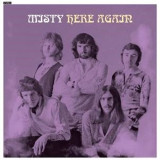
First ever vinyl release of the album recorded in 1969/70 by UK prog-psych band Misty. Including their terrific mod-psych “Hot Cinnamon” 45.
A dazzling fusion of classically-inspired progressive rock and song-based psychedelic pop with an organ-based sound, in the vein of Procol Harum and The Nice.
“In October 1969, King Crimson released their debut, In The Court Of The Crimson King, Pink Floyd unleashed Ummagumma and Led Zeppelin put out their second LP. At the same time, Misty were in London’s Regent Sound Studios recording what turned out to be the only album of their career with producer, Adrian Ibbetson, who had cut his teeth as an engineer working with everyone from the Beatles to the Equals.
After only a handful of gigs, Misty signed a deal with Parlophone and began to gather momentum with the release of Hot Cinnamon. Although they received a lot of airplay, the single failed to chart and the band’s hopes of releasing their debut album were dashed. Reluctantly, Misty went their separate ways and the Here Again master tapes sat gathering dust on a shelf until Gelardi came across the original acetate and decided it was time for the album to finally see the light of day.
Bridging late psych and early prog, songs like Life Has Just Begun, Witness For The Resurrection and the title track were played with a perfect mix of high-flying experimentation and virtuosic musicianship. Blurring the fine lines between rock, jazz, classical and chamber pop, Here Again is a transcendent kaleidoscope of colour that is beyond definition.
Maybe you can tell an album is truly timeless when it takes half a century for it to be properly appreciated. Misty were a rare bird, a brilliant, truly original band who should have left an indelible mark instead of joining what now seems like the never-ending line of half-remembered and long-forgotten flotsam and jetsam of the psychedelic era.
Both the first and the final statement from a group who never really got their chance to be heard, Here Again is a slice of pristine psychedelic pop that so embodies the dizzying energy and the progressive spirit of the time, it’s astonishing that it stays afloat under the weight of its own intentions. But float it does, like mist in the air - a half-forgotten diaphanous dream slowly coming back to you after 50 years of silence.” – Jonathan Wingate
Les Disques du Crepuscule presents a unique anthology by artful Brussels postpunk-funk band Marine, fondly remembered for their dazzling debut single ‘Life In Reverse’ in 1981, and now back with a clutch of brand new studio tracks.
The cover art is by LDDC art director Benoit Hennebert and based on the ‘Same Beat’ single sleeve from 1982. The vinyl edition s of TWI 143 is limited to 500 copies pressed on blue vinyl and includes a digital link. All tracks are newly remastered in 2023.
Formed in late 1980 around charismatic frontman Marc Desmare together with musicians from infamous punk band Mad Virgins, Marine made an early splash supporting Orange Juice and Josef K at the legendary Plan K venue, Postcard Records afterwards keeping tabs on the Sound of Young Brussels.
Snapped up instead by chic boutique label Les Disques du Crepuscule, Marine released their infectious debut single ‘Life In Reverse’ in April 1981, attracting rave reviews in the Belgian and UK press, reaching the giddy heights of #6 on the NME indie chart, and even being invited to record a radio session for John Peel - a world first for a Belgian band.
Soon favourable comparisons were being drawn with The Pop Group, A Certain Ratio, Defunkt, James White and Fire Engines, some pundits even sensing a new Haircut 100. ‘We’re not a fashion band,’ insisted Marc in UK rock weekly Sounds, ‘and it’s not really dance music. But all the same I’m glad people dance to it.’
Alas, artistic differences caused the fast-rising group to part ways in a London studio, when half the band quit to form pop-funk sophisticates Allez Allez. With new Marines on board, Marc and bassist Paul Delnoy went on to release two further singles (‘How to Keep Cool’ and ‘Same Beat’), gigged extensively around France and the Low Countries, and played a headline show at The Venue in London. ‘Fine, disciplined and gleeful rhythm workers,’ enthused Chris Bohn in NME. ‘A happy, contagiously clean aural equivalent to a Serge Clerc cartoon.’
Alas by the summer of 1982 Marine were all washed up, with Marc going on direct films and documentaries as Marco Laguna. Four decades later, finally heeding desperate pleas from Crepuscule that his sensational first band never cut an album, Marc has written and recorded another 6 remarkably authentic sounding Marine songs with help from like-minded friends in Brussels and Paris, once more drawing on a heady mix of supercool funkabilly, jazz and soundtrack influences.
‘It was an incredibly strange experience to revisit my past,’ says Marc, ‘but definitely fun. I’m glad, and I’m proud!’
- A1: Peter Patzer - You Are Not The One For Me
- A2: Ströer - Don't Stay For Breakfast
- A3: Upstairs - You're Just Yourself
- B1: J D. (Puma) Lewis - Dancing Shoes
- B2: Trust - It's Not Over
- B3: Imagination - Strawberry Wine
- C1: Squish - Get Up
- C2: Publicity - Funky Feeling
- C3: Bernie L - Backstreetboy
- D1: Ca$H - Raff Dich Auf
- D2: The Poptown Syndicate - Keep On Lovin' (Single Version)
- D3: Ca$H - Raff Dich Auf (Edit) (Bonus Track)
German Funk, Rare Groove and 1970s Disco music (e.g. the highly regarded Munich scene around Italian producer Giorgio Moroder) have been widely recognized and featured on numerous reissues and compilations. However, the Boogie-ish post-disco side of German music history until now has remained undiscovered. One of the reasons might be that a broader national scene in Germany (unlike the UK for example) never existed. Even though tracks by US bands such as Dazz or Midnight Star were popular in discotheks in Germany around that time, bigger labels showed little interest in promoting German groups playing this new style of Disco Funk, now primarily known as "Boogie", that brought in electronical instruments and often lacked the iconic "four-on-the-floor" beat. Additionally, the number of bands that continued to play funky and soulful music in the 1980s diminished as other styles like Synth Pop, Punk, New Wave and NDW (New German Wave) ascended in popularity. Still, though German Boogie may have never existed as a national movement, great things were happening rather locally and each group featured on our compilation brings with them a particularly unique style and story.
Now, finally, "Boogie on the Mainline" sheds some light on 11 little-known German Disco gems that were released on small or even private labels. The album contains tunes by Imagination, Squish, Upstairs, Bernie L., The Poptown Syndicate, Peter Patzer, Ca$h, Trust, Publicity as well as classic tracks by Ströer and John Davis. It was compiled by John Raincoatman aka DJ Scientist
Remastered and first worldwide release (previously only limited availability in Iceland) Since first bursting onto the global punk scene in 2018, Icelandic trio GRÓA have thrilled audiences across the world by fully embracing an unruly freedom. Made up of sisters Hrafnhildur Einars Maríudóttir (aka Hrabba, age 22) and Karólína Einars Maríudóttir (aka Karó, age 20) and their childhood friend Fríða Björg Pétursdóttir (also 22), the Reykjavík-bred band merge elements of post-punk and noise-rock and art-pop with absolute abandon, arriving at an explosive yet magnificently arranged sound unlike any other. A local favorite, the Icelandic government has recently been sponsoring worldwide travel to share GRÓA with the rest of the world and in 2023 they have played shows around the world including in UK, Western and Eastern Europe as well as USA dates including Washington DC, Seattle, Chicago and New York City. They have recently recorded an in studio performance at KEXP which will be broadcast worldwide in January 2024 and more worldwide touring is planned for early 2024 to support the vinyl and CD releases. Listing iconoclasts like Sonic Youth, PJ Harvey, and Bikini Kill among their longtime inspirations, the Icelandic punk band GRÓA pursued their experimental impulses with more intensity and confidence on Í Glimmerheimi, matching the album’s shapeshifting sound with a surrealist but emotionally potent form of lyrical storytelling. “It’s about a girl who’s trying to escape the world she’s stuck in—this glitter world that looks so good on the surface, but it’s not where she’s meant to be,” says Karó in discussing the album’s concept. “There’s a song called ‘Jetpackstelpan,’ or ‘Jetpack Girl,’ where she leaves the world on a jetpack and flies away to the moon, and she’s never coming back again.” Opening on the kaleidoscopic rhythms and rowdy call-and-response vocals of “Fullkomið” (“Perfect”), Í Glimmerheimi brings that narrative to frenetic and dazzling life, ultimately closing out on “Skrímslið er að ná þér” (“The monster is getting you”): a serpentine and strangely mesmerizing epic whose swirling textures, otherworldly vocals, and sparse yet complex guitar tones illuminate the immense scope and depth of GRÓA’s artistry.
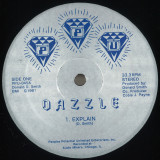
Dazzle rolled deep. Very deep. In the 1980s, it wasn't unusual for the Milwaukee-based group to show up at various Midwest night clubs in a caravan of 30-40 cars and vans. Their live following was hard won over a career that spanned 20+ years, many line up changes, and a handful of project names. Friends, family, and fans made the journey with them weekend after weekend, a testimony to both the musical prowess of the group and the tight-knit community that they emerged from.
Donald Smith, band leader, was there the whole time - joined by many of his siblings and friends - first as founder of the Ghetto Players, a early 70's nine-piece which also included siblings Michael, Ronald, and Charles. They played hard funk in the style of early Kool and the Gang, and although they sadly left no recordings, the strength of their live act managed to catch the eye of local Milwaukee R&B music entrepreneur Cobie Joe Payne. Cobie had made a couple of records locally in the early/mid 70s as a singer, including the impossibly weird and amazing rare afro-blues-funk 45 "Sweet Thing", but had never enjoyed national success. When the Ghetto Players disbanded in the early-mid 70s, Donald soon put together a new group, C on the Funk (the 'C' referring to lead vocalist and sibling Charles), under Payne's tutelage. Sister Lorrie Smith came in as the drummer, the line-up being fleshed out by brothers David and Melvin Johnson, and friend Robert Mitchell. After a few years as a strictly live attraction, they drove to Chicago and produced a single, "In the Disco" / "A Place" for Payne's small record label Sweet Thang Records in 1980. Lacking the financial backing needed to supply the local R&B disk jockey's "promotional fees" , this single sadly languished in obscurity, gathering dust inside the local tavern jukeboxes and manilla promo envelopes that comprised Payne's DIY distribution network.
C on the Funk were traveling the Mid West extensively at this point, and making some important friends on the road. Ike Wiley Jr. of the Dazz Band/Kinsman Dazz took particular interest and the band was re-christened Dazzle, partially as a tie-in with Dazz, partially to embrace the new sounds that would distinguish the 70s disco scene from what record collectors and DJs would now refer to as the "Boogie" era. There no doubt was a stigma attached to the word "Disco" as the eighties began, and as we see in this collection C On the Funk's "In the Disco" is remixed and transformed into the psychedelic synth instrumental of Dazzle's "Disco's Out", a title which embodies both the next-step approach Smith and company were pushing for, and humorously comments on the state of black dance music in the early 1980s. The Dazzle recording, done in Chicago in 1982, updated the sound and featured an expanded line up, most notably a second synth player (Charles Washington), and a percussionist/second lead vocalist (Greg McDonald). The added synth textures and deep percussive grooves give the Dazzle recordings an elegant late night vibe that resonate just as well in a good pair of headphones as they do on the dance floor. The trance inducing cough syrup-warble of "Explain" may best exemplify this here. Sadly, a pressing flaw in the 12" halted production and promotion, and the EP and the songs within were lost to the ages. The group, having done a much better line in the live music business, followed that path instead all the way to the early 90s. --bio provided by andy noble
- 1: O Astronauta (Baden Powell / Vinicius De Moraes)
- 2: Tristeza De Nos Doi (Bebeto, Durval Ferreira, Mauricio Einhorn)
- 3: Chuva (Durval Ferreira, Pedro Camargo)
- 4: Tema Para Martin (J. Demonte)
- 5: Consolação (Baden Powell, Vinicius De Moraes)
- 6: Canto De Ossanha (Baden Powell, Vinicius De Moraes)
- 7: Pro Forma (Arnaldo Costa, Mauricio Einhorn)
- 8: Samba Do Avião (A. Carlos Jobim)
- 9: Niña No Divagues (Agustin Pereyra Lucena)
- 10: Berimbau (Baden Powell, Vinicius De Moraes)
Following Far Out’s reissue of Agustin Pereyra Lucena Quartet’s La Rana, the label continues its memorialisation of the late, great Argentinian guitarist’s music, with the first ever direct from tape, audiophile reissue of Pereyra Lucena’s self-titled debut album from 1970.
One of the outstanding South American guitarists, Agustin Pereyra Lucena commanded a unique position in Latin music history. He hailed from Buenos Aires, but was obsessed with the music of Brazil. A disciple of Antônio Carlos Jobim, Baden Powell and Vinicius De Moraes, the nature of Agustin’s Argentinian roots combined with the nurture of Brazil and its music to give Agustin a sound entirely his own.
After being scouted in a nightclub, by musician and guitar craftsman Jorge Demonte, Agustin was invited for an audition at Argenitinian label Tonodisc. Before he knew it, aged 22, he was in the studio recording his first album.
Agustin enlisted fellow Argentinian Brazilophiles Mario "Mojarra" Fernandez who played bass and drummer Enrique "Zurdo" Roizner. He had first heard the duo backing Vinicius de Moraes, Toquinho and Maria Creuza on their legendary La Fusa live album, also recorded in Buenos Aires. For vocals, Agustin brought in his old friend, a French teacher called Helena Uriburu, who at the time had (unbelievably) never sung in a studio before.
The atypical bossas and spiritual swinging sambas, composed by many of Agustin’s aforementioned heroes, were elevated to new heights by Agustin’s dazzling arrangements and phenomenal guitar playing. The almost cosmic reaches Agustin achieved with his sound are balanced against the stylish sophistication and breezy nature of the music.
Moments of calm serenity include Agustin’s own composition “Nina No Divagues”, Durval Ferreira and Pedro Camargo’s “Chuva” and the Brazilian bossa classic “Tristeza Nos Dois”, which feels like it draws equally upon exotica and early library records. Accompanied by Roizner’s shuffling samba jazz drums, opener “O Astronauta” is Agustin’s cover of the Brazilian guitar standard composed by Baden Powell. Another Baden Powell classic, “Consolacao” is an extended full-band set, which features Agustin’s crisp guitar dancing around a hypnotic rhythm section. Upright bass is swapped out for a big, round-sounding electric one, which sits loud in the mix for almost seven minutes of deep, groovy, distinctively early-seventies magic.
Agustin passed away in 2019, and it is only in recent years that he is starting to gain his plaudits as one of South America’s greats. On the liner notes of the album Vinicius De Moraes writes: “I think I never saw, with the exception of Baden Powell and Toquinho, anyone more linked to his instrument than Agustín Pereyra Lucena. It would give the impression that if the guitar were taken away from him, he would fade into music as one dies from the amputation of an arm.”
Agustin Pereyra Lucena will be released on audiophile vinyl LP, CD and digitally on the 26th January 2024 via Far Out Recordings.
Vecchio's Afro-Rock is one big horn-heavy, bass-blasting, Latin groove funk-rock party. Only now, you're all invited because this, ladies and gentleman, is officially...a grail no more. With copies currently starting at 400 Euros for an original, this beautifully presented reissue, part of Be With's fresh campaign with Music De Wolfe, is well overdue. A magnificent and somewhat obscure library set that's just a total, cohesive joy from start to finish, this here is the soundtrack to all your smokin' summer BBQs and communal cookouts.
Afro-Rock is the debut album by Argentine keyboardist Luis Vecchio. Recorded for the sound library label De Wolfe, the album is frequently mentioned in hushed reverence among the beat digger DJ collecting crowd. It features fiery brass charts, funky bass lines, fluttering flute, choppy organ and additional hand tribal percussion. The band let loose too and jam hard; yet there's a certain thread of solidity that runs throughout, the tracks just belong together, not disparate sound and rhythm experiments like some library records; this is just straight up, no messin', consistent funk-rock FIRE! Hips will sway, heads will nod to the steady vibes. It's insanely good.
The humid, building funk of the appropriately titled "Megaton" is a dramatic explosion of swirling, dazzling organ lines, ferocious beats and heavy horns throughout. It just don't stop. The tempo slows slightly for the deep and deeply addictive "Renegade". It's all heavy jazz horn refrains, always triumphant, coupled with devastating percussive breakdowns and killer guitar riffing. It's an insistent organ-led juggernaut. The frenetic "Facade", up next, is no less driving, horns high up in the mix over rattling percussion and brilliant organs lines. Just sensational. The bright "Chabati" is another glorious extension of the optimistic Vecchio sound, the organs wilder than ever before. The moody "Green Hell" is a real highlight and closes out the A-Side with some outrageously funky refrains - be it horns, organ or guitars - and is complimented by gorgeous flute work that galvanises the piece, elevating it to downright heavenly status.
Knowing full well that he's on to a surefire thing, Vecchio opens the flipside in much the same vein. Indeed, "Boss" is yet another uptempo highlight, a sensual orgy of proud horns, hand percussion and melodic flute playing over driving organ and guitars. It's followed by "Nsambei", which is rightly adored for its briefly open drum break, fantastically propulsive percussion breakdowns throughout and the jazzy, loose organ and guitar shreds. The bright "Waboco" ups the tempo and the pressure, hanging on one hell of a guitar hook and infectious horn refrain. Perhaps foreseeing how this album would come to be viewed, the aptly-titled "Cult" is possibly the finest song on the record. Which is saying something, because this record is insanely good. Riding a steady, confident organ groove straight out the gate, the kinda melancholic flute line over the top serves as a beautiful counterpoint which the horns often come in and imitate/riff off. Goddamn this is so so good, it needs to be played everywhere. The overwhelmingly mighty 7-minute jam "Ngoma-ku" rounds out this quite staggering record brilliantly in its heavy, mid-tempo blues with countless extended solos.
The audio for Afro Rock has been meticulously remastered by Be With regular Simon Francis, ensuring this release sounds better than ever. Cicely Balston's expert skills have made sure nothing is lost in the cut whilst the records have been pressed to the highest possible standard at Record Industry in Holland. The original, iconic sleeve has been restored here at Be With HQ as the finishing touch to this long overdue re-issue.
When Black Pumas made their self-titled debut in 2019, the Austin-bred duo set off a reaction almost as combustible and rapturous as their music itself. Along with earning a career total of seven Grammy Award nominations (including Album Of The Year) and winning praise from leading outlets like Pitchfork and Rolling Stone, singer/songwriter Eric Burton and guitarist/producer Adrian Quesada achieved massive success as a live act, touring large theatres all over Europe and North and South America and delivering a transcendent show Burton aptly refers to as “electric church.” As they set to work on their highly awaited sophomore album, the band broadened their palette to include a dazzling expanse of musical forms: heavenly hybrids of soul and symphonic pop, mind-bending excursions into jazz-funk and psychedelia, starry-eyed love songs that feel dropped down from the cosmos. Wilder and weirder and more extravagantly composed than its predecessor, Chronicles of a Diamond arrives as the fullest expression yet of Black Pumas’ frenetic creativity and limitless vision.
The vinyl edition comes with 6 high-quality lithograph art prints (by UK illustrator Hannah Alice) representing each of the birds on the album, held in a heavy board die-cut gatefold sleeve. This unique packaging is fully interactive - the cover image is interchangeable with any of the prints. Remastered by Brian Pyle from original tapes. Bert Jansch was often quoted as saying "I'm not playing for anyone, just myself" and this feels no more apparent than on 1979's 'Avocet', his beautifully meditative paean to British birds. For fans of Jansch this is often the album that is singled out as his best work. The freedoms of a post-Pentangle career are much in evidence; folk rock and even trad folk give way to an album that is not only without lyrical accompaniment but really quite orchestral, classical even, in its composition. There are surprises in particular in 'Lapwing' (a dirge-like waltz that wouldn't be out of place on a Nils Frahm album) and 'Bittern' (which speaks of Arthur Russell's more experimental pieces). Featuring ex-bandmate Danny Thompson, alongside Martin Jenkins (Dando Shaft, amongst others) with sleeve notes by Jansch aficionado Colin Harper (author of 'Dazzling Stranger: Bert Jansch and the British Folk and Blues revival'). Ltd ART PRINT EDITION, Classic Black vinyl, plus DLC w/ bonus live tracks.
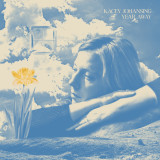
In March of 2020, after learning that a dear friend’s life was coming to an end, Johansing sat down and in one sitting wrote the song “Daffodils”. An elegiac tribute to someone facing death with grace and curiosity, the lyrics confront Johansing’s own mortality by observing the brief lifespan of a Hlower. Only a week later when the world came to an abrupt standstill, she soon found herself processing this recent loss while trying to make sense of a new global reality. Across the ensuing months, Johansing found herself increasingly untethered by a world of isolation and political upheaval.
Having been a frequent touring member of bands like Hand Habits and Fruit Bats, and often being called into the studio to lend her harmonies and multi-instrumental talents to records, Johansing’s phone no longer rang. Living in Los Angeles she feared her musical community was vanishing, as friends and collaborators continually announced they were leaving the city. It was in returning to her piano nightly that she found the greatest solace, feverishly writing the songs that would be collected on her next album. Resulting from this new sense of time and focus was a deepening of her songwriting. As Johansing recalls, “I felt like a metamorphosis happened during that time. There was a lot of personal growth and healing.”
Throughout Year Away Johansing traverses uncharted emotional landscapes brought upon by the changes occurring all around her. The forced self-reflection of the moment is aptly captured by “Old Friend”, featuring an aching melody and swooning production that recalls the best of Harry Nilsson. The epic piano and saxophone-driven “Smile with My Eyes” addresses the loss of community as friends became distant and political divides between family grew. On “Smile” Johansing pushes her vocals further than ever, expanding her range and using her peerless voice as the singular instrument it is. Facing the loss of a family home due to environmental destruction, “Shifting Sands” is marked by soaring Hlutes, Hield recordings and glassy synthesizers that nod to Japanese New Age.
“Daffodils”, the stunning album centerpiece, is built from a pastiche of looping samples, swirling Mellotron and dazzling vibraphone. “Keep your heart open wide, you never know your time / Keep your heart wild, true Hlower child”, Johansing sings as she says goodbye to an elder, while the band reaches a grief-stricken crescendo of woodwinds and chiming bells. On the title track, Johansing takes listeners on an eerily meditative journey of collective experiences. “I wanted to keep the progression simple and repetitive so that musically we could add new elements little by little, while the emotional tone of the lyrics becomes increasingly more strained and expressive”. The song grows to a fever pitch as Johansing sings higher than she thought possible; the tension of the repeating chords Hinally resolving into a hopeful coda as multiple soloists weave around each other.
Amidst heavier themes, Johansing still leaves room for her love of irresistible pop melodies and lush production. The driving “Last Drop” and mid-tempo “Valley Green” are two of her catchiest songs to date. On the former Johansing sings the anthemic chorus, “As if it were the last drop, and nothing ever lasts forever / As if it were the last stop, too far out to come back ever”, longing for a love that she’ll never take for granted, while also admitting that she doesn’t always know how good she has it. “Valley Green” features shimmering layers of 12- string guitars, stacked horns and an impeccable solo by co-producer and multi- instrumentalist Tim Ramsey (Vetiver, Fruit Bats), hinting at a love for bands like NRBQ.
Having been eager to capture the initial spark of songwriting, Johansing booked time at Highland Park’s 64 Sound Studio the week that it reopened. Over the course of three days, she and her band gathered basic tracks for 10 songs, before returning home to Hinish the record with Ramsey. Setting forth to make an album that paid homage to the music that kept them company during the months spent alone together, the duo pulled inspiration from a wide net including Burt Bacharach, John Carroll Kirby & Haruomi Hosono. Ramsey’s newfound love of early digital synthesizers dovetailed effortlessly with Johansing’s fondness for classic 70’s horn and string arrangements, creating a sound that is distinctly modern yet warm and familiar.
Once again Johansing called upon some of the Hinest players of Northeast Los Angeles’ vibrant music community to lend a hand with the record. The 70s R&B-folk of “Watch It Like a Show” features an electric guitar solo from Hand Habits’ Meg Duffy, while album closer “Endless Sound” boasts backing vocals from electronic musician Kaitlyn Aurelia Smith and swooping Indian-inspired violins from Amir Yaghmai (HAIM, The Voidz). The record shines brightly thanks to an ace mix from veteran producer Rob Schnapf (Beck, Elliott Smith, Cat Power), woodwinds from Logan Hone (John Carroll Kirby, Eddie Chacon), and a featured rhythm section of drummer Josh Adams (Jenny Lewis, Bedouine) and bassist Todd Dahlhoff (Feist, Devendra Banhart). Recorded across multiple studios including LA’s famed Sunset Sound, the album remains steadfastly buoyed by the adept engineering of Tyler Karmen (MGMT, Alvvays).
Though born of turbulent times, Year Away is ultimately interested in moving forward. The album ends with “Endless Sound,” where Johansing laments seismic global changes, (“The water is hotter, the mighty thaw / The current’s reversing, the last are lost”) but vows to keep going (“No storm can take me down / Endless light, endless sound”). It’s Year Away’s resilience that shines through despite the darkness. It’s a sound all her own and Johansing’s most cohesive set of songs yet.
- A1: The Ghosts Of Christmas Eve
- A2: Boughs Of Holly
- A3: The World That She Sees
- A4: The World That He Sees
- A5: Midnight Christmas Eve
- B1: The March Of The Kings/Hark The Herald Angel
- B2: The Three Kings And I (What Really Happened)
- B3: Christmas Canon
- B4: Joy/Angels We Have Heard On High
- C1: Find Our Way Home
- C2: Appalachian Snowfall
- C3: The Music Box
- C4: The Snow Came Down
- C5: Christmas In The Air
- D1: Dream Child (A Christmas Dream)
- D2: An Angel’s Share
- D3: Music Box Blues
- D4: Christmas Jam (Live)
clear 2x12"[58,19 €]
Released in 1998, THE CHRISTMAS ATTIC earned double-platinum certification and continues to captivate audiences with fan favorites like “Music Box Blues,” “Boughs Of Holly,” and “Ghosts Of Christmas Eve.” The album also introduced “Christmas Canon,” which has become one of the band’s most popular songs and a modern holiday classic. THE CHRISTMAS ATTIC tells the heartwarming tale of a little girl’s magical night spent in an attic filled with yuletide memories, accompanied by spellbinding guitar solos and soaring choral vocals set against a rock orchestral backdrop. The record serves as the second installment in TSO’s celebrated Christmas trilogy, which also includes Christmas Eve and Other Stories (1996) and The Lost Christmas Eve (2004).
TSO was conceived by the group’s late founder, composer, and lyricist Paul O’Neill. His ambitious vision was to create a progressive rock band that combined rock opera and classical rock with a dazzling live show that featured lights, lasers, and pyrotechnics. In the 1980s and 1990s, O’Neill produced several albums for the influential heavy metal band Savatage, which is how he connected with longtime collaborators Jon Oliva (vocals), Al Pitrelli (guitar), and Robert Kinkel (keyboards/producer).
With more than 10 million albums sold, TSO has inspired generations of fans to rediscover the multi-dimensional art form of rock opera. Since its touring debut in 1999, the band has emerged as one of the world’s top live acts, performing for over 10 million people across the globe, selling more than $280 million worth of tickets, and donating $11 million to charity.
- A1: The Ghosts Of Christmas Eve
- A2: Boughs Of Holly
- A3: The World That She Sees
- A4: The World That He Sees
- A5: Midnight Christmas Eve
- B1: The March Of The Kings/Hark The Herald Angel
- B2: The Three Kings And I (What Really Happened)
- B3: Christmas Canon
- B4: Joy/Angels We Have Heard On High
- C1: Find Our Way Home
- C2: Appalachian Snowfall
- C3: The Music Box
- C4: The Snow Came Down
- C5: Christmas In The Air
- D1: Dream Child (A Christmas Dream)
- D2: An Angel’s Share
- D3: Music Box Blues
- D4: Christmas Jam (Live)
black 2x12"[49,79 €]
Released in 1998, THE CHRISTMAS ATTIC earned double-platinum certification and continues to captivate audiences with fan favorites like “Music Box Blues,” “Boughs Of Holly,” and “Ghosts Of Christmas Eve.” The album also introduced “Christmas Canon,” which has become one of the band’s most popular songs and a modern holiday classic. THE CHRISTMAS ATTIC tells the heartwarming tale of a little girl’s magical night spent in an attic filled with yuletide memories, accompanied by spellbinding guitar solos and soaring choral vocals set against a rock orchestral backdrop. The record serves as the second installment in TSO’s celebrated Christmas trilogy, which also includes Christmas Eve and Other Stories (1996) and The Lost Christmas Eve (2004).
TSO was conceived by the group’s late founder, composer, and lyricist Paul O’Neill. His ambitious vision was to create a progressive rock band that combined rock opera and classical rock with a dazzling live show that featured lights, lasers, and pyrotechnics. In the 1980s and 1990s, O’Neill produced several albums for the influential heavy metal band Savatage, which is how he connected with longtime collaborators Jon Oliva (vocals), Al Pitrelli (guitar), and Robert Kinkel (keyboards/producer).
With more than 10 million albums sold, TSO has inspired generations of fans to rediscover the multi-dimensional art form of rock opera. Since its touring debut in 1999, the band has emerged as one of the world’s top live acts, performing for over 10 million people across the globe, selling more than $280 million worth of tickets, and donating $11 million to charity.
- A1: High Energy (Extended Version)-Evelyn Thomas-1984-7.51
- A2: In The Evening (Original 12" Version)-Sheryl Lee Ralph-1984-6.16
- A3: Another Night (Dance Mix)-Aretha Franklin-1985-6.40
- B1: Body Rock (Dance Mix)-Maria Vidal-1984-6.30
- B2: Tell It To My Heart (Club Mix)-Taylor Dayne-1987-6.46
- B3: Love Will Save The Day (Extended Remix)-Whitney Houston-1988-7.59
- C1: Passion (Full Length Album Version)-The Flirts-1982-5.04
- C2: So Many Men So Little Time (Extended Version)-Miquel Brown-1983-8.14
- C3: Can't Take My Eyes Off You (12” Version)-Boys Town Gang-1981-9.31
- D1: The Male Stripper (Original Extended U.s. Remix)-Man 2 Man Meet Man Parrish-1987-7.51
- D2: Love Reaction (12" Version)-Divine-1983-5.34
- D3: Rocket To Your Heart (Remix)-Lisa-1983-9.35
- E1: Why? (12” Version)-Bronski Beat-1984-7.48
- E2: You Spin Me Round (Like A Record) (Murder Mix)-Dead Or Alive-1984-8.01
- E3: Theme From S ‘Express (12" Version)-S ‘Express-1988-5.58
- F1: No G.d.m. (Dedicated To Quentin Crisp) (12" Version)-Gina X Performance-1981-5.55
- F2: Relax (New York Mix)-Frankie Goes To Hollywood-1983-7.26
- F3: Don't Drop Bombs (Extended Remix)- Liza Minnelli-1989-5.57
- G1: Oh L'amour (The Extra Beat Boys 12” Mix) -Dollar-1987-6.53
- G2: Fascinated (Club Mix)-Company B-1986-7.33
- G3: Love In The First Degree (Jailers Mix)-Bananarama-1987-6.02
- H1: You Came (The Shep Pettibone Mix)-Kim Wilde-1988-7.36
- H2: Call Me (Viva Mix)- Spagna-1987-5.40
- H3: In Private (12” Version)-Dusty Springfield-1989-7.16
Box 2[78,19 €]
The influence that 80s gay nightlife had on electronic music, pop music in general and the evolution of clubbing for
subsequent generations is pretty much incalculable. In spite of the shadow of AIDs and reactionary political and media
forces both at home and in the USA, the period 1980 – 1990 bore witness to a dazzling explosion of dance music that
artfully drew a line from the peak of late-70s disco to the emergence of house and its 90s glory days. The art of the
12” single, the thrill of the remix, the rise of the superclub, the electronic spark of chart pop, the challenging of gender
barriers… all had their origin in the gay clubs. It’s not unreasonable to make the claim that by the end of the 80s,
virtually ALL chart pop music sounded like it had its origins on the dancefloors of Heaven nightclub!
Over 4LPs and 24 tracks, ‘Box Of Sin’ strives to tell the story of that decade, and to tease apart the strands of 80s gay
clubbing to show a period of unrivalled creativity and disco diversity. Via the box’s themed discs it shows how highenergy became house, how gender-bending synth bands took over the pop charts, how pop stars the whole world
over found a route to fame via the gay clubs, and how the era’s biggest producers aimed their masterworks purely at
the dancefloor. High energy, deep house, Eurobeat, synthpop, divas, acid house… all combine to paint a picture of a
rich and vibrant lifestyle. Along the way, ‘Box Of Sin’ unearths some overlooked gems rarely compiled today:
meanwhile some of the decade’s biggest names in club music gather to get into the picture – from Whitney Houston
to Dead Or Alive, Bananarama to Bronski Beat, Aretha Franklin to Inner City.
Based on the actual club charts at the time and with a stunning design package inspired by the small ads section of
80s gay press, ‘ Box Of Sin’ comes fully annotated and with an introduction by renowned gay author Paul Burston.
Throughout, it’s illustrated with photography documenting 80s gay clubbers in action, provided for Demon by The
Bishopsgate Institute, the UK’s LGBTQ+ archive. The project also resurrects the much-loved brand ‘Disco Discharge’, a
recognisable hallmark of quality among collectors and aficionados of club music heritage.
It’s been nearly eight years since the last Mondo Drag album came out. In that time, the Bay Area psych-prog band toured the US and Europe, performed at major festivals and—once again—reformed their rhythm section. But in the context of the band’s nearly two-decade existence, this period may have been the most fraught. Vocalist and keyboardist John Gamiño lost friends and family members. Meanwhile, humanity suffered the throes of a global pandemic. “It was a dark chapter,” he recalls. “I was going through a lot of stuff personally—there’s been a lot of death, loss of family members, and grief. Plus, the band was inactive. It felt like time was slipping away from me. I felt like I was wasting my opportunities. I felt like I wasn’t participating in my story as much as I could have.” This feeling of time slipping away is the prevailing theme on Mondo Drag’s new album, Through the Hourglass. “For me, Through the Hourglass really encompasses the quarantine/pandemic years,” Gamiño says. “But in a way that includes a couple of years before that for us, because the band was stagnant during that time. Living with that was really impactful on our daily lives. So, the album is reflective. It’s looking at time—past, present, future.” Luckily, Mondo Drag emerged from this dour period reborn. Freshly energized by bassist Conor Riley (formerly of San Diego psych squad Astra, currently of Birth), who joined in 2018, and drummer Jimmy Perez, who joined in 2022, Gamiño and guitarists Jake Sheley and Nolan Girard have triumphed over the seemingly inexorable pull of time’s passage. “Astra was the one contemporary band that we felt was on the same tip as us,” Gamiño says. “We saw the similarities and felt the same vibe. Conor moved to San Francisco in 2018 and heard we were looking for a bassist, so we got in touch. For us, it was like, ‘The synth player from Astra wants to play bass for us?’ We couldn’t think of anybody more perfect.” Perez, meanwhile, brings deep psych-prog knowledge and impeccable skill. “He’s an amazing drummer, and he allowed us to do what we’ve been trying to do,” Gamiño says. “Before he came along, it was like, ‘Where are the drummers who like psych and prog and can play dynamically?’ We ended up trying out metal drummers, but they couldn’t swing. Jimmy was the final piece of the puzzle.” The result is a dazzling and often plaintive rumination on the hours, days, and years—not to mention experiences—that comprise a lifetime. Two-part opener “Burning Daylight” smolders with melancholy, offering a whirl of multi-colored and hallucinatory imagery. “It’s about the California wildfires and a feeling of helplessness,” Gamiño explains. “There’s a juxtaposition between the dark lyricism and upbeat music which is meant to imply a sort of delusional state—and choosing our own delusion to overcome the crushing despair of reality.” Eleven-minute centerpiece “Passages” is a sprawling prog-rock adventure, festooned with lofty guitar melodies, sweeping organ flourishes and a delicately finger-picked outro. But the heaviest song, thematically speaking, might be the mournful and hypnotic “Death in Spring,” which borrows its title from the like-named Catalan novel. “In the novel, people are placed inside opened trees and their mouths filled with cement before they die to prevent their souls from escaping,” Gamiño explains. “The song is about three people I knew who lost their lives to gun violence, addiction, and mental health. It’s my way of cementing their souls in song form.” Mondo Drag fans might be surprised by this blend of hard reality with literary surrealism, but it’s a perfect example of how the last several years have impacted Mondo Drag—and Gamiño in particular. “On all of our previous albums, the lyrical content is more psychedelic and out there,” he acknowledges. “This is the most personal stuff I’ve ever done, so I’m definitely feeling vulnerable on this one.” The title Through the Hourglass comes from the opening of the long-running soap opera Days of Our Lives. It’s less inspired by a predilection for daytime TV than Gamiño’s connection with his late mother, who passed during the time since the last album. “I used to watch Days of Our Lives with her everyday growing up,” he explains. “The song is kind of a reinterpretation of the theme song, although it’s different enough that probably no one will catch it. Now that I’m getting older, I like to put these little Easter eggs in the songs for myself and for archival purposes—for memories.” Through the Hourglass was tracked at El Studio in San Francisco, with an additional ten days of recording at the band’s rehearsal space, which doubles as a hybrid analog-digital recording studio. The album was engineered and mixed by Phil Becker, drummer of space-punk mainstays Pins Of Light. “We’re still here,” Gamiño says. “We’ve been in the studio working on our craft and honing our skills. Now we’re re-emerging for the next stage of our life cycle.”
- 1: Hello
- 2: A Love From Outer Space
- 3: Crack Up
- 4: Timewind
- 5: What's All This Then?
- 6: Snow Joke
- 7: Off Into Space
- 8: And I Say
- 9: Yeti
- 10: Conundrum
- 11: Honeysuckleswallow
- 12: Long Body
- 13: In A Circle
- 14: Fast Ka
- 15: Miles Apart
- 16: Pop
- 17: Mars
- 18: Spook
- 19: Sugarwings
- 20: Back Home
- 21: Down
- 22: Supervixens
- 23: Insect Love
- 24: Sorry
- 25: Catch My Drift
- 26: Challenge
A.R. Kive collates the three most astonishing works from that most miraculous of duos - A.R. Kane - comprising the ‘Up Home’ EP from 1988 that signified the band’s dawning realisation of their own powers and possibilities, their legendary debut LP ‘sixty nine’ (1988) and its kaleidoscopic, prophetic double-LP follow up ‘i’ (1989).
In founder-member Rudy Tambala’s new remastering, the music on these pivotal transmissions from the birth of dream pop, have been reinvigorated and re-infused with a new power, a new depth and intimacy, a new height and immensity. Vivid, timeless and yet always timely whenever they’re recalled, these records still force any listener to realise that despite the habits of retrospective myth-making and the
safe neutering effects of ‘genre’, thirty years have in no way dimmed how resistant and dissident to critical habits of categorisation A.R. Kane always were. Never quite ‘avant-pop’ or ‘shoegaze’ or ‘post-rock’ or any of those sobriquets designed to file and categorise, A.R. Kive is a reminder that those genres had to be coined, had to be invented precisely to contain the astonishing sound of A.R. Kane, because
previous formulations couldn’t come close to their sui generis sound and suggestiveness. This is music that pointed towards futures which a whole generation of artists and sonic explorers would map out. Now beautifully repackaged, remastered and fleshed out with extensive sleeve notes and accompanying materials, ‘A.R. Kive’ reveals that 35 years on it’s still a struggle to defuse the revolutionary and inspirational possibility of A.R. Kane’s music.
A.R. Kane were formed in 1986 by Rudy Tambala and Alex Ayuli, two second-generation immigrants who grew up together in Stratford, East London. From the off the pair were outsiders in the culturally mixed (cockney/Irish/West Indian/Asian) milieu of the East End, with Alex and Rudy’s folks first generation immigrants from Nigeria and Malawi, respectively. The two of them quickly developed and fostered an innate and near-telepathic mutual understanding forged in musical, literary and artistic exploration. Like a lot of second-generation immigrants, they were ferocious autodidacts in all kinds of areas, especially around music and literature. Diving deep into the music of afro-futurist luminaries such as Sun Ra, Miles Davis, Lee Perry and
Hendrix, as well as devouring the explorations of lysergic noise and feedback from contemporaries like Sonic Youth and Butthole Surfers, they also thoroughly immersed themselves in the alternate literary realities of sci-fi and ancient history (the fascination with the arcane that gave the band their name), all to feed their voracious cultural thirsts and intellectual curiosity.
It was seeing the Cocteau Twins performing on Channel 4 show the Tube that spurred A.R. Kane into being - “They had no drummer. They used tapes and technology and Liz Fraser looked completely otherworldly with those big eyes. And the noise coming out of Robin’s guitar! That was the ‘Fuck! We could do that! We could express ourselves like that!’ moment”, recalls Tambala - and through a mix of
confidence, chutzpah, ad hoc almost-mythical live shows and sheer innocent will the duo debuted with the astonishing ‘When You’re Sad’ single for One Little Indian in 1986. Immediately dubbed a ‘black Jesus & Mary Chain’ by a press unsure of WHERE to put a black band clearly immersed in feedback and noise, what was immediately apparent for listeners was just how much more was going on here - a
tapping of dub’s stealth and guile, a resonant umbilicus back to fusion and jazz, the music less a conjuration of past highs than a re-summoning of lost spirits.
The run of singles and EPs that followed picked up increasingly rapt reviews in the press, but it was the ‘Up Home EP’ released in 1988 on their new home, Rough Trade that really suggested something immense was about to break. Simon Reynolds noted the EP was: Their most concentrated slab of iridescent awesomeness and a true pinnacle of an era that abounded with astounding landmarks of guitar-reinvention, A.R. Kane at their most elixir-like.
If anything, the remastered ‘Up Home’ that forms the first part of ‘A.R. Kive’ is even more dazzling, even more startling than it was when it first emerged, and listening now you again wonder not just about how many bands christened ‘shoegaze’ tried to emulate it, but how all of them fell so far short of its lambent, pellucid wonder. This remains intrinsically experimental music but with none of the frowning orthodoxy those words imply. A.R. Kane, thanks to that second generation auto-didacticism were always supremely aware about the interstices of music and magic, but at the same time gloriously free in the way they explored that connection within their own sound, fascinated always with the creation of ‘perfect mistakes’ and the possibilities inherent in informed play.
‘sixty nine’ the group’s debut LP that emerged in 1988 had
critics and listeners struggling to fit language around A.R. Kane’s sound. As a title it was telling - the year of ‘Bitches Brew’, the year of ‘In A Silent Way’, the erotic möbius between two lovers - and as originally coined by the band themselves, ‘dream pop’ (before it became a free-floating signifier of vague import) was entirely apposite for the music A.R. Kane were making. Crafted in a dark small basement studio in which Tambala recalls the duo had “complete freedom - We wanted to go as far out as we could, and in doing so we discovered the point where it stops being music”. There was an irresistibly dreamy, somnambulant, sensual and almost surreal flow to ‘sixty nine’s sound, but also real darkness/dankness, the ruptures of the primordial and the reverberations of the subconscious, within the grooves of remarkable songs like ‘Dizzy’ and ‘Crazy Blue’. Alex’s plangent vocals floated and surged amidst exquisite peals of refracted feedback but crucially there was BASS here, lugubrious and funky and full of dread, sonic pleasure and sonic disturbance crushed together to make music with a center so deep it felt subcutaneous, music constructed from both the accidental and the deliberate, generous enough to dance with both serendipity and chaos. ‘sixty nine’ remains - especially in this remastered iteration - ravishing, revolutionary.
The final part of this ‘A.R. Kive’ contains 1989’s astonishing double-LP ‘i’ which followed up on ‘sixty nine’s promise and saw the duo fully unleash their experimental pop sensibilities over 26 tracks, plunging the A.R. Kane sound into a dazzlingly kaleidoscopic vision of pop experiment and play. Suffused with new digital technologies and combining searingly sweet and danceable pop with perhaps the duo’s strangest and boundary-pushing compositions, the album did exactly what a great double-set should do - indulge the artists sprawling pursuit of their own imaginations but always with a concision and an ear for those moments where pop both transcends and toys with the listeners expectations. Jason Ankeny has noted that “In retrospect, ‘i’ now seems like a crystal ball prophesying virtually every major musical development of the 1990s; from the shimmering techno of ‘A Love from Outer Space’ to the liquid dub of ‘What’s All This Then?’, from the alien drone-pop of ‘Conundrum’ to the sinister shoegazer miasma of ‘Supervixens’ — it’s all here, an underground road map for countless bands to follow.” Perhaps the most overwhelmingly all-encompassing transmission from A.R. Kane, ‘i’ bookended a three year period in which the duo had made some of the most prophetic and revelatory music of the entire decade.
After ‘i’ the duo’s output became more sporadic with Tambala and Ayuli moving in different directions both geographically and musically, with only 1994’s ‘New Clear Child’ a crystalline re-fraction of future and past echoes of jazz, folk and soul, before the duo went their separate ways. Since then, A.R. Kane’s music has endured, not thanks to the usual sepia’d false memories that seem to maintain interest in so much of the musical past, but because those who hear A.R. Kane music and are changed irrevocably, have to share that universe which A.R. Kane opened up, with anyone else who will listen. Far more than other lauded documents of the late 80s it still sounds astonishingly fresh, astonishingly livid and vivid and necessary and NOW.
On his third album Comité Hypnotisé let you belly flop into his eleven chambers of the Danza Del Piri-Piri: expanding the feral and contagious universe he started to build a lifetime ago. Levitating and shimmering a glistering way through deep old skool 70's sitar vibes and jitterbug grooves. This boogieman aka the Millionaire-mind and part of the Evil Superstars has carved some hot smoked out bass and organ flared cuts on wax, ready to never leave you again. Whether it is with woodchopped kazou sounds stretching into hazy sunshine desire or dazzling basslines blending with interstellar and stuttering kick drums: the Danza Del Piri-Piri flip-flops and slams into a wiggly relentless sonic future.
FFO Sven Wunder, Ennio Morricone, Khruangbin, Flying Lotus, The Meters, Parliament, Edan, The Gaslamp Killer.
Comité Hypnotisé is the brainchild of Tim Vanhamel, frontman of Millionaire and Evil Superstars, two of Belgium's most famous alternative rock bands. In 2013 Tim started creating solo music that only got released in 2021 on his first solo album through the Belgian eclectic Cortizona label
: Daft Punk, SAULT, BADBADNOTGOOD, Surprise Chef. Eraserhood Sound's mysterious, intergalactic house band Fantasy 15 are finally ready to unleash their debut LP, Zoltandia. After years of rising anticipation which saw the group release a handful of now-sold out, highly sought-after 45s, Fantasy 15 have delivered a modern synth-funk opus. The album, named after the group's remote home planet, is a dazzling display, and features an audacious blend of soul, funk, disco, boogie, house, hip hop, New Wave, and much more. Zoltandia is a true sonic journey, a concept album that tells the fantastical tale of the beloved freedom fighters Fantasy 15. The group, whose true identity has always been a mystery, push the limits of their musical experimentation further than ever. Leading single "Interplanetary Lover" features the show-stopping Kendra Morris on lead vocals, and serves as the group’s first proper love song. Elsewhere, the title track "Zoltandia" features chanting group vocals and a disco-boogie groove that nods to legends like William Onyeabor and Kiki Gyan.