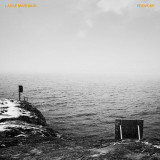
Who is Isabelle Lewis, anyway?
What kind of music does she make? Is she an opera singer? Does she write pop songs? Does she compose ethereal ambient soundscapes? Does she play chamber music on the violin? Is she producing dark, electronic beats?
Well… yes. But Isabelle Lewis is not so much a person as a project. Isabelle’s debut album, Greetings, credits a trio of composer–performers at its heart: producer Valgeir Sigurðsson, vocalist Benjamin Abel Meirhaeghe, and violinist Elisabeth Klinck. The sound of the elusive Isabelle Lewis is heard most clearly in the push and pull between them, the three-way tension that gives the album its musical and emotional drive.
Each of the three brings more to the collaboration than those epithets might imply. Elisabeth’s solo performance practice incorporates composition, improvisation, live electronics, and a close command of bowing and fingering techniques that make her fiddle sing, whisper or whistle as required. Benjamin is a self-taught countertenor - keening, crooning, and swelling to a voluptuous sensuality—but also an interdisciplinary stage director and performer. Well known for his work as a producer and studio collaborator, and as a composer of scores for film and stage, Valgeir’s solo discography interweaves meticulously crafted electronics, drones, noise, and other digital elements with acoustic instruments and vocals recorded with naked, unflinching clarity.
But the extravagant theatricality Benjamin brings to the aptly titled “Drama”—also featuring a heroic violin solo from Elisabeth—grapples against the thudding bass of the implacable digital backdrop. On “Mother, Shelter Me” Valgeir’s austere and detailed production throws the hushed violin and vocals into stark relief. The result is an exquisitely uncanny juxtaposition of past and present, human and mechanical, like a Rococo treasure viewed under cold fluorescent lights, or an 18th-century automaton slowly opening its clockwork eyes.
Even the lyrics seem somehow out of time. On “O Solitude,” Benjamin goes so far as to quote an entire song by the first great English opera composer, Henry Purcell, verbatim. No stranger to Purcell’s music, which has made its way into Benjamin’s theatrical productions as well, here Isabelle Lewis removes Purcell’s melodies and harmonies and sets the text, Katherine Phillips’s 17th century translation of a poem by Antoine Girard de Saint-Amant, to new music whose heightened, archaic character nevertheless seems haunted by Baroque ghosts.
Throughout the album, the outsized emotions and timeless archetypes of Benjamin’s lyrics feel like relics from some half-forgotten past—from the neatly rhymed couplets of “Fisherman,” a seemingly straightforward (but still somewhat askew) character study, to the abstraction of “Moonshell,” whose words seem like the fragments of some ancient, lost lament. It is just another of many ways in which Isabelle Lewis carefully distorts the listener’s notions of time. On a more micro level, time can stop for a moment of weightless, drifting ambience, and then plunge forward as the cloud of harmonies suddenly lock into tempo with the drop of the bass or the change of a chord. Or else that weightless moment is allowed to be, as in the aptly named prologue and epilogue to these Greetings (“Voicemail”/“…and farewell”), or in the interstitial tracks that bind the album together, connecting its dramatic peaks with expanses of meditative stasis.
The album as a whole is elegantly shaped, swelling from an intimate, interpersonal statement into something deeper and more spacious. The first half of the album leans slightly towards self-contained pop songcraft and ticking beats, while side B jumps off from “O Solitude” into the almost symphonic grandeur of songs like “Moonshell” or the instrumental “Not the water, air, or the dirt.”
But as it progresses, the contrasts only grow more sublime: antique and postmodern, human and machinelike. The ominous weight of the droning sub-bass and trombone (guest player Helgi Hrafn Jónsson) only makes the interplay between vocals and violins (guest player Daniel Pioro joining Elisabeth) seem more delicate and vulnerable. The ethereal string tremolos of “Moonshell” seem to pull against the heavy, shuddering electronics and layers of crooning vocals.
And that, in short, is where you will find Isabelle Lewis. Like an ancient stone archway, or a delicate house of cards, the architecture of Greetings is held together by the tension between opposing forces. Not just in Elisabeth’s playing, Benjamin’s singing, or Valgeir’s arrangements and production but in the conflict and contrast that generates the synergy between them.
Oh—Isabelle says hi, by the way. She’s looking forward to meeting you.
Suche:de la noise
Pain Management presents a debut collaborative release from Bristol’s Larry McCarthy & mysterious newcomer Eris FM. The limited edition single fuses hellish Bristolian dub with tender vocal excursions on two dark cuts in equal parts tough and tender. A heartfelt comedown offering for the hyperactive via two cathartic weapons primed for maximum emotional release.
The A side’s foolish titular opener is a hellish mess of dub delays and eerie narrative exposition. Reminiscent of blown-out early No Corner offerings; a tangled mess of sirens and harsh noise ensnare FM’s disembodied commands. Turn your phone off / Tell no one where you are / Go out / Press your lips to the cracks in the soil. Overtly human exposition shrouded in a plosive shell of sawtoothed frequencies and machine drum paranoia. The effect is an unsettling hybrid of softness and uncertainty. A teeth-grinding mess of grit and potent anxiety primed for anti-dancefloor devastation; one to comfort the disturbed or disturb the comfortable depending on where you’re at.
On the flip ‘Red’ applies this same methodology to a beatless format, noisy chaos swapped out for ascendent grandeur. Here FM’s voice has more room to breathe, floating above an ever expanding synthscape. Reflective prosaic cohesion replaces the A side’s splintered present-tense directives.The rawness remains but on Red it takes the form of a commanding emotive clarity rather than claustrophobic uncertainty. A subtle heartbeat rhythm pulses beneath the nebulous pads, swaying like a slow dance in the early hours.
Hyper-limited run of 100 7” records
Red Brut’s third album, "On Bare Ground", is a sonic tapestry woven from the final threads of her Rotterdam existence. Entirely composed of soundscapes captured during her last two years in the city, the album evolves into a poignant farewell as its creation mirrors the passage of time, culminating in a profound departure from her life there.
A Coherent States, Dead Mind Records and Econore co-release. 200 copies on white vinyl, comes with obi-strip.
“On Bare Ground” is a sculptural work blending its lo-fi with haunting melodies, field recordings, and ethereal soundscapes. Uncompromising in its approach, the album evokes the echoes of experimental music from a spectrum that ranges from dark bedroom pop to rhythmic noise, crafting a cloudy and dreamlike atmosphere. With meticulous attention, it unfolds as a strong hypnotic journey, where intricate sounds emerge from a hidden center, while, in a parallel narrative, they gradually expose On Bare Ground’s underlying deep melancholic core.
Red Brut is the artistic alias of Dutch artist Marijn Verbiesen, who recently moved to Groningen and has been a vital force in Rotterdam's art scene. Her work reveals a particular sensitivity to everyday sounds, the soundscapes of cassette music, musique concrète, and spontaneous sound collage, combining these elements into a unique and truly personal avant-garde expression. This expression is present in various forms, in a wave of releases that began with limited-edition underground cassette releases in the mid-2010s and culminated in her two full-length albums, "Red Brut" (2018) on the Belgian label (K-RAA-K)³ and "Cloaked Travels" (2020) on the Finnish labels Lal Lal Lal and Ikuisuus. She has appeared at many important European festivals such as Rewire, KRAAK festival, Inversia, Colour Out Of Space and in numerous smaller venues worldwide. In addition to her career as Red Brut, Marijn is a member of the free improv/weirdo electronic pop duo Goldblum and before in the experimental no wave/noise trio Sweat Tongue.
“On bare Ground works as like an homage to self discovery amid urban malaise” The Wire
- Killing Technology
- Overreaction
- Tornado
- Too Scared To Scream
- Forgotten In Space
- Ravenous Medicine
- Order Of The Blackguards
- This Is Not An Exercise
- Cockroaches
Voivod wurde 1982 in Jonquière, Quebec, von Sänger Denis „Snake“ Belanger, Gitarrist Denis „Piggy“ D'Amour, Bassist Jean-Yves „Blacky“ Thériault und Schlagzeuger Michael „Away“ Langevin gegründet und nahm eine Reihe von Demos auf, bevor Brian Slagel auf die Band aufmerksam wurde und einen Vertrag mit Metal Blade Records unterzeichnete. Das Ergebnis war das furiose Debütalbum „War And Pain“, das im August 1984 veröffentlicht wurde. Zu dieser Zeit teilten sich alle vier Mitglieder eine Wohnung in Montreal und lebten von 150 Dollar Sozialhilfe pro Woche. Da sie die Schule bereits hinter sich hatten, konnten sie fast jeden Tag proben, was zur Entstehung ihres zweiten Albums „Rrröööaaarrr“ führte. Während der Aufnahme des Albums wurde fast die gesamte Ausrüstung aus dem Proberaum gestohlen. Um Geld aufzutreiben, organisierte die Band zusammen mit ihrem Manager Maurice Richard das legendäre „World War III“-Festival. Dort lernten sie Karl-Ulrich Walterbach kennen, der Voivod davon überzeugte, bei seinem Label Noise Records zu unterschreiben. Nach „Rrröööaaarrr“ von 1986 hieß Voivods zweites Album für Noise „Killing Technology“ und gilt weithin als der größte kreative und klangliche Sprung der Band. Es wurde in West-Berlin unter den wachsamen Augen von Harris Johns aufgenommen und kam 1987 auf den Markt. Weniger hektische Kompositionen wie „Tornado“, „Ravenous Medicine“ oder „Killing Technology“ hoben die Kanadier schnell von ihren Thrash-Zeitgenossen ab. „Rrröööaaarrr„ haben wir mit unserem Tontechniker in einer heruntergekommenen Schule ohne Geld selbst produziert“, erklärt Michael Langevin in dem Buch „Damn The Machine. The Story Of Noise Records“ des amerikanischen Autors David E. Gehlke. „Plötzlich hatten wir ein professionelles Umfeld, ein richtiges Studio mit einem richtigen Produzenten und ein Label, das die Finanzierung sicherstellte. Es ging Schritt für Schritt. Für „Killing Technology“ haben wir vielleicht ein bisschen langsamer gemacht. Wir konnten die Rollen spielen, und es hat viel Abwechslung. Es ist mein Lieblingsalbum und in meinen Ohren die perfekte Mischung aus Thrash, Prog und Hardcore. Es ist definitiv ein entscheidendes Album.“
Producer, designer, publisher, filmmaker, all-round scene phenom - Lasse Marhaug returns with his first album since relocating from Oslo to the Arctic Circle, surveying his 35-year career for a set of grizzled, doom-pocked rhythms and foghorn drones pulled from the aether. Expansive and hard to categorise, it's a precision-tooled set of ice-cold tonal productions that heavily lean into Mika Vainio’s rhythm experiments, with extra levels of growling bass and curious noises to send us deep into the uncanny.
Lasse Marhaug has put his mark on literally hundreds of albums - working with artists like Jenny Hval, Merzbow, Jim O'Rourke, Kevin Drumm, Hilary Woods - so many others - yet he still regards himself as a primarily visual artist who got diverted into an occasionally different path. If his last album 'Context' was a kiss goodbye to decades of life in Oslo, 'Provoke' turns a new page, but one that draws heavily from memories of the distant past, reflecting on the way the topographies of Norway's frozen north helped shape his creative worldview. Weaving electronics into environmental recordings captured in the bleak Arctic winter, the album was mixed during the Polar night season, when, for two straight months, the sun never rose past the horizon. Somehow, even at its bleakest, Marhaug avoids the usual aesthetic signifiers for this kinda thing, finding elements of queered beauty in all the severity, juxtaposing elements that shine a bright light on all the odd spaces in-between.
A consideration of noise music's place in 2024, and whether it can still be a tool for subversion when its aesthetics have been so commodified, ‘Provoke’ also refernces an experimental '70s Japanese art magazine that attempted to define a new language for photography. Operating somewhere between these two guiding poles, Lasse feels his way through a subtly altered mode of expression, a new approach to familiar concepts. Album opener ‘Plates’, for example, gives it the full Ø treatment, like some exceptional ‘Oleva’-outtake, but , eventually, shards of interference start to exhale like horses blowing, creating uncanny sensations that hit through ambiguous feeling rather than sheer noise terror. Ritualistic, corporeal - hard to know what you’re listening to and why it makes you feel that certain way - so much more than just machine cycles optimised for their ultimately hollow brutalist aesthetic.
Marhaug paints vivid pictures from a carefully chosen palette, drawing us into a soundworld that's rich with contradictions and contrasts. Even the relatively deafening 'New Topographics' offsets its wall of distortion with a muffled, perforating kick drum, cutting into the noise like a knife through butter. And all of this preparation makes the album's lengthy centrepiece 'Monochrome Head' even more impactful; hinging on a Pan Sonic-like alloy of bass and drums, the track snowballs through tempered feedback and improv scrapes and whistles that pick up into an orchestral din. Marhaug accents the bluster with rhythmic hums that gather in momentum until they're almost oppressively heavy, as if everything's about to collapse.
A masterclass in quietly subversive world-building, 'Provoke' invites us to peer at an expansive sonic landscape and marvel at its intricacies, but this time around there's a Lovecraftian behemoth lurking somewhere beneath its icy surface.
- Korgüll The Exterminator
- Fuck Off & Die
- Slaughter In A Grave
- Ripping Heaaches
- Horror
- Thrashing Rage
- Helldriver
- Build Your Weapons
- To The Death!
Voivod wurde 1982 in Jonquière, Quebec, von Sänger Denis „Snake“ Belanger, Gitarrist Denis „Piggy“ D'Amour, Bassist Jean-Yves „Blacky“ Thériault und Schlagzeuger Michael „Away“ Langevin gegründet und nahm eine Reihe von Demos auf, bevor Brian Slagel auf die Band aufmerksam wurde und einen Vertrag mit Metal Blade Records unterzeichnete. Das Ergebnis war das Debütalbum „War And Pain“, das im August 1984 veröffentlicht wurde. Zu dieser Zeit teilten sich alle vier Mitglieder eine Wohnung in Montreal und lebten von 150 Dollar Sozialhilfe pro Woche. Da sie die Schule bereits hinter sich hatten, konnten sie fast jeden Tag proben, was zur Entstehung ihres zweiten Albums „Rrröööaaarrr“ führte. Während der Aufnahme des Albums wurde fast die gesamte Ausrüstung aus dem Proberaum gestohlen. Um Geld aufzutreiben, organisierte die Band zusammen mit ihrem Manager Maurice Richard das legendäre „World War III“-Festival. Dort lernten sie Karl-Ulrich Walterbach kennen, der Voivod davon überzeugte, bei seinem Label Noise Records zu unterschreiben. „Rrröööaaarrr“ erblickte schließlich im März 1986 das Licht der Welt. Mit Songs wie „Ripping Headaches“, „Thrashing Rage“ oder dem ultimativen „To The Death!“ bleibt es bis heute eines der extremsten Alben von Voivod. Nachdem diese ultimative Ausgabe des zweiten Voivod-Albums lange Zeit nicht erhältlich war, habt ihr nun die Möglichkeit, selbst zu beurteilen, ob „Rrröööaaarrr“ wirklich das beste Werk der Kanadier ist oder nicht.
Highly regarded as a former resident at Salon Des Amateurs at his native Düsseldorf, Tolouse Low Trax/Detlef Weinrich has carved one of the most distinctive sounds in contemporary leftfield club music thanks to his deeply unusual grooves and hypnotic arrangements over the past 15 years as a solo artist.
Fung Day is his first album with entirely new material since Leave me alone which was released through Bureau B in 2022. Fung Day was written and recorded over the course of two years, slowly mutating and progressing from one state to another. Mixed, produced and finally mastered in Paris, his new domicile by choice.
A few words by Yvan Smagghe about Fung Day:
„He pretended he was in exile from Germany but he was a French lover like all of us; his MPC Sampler was smoking hot, an Enigma machine, an ashtray full of ghosts. I had left Paris for the same reasons he came. I could strangely relate. We’d met before he left Düsseldorf, and I knew of him through his oeuvre, his art over words (they were few) and piercing blue eyes.
He was now texting me on a night train from Warsaw going East, as in a Greene novel, asking me to go over his file. He sent me a spontaneous, fun, brave and bold record which is his new album - one that curiously smelled of mechanical grease - machinery of the soul, broken transport rhythms, samples like memories, noise at peace. Referenced yet uncoded. I don’t believe in ulterior motives and complex explanations. Not here at least. On the other hand, I do believe that works can be exposure - especially with the silent type or mistaken identities - and I knew about these too.“ - London, 2024
Serbian powerhouse KATRAN, the mastermind behind Jezgro label and one half of Ontal, unleashes four colossal, rhythm driven, noise infused industrial techno anthems accompanied by nasty remix from talented 6SISS. This meticulously crafted dystopian soundscapes are engineered to obliterate any dancefloor, heralding the chaos. Handle with caution this is dangerous material.
The album ignites with intricate drum patterns that thunder like tanks across a barren, icy wasteland, while haunting atmospheric elements loom, setting a menacing tone for the journey ahead.
Next, a feverish descent into robots nightmare ensues, where mechanical drum liturgies weave relentless tension, immersing listeners in a post human auditory realm.
As the odyssey progresses, doom laden horns and mechanized drums merge to unleash subversive, devastating frequencies.
Just when the intensity seems to peak, filthy analog sine waves bubble through obscurity, pushing the boundaries of industrial techno music to its limits. Annihilation is the word that resonates here.
- Flashlight Out 03:19
- Start With A Problem 04:50
- Pecky Kernels 02:55
- Public Detail 01:07
- Do Things With Words 04:41
- Wasserkosten Iii 01:16
- Photostable 01:26
- Dingvorlesungen 01:05
- Proximity Naming 04:06
- Ghost Means Lamb 02:47
- Erfolgsschrott I 03:17
- Sell This Version 02:30
- Non-Violet 01:21
- Brand New Descriptions 05:45
Operating since the late 2010s, Vienna-based sound artist the concept horse has quietly amassed a distinctive and diverse discography, drawing inspiration from the rich traditions of musique concrète, noise, plunderphonics, microsound, and free improvisation. “Public Detail” follows releases on labels such as FALT and czaszka rec., as well as the artist’s own eë editions, and neatly encapsulates the polyglottic breadth of the project. Patinaed piano loops and wistful ambience give way to chance percussion environments, beat research, and treated location recordings, resulting in a suite of evasive and diffuse music informed by dialectics such as repetition/unrepeatability and formal rigor/chaos.
“A door space to further diagrams, white on blue, a window.”
recorded and arranged in vienna, austria between 2021-2023.
35mm photograph taken by the concept horse.
risograph print and cover design by marie vermont.
mastered by angelo harmsworth.
- 1: Shrug (Knowing)
- 2: Go To Your Room
- 3: Roll Your Eyes
- 4: Rewind Beethoven
- 5: Replenishment
- 6: Spontaneous Deep Dive
- 7: Polyphonic Creatures
- 8: Metallic Machine
- 9: A Thousand Ways Of Falling
- 10: The Wild Woman Archetype
- 11: Resonance
- 12: Vivid Peace Restored
Composer and performer Stina Stjern have for over 25 years been a steady presence in the Norwegian music scene – starting out as a vocalist in the rock band Supervixen while studying jazz in Trondheim, Stjern’s road has been anything but predictable, and has over the years shown a will to experiment and explore new areas in her music making. Her new album ”Vivid Peace Restored” is perhaps her most radical musical statement yet, as the entire album is made using cassette tape. The sound sources vary from found sounds, various instruments and Stjern’s own voice, but there is no hierarchy, the different elements are given equal importance, and through considerate looping, layering, cut-ups, re-arranging the bits and pieces it forms a rich tapestry of sound. This blurring is intentional, Stjern wants us to get lost in her sound world, a place where nothing is forced or overstated. Tape hiss, subtle melody lines, distant location recordings, gentle waves of noise, and voices melt together creating lush soundscapes
- 01: Magnificent (She Says)
- 02: Gentle Storm
- 03: Trust The Sun
- 04: All Disco
- 05: Head For Supplies
- 06: Firebrand & Angel
- 07: K2
- 08: Montparnasse
- 09: Little Fictions
- 10: Kindling
elbow return with their seventh studio album on 3rd February 2017. 'Little Fictions' was recorded in Scotland and Manchester and sees the band collaborate with the string players of The Hallé Orchestra, the Hallé Ancoats Community Choir, members of London Contemporary Voices and session drummer Alex Reeves. As with the previous three elbow albums it was produced by Craig Potter.
'Little Fictions' is emphatically a band album. Having written individually for its chart-topping predecessor, 'The Take Off and Landing of Everything', sessions this time were collective affairs, with all four members gathered initially in a house in Scotland before moving to Guy's attic in Prestwich and finalising recordings in the familiar setting of Blueprint studios, Salford.
'Little Fictions' is an upbeat album. All the band talk of the sessions being 'joyful', Mark summarises it as 'the sound of four people who love what they do and each other', of an album that came into being naturally and, at times even unconsciously. Lead single 'Magnificent (She Says)' was embraced for the joyous, thrilling piece of music it is, positive and outward looking. Mark never even considered his audible switch towards electric guitars, most notable on the psychedelic lushness of 'All Disco', until the very end of the process.
The departure of drummer Richard Jupp prior to commencing the writing and recording process in earnest saw early sessions characterised by new approaches to rhythm, with the band utilising percussive noises, sampling and loops to build tracks. The grooves that run through much of the album, from the go-go beats of 'Gentle Storm' through the jagged trip hop of 'Kindling' to the soulful 'Firebrand & Angel' represent both the band's widest musical palette and a newfound sense of experimentation borne from both necessity and desire. That desire fuelled the title track, an eight minute piece that is epic without at any point feeling excessive. As a shorthand for the album it is perfect, crossing musical genres and experimenting with sound in ways that demonstrate the confidence and enthusiasm of the band throughout the recording process.
'Little Fictions' is, therefore, more than just yet another brilliant elbow album. In many ways it marks the start of a new chapter for the band, characterised by a rediscovery of shared purpose in doing the thing that has always brought them together, the place that Mark describes as 'the creative space where we all meet'.
The Invisible Road: Original Recordings, 1985–1990 compiles an unheard, previously unreleased body of recordings by Sussan Deyhim and Richard Horowitz, dissidents from diametric backgrounds who met during the heady days of Downtown New York in the 1980s. This collection reveals the creative and life partners’ radical shared vision of avant-garde pop in all of its boundary pushing freedom, combining Deyhim’s singular approach to vocalization, Horowitz’s invention of new musical languages, and touchstones of traditional music from around the world, creating a new music that ultimately retains a voice entirely its own. Despite their difference in backgrounds and respective journeys, at the time of their meeting in the early 1980s in New York City, Sussan Deyhim and Richard Horowitz were both products of the search for freedom and understanding (and resultant awakenings) that swept the globe and helped culturally define the late 1960s and 70s. Deyhim, born and raised in Tehran, spent her teens dancing with Iran’s Pars National Ballet company, performing weekly on Iranian national television, and travelling her home country studying with master folk musicians and dancers, before relocating to Belgium and joining Maurice Béjart’s prestigious Béjart Ballet of the 20th Century. Horowitz, born and raised in Buffalo, New York, had spent much of the decade before abroad, first departing for Paris under the shadows of the Vietnam War, where he studied piano, Eastern philosophy, and became entrenched the city’s free jazz scene, playing with the likes of Steve Lacy, Anthony Braxton, and Alan Silva, before embarking south to Morocco where his friendship with Paul Bowles helped cultivate a deep passion for the country’s musical traditions and a shift in his musical practice.
The pair met by chance sometime in 1981 at Noise New York, a small studio on West 34th Street founded by the musician and recording engineer, Frank Eaton, as a utopian creative laboratory that beckoned artists and bands like Arthur Russell, Christian Marclay, Liquid Liquid and Butthole Surfers into its orbit. Both artists had recently relocated to the city, Horowitz having recently released his debut album, Oblique Sequences (Solo Nai Improvisations), on the legendary Paris based imprint Shandar, and fallen in with members of New York avant-garde like La Monte Young, Jon Hassell, David Byrne, and Brian Eno, and Deyhim having begun to more actively incorporate singing into her practice, notably recording a vocal score for choreography she was doing at La MaMa Experimental Theatre.
Initially bonding over a cassette tape of field recordings made by Paul Bowles that had been given to mutual friend and writer Brian Cullman (seeking answers for Ornette Coleman’s question “what is the sound of sound”), their earliest collaboration was documented on Horowitz’s 1981 album, Eros In Arabia, with Deyhim contributing vocals to the track “Queen Of Saba.” Over the coming years, their deep connection would routinely gravitate them into the studio, culminating in the body of recordings that would appear on their 1986 album for Crammed Discs, Desert Equations: Azax Attra. Unknown to nearly all but the artists, laying in wait over the decades on numerous multi-track and stereo reels, DAT tapes, and reference cassettes, were a vast array of recordings made by Deyhim and Horowitz bookending Desert Equations. The 13 pieces represented on The Invisible Road: Original Recordings, 1985–1990 were recorded largely between Noise New York and Daylight Studio in Brussels, during a period that Deyhim describes the partnership between herself and Horowitz’s as seeking a music “free of any specific cultural reference, with a personal musical signature,” blossoming into a body of sonority that embraced the energy of contemporary boundary pushing pop and the avant garde, filtered through their mutual love and study of various musical traditions from across the globe and deep engagement with the ideas and tactics of experimental music.
Undeniably rooted in Horowitz’s study of the North Africa ney and the music of the Berber and Gnawa cultures during his time in Morocco, Deyhim’s deep engagement with the folk traditions of Iran, and the couple’s immersion in the interconnected Downtown underground music scenes, each piece on The Invisible Road offers its own vision creative and cultural hybridity. Deyhim sings in both English and Farsi, as well as a composite tongue that she developed by drawing upon numerous indigenous vocal techniques from around the world, intuitively responding to Horowitz’s simultaneous sound syntax forming and combining a wide range synthetic and acoustic instrumentation, and experimental tape techniques, within a visionary series of free-standing expressions.
Dark Evergreen VInyl. The odd couple of Kristian Dunn (El Ten Eleven) and Damon Che (Don Caballero) was the result of some clever musical matchmaking by Karl Hofstetter, founder and curator of Joyful Noise Recordings. Karl introduced Dunn and Che via email in April 2023 after Dunn's prolific output outgrew the resources and abilities of his instrumental duo El Ten Eleven. Less than a year later, after countless text messages and song sketches were exchanged, and one fateful meeting at a recording studio was organized, their nascent project's debut record, See You at the Solipsist Convention, was complete. Despite Che's initial unfamiliarity with Dunn's musical output, their personalities bridged any and all gaps_both Che and Dunn share a flair for the comically absurd and musically adventurous, a mindset that shines throughout See You at the Solipsist Convention. Che has become legendary for his calculated polyrhythms and undeniable physicality, while Dunn is known for relentless experimentation and productivity akin to a freight train. Quickly, the unlikely pair transformed into destined collaborators. Scaffolded around eight-string bass, knotty percussion, and intricate syncopation, See You at the Solipsist Convention is a carnival of delights for fans of the post-everything persuasion_uncategorizable yet reverent to the altar of instrumental rock. Beyond all measure, Yesness stands as a testament to the powerful dividends of friendship and collaboration. We are nothing without each other - our partners, our local record store clerks, our neighbors. Music, too, thrives on our entanglements. With twelve tracks, an upcoming tour, and an unexpected friendship stemming from one email, Yesness underscores the brilliant machinery of human connection.
Even as the obstacles to meaningful connection mount into an Everest-ian hurdle, artists nevertheless find ways to bend the technologies of our days to foster visceral human connection, rather than bereft isolation. Comprised of a West Coast bassist (Kristian Dunn of El Ten Eleven) and an Appalachia-adjacent drummer (Damon Che of Don Caballero), Yesness forges a friendship mediated through the language of collaboration, all formed through emailed song sketches and text exchanges of Van Halen demos. The odd couple of Kristian Dunn (El Ten Eleven) and Damon Che (Don Caballero) was the result of some clever musical matchmaking by Karl Hofstetter, founder and curator of Joyful Noise Recordings. Karl introduced Dunn and Che via email in April 2023 after Dunn's prolific output outgrew the resources and abilities of his instrumental duo El Ten Eleven. Less than a year later, after countless text messages and song sketches were exchanged, and one fateful meeting at a recording studio was organized, their nascent project's debut record, See You at the Solipsist Convention, was complete. "We were ships in the night of the musical variety until Karl found a way to merge our paths," Che said of his introduction to Dunn. "There are very few comparisons in the aesthetic approach to how we created the music. We worked remotely for eight months before physically meeting for the first time at the recording studio." Neck-deep in their own ambitions, Che and Dunn swapped musical ideas and quirky song titles throughout the summer, working at a breakneck pace. Star Wars references were intertwined with walloping bass lines ('If You Say So'); non-sequiturs were punctuated by Che's signature frenetic percussive jabs ('Horror Snuggle'). Scaffolded around eight-string bass, knotty percussion, and intricate syncopation, See You at the Solipsist Convention is a carnival of delights for fans of the post-everything persuasion—uncategorizable yet reverent to the altar of instrumental rock. Tearing through the record's evocative instrumentals is a delightful bolt of strangeness, felt as much as heard in the spontaneous chemistry between Che and Dunn. "Occasional Grape?" dances like a waltz played with a sledgehammer—delicate moments shattered by bursts of aggression, while still embedding a rhythmic earworm deep into your heart. 'Nice Walrus,' a string-studded panorama featuring Kishi Bashi, volleys between nervy hyperactivity and heartfelt grandeur. The album's closing track, "Non-incredible Visitor," contrasts Che's meticulous precision with Dunn's imaginative instrumentation, bonding bass and percussion like nesting dolls. Just as the track seems to settle, it drives off an uncharted auditory cliff—abruptly, without ceremony, leaving the listener grasping for meaning in the murk. Beyond all measure, Yesness stands as a testament to the powerful dividends of friendship and collaboration. We are nothing without each other – our partners, our local record store clerks, our neighbors. Music, too, thrives on our entanglements. With twelve tracks, an upcoming tour, and an unexpected friendship stemming from one email, Yesness underscores the brilliant machinery of human connection.
- Bloodstains On The Horns 5:36
- Capture Of A World's Demise 6:06
- Passion For Suicide 8:51
- Towards Eternity 6:21
"Hevn III emerges from the shadows of Norway’s underground with a debut album that is nothing short of a sonic assault. This relentless black metal offering is a testament to the trio's pitch-black sovereign hatred, channeled through raw, primal aggression. Drawing on themes of hatred, magick, misanthropy, and the philosophical musings of Blake, Nietzsche, and Crowley, Hevn III crafts a soundscape that is both chaotic and deeply unsettling. For those who have encountered Hevn III live, the sheer intensity of their performance is unforgettable. Their sound harks back to an era when black metal was raw, dissonant, and unfiltered, characterized by a tight, sulphurous noise that gnaws at the soul. This debut album plunges listeners into a world where dissonance is king, and every riff resonates with venomous intent. Hevn III isn’t just an album; it’s a ritual of misanthropic fury, destined to leave a lasting scar on the black metal landscape."
Introducing the Headliner R4, a 4-channel analog rotary mixer
designed to elevate your DJ experience. Continuing the
tradition of precision, warmth, and affordability, the R4 is
packed with enhanced features and top-notch components,
including genuine ALPS potentiometers, ensuring an unparalleled mixing experience.
Crafted with four Line inputs, three Phono inputs, and one
Mic input on four stereo channels. Each channel boasts
essential features like gain control with peak LED, a 3-band
isolator EQ, headphone cue selector, generous channel volume
knob, and a filter activation switch, granting DJs precise control
over their sound.
At the heart of the R4 lies the Master channel, equipped with
an analog filter, headphone monitoring, and a comprehensive output control section.
Seamlessly toggle between High Pass / Low Pass Filter modes
with Frequency and Resonance controls to shape your signature sound.
Featuring independent Master and Booth outputs, both
equipped with volume controls and balanced XLR and
unbalanced RCA connectors, the R4 ensures seamless connectivity across various sound systems. Dual LED level meters for the Master output facilitate precise monitoring and
adjustment of audio levels. Additionally, the mixer boasts a
dedicated Record output with unbalanced RCA jacks, and an
additional microphone input with level control located on the
front panel.
The Headliner R4 stands as a testament to precision and
warmth in the DJ realm. Whether spinning house, techno, or
the timeless funk/soul/disco beats, this versatile mixer elevates
your setup, ensuring your mixes stand out with exceptional
quality and control
• Three stereo channels with selectable Line and Phono RCA inputs and one channel with selectable stereo Line and mono Microphone.
• Each channel features Gain control with Peak LED, 3-Band Isolator EQ, Headphones Cue selector with LED, channel
volume control and filter activation switch with LED.
• Master channel features analog filter, headphone monitoring and output control section.
• Analog filter features selectable High Pass / Low Pass Filter modes with Frequency and Resonance controls.
• Genuine ALPS potentiometers.
• Headphone Cue control section features headphones volume control, headphones mix control (Cue/Master), and split
monitor switch.
• High current headphone amplifier with dual 1/4” and 1/8” jacks.
• Independent Master and Booth outputs with volume controls, balanced XLR outputs and unbalanced RCA outputs.
• Additional Record output with unbalanced RCA jacks.
• Dual LED level meters for the Master output.
• Microphone input with level control on front panel.
• Sturdy metal enclosure with stained wood side panels for a classic look
• Modular internal construction for superior audio performance
• External split rail power supply connected via locking Mini XLR connector.
• Push-button power switch on rear panel
Microphone Input
Nominal Input Level: -50dBu
Frequency Response: 20Hz – 20kHz (+/- 0.1dB)
THD + N: 100dB (A-Weighted)
Crosstalk: 100dB
Übersprechen: < -65dB
THD + N: < 0,05%
Kopfhörerausgang
Maximaler Ausgangspegel: 70mA/Kanal in 150Ω
Minimale Lastimpedanz: 32 Ohm/Kanal
Stromversorgung
Typ: Extern mit verriegelbarem Mini-XLR-Stecker
Eingangsspannung: 100-240v ~ 50/60Hz
Ausgangsspannung: +/-15V; 500mA
Spezifikationen:
Abmessungen: 320 x 310 x 106 cm / Gewicht: 3,5 kg
Initially coming from the DIY hardcore scene, Coilguns have since then crafted their very own blend of punk and ecstatic noise-rock. The history of the band is deeply bound to the development of guitarist Jona Nido’s own label – Humus Records – that now gathers up to 150 releases from Swiss artists of all sonic horizons.
Though their last two albums were 100% self-produced, engineered and mixed by the band members, Coilguns drove in the summer of 2022 to end-of-the-world’s Oceansound Recordings in Norway with producer Scott Evans to track their 4th studio album which was then mixed by grammy nominated producer Tom Dalgety.
The band is known for its raw, uncompromising and euphoric live performances, proudly serving the dancing freaks and the crowd-surfing weirdos.
There are few hidden gems that we can find on the different streaming channels, and it is precisely our job to have them for you. This Saturday we want to bring you a Chilean band that is born from transversal rock and its variants. We talk about The Cruel Visions. The Cruel Visions is the name that Pablo Giadach (founder) proposes to imagine a luminous and nostalgic interior landscape, expressed in songs of subtle composition and evocative beauty. The guitarist and musician in the bands Casino, Trancemission and The Ganjas, brings with him an album weathered by the passage of time in nightly improvisations and his recording studio, influenced mainly by the sounds of the early 80's, new wave, paisley underground, post punk and dark wave. The Cruel Visions was born from the idea of grouping together different recordings that Pablo made in parallel to his work with The Ganjas between 2015 and 2017 at different times and formats. Most of the album is a collection of demos and improvisations with a Rickenbacker 12-string guitar, an echo chamber and a drum machine, which were then worked on for almost 3 years in the free time at Estudio Lautaro, where he also performs. as an engineer and producer. His authorial present discovers the ethereal and light sounds that bands like The Cure or The Jesus and Mary Chain decanted, who left the initial rawness to give way to a more atmospheric and personal repertoire, which, although luminous, maintains traces of the darkest noise of the post-punk era. This time the path taken in other formations where Pablo provides precise sounds, completed with effects such as reverb and distortion, gives shape to a more personal list of songs that sails with the wind in its favor through foggy waters, already known to listeners of English 80's alternative music. Vocals and some arrangements were done at Woodbine St Recording by John A. Rivers, who has produced records by Love and Rockets, The Specials, Nikki Sudden, Close Lobsters and Dead Can Dance, among many others