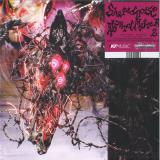
Das fünfte Album der Newcastler Riffzauberer Pigs Pigs Pigs Pigs Pigs Pigs Pigs (aka PIGSx7) ist geprägt von kalkulierter Aggression und selbstzerfrleichenden Texten. Zu den verblüffenden Boni gehören verspielte Synthesizer-Arbeiten und der Auftritt eines Hip-Hop-Masters. Mit seinem Titel, der Absurdität und Ernsthaftigkeit einander gegenüberstellt, ist dies Death Hilarious. Während Land Of Sleeper von 2023 als immersives Kopfhörer-Erlebnis konzipiert war, strebten Pigs dieses Mal nach etwas direkterem, böseren. ,Wir wollten, dass es ein Schlag ins Gesicht ist", grinst Produzent und Gitarrist Sam Grant. Dieses Ziel kam zum Teil dadurch zustande, dass die Band in den letzten Jahren sooooo viele Gigs gespielt hat. Die Band fühlte sich gut geölt und reif dafür, den Zuhörern zu Hause die Art von Prügel zu verpassen, die ihr Publikum von der Bühne aus erhält. Death Hilarious bietet einige Überraschungen, vor allem der Track 'Glib Tongued', bei dem El-P von Run The Jewels als Gastmusiker mitwirkt. Als Bassist John-Michael Hedley unwissentlich das schrieb, was seine Bandkollegen als ihr Äquivalent zu einer Hip-Hop-Nummer betrachteten, setzten die Pigs ihre Ziele hoch an und sicherten sich einen fulminanten Beitrag von einem der größten Rapper der Welt. Das soll nicht heißen, dass Pigs zum Nu-Metal übergegangen sind. Death Hilarious ist eine abwechslungsreiches, straffes Album, das sich zwischen sabbathianischem Doom, grotesk minimalistischem Noise Rock und zyklischen Post-Metal-Fortissimos bewegt. Auch die Pigs treiben sich selbst weiter an. Unpassende Synthesizer-Soli tauchen dort auf, wo normalerweise Gitarren-Histrionik Platz hätte. Klaviertracks lauern im Mix und verleihen dem Klangstrudeln eine fast unterschwellige Tiefe. Stitches" ist wie Motörhead, die versuchen, Glamrock mit einem beschwipsten Keyboarder zu spielen. Und dann ist da noch das 100-Meilen-Tempo des Cosmic-Thrash-Openers ,Blockage". Verzerrte Licks fliegen aus den Verstärkern von Grant und Lead-Gitarrist Adam Ian Sykes, während die Rhythmusgruppe dahinter brutzelt. Mit all dieser Power, die durch die Adern fließt, wird Death Hilarious mit Leichtigkeit eines der besten Rockalben des Jahres 2025 sein... und das ist kein Witz!
Suche:de la noise
- A1: Chipppps - Prz Remix (04 31)
- A2: Exosphear - Pdqb Speedrun Suture (00 28)
- A3: Laserzimmer 1, Raum 3 16 - Noise&Noise Ghost Shell Remix (03 19)
- A4: Dodgedog - Pdqb Killscreen Suture (00 37)
- A5: Flossbite - Galaxian Artefacts Remix (04 23)
- B1: Tögtägtüu - Cem3340 Rework (03 52)
- B2: Maurodius-Papeda - Pdqb Demake Suture (00 38)
- B3: Boktay - Dark Vektor Inside Your Eyes Remix (05 14)
- B4: Binäry Gatoraders On Acid - Pdqb Bonus Stage Suture (00 42)
- B5: Lygöphobiä - Mesak's Broken Vectrex Mix (03 03)
The neon "pdqb Arcade" sign in Port Astra flickered with the same chaotic energy it had decades ago. Six men, now with more gray hair and worries than they once had, stood at the entrance. They were the "Lucky Six," reunited after years of scattered lives and separate paths.
"I can't believe this place is still here" said Noise, who had flown in from Tokyo. "It hasn't changed 8 bits, haha". CEM, now a father of 3340 synthesizers from Bari, replied with a grin. "We have. Look at Galaxian, he's unrecognizable!"
Each of them held a single, precious coin. Their plan, born of a wave of nostalgia and the understanding that they couldn't stay forever, was simple: one coin, one game, one last chance to be a legend. Each man would choose the game that meant the most to him and play the round of his life…
At the end, pdqb, the arcade owner, came up to the guys. "Don't be sad", he said. "Even if it was your last credit, there's always one more somewhere in some game". He then walked through the arcade and played four different machines that just happened to have an extra credit on them. "See?", he said.
Synaptic Cliffs proudly presents pdqb together with six black belt gamers (PRZ, Noise&Noise, Galaxian, CEM3340, Dark Vektor, Mesak), each a legend in their own right. They don't just replay pdqb's 8 1/2 Bit album; they become it. Together, they embark on a journey through legendary worlds, creating a place filled with soundscapes and challenges that blur the line between music and game. They move with the rhythm of the music and face the challenges within, weaving their own stories into the fabric of the iconic work.
Channeling inventive sound design into incisive, characterful techno variations, Jurango returns to Livity Sound with an eight-track double EP — his longest release to date. Taíno Gold captures a moment in time for Bristol-based Nate Reece's continually evolving sound as it draws on the full spectrum of UK club music.
Following a debut for Livity's reverse label in 2021 and last year's An Amorphous Mass EP, Reece is more assured than ever tackling a variety of club-focused cuts. The tracks on the release all came together before, during and after a two-month visit to Reece's grandparents' home — an idyllic tropical environment in a small community at the top of a hill in the northern part of Jamaica.
Taíno Gold refers to the island's indigenous Taíno community and the legend of a witch luring Spanish settlers into a trap on the Martha Brae river. There are no messages explicitly embedded in the music, but the release is both a personal reflection of Reece's own experiences and family heritage, plus a reminder about the enduring sceptre of colonialism and the continued need to fight against it. From absorbing Jamaica's fraught history through museum and plantation visits to the abundant nature in the garden surrounding his grandparent's house, the double EP marks a place in time for Reece, with eight advanced, ear-catching tracks as the end result.
From the cascading arps of 'Black Torches' to the tunnelling chords of 'Waiting For Trelawny', the melodic dimension of the Jurango sound is more confident than ever. 'Hibiscus' is a shimmering celebration of dub techno and crooked drum pressure and 'Chalk On Trees' basks in aqueous, fathoms-deep pads to close out the EP. Elsewhere, Reece brings new textural and tonal detail to his percussive workouts, splashing acidic noise around the angular experimentation of 'Maybe It's Broken' and firing off double-time rhythms to inject 'Double Sevens' with infectious urgency.
With the space afforded by a longer release, Reece widens out the scope of his artistic identity while absorbing the particular scene and setting that surrounded him while making the tracks. Taíno Gold is a vibrant next step for Jurango and a natural continuation of his work with Livity Sound.
Livity Sound is a label set up by Peverelist in 2011 as a vehicle for a raw and exploratory strain of UK techno, rooted in the heritage of UK dance music and sound system culture. It has since become one of the UK's foremost protagonists for cutting edge underground electronic music.
Renegade Methodz continues its forward drive into deep, uncompromising techno with the arrival of Alexey Dunchyk and his striking new release, 'Passion/Aggression'. Known for his refined yet forceful productions, Dunchyk brings a new dimension of raw and unapologetic depth to the label's expanding catalogue of international talent.
The result is a record that cuts through the noise of modern techno, built for DJs who care about substance not hype and shaped with the kind of lasting weight that keeps the true spirit of this music alive.
Where music resists becoming personal confession, it creates its own narrative - abstract, precise, and unbound by outside noise. Vibraform by Berlin-based hardware and live artist Peryl provides an analytical yet deeply instinctive view on music. It reflects the duality between flow and restraint, between self-exploration and the healthy act of setting limits. At its core lies a certain nonchalance - a refusal to act on voices and trends while maintaining full commitment to sound itself. Meticulous sound design, unpredictable, morphing basslines and an intentional timeless aesthetic offer a rare window into Peryl's creative state of mind. Even as he tries to sidestep personal narratives, emotions inevitably surface in the music, subtly shaping its character. The result is not a confessional piece of work, but an abstraction that remains universal rather than private, while still carrying a trace of personal truth. Four tracks that are striking a rare balance between novelty, grace and aggressive functionality, including a remix by R?dh?d, offer to find purpose in the act of believing that sooner or later art reveals a logic of its own. ? 2025 The Third Room All tracks written & produced by Dennis Strobel B2 remixed by Mike Bierbach Mastered by Ahmet Sisman Artwork by Daniel Bornmann & Lennard Makosch (STUEDIO.XYZ) Distribution by Clone Pressing by Matter Of Fact
Heavyweight groove from ERP — deep electro pressure with Microcentric on the flip, plus a killer Convextion remix. Pure machine soul for late-night heads.
DJ Feedbacks :
Pariah : amazing
Erol Alkan (Phantasy Sound) : Downloading Thanks!
Ben Sims : Now downloading... will check asap!
Luke Slater : Thanks!
Dave Clarke (white noise radio) : Seismic and well crafted, full support
Peverelist (Livity Sound) : Awesome, thanks!
Tensal (Tensal, Falling Ethicss) : great, Gerard always on point, thx
Call Super (Houndstooth) : thxxxx
Confidential Recipe (Rekids Special Projects) : great ep!
DJ Bone (FURTHER) : The Convextion remix is fire.
Monty Luke (Rekids / Black Catalogue) : solid ep
GiGi FM : <3
Jon Hester (Rekids, EDEC, Les Enfants Terribles, L.A.G.) : Fantastic EP across the board, amazing stuff!!
Jako Jako (BPitch Control, Tresor) : Schön!
Dan Beaumont (Chapter 10 / NTS) : Brilliant! love the Convextion mix
Satoshi Tomiie (Abstract Architecture) : Next level production and quality. Hats off
MoMa Ready (RAVE UNIT, HAUS of ALTR, Method 808) : great remix
Josh Wink (Ovum) : Usually good and sensual Electro from E.R.P.
Carista : love the remix of convextion
DVS1 : Thanks!
Inland : Ace! the remix is so lush! Thanks
Laurent Garnier : Ohhh whaouuuu - THIS IS SUPERB Full support
Radio Slave (Rekids) : I'm sold... This is great and I really love all the tracks.
Marcel Dettmann : thx
2562 / A Made Up Sound (Delsin, Clone) : The Convextion version is fire! Thanks :)
Bake (All Caps/Rinse FM) : love! <3
Interstellar Funk (Rush Hour) : Sounds great! Thank you
Efdemin (Dial) : Insanely good ep from the master!
Darko Esser / Tripeo (Balans / Clone) : Always good in my book, fantastic record!
Bailey Ibbs (Metafloor Records / Habits / Dansu Discs) : Make Electro Great Again!!
Nathan Jonson (Hrdvision) : rad!!!!
Uncertain (RSPX, WRKTRX, Suara) : convextion remix for me
Dj Deep (Deeply Rooted) : super nice release!
ROD / Benny Rodrigues : !!!!!
Surgeon (Dynamic Tension Records) : Great work. Love all tracks. Will play Convexion remix in my DJ sets for sure.
Steffi (Dolly) : simply grea!!!!!!
Kr!z (Token Records) : absolutely fantastic, as always
Phase Fatale (Ostgut Ton, BITE, Hospital Productions, Jealous God) : awesome!
Theo Nasa (Rekids) : WICKED!!!
Kosh (Syncrophone) : Lovely release
Subradeon (Subradeon Records) : interesting stuff! thanks for sending. Convextion rmx is my fav!
Gramrcy (Peach Discs/FTD) : Convextion remix is sick
Stephanie Sykes (Vent) : All tracks are sounding Super nice!!! TY!!! especially feeling Four Alone, so beautifully nostalgic. Cant wait to play!
Tal Fussman (Survival Tactics / Innervisions / Cod3QR / Drumpoet / Rekids) : oh yes
Richie Hawtin (M_Nus) : downloaded for r hawtin
Alan Oldham (DJ T-1000) : Super high quality electro, but the Convextion remix is the one I'm more likely to play out. Will support!
Ben UFO (Hessle Audio / Rinse FM) : convextion remix!
Truncate : Dope cuts thanks
Jonas Kopp : Excellent stuff, but this more of the pre-existent material.
The Advent : amazing stuff, digging all the tracks.. 2 - E.R.P - Microsentric my Fav..
Ste Roberts : Absolutely out of order! Anything Gerard touches turns to gold. 10/10
Joris Voorn (Spectrum) : Downloaded, thanx.
Roberto / R.M.K / Fossil Archive (Fossil Archive) : Love this!
Raffaele Attanasio (Axis) : nicee1!!!
DJ Assassin (Recode Records / Cross Section / Connaisseur) : wicked
Building on the foundations of his Braindance Records label (2017–2020), Korean musician Go Dam now presents the second release on Stellar Systems. The Digifuga Series: Stellar EP finds him in interplanetary hyperdrive, charting trails blazed by pioneers from Hashim to Mad Mike to Gerard Hanson.
The four tracks were written in the studio Go Dam built with his own hands in Eulji-ro — once Seoul’s printing district, now a hive of small businesses. That same meticulous, artisanal approach runs through all of his work, whether composing film scores, producing K-Pop for online personalities, or fine-tuning sound systems around the city. The EP opens with the irrepressible electro funk of 'Fevernova', its slapping beat driving growling bass and wide-eyed synths. 'Dream Powder' is a stormy banger, surfing waves of filtered acid and noise before breaking into light. 'Chrono Flux' sustains the high energy, like the soundtrack to an anime motorbike chase at sunset, while 'Quasiverve' drifts into deepest night, its sinuous leads creeping over a stalking bassline.
Blending heavyweight vintage hardware with sharp digital tools, Go Dam conjures an epic widescreen sound that nods both to the sci-fi optimism of early electro and techno and to today’s fractured, machine-mediated music economy.
One of contemporary ambient’s preeminent figures lands on its leading label, enacting a transition into a new phase of rhythmic noise and tonal shadowplay laced with peculiar sensitivities, wrangling Dilloway-influenced tape noise thru ASMR ambience, fritzed dub techno, layered vocal drone and ritualistic mantras.
Perila steps up solo with a heavily satisfying debut for West Mineral, investigating negative space and states of subconsciousness. The shift in tone feeds forward into arcane realms of resonant dark ambient and dream-pop, harnessed in amorphous structures using dub-as-method. It’s wholly immersive stuff in a way that’s long been Perlia’s calling card, but here more careful in its command of personalised, atmospheric physics from the Coil-esque ‘cheerleader’, thru the deeply smudged and sexy trip hop of ‘lava’, and the oozing, sloshing OOBE-like spectres of ‘give it all’.
The title of the album is a reference to Carl Jung’s phrase "all haste is of the devil” which informs Perila’s writing process here; she slows down in an attempt to feel more and tap into her shadow self. Album opener 'cheerbleeder' is a doomed, tremolo-heavy mass of ghost notes, while the rattling chains and strangulated voices on ‘metal snax' sounds like they belong on a Wolf Eyes tape. 'grain levy tep dusk' strikes closer to recently unearthed industrial plates from Tolerance and Mentocome, with rusted clangs threaded into deflated, half-speed pulses. The album keeps growing from there, shifting and expanding as Perila exhales and absorbs her cognitive blind spots. She credits "trance states" for helping her let go, and we broadly get to experience that on the mantra-like 'thunder me' and the blurry all-vocal highlight 'hold my leg', which sounds like it could have been snatched from Grouper's 'Way Their Crept' sessions.
As with all of Alexandra Zakharenko’s work under various aliases - Aseptic Stir, Baby Bong, Wedontneedwords, Perila - her allure is self-evident to lovers of textured, diffuse electronics, and never more so than on this lip-bitingly potent suite of delicacies and primordial urges, perfectly balancing ancient and techngnostic aspects with an x-amount of seductive strangeness left in the margins.
Arriving two years after the first chapter, Absurd Matter 2 isn’t just a sequel, it’s an evolution, redrawing the boundaries established by its acclaimed predecessor. The Berlin-based Italian producer tempers his confrontational sonics with rare moments of introspection, shifting seamlessly between blown-out noise, warped hip-hop, mutant club experimentation, and weightless ambience. Textures disintegrate and reassemble, rhythms flex and crumble, and every detail balances on the edge of fantasy. It’s a poetic, layered response to Nino Pedone’s changing physical reality: the gradual hearing loss and perceptual renegotiation triggered by Ménière’s disease, which struck him in 2022. At first, the experience felt like betrayal, a brutal disconnection from the very sense that had shaped his life. But over time, the disorientation turned into a strange kind of focus. The silence between sounds became as expressive as the sounds themselves.
The first Absurd Matter was a visceral reaction to trauma; the second is more reflective – an ambiguous chronicle of sensory recalibration. Pedone doesn’t represent his altered inner reality through extremes, but through depth, zooming in on illusory distortions, tense rhythmic fluctuations, and fragmented sonics. Dense, immersive, and mystical, the album mirrors Pedone’s evolving relationship with perception itself.
Tinnitus-like feedback wails and noir-ish strings introduce “Repeater”, making it immediately clear that Pedone is painting a more delicately finessed image this time around. Fleshed out by raps from cult MCs billy woods and E L U C I D, the track is marked by subtle, sophisticated contrasts: the blurred, inverted rhythms that couch Armand Hammer’s haunted back-and-forth, and the glitchy interference that offsets the lavish orchestral phrases. Backwoodz associate Fatboi Sharif lends his Lynchian drawl to “Bandage Chipped Wings”, grounding Pedone’s lysergic rhythmic distortions with syrupy, horror-inspired couplets. Pedone also invites discomfort into “Crash Landing”, with droning, metallic tones that contradict South Central rapper ICECOLDBISHOP’s elastic flow. “Bitch, I don't give a fuck about anybody,” he squawks over Pedone’s incongruous rasping textures and time-warped beats, “cash out at any party.” Working alongside London’s Loraine James on production, Pedone reunites with Moor Mother on “I Saw The Light”, blending James’ soft-focus atmospherics with soundsystem-damaging, overdriven bass hits and rusted percussive snips. Moor Mother’s assertive words hover over the wreckage, tightening Pedone’s themes of overstimulation and altered awareness as they stutter and veer off course, vanishing into the backdrop.
Contrasting his more pensive experiments, Pedone’s dancefloor deviations are more concentrated on Absurd Matter 2 than ever before. He torches a stuttering dembow structure on “X”, obfuscating the rhythm’s familiar energy with disturbing audio hallucinations. On “Splintered”, he reunites with Kenyan prodigy Slikback, mangling neon-lit trance arpeggios with dissociated trap rhythms. He sharpens his skills to a fine point on “Oblivion Step”, observing 2- step through a lens of distortion and personal abstraction, shaking blipping synth leads over neck-snapping drums and counteracting the momentum with airless sci-fi soundscapes.
Perhaps the album’s most surprising moment arrives with “Viel”, which features vocals from Los Angeles-based composer Kaitlyn Aurelia Smith. Together, Pedone and Smith chance upon their notion of dub techno, fogging synth stabs and ghostly vocal traces into eerie harmonic distortions. On some level, it’s almost pop music, a far cry from the bleak dissonance of Absurd Matter and a hopeful way to reframe turbulence as transformation. Absurd Matter 2 doesn’t simply document a process; it enacts one. It doesn’t offer clarity; it invites disorientation. It’s not a map of the labyrinth, but a foghorn piercing the darkness.
Nachdem sie auf ihrem gefeierten Debütalbum ein multidimensionales Klanguniversum definiert hatten, verlassen der Komponist und Filmemacher Chris Hunt und James ,Munky" Shaffer von Korn auf EXINFINITE das Vertraute und driften in ein Reich der Rekursion, wo sie auf ein Gewirr aus gespiegelten Wurmlöchern blicken, die mit unheimlicher Mehrdeutigkeit summen. Das zweite Album von VENERA ist düsterer, heavier und perkussiver als sein Vorgänger, aber es gibt etwas Intimeres in seinen Schaltkreisen, das schwer zu definieren ist - etwas Mystisches, Geheimnisvolles und Melancholisches. Songs materialisieren sich aus dem Nichts, nur um von sauren Synthesizern aufgelöst oder von Hunts geschärften Beats durchbohrt zu werden, während Shaffers dichte, gequälte Riffs durch euphorische, zeitverzerrte Vocals von FKA twigs, Dis Fig und Chelsea Wolfe ausgeglichen werden. Nach ihrer Begegnung mit der Unendlichkeit haben VENERA nach innen geschaut, über die Grenzen der Existenz nachgedacht und ihre tiefsten Emotionen ausgegraben. VENERA entstand 2022, als Hunt und Shaffer nach Aufnahmen mit der albanischen Künstlerin Xhoana X. ihr eigenes musikalisches Terrain betraten. Das Duo improvisierte gemeinsam und experimentierte mit cineastischem, von Science-Fiction inspiriertem Sounddesign und erkannte, dass die Zusammenarbeit Potenzial hatte. So begannen sie, ihren Sound weiterzuentwickeln und zu verfeinern, wobei sie Unterstützung von Deantoni Parks, dem ehemaligen Schlagzeuger von Mars Volta, Alain Johannes von Queens of the Stone Age, dem Post-Punk-Duo VOWWS und den LA-Noise-Rock-Legenden HEALTH erhielten. Nachdem ihr Debütalbum 2023 auf Mike Pattons Label Ipecac erschienen war, setzten VENERA die Dekonstruktion und Neugestaltung ihres Songwritings fort, tauschten Eno-artige Ambient-Atmosphären gegen explosive Beats und dichte Texturen aus und fanden heraus, wie sie die von ihnen eröffnete Erzählung erweitern konnten, ohne alte Pfade zu beschreiten. Auf ,Tear" ist die neue Richtung des Duos deutlich zu hören, wenn Shaffers ursprüngliche Gitarrenklänge zu unheimlichen Widescreen-Expositionen umgestaltet werden, die Hunt mit pneumatischen Kick- und Snare-Zyklen untermalt. Unterbrochen von Luftschleusen-Zischen und leuchtenden Synthesizern, bietet der Track eine Kulisse, die VENERA kontinuierlich verwandelt und das Konzept im Laufe des Albums neu formt. Die Kult-Singer-Songwriterin Chelsea Wolfe gibt dem düsteren ,All Midnights" einen gotischen amerikanischen Touch, indem sie kraftvoll über VENERAs vakuumverpackte Rhythmen und gasförmige Synthesizer singt, und der in Berlin lebende Noisemaker Dis Fig, der bereits mit The Body und The Bug zusammengearbeitet hat, verleiht Shaffer und Hunts tape-verzerrten Industrial-Pops und -Whirrs in ,End Uncovered" hauchige, emotional vielschichtige Töne. Sie lassen squelchigen, verlangsamten Techno in okkulte Noise-Reflexionspools auf dem schlängelnden ,Asteroxylon" einfließen, und Hunt antwortet auf Shaffers hallende Zupftöne mit Nebelhorn-Stöhnen auf dem unheilvollen, nachdenklichen ,uuu773". ,EXINFINITE" baut sich kontinuierlich auf, bis es ,Caroline" erreicht, eine intensive Zusammenarbeit mit FKA Twigs, die ihre unheimlichsten Töne isoliert. Zunächst umspielt sie ihre Worte mit bedrohlichen elektrischen Verzerrungen und verstümmelten, geisterhaften Stimmen, bevor sie in einen aufgeladenen opernhaften Schrei ausbricht, dem Shaffer und Hunt mit flirrenden kybernetischen Beats und dichten Wänden aus Gitarrenlärm begegnen. Dieser Track bricht das Konzept von VENERA vollständig auf, verschmilzt das Synthetische mit dem Natürlichen und löst Dysphorie, Selbstverlust und unendliche Regression aus. So wirken der blutrünstige Lärm und die finstere Atmosphäre von ,Decreation" wie eine dissoziierte Coda. In ,EXINFINITE" werden Zerstörung und Tod nicht überwunden, sondern so lange intensiviert, bis sie sich vollständig verwandeln.
El AMBIE—TÓN is back. The reference #002 is an exercise of Memory (Memoria), it is a place where the water blooms on the earth and the wind in the mountains. It is jungle and city. Mountain and noise. Imbalance and harmony. It is a lake in the sky, a forest between seas. A still cloud in la cordillera, a name that floats. This collaboration between Colombian Drone Mafia and Gibrana Cervantes is the beginning and end of a fragile geography, like the magic and mafia of our platanal.
But who is behind this new combo and bridge between South and Central America? CDM is the new alias of Nyksan, a Bogota-born techno-affiliated deejay and sound artist who is also one of the co-founders of TraTraTrax. From the other side, Mexican composer and violinist Gibrana Cervantes is one of the most outstanding string voices in the daring electronic music landscape in recent times. The duo's cabalistic work creates intricate and dark ambient, all woven around gut-moving sonorities. Colombian Drone Mafia dissolves the boundaries between synthesis and field recordings, crafting experimental yet primitive textures that infect listeners through the layered melodic spaces that Gibrana masters.
We cordially invite you to listen to this journey of immersive drones through vegetation and concrete jungle, music that is at times contemplative and at other times violent. Music framed between deep listening and deep boredom. A glimpse of the sound of the end.
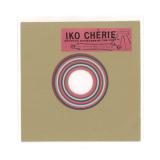
Pingipung proudly introduces Iko Chérie, the experimental pop project of French multiinstrumentalist Marie Merlet. The 7"" single "Ghosted Ghosters of the Holy G" offers a first glimpse into her forthcoming LP, Soft Centre (Nov 2025) - a hypnotic blend of dub-infused songwriting and blissful noise. On the flipside, French electro-dub visionaries Froid Dub unravel the track into a shadowy, slow-motion version, with a solid sub-bass, flickering delays and half-heard whispers. Trained in classical piano as a child, Marie Merlet shifted to teaching herself the guitar when she discovered the DIY indie punk scene. She then studied jazz singing and electro acoustic composition in Bordeaux before moving to London to play bass in Monade alongside Laetitia Sadier (Stereolab). With her solo project Iko Chérie, she crafts a surreal sound world of woozy incantations, Casio drones, and reverb-drenched guitars, woven with processed spoken-word samples. Beyond Iko Chérie, Marie Merlet tours globally and records with Gina Birch (The Raincoats) and is the guitarist in psychedelic cumbia outfit Malphino. She also hosts a monthly Soho Radio show championing women in music and curates a film & performance series at London"s Cinema Museum.
Perhaps you've chanced upon a Number Station, unwittingly as you scour the shortwave bands, and heard a cold, disconnected voice repeating simple commands endlessly into the ether. Or maybe you've scanned past a series of bleeps and pips, or pockets of noise, thinking nothing of them, as you seek a favoured music station. These are messages, to those who know how to receive them, and are able decode them in their various forms and configurations.
Shropshire Number Stations - Recordings of Covert Shortwave Radio Stations charts the covert shortwave radio stations broadcasting silently through the air around us, to aspirant agents in the fields of Shropshire, UK and the counties which surround it. These two continuous sides include recordings of 19 such lay-stations, captured by Eric Loveland Heath at various points over the last few years. The true nature of these amateur networks may never be known, nor might their cyphers ever be revealed. These are recordings of their activities, made conceivably for the sake of posterity alone, offering a glimpse into clandestine worlds otherwise obscured from view.
Fetter’s Body of Noise erupts at the threshold between ravey hypnosis and avant-pop experiment, slithering through the hinterlands of unconscious desire. Nine shape-shifting tracks conjure haunted landscapes where beauty refuses clarity and dancefloor logic warps underfoot. Vocals swoon, drift, and demand—stacking into fragments that multiply and weave through saturated pulses and shimmering, snarling synths.
Opening track "Like a Rose" traces a dreamer’s transition into the unstable physics of a perplexing but familiar dream world, where they gradually become lucid. “Beast” follows up humming with shadowed urgency, threading a path through self-sabotage and metamorphosis. “Spathiphyllums” drifts a while in a lush lostness, aching for something new before fracturing into wild, cathartic collapse. Side B’s “Do I Exist? (D.I.E)” and “The Longing” spiral into existential wonder, searching for a human origin story—both personal and collective—against a backdrop of uncertainty, while “Headache” thrusts forward as an absurd and insistent manifesto to stay the course and harness one’s own power within the madness.
Body of Noise is crafted not only for sweating bodies in motion, but for distorting time and opening psychic portals, where surrender becomes strategy and uncertainty transforms into ecstatic navigation. Rooted in all-hardware improvised production and shaped by Fetter’s years of boundary-blurring visual and performance art, their debut LP feels alive and in flux. Reminiscent of a spectral pop chorus trapped in a loop of broken machinery, or a lost broadcast from a dancefloor in a parallel realm, Body of Noise is a journey into chaos, transformation, and a bold refusal to be contained.
About Fetter:
Fetter makes clubby self-destructing noise pop to dance and weep to. Oscillating between ethereal and pounding, their all-hardware, largely improvised live sets take listeners through a foggy wilderness of saturated rhythms and menacing synth lines, a golden voice guiding the way through. Fetter is the stage moniker of multimedia artist Jess Tucker. Their performances take place in clubs as well as galleries, often incorporating video, installation, and interactive performance art elements to create other-worldly surrounds of mesmerizingly unhinged bodies and faces.
This is the story of an artist in search of sound and breath: an artist who dares to question the rhythm of silence—an invitation to rethink music, sound, and musical collaboration. This is the story of a journey that, after opening countless paths, has finally found its vessel—and its messengers. Three artists of profound musical truth and radical freedom, merging into an exceptional trio that crosses genres and transcends words in a journey toward pure emotion.
Le Rythme du Silence is the culmination of this long search. Yom delivers it here with violinist Théo Ceccaldi and cellist Valentin Ceccaldi—kindred spirits in sound. “I’ve been working on this idea of the ‘rhythm of silence’ for years,” Yom explains. “I first heard the phrase from a Sufi master, describing the foundation of meditation. It struck something deep in me. I’ve practiced meditation for a long time, and we often think of it as a kind of stillness—opposed to noise and life. But in truth, the rhythm of silence enables meditation. It means accepting that the world continues to move and live around you, even as you try to be still. I wanted to compose from that place. To imagine sound as vibratory matter—the primal substance of creation. That required letting go of fixed structures: forgetting melodies, abandoning the idea of a constructed solo. I needed to leave behind music as a system, and touch sound as a living, breathing entity. It took years. Many projects led me elsewhere. But with the Ceccaldi brothers, I finally found the right resonance. Working with them was simply obvious—it was indredibly powerful.”
Yom first rose to prominence reimagining Jewish traditional music with his 2008 debut New King of Klezmer Clarinet. Since then, his path has led through rock (With Love, 2011; You Will Never Die, 2018), electronic utopias (The Empire of Love, 2013), meditative and sacred soundscapes (Prière, 2018), and countless unclassifiable hybrids (Unue, 2009; Green Apocalypse, 2010). It was inevitable that he would eventually cross paths with the free-spirited Théo and Valentin Ceccaldi—two artists who also place collaboration and genre-blurring at the heart of their artistic development. Their projects are always bold, demanding, and full of life (Kutu, Tricollectif, ONJ, Velvet Revolution, Grand Orchestre du Tricot, Lagon Noir, Constantine, etc.). And so, when the three met within the iXi string quartet, something clicked.
“I was seated between the two of them in the quartet,” Yom recalls, “and I could feel their energy flowing from both sides—it was wild! They’re so tuned into each other, they don’t need words. It’s like they’re connected by musical Wi-Fi. The groove happens instantly. They’re precise when they want to be—thanks to their experience in pop-influenced projects —but they can also let go completely, diving into pure sound. That’s exactly what this project needed.”
Without a single rehearsal, the trio formed instinctively. They began performing Yom’s compositions live, unfolding them into a single continuous piece, where clarinet and strings stretch the limits of sound and breath.
Bowed, plucked, or prepared with clothespins, the Ceccaldi strings engage in a playful and intense dialogue with Yom’s custom B-flat clarinet. Through their imaginative listening and fearless invention, air and space open into a vast new soundscape—one that lies somewhere between meditation and healing music.
“When Yom shared the concept of the rhythm of silence, we were immediately drawn in,” says cellist Valentin Ceccaldi. “There’s a deep intensity and spiritual commitment in his music that really spoke to me. With this trio, we’re trying to dive into the core of sound—but also to create a kind of communion with the audience. It’s like gradually turning up the volume on silence, and realizing it’s made of countless tiny sounds—the music of particles in motion" This stripped-down intensity demands full presence—body and mind—of these three musicians, vibrationally connected in a state close to trance. With them, we enter a journey - not religious, but sacred nonetheless.
The Rhythm of Silence becomes an echo of our most intimate, most distant inner landscapes.
An album—and a trio—to return to without end.
For its sixth release, Rio de Janeiro’s Onda Boa label sees founder Joutro Mundo, step up once again - this time reviving and re-vibing Netinho’s independent 1980s bop, “Du Du Du Domingo”.
Netinho first made his mark in the 1960s as the drummer for Brazilian beat icons Os Incríveis, then again in the 1970s with the heavier, lysergic sounds of Casa das Máquinas. By the 1980s, he had turned toward a new vision, inspired by the spiritual group Amor e Caridade. Released on his own imprint, Manancial do Amor, 1982’s Apartamento 97 – Projeto Amor & Caridade Vol. 2 brought together heavyweights Zé Rodrix, Faísca, and Manito to expand on this funky, pop-rock chapter first introduced with 1980’s Amor & Caridade Vol. 1.
According to Netinho, a year passed in search of inspiration for the follow-up LP before he began receiving notes and poems through his medium, dictated to her by his “protector.” Following that divine intervention, the album’s songs were completed in just two days—including the standout track, “Du Du Du Domingo,” an ode to the beauty of a Sunday afternoon after the toils of the workweek.
Side A presents the original track, lovingly remastered, in all its stripped-down, idiosyncratic glory. A bubbling synth bass paired with a nimble electric bass line set the stage for the plunky synth melody that defines this anomalous yet infectious gem—before giving way to a samba break and a wafting crowd noise that instantly transports you to a sunny Sunday by the sea.
On the B-side, Joutro Mundo injects a new vitality into the track with crisp hi-hats, a thumping kick, and other subtle studio magic. The samba break is brought forward, while the electric bass line—previously bubbling beneath the surface—rises to center stage around the three-minute mark. True to form, Joutro Mundo avoids the obvious, drawing on his deep crates and production sorcery to conjure up yet another gem for the balearic heads and other lovers of left-field dancefloor deviance.
Several years after a 12” for the Unrelatable imprint, Marco Passarani opens a new chapter with F.F.O.M., a work of extra-terrestrial tales that feel grounded, where the hard, dirty work of the people continues on a different planet. The scenery changes, but the story stays the same: broken dreams on arid ground.
Linking back to his early Nature Records releases, Passarani blends experimentation with an unshakable sense of groove, weaving a more abstract narrative without losing the dancefloor pulse. While distinct from his Studiomaster output, the project shares the same DNA, fusing digital and analog textures until the boundaries dissolve.
True to the raw spirit of pure techno and imbued with the unmistakable nuances of the Roman school, F.F.O.M. is both a nod to the past and a step into uncharted territory, where Martian dust meets earthly sweat.
Each track paints a fragment of this imagined frontier: Tales Of Truth reveals shadowy landscapes hiding the real nature of the so-called new promised land; Alone in the Depth drifts through liquid scenery, a classic TR-808 pulsing deep beneath unknown oceans; Clouded Shore distills the numeric essence of groove in a subtle nod to Kraftwerk; Dominion erupts into the fierce struggle for supremacy over the new territories; Passione Orbitale tells of love for the unknown and voyages toward otherworldly sunsets; Exploration Noises echoes the spirit of Ixora from Passarani’s first Nature Records release, with manic, melancholic SH-101 lines riding electro rhythms.
The digital edition includes two exclusive miniatures, fleeting transmissions from the edge of this Martian settlement.
The ninth installment in the MEGABREAKZ series dives headfirst into the raw energy of early industrial. A rhythmic discharge straight from the golden era of industrial new beat and industrial dub: rusted percussion, toxic delays, and sweat-drenched basslines. Velax channels the raw spirit of Chicago’s most abrasive scene, Wax Trax!, where beats were machines and noise had a body. But here, everything is filtered through the dub haze of the UK’s early counter-scene, with fractured echoes in the style of Keith LeBlanc, crafting the ideal soundtrack for a crumbling factory. Grit, groove, and distortion as the only possible language. Presented in ONE-OFF truly limited edition of 300 copies lacquered pressed on 180 gr. high quality solid BLACK vinyl.
- A1: When I Sing, I Slip Into The Microphone. Into That Void, I Bring Comrade "Prayers", Then, Turning To Face The Outside, Together We Explode. Part I
- B1: When I Sing, I Slip Into The Microphone. Into That Void, I Bring Comrade "Prayers", Then, Turning To Face The Outside, Together We Explode. Part Ii
- C1: When I Sing, I Slip Into The Microphone. Into That Void, I Bring Comrade "Prayers", Then, Turning To Face The Outside, Together We Explode. Part Ii (Continued)
- D1: When I Sing, I Slip Into The Microphone. Into That Void, I Bring Comrade "Prayers", Then, Turning To Face The Outside, Together We Explode. Part Ii (Conclusion)
- D2: When I Sing, I Slip Into The Microphone. Into That Void, I Bring Comrade "Prayers", Then, Turning To Face The Outside, Together We Explode. Part Iii
Among the true Keiji Haino devotees, Nijiumu’s Era of Sad Wings (released on P.S.F. in 1993) has always held a special place in the pantheon. Operating for only a few years in the early 90s and apparently only performing a handful of shows, Nijiumu operated at the opposite end of the dynamic spectrum to Haino’s famed power trio Fushitsusha, dwelling in a hushed, meditative realm of mysterious droning sonorities and free-floating melodies that occasionally erupts into violence. Black Truffle is pleased to announce a new double-LP edition of a lesser-known 1994 Nijiumu recording, When I sing, I slip into the microphone. Into that void, I bring comrade “prayers”, then, turning to face the outside, together we explode. Here, Nijiumu is the trio of Haino, Tetuzi Akiyama and the obscure Takashi Matsuoka, the three performing on a wide variety of string, wind and percussion instruments, as well as electric guitar and bass, and Haino’s unmistakeable voice.
Like on the early solo Haino album that shares the group’s name (released on P.S.F. in 1993), the instrumentation swims in reverb (the use of which Akiyama recalls as ‘a kind of point of the band’), often obscuring the instrumental sources. On the short opening piece, a distant reed instrument arcs long buzzing melodies over a bed of cymbals and gongs, like a psychedelic take on Tibetan music. The epic second part, occupying almost 50 minutes, begins as a splayed, near-formless cloud of electric guitar and bass, shadowed by bowed and plucked strings, the three elements working through twisting atonal shapes. At various points in the recording, we hear what seems to be the sounds of musicians moving between instruments, their shuffling and bumps fitting seamlessly into this radically open music. Eventually, what sounds like electric guitar moves closer to the foreground, fixing on a repeated melodic cell around which hover mysterious clouds of long tones and a sporadic shaker. At the half-hour mark, the music begins to build to a violently emotive climax, Haino’s impassioned vocal cries punctuating a lumbering, bass-heavy murk, contrasted at points by what sounds like a tin whistle. Suddenly, the volume drops to a near-whisper, opening the way for the stunning final moments, which touch on the slow-motion balladry of Haino’s classic Affection, here given an eccentric twist by an occasional woodblock hit. The third piece opens with a hazy trio of rumbling bass, bowed strings and abstracted slide guitar, the latter calling to mind some of Akiyama’s later solo work. Eventually joined by Haino’s voice, its fragile, haunted tone might remind the listener of the man in black’s documented love of the madrigals of the murderous Count Gesualdo, before the recording abruptly breaks off mid-note. In this new edition, the Nijiumu trio recording is supplemented by a piece recorded solo by Haino in 1973, a bracing electronic blowout stretching almost half an hour. Using a homemade electronics setup to unleash a barrage of crunching distortion and shuddering harmonic fuzz, it takes its place in the canon of extreme live electronics next to Robert Ashley’s Wolfman and Walter Marchetti’s Osmanthus fragrans, looking forward to extreme noise years before Merzbow. Taken as a whole, these four sides of music are a stunning document of some of the lesser-known waystations of Haino’s singular creative path.
London based label Natural Selection present their forthcoming release in the form of a 4-track 12" EP, courtesy of Swarm Intelligence, entitled "Radiance". Mastered by Alain Paul and cut by Simon at The Exchange Vinyl. Record Sleeve and labels printed to premium specification, featuring artwork by Kaan Ulgener.
Born in Dublin and now firmly based in Berlin, Simon Hayes aka Swarm Intelligence has cemented his place in the Techno underground with critically acclaimed LPs and EPs on labels such as 47, Instruments of Discipline and Voitax. He returns to Natural Selection, after releasing his track "Generative" on the label's latest VA release; "Natural Selection: Selected Works Vol. 1" in 2024. Featuring amongst an extensive list of heavyweight label affiliates such as SHXCXCHCXSH, Charlton, ASEC, Nørbak, MAEDON, Annie Hall & more. After further connections with the label via live performances at their regular label nights at FOLD London, it was inevitable that Simon would be invited to release a solo EP on their imprint.
His distinctive sound comes from over a decade of releases spanning multiple genres and tempos and oscillates between rhythmic noise, tense atmospherics, uncompromising levels of distortion, and stark, astute beats. This resolutely non-conformist approach to his productions has earned him a reputation as a true trailblazer in the realm of Techno and has led him to perform at some of the world's finest institutions including Berghain, Tresor and Basement NY.
For "Radiance", Swarm intelligence delves further into the sonic unknown, presenting a bold evolution in his uncompromising vision of Techno. Deep, fragmented textures form the backdrop for thunderous, distorted rhythms and IDM-laden drums and percussion, fused with meticulously designed cinematic soundscapes and powerful low-end muscle. Fierce, unrelenting, and deeply conceptual, all rules and boundaries are smashed to pieces and all tracks are equally suitable for blasting through the world's biggest club systems and rigs as they are for home listening.