2024 repress
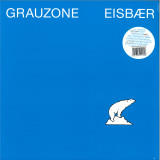
WRWTFWW Records is very honored to announce the official reissue of Grauzone's essential 1981 maxi single with timeless classic "Eisbär", proto-techno beast "FILM 2", and romantic synth ballad "Ich Lieb Sie", just in time for the 40th anniversary of the Swiss band's formation. The three-track vinyl is sourced from the original reels, cut at 45rpm, and comes with its iconic artwork on a 350gsm sleeve.
Ich möchte ein Eisbär sein...Written by Martin Eicher after a nightmare in which he saw talking polar bears on the walls, and with music by the Grauzone crew consisting of Martin and his brother Stephan Eicher, Marco Repetto, Christian "GT" Trüssel, and Claudine Chirac (on saxophone), "Eisbär" is the most recognizable title from the band, a sublime mix of ingredients reflecting the transitional era it comes from - the raw energy of punk music still palpable, combined with the audacity of early electronics, the warm groove of a disco gem, beautifully fragile lyrics, and one of the best basslines ever. It became a mega hit, totally unplanned, but how could you resist such a track
"FILM 2" is the ultimate b-side monster, a menacing all-instrumental pre-techno masterpiece, slowly building to a magnetizing frenzy. An instant underground favorite, it was famously heard played at both speeds depending on the scenes and DJs you were frequenting, 45rpm as it was first intended, and 33rpm for the cosmic experience (search Daniele Baldelli's Cosmic C75 1982 mixtape online for a great example of this).
The maxi single ends with "Ich Lieb Sie", a synth-pop meets doo-wop ballad, a true love song oozing with innocence. Simple, stylish, and just right.
At the crossroads of post-punk, new wave, pop, and electronic experimentation, the Eisbär maxi offers three songs that are technically different but hold the same spirit, the perfect embodiment of Grauzone's music - wild, unpredictable, and youthful, yet sophisticated, catchy, and ingenious. The magic recipe for the good stuff.
Stephan Eicher went on to be, arguably, the most successful Swiss musician ever, with an international career extending from pop chanson to experimental escapades and collaborations with Moondog, artists Sophie Calle and John Armleder, and author Martin Suter among many other luminaries. Marco Repetto flourished as a techno and ambient producer, releasing multiple projects including releases on Aphex Twin's Rephlex label.
Grauzone and WRWTFWW will continue to collaborate on the band's 40th anniversary reissue campaign, with numerous projects planned for the year, including a vast selection of music, visuals, and literature never available before.
Поиск:de lite
Все
Jim Jones All Stars ist ein brodelnder Sumpffluch mit unheiligem Rhythmus und das neueste Projekt des britischen Garage-Paten Jim Jones (Thee Hypnotics, The Jim Jones Revue). Die Band besteht aus Mitgliedern von Jim Jones Revue, The Heavy, The Swamps und einer kompletten Bläsergruppe. Ihre LP "Ain't No Peril" ist ein dickes, fettes Stück Rama-Lama-Rhythm'n'Blues mit einigen von Jones' inspiriertesten Songs samt Gastauftritten des stimmlichen Powerhouse Nikki Hill und Eugene S. Robinson (Oxbow), das mit Scott McEwen in dessen Memphis Magnetic-Studio aufgenommen, von John Gletze produziert und von Grammy-Gewinner Randy Merrill gemastert wurde.
A kaleidoscopic sonic riot, Nandakke? is the hotly anticipated debut album from Japanese-Belgian duo Aili. Featuring 10 tracks of surreal electro-pop, joyful electronica, house music and more, Nandakke? is a euphoric album that sees Aili Maruyama and Orson Wouters more than fulfil the promise of their acclaimed debut EP.
Recorded over the course of six months in Orson's studio, packed full of vintage synths, Nandakke? captures the spontaneous spirit and creativity of those sessions. Exchanging riffs and rhythms, bouncing sounds and samples off each other, Aili and Orson would let the music take them where it wanted. The result,an album full of wild ideas and bold, playful experimentation.
More than anything an exhilarating feeling of discovery courses through Nandakke?, leaving you never sure where it will go next. One minute a pulsing electro-pop number featuring Aili's dad discussing his takoyaki (battered octopus) recipe, the next an explosive high energy workout song like Up & Down.
Certainly Aili was surprised to find herself singing in her own unique version of Japanese again.
"I thought that I was done with that after our debut EP, but apparently not as I speak even more Japanese on the album!" said Maruyama. "Every time we were in the studio these words would just tumble out. It's a complicated language but I just love to play with it.
"In many ways I'm an outsider, I left Tokyo aged 7, so there's a lot I notice as someone who is not a native speaker and it doesn't always make sense, there's a lot of mistakes in it.But in a way that sums up the whole philosophy of the album and how Orson and I work together."
That notion of duality, a sense of belonging but feeling apart, of being between two worlds and inventing your own captures the spirit of Nandakke?, itself a Japanese word that roughly translates to "Well, what was it?".
"It's something you say when you're looking for a word, like you know it but have forgotten how to say it. That's literally how I communicate with my dad the whole time," Maruyama explains. "The main feeling I have when I go to Japan is that I know the language, I can speak it, but part of me still feels like it doesn't have all the vocabulary. There's a gap there that nandakke has always filled for me. All the lyrics come from that place, that seven-year old trying to speak Japanese."
Whether Aili's singing about the language she invented with her father over the years to bridge the gap between them (Nandakke?), the idiosyncratic Japanese relationship to fashion (Fashion) or riffing on children's playground songs (Yubikiri) the result is a remarkable album that defies easy categorisation.
Bursting onto the Belgian scene in 2021 with their acclaimed debut EP, Dansu, its lead track spent 8 consecutive weeks at the #1 spot of Radio 1's VOX list and saw the band nominated for Studio Brussel's De Nieuwe Lichting ('New Generation') award. Since then Aili have appeared playing live on the Belgian TV show Roomies, been tipped by the likes of Rolling Stone, become regulars on tastemaker stations like KEXP and KCRW in the US and Nova in France, toured across Europe and, just recently, played their first sell out shows in Japan.
Sect have a lot on their minds. With the release of their brand new single, New Low and the promise of Plagues Upon Plagues, the follow up full-length to 2019’s Blood of the Beasts, Sect explore the intersection of issues which have cascaded over us for the last five years, the “plagues” of the title referring to the literal pandemic, and the metaphorical plague of the political state and the rise of fascism.
Comprised of an international cast of stellar musicians, who cut their teeth in a formative moment of political, cynical, antagonistic extremes, Sect unites Scott Crouse (Earth Crisis, Tooth & Claw) & Jimmy Chang (Undying, Catharsis) - guitars, Steve Hart (Day of Suffering, Mania For Conquest) - bass, Andy Hurley (Fall Out Boy, Racetraitor) - drums and Chris Colohan (Cursed, Unwell) - vocals. They released No Cure For Death in 2017 and Blood of the Beasts in 2019.
Plagues Upon Plagues opens with the bereft waves of “No Uncertain Terms”, a side of the band we haven’t seen before. Vocalist Chris Colohan describes this album as “a funeral rather than a trial”, the activism of previous releases fading to sorrow and grief.
Lead single New Low follows with the advent of marching drums, a funereal procession for the world we hoped to build. There’s frantic horror on the album too, with the track “Drowning in Sorrows” taking a look at the ways in which we numb ourselves as a society. “#ForeverHome” is a bitterly angry track about how people used animals for both narcissistic virtue signalling and one-way comfort in the pandemic, and abandoned them en masse just as selfishly when social life came back. Speaking to their straight-edge principles and how that continues to feed into their songwriting, Chris says, “the only kind of straight edge songs I’m interested in writing are dynamic ones that address human realities that you don’t have to be straight edge to engage with.”
On Plagues Upon Plagues, Sect pierce through the veil of complacency, forcing listeners to confront uncomfortable truths about the fragility of our world. The band wields their sonic arsenal like a prophetic warning and with raw vocals and uncompromising lyrics, they confront the harsh realities of existence in these tumultuous times. As society teeters on the brink of chaos, Sect's cold hard statement resonates with an urgency that cannot be ignored.
“Home” is not always a literal place. Sometimes, “home” represents inner peace and simply learning to hold space for yourself. This is where Vacations lead singer and guitarist Campbell Burns has arrived as he and bandmates Jake Johnson, Nate Delizzotti, and Joseph Van Lier release their third LP, No Place Like Home. “I had this loose concept of No Place Like Home being an Americana-influenced album,” Campbell says of the album’s sonic inspirations. “I wanted to incorporate more pianos, acoustic guitars, Nashville tuning, and country-inspired lap steel, but then also bringing in drum machines and synths and finding a mix between the two.” Produced by Campbell and John Velasquez (Zella Day, Broods), No Place Like Home comprises 10 shimmering tracks brimming with indie-pop hooks and just a touch of bittersweet sensitivity. The new project follows an intense period of transformation for Campbell, who was forced to cancel all touring commitments due to COVID restrictions and subsequently came down with a severe bout of writer’s block. After seeking therapy, he was eventually diagnosed with Pure OCD, a subtype of Obsessive Compulsive Disorder. “Pure OCD is more mental compulsions rather than physical compulsions,” Campbell explains. “If I have an intrusive thought, I'm giving that thought belief and power over myself.” As the world began to open up, so did Campbell’s vibrant creative spirit. Vacations hit the road for the first time in two years, selling out The Fonda in LA and playing Austin City Limits Festival in Austin, experiences that partially inform No Place Like Home. First single and album opener “Next Exit” sparkles with danceable synth riffs and Campbell’s aching falsetto, all while setting the overall tone for what’s to come. “‘Next Exit’ is about living in this monotonous cycle,” Campbell reveals. “You realize that you need an out. You need to — metaphorically and literally — take the next exit out in order to break out of that cycle.” The singer mines his Pure OCD diagnosis on the pondering “Over You,” which thematically picks up where “Next Exit” drops off. Campbell remarks on how “it almost has this ownership over my thoughts and actions to the point where I'm stuck in these loops and rituals that are a direct result of having OCD.” On the Americana-inspired “Midwest,” which seamlessly blends pop electronics, drum machine, and ‘80s synth with poignant lap steel tones, the song remarks on the comedic nature of repeatedly entering into romantic relationships prior to going on tour — only to have them fizzle out upon returning. As the band releases No Place Like Home, Campbell is ironically just fine with not putting down physical roots just yet having recently made the move to LA for exploration, expanding “I needed to get overseas if I wanted to keep progressing — from a career standpoint, but also on a personal level.” The greater priority lies within building that sense of comfort within himself. In the meantime, millions of fans around the world are making a permanent home with Vacations.
Luka Kuplowskys Stimme ist ein Paradoxon - manchmal klingt sie zu leise, um eingefangen zu werden, als würde sie sich in Rauch auflösen, und im nächsten Moment ist sie so groß wie der Himmel. Es ist eine Stimme, die das Ohr beugt, um zuzuhören, und deren Musik einen einzigartigen Raum für poetische Sprache und improvisatorische Verspieltheit schafft. In den vier Jahren nach "Stardust" von 2020, einem reichhaltigen, jenseitigen Album mit Pop- und Jazzromantik, hat Kuplowsky den Umfang seiner Kreativität durch eine Reihe von Singles und Kollaborationen, die sich mit Ambient-Elektronik, Avant-Pop und psychedelischer Tropicalia befassen, still und leise erweitert. Auf seiner neuen Doppel-LP "How Can I Possibly Sleep When There Is Music" erweitert Kuplowsky sein Interesse an Improvisations-Ensembles und Live-Aufnahmen. Die siebenköpfige Band (Alex Lukashevsky, Anh Phung, Evan Cartwright, Felicity Williams, Josh Cole und Phillipe Melanson) schafft einen einzigartigen Sound aus Weite, Experimentierfreude und ungezügelter Ausdruckskraft, der Traditionen von Jazz, Folk und Blues durchquert. Konzipiert als eine Platte von Adaptionen und Antworten "auf ein Jahrtausend Poesie", vereint das Album die Poesie von Ryōkan Taigu, Bohdan Ihor Antonych, Maria Rainer Rilke, Yosana Akiko, Du Fu, Jalāl ad-Dīn Muhammad Rūmī, W.W.E Ross, Li Bai und La Fontaine und stellt sie in ein dynamisches Umfeld ekstatischen und fantasievollen Ausdrucks. Die neue LP wurde von dem bekannten Produzenten und Songwriter Sandro Perri aus Toronto produziert und vereint internationale literarische und musikalische Einflüsse mit hyperlokalen Toronto-Touchstones zu einem wunderschönen, ausufernden Album voller meditativer und freilaufender Klangabenteuer. In seiner Heimatstadt Toronto ist Kuplowsky nach wie vor ein aktives Mitglied der Jazzund Songwriter-Gemeinschaft. Er organisiert und spielt regelmäßig mit der eklektischen Tribute-Gruppe The Holy Oak Family Singers und arbeitet mit Ian Daniel Kehoe in ihrem Avant-Pop-Duo Ingredient".
"Keady & Vallins" is an all-too-familiar story of potential left unfulfilled -- glorious pop music shunted by the impetuous thrums of a music industry stricken by decadence and a preference for high turnover and rigorous proprietorship.
A tour with the Bee Gees by Vallins and help from Robert Stigwood resulted in a deal with Polydor .
After a pair of singles produced by a young, upstart (now hugely important head of Universal Music Group) Lucian Grange achieved moderate success in France, an album was next: taped by Keady and Vallins during downtime from other sessions. They pulled world class talent from the studio, from the pub down the street from the studio, while also (temporarily) pilfering instruments from the shop below the studio (price tags still affixed) -- to create a striking blend of sepia-toned soft pop / yacht rock and pop disco-lite.
In one sense, it's easy for artists-songwriters, specifically-to express their feelings in their work. After all, that's what the lyrics are for! But it's much harder to convey emotional energy in how you play, slash at the guitar, and the structure of the music itself. That's precisely why Girl and Girl's Sub Pop debut, Call A Doctor, feels like such a vital, electrifying shock to the senses. Not since the early work of Car Seat Headrest or Conor Oberst's widescreen emotional brutality as Bright Eyes has indie rock managed to come across as this intimate and grandiose, as the Australian quartet led by Kai James lay a lifetime's worth of woes-mental health, the human race's planned obsolescence if you've been living on this cursed rock you know what we're getting at-across a canvas of indie rock that feels both timeless and in-the-moment. An audacious and aggressively tuneful blast of a record, Call A Doctor is an unforgettable first bow from Girl and Girl, whose origins lie in James and guitarist Jayden Williams jamming in his mother's garage in the afternoon after school. One afternoon, James' Aunty Liss headed down to their practice space after walking her dog and asked if she could sit in on drums. "It sounded really great," James recalls. "We begged her to stay, and she said, 'I'll stay until you find another drummer.' We wore her down, and she eventually became a permanent member." After bassist Fraser Bell joined to round things out, Girl and Girl hit the road and began to make a name for themselves beyond the Australian bush, eventually signing to Sub Pop off the strength of word of mouth. Call A Doctor came together quickly soon after, largely recorded in marathon sessions in a two-story industrial complex over the course of two weeks. "That added to the intensity of the album," James says about the frenzied creative process overseen by producer Burke Reid. "I can hear the stress in the record, which is good because that's what it's about-being tense, tied up, and in your own head." Call A Doctor's eleven songs-spanning sweeping guitar epics and wry acoustic shuffles to spiky punk maneuvers and the type of raw, adoringly unvarnished indie-pop associated with legendary PacNW label K Records-are literally plucked from James' personal history, as he reworked older recordings with newer lyrics reflecting his past struggles as well as new anxieties that emerged prior to the album's recording. "I've struggled with mental health for a lot of my life," he explains, "and I went through a particularly difficult patch when we were making the album; the band had started to get some attention, and I felt an enormous amount of pressure to live up to it." "This record is about an individual who's too far in their head, trying to get out," James continues while discussing Call A Doctor's overall outlook-specifically the snapshot it offers of its creator. But even though this record deals with uneasy topics we all know well from within ourselves, it's important to emphasize how teeming with life Girl and Girl's music is. There's a brazen, bold sense of humor to this stuff, an undeniable brightness to the darkness that makes it impossible not to be drawn in as a listener. Feeling down never sounded so goddamn good.
- The Seasons Reverse (Live)
- Quietly Approaching
- Ursus Arctos Wonderfilis (Live)
- At Night And At Night
- Dead Cats In A Foghorn
- The Japanese Room At La Pagode
- The Bells Of St. Mary's
- Blues Subtitled No Sense Of Wonder (Live)
- 20: Songs Less
- Dictionary Of Handwriting (Live)
- The Harp Factory On Lake Street
- Onion Orange (Live)
Nearly twenty-five years after disbanding, Gastr del Sol have unpacked their archive, stringing together an alternative view to their genre-melting 1993-1998 run.
This assembly of previously uncollected studio recordings and beautifully captured unreleased live performances forms a spacious ode to the flux that was their métier;
a further set of reinventions that continue to alter the manner in which we hear music, and literally everything else!
Bill MacKay and Drag City are delirious with pride to announce the discovery of a new territory: Locust Land, a record which seeks to reflect the nerve-shredding consciousness run amok in our world today - and somehow allay it with sound. Bill"s music is a visceral crackling where it meets the air, and Locust Land can"t help but reflect its era more than any other in his discography. It"s been five years since the release of Fountain Fire - but in the interim, Bill has barely stopped moving, collaborating with artists across the spectrum, including cellist Katinka Kleijn, banjo player Nathan Bowles and keyboardist Cooper Crain. He"s also contributed to recordings by Steve Gunn, Ryley Walker, Bill Callahan & Bonnie Prince Billy (Blind Date Party), and Black Duck (on their self-titled record featuring Douglas McCombs and Charles Rumback). Forget five years - how"d he even get Locust Land squeezed out of his temporal lobes? Bill"s sense of music as art is constantly modulating - lifting off from where it is found and naturally migrating to some other place. Sometimes, that"s elsewhere - others, it"s simply to be found deeper inside the starting point. And so, the action of moving on informs the landscape of Locust Land. This manifests in several different ways. A restless energy and urgency is repeatedly felt - in the driving momentum of "Keeping in Time," "Glow Drift," and "When I Was Here" - while a dogged persistence radiates from the tone colors and percussion of "Oh, Pearl." Mating a dirge-like desolation with sparkling guitars, "Radiator" adds darkness and depth. The sense of searching, displacement and longing in vocal tracks "Keeping in Time," "Half of You," and "When I Was Here" speak literally to the tumult of current vibrations. Within the arrangements, there"s also departure from previous norms - in addition to the brilliant guitar work for which he is known, Bill plays a variety of keyboards, from piano to organ to synth, extending his music with the available voicings, while enriching the sound field without abandoning his signature brevity. For fans of his singing, and following in the recent tradition of Fountain Fire as well as his collaboration with Nathan Bowles, Keys, Locust Land expresses with an increased vocal presence - and heightened engagement, with Bill"s words and melodies drawing us closer. Also different: on his previous solo recordings, Bill played every sound. Here, he has invited other illustrious Chicagoans to join him: Sam Wagster (The Father Costume, Mute Duo) plays bass on three songs, two of which feature the percussion playing of Mikel Patrick Avery (Natural Information Society, Jeff Parker, etc.). Additionally, Janet Beveridge Bean (Eleventh Dream Day, Freakwater) adds otherworldly vocal textures to the elegiac "Neil"s Field." Whether played alone or with companions, this music projects the strength of a universal collective. Even with a piece that might earlier have passed for blissful pastorale, Bill displays some declamatory motives. The reverie which opens the album, "Phantasmic Fairy," embodies both transcendent and desperate moods, with Bill"s ineffable slide guitar playing afloat, with organs and synths, in a dream state suffused with a sense of foreboding - a requiem, perhaps for the days of unencumbered bandwidth? On the other side of the album, the strength to continue to hope appears in the lifting melodicism/exoticism of the album-closing title track, leaving the listener with the sense of having achieved a hard-won space - a place of personal contemplation and dissent, one that everyone on the planet deserves to visit every single day on earth. With cover art also by Bill MacKay (the third of his albums on Drag City to feature his work), Locust Land stands as a thoroughly personal statement from Bill to everyone everywhere.
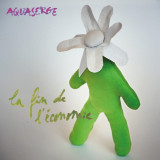
It’s burning, everything is catching fire, and Aquaserge are singing and dancing on the embers of a world contemplated in a rear-view mirror. A world which is hyper-connected, yet forgets its primary emotions.
This seventh album by the band is an ecological poem, where present and past collide. A resolutely rock-sounding album, laced with electronics, experimental pop songs and audio archives. Along the way, the listeners will encounter traces of Oulipo (the famous experimental French literary movement founded in the ’60st), Dada and free jazz. They will cross paths with the ghosts of Ennio Morricone, Walter Benjamin and Marguerite Duras, with the shadows of Kim Gordon and Brigitte Fontaine. And other audacious and exciting melanges, in the pure tradition of Aquaserge.
The album was arranged and produced by Benjamin Glibert, the band’s guitarist and main composer.
The recording took place in a house located in the french countryside (where Aquaserge’s mobile studio was installed). The mix was done at Studio St Guidon in Brussels, the album was mastered by the legendary Dominique Blanc-Francard at the Labomatic studio in Paris.
The members of the band’s current line-up all took part in the recording: Audrey Ginestet (vocals, bass, guitar, etc.), Benjamin Glibert (vocals, guitar, keyboards, etc.), Olivier Kelchtermans (saxophones, keyboards, vocals, etc.), Manon Glibert (clarinets, vocals, etc.) and Julien Chamla (drums, vocals, etc.).
In one sense, it’s easy for artists—songwriters, specifically—to express their feelings in their work. After all, that’s what the lyrics are for! But it’s much harder to convey emotional energy in how you play, slash at the guitar, and the structure of the music itself. That’s precisely why Girl and Girl’s Sub Pop debut, Call A Doctor, feels like such a vital, electrifying shock to the senses. Not since the early work of Car Seat Headrest or Conor Oberst’s widescreen emotional brutality as Bright Eyes has indie rock managed to come across as this intimate and grandiose, as the Australian quartet led by Kai James lay a lifetime’s worth of woes—mental health, the human race’s planned obsolescence if you’ve been living on this cursed rock you know what we’re getting at—across a canvas of indie rock that feels both timeless and in-the-moment.
An audacious and aggressively tuneful blast of a record, Call A Doctor is an unforgettable first bow from Girl and Girl, whose origins lie in James and guitarist Jayden Williams jamming in his mother’s garage in the afternoon after school. One afternoon, James’ Aunty Liss headed down to their practice space after walking her dog and asked if she could sit in on drums. “It sounded really great,” James recalls. “We begged her to stay, and she said, ‘I’ll stay until you find another drummer.’ We wore her down, and she eventually became a permanent member.”
After bassist Fraser Bell joined to round things out, Girl and Girl hit the road and began to make a name for themselves beyond the Australian bush, eventually signing to Sub Pop off the strength of word of mouth. Call A Doctor came together quickly soon after, largely recorded in marathon sessions in a two-story industrial complex over the course of two weeks. “That added to the intensity of the album,” James says about the frenzied creative process overseen by producer Burke Reid. “I can hear the stress in the record, which is good because that’s what it’s about—being tense, tied up, and in your own head.”
Call A Doctor’s eleven songs—spanning sweeping guitar epics and wry acoustic shuffles to spiky punk maneuvers and the type of raw, adoringly unvarnished indie-pop associated with legendary PacNW label K Records—are literally plucked from James’ personal history, as he reworked older recordings with newer lyrics reflecting his past struggles as well as new anxieties that emerged prior to the album’s recording. “I’ve struggled with mental health for a lot of my life,” he explains, “and I went through a particularly difficult patch when we were making the album; the band had started to get some attention, and I felt an enormous amount of pressure to live up to it.”
Far from the sound of collapsing under pressure, Call A Doctor finds James and Co. stepping up with their entire collective chest. This is a record that’s so out-and-out alive that you nearly feel like you’re in the same room with Girl and Girl as you listen to it; lead single “Hello” practically bursts through the speakers, amplified by Aunty Liss’ unbelievable stickhandling duties. “‘Hello’ is all about romanticizing your own misery. Letting those deep, dark, dirty thoughts take over. Understanding that even if you could pull yourself out, you wouldn’t because the constant stress and worry is far too familiar and comfortable.”
“Mother” pogos on a spiky groove that’s reminiscent of the geographically close New Zealanders who make up the legendary Flying Nun label, while “Oh Boy” draws from the Shins’ own jangly sound, injected with James’ wonderfully nervy vocals. Then there’s Call A Doctor’s sorta-centerpiece “Maple Jean and the Anthropocene,” a five-minute epic offering a new perspective on climate change and the notion of what it means, in a personal sense, to suffer: “I live in the bushland, and I was driving home one night and hit and killed a wallaby with my car,” James recalls while discussing the song’s lyrical inspiration. “My first thought was, ‘What is the universe trying to tell me?’ No remorse, no guilt, just total self-centeredness. Which was like, Woah, you fucking psychopath! This wallaby wasn’t put on this earth to send you a message. That’s what the song is about, our egocentric species - thinking you’re the main character and that everything that happens is somehow about you.”
“This record is about an individual who’s too far in their head, trying to get out,” James continues while discussing Call A Doctor’s overall outlook—specifically the snapshot it offers of its creator. But even though this record deals with uneasy topics we all know well from within ourselves, it’s important to emphasize how teeming with life Girl and Girl’s music is. There’s a brazen, bold sense of humor to this stuff, an undeniable brightness to the darkness that makes it impossible not to be drawn in as a listener. Feeling down never sounded so goddamn good.
Solo Throat is the first solo LP from vocalist, composer and movement artist Elaine Mitchener. Drawing on the work of African-American and African-Caribbean poets Edward Kamau Brathwaite, Aimé Césaire, Una Marson and N. H. Pritchard, these twelve new vocal compositions disrupt semantic sense, play with the margins of lyrical translation, and give rise to new voicings. Elaine Mitchener is a veteran of vocal expression in the global Black Avant Garde, traversing free improvisation, cross-disciplinary music theatre and contemporary composition with clarity and joy. Most recently, Mitchener has been improvising and composing with the written word as source material - challenging classical ensembles with her piece (“the/e so/ou/nd be/t/ween”), and commissioning composers Matana Roberts, Jason Yarde and George Lewis to respond to the work of Sylvia Wynter (“On Being Human as Praxis”, Donaueschinger Musiktage, 2020). Her performance of Umbra poet N.H Pritchard’s text FR/OG at OTO in 2021 was a revelation - a solo vocal recasting of the powerful visual-material form that Pritchard uses to disrupt semantic ‘sense’. Building on this performance, Solo Throat takes the work of Pritchard alongside poets Edward Kamau Brathwaite, Aimé Césaire and Una Marson as its source material. Its compositions are a loose translation - a carrying from text to voice which holds multiplicity and celebrates the transformative power of literary possibility. Surrendered to the spacing and repetition of consonants and vowels, Michener’s exceptional phonetic freedom gives rise to a sensuous experience which intensifies the roles of rhythm, timbre and breath in expressing meaning. Solo Throat comes together as much through difference as similarity. Mitchener’s own solo improvisations sit alongside the work of Brathwaite, Césaire, Marson and Pritchard, forming a constellation of unlikely alignments which make no aesthetic conclusion. Instead, Solo Throat is a site of encounter, an irreducibly plural de-composition of words into a heterogeneous assemblage of sounds and impulses, emphasising what Anthony Reed calls, “the play on and the surplus of margins of lyrical translation to resituate other pathways of expression”. Just as the poets cited use white space to complicate our act of reading, so Mitchener utilises silence and multiphonics to complicate the act of voicing and the way we listen. Genre: Experimental / Vocal / Poetry
Ollie Spalding and Jack Watts were friends first, and songwriting partners second, and this quality sets them apart. They're marked by that peculiar alchemy when two voices become one, a special sense of human connection wrought through harmony and emboldened with experience.
New album 'Redsetter' is their coming- of- age moment - gilded indie- folk with an optimistic sense of maturity, it dares to look towards the light. "We had literally no idea what was gonna happen!" Ollie gasps when looking back on the pair's self-titled debut album. Sculpted over the pandemic and released on Real Kind Records - the boutique Communion imprint chaired by Lucy Rose - the record displayed their core values. "The emotion has to be right," says Oliver.
"When we record songs, we want to stay true to the emotion - as though those songs had just been written seconds before they were recorded." The success of their debut brought fresh experiences - writing with Flyte, collaborating with everyone from Matthew & The Atlas and Victoria Canal to Talos and Olafur Arnalds - but also new challenges.
New LP 'Redsetter' takes them from their base in Brighton to a remote part of Texas (and back again); it's a record that's driven by a special kind of determination, dealing with intimate bonds, familial connections, and a quiet sense of renewal. Looking for perfect moments within our imperfect lives, Memorial have displayed extraordinary sense of character to drive themselves forwards. "We've let go of trying to make everything sound perfect," says Jack. "Being vulnerable in that way means that the end product is truer to you than it ever could be. There's a realness to it." Memorial have taken true ownership of their lives, pushing through enormous challenges to unlock new aspects of their artistry, and actualise their dreams.
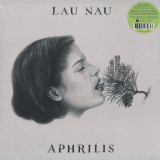
The title of the Lau Nau's 10th album, Aphrilis, derives from the Latin word aperire, meaning "to open." A fitting verb for the month of the year it is closely associated with — April. And while the images of plants and blossoms coming back to colorful life after a long, cold winter feels appropriate when listening to the rich and lustrous bloom of music on Aphrilis, another definition of open feels even more apt. For under the abundance lies the memory of times of austerity, the friction of hard choices, the acceptance that nothing is fixed and the future is unknown. This literal and metaphorical exploration of complexity and contradiction makes Aphrilis a multi-dimensional antidote for our troubled times, one that emphasizes the quiet and communal over noise and spectacle. Laura Naukkarinen, the Finnish artist behind this project, has long kept her mind and spirit open to whatever sounds and creative ideas felt appropriate for the moment. For the past six years that has meant primarily working with modular synthesis — learning how to build modules and releasing acclaimed work centered on its sounds like 5x4 (2023) or Puutarhassa (2022). Running parallel to this work, however, has been a continued exploration of acoustic instruments and group performances with her trio Lau Nau ja Seitsemäs Taivas. Aphrilis arrives then like fresh growth in a creative season cycle. A companion to her brilliant 2017 release Poseidon, the album, says Naukkarinen, "felt like a needed moment to embrace songs with lyrics again." And through the creation of this work, she remained open not only to her own creative muse, but also the input of her chosen collaborators. Each player on Aphrilis — Matti Bye on celesta and synths, Pekko Käppi on jouhikko, Hermanni Yli-Tepsa on violin and contrabass, Topias Tiheäsalo on electric guitar, Samuli Kosminen (Múm) on various instruments — was given free reign to arrange their own parts to accompany Naukkarinen's compositions. Kosminen’s lush fingerprint can also be heard in the mixing and production of the album, as with Poseidon six years ago. The moniker of this project may be taken from Naukkarinen’s own name, but Lau Nau feels more like a band than ever before. The delicacy and softness of the music is reflected in Naukkarinen’s lyrics. Each song is rife with imagery and creatures from the natural world. The spiders in the forest. The animals that keep a young woman company in her refuge in the woods. Wet grass. The feeling of the music is almost tactile, as if listening to the album will leave a bit of dew or sap on your fingers. The theme of this material, says Naukkarinen, runs even deeper. “The songs tell about cracks and changes of direction in different histories: personal, societal, planetary,” she says. “About moments when a yes can become a no and vice versa. The album wants to propose that at the moment of a crisis there is a possibility to influence the histories by our choices.” That may feel like a lot for such a fragile sounding collection of songs to bear. But Aphrilis is an album of surprising strength and resilience
On 'Mirror, Reflect,' Amy O returns to form as she documents her transition into motherhood in the early days of the pandemic. Initially conceived as a lo-fi endeavor to record songs made with friends in those days of uncertainty, 'Mirror, Reflect' is an intimate and exploratory work that weaves collected home and field recordings with shimmering synths and Oelsner's playful lyricism. A stalwart presence in the indie-pop underground since 2012, Oelsner shifted her approach to record making on 'Mirror, Reflect' to emphasize process over product, with the resulting songs born out of a myriad of home sessions, song-a-day projects, songwriting workshops and online collaborations. This kind of patchwork, home-spun approach was familiar to Oelsner, who made her name with her sparkling, homemade pop songs before releasing three studio albums, including her most recent album, 2019's Shell. 'Mirror, Reflect' gently shrugs off the sheen of those studio albums, as an early prenatal recording of Oelsner's daughter's heartbeat opens the record in the near-ambient instrumental prelude of "Honey" -- a wonderfully nuanced dispatch from the dog days of summer that's under-bellied by both the precarity and beauty of the early months of infancy and new motherhood. Oelsner's knack for finding magic in the mundane is also deeply apparent on "Dribble Dribble," where the stick-with-you nature of the playful rhyme schemes of the children's books that became a regular part of her literary intake are worked into a lilting reflection on resilience, destruction and loss. Oelsner's initiation into motherhood is inseparable from the poetic heart of 'Mirror, Reflect', but the album is also largely informed by the shifts in Oelsner's relationship to herself. Through playful and emotionally acute observations, Amy O turns the potentially contractive experiences of motherhood, isolation, family and aging into a freewheeling work where ephemerality and humor collide over her deft lyrical phrasing, musicality and her keen observations turned poetic revelations.
Mammoth Penguins are a 3-piece indie powerhouse, showcasing the songwriting and vocal talents of Emma Kupa (Standard Fare) backed up by the noisiest rhythm section in indie pop. May 2024 sees the release of their fourth album Here on Fika Recordings. After 2019’s big, bold and confident There’s No Fight We Can’t Both Win, and the initial shock of the global pandemic cancelling a trip to SXSW in 2020, the band returned to the studio in the summer of 2021 to start recording. The new record leans into a raw pop-punk power-trio sound more than ever, with a deep growl in layered guitars and bursts of percussion and harmony. The songs and artwork explore themes about finding a place for yourself and familiarity with people and places. Although it turns back towards a classic three-piece sound, the band weren’t restricted by that palette, adding finishing touches of percussion, extra guitars and backing vocals in short bursts in a garden shed, and also bringing in gorgeous strings to sweeten the title track. The sound builds on the band’s first album, Hide and Seek, which was released with the much-loved and sorely missed Fortuna POP! in 2015. The follow-up LP John Doe in 2017 was an ambitious concept album, exploring the feelings of loss and anger at a man who fakes his own death only to return years later, expanding well beyond the 3-piece rock‘n’roll template, with washes of strings, synths and samples. The ‘Penguins have been smashing it at some high-profile support slots in the lead up to this album release, including at Allo Darlin’s joyous reunion at Islington Assembly Hall (Oct 2023) and Muncie Girls last ever London show (Dec 2023). They play the Leicester Indiepop all-dayer and Wales Goes Pop in March, before heading out on tour in support of the new album in May. Those big singalong choruses need your voice shouting back from the crowd with joy and defiance. Mammoth Penguins are Emma Kupa (guitar, vocals), Mark Boxall (bass, vocals) and Tom Barden (drums, vocals). Reminiscent of the pop melodies of The Beths, the indie dissonance of Land of Talk, and the guitar forward slacker rock of Weezer, Mammoth Penguins marry heart-ache indiepop with spiky guitars and Emma’s frank confessional songwriting. “wonderfully awkward indie pop with a literate flair, sounding a lot like a Weezer record or even a more feminine Wedding Present” Clash // “eminently relatable earworms” Brooklyn Vegan // “one of the finest examples of simple and true indie rock around” All Music // “her characterful voice still carrying masses of charm and the messier, grungey approach bringing a strength all of its own, aided by a clutch of cheerful hooks and riffs that contrast nicely with lyrics dealing mostly with heartbreak and misery” Drowned In Sound
Much-anticipated debut album from Leeds post-punk power-trio and 6Music favourites Objections. Optimistic Sizing is comprised of ten kitchen-sink dramas, ten miniature worlds to lose yourself in. The key topics are covered: performative royal mourning, ill-suited sexual relationships, coastal gentrification, motormouth bigots and - of course - snogging. Objections formed in the post-lockdown period after drummer Neil and guitarist Joe's former band (and cult favourites) Bilge Pump slowed to an amicable halt. They wanted to continue the musical dialogue they had built up over decades and turned to Claire Adams (Nape Neck, Beards) to start something new and Objections was born. The 3 members have also played in/with: Polaris, Yann Tiersen, HiM, Enablers, Felix and Damo Suzuki (among others). Objections released their debut 7" - BSA Day/Better Luck Next Time on Wrong Speed in 2023 and have recorded two Marc Riley / Gideon Coe BBC 6Music sessions. At Wrong Speed we are not fond of genres, we are here to release music we love not tell you how to file it. But Optimistic Sizing is genuinely post-punk in the literal sense of the term. Objections take the freedom and anyone-can-do-it promise of punk and run somewhere new and adventurous with it, creating a vibrant and living musical language with which to communicate their own unique world view. As a result, Optimistic Sizing is not only a classic debut album but a timeless one. "We like to think we know what we're talking about....believe us when we say, Objections are a band to watch" - Louder Than War
- 1: Freda Payne - Band Of Gold (Single Mix)
- 2: Chairmen Of The Board - Give Me Just A Little More Time
- 3: Flaming Ember - Westbound #9
- 4: Silent Majority - Frightened Girl
- 5: Chairmen Of The Board - You've Got Me Dangling On A String
- 6: Honey Cone - Girls It Ain't Easy
- 7: Chairmen Of The Board - Pay To The Piper
- 1: Chairmen Of The Board - Everything's Tuesday
- 2: Freda Payne - Unhooked Generation
- 3: Glass House - Crumbs Off The Table
- 4: Chairmen Of The Board - All We Need Is Understanding
- 5: Freda Payne - Deeper And Deeper
- 6: 100 Proof Aged In Soul - Somebody's Been Sleeping
- 7: Honey Cone - Want Ads
- 1: Freda Payne - Bring The Boys Home
- 2: Barrino Brothers - I Shall Not Be Moved
- 3: 8Th Day - You've Got To Crawl (Before You Walk)
- 4: Lucifer - Don't You (Think The Times A-Comin')
- 5: Honey Cone - Sunday Morning People
- 6: Glass House – I Surrendered
- 1: Freda Payne - You Brought The Joy
- 2: General Johnson - I'm In Love Darling
- 3: Chairmen Of The Board - Working On A Building Of Love
- 4: Honey Cone - Stick Up
- 7: 8Th Day – Eeny-Meeny-Miny Mo
- 1: Holland-Dozier Featuring Lamont Dozier - Why Can't We Be Lovers
- 2: Chairmen Of The Board - Elmo James
- 3: Silent Majority - Something New About You
- 4: Barrino Brothers - Try It, You'll Like It
- 5: Danny Woods - Let Me Ride
- 6: Glass House - Thanks I Needed That
- 7: Laura Lee - Crumbs Off The Table
- 1: Warlock - You've Been My Rock
- 2: Laura Lee - Woman's Love Rights
- 3: Holland-Dozier Ft Brain Holland - Don't Leave Me Starvin’ For Your Love
- 4: The Politicians - Free Your Mind
- 5: Harrison Kennedy - Sunday Morning People
- 6: Satisfaction Unlimited - Let's Change The Subject
- 7: 100 Proof Aged In Soul - Nothing Sweeter Than Love
- 1: Eloise Laws - Love Factory
- 2: Freda Payne - We've Got To Find A Way Back To Love
- 3: Brian Holland - I'm So Glad Pt.1
- 4: Honey Cone - If I Can’t Fly
- 5: Tyrone Edwards - Can't Get Enough Of You
- 6: Chairmen Of The Board - Skin I'm In
- 7: New York Port Authority - I Got It Pt. 1
- 1: Chairmen Of The Board - Finders Keepers
- 2: Hi-Lites - That’s Love
- 3: Freda Payne - Two Wrongs Don't Make A Right
- 4: Holland-Dozier Featuring Lamont Dozier - New Breed Kinda Woman
- 5: 8Th Day - She's Not Just Another Woman (Single Mix)
- 5: Eloise Laws - Put A Little Love Into It (When You Do It)
- 6: Melvin Davis - You Made Me Over
- 7: Honey Cone Featuring Sharon Cash – Somebody Is Always Messing Up A Good Thing
- 6: Flaming Ember - Gotta Get Away
Holland, Dozier and Holland are arguably the greatest songwriters ever. More prolific than Lennon and McCartney, they shaped “the Sound of Young America” and propelled the Motown sound in the mid-1960s into a creative stratosphere unmatched by any other independent music label. Their trademark catchy teenage love songs were delivered energetically by previously unknown Detroit groups like The Supremes, the Four Tops, Martha & the Vandellas & Marvin Gaye. Although synonymous with Berry Gordy’s Motown, it was their departure from Motown after a stand-off strike in 1967 and a brutal legal battle that led them to run their own group of labels, Invictus, Hot Wax and Music Merchant. This compilation is a definitive look at this period in history, exploring how H-D-H, under a new guise ‘The Creative Corporation’, drove the next generation of soul music in a myriad of different ways, towards funk, underground disco and jazz. Featuring 55 tracks, this collection documents HDH’s creativity and growth over this seminal 8 year period. During this time the trio developed new artists to rival Motown’s success such as Chairman Of The Board, Freda Payne, Honey Cone, Glass House, Flaming Ember, 8th Day, Laura Lee & Eloise Laws. The collection is complete with a detailed depiction of this period in history by award winning author Stuart Cosgrove who wrote the Soul Trilogy, a series of books on soul music and social change - Detroit 67: the Year That Changed Soul, Memphis 68: The Tragedy of Southern Soul which won the Penderyn Prize, as Music Book of the Year in 2018, and Harlem 69: the Future of Soul. Stuart’s notes detail the relationship with Motown in the final days, the immediate fall out after the trio left Motown and the creation of the new labels Hot Wax, Invictus & Music Merchant