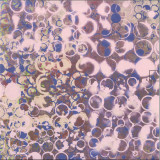
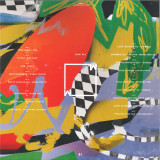
Originally released in 1995, Message From Home is a captivating fusion of hip-hop grooves, African rhythms, and spiritual depth, showcasing the unparalleled artistry of jazz saxophonist Pharoah Sanders. Produced by the legendary Bill Laswell, this album brings together a remarkable ensemble of musicians, including kora virtuoso Foday Musa Suso, keyboardist and vocalist Bernie Worrell, acoustic bassist Charnett Moffett, electric pianist and vocalist William Henderson, guitarist Dominic Kanza, and keyboardist Jeff Bova. Tracks include the mystical jazz hypnotic groove “Our Roots (Began in Africa)” plus five more mesmerizing soundscapes.
Now, for the first time since its original 1995 release, Message From Home is reissued on Music On Vinyl.
Cerca:de suso
- 1
"NO" marks the final chapter of Susobrino's four-part album, serving as a homage to the rich tapestry of traditional Latin American music. From Pacific shores of Tumaco, Colombia, to the mountains of Ecuador and Bolivia. In a nostalgic nod to his artistic roots, Susobrino incorporates elements reminiscent of his earliest releases, creating a bridge between his past and present musical identities. The album is further enriched with talented artists such as Bejuco, Jatun Mama, and Lander Gyselinck, each bringing their unique flair to the project. Susobrino crafts a finale that not only celebrates the traditional sounds of Latin America but also pushes the boundaries of contemporary music fusion.
Repress.
MFM044 sees the reissue of the cult Spanish studio project Música Esporádica with their incredible one off, self-titled album.
Another Suso Saiz side project, this one grew out of his work with his band Orquesta De Las Nubes, who were themselves the subject of a Music From Memory compilation last year.
The idea of getting Orquesta De Las Nubes to collaborate with Glen Velez and Layne Redmond arose after the two American musicians visited Spain during a series of seminars on frame drum techniques in 1985. Having met Glen Velez some years before in Madrid whilst Glen was performing with the Steve Reich Ensemble, Suso Saiz and Glen Velez quickly formed a strong friendship over their mutual love of non-Western music and the potentials of repetition within music. The two would play, talk and drinks for many hours in Suso’s studio space whenever Glen was in Madrid.
During one such session in 1985, Glen and Suso would be joined by Orquesta De Las Nubes and Spanish friend and musician Miguel Herrero. With exciting new ideas flowing quickly and easily, Suso decided to immediately call Track Studios in Madrid to see if they might have a space to record some of the material. With just a few days available the group would record for about 12, with what Suso would describe as ‘incredible fluency’, by which time they would have recorded the album they would later title Música Esporádica.
After its release 34 years ago Música Esporádica sounds as stunning as ever and Music From Memory are delighted to be able to share the fluency, spontaneity and close friendship which fuelled the recording of this amazing album.
- They Listen
- Roots Entwined
- Our Times
- New Birth
- Lonely Oak Part 1
- On And On
- Dust To Dust
- Interconnected
- Lonely Oak Part 2
Inspired by Thomas Hardy"s poem Transformations, ETERNAL BIRTH is Eliza Marshall"s debut solo album and a powerful statement on connection, ancestry and renewal. The album traces the cycles of life from conception to death, revering the natural world as a living archive of our ancestors and exploring the unseen bonds that connect past, present and future generations. Across the record, Marshall creates a rich, cinematic soundscape blending classical, folk and world traditions with flutes, whistles, bansuri, spoken word, percussion and electronics. Produced by Ivor Novello Award recipient Graeme Pleeth, the album features an international line-up of world-class musicians including Ady Thioune and Ansumana Suso (Senegal / The Gambia), Drew Morgan and Donal Rogers (USA / UK), Johnny Kalsi (UK) and Lena Jonsson (Sweden). Influences range from Steve Reich to Paul Simon, while remaining rooted in Marshall"s distinctive compositional voice.
- A1: Distorted Clamor 21 52
- B1: Sweet Elephant 08 43
- B2: The Horizon Did It 05 45
- B3: Electromagnetic Ride 09 58
- C1: Your Hand In My Peace 05 27
- C2: And The Volcano 07 18
- C3: Hat Lives In Me 04 54
- D1: Quiet Races 06 59
- D2: Reen Stones 04 09
- D3: Look For What Is In Me From The Earth 05 04
- D4: Memory Crusher 06 45
'Distorted Clamor', the latest full-length album from legendary Spanish ambient composer Suso Saiz. Marking his eighth release with our label, the album showcases Saiz at his spellbinding best, continuing a prolific creative phase in a career that spans over 40 years.
Building upon 'Resonant Bodies' and 'Nothing Is Objective', his most recent full length releases for Music From Memory, Saiz's dedication to experimentation and conceptual approach to sound lie at the centre of 'Distorted Clamor'.
Discussing his process and the concept behind the album, Saiz says: “Thousands of beings cry out for their lives, for the sustainability of their habitats, for their future. Their
clamouring together generates a distorted, deafening and incomprehensible noise. Trying to go deeper into that distortion and understand all the voices and discover the strength and beauty in all of them. This was the first image I had when I started composing Distorted Clamor. Can distortion and all those sounds (clicks, clips, ticks, tocs, pluks, crashes) that we normally discard, generate beauty? This question has also accompanied the entire whole project.”
The transit of sound through various materials is also central to the work, with Saiz using water, wood, and metals as filters and sound-transforming pedals. The album was created without the use of synthesizers, relying entirely on acoustic sounds that were transformed in an unnatural way to achieve something completely new.
Spanning eleven compositions, Saiz's mastery of timbre and ability to paint layers of sound with the subtlest of touches stand out unmistakably to the listener. As always, his radiant drones are a nest of hidden feelings; they glisten with complex emotions and textures, teasing out moods of vulnerability and hope.
Sleeve art and design by Michael Willis.
Dawson’s latest offering, The Tinnitus Chorus, is an album of wide-eyed collaborations. He is joined by an inspired cast of revered friends and kindred strangers including Suso Saiz, M. Sage (Fuubutsushi), Eli Winter, K. Freund, (Trouble Books / Lemon Quartet), Dasom Baek, Lina Langendorf (Langendorf United), Vumbi Dekula, Jairus Sharif, Yutaka Hirasaka, and his bandmates in Peace Flag Ensemble. The collection is bookended by two pieces with Michael Grigoni. From birdsong and decaying tape to Western sprawl, each of Dawson’s previous solo records have moved in a singular direction but here he approaches things through a kaleidoscopic lens. While his weathered ambient sketches serve as a through line, they are woven with all manner of instrumentation from clarinet and modular synth to steel guitars and flugelhorn. Improvised Congolese guitar nuzzles next to American experimental folk. Handmade electronics give way to spiritual sax. M. Sage contributes something referred to as a “mystic music box”. The result is a strange and beautiful journey that feels lost between genres and yet wholly unified. Dawson reflects on the genesis of album with a smirk and a shrug. He has been marred by ear troubles in recent years and had been struggling to complete an album of solo material. The clicks, ringing tones, and hiss in his ears had been drowning out the ringing tones, clicks, and hiss in his studio. When he reached out to We Are Busy Bodies to provide an update on the record he was met with an unsuspecting proposal that perhaps he shift focus to an album of collaborations. The truth is he had been ruminating on the idea for years and the nudge from WABB proved to be the motivation he needed to shelve his insecurities and invite artists he admires to join him for The Tinnitus Chorus.
- A1: Joan Bibiloni – Nits De La Sultana
- A2: The Zenmenn – The Legend Of Haziz
- A3: Ströer – When You Stopped Sleeping
- A4: Androo – W I.o. Micmac Mix
- B1: Joel Graham – Cool Blue Pool
- B2: Jonny Nash – Dream It Right
- B3: Terekke – Just Ducking Around
- B4: Mei Honeycomb – Squeaky Eye Syndrome
- C1: Tombolo – Continental Drift
- C2: Kuniyuki Takahashi – Forest Dust
- C3: Yu Su, J Wilson – Mitti Attar
- D1: Gigi Masin – Panama Girl
- D2: Ocean Moon – The Ecstatic Alarm
- D3: Michael Turtle – Borrowed Times
- D4: Ramzi – Baci
- D5: Suso Sáiz – Kailas
- D6: Dea – Undecenial
2023 marks the tenth year of Music From Memory; a decade of groundbreaking archival releases, cross-generational collaborations and long-standing creative partnerships with our ever-expanding community of artists.
To celebrate this milestone, earlier this year we asked our roster of artists to submit a piece of music for an anniversary compilation. As submissions gradually came in, we were blown away by what we received and slowly began to piece them together into what was to become “10”.
Featuring work from artists who were present during the formation of the label, such as Gigi Masin, Joan Bibiloni and Michal Turtle, as well as artists like The Zenmenn, RAMZi and Dea, who have helped the label expand over subsequent years, “10” serves as a natural bookmark of where we are musically, whilst simultaneously reflecting on the label's rich musical past.
In keeping with the Music From Memory ethos, the music of “10” spans both time and space, with submissions ranging from Vito Ricci's 'Da Hamptons' (1985) to Yu Su & J. Wilson's 'Mitti Atar' (2023). It crosses the globe, with a total of 10 countries represented across 17 tracks. The final result is an immersive musical compilation that flows perfectly from start to finish.
Tragically, during the last few weeks of finalising MFM066, label co-owner Jamie Tiller passed away in a sudden accident. “10” was always intended to be a way to reflect on the journey of Music From Memory. The fact that it is now also one of the last releases that the team all worked on together adds a whole other level of reflection and makes it all the more special.
This is a very serene, almost entracing record that seems to inhabit its very own space, between "classical" ambient music (Eno, Budd), "systems music" (Reich, Glass, Riley, Hassell), japanese kankyo ongaku (Hiroshi Yoshimura, Takashi Kokubo), even hinting at what would become 90's ambient electronica (B12, Nuron, SAWII-era Aphex Twin or the Fax +49-69/40464 label). Actually, Lech would be one of the few artists to perform at the first-ever Sonar Festival (Barcelona) back in 1994 (together with Suso Saiz, Esplendor Geometrico, Mixmaster Morris or Laurent Garnier).
A key early effort from this musician and A/V artist whose career spans well over thirty years and a miriad of works, performances and instalations: Art Futura, Sonar, ISEA, Ars Electrónica (Austria), Festival Videoformes (France), Festival de Nuevas Músicas (Madrid & Sevilla), Ciclo Experimental LEM (Barcelona), Knitting Factory (New York), The Korner (Taipei), Festival Pop Komm (Cologne-Germany), Festival Experimenta (Madrid), Festival DAFT @ Taipei (Taiwan), ART BEIJING, Festival EXIS @ Seúl (South Korea), JMAF (Tokio, Japan) or Artefact:Chernobil 33 (Kiev-Ukraine).
The Wah Wah edition has been mastered from the original tapes, reproduces the original sleeve artwork and and features an insert with photos and info.
It is a strictly limited edition of 500 copies only.
Masters within the evolution of ambient and experimental music over the past forty years, Michal Turtle and Suso Saiz come together for the first time for ‘Static Journeys’, a full-length collaborative album. Unfolding over six diverse tracks, Turtle and Saiz imagine the memories, journeys and textures of half-a-dozen cities borne only of their imagination. Developed closely alongside Swiss agency and label PLANISPHERE, the music was premiered in it’s completed form during a performance installation for ON at Kunstmuseum Basel, a transdisciplinary event designed that featured live visuals from Ezra Miller and more.
While both wildly prolific, the music of both Turtle and Saiz was previously the domain of specialist collectors and obsessive record enthusiasts. Since 2015, a series of reissues on labels such as Music From Memory and reinterpretations of Turtle’s music on Planisphere have brought the back-catalogue of these artists to a much wider audience, and to each other. Far from nostalgic and fundamentally curious as expected, ‘Static Journeys’ captures these innovators transferring their unique chemistry into an ambient tete-a-tete rich in detail.
‘Static Journeys’ was recorded throughout 2019 over two individual recording sessions, each lasting a number of days. The first took place in Turtle’s infamous ‘living room’ studio, his cosy and domestic atmosphere providing the initial foundation for the pair’s long-form improvisations; Saiz focused on synthesis and modulation, Turtle providing hypnotic, looping percussion. Later, in a studio in Madrid, the roles became less defined. Saiz’s textures, musical time standing still began to kindly interweave with Turtle’s offbeat melodies.
The results of these meetings are blissful and adventurous. Following the welcoming undulations of opening track Buonovintra Beckons, ‘Missing Papotl’ dives into soaring, new-age percussion underscored by wistful melancholy. ‘ Returning to Brendelton’ unfolds as analogue tropicalia, static indistinguishable from tropical birdsong. ‘Hattalcuia Awaits’ is bound by mystery and anticipation, whereas ‘Leaving Okovozi’ presents a quietly spectacular exercise in minimalism, led by yearning bass and whistling chimes. Finally, ‘Caravan to Inek’ allow for a dense, hopeful finale, incorporating electronic guitar and the afterglow of new connections forged.
Blissful, diverse and occasionally sublime, ‘Static Journeys’ combines experimentation and creative trust to deliver a timeless musical meeting.
- A1: Miguel A Ruiz - Transparent
- A2: Camino Al Desvan - La Contorsion De Pollo
- A3: Mecanica Popular - Impresionistas 2
- A4: Finis Africae - Hybla
- A5: Orfeon Gagarin - Ultima Instancia
- B1: Victor Nubla - 2000 Lenguas
- B2: Javier Segura - Malaguenas 2
- B3: Jabir - Vuelo Por Las Alturas De Xauen
- B4: Miguel A Ruiz - Trivandrum
- B5: Mecanica Popular - Impresionistas 1
- C1: Finis Africae - Hombres Lluvia
- C2: Esplendor Geometrico - Sheikh
- C3: Victor Nubla - Chandernagor
- C4: Luis Delgado - El Llanto De Nouronihar
- C5: Camino Al Desvan - Adjudicado A La Danza
- D1: Mataparda - Me Llena La Cachimba
- D2: Suso Saiz - Horizonte Paseo
- D3: Camino Al Desvan - Fock Intimida A Gordi
- D4: Mataparda - La Papa Suave
- D5: Eli Gras - Flu
Following “La Contra Ola” (BJR015), Bongo Joe presents 'La Ola Interior', a compilation exploring the ambient side of the Spanish electronic music produced in the 80’s, bringing together 19 little-known and innovative pieces from the golden age of Spanish electronic music !
It gathers musicians from various horizons and of many generations, who shared the desire to create an immersive soundscape and to combine electronic music with non-Western musical traditions. As a general rule, the Anglo-Saxon tropism did relate the spanish peninsula’s ambient music to the Balearic Sound, that is to say to the relaxing music played in Ibiza’s nightclubs. But this music takes place in the productive territory of experimental musics, and particularly in its two main breeding grounds: the tape recording underground and the independent musicians-producers scene.
Inseparable from the processes of self-publishing, distribution and exchange of music that were then taking place in Spain in an artisanal way, the vast underground movement of cassettes was divided between an "ethno-trance" combining industrial beats and oriental sounds on the one hand (Esplendor Geométrico, Miguel A. Ruiz / Orfeón Gagarin) and unclassifiable low-fi tinkerers on the other hand (Camino al desván, Eli Gras, Mataparda, Victor Nubla). Hyperactive, this scene is radical and strongly dominated by the hardest musical styles, but the ambient, influenced by the German Kosmische Musik and "krautrock", also develops here.
The second vein of Spanish ambient comes from some of the independent labels of the peninsula (DRO, GASA, El Cometa de Madrid, EGK) whose activity will mark the return of some of the most adventurous musicians-producers of the 70s. Some were influenced by American minimalism (Luis Delgado / Mecánica Popular, Suso Saiz, Javier Segura), others by Fourth-World Music conceived by Jon Hassell and Brian Eno (Finis Africae, Jabir). Having passed through folk, ancient, traditional or contemporary music, and being familiar with improvisation and studio techniques, these artists come from a mutant hippie culture, capable of phagocyting many musical styles from electronic ambient to ethnic improvisation and modal jazz.
These two scenes and generations that make up LA OLA INTERIOR intersect around a common interest in non-Western musical traditions. Their exploration may be that of the tribal origins of electronic rhythms or the Arab heritage of Spain. Above all, it is a dreamy exoticism, an immobile journey as the sounds, rhythms or instruments of these traditions are scrutinized by Western practices (avant-garde music, electronic technology). The result is a hybrid music, filtered and reinvented, neither Western nor extra-Western, with a pronounced taste for the fusion of opposites, which we have called "Acid Exoticism" because of its permanent search for trance or contemplation. Atmospheric, contemplative and serial, these musics still plunge us today into a sensorial journey, at the same time interior and distant, organic and technological, between exotic reminiscences and interior visions.
- A1: We No Be Machine
- A2: Mr Ali
- A3: Yenimno
- A4: Material Microdots
- A5: Hey No I Say
- B1: Digital Timeline
- B2: Fire
- B3: Makoma (Feat Wiyaala)
- B4: Smoke Screen
- B5: Nipa Bi
- C1: Free Up (Feat Morena Leraba, Spoek Mathambo & Syntax)
- C2: Safari Ya Muziki (Feat Pendo & Leah Zawose)
- C3: Gamashie Choice (Feat Afla Sackey)
- C4: Sohaa Gb3K3
- C5: Waters Of Congo
- D1: Onipa (Feat Wiyaala)
- D2: Kukuru
- D3: Kon Kon Sa (Feat Wiyaala)
- D4: Promised Land (Feat Jally Kebba Suso)
Afro futurist sensations Onipa unleash their debut album, combining Afro grooves, electronics and fierce energy for an effervescent celebration of cultural and musical encounters.ONIPA means ‘human’ in Akan, the ancient language of the Ashanti people of Ghana. It’s a message of connection through collaboration: from Ghana to London, our ancestors to our children, Onipa brings energy, groove, electronics, Afro-futurism, dance and fire! Born out of deep collaboration between long-time friends K.O.G (Kweku of Ghana of KOG and the Zongo Brigade) and Tom Excell (MD, guitarist and writer of acclaimed jazz/ soul afrobeat pioneers Nubiyan Twist), the group features KOG on vocals, balafon and percussion, Tom Excell on guitar, percussion and electronics, Dwayne Kilvington (Wonky Logic) on synths and MPC and Finn Booth (Nubiyan Twist) on drums.
The group have worked closely with Ghanaian star Wiyaala who features on three tracks, singing in the Sisaala language from the North of Ghana. The album also features collaborations with South African rapper Spoek Mathambo, Lesotho star Morena Leraba, Ghanaian percussion master Afla Sackey and Tanzanian sisters Pendo & Leah Zawose, each adding their own flavour to the project. “Through the musical prisms of London and Ghana our influences join together to create, a fundamental thread of traditional African rhythms, instrumentation and storytelling, interwoven with electronics, urban soundscapes and synth bass. We use technology, but it should never use us, our music is live and about deep human connection.” (Onipa)
Field Recordings, carefully chosen percussion, electronic spice and acoustic ingredients. This is the foundation for every recipe that Bolivian Belgian artist Suso Perez aka Susobrino creates. In 2018, he presented his debut EP “Mapajo” on Global Hybrid Records. Since then he has won several awards; the “Champion Sound Beat Battle” and “Most Promising Artist” at the Red Bull Elektropedia Awards of Belgium. He introduced his creations to numerous festivals in Belgium and abroad.
His new album “La Hoja de Eucalipto” brings alive a more energetic and aggressive part of Susobrino and presents a work focused on the ethnic and world sounds, mixing his masterful percussion with electronic beats to create a unique and distinctive sound. For fans of the organic electro-latino sound of Chancha Via Circuito, Nicola Cruz and Dengue Dengue Dengue.
In this album Susobrino created a story of 5 beings looking for answers in their individual lives.
The first track “La Hoja de Eucalipto” is the ceremony right before the journey. It’s a three part composition to set the tone of the entire album: question, answer and interpretation.
“Despertar” (wake up in spanish) is the realisation of the journey these beings are getting into. The guitar interprets the rain as a cleansing. A fresh breath in, breath out.
“La Marcha” is the physical start of a long journey. They will be walking for days, weeks or even months. The exciting, courageous travellers leave their families and friends towards unknown lands that they never dared to enter. Many days of walking pass and they reach a new habitat. A dense jungle.
“Dispersion”. This brings tension and fear out of the 5 travellers. A 6min long repetitive song that interprets walking in circles. Everyone gets separated from each other and they question with doubts of getting out of the unknown jungle. Eventually, the 5 beings survive the unknown jungle. Exhausted and lost, they keep walking with no idea where to go. That’s when they stumble upon “Polahimán”. A mysterious entity who’s very eager to help and knows exactly where they have to go. With riddles and poems, he gives them directions.
“El Desierto de Pazmancú” A new habitat. An endless dessert. Yet, the beings are refilled with courage, crossing the entire dessert. That’s where Polahimán is waiting for them.
“El Enfrentamiento de Polahimán”. This is the endboss; The Final Chapter. The 5 grown travellers find themselves in many challenges. This is where you, as a listener, can interpret if it’s a good or bad ending. Or an open ending?
Susobrino plays and records everything in his humble studio in Belgium. Percussion, quena (flutes), guitar, charrango, field recordings and a yamaha dx9.
- 1