
11
Reservar20.09.2024
debe ser publicado en 20.09.2024
28,53 €
debe ser publicado en 20.09.2024

Satan’s history is storied, their albums and incendiary live shows, iconic. The Newcastle, England-bred lineup may quip that their career has been “44 years of prolonged mayhem with a 20-year lunch break”—forming in 1980, eventually pausing before reuniting in 2011—but circa 2024 finds the band thriving, writing, recording, and touring at the top of their game. Proof positive is their seventh studio album, and third for Metal Blade, Songs in Crimson. If 2022’s Earth Infernal album was brutal, up-tempo and with loud guitars, guitarist Russ Tippins calls Songs in Crimson “concise. It’s more to the point and gets there quicker. One of the reasons behind the title Songs in Crimson is that this record is very ‘song’ focused. There’s more punch this time around. Each chorus speaks for itself.” An eminently relatable song is “Era (The Day Will Come).” “There is nobody on this planet who is not familiar with the feeling of loss. When you get to the age we are at in this band, it becomes a weekly occurrence. If there is a message in the lyrics, it is pretty much ‘do not take anything for granted.’ Especially people. You just don’t know what is around the corner that you can’t see coming.” Satan’s chemistry, honed by years of collaboration, brotherhood and love, is unbreakable. “We played at a metal festival where the headlining band had zero original members,” Tippins says. “I cannot get my head around that, though I admire their bravery. We are the genuine article.” To be clear: “We did not reunite just to trade on past glory,” he concludes. “If you want nostalgia, this is not the band for you. We look only ahead and always will.”
debe ser publicado en 13.09.2024

Satan’s history is storied, their albums and incendiary live shows, iconic. The Newcastle, England-bred lineup may quip that their career has been “44 years of prolonged mayhem with a 20-year lunch break”—forming in 1980, eventually pausing before reuniting in 2011—but circa 2024 finds the band thriving, writing, recording, and touring at the top of their game. Proof positive is their seventh studio album, and third for Metal Blade, Songs in Crimson. If 2022’s Earth Infernal album was brutal, up-tempo and with loud guitars, guitarist Russ Tippins calls Songs in Crimson “concise. It’s more to the point and gets there quicker. One of the reasons behind the title Songs in Crimson is that this record is very ‘song’ focused. There’s more punch this time around. Each chorus speaks for itself.” An eminently relatable song is “Era (The Day Will Come).” “There is nobody on this planet who is not familiar with the feeling of loss. When you get to the age we are at in this band, it becomes a weekly occurrence. If there is a message in the lyrics, it is pretty much ‘do not take anything for granted.’ Especially people. You just don’t know what is around the corner that you can’t see coming.” Satan’s chemistry, honed by years of collaboration, brotherhood and love, is unbreakable. “We played at a metal festival where the headlining band had zero original members,” Tippins says. “I cannot get my head around that, though I admire their bravery. We are the genuine article.” To be clear: “We did not reunite just to trade on past glory,” he concludes. “If you want nostalgia, this is not the band for you. We look only ahead and always will.”
debe ser publicado en 13.09.2024

>
Brooklyn underground rap heroes Tanya Morgan drop a two-track heatrock of a 7-inch that lights up dancefloors while maintaining their true-school status with clever wordplay and progressive beats.
Since breaking on to the blog-era rap scene in 2006 with their debut LPMoonlightingand solidifying their status in 2009 with the now-legendaryBrooklynati, Tanya Morgan has represented the best of underground hip-hop. Your favorite rapper's favorite group, they combine trademark witty wordplay with tough, headnodding beats that demand rewinds and repeat listens. Bouncing back in recent years withRubber Souland other one-off cuts, the duo of Donwill and Von Pea has teamed with producer 6th Sense and quietly set about building the next chapter of their rock-solid legacy.
"Move It Or Lose It" is the latest manifestation of Tanya Morgan, a cut that is neither throwback nor trend chasing, but does double duty on the dancefloor as well as a headphone banger. Irresistibly funky, with Mathien's guitar and vocal the icing on top, and riding at a perfect tempo to get dancers bubbling, it got immediate attention from DJs when the group teased the digital version online.
The double A-side single continues on the flip with "Don't Look Up," another grown-man rap (as Von Pea asks, "How you want the old me acting brand new?") set to 6th Sense's progressive uptempo beat that recalls Q-Tip's adventurous recent productions, and featuring Mia Jae on vocals driving the chorus. Donwill's commentary on getting older and wiser in the music industry hits home to any of us who've been around the block: "Slow growth while the roots spread / Somebody said rap group's dead / They prolly wrote it as a sponsored ad."
Both cuts are primed to move feet and represent the continued lineage of quality underground hip-hop, proudly coming straight from the heart of Brooklyn as a collab with BK-based indy vinyl masters Names You Can Trust.
Haga su pedido ahora y le encargaremos el artículo en nuestro proveedor.

After years of visiting graveyards, combing through haunted houses, and pursuing (heh heh) dead ends, we finally tracked down the rights to the legendary Frankie Stein and His Ghouls series! Why did we risk life, limb, and livelihood to find these records? Well, first of all, long-time Real Goners know we LOVE these campy ‘60s takes on horror rock—witness our previous macabre moves into the Zacherle, Munsters and Groovie Goolies franchises. But there’s something extra special about these Frankie Stein and His Ghouls records. You wouldn’t think that Halloween records released by a subsidiary (Power Records) of a children’s specialty label (Peter Pan Records) would be so…er…visceral, but these records are definitely the most out there of their kind. And there might be a reason for that…you see, it has been revealed that the Power label enlisted the aid of some very, very interesting musicians for some of its projects. For instance, the imprint’s 1966 album Batman and Robin by The Sensational Guitars of Dan and Dale was actually produced by Tom Wilson of Bob Dylan, Velvet Underground, and Mothers of Invention fame—and the band was made up free jazz legend Sun Ra and members of The Blues Project! Which has led to all sorts of speculation about who Frankie Stein and His Ghouls actually were; among the names bandied about are guitarist Duane Eddy, jazz saxophonist Max Greger, and, yes, Sun Ra and the Blues Project again. At any rate, prepare yourself for frenetic rock-and-twist workouts punctuated by deranged howls and shattering sound effects. And with a back story like this, it’s no wonder original copies of these albums sell for downright horrifying prices…here come the last two for a truly fiendish finale!
debe ser publicado en 06.09.2024

debe ser publicado en 06.09.2024

At once a spiritually-charged journey and a shit-kicking party record, American Cream Band comes to Quindi covering all the bases.
American Cream Band was formed by Twin-Cities musician Nathan Nelson around 10 years ago, taking the form of improvised live shows and albums Frankensteined from these sessions into exultant, fully-formed records you can sink your teeth into. The trick with improvised music is to start with intentions, however abstract they might be, and Nelson leads his rolling cast of collaborators into the creative fray with subtle guidance which drives the impulsive musical moment forward.
The band's previous records have manifested on labels like Moon Glyph and Medium Sound, and now Presents arrives in a freewheeling flash of snappy new wave, skronky sax, call and response sass and some krautrock-minded sonic cosmology. The album came together in December 2021, when Nelson took ten musicians to legendary studio Pachyderm in Cannon Falls, Minnesota. Living together, eating together, and with Nelson quietly setting up his low-key magick intentions around Jupiter's planetary frequency and the studio's abundance of elephant statues and carpets, they laid down some drum-heavy sessions that became the building blocks of the record.
'Taste What We Taste' is the perfect example of an exuberant groove pounded on skins as a vessel for a joyous get-down, with the singers and players free to freak out on top. Nelson remains at the centre of the melee, throwing half-sardonic, half-heartfelt calls out for connection. 'Banana' celebrates nonsense and holds down the most serious of beats - a disco-not-disco deadeye dripping in late night sleaze and lysergic potential. On 'Royal Tears', the jagged guitar chops call back to Gang Of Four, while the hot n' heavy sax from Cole Pulice baits James Chance and all the other angular New York un-jazz misfits.
Amongst his other implied intentions for the recordings, Nelson wanted to channel opposites, not least the distinct male-female energies in his vocal sparring with the girls on assistance duties. It wouldn't be right to call them backing singers as they shoot back at his punchy mantras, bringing a certain fierce femininity that tips its hat to The B-52's Cindy Wilson and Kate Pierson, not to mention iconic post-punk bands like Au Pairs, Delta 5 and Bush Tetras.
There's space for the dreamier kosmische which has crept into the American Cream oeuvre in the past, as 'Sirens' opens the album up in a swirling pond of rag tag percussion and molten synths. 'Words Would Handcuff Us' cools the whole riotous assembly down in unmoored perfection, a strung-out Bossa nova seance dusted with celestial drips from analogue spaceships.
Equally treading the line between light and dark, conscious and unconscious, the sacred and profane, Presents is a life-affirming, creep-under-the-skin listening experience - a joyously transient chapter in the evolution of American Cream Band.
Haga su pedido ahora y le encargaremos el artículo en nuestro proveedor.

The impact, influence, and importance of Run-D.M.C.'s self-titled debut – the album that invented hardcore hip-hop and bridged rap, rock, and funk in then-unparalleled ways – cannot be measured. The first full-length record released by Profile Records, the 1984 set permanently changed the sound of music, broadcast streetwise wisdom to every corner of the country, and made the notion of a one-man band a distinct reality. Bolstered by an incendiary blend of staccato deliveries, stark beats, aggressive exchanges, evocative hooks, and socially conscious messages, Run-D.M.C. still hits listeners in the jaw with the same intensity it did nearly 40 years ago when it could be heard booming from ghetto blasters carried around city blocks nationwide.
Sourced from the original master tapes, pressed on MoFi SuperVinyl, and strictly limited to 3,000 numbered copies, Mobile Fidelity's 180g SuperVinyl 33RPM LP is the definitive-sounding version of the groundbreaking work cited by Rolling Stone as the 378th Greatest Album of All Time. This reissue also represents the first time this gold-certified effort has been presented in audiophile quality. Benefitting from the ultra-low noise floor, superb groove definition, and dead-quiet surfaces of SuperVinyl, Run-D.M.C. now plays with a clarity, immediacy, punchiness, and directness worthy of the artistry, urgency, and intellect of the trio's material.
The brilliance of Russell Simmons and Larry Smith's production comes into view as if the music is being broadcast on a giant system in a small club — only more focused, lively, and unlimited. Free of dynamic constraints and fatiguing harshness, this LP invites you to turn up the volume and experience the raw, rough, invigorating songs that changed the look, sound, and feel of hip-hop overnight. Think the trio’s sparse framework of drum machines, tag-team rhymes, keyboard accents, and turntable scratches is stuck in the mid-80s? Spin MoFi’s SuperVinyl LP and gain new appreciation for the music, messages, and production on display on Run-D.M.C.
Recorded in the wake of two successful and pioneering singles, both included on the album, Run-D.M.C. effectively took a sheet of coarse-grit sandpaper to the polish, sheen, and linear presentation of all the hip-hop that preceded it. Stripped to bare-bones foundations, the songs grab your attention and shake you by the collar with a combination of industrial-leaning rhythms, staggered deliveries, dance drama, and hard, minimalist percussion. Then there are the lyrics.
The LP broadcasts a smart mix of boots-on-the-ground reports, uplifting advice, and then-nascent b-boy culture. In one fell swoop, its narratives and music rendered the scene’s proclivity toward glamor and softness passé. Run-D.M.C.’s tough, cool-minded fashion sense showed the trio walked its talk and gave fans — particularly those living in long-ignored urban areas — heroes which with they could identify. Kangol hats, black jeans, leather jackets, Adidas sneaks, and gold chains were the new currency.
In every regard, Run-D.M.C. signifies the birth of modern hip-hop. Never more obviously than on the groundbreaking “Rock Box,” where rap and rock were first fused. As the first hip-hop video to receive regular rotation on MTV, the track eviscerated racial and social boundaries, awakened musicians and listeners to new possibilities, and redefined both popular music and, ultimately, popular culture. As the Roots’ Questlove has stated, it “ knocked down many obstacles, enabling hip-hop to become the new gospel."
Such teaching includes the real-world scripture of “Hard Times,” utopian hopefulness of “Wake Up,” and observational truths of “It’s Like That.” Released as the group’s debut single well before its eponymous album, the latter tune established themes and outlooks Run-D.M.C. would embrace during its career. Namely, the keen awareness of various prejudices, economic ills, and disruptive violence as well as the knowledge that education, self-motivation, and hard work were the ways to escape disadvantages and disillusionment.
Inspired and inspirational, the song reflects the spirit and shrewdness that courses throughout Run-D.M.C. That includes a detailed account of the trio’s not-so secret weapon (“Jam-Master Jay”), purpose statement (“Hollis Crew (Krush-Groove 2)”), and a revolutionary hybrid autobiographical narrative-dis track (“Sucker M.C.’s (Krush-Groove 1)”) widely regarded as one of the best hip-hop songs ever created. The same can be said for every moment on Run-D.M.C.
MoFi SuperVinyl
Developed by NEOTECH and RTI, MoFi SuperVinyl is the most exacting-to-specification vinyl compound ever devised. Analog lovers have never seen (or heard) anything like it. Extraordinarily expensive and extremely painstaking to produce, the special proprietary compound addresses two specific areas of improvement: noise floor reduction and enhanced groove definition. The vinyl composition features a new carbonless dye (hold the disc up to the light and see) and produces the world's quietest surfaces. This high-definition formula also allows for the creation of cleaner grooves that are virtually indistinguishable from the original lacquer. MoFi SuperVinyl provides the closest approximation of what the label's engineers hear in the mastering lab.
Haga su pedido ahora y le encargaremos el artículo en nuestro proveedor.

Industrias94 is back at the frontline with 3 new rave hits, lovingly pressed on 12” vinyl. Pre-order and digital downloads available now on our Bandcamp.
Euphoria Jones represents a sonic journey towards the golden era of UK hardcore, filling our heads with catchy stabs that will stick with you for days, alongside heavy and distorted drum breaks. After some years mashing dance floors as a dubplate, we are very proud to finally announce its release in a special limited edition.
This record is brought to us by the Sevillian regent of breaks and bass, Hartta! Producer and DJ from Seville, who lived in Bristol for some years where he drank from the legendary local sounds and its soundsystem culture which shaped the current electronic music scene. Alongside Random Vestax, they manage the label-collective Dead Trax, releasing music and putting on iconic club nights featuring local artists and international bookings, some of them playing for the first time in Andalucía, such as Nikki Nair, Aloka or Interplanetary Criminal.
“Who said that the hardcore would die?” Thus yells out the sample in Midnight Eulogy, the second track of this record, which in itself is proof that this genre is more alive than ever. The evolution of 90s breaks crystalizes in this banger, containing all the classic sonic elements from the rave anthems we love, but creating a fresh piece by combining these elements with an idiosyncrasy unique in its species.
The B-side is completed by a radical and ruthless remix of the title track “Euphoria Jones”, by none other than our own Bazofia! From the Fontanal, he brings us an acidic and darker version taking us through an all-terrain 4x4 beat to a drop representing a truly electrifying slap to the face.
Haga su pedido ahora y le encargaremos el artículo en nuestro proveedor.

Two years after the stunning AFRICA OSCURA, Four Flies Records is back with another gem from Giuliano Sorgini's secret archives, this time one which unearths some of his darkest, eeriest music – that is, pieces he composed in the mid-70s for some of the most infamous, low-budget horror movies ever made in Italy.
This collection brings together a selection of original recordings from those movies, which were directed by "Italian Kings of the B's" Angelo Pannacciò, Salvatore Bugnatelli, Luigi Batzella, and Guido Zurli, with whom the Roman composer worked intensively throughout the 70s. Due to the very low-budget nature of the films, Sorgini recorded the soundtracks entirely on his own, in his Cat & Fox Studio in Rome. He played drums and percussions and added overlapping layers of analogue synths to create a superbly sinister soundscape, thus turning a constraint into an opportunity.
The result is a journey into the mysterious atmospheres of the Italian occult-sounding music of the time, something very close to the dark electronic masterpieces that made Sorgini famous, such as ZOO FOLLE or THE LIVING DEAD AT MANCHESTER MORGUE.
OCCULTO features ten previously unreleased tracks characterized by enigmatic moods, obscure beats and esoteric themes. All tracks are taken from original master tapes that remained buried in the composer's archives for decades.
The LP comes in a deluxe jacket and inner sleeve designed by Luca Barcellona. Also available in digital format with three previously unreleased bonus tracks.
Haga su pedido ahora y le encargaremos el artículo en nuestro proveedor.

People that like their electronic music extreme are definitely familiar with underground legend DEFORMER. Those who hear the name for the first time have been looking in the wrong direction for the last 25+ years! DEFORMER has been a source of inspiration for many groundbreaking artists for its ever evolving originality.
Rooted in Jungle, Breakcore and putting any genre possible into the mix, DJMAG fit-tingly stated: 'DEFORMER operates in a category of one'. This time around some classic DEFORMER tracks formed the starting-point for some of the most legendary hardcore producers to create a selection of devastating remixes. From Hardcore kings Angerfist and Neophyte, to Tripped, The Outside Agency, Terror pioneer Drokz and others, this record will be on heavy rotation for the years to come.
Instant classic!
Haga su pedido ahora y le encargaremos el artículo en nuestro proveedor.

Formed back in 2011 in Savannah, GA, Triathalon consists of Chad Chilton, Hunter Jayne and Adam Intrator. Over the years the band has experimented with multiple sounds, releasing 3 albums, one EP and has shared collaborations with several artists. Their newest release "Sleep Cycle" blends fresh but familiar sounds; there's a meditative quality to the music that is especially welcoming in the current climate. Mastered by long time collaborator Alex Previty, a few of the tracks across the EP have mantra-like lyrics - simple thoughts repeated over and over that twist and turn and slowly morph into subtle ear worms.
debe ser publicado en 28.08.2024

Lavender Eco-Mix Vinyl. It took more than two years for all of the pieces to come together for Remember Sports' third album. In the time that has elapsed, Carmen Perry (vocals, guitar), Jack Washburn (guitar), and Catherine Dwyer (bass) have relocated from the tiny Midwestern college town of Gambier, OH, to Philadelphia, PA, adding new drummer Connor Perry and retiring their original nom de plume, SPORTS, along the way. Slow Buzz centers around a break up and comes at a crossroads for the band. The record is the first official release under Remember Sports, a moniker that functions as both a question and a command, which foreshadows all of the deeply personal emotions Carmen experiences at the painful end of a good relationship. Recorded in Valatie, NY by Evan M. Marré (Russel the Leaf), Slow Buzz focuses intently on all of the nuances of arrangement and production that Remember Sports has fine tuned over five years of playing together and is their most ambitious record to date.
debe ser publicado en 16.08.2024

Buzzkunst ist PETE SHELLEY (Buzzcocks, solo) & HOWARD DEVOTO (earliest Buzzcocks, Magazine, solo). 'SPECIAL SAUCE' ist größtenteils eine Neukonfiguration des 2002er CD-only-Albums 'Buzzkunst' von ShelleyDevoto. JETZT (!) zum ersten Mal auf VINYL, mit einer neuen Reihenfolge und zwei (2) bisher unveröffentlichten Tracks - 'Psychosomatic' und 'Punk Of Me'. Und als ob das noch nicht genug wäre, gibt's noch ein zweites Mini-Album: 11 NEVER BEFORE RELEASED HOWARD DEVOTO ARCHIVE RECORDINGS aus der gleichen Zeit, mit dem Titel 'DESIGNOID'. Instrumentalstücke und Songs, eigenwillig wie immer, inklusive eines 21st century re-work von 'Breakdown', das ursprünglich auf der selbstveröffentlichten Debüt-EP der Buzzcocks, 'Spiral Scratch', enthalten war. "This Shelley is Pete Shelley _ old punks will remember him from the legendary Buzzcocks, while '80s rockers may recall his electro-pop hit Homo Sapien. The Devoto is Howard Devoto, Shelley's old Buzzcocks partner who went on to form the arty post-punk outfit Magazine. Now working together again for the first time in 25 years, the duo have achieved a sound that incorporates most if not all of their previous endeavours without reverting to cheap nostalgia. Their 14-track reunion album Buzzkunst is a progressive step forward, combining the grinding guitars of Shelley's youth and the poppy synthesizers of his middle age with the artsy sonic sculptures and post-punk yelp of Devoto's past." - Tinnitist,2002/2022
debe ser publicado en 16.08.2024

In recent years, NOFX have released their first ever double album in the form of 'Single Album' (2021), followed by 'Double Album' a year later. What fans didn't know was that wasn't all this masterpiece had to offer. NOFX's first and only double album has a fifth side! The 5 tracks on "Half Album" are not just a remnant of that session, but an integral part that holds the whole project together.
Haga su pedido ahora y le encargaremos el artículo en nuestro proveedor.

2024 repress.
The 2019 Stroom〰 split EP with Hessel Veldman marked the long-awaited vinyl debut of Enno Velthuys and served as a teaser for a reissue campaign of his work, shared between different labels. Finally!
In 1984 Velthuys released his classic tape ‘A Glimpse of Light’ on EXART, the label of Veldman, who stayed in close contact with Enno after hearing one of his private tapes being played on the radio by Willem de Ridder in 1980. During a live-broadcast event random tapes were played. “From Enno Velthuys, The Hague”, was written on the package. Willem introduced the tape, played it and a serene silence filled the studio. Present was a friend of De Ridder, Rob Smit, who visited Enno and his mother a few weeks later. This eventually resulted in Enno’s first release ‘Ontmoeting’ on KUBUS Kassettes in 1982. In those years, Enno was living a solitary life and rarely left his mother’s apartment. He managed to release 6 tapes of introvert, melancholic music from another dimension. Atmospheric melodies backed with sparse percussion, showing an excellent handling of the synthesizer.
The gifted musician with two souls silently passed away in 2009. Now we present, with involvement of the few once close to him, the first reissue of probably his most beloved work. Using the original master tape from the EXART vaults, carefully transferred, edited and remastered. Just Enno with his stripped-down compositions and fragile ambient sounds. An intimate experience celebrating bedroom-music and the glory days of do-it-yourself counterculture.
debe ser publicado en 01.08.2024

Writing music for film and theatre has always been a big part of Hania Rani's musical world. It is also a part of the creative process that can be tantalisingly out of reach for listeners, either the project doesn't come to fruition or the music simply isn't available away from the film or play. From early collaborations with friends, to last year's two scores for full length films (xAbo: Father Boniecki directed by Aleksandra Potoczek and I Never Cry directed by Piotr Domalewski') Rani has been involved in many such projects, each representing an important step in her artistic development and life as a composer and artist:
"Composing for motion picture or theatre is for me a very different kind of work than writing for my own projects. Firstly, I need to collaborate with somebody else who sees the world through the lense of their own art and craft. That's why these kinds of encounters can be so exciting - they are a promise of creating something very new, as a result of creative work of so many people from all walks of life. Secondly, I feel that music in film is an invisible character, a missing emotion that creates a special atmosphere and sensation. It doesn't illustrate, it completes the work of art. I think it is an extremely sensitive matter that rejects banal associations and easy solutions. I feel like composing for film works like an exercise for my imagination."
It is the nature of these collaborations though, that sometimes the composers own preferred compositions don't make the final cut. This is where Music for Film and Theatre comes in as it allows Rani to present a selection of her own personal favourite pieces composed for film and plays. Pieces that made it to the final cut and pieces that were rejected by the director or the producer. Bringing the music together as an album offers a chance for Rani to share her music with her listeners on her own terms and a chance for her fans to hear a different side of her art.
"I put them in one place, as a collection of precious objects that were kept for years in a drawer. Some of them were composed a couple years ago, some are the result of recent research. I am very happy to finally be able to present them as a separate project."
Rani is of course grateful to all of the directors who have entrusted her to create music for their projects, but she professes especially warm feelings for the pieces composed for her first 'real' theatre play, Pradziady, directed by Michał Zdunik. The title comes from 'Dziady' a term in Slavic folklore for the spirits of the ancestors and a collection of pre-Christian rites, rituals and customs that were dedicated to them. The essence of these rituals was the 'communion of the living with the dead', namely, the establishment of relationships with the souls of the ancestors. "I felt this story needed extremely dark and fragile music, and at the same time a sound that could express the mixture of the two worlds - the living and the dead. I decided to compose part of the soundtrack with a string quartet but including two cellos, viola and only one violin. We recorded in a little house, completely built from wood, mostly from Finnish pine. I always felt this space has a very special, warm and natural acoustics - especially when it is combined with string instruments. The track composed for this theatre play is called Ghosts but actually didn't finally make it to the performance, although I like it so much that I thought it would perfectly fit
this compilation". Other highlights include the enchanting Soleil Pâle written for a collaboration with director Neels Castillon, and improvising dancers Alt Take, the beautiful melancholy of In Between (from the film score for xAbo: Father Boniecki) and the magical bliss of The Beach (from I Never Cry) and together they create a beautiful offering from an artist whose every note is worth hearing, but for whom the journey is just beginning:
"I am very happy to see that many artists consider my music as the right soundtrack for their works, because film music was always a huge inspiration for any of my compositions. I find there a lot of life and real emotions, but also a feeling of freedom. Freedom from my own thinking patterns and prejudices. I also believe strongly in collaboration between people, I always feel this is the way to create something really new, based on a mixture of different ways of thinking, feeling, expressing."
This then is Hania Rani, Music for Film and Theatre – enjoy!
Haga su pedido ahora y le encargaremos el artículo en nuestro proveedor.

"Limited-Edition, 1LP on Sea Blue Vinyl as a retail exclusive, and std black vinyl. Newly Mastered by GRAMMY® Award-winning engineer David Glasser, with Plangent Processes™ tape restoration and speed correction. Produced for release by David Lemieux.
“The Grateful Dead's third Arista album, and their first recording of the 1980s. More than 40 years since its debut, GO TO HEAVEN is packed with songs that remain classics of the Grateful Dead canon, including “Althea,” “Feel Like A Stranger,” “Alabama Getaway,” “Lost Sailor/Saint Of Circumstance,” and Brent Mydland's first two original contributions to the Dead's live and studio output, “Far From Me” and “Easy To Love You.” – David Lemieux"
debe ser publicado en 26.07.2024

"Limited-Edition, 1LP on Sea Blue Vinyl as a retail exclusive, and std black vinyl. Newly Mastered by GRAMMY® Award-winning engineer David Glasser, with Plangent Processes™ tape restoration and speed correction. Produced for release by David Lemieux.
“The Grateful Dead's third Arista album, and their first recording of the 1980s. More than 40 years since its debut, GO TO HEAVEN is packed with songs that remain classics of the Grateful Dead canon, including “Althea,” “Feel Like A Stranger,” “Alabama Getaway,” “Lost Sailor/Saint Of Circumstance,” and Brent Mydland's first two original contributions to the Dead's live and studio output, “Far From Me” and “Easy To Love You.” – David Lemieux"
debe ser publicado en 26.07.2024

"Limited-Edition, 1LP on Sea Blue Vinyl. Newly Mastered by GRAMMY® Award-winning engineer David Glasser, with Plangent Processes™ tape restoration and speed correction. Produced for release by David Lemieux.
“The Dead's second Arista album, 1978's SHAKEDOWN STREET was the follow up to their excellent and successful Terrapin Station album from the previous year. Drawing on several influences and inspirations including disco and world music, at its heart, SHAKEDOWN STREET is an unabashed rock and roll album, filled with exceptional studio performances of some of the Dead's most-loved songs, including “Fire On The Mountain,” “Stagger Lee,” “I Need A Miracle,” and the title track. A couple of reworked throwbacks from the Dead's earliest days, “Good Lovin'” and “All New Minglewood Blues,” adds to the album's rock bona fides. Produced by none other than Little Feat's Lowell George, SHAKEDOWN STREET is a beautifully produced nuanced album that stands the test of time more than 45 years since its release.”- David Lemieux"
debe ser publicado en 26.07.2024

"Limited-Edition, 1LP on Sea Blue Vinyl. Newly Mastered by GRAMMY® Award-winning engineer David Glasser, with Plangent Processes™ tape restoration and speed correction. Produced for release by David Lemieux.
“The Dead's second Arista album, 1978's SHAKEDOWN STREET was the follow up to their excellent and successful Terrapin Station album from the previous year. Drawing on several influences and inspirations including disco and world music, at its heart, SHAKEDOWN STREET is an unabashed rock and roll album, filled with exceptional studio performances of some of the Dead's most-loved songs, including “Fire On The Mountain,” “Stagger Lee,” “I Need A Miracle,” and the title track. A couple of reworked throwbacks from the Dead's earliest days, “Good Lovin'” and “All New Minglewood Blues,” adds to the album's rock bona fides. Produced by none other than Little Feat's Lowell George, SHAKEDOWN STREET is a beautifully produced nuanced album that stands the test of time more than 45 years since its release.”- David Lemieux"
debe ser publicado en 26.07.2024
The label that ignited the Dutch post-punk scene! Homogeneity be damned, these early Plurex tracks are a head-turning snapshot of what was happening in the late ‘70s Netherlands underground! Includes an interview with Plurex founders and all of the singles from 1978-‘80! Some of the bands would never release another record, but for the label and many of the artists there was yet more history to be made, not least of which was Minny Pops’ ascendance to seminal status, and Plurex’s emergence at the center of the envelope-pushing Dutch music scene that came to be known as Ultra. “It’s extreme, that’s what that word stands for,” explains van Middendorp of the movement, “It stands for something that’s clearly outspoken, and that’s what we tried to do.” From the confrontational clang of their early punk releases to the electronic art attacks that arrived soon after, Plurex was about saying something new, loudly enough for all to hear. When those records were made,” says van Middendorp, “I never expected that we would have a conversation about them 40 years later if not longer. At the time nobody was even thinking for one minute that this might happen.... That so many years down the line there’s still people out there that will discover this music. And the great thing about The Plurex Story is that it’s also on a format that I’m a big fan of, because who gives a shit about the stream? It’s nice to have a physical album in your hands.”
debe ser publicado en 19.07.2024

A song is a song until it isn't, until it's pushed to its limits and beyond to become harder, faster and more dissonant. The music on Oneida's 17th full-length album, Expensive Air, all started as tightly structured, melodic rock songs _ very much in line with the non-stop bangers of Success from 2022 _ but along the way, they changed. Bobby Matador sketched the structures of these songs from his home base in Boston, then sent the demos to Oneida's New York contingent: Kid Millions, Hanoi Jane, Shahin Motia and Barry London. "We were working out the songs in New York without Bobby. We would start out riding the riffs, and then Shahin and Jane would add wild, out-of-tune licks," said Kid Millions. "It seemed so perfect." Oneida has long straddled gray-area boundaries between the NYC punk/psych/rock world and the art/experimental world, playing at gritty rock clubs and elevated cultural institutions, including the Guggenheim, MoMA PS1, ICA London, MassMOCA and the Knoxville Museum of Art. The band has been known for extended live improvisational performances, collaborating onstage with Mike Watt, members of Flaming Lips, Portishead, Boredoms, Yo La Tengo, Dead C, Godspeed You! Black Emperor, and many others. Oneida's members juggle a wide variety of other music projects. Drummer Kid Millions has played with Spiritualized, Royal Trux and Boredoms and releases solo compositions under his own name and as Man Forever. Shahin Motia founded noise - punk's Ex-Models and currently plays in Knyfe Hits. Kid and Fat Bobby perform and release music as People of the North, and Bobby's outside projects New Pope and Nurse & Soldier each released new albums in 2023. Oneida's previous album, Success, came after a four-year hiatus, unleashing the band's pent up creative energy in a set of catchy, accessible, nearly poppy songs. Song structure remained important in the run up towards Expensive Air, but so was the instinctual, improvisatory interplay that has always been a part of Oneida's process. The band had been playing live together for two years, sharpening its attack and pushing its songs to go harder, faster and wilder. Oneida recorded Expensive Air in three sessions scattered across 2023, convening at Colin Marston's Menegroth The Thousand Caves studio in Woodhaven, Queens, whenever they had a few songs ready. Marston and the band mixed the album in February 2024 at Menegroth. The new album expands on what Oneida achieved with Success, but also pushes past it, laying down irresistible song structures then blowing them to psychedelic bits. "I found myself thinking about this record as a darker, looser, louder, counterpart to Success," Bobby explains. "Both records charge forward from the jump and mix the elliptical with the blunt, and longing with self-mockery. But Success is like laughing in a car gunning carelessly through an ice storm, and Expensive Air is how you laugh at yourself as the car spins into the ditch, or a tree. Same trip, but a little closer to the bone."
debe ser publicado en 19.07.2024

Nowadays, fresh proponents of folk rock seem to prefer fiery delivery to vibrant depth of the pieces they perform, and it's a rare feat for them to explore the Stygian regions of a centuries-spun lore. However, David Carroll, an erstwhile member of SPINNING WHEEL who hasn't publicly practiced the art for decades, sticking instead to the luthier aspect of music industry, knew better when embarking on this project and inviting longtime fellow travelers for the ride. Those kindred spirits, tethered for years to FAIRPORT CONVENTION and GRYPHON, never ceased to be excited by the possibilities of delving into tradition, especially when there's no showcase to make out of tragedy inherent in familiar tunes, with filigree fed into songs per se rather than their perfunctory trappings. That's why "Bold Reynold" is so compelling without ever sounding flashy, the resulting gloomy tapestry stressing the ancient wisdom of every cut on offer.
debe ser publicado en 19.07.2024
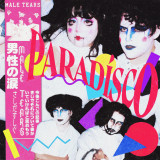
One mere year after their previous pitch-black sounding album Krypt, LA outfit Male Tears is back with a new full-length and – oh boy – everything is changed.
The used-to-be duo is now a four piece with James Edward as the sole founding member remaining and apparently this new line-up helped the original vocalist to shapeshift again.
Remember their very first debut album from 2021 and those dark synthpop sounds?
With their upcoming fourth album (in only three years), this American electronic-pop act from Southern California doubles the stakes once again and where Krypt was all about being goth and gloomy and disturbingly paroxysmal, Paradisco is somehow quite the opposite.
Eight new tracks of pure italo disco, hi-NRG and freestyle bliss that pick up where the band left off three years ago to pursue much darker realms. Now that the quest for darkness is done, it is time to polish our nails and dress up for the night-out cause there’s more in life than feeling sorry for yourself. Yes you will need to cut out the deadwood but there is no change in stillness.
So join Male Tears and their new arsenal of bangers and floor fillers with assertive titles such as Out of my Life, Regret 4 Nothing and Leave it Alone.
Get yourself wrapped up in one warm cover of delicate nostalgia and reborn romanticism, driven by sounds that pay homage equally to Miko Mission and Ken Laszlo, Lisa Lisa and Exposé and, well yeah, even The Smiths because say what you wanna say but you simply cannot not love The Smiths.
Embrace the vintage vibes that organically propagate from this new record’s grooves and get in the mood for this new course in full-on 1980’s Pop.
debe ser publicado en 15.07.2024

One mere year after their previous pitch-black sounding album Krypt, LA outfit Male Tears is back with a new full-length and – oh boy – everything is changed.
The used-to-be duo is now a four piece with James Edward as the sole founding member remaining and apparently this new line-up helped the original vocalist to shapeshift again.
Remember their very first debut album from 2021 and those dark synthpop sounds?
With their upcoming fourth album (in only three years), this American electronic-pop act from Southern California doubles the stakes once again and where Krypt was all about being goth and gloomy and disturbingly paroxysmal, Paradisco is somehow quite the opposite.
Eight new tracks of pure italo disco, hi-NRG and freestyle bliss that pick up where the band left off three years ago to pursue much darker realms. Now that the quest for darkness is done, it is time to polish our nails and dress up for the night-out cause there’s more in life than feeling sorry for yourself. Yes you will need to cut out the deadwood but there is no change in stillness.
So join Male Tears and their new arsenal of bangers and floor fillers with assertive titles such as Out of my Life, Regret 4 Nothing and Leave it Alone.
Get yourself wrapped up in one warm cover of delicate nostalgia and reborn romanticism, driven by sounds that pay homage equally to Miko Mission and Ken Laszlo, Lisa Lisa and Exposé and, well yeah, even The Smiths because say what you wanna say but you simply cannot not love The Smiths.
Embrace the vintage vibes that organically propagate from this new record’s grooves and get in the mood for this new course in full-on 1980’s Pop.
debe ser publicado en 15.07.2024

"Everyone you love will end up dead," Isaiah Neal sings on "Ivy Tech," the second track from Leisure Hour's upcoming The Sunny Side. It's a matter-of-fact lyrics delivered in a matter-of-fact way - but a second later, Grace Dudas and Raegan Gordon join in to harmonize on a booming "whoa-oh-oh-oh" chorus. In the span of about three seconds, Leisure Hour's whole ethos becomes clear. The Sunny Side is the result of years of writing and recording, the culmination of a half-decade of lineup changes; by now, Leisure Hour's reached their final form: bassist/vocalist Dudas, guitarist/vocalist Neal, and drummer/vocalist Gordon. The Sunny Side, according to the band, is about "love, loss, and struggle with mental health as a middle class individual," and maybe it was a case of life mimicking art. The three of them struggled to come up with enough money to record and produce these songs the way they envisioned; they picked up extra shifts at their jobs and, in true DIY fashion, decided to throw as many music festivals as they could to drum up enough cash to bring these songs to life, and "the community around us rallied together to make this album happen, and for that we are eternally grateful." That gratitude is the driving force behind The Sunny Side. The eleven songs that comprise the record are built on shaky hopes and the anticipation of disappointment, but along with that comes a teeth-gritting resilience and a hard-won appreciation for those small victories. "I can't forgive you," Dudas sings at the end of "Forgiveness," but she follows it quickly with "But I'm trying to," and then she repeats it over and over. Maybe she's just trying to convince herself, but it's the effort that matters. Leisure Hour won't stop looking on the sunny side anytime soon, and they're trying their damnedest to convince you to do the same.
debe ser publicado en 12.07.2024

Emerging from the shadows and plumes of smoke, Chicago, IL ensemble HUNTSMEN are set to make their return in 2024 with their third album, The Dry Land, set to be released via Prosthetic Records on June 7. On their first full-length in four years, HUNTSMEN’s The Dry Land traverses the liminal space between the living and the dead by lifting the veil of the abyss itself. Born of suffering and hardship, The Dry Land unifies the dark and light that resides in all of us through allegories of purgatorial strife and human spirit. Following the release of their sophomore full-length, Mandala of Fear, in 2020 and The Dying Pines EP in 2022 HUNTSMEN’s intervening years between studio albums were marked with devastatingly contrasting highs and lows. Whilst their body of studio work continued to garner acclaim from fans and critics alike, chronic illness would become a recurring uphill battle for the ensemble. As these jarring mixed fortunes reached their apex towards the end of 2022, the band reached towards each other outside of their craft as old friends. Taking stock of four years of tribulations led to a reevaluation of what it is to be creatives and, in turn, ushered in a collective rebirth. Writing sessions saw a number of artistic firsts for HUNTSMEN, most notably with the first full collaborative inclusion of vocalist Aimee Bueno-Knipe. The creative process soon saw HUNTSMEN adding more black metal influences into their Americana and folk tinged doom, evidenced most overtly on tracks such as This, Our Gospel and lead single In Time, All Things. Elsewhere, HUNTSMEN’s knack for finely crafted and richly layered melodies offer moments of resplendence on the slow burning Lean Times and closer The Herbsight. Mirroring the circumstances and environment that led to its creation, The Dry Land’s pacing is one rooted in the art of rise and fall dynamics both musically and lyrically. Tales of escaping religious violence, malevolent apparitions and death incarnate all play key roles throughout the album’s narrative thread. HUNTSMEN treat each tale as both exorcism and exaltation, adding a pervasively unsettling quality to The Dry Land that is sure to stick long after the runtime is over. The Dry Land was recorded and mixed by Pete Grossmann at Bricktop Studios before being placed in the hands of Brad Boatright for mastering, with the resulting sound adding a towering grandiosity to the album whilst simultaneously highlighting HUNTSMEN’s newfound corrosive qualities. The Dry Land’s striking cover art was created by Derek Setzer, depicting an immolating dancer in high contrast black and white amongst rusted gold. Through the fire, HUNTSMEN find themselves reborn on The Dry Land.
Haga su pedido ahora y le encargaremos el artículo en nuestro proveedor.

SIDE A/B BLACK / WHITE / NEON MAGENTA VINYL, limited to 100 copies. REPRESS of the legendary album. Prior to the formation of Queens of the Stone Age, bassist/singer Nick Oliveri recorded some originals with ex-Kyuss bandmates Josh Homme (guitar) and Brant Bjork (drums), plus Karma to Burn's Rob (drums) and others. But once recording was completed, Oliveri decided to shelve the tapes; it wasn't until several years later (well after Queens of the Stone Age began to establish themselves) that the bassist decided to release the songs on a friend's indie label, Southern Lord Records. Going by the name Mondo Generator, 11 tracks were compiled for the 2000 release Cocaine Rodeo. The majority of the songs are much more raw and hardcore/punk-based than Oliveri's output with QOTSA, as evidenced by such tracks as "Shawnette," "Uncle Tommy," "Unless I Can Kill," and "I Want You to Die."
debe ser publicado en 12.07.2024

2024 Repress
More great new music from Soul:r's home city of Manchester. Chimpo is a local legend. He's been on the underground scene for years, dj'ing and producing his homemade blend of multi genre bass infused electronic music. Known also for his unique microphone skills, Chimpo's delivery style and wit is something to behold. This Ep showcases all of what chimpo has to offer. A release that will stand out for being different and yet totally devastating on the dane floor. The vinyl release contains a huge remix of the title track, "Frontline", by Calibre that utilises Fox's vocal and flips the sound back to the days of jungle techno. Add also the deadly production unit of Dub Phizix and Skeptical on lead track "Buzzin" and you have a package that we at Soul:r are very proud of indeed.
Haga su pedido ahora y le encargaremos el artículo en nuestro proveedor.

Fin Greenalls introspektives, philosophisches und sanft euphorisches Songwriting wurde mit den langjährigen Bandkollegen Tim Thornton (drums/git) und Guy Whittaker (bass) in völliger Abgeschiedenheit aufgenommen. Der gebürtige, in Berliner lebende Cornwaller suchte die Einsamkeit und Bodenständigkeit des kleinen Dorfes Zennor an der malerischen Atlantikküste Cornwalls, wo die Band das neu errichtete Studio des Produzenten Sam Okell einweihte, des Grammy-prämierten Tontechnikers/Mixers der Beatles-Alben "Get Back" und "Sgt. Pepper's Lonely Hearts Club Band - 50th Anniversary Release".
In der Vorstellung, dass so ein klassisch-englisches Lo-Fi-Folk-Album entstehen könnte, trieb die gemeinsame kreative Unruhe der Band und Okells "Beauty In Your Wake" stattdessen in die weitläufigen Gefilde von FINKs kommerziell erfolgreichen Alben der 2000-2010er Jahre und ist eine Rückkehr zu sich selbst. Die Musik von FINK war schon immer in ein breiteres globales Geflecht eingebettet, nicht zuletzt, weil sie in zahllosen Film/TV-Soundtracks wie "Better Call Saul", "The Walking Dead" und der neuesten Staffel von "True Detective" und "Ava du Vernays Origin" zu hören war, für die Greenall einen exklusiven Song schrieb.
Greenalls wurde 1997 bei Ninja Tune unter Vertrag genommen. Die neu formierte, klassische FINK-Besetzung ist dieselbe, mit der die Band ihr erstes Album "Biscuits For Breakfast" (2006) aufnahm, das sich als Sprungbrett für internationale Touren erwies. Nach drei weiteren Alben wurde die Band immer experimenteller, live und auf Platte. Mit der jungen Amy Winehouse unterhielt sich Greenall über seine Songwriter-Sessions und arbeitete mit so unterschiedlichen Künstlern wie Mahalia, Banks, Ben Howard und Pino Palladino im Studio und auf der Bühne zusammen. Zu seinen Auszeichnungen gehören drei BMI Songwriting Awards für die Arbeit mit John Legend an dessen "Evolver"-Album, der Nr.1-Single "Green Light" und dessen Soundtrack zu "12 Years A Slave".
debe ser publicado en 05.07.2024

Fin Greenalls introspektives, philosophisches und sanft euphorisches Songwriting wurde mit den langjährigen Bandkollegen Tim Thornton (drums/git) und Guy Whittaker (bass) in völliger Abgeschiedenheit aufgenommen. Der gebürtige, in Berliner lebende Cornwaller suchte die Einsamkeit und Bodenständigkeit des kleinen Dorfes Zennor an der malerischen Atlantikküste Cornwalls, wo die Band das neu errichtete Studio des Produzenten Sam Okell einweihte, des Grammy-prämierten Tontechnikers/Mixers der Beatles-Alben "Get Back" und "Sgt. Pepper's Lonely Hearts Club Band - 50th Anniversary Release".
In der Vorstellung, dass so ein klassisch-englisches Lo-Fi-Folk-Album entstehen könnte, trieb die gemeinsame kreative Unruhe der Band und Okells "Beauty In Your Wake" stattdessen in die weitläufigen Gefilde von FINKs kommerziell erfolgreichen Alben der 2000-2010er Jahre und ist eine Rückkehr zu sich selbst. Die Musik von FINK war schon immer in ein breiteres globales Geflecht eingebettet, nicht zuletzt, weil sie in zahllosen Film/TV-Soundtracks wie "Better Call Saul", "The Walking Dead" und der neuesten Staffel von "True Detective" und "Ava du Vernays Origin" zu hören war, für die Greenall einen exklusiven Song schrieb.
Greenalls wurde 1997 bei Ninja Tune unter Vertrag genommen. Die neu formierte, klassische FINK-Besetzung ist dieselbe, mit der die Band ihr erstes Album "Biscuits For Breakfast" (2006) aufnahm, das sich als Sprungbrett für internationale Touren erwies. Nach drei weiteren Alben wurde die Band immer experimenteller, live und auf Platte. Mit der jungen Amy Winehouse unterhielt sich Greenall über seine Songwriter-Sessions und arbeitete mit so unterschiedlichen Künstlern wie Mahalia, Banks, Ben Howard und Pino Palladino im Studio und auf der Bühne zusammen. Zu seinen Auszeichnungen gehören drei BMI Songwriting Awards für die Arbeit mit John Legend an dessen "Evolver"-Album, der Nr.1-Single "Green Light" und dessen Soundtrack zu "12 Years A Slave".
debe ser publicado en 05.07.2024

Eight months after the release of Wake Of The Flood, the GRATEFUL DEAD followed up that masterpiece with the second album on their Grateful Dead Records label, From The Mars Hotel. To this day, most of the songs on From The Mars Hotel are played frequently by the band members as they continue to bring the music to the people, and during the GRATEFUL DEAD’S touring career, more than half of the songs were important parts of their live repertoire. “Scarlet Begonias,” “Ship Of Fools,” and “U.S Blues” arrived on the scene in 1974, with “China Doll” and “Loose Lucy” coming a year earlier, and they all quickly became staples of GRATEFUL DEAD live sets for decades, although “Loose Lucy” had a 15 year hiatus 1975-1989. Phil's two songs on the album are often played live these days when Phil performs with his rotating cast of Friends, and these songs, “Pride Of Cucamonga” and “Unbroken Chain” are elicit ecstatic responses. These would be the final two Phil-sung songs on a GRATEFUL DEAD studio album. Peaking at #16 on the Billboard Top 200 chart in 1974, the album's terrific batch of new songs and exceptional production had Dead Heads scooping up the album 50 years ago upon its release.
debe ser publicado en 01.07.2024

Eight months after the release of Wake Of The Flood, the GRATEFUL DEAD followed up that masterpiece with the second album on their Grateful Dead Records label, From The Mars Hotel. To this day, most of the songs on From The Mars Hotel are played frequently by the band members as they continue to bring the music to the people, and during the GRATEFUL DEAD’S touring career, more than half of the songs were important parts of their live repertoire. “Scarlet Begonias,” “Ship Of Fools,” and “U.S Blues” arrived on the scene in 1974, with “China Doll” and “Loose Lucy” coming a year earlier, and they all quickly became staples of GRATEFUL DEAD live sets for decades, although “Loose Lucy” had a 15 year hiatus 1975-1989. Phil's two songs on the album are often played live these days when Phil performs with his rotating cast of Friends, and these songs, “Pride Of Cucamonga” and “Unbroken Chain” are elicit ecstatic responses. These would be the final two Phil-sung songs on a GRATEFUL DEAD studio album. Peaking at #16 on the Billboard Top 200 chart in 1974, the album's terrific batch of new songs and exceptional production had Dead Heads scooping up the album 50 years ago upon its release.
Haga su pedido ahora y le encargaremos el artículo en nuestro proveedor.

Treffen sich ein Ossi, ein Wessi und ein Ösi. Was wie der Beginn eines etwas abgeschmackter Witzes klingen mag, das lässt sich rückblickend wohl ganz ohne Umschweife sagen, stellt sich vielmehr sowohl als der Gründungsmythos wie auch der Auftakt einer der erfolgreichsten und spannendsten Rockbands unserer Zeit dar. Die Rede ist von Kadavar, jener Gruppe, die, 2010 in Berlin gegründet, in den letzten 15 Jahren auf den Plakaten der gigantischsten Rockfestivals der Welt immer höher kletterte und heute in einer Liga spielt mit den größten Größen aus Psychedelic und Stoner Rock. Kadavar stehen nach rauschhaftem Ritt auf Augenhöhe mit jenen Legenden, von denen sie selbst geprägt sind, sind zur Institution geworden. Eine Erfolgsgeschichte, trotz des Niedergangs der Musikindustrie - und daher um so strahlender. These are self-made men.
Die Box, limitiert auf 500 Stück im Handel, enthält das Debüt Album in seiner Original Version mit 6 Songs auf transparent roter 180gr Vinyl.
Die Bonus LP "Demos & Rarities" erscheint als Picture Vinyl, die im Artwork Bilder des Original Master Tapes des Albums nutzt.
Neben den Demo Aufnahmen der Songs "Forgotten Past" und "Black Sun" befindet sich auf der LP auch der Song "Tommorrow's Dead", der zuvor nur auf der Vinyl Compilation "10 Years 8MM Musik" erschienen ist. Der Track "Living In Your Head" war damals B-Seite der Single "Creature of the Demon" und "The Man I Shot" & "Broken Wings" waren Teil des Split Album mit Aqua Nebula Oscillator "White Ring".
Nun werden all diese Songs aus der prägenden Zeit des Debüt Albums erstmals gemeinsam auf Vinyl veröffentlicht.
debe ser publicado en 01.07.2024

Repressed for the first time in 2 years, Note price change. Sermonizing Black Nationalism, Pan-Africanism and the benefits of a healthy and just lifestyle during the height of the Bad Boy/Roc-AFella era of nihilistic excess in the late 90's, Dead Prez also signed to a major label (Loud/Columbia) despite leaning much more towards the burgeoning indie aesthetics of the day. But this was a good thing – using major label muscle to wake up righteous hip-hop fans who might have fallen asleep at the wheel. The group itself – consisting of MCs stic.man and M-1, who produced or co-produced most of the duo’s music – was formed in Tallahassee, Florida in the early 1990's.
By later that decade, the duo had started making significant waves, having their music heard on the soundtracks to “Soul In The Hole” and “Slam,” as well as appearing on albums by Big Pun and The Beatnuts. By 1998, they released their first official single, the serious, stark “Police State,” on Loud, appropriately brought to the label by Lord Jamar of Brand Nubian. After building a solid rep over the next two years with fiery live performances, in 2000 they unleashed their debut album, Let’s Get Free.
The album was a welcome return to provocative and often radically political rhetoric that hearkened back to hip-hop forebears including The Coup, Public Enemy and KRS-One (as well as poetic descendants like the Last Poets and Watts Prophets). Let’s Get Free was critically acclaimed and benefited from multiple singles, including the infectious, thick analog drive of “Hip-Hop” “It’s Bigger Than Hip-Hop,” with a remix co-produced by a young Kanye West; “Mind Sex” (with Abiodun Oyewole of the Last Poets); and the poignant “I’m An African.”
But the singles weren’t the only worthy songs, as just about every cut here has deeper meaning than most full albums by their early 2000's peers. Highlights: the thought-provoking, anti-drug album opener “Wolves”; “We Want Freedom” “They Schools” and “Propaganda” . All in all, this is one of the more underrated and possibly Top 5 fully-realized political hip-hop albums of all time.
Haga su pedido ahora y le encargaremos el artículo en nuestro proveedor.

Die Box, limitiert auf 1000 Stück im Handel, enthält das Debüt Album in seiner Original Version mit 6 Songs auf transparenter 180gr Vinyl.
Die Bonus LP "Demos & Rarities" erscheint als Picture Vinyl, die im Artwork Bilder des Original Master Tapes des Albums nutzt.
Neben den Demo Aufnahmen der Songs "Forgotten Past" und "Black Sun" befindet sich auf der LP auch der Song "Tommorrow's Dead", der zuvor nur auf der Vinyl Compilation "10 Years 8MM Musik" erschienen ist. Der Track "Living In Your Head" war damals B-Seite der Single "Creature of the Demon" und "The Man I Shot" & "Broken Wings" waren Teil des Split Album mit Aqua Nebula Oscillator "White Ring".
Nun werden all diese Songs aus der prägenden Zeit des Debüt Albums erstmals gemeinsam auf Vinyl veröffentlicht.
Das Foto Buch "The Early Days" zeigt eine große Auswahl von Fotos aus der Entstehungszeit der Band und enthält einen Text des Schriftstellers und Musikers Hendrick Otremba.
Auch die Dokumentation "MammutTigerWolf" der Regisseurin Irem Schwarz gibt vorher nie gesehene Einblicke in die Proben, Aufnahmen und Auftritte der Band Kadavar in ihrer Gründungszeit und wurde nie zuvor veröffentlicht.
Die Demo CD als Teil der Box war und ist ein Muss. 2010, Tiger, Lupus und Mammut nehmen ein paar Songs auf, brennen sie auf CD. Im Job-Center in Berlin, unten, in dem kleinen Copyshop, kopieren sie das Cover. Jedem Typen mit langen Haaren, dem sie in dieser Zeit begegnen, drücken sie ein Exemplar in die Hand: die ersten Aufnahmen von Kadavar. Die CD wurde in dieser Form nie neu produziert oder vertrieben.
Nun gibt es für diese Box die CD noch einmal, im Original Artwork. One time only.
Mit diesen Bestandteilen entsteht mit der "Kadavar - The First Album (Ltd. Anniversary Boxset)" eine einzigartige Sammlung an Zeitdokumenten die einen mit in ersten Jahre und die Entstehungsphase des legendären Debüt Albums von Kadavar entführt.
Boxinhalte:
- Debut Album (Gatefold / 180 gr Vinyl / transparent Vinyl)
debe ser publicado en 28.06.2024

Haga su pedido ahora y le encargaremos el artículo en nuestro proveedor.

"In partnership with WaterTower Music, Waxwork Records is thrilled to release GODZILLA x KONG: THE NEW EMPIRE Original Motion Picture Soundtrack by Tom Holkenborg! The epic monster-battle continues with an all-new adventure that pits the almighty Kong and the fearsome Godzilla against a colossal undiscovered threat hidden within our world. Godzilla x Kong: The New Empire (Original Motion Picture Soundtrack) features 23 new tracks created for the film by Grammy-nominated composer Tom Holkenborg, aka Junkie XL (Mad Max: Fury Road, Deadpool, Zack Snyder’s Justice League) as well as composer Antonio Di lorio. Composer, Tom Holkenborg says, “I’m a huge Godzilla and Kong fan, and loved working with director Adam Wingard on 2021's GODZILLA VS. KONG, so returning to these monsters to score their biggest adventure yet was a dream come true. These are two of the most enduring names in Hollywood and Adam has done an amazing job implementing his vision for these icons. I was also delighted to be able to name Antonio Di Iorio, an incredibly talented composer, who has worked with me for many years, as my co-composer on this movie. I couldn’t be more enthusiastic to continue my adventures with Adam and expand our creative relationship in the Monsterverse.” Waxwork Records is excited to present GODZILLA x KONG: THE NEW EMPIRE as a deluxe double LP featuring the original soundtrack by Tom Holkenborg pressed to 180 Gram colored vinyl, housed in heavyweight gatefold jackets with matte satin coating, a 12x12 heavyweight art print insert, and design and layout by Matt Needle."
Godzilla X Kong: The New Empire by Tom Holkenborg & Antonio Di Iorio, released 21 June 2024, includes the following tracks: "Monarch Base - Red Dream", "Leaving Colosseum - New Dossier", "Friendship", "Approaching the Lake" and more.
This version of Godzilla X Kong: The New Empire comes as a 2xLP in a(n) Gatefold Sleeve packaging. This release comes with (a) Insert(s).
The vinyl is pressed as a swirl splatter, neon & pink & blue etc. disc. Another vinyl is pressed as a swirl splatter, neon & pink & blue etc. disc.
debe ser publicado en 21.06.2024
Any reasonably knowledgeable fan of post-punk will likely recognise the name of Una Baines. A founder of both The Fall and Blue Orchids, Una's influence in the development of both bands is a matter of historical fact . . . so much so that people scarcely realise how few recordings she's actually made - a solitary 7" with The Fall, one LP and a few singles by Blue Orchids, and that's it, barring her most recent recording, The Fates' obscure album "Furia", released nearly forty years ago on a tiny label until its rediscovery a few years back on the Finders Keepers label. Una's spent much of the last four decades working in community organising, raising a family, and functioning as a symbolic godmother to many Mancunian artists and musicians who cite her as an aspiration and mentor. Her band Poppycock has undergone several line-up changes between their sporadic - almost exclusively local - live appearances. Una was never shy in describing her personal ideals and artistic expression in terms of feminism - even if the term was occasionally derided by some female punk artists. "Magic Mothers" displays a consistency of vision rare traceable back to interviews she did during The Fall. Hearing it, we're reminded of the emotional fierceness set against pop arrangements from acts like Look Blue Go Purple and Dead Famous People, or the spare pop jazziness found in songs by Marine Girls, Tracey Thorn's pre-fame combo. The arrival of "Magic Mothers" will come as a surprise to many. Though recorded in fits and starts over the last fifteen years, it's a cohesive statement with an expansive cast of friends and allies, including Blue Orchids' Howard Jones and The Fall / House Of All's Simon Wolstencroft, plus many others. The original keyboardist for both The Fall and Blue Orchids, Una Baines returns with her brilliant musical partners for her first album in 39 years
debe ser publicado en 15.06.2024
