The first progressive girl group of the French Occitan language
pop scene bring you folk funk, sun-baked bossa, Coltrane jazz and
their own brand of punky ‘Dizco Rural’ against an untouched
French Balearic backdrop spanning the late 70s and 80s.
If even the most assiduous of European record collectors consider
the Occitan language music scene to be France’s best-kept secret
then it’s as fair to say that the incredible multifaceted recordings of
langue d’oc prog girl group Lei Chapacans have spent the last four
decades hiding in plain sight. In all fairness this overlooked
treasure chest of minority language excursions into folk funk,
Balearic, bossa, John Coltrane-penned jazz, baroque psych,
Palestinian poetry, comedic synth skits (and even the rawest form
of femme-fronted multilingual punky disco) has been stowed away
in inconspicuous photographic record sleeves, falsely evoking
something closer to contemporary C&W while oft-misplaced in
record shop cassette racks alongside ‘traditional’ spoken-word and
scholastic albums.
So, for the uninitiated, don’t be too hard on yourself. The fun starts
here. For those who are familiar with the rare and sought-after
one-off solo album by Occitan singer Miquela and have craved for
more, then you’ve come to exactly the right place. Lei Chapacans
(a name that roughly translates to The Vagabonds) is the all-girl
vocal group assembled by Miquela herself just two years after her
debut release, having toured the word and snubbed major label
record deal offers with a steadfast allegiance to the protection of
the Occitan language in which this album is primarily penned and
performed (minus a small amount of German and sarcastic
English in one rebellious instance).
For European collectors with a penchant for French savoir faire,
but have further yearnings for folkloric femme funk, then it’s time
to look towards the Occitan sunset where you will meet Lolo,
Miquela, Sophie, Irena and Denise.
These amazing, and undeniably culturally important recordings
might have taken some time to find a wider audience, but for
music lovers, crate diggers and vinyl vultures alike there are still a
lot of tasty morsels out there to be scavenged and devoured, ask
any self-respecting Chapacan and they’ll concur wholeheartedly.
quête:deal
- 1: Heaven Of Stone
- 2: Creator Of God
- 3: Fire For Water
- 4: Deep Set
- 5: Fireflies
- 6: Do You Need Me To Remind You?
- 7: Absence As A Presence(Excerpt)
- 8: Roach Hiss
- 9: Down When I’m Not
- 10: Evacuation
- 11: September City
- 12: Absence As A Presence(Studio)
- 13: Don’t Wanna Deal(Studio)
- 14: Crazy All Around(Studio)
- 15: Lying At The Bottom Of The Sky(Studio)
Re-Issue "Fuck Content" is an audio-video release composed of a performance of ten live songs off of the "Child Soldier: Creator of God" album, as well as five new studio tracks. The video release contains the footage of the live performance, footage from the recording of the new songs, as well as behind-the-scenes footage from both the studio and the live performance.
Embrace have announced their eighth studio album 'How To Be A Person
Like Other People' will be released on their own Mo'betta label
Talking about the album, Richard said "Whenever we put out a new album it's
always a really big deal to us, we put everything we have into it. We know that
there's something about what we do that people love, that they just don't get from
other bands. It's like a pact, they want us to be intimate and personal and
autobiographical, but they also want us to be confident and rousing and
anthemic. It sounds like a contradiction, but I think when we're at our best we
somehow pull it off. I think in that sense this album is the most Embrace album
we've ever made".
Meanwhile the band have announced tour dates in support of the new album,
including their biggest London show in over 17 years at Brixton Academy on
Friday 9th September, a venue the band last played in 2005.
Produced and mixed by Richard McNamara at Magnetic North Studios the new
album is the follow-up to the band's 2018 Top 5 album, Love Is A Basic Need.
"The anger and depression got to me, and I couldn't hold it in anymore
So, I got into a room with my demons and we just hit record," shares indie singersongwriter Leslie Mendelson. The resulting album, playfully titled, ' If You Can't
Say Anything Nice' ,' is viscerally themed, imaginatively arranged, cinematically
dynamic and textured, oozing raw elegance. " I deal with depression and anxiety,
and I've never really sang about it before. It also felt like what was going on with
society was also affecting me, in terms of gun violence, the opioid crisis, and the
all hatred in the news and media. It felt like it was time to speak out," Leslie
explains. Leslie has released two prior albums, including her Grammy Awardnominated debut, 'Swan Feathers,' one EP, and three singles. Her first album
exhibited a production sheen she opted to strip away on her sophomore album, '
Love & Murder.' Her latest, ' If You Can't Say Anything Nice ' ,' is a gutsy album that
splits the difference between her previous albums in terms of production, but
also features some garage- rock bluster. " The best time to make a rock n' roll
record is when you're broke and pissed off, " she says, with a good-natured laugh.
For the album, Leslie worked with longtime co-writer and guitarist Steve McEwan
who co-produced the album alongside bassist and engineer Lorenzo Wolff.
Contrast gives art dimension. The juxtaposition of two seemingly disparate elements sparks friction, bringing life to any canvas. The Devil Wears Prada rely on contrast as they nimbly balance metallic turbulence, hardcore spirit, provocatively eloquent lyricism, and melodic exorcism. In between these opposing extremes, the band—Mike Hranica vocals, Jeremy DePoyster [guitar, vocals], Kyle Sipress [guitar], Jonathan Gering [keys, synths, programming, production], Giuseppe Capolupo [drums], and Mason Nagy [bass]—have fashioned an ever-evolving signature style buttressed by layers of sonic hues. Such dynamic divergence defines the group’s eighth full-length offering, Color Decay [Solid State]. “It’s about contrast,” observes Mike. “We’ve really tried to create individualism within the songs and make them distinct. The title references the disintegration and discoloration we experience from daily struggles. Those feelings come with mental health, getting older, and dealing with it.”
- A1: State Of The Nation
- A2: 3030
- A3: The Fantabulous Rap Extravaganza
- A4: Things You Can Do
- B1: Positive Contact
- B2: St Catherine St
- B3: Virus
- B4: Upgrade (A Baymar College Course)
- B5: New Coke
- C1: Mastermind
- C2: National Movie Review
- C3: Madness
- C4: Meet Cleofis Randolph The Patriarch
- C5: Time Keeps On Slipping
- C6: The News (A Wholly Owned Subidiary Of Microsoft Inc)
- D1: Turbulence (Remix)
- D2: The Fantabulous Rap Extravaganza (Part Ii)
- D3: Battlesong
- D4: Love Story
- D5: Memory Loss
- D6: The Assman A+O Speaks
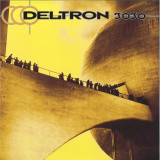
The super group Deltron 3030 is composed of producer Dan the Automator, rapper Del tha Funkee Homosapien and DJ Kid Koala and sometimes features guest artists who also take on varying futuristic pseudonyms. Originally released in 2000 on the now-defunct 75ARK record label, this hip hop concept album was released the same year as the Gorillaz' first 12" and is on a similar plane. Following the release of Deltron 3030, all three members participated in the Gorillaz' self-titled debut album. With Del aka Deltron Zero on vocals, Dan the Automator aka The Cantankerous Captain Aptos on production, and Kid Koala aka Skiznoid the Boy Wonder on turntables, this album takes the listener on a paranoid journey set in a dystopian year 3030 dealing with viruses, the apocalypse, an oppressive government, and a war waged against a huge company called the Corporate Bank of Time that rules the universe, all to the well-crafted and consistent musical backing of the Automator. Appearances by Damon Albarn (The Gorillaz, Blur), Prince Paul, Peanut Butter Wolf, DJ Money Mark, Paul Barman, Mark Bell (Bjork, production), Sean Lennon, and Mr. Lif compliment Del's vocal style and add the right amount of flavor to this classic period piece.
DJ, Edit entrepreneur - Record Mission Records & Record dealer extraordinaire Nick The Record continues to deliver the goods via his Natural House label...
Joining forces on this one with Jaime Read to beautifully remake an underappreciated mid-80's jam.
The A Side is all about that Natural House sound, a solid 4/4 core, hooks galore and an atmospheric vibe for maximum effect on the floor.
Over on the B, Nick turns out a classic Disco interpretation, full of tension and release it's a big, big sound & absolutely guaranteed to be a staple across the coming summer & beyond...
For most of us, life is a series of human interactions; some good, some bad, some happy, some sad. But what would life be without those peripheral characters who plant themselves into our worlds through the sheer force of their presence? Whether we speak to them or not, those vibrant contrasts to the everyday tide of ordinary people are a magical part of the human experience. Oddballs and misfits, flamboyant instigators or low-key game changers, we all clock them on our own hectic journeys, and they make the day a little brighter. Everyone has their favourite people.
Following the runaway success of their first one-shot single in 2020, Favourite People reconvene for a full-length of blues-tinged cuts stemming from sessions at Selva Studios in Brooklyn. The project’s roots predate the studio, from scattered jams and sweaty nights in New York nightspots to impromptu recordings on cruise ships, but the flashpoint of inspiration that truly set the album in motion was the arrival of a blonde 1960s Fender Telecaster. From there, the motley crew of sharp-shooting string slingers and sticks men set about crafting paeans to those striking souls who make the world a more colourful place.
The emphasis here is on the kind of forward-facing, electrically charged mix you felt (whether you realised it or not) hearing early Sabbath or Priest for the first time. With their undeniable bias towards vintage soul, Favourite People are far from heavy metal, but the same lineage of blues and by extension jazz informs the music, while the tonal crunch of that 70s era guides the sound. Feasting on tasteful overdrive and leaning on the unmistakable flavour of tape for much of the recording, the deal was sealed on this purposeful exercise in vibe thanks to the near-mythical texture of Guy Davie’s EMI Nigeria console at Electric Mastering.
Across the album there are mellow shades and bursts of good-time get-down exuberance, but the lead singles capture the essence of the band in no uncertain terms.
‘Promise Of Nibbles’ brings the Favourite People MO into sharp relief with a low-slung, hard swinging blues confection full of overheating organ and duelling guitars in pursuit of Southern-stewed boogie (im)perfection.
‘We’ll Be Late To The Party’ turns up the tempo and dials in the fuzz, striking an anthemic note which lands somewhere between urgent highway escapism and euphoric communal revelation.
‘Mass and Mustiness’ leans in on the funk dimension of the group’s sound with the sweetest licks and chops on that fabled telecaster backed up by an acutely angled beat and the slinkiest of b-lines.
These are but three of the vibrant vignettes laid down by this quietly unassuming collective of heads down jammers, loose groovers and vintage sound freaks –heavy grooving instrumentals pulled from their own moments of pure musical magic and captured on disc for your listening, dancing, living, loving pleasure.
LANGUISH is a band that has relied on speed to deliver their message in the most caustic and devastating way possible, but conversely they’ve taken their time to reach the point they’re now at; they stand on the precipice of releasing their third studio album, Feeding The Flames of Annihilation. World events forced a creative go-slow which granted them time to ‘hyperfocus’ on crafting a sonically pernicious 11-track ode to human beings accelerating their own demise. Despite the album being swathed in nihilism, the occasional glimmer of optimism pushes through in the form of class solidarity and hopeful resistance. But for the majority of the 25 minute runtime, malevolence and misanthropy reigns - articulated more clearly than ever before by vocalist, Sean Mears. Although grindcore continues to make up a good deal of the LANGUISH calling card, a considered leaning towards death metal allows room to enunciate their distaste with more clarity - both literally and metaphorically. The world-weariness felt by its authors is coloured with rage, disappointment and a cycle of hitting rock bottom over and over. Inspired by the socialist anthems of Woody Guthrie, LANGUISH takes swipes at landlords, megacorps, and billionaires - with few escaping their scathing sulfur.
-Long-awaited fourth solo effort by one of today's most talented Brazilian artists and the follow up to the now classic Early Bird album.
-Entirely written and recorded at the Ilha Do Corvo studio in Belo Horizonte, Minas Gerais, Brazil.
-180g heavy vinyl pressing, reverse board print, comes with lyrics and their English translation.
"I imagine this record to be just like a flea market, an ensemble of nostalgia, a collage of memories, of dreams, ideas, sounds, words, feelings, places, eras and styles. A unique sonic sound space that I've been trying to create for my own music. This is also a record about getting old, about the uneasiness of life, but also about how to embrace it and enjoy the ride. About taking a trip to a place and a time that we have never been to, but that we long for. " - Leonardo Marques
A multi-talented musician, singer songwriter and record producer full of tales to tell, Leonardo Marques has released three solo records – Dia e Noite no Mesmo Céu in 2012, Curvas, Lados, Linhas Tortas, Sujas e Discretas in 2015, and Early Bird in 2018. All of Leonardo's solo albums have been released in Japan by Disk Union and the latest one, Early Bird, has also been released worldwide on vinyl format by 180g x Disk Union.
Leonardo was the guitar player of Diesel (later called Udora), one of the main alternative rock bands in Brazil in the early 2000's. The band was on the main line up of the Rock in Rio III Festival, playing for over 250,000 people as an opening act for the Red Hot Chili Peppers, Silverchair, and Deftones. Leonardo then moved to Los Angeles with the band and signed a record deal with Clive Davis (J Records / RCA) and worked with Matt Wallace (Maroon 5, Faith No More), Gavin Macklop (Goo Goo Dolls, Toad the Wet Sprocket), Camus (David Byrne, Arto Lindsay), Bob Marlette (Black Sabbath, Tracy Chapman, Alice Cooper), and 16-time Grammy Award winner Thom Russo (Michael Jackson, Audioslave, Johnny Cash, Maná).
Back to Brazil a few years later, Leonardo launched his Ilha do Corvo recording studio in Belo Horizonte, Minas Gerais, Brazil. The studio is equipped with vintage instruments and gear from various decades which creates a unique sonic landscape and sound signature in each record it produces.
With Flea Market Music, Leonardo Marques presents his long-awaited fourth solo effort and the follow up to the now classic Early Bird album, with a majestic and unique musical trip into nostalgia, dreamy textures and lo-fi flavors, entirely written and recorded at his Ilha Do Corvo studio. This is essential Brazilian contemporary music at its best!
restock
“Fabula” is the 9th full length album by AUTiSM. The artist is dealing with organic crossover sound mixing influences like IDM, ambient, dubstep, trip-hop, and various in-between music phenomena.
Vocals by Akabedhead and PANE
Guitars by Sergey Popovich
More speech synthesis
Wider stylistic diversity “In modern electronic music, we quite often see some distinct traces coming from the past,” says Vadim Militsin, the core of AUTiSM. “Sometimes, I think that the past we notice in those tracks can easily be our future.”
- 1: Millie Jackson - I Cry
- 2: Gloria Ann Taylor - How Can You Say It
- 3: The New Establishment - Ridin' High
- 4: Ruby Andrews - Casanova 70
- 5: Tommy Youngblood - Tobacco Road
- 6: O.v. Wright - A Fool Can't See The Light
- 7: Dee Edwards - (I Can) Deal With That
- 8: Jean Plum - Here I Go Again
- 9: Richard Coombs - Tammie
- 10: Foster Sylvers - Misdemeanor
- 11: Alice Taylor - Sounds Ridiculous
- 12: Carolynn Porter - Away With You
- 13: Little Beaver - I Love The Way You Love
Some are looking for gold or oil and others are passionately looking for forgotten music treasures! Those who can be described as "sound gold diggers" criss cross record shops or confidential places to unearth musical nuggets previously kept in the dark. This practice began with sampling in the 80s and has now become a way of safeguarding the world's musical heritage. With our new "Diggin' Collection", we invite you to discover soul, funk or disco gems from the 70s and the 80s available on three nice vinyls for your pleasure.
- A1: Big Muff (08:22)
- A2: Lookin' On (10:23)
- A3: Couldn't Love You More (05:09)
- B1: Look At That Girl (04:27)
- B2: The Moment (03:41)
- B3: Johnny Too Bad (06:42)
- B4: Mad Dog Days (05:31)
- B5: Never Let Me Go (04:13)
- C1: Fine Lines (04:17)
- C2: Head And Heart (03:55)
- C3: Bless The Weather (04:36)
- C4: Pascanel (04:25)
- C5: Ways To Cry (05:00)
- D1: One Day Without You (04:43)
- D2: I'd Rather Be The Devil (08:02)
- D3: Make No Mistake (04:02)
- D4: Dealer (03:57)
- E1: Outside In (18:18)
- E2: My Baby Girl (02:39)
- E3: You Can Discover (03:51)
- F1: Man In The Station (03:22)
- F2: Over The Hill (03:07)
- F3: Easy Blues (02:50)
- F4: Spencer The Rover (03:55)
- F5: Black Man At Your Shoulder (05:47)
-Long-awaited fourth solo effort by one of today's most talented Brazilian artists and the follow up to the now classic Early Bird album.
-Entirely written and recorded at the Ilha Do Corvo studio in Belo Horizonte, Minas Gerais, Brazil.
-180g heavy vinyl pressing, reverse board print, comes with lyrics and their English translation.
"I imagine this record to be just like a flea market, an ensemble of nostalgia, a collage of memories, of dreams, ideas, sounds, words, feelings, places, eras and styles. A unique sonic sound space that I've been trying to create for my own music. This is also a record about getting old, about the uneasiness of life, but also about how to embrace it and enjoy the ride. About taking a trip to a place and a time that we have never been to, but that we long for. " - Leonardo Marques
A multi-talented musician, singer songwriter and record producer full of tales to tell, Leonardo Marques has released three solo records – Dia e Noite no Mesmo Céu in 2012, Curvas, Lados, Linhas Tortas, Sujas e Discretas in 2015, and Early Bird in 2018. All of Leonardo's solo albums have been released in Japan by Disk Union and the latest one, Early Bird, has also been released worldwide on vinyl format by 180g x Disk Union.
Leonardo was the guitar player of Diesel (later called Udora), one of the main alternative rock bands in Brazil in the early 2000's. The band was on the main line up of the Rock in Rio III Festival, playing for over 250,000 people as an opening act for the Red Hot Chili Peppers, Silverchair, and Deftones. Leonardo then moved to Los Angeles with the band and signed a record deal with Clive Davis (J Records / RCA) and worked with Matt Wallace (Maroon 5, Faith No More), Gavin Macklop (Goo Goo Dolls, Toad the Wet Sprocket), Camus (David Byrne, Arto Lindsay), Bob Marlette (Black Sabbath, Tracy Chapman, Alice Cooper), and 16-time Grammy Award winner Thom Russo (Michael Jackson, Audioslave, Johnny Cash, Maná).
Back to Brazil a few years later, Leonardo launched his Ilha do Corvo recording studio in Belo Horizonte, Minas Gerais, Brazil. The studio is equipped with vintage instruments and gear from various decades which creates a unique sonic landscape and sound signature in each record it produces.
With Flea Market Music, Leonardo Marques presents his long-awaited fourth solo effort and the follow up to the now classic Early Bird album, with a majestic and unique musical trip into nostalgia, dreamy textures and lo-fi flavors, entirely written and recorded at his Ilha Do Corvo studio. This is essential Brazilian contemporary music at its best!
"Singe" is the new record by Angelo Harmsworth, a musician who hails from the American Southwest and is operating now out of Berlin. Harmsworth’s work deals resolutely in extremes, but this music is not concerned with presenting binary or dichotomous relationships so much as it is with reconciling disparate sensibilities and sounds. Layers of meticulously edited and sculpted tones swirl around one another, creating kaleidoscopic patterns and hallucinated choral motifs that seem to thrive on amplitude or the position of the listener’s head. There is a visceral physicality to this music that aligns it with some of the core tenets of harsh noise, even while its tonal and timbral choices recall those of ambient music. This record follows excellent releases on enmossed/Psychic Liberation, Angoisse, Opal Tapes, Vaknar, and Harmsworth’s own Lime Lodge imprint and may be the high water mark of his published output thus far. There is drama and implied narrative in these seven compositions that seethes and hums as if reveling in a sort of violent gracefulness.
This is the final nail in the coffin of Reverend Bizarre and also the final part of Svart Records’ long-standing mission to release the band’s entire discography on vinyl. The vinyl box set contains both versions of the band’s legendary demo Slice of Doom plus the promo tape the band did to get a deal for their first album In The Rectory. Additional bonus is a live DVD of the band’s very first live show at TVO in Turku, Finland on September 18th, 1999. Then there’s replicas of three early gig posters, the rare True Doom manifesto by Earl of Void, a large booklet compiling all visual material and background info from these early years, a very rare promo booklet replica, flyers plus hidden gems.
- A1: Rock This Mother
- A2: Talk To Me Girl
- A3: You Can Find Me
- A4: Check This Out
- A5: Jesus Going To Clean House
- A6: Hope You Understood
- A7: Is It What You Want
- A8: Love Is Everlasting
- A9: This Is Hip-Hop Art
- A10: Opposite Of Love
- A11: Do You Know What I Mean
- B1: Saving All My Love For You
- B2: Look Out Here I Come
- B3: Girl You Always Talking
- B4: Have A Great Day
- B5: Take My Hand
- B6: I Need Your Love
- B7: Your Town
- B8: Talk Around Town
- B9: Booty Head/Take A Little Walk
- B10: I Love My Mama
- B11: I Never Found Anyone Like You
Cassette[11,72 €]
As the sun sets on a quaint East Nashville house, a young man bares a piece of his soul. Facing the camera, sporting a silky suit jacket/shirt/slacks/fingerless gloves ensemble that announces "singer" before he's even opened his mouth, Lee Tracy Johnson settles onto his stage, the front yard. He sways to the dirge-like drum machine pulse of a synth-soaked slow jam, extends his arms as if gaining his balance, and croons in affecting, fragile earnest, "I need your love… oh baby…"
Dogs in the yard next door begin barking. A mysterious cardboard robot figure, beamed in from galaxies unknown and affixed to a tree, is less vocal. Lee doesn't acknowledge either's presence. He's busy feeling it, arms and hands gesticulating. His voice rises in falsetto over the now-quiet dogs, over the ambient noise from the street that seeps into the handheld camcorder's microphone, over the recording of his own voice played back from a boombox off-camera. After six minutes the single, continuous shot ends. In this intimate creative universe there are no re-takes. There are many more music videos to shoot, and as Lee later puts it, "The first time you do it is actually the best. Because you can never get that again. You expressing yourself from within."
"I Need Your Love" dates from a lost heyday. From some time in the '80s or early '90s, when Lee Tracy (as he was known in performance) and his music partner/producer/manager Isaac Manning committed hours upon hours of their sonic and visual ideas to tape. Embracing drum machines and synthesizers – electronics that made their personal futurism palpable – they recorded exclusively at home, live in a room into a simple cassette deck. Soul, funk, electro and new wave informed their songs, yet Lee and Isaac eschewed the confinement of conventional categories and genres, preferring to let experimentation guide them.
"Anytime somebody put out a new record they had the same instruments or the same sound," explains Isaac. "So I basically wanted to find something that's really gonna stand out away from all of the rest of 'em." Their ethos meant that every idea they came up with was at least worth trying: echoed out half-rapped exhortations over frantic techno-style beats, gospel synth soul, modal electro-funk, oddball pop reinterpretations, emo AOR balladry, nods to Prince and the Fat Boys, or arrangements that might collapse mid-song into a mess of arcade game-ish blips before rallying to reach the finish line. All of it conjoined by consistent tape hiss, and most vitally, Lee's chameleonic voice, which managed to wildly shape shift and still evoke something sincere – whether toggling between falsetto and tenor exalting Jesus's return, or punctuating a melismatic romantic adlib with a succinct, "We all know how it feels to be alone."
"People think we went to a studio," says Isaac derisively. "We never went to no studio. We didn't have the money to go to no studio! We did this stuff at home. I shot videos in my front yard with whatever we could to get things together." Sometimes Isaac would just put on an instrumental record, be it "Planet Rock" or "Don't Cry For Me Argentina" (from Evita), press "record," and let Lee improvise over it, yielding peculiar love songs, would-be patriotic anthems, or Elvis Presley or Marilyn Monroe tributes. Technical limitations and a lack of professional polish never dissuaded them. They believed they were onto something.
"That struggle," Isaac says, "made that sound sound good to me."
In the parlance of modern music criticism Lee and Isaac's dizzying DIY efforts would inevitably be described as "outsider." But "outsider" carries the burden of untold additional layers of meaning if you're Black and from the South, creating on a budget, and trying to get someone, anyone within the country music capital of the world to take your vision seriously. "What category should we put it in?" Isaac asks rhetorically. "I don't know. All I know is feeling. I ain't gonna name it nothing. It's music. If it grabs your soul and touch your heart that's what it basically is supposed to do."
=
Born in 1963, the baby boy of nine siblings, Lee Tracy spent his earliest years living amidst the shotgun houses on Nashville's south side. "We was poor, man!" he says, recalling the outhouse his family used for a bathroom and the blocks of ice they kept in the kitchen to chill perishables. "But I actually don't think I really realized I was in poverty until I got grown and started thinking about it." Lee's mom worked at the Holiday Inn; his dad did whatever he had to do, from selling fruit from a horse drawn cart to bootlegging. "We didn't have much," Lee continues, "but my mother and my father got us the things we needed, the clothes on our back." By the end of the decade with the city's urban renewal programs razing entire neighborhoods to accommodate construction of the Interstate, the family moved to Edgehill Projects. Lee remembers music and art as a constant source of inspiration for he and his brothers and sisters – especially after seeing the Jackson 5 perform on Ed Sullivan. "As a small child I just knew that was what I wanted to do."
His older brother Don began musically mentoring him, introducing Lee to a variety of instruments and sounds. "He would never play one particular type of music, like R&B," says Lee. "I was surrounded by jazz, hard rock and roll, easy listening, gospel, reggae, country music; I mean I was a sponge absorbing all of that." Lee taught himself to play drums by beating on cardboard boxes, gaining a rep around the way for his timekeeping, and his singing voice. Emulating his favorites, Earth Wind & Fire and Cameo, he formed groups with other kids with era-evocative band names like Concept and TNT Connection, and emerged as the leader of disciplined rehearsals. "I made them practice," says Lee. "We practiced and practiced and practiced. Because I wanted that perfection." By high school the most accomplished of these bands would take top prize in a prominent local talent show. It was a big moment for Lee, and he felt ready to take things to the next level. But his band-mates had other ideas.
"I don't know what happened," he says, still miffed at the memory. "It must have blew they mind after we won and people started showing notice, because it's like everybody quit! I was like, where the hell did everybody go?" Lee had always made a point of interrogating prospective musicians about their intentions before joining his groups: were they really serious or just looking for a way to pick up girls? Now he understood even more the importance of finding a collaborator just as committed to the music as he was.
=
Isaac Manning had spent much of his life immersed in music and the arts – singing in the church choir with his family on Nashville's north side, writing, painting, dancing, and working various gigs within the entertainment industry. After serving in the armed forces, in the early '70s he ran The Teenage Place, a music and performance venue that catered to the local youth. But he was forced out of town when word of one of his recreational routines created a stir beyond the safe haven of his bohemian circles.
"I was growing marijuana," Isaac explains. "It wasn't no business, I was smoking it myself… I would put marijuana in scrambled eggs, cornbread and stuff." His weed use originated as a form of self-medication to combat severe tooth pain. But when he began sharing it with some of the other young people he hung out with, some of who just so happened to be the kids of Nashville politicians, the cops came calling. "When I got busted," he remembers, "they were talking about how they were gonna get rid of me because they didn't want me saying nothing about they children because of the politics and stuff. So I got my family, took two raggedy cars, and left Nashville and went to Vegas."
Out in the desert, Isaac happened to meet Chubby Checker of "The Twist" fame while the singer was gigging at The Flamingo. Impressed by Isaac's zeal, Checker invited him to go on the road with him as his tour manager/roadie/valet. The experience gave Isaac a window into a part of the entertainment world he'd never encountered – a glimpse of what a true pop act's audience looked like. "Chubby Checker, none of his shows were played for Black folks," he remembers. "All his gigs were done at high-class white people areas." Returning home after a few years with Chubby, Isaac was properly motivated to make it in Music City. He began writing songs and scouting around Nashville for local talent anywhere he could find it with an expressed goal: "Find someone who can deliver your songs the way you want 'em delivered and make people feel what you want them to feel."
One day while walking through Edgehill Projects Isaac heard someone playing the drums in a way that made him stop and take notice. "The music was so tight, just the drums made me feel like, oh I'm-a find this person," he recalls. "So I circled through the projects until I found who it was.
"That's how I met him – Lee Tracy. When I found him and he started singing and stuff, I said, ohhh, this is somebody different."
=
Theirs was a true complementary partnership: young Lee possessed the raw talent, the older Isaac the belief. "He's really the only one besides my brother and my family that really seen the potential in me," says Lee. "He made me see that I could do it."
Isaac long being a night owl, his house also made for a fertile collaborative environment – a space where there always seemed to be a new piece of his visual art on display: paintings, illustrations, and dolls and figures (including an enigmatic cardboard robot). Lee and Issac would hang out together and talk, listen to music, conjure ideas, and smoke the herb Isaac had resumed growing in his yard. "It got to where I could trust him, he could trust me," Isaac says of their bond. They also worked together for hours on drawings, spreading larges rolls of paper on the walls and sketching faces with abstract patterns and imagery: alien-like beings, tri-horned horse heads, inverted Janus-like characters where one visage blurred into the other.
Soon it became apparent that they didn't need other collaborators; self-sufficiency was the natural way forward. At Isaac's behest Lee, already fed up with dealing with band musicians, began playing around with a poly-sonic Yamaha keyboard at the local music store. "It had everything on it – trumpet, bass, drums, organ," remembers Lee. "And that's when I started recording my own stuff."
The technology afforded Lee the flexibility and independence he craved, setting him on a path other bedroom musicians and producers around the world were simultaneously following through the '80s into the early '90s. Saving up money from day jobs, he eventually supplemented the Yamaha Isaac had gotten him with Roland and Casio drum machines and a Moog. Lee was living in an apartment in Hillside at that point caring for his dad, who'd been partially paralyzed since early in life. In the evenings up in his second floor room, the music put him in a zone where he could tune out everything and lose himself in his ideas.
"Oh I loved it," he recalls. "I would really experiment with the instruments and use a lot of different sound effects. I was looking for something nobody else had. I wanted something totally different. And once I found the sound I was looking for, I would just smoke me a good joint and just let it go, hit the record button." More potent a creative stimulant than even Isaac's weed was the holistic flow and spontaneity of recording. Between sessions at Isaac's place and Lee's apartment, their volume of output quickly ballooned.
"We was always recording," says Lee. "That's why we have so much music. Even when I went to Isaac's and we start creating, I get home, my mind is racing, I gotta start creating, creating, creating. I remember there were times when I took a 90-minute tape from front to back and just filled it up."
"We never practiced," says Isaac. "See, that was just so odd about the whole thing. I could relate to him, and tell him about the songs I had ideas for and everything and stuff. And then he would bring it back or whatever, and we'd get together and put it down." Once the taskmaster hell bent on rehearsing, Lee had flipped a full 180. Perfection was no longer an aspiration, but the enemy of inspiration.
"I seen where practicing and practicing got me," says Lee. "A lot of musicians you get to playing and they gotta stop, they have to analyze the music. But while you analyzing you losing a lot of the greatness of what you creating. Stop analyzing what you play, just play! And it'll all take shape."
=
"I hope you understood the beginning of the record because this was invented from a dream I had today… (You tell me, I'll tell you, we'll figure it out together)" – Lee Tracy and Isaac Manning, "Hope You Understand"
Lee lets loose a maniacal cackle when he acknowledges that the material that he and Isaac recorded was by anyone's estimation pretty out there. It's the same laugh that commences "Hope You Understand" – a chaotic transmission that encapsulates the duality at the heart of their music: a stated desire to reach people and a compulsion to go as leftfield as they saw fit.
"We just did it," says Lee. "We cut the music on and cut loose. I don't sit around and write. I do it by listening, get a feeling, play the music, and the lyrics and stuff just come out of me."
The approach proved adaptable to interpreting other artists' material. While recording a cover of Whitney Houston's pop ballad "Saving All My Love For You," Lee played Whitney's version in his headphones as he laid down his own vocals – partially following the lyrics, partially using them as a departure point. The end result is barely recognizable compared with the original, Lee and Isaac having switched up the time signature and reinvented the melody along the way towards morphing a slick mainstream radio standard into something that sounds solely their own.
"I really used that song to get me started," says Lee. "Then I said, well I need something else, something is missing. Something just came over me. That's when I came up with 'Is It What You Want.'"
The song would become the centerpiece of Lee and Isaac's repertoire. Pushed along by a percolating metronomic Rhythm King style beat somewhere between a military march and a samba, "Is It What You Want" finds Lee pleading the sincerity of his commitment to a potential love interest embellished by vocal tics and hiccups subtlely reminiscent of his childhood hero MJ. Absent chord changes, only synth riffs gliding in and out like apparitions, the song achieves a lingering lo-fi power that leaves you feeling like it's still playing, somewhere, even after the fade out.
"I don't know, it's like a real spiritual song," Lee reflects. "But it's not just spiritual. To me the more I listen to it it's like about everything that you do in your everyday life, period. Is it what you want? Do you want a car or you don't want a car? Do you want Jesus or do you want the Devil? It's basically asking you the question. Can't nobody answer the question but you yourself."
In 1989 Lee won a lawsuit stemming from injuries sustained from a fight he'd gotten into. He took part of the settlement money and with Isaac pressed up "Saving All My Love For You" b/w "Is It What You Want" as a 45 single. Isaac christened the label One Chance Records. "Because that's all we wanted," he says with a laugh, "one chance."
Isaac sent the record out to radio stations and major labels, hoping for it to make enough noise to get picked up nationally. But the response he and Lee were hoping for never materialized. According to Isaac the closest the single got to getting played on the radio is when a disk jock from a local station made a highly unusual announcement on air: "The dude said on the radio, 107.5 – 'We are not gonna play 'Is It What You Want.' We cracked up! Wow, that's deep.
"It was a whole racist thing that was going on," he reflects. "So we just looked over and kept on going. That was it. That was about the way it goes… If you were Black and you were living in Nashville and stuff, that's the way you got treated." Isaac already knew as much from all the times he'd brought he and Lee's tapes (even their cache of country music tunes) over to Music Row to try to drum up interest to no avail.
"Isaac, he really worked his ass off," says Lee. "He probably been to every record place down on Music Row." Nashville's famed recording and music business corridor wasn't but a few blocks from where Lee grew up. Close enough, he remembers, for him to ride his bike along its back alleys and stumble upon the occasional random treasure, like a discarded box of harmonicas. Getting in through the front door, however, still felt a world away.
"I just don't think at the time our music fell into a category for them," he concedes. "It was before its time."
=
Lee stopped making music some time in the latter part of the '90s, around the time his mom passed away and life became increasingly tough to manage. "When my mother died I had a nervous breakdown," he says, "So I shut down for a long time. I was in such a sadness frame of mind. That's why nobody seen me. I had just disappeared off the map." He fell out of touch with Isaac, and in an indication of just how bad things had gotten for him, lost track of all the recordings they'd made together. Music became a distant memory.
Fortunately, Isaac kept the faith. In a self-published collection of his poetry – paeans to some of his favorite entertainment and public figures entitled Friends and Dick Clark – he'd written that he believed "music has a life of its own." But his prescience and presence of mind were truly manifested in the fact that he kept an archive of he and Lee's work. As perfectly imperfect as "Is It What You Want" now sounds in a post-Personal Space world, Lee and Isaac's lone official release was in fact just a taste. The bulk of the Is It What You Want album is culled from the pair's essentially unheard home recordings – complete songs, half-realized experiments, Isaac's blue monologues and pronouncements et al – compiled, mixed and programmed in the loose and impulsive creative spirit of their regular get-togethers from decades ago. The rest of us, it seems, may have finally caught up to them.
On the prospect of at long last reaching a wider audience, Isaac says simply, "I been trying for a long time, it feels good." Ever the survivor, he adds, "The only way I know how to make it to the top is to keep climbing. If one leg break on the ladder, hey, you gotta fix it and keep on going… That's where I be at. I'll kill death to make it out there."
For Lee it all feels akin to a personal resurrection: "It's like I was in a tomb and the tomb was opened and I'm back… Man, it feels so great. I feel like I'm gonna jump out of my skin." Success at this stage of his life, he realizes, probably means something different than what it did back when he was singing and dancing in Isaac's front yard. "What I really mean by 'making it,'" he explains isn't just the music being heard but, "the story being told."
Occasionally Lee will pull up "Is It What You Want" on YouTube on his phone, put on his headphones, and listen. He remembers the first time he heard his recorded voice. How surreal it was, how he thought to himself, "Is that really me?" What would he say to that younger version of himself now?
"I would probably tell myself, hang in there, don't give up. Keep striving for the goal. And everything will work out."
Despite what's printed on the record label, sometimes you do get more than one chance.
Lindenberg Support is the man behind 'Ode To Gallantry', a complex and emotional tale of mistaken identity, trust and honor.
The story begins with the beggar Shi Po Tian, aka the Bastard, stealing a bun which contains the Black Iron Token, created by skilled pugilist Xie Yanke, which grants the holder one wish. 'C20/25' and its pounding and pacy rhythmics, carrying pads and heavy hitting vibe, perfectly set the journey's energetic and warm tone.
Xie appears yearly, demanding that the clans repay in blood for any heinous act they committed throughout the year. The only way that a rude clan can avoid the cull is for the clan's leader to sacrifice himself for them. With 'SKS (101)' and its soothing and floating pads carrying the gentle lo-fi drums, the story heats up and evolves to a deeper intricacy.
Fearing that Bastard might make him promise to stop his annual harvest of death, Xie spirits him away and trains him in martial arts so powerful that he is certain it will kill him, but instead, it makes him strong and resilient. The uplifting pads in 'Gate', supported by a reckless broken beat and pinging vocals, create a celestial vibe that pushes Bastard to his limits.
He is rescued by the Chang Lo Clan that mistakes him for their villainous leader Shi Zhongyu and then treats him as their boss. With each case of mistaken identity, he becomes drawn into a number of heated conflicts between several rival schools and gangs - a dilemma that he just isn't prepared to deal with. The dreamy ambiance of 'Kinda Weak' and its well-wrought drum pattern slowly shroud the memories of his old life.
The final point is set with 'Pol-1 (For Stefan)' - an emotive and profound ambient piece to close the story. He's sure to learn some valuable lessons about brotherhood and honor, but at what price?
Divino Niño are no strangers to bold reinvention. When Camilo Medina and Javier Forero_friends whose bond dates back to their childhoods in Bogotá, Colombia_moved to Chicago and recruited guitarist Guillermo Rodriguez to form a band, they were psych-pop outsiders playing live shows with a drum machine. With the addition of drummer Pierce Codina, their 2019 breakthrough and debut LP for Winspear, Foam, solidified their place as local indie rock mainstays. Soon after, multi-instrumentalist Justin Vittori joined to round out their lineup. Once again, with their masterful, unpredictable, and eminently danceable new album, the band has done something radical: They totally upended the way they write songs, eschewing practice room jams for unrelentingly collaborative beats, implied grooves for immersive dance floor heaters, and mellow vibes for frenetic doses of reggaeton, electropop, and trap on their most adventurous and ambitious work to date. Welcome to the Last Spa on Earth. Written and recorded over the past two years, Last Spa on Earth deals in release and catharsis: confronting your darkest moments and coming out better for it. The album artwork, done by Medina, a longstanding visual artist, depicts a dreamy, yet graffiti-tagged spa, void of physical bodies so listeners can envision themselves in this unique environment. It represents the yin and yang approach Divino Niño took while creating the album: the serenity of the spa and the chaos of the party. Ultimately, the band's desire is to provide healing in the same way one feels after sweating, shivering, stretching, and resting at the spa against the backdrop of the world's darkness. Last Spa on Earth is the cathartic product of Divino Niño letting go of their musical preconceptions, past traumas, and future anxieties to embrace change, chaos, and each other's contributions both to these songs and to each other.