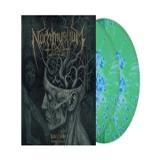
11
Originally unleashed in 2014, Watchers of Rule stands as one of the most aggressive, intense, and relentless entries in Unearth's catalog.
pre-order now20 Nov
expected to be published on 20 Nov
38,61 €
Originally unleashed in 2014, Watchers of Rule stands as one of the most aggressive, intense, and relentless entries in Unearth's catalog.
expected to be published on 20 Nov
Fuglen flyr godt (“The bird flies well”) is the second solo album by Norwegian multidisciplinary artist Espen Friberg, following 2022’s Sun soon (Hubro). Recorded in the coastal town of Hvitsten, Norway, through the winter and spring of 2025–26, the album consists of eleven pieces made entirely on the Serge Modular synthesizer. Through improvisation and experimentation, Friberg treats the Serge as a shifting network of relationships, developing a vocabulary of idiosyncratic melodies and textures by turns warm, fluid, woody, and curiously animate.
This is music developed in close proximity to Friberg’s surroundings in Hvitsten—pine forests, smooth seaside rocks, and changing winter light. Rather than translating these things into anything explicitly programmatic, Fuglen flyr godt absorbs their scale and ephemerality. Friberg follows his instrument into unexpected places: patterns cohere and slip apart, rough textures give way to passages of peculiar delicacy, and the open-ended architecture of the Serge yields a broad range of gestures and environments.
Mixed and produced by Friberg’s longtime collaborator Jenny Berger Myhre (Flutter Ridder) and mastered by Eivind Opsvik, Fuglen flyr godt finds Friberg bringing his characteristic lightness of touch to the Serge ecosystem, coaxing organic, playful music from its unruly circuitry—music that feels of a piece with the landscape around him.
expected to be published on 20 Nov

Incl Satoshi Fumi Remix. The titles set the mood: shouting at an empty sky, beauty in ruin, a fire that catches on wet ground. That is a dark, tense picture, and it fits the genres the record is filed under. Four tracks, one producer, one remixer, and a clear line from Detroit to acid.
expected to be published on 27 Nov
Second chapter is here! A double release by Lakej that dives into a rawer, more direct and uncompromising direction. Six tracks that move between tension and precision, shaping a landscape where everything breathes darkness and control. Featuring the release, two reinterpretations that expand its universe: Orbe brings his hypnotic and elegant approach, while Psyk pushes the material into a more introspective and mental territory. Another step in Analog Decay’s identity.
Ready to ship

Polytechnic Recordings - sublabel of Disctechno Music - presents a split EP of jacking house and psychedelic rhythms from Detroit’s DJ Slush and Dretraxx. Label co-founder DJ Slush follows up his Model Collapse EP with 2 jacking, sleazy, 80's-tinged house tracks with garbled vocal samples on A1 and B2. Dretraxx - head of Detroit’s acid-forward Body Worx party - delivers dubbed out modular grooves and on A2. On B1, Interdimensional Transmissions’ BMG remixes Dretraxx for the No Way Back Mix, with some freaky heart-pumping analog techno. Recommended for fans of Midwest rhythms.
Ready to ship

Ready to ship

Decay Records celebrates its tenth anniversary with a new EP from Italian duo Neverdogs, backed by remixes from Nu Zau and Ivan Iaobucci.
Over the past decade Decay Records has firmly cemented itself as a purveyor of sophisticated stripped back house sounds, releasing music from the likes of Shaun Reeves, Mihai Popoviciu, Christian Burkhardt, Alex Arnout and of course Neverdogs duo who return here to mark the labels milestone ten years of existence. The Italian Neverdogs duo have been steadily making their own mark over the past decade through material on Bamboleo, Kluki, This And That and Tamango.
Title-cut "In The Mood" leads with crisp drums, hazy atmospherics and a dynamically evolving construction. Ivan Iacobucci's twist on "In The Mood" follows and shifts the original into a murky, twisted interpretation with choppy stabs, glistening textures and crunchy drums intertwined with fragments of the original.
"Lion Heart" follows on the flip side and lays focus on a bouncy bass groove, plucked synth stabs and shuffled percussion before Nu Zau's take on "Lion Heart" rounds out the release, employing twisted acid squelches, dubby synth flutters and subtly nuanced drums all unfurling across its six-minute duration.
Ready to ship

Nuclear decay occurs when the nucleus of an atom is unstable and spontaneously emits energy in the form of radiation. The result is that the nucleus changes into the nucleus of one or more other elements. These daughter nuclei have a lower mass and are more stable (lower in energy) than the parent nucleus.
“Ábris Gryllus is a cross-disciplinary media artist and musician based in Budapest. He is well-known for several projects, collaborations and performative works with choreographers, sculptors, dancers and other musicians. As a tireless artist always open to new possibilities, Gryllus has worked on dance pieces, educational workshops and installations; he is one-half of the beat-oriented group FOR., and not least of all, he produces immersive electronic music under his own name. His solo materials include the frantic vocal-based ‘Canon’ (The Death of Rave) and two releases on Farbwechsel (‘Post_’, ‘A.D.’) that feature a rather focused, slowly forming approach to composition.
Ready to ship

Connie & Karina join forces as C&K for the ‘Behave’ EP, coming via the UK’s Decay Records, featuring remixes from Molly and Mihai Popoviciu.
Across the past decade Decay Records has released material from the likes of Neverdogs, Javier Carballo, Alex Arnout, Hanfry Martinez, Javi Bora and Jay Tripwire among others, cementing itself as a staple of the raw, underground house scene. Here the label welcomes Connie & Karina onto the roster under their C&K guise with a new project.
The original mix of ‘Behave’ leads and lays down modulating synth swells, trippy vocal chants and airy synth textures atop a crisp, shuffled groove. Romania’s Mihai Popoviciu then reworks ‘ Behave’ next, embracing his signature aesthetic and reworking the original into a dubbed out, percussive led dance floor workout.
On the flip-side is ‘January’, where C&K take a more dark and gritty approach via undulating synth flutters, ghostly atmospherics, a sturdy low-end drive and eerie chimes. French artist Molly then rounds out the release with her take on ‘January’, extracting the core essence of the original while twisting into something more ethereal, subtly unfurling and gentle aesthetically.
Ready to ship

TechnoTechnoBeatsBreak-BeatJungle
*Vinyl Only*
Spirits From An Urban Jungle – A group consisting of JMJ & Richie (Moving Shadow/Good Looking) and Tekniq (Moving Shadow/Formation) who released two EPs on Whitehouse Records in 1994 and a recent, quickly sold out, EP on Vinyl Fanatiks sister label – Amen brother.
Their first release on Whitehouse was repressed by Vinyl Fanatiks in 2020 on red vinyl and sold out. This is a limited run on blue vinyl and is some deeper, Bukem styled tracks that pre-dated the ‘intelligent’ drum & bass sound that went stratospheric the following year.
Rolling in da shadows…
Ready to ship

Over the past few years an increasing number of bands hailing from the former USSR have been appearing on the screens and the phones of the so-called Western world’s underground music enthusiasts.
With most of them being pretty obscure and only a very few ones having established a worldwide following (Motorama, Molčat Doma) the Sovietwave tag has worked usefully enough as a tool to identify a wide range of bands each one with a different sound and yet something in common. Whether it be the harsh weather or just the distance creating an exotic effect, there is some icy-cold touch with these bands that immediately makes you know they’re from Russia, regardless of the language they perform.
This goes for Blind Seagull too.
The trio from Kaliningrad, a small russian enclave on the Baltic Sea between Poland and Lithuania, has been around since quite a few years now, releasing tapes and limited edition vinyls on labels like Detriti, Sierpen and Pine Hill.
Finally taking up the challenge of writing a longer full-length (previous albums were seven or eight track long at best), the trio led by Denis Zarubin has created twelve new songs that shine a light on the impressive skills of this young combo to deliver very classic and yet extremely fresh and modern cold post-punk gems.
Keeping it short and sweet, their two-three minutes long compositions cut right to the chase of the darkwave soul: stomping drum machines, frozen guitar arpeggios, tense bass riffs. The formula is occasionally rocked by the intervention of laser synths, noise raids and gothic chorale, while the industrial pièce of the title-track and the IDM-tinged collaboration with experimental giants Xiu Xiu ‘Fear’ will show how this band stands out and how their upcoming, new album is the best proof of this.
Ready to ship

We bring Patrik Carrera to our team, starting our relationship with this "Inevitable Decay EP". The Australian born, Berlin based producer, offers four slices of modern techno, balancing aggression with hypnosis along four cuts.
"Standing Fog" uses a mega distorted kick and resonant hypnotic bleeps on top, reminding the old X 102 feeling. No remorse in this track, straight to the point madness.
"Altered Form" relies on a complex groove, with asymmetrical components and is heavily texturized, the main synth line goes on forever while different elements go back and forth. The rhythm grows in intensity on the final moments, adding distortion and dirtiness.
"Liquid Toil" goes hyperspace, abstract sinusoidal sequences float over an opaque groove that is soon filled with shuffled 909 hats and sci-fi textures. Jeff Mills will love this one.
"Influx" puts the eye in old Birmingham tools, with a reverberated repetitive sequence over a shuffled beat, things move just a bit, keeping the pace linear and obsessive making a superb mixing tool.
A diverse EP with a personal approach to intelligent dance territories, music that could be from 10 years after today, from the future.
Ready to ship

Mothers of All is Mark Gomes' second album as Blue Chemise for Students of Decay, following 2018’s acclaimed Daughters of Time. Though built from very different materials, it shares its predecessor's economy, sense of proportion, and fascination with the ways domestic life can open onto larger and less easily defined realms. Where Daughters of Time evoked tender, if alien, nursery songs, Mothers of All takes the form of spectral salon music heard at a temporal and geographic remove.
These pieces feel fundamentally receptive, with Gomes allowing his chosen fragments to retain their own histories - both personal and aesthetic - while revealing unexpected tonal relationships through their idiosyncratic arrangement. The resulting music is at once deeply personal and strangely unmoored, a space where the intimate and the distant occupy the same plane.
What lingers about this project as a whole is the paradox that the most private experiences can also be the least singular: that family, memory, and devotion become most legible at the point where they cease belonging to any one life.
expected to be published on 02 Oct

“Music for me, is rarely complete,” says GODFLESH mastermind Justin Broadrick, “but it has to reach a point where enough is enough. Creatively, there has to be self-discipline. One has to end it.” Broadrick is primarily referring to the nebulous process of writing and arranging songs into their various potential shapes, but he could just as easily be describing GODFLESH’s imminent conclusion. Just three years after the hypnotic crunch of Purge, 25 years after an uncertain hiatus that nearly scuttled the band, and 38 years since GODFLESH’s inception, Broadrick and bassist-at-arms Ben Green set out to mercilessly crush this cold world with their tenth and penultimate album, this year’s Decay. “Decay was born from the same sessions as Purge,” Broadrick declares of the new record’s six tracks. “It was one huge pool of songs. I picked what I felt was appropriate for what I wanted to achieve with Purge, with the intention of releasing the songs that didn't fit as a new album within a year of Purge being released. Unfortunately, two years passed whilst considering external labels, so that I didn't have to self-release GODFLESH anymore, but it took an awful lot of time to establish a comfortable home for me. The recordings were done, but as usual for me, I did change a lot of stuff once I came back to it.” Now, GODFLESH is ready to unleash an even bolder, bleaker series of sounds in Decay. These songs arrive shortly after Broadrick released a public statement about major abdominal surgery he underwent earlier this year.
expected to be published on 25 Sep
Over the course of more than four decades, Andrew Chalk has created one of ambient and experimental music's most distinctive, influential, and enduring bodies of work. Though his recordings have taken many forms—from the raw, post-Industrial sounds of Ferial Confine in the 1980s to the fragile guitar meditations, blurred keyboard studies, and richly textured collages that populate the Faraway Press catalogue—they remain united by a singular sensibility: an uncommon attentiveness to atmosphere, nostalgia, and the power of restraint.
Mystical Obscurant offers a rare opportunity to encounter the expansive character of that oeuvre in miniature. Rather than documenting a single period or methodology, it functions almost like a survey of Chalk's musical language—a collection of new music that illuminates the breadth of his practice while distilling the singular vision that unites it.
“The Sea of Sorrow” and “Peacemaker” feel cut from the same cloth as the sacred guitar minimalism of The River That Flows Into the Sands, while “Against the Tide” would sit naturally alongside the smudged and distant keys of Blue Eyes of the March. Other pieces draw upon environmental sound and loop-based constructions, hallmarks of Chalk's more recent, vignette-like compositions. Though these recordings emerge from different moments in his long creative journey, each inhabits a recognizable world: one where melodies drift in diffuse, unhurried forms and sound gathers with painterly grace.
What is most striking when these pieces are heard together is not their difference but their coherence. Across changing instruments, collaborators, and approaches, Chalk has consistently pursued a subjunctive music of suggestion rather than declaration, creating spaces where memory and imagination are allowed to unfold at their own pace.
expected to be published on 04 Sep

Nothing have always been rule-breakers. Shoegaze renegades who've rebuilt the stereotypically lightweight genre in their own bloodyknuckled American image. Outlaw poets spilling existential dread on mile-wide canvasses of fuzz and reverb. Beginning as a Philly-born bedroom solo project in 2010, Nothing's music has always captured the full scale of the human condition, both the blaring anger and the whispering sadness. a short history of decay, Nothing's fifth solo album and first for Run For Cover Records, widens that aperture even further, providing the most hi-def rendering of Nothing to date. The band have never sounded this colossal, never felt this intimate, never been this honest. With the strongest arsenal in Nothing's ever-shifting lineup locked in -- guitarist Doyle Martin (Cloakroom), bassist Bobb Bruno (Best Coast), drummer Zachary Jones (MSC, Manslaughter 777), and third guitarist Cam Smith (Ladder To God, also of Cloakroom) -- singer-songwriter Domenic "Nicky" Palermo knew he had the manpower to make the band's most ambitious record yet. Co-written and produced with Whirr guitarist Nicholas Bassett, and with additional production and mixing work from Sonny Diperri (DIIV, Julie), a short history of decay, is the most evolved musical statement in Nothing's catalog. Songs like "Cannibal World" and "Toothless Coal" are cataclysmic lashings of mechanized industrial-gaze that sound like My Bloody Valentine -- except more extreme. On the other end of the spectrum, the ornately morose "Purple Strings" boasts a beautiful string arrangement that includes harpist -- and two-time Nothing contributor -- Mary Lattimore. That baroque delicacy permeates other a short history of decay, highlights, particularly "The Rain Don't Care," a lilting ballad that channels the worn-down elegance of Mojave 3, and also "Nerve Scales," a pattering bop that resembles Radiohead in its marriage of otherworldly atmosphere and mortal precision. Palermo calls the new record "a final chapter." Not the end of Nothing, but the conclusion of a story that began with Nothing's 2014 debut, Guilty of Everything -- another album about time, regret, and confronting uncomfortable truths -- and now resolves with a short history of decay,. As much a snapshot of Palermo's past as it is a leap into Nothing's future.
expected to be published on 07 Aug
"Remnants" is an album marked by the ambiguity of presence and absence. The pieces, recorded using minimal equipment in what Suzuki describes as a ritual-like atmosphere, began as a way of processing the loss of her father in 2019. But beyond this, they also come to speak to the ways in which loss changes our relationship with someone, and our experiences of the world. Indeed, the experience of loss is not marked merely by a single event, but is instead a process that unfolds over time. Despite the other's absence, a particular location, the smell of a certain brand of tobacco, a look on a friend's face - traces such as these are enough to bring about a renewed presence.
It is through these subtle traces and remnants, encountered over time, that we come to understand loss as not only the acceptance of absence, but the recognition of a continued presence. As Suzuki says, "this is not a solo album." Its creation was instead shaped by an ongoing dialogue, the continued elaboration of a complex and ambivalent relationship. At once melancholic, warm, and embracing, it is this ambiguity, these subtle traces, that Suzuki’s compositions speak to. These are not merely the sounds of mourning, but instead have been shaped by the evolving dialectic of presence and absence into something far more subtle and haunting. (Zefan Sramek, 2026)
expected to be published on 05 Jun
Josh Mason’s new collection, "Wave Salt +7," emerges from an oblique origin. Unearthed from a dormant hard drive, it documents a set of work sessions only partially recoverable, their original continuity and intent fractured by time and technical failure. What remains is a constellation of mercurial gestures that proves, against all odds, to be entirely consonant with Mason’s ongoing musical concerns.
In a sense, the very condition of partiality proves generative, with elision operating on multiple levels - structural, sonic, and archival - shaping both the music itself and the circumstances of its (re)appearance. Phrases surface only to be truncated or displaced, hovering at the edge of resolution, and transitions are implied rather than fully enacted. Absence functions not as a deficit, but as an important compositional resource.
Central to the album’s sound is a distinctive use of vocoding. Deployed not to simulate vocal presence but as a tool for tonal sculpting, it yields a shifting lattice of smeared harmonics, angular melody, and attenuated noise. Sounds are pressed through one another, their edges softened, shifted, or selectively erased, producing surfaces simultaneously articulated and porous. Rather than reconstructing a lost whole, the album posits a mode of listening attuned to gaps, interruptions, and unstable forms. Even so, in keeping with Mason’s broader practice, this music remains grounded in melodic logic and a distinctly human scale, ensuring that its fragmentary structures register not solely as experiments, but as expressions of proximity and feeling.
expected to be published on 29 May
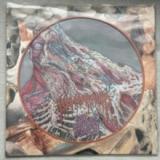
Extremely Rotten Productions are disgusted to present the picture disc pressing of the 2024 debut album by US septic gory death grinders HEMORRHOID
A total annihilation of anything sacred and sane, total grinding death metal filth – ABSOLUTELY NOT FOR WIMPS
Comes in heavy cardboard stock die cut LP jacket with full colour insert and A3 size full colour poster.
expected to be published on 01 May

High Roller Records, deluxe plastic bag, cardboard insert, handnumbered, ltd 500, mastered for vinyl by Patrick W. Engel at Temple of Disharmony
expected to be published on 27 Mar
Nothing waren schon immer Regelbrecher. Shoegaze-Rebellen, die das typischerweise leichtgewichtige Genre nach ihrem eigenen, knallharten amerikanischen Image neu erfunden haben. Outlaw-Poeten, die existenzielle Ängste auf kilometerbreiten Leinwänden aus Fuzz und Hall ausbreiten. Angefangen als Solo-Projekt in einem Schlafzimmer in Philadelphia im Jahr 2010, hat die Musik von Nothing immer die ganze Bandbreite des Menschseins eingefangen, sowohl die schreiende Wut als auch die flüsternde Traurigkeit. ,A Short History of Decay", das fünfte Soloalbum von Nothing und das erste für Run For Cover Records, erweitert diesen Horizont noch weiter und bietet die bisher hochauflösendste Darstellung von Nothing. Die Band hat noch nie so kolossal geklungen, sich noch nie so intim angefühlt, war noch nie so ehrlich. Mit dem stärksten Arsenal in der sich ständig verändernden Besetzung von Nothing - Gitarrist Doyle Martin (Cloakroom), Bassist Bobb Bruno (Best Coast), Schlagzeuger Zachary Jones (MSC, Manslaughter 777) und dem dritten Gitarristen Cam Smith (Ladder To God, ebenfalls von Cloakroom) - wusste Singer-Songwriter Domenic ,Nicky" Palermo wusste, dass er die nötige Manpower hatte, um das bisher ambitionierteste Album der Band aufzunehmen. Mitgeschrieben und produziert wurde es zusammen mit Whirr-Gitarrist Nicholas Bassett, zusätzliche Produktions- und Mixing-Arbeiten übernahm Sonny Diperri (DIIV, Julie). a short history of decay ist das musikalisch ausgereifteste Statement im Katalog von Nothing. Songs wie ,Cannibal World" und ,Toothless Coal" sind katastrophale Ausbrüche mechanisierten Industrial-Gaze, die wie My Bloody Valentine klingen - nur extremer. Am anderen Ende des Spektrums steht das kunstvoll-düstere ,Purple Strings" mit einem wunderschönen Streicharrangement, an dem die Harfenistin und zweifache Nothing-Mitwirkende Mary Lattimore beteiligt ist. Diese barocke Zartheit durchdringt auch andere Höhepunkte von ,A Short History of Decay", insbesondere ,The Rain Don't Care", eine beschwingte Ballade, die die abgenutzte Eleganz von Mojave 3 kanalisiert, sowie ,Nerve Scales", ein prasselnder Bop, der in seiner Verbindung von jenseitiger Atmosphäre und tödlicher Präzision an Radiohead erinnert. Palermo bezeichnet das neue Album als ,letztes Kapitel". Nicht das Ende von Nothing, sondern der Abschluss einer Geschichte, die mit dem Debütalbum von Nothing aus dem Jahr 2014, Guilty of Everything, begann - einem weiteren Album über Zeit, Reue und die Konfrontation mit unangenehmen Wahrheiten - und nun mit A Short History of Decay ihren Abschluss findet. Es ist ebenso sehr eine Momentaufnahme von Palermos Vergangenheit wie ein Sprung in die Zukunft von Nothing.
expected to be published on 27 Feb

Nothing waren schon immer Regelbrecher. Shoegaze-Rebellen, die das typischerweise leichtgewichtige Genre nach ihrem eigenen, knallharten amerikanischen Image neu erfunden haben. Outlaw-Poeten, die existenzielle Ängste auf kilometerbreiten Leinwänden aus Fuzz und Hall ausbreiten. Angefangen als Solo-Projekt in einem Schlafzimmer in Philadelphia im Jahr 2010, hat die Musik von Nothing immer die ganze Bandbreite des Menschseins eingefangen, sowohl die schreiende Wut als auch die flüsternde Traurigkeit. ,A Short History of Decay", das fünfte Soloalbum von Nothing und das erste für Run For Cover Records, erweitert diesen Horizont noch weiter und bietet die bisher hochauflösendste Darstellung von Nothing. Die Band hat noch nie so kolossal geklungen, sich noch nie so intim angefühlt, war noch nie so ehrlich. Mit dem stärksten Arsenal in der sich ständig verändernden Besetzung von Nothing - Gitarrist Doyle Martin (Cloakroom), Bassist Bobb Bruno (Best Coast), Schlagzeuger Zachary Jones (MSC, Manslaughter 777) und dem dritten Gitarristen Cam Smith (Ladder To God, ebenfalls von Cloakroom) - wusste Singer-Songwriter Domenic ,Nicky" Palermo wusste, dass er die nötige Manpower hatte, um das bisher ambitionierteste Album der Band aufzunehmen. Mitgeschrieben und produziert wurde es zusammen mit Whirr-Gitarrist Nicholas Bassett, zusätzliche Produktions- und Mixing-Arbeiten übernahm Sonny Diperri (DIIV, Julie). a short history of decay ist das musikalisch ausgereifteste Statement im Katalog von Nothing. Songs wie ,Cannibal World" und ,Toothless Coal" sind katastrophale Ausbrüche mechanisierten Industrial-Gaze, die wie My Bloody Valentine klingen - nur extremer. Am anderen Ende des Spektrums steht das kunstvoll-düstere ,Purple Strings" mit einem wunderschönen Streicharrangement, an dem die Harfenistin und zweifache Nothing-Mitwirkende Mary Lattimore beteiligt ist. Diese barocke Zartheit durchdringt auch andere Höhepunkte von ,A Short History of Decay", insbesondere ,The Rain Don't Care", eine beschwingte Ballade, die die abgenutzte Eleganz von Mojave 3 kanalisiert, sowie ,Nerve Scales", ein prasselnder Bop, der in seiner Verbindung von jenseitiger Atmosphäre und tödlicher Präzision an Radiohead erinnert. Palermo bezeichnet das neue Album als ,letztes Kapitel". Nicht das Ende von Nothing, sondern der Abschluss einer Geschichte, die mit dem Debütalbum von Nothing aus dem Jahr 2014, Guilty of Everything, begann - einem weiteren Album über Zeit, Reue und die Konfrontation mit unangenehmen Wahrheiten - und nun mit A Short History of Decay ihren Abschluss findet. Es ist ebenso sehr eine Momentaufnahme von Palermos Vergangenheit wie ein Sprung in die Zukunft von Nothing.
expected to be published on 27 Feb

Nothing waren schon immer Regelbrecher. Shoegaze-Rebellen, die das typischerweise leichtgewichtige Genre nach ihrem eigenen, knallharten amerikanischen Image neu erfunden haben. Outlaw-Poeten, die existenzielle Ängste auf kilometerbreiten Leinwänden aus Fuzz und Hall ausbreiten. Angefangen als Solo-Projekt in einem Schlafzimmer in Philadelphia im Jahr 2010, hat die Musik von Nothing immer die ganze Bandbreite des Menschseins eingefangen, sowohl die schreiende Wut als auch die flüsternde Traurigkeit. ,A Short History of Decay", das fünfte Soloalbum von Nothing und das erste für Run For Cover Records, erweitert diesen Horizont noch weiter und bietet die bisher hochauflösendste Darstellung von Nothing. Die Band hat noch nie so kolossal geklungen, sich noch nie so intim angefühlt, war noch nie so ehrlich. Mit dem stärksten Arsenal in der sich ständig verändernden Besetzung von Nothing - Gitarrist Doyle Martin (Cloakroom), Bassist Bobb Bruno (Best Coast), Schlagzeuger Zachary Jones (MSC, Manslaughter 777) und dem dritten Gitarristen Cam Smith (Ladder To God, ebenfalls von Cloakroom) - wusste Singer-Songwriter Domenic ,Nicky" Palermo wusste, dass er die nötige Manpower hatte, um das bisher ambitionierteste Album der Band aufzunehmen. Mitgeschrieben und produziert wurde es zusammen mit Whirr-Gitarrist Nicholas Bassett, zusätzliche Produktions- und Mixing-Arbeiten übernahm Sonny Diperri (DIIV, Julie). a short history of decay ist das musikalisch ausgereifteste Statement im Katalog von Nothing. Songs wie ,Cannibal World" und ,Toothless Coal" sind katastrophale Ausbrüche mechanisierten Industrial-Gaze, die wie My Bloody Valentine klingen - nur extremer. Am anderen Ende des Spektrums steht das kunstvoll-düstere ,Purple Strings" mit einem wunderschönen Streicharrangement, an dem die Harfenistin und zweifache Nothing-Mitwirkende Mary Lattimore beteiligt ist. Diese barocke Zartheit durchdringt auch andere Höhepunkte von ,A Short History of Decay", insbesondere ,The Rain Don't Care", eine beschwingte Ballade, die die abgenutzte Eleganz von Mojave 3 kanalisiert, sowie ,Nerve Scales", ein prasselnder Bop, der in seiner Verbindung von jenseitiger Atmosphäre und tödlicher Präzision an Radiohead erinnert. Palermo bezeichnet das neue Album als ,letztes Kapitel". Nicht das Ende von Nothing, sondern der Abschluss einer Geschichte, die mit dem Debütalbum von Nothing aus dem Jahr 2014, Guilty of Everything, begann - einem weiteren Album über Zeit, Reue und die Konfrontation mit unangenehmen Wahrheiten - und nun mit A Short History of Decay ihren Abschluss findet. Es ist ebenso sehr eine Momentaufnahme von Palermos Vergangenheit wie ein Sprung in die Zukunft von Nothing.
expected to be published on 27 Feb

Step into the ethereal soundscape of Mark Vernon's LP, "The Dramaturgy of Decay." Reminiscent of early fears surrounding recording technology, the album explores ghostly voices, distorted and elusive. Vernon's sonic cinema mirrors the decay found in ruined films, capturing the essence of disappearing places and voices. Amidst themes of death and environmental destruction, the album maintains a delicate balance with humor and familiarity. Through snippets of reworked audio letters, it unveils a soundscape of forgotten moments, extracting life from the transient. "The Dramaturgy of Decay" is a beautifully haunting reflection on time through sound--an otherworldly musical experience for the present.
Last delivered 8 months ago
available to reorder, subject to availability

expected to be published on 05 Dec 2025

expected to be published on 05 Dec 2025

expected to be published on 05 Dec 2025

Green Vinyl[27,94 €]
expected to be published on 28 Nov 2025

Black Vinyl[27,94 €]
expected to be published on 28 Nov 2025

Analog Decay 001 Artist: Translate Remix by Jonas Kopp Format: 12" Vinyl & Digital Release Date: 14.11.2025 Analog Decay proudly announces its debut release: a powerful statement of intent from the label, rooted in raw aesthetics and a deep reverence for the analog medium. For this first chapter, the imprint calls upon Argentine producer Translate, whose distinctive take on sci-fi-infused techno sets the tone for what's to come. The A-side opens with "RAD-100", a hypnotic journey into mechanical rhythm and spectral textures, followed by a forceful reinterpretation by the legendary Jonas Kopp, whose remix brings heightened tension and propulsion to the original narrative. On the B-side, "Pyramids" explores geometric pulse patterns and atmospheric depth, while "Infrared" closes the EP with a dense, pulsating groove designed for late-night transcendence. This release has been meticulously mastered by Giuseppe Tillieci (Neel) at Enisslab (Rome), ensuring a dynamic and immersive sound experience. The visual identity is completed by artwork from Mauricio Atencia, with photography by Paula Romero, reflecting the label's commitment to brutalist minimalism and analog imperfection.
Last delivered 5 months ago
available to reorder, subject to availability

Developed over three years across residencies, tours, and periods of deep listening, “Your Whistle Tells of Landscape” finds Australian sound artist Alexandra Spence continuing her investigations into the perceptual entanglements of sound, place, memory, and imagination. Like much of the artist’s work, it unfolds at the liminal edge between the real and the imagined — between what is heard and what is remembered.
Composed from a constellation of materials gathered across sites and seasons — snowscapes recorded in Vancouver, insect choruses from a Sydney backyard, ceramic fragments unearthed while mudlarking with tinysound — it renders an intimate cartography of experience: one shaped equally by ecological resonance and internal drift. Each piece traces a kind of imaginary geography, where sonic ephemera become proxies for topography, weather, or myth.
The album is informed by time spent at EMS (Stockholm) and MESS (Melbourne), where Spence deepened her engagement with microtonality and tuned feedback systems, and by dialogues with sympathetic artists such as Tashi Wada and Patrick Farmer. Sound materials were sourced from Serge Modular systems, a custom lyre built by Tim Wall, amplified objects, handmade electronics, and Spence’s own field recordings captured within rockpools, beneath sand, and among a flock of sheep in the French Pyrenees. On “Magenta,” a collaboration with Delphine Dora, the domestic and mythic intertwine, as layers of voice, environmental recordings, and Halldorophone feedback drift in and out of one another like overlapping weather systems.
Despite its diverse material palette, the album resists spectacle or accumulation. Instead, it moves with a quiet sense of continuity and a rich interiority — less a sequence of compositions than a set of situated attunements. Across its duration, sounds seem to murmur, glint, or hover right at the edge of presence, invoking a listening practice that is as much about orientation as it is about reception. These are pieces not simply about place, but of place — etched with the grains of time, vibration, and breath.
expected to be published on 17 Oct 2025

Oxblood Blue Silver Merged Vinyl[32,56 €]
expected to be published on 17 Oct 2025

SILVER BLACK Vinyl[28,36 €]
expected to be published on 17 Oct 2025

Returning with its final instalments, Die Schachtel's Decay Music series extends its explorations of inspired contemporary experimental efforts of the ambient, ethereal, and emotively abstract with Luigi Turra and Elio Martusciello’s “Liminale” and Sergio Armaroli and David Toop’s “And I Entered Into Sleep”, two astounding electroacoustic gestures of blurred space and time, plumbing complexity of meaning bound to sonority. Creatively groundbreaking and inspired, radically rethinking the terms of what ambient music can be perceived to be, they stand among the most striking efforts to appear within the series to date.
Reconfiguring the notion of bridge building on a multitude of terms, it feels fitting that the tenth and final installment of Die Schachtel’s Decay Music series, Sergio Armaroli and David Toop’s “And I Entered Into Sleep”, was co-created by an artist whose work featured in the first suite of LPs issued by Brian Eno’s Obscure Records in 1975, the groundwork toward which Decay Music’s own efforts nod. Since that auspicious debut, “New and Rediscovered Musical Instruments” — his split with Max Eastley — David Toop has been regarded as a pioneer in British experimental and improvised music: a sonic voyager who has continuously challenged the sources and materiality of sound through rigorously thoughtful performances, a vast catalog of recordings, and a steady flow of highly influential texts. Be it as a member of Alterations, his group breaking group with Peter Cusack, Terry Day, and Steve Beresford that ran between 1977 to 1986, or through is noteworthy work with artists like Rie Nakajima, Thurston Moore, Paul Burwell, Rhodri Davies, Lee Patterson, Ryuichi Sakamoto, Akio Suzuki, Elaine Mitchener, and numerous others, collaboration has always played a central role within Toop’s singular practice, but few can claim the sprawling sense of beauty and intimacy that’s achieved by “And I Entered Into Sleep”, his first recorded outing with Sergio Armaroli.
A composer, percussionist, vibraphonist, and multidisciplinary artist, Armaroli has been issuing radical and forward-thinking musical gestures for decades, working as one of Italy’s most noteworthy interpreters of composer’s like Giacinto Scelsi, John Cage, Franco Evangelisti, Giancarlo Schiaffini, and Walter Branchi, as both a solo performer and member of the highly regarded Rib Trio, as well as forging a singular practice as a composer, intertwining his efforts as a painter, concrete percussionist, fragmentary poet and sound artist, within a total art, rooted “within the language of jazz and improvisation” as an “extension of the concept of art”. Like Toop, Armaroli’s career has been populated by many collaborators, notably with Riccardo Sinigaglia, Alvin Curran, and Walter Prati, among others, setting the stage for a remarkable meeting between the pair.
Featuring Armaroli on vibraphone and prepared vibraphone and Toop on electronics, “And I Entered Into Sleep” is “a sonic journey, a Proustian suggestion à la Recherche, into the unconscious between electronic and acoustic sounds”. Using a bell that sounds at the beginning of Proust’s “À la Recherché du Temps Perdu”, which reappears more than 3,000 pages later — signaling a transition of phases, as well an auditory trigger of memory — as a departure point, as an association to the percussive vibraphone pulses that thread the album’s two sides, the pair weave a striking interior world of immersive psychological depth. Feeling almost subaquatic at times, like captured glimpses of rumbling, shadowy ecosystems lost within murky ambiences, before washing ashore in a series of pointillistic, highly detailed alien landscapes of the mind, each artist’s markedly different sound-sources, and treatment of the subsequent material elements, dance in abstract grace, incorporating subtle nods to minimalism, free jazz, and musique concrète within its seamless total form of sparse texture and tone.
Easily one of the most striking and memorable releases by either artist to appear in recent years, Sergio Armaroli and David Toop’s “And I Entered Into Sleep” traverses uncharted realms at the borders of literary reference, sound art, ambience and abstraction through delicately musical sounds, revealing new depths at every turn. Issued as the tenth and final album in Die Schachtel’s Decay Music series, highlighting inspired contemporary experimental efforts of the ambient, ethereal, and emotively abstract.
Last delivered 12 months ago
available to reorder, subject to availability

Returning with its final instalments, Die Schachtel's Decay Music series extends its explorations of inspired contemporary experimental efforts of the ambient, ethereal, and emotively abstract with Luigi Turra and Elio Martusciello’s “Liminale” and Sergio Armaroli and David Toop’s “And I Entered Into Sleep”, two astounding electroacoustic gestures of blurred space and time, plumbing complexity of meaning bound to sonority. Creatively groundbreaking and inspired, radically rethinking the terms of what ambient music can be perceived to be, they stand among the most striking efforts to appear within the series to date.
An aural bridge between two distinct generations of Italian experimental musicians, “Liminale” is the debut collaborative outing from the creative partnership of Luigi Turra and Elio Martusciello. Active within the context for roughly two decades, Turra (b. 1975) is a reductionist/electroacoustic composer, noted from his tense deployment of concrete and acoustic sources — particularly small sounds and noises — whose work threads the balance between silence, tactile auditory perception, and aleatoric music. Martusciello (b. 1959), on the other hand, is a musician and composer working across the fields of acousmatic and electroacoustic composition, sound installation, multi-media and audiovisual art, and computer music improvisation, who is widely celebrated for both his solo efforts and his collaborations with Eugene Chadbourne, Mike Cooper, Alvin Curran, Chris Cutler, Rhodri Davies, Iancu Dumitrescu, Michel Godard, Tim Hodgkinson, Lawrence D. "Butch" Morris, Jérôme Noetinger, Tony Oxley, Evan Parker, Z'EV, and others.
A single, nearly 40 minute work, extending across the two sides of the LP, “Liminale” — as its title eludes — is an exploration of the liminal through sonic means: “places that exist on the threshold, transitional spaces suspended between a before and an after, between the real and the evanescent” conceiving the soundscape as “a liminal place, a space to be inhabited without the certainty of where it leads.” Unfurling like a labyrinth navigated in darkness, the piece’s first half is marked by sparseness and restraint, as slow-paced guitar tones and harmonics thread silences and resonant ambience within a sprawling sense of space, delicately populated by tiny sounds, fleeting punctuations drawn from undeterminable sources, vocal utterances, and the unexpected appearance of intoxicating piano tones.
As “Liminale” progresses into its second half, Turra and Martusciello enter a more densely populated notion of the in between. No less defined by the presence of space and mystery, discreet textures rustle and writhe within passages of pure concrete abstraction and a fragmented, stretched sense of musicality: long-tones, metallic pulses, minimal vibrations, processed vocalizations, guitar harmonics, and deconstructed piano melodies, buried in spectral, gauzy hazes drifting from beyond arm’s reach within an imagistic and immersive landscape of profoundly meditative scope, where each sonic element flirts the line between emergence and disappearance.
Intimate, fragile, and achingly beautiful, “Liminale”, Luigi Turra and Elio Martusciello’s debut collaboration, is a masterstroke in sound-craft and composition, revealing the potency of meaning locked within transitional spaces and the undefined, and imbuing silence with monumental gravity and weight. Mastered for vinyl by Giuseppe Ielasi, and taking electroacoustic minimalism to an etherial extreme, “Liminale” is issued as the ninth entry in Die Schachtel’s Decay Music series, highlighting inspired contemporary experimental efforts of the ambient, ethereal, and emotively abstract.
Last delivered 12 months ago
available to reorder, subject to availability

Students of Decay presents The Dip, a new full-length recording by Berlin-based artist and composer Thomas Ankersmit, marking his debut with the label and sixth album to date. Comprised of two expansive, sidelong pieces composed entirely on the Serge Modular synthesizer, it signals a subtle yet significant shift in Ankersmit’s trajectory, imbuing the hyper-physical, psychoacoustic intensities of his live performances with introspective, atmospheric, and even melodic elements.
Primarily known for a site-responsive approach to sound, often realized in the moment of performance, Ankersmit’s turn toward the studio in the last few years has opened up a new dimension within his practice. It is in this quiet rupture that The Dip emerged, a study in internality and suspended states, rich with cinematic undercurrents and ghostly spatial suggestion. Here, electricity itself feels transfigured – becoming supple, even organic – within an environment shaped entirely by analog signals.
Over the past two decades, Ankersmit has established himself as one of the foremost practitioners of the Serge, the notoriously idiosyncratic and expressive instrument that has remained central to his work. On The Dip, he harnesses its potential not for brute force or disorientation, but for spaciousness, resonance, and lyrical abstraction. Without resorting to additional processing or effects, he draws out tones that feel simultaneously raw and refined, articulated and blurred – intricate structures that seem to breathe and evolve of their own volition.
The result is a kind of auditory hallucination, a “cinema for the ears,” wherein impressions, emotional arcs, and imagined topographies unfold. Each side of The Dip plays like a single gesture unfolding in time – a spatial narrative constructed through vibration, density, and the movement of air.
The Dip follows acclaimed works on PAN, Touch, and Shelter Press, and reaffirms Thomas Ankersmit’s position as one of the most focused and probing voices in contemporary experimental music. Quietly radical and meticulously constructed, it is less a departure than a deepening – a descent into a more private sonic world, where the boundaries between perception, memory, and pure signal dissolve.
expected to be published on 29 Aug 2025

expected to be published on 29 Aug 2025

Philadelphia's THE WONDER YEARS are set to release Burst & Decay Vol. III on May 9 via Hopeless Records. This third installment of their stripped-back series introduces a new track, "Junebug," written by vocalist Dan Campbell about his younger son and produced by Steve Evetts (SAVES THE DAY, LIFETIME). On the record, Campbell's personal narrative continues with "Wyatt's Song (Your Name)," a piece crafted for his older son that employs the actual recording of Wyatt's in-utero heartbeat as its metronome. Closing the album, "Doors I Painted Shut" delivers cinematic intensity through vibrant vocals and production led by guitarist Nick Steinborn, signaling a confident exploration into new sonic territory. Burst & Decay Vol. III also features collaborative reinterpretations of signature tracks. On "Came Out Swinging," Joe Taylor of KNUCKLE PUCK lends dynamic vocals, while Zayna Youssef of SWEET PILL amplifies the raw vulnerability on "Oldest Daughter." Ryland Heagy of ORIGAMI ANGEL offers a tender performance on "I Don't Like Who I Was Then." Over a career spanning more than a decade, THE WONDER YEARS have toured extensively_sharing stages with MY CHEMICAL ROMANCE, PARAMORE, DESCENDANTS, THURSDAY, BLEACHERS, and others_and built a community through their own label and the annual Loneliest Place On Earth festival, which has showcased acts such as HOT MULLIGAN, ORIGAMI ANGEL, and LAURA STEVENSON. Their previous album, The Hum Goes On Forever, debuted at #3 on the US Alternative Album Chart and earned recognition from Paste Magazine as one of the best records of the 2020s, while the track "Year of The Vulture" was chosen as the theme for WWE NXT's Stand and Deliver event.
expected to be published on 09 May 2025

expected to be published on 25 Apr 2025

BeatsExperimentalPopElectronica
Flutter Ridder is the duo of Norwegian multidisciplinary artists Espen Friberg and Jenny Berger Myhre, both of whom play important roles in Oslo’s contemporary art and music underground. The pair first collaborated during the production of Friberg’s debut solo record, “Sun Soon” (Hubro, 2022), quickly recognizing in one another a creative kinship rooted in a playful, intentionally naive approach towards making art. In November of 2023, the pair decamped to the coastal town of Hvisten in southeastern Norway to record what would become this debut, self-titled album in an ancient wooden church. Drawing from a palette of Friberg’s idiosyncratic Serge modular system and the church’s resident pipe organ and intoxicating acoustic reverb, they began recording and sculpting music informed by the notion that air and electricity share a common flow, a continuous current that can be directed through valves and potentiometers. The pair came to think of the Serge and pipe organ as sibling instruments, the former yielding characteristically unpredictable and complex timbres that complement the wooly, reedy drones and strange, microtonal overtones of the latter. At once sublime, liturgical, and whimsical, Flutter Ridder offers its listener a series of moving, cinematic natural landscapes, affirming the sensibilities of its makers and the indelible influence of the environment in which it was produced.
Last delivered 18 months ago
available to reorder, subject to availability