Solo 500 delivers another irresistible donut that takes the form of this 2-sided celebration of afro-latin & jazz-funk classics. GSC dusts off 2 deep catalog selections here — & part of the appeal is that neither side is a played-out sample cliché. This one is for heads who already burned through the obvious joints.
Side A digs into Manu Dibango beyond the endlessly flipped “Soul Makossa” universe. “The Panther”, from the 1973 album “Africadelic”, isn’t one of his commonly sampled tracks — & that’s exactly why it hits so hard. Low-slung Afro-funk, stalking bass & suspense-building horns that feel like a break record even if they haven’t been rinsed by every golden-era producer. Selectors who chase texture over recognition will understand the power here immediately. It’s the kind of cut hip-hop heads love not because they’ve heard it before — but because they haven’t.
Side B moves into Latin jazz-funk royalty. Ray Barretto is one of the most sampled percussionists of all time, but “Together” (from the 1969 album of the same name) sits slightly off the obvious break-beat path. Instead of a clean, isolated drum loop, you get rolling congas, warm keys & a communal groove that’s been DJ-tested far more than it’s been sampled. This is the type of Barretto cut that crate-diggers pull when they want rhythm to breathe — bridging jazz floors, disco-leaning sets & hip-hop selectors who think like musicians, not beat miners.
quête:dee la
The long-awaited reissue of Another Song by Music Service, one of the finest Italo-Disco tracks goes to Antony Soumas, the amazing Greek DJ owner of Disco Time Records in Athens. Tony's passion for Italo-Disco style is known worldwide and is worth further amplifying. Among the spin-offs conceived by Amin-Peck (editor's note: in strict Bolognese dialect means "I hang myself!"), Another Song turns out to be the favorite of the "purists" of Italo. The synthesizers of George Fyron and Leonard Parker are excellent as always, but here we also find awesome sauce male voices! In a certain sense you have the sensation of listening to Big In Japan, but perhaps it is just a suggestion of the dee-jays who push one record after another. One last curiosity dictated by the sagacious dj-writer Antonio Stanzani, better known as Ciancio DJ: the Music Service band proposed to Luca Zanarini to sing Another Song, but the lyrics of the song did not yet existed His friend Gianni Ruberti made himself available and by isolating in a room for two hours he made the lyrics that all of us after more than 40 years enjoy.
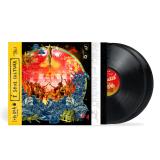
MTY-3.14 “π”, released on March 14, 2026, is the fifth and final chapter of a journey begun fifteen years ago.
This standard edition presents the final form of Polar Inertia across three 12" vinyl records, featuring 11 tracks. Nothing added, nothing removed—only the music, unfolding in full.
Images dissolve, words fall away. What remains are faint echoes, like footprints slowly erased in fresh snow.
This final opus does not close the path. It fades into it. π is not an ending, but a state: the moment where movement continues, even as the world turns silent.
A last step.
A final trace.
Still moving, beneath the cold.
POLAR INERTIA
We are no one because we want to be no one,
And to be no one we have to be everywhere and nowhere- Polar Inertia examines the enigmatic and blurry realms, embracing the art of obscured vision.
Encountering the collective Polar Inertia is much like being absorbed by fog and captivated by its ever-shifting forms and densities, with things being as indistinguishable as in a whiteout.
Formed in 2010 by a group of artists, Polar Inertia transcends visibility, delving into structures that lie beyond the public gaze. Layers upon layers intertwine within the fabric of Polar Inertia, extending beyond their profound electronic compositions and live performances. It manifests as a conceptual universe, where sound, monochrome aesthetics, and elusive narratives converge, much like trying to grasp the intangible fog. The entity that is Polar Inertia is involved in installations, print- and video work and texts created for different contexts and live in different spheres such as Palais de Tokyo in Paris or the Lyon Biennale of Contemporary Art. Still, clubs and festivals are perfect spaces to experience these nebulous soundworlds and immerse in them. Fittingly, some of Polar Inertia’s appearances include the colossal halls of Berghain and Bassiani and at experimental festivals like Mutek Montreal and Atonal Berlin, that like to break with the classic club conventions.
Polar Inertia's sonic landscape unfolds with wafting textures accompanied by resonating beats and drones, reverberating through empty spaces, merging with the vast expanse of nothingness. Their sound exists at the crossroads of ambient, experimental, and deep techno, interwoven with vocal narratives. Since their inaugural release “Indirect Light“ on Dement3d Records in 2011, they remain a stronghold of relevance and captivation in the electronic domain.
Mastered by sixbitdeep, with artistic direction by Diplomatie Studio.
Walter Thomas’s “Chicago Knights” LP features a retrospective of songs written and released between 1987 and 2009, primarily with the Roland 1824 and the Fostex 8 track reel to reel. Channeling the spirit of underground soul and dance music specifically rooted within the greater area of Chicago, Illinois–a city known for its deep and healthy soul and r&b roots–this compilation features 8 of its 9 tracks on vinyl for the very first time.
The intro track “I Wanna Get Witcha” dates back to 1987, holds a proven track record of kicking off many a dance floor, rocking clubs worldwide in a blur of boogie-funk, disco, and soul. “Immaturity” and both versions of “Fed Up” echo the emotional differences and tensions between lovers in a spat. “Magic City” served as the anthem and homage to its namesake roller skating rink in 90s-era Waukegan, IL. While “Chicago Knights” is a relentless mid-tempo groove inspired by the aggressive motorists that dominate Chicago roadways, “2nd Chance” drops the tempo to a slow r&b roll, preaching the ethos of love, peace, and forgiveness.
Last but certainly not least, “E&J’s” was a real commercial jingle used for a once legendary BBQ joint “E&J’s” in Illinois: a short bonus track to close out the LP. These 9 tracks are just a touch of Walter’s expansive body of work, and we’re stoked to bring them to you on wax.
Walter Thomas is a singer, songwriter, producer, arranger, and composer from North Chicago, IL known for his soulfully smooth arrangements and vocals. Walter has toured internationally with quintessential soul groups like the Temptations and Friends of Distinction, as well as opening for performers including the Floaters, Bette Wright, The Emotions, and The Drifters. His decades of touring with nightclub and concert performances have honed this gifted artist into a seasoned and refined live act.
INDUSTRIAS MEKANIKAS is back with the third instalment of the ANTIKHRIST VISIONS saga. This release is particularly symbolic: it’s the ninth in the catalogue, marked by the infernal numerology that runs right through the whole series. It’s a descent into a sonic underworld, where noise becomes ritual and pleasure is just pure agony.
The artist tasked with opening this new chapter of the saga is the mighty Óscar Mulero, an essential figure on the national electronic scene and one of our biggest international ambassadors, whose career has left a deep mark on contemporary music. Here, with Faceless, he delves into dark, precise, and devastating electro territory; a spiritual machine that dictates the pulse of chaos.
Next up, we’ve got Pressurized Modulator with Reddrum: hard, crunchy, industrial electro, absolutely buzzing with electrical tension and twisted sonic matter.
Closing out the A-side is Jacko Volvone (aka Hoax Believers) with Quieren Cerrar Las Fábricas: a track that expertly blends electro, techno, and post-punk echoes, resulting in a tense, distorted, and combative sound, like a working-class echo shouting from the abyss.
Flipping over, the B-side opens with Hanging Nuts (made up of Waje Martín, Fake Robotik, and Ruben Montesco). They unleash a murky descent of filthy, distorted, primal electro, slashed through with guitars and raw, guttural vocals: a genuine chant from beyond the grave. The second cut marks the debut of Techselektah & Phil Fork with Champagne No Potable: a raging street anthem packed with fury, energy, and social criticism, where Spanish vocals emerge amidst EBM structures that have that ‘80s spirit, reinterpreted with today’s raw edge. And the big finish is down to HBK1 alongside Rigor Mortis, with Instinto Caníbal: a full-on explosion of electro-industrial and EBM that awakens the body’s most primitive urges.
Antikhrist Visions Vol. III is a sonic summoning from the lands of Hades: ritualistic matter, organic sound, and primal force. A testament to pleasure and torment—Tormento do Gostar—etched into the vinyl as if it were molten iron.
Memento Mori.
As Nathan Fake rises from the nocturnal subterranea and rave catharsis of his previous records, on Evaporator, he resurfaces into the domain of daylight, bringing a tangible sense of air rushing against your face, of big skies, and endless landscapes. The idea of pop accessibility that trickled into 2023’s Crystal Vision is refracted here through the prism of sweeping ambient, deep electronica, and trance uplift. Evaporator is Fake’s idea of “airy daytime music”, with each track a different barometer reading across the album’s varying atmospheres, which range from vibrant sunbursts, bracing rainscapes, and fine mists of clement melodics. “It’s not overtly confrontational electronic club music,” states Fake. “It’s quite pleasant, it’s accessible. As I was progressing through making the tracklist, I called it a daytime album. It doesn’t feel like an afterparty album.” For the past decade Fake has been gingerly introducing collaborations with heroes and friends alike into his lone, idiosyncratic working process. Border Community alumni Dextro AKA Ewan Mackenzie transmutes his ferocious drumming for Pigs Pigs Pigs Pigs Pigs Pigs Pigs into the blurred choral thump of ‘Baltasound’. ‘Orbiting Meadows’, meanwhile, is his second collaboration with Clark, an eerily idyllic duet where microtonal 18EDO piano clangs slowly twirl around wailing pads. Evaporator marks the junction point of old technology and ever fresh creativity for Nathan. The trusty “dinosaur” age software, particularly Cubase VST5, that has powered two decades of music is rarely updated. “I used to sort of feel a bit ashamed of using such old software, and then I kind of had an epiphany – that’s just how I work”, comments Fake. “That’s just how I play. I’m very fond of these old tools, and I get the most joy out of them, but now I’ve incorporated new technology too.” When an artist accumulates so much synergy with their instrument, music making becomes instinctual. By Fake’s account, much of Evaporator just fell into place. The album title arrived randomly in his head (“it felt completely perfect. Airy.”), ideas looped and developed until things locked into place and just felt right. ‘The Ice House’ is a fleeting glimpse of the sonic world he taps into in this creative state, its glassy FM synths built around a counterpoint between rough-hewn crystalline arpeggios and sparse yet gravitas-bearing bass. “That riff I just wrote out on the keyboard, I just played it forever and ever and ever. The original track ended up being really short. Here you go, and it’s gone!” These unplanned channellings of sound call forth records from Fake’s past while he looks ahead, perhaps getting at the very essence of his musicianship. The opener ‘Aiwa’ (“the breeziest,” he muses) reminds of the introspection that characterised Providence, excited by the fire and grit of Steam Days’ textural experiments, its chunky slams and clatters surging into a flood of harmonic buzzing as they reach out for old wisdom. ‘Hypercube’ stampedes in a similar chronological confluence, infusing an incessant synth line reminiscent of the golden age of rave with the crackling, ecstatic energy of modern festival anthems. Like the vaporisation of liquid to particles, everything that Evaporator presents has a mutant desire to be amorphous. Sounds rarely settle; the irradiated garage beat of ‘Bialystok’ is pitched downwards to driving, rebounding effect, while ‘You’ll Find a Way’ warps static into shivering energy, cinematic synth strings building anticipation into a gradual gush of chords. This translates into a more expansive stereo field than Fake has explored before. ‘Slow Yamaha’ saves the wildest, most kinetic transformations for last with a cornucopia of crispy melodies and fried drums; a sibilance of cymbals on the left, a susurrus of shakers on the right, and kaleidoscopic lasers pulsing and fizzing all around. Evaporation culminating in pure excited atoms. In a world where music has increasingly become background content, making albums remains lifeblood for Fake: “It makes me realise how long; twenty years is ages! It’s weird to see how much the world has changed. Release day back then you did fuck all, now you spend all day on socials. When I grew up the people who made the electronic music I was into were quite mysterious, and the artwork was very abstract. There was a massive distance between you and that music, and that was a key part of it, really. Now it helps to be an extrovert, and I'm just not, but the album marks the first time my face has graced the cover art. I’ve never wanted to do this before, I'm very shy, and generally I don’t like being seen,” he professes. “But, twenty years in, I supposed I could try something new. I'm very lucky that I'm somehow surviving in this world, where the media world favours extroverts and interesting looking people. It’s not my world but somehow I’m still in it.” Evaporator continues to prove Nathan’s necessary presence, with some of his most engaging, varied, and magical music yet.
Tim Maia’s self-titled 1973 album is one of those records that hits you from the very first groove and doesn’t let go. Originally released on Polydor Brazil, this was the fourth in a series of Tim’s self-titled albums and many fans and critics still consider it the crown jewel. Packed with irresistible hooks, lush arrangements, and that unmistakable Tim Maia swagger, the album captures the singer at the peak of his creative powers.If you’re new to Tim Maia, here’s the quick story: born in Rio de Janeiro, Tim was a larger-than-life icon whose music married American soul and funk with Brazilian samba and pop long before “fusion” was a buzzword. A true musical polymath, he absorbed everything from Curtis Mayfield to Motown and translated it into a sound entirely his own, gritty, passionate, and full of groove.
He didn’t just introduce soul to Brazil; he made it Brazilian.On this 1973 release, Tim pushes everything up a notch. The arrangements are bigger, slicker, and surprisingly majestic, without losing the raw spirit that earned him a devoted following. From the moment ‘Réu Confesso’ opens the album, you know you’re in for something special—smooth, funky, and heartfelt in all the right ways. The bittersweet ‘Gostava Tanto de Você’ remains one of his most beloved classics, while ‘O Balanço’ bursts with Brazilian flavor that practically dares you not to move. And with tracks like ‘Do Your Thing, Behave Yourself’ and ‘Over Again,’ Tim shows just how naturally the soul idiom fit him, even when he switched to English.This record has everything: deep grooves, soaring strings, magnetic vocals, and that unmistakable sense of joy that Tim Maia carried into every session. It’s a front-to-back winner—one of those albums that deserves a spot not just in Brazilian music history, but in any collection that celebrates great soul, funk, and timeless grooves.If you’re a longtime fan, it’s a reminder of why Tim Maia is legendary. If you’re discovering him for the first time, this is the perfect place to start. Either way: press play, turn it up, and let Tim do his thing.
Developer returns to his personal vinyl imprint Developer Archive with the label’s 17th release, continuing a focused exploration of raw, hypnotic techno built for physical spaces. Known globally as the driving force behind Modularz, Developer uses the Archive series as a more direct and uncompromising outlet—stripped back, functional, and deeply immersive.
This latest release locks into groove-based cuts powered by tension and restraint, where repetition becomes ritual and subtle shifts create sustained drama. The rhythms are dense and forward-moving, designed to work equally well in the pressure of a warehouse or the precision of a darkened club.
With Developer Archive 17, Developer reinforces his commitment to vinyl as a medium and to techno as a tool for controlled intensity—music that doesn’t chase trends, but instead sharpens its purpose with each release.
Thawra Records and Tiny House Music are proud to announce Nafas, the debut original album by Palestinian vocalist, researcher, and composer Salwa Jaradat, set for release in March 2026.
Rooted in a traditional Arabic singing practice yet shaped by a layered and deeply personal artistic journey, Nafas marks a powerful first statement from an artist whose work moves between heritage, research, and lived experience. The album emerges from years of musical and feminist inquiry, giving renewed breath to voices, emotions, and histories that have long existed on the margins.
Salwa Jaradat’s artistic formation is grounded in classical Arabic music and oral tradition, with studies at the Edward Said National Conservatory of Music in Palestine and later in musicology in Lebanon. Alongside her work as a performer, researcher, and archivist, she has developed a practice that treats music as a space of memory, resistance, and continuity. These threads converge in Nafas—an album that does not seek to modernize tradition, but rather to inhabit it differently, allowing it to speak in the present tense.
Developed through an intensive artistic residency in Lebanon, Nafas brings together a core ensemble of regional musicians, with Jaradat’s voice at its center—measured, expansive, and deeply intentional. Across six compositions, the album unfolds patiently, moving between stillness and momentum, intimacy and collectivity, breath and release.
Nafas will be released digitally and on vinyl, reinforcing Thawra Records and Tiny House Music’s ongoing commitment to long-form artistic statements and physical formats as vessels for care, depth, and listening.
- A1: Harris & Orr - Spread Love
- A2: Terry And Deep South - Trying To Get By
- A3: Toshiyuki Honda - Burnin' Waves
- A4: Igna Igwebuike - Disco Bomp
- B1: Janette Renee - What's On Your Mind (Super Club Remix)
- B2: Grupo Serenata - Sodade, Tem Pena D’mim
- B3: Vital Disorders - Zombie
- B4: Alphonsus Idigo - Flight 505
- C1: Dj Food - Peace (Harvey's 30 Something Mix)
- C2: Man Jumping - In The Jungle
- C3: Stars - Dancin’ People
- D1: Gaucho - Dance Forever (Club Version)
- D2: 49Th Floor - Night Passage (Bongo Mix)
- D3: Orion Agassi - Desacato
- D4: Fatdog - Remember Feat Cj Raine
yellow vinyl[28,15 €]
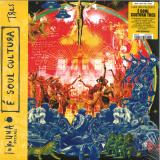
With two deeply cherished compilations already in the bag, Luke Una steps up for the third volume in his É Soul Cultura series on Mr Bongo. A love letter to the dancefloor and its power to unite people from all corners of society amid growing division and extremist politics. Genre-spanning in nature, the 15 tracks travel between cosmic soul, boogie, proto-house, slo-mo technoid grooves, drum machine afro, astral bass-bugging futurism, jazz funk, dance, and disco. Each having the ability to move the body as much as the heart.
From his formative years in Sheffield to co-founding Manchester’s much-fabled Electric Chair with Justin Crawford, through to helming the iconic LGBTQ institutions of Homoelectric / Homobloc, Luke has spent 40 years immersed in dance music. His latest outlet, É Soul Cultura, has grown from a label to a globe-spanning events series with Luke holding residencies and embarking on tours across the world from Japan and Australia to America and Europe.
“For me, the dancefloor was never about a one-dimensional, thudding, 130 BPM beat only. It's a much more dynamic, broader vision than that. I cut my teeth in an era where a 100 BPM record had as much impact, excitement, and energy as a 134 BPM dancefloor jazz funk or techno record”, Luke mentions. É Soul Cultura Volume 3 is the perfect embodiment of that notion: “It’s about four decades in the trenches playing dance music, the late-night afters, the shebeens, the basements, warehouse parties, the eight-hour journeys in East London, through to festival sets at Houghton and We Out Here. It’s music unconstrained by genre or tempo and more about making your body move”.
But this isn’t simply a collection of disparate dance tracks; they carry meaning and soul. “It’s less about escapism, more about reconnection. My experience of post-covid has been the coming together of all the clans in various clubs and gatherings. A reaction to a very toxic world out there, where the aggro rhythms of division have sought to divide us, and people don't meet as often. The coming back together face-to-face in clubs has encouraged a real love in the air, there's a real togetherness and collective spirit”.
Opening up the compilation is a track that channels that very message, the transcendental, soul-rousing Harris & Orr ‘Spread Love’. Joining the dots from there, to the low-slung deep house closer of Fatdog ‘Remember’, you’ll find electronic drum machine Nigerian funk, sitting side by side with dancefloor Cape Verdean brilliance, a post-punk cover of Fela Kuti, rubbing shoulders with cosmic electro, and an Una-championed, 8-minute, kickless DJ Harvey remix. There’s jazz funk in various guises moving from boogie synth to astral travelling, slo-mo acidic raw techno, and a ‘79 soul stepper, alongside swirling percussive Italo disco and tribal-charged house. All infused with an innate ability to bring people together.
As society becomes increasingly fractured, É Soul Cultura Volume 3’s message is more than movement. It’s about dance music’s power to unify people from all walks of life and break down the barriers that divide us.
- A1: Harris & Orr - Spread Love
- A2: Terry And Deep South - Trying To Get By
- A3: Toshiyuki Honda - Burnin' Waves
- A4: Igna Igwebuike - Disco Bomp
- B1: Janette Renee - What's On Your Mind (Super Club Remix)
- B2: Grupo Serenata - Sodade, Tem Pena D’mim
- B3: Vital Disorders - Zombie
- B4: Alphonsus Idigo - Flight 505
- C1: Dj Food - Peace (Harvey's 30 Something Mix)
- C2: Man Jumping - In The Jungle
- C3: Stars - Dancin’ People
- D1: Gaucho - Dance Forever (Club Version)
- D2: 49Th Floor - Night Passage (Bongo Mix)
- D3: Orion Agassi - Desacato
- D4: Fatdog - Remember Feat Cj Raine
black vinyl[28,36 €]
With two deeply cherished compilations already in the bag, Luke Una steps up for the third volume in his É Soul Cultura series on Mr Bongo. A love letter to the dancefloor and its power to unite people from all corners of society amid growing division and extremist politics. Genre-spanning in nature, the 15 tracks travel between cosmic soul, boogie, proto-house, slo-mo technoid grooves, drum machine afro, astral bass-bugging futurism, jazz funk, dance, and disco. Each having the ability to move the body as much as the heart.
From his formative years in Sheffield to co-founding Manchester’s much-fabled Electric Chair with Justin Crawford, through to helming the iconic LGBTQ institutions of Homoelectric / Homobloc, Luke has spent 40 years immersed in dance music. His latest outlet, É Soul Cultura, has grown from a label to a globe-spanning events series with Luke holding residencies and embarking on tours across the world from Japan and Australia to America and Europe.
“For me, the dancefloor was never about a one-dimensional, thudding, 130 BPM beat only. It's a much more dynamic, broader vision than that. I cut my teeth in an era where a 100 BPM record had as much impact, excitement, and energy as a 134 BPM dancefloor jazz funk or techno record”, Luke mentions. É Soul Cultura Volume 3 is the perfect embodiment of that notion: “It’s about four decades in the trenches playing dance music, the late-night afters, the shebeens, the basements, warehouse parties, the eight-hour journeys in East London, through to festival sets at Houghton and We Out Here. It’s music unconstrained by genre or tempo and more about making your body move”.
But this isn’t simply a collection of disparate dance tracks; they carry meaning and soul. “It’s less about escapism, more about reconnection. My experience of post-covid has been the coming together of all the clans in various clubs and gatherings. A reaction to a very toxic world out there, where the aggro rhythms of division have sought to divide us, and people don't meet as often. The coming back together face-to-face in clubs has encouraged a real love in the air, there's a real togetherness and collective spirit”.
Opening up the compilation is a track that channels that very message, the transcendental, soul-rousing Harris & Orr ‘Spread Love’. Joining the dots from there, to the low-slung deep house closer of Fatdog ‘Remember’, you’ll find electronic drum machine Nigerian funk, sitting side by side with dancefloor Cape Verdean brilliance, a post-punk cover of Fela Kuti, rubbing shoulders with cosmic electro, and an Una-championed, 8-minute, kickless DJ Harvey remix. There’s jazz funk in various guises moving from boogie synth to astral travelling, slo-mo acidic raw techno, and a ‘79 soul stepper, alongside swirling percussive Italo disco and tribal-charged house. All infused with an innate ability to bring people together.
As society becomes increasingly fractured, É Soul Cultura Volume 3’s message is more than movement. It’s about dance music’s power to unify people from all walks of life and break down the barriers that divide us.
- Osmos
- Peace Of The Unsaid
- Cloudmachine
- Skin Dress
- Unleash
- Jeanne De Rien
- Kiss The Lion's Tongue
- Throw Ashes!
- Samadhi
- Hora Et Devoura
Devotional music most often gets distilled into earthy chants and ancient folklore, it doesn't always ascend to the sky like Julinko’s ‘Naebula’ an album that from the first organ note clearly trades in terrestrial dreams for ethereal visions. A feverish quality permeates the whole record, as if a ritualistic performance was being captured from start to finish, a collection of hallucinatory doom, synthetic neo-folk hymns and ghostly art-rock.
Julinko, stage name for Giulia Parin Zecchin, has long been one of the best kept secrets of the experimental community in North-East Italy, with three records that helped define her unique blend of heavy psychedelia, slowcore and dark ambient. On ‘Naebula’ what really stands out is how powerful and soaring her voice is, a weapon of undeniable force that can transform into a vessel of raw fervour or glide effortlessly as a delicate lament. Her unconventional approach shines through on tracks like ‘Jeanne De Rien’, where a marching pulse acts as a pillar for an extended mantra, almost verging into powwow territory. ‘Peace Of The Unsaid’ uses its arrhythmical structure to create space, a crepuscular night ode that reaches the heights of Sinead O’Connor’s most intimate force-fulness while retaining a sweet composure. Whether it’s glacial murderous shrieks or gospel-esque vitality, songs like ‘Cloudmachine’ or ‘Kiss The Lion’s Tongue’ seem to draw as much from a tradition of European minimalism, the use of drones and repetition, to the tradition of folksongs as hymns, where modal harmonies make way for an apparent stasis. Another key element in Julinko’s songwriting is the seamless blend of her minimalistic approach with these dense textures borrowed from a distant outsider metal heritage, Lynchean noir on steroids or wordless exorcisms with deep undercurrents.
- A1: Shake
- A2: Freedom
- A3: Closer
- B1: Quiet Power
- B2: Colorblind
- B3: Love By The Hour
Lush Life is the Sonar Kollektiv debut EP by German singer, songwriter and multi-instrumentalist Flo Naegeli.
Originally hailing from the Bavarian forests of southeastern Germany, Naegeli began his musical journey at the age of seven as a folk accordionist, later switching to electric guitar and developing a disciplined approach to songwriting and musicianship that led to formal music studies and a professional career. After moving to eastern Germany, he gradually stepped away from band projects to focus on solo work, embracing self-production tools to realise a sound that blends soulful songwriting with warm, organic instrumentation.
Written and largely recorded by Naegeli himself, Lush Life is a deeply personal yet accessible collection of songs reflecting on fatherhood, family relationships and friendship.
- Leave (Again)
- Distance
- Ad Friend
- Crunch The Numbers
- Biters
- The Producer
- A Chorale
- Healing Attempt
- Sentence Structure In The Country
- Move
OPAQUE RED VINYL[29,20 €]
more eaze is the moniker of Brooklyn-based composer, orchestrator, and multi-instrumentalist, mari maurice. A renowned collaborator both in performance and on recordings, maurice"s own work is a fantasia, a reflection of her curious and explorative musical mind, encompassing entire spectrums of sound from a wide sonic pallet of electro-acoustic textures, folk traditions, and pop forms that pirouette into fully realized ecosystems. sentence structure in the country is a definitive statement of the matchless quality of more eaze"s skill as player and musical thinker. The album relishes the ecstatic in performance and collaboration with an inviting wit and incisive compositions, imbuing tenderness, frustration, and joy into each passage. sentence structure in the country is a collection of compositions, each beautifully realized, self-contained worlds. maurice"s dexterous, tasteful arranging lays bare her influences and obsessive fascinations with remarkable congruency while foregoing any sense of indulgence. Her music holds a density not only in the lush compositions and embellishing flourishes, but also for those moments of spare, minimalist beauty. sentence structure in the country is a textural marvel, a mosaic of ethereal electronics and loamy acoustics sculpted around deeply moving, enduring songs.
- 1: The Fermi Paradox
- 2: Cosmic Void Spheres
- 3: Macrocosm + Microcosm
- 4: Spontaneous Synchronization
- 5: Hyperdimensional Physics
- 6: Esoteric Futuristic Visions
- 7: Geometric Congruence Vortex
Baptized with a name derived from astrophysical theories about dark matter and black holes, THE HOLEUM was formed in 2014 in Alicante, Spain. Founded by former members of NahemaH, Demised, quantumXperience, Hela, Neptunian Sun, and Priest of Dawn, the quintet set out to push the boundaries of heavy music and to intensify the emotional impact of darkness in sound. Their concept is both cosmic and sonic: “THE HOLEUM is related to the dark matter that forms the black holes in the universe. THE HOLEUM is not a black hole, but black holes are formed by The Holeum. That is the idea from which we extract our concept – we are a sonic and cosmic vision of the sublime.” With their third album “Ensis” (2025), the band continues its journey through experimental metal, death doom, melodic metal, and post-metal. This work is more than a continuation – it is a condensation and expansion of their previous soundscape. “Ensis” reveals itself as finely nuanced, challenging, yet at the same time profoundly sensitive and multifaceted. The songs unfold like cosmic landscapes where heaviness and melancholy meet subtle emotionality. The intensity remains palpable, but it is complemented by a deeper sensitivity that draws the listener into a fragile balance between harshness and delicacy. “Ensis” is an album that demands and touches at once – a work that makes the complexity of human existence audible in the mirror of the universe.
- 1: In The Morning, The Mist Will Fade
- 2: Heartbeat
- 3: Take My Head
- 4: Mosaics Of Madness
- 5: Lies In Ink
- 6: Trust Me, I Love You
- 7: Make Up Your Mind, Before You See Us Fall
- 8: Pandaemonia
- 9: End Of The Road
- 10: Dantes Goodbye
- 11: Playbill
- 12: The River Styx
- 13: Th0Rns
- 14: Orpheus
With “chapters left unread” , 22-year-old Berlin artist Dust of Apollon presents his debut album: an electrifying yet deeply emotional work that moves between electronic and rock elements. Across 14 tracks, the album revolves around themes such as identity, inner conflict, love, depression, and healing. Throughout, there is a recurring sense of looking back on the unread chapters of one’s own life: moments that once felt impossible to understand, and wounds that only years later found their words. The focus track, “end of the road, ” stands as one of the album’s most intense moments. It tells the story of two lovers who draw closer to each other in the night, only to drift apart again when daylight breaks. A raw and honest conflict between hope and letting go, between closeness and the fear of reopening a wound that may never fully heal Thus, “chapters left unread” becomes not only a musical debut, but an intimate self-portrait: a look back at what once was, and an attempt to make peace with one’s past...chapters left unread that are now finally being read!
- 01: 808'S N Trance Gates
- 02: Shalom Aleichem Ft. David Berman
- 03: Minouma Remix
- 04: Lekha Dodi
- 05: The Lock Ft. Muha
- 06: Sol
- 07: Talmuds Ft. Derya Yildrim
- 08: The Noise (Hitbodedut)
- 09: This Song Has A Different Title But It Can't Be Pubished Here Because Of "Reasons"(Questions With Rael)
- 10: Aleichem Shalom
On his second album for Bruk, hoyah חיה continues to take an unflinching look at his Jewish identity while confronted with the heinous actions of the Israeli state. Echoing the name of his Refuge Worldwide radio show, he examines the shared histories of the Jewish diaspora across the Middle East and North Africa — from Morocco to Uzbekistan and everywhere in between. Can I Get A Chayah? is an honest attempt to explore what Judaism could become at a time when the culture faces an existential crisis.
The sonic approach hoyah חיה takes on Can I Get A Chayah? is central to the album's theme, as hard-gated processing on every sound creates a disorienting effect aiming for a kind of 'functional transcendentalism'. From the opening strains of preceding single '808s n Trance Gates' the jagged stop-start intensity of the samples sets a head-spinning tone for the album. The source material comes from across the aforementioned Jewish diaspora, challenging the nationalist idea of the single Jewish state.
Balancing beauty and aggression, hoyah חיה also reaches to a strong cast of collaborators to round out his cultural explorations. Principle among these is the late David German, the US-born guitarist and songwriter behind Silver Jews, whose repeated, bewildered mantras on 'Shalom Aleichem' embody hoyah חיה's own struggles with faith in the face of current horrors. Internationally celebrated Turkish-descent German musician Derya Yıldırım graces 'Talmuds' with her haunting vocal — a tribute to ancient Jewish mysticism that gets passed through the album's unrelenting sonic framework. On 'The Lock' Muha tackles African transcendentalism, while Rael pulls no punches with the questions he poses on the barbed 'This Song Has A Different Title But It Can't Be Published Here Because Of "Reasons"'.
With further prayer recitals on 'Lekha Dodi' and 'The Nose' and videos examining the psychedelic nature of reading the talmud and repetitive prayer movement shuckling, hoyah חיה has taken his research deep into the spirituality of his heritage at a time of crisis for Jewish identity. Naturally, Can I Get A Chayah? is not an easy listening experience, but neither is it a bleak one. There is beauty, mystery, complexity and nuance woven within the stark approach — an intentional, considered statement on a culture much deeper and wider than the barbaric acts of an unrepresentative group of twisted ethno-nationalists.
- 1: Redirect Revenge
- 2: All Contrast
- 3: Preserve/Manifest
- 4: Dead Calls
WHITE Vinyl[24,79 €]
INTERWOVEN' is a four-track split EP that binds together two of Denmark's most forwardthinking heavy acts: HIRAKI and Meejah. Built on a shared appetite for boundary-pushing intensity, the collaboration channels the urgency of electronic hardcore, the spaciousness of experimental rock, and the emotional depth of cinematic metal into an immersive work that is at once confrontational and deeply connective. As a part of Denmark's flourishing underground scene for dark and heavy music, the HIRAKI trio deploys an aggressive style of progressive synthpunk from the edge of the abyss. The band presents this sonic assault to accompany the inevitable fact that our world is sick, and we all take part in maintaining the fucked up systemic structures. MEEJAH is a Post/Experimental Danish-Korean band from Copenhagen weaving together Nordic Melancholia & Korean Ancestry. The results sound like Heaven, Thunder, Mountain, Earth, Wind, Fire, Water, Lake. Across these four tracks, both bands challenge each other to step past familiar contours, unraveling and recombining their musical identities until a new hybrid shape emerges_volatile, textured, and unmistakably alive. FOR FANS OF The Body * The Armed * Sightless Pit * Massive Attack * Julie Christmas * Death Engine
Black Vinyl[22,65 €]
INTERWOVEN' is a four-track split EP that binds together two of Denmark's most forwardthinking heavy acts: HIRAKI and Meejah. Built on a shared appetite for boundary-pushing intensity, the collaboration channels the urgency of electronic hardcore, the spaciousness of experimental rock, and the emotional depth of cinematic metal into an immersive work that is at once confrontational and deeply connective. As a part of Denmark's flourishing underground scene for dark and heavy music, the HIRAKI trio deploys an aggressive style of progressive synthpunk from the edge of the abyss. The band presents this sonic assault to accompany the inevitable fact that our world is sick, and we all take part in maintaining the fucked up systemic structures. MEEJAH is a Post/Experimental Danish-Korean band from Copenhagen weaving together Nordic Melancholia & Korean Ancestry. The results sound like Heaven, Thunder, Mountain, Earth, Wind, Fire, Water, Lake. Across these four tracks, both bands challenge each other to step past familiar contours, unraveling and recombining their musical identities until a new hybrid shape emerges_volatile, textured, and unmistakably alive. FOR FANS OF The Body * The Armed * Sightless Pit * Massive Attack * Julie Christmas * Death Engine The single colour edition comes as white vinyl!