Take a trip through alien worlds and bizarre scenarios in a psychedelic Hero’s Journey of thrilling and surreal art from the mind of celebrated artist and composer Jem Panufnik. The Legend of Kaptain Karnival is a highly original lavishly illustrated book that also includes a CD soundtrack recorded under his Jem Stone moniker.
This highly original 94-page, lavishly illustrated book includes a specially created musical soundtrack with an array of incredible musicians including Ben Castle (Quincy Jones, Elton John, Hans Zimmer, Radiohead) and Dominic Glover (Incognito, Primal Scream, Brand New Heavies, Orbital), recorded under his Jem Stone moniker: the kind of deep, hypnotic and delicious grooves Mr Panufnik is renowned for.
The book is 24.5cm square and the 96 pages are printed and bound on heavyweight 150gsm paper with a hardback cover.
Search:deep cover
Although For The Longest Time She Has Been A Chicago Resident, Ruby Andrews's Wonderfully Dramatic Vocals Sounds Like Straight From The Deep South Of The Usa. Actually, That Is Where She Was Born In Hollandale, Mississippi, In 1947. She Recorded At Least Six Albums That Are Each Highly Treasured By Soul And Funk Fans All Over The World. Black Ruby, The Brilliant Second Lp From This Marvelous Soulsinger First Appeared On The Zodiac Label In 1972. Just One Minor Nationally Charted Hit Came Off The Lp. But As A Whole It Is Even More Revered Than Her Hit-laden Predecessor Among Soul Aficionado's. It's Considered An Exemplary Classic Of A Deep- And Chicago-soul Album. The Music Has Re-appeared Some Times In One Form Or Another But The Lp Was Never Before Fully Reissued On High Quality Vinyl! Everland Is Thus Very Proud To Re-present The Black Ruby Album In Closest To Original Format With That Beautifully Designed And Shiny Psychedelic Album Cover. A True Gem Indeed.
Through the folded sky to America
Ten albums in three years. That's still the cosmic mission of the Berlin post-kraut trio YELKA with Daniel Meteo, Christian Obermaier, and the namesake Yelka Wehmeier.
With the album "For," there was a Label change. After releasing three albums in 2023 with Maurice Summen, head of Fun In The Church they passed the label responsibilities to Karaoke Kalk. Karaoke Kalk is a friendly label founded in Cologne known for establishing the Berlin post-wende scene (fall of the wall scene).
The trio's fourth album was also created with Arne Berger at Popschutz Studio, and the team is definitely well-rehearsed. Instead of recording the planned tracks, the band decided to improvise the session, and all tracks, except for the krauty Doors cover "The Crystal Ship," were created in 5 days in the studio, mostly on the first or second take, but with significantly more overdubs - keyboards, backing vocals, second and third guitars, percussion, and piano. The sound of "For" has become warmer, and the album begins with a kind of 60s-Kinks feeling. Overall, the current record has become much more exuberant - like Alice in Wonderland, YELKA seem to want to restore innocence to things in the opener "Smile (Into Skies)," resulting in an uplifting hiking song for experimental outdoor bohemians.
The follow-up piece "The Boar" speaks to everyone from the north, south, west, and east and here YELKA encounter a horde of wild boars on their travels, before the vocals become hardly understandable and ghostly spooled in reverse, suddenly sounding like Damo Suzuki from CAN at the height of Tago-Mago times.
Finally, YELKA‘s "Crystal Ship," simply sails away with the wild boars into remote 4D worlds between the Cocteau Twins and X-Mal Deutschland.
In the first instrumental of the album "Is this enough?", the band reverse tracks like Jimi Hendrix in his Electric Ladyland, and we dive deeper and deeper into the endless sky until YELKA finally arrive on newly trodden sound paths with "MM" to their beginnings on their debut album "Nowhere Jive." At the popular intersection of post-rock and jazz, where guest singer Bela Hagel also likes to linger for a moment: "Sie wissen" (They know), he knows that too! Surely Rolf-Ulrich Kaiser would have had a lot of fun with his shamanistic singing on his "Kosmische Kuriere" label. The guitars sound like a desert, and the reverb reminds us of the expansive space in the opening track "Skies."
Finally, we land in Amerika, or rather, YELKA ponder the melancholic question of whether anyone still wants to travel to America with them, to the land of unlimited possibilities, the haven for artist souls all over the world. "Do you wanna dance?" Yelka Wehmeier finally asks, while a chorus in the best Sun Ra manner mantra-like repeats "Cold dogs, cool cats." The whole band sings. Everything sounds good.
“Let us advance our mortal bodies up Where hearts and minds will go Let’s walk, let’s roll.” So sings Madeleine Peyroux on the upbeat title track of her captivating tenth album, Let’s Walk, the acclaimed singer-songwriter’s most assured, courageous work to date. Powered by the distinctive, honeyed croon that delivered her from the Paris streets to concert halls, these ten unabashedly personal songs, all co-written by the versatile Peyroux, deftly interweave jazz, folk, and chamber pop, with themes ranging from the confessional to the political, from whimsy to yearning. In every note, Peyroux digs deep, rendering this exquisite work with the disarming grace and gravitas of an artist in peak form. Let’s Walk was a long time coming, but well worth the wait. Following Peyroux’s 2018 album, Anthem, the enforced isolation of the global pandemic made any real-time community gathering impossible. From a creative standpoint, however, Covid offered Peyroux a silver lining: she seized the opportunity to hunker down with longtime collaborator, multi-instrumentalist Jon Herington (Steely Dan, Lucy Kaplansky). The pair reflected on the seismic era at hand and wrote and re-wrote in what Peyroux calls “a shadow of reckoning.” When multi-Emmy-and-Grammy-winning producer Elliott Scheiner (Fleetwood Mac, The Eagles) heard a sampling of the new material, including “Let’s Walk,” he mandated “no covers” for the album. The longtime studio veteran knew the time was ripe to highlight Peyroux’s incisive, often topical lyrics meshed with Herington’s ear for melody and arrangements.
- Old Friends
- Cadmium
- Then Again
- Aphasia
- Visiting
- Waveform
- Size Of The Moon
- New Friends
Debut LP by Pinegrove from Montclair, New Jersey. On Cardinal, the band's captivating blend of indie rock, pop and country elements is more vivid, fine-tuned and addictive than on their previous released EP's. Painting his emotions onto these songs with colorful and kinetic strokes, vocalist and guitarist Evan Stephens Hall moves through Cardinal's eight songs with an unforgettable energy and passion, with a vocal performance that is pleasantly reminiscent of Will Oldham and Built to Spill's Doug Martsch. Highlighted by the downtrodden nostalgia of twangy opener "Old Friends" and the climactic refrain of "Size of the Moon," where the confession "I Don't Know What I'm Afraid Of" is just as much of a sing-a-long as it is an emotional breakdown, moods don't stay in one place for very long on Cardinal - they are carefully crafted and revisited throughout to continually evoke the album's central themes of memory, longing and deep introspection.
2024 Reissue
Alphacut Records reloads its third wave with an upfront jungle plate. Meticulously selected over the years since the last allover amen statement Fundamentals EP as of cat.nr. ACR 3001, these four new killer tunes take no prisoners as well.
Sumone (with his Planet Mu fame) and Dan Miles (formerly Skubi like on Modern Ruins) as the midwest cowboys meet the North Sea sailors Istari Lasterfahrer (running his Sozialistischer Plattenbau) and Ill_K (on Nord and re:st)to execute this smashing Darka Mentors EP!
"Wicked Man Sound" is one of the most sinister jungle sciences we came across lately. Choppage on point, layerslike spread, stabbing basses, dark percussion, oldskool pads - you name it. "Crash!" feels like a UK hardcore banger, but is refreshingly switching breakbeats instead of gabba kicks. "Echo Chamber" drops an irresistible rave stab into the dubber dungeons and "Kuro" celebrates a very samurai style of a halftime cut to round up this breaksfest menu with ease.
Alphacut operates on a non-profit level, most releases cover their costs, if even. Half of any returns will be donated to Webster's Amen Break Gesture campaign II raising funds for the original creator of The Winston's Amen Brother breakbeat: Richard Spencer. With the deepest respect for this milestone of a sample!
- Borderland
- Southwest Chief
- Broke Down Engine
- Trying To Be Free
- Blind Owl
- Death Of The Last Stripper
- Roll Around
- Betty And Dupree
- Why I'm Walking
- Down The 285
- We're Still Here
Black[42,82 €]
TexiCali, the new album from Grammy winner Dave Alvin and Grammy nominee Jimmie Dale Gilmore, continues to bridge the distance between the two troubadours’ respective home bases of California (Alvin) and Texas (Gilmore). The geographic theme reflects Alvin’s repeated journeys to record in Central Texas with Gilmore and the Austin-based backing band that has toured with the duo for the past few years. As Alvin puts it in the liner notes, those road trips informed the music they made on TexiCali. The 11 songs on this double LP also connect their shared fondness for a broad range of American music forms. Gilmore is primarily known for left-of-center country music, while Alvin’s compass points largely toward old-school blues. But there’s a lot of ground to cover beyond those foundations, and both artists also are well-known for transcending genre limitations. So it’s not surprising that they’ve spiked TexiCali with cosmic folk narratives, deep R&B grooves and even swinging reggae rhythms.
Hypnotised is the first encyclopedia project to cover the global trance movement during its most prolific years. Following compilations directed to the early Dutch, British and German trance movements, this fourth installment shines a light on the influential Belgian scene. Published in limited 3x12’’ vinyl, 3xCD and digital formats, ‘’Hypnotised: A Journey Through Belgian Trance Music (1992-2003)’’ includes 27 exquisite tracks from classic imprints like Airscape, CJ Bolland, M.I.K.E. and Jericho.
Missing out on that super-chill, uber-jittery minimal groove thing? Let"s get real, real Ghosted again. Oren Ambarchi has been collaborating with the Fire! trio (Mats Gustafsson, Johan Berthling and Andreas Werliin) for over a decade - and both Johan and Andreas played on Oren"s Live Hubris as well. Oren and Johan began music-making together back in the early aughts - but it wasn"t until 2021 that the three of them got together to record music. That became the first Ghosted album. When they were done, it was clear they had founded a new group. A music of sustained tension and deep atmosphere marked by subtle, shifting dynamics, Ghosted was released in May of 2022 to psyched response everywhere; the trio embarked upon an ongoing series of concert bookings around Europe, with loads of other people in the world still hoping to have the chance to be in the room at the next show. Two years on, Ghosted has gone through several represses, now it"s time for the "dreaded follow up album"! Rather than go back to the well, the guys decided to tear everything down and start all over again, reimagining themselves from scratch. Just kidding! As we"ve noted, Oren, Johan and Andreas have been playing together for years and years, developing an essential telepathy within their shared space. They get each other and feed each other"s music processes on an elemental level. Why change that? What made the most sense was to go back to Daneil Bengtsson at Studio Rymden in Stockholm for a couple days, then have Oren and Joe Talia mix and Joe master it at Good Mixture in Melbourne again, then get Pål Dybwik to do some well-distinctive cover art, and once more, call it a record. That"s just what they did - and it should be no surprise at all that the new Ambarchi/ Berthling/Werliin album looks and sounds as engrossing as their debut, if not more so! Ghosted II has a definitively fresh quality radiating throughout. The mutual feeling among the three players goes deep, allowing for lots more to say every time they get together - a further recombination of elements, a new expedition through alternative angles... there"s always more, and incredibly, it"s all improvised, with next-to-nothing prepared going in and minimal overdubs after they"ve laid things down. References are shared in shorthand, with just a single word, like "Santana," or "Police" acting as working titles for certain pieces on this record (have a guess!). It"s a disservice to call them jams: above and beyond the innate feel of the songs, there"s a strong sense of structure, informed by the band"s communal aesthetic, and edified immeasurably by their time spent in concert the last couple years. As noted at the top, these guys balance their music improbably between a relaxed feel and a nervy resolve, as each member holds down their corner in an open sound field. Making Ghosted II, the band found that there"s a different kind of tension making something for an established project rather than the kind one feels making something for the first time - and they used this new variety, as before, as a kind of fuel - driving their terse minimalism fruit-fully through the process of succumbing to and then transcending guilty pleasures. Finding fresh territory in funk sketches, jazzy heads, ambient pastorals and droning soundtrack pieces, Ambarchi, Berthling and Werliin compellingly haunt a mad variety of spaces, leaving us wanting to get Ghosted II.
Sugaray Rayford is a man with a message and a larger than life personality and voice to deliver it
Working with producer, songwriter Eric Corne for the past 3 albums, the soul-blues powerhouse has crafted an incendiary sound and narrative, combining classic soul melodies and funky R & B grooves with raw blues power.
The pair's first collaboration, 'Somebody Save Me', earned Rayford a 2020 Grammy nomination. Later that year he took home Blues Music Awards for 'Soul Blues Male Artist' and 'B.B. King Entertainer of the Year.' Rayford's follow up In Too Deep won a plethora of awards including the Blues Music Award for 'Soul Blues Album of the Year'.
His new release is entitled 'Human Decency'. The title track is a simple reminder that our similarities are stronger than our differences and in the end, there is no black or white or left or right, there are only hearts and minds.
About the leadoff single, "Run For Cover" a song that takes no prisoners, Q Magazine declares, "The bluesey soul of Rayford comes on full steam with this powerhouse single."
"We're calling people on their bullshit but we're having fun with them. That's my way. I'm gonna tell it to you straight but with love in my heart. I always bring some suga with the salt!" says Sugaray, bellowing with laughter.
An all-star cast lent their talents to the album, including guitarist Rick Holmstrom and singer Saundra Williams who are both from Mavis Staples's band, along with bassist Taras Prodaniuk (Lucinda Williams, Merle Haggard).
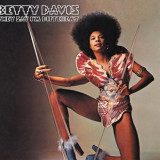
One can hardly imagine the genre-busting, culture-crossing musical magic of Outkast, Prince, Erykah Badu, Rick James, The Roots, or even the early Red Hot Chili Peppers without the influence of R&B pioneer Betty Davis. Her style of raw and revelatory punk-funk defies any notions that women can’t be visionaries in the worlds of rock and pop. In recent years, rappers from Ice Cube to Talib Kweli to Ludacris have rhymed over her intensely strong but sensual music.
There is one testimonial about Betty Davis that is universal: she was a woman ahead of her time. In our contemporary moment, this may not be as self-evident as it was thirty years ago – we live in an age that’s been profoundly changed by flamboyant flaunting of female sexuality: from Parlet to Madonna, Lil Kim to Kelis. Yet, back in 1973 when Betty Davis first showed up in her silver go-go boots, dazzling smile and towering Afro, who could you possibly have compared her to? Marva Whitney had the voice but not the independence. Labelle wouldn’t get sexy with their “Lady Marmalade” for another year while Millie Jackson wasn’t Feelin’ Bitchy until 1977. Even Tina Turner, the most obvious predecessor to Betty’s fierce style wasn’t completely out of Ike’s shadow until later in the decade.
Ms. Davis’s unique story, still sadly mostly unknown, is unlike any other in popular music. Betty wrote the song “Uptown” for the Chambers Brothers before marrying Miles Davis in the late ’60s, influencing him with psychedelic rock, and introducing him to Jimi Hendrix — personally inspiring the classic album Bitches Brew.
But her songwriting ability was way ahead of its time as well. Betty not only wrote every song she ever recorded and produced every album after her first, but the young woman penned the tunes that got The Commodores signed to Motown. The Detroit label soon came calling, pitching a Motown songwriting deal, which Betty turned down. Motown wanted to own everything. Heading to the UK, Marc Bolan of T. Rex urged the creative dynamo to start writing for herself. A common thread throughout Betty’s career would be her unbending Do-It-Yourself ethic, which made her quickly turn down anyone who didn’t fit with the vision. She would eventually say no to Eric Clapton as her album producer, seeing him as too banal.
Her 1974 sophomore album They Say I’m Different features a worthy-of-framing futuristic cover challenging David Bowie’s science fiction funk with real rocking soul-fire, kicked off with the savagely sexual “Shoo-B-Doop and Cop Him” (later sampled by Ice Cube). Her follow up is full of classic cuts like “Don’t Call Her No Tramp” and the hilarious, hard, deep funk of “He Was A Big Freak.”
Orebolo (or-RAY-beh-low) is an acoustic trio featuring Rick Mitarotonda (vocals, guitar), Peter Anspach (vocals, guitar), and Jeff Arevalo (upright bass). The band, comprised of members of the emergent indie rock group Goose, has built a faithful following nationwide, performing an eclectic mix of originals and covers. With their debut studio album, The Chateau, the trio finds comfort in exploring Goose's deep catalog acoustically - a feeling they hope to translate to those listening at home.
"Espontaneamente se Tenta: Aventuras Sonoras de Djalma Corrêa is an album of deeply exploratory pieces by legendary percussionist and composer Djalma Corrêa. This double-LP set features previously unreleased recordings that cover a wide range of sonic experiments, revealing an unknown side of the prolific and groundbreaking Brazilian artist. Most of the tracks on this album were digitized for the first time – directly from the original tapes – and were compiled in collaboration with Corrêa just before he passed.
The result is a wild and unsettling collage that shows us just how original and intense Corrêa could be: from the unorthodox electroacoustic piece Evolução (Para Fita e Filme), which channels ancestral African inspirations to create a sonic cosmogonical narrative, to the proto-mixtape Exemplo de Sintetizadores, in which he transitions from transcendental drones to astral cha-cha-chas.
While the compilation might seem disjointed at first listen, it is in fact the most accurate translation or representation of his central concept: spontaneous music. Djalma's relationship with sound was always guided by his fearless approach to listening, and by his audacious and dynamic interaction with both musicians and equipment, which enabled him to work across a wide array of genres: from jazz to completely abstract music, always through a personal DIY ethic.
Corrêa developed a strong bond with experimentalist and inventor Walter Smetak, with whom he shared a studio during his formative years at Universidade Federal da Bahia. Suite Contagotas, featured in this collection, is no less than a sonic materialization of that bond: an experiment revolving around dripping water and its randomness – a tentative exploration of the ideas and possibilities envisioned by Smetak for his audacious, albeit unrealized, Estúdio OVO.
Djalma, however, is best known for his studio work in historical albums, including many by Caetano Veloso, Gilberto Gil and Jorge Ben, and for his own polyrhythmic opus Baiafro. The last track is an early recording called Bossa 2000 dC, first performed by Djalma at the 1964 Nós, Por Exemplo concert, an event which is often cited as marking the beginning of the Tropicalia movement. At the time, he was the only artist in the lineup using electronic devices to create sounds, e.g. medical oscillators and contact mics to augment his percussive palette.
The artwork is an amalgamation of material found in the Djalma Corrêa Archive (currently managed by his son Caetano Corrêa) and other material created during the period in which the record was being put together. The intention is to guide the listeners through this possibly tempestuous soundscape, giving them additional resources so that they may draw their own meanings and make their own sense of this extremely immersive and original experience – which is like nothing we've ever heard before."
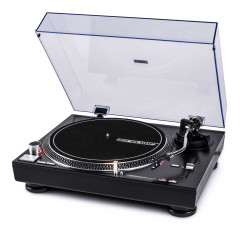
The RP-4000 MK2 is a solid DJ turntable for advanced users. The new MK2 version comes with several improvements, including a newly developed top panel and reworked metallic buttons with enhanced feel as well as a variety of functions. Precise motor control with 3 speeds: The precision-engineered die-cast platter is accelerated by a powerful motor with a high-torque direct drive of more than 1.8 kg/cm. The precise motor control with 3 speeds (33 1/3, 45 & 78 rpm) allows for the RP-4000 MK2 to play back any record. The pitch section with a selectable range of +/-8% and +/-16%, respectively, is suitable for the finest pitch adjustments. Statically balanced s-shaped tone arm: The RP-4000 MK2 features a statically balanced s-shaped tone arm with hydraulic lift and anti-skating mechanism. Via the universal connection for pick-up systems (SME) a large number of pick-up systems can be connected. Reverse function, pitch reset and extendible needle illumination: Additional features, such as reverse play and pitch reset, offer all DJs direct control of their turntable. With the push of a button the aluminium target light can be extended, so that the needle position can be seen in dark surroundings. Newly developed top panel and sturdy housing design: The new deep black metallic top panel construction is equipped with metallic buttons for start/stop, platter speed, pitch control, reverse function and tempo reset. The improved touch upon hit offers a clear haptic feedback. The sturdy construction with optimized damping features and shock-absorbing feet improve isolation from unwanted vibrations. With pick-up and headshell (made by Ortofon in Denmark): The RP-4000 MK2 comes with the high-quality OM Black pick-up, handmade by Ortofon in Denmark, pre-fitted to a headshell ready for immediate playback.
Technical data Turntable:
Type: direct drive turntable
Drive: quartz-driven high-torque direct drive
Motor: 8-pol., 3-phase, brushless DC motor
Turntable speeds: 3 speeds, manual (33 1/3, 45, 78 rpm)
Starting torque: > 1.8 kg/cm
Brake time: 50 dB (DIN-B)
Brake system: electronic brake
Platter:
Material: aluminium die-cast
Diameter: 332 mm
Tone arm:
Type: universal, statically balanced, s-shaped
Effective length: 230.5 mm
Overhang: 16 mm
Tracking angle error: < 3°
Applicable pick-up weight: 3.5 - 8.5 g (incl. headshell 13 - 18 g)
Anti-skating range: 0 - 7 g
Connections:
1x PHONO out (gold-plated), 1x GND
General:
Power supply: AC 115/230 V, 60/50 Hz (EU/US), AC 100 V, 50/60 Hz (JP)
Power consumption: 12 W
Dimensions: 450 (w) x 352 (d) x 144 (h) mm
Weight: appr. 9.8 kg
Included accessories:
Platter, OM Black pick-up system (by Ortofon), headshell, slipmat, counterweight, AC psu, instruction manual
Features
NEW in the MK2 version:
Newly developed top panel and reinforced housing construction
Reworked metallic buttons with improved feel & tactile response
Precision Pitch with selectable ranges of +/-8 % & +/-16 %
Tempo reset (Quartz Lock) feature
Superior finish in deep black metallic
Quartz-driven DJ turntable with high-torque direct drive
Designed for professional use
Powerful brushless DC motor with more than 1.8 kg/cm torque
Precise motor control with 3 speeds selectable (33 1/3, 45 & 78 rpm)
Reverse function: switch for forward/reverse playback
Precision-engineered die-cast aluminium platter with stable rotation
Statically balanced s-shaped tone arm with hydraulic lift and anti-skating mechanism
Universal connection for pick-up systems (SME)
Extendible needle illumination
Shock-absorbing feet for vibration isolation
Sturdy, heavy construction with optimized damping features
Prepared for dust cover (available as optional accessory)
Incl. slipmat, removable headshell and ready-mounted OM Black pick-up made by Ortofon
BBE Music is thrilled to present J Jazz: Free and Modern Jazz From Japan 1954-1988, a
remarkable large-format book covering some of the deepest, rarest, and most innovative
jazz music released anywhere in the post-war era. Compiled by Tony Higgins and Mike
Peden, co-curators of BBE Music's acclaimed J Jazz Masterclass Series, the book also
features a foreword by Japanese jazz icon, Terumasa Hino.
This is the first time a book of this type has been published outside of Japan and the first
anywhere of this size and scale. It is a unique collection of over 500 albums of free and
modern jazz released in Japan during a period of radical transformation and constant
reinvention. An era that saw Japan return from the ravages of World War Two to become a
global economic power and emerge as both a technological leader and an international
cultural force.
Through a unique gallery of albums, J Jazz charts the development of jazz in Japan from the
first stirrings of the modern jazz scene in the mid to late 1950s and on through the hard bop
and modal jazz of the 1960s. It steers the reader into the radical directions of the 1970s when
free jazz, fusion, post-bop, and jazz-funk opened up a growing number of Japanese jazz
artists to a new global audience before consolidating in the mid to late 1980s with a musical
scene that laid the path for the contemporary jazz generation to follow.
Over 500 full-colour sleeves from many of the leading names in Japanese jazz sit alongside
rare and private pressings that tell a story of constant change and musical exploration. J
Jazz includes profiles of several leading record labels such as East Wind, Frasco, King
Records, and Nippon Columbia as well as critical independents such as Three Blind Mice,
ALM, and Aketa’s Disk.
J Jazz includes interviews with celebrated jazz photographer Tadayuki Naito, and pianist
Tohru Aizawa, bandleader on the totemic spiritual jazz album, Tachibana Vol 1, as well as
free-jazz record collector and jazz musician Mats Gustafsson.
The book also features a chapter on albums by non-Japanese artists that only received a
Japanese release, with collectible, rare, and obscure releases by figures such as Herbie
Hancock, Miles Davis, Mal Waldron, Steve Lacy, and Art Blakey. J Jazz includes Japanese
jazz charts from some of the world's leading jazz DJs including Gilles Peterson, Toshio
Matsuura, Paul Murphy, and Shuya and Yoshihiro Okino. Among the specialist content is a
feature on obi strips by record dealer and Japanese jazz expert, Yusuke Ogawa, plus a
special article on Japanese Blue Note albums.
Across its 300-plus pages, J Jazz includes a detailed introduction contextualising the music,
tracing the story of Japan's fascination with jazz back before the war. It also features
biographical information on many of the key artists involved in shaping the post-war
Japanese jazz scene including Sadao Watanabe, Toshiko Akiyoshi, Masabumi Kikuchi,
Masahiko Togashi, Terumasa Hino, Yosuke Yamashita, Fumio Itabashi, Masayuki
Takayanagi, Takeo Moriyama, Isao Suzuki, and many more
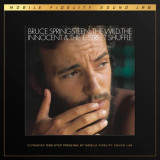
Released only eight months after his exhilarating debut, Bruce Springsteen's The Wild, the Innocent & the E Street Shuffle contains rousing dispatches from the boardwalk, the street, the beach, and the bedroom. It explodes with energy, dares to dream, teases with humour, crackles with tragedy, clings to hope, and overflows with discovery, youthfulness, and personality. It features an unforgettable cast of characters — corner boys, teenage hustlers, doomed lovers, jazz men, junk men, factory girls, fortune tellers, alley cats, pimps, escorts, and more — illuminated by vivid colour, breathtaking detail, and poetic action.
Musically, the heartfelt 1973 record is inhabited by sympathetic vignettes and cinematic arrangements steeped in rock 'n' roll, soul, jazz, and R&B. It finds the New Jersey native looking beyond the parameters of his preceding record and seeking to move on from environments he knows well (and chronicles here) by rushing headlong toward unknown territories, adventures, and people. Underpinned by the singer-guitarist's ambitious poetic enterprise and will to succeed, The Wild, the Innocent & the E Street Shuffle is the album on which Springsteen becomes the Boss.
Mastered on Mobile Fidelity's renowned mastering system, pressed at RTI on MoFi SuperVinyl, and strictly limited to 7,500 numbered copies, Mobile Fidelity's UltraDisc One-Step 180g 33RPM LP set is the definitive-sounding version of Springsteen's sophomore record. Benefitting from SuperVinyl’s nearly non-existent noise floor, superb groove definition, and dead-quiet surfaces, The Wild, the Innocent & the E Street Shuffle plays with a clarity, energy, presence, and openness that complement the expressiveness, dynamics, and scope of the seven restless songs that comprise a work Rolling Stone ranked the 345th Greatest Album of All Time.
Beyond the audiophile sonics that practically place you behind the console at 914 Sound Studios — listen to the separation between the instruments, natural decay of the notes, interplay within the widescreen soundstaging, and nothing-to-lose youthfulness of Springsteen’s voice — this reissue takes seriously this record’s influential merit by presenting it in packaging that underlines its status. Tucked in a beautiful slipcase, the LP is housed in a special foil-stamped jacket with faithful-to-the-original graphics. This reissue is made for listeners who prize sound quality and who want to engage themselves in everything involved with the invigorating set that busted Springsteen loose from the club circuit and landed him on the radio
Determined to liberate anyone within earshot and unafraid to come on strong, The Wild, the Innocent & the E Street Shuffle serves as the debut of the E Street Band — not only heard but seen for the first time by most of the public courtesy of the back-cover photograph. This is where saxophonist Clarence Clemons, organist-accordionist Danny Federici, and pianist David Sancious step out of the shadows — and drummer Vini Lopez and bassist Garry Tallent again stoke a fiery rhythmic engine that helps drive the untamed, reimagined big-band swing of “Kitty’s Back,” breathless R&B thrust of “Rosalita (Come Out Tonight),” and carefree dance steps of the funky “The E Street Shuffle.”
Of course, the main attraction remains a then-24-year-old visionary on the precipice of becoming a sensation and turning a then-bloated rock scene on its head. Recorded over three months while Springsteen and company were busy touring his debut LP, The Wild, the Innocent & the E Street Shuffle reflects the high-octane approach the vocalist embraced onstage and drifts away from the label-dictated acoustic-based frameworks of his debut. The set also witnesses Springsteen deepening his observational skills, with narratives such as the romantically tinged “4th of July, Asbury Park (Sandy)” and redemptive epic “Incident on 57th Street” mirroring changes taking place in the singer’s own life, small towns, and America at large.
A thrilling collision of memories, reflections, and composites — Sandy, Rosalita, and the latter’s parents are all based on actual people Springsteen knew, as is the community depicted in the opening track — the aptly titled The Wild, the Innocent & the E Street Shuffle resonates decades on due to its truths, authenticity, and spirit. Those characteristics — as well as the fact that many of its lengthy songs come on as the equivalent of sweaty, feverish soul revue that won’t stop until you’ve been exhausted — also explain how this now-iconic album triumphed over the reservations of industry “experts” that both demanded Springsteen re-record it and instructed deejays not to play it.
Yet there’d be no stopping a record that saw the past, present, and future, a band whose will would not be denied, and a phenomenon who was born to run. A never-ending invitation to act real cool and stay up all night, The Wild, the Innocent & the E Street Shuffle always feels alright.
"Listen to This." As the original working title for Bitches Brew, the instruction and invitation resonates to this day as the best way to approach a record that shattered conventions, altered music history, and, more than five decades after its original release, still sounds far ahead of its time. The aural Mount Rushmore of jazz fusion, Bitches Brew is rightly ranked by virtually every significant outlet among the 100 greatest albums ever made in any genre. Sewn together with vibrant colours, voodoo textures, and ethereal moods, the 1970 landmark emerges with supreme detail on Mobile Fidelity's definitive 180g 33RPM 2LP set.
Sourced from the original master tapes and pressed on 180g vinyl at RTI, this numbered-edition version of Bitches Brew joins the audiophile ranks of other essential Miles Davis sets reissued by Mobile Fidelity. Having established new possibilities for studio-recording techniques, the record can now be experienced to maximum degree by way of a pressing that widens and deepens the soundstage, opens up separation between instruments, and broadens the dynamic range. If ever a jazz album can be said to have gone to outer space and back, this is it.
Davis conceived Bitches Brew by having the musicians stand in a semi-circle, where he pointed at them with vague directions for tempo, solos, and cues. The collective improvisation and interplay spawned a galaxy of melodies and grooves later spliced together by producer Ted Macero. On this reissue, these creations take shape with utmost realism. Compositions stretch across black backgrounds and paint abstract canvasses on par with those of Axis: Bold As Love and Abraxas. Juxtaposed percussion, loose jams, and melodic segues explode with impressionistic verve.
And "verve" defines Bitches Brew. Gathering a Hall of Fame-worthy lineup of musicians and tweaking it according to his desires, Davis follows through on his idea to "put together the greatest rock and roll band you ever heard." Central to his proposition is the presence of two (and sometimes three) drummers and two bassists, a tactical move that thrusts rhythms into central focus. Akin to the futuristic album cover art, the drum-driven suites head toward distant universes and uncharted territories. At once hypnotizing and grooving, they chart maverick adventures with quixotic rock, funk, and R&B elements.
Conceptually, Davis described Bitches Brew as "a novel without words" and "an incredible journey of pain, joy, sorrow, hate, passion, and love." The vast psychedelic expanses of warped echoes, liquid reverb, and tape loops confirm such ambitious contrasts of light and dark, fear and hope. Yet the most absolute characteristic of this watershed effort lies in how it resists definitive interpretation and encourages free thought — the very principles with which Davis conceived the everlasting beauty and fascination that remain Bitches Brew.
An’archives presents the latest album by Japanese free saxophonist and vocalist Harutaka Mochizuki, Doppelgänger ga boku wo. Since the early 2000s, Harutaka has quietly, yet steadily, released a string of solo and collaborative releases that have allowed multiple perspectives on one of the most singular voices in modern music. In collaboration, he seems to prefer the duo format, and digging through his discography, you’ll find releases where he pairs with Tomoyuki Aoki (of Up-Tight), Michel Henritzi, and Hideaki Kondo. But Harutaka’s solo performances, with their lyricism and physicality, are where the magic truly happens.
If earlier albums, like Solo Document 2004 (Bishop, 2005) and Pas (no label, 2014), were raw documentations of solo alto saxophone performances, in recent years, Harutaka’s solo albums have become more complex, more mystifying. Most significantly, they’ve become more personal; there are few musicians extant whose albums feel quite so much like diaristic interventions, and Harutaka’s music now is deeply moving in its intimacy. Developing that thread of revelation, Doppelgänger ga boku wo offers a still richer exploration of many facets of Harutaka’s artistry.
The two double-tracked alto saxophone performances here feel consummate, with Harutaka shadowing himself, exploring the possibilities of the multiple self: Doppelgänger is me, indeed. The playing here is rich with affect, but still exploratory, voiced with rigour and intent. Two short pieces for keyboard and voice (about Giacometti and Genêt, respectively) are fragile miniatures, with clusters of chords, and passing phrases, wrapping around Harutaka’s untutored but lovely singing.
The ‘karaoke’ performance that closes the album, of “Woman ‘W no higeki’ yori”, speaks to the iterative aspects of Harutaka’s music. A cover of the Hiroki Yakushimaru song, the theme to Shinichirō Sawai’s 1984 film W’s Tragedy, he’s returned to this song several times, and here, his delivery perfectly captures the spirit of what Michel Henritzi, in his typically beautiful liner notes, evocatively details as “one of those sad love songs that accompany lonely sake drinkers in smoky night bars, sharing their spleen.”
Gorgeous, human, heartrending - Doppelgänger ga boku wo is Harutaka Mochizuki in element and in spirit.
Strawberry Wind, produced by Richard Swift (Nathaniel Rateliff and The Night Sweats, Foxygen, The Shins) not only delivers on a promise to create an honest album for kids and parents but it represents what Baylin calls the “beautiful divide,” of juggling family life with her creative life, a difficult task by any measure. “The divide in me is easy to feel because I invest 100% of myself into my family and often the creative gets put to the side,” she explained, “so when I decided to begin writing for this album it just poured out of me.” Now singer / songwriter Jessie Baylin shares that creative outpouring on her debut children’s album, ‘Strawberry Wind’. Throughout the album, Baylin doesn’t hold back on telling it like it is. Weaving through lyrical themes of dream life, supermoons and summertime vibes are some gentle doses of reality. “I don’t want to lie to my kids. Life is hard sometimes and you need to find a way to deal with it... there will always be things in life you can’t control. But, you can dream of a better world and make your own refuge,” says Baylin, who is mom to 4-year-old Violet and is expecting her second child with her husband. Baylin, who’s released four critically-acclaimed albums over the years, says the seed was planted for this album after recording a cover of Harry Nilsson’s He Needs Me from the kids’ film Popeye. “The song has a childlike sense, but the message is very deep. It’s magical, it’s dark, and it hit all the right notes. I wanted to do an album that feels like that” she says. “Since becoming a mother, I found myself being around the house a lot and I started gravitating to these wonderful albums I remembered from my own childhood - The Beatles, Harry Nilsson’s The Point!, John Lennon, Roger Miller’s Robin Hood and Carole King’s Really Rosie." The magic of those iconic 1970s records she mentions is that they’re all grounded in solid songwriting and were never dumbed down for the audience. “Those records felt very honest and that was my mission here. I also wanted it to feel magical and remind people of the child inside of all of us that is filled with a sense of wonder and pure joy and hope.”
FEATURES
NEW in the MK2 version:
Metal top panel and reinforced housing construction
Reworked metallic buttons with improved feel & tactile response
Precision pitch with range of +/-10 %
Superior finish in deep black metallic
Turntable with belt-drive for DJ and hifi use
Perfect for aspiring DJs and hifi enthusiasts
Powerful belt-drive motor system absorbs unwanted vibration and noise
Precise motor control with 2 selectable speeds (33 1/3 & 45 rpm)
Precision-engineered, die-cast aluminium platter with stable rotation
Statically balanced S-shaped tone arm with hydraulic lift and anti-skating mechanism
Universal connection for pick-up systems (SME)
Extendible needle illumination
Shock-absorbing feet for vibration isolation
Sturdy, heavy construction with optimized damping features
Dust cover available as optional accessory
Incl. platter, Reloop OM Black cartridge (by Ortofon), headshell, slipmat, counterweight, power cord, instruction manual
TECHNICAL DATA
Turntable:
Type: belt drive turntable
Drive: belt drive
Motor: DC motor
Turntable speeds: 2 speeds, manual (33 1/3, 45 RPM)
Brake time: 50 dB (DIN-B)
Brake system: electronic brake
Platter:
Material: aluminium die-cast
Diameter: 332 mm
Tone arm:
Type: universal, statically balanced, s-shaped
Effective length: 230.5 mm
Overhang: 16 mm
Tracking angle error: < 3°
Applicable pick-up weight: 3.5 – 8.5 g (incl. headshell 13 – 18 g)
Anti-skating range: 0 - 7 g
Connections:
1x PHONO out (gold-plated)
General:
Power supply: AC 115/230 V, 60/50 Hz (US/EU)
Power consumption: 10 W
Dimensions: 450 (w) x 352 (d) x 144 (h) mm
Weight: appr. 5.7 kg