This is the first ever solo album from the legendary cult singer Attila Csihar, known for his work in Mayhem, SUNN O))), Plasma Pool and Tormentor. For this album Attila traveled to the Monolith of Baalbek archeological site in Lebanon and conducted two sessions. The first was an all night session situated directly across from the massive trillion stones of the Temple of Jupiter. For the second session he recorded directly on one of the 900 tons trillions a few km from the temple site. A work in progress for ten years, I am deeply honoured to have the chance to present Attila's work on Ideologic Organ. He has continued to be an inspiration of what is possible to surprise and develop within the extreme sides of music, in a radical and intelligent way. To say he has been a fundamental inspiration of art music creation is an understatement.
Search:deep voice
For their fourth album, »Bear In Town«, indie avant-pop supergroup Spirit Fest made a virtue of distance, with group members split across Europe, and recording sessions taking place after a brief 2021 tour of Europe. It’s an object lesson in perseverance and commitment, as the music here is some of Spirit Fest’s most moving yet. The six songs on this album illuminate different aspects of the transnational quintet’s character – lovely, heart-rending pop songs; melancholy chants; the joys of simple repetition – with the group’s guitar pop tended by gentle flourishes of piano and electronics.
Some of those flourishes were spirited onto »Bear In Town« across the waves, with Mat Fowler (Bons, Jam Money) contributing from Britain, while the body of the music was recorded in a small apartment studio in Munich by the other members of Spirit Fest: Saya and Ueno (Tenniscoats), Markus Acher (The Notwist) and Cico Beck (Joasinho, Aloa Input). »Bear In Town« is concise and powerful, the infectious joy of the spirit communicated, beautifully, by melodies that balance the heartfelt with the melancholy. Reflecting on those sessions, Acher says, »I think the album captures how well we played together at that time.« It’s all the more impressive given this material was put down live in the studio, with a few vocal overdubs. The depth of feeling at the core of Spirit Fest’s music is evident from the opening notes of »Bear In Town«.
»Kou-Kou Land«, the first song on the album, recalls several earlier Tenniscoats songs, like »Baibaba Bimba«, in the way the musicians weave gentle complexity around a simple, repeated chant; the stop-start structure of »Kou-Kou Land« builds anticipation, while Saya’s simple melody is lovely, delivered in an absent-minded hum that’s deeply affecting. »Lost & Found« revolves around a delightful descending chord change that breaks up the swaying, folksy verses, gorgeous electronic whirrs and purring winds floating through the song. The following »In Our House« possesses such sweet sadness, it’s one of Spirit Fest’s most moving songs yet.
»Like A Plane« repurposes a song that Markus Acher originally wrote and recorded for his solo EP of the same title, released on a 2022 10-inch single on Morr Music. The original was a gentle, introverted lament, but the version on »Bear In Town« has a widescreen tenderness, its melancholy framed by raindrop piano. The album concludes with two moments of playful splendour, the bossa-inflected »Hill Blo«, and the driving title track, both led by Saya, who is in stunning voice on this album; on »Bear In Town«, her awestruck wonder perfectly captures the sense of possibility in the song’s capacious chords. Like the rest of the album, it’s full of kindness, rich with psych-pop splendour… a balm for troubled times.

Today, Anjimile Chithambo, better known as Anjimile, announces his new album, The King, out September 8th, his first full-length since 2020’s breakthrough Giver Taker. To herald the announcement, he shares lead single, ‘The King’, accompanied by a visualiser by Daniela Yohannes, whose striking painting takes centre stage on the album cover.
Highlighting the artistic shift from Giver Taker to now, ‘The King’ opens with a lofty, melodic choir, an intro that belies the song’s motives. Suddenly, sinister arpeggios interrupt the reverie, and the voices grow darkly serious. Deeply steeped in the confusion, grief, and rage of being Black in America, ‘The King’ pushes back against the tired adage, “what doesn’t kill you makes you stronger,” hissing, “What don ’t kill you almost killed you// What don’t fill you//pains you// drains you.”
“If Giver Taker was an album of prayers, The King is an album of curses.” In his second album, Anjimile continues exploring what it means to be a Black trans person in America. The brutally honest reflection of 2020’s deadly summer is less reminiscent of the pink cloud of early sobriety and more rooted in the reality of seeing brutality with clear eyes. Drawing from influences ranging from religion, Phillip Glass, and lived experiences, the album is a grand step forward for Anjimile. Nearly every sound you hear on The King comes from two instruments: an acoustic guitar and Anjimile’s own voice. Other than a few beautiful contributions from Justine
Bowe, Brad Allen Williams, Sam Gendel, and James Krivchenia (Big Thief), the album is the result of a year in LA working intimately with Grammy and Juno winner Shawn Everett.
Today, Anjimile Chithambo, better known as Anjimile, announces his new album, The King, out September 8th, his first full-length since 2020’s breakthrough Giver Taker. To herald the announcement, he shares lead single, ‘The King’, accompanied by a visualiser by Daniela Yohannes, whose striking painting takes centre stage on the album cover.
Highlighting the artistic shift from Giver Taker to now, ‘The King’ opens with a lofty, melodic choir, an intro that belies the song’s motives. Suddenly, sinister arpeggios interrupt the reverie, and the voices grow darkly serious. Deeply steeped in the confusion, grief, and rage of being Black in America, ‘The King’ pushes back against the tired adage, “what doesn’t kill you makes you stronger,” hissing, “What don ’t kill you almost killed you// What don’t fill you//pains you// drains you.”
“If Giver Taker was an album of prayers, The King is an album of curses.” In his second album, Anjimile continues exploring what it means to be a Black trans person in America. The brutally honest reflection of 2020’s deadly summer is less reminiscent of the pink cloud of early sobriety and more rooted in the reality of seeing brutality with clear eyes. Drawing from influences ranging from religion, Phillip Glass, and lived experiences, the album is a grand step forward for Anjimile. Nearly every sound you hear on The King comes from two instruments: an acoustic guitar and Anjimile’s own voice. Other than a few beautiful contributions from Justine
Bowe, Brad Allen Williams, Sam Gendel, and James Krivchenia (Big Thief), the album is the result of a year in LA working intimately with Grammy and Juno winner Shawn Everett.
The first vinyl release from American artist Sydney Spann, Sending Up A Spiral Of well encapsulates Spann’s body of work thus far. On their music, which reacts to themes of family systems and care work, Sydney writes, “people who have done care work —nannies, sex workers, therapists, nurses— may possess their own musical knowledge, developed over time through particular modes of voicing practiced to achieve a desired outcome in their labor. Attending intimately to these ways of voicing and listening and bringing them into a sound practice could be a way to legitimize a less recognized kind of musical knowledge.”
Sending Up A Spiral Of explores this unarticulated expression through sound and song. The titular piece traces Spann within some quixotic woodland, as if beginning inside of some urban fairy-story. Self-soothing singing quivers under dragging branches, peeling cement and other tactile grit. The work drops into a new proximity half-way through as electronic contours overtake the environment. Sine-tones smolder in a pulsating choreography, perhaps reminiscent of Richard Maxfield’s “Night Music” played at half-speed.
The second section of the record depicts a series of five smaller portraits, expressed (or disguised) as lullabies. An oceanic humming permeates them. “Possession” and “Purposeful Evening” are the most song-like lullabies, with their verse-chorus repetition and melodic simplicity. Innocuous words “baby” and “honey” are encoded with deeper, often painful connotations. Sydney’s voice and vision for this album is ambitious, cloaked in the strains and contradictions of what love means in the nuclear family.
A 16-page artist pamphlet of rubbings, photographs and sheet music accompanies the LP, along with a digital PDF of Spann’s thesis “Sending Up A Spiral Of: A Musical Epistemology Made Through Care Work.”
The music explores textures, colors and abstract lands. The play is wild and free.
Dunietz's new compositions go beyond the conventional song structures, and the improvisation is inspired by the roots of Jazz, while allowing itself to be stimulated by other sources such as voices of birds and trees. The album has several free improvisation pieces, bringing forth a fresh side of this very swingy rhythm section.
As a spectral musician and artist, Dunietz tends to focus on the phenomenon and acoustics of sound rather than its potential semantic qualities. Playing trio music from this perspective, created a very crisp and deep sound, beautifully captured in the recording.
It's full of moments that can be heartbreaking (as on the AMA UK 2023 Awardwinning single 'Car Crash'), deeply romantic and genuinely uplifting. These are songs imbued with the virtues of forerunners that inspired Hannah as both an artist and a producer, from Wanda Jackson to the Shangri-Las, and that exude the atmospheric allure of true, original Americana noir. The common link is a voice that's at times delicate and restrained, and at others powerful and stirring.
Eight years after its original release in 2015, and sold out upon release, Umor Rex finally presents a vinyl repress of Sirens, by Kara-Lis Coverdale and LXV. This new edition is limited to 500 copies and comes with revised artwork.
Inspired by the link between seduction and violence, Sirens comprises a series of timbrally vast anamorphic pieces that poise the voice as a newly imagined tool of multiplicity. Processes of sample manipulation, signal processing, routing, and source design inform instrumental writing and performance in feedback until intertwined, flickering between states of conflict and consonance. Apparitions of the schizophrenic voice are at one moment fractured and cold and at the next full of warmth and vivaciousness, embodying velvet rituals of romanticism in the digital age.
Ultimately, Sirens is music for ambitious dreamers: surreal sound portraits sound like the warmth of the world laid over an ice cold virtual altar. LXV’s vocal truncations and fleshy sound palettes depict the archivation of the breath and aural fantasies of the flesh which Coverdale sets amongst a vast and unconfined landscape of deeper and unknown force. Harmonically active and dynamic orchestrations underpin post-sacred tonalities while brooding pipe organs, sphinx flutes, and hailstorms of metallic percussion characterize uniquely disjointed discussions between disparate compositional ontologies. At times violent and at others serenely peaceful and seductive, these pieces, at their most powerful moments illuminate a felt space between cybernetic energy and the body.
Composed and recorded by Kara-Lis Coverdale and David Sutton. Mastered by John Tejada. Cover photograph by Cody Cobb. Layout by Daniel Castrejón.
Baguette Magique returns with four original tracks produced by Madrid’s own Babu, who shares with us a beautiful and timeless piece of work.
The Ep starts off with “The Chamber”, a perfect intro to the electric energy of the record with a mischievous bass line, laser sounds and trippy chopped-off vocals from video game Halo that welcomes you literally into’s Babu’s universe.
Then comes “Play My Game” which shares the same name of the EP as we consider it to be the center piece of the record. A timeless electro gem, cut for the club and for the after hours.
The beautiful deep bass, malicious synths and ominous robotic voices are genuine and powerful. The Madrid based producer keeps on giving bangers for the club on the flip side with “Radio Transmission”.
The electricity is tangible in this hybrid track between Minimal, Techno and Electro topped off with glitchy fx and looped vocals. We conclude the ride with the lovely retro house track “Alpedrete House”. The deeper and groovier sounds make it the romantic cut from the record to dance and maybe fall in love on the dance floor.
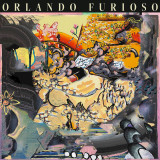
“Orlando Furioso is a haunting, one-of-a-kind statement, from an important new voice in improvised music.” - Steve Lehman
“…imagining instruments that haven’t been invented yet: space harps, cosmic gamelan, Venusian banjo. It’s the purest distillation of Atria’s musical language, simultaneously grounded and unearthly.” - Stewart Smith for The Wire (November 2022)
“Making liberal use of microtonal harmony and hypnotic, ostinato rhythms – as well as the occasional stylistic smash-cut, reminiscent of John Zorn – Orlando Furioso announced itself on Wednesday as a punchy, creative force on the New York scene. (…) Atria’s rhythms had a welcoming, social propulsion, and the microtonality of his writing for keyboard proposed an individual – even insular – language.” - Seth Colter Walls for The New York Times.
Early European composers felt that their work reflected in its structure the divine nature of the material world. Via tuning, form, and contrapuntal alchemy, these musicians sought to illuminate and edify the complex and perfect order of existence. The music recorded here also reflects the contours of an ordered world, but it is no place any of us has ever visited. By assembling far-flung building blocks from the detritus of a 21st-century musical vocabulary, Orlando Furioso brings the listener into a bizarre new cosmos. The result is deeply expressive music that speaks not with the voice of a narrator or memoirist, but with that of a cartographer.
Like a science-fiction Dante, the listener is taken on a tour of many diverse and colorful provinces of an alien world. Though each composition references its own set of real-world musical locales (from the Andes to Indonesia to Italy to New Orleans), they are bound by stylistic consistency into a coherent, continuous geography. Permeating this world is an uncompromising commitment to microtonal harmony, rhythmic intensity, and an ability to deploy the esoteric (Nicola Vicentino's notorious 31-tone temperament) and the head-smackingly obvious (a surprise djent breakdown) with equal conviction. Though Vicente's compositions are steering the ship, serious recognition is due to all the players on the record for their ability to meet these demands.
Our omnivorous musical diets offer real abundance. They enrich our craft by providing access to limitless approaches from which to choose - more masters to study, traditions to absorb, and techniques to hone than is possible in multiple lifetimes. They can also inflict heavy and often contradictory burdens of influence. When every corner of the map has been charted, it becomes difficult to find a new direction in which to travel. One solution I hope to see more often is the one pursued on this record: breaking down distinct musical worlds into component parts and reassembling them into a language. When completed with precision and with no stone left unturned, the seams between the pieces vanish and the listener is deposited somewhere beautiful and strange, left to assign their sensations meanings of their own. - Mat Muntz
Orlando Furioso is led by Vicente and features David Acevedo, David Leon, Andrew Boudreau, Alec Goldfarb, Daniel Hass, Simón Willson, and Niña Tormenta. Orlando Furioso celebrated its release at Roulette Intermedium in Brooklyn, NY, as a part of Wet Ink Ensemble's 24th Season opening concert, a performance which The New York Times heralded as "virtuosic", "punchy, creative" and "even revelatory."
Winner of the Deutscher Jazz Preis: Best International Debut Album 2023
The music of Horace Tapscott and The Pan-Afrikan Peoples Arkestra is part Sun Ra Arkestra, part John Coltrane, part Art Ensemble of Chicago. This groundbreaking and monumental album explores the multi- faceted deep and spiritual jazz of Tapscott - Afro-centric rhythms, hypnotic bass lines, Tapscott's stabbing modal piano playing and stunning flute and horn arrangements. "The Pan-Afrikan
Peoples Arkestra - Live at I.U.C.C." is a true high point in the cannon of great independent underground jazz music recorded during this era.
You have said too much to a stranger in a bar bathroom; your back is killing you because of everything you haven’t said; you’ve overwatered your houseplants again. Small Million is here for you. Flowing from the collaboration of longtime creative partners Ryan Linder and Malachi Graham, the Portland-based indie pop outfit welds deeply affecting sonic production to smart lyrics about intuition and inhibition, losing control and ending up in unexpected places, being willing to fuck up, bodies hurt and bodies joyful.
The effect is both intimate and epic, delicate and fierce. Listen to it to ache, dance to it to heal. In the time since Small Million's last release, years of chronic pain have led lead vocalist and lyricist Malachi Graham to deep explorations of embodiment that have changed everything from her singing voice to her dance moves to her observation of human frailty. “There’s one side of chronic pain that leads you towards intuition, self-discovery, and listening closely to yourself. But it also means you end up sitting on the side of the room a lot, watching people and paying attention. Also you’re pissed,” notes Graham. Producer and instrumentalist Ryan Linder’s background as a filmmaker informs the textured richness and intelligent restraint of his song building. He approaches production with obsessive technical rigor that’s always in service of centering intense emotion.
Graham’s clear, unadulterated vocals breathe at the heart of Linder’s rich sonic terrain, drawing comparisons to The Cranberries and Florence + the Machine. Linder and Graham have been writing as a duo for a decade, but for their newest chapter they've expanded the band, enlisting Ben Tyler (Small Skies) on drums and Kale Chesney (Lo Pony) on bass and harmonies.
Small Million's evolution into a four-piece has expanded the band’s sound from their synth pop origins to encompass more organic, raw indie rock energy. Small Million has played with artists like Fakear, IDER, Hatchie, HÆLOS, Lo Moon, and Loch Lomond, and their tracks have been featured on compilations by Tender Loving Empire, PDX Pop Now!, and Vortex Music Magazine. They released their debut EP Before the Fall in June 2016, their follow-up, Young Fools, in Fall 2018, and singles “Saintly” and “Tarot” in 2019. Their newest music is dropping throughout 2022.
If you dig deep enough into the underground you will find the most precious jewels and it ain't that much of an effort these days to turn on the computer and trip through the colorful World Wide Web. But beware for not all the glitter is gold. I stepped by some dark and dusty back street club in Atlanta / Georgia, USA and some enchanting music tempted me to enter. A powerful raspy voice screaming out the pain of the world no matter if it were big or small affairs. "California dreaming on such a winter's day", wow, when the MAMAS AND PAPAS sang this in a sweet folk manner it was a light and joyful anthem for all hippies and hipsters back in 1966, like a call to love. Lee Moses' version is more of a desperate cry for sunshine and freedom. And it goes on this way. His voice has this special phrase showing determination, pain but also sheer joy of life. His 1971 album is a steady groover with a steaming hot band performing , which includes a brass section of divine greatness. These devoted players build up a massive wall of groove and melody on which Lee Moses can unleash his voice like a volcanic eruption. The groove itself stays quite relaxed but definitely hypnotizing throughout the whole album and clears up your mind for the message of love Lee Moses raves about. The high skills of Lee's backing band gets showcased in a steaming instrumental version of THE FOUR TOPS' "Reach out (I'll be there)", which appeared on an early 7" first and got added here as a bonus track. They don't stop for THE BEATLES' "Day tripper" either and next to "California dreamin'" you can find another heart warming version of "Hey Joe" on the regular album. Not as extraordinary outraging as Hendrix' turn on this classic Lee and his mates make it a slightly more epic effort. All in all this is a soul album with very few covers and even more classic anthems of this genre that should actually be worshipped by lovers of the late 1960s Motown sound. Especially the bonus tracks will drive you wild. Go for it, brothers and sisters.
Rare Jazz-Funk album from 1978 by Headhunters founder.
Featuring an all-star line-up including Herbie Hancock.
Originally released in 1978 on Tobisha EMI Japan.
First vinyl reissue outside of Japan released in collab w/Totown Records. Comes with double side insert.
Paul Jackson (born in Oakland, California in 1947) needs little introduction. Paul began playing bass at the age of nine and was considered by many of his teachers to be a musical prodigy. Jackson was known as a “Musician’s Musician” and shaped a sound that launched a new direction in contemporary music: the so-called ‘Pulse Playing’, a trademark sound of close-meshed funk grooves combined with sensational rhythms. With this innovative approach, he influenced entire generations of jazz and funk musicians to come. Paul’s compositions were sampled by big acts from the likes of Prince, TLC, Mobb Deep and NWA…just to name a few.
Paul Jackson was a founding member of the Headhunters under Herbie Hancock (THE group responsible for their ground-breaking fusion and jazz-funk compositions that took the world by storm in the 70’s). The solid union between Hancock and Jackson has been especially evident in the many international tours they have made together…not to mention that he participated on most of the Headhunters albums and Herbie’s solo albums.
Paul has also worked as a producer and as a studio/live musician alongside acts such as Santana, Sonny Rollins and The Pointer Sisters. He was a frequent guest performer at renowned international festivals such as the Montreux and Newport events. Jackson’s composing has not gone without recognition and was nominated for Grammy Awards in 1974, 1975 and 1976. Like other highly talented, creatively motivated engineers of music, Paul has expanded his career to other mediums such as playing on blockbuster movie soundtracks such as “Death wish” and “Dirty Harry”.
Paul Jackson also wrote five solo albums worth listening to – including the monster of an album that is known as “Black Octopus” which is considered to be a kind of lost Headhunters album.
His debut album “Black Octopus” saw the light of day in 1978 and is a total piece of art filled with abstract sticky funky grooves, floating electric piano playing, strong thumping bass lines, raw heavy drums and amazing vocal acrobatics (Jackson himself takes vocals in 3 out of 5 songs, and his soulful singing voice strikes an emotional chord that does not go unnoticed).
On “Black Octopus” you’ll also find some of the best all-star musicians from the likes of Alphonse Mouzon (Roy Ayers, Betty Davis, Azar Lawrence)…and last but not least fellow Headhunters Bennie Maupin and Herbie Hancock himself.
With “Black Octopus” Paul Jackson wrote the book on how a jazz-funk-fusion album should sound like. The fact that the album was only distributed in Japan at the time (Jackson resided in Tokyo since the late 70’s, where he passed away in 2021) continues to increase its reputation as an album that is VERY hard to find. This is a must-have gem…not only for fans of jazz, funk and rare grooves, but also for DJs and collectors around the globe.
When picturing the German techno scene, one likely imagines the concrete monoliths of its capital city Berlin rather than the vineyards and valleys of the enchanting city of Stuttgart in the southwest. But small cities lack the oversaturation and noise of the metropolis, allowing them to develop their own inspired and distinctive subcultural visions. Stuttgart’s David Löhlein exemplifies this potential, manifesting a singular style of sight and sound through his Vision Ektase project and residency at Lehmann Club. Now, Löhlein’s warm-blooded techno is slinking, slithering and seducing its way through BNR, with the upcoming Hotel Pool EP release.
There’s no hesitation before plunging into the EP’s titular track, with its rushing fingered basslines and rolling polyrhythms. Löhlein cites solo travels in Columbia as the source of his Latin influences, and one hears them throughout “Hotel Pool” in vocal and percussive samples. Elements more commonly found in Latin and tribal house feel uncommonly fresh once Löhlein recontextualizes them within a 144 bpm techno foundation. The words “groovy” and “sexy” are usually reserved for the stuff of Buddha Bar compilations, but “Hotel Pool” is exhilarating because it serves both of the former and none of the latter.
A stream of hedonism flows beneath all of the four-tracker, but if the opener is erotic, A2 “La Piscina” is psychedelic. The bass flutters like a mescaline come-up, as infinite loops of chattering voices and deep bamboo pipe notes mesmerize. Again, Löhlein takes certain genre tropes - in this case from psytrance - and transposes them through his own stylistic signature with thrilling results. Ask Löhlein if he likes psytrance and the answer might be “Yes, when it’s techno.”
Leading the flip, “Cuando Vengas” heats up around a dark and sticky loop of ambiguous, organic origin. Here Löhlein’s masterful sample and drum programming is clearly on display, with vocal chops and subtle rhythmic variations leading the dancefloor to shivering bliss. The EP closes with “I Just Want,” a sparse, cold, and bitcrushed stalker of a track that seems to answer Baudrillard’s famed question “What are you doing after the orgy?” That the Hotel Pool EP’s wild romp ends in the Berlin oeuvre perhaps proves the city’s primacy in the German techno scene, but after a few listens one begins to wonder what rare pleasures they’ve been missing in David Löhlein’s Stuttgart.
Odd Nosdam really doesn’t need an introduction, unless you’ve been living under a rock for the last 20 years then undoubtedly you’ll know what’s up, and what an absolute humbling pleasure it is to now introduce Nosdam to the Where To Now? catalogue with two new cuts that flow from ethereal, meditative contemplation through to downtown abstracted machine damage..
The record opens with ‘End is Important’, A looping, spiritual lament which forces observation, or resolution around the concept of ‘Endings.’ Passages from Tsunetomo Yamamoto’s ‘Hagakure’ seep in and out of the mix throughout, where spiraling and glistening arpeggios dance across a glorious choral mantra, intended to elevate minds towards some kind of plume of awakening. This is a heady and deep cut which finds Odd Nosdam in full introspection mode.
‘Here to Know’ recalls the work of Patrick Cowley in his best downtown ultra slow swinging funk suit, or the more obvious nods to John Carpenter’s Assault on Precinct 13 OST. However, this is far from a straight up ode to creeping machine funk - Nosdam’s injection of energetic, pulsing synth stabs move the piece into a more surreal territory, creating a masterful and experimental injection of life and colour into an otherwise smoked out landscape.
“Where I found myself when Where To Now? reached out - asking if I'd consider a vinyl release with the label - was over in Barcelona spending time with loved ones at my family's apartment in the district of Sant Gervasi.
After my initial contact with WTN?, I ventured north to Cadaqués to visit Salvador Dalí's house in Port Lligat, where Gala & Dalí spent some 50 summers. While inspired asf touring the glorious property, I captured recordings from a looping video screening in an open air theater. These recordings became the foundation of Here To Know.
Sometimes there’s a break in the road. End Is Important was realized after re-watching the Jim Jarmusch film, Ghost Dog. Stealthy and evanescent, a familiar voice carries this slow-diver with a message to the world warped cruiser in all of us.” - Odd Nosdam
JAUZAS THE SHINING - MECHATRONICA, BROKNTOYS, SHIPWREC , SPECIMEN.
Jauzas the Shining was known as Adjust before taking that new alias - which is a salute to Kubrick's movie and the telepathy of his young character.
Since 2001, he's one of the most active electro producers in France, with several solid EPs released on Shipwrec, Last Known Trajectory, Transient Force, New Flesh, Minimum Syndicat, Mechatronica or Brokntoys and collaborate with iconic artists like Heinrich Mueller, Orgue Electronique, Ekman, Shemale, Faceless Mind, Specimen, and Ultradyne. He shared the decks with the hall of fame of electro music.
From the 90s IDM influences, Jauzas The Shining is a deep odyssey into the cold groove of electro sounds, using his sickness on skyzophrenic beats from his electronic dark side.
Hidden in the shadow of this room, Jauzas looks himself in a broken mirror but he doesn't recognise himself, he doesn't remember..the only thing he knowns is that he's now on board the nautilus ship, deeper and deeper is an ocean of sounds ...Artificial lights, mechanical noise and metallic walls..He starts hearing these voices but he doesn't know who they belong to? Utilising his sickness on skyzophrenic beats and abstract electronic dark side, he became "Jauzas the shining" The mysterious and miraculous journey of Jauzas who spent his nights and days on Formentera.
Here he conjures up a concoction of deep ocean meanderings and spellbound nights, underneath the shooting stars and radiant waters. Images of the past merged with future, becoming a collage of voices across projected shapes which make presence in their ghostlike form. This is another outing which explores the surreal and the abstract, which expressed though Jauzas's electro-musicalities with Specimen.
Limited 300 only LP pressed on 'deep space black' vinyl. Housed in a gloss finished outer sleeve with black polylined inner bag and download code. Non-Returnable.
For fans of Up-Tight, Les Rallizes Denudes, Acid Mothers Temple, and deep psych rock.
Introducing TOMOYUKI TRIO, a blistering Japanese/UK psych-rock power trio featuring Tomoyuki Aoki, Mike Vest & Dave Sneddon.
Tomoyuki Aoki is the founding member and lead guitarist of the legendary Japanese psychedelic rock band UP-TIGHT, who’ve been active and since 1992 building up a cult following worldwide.
This debut collaboration between Tomoyuki Aoki & Mike Vest (of Blown Out, Bong, Modoki, Artifacts & Uranium, Drunk In Hell etc) greets two titans of guitar feedback and blissful ‘improvised every-time’ leads.
Experimental ultra-delayed vocals, shimmer over downer minor chord basslines, leaving room for Aoki’s guitar devastations.
This is introverted mournful psychedelic rock music, yet it still grooves all the way to it's inevitable oblivion.
- 1: Spectacular
- 2: Best Believe
- 3: Vibe Check (Ft. Cadence Weapon)
- 4: Baby Boy (Ft. Paul Wall)
- 5: Loosen Up (Ft. B.k. Habermehl)
- 6: Alexis (Ft. Harriet Brown)
- 7: We Still Here (Ft. Harriet Brown)
- 8: Opportunist Convention
- 9: Kickin’ In
- 10: Don’t Tap In / Contusion (Feat. B L A C K I E)
- 11: Boss Up
- 12: Make A Baby
- 13: Jasper, Tx
With I Will Make a Baby in this Damn Economy, Fat Tony embodies the kind of quixotic figure he would rap about; a singular entity who’s motivated, confident, and hungry; a perpetual-motion-machine locked in a staring contest with his country. It’s the latest album in his catalog produced entirely by L.A-based producer Taydex since 2020’s Wake Up. Later that same year Fat Tony released Exotica, and ever since he’s demonstrated he is in his own lane as a professional rapper with the mind of a magician, as quick to conjure an image as pull it out from under you, deftly manoeuvring through so many details and references a listener feels as if they have witnessed the work of an illusionist. He paints these canvases inside of songs that rarely spill past three minutes; they’re pocket-sized diaries replete with acute observations, character studies, microdoses of storytelling, and single-minded ruminations on a topic that bud, blossom, and fade before too long. Fat Tony & Taydex’s I Will Make a Baby in this Damn Economy cements Tony’s status as someone whose albums are not so much lyrically-lyrical as they are picaresque.
As with any Fat Tony project, the bars are tight as ever, but are so fluid for the 34-year-old it’s almost easy to take for granted the details, warmth, and humanity inside his free-associative tales of day-one friends who’ve passed, edgelord grifters who want to spit game, and nights on ketamine. Taydex’s production sprints through disparate yet simpatico styles, dipping its toes into Pi’erre Bourne-esque bass (see lead single “Spectacular”), house (“Loosen Up”), and even hyperpop. Meditations on loss and grief are woven throughout, but Tony throws a few curveballs as well: Consider “Alexis,” which sweetly reflects on a long-term platonic friendship. Taydex finds a Teddy Riley-indebted New Jack Swing groove just deep enough for the feeling to land and underlines the song’s sincere candor. This is the appeal of Fat Tony writ-large: his boisterous voice and genial personality invite you to the party, then you stick around to hear what he’s saying, which is frequently more introspective and complex than one assumes.
Written and recorded in Taydex’s new studio in North Hollywood, Tony says, “We had much more freedom and flexibility in making this album and you can hear it. It felt like a family project.” If the album is comfortable and loose, it is also dense and substantial. The album’s final two tracks contextualize the immediacy of what came before it—the mezcal with ices drank, Paul Wall swangin’ through to drop knowledge, the Polaris Prize-winning rapper Cadence Weapon providing a vibe check. “Make a Baby” accounts for Tony who’s seen everything, and knows he’s met the one to be a father with, and yet chooses to take his time to get it done. Taydex’s beat recalls turn-of-the-century R&B and the millennial promise of an endless good time. Sombre closer “Jasper, TX” is Tony coming to grips with the story of James Byrd, Jr., a Black man from East Texas dragged to his death by three white supremacists in 1998. These songs are not only trademarks of Tony’s fastidious rapping—they are deeply personal examples of his approach to artistry and life itself, where every decision is made in the shadow of history.
It’s here the mission statement of I Will Make a Baby in this Damn Economy comes into focus—you get the sense he means it, he’s ready for it, he’ll fight for it. He’s waiting to take the world at its word.
- A1: Silvi's Dream (Damiano Von Erckert Remix)
- A2: What I Used To Play (Roman Flügel Remix)
- B1: The Worm (Robag Wruhme Remix)
- B2: We Are (Jonathan Kaspar Remix)
- C1: Feiern (Krystal Klear Remix)
- C2: Mystic Voices (Benjamin Damage Remix)
- D1: Sven | Väth – Nyx (Pas Deep Heet Remix)
- D2: Butoh (Robert Hood Remix)
- E1: Nyx (Planetary Assault Systems Remix)
- E2: Being In Love (Harald Björk Remix)
- F1: Catharsis (Mano Le Tough Remix)
- F2: Silvi‘s Dream (Florian Hollerith Remix)
The life-affirming energy at the heart of Sven Väth‘s recent album Catharsis is revisited, reanimated, and remixed by some of the most exciting names around, closing the circle on a superlative burst of
recent work that has not only given us the epic original LP, but also the extraordinary compilation What I Used To Play.
Roman Flügel, Benjamin Damage, Robert Hood, Planetary Assault Systems, Mano Le Tough… do we need to go on? This hand-picked list of luminaries have answered the call and certainly don’t disappoint, each fusing their signature sound with Sven‘s DNA to create a wild, uncompromising companion piece to the original album.
True to form, the running order is very much rooted on the dance floor, Silvi‘s Dream, revisited by Damiano von Erckert, explodes like a Balearic sunrise. Dreamy strings with a touch of Detroit create a lovely atmosphere while the beautiful piano sound goes right into your heart and appears as if you could feel the warm sun on your skin. Roman Flügel’s acidic rework of What I Used To Play is a homage to the 80s and the early sound of electronic music which creates nostalgic feelings and offers a greatly produced retro soundscape à la Kraftwerk. Staying close to the original, but with the perfect amount of spin, it’s a symbiotic interplay of synthetic bass pads, and a tiny bell melody. Robag Wruhme’s cranking minimal funk takes us down The Worm-hole. A concise interference sound builds
up sustained tension, tangled but structured, deep and yet driving. Robag took over the deep and dirty rhythms of the original perfectly and delivers a versatile piece. This opening salvo oozes quality and
sets things up perfectly for the electrified celebration of hi-octane technology come.
Jonathan Kaspar‘s growling interpretation of We Are provides a melancholic atmosphere with fascinating percussion parts. Zaps shoot through the air like small laser pistols while we let ourselves
be carried away by the bass, the frisky vocal stutter effect is the icing on the cake. Speeding things up, the euphoric trance that engulfs Krystal Klear’s epic version of Feiern. Expansive strings increase up
to ecstasy and guide us to a love-filled unity. This remix is sure to be an excellent peak-time smasher for the open-air season. On to a wild ride of pure techno with Benjamin Damage, who delivers a dry and uncompromising Berlin Techno version of Mystic Voices. Harder pace but the string synthesizer harmony brings light to an otherwise gloomy environment. Next up is Luke Slater’s PAS Deep Heet Mix to add a retro nineties vibe to proceedings on Nyx. Entering a rough space with gigantic clap impacts, we are blessed with straightforward Techno. Shimmering and spooling, this groove hits the
mark. Then, as if it was ever in doubt, Sven‘s lofty place in the techno firmament is underlined by a peak-time contribution by non-less than Detroit legend Robert Hood. Unmistakable, you must recognize the signature Robert Hood drive on Butoh. Chord stabs fulfill the Detroit feeling with offtaking string elements and high-energy vocal transformations. It’s a warm embrace that triggers emotions. Planetary Assault Systems then blasts things ever deeper into the cosmos on a second outing of Nyx. Reduced and to the point but of course, true to form, with powerful tribal percussion parts and intensive cutting hi-hats.
From there on in, the collection gradually re-enters the atmosphere, burning with a phosphorescent, melancholy glow. Harald Björk extrapolates Being In Love into a hypnotic groove for the early hours. A playful and atmospheric electronica interpretation to soothe our souls due to disharmonious synth pads and a dreamy deformation of the original melody. Mano Le Tough harnesses the ethno-rhythms
and brooding energy of Catharsis into a low-slung, tribal stomper. Anomalous organ parts ring out and link up with a trance-like sequence, summer feelings arouse as you feel like you can almost smell Ibizan air. The collection comes full circle with a second equally seductive interpretation of Silvi‘s Dream by Florian Hollerith. Stripped-down and hypnotic, the homage to Sven's girlfriend Silvi is extended as a reverence to Sven himself. Sven's profound vocal clearly infuse time and space and leave a forever-lasting memory of love.
By accident or design, it somehow leaves us with the reassuring sense that, although this specific part of the journey may be drawing to a close, the mission of the man behind it all most definitely isn't.
written & produced by: Sven Väth & Gregor Tresher