Gold Vinyl
Lael Neale still has a flip phone and there were no screens involved in the creation of her new record Star Eaters Delight. The album is her second for Sub Pop and reveals an expansion of her sonic collaboration with producer and accompanist Guy Blakeslee. In April of 2020, in the wake of transformations both personal and global, Lael moved from Los Angeles back to her family's farm in rural Virginia. Looking at the world from a distance and getting in tune with her own rhythms, she wrote and recorded steadily for two dreamlike years, driven by a need to make order out of chaos. Forged in isolation, Star Eaters Delight is a vehicle for returning, not just to civilization, but to celebration. She says, "Acquainted with Night (recorded in 2019, and released in 2021), was focused inward, amidst the loud and bright Los Angeles surrounding me. It was an attempt to create spaciousness and quiet reverie within. When I moved back to the farm, I found that the unbroken silences compelled me to break them with sound. This album is more external. It is me reaching back out to the world, wanting to feel connected, to wake up, to come together again." Album opener and lead single "I Am The River" melts the ice with a dynamic explosion of minimalist transcendental pop clearly descended from the Velvet Underground's branch of modern music's family tree. Blakeslee's spare yet cinematic arrangements create an ambient space in which Neale's clear and unaffected voice can explore familiar themes in an unexpected way. Subtle but potent references to Shakespeare, Emerson and the Bible (which she hasn't read) swirl together with deeply personal musings and touches of wry humor, always more optimistic than cynical. While this is a record about polarities- country vs. city, humanity vs. technology, solitude vs. relationship - the deeper intention is to heal; to come to terms with our differences and put the broken pieces back together again. Lael's affinity with the Transcendentalists has to do with her quest to hold onto sovereignty over her own mind. In a time when our devices are constantly flooding us with information, opinions and propaganda, Lael is intentional about what she takes in - hence the flip phone and the cassette recorder. Neale identifies as a minimalist "not because I don't like things, but because I value freedom more."
quête:deep voice
Tape
Lael Neale still has a flip phone and there were no screens involved in the creation of her new record Star Eaters Delight. The album is her second for Sub Pop and reveals an expansion of her sonic collaboration with producer and accompanist Guy Blakeslee. In April of 2020, in the wake of transformations both personal and global, Lael moved from Los Angeles back to her family's farm in rural Virginia. Looking at the world from a distance and getting in tune with her own rhythms, she wrote and recorded steadily for two dreamlike years, driven by a need to make order out of chaos. Forged in isolation, Star Eaters Delight is a vehicle for returning, not just to civilization, but to celebration. She says, "Acquainted with Night (recorded in 2019, and released in 2021), was focused inward, amidst the loud and bright Los Angeles surrounding me. It was an attempt to create spaciousness and quiet reverie within. When I moved back to the farm, I found that the unbroken silences compelled me to break them with sound. This album is more external. It is me reaching back out to the world, wanting to feel connected, to wake up, to come together again." Album opener and lead single "I Am The River" melts the ice with a dynamic explosion of minimalist transcendental pop clearly descended from the Velvet Underground's branch of modern music's family tree. Blakeslee's spare yet cinematic arrangements create an ambient space in which Neale's clear and unaffected voice can explore familiar themes in an unexpected way. Subtle but potent references to Shakespeare, Emerson and the Bible (which she hasn't read) swirl together with deeply personal musings and touches of wry humor, always more optimistic than cynical. While this is a record about polarities- country vs. city, humanity vs. technology, solitude vs. relationship - the deeper intention is to heal; to come to terms with our differences and put the broken pieces back together again. Lael's affinity with the Transcendentalists has to do with her quest to hold onto sovereignty over her own mind. In a time when our devices are constantly flooding us with information, opinions and propaganda, Lael is intentional about what she takes in - hence the flip phone and the cassette recorder. Neale identifies as a minimalist "not because I don't like things, but because I value freedom more."
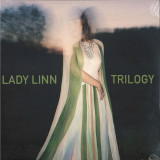
It is no longer a secret that Lady Linn has a very rich and unique voice with a versatility that is second to none, ensuring that she is right at home in a myriad of styles.
She proved exactly that in her new 'trilogy', a series of three E.P.'s - 'I'm Fine', 'Sea of Trees' & 'Nocturne'- each one telling its own unique story, and now bundled on the album 'Trilogy'.
The common thread throughout the album is her affinity with jazz, soul and dance, but also lyrically, various themes return: the tenderness within family life, melancholy, nature, and the magic of the dance floor.
There is also a clear evolution with the arrangements going from a sober, stripped-down quasi-electronic sound of the JX-03 on 'I'm fine' (with contributions from Gustaph, Gregory Frateur and producer Frederik Segers) to dreamy and warm analog synths by producer Joris Caluwaerts on 'Sea of Trees', to an organic, energetic sixties sound on 'Nocturne' with starring role for her partner and bass player Filip Vandebril and partners in crime: The Magnificent Seven, arranger Frederik Heirman and producer Jan Chantrain.
In addition to a selection of the three EPs, 'Trilogy' also includes the extra song 'Hurricane', one of Linn's personal favorites, recorded at Daft Studios with The Magnificent Seven:
'I had just watched a documentary on Laurel Canyon (on the topic of Los Angeles - the epicentre of the 'counter culture' or better 'hippie culture' - in the late 60's and early 70's and the habitat of The Mamas and the Papas, Frank Zappa, Jim Morrison, etc.) which fed my fascination for the 60's that I already had thanks to my parents. The way in which music was created and recorded in that era is a dream for every musician, me included. With the surplus in time due to the lack of gigs during the pandemic the time was right to follow my dream and record in the Daft Studios with my own band. I felt a bit like Carol King behind my piano, but I was also inspired by Joni Mitchell.'
A quote from the lyrics of 'Hurricane': 'I wanna feel the wind like the birds outside/Dive like a seagull, enter the water from flight/Into the deep I slide'.
'A very personal song about losing yourself and the longing for freedom. I composed this one specifically with 60's songs in mind, with loads of modulations and pretty complex chords.'
Lady Linn wrote a versatile trilogy, inspired by a diverse set of influences that had her digging in music history in a very original and contemporary way. She also made her mark on the sound of the productions. On both 'I'm Fine' and 'Nocturne' she was co-producer.
Since its beginnings, Hypnótica Colectiva has always shown a special interest in the music recorded and released in the city of Detroit.
A place with which we have both a blood and spiritual bond because of what occurred there socially and artistically during the 20th century.
This love led us to become ambassadors of what was happening there on a musical level, holding cultural events to screen documentaries translated into Spanish, as well as a number of themed sets at our events, dedicated motor city sections in our record shop or recently lectures on the history of the city and its music at the Museum of Illustration and Contemporary Art of Valencia (Muvim).
The time has now come to bring all this history, this musical influence, to the editorial section of our label HC records.
Detroit Legacy was born from the idea of capturing these influences on vinyl. Seeking artists from all over the world who share this passion that inspires them to create their music, what we can define as the universal Neo-Detroit.
For this first edition or first volume, the collective has enlisted in its ranks creators affiliated to the label who have shown us in their careers, this influence and this feeling.
Paul Cignol opens the record with Distance. From Dublin he offers us a track of warm sequences inspired by Deep Techno, with deep pads responding to organ keys and a subtle touch of 303.
Mallorcan LLuis Barcelo Sureda is responsible for the second track Funk Station. With a Techno Soul character that we might hear from Detroitish labels like Acacia or producers like Blake Baxter.
A real eminence in Techno is the Catalan Don Alex Martín, who already released in the mid-90s on Monssieur Garnier's label (France Communications). The Barcelona native brings his wealth of experience and wisdom through Megatech, which transports us to the spectrum of Derrick May’s Transmat who, in his day, was nicknamed "The Innovator". This track provides agile sequences of complex syncopated rhythms, combining with a dreamy Michigan style synth.
The anthem of the album comes from Ghent. The sublime Belgian creator, Mariska Neerman, once again makes our hairs stand on end and our hearts melt with a heavenly composition entitled Stellium.
No one interprets Neo-Detroit quite like Mariska, whom we baptise as a sovereign heiress of the genre in the world. If we have to think of an influence for this piece, we go straight to the genius of Detroit, the one and only Jeff Mills, in his most symphonic and harmonic facet of tracks released on his label Axis Records such as "The March", A Universal Voice That Speaks To All That Will Listen or A New Found Sense Of Being.
Some of these songs have been re-interpreted by world class philharmonic orchestras such as the Montpellier Philharmonic Orchestra at the 2005 Blue Potential (Pont Du Garde). Mariska's score in this song fuses organ keys with harmonic layers and violin - favourite instruments of the Detroitian extraterrestrial - with a harmonic result of strength and hope. An authentic anthem of classic emotional Techno.
Old School electro takes centre stage with the Master from Terrassa Ivan Arnau a.k.a. Dark Vektor. In the influence of Juan Atkins (the creator) as Cybotron or Model 500 and later creators who developed this sound like Aux 88. Metaverso Frik is a great recital of a urban poetry created and interpreted by Ivan, to completely devastating effect.
Croatian Bojan Jascur a.k.a. N-TER, closes the vinyl with We Will Emerge, in a exercise of vindication, a common weapon in the context of Detroit music. Raging, trippy electro in the purest style of Cosmic Force or Dynarec.
This first tribute to 8 Mile doesn't end with the vinyl, as 2 digital bonus tracks are included in the release.
We return to Barcelona with Pastin Futon in another sequence of consecutive oscillated rhythms oscillated much like Kevin Saunderson (The Elevator) in his day and the Techno Groove that we know today.
The most robotic touch of the release is the closer with this synthetic jigsaw puzzle of a track with echoes of the 1967 Detroit Riot, the Detroit Rebellion. Again produced by another Barcelona native, The Bandit (Dj Spy / Util Records). The sequences are very reminiscent of Arpanet and Drexciya.
The idea for the cover comes from Motor City itself by Jon Yowell, first cousin of HC records founder and head of HC records David Verdeguer.
Born, raised and a lifelong resident of Detroit, Jon is an enormously talented musician capable of writing lyrics, performing them on the mic and manipulating a number of stringed instruments as well as the drums, where he is a true master.
The cover is a tribute to the formative backgrounds of many of the city's musicians in every sonic trend. Wayne State University in the capital of Michigan.
Founded in 1868, it has offered didactic teaching to many of the city's musicians.
Not all of Detroit's creators went to university, and even less so when talking about Techno, many artists are self-taught or learned in a non-academic way, but it seems to us a good base to begin to highlight the origins of the city's music in a historic building, where those who have the opportunity to learn about music have been and continue to be educated.
The adapted designs are the work of our image manager Dani Requeni.
Mastering by Steve Voidloss at Black Monolith Studios in London (UK).
Beautiful, soulful jazz record by Jimetta Rose and The Voices of Creation, a Los Angeles-based community choir, a mainstay of the local scene. Highly recommended!!
The Voices of Creation are a community-based choir led by vocalist, songwriter, arranger, producer and mainstay of the Los Angeles scene Jimetta Rose. Made up of a multigenerational group of mainly non-professional singers backed by some of the city’s finest musicians,their music marries hip strains of gospel with layers of jazz, soul and funk. While aspects of their music might recall Kamasi Washington, The Staple Singers or Sly Stone, Jimetta’s unique vision has resulted in new spiritually-charged forms of music whose whole-hearted embrace of love, joy and peace act as sonic healing balms for the soul.
For Jimetta - whose resume includes collaborations with Miguel Atwood Ferguson, Georgia Anne Muldrow, Sa-Ra Creative Partners, Angel Bat Dawid, Shafiq Husayn, MED and Blu - the very act of creation was part of a healing process: “I was very low at the time and I wrote most of the songs going through hardship. But I found comfort in the songs and a way to adjust my mindset to where things got better. So I thought ‘if this music works for me, maybe it will work for other people’ I believe that every person has their own voice and their own note and that we can use our voices to heal ourselves. That’s the intention behind creating the project.”
After putting out a call on social media for people interested in joining her choir she was met with a sea of replies. Members were chosen in less-than conventional fashion: “I recruited people based on their interest in healing themselves and others, not necessarily on their musical experience or being seasoned performers” she says. Among those accepted into the ever-evolving collective, which was begun initially as a community choir, were the likes of Sly Stone’s daughter Novena Carmel, better known as a radio DJ for KCRW’s flagship breakfast show. Jimetta’s upbringing in the Pentecostal church, where she was a youth choir director, fed into her otherwise intuitive teachings of her songs and arrangements to the inexperienced members with help from the group’s seasoned organ player/co-musical director Jack Maeby.
Produced by Mario Caldato Jr. (Beastie Boys, Seu Jorge) and his wife Samantha Caldato the results show the incredible sense of togetherness and communal spirit that the group had built up over time in the rehearsal sessions. The six tracks of their debut album, a mixture of originals and rearranged covers, are performed in a wide-eyed mix of styles that reflect Jimetta’s vision for borderless music: “It’s new black classical music,” she explains. “It’s all the hodgepodge of being an African American but also with creativity and vision for the future. It has a taste of what is to come and what we can do. What we have gone through and who we are now.”
The group’s propensity for warm and buoyant sonics finds representation on album opener Let The Sunshine In, a sparkling rework of the Sons and Daughters of Lite’s deep jazz classic. Their version finds the group’s dynamic group harmonies offset with Allakoi Peete’s nimble afro-percussive touches and plenty of soul- drenched keys courtesy of pianist Quran Shaheed and organ player Jack Maeby. A similarly uplifting take on Rahsaan Roland Kirk’s choral jazz classic Spirits Up Above follows, with Maeby’s groove-laden organ lines inspiring some gorgeous group harmonies as well as prime solo turns from the likes of Kellye Hawkins, Zavier Wise, Tamara Blue, and Khalila Gardner.
Another Sons and Daughters of Lite cover follows as Jimetta leads the choir in the groove-drenched ode to self-affirmation Operation Feed Yourself. Written as a series of mantras for everyday living, the Jimetta-penned composition How Good It Is harnesses the full transformative power of music to generate a stirring and joyful ode to positivity - it’s chanted declarations bringing out some of the group’s most deeply-felt and affecting vocal performances over some superlative piano and organ accompaniment with a surprise feature vocal from Novena Carmel.
Jimetta’s talent for re-imagining songs in her own light is highlighted in Answer The Call, her vivid re-telling of Funkadelic’s Cosmic Slop: “When I listened to the original song, the Mom in the story was really going through it. I thought of how I could turn this into a song that can encompass the glorification of all mothers and I thought of the Egyptian cosmic goddess Nut. To that mother we’re all the seeds planted in the garden. Answering the call in your life is literally that. Finding out exactly what you’re here for through your heart.”
The album finishes with the standout original gospel number Ain’t Life Grand. Over swaying organs and clapped percussion Jimetta’s lyrical mantras serve to emphasise the good feelings that come to those with a grateful heart. Good feeling is an apt descriptor for the mood of the album as a whole. Its shining positivity provides a welcome ray of light in an increasingly dark world. “It’s a shortcut if you will to the better feelings” Jimetta says. “The hope that we need to keep pressing forward. We are saturated and inundated with images of chaos and destruction, death and hatred. There’s so much we can witness. So, I want to make sure that there is a representation sonically of the other parts that are still there to witness so that we can continue to build those things. So that the systems we support actually reflect what we want to experience. So it’s like: “Don’t give up and Let The Sunshine Into You” and then find out what your purpose is and answer the call.”
Following up his score for the japanese Netflix Anime series “Carole & Tuesday”, Mocky returns to album mode with his new orchestral opus “Overtones For The Omniverse”. Just days before the first Covid lockdowns, Mocky brought a 16 person orchestra comprising of his usual who’s who of underground talent into LA’s Barefoot Studios (and into the same room where Stevie Wonder recorded “Songs in the Key of Life”) to record a pile of scores he had come up with during his previous year’s sabbatical in Portugal. The result is a stunning orchestral album recorded in 36 hours in one or two takes straight off the written page. Shunning the “possible perfection” of today's recording techniques, Mocky looked back as a way to find an alternate future.
According to Mocky:
“We had to do it quick with no rehearsal to capture that big open sound of people working together in a room - in all its imperfect glory. In the imperfections you find the humanity. And in today’s tech driven spaces you have to fight to preserve a space for humanity. I felt a deep desire to create a sonic trajectory path for us to follow as we ascend and evolve our understanding of love and what it means to be human. This is the inspiration for „Overtones for the Omniverse“”.
The album runs the gamut from Steve Reich infused minimalism overlaid with Dorothy Ashby style harp runs (“Overtures”) to atonal analogue synth sounds over Martin Denny style percussion (“Bora!”). There's a classic Mocky crooning number that gives a Jim Henson-esque take on the state of “Humans” and the album as a whole captures Mocky's skill of bringing together the joyful energy of a unique cast of LA collaborators.
Featuring:
Randal Fisher / Flute, Vicky Farewell / Piano, Vocals, Harry Foster / Bass, Vibraphone, Tubular Bells, Vocals Joey Dosik / Organ and Glockenspiel, Vocals, Guilermo E. Brown aka Pw / Percussion, Vocals, Jhan Lee Aponte (TossTones) / Percussion, Vocals, Timpani, Paul Cartwright / Violin, Molly Rogers / Viola, Gabe Noel / Cello, Contrabass, Liza Wallace / Harp, Coco O. / Vocals, Mocky / Compositions, Drums, Vocals, Roland Sh-1000
O for the O Choir :
Nia Andrews, Leslie Feist, Moses Sumney, Durand Bernarr, Eddie Chacon
Recorded at Barefoot Studios, Los Angeles March 6 + 7, 2020.
All songs written by Dominic “Mocky” Salole and published by Heavy Sheet Music/Warner Chappell except "Wishful Thinking" written by Dominic “Mocky” Salole and Matt Corby and "Bora!" written by Dominic “Mocky” Salole, Guillermo Brown, Aponte Poro.
Produced by Mocky, Justin Stanley and Renaud Letang. Mixed by Renaud Letang at Ferber Studios Paris
Mastered by Emilie Daelemans. Cover artwork by Rand Sevilla. Photo by Vice Cooler.
ABOUT MOCKY
Performer, producer, songwriter, composer and multi-instrumentalist, Dominic "Mocky" Salole came to prominence in the Berlin electronic scene of the mid 2000s, releasing three acclaimed solo albums, co-writing and producing classics like Jamie Lidell's "Multiply" and Feist's "The Reminder" and making waves on stage with close collaborators (and fellow Canadians) Peaches, Feist and Chilly Gonzales.
In 2009, his music took a jazz-inflected turn to the acoustic with the release of "Saskamodie" and in 2011, after work in Big Sur on Feist's "Metals", Mocky relocated to Los Angeles, where he quickly established himself as a co-writer with uncommon credentials and eccentric working methods collaborating with L.A.’s brightest breakthrough artists like Kelela, Joey Dosik, Vulfpeck or Moses Sumney.
Whilst in L.A. songs he has written have been sung by Mary J. Blige, Jill Scott and many more and he has collaborated with artists as diverse as Mali’s Bassekou Kouyate and the GZA. His monthly rooftops gigs at the ACE Hotel breathed new life into the LA live scene and Mocky channeled those new creative energies into his fifth full length album "Key Change" and four digital mixtapes/EPs "The Moxtapes" Vol. I-IV.
After co-producing and co-writing Feist's "Pleasure", Kelela's "Take Me Apart" and Joey Dosik's "Inside Voice", in 2018 Mocky released two albums: "Music Save Me (One More Time)" - a collection of the best of Japan-only/unreleased gems and favorites from his so far digital only "Moxtapes" series and "A Day At United", an instrumental jazz album, recorded in a single day in the legendary LA recording studio United Recording.
In 2019 Mocky delved into soundtrack work by collaborating with legendary Anime director Shinichiro Watanabe (Cowboy Bebop) on the first two seasons of the breakthrough show “Carole and Tuesday” (Netflix) for which he won Best Score at the Anime Awards 2020.
The fifth transmission on BRUK comes from Chewlie, a breakthrough artist from Switzerland adept at sculpting tense, sharply defined atmospheres with eerie amounts of space and dreadful amounts of bass. Following up on her 2022 Creature LP for YUKU, this eight-track deep dive explores nervous hallways of dislocated rhythm with a UK soundsystem attitude and a subtle but striking approach to sound design.
In contrast with the strident melodic tones of Creature, Chewlie demonstrates her versatility as a sonic artist (alongside her established work as a graphic designer). Understated moodiness is the key here, resulting in powerful heads-down immersion heaters with stand-out moments to make the floor fall in line amidst meditative, patient pauses in between. In the field of leftfield dubwise club music, Chewlie's voice strikes out with purpose and poise, slotting into the firmament of BRUK as another natural misfit in the many-sided bassweight landscape.
LNS and DJ Sotofett return to Tresor Records with The Reformer EP. This new record moves forward with a crystal clear, direct and controlled output, leaving their debut album "Sputters" as an end-mark of a sonic era. Here they evolve into a topography full of contrasts, where harsh digital artefacts, scanner sounds, and vocoder voices cast melodic colors across cold landscapes of club-ready electro.
"Reform" plunges deep into an electro sound splintered by binary bits and submerged pads that beckon a serene melody, which echoes and loops to entangle with mutant voices, noises and buzzes. "Plexistorm" leads with synthesized strings and arpeggiated acidic bleeps until a thick bass emerges, sounding almost like a long-lost Analord record. Heavily shapeshifting with eects processing, it proves primitive movements in dubbing are the perfect counterpart to this precise electro sound.
With "Electric Terraforming", the duo uncover charged energy sources required for life on another planet, as broad synth pads
and memorable vocoder harmonies draw this earworm to a close. Mighty washes of dub rule on "909 The Controller" as a skipping beat invites a slow, rippling melody and percolating reverberated synths.
The vinyl record has significantly dierent sonics to the digital release, and, exclusively, each side ends in a locked groove produced by DJ Sotofett.
Brazilian experimental multi-instrumentalist Carla Boregas follows plates for Bokeh Versions and Hive Mind with a ghostly set of deep listening electronics that plays like a symphony for an imagined woodwind orchestra.
Carla Boregas is best known from her tenure in São Paulo's genre-bending experimental post-punk scene, playing in long-running outfit Rakta as well as other related offshoots. Her solo material has been knottier to unpick, here developing ideas from a collection of unfinished fragments and notebook scribbles exploring the possibility of finding a wind instrument that could be played collectively by several musicians. Coinciding with the pandemic, however, she soon realised the inherent risks involved with sharing breath and so the concept took a different direction, with added resonance.
Boregas developed a synthetic alternative, layering vocals and environmental recordings to suggest wind instrumentation without attempting to mimic it. The sounds here are airy, but rarely diegetic - on the title track, Boregas uses analog arpeggios and plucked, sustained tones to approximate the kosmische world of Ash Ra Tempel or more recently Emeralds, as if trapped in a wind tunnel, moved forward by an unseen force.
There's a whisper of the ancient past that harmonises with Wojciech Rusin's speculative medieval gasps, and Bloedneus & de Snuitkever's severely underheard ‘Milli Mille’, an examination of the ancient Greek aulos. On ’Grafia Do Invisível' the sound is completely different again, but the concept remains, using precise analog drones and minuscule timbral shifts to imitate the character of a wind instrument and simultaneously harmonise with the deep listening meditations of Éliane Radigue and Kali Malone.
A voice enters the frame on 'Sopro’, chopped into deviated gulps and syllables, creating a language that's unfamiliar and percussive. The use of breath is subtle, and vocalisations criss-cross between synths and faint whistles, forming an expression that's different from its predecessors but intrinsically interlinked. This is where ‘Pena Ao Mar’ excels, by viewing breath and its application in electronic music from multiple angles simultaneously. Fans of Lucy Duncombe, Lucrecia Dalt, or Sarah Davachi - don't miss this one.
Tape
"And we"re coming out of dreams / And we"re coming back to dreams" is the first thing you hear Bill say as you remake your acquaintance on YTILAER. Right out the gate, he"s standing in two places at once: meeting up with old friends behind the scenes and encountering them on the record, finding himself coming round the bend and then again as someone else on down the line. Like the character actor he played on Gold Record, writing stories about other people, telling jokes about everyone, and in singing them, becoming the songs. "You do what you"ve got to do / To see the picture" Bill"s got a full band sound going on this one, with him and Matt Kinsey on guitars, Emmett Kelly on bass and backing vocals, Sarah Ann Phillips on B3, piano and backing vocals and Jim White on drums. Jim and Matt sing on one song, too, and some other singers come in, too. Bill plays some synth here and there, and Carl Smith drifts in and out of the picture with his contra alto clarinet, as do Mike St. Clair and Derek Phelps on brass. Somehow in between them all, you might think you hear the distant sound of a steel guitar. And you might - but you might not, too. In this company, Bill continues his journey, tunneling underneath the weathered exterior of what seems to be and into the more nuanced life everything takes on in the dark. With Bill"s voice making the extraordinary leaps and bounds that measure the lives of the songs, the band follow him through passages that seem to invent themselves; other times playing with deeply soulful grooves and/or desperate intensity, as these moments come and go. There"s nothing they can"t do. "I wrote this song in five and forever / I"m writing it right now" Bill sings on "Natural Information" - an admission of the everyday alchemy he"s forever trafficking in. Time passes, triangulating the encounters that went into any one record with two out of any three others, all of it made flesh, new constitution, in our stereo speakers. If every album is its own life, it stands to reason that they"re invariably passing in the night. Cascading images flowing from the stream of consciousness. Turning like pages from the journal, unspeakably personal, then suddenly become tall tales, like a book pulled off the shelf, completely unbound. Headlines flow through. Mirror images, mirthful ones. Bill"s lyrics strain at the lines on the page, not content to separate the printing of the fact from the myth or be confined to ink on paper. They want to fly free. And they do. "I realize now that dreams are real" On YTILAER"s inner sleeve, alongside his lyrics, Bill celebrates the "exhilaration and dread" of cover artist Paul Ryan"s paintings. Paul"s another one met up with again down the road, his indelible cover imagery on Apocalypse and Dream River now an axis of meaning in the Callahanian world - and in the bright colors found in these new images, a parallel to Bill"s recognitions here. "A breath of exquisite air as we come up from drowning", sounds like the desired hope for those hearing the songs of YTILAER.
PURPLE VINYL
A Wednesday song is a quilt. A short story collection, a half-memory, a patchwork of portraits of the American south, disparate moments that somehow make sense as a whole. Karly Hartzman, the songwriter/ vocalist/guitarist at the helm of the project, is a story collector as much as she is a storyteller: a scholar of people and one-liners. Rat Saw God, the Asheville quintet's new and best record, is ekphrastic but autobiographical and above all, deeply empathetic. Across the album's ten tracks Hartzman, guitarist MJ Lenderman, bassist Margo Shultz, drummer Alan Miller, and lap/pedal steel player Xandy Chelmis build a shrine to minutiae. Half-funny, half-tragic dispatches from North Carolina unfurling somewhere between the wailing skuzz of Nineties shoegaze and classic country twang, that distorted lap steel and Hartzman's voice slicing through the din. Rat Saw God is an album about riding a bike down a suburban stretch in Greensboro while listening to My Bloody Valentine for the first time on an iPod Nano, past a creek that runs through the neighborhood riddled with broken glass bottles and condoms, a front yard filled with broken and rusted car parts, a lonely and dilapidated house reclaimed by kudzu. Four Lokos and rodeo clowns and a kid who burns down a corn field. Roadside monuments, church marquees, poppers and vodka in a plastic water bottle, the shit you get away with at Jewish summer camp, strange sentimental family heirlooms at the thrift stores. The way the South hums alive all night in the summers and into fall, the sound of high school football games, the halo effect from the lights polluting the darkness. It's not really bright enough to see in front of you, but in that stretch of inky void - somehow - you see everything. The songs on Rat Saw God don't recount epics, just the everyday. They're true, they're real life, blurry and chaotic and strange - which is in-line with Hartzman's own ethos: "Everyone's story is worthy," she says, plainly. "Literally every life story is worth writing down, because people are so fascinating." But the thing about Rat Saw God - and about any Wednesday song, really - is you don't necessarily even need all the references to get it, the weirdly specific elation of a song that really hits. Yeah, it's all in the details - how fucked up you got or get, how you break a heart, how you fall in love, how you make yourself and others feel seen - but it's mostly the way those tiny moments add up into a song or album or a person.
After 36 years without singing one word, unforeseeable tragedy and its consecutive challenges made Rico Friebe finally find his voice, suddenly and fluently starting to write songs full of intimacy and subtle storytelling – now presented on his debut singer album „Word Value“!
Processing the encounter with a special person and the lasting aftermath, all songs are perfused by an emotional sincerity and serenity, dealing with a rise and fall of depression and hope while furthermore exploring forgotten chasms and grievances from his further past.
„Word Value“ is tracing an arc as the first of four albums that are deeply connected, based on one another, followed next by the second LP „Faces Meets“ later in 2023.
In times of fast rising technology, artificial intelligence, social deconstruction, inflation of language and morality, the most basic and natural human needs haven't ever changed – re-find them while closing your eyes, opening your soul and putting on „Word Value“...
LTD. 180g WHITE LP + CD + TAPE + DOWNLOAD-CODE (INCL. UNRELEASED BONUS SONG) BUNDLE!
After 36 years without singing one word, unforeseeable tragedy and its consecutive challenges made Rico Friebe finally find his voice, suddenly and fluently starting to write songs full of intimacy and subtle storytelling – now presented on his debut singer album „Word Value“!
Processing the encounter with a special person and the lasting aftermath, all songs are perfused by an emotional sincerity and serenity, dealing with a rise and fall of depression and hope while furthermore exploring forgotten chasms and grievances from his further past.
„Word Value“ is tracing an arc as the first of four albums that are deeply connected, based on one another, followed next by the second LP „Faces Meets“ later in 2023.
In times of fast rising technology, artificial intelligence, social deconstruction, inflation of language and morality, the most basic and natural human needs haven't ever changed – re-find them while closing your eyes, opening your soul and putting on „Word Value“...
Tape
After 36 years without singing one word, unforeseeable tragedy and its consecutive challenges made Rico Friebe finally find his voice, suddenly and fluently starting to write songs full of intimacy and subtle storytelling – now presented on his debut singer album „Word Value“!
Processing the encounter with a special person and the lasting aftermath, all songs are perfused by an emotional sincerity and serenity, dealing with a rise and fall of depression and hope while furthermore exploring forgotten chasms and grievances from his further past.
„Word Value“ is tracing an arc as the first of four albums that are deeply connected, based on one another, followed next by the second LP „Faces Meets“ later in 2023.
In times of fast rising technology, artificial intelligence, social deconstruction, inflation of language and morality, the most basic and natural human needs haven't ever changed – re-find them while closing your eyes, opening your soul and putting on „Word Value“...
* New 10” from ultra-cool Helsinki-based roots, dub and reggae label / sound system Intergalaktik Sound.
* Featuring 4 cuts on the same deep roots rhythm featuring vocals from the legendary G.T. Moore and Dan I Locks.
* Produced by IGS Riddim Force, mixed, voiced and dubbed up by Russ D from The Disciples.
Pink Vinyl[20,55 €]
Last year's Big Time brought Angel Olsen to a deeper, truer sense of self than ever before. Borne from the twin stars of grief and love, the album delivered beautiful sense of certainty, the sure-footed sound of an artist fully, finally at home with herself. But within that wisdom comes the realization that there is no finish line, no destination or static end point to life while you're living it, and Forever Means collects songs from the Big Time sessions that hold this common theme. They are, in Olsen's words, "in search of something else." "I was somewhere traveling," says Olsen, "stopped for a few days and wandering the city, and I was thinking `what does `forever' really mean? What are the things I'm seeking in friendship or love, and how can `forever' be attainable if we're always changing?'" Sitting with the reality of that entropy, Olsen realized "maybe the secret to ongoing love is to embrace change as part of love itself, that forever must have something to do with playing, looking, constantly searching things out for yourself, never letting yourself think you're finished learning or exploring." `Forever'", says Olsen, "remains curious while trying also to be kind and honest." All this packs into the four precious songs that comprise Forever Means, songs from Olsen's roads traveled and the ones ahead. "Nothing's free / like breaking free" Olsen sings, comfortable with the costs of her clarity, her heart and voice fixed on the present, the future, the not-yet-known and the beautifully unknowable
Black Vinyl[20,55 €]
Last year's Big Time brought Angel Olsen to a deeper, truer sense of self than ever before. Borne from the twin stars of grief and love, the album delivered beautiful sense of certainty, the sure-footed sound of an artist fully, finally at home with herself. But within that wisdom comes the realization that there is no finish line, no destination or static end point to life while you're living it, and Forever Means collects songs from the Big Time sessions that hold this common theme. They are, in Olsen's words, "in search of something else." "I was somewhere traveling," says Olsen, "stopped for a few days and wandering the city, and I was thinking `what does `forever' really mean? What are the things I'm seeking in friendship or love, and how can `forever' be attainable if we're always changing?'" Sitting with the reality of that entropy, Olsen realized "maybe the secret to ongoing love is to embrace change as part of love itself, that forever must have something to do with playing, looking, constantly searching things out for yourself, never letting yourself think you're finished learning or exploring." `Forever'", says Olsen, "remains curious while trying also to be kind and honest." All this packs into the four precious songs that comprise Forever Means, songs from Olsen's roads traveled and the ones ahead. "Nothing's free / like breaking free" Olsen sings, comfortable with the costs of her clarity, her heart and voice fixed on the present, the future, the not-yet-known and the beautifully unknowable
Deluxe Eco Vinyl LP with 16 page lyric booklet! London slowcore band deathcrash have announced their new album Less, due March 31st via untitled (recs). Recorded at the UK's most remote studio in the Outer Hebrides, Less follows their critically acclaimed 2022 album, Return with a statement in reduction that turns out to be as powerful and potent as it is tender and introspective. "The mission statement was to be super minimal," says deathcrash singer Tiernan Banks. "Just simple and beautiful guitar parts and to be really bare. To be...less." Swiftly following Return, the band initially had no plans to make a full length. "The last thing we felt like doing was making another album," says bassist Patrick Fitzgerald. "It was like, 'let's do this little EP that's aesthetically quite different and pared down'." Less was always planned to be a statement in reduction but it soon became apparent that the songs the band were writing were significant, personal and, despite the intentions to strip things back, bigger. "As time went on, we started putting much more emotional weight into it and it became more important to us," says Banks. The result is a record that is as powerful and potent as it is tender and introspective, with arrangements that manage to feel refined yet detailed and with a deep emotional resonance at the core of the record. Banks' voice shifts from hushed whispers to guttural screams, one minute tapping into the kind of fragile beauty that artists like Elliott Smith managed so well, on tracks such as 'Duffy's' before unleashing a doom metal growl in thundering unison with the band on 'Empty Heavy'. The record has confirmed early press support from a number of UK publications, including a 4-page print feature in Loud & Quiet, a feature in Line of Best Fit, and early indications of support from Stereogum and a number of other U.S. publications too. A radio campaign will also be run for the second single 'Duffy's' and we expect support from BBC 6 Music, Apple Music and other tastemaker stations
(Note: Same tracklist on A & B Sides)
Across 8 concise vignettes, Chantal Michelle alchemizes acoustic instrumentation with a spectrum of layered feedback and field sounds, depicting fractured beauty amongst a precarious reality.
Chantal’s work is characterized by intoxicating juxtaposition and enriched with an array of source material to construct immersive narrative. Much of the work here was recorded during her time in New York City, perhaps a pre-requisite to the heightened tension at play.
Opening with lucid choral vocals, a mysteriously seductive anaesthesia disseminates before evaporating into surging feedback, vocals dissolving as quickly as they appeared.
It’s this oscillation between states that permeates throughout the work. Whether it’s the esoteric rumbling of acoustic drones, or the radiant fusion of distorted chords amongst the warming sounds of tropical atmospheres, moments of serenity are conjured up in a space so bliss that their endings incite an immediate nostalgia. Fleeting melodies are pierced by shattering cries of feedback; gossamer tones engulfed in saturated noise.
Amongst the instrumentation, buzzing field sounds tremor with hyperreal peculiarity and hallucinations shape noise into sounds of the familiar; the rumbling of an overheard aeroplane or the whirring of distant grasshoppers. Similarly, recurring motifs elicit a false sense of security in their subliminal familiarity, soon exposed as echoes, a reverberation of what was left behind.
At the approaching climax, the blissful onset anaesthesia has worn off, interrupted by a powerful chorus of deep, gothic synthesis that fuels post-apocalyptic fever dreams, an unnerving and mesmerising symphony. The unresolved tension leaves us in a state of delirium, questioning if the tranquillity we experienced was ever really there.
Chantal was immersed in Fleur Jaeggy’s The Water Statues whilst recording, and its imprint is woven into the sonic fabric of Broken to Echoes; a sublime liminal dream-state, pervaded by haunting visions. It’s a view of the world captured from inside the enclosure of a cell membrane. Through translucent mesh, we see the billowing tension of our surroundings, protected only by the most delicate walls.
Chantal Michelle is a sound artist, musician, and composer based between the United States and Europe. She works with acoustic instrumentation, synthesis, field recordings, and voice to form densely textured aural landscapes. Her work is characterized by tension, disparate sounds, and non-linear arrangements. It has been realized as multichannel installations, live performances, and recorded material.
She has released three albums to date: Pulse, Puls-ar, Procession (Dinzu Artefacts, 2022), Night Blindness (Quiet Time, 2021) and the collaborative Aunis (Injazero, 2019), all to critical acclaim. The Wire called Night Blindness “a dynamic and engrossing narrative,” and Aunis received praise in The Guardian as “a virtually unprecedented palette of synth sounds.”
"Redefining Element 78" presents a new work by British pianist-composer Rebecca Nash - a distinct musical voice with a deep musical identity. The music emerged following Nash"s encounter with the writings of legendary New York alto saxophonist John O"Gallagher, who joins her on the album, alongside guitarist Jamie Leeming, trumpeter Nick Malcolm, bassist Paul Michael and drummer Matt Fisher. Electronics are provided by Nick Walters and Chris Mapp.


