Brontez Purnell has been making music since the ‘90s. The Southern-raised, Oakland-based American musician and writer has centered his queerness and Blackness in projects Gravy Train!!! and Younger Lovers as well as in his award-winning books ‘100 Boyfriends’ and ‘Since I Laid My Burden Down’. He is also a dancer, film maker and choreographer.
CRYSTAL CLEAR VINYL.
Hot on the heels of recent 7” singles for Sub Pop, PPM and his first solo electronic record ‘No Jack Swing’ (Dark Entries / Papi Juice), Brontez returns in DIY-punk band formation for a new album entitled ‘Confirmed Bachelor’, out Sept 15th on Upset The Rhythm. These twelve songs presented are of the no-time-wasted variety. Fuzzed-out pop songs, hotly delivered from the heart, often sassy, sometimes sappy, always snappy! Brontez’s band includes the multifaceted talents of Vice Cooler (who also produced and mixed the album), Sean Teves (of Younger Lovers) on drums, Kevin Preston (Prima Donna, Green Day) on guitar, Aaron Minton (Prima Donna) on piano and saxophone, and Laena Myers-Ionita on violin. The album was recorded in Los Angeles at The VCR earlier this year.
‘Bachelors Theme’ opens ‘Confirmed Bachelor’ and sets the scene perfectly with the heady, rush along swoon “That's when I heard the doctor singing to me, "Son; you got all those boys in love, I wish I knew what you were saying to them. Their storming castles are coming for you!” It’s a tour de force of bop and bravado. This is what the album does so well, it sweeps you off your feet first, making its lyrical disclosures all the more affecting.
‘Rude Life’ begins in lilting, measured contemplation. “You're the rudest boy I know, and I've a real rude life” confesses Brontez as the violin laces through his vocal. This is all shook up at the halfway mark though when the adrenaline kicks in and the drums pummel. ‘Sky Opens Up’ similarly dials up the tumbling, careening clamour and energy buzz. ‘Hellish Banger’ is more of slow dance meets grunge reverie. The album also boasts an amazing spiraling auto-tuned cover of The Amps ‘Bragging Party’. ‘No Cigarettes / Stay Monkey’ is pulse-grabbing rally of unadorned declarations split into two fleeting sketches.
‘Hey Boy’ and ‘Boy With Butterfly Wings’ are more reflective in intent, both yearning and unapologetically poetic. In fact the little details observed in the lyrics across the whole album are quietly elegiac; winter nights, electric bills, ticking clocks and many allusions to hauntings only lending pathos to the love-drunk / lovelorn axis of the record. ‘Confirmed Bachelor’ is a hot wonder, upbeat, witty and ever-lively only with a forlorn core, a resolute focus and defiant honesty. It’s a rare triumph, a record you can dance your Friday night away to, whilst the songs’ subtly work on your emotions from the inside out.
of it all. Jagged riffs, bubblegum bounce and Brontez’s vocal effortlessly racing to dizzying effect.
quête:def inc
- A1: String Quartet No. 5 I
- A2: String Quartet No. 5 Ii
- A3: String Quartet No. 5 Iii
- A4: String Quartet No. 5 Iv
- A5: String Quartet No. 5 V
- B1: String Quartet No. 4 (Buczak) I
- B2: String Quartet No. 4 (Buczak) Ii
- B3: String Quartet No. 4 (Buczak) Iii
- C1: String Quartet No. 2 (Company) I
- C2: String Quartet No. 2 (Company) Ii
- C3: String Quartet No. 2 (Company) Iii
- C4: String Quartet No. 2 (Company) Iv
- D1: String Quartet No. 3 (Mishima) 1957 – Award Montage
- D2: String Quartet No. 3 (Mishima) November 25 – Ichigaya
- D3: String Quartet No. 3 (Mishima) 1934 – Grandmother And Kimitake
- D4: String Quartet No. 3 (Mishima) 1962 – Body Building
- D5: String Quartet No. 3 (Mishima) Blood Oath
- D6: String Quartet No. 3 (Mishima) Mishima/Closing
When Kronos plays a piece, they become fellow composers, true collaborators. Without them, we wouldn’t have the kind of string quartet playing that we find around us today. There are two kinds of string quartet playing: the ‘Before Kronos’ and the ‘After Kronos’.” – Philip Glass
‘Kronos Quartet has broken the boundaries of what string quartets can do.’ – New York Times
Nonesuch releases Kronos Quartet’s acclaimed album Kronos Quartet Performs Philip Glass on vinyl for the first time to coincide with Kronos Quartet: Five Decades, a year-long celebration marking the quartet’s 50th anniversary. Originally released in 1995, the album features David Harrington (violin), John Sherba, (violin), Hank Dutt (viola) and Joan Jeanrenaud (cello) performing Quartet No. 2 (Company) (1983), No. 3 (Mishima) (1985), No. 4 (Buczak) (1990), and No. 5 (1991), the first piece Glass wrote especially for Kronos. Recorded at Skywalker Sound in California, the album was produced by Judith Sherman, Kurt Munkacsi and Philip Glass. The cover art features Francesco Clemente’s painting The Four Corners (1985). At the time of the album’s release, the New York Times said, ‘It contains some of Glass's best music since Koyaanisqatsi. His ear for sumptuous string sonorities is undeniable,’ while the Washington Post called it ‘An ideal combination of composer and performers.’ It was a top 10 hit on Billboard’s Top Classical Albums, and spent 12 weeks on Billboard’s Classical chart.
In his original liner note, critic Mark Swed wrote, ‘Glass’ string quartets may contain his most intimate music. They are works through which a very public composer, perhaps the most important opera reformer of our age and a longstanding collaborator in large-scale music theater, holds up a mirror to himself and his way of composing. “In an odd way,” Glass explains, “string quartets have always functioned like that for composers. I don’t really know why, but it’s almost impossible to get away from it. It’s the way composers of the past have thought and that’s no less true for me. It’s almost as if we say we’re going to write a string quartet, we take a deep breath, and we wade in to try to write the most serious, significant piece that we can.” Glass says that as he sat down to write String Quartet No. 5, he had discovered that perhaps not taking a serious tone might be the most serious way to deal with it. “I was thinking that I had really gone beyond the need to write a serious string quartet and that I could write a quartet that is about musicality, which in a certain way is the most serious subject.”’
Glass’ first numbered quartet was written in 1966; however, he did not return to the string quartet medium until 1983, when he provided incidental music for a dramatization of Samuel Beckett’s prose poem, Company. During those 17 years, Glass had formed an ensemble and developed his style in a series of increasingly elaborate pieces for it. String Quartet No. 3 is also adapted to dramatic music, this time from his score to the 1985 Paul Schrader film, Mishima. It was with the music of Mishima that Kronos became associated with Glass, recording the string quartet sections of the soundtrack and subsequently working extensively with the composer on all five of his numbered quartets. Kronos also gave the first concert performances of Company and Mishima. String Quartet No. 4 was composed in remembrance of the artist Brian Buczak, who died of AIDS in 1988.
As Kronos’ anniversary season continues with further concerts around the world, Nonesuch will reissue Black Angels on vinyl on February 16. First released in 1990, the award-winning album includes George Crumb’s title piece, which inspired David Harrington to found the quartet. Called ‘an unusually elevated and searing Vietnam War protest’ by the New York Times, it sets a dark, powerful tone for this collection, which addresses the political/physical/spiritual consequences of war. Also featured are works by Charles Ives, István Márta, Thomas Tallis, and Dmitri Shostakovich. ‘Stylishly packaged, intelligently programmed, superbly recorded and brilliantly performed,’ proclaimed Gramophone. ‘In short, very much the sort of disc we’ve come to expect from the talented and imaginative Kronos Quartet.’ The Evening Standard included it among its ‘100 Definitive Classical Albums of the 20th Century’.
Born in Baltimore, Maryland, in 1937, Philip Glass is a graduate of the University of Chicago and the Juilliard School. By 1974, he had created a large collection of music for The Philip Glass Ensemble. The period culminated in the landmark opera, Einstein on the Beach. Since Einstein, Glass’s repertoire has grown to include music for opera, dance, theatre, orchestra, and film. His scores have received Academy Award nominations (including Kundun and The Hours, as well as Notes on a Scandal) and a Golden Globe (The Truman Show). Recent works include his memoir, Words Without Music, his first Piano Sonata, opera Circus Days and Nights, and Symphony No. 14. Glass received the Praemium Imperiale in 2012, the US National Medal of the Arts from President Barack Obama in 2016, and 41st Kennedy Center Honors in 2018.
Nonesuch’s relationship with Glass began in 1985, with the release of the score for Paul Schrader’s Mishima featuring Kronos Quartet. Over the years other Glass works on Nonesuch have included Einstein on the Beach (1993), Kronos Quartet Performs Philip Glass (1995), Music in Twelve Parts (1996), Glass Box (2008), as well as the soundtracks for Powaqqatsi (1988), Kundun (1997), Koyaanisqatsi (1998), and The Hours (2002), amongst others.
For 50 years, San Francisco’s Kronos Quartet – David Harrington (violin), John Sherba (violin), Hank Dutt (viola), and Paul Wiancko (cello) – has challenged and reimagined what a string quartet can be. Founded at a time when the form was largely centred on long-established, Western European traditions, Kronos has been at the forefront of revolutionizing the string quartet into a living art form that responds to the people and issues of our time. In the process, Kronos has become one of the most celebrated and influential groups of our era, performing thousands of concerts worldwide, releasing more than 70 recordings of extraordinary breadth and creativity, and collaborating with many of the world’s most accomplished composers and performers. Through its nonprofit organization, Kronos Performing Arts Association, Kronos has commissioned more than 1,000 works and arrangements for string quartet – including the Kronos Fifty for the Future library of free, educational repertoire. Kronos has received more than 40 awards, including three Grammy Awards and the Polar Music, Avery Fisher, and Edison Klassiek Oeuvre Prizes.
Kronos is prolific and wide-ranging on recordings. The ensemble’s expansive discography on Nonesuch includes three Grammy-winning albums: Terry Riley’s Sun Rings (2019), Landfall with Laurie Anderson (2018), and Alban Berg’s Lyric Suite featuring soprano Dawn Upshaw (2003); the 40th-anniversary boxed set Kronos Explorer Series; Nuevo (2002), a Grammy- and Latin Grammy–nominated celebration of Mexican culture; Pieces of Africa (1992), a showcase of African-born composers that simultaneously topped Billboard’s Classical and World Music charts; and Folk Songs (2017), Nonesuch’s 50th album with Kronos, which featured Sam Amidon, Olivia Chaney, Rhiannon Giddens, and Natalie Merchant singing traditional folk songs.
- 01: Emerald Pool
- 02: The Unveilin
- 03: Cult Of Isis
- 04: Phantom Dancer
- 05: Energies
- 06: Century C
- 07: Morning Splendor
- 08: Gossamer Silk
- 09: Untitled Track 1 (Cd Only)
- 01: Mushroom Trip
- 02: Freebasing
- 03: Symphonic Industry
- 04: Organized Confusion
- 05: Plot Zero
- 06: Untitled Track 2 (Cd Only)
- 01: Tenement Stairwell
- 02: Spatial Spectre
- 03: Blood Thirst
- 04: Virgin Ice
- 05: Blood Celebrants
- 06: Freedom At The 45Th Floor
- 07: Alpine Flight
- 08: Untitled Track 3 (Cd Only)
- 01: Ancient Sea Ritual*
- 04: Summer Rain
- 05: Midnight Velvet*
- 06: At The Water Stairs
- 07: Timeless Grief*
- 02: Quiet Joy
- 03: Domestic Peace
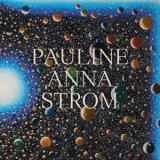
Echoes, Spaces, Lines collects Trans-Millenia Consort, Plot Zero, and Spectre, the first three albums by the late West Coast composer, healer, and medium Pauline Anna Strom. Exploring all corners of the multiverse through transpersonal form and freedom, Strom’s first three albums share a singular sensibility, different streams flowing from the same oracular font. Echoes, Spaces, Lines establishes Strom’s rightful place in the canon of great synthesists. Restored and mixed from the original reels by Marta Salogni, newly remastered, and adding Oceans of Tears, a fully realized but previously unreleased album exclusive to this box set, these are the first official reissues and the definitive encapsulation of Pauline Anna Strom’s prolific and visionary early work. These four-disc LP and CD box sets include 12 and 16 page booklet containing liner notes, an unearthed interview with Strom, and unseen ephemera.
"There could barely be a better figurehead for Belgrade's simmering multi-limbed music scene than Jan Nemeèek" The Quietus `Dissolved', a new album by Serbian synthesist and sound designer Jan Nemeèek, began its life cycle in a studio live room. It unpacks the paradigm of the individualistic act of computer music creation, transporting it into the communal setting of a band, its performers contributing elements ranging from prepared piano to Turkish lyre. The album opens with an unexpected falter, a false start that imbues the album with a sense of vulnerability. It's as if the album itself is finding its footing, mirroring the dissonance of an orchestra tuning. This digital ensemble, an assembly of electronic voices, seems to search for its harmony, its discord, its pitch, its timbre - much like a traditional counterpart would. As it unfolds, `Dissolved' further taps into the raw tonalities of partially defunct digital synthesizers, ranging from early 2000s' attempts at neural networks to precursors of oscillator-laden software synthesizers, in order to build its cloud of suspended tension and alternate histories. Through this clash of wistful piano and biting frost of digital pads with the iridescent hum of tube amps, the album reflects New Age tropes through the prism of metal (machine) music. Hailing from Belgrade, Serbia, Jan Nemeèek has been releasing electronic music since 2005, with a particular focus on ambient and bass-heavy electronic compositions. Nemeèek's music is characterized by his use of a wide range of sound generating tools, including neural networks, analog synthesizers, and granular synthesis. His approach to music production allows his work to unfold with patience, influenced by borderline dub sub-bass movements and heavily based on deconstructed recordings. Jan has released several albums, most notably 2014's Fragmented and later Recurrences. Prior to that, he co-founded the Creative Commons-based net label Norbu. `Dissolved' is set to be released on vinyl and digital on 10th November 2023 via Refractions, a new imprint founded by Nemeèek.
ele
Svart Records are proud to present the vinyl debut of the album '8 Convulsions' (1994) by Crisis (NYC, USA) "I am really glad that Svart are re-releasing 8 Convulsions, so more people can rediscover this wonderful and intriguing heavy music." Michel 'Away' Langevin, Voivod Remastered and repackaged with the vinyl format in mind, the package comes with a large booklet full of lyrics and exclusive photos. This is the first time an album from the NYC cult band's oeuvre is pressed on vinyl. There will also be a CD edition of the remaster. Hailing from the mean streets of NYC in the year 1993, Crisis was a band that defied classification from the very start. During a time when heavy music was dominated by a mostly male presence, founders Afzaal Deen and original drummer Fred Waring envisioned a female-fronted band to run against the grain and destroy expectations. Seeking out a singer with a singular sound and presence, and found their match in groundbreaking vocalist and avant-visual artist Karyn Crisis. Soon after, a newspaper ad for a bass player was answered by Gia Chuan Wang and the original unit was formed. During their first rehearsal, Karyn became so enmeshed and driven by the music that she inadvertently destroyed a microphone stand and threw herself to the floor in an outpouring of unmitigated expression. This was barely a hint at the intensity she would soon bring to the stage and studio. Karyn’s guttural growls and angelic melodic notes meshed perfectly with the mixture of grinding guitar, pounding rhythm and deep bass tones. The underground music scene would now begin to experience the dynamic intensity of this burgeoning powerhouse band in full force. Crisis signed to Too Damn Hype records and released their debut album '8 Convulsions', now being reissued to mark its 30th anniversary. In a time where inclusivity is more crucial than ever, Crisis remains a band as diverse and distinct as the city from which they originally hailed. “The United Nations of Rock” as they’ve been called, continue to break boundaries and crush antiquated archetypes with their unprecedented sound and vision. "One of the most captivating bands I’ve ever experienced in New York City in the early 90s. They had a very unique sound where you couldn’t categorize them though they had elements of metal, punk with a very dark experimental approach, which gave them their unique sound. Just raw and relentless energy." Roy Mayorga, Ministry/Soulfly/Nausea etc 8 Convulsions is available on Svart exclusive blue/red marble vinyl, limited transparent yellow vinyl, classic black vinyl, and CD. Release date October 20th.
I want to introduce this work ‘Halos of Perception’ to you in the way Lisa introduced me to it, through the sharing of experiences.
Lisa and I met for a walk near South Yarra station to talk about this work, when inclement weather made it too wet to visit the tunnels. Moving almost seamlessly from a world of leisurewear, infinite milk alternatives and blaring neons to stretches of green by the water that brimmed with sounds and life, we saw a few people climbing the Burnley bouldering wall, butterflies suspended in the hot wind and lots of plants I wish I knew the names of. Overhead the cars rumbled like a ceaseless animal as we talked about hidden ecosystems, imagined spaces and networks of care.
Stemming from a serendipitous encounter with an original Cave Clan member that led to many underground adventures, this work explores the worlds that exist outside of our perceptions. By the river, I leafed through a selection of tunnel photos Lisa had printed off at Officeworks, revealing alien textures, tunnels that stretch on into abysses of their own, underground flowing streams. Light is sparse and delicate, something reflected by the flickering and wavering in Lisa’s piano compositions.
As we walked, we noticed the ways in which infrastructure is often designed to keep people out—cut doors into fencing and clipped wires show an active and ongoing defiance of this. We spoke about how her Cave Clan friend used to go down to this painted room and read in solitude, using candles for light. The way sound exists underground, encased in these hollow cement tunnels, a painted room with its own deep hum. How people used to hold underground shows, how there were rules for safety (no exploring after rain, never alone) that was shared with each other. This warmth and absorption of other’s experiences is present in Lisa’s work—it’s immersive, like wading in water.
We paused on the walk to eat berries and talk about how The Caretaker creates transitory worlds with recorded sound, how this technology captures memory, and the exploratory pursuits of Pauline Oliveros’ Deep Listening Band. These citations of memory and deep listening inform Lisa’s use of analogue and classical instruments, playback artefacts and acoustic feedback in her own world-building. When speaking about ‘Halos of Perception’, she describes it as a fascination with timbre and acoustic artefacts.
Ideas of networks and enmeshment are felt deeply in Lisa’s compositions, motifs overlaid over each other evoking the image of many hands interlinking playfully, tenderly, softly. The way her compositions delve into refraction and echo makes me think about the tunnels and the way they splinter off into many possibilities. Manipulated textures reminiscent of the chalky, earthy, moss air that perfumes the tunnels’ subterranean air. Tactile details that gesture towards close attention, verging on obsession.
This work is also about imagining ecosystems of potential. Lisa shared with me that during this project, she has been reimagining subterranean networks in dreams, thinking about oral traditions, and the way water moves—from the sky to the earth, through the ground, connecting all these spheres. Realised in collaboration with hyperreal video artist Tristan Jalleh, Lisa’s dream landscape melds waterfalls, leaks, flower graffiti, and hidden messages lit up by imagined light sources with existing subterranean networks. There’s a real sense of wonder in this world she has built, how the city can reveal itself to you with some patience and care, how the city and its secrets can find its way into your dreams.
— Panda Wong
Traversing the everyday in 2023, the need for ritual catharsis only grows stronger. The need to lose oneself in a force bigger than ourselves, and to venture into inner space the better to sculpt armour for the battles outside. Luckily this is the job of Bonnacons of Doom, aural soothsayers and progenitors of Trans Pennine hypnotic music. ‘Signs’ - their second album for Rocket Recordings - marks both a portent of things to come, and a roadmap of the psychic pathways to survival. This masked troupe, subsumed to mystery and amassed from across the North of England, have stepped up their mission accordingly. Building on the intimidating intensity of their self-titled 2018 debut, this series of fiercely charged mantras and premonitory transmissions is possessed of a new level of communal intensity. The band’s choice of weapons- the monomaniacal intensity of the riff, the liberating binary spirit of electronics and the incantatory vocals of ceremonial leader Kate Smith - here coalesce into a metaphysical force which stands defiant of easy categorisation. Within these otherworldly manifestations lurks solace in a place where the transcendent power of heavy amplification, cosmically aligned sonic explorations and strange forces darker and more unknowable can coalesce to cathartic and redeeming effect. ‘Signs’ marks out a supernatural landscape where ancient and modern, earthly and alien congregate in the eternal now, whilst Bonnacons Of Doom transcend era to light a path for the future
- A1: Douce
- A2: Cultural
- A3: A Onda
- B1: Mamae Nao Quer Feat Joao Selva
- B2: Out Of Touch Feat Kit Sebastian
- B3: Breath It (Interlude)
- B4: Koul Dan Mon Do Feat Kaloune & Papatef
- C1: Wiggle
- C2: Rapsodie
- C3: Feliz
- D1: Lightweight Feat Jenny Penkin
- D2: Grosse Ambiance (Interlude)
- D3: La Fete
- D4: Diva
- D5: Beautiful (Outro)
First Word Records in collaboration with Heavenly Sweetness proudly bring you a 'Beautiful' new album from the formidably funky French duo, Souleance.
So the saying goes, beauty is in the eye of the beholder (or perhaps in this case, the ear!). How we define beauty varies from person to person. Be it a meal, a landscape, a picture, a record… Appreciating and admiring beauty could be considered an art in itself, and one that Souleance have made a rule of life. This ethic is transposed into their own craft, used as fuel to turn beautiful moments into music.
This 15-track album seeks to convey this through an assortment of sun-saturated grooves of different shapes and sizes. While remaining true to their style of creating cut & paste sound collages and incorporating dusty samples, this album seeks to expand upon their own sonic path. Fulgeance lays down masterful work on keys, beats and bass, with Soulist the driving force behind song composition and percussive scratching. Comb...
- A1: ) White Mice – Mo-Dettes
- A2: ) Typical Girls – Slits
- A3: ) Idealogically Unsound – Poison Girls
- A4: ) Dear Marje – The Gymslips
- A5: ) Identity – X-Ray Spex
- A6: ) You – Au Pairs
- A7: ) Warm Girls – Girls At Our Best!
- B1: ) Sightseeing – Ludus
- B2: ) No Side To Fall In – The Raincoats
- B3: ) In Love – Marine Girls
- B4: ) Trees And Flowers – Strawberry Switchblade
- B5: ) Aerosol Burns – Essential Logic
- B6: ) Launderette – Vivienne Goldman
- B7: ) October (Love Song) – Chris & Cosey
Women In Revolt! is an exhibition of work by over 100 women artists working in the UK during the 1970s and 80s. It explores how women used radical ideas and rebellious methods to change the face of British culture. With music, painting, sculpture, photography, film, and performance, they forged a path for women’s liberation in the UK. To underline this trailblazing exhibition, a compilation has been dutifully curated to further reveal the music, sound art, and prominent musicians creating during this artistic and societal paradigm shift. The music that defines and defied this era, not only soundtracked but spurred on increasingly impassioned creative output and representation for women. Bands included on the compilation like X-Ray Spex and The Slits remain front of mind for band’s espousing this robust stance both sonically and politically, with equally impactful artists included like Ludus, whose lead singer Linder Sterling also impacted the genre.
GREEN AND WHITE MARBLE VINYL.
The Beths occupy a warm, energetic sonic space between joyful hooks, sun-soaked harmonies, and acerbic lyrics. Their debut album Future Me Hates Me, forthcoming on Carpark Records, delivers an astonishment of roadtrip-ready pleasures, each song hitting your ears with an exhilarating endorphin rush like the first time you heard Slanted and Enchanted or 'Cannonball.'
Front and center on these ten infectious tracks is lead singer and primary songwriter Elizabeth Stokes. Stokes has previously worked in other genres within Auckland's rich and varied music scene, recently playing in a folk outfit, but it was in exploring the angst-ridden sounds of her youth that she found her place. 'Fronting this kind of band was a new experience for me,' says Stokes. 'I never thought I had the right voice for it.'
From the irresistible title track to future singles 'Happy Unhappy' and 'You Wouldn't Like Me,' Stokes commands a vocal range that spans from the brash confidence of Joan Jett to the disarming vulnerability of Jenny Lewis. Further honeying Future Me Hates Me's dark lyrics that explore complex topics like being newly alone and the self-defeating anticipation of impending regret, ecstatic vocal harmonies bubble up like in the greatest pop and R+B of the '60s, while inverting the trope of the 'sad dude singer accompanied by a homogenous girl-sound.'
All four members of The Beths studied jazz at university, resulting in a toolkit of deft instrumental chops and tricked-out arrangements that operate on a level rarely found in guitar-pop. Beths guitarist and studio guru Jonathan Pearce (whose other acts as producer include recent Captured Tracks signing Wax Chattels) brings it all home with an approach that's equal parts seasoned perfectionist and D.I.Y.
'There's a lot of sad sincerity in the lyrics,' she continues, 'that relies on the music having a light heart and sense of humor to keep it from being too earnest.' Channeling their stew of personal-canon heroes while drawing inspiration from contemporaries like Alvvays and Courtney Barnett, The Beths serve up deeply emotional lyrics packaged within heavenly sounds that delight in probing the limits of the pop form. 'That's another New Zealand thing,' Stokes concludes with a laugh. 'We're putting our hearts on our sleeves—and then apologizing for it.'
It's been a little over ten years since Hailu Mergia reemerged on the international music scene. Following the first in a series of his classic recordings reissued in collaboration with Awesome Tapes From Africa, Mergia assembled a band and began performing live again after many years driving a cab in Washington, DC. His first show back appeared on the front page of the New York Times along with a stellar review and he took off from there performing his flavor of Ethiopian jazz all over the world in the years since, including Radio City Music Hall and Montreal Jazz Festival. Finally, we have a recorded document of the keyboard player's powerful DC-based trio _ which practices each weekend in his basement _ featuring Kenneth Joseph on drums and Alemseged Kebede on bass. Beautifully captured at one of their fiery live shows at the venerable Brooklyn non-profit cultural center Pioneer Works on July 1, 2016, the concert was recorded by PW staff and mixed by Ted Young with mastering by ATFA's expert audio extraction collaborator Jessica Thompson. The performance clarifies what many people across the globe already know: in his fifth decade of music-making Hailu Mergia continues to push the boundaries of his remarkable abilities. Mergia and his veteran band energetically and playfully unpeel layer after layer of harmonic and rhythmic interest out of a spectrum of Ethiopian repertoire. Modern jazz demands constant reinvention and improvisation, night after night creating new works out of known modes and classic standards. This band is unstoppable when it comes to turning age-old melodies (like "Tizita" or "Anchihoye Lene") upside down and inside out until they emerge as molten new works, often spontaneously. Mergia's original compositions (like "Yegle Nesh") shine brighter than ever here as well. Moving from keyboard to organ to accordion to melodica, he deftly switches instruments _ often during the same song. Mergia at 77 years old seems to be working harder than musicians half his age. "Pioneer Works Swing (Live)" brings into focus the kind of onstage group improvisation and deadly solo passages that reach for places Mergia and the band have never gone, on festival and club stages across four continents. Now that Mergia has released two new recordings along with four classic reissues, he is eager to let everyone hear what he's been doing on the road since he re-took the global stage for his victory laps. So much more than an old act from yesteryear, Mergia balances his legendary Ethiopian recordings with good old fashioned sweat-soaked live concert triumphs such as the one we have here.
- A1: Acquiesce (Remastered)
- A2: Underneath The Sky (Remastered)
- A3: Talk Tonight (Remastered)
- A4: Going Nowhere (Remastered)
- B1: Fade Away (Remastered)
- B2: The Swamp Song (Remastered)
- B3: I Am The Walrus – Live Glasgow Cathouse June ‘94 (Remastered)
- C1: Listen Up (Remastered)
- C2: Rockin' Chair (Remastered)
- C3: Half The World Away (Remastered)
- D1: (It's Good) To Be Free (Remastered)
- D2: Stay Young (Remastered)
- D3: Headshrinker (Remastered)
- D4: The Masterplan (Remastered)
Silver[40,29 €]
‘The Masterplan’ is an extraordinary collection of B-sides originally featured on singles from Oasis’ era-defining first three albums, ‘Definitely Maybe’ (1994), ‘(What’s The Story) Morning Glory?’ (1995), and ‘Be Here Now’ (1997). Far from being inferior to the singles they backed, many of the 14 tracks that feature on ‘The Masterplan’ have become as cherished as the band’s biggest singles from that seminal period. The album includes tracks ‘Acquiesce’, ‘Half The World Away’, ‘Talk Tonight’, Oasis’ iconic live cover of The Beatles’ ‘I Am The Walrus’ and the epic title track. Noel has often described ‘The Masterplan’ as one of the best songs he has ever written.
Formats include CD, Heavyweight Black LP and limited-edition Silver LP, to celebrate 25 years. The Masterplan’ charted at No.2 in the UK Official Album Chart UK selling over 122,000 copies in its first week. It went on to be certified triple platinum and has sold over three million copies worldwide.
- A1: Acquiesce (Remastered)
- A2: Underneath The Sky (Remastered)
- A3: Talk Tonight (Remastered)
- A4: Going Nowhere (Remastered)
- B1: Fade Away (Remastered)
- B2: The Swamp Song (Remastered)
- B3: I Am The Walrus – Live Glasgow Cathouse June ‘94 (Remastered)
- C1: Listen Up (Remastered)
- C2: Rockin' Chair (Remastered)
- C3: Half The World Away (Remastered)
- D1: (It's Good) To Be Free (Remastered)
- D2: Stay Young (Remastered)
- D3: Headshrinker (Remastered)
- D4: The Masterplan (Remastered)
Black[33,57 €]
‘The Masterplan’ is an extraordinary collection of B-sides originally featured on singles from Oasis’ era-defining first three albums, ‘Definitely Maybe’ (1994), ‘(What’s The Story) Morning Glory?’ (1995), and ‘Be Here Now’ (1997). Far from being inferior to the singles they backed, many of the 14 tracks that feature on ‘The Masterplan’ have become as cherished as the band’s biggest singles from that seminal period. The album includes tracks ‘Acquiesce’, ‘Half The World Away’, ‘Talk Tonight’, Oasis’ iconic live cover of The Beatles’ ‘I Am The Walrus’ and the epic title track. Noel has often described ‘The Masterplan’ as one of the best songs he has ever written.
Formats include CD, Heavyweight Black LP and limited-edition Silver LP, to celebrate 25 years. The Masterplan’ charted at No.2 in the UK Official Album Chart UK selling over 122,000 copies in its first week. It went on to be certified triple platinum and has sold over three million copies worldwide.
The last twelve months have been a whirlwind for Henry Counsell and Louis Curran, the men who make up Joy (Anonymous). Having established themselves during the Covid-19 era by playing impromptu meet-ups on London’s South Bank, they have graduated to bigger venues, travelled to far-flung locales and recorded their second album, Cult Classics, while maintaining the spontaneous energy and irrepressible joy that made their name. Their music revels in the euphoria of being alive and all the feelings, good or bad, that come with it. It invites us into a community, draws us close and promises the night of our lives.
Recorded over the course of a year, the blueprint for Cult Classics was laid down over a two-week span at Imogen Heap’s Round House in east London. Joy (Anonymous) invited friends old and new to visit - they’d record live instruments in jam sessions upstairs and then retreat to a second room to flip and loop and generally mess with the sounds, moulding them into sizzling dance tracks. “Loads of people were coming up to me like ‘I thought this was going to be a dance record?’” Louis says, remembering the quietly beautiful music they’d be recording. “I’d be like, don’t worry about that, just keep playing.” He’d send it back to people later and they’d be floored - “That was my bit and you’ve made it... jungle!”
It was an organic and creatively fulfilling approach, one that didn’t allow any of the music to get stale or stagnate. As they built the tracks from the sounds they’d collected, Joy (Anonymous) would weave the new songs into their famously improvised live sets, testing them, refining them, taking note of the audiences’ reactions. In a year punctuated by a lot of travel, they’d also incorporate the voices of people they met along the way - “Beazley’s Poem”, which opens the record, features the words of a man who was working security at a Fred Again show at New York’s Terminal Five. “He was basically doing the opposite of his job and being a hype man, climbing on the fence and ramping up the crowd - we ended up hanging out with him - like, who’s this legend?” Louis explains. “He just speaks really amazingly about his life, all these amazing thoughts and opinions - he started jumping on the mic when we were playing, preaching these amazing messages to the crowd, like that we all need to be nicer to each other. The first time we played the record in its entirety, he introduced us and that’s the recording we’ve used.”
Joy (Anonymous) remain dedicated to the spirit of spontaneity. They shut a street down with a surprise waterside party in New York. On a trip to Copenhagen they played an impromptu set in a cafe, which turned into a house party and a night-long good time. In Lithuania, they ended up playing in a decommissioned prison. It’s harder, perhaps, to keep that spirit alive now that they are operating more within the confines of the music industry but they will keep lugging their kit to wherever the party calls for as long as they can. “I think if we lose that, we’ve kind of lost what makes us us,” Henry says.
Bursting with multi-genre reference points and disparate influences, Cult Classics is very much a dance album. The samples we made ourselves or we took from music that is quite different to dance music, but we definitely wanted to shout out a lot of the dance influences that we love,” Henry says. They listened to a lot of Daft Punk and Basement Jaxx as well as The Prodigy (“more rage stuff”), taking songwriting tips from their dance forebears, but also recording bits that felt more like jazz and motown (see: A Place I Belong and the lovely album closer, You’re In Or You’re Out). Emir Taha’s gentle classical guitar runs like a thread throughout Cult Classics, washing into the undertones of the record, tying it all together.
The album follows the beat of a night out, from frenetic, sweaty movement to the gentler winding down as the dawn breaks. At times it is euphoric, celebratory and pure, whirling fun, at others it seeks the joy in the darker emotions that life throws our way. 404 is designed to encapsulate everything about the Joy (Anonymous) journey so far. Skittering beats and ghostly vocals give way to vibrating house chords: sirens blare as we approach a dubstep drop. It’s dramatic and wild, ratcheting up, seeming to settle then hitting you with an intense and frantic breakdown before the ghostly vocal returns to lull us back into the world. It has the feel of a hungry cat playing with a mouse, toying with it before letting it get away.
What sounds like someone playing the spoons on playful, housey How We End Up Here is actually Louis’ restless habit of clicking his rings on everything, one of a myriad of calling cards and easter eggs that day one fans will recognise. They rework Miley Cyrus and Swae Lee’s Party Up The Street into a French-electro-inspired future classic, adding a note of melancholy to a tune that you can imagine hearing blaring from every car on a summer drive. The lyrics on Cult Classic are generally reassuring, inspirational, originally drawn from Henry in stream-of-consciousness freestyles. You’re fine the way you are, they seem to say - the repeated “No need to try” of A Place I Belong, the assurance that “It’s in me all the time” on In Me All The Time. Even the summery but regretful Did You Wrong hints at the growth that is possible from less than ideal behaviour. For Joy (Anonymous), joy isn’t about just being “happy” all the time - it’s about relishing every element of your being.
The name ‘Joy (Anonymous)’ is taken from the work Henry did with Alcoholics Anonymous groups: it is a way to build a community around sharing joy. Their impromptu live sets are known as ‘meetings’; they encourage fans to share moments of joy to their website. They care deeply about the scene they’ve come up in and are determined not to leave it behind. Every show is another chance to reach out and connect with people who love to come together and revel in music as loud as it can go.
Support slots for Fred Again and The Streets, wild B2Bs with Fred and Skrillex, and a set at Four Tet’s Finsbury Park all-dayer this summer have given the duo the opportunity to live out childhood dreams and introduced their infectious live shows to new audiences at huge venues.
With an album as assured and joyful as Cult Classics on the horizon (and a killer collab with The Blessed Madonna coming up), they’re only going to reach higher heights. But the essence of Joy (Anonymous) remains on the South Bank. Between shows at Ally Pally in September, they dragged their camping chairs and gear back down to the banks of the Thames: and it just felt right.
The evolution of Swampmeat Family Band continues apace. When the Birmingham outfit released
their incendiary third album, Muck, three years ago, it marked the culmination of the kind of vision that
frontman Dan Finnemore had always had for them; having returned from the U.S. after a spell as a key
member of Philadelphia rockers Low Cut Connie, he was burning with ideas and inspiration,
channeling a renewed creative energy into a new-look version of the garage band he’d formed, as
simply Swampmeat, with drummer T-Bird Jones in 2006. Muck certainly felt like a family affair, one
that saw the group expand to a five-piece and broaden their musical palette, boldening their bolshier
side with brass, lending their forays into country some authenticity with the addition of pedal steel and,
by welcoming vocalist Joni Coyne into the fold, providing Finnemore with a new foil. The new
accoutrements came together to form the basis of Swampmeat 2.0, a slicker, sharper band anchored
by Finnemore’s handsome arrangements and melodic sensibilities. Polish Your Old Halo continues
Finnemore’s hot vein of songwriting form with Muck and capitalises upon that album’s creative
momentum, without being afraid to try new things and remove old ones; the brass and strings that
made it on to Muck have been left to one side, propelling Finnemore’s writing to the fore. The
freewheeling blues rock that came to define their last album is still alive and well. But there’s also
progression, something particularly evident in the album’s bookends; ‘Do It All’ brings the curtain up
with juddering, synth-led punk energy, while closer ‘Plant Your Feet Correctly’ is a swooning acoustic
cut, initially envisioned as having a string section but now presented in vulnerable, bare-bones fashion.
- 1: Believe
- 2: The Power
- 3: Runaway
- 4: All Or Nothing
- 5: Strong Enough
- 6: Dov'e L'amore
- 7: Takin' Back My Heart
- 8: Taxi Taxi
- 9: Love Is The Groove
- 10: We All Sleep Alone
- 11: Believe (Almighty Definitive Mix)
- 12: Believe (Club 69 Future Anthem Mix)
- 13: Believe (Phat ?N' Funky Club Mix)
- 14: Strong Enough (Club 69 Phunk Mix)
- 15: Strong Enough (Male Version)
- 16: Strong Enough (Pumpin' Dolls Radio Edit)
- 17: All Or Nothing (Almighty Radio Edit)
- 18: All Or Nothing (Austrian Version Metro Mix)
- 19: All Or Nothing (Danny Tenaglias Inchermental)
- 20: Dov'e L'amore (Emilio Estefan Jr. Extended Mix)
- 21: Dov'e L'amore (Tony Moran's Anthem 7? Mix)
- 22: Dov'e L'amore (Tee's Radio One Instrumental)
- 23: Dov'e L'amore (Ray Roc's Latin Soul Instrumental)
Cher celebrates 25 years of "Believe" : On November 3, the Grammy Award-winning masterpiece will be released in a new, expanded " BELIEVE (Deluxe Edition) " that adds a whopping 13 remastered remixes to the mega-seller's original track listing (11 million worldwide!). The deluxe edition will be released in 3LP/2CD/Download & stream formats via Warner Records. "Believe" was an album full of dancefloor perennials - a fact that the assembled remixes in the new mastering underline once again.
"Tee's Radio One Instrumental? & "Ray Roc's Latin Soul Instrumental" from "Dov'e l'Amore?" are included here in one package for the first time, for example, along with remixes of the empowerment anthem "Strong Enough," "All or Nothing," "Dov'è l'amore" and the title track "Believe," a worldwide smash hit that sold over 10 million copies and reached #1 in 23 countries, including Germany, where it now has 5x gold status.
Cher is one of the most successful artists in history, selling over 100 million records during her unparalleled career. To date, she is the only artist:in to record a #1 single on the Billboard charts in six consecutive decades.
The initial cassette-only releases of Tashi Dorji turned lots of heads, including Six Organs of Admittance and Hermit Hut - now over a decade later, this release makes its full-album debut on vinyl. "Guitar Improvisation and Tashi Dorji are the first physical releases of my guitar improvisations. They were put out by a small local, now defunct, label called Headway Recording in 2012 and 2013. The friends who ran the label had heard some of my guitar music and reached out to me about doing a cassette release. Guitar Improvisations was really my first recording of improvisation - in a semi-studio setting at my friend"s basement space. It really was a formative time for me because it felt like everything opened, as far as the possibilities of what music-making meant. Like improvisation walked in and then there was a volcanic eruption . . ." - Tashi Dorji
It’s been a little over ten years since Hailu Mergia re- emerged on the international music scene. Following the first in a series of his classic recordings reissued in collaboration with Awesome Tapes From Africa, Mergia assembled a band and began performing live again after many years driving a cab in Washington, DC. His first show back appeared on the front page of the
New York Times along with a stellar review and he took off from there performing his flavor of Ethiopian jazz all over the world in the years since, including Radio City Music Hall and Montreal Jazz Festival.
Finally, we have a recorded document of the keyboard player’s powerful DC-based trio—which practices each weekend in his basement—featuring Kenneth Joseph on drums and Alemseged Kebede on bass. Beautifully captured at one of their fiery live shows at the venerable Brooklyn non-profit cultural center Pioneer Works on July 1, 2016, the concert was recorded by PW staff and mixed by Ted Young with mastering by ATFA’s expert audio extraction collaborator Jessica Thompson. The performance clarifies what many people across the globe already know: in his fifth decade of music-making Hailu Mergia continues to push the boundaries of his remarkable abilities.
Mergia and his veteran band energetically and playfully unpeel layer after layer of harmonic and rhythmic interest out of a spectrum of Ethiopian repertoire. Modern jazz demands constant reinvention and improvisation, night after night creating new works out of known modes and classic standards. This band is unstoppable when it comes to turning age-old melodies (like “Tizita” or “Anchihoye Lene”) upside down and inside out until they emerge as molten new works, often spontaneously. Mergia’s original compositions (like “Yegle Nesh”) shine brighter than ever here as well. Moving from keyboard to organ to accordion to melodica, he deftly switches instruments—often during the same song. Mergia at 77 years old seems to be working harder than musicians half his age.
Pioneer Works Swing (Live) brings into focus the kind of onstage group improvisation and deadly solo passages that reach for places Mergia and the band have never gone, on festival and club stages across four continents.
Now that Mergia has released two new recordings along with four classic reissues, he is eager to let everyone hear what he’s been doing on the road since he re-took the global stage for his victory laps. So much more than an old act from yesteryear, Mergia balances his legendary Ethiopian recordings with good old fashioned sweat-soaked live concert triumphs such as the one we have here.