Brooklyn Sounds legendary second album from 1972, full of heavy Nuyorican underground salsa dura propelled by raw trombones, off-kilter piano and in-your-face percussion. A perfect blend of barrio attitude and Caribbean swing, the album proves Brooklyn has sabor y salsa! Pressed on 180 g vinyl, our reissue includes liner notes featuring never-before seen photos. “Libre – Free” is the now legendary second album by the short-lived Brooklyn Sounds and is arguably even better than their self-titled debut, displaying a more mature and practiced sound, no doubt honed by their experiences playing more gigs in support of their first record. Brooklyn Sounds were one of a handful of garage salsa bands from the independent scene that was gathering steam in the early 1970s in the New York boroughs, despite little support or exposure in the mainstream Latin music industry from more dominant labels like Fania, Mericana, Cotique and Alegre. As with many others, Brooklyn Sounds briefly fluoresced in a burst of creativity and defiance, yet flamed out shortly thereafter, dying like a flower among the ruins of burned-out apartment blocks in the barrios of its home city. Though the band only cut two LPs and a couple singles in their brief half-decade of existence, and never really broke out of the cuchifrito circuit in the tri-state area of New York, New Jersey and Connecticut, their music gradually spread far and wide, eventually becoming a sought-after global commodity by the late 1990s. In contrast to the first album “Libre – Free” is uptempo and ebullient, with fewer slow songs and more confident, creative arrangements, full of heavy Nuyorican underground salsa dura propelled by raw trombones, off-kilter piano and in-your-face percussion. Standout tracks include the uplifting, anthemic ‘Libre soy’, and ‘Ha llegado el momento’, with its minor key ‘Moliendo café’ quote at the
beginning—both of which have become dance floor anthems over the years. Another mid-tempo killer is ‘Guaguancó tropical’, a favorite in Colombia since the 1970s. A perfect blend of barrio attitude and Caribbean swing, the album proves Brooklyn has sabor y salsa!
Cerca:defiance
- My Body
- Black Hole
- Laced And Lost
- Dope Magic
- Waitin' Around
- Searching For Seams
- Break The World In Two
- Neon Orange Leash
- Speculum Aenigmate
- Cold Grey Eyes
- Smile
LP + 7". Portland indie rock band charts novel sonic territory, exploring resilience of the human spirit in the aftermath of tragedy and trauma, over 5 years in the making. Conceived in the wake of a worldwide quarantine, the entire West Coast being on fire, and the horrific murder of one of the band's own - then recorded, finished, and now released in defiance of it all. Harnessing all that of chaotic change and catastrophe, the band took it all as an opportunity to boldly blaze some new trails for themselves, carving out new sonic territory by exploring everything from spacey Fusion-Funk bass Moogs and Hip-Hop drum machines, to New Wave-ish synths and flourishes of Samba, Blues, Soul, and Sunshine Pop - all while still delivering the goods that Aan fans have come to know them for: to-die-for melodies, inebriating primal belt-along therapy, and face-melting guitar solos. For Fans of Unknown Mortal Orchestra, STRFKR, Pixies, Dungen, Grizzly Bear, TV On The Radio, Stereolab and Modest Mouse.
- Baby B.a.b.y. (Carla Thomas)
- Erotica
- Alguien Para Amar Somebody To Love (Jefferson Airplane)
- Ah Ah Ah Ay
- Rollin' And Tumblin' (Muddy Waters)
- Uno De Estos Dias Some Of These Days (Brenda Lee)
- Carmesi Y Trebol Crimson And Clover (Tommy James & The Shondells)
- Eres Tu Baby It's You (The Beatles)
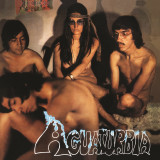
"Aguaturbia" (1970) is an essential album to understand the construction of what we know today as Chilean rock. This very influential album is raw and dynamic, featuring heavy rhythms, distortion, and exceptional phased female vocals reminiscent of Jefferson Airplane. It comprises original compositions and electrifying renditions of songs brought to fame by the likes of Tommy James & The Shondells, The Beatles and, of course, Jefferson Airplane elevating these classics to new heights of intensity and rhythmic allure. We are thrilled to make this outstanding LP available again after many years out of stock. Aguaturbia's debut album was originally released in 1970 and showcases one of South America's most significant psychedelic bands from the late 60s and early 70s. Their influence in their native Chile -and beyond- was groundbreaking. It was played live in 1969 on 3 tracks, and it became an icon of transgression due to its unbridled musical aesthetics and cover art that - for the time of its irruption - meant a clear defiance of the conservative logics lived in Chile, which saw in the nudity of the cover a challenge to morality and good manners. The album is raw and dynamic, featuring heavy rhythms, distortion, and exceptional phased female vocals reminiscent of Jefferson Airplane. Guitarist Carlos Corales shines and when he played solos at the gigs, the effect on the audience was silence and euphoria at the same time, they couldn't believe what they heard. Everything was done with a professional attitude. In fact, Carlos Corales (guitar) and Willy Cavada (drums) were both professional musicians who had made a previous career in rock and roll bands. The LP showcases breathtaking moments, like Willy Cavada's masterful drum solo in 'Ah Ah Ah Ay' captured flawlessly in a single take. Dive into the sensual psychedelic journey of 'Erotica,' where Denise's alluring vocals dance harmoniously with Carlos' electrifying guitar. Plus, don't miss their thrilling renditions of 'Somebody to Love' and 'Crimson and Clover'-each track elevating classics to new heights of intensity and rhythmic allure. This album is more than music; it's an invitation to experience sheer auditory bliss! "Aguaturbia" is an essential album to understand the construction of what we know today as Chilean rock.
THEY COULD NEVER MAKE ME HATE YOU is the sixth studio album from Miami, FL rapper and underground rap luminary, Pouya, and first full length studio offering since 2023s GATOR. The 9 track album clocks in at a blistering pace of 25 minutes long, and includes the previously released singles, “BLAME GAME,” “FORGET ABOUT EVERYTHING” & “UH OH (feat. Rick Ross).” The album marks a defining moment in Pouya's career, revealing an artist at his most raw and unfiltered. It serves as a bold declaration of resilience and defiance, where Pouya peels back the layers of his psyche to confront the pain, betrayal, and perseverance that have shaped him. The project is a sonic exploration of the highs and lows of life, intertwined with Pouya's relentless pursuit of
- A1: Down (Feat Joi Gilliam)
- A2: Talk To Me
- A3: Legend Has It
- A4: Call Ticketron
- B1: Hey Kids (Feat Danny Brown)
- B2: Stay Gold
- B3: Don't Get Captured
- B4: Thieves! (Screamed The Ghost) (Screamed The Ghost)
- C1: 2100 (Feat Boots)
- C2: Panther Like A Panther (Feat Trina - Miracle Mix)
- C3: Everybodys Stay Calm
- D1: Oh Mama
- D2: Thursday In The Danger Room (Feat Kamasi Washington)
- D3: A Report To The Shareholders/Kill Your Masters
RTJ3, the third outing by the firebrand rap duo of Killer Mike and El-P, features a cadre of talented guest performers, including Zach de la Rocha, Danny Brown, Tunde Adebimpe of TV On The Radio, Kamasi Washington, and more. The album is "essentially the Run the Jewels manifesto, an outpouring of rage and defiance that never loses sight of the objectives: rallying the troops, holding all accountable, and toppling oppression." (Pitchfork)
Released on Christmas Day 2016, the album charted in 11 countries, with its breakout hit from the album, "Legend Has It", being featured in the Super Bowl advertisement for the global blockbuster feature film "Black Panther". Embraced by fans and critics alike, it's received praise for its near-perfect execution as well as its sharp, visceral observations, blistering beats and superb guest artists, cementing RTJ as one of the most important artists of its era.
A1 Northern Lights
Darkly, tense tones take center stage as Northern Lights kicks the LP off, introduced with an eerie synth before classic, striking old school breaks that aficionados will recall from the likes of John Bs Secrets drop, chopped expertly by our Spatial duo to create a quietly vengeful beat pattern with heavy kicks and a unique stuttering detail. Circling menacingly around the mix we are treated to swathes of choral detail, subtle vocal samples and shimmering ambience..
A2 Sunset on Mars
Showcasing the strengths of both producers through a delightfully rich atmosphere, Sunset on Mars opens with soothing echoed effects that ooze a welcoming sense of wonder. Delicate in composition yet still packing a punch, the breaks sit over a sumptuous deep sub bassline which carries our journey through simple key melodies, vivid mood-changing synths superbly to create a pure, wholesome atmospheric bliss.
B1 Totality
Dominant hats and cymbals surf the peaks of the mix early in Totality, detailed old school breakbeats quickly seizing our attention constructed with an effortless attention to detail. A stark, thick atmosphere is carved from a broad backdrop of sound blending vocals and synths, enveloping the listener with a dense, bleak soundscape that develops continually as the breaks roll on with memorable intent.
B2 Reincarnation
A deeply evocative, interstellar intro opens Reincarnation, generating images of lonely spacewalks with trademark Spatial aplomb. The vibe continues through a barrage of heavy analogue amens which crush the mix, edited with a chunky, commanding panache. The listener can picture pillars of isolation and thundering defiance dancing in duality as the elements weave their way fluidly throughout.
C1 Seraphim
Into an intense, epically atmospheric piece next as Seraphim channels the spirit of yesterday for a journey into the souls core via scene-trademark Hot Pants breaks, a moody 808 bassline and swirling atmospheric pads, melodies & synths. Layered with detailed FX demanding repeated listens to soak it all in, Seraphim is a special track which will take over your setlist and the journey home.
C2 Prism of Light
Sit back and relax to another slice of classic atmospheric bliss with Prism of Light, opening with a DJ-friendly hi hat intro before melodic synths generate an instantly unforgettable late-90s vibe. Hot Pants breaks drive us forward with a wondrously simple yet effective mix of 2 step and double kick edits, as blissful ambient washes and vocal hits are drizzled over the mix. Delightful.
D1 Harmonic Function A uniquely constructed beat pattern guaranteed to move you opens Harmonic Function, building up from rushing cymbals and hats intertwined with a fantastic crunchy, metallic half-time snare. Throw in a slew of mournful melodies and blanketed pad work around the mix and youre left with a superbly laid back yet danceable piece from ASC & Aural Imbalance, continually innovating in their music as ever on Spatial.
D2 Fade to Grey
Old school rhythms are on the agenda as our duo close out the album with a tense, meandering exploration through space, circling the planets through mellowed out beats before a layer of dense, analogue breaks are added to the mix as the atmosphere escalates. Exquisitely programmed vocals provide texture and feeling, while an understated bassline rumbling on below, completing a timeless collage of sound.
Words by Chris Hayes (Spatial / Red Mist)
- Gladiator Ii Overture
- Lucius, Arishat And The Roman Invasion
- I’ll Wait For You
- Ostia
- Angry Baboons
- Strength And Honor
- Acacius Returns
- City Of Rome
- Defiance
- I See Him In You
- Acacius In The Colosseum
- Let The Gods Decide
- Macrinus’ Plan
- I Need You To Do This
- Smooth Is The Descent
- Now That I Have Found You
- Echoes In Eternity
- War, Real War
- The Dream Is Lost
- Now We Are Free
The highly-anticipated sequel, Gladiator 2—directed by Ridley Scott and starring Paul Mescal, Pedro Pascal, and Denzel Washington—is an epic historical action film with a blockbuster original score by Harry Gregson-Williams. Gladiator II picks up in the years after Russell Crowe’s Maximus gave his life, upending the leadership of the decadent and corrupt society. The central character portrayed by Paul Mescal is Lucius, last seen as the young son of Lucilla, Connie Nielsen’s noblewoman from the original movie.
In a simultaneous act of defiance and impishness, Sham Family are etching their name in the wet concrete out front of the establishment. Hailing from the vibrant music scene of Toronto, Canada, the dynamic quartet is emerging as a prominent voice in the contemporary post- punk landscape.
To know Sham Family is to witness them perform live in the flesh. From the very first note, the room teeters between collective catharsis and a sort of beautiful, focused chaos. Blisteringly loud and remarkably lush, their live show is not only a testament to the meticulous craftsmanship of their music, but a downright physical feat. Broken strings, sweat, and the occasional minor lesion are collateral damage that only serves to strengthen their ultimate goal: deliver the loudest, most captivating show utte rly possible. Catching the attention of the newly formed Wavy Haze Records, spearheaded by indie icons Born Ruffians, Sham Family were the first non-Ruffians to join the label’s esteemed roster.
In 2022, they released their debut self-titled EP: a strikingly raw introduction to their leave-it-all-on-the-floor brand of shoegazey punk. The release quickly gained traction, propelling Sham Family onto stages across the United States and Canada. Now, Sham Family are gearing up to release their highly-anticipated full-length album, A Deaf Portrait of Peace, in 2024. Produced by the renowned Graham Walsh (METZ, Debby Friday, Preoccupations, Alvvays), the record promises to embody the propulsive ener gy of their live performances while venturing into uncharted sonic territories.
The Savage Goddess, Trap Girl’s debut LP, is about resilience and perseverance. It explores the duality of life - the beautiful light and the dark pain, love and struggle. With a “pretty but deadly” energy, the title itself reflects this theme, representing life in all its complexity. Bursting with raw energy and unapologetic fervor, the album explores the complexities of life through a lens of punk and hardcore grit. Each track on The Savage Goddess delves deep into themes of empowerment, societal defiance, and personal struggle. From the anthemic power of “Baddest Bitch,” which celebrates strength and self-assertion, to the defiant stance of “Death Dress,” confronting societal rejection and the fight for authenticity, every song on the album resonates with passion and purpose.
- A1: Getachew Kassa - Tezeta Slow
- A1: Getachew Kassa - Tezeta Fast
- A2: Mulatu Astatke - Munaye
- A3-: Teshome Meteku - Yezemed Yebaed
- A4: Abayneh Degene - Balendjere
- A5: Alemayehu Eshete - Temhert Bete
- B1: Menelik Wossenachew - Belew Bedubaye
- B2: Alemayehu Eshete - Alteleyeshegnem
- B3: Teshome Meteku - Mot Adeladlogn
- B4: Essatu T. And Seyfu Y. - Feqer Bequmena
- B5: Muluken Melesse - Enbayen Teregiw
2024 Repress
The follow up to the highly acclaimed reissue of the first volume Ethiopian Hit Parade. This 2nd volume features 'Ethiopian Hits' from 1972 to 1975. The track layout is Identical reissue to the original vinyl
"After releasing around fifty 45 rpm singles and his first 33 rpm album (Ethiopian Modern Instrumental Hits AELP 10, re-released by Heavenly Sweetness HS092VL), Amha Esthèté set about compiling his best 45s on a series of now legendary albums (the originals are impossible to find) in 1972. The first four volumes of Ethiopian Hit Parade were released in September and October 1972, with the fifth volume appearing in January 1973. You are the proud owner of Volume 2.
It is worth reminding ourselves that when Amha Esthèté set up his Amha Records label in 1968-69, it was in defiance of a state monopoly designed to regulate the imports and production of records by an imperial decree of July 1948. This extravagant state privilege had produced only 78s of traditional music , which though thrilling, excluded anything at all modern. To the best of our knowledge, only sixty-seven of these prehistoric discs were pressed in Great Britain between 1955 and 1961 and released by His Master’s Voice. They were supposed to be part of celebrations of Emperor Haile Selassie’s silver jubilee . . . even though 33s and 45s had existed since 1948 and 1949 respectively! Such incompetence and servility, combined with a rejection of an effervescent contemporary music scene, were symptomatic of the decadence surrounding the end of an era.
An audacious, funky outlaw, a music lover and an entrepreneur in tune with the baby-boomer generation, young Amha Esthèté (he was only twenty-four when he launched his label) will be remembered as the instigator of a peaceful revolution thick with soul and rock’n’roll.
After the acclaimed reissue of the first volume Ethiopian Hit Parade. Here is the second volume that include all the greatest Ethiopian Hits from 1972 to 1975. Identical reissue to the original vinyl which is extremely rare and expensive.
The opening track of the compilation is the song Tezeta Slow and Fast by GETACHEW KASSA were featured on the album Ethiopiques, Vol. 10: Ethiopian Blues & Ballads. and originally released on 1972. The other tracks on this second volume celebrate such pioneers of modern Ethiopian groove as Abayneh Degene, Tèshomè Meteku, Menelik Wossenachew Mulatu Astatqe and Muluken Melesse, alongside “tradi-modern” singers representing Amhara and Oromo culture, so rich and so long marginalized."
Bed Maker's origins date back to summer 2019, when bassist Arthur Noll (Light Beams, Kid Congo Powers) and drummer Vin Novara (The Crownhate Ruin, 1.6 Band), each having played in Alarms & Controls, invited guitarist Jeff Barsky (Insect Factory, Time Is Fire) to collaborate and see what might happen. By autumn, they invited Amanda MacKaye (Desiderata, Routineers) to join them, and the chemistry was immediate. In February 2020 at DC's Rhizome, Bed Maker played their first show and then paused their activities the follow- ing month, as did most people.
Due to the state of the world in 2020 and 2021, they continued writing music through sharing recordings. Mike Schleibaum assisted by assembling home recordings of their individual parts into working demos. This allowed them to keep momentum, and by the time in-person rehearsals resumed, a handful of songs and new ideas were close to fruition. Bed Maker resumed playing shows in November 2022.
Following a self-released digital single ("Miss Dickens") and an EP (Three on the Tree) -- each recorded with Schleibaum and Matt Michel at Viva Studios -- Bed Maker began work on their self-titled LP in May 2023 with Ian MacKaye and Don Zientara at the original Inner Ear Studio in his basement in Arlington, VA, and with Mike Schleibaum at his home studio in Maryland.
That their debut LP even exists is only possible thanks to the support of family and many friends, and also serves as an act of defiance to the horrors of the last four-plus years.
- A1: Lone Wolf Hysteria
- A2: Mental Clarity Is A Luxury I Can't Afford
- A3: The Thin Grey Line
- A4: Thorns
- A5: Misery In Walking Hours
- A6: Burgundy
- A7: Transgressions
- B1: Are You Going To See The Rose In The Vase, Or The Dust On The Table
- B2: All My Problems Always Involve Me
- B3: The Light At The End Of The Tunnel For $9 99 A Month
- B4: Drage' Em To The River (Totalitarian Remix)
- B5: Us Vs Them
- B6: Kill Yourself V
NEW WORLD DEPRESSION by $uicideboy$ delves deep into a tumultuous psyche, portraying a world riddled with inner demons, existential crises, and a stark defiance of societal norms. Throughout the album, the duo navigates through themes of fame, self-destruction, and the relentless search for identity amidst chaos. Their raw, unfiltered lyrics serve as a gritty narrative of personal turmoil, substance abuse, and the struggle for authenticity in a world that often feels cold and indifferent. This album is an unapologetic exploration of the darker sides of human experience, resonating with anyone who has ever felt out of place or battled with their own shadows.
High Roller Records, picture disc, ltd 500, handnumbered, lyric sheet, deluxe plastic bag, mastered for vinyl by Patrick W. Engel at Temple of Disharmony in March 2021.
‘Empires into Sand’ is the first album of new material from Normil Hawaiians in 40 years. The group first refined their sound during the early 80s, hitting on a pastoral experimentalism that drew on ambient drone, motorik impulse and post-punk pep.
‘Empires into Sand’ came together in the familiar manner of their original three albums, with improvisation and nuance informing the blueprint of the tracks. It was with the official release of this last record ‘Return of the Ranters’ (originally recorded in 1984/85, but then unconsciously shelved) in 2015 by Upset The Rhythm that led to the group reconnecting with the intention of playing music together again. Normil Hawaiians played a launch show for that ‘lost album’ and followed that up with more concerts, including an appearance at Supernormal, a residency at the Edinburgh Festival, gigs at Cafe OTO. They were even chosen by Richard Dawson to perform with him in London.
Throughout this time, Normil Hawaiians revisited their original songs for live performance. However for a group always so interested in evolving their sound, it came as no surprise that they shirked at the idea of a faithful retread. The band pushed their songs into new inventive dimensions, still progressive at core, but now imbued with a cosmic uncanny. A cinematic approach that was always quietly present has come to the fore. The quaint weirdness of folk song, the humanity of communal practice and the group’s ecological mindedness have all found a place in Normil Hawaiians’ current sound world.
When Normil Hawaiians write and record music they prefer to gather in a remote location and live together for a while, such is their communal ethos. Being far-flung across the UK, the Family Hawaii (numbering seven key members) decided to encamp to Tayinloan, a small village on the west coast of the Kintyre peninsula in Scotland. They set up their own studio in an isolated, windswept house overlooking the sea and started the tape rolling. Noel Blanden from the band explains the process neatly: “we set up and began playing, slowly and patiently, allowing the music to take its own shape based on where we were staying and our ongoing friendship. We recorded for days, capturing everything. A lot of new and rich ideas began to emerge”.
Normil Hawaiians took their time to develop these threads at their own pace, allowing songs to mutate and settle over months. Simon Marchant deftly produced and recorded the album whilst also performing in the band, this marked the first time the band had total control of their own sound. The last few years has seen the band reconvene in Herne Bay, Faversham, London and Leith to record new parts, constantly responding to the changing form of these quietly spectral songs of defiance.
‘Empires into Sand’ incorporates samples from old rehearsals and live music into the new finished pieces, this is in continuum with their previous records. Snippets of sound from the static of short wave radio and satellite transmissions also embellish the work. In fact the whole album is stitched together with interludes, creating an acutely immersive 45 minutes. ‘Exiles’ opens the album amid swirling atmospheres, synth flights and recordings of Vilnis Egle (father of Zinta Egle from the band) retelling his experience of fleeing his home in Latvia during Soviet occupation in 1942. George Bikandy also features on this track talking about his flight from Syria in 2014. ‘Ghosts of Ballochroy’ is a winding river of a song featuring a lively discourse in Scots courtesy of Rodney Relax. There’s a commitment to truth telling present across this hopeful album populated with angels, incoming tides, long shadows and the rose-washed sun. “From our broken windscreen, we feel the breeze” soars Guy Smith triumphantly over the driving beat of ‘Waterfalls : Bedford 330’. ‘Big City Sky’ flutters and sparkles with rapid synth runs, tape-looped drums and Jimmy Miller’s commanding vocal. With ‘In The Stone’ Zinta’s melody is deliberately jagged and blunt, exaggerated by octave-layered vocals and interjections from Guy.
This is thought-provoking, boundary-bothering music. Honest in intent, a solidarity of vision. The album’s title is derived from a poem by band member Mark Tyler, who sadly passed away during the recording process and the transience of life is felt heavily throughout. Noel best coins the group’s wish for the album: “we wanted to create an album that acknowledges our history and also reflects who we are today. We remained true to ourselves and we wanted to make something beautiful without removing the edges.” ‘Empires into Sand’ certainly does that, it’s an echo from the past, an echo from the future.
"The debut longplayer from Washington, DC-based Ekko Astral is a complex mesh of bubblegum noise punk and no-wave art rock that holds an elastic space for the knotty, tangled horrors of living in the imperial core. Their songs thrash with intense, necessary defiance against codified gender-based violence, their distortion and sibilance a direct response to the dangers outside our front doors.
pink balloons opener “head empty blues” specifically bites back against the terrors of the normative male gaze that dominates so much of American culture. Over a post-punk passage that plays call and response with a wall of harsh noise, frontwoman Jael Holzman belts playfully morbid details of the head-exploding anxieties that haunt her daily: “is it bon eye-ver or bon iver? / i don’t care / i’ve got stalkers outside / not going out tonight / gonna sit and take pics / in my underwear.”
Holzman formed the band in 2021 with best friend Liam Hughes (guitar), and eventually rounded out the band’s lineup with Miri Tyler (drums), Guinevere Tully (bass), and Sam Elmore (guitar). Ekko Astral’s local scene quickly welcomed the band for their wildly fierce live presence, emboldened by the community-building message behind the band’s mascara mosh pit brand.
Ultimately, Ekko Astral are here to uplift, a mission exemplified by the frenetic and bewitching pre-release singles “baethoven” and “devorah,” cornerstones of pink balloons in both style and theme. The former serves as a reminder to keep your larger than life personality in a world that wants to downsize you, where the latter proclaims urgent solidarity with missing and murdered people. Such crucial messages of upliftment are the foundation of pink balloons, and, by extension Ekko Astral, whose thrashing debut leaves no stone of solidarity unturned."
Reissue of the 90’s Hidden Gem originally released on the infamous “Rugger Bugger” Records, featuring Frankie Stubbs of Leatherface. The album is a complete Discography, of all things Jesse on a double album, one unreleased song and everything remastered for its release. “Stubbs seems on the verge of breakdown into sorrowful melancholy on a number of tracks, only with an air of odd defiance, as if he's hurting but knows he'll weather it. He inspires hard empathy instead of irritation. You look forward to Stubbs' lyrics and he never fails, particularly as one experiences them with that gut-wrenching sincerity clutched within that sandpaper-voiced howl.” – Jack Rabbid Remastered – Nigel Walton – The Edit Suite & Graeme Philliskirk Artwork – Cactus Vella
““Do One” is the last song I wrote for the new album, and the first song on that album, as well as the first single. So it’s a summation of what I’m trying to say with this record, a record about survival and defiance, but also one with a sense of fun and self-deprecation.
19 years into my solo career, I’m still standing up and putting out some of my best work. It feels good.”
“Undefeated” is my tenth solo studio album, and in many ways I’m pleasantly surprised by that statement. I feel very fortunate that I’m still making records and touring - fortunate
and proud. The record is fired by that feeling, and a new sense of energy and liberation. It feels like a new chapter for me - after the pandemic, back in the independent world, the
new lineup of the Sleeping Souls, and a slightly bewildered sense of gratitude that I’m still standing, still have something to say.” - Frank Turner.
Mammoth Penguins are a 3-piece indie powerhouse, showcasing the songwriting and vocal talents of Emma Kupa (Standard Fare) backed up by the noisiest rhythm section in indie pop. May 2024 sees the release of their fourth album Here on Fika Recordings. After 2019’s big, bold and confident There’s No Fight We Can’t Both Win, and the initial shock of the global pandemic cancelling a trip to SXSW in 2020, the band returned to the studio in the summer of 2021 to start recording. The new record leans into a raw pop-punk power-trio sound more than ever, with a deep growl in layered guitars and bursts of percussion and harmony. The songs and artwork explore themes about finding a place for yourself and familiarity with people and places. Although it turns back towards a classic three-piece sound, the band weren’t restricted by that palette, adding finishing touches of percussion, extra guitars and backing vocals in short bursts in a garden shed, and also bringing in gorgeous strings to sweeten the title track. The sound builds on the band’s first album, Hide and Seek, which was released with the much-loved and sorely missed Fortuna POP! in 2015. The follow-up LP John Doe in 2017 was an ambitious concept album, exploring the feelings of loss and anger at a man who fakes his own death only to return years later, expanding well beyond the 3-piece rock‘n’roll template, with washes of strings, synths and samples. The ‘Penguins have been smashing it at some high-profile support slots in the lead up to this album release, including at Allo Darlin’s joyous reunion at Islington Assembly Hall (Oct 2023) and Muncie Girls last ever London show (Dec 2023). They play the Leicester Indiepop all-dayer and Wales Goes Pop in March, before heading out on tour in support of the new album in May. Those big singalong choruses need your voice shouting back from the crowd with joy and defiance. Mammoth Penguins are Emma Kupa (guitar, vocals), Mark Boxall (bass, vocals) and Tom Barden (drums, vocals). Reminiscent of the pop melodies of The Beths, the indie dissonance of Land of Talk, and the guitar forward slacker rock of Weezer, Mammoth Penguins marry heart-ache indiepop with spiky guitars and Emma’s frank confessional songwriting. “wonderfully awkward indie pop with a literate flair, sounding a lot like a Weezer record or even a more feminine Wedding Present” Clash // “eminently relatable earworms” Brooklyn Vegan // “one of the finest examples of simple and true indie rock around” All Music // “her characterful voice still carrying masses of charm and the messier, grungey approach bringing a strength all of its own, aided by a clutch of cheerful hooks and riffs that contrast nicely with lyrics dealing mostly with heartbreak and misery” Drowned In Sound
Wolfgang Tillmans’ latest album, Build from Here, is driven by a desire to explore and to expose. It navigates joy and heartbreak amid ruin and rebuilding, embodying hopeful defiance in uncertain futures. The songs vary in style, from propulsive and catchy to contemplative, featuring lush instrumentals transitioning into danceable beats. Tillmans’ voice, whether growling and confrontational or tender and stripped down, maintains its prominence throughout, serving as the album's core.
Zwei Jahre nach ihrem letzten Album "Slave Driver" veröffentlicht das niederländische Quartett pünktlich zu ihrem 35. Geburtstag "Shadow Soul". Es ist bereits das 8. Album von Dead Head und wir sind immer noch davon überzeugt, dass die Jungs eine der am meisten unterschätzten Bands in der Geschichte des Thrash Metal sind. Sie haben nie etwas Schwaches oder Schlechtes veröffentlicht und was sie herausbringen, ist erstklassiger Metal! "Shadow Soul" knüpft nahtlos an diese Tradition an und präsentiert eine kraftvolle Fortsetzung ihres Erbes.
"Shadow Soul" ist also keine Überraschung, aber wer das mag, was Dead Head in den letzten 35 Jahren gemacht haben, der wird auch ihren neuesten Output lieben.
Zwar bleibt das Album dem für die Band typischen schnellen und aggressiven Thrash Metal treu, aber hier und da finden sich auch Death Metal und sogar Heavy Metal Arrangements. Das Album bietet größtenteils Hochgeschwindigkeits-Thrash ohne jegliche Trends oder unnötige Melodien und Tunes.
The Body & Dis Fig are a natural pair. Each has pioneered instantly recognizable worlds of sound all their own that defy any traditional categorizations or boundaries. The Body, Lee Buford and Chip King, continually challenge any conventional conception of metal, collaborating with myriad artists and from the folk-leanings of their work with BIG|BRAVE to their groundbreaking work with the Assembly of Light Choir to the intensity of their collaborations with OAA or Thou. Dis Fig, aka Felicia Chen, pushes electronic music into dark extremes, from warped DJ sets to avant production, from being a member of Tianzhuo Chen’s performance-art series TRANCE to being the vocalist with The Bug. The Body and Dis Fig find kinship in reimagining what it means to make “heavy music”. Their debut Orchards of a Futile Heaven is the perfect synthesis of two forces, twisting melodicism and intoxicating rhythms, layering a dense miasma of distortion with intense beats and a soaring voice clawing its way towards absolution.
Orchards of a Futile Heaven’s walls of sputtering texture and tectonic booms are soaked in the reverence and melancholy of sacred spaces brought to life by palpable intensity by Chen’s voice. Crafted during a time of personal fragility, the album’s devastating force lies beyond any of the expected noise and abrasive textures typically associated with both The Body & Dis Fig. Suffused with a raw vulnerability and a longing for catharsis, Chen’s voice searches for escape in the midst of oppressive atmospheres as if determined to find relief from guilt. “Eternal Hours” patiently unfurls waves of surprising sounds, whispered undulations that are punctuated by sudden crashes, all beneath Chen’s haunting harmonies. “Dissent, Shame” evokes grief and shame with a minimalist drone dirge that gradually builds to an enchanting choral passage. King’s guitar on “Holy Lance” matches the uncanny drone of Chen’s accordion in an all-consuming blast, Chen’s voice transforming the moment from anguish to defiance and empowerment. The album’s arc finishes with “Coils of Kaa” acting as a kind of propulsive exorcism, breaking through a suffocating air before the funeral procession of “Back to the Water” lays the album to rest.
While sampling has long been essential to each, The Body & Dis Fig deftly meld their differing approaches to sampling and creating extreme sounds until the boundaries are entirely blurred. The two found kinship in their desire to find new avenues to make heavy music that looked beyond tropes of metal and electronic music by merging the two. “I always wanted the heavier stuff but I also didn’t really like heavier guitar music,” says Buford. “None of it really felt quite heavy enough to me. A human can’t be as heavy as a machine.” Chen counters, “I love the balance. You could never connect to just a machine as well as you could a human. Which is why the combination is so potent for me. I don’t want to hide. I think nothing connects you more empathetically than another human's voice.”
Orchards of a Futile Heaven affirms The Body & Dis Fig as skilled sound sculptors who have an exceptional ability to make deeply affecting music, bracing as it is touching, harrowing as it is awe-inspiring. Together, the two have harnessed their expansive artistry to make music that is profoundly emotional, and staggering in its beauty.
"Days Gone By," the latest creation from Manuel Gonzales (MGUN), showcases his remarkable versatility inside of the contemporary musical landscape. This 9-track EP, released for 100 LIMOUSINES, is a vibrant mosaic of raw, gritty sounds that capture the quintessence of Detroit's musical heritage.
Each track on the album is an immersive experience that echoes the feel of street techno, rhythmic and driving. MGUN's ingenious use of the studio as an instrument is striking, as he shapes tracks that embody the essence of bedroom production. The album vibrates with deep sub-bass frequencies, eerie highs, and peculiar artifacts of found sound.
Gonzales, a name synonymous with raw and unadulterated music, brings his signature touch to the 100 LIMOUSINES catalog, a label rapidly gaining recognition for its bold defiance of genre constraints. "Days Gone By" is more than a mere collection of tracks; it's a deep dive into Gonzales' daily sonic experiments, a testament to his relentless pursuit of pushing the boundaries of techno music.
This album is an essential listen for those who value the fusion of Detroit's robust underground legacy with innovative, avant-garde electronic music. It's a journey designed for those who revel in the unrefined authenticity of analog production and the boundless potential of cross-genre exploration. "Days Gone By”, an absolute experimental body of music, a unique auditory adventure that defies convention.
For Listeners Who Enjoy: Rob Hood, A Guy Called Gerald, RZA, Autechre, UR
Fast rising UK soul-pop star Olivia Dean today announces her long-awaited debut album ‘Messy’, due for release on Friday 30th June 2023 via EMI Records. Featuring the singles ‘Danger’ and ‘UFO’, Messy cements Dean as one of the most original and versatile voices in UK pop. Crafting classic yet conversational hooks with genre-fluid tinges, she’s honed a way of exploring universal themes of love, loss and everything in between with razor-sharp but open-hearted storytelling. “The self-love ballad is tricky, but the Londoner balances defiance with genuine romance, the psychedelic soul evoking tweeting birds and dappled sun rays.” - The Guardian “With a talent and musicality that sound both natural and effortless, she’s got to be a hot tip” - Sunday Times Culture "A gorgeous collection of soul-laced songs... that are anchored by Dean’s remarkable voice." - NME
I want to introduce this work ‘Halos of Perception’ to you in the way Lisa introduced me to it, through the sharing of experiences.
Lisa and I met for a walk near South Yarra station to talk about this work, when inclement weather made it too wet to visit the tunnels. Moving almost seamlessly from a world of leisurewear, infinite milk alternatives and blaring neons to stretches of green by the water that brimmed with sounds and life, we saw a few people climbing the Burnley bouldering wall, butterflies suspended in the hot wind and lots of plants I wish I knew the names of. Overhead the cars rumbled like a ceaseless animal as we talked about hidden ecosystems, imagined spaces and networks of care.
Stemming from a serendipitous encounter with an original Cave Clan member that led to many underground adventures, this work explores the worlds that exist outside of our perceptions. By the river, I leafed through a selection of tunnel photos Lisa had printed off at Officeworks, revealing alien textures, tunnels that stretch on into abysses of their own, underground flowing streams. Light is sparse and delicate, something reflected by the flickering and wavering in Lisa’s piano compositions.
As we walked, we noticed the ways in which infrastructure is often designed to keep people out—cut doors into fencing and clipped wires show an active and ongoing defiance of this. We spoke about how her Cave Clan friend used to go down to this painted room and read in solitude, using candles for light. The way sound exists underground, encased in these hollow cement tunnels, a painted room with its own deep hum. How people used to hold underground shows, how there were rules for safety (no exploring after rain, never alone) that was shared with each other. This warmth and absorption of other’s experiences is present in Lisa’s work—it’s immersive, like wading in water.
We paused on the walk to eat berries and talk about how The Caretaker creates transitory worlds with recorded sound, how this technology captures memory, and the exploratory pursuits of Pauline Oliveros’ Deep Listening Band. These citations of memory and deep listening inform Lisa’s use of analogue and classical instruments, playback artefacts and acoustic feedback in her own world-building. When speaking about ‘Halos of Perception’, she describes it as a fascination with timbre and acoustic artefacts.
Ideas of networks and enmeshment are felt deeply in Lisa’s compositions, motifs overlaid over each other evoking the image of many hands interlinking playfully, tenderly, softly. The way her compositions delve into refraction and echo makes me think about the tunnels and the way they splinter off into many possibilities. Manipulated textures reminiscent of the chalky, earthy, moss air that perfumes the tunnels’ subterranean air. Tactile details that gesture towards close attention, verging on obsession.
This work is also about imagining ecosystems of potential. Lisa shared with me that during this project, she has been reimagining subterranean networks in dreams, thinking about oral traditions, and the way water moves—from the sky to the earth, through the ground, connecting all these spheres. Realised in collaboration with hyperreal video artist Tristan Jalleh, Lisa’s dream landscape melds waterfalls, leaks, flower graffiti, and hidden messages lit up by imagined light sources with existing subterranean networks. There’s a real sense of wonder in this world she has built, how the city can reveal itself to you with some patience and care, how the city and its secrets can find its way into your dreams.
— Panda Wong
For the last 15 years, Allah-Las have alchemically melded surf rock
washes with folk rock jangle and rock, building up their lauded music
podcast, Reverberation Radio, and record label, Calico Discos, in the
process - But a lot has changed since Matthew Correia (drums/vocals),
Spencer Dunham (bass, guitar, vocals), Miles Michaud (guitar, organ,
vocals), and Pedrum Siadatian (guitar, synth, vocals) first bonded over
psych rock vinyl in the back room at Amoeba Records in the late aughts
Zuma 85 signals the start of a new era for Allah- Las, and finds the band
reinventing itself in defiance of the algorithmic categorization and robotic sterility.
Recorded in the midst of the shift from the Old World to whatever branch of
reality we're on now, it's a return, too: The album will be released October 13th on
their own label, Calico Discos, in partnership with Innovative Leisure, which
released early defining statements like Allah- Las (2012) and Worship The Sun
(2014)
Crystal Clear w/Black Marble
Das britische Alternative Metal-Quartett SVALBARD meldet sich mit seinem neuen Album "The Weight Of The Mask" zurück, dem Nachfolger des von der Kritik hochgelobten "When I Die, Will I Get Better?", das sowohl bei Kerrang als auch bei Metal Hammer in die Top 10 der Alben des Jahres 2020 aufgenommen wurde.
Seit ihrer Gründung im Jahr 2011 haben SVALBARD die Dynamik eines fahrenden Güterzuges erreicht - sie haben drei Alben veröffentlicht und dabei ihre vielfältigen musikalischen Einflüsse weiter verfeinert: Black Metal, Hardcore und Post-Metal, Anleihen aus Videospiel-Soundtracks, sogar Grindcore und Dream Pop, alles eingebettet in einen verzerrten und doch dynamischen Sound. Dabei bringen SVALBARD die Realität psychischer Erkrankungen und die Auswirkungen von Depressionen auf Beziehungen und Kommunikationsfähigkeit auf den Punkt.
Mit "The Weight Of The Mask" werden SVALBARD immer stärker - nicht nur als einer der hellsten Funken im Metal und Zeitgenossen einer aufkeimenden modernen britischen Metalszene, sondern auch als Verfechter der psychischen Gesundheit.
ltd 700 copies on black vinyl housed in reverseboard printed sleave with printed inner sleave. Comes with lyric booklet, poster and postcard inserts ** Formed in 1968, The Plastic People Of The Universe – named after a Mothers of Invention song and heavily influenced by Frank Zappa and The Velvet Underground – were iconic figureheads of the Prague Underground, a loose collective of Czech poets, philosophers and artists considered a threat by the Communist government. Banned and jailed under Czech communism The Plastic People Of The Universe are a true story of artistic perseverance, Authorities claimed their music would have a "negative social impact", and they were banned from playing for the public, having to play secret shows in remote locations. The raw DIY sound of their recordings escaped to Europe on tape and was released without the band's knowledge, their first album being a document of artistic defiance against the control of a stringent political environment they lived under.
Egon Bondy's Happy Hearts Club Banned, PPU's debut LP, was recorded in 1973-74, but not released until 1978 (and even then, only in France). A beguiling album of lo-fi experimental rock that falls somewhere between Can, The Fall and Canterbury psych-folk with Ayler-esque sax solos. First-time vinyl reissue and it is limited. Essential.
One of the best band you never heard of
ltd 700 copies on black vinyl housed in reverseboard printed sleave with printed inner sleave. Comes with lyric booklet, poster and postcard inserts ** Formed in 1968, The Plastic People Of The Universe – named after a Mothers of Invention song and heavily influenced by Frank Zappa and The Velvet Underground – were iconic figureheads of the Prague Underground, a loose collective of Czech poets, philosophers and artists considered a threat by the Communist government. Banned and jailed under Czech communism The Plastic People Of The Universe are a true story of artistic perseverance, Authorities claimed their music would have a "negative social impact", and they were banned from playing for the public, having to play secret shows in remote locations. The raw DIY sound of their recordings escaped to Europe on tape and was released without the band's knowledge, their first album being a document of artistic defiance against the control of a stringent political environment they lived under.
Egon Bondy's Happy Hearts Club Banned, PPU's debut LP, was recorded in 1973-74, but not released until 1978 (and even then, only in France). A beguiling album of lo-fi experimental rock that falls somewhere between Can, The Fall and Canterbury psych-folk with Ayler-esque sax solos. First-time vinyl reissue and it is limited. Essential.
One of the best band you never heard of
Target Earth is the thirteenth studio album, and the sixteenth release overall, by the Canadian heavy metal band Voivod, which was released on January 22, 2013.12 This is the first Voivod studio album to feature Daniel Mongrain on guitar (replacing the late Denis D'Amour) and the only one since 1991's Angel Rat with Jean-Yves Thériault on bass.
»Blank Vault / White Stains« is the new solo album by Franz Joseph Kaputt (DRNTTCKS, Otomatik Muziek, Hager/Kaputt). Under his S.U.V. alias, he presents nine highly personal, improvised synthesizer miniatures, accompanied by heavily delayed drum machines and enveloped in clouds of feedback. The music unveils a background rooted in years of noise exercises and ventures into the territories of dark, psychedelic folk, while showcasing a fondness for delicate synthesizer sounds and repetitive song structures. Layers of sound and rhythms collide and arrange themselves to create an idiosyncratic ambient/kraut music that explores the borders of when intimacy becomes toxic. It also delves into how relationships involving kink strategies can be used in a way that don‘t render one powerless or hurt, but ultimately leading to empowerment.
Side A is kind of an utopian dark room, filled with peculiar beats, drones, and dreamy synth arpeggios. Pleasure and joy are subversive acts that challenge and upend stereotypical role models. The pieces revolve around the mutual and consensual exploration of individual boundaries and the transformative states that emerge within these encounters – a unique entity, a »Body Of The Mind« if you will, is formed between individuals. Side B then represents the counterpart. Acid synths, distortion cascades and looped pianos evoke the regression from this playful and subversive approach on to sheer brutality and perverse destruction.
- Asking Is There Anything You Believe That You Would Be Willing To Die For, And The Difference Between The Way That Most Beliefs Have Been Accepted/Tolerated And
- A1: Broken And Beaten In 5/8 Time Part 1. Beaten 6:34
- 2: What's It All For?10:39
- 3: Broken And Beaten In 5/8 Time Part 2. Broken 7:6
- 4: Mass Exodus (A Hymn)
- Acceptance Is Not Respect Part One: The Revolution Of Defiance(23:19)
- 1: Anthem For A New Beginning
- 2: Slide Down To Power Off
- 3: What Failure Looks Like
- 4: And So We Rise Again Part Two: Three Martyrs: Pressing, Stoning And Saltire 1/St. Stephen 6:29
- 2: St. Andrew 7:7
- 3: St. Margaret 7:50
In August 2020, following some typical delays at the plant, Fourth Dimension Records released the limited edition 2LP (and now sold out) set of Kleistwahr's This World Is Not My Home and Over Your Heads Forever albums, originally released by the same label in 2014 and 2016 respectively. Packaged together in a single sleeve with printed inners reproducing all the artwork found on the original CDs, the 2LP was always designed to represent the first volume in a series of them. This next volume gathers everything on the next two albums, Down But Defiant Yet and Acceptance is Not Respect, both also initially released on CD in, respectively, 2017 and 2018, and presented in the exact same way. 2017's long sold out at source album, Down But Defiant Yet, collects four lengthy cuts which catch Gary Mundy (also known for Ramleh, Breathless and Broken Flag Records) furrowing his distinct and recognisable take on a kinda contemporary psychedelia with dystopian leanings. Each piece nods towards the fug generated by certain ‘krautrock’ groups whilst retaining threads of those uncompromising power-noise surges he built his reputation on, this is music guaranteed to take you to new spaces before forcing you to nervously look over your shoulder. 2018's Acceptance is Not Respect collects two lengthy pieces themselves broken down into seven parts often tempered to the point restraint assumes new, often disturbed (and disturbing) psychedelic or even filmic, properties, this music arrives like a spitting and foaming scream into the insanity of the void and the myriad challenges and questions it inexorably keeps hurling at us. Whereas Ramleh captures the sound of at least two people dealing as best they know how with the constantly rising rivers of shit around us, Kleistwahr is akin to one man having scaled a great height poking out of an infinite chasm and wondering why he bothered. This is uneasy listening sometimes renderedvirtually elegiac by dint of a prowess rarely found in such realms. Of this, Gary himself quite prophetically, in light of how events have shaped the world since said, “I was trying to make the music more spiritual sounding this time as the album is about belief. The first half is about personal and political belief and the second half about religious belief. I was wondering about whether in the 21st Century, you can seriously get anyone to completely change their beliefs and [am] asking is there anything you believe that you would be willing to die for, and the difference between the way that most beliefs have been accepted/tolerated and [are] supposedly respected in recent times in [the UK]. Now our society is starting to break down, it becomes clear that that acceptance tends not to actually be the same thing as respect at all.”

‘Y Dydd Olaf’, which is sung entirely in Welsh,
apart from one song penned in Cornish, draws
inspiration from Owain Owain’s 1976 novel of the
same name. The book is set in a dystopian future
where robots enslave the human race through the
use of medication, while Gwenno’s album covers
such themes as patriarchal society, governmentfunded media propaganda, cultural control,
technology, isolation and the importance of
minority languages.
‘Y Dydd Olaf’ was initially released by Peski
Records in October 2014, before being released
worldwide in 2015 by Heavenly Recordings.
Now available on crystal clear vinyl. Includes
digital download of ‘Y Dydd Olad’ plus nine bonus
tracks of remixes and rarities.
“This record demands what’s left of your time.” - Q
(★★★★)
“Blissful, dreamy psychedelia, full of twinkling
electronics and metronomic drums.” - Evening
Standard (★★★★)
“Language as a metaphor for political defiance…
floats beautifully over the krautrock/space-rock
soundscape, a Goldfrappian album you should
hear.” - The Sunday Times (★★★★)
Vol.1[29,83 €]
Vol.1 Black Vinyl[28,15 €]
Vol.2 Black Vinyl[31,51 €]
Crass Records, alongside One Little Independent Records, reissue
their iconic three volume compilation series, ‘Bullshit Detector’, on LP,
available in both classic black and special edition grey vinyl.
‘Bullshit Detector’ was the name of a series of compilation LPs put
together by the anarcho-punk band Crass and released on their own
label. Three editions were released between 1980 and 1984,
consisting of demo tapes, rough recordings and artwork that had
been sent to the band.
The sound quality of the ‘Bullshit Detector’ series was mixed and
often basic, or even poor, as Crass would master the tapes directly to
record without any additional production or enhancement. For Crass,
the expectation of a polished performance was missing the point.
After punk had already been co-opted, re-packaged and sold back to
us, ‘Bullshit Detector’ volumes 1-3 were, and still are, seen by many
to capture the purest ethos of punk culture, an event that inspired
hundreds to take to their bedrooms and garages and join the DIY
revolution.
Crass believed in the power of community and that their movement
was for everybody. These compilations are an admittedly harsh but
important part of that story; when Crass gave punk back to the
people.
Sleeve notes from ‘Bullshit Detector Three’ read: “Don’t expect music
when the melody is anger, when the message sings defiance, three
chords are frustration when the words are from the heart.”
Vol.1[29,83 €]
Vol.1 Black Vinyl[28,15 €]
Vol.2 Grey Vinyl[33,19 €]
Vol.2 Black Vinyl[31,51 €]
Crass Records, alongside One Little Independent Records, reissue
their iconic three volume compilation series, ‘Bullshit Detector’, on LP,
available in both classic black and special edition grey vinyl.
‘Bullshit Detector’ was the name of a series of compilation LPs put
together by the anarcho-punk band Crass and released on their own
label. Three editions were released between 1980 and 1984,
consisting of demo tapes, rough recordings and artwork that had
been sent to the band.
The sound quality of the ‘Bullshit Detector’ series was mixed and
often basic, or even poor, as Crass would master the tapes directly to
record without any additional production or enhancement. For Crass,
the expectation of a polished performance was missing the point.
After punk had already been co-opted, re-packaged and sold back to
us, ‘Bullshit Detector’ volumes 1-3 were, and still are, seen by many
to capture the purest ethos of punk culture, an event that inspired
hundreds to take to their bedrooms and garages and join the DIY
revolution.
Crass believed in the power of community and that their movement
was for everybody. These compilations are an admittedly harsh but
important part of that story; when Crass gave punk back to the
people.
Sleeve notes from ‘Bullshit Detector Three’ read: “Don’t expect music
when the melody is anger, when the message sings defiance, three
chords are frustration when the words are from the heart.”
Vol.1[29,83 €]
Vol.1 Black Vinyl[28,15 €]
Vol.2 Grey Vinyl[33,19 €]
Vol.2 Black Vinyl[31,51 €]
Crass Records, alongside One Little Independent Records, reissue
their iconic three volume compilation series, ‘Bullshit Detector’, on LP,
available in both classic black and special edition grey vinyl.
‘Bullshit Detector’ was the name of a series of compilation LPs put
together by the anarcho-punk band Crass and released on their own
label. Three editions were released between 1980 and 1984,
consisting of demo tapes, rough recordings and artwork that had
been sent to the band.
The sound quality of the ‘Bullshit Detector’ series was mixed and
often basic, or even poor, as Crass would master the tapes directly to
record without any additional production or enhancement. For Crass,
the expectation of a polished performance was missing the point.
After punk had already been co-opted, re-packaged and sold back to
us, ‘Bullshit Detector’ volumes 1-3 were, and still are, seen by many
to capture the purest ethos of punk culture, an event that inspired
hundreds to take to their bedrooms and garages and join the DIY
revolution.
Crass believed in the power of community and that their movement
was for everybody. These compilations are an admittedly harsh but
important part of that story; when Crass gave punk back to the
people.
Sleeve notes from ‘Bullshit Detector Three’ read: “Don’t expect music
when the melody is anger, when the message sings defiance, three
chords are frustration when the words are from the heart.”
'Malombo music is an indigenous kind of music. If you listen to it, you can feel that it can heal you, if you’ve got something wrong. It’s healing music.'
Lucky Ranku
"Lucas ‘Lucky’ Madumetja Ranku (1941-2016) was one of the greatest African guitarists of his generation. He first made his name with the Malombo Jazz Makers – the successor group to the legendary Malombo Jazzmen, formed in Mamelodi township by guitarist Philip Tabane, drummer Julian Bahula and flautist Abbey Cindi. When Tabane left the Jazzmen in 1965, Bahula and Cindi called on Lucky to replace him, and the Malombo Jazz Makers were born. Building on the popularity and success of the original Malombo Jazzmen, the Malombo Jazz Makers become immensely popular, touring widely, winning numerous jazz competitions, and recording two successful albums for the Gallo label.
The deep and hypnotic Down Lucky’s Way was their third album. Recorded in 1969, it was the first Malombo Jazz Makers album to feature additional instruments, and the first to feature Abbey Cindi on soprano saxophone as well as flute. But more than anything else, Down Lucky’s Way is a transfixing showcase for Lucky Ranku’s sui generis guitar virtuosity. Quite different from their previous recordings, the album shifted the Jazz Makers’ sound toward hypnotic, extended compositions, layered by organ bass and guitar overdubs. Of all the Malombo Jazz Makers recordings, Down Lucky’s Way is the deepest of mood, and the richest of vision.
However, through one of the erasures that are ubiquitous in South African musical history under apartheid, it seems that the record may not ever have been properly issued. Original copies are outrageously rare – only a few are known among collectors. When we asked Lucky about the album, he was unaware it had ever been released, and had never seen a copy. Perhaps it was pulled; perhaps it was pulped; perhaps Gallo simply took their eye off the ball. Nobody knows, but it is not impossible that the apartheid authorities were involved, for by 1969, the Malombo Jazz Makers were well known to them.
Julian Bahula’s introduction of malopo drums to the music of the original Malombo Jazzmen was a moment of crucial political and cultural radicalism for South African jazz. Traditionally used by BaPedi people for healing, the malopo drums of Malombo music re-centered jazz
around indigenous sounds and culture, and over the next decade, the Malombo Jazz Makers became deeply involved in political opposition to apartheid. Their recovery of indigenous sounds made them the musical standard bearer for the Black Consciousness movement, and they toured South Africa clandestinely with the writer and anti-apartheid activist Steve Biko. They also broke apartheid laws by playing with the white rock group Freedom’s Children, sometimes appearing on stage in masks or made up with UV paint to avoid detection by the authorities; they appeared regularly at the rule-bending Free People’s Concerts organized by David Marks, where Marks’ clever exploitation of a loophole – mixed audiences were prohibited from attending ticketed concerts where anyone was being paid, but the law said nothing about private functions played by artists for free – meant people could come together in defiance of apartheid laws. The notorious Special Branch would raid their concerts; Lucky remembered police storming an auditorium, throwing smoke bombs.
Eventually the political situation became too dangerous, and the band were being actively sought by the police. Though Abbey Cindi remained in South Africa, both Julian Bahula and Lucky Ranku went into political exile in the UK, where Bahula founded the group Jabula with Lucky and former members of Cymande, Steve Scipio and Michael ‘Bami’ Rose. With Jabula, Julian and Lucky worked tirelessly for the anti-apartheid movement, raising funds and awareness all over Europe and in the US. They played with Dudu Pukwana’s Spear in the joint formation Jabula-Spear, and worked together in Bahula’s Jazz Afrika formation, and Bahula organized the first Concert for Mandela in 1984 (it was Jabula that supplied the chorus for The Special A.K.A.’s hit single ‘Nelson Mandela’). Lucky also played and recorded with Chris McGregor’s South African Exiles Thunderbolt group. After the fall of apartheid, they both remained living and working in the UK. In 2012 the South African government awarded Julian Bahula the Gold Order of Ikhamanga for his cultural work during the struggle against apartheid.
Until his death in 2016, Lucky continued to play with countless groups and musicians. putting together the band Township Express with Pinise Saul, and leading his own African Jazz Allstars. The influence of his playing on the international perception of South African township music was immense, and he was held in the highest regard by his peers – ‘Lucky was a guitarist who could bring any house down’, said Michael ‘Bami’ Rose.
But despite his continuous presence on the UK live circuit over four decades, Lucky Ranku never recorded an album as leader. And so as well as restoring an important lost piece of South African musical heritage, Down Lucky’s Way is a precious opportunity to hear one of Africa’s foremost guitarists stretching out, in focus and in his element."
First issue since 1969 of the Malombo Jazz Maker’s unknown third album.
Liner notes featuring interviews with Julian Bahula and Lucky Ranku.
Fully licensed from Julian Bahula.
High Roller Records, black vinyl, ltd 500, 2 inserts, poster, Mastered for vinyl by Patrick W. Engel at TEMPLE OF DISHARMONY in February 2022.
High Roller Records, deep purple vinyl, ltd 400, 2 inserts, poster, Mastered for vinyl by Patrick W. Engel at TEMPLE OF DISHARMONY in February 2022.