Following the contemplative explorations of previous works in the series and hot on the heels of the beautiful Cosmos from E Ruscha, Stella Z's "Figs" emerges as a delicate meditation on growth, patience, and the hidden life of fruit.
Recorded in London yet deeply inspired by distant memories from China, the album is a musical documentary that explores the fig—a plant with a profound personal significance to Stella. "The fig tree was the big, generous presence in our old home, feeding my family and neighbours every summer," Stella shares. "When we moved to an apartment, we thought we had lost the fig tree. But my mum took a cutting and planted it at our new place. To our surprise, a small fig tree started growing again, as if it had never left."
Early support from Vladimir Ivkovic, DJ Harvey, Jaye Ward, Laurent Garnier.
Suche:del
Luritja artist Keanu Nelson traces the afterglow of Wilurarrakutu with a two-track 7”, cut from the same home-studio haze with producer Yuta Matsumura. The pair continue their singular weave of community-rooted storytelling and elemental electronics, shaped with the gear at hand.
Hints of YouTube hip-hop and emotionally charged piano ripple through ‘Place Where I Go’, a dubbed-out reflection on the daily realities of life in Papunya, Nelson’s desert home. ‘Kapi Ngalyananni’ finds Nelson singing in language, a mesmeric water song bridging the personal and ancestral, with elevating chords, clapsticks, and Matsumura’s parched melodica lines.
These remote dispatches carry a vital new voice from the heart of the desert, where tradition and sonic experimentation delicately converge.
- Aria Pura
- Felicita
- Prima Notte D'amore (Enlaces Sur Le Sable)
- Sharazan
- Il Ballo Del Qua Qua
- Angeli
- E Fu Subito Amore
- Canto Di Liberta
- Caro Gesu
- Arrivederci A Bahia
Repress of 2018’s classic compilation from Brownswood.
A primer on London’s bright-burning young jazz scene, this new compilation brings together a collection of some of its sharpest talents. A set of nine newly-recorded tracks, We Out Here captures a moment where genre markers matter less than raw, focused energy. Looking at the album’s running order, it could easily serve as a name-checking exercise for some of London’s most-tipped and hardworking bands of the past couple of years. Recorded across three long, fruitful days in a North West London studio, the crossover between each of the groups speaks to the close-knit circles which make up the scene.
Surveying the way that London’s jazz-influenced music had spread outside of its usual spaces in recent years, this album bottles up some of the vital ideas emanating from that burgeoning movement. Giving a platform to a scene where mutual cooperation and a DIY spirit are second-nature, it’s a window into the wide-eyed future of London’s musical underground.
Ubiquitous, much-lauded saxophonist Shabaka Hutchings is the project’s musical director. His own recent projects span from South Africa-connected, spiritually-minded jazz players Shabaka and the Ancestors to Sons of Kemet, who match diasporically-connected compositions with viscerally-direct live shows. His entry on the album, ‘Black Skin, Black Masks’, is typically difficult-to-define: with an off-kilter, shifting rhythmic backbone, repeated phrases – mirrored between clarinet and bass clarinet – shape the track with an alluring hue. His input ties together a deft, genre-agnostic sensibility that’s shared through all the players on the record.
Theon Cross – who’s also part of Sons of Kemet with Hutchings – starts his track, ‘Brockley’, with the solo, distinctive low rumble of his tuba. Winding and mesmeric, it sees tuba and sax lines winding together in rhythmic and melodic parallels. Ezra Collective – whose drummer and bandleader Femi Koleoso has toured with Pharaohe Monch – run a tight, Afrobeat-tipped rhythm on ‘Pure Shade’, with the final third changing gear into a melodic, momentous closing stretch.
Joe Armon-Jones, whose ludicrous chops on the piano have seen him touring with the likes of Ata Kak, showcases earworm-like, insistent motifs on ‘Go See’, balanced with a playful, improvisatory approach with room for ad-libbing and solos a-plenty. Taking a softer tact than many of the other entries, Kokoroko – whose guitarist Oscar Jerome has been making waves with his solo material – spin a lyrical, steady-paced meditation on ‘Abusey Junction’, matching chanted vocals with gently-played guitar.
Nodding to spiritual jazz influences, Maisha’s ‘Inside The Acorn’ is a wandering, explorative rumination, balancing delicate washes of piano and percussion with sharp interplay between flute and bass clarinet. In contrast, Nubya Garcia’s ‘Once’ is taut and carefully-poised, her tenor sax guiding a carefully-built energy to an explosive conclusion. And finally, Triforce’s ‘Walls’ is a performance in two parts: starting with Mansur Brown’s languorous, lyrical guitar, the second half switches up to a low-slung, g-funk-tipped groove.
F.G.S.–the musical project of Los Angeles artist Flannery Silva–announces the first-ever vinyl release of her debut album ‘Tinker Bell’s Cough’, arriving May 27 via Scenic Route. Alongside the release comes a new single, ‘The Punisher (Tinker Bell’s Edit)’, and an exclusive vinyl-only live track, ‘Passions (Live at Tinker Bell’s Clubhouse)’.
Co-created with musician and producer Chase Ceglie, ‘Tinker Bell’s Cough’ is a surreal Americana record that filters the language of girlhood, heartbreak, and fantasy through a warped, theatrical lens. It’s Lana Del Rey meets David Berman in a cartoon whirlwind, with traces of Dolly Parton, Arthur Russell, and David Lynch.
Silva describes the record as “fairy tale theatre”. It’s packed with alt-universe country hits (‘Beth’s Deth’, ‘American Shield’), uncanny ballads (‘I’m Growing A Cross Around My Neck’), and leftfield pop songs rooted in character and place. ‘Passions’, the opening track, was inspired by Mary MacLane’s ‘I Await the Devil’s Coming’, while the title track imagines Tinker Bell herself singing a lullaby to God.
New single ‘The Punisher’ is an anthemic road song about loneliness and transcendence. “It’s about driving north on I-5 in California, worrying my car will overheat, bargaining with God, and falling in love with dust tornados,” Silva says.
Raised in the woods of upstate New York and formerly one half of the cult duo Odwalla88, Silva brings a visual artist’s sensibility to music. She studied art in Baltimore and continues to make sculpture and performance work that informs her songwriting. ‘Tinker Bell’s Cough’ was written on the Rhode Island coast, where she and Ceglie met weekly to write and record—drawing from old texts, visual references, and poetry.
F.G.S. has drawn praise from NTS, The FADER, Gorilla vs. Bear, The Line of Best Fit, Artforum, Sex Magazine, and more. With the reissue of ‘Tinker Bell’s Cough’ and the release of ‘The Punisher’, Silva continues to expand the strange, magnetic world of F.G.S., one that feels both deeply American and entirely her own.
"Ultravisitor" ist seit seinem Release im März 2004 zum Fanliebling und einem der beliebtesten Platten in Squarepushers gesamter Diskographie avanciert. Mit seiner einzigartigen Mischung aus Studio- und Live-Aufnahmen ist es gleichzeitig ein hervorragendes Beispiel für die Vielfalt seiner Musik: vom frenetischen Titeltrack über den funky Jazz von "Iambic 9 Poetry" bis zur sonnendurchfluteten Glückseligkeit von "Tommib Help Buss" und darüber hinaus.
Zum 20. Jubiläum präsentiert Warp eine erweiterte Deluxe-Version in einmaliger, limitierter Auflage, die von Jason Mitchell (Loud Mastering) unter der Ägide von Tom Jenkinson sorgfältig von den Originalbändern remastert. Tom hat die Gelegenheit genossen, die Bänder noch einmal zu überarbeiten und den Stücken neue Dynamik und Details zu verleihen.
Das beigefügte Bonusalbum "Venus No.17 Maximised" besteht aus ultra-raren Tracks einer Ultravisitor-Promo-EP, der "Square Window" 3"-CD (die bei Vorbestellungen über WarpMart gratis mitgeliefert wurde) sowie der "Venus No.17" EP (alle aus 2004). Das beiliegende Booklet enthält seltene Fotos, Flyer und Aufnahmedokumenten, darunter einer Anleitung zu allen Geräten, die Squarepusher damals verwendete.
As 2025 unfolds, Frenzy wastes no time in unleashing its next chapter. For our ninth release, we welcome Ukrainian mastermind Gene Richards Jr.
Known for his raw, uncompromising energy, Gene delivers a blistering 4-track EP rooted in ghetto-driven rhythms and industrial grit. This is no-holds-barred techno - pure, percussive, and primed for peak-time chaos.
Titled Ride This D, the EP kicks off with four original tracks that showcase Gene's signature blend of punchy drum work and infectious vocal chops. The intensity only builds with two standout remixes: UK legend Mark Broom injects his classic mechanical funk into the title track, while Spain's rising phenomenon DJ Swisherman brings an electrified bounce that reimagines the groove through his distinct, playful lens.
From shadowy warehouse floors to open-air summer raves, Ride This D is designed to detonate.
- 1: Jimmy Reed Highway
- 2: Baby What You Want Me To Do
- 3: Bright Lights Big City
- 4: Big Boss Man
- 5: Good Lover
- 6: Caress Me Baby
- 7: A W Shucks, Hush Your Mouth
- 8: You Up S Et My Mind
- 9: I'll Change My Style
- 10: Bad Boy
- 11: Baby, What's Wrong
- 12: Hush Hush
- 13: You Made Me Laugh
180g schwarzes Vinyl
Das 2007er Album der beiden Gitarristen und Sänger erscheint hiermit erstmalig auf Vinyl
Mit Gary Clark Jr, James Cotton, Delbert McClinton, Kim Wilson und Lou Ann Barton
12 Tracks von Jimmy Reed, oder von ihm inspiriert
Jimmie Vaughan ist der ältere Bruder von Stevie Ray Vaughan
The Japanese maestro returns with another installment in his acclaimed edit series, delivering two expertly crafted reworks that blend deep musical knowledge with a keen sense of groove.
Whether it’s a dusty soul gem or a forgotten jazz-funk cut, each side reflects his refined touch and deep digging ethos. A must-have for collectors, selectors, and fans, pressed on 7-inch vinyl.
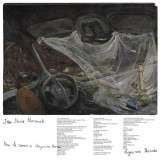
The road is a wrinkled timeline. Uncanny flatness conceals unfolding textures, transparent layers and open tabs. The truck cuts the landscape, tracing the road with a line of mad logic that composites time, space, thought. On “Le Camion de Marguerite Duras,” French duo Jean-Marie Mercimek have returned with a road movie for the blind. Composed and recorded by Marion Molle and Ronan Riou over six years across France and Belgium, this unlikely distillation of microtonal MIDI composition, French B.O., and post-punk chansons brazenly expands the duos’ penchant for lowkey narrative spectacle.
Across “Le Camion,” sounds form a theatrical screen. Our ears are the curtains drawn wide and listening with a look that pans across the shot. No title cards, they cut straight to action. The truck is a camera, zooming and framing the tracks as scenes. Songwriting and sound design blur in a tangle of delicate economy. The balance of mutant music-boxes and dewy miniatures recalls otherworldly hits from Gareth Williams’ Flaming Tunes, Residents, and catchier corners of the Lovely Music catalog. Strange, sure, but this flick is never quite a cartoon. Molle and Riou’s vocals dilate into a cast of very human characters. Voices sing borrowed texts like untrained actors (playing themselves, in fact) stepping into the frame once before disappearing forever. And when they’re gone, you miss them. But here in the truck, it all comes back again under the cyclic spell of repose in perpetual motion. Turn up the radio and appuyez sur le champignon. - Turner Williams Jr.
On its tenth anniversary outing, Sofia Records doesn’t just mark a milestone - it distills its essence in a four track EP. The compilation reunites the original, 25 year strong, pBPM crew and the fresh talent of Impe´rieux.
KiNK delivers a dancefloor juggernaut “Let The Bass Kink” - raw, kinetic and unmistakably his.
KEi counters with “Killing God Theme“ - a deep, hypnotic slow-burner, rich in emotion that evolves with patient intensity. Then we have the debut of Tegav - a new alias from the pBPM forming member Kalin Baychev with “Stomper“ - an edgy melody on top of a percussive backroom swagger. Impe´rieux, ever the outlier, continues his quest for dance music’s future with “Jarka”, a leftfield yet playful groove that breaks convention while rattling the floor.
With a smiling family snapshot, framed in smoke, strobe light and sweat, Sofia shows how to throw the needle where it matters - squarely pointed to the future.
- Three For The Festival
- Moon Song
- A Sack Full Of Soul
- The Haunted Melody
- Blues For Alice
- We Free Kings
- You Did It, You Did It
- Some Kind Of Love
- My Delight
VERVE ACOUSTIC SOUNDS SERIE: komplett analog von Ryan K. Smith bei Sterling Sound von den Originalbändern gemastert, QPR-Pressung (180 g), stabiles Tip-On-Gatefold (Stoughton Printing), wattierte Innenhülle, Gatefold Sleeve.
”We Free Kings” gilt als eines der musikalisch kohärenteren Frühwerke von Roland Kirk. Obwohl der Saxofonist und Flötist es im Januar 1961 mit zwei unterschiedlich besetzten Quartetten aufnahm, gelang ihm eine wunderbare Balance zwischen Bebop-Nummern und souligeren Stücken. Das Repertoire unterstreicht Kirks Fähigkeiten als Komponist (sieben der neun Stücke stammen von ihm). Brillant ist aber auch seine Interpretation von Charlie Parkers ”Blues For Alice”.
The Current Thing EP, first release in a series of three, marks the debut of 'Confusion is next to Happiness' (CINTH); a record label and party series unbound by restraint and defined by complete freedom to bridge idiosyncratic and divergent sounds into the world.
With home base at Sameheads and appearances across Germany with Säule in Berghain, Golden Pudel Club in Hamburg, and PRXXXT in Leipzig, CINTH is an emerging powerhouse for all things twisted and freaky.
Duo Lucas Brell and Marvin Uhde, known as Kinzua, deliver a three track EP featuring minimalist yet richly textured compositions with haunting ambience capturing the edge between intensity and transcendence. The trance-inducing atmosphere and subtle modulations will pull you deep into a meditative wormhole.
Teri Gender Bender — born Teresa Suárez Cosío — is ready to show you another side of her eccentric artistry. This time, the Mexican-American singer-songwriter and producer who was raised in Denver, Colorado, and Guadalajara, Mexico, is delving into her Mexican roots with a new Spanish-language album called “TGB.” Filled with electronic, psychedelic, and experimental pop-rock, “TGB” is an empathetic auditory vessel Teri created to understand her loved ones on a personal level. Inspired by her close friends’ woes, the singer-songwriter shows sincerity and kindness by purging their most negative feelings and transforming them into sonic masterpieces for them to reflect and heal with
Space-surf-psych-rock quartet Japanese Television’s album ‘Automata Exotica’ has been remixed by invited friends and peers; including Goat Fool from GOAT, Factory Floor’s Gabe Gurnsey, and Edgar Breau from cult band Simply Saucer. Informed by UFO encounters, ritualism, robots, Northern Soul, and nuclear weapons, ‘Automata Exotica’ was released in March 2024 and was described as “Heavy but also joyful” by The Quietus, “A fuzzy blast of space-surf energy”in Shindig and “A remarkable and unique proposition” by Louder Than War.
Rather than having been transformed out of all recognition, “reimagined” is a more apt term to describe this new version of ‘Automata Exotica’. With the album’s eight tracks presented via considered, alternative mixes with pertinent sonic application, it hangs together incredibly coherently - albeit as a wild and feverish psychedelic experience.
JTV toured with GOAT while writing ‘Automata Exotica’, with the fat fuzz tones and extended middle percussion section of ‘Typhoon Reggae Police’ heavily influenced by their time watching and learning from side stage. Starting life as an uneasy mixture of scratchy 60s garage rock and 70s Afghan psych folk, Goat Fool from GOAT ripped the song apart and stitched it back together. Recognisable but weird and uncanny, it’s a stripped down, oppressive, shimmering voodoo nightmare.
“We used to go and see Gabe’s weird, excellent band Factory Floor playing dark little club nights in Shoreditch years ago and marvel at the racket” says JTV. “Gabe’s been a long time collaborator of ours, in fact he’s the only person to not only do more than one remix for us, but has featured on every remix release we’ve done. Our most ecstatic, cathartic song, ‘Tabadaboum’ was the perfect match for Gabe - the motorik krautrock bassline fits right in with the pneumatic grind of his vintage drum machine loops and synth flurries”.
It's hard to measure the impact cult 1970s Canadian space rock proto punk psych band Simply Saucer had on the formation of Japanese Television. The band reached out to Edgar Breau - the band’s founding member and guitarist - who guitarist Tim says was “really generous with his time, and really kind to an overly keen and slightly awkward Simply Saucer mega fan. It's a real honor to have him playing guitar on one of our records”. His cosmic reimagining of ‘Golden Birds’ layers on the delay, reverb and screaming guitars, launching the track into outer space.
‘Automata Exotica (Remixed)' is set for release on 6th June 2025 on limited edition LP and digital formats. Japanese Television tour in Europe through March and April. The album is released by cult underground label Tip Top Recordings (Jim Wallis, Mandrake Handshake, Pearl & The Oysters), run by Ben Rimmer and David Warn.
- Will U Still U
- Head
- Liked U Better
- Doubt
- Future Is Dumb
- Soft Living
- Healmode
- Life Admin
- I Wanna Be Wrong
- Graveyard Song
- 3: Summers
Reissued vinyl of 2023 album HELLMODE.Jeff Rosenstock makes increasingly chaotic albums for an increasingly chaotic world. With each passing year, it feels like the temperature of the universe boils five degrees hotter, and with each new album, Rosenstock's music grows more unwieldy and lawless. Louder, faster, more feral. Which brings us to 2023_a planet on fire, a mere 90 seconds to midnight on the doomsday clock, and the release of Rosenstock's appropriately titled, anarchic record, HELLMODE. "To me, the album feels like the chaos of being alive right now," Rosenstock says of HELLMODE. "We're experiencing all these things at the same time that trigger our senses, and emotions that make us feel terrible. We're just feeling way too much all at once!" But for all its textured turmoil, there are also surprising glimpses of clarity and grace to be found in HELLMODE, when Rosenstock deliberately slows things down in places that are prettier and more delicate, rare moments of shelter in the storm. Which only makes it more rewarding when these moments unexpectedly unravel and spiral back into extreme, manic chaos, like abruptly being flung into a Nintendo game on level 99. Vinyl is transparent black ice coloured!
Limited edition double “Black & White Swirl” vinyl housed in a deluxe gatefold sleeve with beautiful artwork throughout.
Following 2023’s JUNO award winning album ‘when we were that what wept from the sea’, ‘The love it took to leave you’ features 11 new pieces of emotionally scorching music.
The album was recorded over a week in 2023 at The Darling Foundry, a 144-year-old former metalworks facility in Montreal with a voluminous main room that still maintains its raw architecture of brick, concrete and steel. From the album’s opening track Stetson charts a carefully sequenced ride, travelling through intense territories punctuated with tragic melodies that seek transcendence, epic and frenzied shredders, and many shades of scary beauty, betrayal, and redemption.
- 1: Overture
- 2: Illusions Of Polyphony
- 3: Echos Et Fantasies
- 4: In Simplicity We Trust
- 5: Octus
- 6: Volatiles
- 7: Resonances
- 8: 224 Steps
- 9: Subtracting The Superflous
Crafted entirely on an analog monophonic synthesizer with no overdubs, Pièces Monophoniques is a tribute to simplicity in an era of limitless digital possibilities. Since his debut album, Music For Prophet (Les Disques du Festival Permanent, 2017), Majorca-born composer Marc Melià, now a long-time resident of Brussels, has been redefining the contours of electronic music through a minimalist, reductionist approach. Much like a solitary hike through the vastness of mountains, where one carries only the essentials, Melià’s work invites listeners on a journey stripped of excess, focusing instead on the purity of sound and intention.
While some have dismissed monophonic music as overly simplistic, others have embraced its distinct charm. Historical records, such as those by Johannes Quasten, reveal that early Church leaders were drawn to monophonic music because it resonated with the era's cosmological beliefs, highlighting the harmony and unity of all creation. In an age of digital abundance, Marc Melià deliberately embraces constraint, crafting an album that thrives within a limited palette of choices. Yet, from these self-imposed boundaries emerges a stunning universe, brimming with rich textures and elegant harmonies. For his debut album, Melià worked exclusively with a Sequential Prophet. With Pièces Monophoniques, his third LP, he returns armed solely with an analog monophonic synthesizer and handcrafted MIDI sequences etched directly onto a single stereo track. These recordings seek to uncover beauty within the boundaries of limitations and simplicity, rejecting any embellishments that are not essential. Melià presents the bare skeleton of music, highlighting the power of absence and silence as creative forces. Like the hidden mass of an iceberg, what is not heard becomes as significant as what is heard.
The album navigates the boundary where the quest for an uninhibited emotional response intersects with the mechanical sounds generated by synthesizer circuitry. Despite being a collection of beatless tracks, a pulse occasionally surfaces, like in the closing piece, "224 Steps. A sharp sequence blended with multiple delays and reverbs creates the vaporous celestial specter of multiple voices in "Illusions of Polyphony", while "Échoes et Fantasies" conjures the illusion of dual harmony. The expansive reverbs and silences between the euphoric synth phrases in "Overture" transport us to an imaginary magestic landscape shaped out of an electric field. "Resonances," a one-note drone-like sequence, embodies the album's aims as a series of resonances created with the synth filter emerge from the fundamental note.
"Pièces Monophoniques," aims to contribute to a tradition that dates back to the dawn of humanity. After all, there is no denying that the earliest music crafted by humanity was monophonic, from the soothing lullabies sung to newborns to Gregorian chants, traditional labor songs, and the repertoire of solo compositions by countless composers.