The National’s second album, Sad Songs For Dirty Lovers (2003) proved a leap forward from 2001’s eponymous debut, showing a band adept at delivering warm embraces and gut punches in equal measure. With word of mouth now spreading on the band, critics proved equally enthusiastic... Pitchfork in their glowing review called it a “Gorgeous train wreck” that “Lives up to its blunt title (with) Matt Berninger’s self-eff acing barbs matched by the band’s equally potent hooks,” while Uncut also became early champions saying the album was “A genuine treasure... Livid as a bruise, this is brave, desperate, beautiful music.” No longer a secret among those that know, Sad Songs For Dirty Lovers is an important record in The National’s discography with this new remaster showing that it’s more than standing the test of time.
quête:deliver
For a band that resists repeating itself, picking up lessons from a decade prior is the strange route Cloud Nothings took to create their most fully-realized album. Their new record, The Shadow I Remember, marks eleven years of touring, a return to early songwriting practices, and revisiting the studio where they first recorded together.
In a way not previously captured, this album expertly combines the group’s pummeling, aggressive approach with singer-songwriter Dylan Baldi’s extraordinary talent for perfect pop. To document this newly realized maturity, the group returned to producer Steve Albini and his Electrical Audio studios in Chicago, where the band famously destroyed its initial reputation as a bedroom solo project with the release of 2012 album Attack on Memory.
Another throwback was Baldi’s return to constant songwriting à la the early solo days, which led to the nearly 30 demos that became the 11 songs on The Shadow I Remember. Instead of sticking to a tried-but-true formula, his songwriting stretched out while digging deeper into his melodic talents. “I felt like I was locked in a character,” Baldi says of becoming a reliable supplier of heavy, hook-filled rock songs. “I felt like I was playing a role and not myself. I really didn’t like that role.” More frequent writing led to the freedom in form heard on The Shadow I Remember. What he can’t do alone is get loud and play noisily, which is exactly what happened when the entire band— bassist TJ Duke, guitarist Chris Brown, and drummer Jayson Gerycz—convened.
The band had more fun in the studio than they’ve had in years, playing in their signature, pulverizing way, while also trying new things. The absurdly catchy “Nothing Without You” includes a first for the band: Macie Stewart of Ohmme contributes guest vocals. Elsewhere, celebrated electronic composer Brett Naucke adds subtle synthesizer parts.
The songs are kept trim, mostly around the three-minute mark, while being gleefully overstuffed. Almost every musical part turns into at least two parts, with guitar and drums opening up and the bass switching gears. “That’s the goal—I want the three-minute song to be an epic,” Baldi says. “That’s the short version of the long-ass jam.”
Lyrically, Baldi delivers an aching exploration of tortured existence, punishing self-doubt, and the familiar pangs of oppressive mystery. “Am I something?” Baldi screams on the song of the same name. “Does anybody living out there really need me?” It’s a heartbreaking admission of existential confusion, delivered hoarsely, with an instantly relatable melody.
“Is this the end/ of the life I've known?” he asks on lead single and album opener “Oslo.” “Am I older now/ or am I just another age?” Despite the questioning lyrics, the band plays with more assurance and joy than ever before. The Shadow I Remember announces Cloud Nothings’ second decade and it sounds like a new beginning.
US Edition[25,17 €]
Architects are back with their ninth studio album "For Those That Wish To Exist". The self-produced record is the follow-up to the band's critically acclaimed 2018 release Holy Hell, which took a look at the pain and despair that lay at the heart of losing a brother, band mate and best friend in Tom Searle, the group's founding guitarist. The band have confirmed their ascent to the very upper echelons of British heavy music. Few bands, of this modern era or any other, can match the quintet's ability to blend uncompromising heaviness with razor-sharp melodic musicianship. A versatile metal group based out of Brighton, England, Architects employ a lethal combination of breakdown-heavy guitars, melodic vocals and symphonic-ambient post-metal. That sonic delivery is conducted from a platform built on veganism and environmental activism.
- A01: Country Home
- A02: Surfer Joe And Moe The Sleaze
- B01: Love To Burn
- B02: Days That Used To Be
- B03: Bite The Bullet
- C01: Cinnamon Girl
- C02: Farmer John
- C03: Over And Over
- D01: Danger Bird
- D02: Don’t Cry No Tears
- D03: Sedan Delivery
- E01: Roll Another Number For The Road
- E02: Fuckin’ Up
- E03: T-Bone
- F01: Homegrown
- F02: Mansion On The Hill
- G01: Like A Hurricane
- G02: Love And Only Love
- H01: Cortez The Killer
Recorded on November 13th 1990 in Santa Cruz, CA, where the band were rehearsing for their upcoming Weld tour, Neil Young and Crazy Horse played a club show at The Catalyst which is now released here for the first time.
The show comprised three different sets along with a 12 minute encore of Cortez The Killer and all 3 sets including that encore are brought together here in over 2 hours of music.
Said to be one of the great live shows that Neil Young and Crazy Horse performed, the album includes live versions of songs from their Ragged Glory album, released just prior, along with classics from across their catalogue.
- A01: Country Home
- A02: Surfer Joe And Moe The Sleaze
- B01: Love To Burn
- B02: Days That Used To Be
- B03: Bite The Bullet
- C01: Cinnamon Girl
- C02: Farmer John
- C03: Over And Over
- D01: Danger Bird
- D02: Don’t Cry No Tears
- D03: Sedan Delivery
- E01: Roll Another Number For The Road
- E02: Fuckin’ Up
- E03: T-Bone
- F01: Homegrown
- F02: Mansion On The Hill
- G01: Like A Hurricane
- G02: Love And Only Love
- H01: Cortez The Killer
Recorded on November 13th 1990 in Santa Cruz, CA, where the band were rehearsing for their upcoming Weld tour, Neil Young and Crazy Horse played a club show at The Catalyst which is now released here for the first time.
The show comprised three different sets along with a 12 minute encore of Cortez The Killer and all 3 sets including that encore are brought together here in over 2 hours of music.
Said to be one of the great live shows that Neil Young and Crazy Horse performed, the album includes live versions of songs from their Ragged Glory album, released just prior, along with classics from across their catalogue.
Raver's Guide VA features russian underground with top-notch names again. There is a heavy & classy intro by Gemüt, the crusader of Moscow's Monasterio. Then you get trapped in a warehouse honey banger by Melier Avenue. And also here is a hypno trance atmo delivered by Disco Morato. Embodied in the thick black vinyl.
This warm and welcoming first serving of Berlin based label Candy Kingdom is sure to add some sorely needed sweet, happy and dreamy vibes to the start of 2021.
The label and its driving act Candy Kingdom Synth Orchestra are a concept project that delivers melodic and emotional dance music loosely associated with house, but unashamedly flirts with electro funk, UK bass, old school trance, wave and psychedelic disco to name a few.
As Plankton Wat, Dewey Mahood uses his considerable
guitar prowess to deliver an album that encompasses
both the wild, seeking energy of free-improvisation and
the deliberate arrangements of more traditional
composition.
With his deft and stylistically varied playing, Plankton
Wat’s ‘Future Times’ escapes psychedelic tropes and
chemical fuelled alterations and instead celebrates an
escape into the natural world.
‘Future Times’ taps into psychedelia’s counter-cultural
heritage as music for protest, liberation and imagining
new ways of being in this world.
“Pastoral drones and swirling psychedelia” - Pitchfork
Known for his guitar prowess in modern psychedelic
music, specifically with Eternal Tapestry as well as
Edibles, Elephant Factory Galaxy Research and Gärden
Söund among others.
‘Future Times’ was recorded at Mahood’s home studio
Solar Commune, with additions from Dustin Dybvig
(Horse Feathers & Edibles) and Victor Nash (Flash Hawk
Parlor Ensemble). Features Ash Dybvig on flute.
LP comes on red or black vinyl packaged with download
code and insert.
“Mahood’s lonesome universe is definitely a psych-folk
monster on the sly… Mahood’s gone far into the burrow
of psychedelia for an album that’s caustic and tender,
bittersweet and effervescent.” - Raven Sings the Blues
As Plankton Wat, Dewey Mahood uses his considerable
guitar prowess to deliver an album that encompasses
both the wild, seeking energy of free-improvisation and
the deliberate arrangements of more traditional
composition.
With his deft and stylistically varied playing, Plankton
Wat’s ‘Future Times’ escapes psychedelic tropes and
chemical fuelled alterations and instead celebrates an
escape into the natural world.
‘Future Times’ taps into psychedelia’s counter-cultural
heritage as music for protest, liberation and imagining
new ways of being in this world.
“Pastoral drones and swirling psychedelia” - Pitchfork
Known for his guitar prowess in modern psychedelic
music, specifically with Eternal Tapestry as well as
Edibles, Elephant Factory Galaxy Research and Gärden
Söund among others.
‘Future Times’ was recorded at Mahood’s home studio
Solar Commune, with additions from Dustin Dybvig
(Horse Feathers & Edibles) and Victor Nash (Flash Hawk
Parlor Ensemble). Features Ash Dybvig on flute.
LP comes on red or black vinyl packaged with download
code and insert.
“Mahood’s lonesome universe is definitely a psych-folk
monster on the sly… Mahood’s gone far into the burrow
of psychedelia for an album that’s caustic and tender,
bittersweet and effervescent.” - Raven Sings the Blues
The self-titled, full-length debut from Bones Owens is a selection of songs both gloriously gritty and undeniably euphoric. In a bold departure from the moody Americana of his acclaimed EPs Hurt No One and Make Me No King, the Missouri-bred musician’s first release with Thirty Tigers delivers a powerful sound deeply inspired by ’60s garage-rock, Hill Country blues, and the swampy roots-rock of bands like Creedence Clearwater Revival (“the first record I remember stealing from my dad when I was ten and just starting to play guitar,” according to Owens). A potent showcase for his formidable guitar work—a talent he’s displayed in performing with artists as eclectic as Yelawolf and Mikky Ekko— Bones Owens arrives as a full-tilt expression of Owens’ wildest impulses, all swinging rhythms, and swaggering riffs. Featuring heavily playlisted hits like “White Lines” and “Keep It Close,” Bones Owens came to life at The Smoakstack in Owens’ adopted hometown of Nashville. With production from studio owner Paul Moak—a five-time Grammy Award nominee who’s also worked with Joy Williams, Marc Broussard, and The Blind Boys of Alabama. “This album really came from opening for some good people over the last few years, from feeding off that energy from the crowd and wanting to write more songs that would feel exciting to play live,” says Owens, who’s recently toured with Reignwolf and Whiskey Myers. “It felt like the right approach to keep the production simple and record everything to tape - I think it creates a good type of nervousness that brings out the best in everyone. Nobody wants to be the one to mess up the take. Besides, all my favorite records were made that way. You can’t fake that sound.”
That Japan’s breakthrough record Quiet Life was released in both 1979 and 1980 is uniquely fitting for a band who were about to step out of the glam rock, post punk shadows of the late 70s and deliver an as yet genre-less record that would come to define the 80s.
Quiet Life was the third, final and most successful release on the Hansa Records label. A forerunner for the alternative/new wave sound of the new decade, the album would become one of the great classic British albums.
The record is now the subject of a major new reissue featuring a brand new Abbey Road half-speed remaster of the original album, alt mixes, b-sides, singles, rarities and live material – including the sought after ‘lost’ Live at Budokan show from March 1980 previously only available as the 4 track EP ‘Live in Japan’.
We are working directly with original band members Steve Jansen and Rob Dean, producer John Punter and with consultant advice from band biographer Anthony Reynolds and the Japanese Shinko archive.
The release features newly restored original album artwork, new liner notes with contributions from band members and original producer, rare and unseen photography and memorabilia.
With a little bit of research you'll realize that Ricky 1 actually didn’t come out on Bridge Boots but on thatmanmonkz imprint Shadeleaf back in 2015 and received loved from Matthew Dear and Sam Divine to name a few.
A little over 5 years later and Caserta is back with the sequel! Contrary to popular belief Caserta doesn’t usually 'edit' (with the exception of BB45003 release Diana). But he decided to bust out the ole’ Razor-N-Tape for the 40 year anniversary of this dancefloor classic! While anyone with party rock capabilities can improve on an already classic composition. 'Supa Engineer Caserta' made sure to take his time to take make sure the sonics went for 1981 to 2081.
The flip side delivers more of the tried and true Bridge Boots formula people have come to love with a hard hitting deep house joint sure to light up the dance floor once we start to put Roni-19 behind us!
It’s hard not to notice such an unforgettable sleeve, and if the music it protects is half as memorable as the artwork, you know you just have to hear it. We don’t think you’ll be disappointed because yes, this is the majestic 1971 album Un Muñeco De Madera, courtesy of the shadowy Sola, and it sounds exactly as you’d want it to. Originally released on RCA in Mexico, it’s kaleidoscopic Acapulcan-funk.
The album’s endless grooves are propelled by softly rocking, quasi-library funk breaks. Vocally, Sola is in step with the 60s French pop-chanteuse style, but of course her lyrics are delivered in sensuous Spanish. Her voice is beautiful. Pillowy soft and tender, it can suddenly explode in mystical anger. These are ten tracks of moody, mysterious vibes that stir the spirit and sooth the soul.
The LP was written, arranged and directed by prolific Spanish composer Manuel Alejandro, the man behind an incredible number of now classic Latin love songs from the 60s, 70s and 80s. As for Sola herself, next to nothing is known about the Mexican singer except the occasional whisper heard in only the darkest corners of the annals of music history. It’s said that upon growing disillusioned with the music industry she ended up in a convent of Carmelite Sisters. Fitting perhaps, given that Un Muñeco De Madera is a spiritual wonder of a record.
Much-loved single and title-track “Un Muñeco De Madera” opens the album. It introduces us to Sola’s sparkling Latin-funk, bursting with swaggering grooves sewn by tight drums, sweeping strings and lush keys. It’s followed by the serene but melancholic bossa groove of “Oye Mamá, Oye Papá” and the strings and guitar of “He Bajado Al Infierno” that hold up vocals reaching for an eternal truth. With full-on soundtracky feels, the rolling keys underpinning the Morricone-esque soundscape of “En Ellos Creo” will give you goosebumps. The gorgeous “Soy Rebelde” (“I’m Rebellious”), sets its gentle, piano-led delivery in delicate contrast to the lyrical sentiment.
Perhaps Sola’s most well-known track, the exotic bossa of “Tabu, Tabu”, is a formidable groove. Elegant bongos, prominent bass, delicate acoustics and a persistent flute blend with Sola’s unique voice; sinuous, sassy and forceful at the same time. The stunning “La Última Palabra”, while not literally the album’s last word, is nevertheless a stirring statement of strutting Latin soul, with more musical ideas packed into this one song than the entirety of most long-players.
If you hadn’t decided already, the final two tracks that are the funk-fuelled “Bada-Bada-Ba” and the horn-heavy percussive masterclass “Únete A Mi” will leave you in no doubt that this is one very special record.
Mastered with great respect by Simon Francis, cut by the master Pete Norman and with that sleeve lovingly restored by the Be With team, this re-issue ensures that Un Muñeco De Madera now sounds, looks and feels as beautiful as it deserves to.
: Un Muñeco De Madera (LP)
Jazz Against The Machine's (JATM) cool jazz covers of 90s indierock were essentials for those in the know: virtuosity and curiosities! Franksen's remixes take the souls of Loser (Beck), Under The Bridge (Red Hot Chili Peppers) and Come As Your Are (Nirvana) to a new future. Adding much extra love and detail: Vocals, dubs, deep beats n bass propel the songs to cosy or swinging heights. In jazzhouse manner, in soulful downtempo or grooving hiphop… give 'em some love!
Franksen delivers a mere lexicon of roots n traces. A wide range of clubculture scultpured his unique style over 25 years: djing, producing and hosting public dj radioshow "hr Clubnight". From Downtempo to Dub, Disco to Deephouse or Reggae to HipHop, Breaks and more.
In collaboration with Brooklyn-based artist RDO/ATK, Sophia Saze makes her long-awaited return to her Dusk & Haze imprint with four slamming cuts on a release entitled ‘Stalker’.
Born in Tbilisi and now residing in Philadelphia after years living a nomadic lifestyle, Sophia Saze began her creative journey in her formative years with classical music and dance training. With a solid and natural musical foundation, Sophia became engulfed by electronic music leading to the launch of her Dusk & Haze imprint in 2017, before dropping a remix of Heathered Pearls on Ghostly International and the release of her much lauded debut album on Kingdoms. ‘Stalker’ sees her team up with old friend RDO/ATK who has been soaking up the dancefloor since the early 90s. With much of his influence stemming from the early east coast rave and club scene, his sound maintains a homage to the past without getting stuck in it. A sucker for a dirty 303, a breakneck amen, or a crushed 909, RDO/ATK’s style spans across genres from jungle to acid to broken beat and everything in-between.
The EP kicks off with a dynamic, jungle roller entitled ‘Stalker’ featuring old-school, amen breaks, stirring yet intriguing synths and hefty bass shatters balancing styles of glitch and funk together with pure class whilst ‘Fucking Crazy B’ lays focus on cold, syncopated grooves, chopped up shrieks and screams from a video of a traumatic personal incident and shimmering pads moving into ominous territories.
On the flip, ‘Talk To You In Your Brain’ delivers relentless kicks and spiralling acid squelches peppered with chilling vocal samples and frazzled fx that pulsates strikingly throughout until ‘Acid B’ rounds off proceedings with an effervescent, warehouse techno cut as the electrifying modulations bounce gracefully off the menacing percussion and slashing, 303 tones.
Altın Gün return with a masterful album that widens their critically acclaimed exploration of Anatolian rock and Turkish psychedelic stylings to include dreamy 80’s synth-pop and dancefloor excursions. Yol (Road) brings together all vectors of the AltınGün experience and delivers their most compelling and individual album to date.
Amsterdam’s Altın Gün have built a strong reputation for melding past and present to make brilliantly catchy, psychedelic pop music, as seen with their Grammy-nominated second album, Gece. They are also a renowned live band with strings of sold-out shows on three continents, who have consistently brought a muscular groove to their recordings. Yol, their third album in as many years, excitedly continues these trends; while also digging in deep to unveil a new palette of sonic surprises.
Though it draws from the rich and incredibly diverse traditions of Anatolian and Turkish folk music, Yol is not just a record that reframes traditional sounds for a contemporary audience. The album often presents a textured, avant-pop sound as evidenced by the debut single "Ordunun Dereleri.” Mysterious and atmospheric, the track is a thrilling evolution for the band. It patiently coaxes the listener into a resonant soundworld of down-tempo electro beats, majestic synths and Erdinç Ecevit's yearning vocal of unrequited love.
The album also signals a very different approach in making and recording for the band. Singer Merve Dasdemir takes up the story: “We were basically stuck at home for three months making home demos, with everybody adding their parts. The transnational feeling maybe comes from that process of swapping demos over the internet, some of the music we did in the studio, but lockdown meant we had to follow a different approach.”
Yol displays a noticeable dreaminess, maybe born from this enforced time to reflect. And select elements of late 1970s or early 1980s “Euro” synth pop also shines through. This new musical landscape was nurtured by certain instrument choices; namely the Omnichord, heard on ‘Arda Boylari’, ‘Kara Toprak’ and ‘Sevda Olmasaydi’, and the drum-machine, an instrument that is key to the gorgeous closing number, ‘Esmerim Güzelim’. Dasdemir once more: “bass player Jasper Verhulst loved the song. He said, ‘it doesn’t sound like Altın Gün, this sounds like a Turkish kindergarten music teacher from the 1980s using an 808!”
As ever, the tracks are the result of a true group effort, with ideas on Omnichord, 808 and other elements - such as field recordings and new age-esque ideas - continually kicked about between the six band members. At a safe distance of course. The record also owes something special to its production team, the band working this time with Asa Moto (the Ghent-based producer-crew, Oliver Geerts and Gilles Noë) who mixed the record. Before this Altın Gün always recorded on tape with their own sound engineer.
It would be wrong to say that what made Altın Gün such a loved and successful band has been left to one side. The pressure-cookers ‘Sevda Olmasaydı’ and ‘Maçka Yolları’ are classic cuts from the band. And their signature employment of a dizzying array of ideas and approaches can be heard with the marked Brazilian feel of ‘Kara Toprak’ and ‘Yekte’. Cosmic reggae filters through the grooves of ‘Yüce Dağ Başında’, and there is a steaming version of ‘Hey Nari’ which gives the traditional composition by Ali Ekber Çiçek a kick onto the dancefloor.
But with Yol, Altın Gün have maybe patented their own magical process of reimagining and sonic path-finding, one probably not heard since the late 1960s and early 1970s British folkrock boom. Less of a reworking than a seduction, their recordings transport the listener to a world where the original songs never previously inhabited. Merve Dasdemir again: “After we worked on them, they got a whole new life of their own. Maybe we went a little bit too far (laughs).”
For Another Michael, it all boils down to trust. In mid-2017, the critically acclaimed indie three-piece packed their bags and collectively relocated from Albany, NY to a shared house in West Philadelphia. This move signaled not only the start of a new chapter for the trio, but also a deepening of the bonds that would come to define their captivating debut LP, `New Music and Big Pop.' "It's hard for a group of people to get closer than living together," says bassist and producer Nick Sebastiano. "The stronger our connection grew, the more it shaped the music we found ourselves making." It should come as little surprise, then, that `New Music and Big Pop' is Another Michael's most collaborative work yet. Recorded in a small A-frame house-turned-makeshift studio outside Ferndale, NY, the record finds the trio pushing their sound in a dreamier, more folk-influenced direction, building songs around vulnerable, intimate performances using an ethereal palette of breezy guitars, subtle keyboards, and layered harmonies. As on the band's early EPs, singer and songwriter Michael Doherty's mesmerizing voice is front and center here, calling to mind Robin Pecknold or Ben Bridwell in its reedy, crystalline timbre, but it feels more at home than ever before amidst the album's lush, Technicolor landscape, which the band partnered with producer and fellow housemate Scoops Dardaris to create. The result is a masterfully understated record that belies its status as a full-length debut, a thoughtful, poetic, collection all about growth and change, hope and faith, endings and beginnings, delivered by a band that's only just begun to scratch the surface of their story.
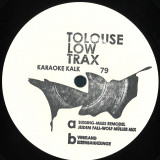
„Well recommended for the freaks“ the Manchester based independent music specialist Boomkat once finished a review about a release of Düsseldorf based DJ and producer Tolouse Low Trax aka Detlef Weinrich (also known as one fourth of the German avant-band Kreidler). What a freak distinguished we do not really know - we just assume he walks this world on a different path. Tolouse Low Trax surely does!
The latest evidence of this fact are four tracks of whom two are remixes by befriended artists, and two are coming right out of the middle of Tolouse Low Trax’s very own sense for odd and catchy grooves. His friend Miles, also known as one-half of the experimental industrial techno and dark ambient duo Demdike Stare, puts hand on the track “Sussing”, originally released on Tolouse Low Trax’s latest album “Jeidem Fall” in 2012. He covers it with an enigmatic, shadowy veil in terms of sounds, space, and obscure driving arpeggios in order to give the track a “brighter haze” feeling. A subliminal hypnotic transformation that swings with a unique dark and demanding drive. The second remix was done by Wolf Müller, a Düsseldorf based musician that released two highly acclaimed EPs on the German DIY label Themes for Great Cities. His profession as a percussionist calls the tune as he mutates the original track “Jeidem Fall” into a tribal celestial dance tune that jacks with an Afro-Baroque elegance.
Also the two EP contributions of Tolouse Low Trax himself move on very different terrains but seem to come out of the same experimental laboratory. With “Vindeland” he delivers a track full of dark synthlines and drunken shuffled patterns that morphs into a nervous soigné sensation. In contrast his arrangement “Eisenbahnzunge” starts with a celestial arpeggio until a strange alienated voice appears and everything melts layer by layer into an elliptical ambient experiment beyond the usual definition. Both tracks are deeply rooted in Tolouse Low Trax’s very own spontaneous minimal hardware approach of producing bold, hypnotic dance-not-dance music that shall not only illuminate the so called freaks!
Old, but still functioning computers are simply scrapped, made redundant and without remorse left to corrosion and an existence without a task and no perspective. That this doesn’t need to be so, and that even computers with limited storage capacity can still take on a function in society, is illustrated by Alexei Shulgin’s outdated 386, now serving as a musician. Performing Classic Rock's Biggest Smash Hits! The Clash! The Doors! The Sex Pistols! Hendrix! and more... gone digital, gone to 8-bit computerized chip-music with a singing computer, with all the charme available to a text-to- speech- programm.
Created by Russian artist Alexei Shulgin, 386 DX was “the world’s first cyberpunk band.” Known for its live performances on city streets and in nightclubs, the performer is a dingy, singing PC that runs Windows 3.1, equipped with a vintage sound card and loaded with MIDI files of drums, guitar, and synth and accompanying lyrics.
The ironic comment delivered by Shulgin and his singing computer is well within the context of the performances by the 386 DX rockband, with which he “toured” Europe in 1998 and performed on nearly 60 occasions. This one- man-one-computer-show was based on a similar idea as his current installation: Shulgin presented himself as a performer carrying a keyboard, and by simply hitting a key elicited the text-to-speech singing, accompanied by very simple music and a few Seventies-style visual effects.Alexei Shulgin simply is the King of Cyberpop.
Whitesnake celebrates the blues sound that helped inspire its multi-platinum career on a new collection that features remixed and remastered versions of the group’s best blues-rock songs. The Blues Album is the third and final release in the band’s Red, White and Blues Trilogy, a series of compilations organised by musical themes that began earlier in 2020 with Love Songs (red) and The Rock Album (white). The new compilation delivers a potent mix of hits and deep tracks that originally appeared between 1984 and 2011 on six Whitesnake studio albums and Coverdale’s solo album, Into the Light.
Whitesnake’s singer-songwriter David Coverdale says, the music reflects how blues artists like Muddy Waters, Howlin’ Wolf, and the three Kings (Albert, B.B. and Freddie) continue to inspire him. In the album’s liner notes, he writes: “It’s hard to find the words to show how profoundly they connected with my soul. But ‘blues’ to me is a beautiful word that describes emotional expression… feelings, be it feelings of sadness, loneliness, emptiness… but, also those that express great joy, celebration and dance, sexiness and love!!!”
The Blues Album showcases two of the band’s biggest songs: “Slow An’ Easy,” a big hit in 1984 from Whitesnake’s massive album Slide It In, and the smash “Give Me All Your Love” from the band’s 1987 self-titled globally successful album. Other choice tracks from Whitesnake are also featured: “Looking For Love” and “Crying In The Rain,” and “Steal Your Heart Away.” The collection also includes “If You Want Me,” a studio recording released in 2006 as a bonus track on the live album, Live…in the Shadows of the Blues. Coverdale also taps his 2000 solo album, Into the Light, for “The River Song.”