‘Empires into Sand’ is the first album of new material from Normil Hawaiians in 40 years. The group first refined their sound during the early 80s, hitting on a pastoral experimentalism that drew on ambient drone, motorik impulse and post-punk pep.
‘Empires into Sand’ came together in the familiar manner of their original three albums, with improvisation and nuance informing the blueprint of the tracks. It was with the official release of this last record ‘Return of the Ranters’ (originally recorded in 1984/85, but then unconsciously shelved) in 2015 by Upset The Rhythm that led to the group reconnecting with the intention of playing music together again. Normil Hawaiians played a launch show for that ‘lost album’ and followed that up with more concerts, including an appearance at Supernormal, a residency at the Edinburgh Festival, gigs at Cafe OTO. They were even chosen by Richard Dawson to perform with him in London.
Throughout this time, Normil Hawaiians revisited their original songs for live performance. However for a group always so interested in evolving their sound, it came as no surprise that they shirked at the idea of a faithful retread. The band pushed their songs into new inventive dimensions, still progressive at core, but now imbued with a cosmic uncanny. A cinematic approach that was always quietly present has come to the fore. The quaint weirdness of folk song, the humanity of communal practice and the group’s ecological mindedness have all found a place in Normil Hawaiians’ current sound world.
When Normil Hawaiians write and record music they prefer to gather in a remote location and live together for a while, such is their communal ethos. Being far-flung across the UK, the Family Hawaii (numbering seven key members) decided to encamp to Tayinloan, a small village on the west coast of the Kintyre peninsula in Scotland. They set up their own studio in an isolated, windswept house overlooking the sea and started the tape rolling. Noel Blanden from the band explains the process neatly: “we set up and began playing, slowly and patiently, allowing the music to take its own shape based on where we were staying and our ongoing friendship. We recorded for days, capturing everything. A lot of new and rich ideas began to emerge”.
Normil Hawaiians took their time to develop these threads at their own pace, allowing songs to mutate and settle over months. Simon Marchant deftly produced and recorded the album whilst also performing in the band, this marked the first time the band had total control of their own sound. The last few years has seen the band reconvene in Herne Bay, Faversham, London and Leith to record new parts, constantly responding to the changing form of these quietly spectral songs of defiance.
‘Empires into Sand’ incorporates samples from old rehearsals and live music into the new finished pieces, this is in continuum with their previous records. Snippets of sound from the static of short wave radio and satellite transmissions also embellish the work. In fact the whole album is stitched together with interludes, creating an acutely immersive 45 minutes. ‘Exiles’ opens the album amid swirling atmospheres, synth flights and recordings of Vilnis Egle (father of Zinta Egle from the band) retelling his experience of fleeing his home in Latvia during Soviet occupation in 1942. George Bikandy also features on this track talking about his flight from Syria in 2014. ‘Ghosts of Ballochroy’ is a winding river of a song featuring a lively discourse in Scots courtesy of Rodney Relax. There’s a commitment to truth telling present across this hopeful album populated with angels, incoming tides, long shadows and the rose-washed sun. “From our broken windscreen, we feel the breeze” soars Guy Smith triumphantly over the driving beat of ‘Waterfalls : Bedford 330’. ‘Big City Sky’ flutters and sparkles with rapid synth runs, tape-looped drums and Jimmy Miller’s commanding vocal. With ‘In The Stone’ Zinta’s melody is deliberately jagged and blunt, exaggerated by octave-layered vocals and interjections from Guy.
This is thought-provoking, boundary-bothering music. Honest in intent, a solidarity of vision. The album’s title is derived from a poem by band member Mark Tyler, who sadly passed away during the recording process and the transience of life is felt heavily throughout. Noel best coins the group’s wish for the album: “we wanted to create an album that acknowledges our history and also reflects who we are today. We remained true to ourselves and we wanted to make something beautiful without removing the edges.” ‘Empires into Sand’ certainly does that, it’s an echo from the past, an echo from the future.
Buscar:derive
"Remembering is not the opposite of forgetting," Casey MQ sings at the start of Later that day, the day before, or the day before that, his new LP and Ghostly International debut. It's a phrase fittingly misremembered from something the LA-based, Canadian-born composer came upon as he spiraled into unconscious and subconscious-led writing sessions at the piano. Casey's known for his 2020 breakthrough release babycasey, which gave voice to songs seen through the lens of childhood, various film score work and collaborations with artists such as Oklou (who returns here), Eartheater, and Vagabon. His gifts as a producer and songwriter are rooted in textural world-building and the excavation of personal truth. With Later that day... he questions what is true entirely, understanding our mind's tendency to bend and project onto pictures of the past. Across vivid, baroque pop balladry, Casey MQ reorients his recording project and point of view under the notion that memories are malleable. All the joy, pain, love, and loss housed within remembrance is open to interpretation and deconstruction, which he does deftly, with curiosity and complete artistic freedom. "It's a memory album," Casey puts it simply, winding up for the deeper unpacking, "and it might be a breakup album, too_there are more questions than answers." Engaging his dreams and sitting with sheet music at his newly acquired piano, he looked to new and old inspirations including the works of Claude Debussy, Joni Mitchell, and Joe Hisaishi's beloved Studio Ghibli film scores. "Since I was young, I always wanted to write a piano album." babycasey's studied electronic sound isn't wholly abandoned on Later that day... instead, it comes through like an atmosphere, giving Casey's more spacious, minimal arrangements a distinct luster and sheen. The textures and tones shift from song to song as if mirroring the way our minds constantly recontextualize, remember, and forget. Cathartic opener "Grey Gardens" _ its title derived from a dream abstractly related to the Toronto restaurant, but not the 1975 film, which he cites as another coincidental false memory _ presents the record's plaintive, haunted feeling. "Even if not reading into lyrics, sonically I wanted it to feel like you're being pulled into a universe. Not fantasy or otherworldly per se, something more tangible, of the body and mind," Casey says. "Hearing it back, I realized this track was the key to unlocking it." His tender falsetto hovers above ambient washes and echoed keys, each word falling carefully in the crevices. "Asleep At The Wheel" unfolds on arpeggiated synth before a burst of symphonic color; the synth returns inverted to harmonize with the outro, "I love a car crash, I love a story, I love a memory, I swear it's real..." Casey leans into digital imagination on the warm, introspective "Me I Think I Found It." Subdued, stuttered percussion underscores the singer as he cycles through pixelated imagery _ screenshots, smiles, streetlights _ searching for higher meaning through love. Built on ascendent chord distortions, "Dying Til I'm Born" gives the record one of its boldest pulses of emotion. The back half stretches out; "Is This Only Water" is sparse and foggy, "Baby Voice" is intimate and desperate for something to remain. "Words For Love" grooves on guitar, and "Tennisman9" aches in heartbreak. French musician Marylou Mayniel, aka Oklou, appears as the collection's only guest for the closing duet, "The Make Believe," a bright and buoyant send-off that gives Later that day... both a sense of resolve and cyclical-motion. "We are young, under the sun," they sing together, a parting image brimming with lightness.
The bleak and foreboding landscape surrounding Keeley's North Yorkshire home seems to inhabit her third LP, 'The Hollow'. The moors, visible from her studio window, impact upon a music that feels made of these places: windswept, rain-soaked and blinking through the low-lit landscape. The album's title derives from discovering a long-abandoned mining shaft whilst out walking - the past lurking within and haunting the present we now occupy. A connection to time that places us within it, facing what is gone and what may come. But also, perhaps that time has no concern as to whether we're here or not.
Keeley's unique elemental voice again sits centrally within this world-building. Her cathartic reflections are exorcisms in song. We hear an artist making sense of her life, willing to expose vulnerability without ever appearing weak. Working again with producer Ross Downes, the LP features Matthew Bourne and Colin Stetson, Forsyth sought to expand both her voice and music. Taking aspects of sacred music, minimalist post-classical, dark ambient, film and theatre soundtracks, she layers her vocals into chamber choirs, applies pitch shifts and other digital processing, moves from clear articulate intention to mumbled numb utterances.
Composer Mihály Vig's score to Bela Tarr’s film 'The Turin Horse' is reimagined as a pressurised outpouring, recasting the everyday within a mythical light of survival and hope. On ‘A Shift’, Mal Finch's protest song ‘We Are Women, We Are Strong ‘, originally sung by wives and daughters in support of the '80s miner’s strikes, is recontextualised in solidarity for an experience of creative labour.
Nestled beside the sea and a cluster of palm trees, La Malvarrosa, the neighborhood in Valencia where Cooper resides, derives its name from a fusion of "Malva," meaning mauve, and "Rosa," meaning pink. Here, La Malvarrosa serves as the primary backdrop for the recordings, symbolizing two distinct colors and artistic approaches.
These hues become the emblematic colors of a fictitious flag from an imagined island located on a forgotten expanse of ocean. From this ethereal site, melodies emerge, seeking to unravel the essence of certain insular music while intertwining with Cooper's post-everything sensibilities and Kòlar's minimalist electronics. "Mauve/Pink" navigates the delicate balance between playfulness, intricacy, and simplicity, blurring boundaries between tradition and innovation, reality and imagination, change and repetition.
The album serves as a showcase for contrasting methodologies and viewpoints, acting as a sonic document of an ongoing conversation between generations, where Cooper and Kòlar's efforts illuminate a boundless creative process and timeless aesthetics.
The latest release on Jai Alai follows the format of forgotten vinyl tracks never before released on 7” format, or previously CD only album tracks, and will raise some eyebrows in artist selection and pairing.
Donaldson Toussaint L’Ouverture Byrd II was one of the most significant jazz artists of all time having joined Art Blakey’s Jazz Messengers in the mid-50s and establishing himself as one of the best hard bop trumpeter/flugelhorn players. His progression was continuous through the 50s/60s working with John Coltrane, Gigi Gryce, Pepper Adams, Thelonius Monk, Sonny Rollins as sideman, and became one of Blue Note Records leading artists.
By the end of the 60s Byrd decided to move away from that idiom, experimenting with jazz fusion, African music and Rhythm & Blues. He worked hard to make jazz and its history part of the curriculum in US music colleges and he taught at many including Rutgers, Hampton, Howard, and Columbia, the latter from who he received his PhD in music.
Byrd took a great interest in how Miles Davis’ experimentation was resonating with a younger audience, and despite being castigated by his musical peers, his development of jazz fusion changed the jazz scene forever. His work with the Blackbyrds was a cornerstone for the progression of jazz funk in the UK.
The effect of his hook-up with brothers Larry & Fonce Mizell was immediate and his Blue Notes albums “Black Byrd” (1973), “Street Lady”, “Stepping Into Tomorrow” (1974), “Places & Spaces” (1975) and “Caricatures” (1976) became legendary on the newly evolving jazz funk scene with certain tracks such as “Change (Makes You Wanna Hustle)” normalising dance jazz on the disco floors, not to mention being a rich source for many hip-hop samples.
A slightly leaner period followed when he moved to Elektra Records and of the three albums with his new incarnation 125th Street NYC, a group of musicians he taught at North Carolina Central University, two were produced by Isaac Hayes including “Words”, “Sounds, Colors & Shapes” (1982) from which “Everyday”, a fabulous forgotten piece of mellow jazz funk derives.
By the end of the 80s he had returned to his harder straight-ahead jazz roots, but his place in history and the evolving of jazz as a dance culture in our clubs should never be forgotten.
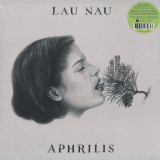
The title of the Lau Nau's 10th album, Aphrilis, derives from the Latin word aperire, meaning "to open." A fitting verb for the month of the year it is closely associated with — April. And while the images of plants and blossoms coming back to colorful life after a long, cold winter feels appropriate when listening to the rich and lustrous bloom of music on Aphrilis, another definition of open feels even more apt. For under the abundance lies the memory of times of austerity, the friction of hard choices, the acceptance that nothing is fixed and the future is unknown. This literal and metaphorical exploration of complexity and contradiction makes Aphrilis a multi-dimensional antidote for our troubled times, one that emphasizes the quiet and communal over noise and spectacle. Laura Naukkarinen, the Finnish artist behind this project, has long kept her mind and spirit open to whatever sounds and creative ideas felt appropriate for the moment. For the past six years that has meant primarily working with modular synthesis — learning how to build modules and releasing acclaimed work centered on its sounds like 5x4 (2023) or Puutarhassa (2022). Running parallel to this work, however, has been a continued exploration of acoustic instruments and group performances with her trio Lau Nau ja Seitsemäs Taivas. Aphrilis arrives then like fresh growth in a creative season cycle. A companion to her brilliant 2017 release Poseidon, the album, says Naukkarinen, "felt like a needed moment to embrace songs with lyrics again." And through the creation of this work, she remained open not only to her own creative muse, but also the input of her chosen collaborators. Each player on Aphrilis — Matti Bye on celesta and synths, Pekko Käppi on jouhikko, Hermanni Yli-Tepsa on violin and contrabass, Topias Tiheäsalo on electric guitar, Samuli Kosminen (Múm) on various instruments — was given free reign to arrange their own parts to accompany Naukkarinen's compositions. Kosminen’s lush fingerprint can also be heard in the mixing and production of the album, as with Poseidon six years ago. The moniker of this project may be taken from Naukkarinen’s own name, but Lau Nau feels more like a band than ever before. The delicacy and softness of the music is reflected in Naukkarinen’s lyrics. Each song is rife with imagery and creatures from the natural world. The spiders in the forest. The animals that keep a young woman company in her refuge in the woods. Wet grass. The feeling of the music is almost tactile, as if listening to the album will leave a bit of dew or sap on your fingers. The theme of this material, says Naukkarinen, runs even deeper. “The songs tell about cracks and changes of direction in different histories: personal, societal, planetary,” she says. “About moments when a yes can become a no and vice versa. The album wants to propose that at the moment of a crisis there is a possibility to influence the histories by our choices.” That may feel like a lot for such a fragile sounding collection of songs to bear. But Aphrilis is an album of surprising strength and resilience
Nourished By Time follows up his 2023 critically-acclaimed, breakout album Erotic Probiotic 2 with his debut EP on XL Recordings: Catching Chickens, set for physical release on May 3rd. Written between 2022 - 2023 in his home studio in Baltimore, and along his world travels this past year, Catching Chickens is derived from the film Rocky, and the iconic scene in which Rocky’s trainer makes him chase and catch a flock of chickens as a test of agility. With tracks like “Hell of a Ride,” in which Nourished By Time contemplates the fall of the American empire and late-stage capitalism loneliness, and “Hand on Me,” which traces the paranoia from distrust in a post-traumatic world, Nourished By Time chronicles his own test of agility as he weaves through the motions of his newfound notability.
This is somehting Kano's and die-hard italo-disco fans will definitely
appreciate. Kano's "Anothern Life" is finally remastered and repressed on limited-edition white vinyl for the first time since 1983 and out on FullTime Production.
This LP consecrated the fascination of italo-disco, which merged disco, funk and synth pop.
This is demonstrated by a song like "I Need Love", where we immediately recognize the classic elements of synth pop (thus merged with the rhythm and the funk voice of the charismatic voice of Glen White. So "Mad In Love" and "Dance School", where you can already recognize all the grooves that will one day be other followers who have taken, to recall the name, a direct lesson from this "school". Kano surely influenced a whole genre of new European dance acts.
"Another Life", a single now immortal for lovers of the genre, certainly
felt the influence of another genre, known as space disco, a short Eurodisco vein. So "Ikeya Seki", which is not a tribute to the East
like the later China Star (typical of the aesthetics of many bands of
this early 80's), but a very suggestive instrumental piece whose name
derives from a comet discovered by two astronomers Japanese in 1965, Seky and Ikeya in fact. This, is the sound that is also found in the 8-bit soundtracks of arcade videogames, in those contained in Commodore floppies, and it is the music that everyone would have liked to sweat every day.
Out on October 7th!
sentiment is a meditation of the poignant emotional terrains of loneliness, nostalgia, sentimentality, guilt, and sex. The album"s narrative arc is guided by delicate musical gestures and artistic vulnerability, audaciously synthesizing disparate and unexpected influences. claire rousay is a singular artist, known for challenging conventions in experimental and ambient music forms. rousay masterfully incorporates textural found sounds, sumptuous drones and candid field recordings into music that celebrates the beauty in life"s banalities. Her music is curatorial and granular in detail, deftly shaped into emotionally affecting pieces. rousay"s vocals and guitar take center stage on sentiment. Her intimate, diaristic lyrics contrast with her mechanical-inflected vocal effects, emphasizing a powerful desire for connection, a deep yearning and a lingering sense of separation. The spare guitar playing and laconic tempo both drive the songs and exude a sense of resignation. Her delicate mastery of nuance draws on her explorative musical past that she, with sincerity and admiration, seamlessly interweaves into her adventurous textures and distinctive compositions. "I want to belong to the worlds and communities I look up to. Same as someone using a Fender guitar or dressing like Kurt Cobain. Emulate your heroes," says rousay. The album balances the poetic soul of her influences with a documentarian heart, rousay capturing moments of her life while living alone in houses across the country, learning to play guitar, and reconnecting with pop music. Her innate ability to conjure pure feeling from sound derives from her delightful embrace of pop forms, the vulnerability found in field recordings, minimalistic arrangements and innovative sound choices. sentiment is blissfully, achingly melancholic, and an undeniably sensual listening experience.
Is this the future sound of black American jazz - an inclusive yet rhythmically complex groove based music that owes as a much to black urban culture - predominantly hip hop and trap music rhythms - as it does to jazz improv techniques and rhythms? It's certainly interesting that similar elements swim through the music of Robert Glasper and Kamasi Washington, who along with Scott are currently big box office, pulling-in substantial new audiences for their music. Ruler Rebel is the first album of a trilogy celebrating 100 years of recorded jazz, and will be followed by Diaspora and Emancipation Procrastination later. At the heart of this music are polyrhythmic grooves that might come from jazz, New Orleans black Indian music, trap, Malian rhythm Kassa Soro and the interplay between an SPD drum machine and live drumming. Largely featuring Scott's trumpet, the record introduces his articulate and frequently eloquent voice as the narrator of Ruler Rebel, much like the Persian Princess Scheherazade narrating her tales of the mysterious east to Sultan Shahriar over one thousand and one nights. A key track is `Encryption', a summation of Scott's direction of travel on the album. Here the running rhythm is derived from the New Orleansian Afro-Indian culture married with Malian Kassa Soro. This is in turn is layered with SPD-SX electronic drum machine and sampling machine played by Joe Dyson and Cory Fonsville that introduce rhythmic elements from trap and hip hop. Sounds complex? Well it is, but it works. Other highlights include `New Orleansian Love Song' and `New Orleansian Love Song II' and a celebration of Afro-Indian culture on `The Coronation of K. Atunde Adjuah'.
Black[24,79 €]
Is this the future sound of black American jazz - an inclusive yet rhythmically complex groove based music that owes as a much to black urban culture - predominantly hip hop and trap music rhythms - as it does to jazz improv techniques and rhythms? It's certainly interesting that similar elements swim through the music of Robert Glasper and Kamasi Washington, who along with Scott are currently big box office, pulling-in substantial new audiences for their music. Ruler Rebel is the first album of a trilogy celebrating 100 years of recorded jazz, and will be followed by Diaspora and Emancipation Procrastination later. At the heart of this music are polyrhythmic grooves that might come from jazz, New Orleans black Indian music, trap, Malian rhythm Kassa Soro and the interplay between an SPD drum machine and live drumming. Largely featuring Scott's trumpet, the record introduces his articulate and frequently eloquent voice as the narrator of Ruler Rebel, much like the Persian Princess Scheherazade narrating her tales of the mysterious east to Sultan Shahriar over one thousand and one nights. A key track is `Encryption', a summation of Scott's direction of travel on the album. Here the running rhythm is derived from the New Orleansian Afro-Indian culture married with Malian Kassa Soro. This is in turn is layered with SPD-SX electronic drum machine and sampling machine played by Joe Dyson and Cory Fonsville that introduce rhythmic elements from trap and hip hop. Sounds complex? Well it is, but it works. Other highlights include `New Orleansian Love Song' and `New Orleansian Love Song II' and a celebration of Afro-Indian culture on `The Coronation of K. Atunde Adjuah'.
High Llamas present Hey Panda - a modern pop music/deep listening experience that could only issue forth from their personal quadrant of the galaxy. Hey Panda projects soulfully through an enervating abstract of today"s popular music; the sound of the Llamas" stately melodies and expressive ditties laid open - blissfully shattered - with drums and vocals hitting different, burning sounds and contemporary production twists pulling the ear at every turn. For the past few decades, High Llamas have trafficked in contemporary pop sounds directed toward the avant end of the spectrum as much as not. But here the message was clear. Llamas" composer-in-residence Sean O"Hagan was determined to let go. Hey Panda does just that, with a set of tunes reflecting on multiple levels how definitions change over the course of a lifetime, radiating an optimism derived from the diverse conundrums of today. Eight years since their last release, the pop musical Here Come The Rattling Trees, High Llamas have reinvented themselves again, mixing their peerless harmonic voice with what Sean regards as the "extraordinarily good" production sounds of today on Hey Panda. Choosing not to look backward to former golden ages celebrated in earlier Llamas eras, Sean"s instead found himself opened up by the sounds of music brought into the house by his adult children and the sounds encountered at sessions for which he"s recently written arrangements. In addition to the more traditional contributions he made to The Coral"s Sea of Mirrors album, plus his score for the Safdie brothers" 2022 film production, Funny Pages, Sean"s drawn great inspiration through working with Fryars, Rae Morris, King Krule, Pearl and The Oyster, while also soaking up the work of Tierra Whack and Chicago"s Pivot Gang, and being cheered on from a distance by longtime admirer Tyler The Creator. Thus, Sean"s producer procedural has evolved again, with upgrades first detected in his 2019 solo effort, Radum Calls, Radum Calls. With a cover of Billie Eilish"s "Wish You Were Gay" arranged for Bill Callahan and Bonnie Prince Billy"s Blind Date Party, along with his COVID-era solo single, "The Wild Are Welcome", Sean has leveled up again and again, leading to the delirious revelations of Hey Panda. Hey Panda"s wide reach is aided by two co-writes from Bonnie "Prince" Billy, (who bonded with Sean over a shared love of gospel soul during writing sessions), guest vocals from Rae Morris and Sean"s daughter Livvy, production twists from Fryars and the stalwart, flexible presence of High Llamas. For all of its sense of departure, Hey Panda is a movement in the High Llamas oeuvre that"s been a long time in development. Aspects of soul music were addressed at the time of Can Cladders; similarly, aspects of electronic dance music were in the mix in the late 90s, around the time of Cold and Bouncy. But nothing up to now has refocused the music of High Llamas so completely. Sharing the impulse of late-period Miles Davis and Quincy Jones, with further inspiration from Steve Lacy, SZA, Sault, No Name and Ezra Collective, among many others, Sean O"Hagan and High Llamas are living joyfully in the new and the now, with Hey Panda.
Mesmerizing and exuberant Argentinian La Yegros, probably the most magnetic artist on the South American continent, is back with a new album!
The undisputed Queen of "Nu Cumbia" has not rested on her laurels. Surrounded by the same accomplices who have supported her for the last ten years, but eager to renew herself, she has set about recording her fourth album, which stands out from her discography. Although her personal folklore is still rooted in South American folklore, La Yegros is now absorbing contemporary, global music, while tackling intimate, often melancholy and even painful subjects, which she overcomes with the same resilience that drives her in concert. Nothing stands in the way of this Argentinian whirlwind, all the more fascinating for the fact that personal considerations are now surfacing beneath the veneer of the party atmosphere she sets alight.
La Yegros returned to the stage in 2022 to celebrate the 10th anniversary of Viene de Mí, her single hit from the self-titled album, released in 2012 in Argentina and then worldwide in 2013, which catapulted her to international fame. We then discovered a singer who had grown up in the traditions of her country. Her parents come from Misiones, a province bordering Brazil and Paraguay, where balls are filled with the sounds of chamamé (a mix of polka and Guaraní music), Carnavalito (Andean folklore) and Colombian Cumbia. But she herself is a native of Buenos Aires, whose nights are enlivened by the bass of Dancehall and electronic music.
These influences have merged in two further successful albums, Magnetismo (2016) and Suelta (2019), followed by high voltage tours during which La Yegros has been able to display her generous nature, inexhaustible energy, exuberant personality and infectious enthusiasm.
To record her new album entitled 'HAZ', La Yegros has put her faith in the same team that has worked with her since Viene de Mí. On one hand, producer Gaby Kerpel (also known as King Coya), a pioneer of synthetic experimentation applied to traditional music, who has remained her faithful accomplice for over twenty years. On the other hand, composer Daniel Martín, who knows how to come up with melodies to dream about and hymns to sing along to. Inseparable and complementary, the trio continues to concoct this mesmerizing mixture where acoustic instruments meet samples and the rolling of machines. But the new productions don't rely on a tried and tested formula. Generally co-produced between France and Argentina, they break away from over-defined genres. La Yegros knits together new rhythms and incorporates sounds that are unheard of in her country, derived from the latest urban trends, as well as echoes of reggae and funk. As for the lyrics, signed alternately by the trio, they are embodied by La Yegros whose charismatic voice questions a period of her life tossed by waves of love and lovelessness, joy and sorrow, euphoria and anguish, indulgence and resentment.
The album is open to a wealth of musical styles. You'll hear funk guitar and Andean flutes, melancholy accordion and rolling drums, Tuareg blues enhanced by brass, house and electro Cumbia loops, and the bassoons of a chamber orchestra. The folklore 2.0 of La Yegros, nourished by its colorful inspiration, at times tender or exalted, has been imagined as a hymn to love and the contradictory feelings that come with it. As always, it has also been conceived with the stage in mind. Hatching in a storm of overturned emotions, the album is all the more explosive for the strength of the live show that accompanies it. In addition to the usual line-up of guitar, accordion and percussion, a musician handles synthesizers and machines to boost the electronic turboshaft. In any case, you can count on the singer to assert her increasingly clear-cut character with each new project. And, above all, she won't give up. L.a Yegros is back and her batteries are fully charged.
Black Truffle is thrilled to announce a major archival release from legendary American composer and live electronics innovator Richard Teitelbaum, centred around his soundtrack for Suzan Pitt’s cult 1978 animation Asparagus. Best known to some listeners for introducing Europe to the Moog synthesizer as a founding member of Musica Elettronica Viva in Rome, Teitelbaum’s extensive and radically experimental body of work includes collaborative recordings with master improvisers like Anthony Braxton, Andrew Cyrille and George Lewis, intercultural experiments combining electronics with non-Western instruments such as the shakuhachi, works for computer controlled piano, and large-scale multi-media operas. Recorded at York University, Toronto in 1975–1976, ‘Asparagus (European Version)’ sprawls across both sides of the first LP. Discovered by composer Matt Sargent in Teitelbaum’s tape archive, this is a previously unheard major work for Moog modular and Polymoog synthesizers, unique in Teitelbaum’s oeuvre for its lushness and gently melodic quality. The music unfolds slowly, submerging lyrical melodies and burbling arpeggios into uneasy, glacially shifting harmonic swells, the luscious texture thickened with subtle changes of modulation and phase, calling up the shifting layers of Costin Miereanu’s classic Derives or the kosmische Musik tradition more than any academic synthesizer exercise. Teitelbaum incorporated much of this material into his soundtrack for Suzan Pitt’s Asparagus, which receives its first official release here. Asparagus, famously paired with David Lynch’s Eraserhead for a two-year run of midnight screenings at New York’s Waverly Theatre, uses hand-drawn and stop animation to unfurl an oneiric succession of images, beginning with a sequence in which the female protagonist defecates two stalks of asparagus, which multiply and float out of the toilet bowl to form the letters of the title. Teitelbaum’s soundtrack interweaves delicate drifting tones from the ‘European Version’ with contributions from Steve Lacy and Steve Potts on saxophones, George Lewis on trombone and Takehisa Kosugi on violin. Edited closely to the film, even without images the soundtrack proposes a surreal journey through floating synth tones, squealing horns, propulsive arpeggios, distant chatter, and an old-timey waltz. The final side of the set presents a new realisation of Teitelbaum’s text score ‘Threshold Music’, performed at a memorial concert at Roulette, New York in 2022 by Leila Bourreuil (cello), Alvin Curran (sampler and objects), Daniel Fishkin (daxophone), Miguel Frasconi (glass objects) and Matt Sargent (lap steel). The piece asks musicians to match their instrumental volume to that of the sounds of the environment in which they play, sometimes with the addition of recorded environmental sounds, reinforcing frequencies they encounter in listening deeply to their surroundings. Here the players use a field recording taken at Teitelbaum’s home in Bearsville, New York, their long tones and shimmering, glassy textures delicately emerging from the white noise of the location recording. Released with the full approval of both Richard Teitelbaum and Suzan Pitt’s estates, Asparagus is illustrated with striking images from Pitt’s film and accompanied by detailed liner notes by Francis Plagne. These previously unheard pieces shed new light on the work of a key composer in the American experimental tradition, offering up some of Teitelbaum’s most beautiful and engaging music.
Cookin’ is the first of four albums derived from the Miles Davis Quintet’s fabled extended recording session on Octobre 26, 1956; the concept being that the band
would document its vast live-performance catalogue in a studio environment, rather than preparing all new tracks for its upcoming long-player. The bounty of material in the band’s live sets –
as well as the overwhelming conviction in the quintet’s studio sides – would produce the lion’s share of the Cookin’, Relaxin’, Workin’ and Steamin’ albums.
As these recordings demonstrate, there is an undeniable telepathic cohesion that allows this band – consisting of Miles Davis (trumpet), John Coltrane (tenor saxophone), Red Garland (piano),
Paul Chambers (bass) and Philly Joe Jones (drums) – to work so efficiently both on the stage and the studio. This same unifying force is also undoubtedly responsible for the extrasensory dimensions
scattered throughout these recordings. The immediate yet somewhat understated ability of each musician to react with ingenuity and precision is expressed in the consistency and singularity of each
solo as it is maintained from one musician to the next without the slightest deviation. « Blues by Five » reveals the exceptional symmetry between Davis and Coltrane that allows them to complete each others’ thoughts musically.
Cookin’ features the pairing of « Tune Up / When the Lights Are Low » which is, without a doubt, a highlight no only of this mammoth session, but also the entire tenure of Miles Davis mid-‘50’s quintet.
All the éléments converge upon this fundamentally swinging medley. Davis’s pure-toned soloes and the conversational banter that occurs with Coltrane, and later Garland during
« When the Lights Are Low », resound as some of these musicians’ finest moments.
London noise-rock quartet USA Nails have announced their upcoming album Feel Worse’, out March 22nd 2024. It’s the first album on their new label One Little Independent Records (home to anarcho-punk bands both old and new; Crass, Bad Breeding and more). The band have forged a considerable reputation since their formation in 2013 from their South London base, comprising of members of Kong, Future Of The Left, Blacklisters, Death Pedals and Silent Front.
‘Feel Worse’ explores schadenfreude; the pleasure derived from another person’s misfortune. With this, they use new material to attack austerity and UK authoritarianism, consumer culture (particularly the consumption of quick fix reality TV and hyper-capitalist agendas), youth culture and bullying, and more. They do so with their intense and unmistakable brand of abrasive, chaotic post-hardcore. There’s a raw and uncompromising energy to USA Nails, and ‘Feel Worse’ is their most powerful and vital album to date.
London noise-rock quartet USA Nails have announced their upcoming album Feel Worse’, out March 22nd 2024. It’s the first album on their new label One Little Independent Records (home to anarcho-punk bands both old and new; Crass, Bad Breeding and more). The band have forged a considerable reputation since their formation in 2013 from their South London base, comprising of members of Kong, Future Of The Left, Blacklisters, Death Pedals and Silent Front.
‘Feel Worse’ explores schadenfreude; the pleasure derived from another person’s misfortune. With this, they use new material to attack austerity and UK authoritarianism, consumer culture (particularly the consumption of quick fix reality TV and hyper-capitalist agendas), youth culture and bullying, and more. They do so with their intense and unmistakable brand of abrasive, chaotic post-hardcore. There’s a raw and uncompromising energy to USA Nails, and ‘Feel Worse’ is their most powerful and vital album to date.
Daniel Romano returns with his first new music since the release of the massive, singular, La Luna in those long ago days of autumn 2022 (an impossibly long time in this famously prolific artist's career) - Too Hot To Sleep is simultaneously a transcendent document of the spirit, and a swaggering, street level blast of power-pop and Stone's derived rock 'n' roll; a surprisingly direct shout down of the corrupt politicians and techno fascists that police our bodies, pollute our world, assault our connections; a reason and occasion to dance, to sweat together at one of The Outfit's legendary live shows wherein everything comes faster than the next, no breaks, no outside, there is only now, there is only all of us here together, alive