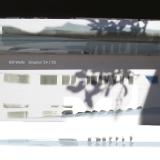
Mystic Arts brings you two essential cuts from Gary Irwin (The Vendetta Suite / Hell YeahRecordings). Dating back to 1994 and 1995 respectively, both tracks were originally released on David Holmes' Exploding Plastic Inevitable label.
Waveforms In Wonderland is a bubbling, acidic brain-melter - inspired, as Gary recalls,by Richie Hawtin, Conemelt and falling out with a friend at a Primal Scream gig. Diary of aMicrochip moves further off-grid: an unplaceable hybrid where Detroit techno, electro, funk and ambient house intersect. Thirty years on, both tracks remain remarkably intact. Timeless.
Cerca:det
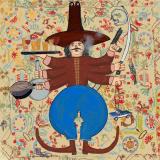
Primordial Mind forms the mysteries and intensity of inner life into eight mandalic instrumentals where Mas Aya and Khôra, artists who share 15 years of music making, orchestrate an inspired, prismatic palette of percussive and melodic sources. Each composition presented stages a vigorous meshwork of colours and textures, contrasting riveting polyrhythms with towering arrangements for flutes, synths, and processed acoustic instruments. Tendencies which the artists trace in their solo practices are amplified, blended, and refracted sublimely in unison, serving as energetic portals to the collective awareness.
Combining trans-ethnic scaling alongside a heady brew of rhythmic influences and advanced electronic processing, the recordings on this album operate with a tactility that vaults between free jazz, dub, raga, ambient, and ritual music. Assimilated powers of primal drum patterning and psychoactive, ceremonial melodies, invoke fourth world adjacencies with the work of Don Cherry, Jon Hassell, Popol Vuh et al. There is an alchemical, Buddhist/Taoist/Hindu inflection that guides the record’s narrative, formed through dialogue between the artists over lifelong shared interest in spiritual modalities generally and the tantric approaches of the global east in particular. The album title is derived from an unexcelled esoteric work known as the Kalachakra (Wheel of Time)Tantra and its associated commentary the Ornament of Stainless Light which detail forms of inner and outer transubstantiation within its complex cosmology and metaphysiology.
Mas Aya is the moniker of Brandon Miguel Valdivia, acclaimed Nicaraguan-Canadian composer, producer, and musician whose electronic and jazz inspired works creatively interlace Colombian, Cuban, and a wide array of traditional music. Khôra is the name of the occult entity that uses multi-instrumentalist, producer, and writer Matthew Ramolo to pronounce itself. Returning to Marionette following 2024's monumental Gestures of Perception, Primordial Mind reinforces the rigorous and magical approach to creation which defines Khôra’s two decades of sonic output. Brandon and Matthew met back in 2011 and the pair toured around eastern Europe with Toronto band Picastro in 2013, also performing as a duo with Brandon contributing drums to Khôra's opening sets. After a short spate composing and playing in the ensemble Bespoken together, they continued to discover shared inspiration in psych/art rock, jazz, experimental and electronic music, providing a fertile soil for friendship and collaboration resulting in their collaged, lo-fi album Tangled Roots in 2017. Mythic and talismanic, the duo's Marionette debut weaves a luminous tapestry of organic pulses, offering itself as a support for resonant meditation and a motor for lucid action and intuition.
Brandon Miguel Valdivia: Percussion, Flutes, Log Drum, Korg Lambda, Angklung, Tambor Alegre, Udu
Matthew Ramolo: Modular Synth, Archival Samples, Angklung, Guitar, Duduk, Bass, Percussion, Arrangements and Mix

It is often in times of crisis and upheaval that the most fascinating music emerges. It is clear that times are grim, not only but particularly in the USA. On the ‘Numb Denial EP’, Orlando Voorn reflects on the emotional climate in his adopted home and conveys his uncertainty, his pain and also his anger. He impressively expresses his emotional states musically through the instrumentarium of timeless Detroit-style technosoul. These tracks are among the most moving, immediate and beautiful he has created in his decades-long career. To quote Roxy Music: “Dance away the heartache, dance away the pain.”
- A1: Intro
- A2: La Danse De L’esprit (Feat. Lalin St.juste)
- A3: Share Your Love (Feat. Nina Miranda)
- B1: Got To Find The Way (Feat. Siya Makuzeni)
- B2: Astral Vision Of Light
- B3: Africa Tribale
- C1: Galaxy Bloom
- C2: Praise To The Sunshine
- C3: Song Of Liberation (Feat. Siya Makuzeni)
- D1: The Shango Cult
- D2: Shaman’s Prophecy
- D3: Macumba De Oxala Ii (Feat. Toco)
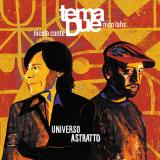
Nicola Conte and Nico Lahs’ Tema Due project finally comes to full realization in a double LP entitled “Universo Astratto”,adding a wealth of new musical shades and ideas to the two EPs released on Schema Records in 2025. The albumrepresents not only the natural evolution of their artistic dialogue, but also a statement of intent in terms of sound.Fans of the most sophisticated and refined club music, elevated by the fusion of exquisite electronica with spiritual jazz (it isno coincidence that the opening track evokes the baseline of “A Love Supreme”), African-American rhythms and tribalpercussion, will be thrilled by this complex and multi-layered album, which unveils new hidden details upon each listen.A meticulous selection of exceptional musicians contributes in a distinctive and significant way to broadening the scope ofthe project: Giovanni Guidi, Pietro Lussu, and Dario Bassolino on keyboards, Gabriel Prado and Abdissa Assefa onpercussion, Magnus Lindgren on wind instruments and Hammond organ, and Pasquale Calò on saxophone. On vocals wehave Lalin St. Juste, Siya Makuzeni, Nina Miranda - for what is probably the best track on the album, “Share Your Love”- and Toco - for a new and previously unreleased version of the track “Macumba de Oxalà” featured on the first EP.In “Universo Astratto”, Tema Due’s vision is finally fulfilled: a world of ancestral grooves, cosmic jazz, and electronic musicconceived for clubs as a type of “active experience” in which one is transcended by music. This record is an invitation—tomove, to feel, to elevate—and a manifesto for those who see the dance floor not just as a location, but as a shared experience of awareness and rhythm
- Being Left By Today Feat. Norman Blake
- Feather And A Bird Feat. Norman Blake
- Disinformation Feat. Norman Blake
- El, El, El Feat. Norman Blake
- Secret Of Dead Youth Feat. Norman Blake
- Queen Christina The Second Feat. Norman Blake
- Keep Rest In Thunder (My Dying Day) Feat. Norman Blake
- Is Anybody There? / What Am I Afraid Of? Feat. Norman Blake
- Somethin’ Funny Goin’ On Feat. Norman Blake
- Twenty & Twenty Two / Mealy Tell I Am Feat. Norman Blake
- Warehouse Feat. Norman Blake
- Right / Wrong Feat. Norman Blake
- Beautiful Dream Feat. Aby Vulliamy
- Shirley Brassy / Bushed Feat. Aby Vulliamy
- Leave Me Alone Feat. Aby Vulliamy
- Tie Your Hands Feat. Aby Vulliamy
- Who I’m Married To Feat. Aby Vulliamy
- First Time Feat. Aby Vulliamy
- California Girl Feat. Aby Vulliamy
- High Alone Feat. Aby Vulliamy
- Money Dream Feat. Aby Vulliamy
- Mackenzie’s Return Feat. Aby Vulliamy
- I Found It Feat. Aby Vulliamy
- Altogether Hollow World Feat. Aby Vulliamy
On Dreams ’24 / ’25, Scottish composer Bill Wells turns his nocturnal imagination into a sequence of delicate musical miniatures. The album brings together 24 short pieces, most of them under two minutes, unfolding in just under half an hour like a quietly drifting dream diary.
The album is split into two parts. On the Dreams 2024 side, Norman Blake lends his voice to Wells’ dream-born melodies. Blake, best known as a founding member of Teenage Fanclub, recorded the songs with Wells in a single afternoon at his home, capturing their fragile immediacy in direct and unadorned performances.
For Dreams 2025, Aby Vulliamy — one of Yorkshire’s best kept musical secrets — takes over vocal duties. In mid 2025, Wells sent her a batch of demos; Vulliamy recorded them at home and sent them back to him. The result is a second chapter that feels more introspective, intimate and gently surreal.
The songs themselves are born directly from dreams. Wells wakes from the dream, records it on his mobile and later shapes it into a brief, lyrical composition. One piece, Mackenzie’s Return, was inspired by a dream in which Elvis Costello marched through the streets of a suburban town complaining that he had run out of song ideas, a detail that perfectly captures the album’s blend of humour, strangeness and quiet melancholy.
Dreams ’24 / ’25 is not a collection of fully formed pop songs, but rather a series of fleeting emotional snapshots: soft voices, simple motifs, and melodies that appear and vanish before they can fully settle. It is an album that rewards close listening, inviting the listener into a private, half-lit space somewhere between memory and imagination.
The album is accompanied by a striking cover artwork by Annabel Wright.
- 1: Ordinary Love
- 2: Pink Lemon
- 3: Bang
- 4: White Corridor
- 5: Snapshot
- 6: Faster Faster
- 7: Broken Melody
- 8: Letters
- 9: Bigger Than Us
- 10: The Inner Light
When Elder Island went into the studio to record the followup to their critically acclaimed 2021 album, Swimming Static, they were determined to "turn everything on its head". The trio are celebrated for their brooding indie-electronica that draws on their Bristol roots, creating vastly detailed and immersive soundscapes. But Hello Baby Okay marks a new era for the band, fuelled by a longing for transcendence and euphoria. An effervescent counterpoint to the current times, their new Music is threaded through with a liberated energy, lilting funk-Pop guitars, danceable beats and a renewed sense of play.
Be The Mountain (2026) is the latest release from Detroit-based musician STS. The record explores a serene and introspective world shaped by organically morphed textures and slowly evolving soundscapes.
While largely drumless, the album maintains a subtle rhythmic backbone - not through traditional percussion, but through modulated pads, shifting synths, and carefully sculpted ambience. The music moves and breathes without overt propulsion, finding tension and momentum through tone, density, and motion rather than beats.
Much of the record was written during a period of sustained physical and mental strain. A time when daily effort fought against perceived limits. Instead of responding with heavier or more aggressive material, the music became a quiet counterweight to the intensity. These tracks function as an escape from chaos. They are built from patience, repetition, and a gradual transformation.
The title reflects a central idea behind the record: confronting something that initially feels insurmountable, only to realize that the enduring force is the one within us all.
Be The Mountain is about endurance, not as struggle, but as presence.
A new EP by Extrawelt is always something special, as they continually manage to reinvent themselves while remaining unmistakably true to their sound. The a-side „Moonster“ of their latest record forms a subtle and almost magical bridge to early musical influences such as Immortal Coil, Chris & Cosey, The Cure, and Throbbing Gristle.
In doing so, they reclaim, or rather reintroduce, a powerful, mystical element into their music, one that is integrated so naturally it feels as if it has always been an essential part of Extrawelt’s sonic DNA. Beyond that, the track unfolds through numerous facets, constantly shifting and evolving. Just when you think it is settling into a familiar direction, small variations emerge, keeping the piece remarkably alive and unpredictable.
You can clearly sense how much fun Extrawelt had working on this track. It is bursting with ideas, energy, and vitality, radiating a playful confidence that makes it endlessly engaging.
The b1 track „Bettermaker“ takes a different route, dedicating itself entirely to a single mood. Through subtle pitch bending and a carefully shaped tonal palette, the track unfolds with a slightly eerie, enchanted atmosphere.
From beginning to end, „Bettermaker“ remains focused and unwavering. There are no breaks or dramatic shifts in direction, instead, the piece commits fully to its initial setting. A monolithic, almost mantra like motif forms the core, creating a distinctive ambience, mystical, shadowy and faintly oriental in character.
This atmosphere is carried and reinforced by percussive, ethno inspired drums, which add an organic, ritualistic pulse. The result is a hypnotic soundscape that draws its strength from consistency and depth rather than contrast, inviting the listener into a secluded, otherworldly space.
The final piece of the EP „Popcorn Forever“ reveals another side of Extrawelt’s thinking. The track unfolds like a curious experiment in motion. Instead of building toward a predictable climax, sounds are gradually tossed into an ever running loop fragments, textures and small rhythmic ideas appearing almost casually, as if the piece were assembling itself in real time.
At first the elements seem loosely connected, sometimes abstract, sometimes slightly mischievous in the way they twist and bend. It almost feels like an impossible construction task. But Extrawelt’s experience quietly guides the process. Bit by bit the scattered parts begin to communicate with each other.
Repetition becomes the hidden engine. With every return of the loop new details slip into the structure, and what once appeared random slowly starts forming relationships inside the listener’s mind. The track never forces a clear explanation, yet the brain begins to tie the loose ends together almost automatically.
Popcorn Forever therefore works beautifully as a kind of transit piece within the EP. It moves between ideas, linking moods rather than closing them off. In typical Extrawelt fashion, the result is playful, slightly surreal and full of subtle discoveries that reveal themselves over time.
Symphonieorchester des Bayerischen Rundfunks, Sir Georg Solti
R. Strauss: An Alpine Symphony (Eine Alpensinfonie) [Decca...
Nur wenige Orchesterwerke erfordern so viel Präzision wie Richard Strauss’ „Alpensinfonie“. Die DeccaAufnahme von Sir Georg Solti und dem Symphonieorchester des Bayerischen Rundfunks entstand 1979 und
war eine der letzten analogen Produktionen von Decca vor der Umstellung auf Digitaltechnik. Solti kannte
Strauss persönlich und studierte die Aufnahmen des Komponisten, bevor er diese einzigartig authentische
Aufführung in München aufnahm.
Die neue audiophile Vinyl-Reihe DECCA PURE ANALOGUE präsentiert legendäre Aufnahmen aus den
Archiven von Decca und Philips in einer völlig neuen Klangqualität. Die renommierten Emil Berliner Studios haben diese in 100 % analoger Qualität (AAA) mit speziell für diese Reihe entwickelten Technologien
neu gemastert.
Jede Veröffentlichung der Serie wird auf 180 g schweren Virgin-Vinyl-Schallplatten gepresst und in einer
luxuriösen Gatefold-Edition präsentiert, mit Original-Artwork und Liner Notes, zusätzlichen Fotos und
Faksimiles der Bandboxen und Aufnahmedokumentation. Darüber hinaus enthält jede handnummerierte
Limited Edition neue Liner Notes, in denen die Geschichte der Aufnahme sowie der technische Prozess der
Neu-Veröffentlichung detailliert beschrieben werden.
Los Angeles Philharmonic, Zubin Mehta
Varèse: Arcana; Intégrales; Ionisation [Decca Pure Analogue]
Zubin Mehtas klanglich spektakuläres Album mit Orchesterwerken von Edgar Varèse aus dem Jahr 1971,
aufgenommen mit dem Los Angeles Philharmonic, wurde von Gramophone für sein „virtuoses Spiel“ und
seine „vorbildliche Aufnahme“ gelobt. Mehta wird dieses Jahr 90 Jahre alt, und diese Aufnahme – mit
ihrem beeindruckenden Artwork – erinnert uns an Mehta in seiner besten Zeit, dynamisch und mit jugendlichem Verve, als er, auch wegen der atemberaubenden Aufnahmen, die Decca in LA produziert hat,
die internationale Bühne eroberte.
Die neue audiophile Vinyl-Reihe DECCA PURE ANALOGUE präsentiert legendäre Aufnahmen aus den
Archiven von Decca und Philips in einer völlig neuen Klangqualität. Die renommierten Emil Berliner Studios haben diese in 100 % analoger Qualität (AAA) mit speziell für diese Reihe entwickelten Technologien
neu gemastert.
Jede Veröffentlichung der Serie wird auf 180 g schweren Virgin-Vinyl-Schallplatten gepresst und in einer
luxuriösen Gatefold-Edition präsentiert, mit Original-Artwork und Liner Notes, zusätzlichen Fotos und
Faksimiles der Bandboxen und Aufnahmedokumentation. Darüber hinaus enthält jede handnummerierte
Limited Edition neue Liner Notes, in denen die Geschichte der Aufnahme sowie der technische Prozess der
Neu-Veröffentlichung detailliert beschrieben werden.
San Francisco Symphony, Seiji Ozawa
Dvořák: Symphony No.9 ”From the New World”; Carnival Overture...
Seiji Ozawas Antritt als Musikdirektor des San Francisco Symphony Orchestra im Jahr 1970 wurde später
von Barack Obama anschaulich beschrieben: „Mit seinem Mop-Haarschnitt, seinen Rollkragenpullovern
und seinen Liebesperlen sah er fast aus wie ein Beatle“. Diese Aufnahme von Dvořáks Sinfonie „Aus der
Neuen Welt“ aus dem Mai 1975 war eine der letzten, die von Philips in Quadrophonie aufgenommen und
speziell für diese Neuauflage neu abgemischt wurde.
Die neue audiophile Vinyl-Reihe DECCA PURE ANALOGUE präsentiert legendäre Aufnahmen aus den
Archiven von Decca und Philips in einer völlig neuen Klangqualität. Die renommierten Emil Berliner Studios haben diese in 100 % analoger Qualität (AAA) mit speziell für diese Reihe entwickelten Technologien
neu gemastert.
Jede Veröffentlichung der Serie wird auf 180 g schweren Virgin-Vinyl-Schallplatten gepresst und in einer
luxuriösen Gatefold-Edition präsentiert, mit Original-Artwork und Liner Notes, zusätzlichen Fotos und
Faksimiles der Bandboxen und Aufnahmedokumentation. Darüber hinaus enthält jede handnummerierte
Limited Edition neue Liner Notes, in denen die Geschichte der Aufnahme sowie der technische Prozess der
Neu-Veröffentlichung detailliert beschrieben werden.
Bernard Haitink, Concertgebouw Orchestra of Amsterdam
Mahler: Symphony No.5 & Adagio (Symphony No.10) [Decca Pure...
Bernard Haitinks Mahler war schon immer einer der Höhepunkte des Philips-Katalogs, und die Aufnahme
der 5. Sinfonie und des Adagios aus der 10. Sinfonie stammt aus dem analogen Zyklus, den er Ende
der 1960er und Anfang der 1970er Jahre aufgenommen hat. Diese Aufnahme aus dem Jahr 1970 wurde
im Concertgebouw in Amsterdam quadrophonisch aufgenommen und von Gramophone für „die besondere
Klarheit, die durch eine ausgewogene Balance entsteht” gelobt.
Die neue audiophile Vinyl-Reihe DECCA PURE ANALOGUE präsentiert legendäre Aufnahmen aus den
Archiven von Decca und Philips in einer völlig neuen Klangqualität. Die renommierten Emil Berliner Studios haben diese in 100 % analoger Qualität (AAA) mit speziell für diese Reihe entwickelten Technologien
neu gemastert.
Jede Veröffentlichung der Serie wird auf 180 g schweren Virgin-Vinyl-Schallplatten gepresst und in einer
luxuriösen Gatefold-Edition präsentiert, mit Original-Artwork und Liner Notes, zusätzlichen Fotos und
Faksimiles der Bandboxen und Aufnahmedokumentation. Darüber hinaus enthält jede handnummerierte
Limited Edition neue Liner Notes, in denen die Geschichte der Aufnahme sowie der technische Prozess der
Neu-Veröffentlichung detailliert beschrieben werden.
Six years after their last full-length release, Satoshi & Makoto return with Mirage Café, the highly anticipated new album on 8mm Records, in collaboration with Standart Magazine.
A carefully crafted and long-awaited work, Mirage Café is more than an album — it is a fully immersive sensory experience. The Japanese duo expand their signature sound into deeper and more cinematic territory, blending refined electronica, ambient textures, subtle jazz inflections and understated groove with remarkable elegance and control.
The title evokes an imaginary café — a space of contemplation, connection and inspiration. The partnership with Standart Magazine reinforces this conceptual layer, bridging music and coffee culture into a cohesive narrative that feels both intimate and international. The result is an album that unfolds like a slow ritual: warm, enveloping and meticulously detailed.
Throughout the record, Satoshi & Makoto demonstrate a mature and confident songwriting approach. The production is rich yet restrained, atmospheric yet rhythmically engaging — balancing introspection with forward motion. Lush harmonies, delicate arrangements and immersive sound design create a listening experience that rewards both focused attention and late-night drifting.
With Mirage Café , the duo not only meet expectations after a six-year silence — they surpass them. This is a masterwork of nuance and vision, poised to become a defining chapter in their discography and a standout release in the contemporary electronic landscape.
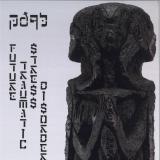
pdqb is an entity without a fixed form, moving through multiple timelines at once, performing in all of them simultaneously.
Every tone on this record was sampled somewhere else: in collapsed futures, unfinished pasts, and inside stress loops that never resolved. The tracks are not composed - they are retrieved, stitched together from moments that already happened and moments that haven't happened yet.
The music is unstable, dependent on who listens, and in which dimension, the tracks re-arrange themselves, revealing different harmonics, different fears, different exits. No two listeners hear the same, even if they play it at the same time.
The überskilled Detroit remixers provide a solution for Earthbound listeners - those unable to time-travel or shapeshift: By filtering pdqb's multidimensional signal through machine discipline, they force a temporary alignment - a version of a track that sounds the same to most listeners. Only then does collective rhythm become possible, a shared timeline where bodies on a dancefloor move to the same future at once.
---
Dr. Paul Dominic Quentin Bernard defines Future Traumatic Stress Disorder as a cognitive condition marked by a reversal of mnemonic orientation. Memory, in this model, no longer operates retrospectively but functions prospectively, encoding anticipated survival outcomes rather than past experience. Affected subjects do not recall what has been lived through; instead, they retain anticipatory memory structures of what will be survived. Bernard notes that this temporal inversion produces sustained psychological stress and warrants further empirical investigation.
Continuum - Vol. 16.219, Peer-Reviewed Scientific Journal
With Le Tact, Joseph Schiano di Lombo delivers a work of rare finesse, conceived as a posthumous conversation with photographer Henri Cartier-Bresson. Through seven meditative pieces - whose evocative titles echo the photographer's words when describing the art of creating an image - this album explores the instinctive and delicate relationship that connects music and photography to our everyday lives.
Presented for the first time on stage during the 20th anniversary of the Henri Cartier-Bresson Foundation, Le Tact draws its inspiration from the photographer’s art: a sensitive and respectful approach, capturing the essence of things without altering them. This spirit of discretion and precision is distilled by Joseph into his music, blending composition and improvisation with intuitive elegance. While Joseph composed and performed the piano, organ, synthesizer, clarinet, and guitar himself, he opened his arrangements for the first time to other musicians. Agnes Wasniewska (oboe), Barbara Misiewicz (cello), and Tomasz Baye Zietek (trumpet) bring their sonic textures, enriching this work, which is both intimate and collaborative. The album was recorded between Paris and Sopot (Poland) during a residency organized by the CNM.
The album’s title perfectly encapsulates its essence: Le Tact. This simple word, evoking both the sense of touch and artistic intuition, reflects the way Joseph composes—with respect, humility, and attention to detail. Each note seems to float lightly, as if to preserve the serenity of the moment. Le Tact transcends genre boundaries. Between ambient music and contemporary art, this album invites listeners to slow down and truly listen. It is a tribute to the beauty of the world, captured with the subtlety of a photographer and the sensitivity of a musician.
DISPLACES represents Fabris' most personal musical journey to date, inspired by the concept of hyperobjects and cartographic practices. The album sculpts a high-dimensional phased time-space composed of concrete materials and digital archetypes in a state of constant displacement. It delves into the symbolic and philosophical realms of mapping as one of the greatest sense-making mechanisms for life, in dialogue with object-oriented environments, superimposition and non-locality applied to cosmic, temporal, and emotional memory.
The sonic ecosystem expands on the image of navigating a path through a set of places, from the microcosm of quanta to the macro force of dark matter, from underwater depths to overland terrains, encapsulating the cyclical flow between birth and death, both in ecological and anthropological sense. The intersection of these shifting states is explored through the extensive processing of the langspil, Iceland's only traditional instrument, intertwined with manipulated field recordings of biophonies and geophonies captured across Icelandic and Venetian territories. These recordings form the backdrop for a meditative process that relocate familiar objects into unfamiliar realms, reflecting on the transformative power of self-reflection while encapsulating the fragmentation and entanglement found in nature and the human state. The record plunges the listener into a disconcerting and physical soundscape, as a “ghostly spectrality that comes in and out of phase with normalized human spacetime,” evoking sensations of suffocation and release as each layer continuously unfolds the palimpsest of the enclosed labyrinth.
“Extraction of the I” embodies a subatomic reaction—erupting as a molecular force that rises, only to re-submerge with a solitary exhale underwater. In this mutated dark space, beluga whales breathe into "Xanadu Phasing," creating a pulsating tension that releases only to unveil a frozen landscape.
In “Barricading the Ice Sheets” the glacial material morphs into a liquid tunnel of digital artifacts, building a wall of noise that shatters into scattered fragments of ice, resembling bird calls from another world.
A moment of stasis is offered with the appearance of an asymmetrical loop in Monolith I, evoking a primitive rite before an unknown force emerges.
The physical intensity of subsonic material in "A Quake in Being" interrupts the hieratic tone, detuning into polluted sonic matter sourced from relics of the First World War in the Venetian Prealps. The geography of this place reconciles with the original homeland in "The Map is the Territory," blending negative space with anthropogenic elements and exploited sounds of the langspil.
The burning density of "Wolf-Rayet" projects into the void, echoing the residual sounds of a local church as relics of fossilized religions. Wolf tones are the remains in Monolith II, introducing the final track, "Topography of Extinction," where evolving psilocin textures invite the listener to uncover deeper layers of meaning and dislocation.
Is the result of an unexpected and powerful connection between Meeks and Jedsa Soundorom.
Both have spent over 25 years immersed in music, coming from very different backgrounds but combining them to create something completely original.
Meeks, an experienced producer and beat-maker, made his mark during the French Touch boom of the early 2000s.
He worked with artists like Hernest Saint Laurent and Scratch Massive, earning respect for his attention to detail and his love of exploring sounds and textures.
Jedsa Soundorom, meanwhile, is a DJ and producer who’s traveled the world, always bringing new influences into his music and growing his unique style.
When they met a year and a half ago, it clicked right away. That connection became BUG DIVIsion, a project that blends Meeks’ careful precision with Jedsa’s raw energy, creating electronic music that feels both deep and natural.
Biz has some serious techno credentials, having landed on esteemed labels like Transmat and Acquit Records before now, and here he is back on his Subjekt label with a third outing in his limited series. This is cerebral techno steeped in Detroit style but looking to the future. 'No Pain, No Gain' is awash with crystalline pads over a surging groove, 'Monozukuri' gets more prickly with metallic percussive textures and a forlorn lead. 'Manipulate' unhinges from reality with trippy synth cascades that remind of 8bit video games and the flip then has a more introverted sound across three minimalistic, deep rhythmic excursions.
Next in the vinyl-only Kontra-Musik White Label series is a new collaboration between founder Ulf Eriksson and the label's most prolific artist, Andreas Tilliander, also known as TM404. The record opens in housier territory and ends with the deepest of dubs. In between, the duo carve out a distinct sonic language through two stripped, old school Detroit techno-inspired cuts, built around rolling basslines, subtle swing and a dense sense of depth.
Ben is a Detroit-based producer who makes up half of Symptoms of Love, along with BPT records alum Ryan Spencer. He here brings us a 4 tracker of the absolute highest order. It both sounds like music that no one else is making, while also sounding like a pastiche of everything that you've ever liked in the past. The magic formula baby!!!!!!! Shall we walk thru the music together?
BPT founder and music's #1 man Jeremy Castillo has described the EP absolutely brilliantly as such: "YMO style dissonant electro with a Detroit touch on the a side, with pitched down Patrick Cowley psychedelic Macarena on the B-side.
The A1 and title track is an incredible statement of intent from Ben - it really does sound like if Hosono grew up in Detroit listening to Electrifying Mojo. It's an absolute blast of sunlight coming through your headphones. Press play and watch your vitamin D levels rise baby!!!
A2 cut "Music Remembers" is a groovy joy ride reminiscent of Galaxy II Galaxy, complete with re-pitched vocal chops and 808 claps galore. This will hit SO hard on a spring day if you live in a city currently blanketed in snow.
On the flip, B1 "Whose Water" will be a big hit with anyone who dug Dam Funk's Garret project. Introspective downtempo synth fans rejoice!!! And we wrap a stellar outing with B2's "New Sun" - a propulsive Cosmic workout that will open up any dancefloor. The psychedelic Macarena is right baby!!!


![Symphonieorchester des Bayerischen Rundfunks, Sir Georg Solti - R. Strauss: An Alpine Symphony (Eine Alpensinfonie) [Decca Pure Analogue]](https://www.deejay.de/images/l/1/0/1234810.jpg)
![Los Angeles Philharmonic, Zubin Mehta - Varèse: Arcana; Intégrales; Ionisation [Decca Pure Analogue]](https://www.deejay.de/images/l/1/3/1234813.jpg)
![San Francisco Symphony, Seiji Ozawa - Dvořák: Symphony No.9 ”From the New World”; Carnival Overture [Decca Pure Analogue]](https://www.deejay.de/images/l/1/6/1234816.jpg)
![Bernard Haitink, Concertgebouw Orchestra of Amsterdam - Mahler: Symphony No.5 & Adagio (Symphony No.10) [Decca Pure Analogue] LP 2x12"](https://www.deejay.de/images/l/1/9/1234819.jpg)