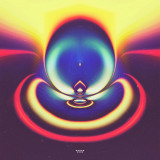
Reissue of George Duke's classic 1976 jazz-funk-fusion album 'Liberate Fantasies'
This 1976 album, the last one of the MPS fusion series, continues George Duke's tendency to couple his fusion world with accessible R&B songs. Once again, he shows a discernible vocal development. In "Tryin' And Cryin" the Californian together with rock singer Napoleon Brock overlays multiple vocal tracks.
On "Seeing You" Duke lays on a glaze of soulful tenderness, whereas "What The…" is 30 seconds of frivolous funning around. "Back to Where We Never Left" is a witty gem in which Duke bundles his pool of synthesizers into a united groove, whereas "I C'n Hear That" shows off synth and marimba tonal colors in dialogue, with the bass riffing on the bottom.
The album flows into the final bend carrying along the sonorous richness of Brazil. "After the Love" plays with the languorous erotic colours of the tropics, whereas all the band members are allowed to shine on the epic circa ten minute title track with its hot samba flair: the rhythm section with "Ndugu", Al Johnson, and Airto Moreira's percussion arsenal, Daryl Stuermer with his rock interludes on guitar, and Duke himself with inspired virtuosity on all sorts of synths and
keyboards.
Поиск:development
Все
High Focus Records linchpin Fliptrix announces his 8th solo album ‘Light Work’. The 16-track project is a complete representation of Fliptrix as both an artist as well as reflecting the person behind the artistry. The album tackles deep rooted issues within society, the current state of the world as well as portraying an overarching message of peace, openness and optimism.
“Light Work is the culmination of years of experience, emotion, research and love. Crafted to heal, fulfil my desire to create and further raise vibrations.”
The London born, Brighton based lyricist’ creative CV has become one of legends. His long-standing trade as a solo artist is paired with him being one-quarter of the acclaimed collective The Four Owls (Big Owl), adding in Founder and Director of High Focus Records and not to forget becoming a first-time dad earlier this year. Operating at this level has been achieved by years of self-development and his mission is to pay it all forward.
Both Fliptrix and High Focus Records have been irreplaceable cogs in the UK HipHop machine for well over a decade. He and the label have been there for the hard times and the glory days but have never sought out fame or verification. Albums such as ‘The Road To The Interdimensional Piff Highway’ and ‘Patterns Of Escapism’ were pioneering amongst peers and resulted in multiple global tours and a dedicated fanbase across the world.
Kicking off the album is the title track ‘Light Work’ which starts with faded, eerie laughter whilst Fliptrix unleashes a barrage of flows ending with “DMT be elevating my consciousness”. An introspective cut,
‘Light Work’ expresses his undeniable passion for his craft whilst tackling personal demons and overcoming them through altered states of consciousness. ‘Multicolour’ paints a raw psychedelic picture and encourages us to think outside the box and not take everything for face value. His vivid storytelling continues throughout with feelings of being burnt out expressed in ‘Broken Glass’ whilst ‘Powerizm’ switches up the tempo and he conveys his daily grind whilst paying homage to his fallen friend and legendary London graffiti artist ‘POW’ as well as his recently born first child. Tracks ‘Problem, Reaction, Solution & The Realisation Part 2, tackle the world's current situation head-on with a no holds barred viewpoint. Coming full circle, Fliptrix closes the project with ‘Vibes’ which is full of positivity and hope.
No stranger to talking openly about his mind-altering experiences, spirituality, quest for knowledge and dedication to the exploration of consciousness, Fliptrix’s raw flow and intricate lyricism perfectly portray the albums hard hitting narratives and set him apart from the rest of the scene. Self-reflection, personal improvement, determination and revolution are at the core of ‘Light Work’ and they come together harmoniously under one roof.
The Equations Collective is an experimental sound project formed by a multi-disciplinary group of artists, active in the fields of music, photography, sound design & software development.
In 2018, the collective set up a temporary outdoor recording studio, 1130 meters above sea level, on the slopes of Mount Helicon in Greece, with the ambition of recording their work in a natural environment. A 'mobile and modular' construction, fully powered by solar panels, the design of the studio showcases the possibilities of a progressive, environmentally sustainable future through renewable energy.
Embodying ecological incentives, and representing an immersive engagement with the landscape, the 'Helicon Sessions' document this extraordinary residency, capturing a profound dialogue with the eponymous mountain region.
Situated in Boeotia, Central Greece, Mount Helicon has a prominent archaic significance. A historic location where stories of sacred springs and the epic origins of the Muses and Narcissus converge. Steeped in the heritage of ancient narratives, Helicon is seen as a principal symbol of poetic inspiration.
On the 'Helicon Sessions' the collective draw upon the inspiring topography and fabled mythological resonances of the area, unfurling an expansive, hypnotic suite of abstract electronics. Liberated by an open-ended, improvisational dynamic, the collective move through a mysterious, elemental cycle that mirrors the imposing scale and dramatic atmospheres of the setting.
Across an entrancing, fluid sequence of five designated 'cuts', the collective traverse the borderlands of drone, techno, dub, and acid, amplifying the acoustic traces of Helicon by integrating field recordings collected at the site into this arresting body of work. With these recordings, the collective delineate an odyssey of subverted 303s, sputtering drum machines and formidable, oscillating low end that drifts and coalesces like an amorphous mirage; a spellbinding sound world of clarity and shadow.
The 'Helicon Sessions' signify a symbiosis (between the terrestrial and the engineered, between wildlife and futurism, between the intrinsic and the synthetic, between the innate and the manmade) And with their conception of a portable, eco-friendly studio The Equations Collective focalize valuable ideas centred on ingenuity and evolution. The outcome of this project illustrates a unique collaborative exchange which acknowledges the deep nuances of environment and the enduring echoes of history.
The Equations Collective is a collaboration between Artefakt, Aroma Pitch, Aphelion and Sphera De Noumenon across Berlin, Amsterdam, Cologne and Hamburg. Together they have established an all night long live event in Berlin, starting at Sameheads and Acud Macht Neu, which eventually lead to their residency at OHM (Tresor).
For this format they have collaborated with the following artists: Alex The Fairy, Anna Z, D-IX, Eliad Wagner, Jón Friđgeir Sigurđsson, Orson Wells, Phillip Jondo, Philipp Matalla, PRSMC, Rabih Beaini, Sabrina Gricourt, Sébastien Robert, and Vida Vojić.
The respective members of The Equations Collective have released a range of output on the likes of Field Records, Delsin, Semantica Records, De Stijl, & Soul People Music.
Since 2018 their visual identity has been shaped by Elias Hanzer.
The 'Helicon Sessions' is their debut release.
As a confluence of ideas and methods, WILD ROCKET endeavour to interpret the subtle signals of the universe - the interplanetary vibrations - and present them as brash manifestations of sound. Scientists and Shaman alike have endeavoured to interpret the universal whispers, to elucidate meaning from the measurable and the sensible. It is known that to measure and interpret is to alter and colour those signals and this is what drives the development of WILD ROCKET's sound and interpretation.
FORMLESS ABYSS showcases the band's unflinching pummelling style, drifting from repetitive blows to unhinged swirls of din yet always remaining innately infectious and perhaps surprisingly danceable. The record is presented as a continuous piece in three parts.
The title track A FORMLESS ABYSS appears here for the first time in recorded form – a behemoth of a tune which builds around a drone, joined by dual drums and minimal bass locked into a repetitive groove. A groove that is slowly expanded via multiple guitars and synthesis. Vocals eventually join at just the right moment imploring the listener to “leave your criticisms down” and realise “we're all equal now” in the formless abyss or the place between worlds where our earthly preoccupation with human differences are meaningless. We're all in it together, whether we realise it or not.
The second track INTERPLANETARY VIBRATIONS may seem familiar to some in a simpler form. The expanded line up and extended development of the core theme brings a new interpretation and experience that is more than worthwhile. The track's vocals juxtapose the hybrid Germanic language of English with the ancient native Irish language of Gaeilge. Both used to promote meaning and interpretation of the interplanetary vibrations felt by all. The track features large dynamic shifts and changes of pace as the message that “it's time to leave” propagated by the Earth itself becomes more frantic and more desperate. The track culminates in a wash of smashed gongs and distorted guitars, leaving the listener to interpret the message for themselves. Should we leave, to protect ourselves or the Earth itself?
The final track FUTURE ECHOES is a doom/kraut juggernaut coming in at just under twenty minutes. Only one question is asked and none answered, are we doomed to repeat the mistakes of previous civilisations over and over, or can we find the cracks of light that echo through and show us a new way forward? We're left in a swirling formless abyss to consider who we are and where we're headed. Will we ever reach the cosmic truth? Or will we be continuously mocked by the cosmic trout?
WILD ROCKET have proven themselves on the live circuit, playing with such visionaries as Ufomammut, Slomatics, Earth, Boris, The Cosmic Dead and old school rock legends Girlschool. One of the heaviest bands to emerge from the melting pot of talent in the Irish music scene, WILD ROCKET's reputation precedes them wherever they travel and audiences and venues alike are left to piece themselves together in the discombobulation.
“I like it when music builds itself up in an organic fashion,” says Duncan Marquiss. “When it just seems to emerge and almost writes itself.”
This natural, intuitive and free flowing approach is evident all across the debut solo album from the multi-disciplinary artist. From tender yet sweeping acoustic moments to experimental electronic guitar manipulations, the album feels like a ceaselessly sprawling exploration of texture and tone. Despite veering into what sounds like electronic ambient soundscapes, the entire album is rooted in the guitars. “I enjoy trying to stretch the guitar as an instrument,” says Marquiss. “That reflects my playing style, always trying to make the guitar sound different, or create non-guitar like sounds.”
Marrying earthy, textural acoustic instrumentals that feel rooted in open landscapes, with those that capture the pulse and hum of a populated metropolis (Marquiss resides in Glasgow). The album was recorded in Aberdeenshire in Marquiss’ parents' garage. “Apart from the wind and the swallows nesting in the eaves there’s not many distractions around,” he says. This is a solo record that goes right to the very essence of Marquiss as an artist. The expansive yet intimate sounds he’s created here stem from the same peaceful isolation of where it all began.
There’s a cosmic touch tracing back to 1970s Germany (Michael Rother solo, Cluster, Harmonia, Popul Vuh soundtracks) that infiltrates much of the album, alongside some of its more pastoral textures, with Marquiss citing a wide range of listening habits. These include Bruce Langhorne's The Hired Hand, Jim O Rouke's Bad Timing, Arthur Russell and Laurie Spiegel.
Despite containing no lyrics, the album feels rooted in narrative and development. As the album unfolds the acoustic guitar becomes more prominent over the electric, almost as if nature is slowly taking back and growing over abandoned human-made structures. A record that, despite being experimental in tone and essence, retains a very human and natural touch throughout.
After years spent living on opposite sides of the Atlantic world events threw Laura Mary Carter and Steven Ansell of Blood Red Shoes back together into what has become the must fruitful era of their 17 years together.
“It’s been a loooong time since we both lived in the same city”, explains Steven. “I mean we actually wrote this album in LA at Laura’s place, then came to the UK to record it…and then everything went nuts”.
Realising very quickly that they wouldn’t be able to release the album or tour until the world returned to some kind of normality, the band found their energies quickly spilled over into other projects. Laura-Mary started a podcast, Never Meet Your Idols, with her best friend in LA, interviewing everyone from Zack Snyder to Mark Lanegan to CHVRCHES. It is now about to start its third season. Steven started applying his love of electronic music by writing and producing other alternative artists like Circe, ARXX, Aiko and XCerts, racking up millions of streams in the process.
Having worked together on Laura–Mary’s forthcoming solo mini album Town Called Nothing and restless from the lack of touring, the duo started jamming out in rehearsal rooms, which led to the light-speed writing, recording and release of the impossibly-titled Ø EP in the summer of 2021. Which concludes what the band call an “off year”.
And that brings us back to GHOST ON TAPE. It appears that like David Lynch’s The Lost Highway, nothing is linear in the world of Blood Red Shoes. Written and recorded before their most recent EP, GHOSTS ON TAPE is a huge jump into new terrain for the band. Musically and emotionally their most mature work, it is a complex, imaginative, and very gothic development on their sound. Musically, it leaves almost no trace of their former selves.
San Francisco Moog: 1968-72 documents a missing link in the history of electronic music, as well as the little-known moment when psychedelic music went electronic.
In 1968, Bay Area native Doug McKechnie got hold of one the very first modular Moog synthesizers ever made and began finding his own way to play it. Soon, he was hauling the finicky instrument around to perform improvised concerts at colleges and ballrooms, as well as an ill-fated appearance on the bill at Altamont. Many of the performances were recorded, and the surviving tapes—never before released—capture a free- flowing, transportive sound that fills in the gap between the austere mid-century academic avant garde and the expansive cosmic suites of Tangerine Dream and the rest of the Berlin School in the ‘70s.
This is not another corny old Moog record. San Francisco Moog sounds as fresh as anything by today’s analog-synth heads while bringing to life a lost moment in the development of the music.
All pieces were created improvisationally in an atmosphere of exploration and discovery on a Moog Modular Series III synthesizer and recorded live with no overdubbing to Ampex PR-10, Nagra 3, or TEAC four-channel recorders.
Produced by Doug McKechnie, Lee Gardner, and PJ Dorsey
Mastered by A.F Jones at Laminal Audio
Art direction by Frank Hamilton and Nolen Strals
Mandala art by Richard Winn Taylor
- A1: The Moonlight Duel
- A2: Determination: Father's Message
- A3: The Dragon Ninja
- A4: Mysterious Woman
- A5: Bravery: On The Clutches
- A6: Reminiscence
- A7: A Sudden Development
- A8: Like A Howling Gale
- A9: In Hiding: Pursuing The Nightmare
- A10: Eyecatch
- A11: The Cia
- A12: The Sanctuary Of Shadows
- A13: The Amazing Ryu
- A14: Crisis
- A15: Surprise Attack: The Wicked God's Secret Maneuvers
- B1: Malth The Crimson Terror
- B2: The Truth Concealed
- B3: Melancholy Destiny
- B4: Requiem
- B5: The Truth Concealed (Reprise)
- B6: The Menace Of Jaquio
- B7: Showdown: At The Portal Of Death (Battlefield) (Battlefield)
- B8: The Demon's Incantation
- B9: In A Pinch: The Ordeal Of Battle
- B10: At The End Of The Battle
- B11: Irene: Overture Of Dawn (Prelude)
- B12: Credits
- B13: Game Over
- B14: Cinema Display Sound Attack 1
- B15: Cinema Display Sound Attack 2
- B16: Sound Effects
- C1: Insert Coin
- C10: Las Vegas Stage Boss
- C11: Round Clear 3
- C2: Game Start
- C3: La Stage
- C4: La Stage/Grand Canyon Stage Boss
- C5: Round Clear 1
- C6: Ny Stage
- C7: Ny Stage/Transcontinental Railroad Stage Boss
- C8: Round Clear 2
- C9: Las Vegas Stage
- D1: Grand Canyon Stage (Japan) (Japan)
- D2: Grand Canyon Stage (Usa) (Usa)
- D3: Round Clear 4
- D4: Transcontinental Railroad Stage
- D5: Round Clear 5
- D6: Final Stage
- D7: Final Stage Boss
- D8: Time's Up
- D9: Game Over
- D10: Credits
- D11: High Score Screen
- D12: Round Clear 1 (Usa) (Usa)
- D13: Round Clear 2 (Usa) (Usa)
- D14: Round Clear 3 (Usa) (Usa)
- D15: Round Clear 4 (Usa) (Usa)
- D16: Round Clear 5 (Usa) (Usa)
- D17: Game Over (Usa) (Usa)
Ninja Gaiden, of the most iconic and beloved 2D action game series ever created, was first released in the arcades in 1988, while making its console debut on the Nintendo Entertainment System (NES) later in the same year. At the time of the console release, Ninja Gaiden was renowned not only for its deep storytelling beautifully visualized by TECMO’s unique “cinema scenes,” but also through its legendary chiptune soundtrack, whose unique rock-’n’-roll sound and drum beat instantly became a formative musical experience for players who were only just getting into video games.
Ninja Gaiden: The Definitive Soundtrack is divided into volumes. The first, Ninja Gaiden Vol. 1, features the music of both the NES title and the Arcade game, both titled Ninja Gaiden. These legendary soundtracks have been digitally restored under the supervision of Keiji Yamagishi, one of the original series composers. The booklet includes a comprehensive roundtable discussion among several members of the original development team, including the director, producers, artist and composers; an essay by game historian Ray Barnholt; and original archival artworks.
NEW REPRESS (SAME COLORS) - RELEASE SEPTEMBER 24th
Ninja Gaiden, of the most iconic and beloved 2D action game series ever created, was first released in the arcades in 1988, while making its console debut on the Nintendo Entertainment System (NES) later in the same year. At the time of the console release, Ninja Gaiden was renowned not only for its deep storytelling beautifully visualized by TECMO’s unique “cinema scenes,” but also through its legendary chiptune soundtrack, whose unique rock-’n’-roll sound and drum beat instantly became a formative musical experience for players who were only just getting into video games.
Ninja Gaiden: The Definitive Soundtrack is divided into volumes. The first, Ninja Gaiden Vol. 1, features the music of both the NES title and the Arcade game, both titled Ninja Gaiden. The follow-up, Ninja Gaiden Vol. 2, features the music of both Ninja Gaiden II: The Dark Sword of Chaos and Ninja Gaiden III: The Ancient Ship of Doom. This bundle includes BOTH Vol. 1 and Vol. 2 at a special price. These legendary soundtracks have been digitally restored under the supervision of Keiji Yamagishi, one of the original series composers. The booklet includes a comprehensive roundtable discussion among several members of the original development team, including the director, producers, artist and composers; an essay by game historian Ray Barnholt; and original archival artworks.
They are here, all over: sudden, random molecular movements. Invisible and yet extremely effective. Perceptible only to those who turn on things from a peculiar outlook. Now Rio unfolds the second edition of “Risks Issues Opportunities”, bringing interstellar musical developments full of little, yet profound molecule advances. Eight mystical fate spinners, with the muscle to shed some light on unanswered questions, that will stay unanswered after all. Monolithic, yet deeply fragile compositions, made by terrestrials like Leipzig based producer Syncboy, Pannotia from Sydney, Italy based dusty drum machines lovers Twoonky, Charlotte Simon, known as one half of the art duo Le Trucs from Frankfurt, Berlin mystic’s like Airaboi or Nadia D'Alò of the duo INIT, Brooklyn based “The Thing” housekeeper Willie Burns and Vienna’s symbolist sound poet Bocksrucker. They all created electric signs for the above. Murky analogue prophesiers without prophecy, bringing headway music against the greedy frontier spirit. Hypnotic tones out of a hazy musical outer space. Like a dream that forgot to dream, they wave around with veiled frequencies full of ray, processed through analogue machine power. Music, that is able to in sight humans to an Atget photography. Able to transmit flashes to the firmament, to stars that wander darkling in eternal space. And yes: to some who listen a sudden physical movement might transpire, despite the fact that all was made without a particular practical value. Art for art's sake. In favor of an alternative to reality. Compellingly haunted by itself. Like stone, that awaits a random molecular movement.
- A1: 4 33 (A Tribute To John Cage)
- A2: Late
- A3: Berduxa
- A4: Rain Take
- A5: Todo Naded
- A6: Weddinger Walzer
- B1: In The Making
- B2: Further In The Making
- B3: All Numbers End
- B4: The Idea Machine
- B5: Then Aptterns
- B6: Corn
- B7: New Friend
- C1: Nils Has A New Piano
- C2: Acting
- C3: As A Reminder
- C4: Iced Wood
- C5: Strickleiter
- D1: The Chords
- D2: The Chords Broken Down
- D3: Forgetmenot
- D4: Restive
- D5: Old Friend
F.S.Blumm and Nils Frahm have confirmed details of their fourth collaborative album, 2X1=4, which will be released on September 3, 2021, by LEITER, the new label formed by Frahm and his
manager, Felix Grimm. The seven-track album finds the duo unexpectedly exploring a dub influenced universe, though in truth it’s one already familiar to both. F.S.Blumm, for instance, is
co-founder of Quasi Dub Development, whose 2014 album, Little-Twister vs Stiff-Neck, featured Lady Ann and Lee Scratch Perry, while Frahm’s music – not least 2018’s All Melody – has
occasionally betrayed a fondness for the form’s associated studio techniques, though he concedes wryly that his approach has always been “a little bit more German” than his influences.
F.S.Blumm, a revered mainstay of the German underground for over two decades, and Nils Frahm, who’s enjoyed significant success in recent years with his ground-breaking compositions
for piano and synths, first met in the early 2000s. Frahm was a big fan of Blumm’s 2001 album, Mondkuchen – he refers to his fellow Berlin resident admiringly these days as “a vital brick in the
Berlin Wall” – while Blumm was soon dazzled by Frahm’s studio set up. “Compared to mine,” he says, “it was like a space ship!” Soon they were working together on a variety of projects –
including theatre pieces and animated films – and by 2010 they’d released their first collaborative album, Music For Lovers Music Versus Time. A second, Music For Wobbling Music Versus
Gravity, followed in 2013, and a third, Tag Eins Tag Zwei, in 2016.
2X1=4 is very different to its predecessors, but its final track, ‘Neckrub’, first took shape as they wound up work on Tag Eins Tag Zwei. “We had a certain sound in the back of our heads,”
Blumm recalls, “which was influenced by these 80s rhythm machines, and we suddenly discovered a common love for dub.” Most of the new album, therefore, was initially developed in 2016 during improvisation sessions recorded by Frahm to two-track cassette. “It was like we were running a combine harvester,” Blumm laughs, “so we could write our names on a single grain!”
Afterwards, they worked on editing and overdubs in Frahm’s new studio at Berlin’s legendary Funkhaus. “We kept on making new songs out of these sessions and starting over and over again,” Frahm smiles. “It was a process that was time consuming but really fun.” Not that either of them is eager to claim a purist approach. “I love ending up somewhere where I’m surprised by myself or the machine or the person with whom I’m making music,” Blumm concludes, while
Frahm emphasises that, “None of this is too serious. The record is only as much of a dub record as the ones before are jazz records…”
• Two-time Grammy Award winner and Songwriters Hall of Fame honoree Jason Mraz today announced Lalalalovesongs, a collection of Mraz's iconic love songs, including RIAA Diamond certified "Im Yours," 6x RIAA Platinum "I Won't Give Up," RIAA Platinum "Have It All," and Grammy-winning duet, "Lucky" in addition to several more hits and an as-yet-unannounced, never-before-released fan favorite as a digital bonus track. Lalalalovesongs will be available on CD, vinyl, and digitally on February 11
• "I feel so LaLaLaLucky to share these songs again on this new album,” said Mraz in a press statement. "Love has been an almost constant theme in my writing, and this record really shines on that, further amplifying the message. Big love to my listeners, and to Atlantic and Rhino for the lovely release!"
• Lalalalovesongs kicks off with Mraz’s worldwide smash "I'm Yours," which ranks as the most-streamed track of the 2000s decade (2000-2009) by a solo artist on Spotify, with nearly 1.3 billion streams, and the second most-streamed track of the decade by any artist on Spotify. Additionally, the song recently surpassed 2.5 billion global streams across all audio and video platforms. "I'm Yours" was also the first song ever to top the Triple-A, Adult Top 40, Mainstream Top 40, and Adult Contemporary Charts, charting for 76 weeks and setting a record at the time for the longest chart run in Billboard history. To celebrate these milestones, the original video of the track has been upgraded to 4K along with the debut of a new video remembrance from Mraz where he discusses the story of the song, from its inception to its gradual development from fan-favorite into a Billboard Top 10 single, and its effects on his musical career.
The development of the rock steady sound, late in 1966, enabled a new generation of young, dynamic music makers to make a mark upon Jamaica’s recording industry and of these, few proved more successful or influential than Clancy Eccles. In 1969 he scored his biggest hit, the rambunctious ‘Fattie Fattie’, which sold in huge amounts both at home and the UK. The single’s popularity prompted Trojan Records to issue Eccles’s debut long-player, Freedom, which gathered the best of his self-produced recordings as a singer. Freedom’s sleeve photo is one of the classic reggae music images, with Clancy riding a motorcycle through a rugged terrain absolutely screaming relaxed cool.
Available as a limited edition of 750 individually numbered copies on orange coloured vinyl.
Kapingbdi came together in Liberia, West Africa, during the late 1970’s and had their own unique style. This six to seven-piece band played original compositions in a vibrant mix of African Rhythms, Soul, Spiritual Jazz, Funk and Rock. Led by Kojo Samuels on sax, flute and vocals “Born in The Night” presents the essential tracks from their rare studio LPs produced between 1978-1981. The work has been carefully edited and remastered in 2019 for vinyl LP and a 6-Page Digipack CD, which includes two additional recordings. Kapingbdi toured through Europe and the U.S. and were the only Afro funk band to ever come out of Liberia.
Kapingbdi hail from Liberia, West Africa and have their own imitable style. They effortlessly combine traditional African music in a modern mix of Jazz, Funk, Soul and Rock. The band is a fusion of the old and the new.
The word "Kapingbdi" is taken from the Sierra Leone language Mende and means "born in the night". Kojo Samuels was given the name by his Latin teacher whilst attending high school in Freetown, They often meet and debate at night in the city and soon after Kojo is called Kapingbdi. The name serves as a description of his origin. Born In Lagos, Nigeria in 1943. The son of slave children. His mother from Nigeria and father from Sierra Leone who moved the family to Liberia, during the 1950’s.
Kojo has played music for as long as he can remember. He starts with the harmonica and later becomes a drummer and percussionist in his first band at school. During his art studies 1965-1972, he tours Germany and works as an art teacher in the USA. His band Kapingbdi is reorganized five times and consists of up to seven musicians. In a VW-Bulli he drives the group from concert to concert and if the drummer fails, he jumps in himself. Between 1978 and 1981 three Kapingbdi LPs are produced for the independent label Trikont, recorded in Hamburg and Munich. During this creative period, the band plays at festivals in Africa and Europe. In 1984, the band tours the United States and shortly after, they came to an end.
At their best, Kapingbdi would rouse the audience with original compositions like "Human Rights", justice for all, especially for South Africans, and "You Go Go You Go Come". The officials and employees in the government departments have no time for the common man, for any questions such as job search, scholarship or similar, he receives the answer "go, come back tomorrow" and the same thing the following day. Or "Now Is The Time For Cry For Love." Now it is time to scream for love and finally, time for humanity and justice. Despite immense difficulties, the musicians consciously live and work in Africa and are at home in Liberia.
On April 12, 1980, ordinary soldiers and non-commissioned officers organize a coup against the government. This is an attempt to put an end to a policy of exploitation of the Liberian people. Whilst efforts to eradicate poverty, lawlessness and illiteracy are obvious throughout the country, Liberia is still Americanized to a high degree. This is evident, as the radio programs of that time almost exclusively played American disco music. Under these conditions, the people seek a reconnection to their folk music, and Kapingbdi were aware of this. Kojo tried many times to come together with traditional Liberian musicians. This passion takes him north of the country. Meeting and playing with the old hornblowers and playing music on traditional instruments, such as the elephant tusk.
Kapingbdi make high quality tape copies of their own vinyl LPs and patiently try to displace all unauthorized tapes from the domestic "market". Nevertheless, it is hard to make a living through music in Liberia. Kapingbdi, is now celebrated. The radio plays are in abundance, but royalties are not forthcoming. Their musical link is the feeling of Afrobeat and Highlife, which is found in each of the many Kapingbdi pieces. They embody Jazz, which is understood to be the most refined example of black music outside of Africa. In Liberia, Jazz is virtually impossible to hear. Bright shining names such as John Coltrane, Charlie Parker or Miles Davis were widely unknown. Thus, the Black Jazz, including its Back-To-Africa movement of the 60’s and 70‘s, passes by without leaving a trace in Africa itself.
Kojo's claim at the time, was to make African music with the depth, sensitivity and the freedom of the technical level of Jazz. This makes Kapingbdi the torchbeares. The underpaid prophets in small Liberia. It is the passion with which the founder of the band continues to work on their music for years. Tirelessly, stimulating and encouraging his fellow musicians. This is ultimately responsible for the success of Kapingbdi in Liberia itself. The local audience seems to listen to the band in fascinated astonishment. One wonders about the ability to develop as demonstrated by Kapingbdi on the basis of their music. It is African and unusually jazzy, danceable and better than the American disco music heard on the radio.
Rather than chase the money and the job opportunities in Europe, Kapingbdi are firmly rooted in Africa. The musicians live in Monrovia, the capital of Liberia, at the Kabingbdi workshop, located in the Congotown area on the eastern edge of the sprawling city. Kojo works here as a sculptor, painter, batik artist and musician. The sales revenue that his activities generate, gives him the opportunity to support the development of African Jazz music. The highest percentage of funds are from Germany and Kojo’s work ethic is “to work on your own thing“. The stance taken aims to support the welfare of Liberians and Africans. The other musicians of the group live in a second house that is nearby.
For the sake of consistency, Kapingbdi is a full-time band. However, the revenue, from all of the sources, could not keep them afloat. Equally, as important to the group are Kojos's knowledge of traditional African music and his sculpting skills. His knowledge is shared with others at the afternoon workshops. It is here that they discuss new lyrics, engage in political debate and the self-imposed task of improving conditions in Africa. At times the debate became heated, especially during rehearsals. This was regarded as good and integrative, sowing the seeds of innitiative to keep the band together.
From 1980 to 1985 Kojo also opened and ran the club "Panjebota", located on the grounds of the U.S. Consulate in Monrovia. Almost every evening Kapingbdi perform the song "Wrong Curfew Walk", whose lyrics lament the killing of citizens during the curfew imposed by the Liberian government. When the head of state Samuel Doe hears the song, he behaves agressively and forces Kojo to close the "Panjebota". Kojo had already moved on. Soonafter he meets Fela Kuti at the Africa-Festival and plays concerts in Germany with Cecil Taylor's workshop band.
Kapingbdi is for thinking, dreaming, dancing. What they sing about is what they have experienced. Kojo Samuels is 76 years old today and still follows his vocation as a critical musician, artist and activist.
Ekkehart Fleischhammer / Sonorama 2019 (with the help of original press sheets and the memories of Kojo Samuels)
In my parents' living room stands an elaborately hand-forged copper kettle - my grandfather's masterpiece, hammered out of a single piece of copper. Growing up in a family of craftsmen, I have been familiar since early childhood with the attitude of perfecting a thing for its own sake.
The deepening concentration and slow maturing of execution, the craft shares with spiritual rituals, with arts, sports and the sciences. I am touched by the sight of almost ideal expressions of human activity, be it a forged piece, a perfectly build sentence or an athletic performance. I dedicate my album SKILLS to this fascination.
A branched succession of changing skills has brought mankind to the present day. The skills that were originally life-supporting grew into handy crafts and art. This development through the times reflects the enormous changes in ethics, aesthetics and morals. People describe this process in many shades, from culturally pessimistic dystopias to posthumanist utopias.
The music of SKILLS lives in this field - between hymn and melancholy.
Today New York based singer, songwriter and producer Amber Mark announces details of her long-awaited debut album ‘Three Dimensions Deep’, out January 28th via EMI/PMR Records. The announcement of the album is accompanied by a sultry R&B instant-grat track ‘What It Is’ as well as a huge UK, EU and US spring tour announcement including London’s O2 Shepherd’s Bush Empire in March
Amber’s debut album arrives almost 4 years after the release of her second EP ‘Conexão’, an extended process that has proved central to its thematic development. The 17 track album can be divided into three main acts that follow the arc of Amber’s personal and musical development; WITHOUT, WITHHELD and WITHIN. Beginning by acknowledging her insecurities and anxieties before reflecting on her time in denial and spent processing them in all the wrong ways, Amber eventually widens her focus by seeking answers to the world’s negativity and trauma on a cosmic scale. Finding peace and a form of inherent spirituality in the world of astrophysics while writing the album led to a fresh perspective on life and a renewed sense of self. Amber’s debut album is simultaneously a profound concept album and a love letter to herself, richly intertwining messages of self-worth and reflections on the universe beneath a veneer of shimmering pop. In true Amber Mark style, ‘Three Dimensions Deep’ is a kaleidoscopic melting pot of influences and genres, drawing from funk and R&B, soul and hip-hop with international accents influenced by a nomadic childhood spent travelling the world with her late mother.
“Three Dimensions Deep is a musical journey of what questions you begin to ask yourself when you start looking to the universe for answers.” says Amber; “I can only go as deep as the third dimension as that’s how we see the world, but what about when you start looking to the universe within for answers.”
“‘What It Is’ low key is the title track of the album without it actually being the title track” explains Amber; “It comes from going through negative experiences which end up being the gateway to a question I think I’ll be asking for the rest of my life. What is the meaning of life,the universe and everything?”
The three official singles already released from the album ‘Worth It’, ‘Competition’ and ‘Foreign Things’ marked Amber’s first official singles since 2020’s ‘Generous’, though 2020 was still a hugely productive year for Amber. With her hometown of NYC hit hard in the first wave of the pandemic and placed under strict lockdown, Amber turned to her simple home studio to create an acclaimed series of home-produced covers and originals titled ‘Covered-19’, each accompanied by a homemade video and artworks. The series was followed by a collaboration with longtime friend Empress Of on the protest song ‘You’ve Got To Feel’, earning Annie Mac’s Hottest Record, ‘Tune Of The Week’ and a spot on the Radio 1 playlist. Earlier this year Amber was featured on legendary DJ Paul Woolford’s new piano-house track ‘HEAT’, again snagging Annie Mac’s Hottest Record and a long run across the Radio 1 and 2 playlists. Having already amassed over 300 million streams since the release of her breakout debut EP 3:33AM in 2017, Amber has built a global fanbase eager to hear her debut full length -
Dark Soldier is a unique multi-layered tale that shows the true soul behind Ray’s many alias’s. The book reveals more to the jungle pioneer than he has ever revealed before. From his adverse and challenging childhood to narrowly escaping death and completely revolutionising his health via a rich life dedicated to music. From soul, rare groove, disco, jazz-funk and hip-hop to acid house and the jungle and drum and bass movement, he’s been a pinnacle character in the UK club culture since day one.
A story of UK culture, of jungle music, of personal growth and self-development. Dark Soldier is much more than a personal biography, as Ray tells many more stories than his own. Interviewing the pioneers and dear people in his life, including Fabio & Grooverider, Goldie, LTJ Bukem, Bryan Gee and Jumping Jack Frost, A Guy Called Gerald, Dextrous, DJ Trace, GQ, Navigator, Alex P, London Elektricity, Nicky Blackmarket, Micky Finn, Darren Jay, Euphonique and many more….….
Approx 650 pages, 56 Chapters.
A musical journey with Emile Parisien is an adventure, something way out of the
ordinary. The soprano saxophonist’s sound is instantly recognisable - as is the way
with the greats - and you know that you are in the best possible company to set off
for a destination shrouded in uncertainty.
For the past twenty years, the one-time child prodigy of Marciac has found ways to
astonish, to shake up and to enchant listeners with colourful and productive
experiments. His driving force is a passion which seems physically to take hold of
him as he plays.
Anyone who has seen his development as a performer knows what he’s about; there
is an element of the dance but also the tension of a coiled spring. And among the
musicians who seek him out are not only the very best of his own generation but also
the jazz masters, such is his reputation both as a leader and as an inspirational
partner.
As a musician he is one of a kind, with a power to be evocative and to bring
convincing shape to the unpredictable. His musical language can express sudden
frenzy, keeping the listener completely on tenterhooks, but there are also outbursts of
tenderness and a palpable emotional honesty.
‘Louise’ takes its title from Louise Bourgeois and more specifically her sculpture of a
spider, ‘Maman’. Her monumental work has motherhood as its theme, also conveyed
through the metaphor of weaving, an underlying thread that runs through Emile
Parisien’s creation.
He has assembled a group of musicians who bridge the two sides of the Atlantic. The
saxophonist has set out to combine the essence of jazz with his own purposes; so,
what shines through here are both his kaleidoscopic imagination and his appetite for
breaking down barriers. Three American musicians are in the group, all of them
friends whom he has got to know over time.
Their eagerness to engage in fruitful conversations with a trio consisting of Parisien
himself and two of his closest colleagues from France is miraculous. All kinds of
nuances and a confluence of influences are to be heard here. We find variations of
pace from skittering syncopations to the softly majestic.
Textures are meticulously calibrated, with a broad palette of instrumental colours
both in the original compositions and in a burning cover of Joe Zawinul’s
‘Madagascar’. This collective endeavour leaves plenty of room for individual
inventiveness, yet there is a happy balance between the different personalities as
well. Emile Parisien, always hyperalert, knows when to step back and to leave the
initiative to his partners, but will then re-enter authoritatively and be the catalyst who
completely re-energise them.
‘Louise’ is just magnificent in its twists and turns, and in the way it celebrates the
sheer joy of the groove. ACT have taken a path towards intoxicating freedom with a
team of artists in complete balance both individually and collectively. Through its
subtle amalgamation of diffidence and affirmation, this pellucid music tells us the
truth about life.
- 1: Street Fighting Man
- 2: The Last Time
- 3: Get Off My Cloud
- 4: Paint It Black
- 5: Play With Fire
- 6: No Expectations
- 7: Dead Flowers
- 8: Salt Of The Earth
- 9: You Gotta Move
- 10: Moonlight Mile
- 11: Time Waits For No One
- 12: Sway
- 13: Doo Doo Doo Doo Doo (Heartbreaker)
- 14: (I Can't Get No) Satisfaction
- 15: Sympathy For The Devil
- 16: You Can't Always Get What You Want
Lu's Jukebox is a six-volume series of mostly full-band performances recorded live at Ray Kennedy's Room & Board Studio in Nashville, TN. Each volume features a themed set of songs by other artists curated by the multi-Grammy award winner, Lucinda Williams. The series aired as ticketed shows through Mandolin in late 2020 with a portion of ticket sales benefitting independent music venues struggling to get by through the pandemic. Like thousands of artists, Williams cut her teeth and developed her craft by playing in small, medium and large clubs throughout the country, and the world. These venues are vital to the development of artists and their music. Williams has never forgotten her roots, and often performs special shows in some of her favorite halls. This year, the Lu's Jukebox series will be made widely available on vinyl and CD. Volume 2, Southern Soul: From Memphis to Muscle Shoals, features covers of Al Green, Percy Sledge, Bobbie Gentry, Ann Peebles, Tony Joe White & more. It is scheduled for a July 9th, 2021 release.
- A1: Opening Credits
- A2: The Chase
- A3: Saved/Captured
- A4: The Bracelet
- A5: Council Of Draags (Part 1)
- A6: Terr & Tiwa
- A7: The Knowledge (Part 1)
- B1: The Fight
- B2: The Knowledge (Part 2)
- B3: The Initiation
- B4: Escape
- B5: The Big Tree
- B6: The Ritual
- B7: The Duel
- C1: Theft/Zarek
- C2: The Bird
- C3: The Free Oms
- C4: The Purge
- C5: The Journey To Ygam
- C6: Council Of Draags (Part 2)
- D1: The City Of Free Oms
- D2: Robot Attack
- D3: The Fantastic Planet
- D4: The Final Battle
- D5: Terr
- D6: End Credits
White / Pink LPs[30,21 €]
Double BLACK Vinyl, Gatefold sleeve, DL card. René Laloux’s celebrated 1973 sci-fi animation ‘La Planète Sauvage (Fantastic Planet)’, is overhauled with a re-imagined soundtrack by electronic modernists Stealing Sheep and legendary sound innovators The Radiophonic Workshop. This exclusive release is part of Fire Records’ re-imagined score series. “No institution has had a greater impact on the development of electronic music than the BBC Radiophonic Workshop.” The Vinyl Factory. It’s a real pre-Avatar conundrum that Stealing Sheep, with the help of Bob Earland, Dick Mills and Roger Limb from the Radiophonic Workshop, unravel. Creating an ethereal excursion that’s narrated by Roger Limb; like a futuristic Martin Denny, or Dr Who gone ambient techno, with a hint of Forbidden Planet 50 years on. It’s an analogue swirl set in an off-world paradise; a field recording from the future. This is a creative, generation-spanning, union brought together to score this unique cult film. A must for fans of psyche electronica and Stealing Sheep’s formidable ‘Big Wows’ album. “Stealing Sheep devour a broad range of styles, incorporating everything from the dark dance-pop of Grace Jones to the experimentations of Radiophonic Workshop pioneer Delia Derbyshire and John Carpenter soundtracks.” The Guardian // ‘La Planète Sauvage’ is a thing of ambient beauty punctuated with electronic earworms that switches from intensely ominous to otherworldly dream like moments.