For his last solo record ‘Through a Room’, Bill Nace shifted his usual saturated guitar sound and added tapes, hurdy gurdy, doughnut pipe, bird calls and the mysterious Japanese taishōgoto. Setting up for the final night of his three day residency at OTO with only the taishōgoto soundchecked, Nace hoped that Parker would arrive with his small soprano as its opposite. “I’ve been interested in state change, you know, playing until there’s a shift in time.” Known for his development of multiphonics to produce a constantly shifting pattern, Evan Parker has evolved an instantly recognizable sound - his work the soprano most distinct. Happily, it was the soprano Evan brought with him and as soon as the two start to play they entwine - taking off in a double helix of keys and reed primed for endless reconfiguration. Space warps under the velocity of playing, the pitch rising unrelentingly. It felt like unending lift off in the room, sheer energy until the last note makes remember your feet have been on the floor the whole time. Total time bending shredding.
–
"They had never played together before. They had never even met each other before this springtime 2024 concert at London’s Café Oto.
Evan Parker, circular breathing maestro of the saxophone, a legend in the universe that is Free Improvisation since the late 1960s and Bill Nace, one of the most intriguing experimental “noise” guitarists of the 1990s/2000s underground scene.
For those of us who have been enamored by the live and documented work of both these gents, this Café Oto duo was a must-hear event. It could have gone anywhere musically and that would have been totally fine. Particularly with Evan having a history of being thrown into a variety of challenging collaborations throughout his career, employing the learned elegance of trust in his own sensitivity to listening, responding, leading, following, sparring, intertwining, dialoguing, creating in the instant and, essentially, dignifying the non-hierarchical grace of chance.
The aesthetics of socialist consideration in Evan Parker’s playing, in his community of expanded and personal technique, for a younger player such as Bill Nace, strikes an exemplary model. This notion of respect would be entirely the reason Nace, when offered a residency at the most critical “new music” room in England, would request to play in duo with Parker.
Bill Nace came to prominence mostly during the apex of experimental music activity in and around Western Massachusetts in the early days of the aughts, with a focus on visual art and free improvisation guitar action. He could be found in the daytime hours, his head hanging down over a notepad, penning fine-tuned illustrations and abstract line drawings, while in the evenings he’d be attending any number of basement noise gigs, many of which he’d be participating in. His guitar style came across as being informed as much as by the physicality of his writing utensils in friction to the page as it was to his hearing and redefining of radical recordings ranging anywhere from the Black Unity Group to Black Flag.
Utilizing various metal files and other small cylindrical objects Bill would allow his guitar and amplifier to be in tandem with the improvisatory movements of his body as the instrument balanced, intentionally and, at times, precariously, upon his lap. The performances came across thrilling and daring and they would be mostly in the context of venues nothing more than a low-ceilinged damp and dank New England basement, a clutch of people hanging onto rusty pipes or sitting up on dilapidated washer/dryer machines, the shards of Bill’s “file guitar” sounds ringing out like the most alive music on Earth.
By the time Bill reached Café Oto in early 2024 he had relocated to Philadelphia all the while releasing a succession of collaborative LPs on his Open Mouth label to present his developing progression of solo and collaborative work. He also would find himself considerably engaged with playing the electric taishōgoto, a keyboard-activated string instrument from Japan which can exist as a one, two, four, five, or six string oblong sound object. Bill’s approach to the taishōgoto would not be too unlike his approach to the traditional electric guitar, though no outboard implements such as files, sticks, and rocks are utilized. The similarity would lie wholly with Bill’s full immersion of high velocity action-playing where, with the taishōgoto, an electric drone beauty occurs. The flurry of sonics and resultant harmonics emanating from the amplifier (which Bill opts to dial into with borderline loud-as fuck volume settings) furthers the meta-mantra properties of the instrument in an astounding display of drone dynamism.
This sound world of Bill’s two-stringed taishōgoto on this Café Oto night worked beautifully with Evan Parker’s improvisatory saxophone conceptions. The duology achieved instant lift off at ground zero only to find it’s eventual finale as if it were organically ordained. Time seemingly morphed from its ancient human construct of control, rendered inconsequential to the torrential transcendence of the room wildly activated by the magic resonance of the multi-directional pan-spatial sonance of the music as if it were some beatific blessing. It was one of those nights where art as a liberating force of spirit gifted the listeners with an offering of exaltation and joy. It was entirely mystical and mind blowing. A night of Total Music."
Thurston Moore, London, 2025
Suche:development
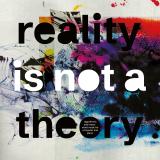
Recorded in concert at the University of Sheffield in March 2025, Reality Is Not A Theory is the first collaboration between Mark Fell and Pat Thomas. Major figures in British experimental music since the 1990s, Fell and Thomas have developed their rigorous practices from radically different backgrounds and perspectives: where Fell’s singular take on synthetic abstraction emerged from Sheffield’s electronic underground, Thomas is a virtuoso improvising pianist steeped in jazz and modernist art music who has simultaneously worked with sampler-based electronics for decades. As the record’s wonderfully academic subtitle explains, we are presented here with two sides of ‘algorithmic and improvised music for computer and piano’, exemplifying both players’ insatiable search for new (and sometimes uncomfortable) playing situations.
The performance begins with Fell’s electronics close to the timbres of acoustic percussion, attacks that suggest wood, metal or glass threaded along a rapid pulse while Thomas focuses on the lowest registers of the piano, deadening the strings. As Fell’s electronics start to ring out and occupy more harmonic space, Thomas turns to wide, repeated clusters, which slowly expand into patterns of chords. Like in his recent solo recordings and his trio work with Joel Grip and Anton Gerbal, Thomas’ playing combines extreme dissonance with a deep lyrical sense. Fell’s work gradually shifts its focus toward drum sounds, drawing on the microtemporal processes that have characterized his practice in recent decades. Heard together with Thomas’ probing piano, the computer sounds call up unexpected associations with the klangfarben antics of improv drummers like Paul Lovens or Tony Oxley. Throughout its second half, the music grows increasingly frenetic, as Thomas sounds out rapid, irregularly repeated figures and beautifully sour chords in the upper register, while Fell’s percussion develops into angular pan-pipe-like feedback and waves of glissandi.
With great confidence and patience, Fell and Thomas often let their individual contributions remain rhythmically distinct and unsynchronised, allowing unexpected correspondence and coincidence to guide the music’s development. Recorded in a hall named after Sheffield steel manufacturer and Master Cutler Mark Firth, the location might suggest a model for understanding how Fell and Thomas interact here: two workers in the same workshop, each immersed in their own part of the production process. Arriving in a striking sleeve designed by Mark Fell, with liner notes by Francis Plagne, Reality Is Not A Theory is an invigorating document of the meeting of two mavericks of contemporary music.
- Jiro Inagaki & Soul Media - No Title
A heretical masterpiece with an overwhelming presence in the history of Japanese jazz. Jiro Inagaki was one of the central figures in the development of jazz rock in Japan. Inagaki, who had doubts about the existing jazz music, turned the helm to jazz-rock at once with this album recorded in 1970. From the opening track "The Vamp" to the closing "Head Rock," Inagaki poured all his ideas and passion into this jazz-rock album that leaves no time to exhale.
Léo Dupleix return to Black Truffle with Round Sky, following the enchanting Resonant Trees (BT119). The composer here performs on analogue synthesizer, harpsichord and spinet as one member of Asterales, a group that brings together four important figures in the international community of musicians working with just intonation: Dupleix, Jon Heilbron (double bass), Rebecca Lane (quarter-tone flute) and Frederik Rasten (guitars). The quartet perform three recent pieces by Dupleix, each of which is like a different view on the same landscape of unruffled calm, where the unique harmonic events made possible by just intonation flicker across melodies and harmonies like light on the surface of water.
The first side is dedicated to ‘Poème d’air’, composed while Dupleix was immersed in the music of 14thcentury ars nova composer-poet Guillaume de Machaut. A sustained study of the ‘sonic possibilities of low-pitched sounds in just intonation’, it begins with a long, rumbling pitch from Heilbron’s bass, soon joined by the organ-like tones of the composer on synthesizer. The piece is made up of cycling sequences of chords, each of which is repeated for several minutes before the music either freezes on a single harmony or silently pauses before the next episode begins. These structures are initially dominated by the bass and synthesizer, with Lane’s pure vibrato-less flute tone and Rasten picked harmonics adding flashes of colour. As the piece develops, flute and guitar become more prominent and the bass climbs to higher registers. The development culminates in a stunning episode around fifteen minutes in where the texture thins out, casting a spotlight on a melodic figure exploiting the uncanny sound of Lane’s quarter-tone flute.
On the second side we are treated to two briefer pieces, closer to the sound of Resonant Trees as they return harpsichord and spinet to the foreground. ‘Ghosts’ centres on a harpsichord melody that slowly expands as it repeats, growing from a haunting six-note cell to a flowing succession of notes whose shape become increasingly difficult to perceive. Alongside this melodic development, an increasingly lush accompaniment grows, with long tones from bass, flute, e-bowed guitar and synthesizer holding notes picked out the harpsichord melody in a swaying harmonic cloud. Dupleix notes that the concluding ‘Round Sky’ was written in the countryside in spring, a circumstance that seems far from irrelevant to the impression the piece makes when its euphonous spinet arpeggios emerge from a gentle synthesizer drone like a flower from a bud. Performed as a duo with Rasten, with both instrumentalists also singing, this title piece exemplifies what makes Dupleix’s music so unique: grounded in a rigorous application of just intonation principles yet as open as Harold Budd or Andrew Chalk to an uncomplicated, intuitive experience of beauty.
- A1: Beginning Again
- A2: Bumpin' On Sunset
- B1: Straight Ahead
- B2: Change
- B3: You'll Stay In My Heart
When Straight Ahead hit the shelves in 1974, it marked another bold chapter for Brian Auger’s Oblivion Express. The band—Steve Ferrone on drums, Barry Dean on bass, Jack Mills on guitar, and Lennox Langton on congas— was firing on all cylinders, pushing jazz fusion into fresh, uncharted territory.
Critics took notice, with Billboard praising the album as “excellent in development and inventiveness, ” and it found its way onto multiple charts at once.
The journey begins with “Beginning Again, ” a lively opener built on Langton’s congas and Ferrone’s muscular groove. Auger’s electric piano sparkles here, immediately setting the album’s adventurous tone. Then comes their take on Wes Montgomery’s “Bumpin’ On Sunset. ” Darker in mood and drenched in atmosphere, Auger stretches out into improvisation while still honoring Montgomery’s spirit. The interpretation struck such a chord that, years later, Wes’s widow wrote to Auger to tell him it was her husband’s favorite version of his much-loved tune.
The title track, “Straight Ahead, ” shifts gears into funk, showcasing the group’s ability to slide effortlessly between genres. “Change” pushes further, blending rock’s raw energy with jazz’s improvisational freedom, driven by Auger’s command of the Hammond organ. To close, “You’ll Stay in My Heart” brings the tempo down with a tender, soulful ballad—an intimate ending to an album full of bold explorations.
At the time, reviewers hailed the record as a gem. One called it “a minor masterpiece of incredibly engaging and melodic keyboard-centric jazz-rock fusion. ” Another singled out “Bumpin’ On Sunset” as “the best reason to own this recording.”
Half a century later, Straight Ahead still resonates. It captures that fertile moment in the 1970s when jazz, rock, and funk were colliding, and artists like Auger were busy redrawing the map. To this day, it stands as proof of Auger’s fearless curiosity and his knack for breaking boundaries—music that looked forward then, and still feels ahead of its time now.
Unchained is the long-standing guitar-based project of Nate Davis, originally from Providence, RI, and based in France for over a decade. In his two most recent LPs—Gabbeh (2024, A Colourful Storm) and Frontalier (2025, Stern Records)—Davis strives to describe a new path for outsider jazz instrumentalism that remains committed to harmonic and rhythmic form while placing greater emphasis on sonic texture through experimental production techniques.
Release Description:
Unchained—a name which at the project's inception or on earlier recordings spoke perhaps to the ecstatic saturation of high gain guitar—has over the past three albums (N.D. Visitor, Pic, and Gabbeh) come to represent more and more an acknowledgement of and sensitive remove from a crashing world. An excuse of oneself from trend towards a siloed artistic development.
On Frontalier, Nate Davis crosses further into this patient personal lexicon of guitar composition, presenting a new set of richly developed songs and leaps in arrangement which may very well shock Unchained fans the world over. The sympathetic geometric guitar themes of the earlier second-period Unchained style are almost entirely absent, making way for a fully realized presentation of the jazz, MPB, and fusion influence present to varying degrees on the previous three albums. Davis's keen sense of melody and songcraft have never been stronger, here landing on music which is at moments evocative of Wes Montgomery, Allan Holdsworth, Jobim, or the jazzier impulses of Lô Borges. Distinct in Davis's music, however, is what these references might belie: an innate tending towards repetition as an affective tool—one which has less to do with the aesthetics of the scene from which the project emerged than it does with devotional prayer. In this way it feels as if Unchained has always been music for living. What was once a maximalist expression of youth has matured into the sound of living with and in the world and an empathic transmuting of all the joy, disappointment, and ambivalence that comes with it. Songs that feel like the sort of thinking one does looking out the window on a long train ride, or the routinism of internal and external life and the breaking out of it. As much as it will be recognized by the fandom as a significant step forward, Frontalier serves also as a perfect gateway for new listeners to the singular music of Unchained.
- Beginning Again
- Bumpin' On Sunset
- Straight Ahead
- Change
- You'll Stay In My Heart
When Straight Ahead hit the shelves in 1974, it marked another bold chapter for Brian Auger"s Oblivion Express. The band - Steve Ferrone on drums, Barry Dean on bass, Jack Mills on guitar, and Lennox Langton on congas - was firing on all cylinders, pushing jazz fusion into fresh, uncharted territory. Critics took notice, with Billboard praising the album as "excellent in development and inventiveness", and it found its way onto multiple charts at once.
- Seabird
- Estoy Brillando
- Yo No Sé Señor
- Cariño Grande
- A Beautiful Day
- Something Going
- The World Is Getting Worst
- We Wish To Be Listened
- Mujer
- Guess I'm Going Away
- Tiempo En El Sol
- It's A Sin To Go Away
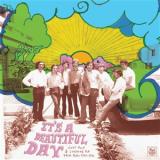
"It's a Beautiful Day" brings together 12 outstanding songs recorded between 1971 and 1976, reminiscent of sunshine pop, psych folk and soft rock with Peruvian touches, taken from extremely hard to find records, some of them reissued here on vinyl for the first time. A mindblowing look at a really stunning musical moment in Peru. Unusual instruments and exceptional vocal play also feature in the ten original songs and two cover versions, all performed by Lima-based groups. MAG has been, since its foundation in 1953, an essential label in the music scene of Peru, allowing the development of the careers of both tropical artists and musicians of other genres. At the head was Don Manuel Antonio Guerrero, its founder, whose name comes from the acronym of the label itself (M.A.G.). In 2021 MAG was acquired by the Spanish company Distrolux SL, owner of the Munster and Vampisoul record labels, after years of previous collaborations in which some of the most emblematic titles in the catalog were already reissued for the international market: Nils Jazz Ensemble, Sonora Casino, Traffic Sound, Al Valdez, Pax... Following our recent release "14 MAGníficos Bailables", comprising some of the best tropical music on MAG, this new compilation brings together 12 songs recorded between 1971 and 1976, reminiscent of sunshine pop, folk psych and soft rock but with Peruvian touches. The lyrics range from youthful reflections, environmental awareness, paradigm changes to all shades of love that the youth of the day experienced. Unusual instruments and exceptional vocal play also feature in the ten original songs and two cover versions, all performed by Lima-based groups.
- A1: This Is A Never Ending Story (You Just Need To Close It)
- A2: Hidden Road (For Yoo Jae-Ha)
- A3: It Must've Been The Sunset (That Altered My Memory From That Day)
- A4: Good Morning, Harrison, It's Time To Go
- A5: Let's Walk Down To The Swamp Together
- B1: Rainy Night Ride With Roy
- B2: Crows Over My Shoulder (Take Me)
- B3: Spiral Dance (Up Or Down, I'm Not Too Sure)
- B4: Dear Oddie, Today Rainbows Are Falling From The Sky
- B5: Lying Here Half Awake, I Hear Kids Outside Laughing With Their Hearts
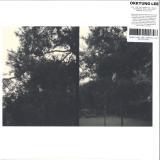
Unlike anything we have heard from her before, Okkyung Lee returns to Shelter Press with "Just Like Any Other Day: Background Music For Your Mundane Activities", a deeply intimate body of recordings at the juncture of ambient music, minimalism, and the baroque, that stands as radical intervention with what experimental music can be, and the place that organisations of sound occupy in our lives. For more than two decades, Okkyung Lee has stood at the forefront of the most radical trajectories of experimental music: a virtuosic cellist and improviser, renowned for her creative rigour and emotive depth. Particularly noteworthy for her range, dexterity, and adaptability, over the last five years Lee's output has revealed unexpected shifts and developments that move far afield from the realms of free improvisation for which she is most well known. 2020's "Yeo - Neun", a heart-wrenching, ambient chamber work - drawing inspiration from the Korean popular music of her youth - was issued by Shelter Press to great critical response, followed closely by "Teum (The Silvery Slit)" - one of a series engrossing electroacoustic works created at Groupe de Recherches Musicales in Paris - on Portraits GRM, and then "Na-Reul" in 2021, regarded by Lee as a closing statement of more than two decades living in New York, which set the precedent of her allowing her emotions to fully occupy the forefront of the music for the first time. Marking her return to Shelter press, "Just Like Any Other Day": Background Music For Your Mundane Activities", encounters Lee upturning the apple cart once again, weaving a profoundly intimate artistic statement on completely unexpected terms. Like its three aforementioned predecessors, "Just Like Any Other Day" belongs to broadening shift in Lee's approach to composing that roughly aligns with her return to her native South Korea, having lived in the United States since her late teens. Infused with a deep reengagement with her own culture and relationship to memory, it is equally a response to those critical challenges and questions provoked by significant life change. Worked on in isolation, and continuously returned to, over the course of four years, the album's nine pieces began with a simple recognition that experimental music is not always what we imagine it to be. It is a practice and a pursuit - a music for which, at its inception, the outcome is unknown - rather than an idiom defined by certain syntaxes, approaches, and qualities of structure and sound. From this departure point, Lee began to inquire after the utility of music itself: what is it for, what does it do, and what place does it (or can it) occupy in our lives? This solitary and durational journey, each composition gradually moving through different phases and evolutions over years, led Lee toward uncharted ground: a music that is not only playful, introspective, and seductive, but also intended to provoke a relationship to experimental music beyond its normative expectations. Rather active or deep listening, it pursues passive listening. Rather than a grand statement, it is discreet. Rather than virtuosity, it embraces the elegant and direct. Even more strikingly, for the first time, the music of "Just Like Any Other Day" encounters Lee leaving the cello entirely behind. Created at home on keyboard, computer, and an inexpensive cassette recorder, "Just Like Any Other Day" presents a remarkable form of ambient music - organisations of sound that become their own environment, to be occupied - intended, as the album's subheading infers, as Background Music For Your Mundane Activities. An expansion of the creative pathways opened by the Korean pop imbued compositions of Yeo - Neun, aspects of electronic process explored by "Teum (The Silvery Slit)", and the emotive foregrounding of "Na-Reul", each of the pieces presented across the two sides of "Just Like Any Other Day" implies something far greater than the limits of its own temporarily: a mood, provocations of memory and place, mirrors for the solitude within which it was made, and palpable emotion lingering just out of grasp. For Lee, each of the album's compositions could be continued or looped for an indeterminate duration: straddling a ground between the minimal and the baroque, enveloping the listener in endless cycles of appreciating, repetitive and rhythmical notes, flirting with the melodic and implying a disembodied imagism that borders on the profound. Remarkably beautiful and direct, Okkyung Lee's "Just Like Any Other Day: Background Music For Your Mundane Activities" - issued by Shelter Press on vinyl - represents a radical reconfiguration of experiential music, stripped to its bare essence in defiance of the widely presumed aesthetic signifiers. Unlike anything we've heard from her before, this immersive body of intimate recordings not only reveals new dimensions of Lee's striking range as an artist, but also of how we might regard and occupy music itself: an ambience to lived and felt like a second skin.
This LP features Christmas music for the piano in a timeless journey through the decades and centuries. These songs have been through a remarkable evolution over the course of several centuries, with the changes they have undergone reflecting the shifting musical styles and cultural influences that prevailed in various times. Composers such as Irving Berlin created Christmas songs centred around the piano that went on to become instant classics. An example that epitomizes this era is Irving Berlin’s ‘White Christmas’. The growth of Christmas carols arranged for piano is a monument to the everlasting spirit of the Christmas holiday as well as the development of musical styles throughout the course of history. On Merry Christmas Pianomania, Jeroen van Veen performs in his signa- ture focused, serene minimalist style, reimagining Christmas music from medieval carols to modern jazz-inspired pieces.
Jackie Mittoo’s ‘Reggae Magic’ is a new collection from the great Jackie Mittoo. The album features a mixture of classic tunes and rarities from the period 1967-74, when Mittoo was at the height of his musical powers. Mittoo’s solo career began after the end of The Skatalites in 1965. He began pushing new musical boundaries, creating a uniquely identifiable organ-led funky reggae sound that owed as much to Booker T and The MGs, Jimmy Smith, Stax and Motown as to the post-ska and emergent rocksteady island rhythms of Kingston, Jamaica. His solo work at the legendary Studio One spanned seven albums and hundreds of singles.
Aside from producer and founder Clement ‘Sir Coxsone’ Dodd, it’s hard to think of anyone more central to the sound and success of Studio One than Mittoo; keyboard player extraordinaire, songwriter, arranger, musician, truly the Keyboard King at Studio One. Jackie Mittoo had been the youngest founding member of The Skatalites (at age 16), probably the most important group in Jamaican music. After they split, he became leader of the three pivotal groups at Studio One – The Soul Brothers, The Soul Vendors and Sound Dimension. He also became musical director for Studio One, helping create countless hits for singers Ken Boothe, Bob Andy, The Wailers, John Holt, Delroy Wilson and more – unforgettable tunes like Alton Ellis’ ‘I’m Still in Love with You’, Marcia Griffiths’ ‘Feel Like Jumping’, The Heptones’ ‘Baby Why’ and others. Between 1965 and 1968, many of the tunes created at Studio One can be attributed to Mittoo – timeless instrumental tracks, recorded either under his own name or those of The Soul Brothers, Soul Vendors and Sound Dimension, that have become the basis for literally 1000s and 1000s of Jamaican songs over many decades, giving the music an unsurpassed longevity.
The endurance of his music was as a direct result of significant developments in Jamaican music in the 1970s, namely the creation of three important new styles: Dub, Deejay and Dancehall. In the early 1970s Mittoo’s instrumental tracks were used as the musical source for a series of classic Studio One dub albums. At the same time Deejays at Studio One, including Dillinger, Prince Jazzbo and Dennis Alcapone, began toasting over these same popular rhythms to create their own new songs. In the mid-70s, a new generation of Studio One singers and deejays, including Sugar Minott, Freddie McGregor, Johnny Osbourne, Michigan & Smiley and others, began once again creating new melodies over these original instrumentals, signalling the birth of a new Jamaican style that became known as ‘dancehall’.
As dancehall swept across the island, rival producers copied these now classic rhythms. These original Jackie Mittoo-driven tunes spread like a virus throughout Jamaican music; be they the instrumental cuts to tunes such as Alton Ellis’ ‘Mad Mad’ , ‘I’m Just A Guy’, Larry Marshall’s ‘Mean Girl’, Slim Smith’s ‘Rougher Yet’, and instrumentals such as Mittoo’s classic ‘Hot Milk’ or ‘One Step Beyond’, The Sound Dimension’s ‘Real Rock’, ‘Heavy Rock’, ‘Full Up’, ‘Drum Song’, ‘Rockfort Rock’ … and the list goes on. These tracks became a constant soundtrack to the island, emitting from the ever-present sound of speaker boxes strung up around dancehalls. This recycling travelled even farther afield; The Sound Dimension’s instrumental ‘Real Rock’, updated by Willie Williams on his classic ‘Armageddon Time’ was in turn covered by The Clash. Lily Allen sampled Mittoo’s debut solo single ‘Free Soul’ for number one hit ‘Smile’; Dawn Penn’s ‘You Don’t Love Me (No, No, No)’, accompanied by The Soul Vendors, was revived by Penn and producers Steely & Cleevie in 1994, since covered by Rihanna, Ghostface Killah, Stephen Marley, Damian Marley and Beyonce. And so it goes; an endless time-leaping, continent-hopping diasporic musical map of the world with all roads essentially leading back to one man – Jackie Mittoo.
- Sorry We're Closed (Reveal Trailer)
- Main Menu
- Jenny (Underground Station Boss)
- Dying Petals Theme
- Town
- Underground Station
- Apartments
- Open Your Eyes (Car Radio)
- Culture Shock
- Bedroom
- Matilda (Aquarium Boss)
- Aquarium
- Oakley's Diner
- Darrel's Bar
- Toll (Dinner With The Dutchess)
- Crypt
- Church
- The Hotel
- Dream Eater
- Dream Eater's Palace
- Churchyard
- Hotel Ascent
- The Final Battle
- Clarissa (Credits Song)
- Jenny (Underground Station Boss) (Instrumental)
- Open Your Eyes (Car Radio) (Instrumental)
- Matilda (Aquarium Boss) (Instrumental)
- Clarissa (Credits Song) (Instrumental)
- Dream Eater (Palace Boss) (Instrumental)
- Dream Eater (Palace Boss) (Change Version)
- Dream Eater (Palace Boss) (Rebirth Version)
Double LP pressed on transparent neon pink and opaque neon green vinyl Including exclusive unreleased tracks Holographic gatefold sleeve Reversible artwork concept After months of overwhelmingly positive reviews on the game and half a million streams on the digital album, it is finally time to announce the physical release of the original soundtrack for Sorry We're Closed. Akupara Games, à la mode games and Black Screen Records put every effort into the vinyl that lives up to the one-of-a-kind nostalgic, survival horror game with rich lore, deep characters and multiple endings. While players explore unsettling locations in Sorry We're Closed, they're being haunted by the chilling tracks, created by C.Bedford, Okumura, Devix and Catton Arthur. The soundtrack is as diverse as its artists: From the atmospheric and minimalistic electronic pieces by C.Bedford, who involved in the development of the game, to the full-on hip hop tracks by Okumura, Devix is adding a sensible folk track, while Catton Arthur is finally throwing in some heavy guitars to complete this excentric and highly enjoyable mix. For the vinyl release of the Sorry We're Closed soundtrack, the teams of à la mode, Akupara and Black Screen created a package that has its twists and turns. It comes with colourful neon LPs, transparent pink and opaque green, that are housed in a shiny holographic gatefold sleeve that you can turn around to see a second, alternative artwork.
- My Lil' Shocker
- Sweet & Center
- Oh Below
- I'm Just A Bag
- Dumb In The Wings
- Whoopee Invader
- Lay Lady Lay
- Tan Loves Blue
- Untitled
- Touch Me Judge
Their final LP, recorded with Jeremy Lemos, Purple On Time dropped in late 2003, and found new drummer Adam Vida cannily replacing the fairly departed Pat Samson. With consolidations and developments heavy on the ground, the band once more surged and retarded in near-orchestral precision, as Johnson"s voice swooped through fresh ranges. The songs were tangy, more rock than ever, yet just as potent when it came to drawing forth that thrusting, demented hip-shake that they induced in their faithful. 180-gram DELUXE with a die-cut sleeve and contains an extra song and a poster.
From the mind behind Iceman Records comes ICELAB — a fresh new imprint focused on today’s producers, not the 90s/2000s legends.
No reissues. No nostalgia. Just forward-thinking club music.
After years of development and quiet dedication, Sugar Free proudly presents her official debut release ’Disociando’.
These four tracks, road-tested and familiar to those who’ve followed her, have finally taken their definitive form. The EP explores the dancefloor as a space for presence combining introspective textures with straightforward rythms, reflecting Icelab’s exploratory vision.
Mwandishi is one of Herbie Hancock's first departures from his traditional jazz sounds. The album which was recorded in a single session on New Year's Eve is a much more spacier effort compared to his earlier works, created by Hancock's us of electronic effects devices. His sextet is the most progressive ensemble he played with and he took the next step in the future of jazz. The music on Mwandishi is beautifully atmospheric and the long tracks leave plenty of space for improvisations by the group. A fantastic recording with sonic layers of earth, existence and expression.
Herbie Hancock is one of the most prolific jazz pianists of the 20th century. A child prodigy, he played with the greats such as Donald Byrd and Miles Davis. As he was a bit of a geek, he enjoyed gadgets & buttons and he was one of the first to embrace and master the electric piano, but he always stayed true to the acoustic sound. In fact, he always bounced back and forth between his electronic and acoustic sound, touching upon almost every development in R&B, Funk and Jazz while retaining an original and distinctive voice.
Spandau Ballet, one of the most influential bands in British music, announce the release of their definitive early years collection, "Everything Is Now – Vol 1: 1978-1982" - a comprehensive 9-disc box set featuring their groundbreaking first two albums alongside a wealth of previously unavailable material. It includes a beautiful 44 page book with original photos from fellow Blitz Kid Graham Smith and new commentary from the whole band.
Released September 12th on Parlophone, this meticulously curated collection captures the band's origins and meteoric rise from Blitz Club favourites to chart-topping innovators. The set includes their seminal albums "Journeys To Glory" (1981) and "Diamond" (1982) on vinyl, plus six CDs of singles, remixes, BBC sessions, demos, and a Blu-ray of Dolby Atmos mixes, videos and rare live footage.
This collection showcases the band's evolution through their formative and revolutionary period, from the electronic-infused new wave of early singles like "To Cut A Long Story Short" and "The Freeze" to the funk-influenced sophistication of "Chant No. 1" and "Instinction." They were simply the most cutting edge, futuristic band in the world, at the centre of a creative scene that defined the 1980s.
This box set features all the band's early classics including "To Cut A Long Story Short," "Chant No. 1," "Muscle Bound," "Paint Me Down," “Instinction” and "She Loved Like Diamond," and presents multiple versions of tracks that trace their development from initial demos to extended 12" club mixes.
The Blu-ray component includes Dolby Atmos and stereo remixes by acclaimed producer Steven Wilson, alongside original music videos, BBC TV appearances and the complete 56-minute concert from New York's Underground Club in 1981.
"Everything Is Now – Vol 1: 1978-1982" stands as the definitive document of Spandau Ballet's revolutionary early period, when they helped define the sound and style of a generation.
CD1: Journeys To Glory Era Singles, Remixes & Versions
CD2: Diamond Era Singles, Remixes & Versions
CD3: Diamond – 12” Singles Box Set
CD4: BBC Session 1981 / BBC In Concert Bournemouth 1982
CD5: BBC In Concert Paris Theatre 1982
CD6: Demos
Blu-Ray (Disc 7): Dolby Atmos, Promos & Extras
LP1 (Disc 8): Journeys To Glory
LP2 (Disc 9): Diamond
Oscar-nominated composer Rafiq Bhatia has only deepened his status as "one of the most intriguing figures in music today...who refuses to be pinned to one genre, culture or instrument" (New York Times). On his new album Environments out on September 12th, Bhatia makes sculptural, meticulously crafted music that finds common ground among ecstatic avant-garde jazz. New technological integrations have allowed Bhatia to merge his last decade of development as an electroacoustic composer back into his practice as an improvising guitarist, using real-time sampling and manipulation to express and develop multiple worlds of sound at once. Rafiq has previously co-scored Marvel"s Thunderbolts and the Oscar-nominated soundtrack for Everything Everywhere All AT Once with his bandmates, Son Lux.
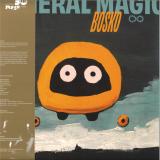
Editions Mego presents Bosko, landing exactly 30 years after the initial General Magic flights into the fantastic; the legendary first Mego release, a collaboration with Pita whereby all sounds were harnessed from the buzzing, drinking, humming sounds of fridges MEGO 001 General Magic & Pita and a 12” with Elin called Die Mondlandung (The Moon Landing) MEGO 002 which embarked on a minimal techno template so austere and strange it was one of the historic progenitors of austere and wonky rhythms alongside Sakho and other European explorers.
The initial return of the playful and mystical Austrian outfit General Magic came with the 20th year anniversary vinyl reissue of their classic debut Frantz eMEGO 010. A record so audacious and playful it still baffles as much as it entertains. At some point whilst working on this reissue GM’s Ramon Bauer and Andi Pieper were spurred on to rummage around with ideas and tools once more and after more than two decades of inactivity sonic sorcery was conjured once again. Live shows in honour of Peter Rehberg were performed in Vienna and London. Softbop, a limited risograph collaboration with Tina Frank came with the first new recordings as a digital download came out discreetly online. The first full length album following Rechenkönig in 2000 MEGO 032 “Nein Aber Ja” released in 2023 on Finlay Shakespeare’s GOTO Records on CD and cassette. An ongoing series of mix tapes online further highlights their interests encapsulating a new found angle on electronic mayhem. All of these elements retain the wildly eclectic and ecstatic glow that only they can harness and hand out to an unprepared world.
Now, we have General Magic’s second official full length comeback recording, Bosko. The new album is initially notable prior to the needle hitting the wax or the cursor identifying a track due to the artwork. Made by long term collaborator Tina Frank, this is Frank’s first analogue artwork, with a painting of a happy/nervous machine thing hovering in a landscape of no discernible identity. It’s quasi science fiction hovering amongst the potential for fun. Suited to the music? Natürlich.
Bosko sees Bauer and Pieper update and reframe their original investigations with a fresh supply of head scratching, heart racing tunes that hit the inexplicable with a wild mesh of drums, pianos, synthetic voices and all manner of immaterial sonic play. Startling sonics shock the ears on Club Duchamp which sounds like a conversation between synthetic adult ants in an environment still in development. Elfer features vocals supplied by a female-ish voice who, whilst grappling melody, has trouble executing a firm identity. Noorenhalt catapults along a mainframe of syncopation so unwieldy it feels like the voice, which is utterly alien, provides the only comfort. Seite 5 inhabits a fuzzy zone where a synthetic Horn of Jericho type ambience competes with rhythms never quite sure of who they are. Rise of the Ombré raises the spectral dread. Is this Science Fact? Absolutely nothing within Bosko is predictable.
The amount of change in the miasma of existence and the things we touch in order to make things has shifted so exponentially we are at the point where minds are starting to glaze over. All of this makes the return of the always original, always surprising, always fresh and exciting General Magic totally in tune with the artificial intelligent apocalyptic age we currently inhabit. The tools may have changed but the wonderfully warped gaze of Bosko offers a fresh new vision of perplexing funk and robotic punk.
Ruben Rada played a pivotal role in the development of Uruguayan music. By blending Afro-Uruguayan traditions with rock, soul, jazz, and funk, he paved a new musical path that began in the 1960s and continues to evolve today. Throughout his career, he has consistently been surrounded by talented musicians who have been integral to his sound. This was especially true with Daniel "Lobito" Lagarde, bassist and founding member of the iconic band Totem in the early 1970s; Ricardo Nolé, keyboardist, arranger, and musical director of Rada's band in Argentina during the 1980s; and Nelson Cedréz, the drummer who has been by Rada's side since the 1990s. In 2016, these three musicians reunited to form Rada's Old Boys, releasing an album of jazz-infused reinterpretations of Rada's songs that earned rave reviews. Now, they return with Manos, a bold new album that reimagines Rada's works from every phase of his career, featuring deeply personal renditions and a special guest appearance from Rada himself on one track.
Soul Media, led by Jiro Inagaki, played a part in the development of jazz rock in Japan. This work, "Memory Lane" recorded in 1980, was the final work under the same name. Inagaki said about this work, "We tried to create this work while predicting the fate of fusion music" and it is true that the sound is completely different from ordinary fusion. The mellow and emotional "Memory Lane" the stormy and refreshing "I Will Give You Samba" and the groovy and edgy "Take My Hand". The sound that was created with his ally Norio Maeda, which looks , is of an extraordinary level of perfection in the songs, arrangements, and performances. It is a masterpiece that is still vivid and fresh when listened to today.
text by Yusuke Ogawa (UNIVERSOUNDS/DEEP JAZZ REALITY)