For a quarter of an hour, Zürich was the navel of the world. Let's look back: at New York's CBGB's, pre-punks were shredding away, Malcolm McLaren, as a man with a fine-tuned taste for the hip, imported the sound to London, where his sweetheart Vivienne Westwood dressed the test-tube band The Sex Pistols. A few pop magazines later (we are in an analog world!) punk bands sprouted everywhere, like shiny pimples on poorly fed teenagers. Contrary to legend, even back then, it was often those with a musical background who were the most successful. One such example, Henrich "Wüste" Zwahlen, who had learned the violin, attended a jazz school and went into prog-rock before joining the Nasal Boys, one of the first punk bands in Zürich. The scene included the female band Kleenex (cover: Fischli of art heroes Fischli/Weiss), whose minimalism was praised by the London music press, while the world's most important rock theorist, Greil Marcus, wrote an ode highlighting Zürich's role as the birthplace of Dadaism. A fertile ground for the militant youth movement that exploded in 1980 and stirred up the city of banks, protestantism and boredom with raw wit and expressive violence. Gathering at concerts of local bands and fueled by endogenous and artificial substances - they paid homage to exuberance and self-indulgence.
The mantra of "everything-is-possible" was driven forward on the musical front by progress in terms of means of production: analog electronic instruments were no longer reserved for hippie nerds, who sat in front of large plug-in boards like autistic-psychedelic switchboard operators connecting cables for their sound carpets. Now snazzy stage personnel elicited fast-paced sounds from handy devices often made in Japan. Kraftwerk was fashionable, the Zurich duo Yello experimented with new synthetic sounds, and the groundbreaking album "Alles Ist Gut" by the Düsseldorf based duo D.A.F. (Deutsch Amerikanische Freundschaft) was released, which chanted its program of provocation times danceability with lines such as "Tanz den Jesus Christus, tanz the Mussolini, tanz the Adolf Hitler." In England meanwhile, electronically backed New Romantic bands were replacing New Wave. The Human League, Heaven 17, Duran Duran, OMD, Depeche Mode or Visage stormed the charts.
In Zürich's underground, the duo Aboriginal Voices caused a stir at that time. A couple, good-looking, styled, looking cool into the cold neon light, with a danceable beat and sequenced electro sounds, to which Micheline gave a very unique touch when she sang in French and English. Micheline had a classical piano education, had left home early, worked as a lighting technician in a strip joint and at Booster, the hottest boutique in town (one of the relicts that still exists). Voilà: a musician who was as stylish as she was tough. She was already playing with Wüste in the band "Doobie Doos", a band where everyone played an instrument they didn't master. In 1980 the Aboriginal Voices were formed, initially with vocalist Magda Vogel (of later UnknownmiX fame), who was trained as a classical singer.
Frustrated by organizational friction and constant hassles with band lineups, Wüste and Misch decided to do everything as a twosome: self-mixed, self-styled, self-produced. With the top-of-the-line Linn drum machine clocking the beat, Wüste's guitar and Micheline on the Yamaha synthesizer created a unique sound of danceable electronic music. Whereby the Aboriginal Voices acted as a kind of proto-influencer, receiving the latest equipment to try out, especially since they made it a point not to work with tapes, but to design everything for live shows. They had an interface built for the legendary Roland MC-4B, who sequenced the modular Roland System 100M but where one output controlled a light show synchronized with the sound. A pioneering act that fit well into the DIY spirit of punk, with its self-distributed tapes and fuck-you attitude towards the cretins of the music industry. Consequently only two cassettes and an EP were released. There was something futuristic about the sound, the vestiary style and the electronics, while the attitude remained rebellious. Of course something so deeped in the Zeitgeist wasn't meant to last. Wüste moved to New York, Micheline stayed in Zurich, both still active in the music scene to this day.
Sven Regener, head of the band Element of Crime and one of Germany's most successful pop writer said a few years ago when asked if he knew of any Swiss music: "Of course! In 1983, a Swiss band called Aboriginal Voices played with us at a festival in Zurich. Great, avant-garde electro-pop. That was my first encounter."
If you ever saw them live, you never forgot them, and so over the years you belonged to a teeny-tiny circle of insiders, happy to be joined after all these years by new aficionados who appreciate the sound of that quarter-hour, when Zurich was ravishing, creative and exciting.
- Thomas Haemmerli
quête:devi
- A1: Cerebro, Orgasmo, Envidia & Sofía
- A2: Ante La Duda Todo
- A3: Lavapies (Jesus Is My Coach)
- A4: Trivial Polonio
- A5: Chupame La Mente Cable
- A6: El Toscano Del Papa
- B1: Lovin' You
- B2: Vagabundo
- B3: El Evangelio Según Mi Jardinero
- B4: Presiento Que Esta Noche Soy Un Lirio
- B5: Ocelote Alondra
- B6: Viajar Contigo Es Como Escuchar La Vida Secreta De Las Plantas
- B7: Budismo Tropical
- B8: Sin Título
Landmark albums deserve to be released on Glorious Vinyl, and that's why Lovemonk is presenting the first ever vinyl edition of Martín Buscaglia's 2006 corker, El Evangelio Según Mi Jardinero.
"Brain, brain, thanks for being in my head and not in my knee, if not, I wouldn't be able to kneel down to pray or keep that promise I cannot reveal". Those are the first words (translated from Spanish) of 'Cerebro, Orgasmo, Envidia y Sofía', the song that kicks off El Evangelio Según Mi Jardinero, the fourth album by Uruguayan pop genius Martín Buscaglia and his second on Lovemonk.
El Evangelio is a wonderful collection of deliciously cheeky and brutally honest songs composed by a man who was lucky enough to grow up in a home where several of his home country's cultural greats (Eduardo Mateo, Urbano Moraes, Rubén Rada, all three of legendary candombe innovators El Kinto, and Hugo Fattoruso, of Opa) would drop by to chat, write and hang out. They, and other heroes like Marvin Gaye, Tom Waits, Stevie Wonder, and Jorge Ben, have had a lasting influence on Martín's music, and it's no different on El Evangelio. Martín wrote most of the songs and plays all kinds of instruments, conventional and not so conventional (the ravanahatha - an ancient bowed, stringed instrument used in South Asia, different toys such as the Simon device and a carousel), and there are cameos by the likes of Arnaldo Antunes, Nicolás Ibarburu and Juana Molina.
El Evangelio Según Mi Jardinero is a dazzling piece of work that will make you dance your ass of and take you to place you haven't visited since childhood. Even 12 years on, the at times complex songs actually sound deceptively simple and stunningly fresh.
- A1: (I Can't Get No) Satisfaction - Ashley Mcbryde
- A2: Honky Tonk Women - Brooks & Dunn
- A3: Dead Flowers - Maren Morris
- A4: It's Only Rock ?N' Roll (But I Like It) - Brothers Osborne & The War And Treaty
- B1: Miss You - Jimmie Allen
- B2: Tumbling Dice - Elle King
- B3: Can't You Hear Me Knocking - Marcus King
- B4: Wild Horses - Little Big Town
- C1: Paint It Black - Zac Brown Band
- C2: You Can't Always Get What You Want - Lainey Wilson
- C3: Sympathy For The Devil - Elvie Shane
- D1: Angie - Steve Earle
- D2: Gimme Shelter - Eric Church
- D3: Shine A Light - Koe Wetzel
Zur Feier des 60-jährigen Jubiläums der Rolling Stones
haben sich einige der größten Country-Stars für Stoned
Cold Country zusammengetan, ein Tribute-Album, das bis
zum Rand mit neu interpretierten Versionen des Katalogs
der legendären Rockband gefüllt ist. Die von Robert
Deaton produzierten Künstler - Jimmie Allen, Brooks &
Dunn, Brothers Osborne, Eric Church, Steve Earle, Elle
King, Marcus King, Little Big Town, Ashley McBryde,
Maren Morris, Elvie Shane, Koe Wetzel, The War And
Treaty, Lainey Wilson & Zac Brown Band - haben alle
ihren eigenen Stil in die Musik der Stones einfließen
lassen und so eine kraftvolle Hommage an eine der
beständigsten, wegweisendsten und einflussreichsten
Bands der Welt geschaffen.
Die auf STONED COLD COUNTRY vertretenen Künstler
haben zusammen über 77 Mio. Social Followers und 66
Mio. Spotify-Hörer!
- A1: Fear & Wonder
- A2: Blessings Upon The Throne Of Tyranny
- A3: Kings Of The Carnival Creation
- B1: Stigmata - The Apostasy
- B2: Architecture Of Genocidal Nature
- B3: Puritania
- C1: Indoctrination
- C2: The Maelstrom Mephisto
- C3: Absolute Sole Right
- D1: Sympozium
- D2: Perfection Or Vanity
- D3: Burn In Hell
- D4: Devil's Path
Classic 5th studio album (2001) from Norwegian symphonic Black Metal band, now remixed and remastered.
The next EP on Blank Mind comes from DJ ojo. His first fully- fledged EP is the result of a mission to find balance between warmth and weirdness, structure and disorder; resulting in dripping, humid tracks with presence and a subtlety that holds sway well beyond the edge of the dancefloor.
From the crisp percussion, and elastikated synths that form ‘Coiled up’ to the furtive corridors of dubby drums and space of ‘Precise device’, there’s a staggering level of detail at work in ojo’s microcosms. Funkiness abounds in the accents on the grooves and the garnishes which quiver in and out, and quite
often you’ll hear motifs which call to mind something classic, but rendered wholly new. Take the steppas impressions drizzled into dislocated soundsystem flambé ‘Skip top’ on the B2 - a prime example of how to trigger a dopamine response without repeating someone else’s trick.
Drumcode’s beloved A-Sides compilation makes a welcome return after a two-year absence, with a mammoth 25-track feast covering every shade of the techno spectrum split across seven, 12 inch parts. The project was devised in 2012 as a way of showcasing the wealth of strong material Adam Beyer receives each year, which due to Drumcode’s busy release schedule, might not otherwise find a home on the label. Since then, it’s grown to become an essential fixture on the techno release schedule and a marker for where the genre stands in any given year.
Leading the A side on part 5, an immersive journey through the depths of techno, courtesy of Juliet Fox via ‘Evolution of Thinking’. Up next, Thomas Hoffknecht lets loose a captivating warper, ‘Break Free’. On the B side Timmo goes full throttle with ‘Community Tool’ as Andres Campo matches the pace with the unshakable beast ‘Cyclops’.
140-Gram, “Limeade” colour vinyl variant, direct to board Jacket. Features the original album track list using the (2020) 50th Anniversary remastered audio.
In 1970, the Grateful Dead pulled off a feat that that few bands ever achieve, and incredibly, they did it twice. After June 1970's release of Workingman's Dead, the Dead had arrived. An album that would remain in the upper echelon of Rolling Stone’s "best albums of all-time" lists for the next 50 years, the world now knew about the Dead. And remarkably, the Dead not only did it again less than six months later, by many accounts they outdid themselves with the follow-up release in November 1970 of American Beauty.
The album's 10 tracks include many of the Dead's best-known, most-loved, and most popular songs both on record and in concert for the next 25 years. An album that includes Box Of Rain, Friend Of The Devil, Sugar Magnolia, Candyman, Ripple, Brokedown Palace, Attics Of My Life, and Truckin' looks more like a greatest-hits compilation than a second album of 1970, and yet American Beauty demonstrates a band unable to slow down in terms of the quality of its writing, recording, and performing.
Lawrence Hayward knew that he wanted to be a pop star as a teen, and he devised a plan to release ten albums and ten singles over ten years to make that dream come true. A particular and determined individual, he would only be known as Lawrence from that day forward. His hopes for stardom would be pinned on his newly formed band, the succinctly named Felt. Soon signed to Cherry Red Records, Lawrence’s achingly cool vocals and the group’s way with walking melodies were evident on their debut for the label, “Something Sends Me To Sleep.” This compilation collects material from Felt’s Cherry Red period of 1981 to 1985, kicking off with that confident start, assembling numerous high points, and closing with their biggest hit, “Primitive Painters.”
This phase of the band is defined by the songwriting partnership and unique interplay of Lawrence and guitarist Maurice Deebank, with Deebank’s stylish and confident playing the envy of many of their counterparts. He delivers a constant string of shimmering hooks that wrap themselves around and over top of Lawrence’s more traditional beat combo song structures, as if trying to fit four songs worth of ideas into a pre-set radio friendly cutoff time. It works wonderfully as Lawrence always counters with a solid bedrock.
In one of many brushes with the brass ring, in 1984 Felt recorded versions of “Dismantled King Is Off The Throne” and “Sunlight Bathed The Golden Glow,” for the newly formed and Warners-backed label Blanco y Negro, in hopes that the band would follow their A+R man Mike Alway to the executive suite. Despite putting forward two of their finest songs, it was not to be. While major label dreams had to remain on the shelf, fans were delighted to be able to hear these beautifully stripped down and more direct versions when this compilation was released a few years later.
By 1985 the Felt roller coaster was something Maurice Deebank was constantly getting on and off of. As Gary Ainge always kept the beat, and Lawrence never lost focus, they were joined by local teen prodigy Martin Duffy on keyboards, filling out the arrangements, and following Deebank’s racing six-string cascades in “The Day The Rain Came Down” you can even hear a tiny hint of the next phase of the band in Duffy’s organ before Maurice swoops to the finish. The newly expanded Felt would then put everything they had into making one of the defining releases of the 80s: “Primitive Painters.”
Lawrence Hayward knew that he wanted to be a pop star as a teen, and he devised a plan to release ten albums and ten singles over ten years to make that dream come true. A particular and determined individual, he would only be known as Lawrence from that day forward. His hopes for stardom would be pinned on his newly formed band, the succinctly named Felt. Soon signed to Cherry Red Records, Lawrence’s achingly cool vocals and the group’s way with walking melodies were evident on their debut for the label, “Something Sends Me To Sleep.” This compilation collects material from Felt’s Cherry Red period of 1981 to 1985, kicking off with that confident start, assembling numerous high points, and closing with their biggest hit, “Primitive Painters.”
This phase of the band is defined by the songwriting partnership and unique interplay of Lawrence and guitarist Maurice Deebank, with Deebank’s stylish and confident playing the envy of many of their counterparts. He delivers a constant string of shimmering hooks that wrap themselves around and over top of Lawrence’s more traditional beat combo song structures, as if trying to fit four songs worth of ideas into a pre-set radio friendly cutoff time. It works wonderfully as Lawrence always counters with a solid bedrock.
In one of many brushes with the brass ring, in 1984 Felt recorded versions of “Dismantled King Is Off The Throne” and “Sunlight Bathed The Golden Glow,” for the newly formed and Warners-backed label Blanco y Negro, in hopes that the band would follow their A+R man Mike Alway to the executive suite. Despite putting forward two of their finest songs, it was not to be. While major label dreams had to remain on the shelf, fans were delighted to be able to hear these beautifully stripped down and more direct versions when this compilation was released a few years later.
By 1985 the Felt roller coaster was something Maurice Deebank was constantly getting on and off of. As Gary Ainge always kept the beat, and Lawrence never lost focus, they were joined by local teen prodigy Martin Duffy on keyboards, filling out the arrangements, and following Deebank’s racing six-string cascades in “The Day The Rain Came Down” you can even hear a tiny hint of the next phase of the band in Duffy’s organ before Maurice swoops to the finish. The newly expanded Felt would then put everything they had into making one of the defining releases of the 80s: “Primitive Painters.”
“This music is staggeringly original and innovative, and while it’s possible to locate it in a chain of circumstance that links it to ‘Industrial’ music, P16.D4 indulged in none of the empty cliches associated with the genre, worked incredibly hard, and seem to have been aiming at a form of sound art that was much more profound, varied, subversive, and potentially dangerous. Kuhe In 1/2 Trauer’s accompanying credits indicate their radical approach to making music: lots of improvisation, lots of live electronics, extensive use of tape-loops, some conventional instrumentation, and much that isn’t – like the milk churn on ‘Paris, Morgue’ or the use of baking tray and washing machine elsewhere. Even when guitars, drums or keyboards are used, they’re played very weirdly. It’s not even made clear who was doing what; the main credit is ‘Concept,’ which I assume means that one of the three devised the framework in which the noise would operate itself, and while RLW gets the lion’s share of these credits, a lot of the cuts are evenly divided among the team and I have no doubt that the group operated in a very democratic or libertarian manner. None of this prepares you for the insane and troubling sounds that reach your ears, composed with scant regard for conventional logic and following an exciting, absurdist path, especially in the matter of tape edits and juxtapositions of recordings.” - Ed Pinsent, The Sound Projector.
“Though this German group started out as a the new wave band P.D., by the time of Kuhe in 1/2 Trauer, their first LP under the P16.D4 name from 1984, they had developed far beyond into extremely experimental music similar to other post-industrial artists working with abstract avant-garde soundscapes. There’s a bleak industrial feel to the gritty, lo-fi electronics and tape loops, while the group throws in enough curve balls to keep it interesting. On some pieces, strange, looped choirs bubble out of throbbing pulses and drones of feedback, while others have clanging and clattering, and elements of musique concrète and improvisation blur the boundaries even further. The opening track, “Default Value,” is one of those disorienting pieces with noises flying everywhere, while “Paris Morgue” takes excerpts from one of their old P.D. tracks and messes it up with additional instruments, while the ungainly titled fourth track throws in a heavy texture of percussive noises to create an edgy ambience about to teeter off the edge, and the even darker and more ambient title track takes the tension even further. Arrhythmic and amorphous and capable at moments of becoming quite noisy and abrasive, while at others far more somber and quiet, Kuhe in 1/2 Trauer is quite a fascinating release.” - Rolf Semprebon / AMG
P16.D4 was a German electronic noise music collective, active primarily from 1980 to 1988. P16.D4 embraced tape cut-ups, musique concrète, endless recycling and transformation of previously published material, and many long-distance collaborations with like-minded artists such as DDAA, Vortex Campaign, Nurse With Wound, and Merzbow. Their active participation in the international industrial tape scene yielded collaborative output such as their release Distruct, where bands such as Nurse with Wound, Nocturnal Emissions, Die Tödliche Doris, and The Haters provided the source material. The longest-term collaboration was with the installation and conceptual artist Achim Wollscheid, who used P16.D4 sounds as the basis for LPs he recorded under the name SBOTHI. Ralf Wehowsky, the only constant member of the group, later released solo material under the alias RLW.
Members of P16.D4 were also involved with Selektion, a collective of people involved with sound as well as the visual arts. Selektion published LPs, CDs, books, visual art and design.
The collective worked in a strongly improvised, spontaneous and anti-professional way, using acoustic and electronic instruments, using existing sound fragments, duplicating and alienating them, using repetition, distortion, changes in speed and playing direction. For this they used not only sounds of other artists but also their own material from earlier productions. Late works of the collective are associated with musique concrete.
Recorded at the height of the global pandemic, and at a time when remote communication was becoming increasingly prevalent, "Choreological Exchanges" is part of Hastings Of Malawi's continuing investigations into the medium of communication itself. Prior to telephony becoming digital, all phone calls were routed through mechanical telephone exchanges, and the majority of the sounds on side one are the sounds of these exchanges and some of the voices of the engineers who worked with them.
Hastings Of Malawi make strange records and this one is no exception although it has a more linear narrative structure in opposition to what critics have described as their Dadaist approach. Their records certainly resist genre classification and do not really fall into the category of music. Hastings Of Malawi have themselves described previous records as films without light, radio plays and as poems. This one is a dance - a dance that takes place within the chain, or pipe, that is brain - mouth - telephone - telephone exchange - telephone - ear - brain.
"It is a dance record but not in the way that these are usually understood. An invitation to dance appears twelve minutes in on the first side. It is a dance within the wires, movement around noise used as a sculptural material rather than unwanted signals and a joyful exploration of sonic materiality. The second side begins with the voice of a telephone engineer, who states that in the top floor switch room of the exchange is the only vestige of human control. Is this top floor switch room the human brain? The sounds on this side, float between the mechanical telephone exchange and the body where the messages are created and interpreted - it is an exploration of the relationship between thought and the material devices in which telephone sound is propagated and transformed. Side two ends with a long list of randomly generated words created by digital voice synthesis." - HOM
After an interminable wait due to the vinyl manufacture crisis, Mercury 200 is back stronger than ever, supplying some homegrown material that is conceivably as potent as GOTG001. This time they teamed up with 2 legendary OG's, Apoc Krysis & MCR-T, to spice up your musical experience and bring you the best of the two worlds. Dealing at the intersection of breakbeat, Ghetto tech and trance, this record will definitely catch your attention. Parental Advisory Explicit Content. Legally available only on prescription.
For the first track of the vinyl, they teamed up with the Atlanta based rapper Apoc Krysis to blend two opposite genres in a Memphis rap infused techno banger. This unique collaboration put on the table whats the both side has the best to offer: powerful and lethal flow. This track is here to pick you up and put you back on your feet after a breakup. When nobody's there for you, this track is.
Full of fast and filthy grooves "Caramelo" is the track that will make you sweat. A heavy stomping beat with devilish vocals ready to make your ghetto inner self dance. Heavy grooves and a powerful bassline this track will slap you into consciousness. 100% Floor impact guaranteed.
On the flip side we start with an outstanding collaboration with Berlin most notorious player in the ghetto house-techno scene: MCR-T. An uplifting, instant serotonin booster.
Building up the tension at the start with a breakbeat and OG (original gangsta) lyrics, the tracks eventually turns into four to the floor house infused groove. Party killer guaranteed!
Last track but not the least consists in a classic mercury 200 signature breakbeat track. A fine blend of trancy and infectious melodies with a short rap hook and chest punching drums.
Belgium's Ahl Iver has become synonymous with the Lenske name since founder Amelie Lens singled out one of his demo submissions back in 2018. Since then, the young DJ/producer has dropped two EPs on Lenske whilst holding down a busy international touring schedule including regular appearances at Amelie's revered Exhale party series. 'Paradox' contains four dance-floor orientated cuts with the typical Ahl Iver sound that's steadily become a Lenske staple.
Opening the record is 'Reverse Psychology', featuring a thunderous kick drum, whirring sonics and industrial slams. Ahl includes a stripped back rave synth and siren combo with sharp stabbing sequences. Next up is 'Paradox', kicking off with a distant alarm, wicked keys and another blistering kick drum. The elements build together to form the foundation for the jacking vocal sample that dominates and drives the track onward, always with a singular acid line buzzing menacingly in the background.
On the flip is 'Rumble In The Jungle', kicking off with twisted and devilish effects that snicker and shoot across the hurried pace of the roaring kick. The track develops into a battlefield, with the initial mischievous sounds mimicking a frenetic laser fight, before stripping back the focus onto the main kick drum and singular percussive slap. Rounding off the record is 'No Salvation'. The track builds on the initial kick drum combo as well as an ever-present melody that gradually rises to the forefront of the track in a powerful takeover. There's a cinematic feeling to the cut created by airy elongated pads as the hook of the track, gliding and ascending under the harsher elements.
- A1: The Devil
- A2: Freedom For A Promise
- A3: War-Torn Wasteland
- A4: Wretched Woodland
- A5: Wedding Dance Macabre
- A6: A Mute Reunion
- A7: The Devil Fits - God In His Youth
- A8: Through The Door - Theador
- A9: Your Father Is Dead Young Lord (Be Cursed)
- A10: Broken Boudoir
- A11: Theador And The Rifles
- A12: The Bordel
- A13: Mother
- A14: Daughter Of The Sin
- A15: Zakonnica
- A16: Rope Him To The Horse
- A17: Around You Is A Void Circle Save For The Stinking Corpses
- B1: Understand Nothing
- B2: No Blackberries In Winter
- B3: Cancel The Evil Gently
- B4: Mother Snake
- B5: The Fiery Sword
- B6: The Duel
- B7: Not The Horse
- B10: Theador Go Back To God
- B11: The Black Dog
- B8: The Quill - What’s Not Written Does Not Exist
- B9: The World Is Beautiful (Climb The Tree)
Wipe your blade clean. The bloodline of Eastern European kosmische and groundbreaking, grinding cinematic psych rock finally emerges from fifty years of forbidden forestland to fill your thirsty grails. Poland’s prime progressive provocateurs Żuławski and Korzyński finally expose the jagged roots of Possession and The Silver Globe and give the devil his due via this historical vinyl release.
If an opening strapline that reads “Forget everything that you thought you knew about the history of psychedelic rock and horror movies” appeals to you, then further potentially hyperbolic phrases like “Lost Grail” and “Banned Forever” will surely clinch the deal, leaving the hugely significant wider context of this dream come true release surplus to requirement. But as we hope you have come to expect from Finders Keepers releases “The devil is in the detail” and the fact that any mention of the perpetually elusive original master tapes to a 1972 project entitled Diabeł and the phrase “Holy Grail” have become synonymously associated only adds the twisted irony that surrounds this genuine masterpiece of both aforementioned fields.
For those fastidious enough to pursue the hunt, these unearthed recordings represent the crowning glory of the lifelong unison of Maestro Andrzej Żuławski and filmmaker Andrzej Korzyński, two genuine mavericks of Polish experimental cinema who challenged artistic and societal norms, on both sides of a politically restricted regime and on an international artistic stage, without compromise. Friends since childhood, Korzyński and Żuławski may have become divided by limelight and geography (Żuławski the intrepid emigre), but they remained united in their kaleidoscopic creative vision, resulting in a fractured stream of troublesome and mind-bending golden era collaborations such as Possession, The Silver Globe, and Third Part Of The Night. This long-awaited liberation of the psychedelic masterpiece known as Diabeł finally completes the duo’s full vista with what many consider the most vital piece of the prism.
On her third album, Berlin-based Dutch-Italian composer and sound designer Aimée Portioli, aka Grand River, asks what guiding forces might be driving, enticing, and affecting us. “All Above” is rooted in her deeply personal philosophy as an artist, blurring the boundaries between electronic music and acoustic music and sculpting familiar ambient forms into personal themes painted with rich emotional colours. Written painstakingly over the last two years, the album is the most ambitious and divergent set of music Portioli has assembled so far, with a wide variety of instrumentation (including voices, strings, organs, guitars, and synthesisers) focused around the piano. She‘s keen to assure listeners that while that instrument isn‘t always heard, it‘s constantly at the forefront of the album, shepherding its emotions and anchoring its mood. It makes sense then that on the opening track ‘Quasicristallo’, the acoustic piano is the first element we hear, recorded closely, so its characteristic rattle and creak can speak as loudly as the familiar tones themselves. When the music blooms into abstraction and processed electronics, it‘s almost imperceptible: reverb mutates into ghostly vapour trails, and distortion forms the keys into another instrument entirely.
“All Above“ follows 2020‘s acclaimed “Blink A Few Times To Clear Your Eyes“ and 2018‘s “Pineapple” released on Donato Dozzy and Neel‘s Spazio Disponibile imprint. Having garnered praise from outlets like Resident Advisor, XLR8R, The Quietus, Inverted Audio, and The Verge, Portioli operates in a unique space within the electronic music scene, straddling the art world and the wider electronic music scene. She‘s developed sound art installations for Rome‘s La Galleria Nazionale and the Terraforma Festival-related Il Pianeta, and has appeared at Barbican, MUTEK, Le Guess Who?, Kraftwerk, and other internationally renowned venues and festivals, often collaborating with Marco Ciceri on A/V presentations. Ciceri also maintains the visual identity of Portioli‘s label One Instrument, a concept imprint that asks artists to create music only using a single device. All this experience is poured into “All Above”, a richly visual album that‘s far more than just an imaginary film score. While on ‘Human’, her piano punctuates a rhythmic synthesised bassline and smudged choirs that can‘t help but trace out the silver screen. The composer is keen to clarify that she doesn‘t think of her music (or sound in general) in visual terms.
Portioli studied as a linguist and used her art to develop an emotional language that‘s not bound by expected cultural constraints. When she adds a different instrument or process, it‘s not to reference a visual cue but to mark a journey through different states of being. Each element embodies a different emotion or mood: the electric guitar represents strength or violence, synthesisers shuttle us into the dream world, and the acoustic instruments highlight intimacy and warmth – even heart. Read like this, the tracks are like meditative poems rather than cinematic vignettes: ‘The World At Number XX’ is seemingly centred around a chugging synthesised arpeggio, but the cosmic, Klaus Schulze-esque pads, strangled guitar and evocative organ tones hint at the open-hearted, literate psychedelia of the 1970s; ‘In The Present As The Future’ meanwhile is breathy and windswept, juxtaposing urgent rhythmic phrases with light, flute-like gusts of harmony.
Dedicated to Editions Mego founder Peter Rehberg, who died suddenly last year, “All Above” demands engagement and refuses to evaporate into the background. The album asks listeners not just to absorb the album as a whole but notice the cracks in the structure and discern the tension they cause. That‘s never more evident than on the closing track ‘Cost What It May’, a piece of music almost jarring when Portioli chops into noisy waves of electric guitar. In the wrong hands, this might sound like a power move – some rock posturing to act as a finale. But Portioli‘s expression is different. She‘s forcing a level of engagement that perceives the negative space as just as necessary as the saturated positive, and what could be more haunting and emotionally resonant than that?
Composed, produced and mixed by Aimée Portioli.
Mastered by Stephan Mathieu.
Cut by Andreas Kauffelt at Schnittstelle, Berlin.
Photography by Federico Boccardi.
Design and layout by Riccardo Piovesan.
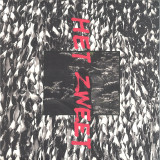
Modal Analysis proudly presents Het Zweet - Archives Volume 1: 1982-1988, a compilation of the Dutch outsider legend painstakingly picked from over 100 hours of unheard tape. An early electronic pioneer who deployed an array of homemade instruments alongside synths and a tape recorder to craft his searching sound, Marien Van Oers occupies a lonely branch on the tree of this music's early efforts, sliding between pounding industrial grooves, ambient fragments, and extended, entrancing compositions bridging this divide. Most closely akin to Muslimgauze, Test Dept. or Fad Gadget, who shared his outsider practice while remaining thoroughly entrenched in contemporary sounds, Het Zweet is striking for his diversity and for its meticulous composition, formed of carefully arranged layers of sonic detritus culled from his collection of homemade devices and electronic distortions. Finally rising to greater exposure since his death in 2013, Modal Analysis passionately continues this mission with our first volume of archives dedicated to the memory of this bold innovator gone before his time.