If the jazz of François Tusques is “free”, his spirit is even more so: having recorded Free Jazz with other like-minded Frenchmen (Michel Portal, François Jeanneau, Bernard Vitet, Beb Guérin and Charles Saudrais), the pianist had covered a lot of ground, with Barney Wilen (Le Nouveau Jazz) or even solo (Piano Dazibao and Dazibao N°2), so as not to repeat himself…
In 1971 he founded the Inter Communal Free Dance Music Orchestra which, as the notes the this album stated, “is an interpretation of a music which synthesizes the different communities living and working in France.” In 1976, on the first album (L’Inter Communal) we can already hear Tusques playing without borders in the company of Carlos Andreu (vocals), Michel Marre (trumpet and saxophone), Jo Maka (saxophone) and Ramadolf (trombone). It is a meeting between jazz and music from Catalonia, Occitanie and Africa. So far so good, but what about Brittany, that, Tusques knows “by heart”? Having lived for a long time in Nantes, he would expand his ‘brittanitude’ on the canal linking the city to Brest by playing with, for example the Diaouled-Ar-Menez. With these “devils from the mountain” who, under the baton of Yann Goasdoué, worked throughout the 1970s on the renewal of music from Brittany, Tusques met, notably, Tanguy Ledoré and invited him one day, with trois bombards and some bagpipes (Jean-Louis Le Vallegant, Gaby Kerdoncuff and Philippe Lestrat), to join the ranks of the Intercommunal. And so they set of towards a new music from Brittany, as the title states; Vers une Musique bretonne nouvelle!
With percussion from Samuel Ateba and Kilikus, the association launches the ‘bombardier’: the repetitions and dissonance of the different members all serve a common cause however: the dance, which is always the reason for the party. This sets a whole universe spinning, which can bring to mind Chris McGregor’s Brotherhood of Breath (“La rencontre”) when not taking on board waltz, swing, blues and gavotta or even revealing mysteries like those of Gurdjieff (“Les racines de la montagne” or “Le cheval” sung by Andreu). Only one thing to say to this Brotherhood Of Breizh: Mersi!
Cerca:dia
- 1: What Am I, Gatsby?
- 2: She Never Leant Upon A Bar
- 3: Soundtrack
- 4: Take Me Out To A Bar
- 5: Driver's High
- 6: Not Cool Like Ny/Not Cool Like La
- 7: Fade Like Rain
- 8: Big Business
- 9: The Show Mustn't Go On
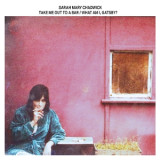
Take Me Out To a Bar / What Am I, Gatsby? marks a deliberate pivot. The album’s open, introductory chords evoke seem fit to score a scene in a Michael Haneke movie in which some stern German woman stomps down a whitewashed hallway. By the time that Chadwick’s crackly soprano joins in, it figures almost as a kind of intrusion upon what had been, up until that point, a pure mood. “You don’t have to listen to all the lyrics,” she attests. Chadwick's calling card since her earliest releases — a jagged, one-take immediacy — has been dialed back, leaving room to inconspicuously crowbar as much poeticism into the songs as she possibly could.
Long coveted by diggers, connoisseurs and beat makers, here we have the first-ever reissue of Amedeo Tommasi's "Industria 2000", released in 1974 via RCA's "Original Cast" series under his Jarrell alias. These 12 sonic experiments - totally devoted to synthesizers - offer tense tonalities, dissonant ambiences, complex textures, white noise rides and muted rhythms that can easily be seen as cornerstones of what would become later known as Industrial Music, also anticipating the sonic landscapes found in some of the early Warp Records releases.
Comprising 12 tracks entirely devoted to synthesizers, Industria 2000 explores a range of stark, tense tonalities and dissonant atmospheres. The album’s complex textures, white noise swells, and muted rhythms can be seen as precursors to industrial music, anticipating the aggressive, abrasive soundscapes that would later come to define the genre. It is clear that Tommasi's work was not only ahead of its time, but was also laying the foundations for the sound realms explored in the early days by major electronic record labels of the 1990s and future electronic pioneers.
During the pandemic, The Ophelias transformed uncertainty into Spring Grove, their fourth album and most dynamic offering yet. Named after a Cincinnati cemetery, the album blends nostalgia with fresh perspective, reflecting on themes of relationships, identity, and power dynamics. Singer-songwriter Spencer Peppet draws from her OCD diagnosis during the pandemic and the clarity that comes with growing older, resulting in lyrics that explore the cracks and complexities of human connection.
Produced by Julien Baker, who adds lush textures and harmonies, Spring Grove marks a turning point in the band’s evolution. Recorded at Young Avenue Sound in Memphis, the album centers on the core quartet—Peppet, violinist Andrea Gutmann Fuentes, bassist Jo Shaffer, and drummer Mic Adams—with arrangements that balance cinematic intensity and delicacy. Gutmann Fuentes’s violin provides striking countermelodies, while Shaffer’s bass lines, inspired by doom metal, explore melodic depth. Adams’s drumming reflects his first project after transitioning, offering nuanced rhythms that blend power and tenderness.
With one queer and two trans members, the band has moved beyond the reductive label of an “all-girl” group, delving deeply into themes of womanhood and identity. Tracks like “Salome” and “Parade” examine power dynamics and friendship, while nature imagery in songs like “Cumulonimbus” and “Vulture Tree” mirrors lived experience. Across 13 tracks, the album’s cinematic and introspective journey scavenges the past for meaning, ultimately embracing transformation. On the closing track, “Shapes,” Peppet reaches serene acceptance, singing, “I see what’s coming after... a reflection in the water. I am rippling forever.”
Spring Grove captures the band’s evolution, offering a transcendent meditation on self-awareness, identity, and growth, leaving listeners with a sense of profound discovery.
Another foggy day in Yorkshire. A steel grey sky. Raindrops tracing one another down the windowpane. Kirk Barley sits in his studio and assembles compositions from scraps of found sound and live instrumentation. Melodies swell, withdraw and repeat like waves. Time slows. Accelerates. Slows again. The light bends, tweaked at the edges. Twisted by rhythms that never quite resolve.
Written, recorded and produced by Barley in Yorkshire in early 2024, Lux picks up where 2023 LP Marionette leaves off, conjuring a mystical, reflective space between formal minimalism and sonic imaginaries of northern landscapes.
And yet, where Marionette relied at times on more recognisable field recordings, Lux leans into Barley’s skill as an instrumentalist and sound designer, working from a palette of short samples and utilising a variety of alternate tuning systems to build, layer and coax his compositions into being. Most evident on tracks ‘Vita’, ‘Sprite’ and ‘Descendent’, these tunings create an otherworldly harmonic language that is easier to perceive than describe.
Alongside more familiar instruments of guitar, bass, drums, organ and clarinet, here Barley draws on plastic saxophones and bells, and recordings of glass, wood and metal sound objects to provide the organic matter. Rather than directly representative of the natural world, Lux enters into a dialogue with it which, like the grasses and flowers of the album’s cover, exists somewhere between reality and artifice.
On album opener ‘Cache’, Barley constructs his own sense of time from a recording of an umbrella crank, a sparse and spectral piece which hints at memories embedded in the track’s title. Introspection blossoms into new life on ‘Vita’, crumpling again into the percussive ambience of ‘Verre’. A track that takes its harmonic lead from the clinks of glass, it features Barley’s long-time collaborator Matt Davies on drums, whose nuanced, tonally sensitive playing gives ‘Verre’ a fizzing, ice-like quality.
There are several moments where Lux picks up on themes Barley explored under electronic moniker Church Andrews on recent works with Davies, stretching and distorting temporalities most explicitly on ‘Descendent’, whose ritualistic air unfurls around a pattern in exponential decline.
Embracing the surrealism Barley absorbed over years watching classic film noir and the works of David Lynch and Federico Fellini, Lux wends its way through the enchanted sound worlds of ‘Sprite’ and ‘Balanced’ before arriving at the album’s title track.
An expression of his recent experiments in live, prepared guitar, ‘Lux’ brings the album back to earth, returning us to the room where the rain has stopped, the clouds have parted, and the soft warmth of the spring sun is pouring in through the open window.
- A1: Future Nostalgia (3 06)
- A2: Don't Start Now (3 00)
- A3: Cool (3 30)
- A4: Physical (3 10)
- A5: Levitating (3 22)
- A6: Pretty Please (3 16)
- B1: Hallucinate (3 28)
- B2: Love Again (3 41)
- B3: Break My Heart (3 57)
- B4: Good In Bed (3 38)
- B5: Boys Will Be Boys (2 44)
- C1: Dua Lipa X Angele - "Fever" (2 36)
- C2: We're Good (2 40)
- C3: Miley Cyrus - "Prisoner" (Feat Dua Lipa) (2 50)
- C4: If It Ain't Me (3 09)
- C5: That Kind Of Woman (3 13)
- C6: Not My Problem (Feat Jid) (3 14)
- C7: Levitating (Feat Dababy) (2 32)
- C8: J Balvin, Dua Lipa, Bad Bunny - "Un Dia (One Day)" (Feat Tainy) (3 44)
- D1: Levitating (Feat Madonna And Missy Elliott - The Blessed Madonna Remix) (3 59)
- D2: Hallucinate (Paul Woolford Remix - Extended) (5 24)
- D3: Don't Start Now (Kaytranada Remix) (4 13)
- D4: Physical (Feat Gwen Stefani - Mark Ronson Remix) (2 56)
- D5: Love Is Religion (The Blessed Madonna Remix) (3 36)
- D6: Break My Heart (Moodymann Remix) (5 52)
- E1: That Kind Of Woman (Jacques Lu Cont Remix) (4 50)
- E2: Pretty Please (Masters At Work Remix) (3 56)
- E3: Boys Will Be Boys (Zach Witness Remix) (3 54)
- E4: Good In Bed (Gen Hoshino Remix) (3 32)
- E5: Future Nostalgia (Joe Goddard Remix) (4 49)
- E6: Love Again (Horse Meat Disco Remix) (5 30)
- F1: Cool (Jayda G Remix) (4 05)
- F2: Don't Start Now (Yaeji Remix) (4 12)
- F3: Hallucinate (Mr Fingers Deep Stripped Mix) (8 06)
- F4: Pretty Please (Midland Refix) (4 36)
- F5: Good In Bed (Zach Witness Remix) (3 49)
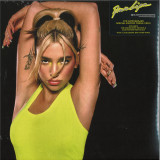
Dua Lipa veröffentlicht zum bevorstehenden 5-jährigen Jubiläum ihres mit einem GRAMMY Award ausgezeichneten und mit Platin zertifizierten zweiten Studioalbum Future Nostalgia eine 3LP Special-Edition.
Gepresst auf einer gelben Splatter-Vinyl und zwei schwarzen Vinyl, enthält das 3-LP-Set die 11 OriginalTracks des Albums sowie die Deluxe Moonlight Edition und das Remix-Album Club Future Nostalgia.
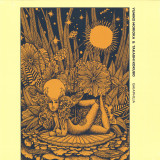
Japanese artists Yumiko Morioka and Takashi Kokubo unite for Gaiaphilia, a journey through ambient soundscapes that seamlessly blends Morioka’s graceful piano compositions with Kokubo’s immersive field recordings and atmospheric synthesisers.
This collaboration brings together two of Japan’s most influential pioneers in ambient and new age music, each with decades of groundbreaking work. Morioka, celebrated for her 1987 album Resonance—reissued to critical acclaim by Métron Records—infuses her introspective playing with Kokubo’s vivid environmental textures, creating a dialogue between nature and melody.
After releasing Resonance, Morioka stepped away from music, moving to America to raise her family. For years, her work was quietly cherished by fans, only gaining wider recognition with its reissue in 2020. A devastating wildfire destroyed her California home seven years ago, prompting her return to Tokyo where she became a chocolatier before rediscovering her passion for the piano in recent years, playing live shows and making new recordings.
Takashi Kokubo’s legendary discography spans over 30 years, and has found wider acclaim in recent years via YouTube algorithms and bootleg uploads, wracking up tens of millions of plays. Yet he is probably best known for his sound design work, specifically the Japanese earthquake alert sound as well as credit card payment jingles - his creations are pervasive in Japanese society.
“From our love and concern for our planet, we both offer a unique sensibility and spirit of inquiry which we express through our music.”
Rooted in shared philosophical interests, Gaiaphilia reflects a profound reverence for nature’s resilience and harmony. Themes of Gaia, Mother Earth’s renewal, and the interconnectedness of life are central, with inspirations drawn from cosmology, sacred geometry, and Japan’s mystical Katakamuna tradition. The album invites listeners into a meditative space where sound mirrors the delicate balance of the natural world.
A master of sound design, Kokubo enhances this vision with his distinctive field recordings, captured using a self-made binaural microphone shaped like a crash test dummy’s head. From the jungles of Borneo to the gentle rhythm of ocean waves, Kokubo’s globe-spanning recordings transform into immersive soundscapes that perfectly complement Morioka’s introspective piano compositions.
“The title, Gaiaphilia, is a newly created word to encompass our love and respect for nature and life, this feeling is the theme we hoped to express.”
Released on Métron Records on 12/03/25 and with artwork from Ventral Is Golden, Gaiaphilia marks a remarkable new chapter for Morioka and Kokubo. Recorded at Kokubo’s log house studio named Studio Ion in Yamanashi, their collaboration offers listeners a deeply emotional and transcendent experience, rooted in the timeless beauty of Japan’s natural landscapes.
- A1: Pattugliamento Aereo
- A2: Tunnel Sotterranei
- A3: Collina Silenziosa
- A4: Militari In Allarme
- A5: Plotone Di Esecuzione
- A6: Filo Spinato
- A7: Imboscata
- A8: Lettere Dal Fronte
- B1: Sognando La Pace
- B2: Pattugliamento Aereo #2
- B3: Dietro Le Linee Nemiche
- B4: Spettri
- B5: Fiori Tra Le Macerie
- B6: Disertori
- B7: Evasione
- B8: Evasione #2
- B9: Evasione #3
- B10: I Sopravvissuti
Four Flies Records is proud to present Paesaggio Bellico, a collection of unreleased music from legendary composer and multi-instrumentalist Alessandro Alessandroni.
Available digitally starting on the centenary of the maestro's birth on 18th March 2025 and on vinyl on 21st March, Paesaggio Bellico is a true gem hidden within the vast treasure trove of Italian film scores and library music.The album brings together themes and atmospheric pieces inspired by the world of war, viewed not just from a military standpoint, but also through a deeply human and existential lens.
The LP version features 18 tracks, while the digital release expands to 29, including alternate takes and thematic variations. These compositions were meticulously unearthed from scores written and recorded by the maestro between 1969 and 1978 for television documentaries and war films.
Alessandroni's war-inspired music masterfully balances action, suspense, and introspection. Expansive, panoramic themes give way to anxious, tormented moments. Horrifying visions are countered by calmer atmospheres, and glimmers of hope soften the intensity of pain.
Each track embodies the unique sound that has made Alessandroni an irreplaceable figure for soundtrack and library music enthusiasts. His signature whistle – so unmistakable for generations of fans of the genre – soars above delicate 12-string acoustic guitar arpeggios. More dramatic pieces feature his iconic Fender Stratocaster, equipped with a fuzz distortion pedal. And, of course, Alessandroni's vocal group, the Cantori Moderni, a constant presence in his arrangements, contribute, this time lending their voices to the more unsettling aspects of military psychology. An elegant string section adds depth and emotional impact to the more orchestral tracks, completing the picture of this monumental work.
The result is a sonic journey that delves into the darkest, most martial sides of war, but also explores its intimate and deeply painful dimensions, creating a powerful dialogue between the atrocities of conflict and the human emotions it evokes.
The release is enriched by original artwork from Eric Adrien Lee, who reimagined the 1970s graphic design of Italian war-themed library albums. The vinyl LP is housed in a tip-on hard cover (the kind used for higher-end productions during the golden age of Italian soundtracks), with an inner sleeve featuring a color-inverted variation on the cover art, which makes the physical record even more unique.
Patrick Conway crossed the threshold to find a new hope. This is his third offering for the ESP Institute. On side A, 'Loss' sets an overall melancholic tone for the record. A single repeating high note on the piano establishes a guiding element, which is eventually supported by a tear-jerking yet resolving chord progression, a trailing choir of angelic voices, and a filter-modulating synth that pads the widest zones of the mix with the occasional counter-melody. Robust in and of itself, Patrick’s melodic arrangement floats gracefully over an otherwise antagonistic rhythm section built from his signature corroded dancehall arsenal. This hornets nest of boxed live kick drums, piccolo snares, and high-pitched toms is held together by a dry veneer of saturation, sitting at safe distance from but in natural harmony with the bulbous low-frequency atmospherics. On the flip, 'Silencio' employs a similar statement at the top of each measure, this time an anthemic polyphonic synth stab as opposed to the singular piano note, however, unlike the layered melodies throughout 'Lost', here Patrick explores the narrative possibility of negative space—call and response, rhythmic dialogue, and the implied notes that leave the listener’s or dancer’s intuition to complete a phrase. In the game “musical chairs,” children run around manically until signaled to find a chair, at which point their diverse personalties must urgently synchronize, until set free to run again and repeat the process. Patrick's approach for 'Silencio' conjures said metaphor—his melody and rhythm are unleashed to meander and spasm within the confines of each respective bar, until that anticipated synth stab unifies everything “on the one”—controlling the chaos, calling on muscle memory and affirming logic. These two songs will be with you always as they always have been.
Now and again, an album project with no home comes along out of the blue, demanding to be licensed and shared with the world.
It was unearthed on one of Paper's digging trips. BOM's album sounded like nothing else out there, only the future. Shrouded in mystery and country-of-origin unknown, Africa runs through its DNA, but sometimes mysteries are best left...
Ase - a Yoruba philosophy signifying the power that makes things happen and produces change; given to Gods, ancestors, spirits, humans, animals, plants, rocks, rivers, songs and prayers.
BOM takes influence from all corners of Africa and its diaspora, blending them with 25 years of Western electronic music into a melange of forward facing, leftfield afro futurism.
The album features one of Africa's brightest rising stars, Luka Productions (from Mali), cosmic poet Sirius Rush (UK) and master drummer & vocalist Felix Ngindu (DRC/Liverpool) for a journey into kaleidoscopic Afro-tech funk. Gqom, Shangaan electro and township funk rub shoulders with hip-hop, bass, deep house and dub for a psychedelic celebration of collaboration and possibility.
As geographical and musical barriers are broken down, BOM's 'Ase' album is leading the charge; London to Lagos, Lisbon to Sao Paulo, Bamako to Berlin, BOM captures the sound of the underground.
- Love In Store
- Can’t Go Back
- That’s Alright
- Book Of Love
- Gypsy
- Only Over You
- Empire State
- Straight Back
- Hold Me
- Oh Diane
- Eyes Of The World
- Wish You Were Here
If every significant artist has an underrated gem in its catalog, then Mirage is that album for Fleetwood Mac. An obvious return to relative simplicity after the dramatic tension of Rumours and experimental ambitions of Tusk, the 1982 album finds the band re-grouping after a brief hiatus and again climbing to the top of the charts. Extremely well-crafted, well-produced, and well-performed, the double-platinum effort distills the group’s hallmark strengths into a filler-free set that never runs short of addictive pop hooks or daft accents.
Sourced from the original analog master tapes, pressed at Fidelity Record Pressing in California, and housed in a Stoughton jacket, Mobile Fidelity’s numbered-edition 180g 45RPM 2LP set presents Mirage in reference sound for the first time. The efforts co-producers/engineers Ken Caillat and Richard Dashut went to capture the splintered albeit formidable band can be heard with stunning accuracy, range, depth, and detail.
Though Rumours understandably gets a permanent spot in the audiophile hall of fame, the smooth, clear, and dynamic sonics on Mirage confirm that the record that stood as Fleetwood Mac’s last effort for five years deserves a place in the same vaunted arena. The presence and imaging of Mick Fleetwood’s percussion alone on this reissue might have you wondering how this slice of soft-rock bliss has gone under-noticed for decades. Other prized aural aspects — separation, definition, impact, tonal balance — are also here in spades.
Like much surrounding Fleetwood Mac in the 1980s, arriving at Mirage was not easy. Caillat searched for studios located outside of Los Angeles on a mission to change up the vibe of the band’s prior recording sessions. Everyone settled on Le Chateau in France, where relations between some members remained icy — and cooperation with the producers strained. Battles with exhaustion, bitterness, and addiction further informed the proceedings at the 18th century complex in the French countryside, where even communal meals were allegedly eaten in silence.
Inevitably, the feelings that co-producer Lindsey Buckingham, Stevie Nicks, Christine McVie, and company harbored — as well as the situations in which they found themselves — drifted into the songwriting. In its rapid ascent to rock-star royalty status, Fleetwood Mac drifted apart, embarked on solo pursuits, and found it was lonely at the top. Emptiness, the illusion of dreams, the longing for love, the want to escape to bygone times of innocence and happiness: Such themes inform a majority of the narratives. Even if the lyrics regularly take a back seat to easygoing arrangements that allow Mirage to come on like a refreshing breeze on a sunny summer afternoon.
Home to three Top 25 singles in the U.S. and having occupied the pole position of the Top 200 album charts for five weeks, Mirage rightfully resonated with the mainstream and attracted listeners on both sides of the pond. And how, via a smart blend of sugary melodies, warm harmonies, interlaced notes, nimble rhythms, taut structures, and passionate vocals. Not to mention the presence of what arguably remains Nicks’ signature song, the biographical “Gypsy,” a meditation on the loss of her close friend Robin Anderson that teems with majesty, mystery, and mysticism — and which gets an assist from Buckingham’s shaded tack piano and richly strummed guitar chords.
Its ranking as an all-time classic aside, that No. 12 hit has plenty of company when it comes to brilliant pop turns on Mirage. On the subject of Nicks, the raspy singer gets a little bit country on “That’s Alright.” Its clip-clopping pace and two-stepping progression complement subtle vocal swells that emerge during the final verse of a tune that is ostensibly about leaving but still conveys forgiveness and grace. And what would a Fleetwood Mac record be without Nicks drawing on the tools of the supernatural — cards, dreams, wolves, and the like — on the twirling “Straight Back.”
Despite the potency of Nicks’ primary contributions, Mirage seemingly unfolds as a tight competition between Buckingham and McVie — and one that ultimately ends in a draw. Buckingham’s salvos include the contagious “Can’t Go Back,” a yearning to time-travel back to the past that’s complete with hall-of-mirrors backing vocals; “Oh Diane,” out-of- left-field ear candy sweetened with hiccupped vocals and salt-and-pepper-shaken grooves; the chiming “Eyes of the World”; and “Empire State,” a delightfully fluttering track whose high-range vocals, lap harp notes, and ringing xylophones hint at the galaxies of sound that would erupt on Tango in the Night.
Then there’s McVie. As elegant, understated, and coolheaded as she’s ever been on record, she pours her heart out on cuts that revolve around her inevitable split with Beach Boy Dennis Wilson. In the process, she punctuates Mirage with a characteristic not always associated with catchy pop music: emotional weight, and the sense of dreaded acceptance in the face of dreams deferred.
“I wish you were here/Holding me tight,” McVie sings over a delicate melody on the album-closing piano ballad “Wish You Were Here.” Though they hoped otherwise, for the members Fleetwood Mac, distance and separation were always close at hand. Believing otherwise, inviting nostalgia, and pretending everything was fine only amounts to a mirage.
Thaiboy Digital is a founding member of the music group and cultural phenomenon Drain Gang. Following huge success at D2C (over 2000 units sold), YEAR0001 are now presenting this first collection of Thaiboy Digital records to retail. “Tiger” is Thaiboy Digital’s first studio album and includes fan-favourite track “Diamonds” featuring Yung Lean. The album also includes features from Thaiboy’s Drain Gang compatriot Bladee.
“Back 2 Life” is Thaiboy Digital’s third studio album. Featuring Yung Lean and fellow Drain Gang member Bladee, Back 2 Life dials in a forward-facing sound with the help of producers Rok (Lil Uzi Vert, Future) Outtatown (Kendrick Lamar, Playboi Carti) and others. This is the first time this release will be available at retail, having previously sold over 1000 units via D2C.
Earthly Measures are very excited to bring to you 'Doroja', an album by Santiago Córdoba & The Bauls of Bengal. Different to past releases, EM explores another part of the world, introducing you to the traditional sounds of Bengal & its talented musicians.
Doroja, is the third album by Argentinian musician Santiago Córdoba, this time in collaboration with The Bauls of Bengal. Recorded at the Hansadhwani Studio in Calcutta, India, where Santiago arrived with only a synthesiser, some effects, and a Legüero Bass Drum (an Argentine percussive instrument used mostly in local folklore) - this album was first conceived in December 2017 during a residency in this mythical city, together with The Bauls of Bengal.
The Bauls believe the body and mind are the sources of all truths and that the expression of freedom cannot be restrained by the labelling of genres or religions, something which is evidently expressed in their music. This provides the perfect foundations for this album to develop without limitations and too effortlessly flow to whichever realms both Santiago and the Bauls of Bengal wish to take us too.
The album combines traditional songs of the Bauls, rhythmic Jhumar instrumental improvisations with the Argentinian legüero bass drum, and other compositions created together in the studio. The result is a melodic mixture/dialogue of cultures, folklore and ancestral sounds with modern influences that help create an experimental and addictive sound full of electronic textures.
Participating in these first recordings: Arpita Chakraborty (vocals), Chandan Ray (dotara), Pijush Baul (Vocals, Dubki) and Tanmoy Pan (percussion), who later, are joined by other artists from different latitudes to achieve a captivating fusion: Matías Romero on strings (Formosa, Argentina), Guilherme Peluci from Mineiro on winds and Daniel Guedes on percussion (Belo Horizonte, Brazil), Porteños Walter Broide on tabla and Cobra Rod on bass (both members of Poseidotica), and the Spanish Ángel Calvo on trumpet.
The album was mixed by Rodrigo Cursach at Delta Uno Estudio, mastered by Daniel Ovie, and the fascinating cover art is by Alejandro Sordi. It will be released on vinyl by the UK based label Earthly Measures, in addition to being available on all digital platforms.
‘Doroja’ means portal, and this album is indeed a magical portal to music, song and dance. Santiago's only means of communication with Bengali colleagues functioned as an astral portal to build the sounds of this journey through strange and unfathomable landscapes that captivate and surprise by building bridges between different cultures of our planet.
Santiago Córdoba is a multi-instrumentalist musician born in the city of Buenos Aires who has been developing his unique sound both with his solo project and with prominent bands from the Argentinian independent music scene. He has been developing his solo career through deep musical and spiritual searching, with the infinite journey as a primary objective.
In recent years, he has lived in places such as Madrid, Beirut and Berlin and has released two albums: ‘Corso’ (2015) and ‘En Other Places’ (2019).
- Bagola
- Dadunkan
- Cela Sigui
- Tulunke
- Orpaillage
- Dissa
- Wara
- Nana Triban
- Fakoly
- Latege
- Deme
In their new album Bagola, Trio Da Kali present newly composed songs accompanied on balafon and ngoniba, that provide a rich accompaniment to the spectacular voice of Hawa Kasse Mady Diabaté. She inherits her singing style from her father, the late Kasse Mady Diabaté, who was widely recognized as one of Africa"s all-time greatest singers and won a Grammy nomination in 2004. Hawa"s voice has an exquisite purity and expressiveness, with a wide emotional range. She is equally at home in the lively, 9/8 rhythms of the title track Bagola, a light-hearted critique of men in Malian society, to the soulful Orpaillage, a song that laments the destruction of land from gold-panning. Orpaillage was in fact composed on the spot in the studio, reflecting the creative chemistry between these three musicians. The musical director of the trio is balafon (xylophone) player Lassana Diabaté, born in Guinea into a well-known family of balafon musicians. His remarkable dexterity on the balafon earned him a place in Toumani Diabaté"s Symmetric Orchestra, and later on in the group Afrocubism (featuring Eliades Ochoa). He has collaborated with many musicians, including bluesman Taj Mahal on the album Kulanjan. With two balafons of 22 rosewood keys each, tuned to play chromatic scales, Lassana Diabaté achieves a perfect balance of rhythm, melody, harmony and virtuosic embellishment. David Harrington, leader of Kronos Quartet, compares him to none other than JS Bach. Underpinning the balafon with compulsive groove, is the large ngoniba, played with brilliant musicality by Madou Kouyaté (son of Bassekou Kouyaté and member of his group Ngoniba). Madou, the youngest member of Trio Da Kali, also adds rich harmonies with his deep breathy voice to the songs. Trio Da Kali were founded in 2013 under the initiative of the Aga Khan Music Programme, with the help of three-times Grammy-nominated music producer Lucy Durán. The Trio first rose to international fame with their sublime album Ladilikan (World Circuit Records 2017), featuring an unprecedented and multi-award-winning collaboration with Kronos Quartet, the legendary classical string quartet from San Francisco. Bagola is a showcase of Trio Da Kali"s entrancing and unique sound, only equaled by their magical performances on stage.
Diana Ross’s eleventh studio album spawned three hit singles, including the number-one ‘Upside Down’. A masterpiece of disco and pop and a dazzling collaborative effort between Chic and Diana Ross. Now in limited edition ultra clear vinyl.
- Drive (Gebrüder Teichmann - Remix) 04:55
- Rainbow (Modeselektor - Remix) 04:06
- Hill Top Jaccuzi (Peaking Lights - Remix) 06:19
- Compound Eye Dialogue (Cloud Management - Remix) 02:57
- Gelée Royale / Jelly Roll Dub (Seekers International - Remix) 04:51
- Suspender (Andi Toma - Remix) 05:20
- Outer Veil (Maya Shenfeld - Remix) 03:50
- Lava Fans / Smack (Agnese Menguzzato - Rework) 03:05
- Iridescent Path / Afrosonification (Angel Bat Dawid - Rework) 07:01
»Re:Polyism« is a track-by-track reinterpretation of Friedrich »Fritz« Brückner’s 2022 debut solo album as Modus Pitch, »Polyism,« through artists affiliated with Altin Village & Mine and/or former collaborators of the prolific Leipzig-based musician and producer. Each track from »Polyism« has been remixed or reworked by different artists such as Modeselektor, Angel Bat Dawid, Maya Shenfield or Mouse on Mars member and HJirok producer Andi Toma, but the album—mastered by Tim Roth a.k.a. Sin Maldita and released as a strictly limited vinyl LP with reimagined artwork by Carmen Orschinski—follows the original record’s tracklist. This makes »Re:Polyism« a veritable musical prism, refracting the creativity inherent to Brückner’s genre-transcending original works through other people’s artistic lenses to create an even more colourful end result.
First off are the Gebrüder Teichmann with their take on opener »Drive,« carefully adding more depth and uncanny sounds to the jazzy, drum-focused piece. Unsurprisingly, Modeselektor go a lot further with their remix »Rainbow,« turning the two-minute track into a dubstep-adjacent banger with infectious synth work that is twice as long and comes with a mind-melting breakdown. With their take on »Hilltop Jacuzzi,« Peaking Lights turn the blissful original into a piece that calls to mind experiments at the intersection of dub, ambient, and industrial music in the mid-1990s. Cloud Management radically transform the eerie »Compound Eye Dialogue« into a rhythmically charged mid-tempo post-krautrock epic, while the Seekers International’s »Jelly Roll Dub« of »Gelée Royale« uses the original’s lush textures to turn up the intensity even further.
On the flipside, Andi Thoma gives the intricate synth pop/breakcore fusion of »Suspender« a similarly dubwise treatment before venturing into gqom territory, pulling it out of the leftfield and straight onto the dancefloor—peak-time use only. Maya Shenfeld then brings her trademark modular synth work to »Outer Veil,« accentuating the focus on Hendrik Otremba’s uncanny spoken word performance even further. This sets the mood perfectly for vocal experimentalist Agnese Menguzzato working her singular magic. Under her hands and with her voice, the multi-layered ambient soundscapes of »Lava Fans« become even larger-than-life-like than before. When Angel Bat Dawid takes the menacing drones of »Iridescent Path« as a template for a trap-inspired beat over which she lets loose on the clarinet, that serves as both the ultimate counterpoint and perfect coda to »Re:Polyism.«
These nine reinterpretations of the highly diverse source material underline Brückner’s singular approach to music-making while also emphasising their makers’ idiosyncratic talents. This makes »Re:Polyism« more than simply a remix album—it’s a polylogue between visionary minds.