Cerca:differ ent

Generi
Tutto
Yiannis Iliakis - Mountainmouth

Clear Vinyl + DL Code

Yiannis Iliakis is a multi instrumentalist and composer from Athens. He is mainly known as a drummer. As such he is a member of the free jazz band Outward Bound as well as a member of the successful Greek progressive rock band Ciccada. However, that's only one side of Iliakis' creative efforts. In April 2021, he released his first full length electronic album entitled Vertical Horizon on the Submersion Records, which mostly is an ambient work. Now, with Mountainmouth he opens another chapter for his musical talents.

The EP is one of the most thrilling and adventurous takes on what the IDM term usually would suggest. The key song might be the title track "Mountainmouth" - an extremely energetic composition which won't leave you unaffected. As per most of Iliakis' songs it is based on originally recorded drums that were heavily edited. In the next step, these were combined with chords, melodies, bass and harmonies on top. The musical result is simply breathtaking - one might even call this track electronica for prog-rock heads. Surely a perfect opener for the release.

The next song is Carbonated Soap on which Iliakis is going straight forward. The catchy melody and a fresh uptempo beat are offering something that could even fit well into a club-friendly DJ set. Next up, comes "Infected Walkman". According to Iliakis, it was the first one he made for this project when he participated in an art exhibition. This track, as well as the following "Sad Plants", are both down tempo and chilled, yet keeping an experimental vibe without loosing a soulful and human touch. Coming closer to the end, "Exodus Denied" is a brilliant experimental ambient piece, more similar to the works on the Vertical Horizon LP. Finally, the EP ends with a short edit of "Carbonated Soap" that jumps right to the more energetic parts after the first break.

Mountainmouth may not be an easy listen at start - but we are sure the music has the power to be another classic release from our catalogue. The EP will be released in July 2022 on a very limited 12" vinyl as well as digitally. The cover artwork was done by Iliakis himself. We are very excited to present a new artist to you on Equinox with so many different talents.

pre-ordina ora30.09.2022

dovrebbe essere pubblicato su 30.09.2022

15,67
Yiannis Iliakis - Mountainmouth

Violet Vinyl + DL Code

Yiannis Iliakis is a multi instrumentalist and composer from Athens. He is mainly known as a drummer. As such he is a member of the free jazz band Outward Bound as well as a member of the successful Greek progressive rock band Ciccada. However, that's only one side of Iliakis' creative efforts. In April 2021, he released his first full length electronic album entitled Vertical Horizon on the Submersion Records, which mostly is an ambient work. Now, with Mountainmouth he opens another chapter for his musical talents.

The EP is one of the most thrilling and adventurous takes on what the IDM term usually would suggest. The key song might be the title track "Mountainmouth" - an extremely energetic composition which won't leave you unaffected. As per most of Iliakis' songs it is based on originally recorded drums that were heavily edited. In the next step, these were combined with chords, melodies, bass and harmonies on top. The musical result is simply breathtaking - one might even call this track electronica for prog-rock heads. Surely a perfect opener for the release.

The next song is Carbonated Soap on which Iliakis is going straight forward. The catchy melody and a fresh uptempo beat are offering something that could even fit well into a club-friendly DJ set. Next up, comes "Infected Walkman". According to Iliakis, it was the first one he made for this project when he participated in an art exhibition. This track, as well as the following "Sad Plants", are both down tempo and chilled, yet keeping an experimental vibe without loosing a soulful and human touch. Coming closer to the end, "Exodus Denied" is a brilliant experimental ambient piece, more similar to the works on the Vertical Horizon LP. Finally, the EP ends with a short edit of "Carbonated Soap" that jumps right to the more energetic parts after the first break.

Mountainmouth may not be an easy listen at start - but we are sure the music has the power to be another classic release from our catalogue. The EP will be released in July 2022 on a very limited 12" vinyl as well as digitally. The cover artwork was done by Iliakis himself. We are very excited to present a new artist to you on Equinox with so many different talents.

pre-ordina ora30.09.2022

dovrebbe essere pubblicato su 30.09.2022

15,67
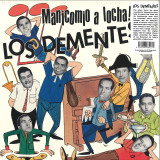
LOS DEMENTES - MANICOMIO A LOCHA LP

This album marks the debut recording for Venezuela's Velvet label by pianist Ray Pérez and his trombone-led salsa band Los Dementes. Heavy dance numbers and the distinctive vocals of Perucho Torcat make this historic 1967 rarity a sought-after collector's item. Now the LP has been lovingly restored, mastered from the original tapes, with its original artwork intact, preserving the legacy of Los Dementes for today's generation of salsa lovers everywhere. First time reissue. Salsa pianist, vocalist, composer and arranger Ray Pérez, acquired his nickname "Loco" by being a free, independent spirit, an innovator and iconoclast who was initially branded as "crazy" for the freshness and audacity of his sound. Amazingly, he is not that well known in the US, where he spent some time in the late 1960s and salsa was king during the 1970s. Yet he was quite popular in his home country from the beginning, especially amongst the working class of Caracas and Maracaibo, who adopted Cuban music played by New York Puerto Ricans as their own and called it "salsa" years before the term was employed by US labels like Fania as a marketing tool. Pérez is revered in Venezuela, as well as in Mexico and Colombia, and his storied career, which spans seven decades and thousands of concerts, has yielded more than 35 albums recorded by his various bands, including Los Dementes, Los Kenya, and Los Calvos, all of which are collector's items today. At the start of 1967 Pérez debuted Los Dementes, with vocalists Claudio Zerpa and Perucho Torcat backed by an ace band featuring only trombones in the brass section. Titled "¡Alerta mundo! Llegaron los 'The Crazy Men'" the record was released on the small Venezuelan label Prodansa. Soon after, Prodansa folded and Los Dementes were left without representation or much compensation for their efforts, being paid only in records. In the end of February of that year, Pérez returned to Caracas from a stint in Maracaibo in order to finish his first LP with the well-established and larger Velvet label, entitled "Manicomio a locha". In the first quarter of 1967, Velvet unleashed a trilogy of salsa records in order to compete with rival label Palacio and their recent success with Federico y su Combo Latino: "Porfi '67 Salsa & Boogaloo" by Porfi Jiménez y su Orquesta, "Guasancó" by Sexteto Juventud and lastly "Manicomio a locha". The LP begins appropriately with the boisterous title track, written by the band's conguero Carlos "Nené" Quintero, who would become a legend in coming years. Torcat describes a jam session in mental institution and introduces the band, with tasty solos by trombonist Rufo García followed by Ray on piano. Already you can hear something was different about Ray and his "Crazy Men"-a sound as wild and innovative as what was happening in New York with Eddie Palmieri, but with a more unhinged, raw feeling in line with Willie Colón and other younger Nuyorican bands. Next up is an intriguing track sung in a mix of Italian, English, Spanish and Papiamento by Pérez himself, performed in the complicated rhythm of the mozambique, an Afro-Cuban carnival beat developed in the early 1960s. This is followed by the heavy dancer 'Rico guaguancó', penned by Angelito Pérez, which changes from the guaguancó to the mozambique rhythm mid-way through, proving that Los Dementes were "different from the rest" as the lyrics say. 'Puerto Libre', sung by Torcat, is dedicated to the Venezuelan island of Margarita in the Oriente region, and the independent spirit of its working people. The rhythm changes from guaguancó to guajira and back again but remains danceable all the way through. The side closes out with a "3 in 1" medley inspired by the popular formula of the mosaicos of Billo's Caracas Boys, seamlessly knitting together several different tempos, rhythms, moods and compositions. Side two starts strong with the fierce yet satirical 'Corte e' patas', then 'Alma Cumanesa', a typical folk song refashioned as a guaguancó. This is followed by the funky 'Guajira con Boogaloo'. The tune echoes the sound of young Latin New York, pointing out the connection between Cuban and African American soul music. The pace picks up again with 'Fiesta de trombones', a hot descarga and then the album closes with another medley. Though this marks the end of a rather short album, it also signaled the emerging success of Los Dementes and their involvement with the salsa boom in Venezuela, quickly selling out of its initial run of 1000 records and making for a memorable debut on the Velvet label. Now this rare and sought-after LP has been lovingly restored, mastered from the original tapes, with its original artwork intact, preserving the legacy of Los Dementes for today's generation of salsa lovers everywhere.

non in magazzino

Ordina ora e ordineremo l'articolo per te presso il nostro fornitore.

24,58

Last In: 3 years ago
Yen Sung & Photonz - A Temperanca EP

Yen Sung&Photonz

A Temperanca EP

12inchPARAISO009
Paraíso
28.09.2022

Lisbon's purveyor of dance incantations Paraiso are back with an EP that packs a meeting of 3 legends of the local and global underground - a trio of fearless pioneers and cultural agitators from different eras. Yen Sung and Photonz have partnered up in 2020 to collaborate on new music and start a record label. Fast forward to today and this Paraiso EP is their third release, further exploring their mutual penchant for ethereal house music drenched in subtle but fiery grooves and acid basslines. Opener 'A Temperanca' taps into moody yet bouncy motifs, punctuated by crisp claps and an infectious 303 line in the vein of DJ Pierre's record 'What is House Music', their confessed influence for this track. Things get slower on the A2 where the title track gets reworked with alternative elements - aptly named Gravity Mix. The B side continues the metallic acid exploration via 'Akasha', twisting and turning like only expertly crafted basslines do before things blossom into a sunny house groover with enticing percussion and variegated hats. Legendary Angolan-Portuguese producer DJ Satelite steps in for remix duties, adding his iconic deep afro house edge to a wonderful effect, all blissful motifs and broken percussive sonics.

non in magazzino

Ordina ora e ordineremo l'articolo per te presso il nostro fornitore.

10,29

Last In: 2 years ago
Lee Tracy & Isaac Manning - Is it What You Want LP

As the sun sets on a quaint East Nashville house, a young man bares a piece of his soul. Facing the camera, sporting a silky suit jacket/shirt/slacks/fingerless gloves ensemble that announces "singer" before he's even opened his mouth, Lee Tracy Johnson settles onto his stage, the front yard. He sways to the dirge-like drum machine pulse of a synth-soaked slow jam, extends his arms as if gaining his balance, and croons in affecting, fragile earnest, "I need your love… oh baby…"

Dogs in the yard next door begin barking. A mysterious cardboard robot figure, beamed in from galaxies unknown and affixed to a tree, is less vocal. Lee doesn't acknowledge either's presence. He's busy feeling it, arms and hands gesticulating. His voice rises in falsetto over the now-quiet dogs, over the ambient noise from the street that seeps into the handheld camcorder's microphone, over the recording of his own voice played back from a boombox off-camera. After six minutes the single, continuous shot ends. In this intimate creative universe there are no re-takes. There are many more music videos to shoot, and as Lee later puts it, "The first time you do it is actually the best. Because you can never get that again. You expressing yourself from within."

"I Need Your Love" dates from a lost heyday. From some time in the '80s or early '90s, when Lee Tracy (as he was known in performance) and his music partner/producer/manager Isaac Manning committed hours upon hours of their sonic and visual ideas to tape. Embracing drum machines and synthesizers – electronics that made their personal futurism palpable – they recorded exclusively at home, live in a room into a simple cassette deck. Soul, funk, electro and new wave informed their songs, yet Lee and Isaac eschewed the confinement of conventional categories and genres, preferring to let experimentation guide them.

"Anytime somebody put out a new record they had the same instruments or the same sound," explains Isaac. "So I basically wanted to find something that's really gonna stand out away from all of the rest of 'em." Their ethos meant that every idea they came up with was at least worth trying: echoed out half-rapped exhortations over frantic techno-style beats, gospel synth soul, modal electro-funk, oddball pop reinterpretations, emo AOR balladry, nods to Prince and the Fat Boys, or arrangements that might collapse mid-song into a mess of arcade game-ish blips before rallying to reach the finish line. All of it conjoined by consistent tape hiss, and most vitally, Lee's chameleonic voice, which managed to wildly shape shift and still evoke something sincere – whether toggling between falsetto and tenor exalting Jesus's return, or punctuating a melismatic romantic adlib with a succinct, "We all know how it feels to be alone."

"People think we went to a studio," says Isaac derisively. "We never went to no studio. We didn't have the money to go to no studio! We did this stuff at home. I shot videos in my front yard with whatever we could to get things together." Sometimes Isaac would just put on an instrumental record, be it "Planet Rock" or "Don't Cry For Me Argentina" (from Evita), press "record," and let Lee improvise over it, yielding peculiar love songs, would-be patriotic anthems, or Elvis Presley or Marilyn Monroe tributes. Technical limitations and a lack of professional polish never dissuaded them. They believed they were onto something.

"That struggle," Isaac says, "made that sound sound good to me."

In the parlance of modern music criticism Lee and Isaac's dizzying DIY efforts would inevitably be described as "outsider." But "outsider" carries the burden of untold additional layers of meaning if you're Black and from the South, creating on a budget, and trying to get someone, anyone within the country music capital of the world to take your vision seriously. "What category should we put it in?" Isaac asks rhetorically. "I don't know. All I know is feeling. I ain't gonna name it nothing. It's music. If it grabs your soul and touch your heart that's what it basically is supposed to do."

=

Born in 1963, the baby boy of nine siblings, Lee Tracy spent his earliest years living amidst the shotgun houses on Nashville's south side. "We was poor, man!" he says, recalling the outhouse his family used for a bathroom and the blocks of ice they kept in the kitchen to chill perishables. "But I actually don't think I really realized I was in poverty until I got grown and started thinking about it." Lee's mom worked at the Holiday Inn; his dad did whatever he had to do, from selling fruit from a horse drawn cart to bootlegging. "We didn't have much," Lee continues, "but my mother and my father got us the things we needed, the clothes on our back." By the end of the decade with the city's urban renewal programs razing entire neighborhoods to accommodate construction of the Interstate, the family moved to Edgehill Projects. Lee remembers music and art as a constant source of inspiration for he and his brothers and sisters – especially after seeing the Jackson 5 perform on Ed Sullivan. "As a small child I just knew that was what I wanted to do."

His older brother Don began musically mentoring him, introducing Lee to a variety of instruments and sounds. "He would never play one particular type of music, like R&B," says Lee. "I was surrounded by jazz, hard rock and roll, easy listening, gospel, reggae, country music; I mean I was a sponge absorbing all of that." Lee taught himself to play drums by beating on cardboard boxes, gaining a rep around the way for his timekeeping, and his singing voice. Emulating his favorites, Earth Wind & Fire and Cameo, he formed groups with other kids with era-evocative band names like Concept and TNT Connection, and emerged as the leader of disciplined rehearsals. "I made them practice," says Lee. "We practiced and practiced and practiced. Because I wanted that perfection." By high school the most accomplished of these bands would take top prize in a prominent local talent show. It was a big moment for Lee, and he felt ready to take things to the next level. But his band-mates had other ideas.

"I don't know what happened," he says, still miffed at the memory. "It must have blew they mind after we won and people started showing notice, because it's like everybody quit! I was like, where the hell did everybody go?" Lee had always made a point of interrogating prospective musicians about their intentions before joining his groups: were they really serious or just looking for a way to pick up girls? Now he understood even more the importance of finding a collaborator just as committed to the music as he was.

=

Isaac Manning had spent much of his life immersed in music and the arts – singing in the church choir with his family on Nashville's north side, writing, painting, dancing, and working various gigs within the entertainment industry. After serving in the armed forces, in the early '70s he ran The Teenage Place, a music and performance venue that catered to the local youth. But he was forced out of town when word of one of his recreational routines created a stir beyond the safe haven of his bohemian circles.

"I was growing marijuana," Isaac explains. "It wasn't no business, I was smoking it myself… I would put marijuana in scrambled eggs, cornbread and stuff." His weed use originated as a form of self-medication to combat severe tooth pain. But when he began sharing it with some of the other young people he hung out with, some of who just so happened to be the kids of Nashville politicians, the cops came calling. "When I got busted," he remembers, "they were talking about how they were gonna get rid of me because they didn't want me saying nothing about they children because of the politics and stuff. So I got my family, took two raggedy cars, and left Nashville and went to Vegas."

Out in the desert, Isaac happened to meet Chubby Checker of "The Twist" fame while the singer was gigging at The Flamingo. Impressed by Isaac's zeal, Checker invited him to go on the road with him as his tour manager/roadie/valet. The experience gave Isaac a window into a part of the entertainment world he'd never encountered – a glimpse of what a true pop act's audience looked like. "Chubby Checker, none of his shows were played for Black folks," he remembers. "All his gigs were done at high-class white people areas." Returning home after a few years with Chubby, Isaac was properly motivated to make it in Music City. He began writing songs and scouting around Nashville for local talent anywhere he could find it with an expressed goal: "Find someone who can deliver your songs the way you want 'em delivered and make people feel what you want them to feel."

One day while walking through Edgehill Projects Isaac heard someone playing the drums in a way that made him stop and take notice. "The music was so tight, just the drums made me feel like, oh I'm-a find this person," he recalls. "So I circled through the projects until I found who it was.

"That's how I met him – Lee Tracy. When I found him and he started singing and stuff, I said, ohhh, this is somebody different."

=

Theirs was a true complementary partnership: young Lee possessed the raw talent, the older Isaac the belief. "He's really the only one besides my brother and my family that really seen the potential in me," says Lee. "He made me see that I could do it."

Isaac long being a night owl, his house also made for a fertile collaborative environment – a space where there always seemed to be a new piece of his visual art on display: paintings, illustrations, and dolls and figures (including an enigmatic cardboard robot). Lee and Issac would hang out together and talk, listen to music, conjure ideas, and smoke the herb Isaac had resumed growing in his yard. "It got to where I could trust him, he could trust me," Isaac says of their bond. They also worked together for hours on drawings, spreading larges rolls of paper on the walls and sketching faces with abstract patterns and imagery: alien-like beings, tri-horned horse heads, inverted Janus-like characters where one visage blurred into the other.

Soon it became apparent that they didn't need other collaborators; self-sufficiency was the natural way forward. At Isaac's behest Lee, already fed up with dealing with band musicians, began playing around with a poly-sonic Yamaha keyboard at the local music store. "It had everything on it – trumpet, bass, drums, organ," remembers Lee. "And that's when I started recording my own stuff."

The technology afforded Lee the flexibility and independence he craved, setting him on a path other bedroom musicians and producers around the world were simultaneously following through the '80s into the early '90s. Saving up money from day jobs, he eventually supplemented the Yamaha Isaac had gotten him with Roland and Casio drum machines and a Moog. Lee was living in an apartment in Hillside at that point caring for his dad, who'd been partially paralyzed since early in life. In the evenings up in his second floor room, the music put him in a zone where he could tune out everything and lose himself in his ideas.

"Oh I loved it," he recalls. "I would really experiment with the instruments and use a lot of different sound effects. I was looking for something nobody else had. I wanted something totally different. And once I found the sound I was looking for, I would just smoke me a good joint and just let it go, hit the record button." More potent a creative stimulant than even Isaac's weed was the holistic flow and spontaneity of recording. Between sessions at Isaac's place and Lee's apartment, their volume of output quickly ballooned.

"We was always recording," says Lee. "That's why we have so much music. Even when I went to Isaac's and we start creating, I get home, my mind is racing, I gotta start creating, creating, creating. I remember there were times when I took a 90-minute tape from front to back and just filled it up."

"We never practiced," says Isaac. "See, that was just so odd about the whole thing. I could relate to him, and tell him about the songs I had ideas for and everything and stuff. And then he would bring it back or whatever, and we'd get together and put it down." Once the taskmaster hell bent on rehearsing, Lee had flipped a full 180. Perfection was no longer an aspiration, but the enemy of inspiration.

"I seen where practicing and practicing got me," says Lee. "A lot of musicians you get to playing and they gotta stop, they have to analyze the music. But while you analyzing you losing a lot of the greatness of what you creating. Stop analyzing what you play, just play! And it'll all take shape."

=

"I hope you understood the beginning of the record because this was invented from a dream I had today… (You tell me, I'll tell you, we'll figure it out together)" – Lee Tracy and Isaac Manning, "Hope You Understand"

Lee lets loose a maniacal cackle when he acknowledges that the material that he and Isaac recorded was by anyone's estimation pretty out there. It's the same laugh that commences "Hope You Understand" – a chaotic transmission that encapsulates the duality at the heart of their music: a stated desire to reach people and a compulsion to go as leftfield as they saw fit.

"We just did it," says Lee. "We cut the music on and cut loose. I don't sit around and write. I do it by listening, get a feeling, play the music, and the lyrics and stuff just come out of me."

The approach proved adaptable to interpreting other artists' material. While recording a cover of Whitney Houston's pop ballad "Saving All My Love For You," Lee played Whitney's version in his headphones as he laid down his own vocals – partially following the lyrics, partially using them as a departure point. The end result is barely recognizable compared with the original, Lee and Isaac having switched up the time signature and reinvented the melody along the way towards morphing a slick mainstream radio standard into something that sounds solely their own.

"I really used that song to get me started," says Lee. "Then I said, well I need something else, something is missing. Something just came over me. That's when I came up with 'Is It What You Want.'"

The song would become the centerpiece of Lee and Isaac's repertoire. Pushed along by a percolating metronomic Rhythm King style beat somewhere between a military march and a samba, "Is It What You Want" finds Lee pleading the sincerity of his commitment to a potential love interest embellished by vocal tics and hiccups subtlely reminiscent of his childhood hero MJ. Absent chord changes, only synth riffs gliding in and out like apparitions, the song achieves a lingering lo-fi power that leaves you feeling like it's still playing, somewhere, even after the fade out.

"I don't know, it's like a real spiritual song," Lee reflects. "But it's not just spiritual. To me the more I listen to it it's like about everything that you do in your everyday life, period. Is it what you want? Do you want a car or you don't want a car? Do you want Jesus or do you want the Devil? It's basically asking you the question. Can't nobody answer the question but you yourself."

In 1989 Lee won a lawsuit stemming from injuries sustained from a fight he'd gotten into. He took part of the settlement money and with Isaac pressed up "Saving All My Love For You" b/w "Is It What You Want" as a 45 single. Isaac christened the label One Chance Records. "Because that's all we wanted," he says with a laugh, "one chance."

Isaac sent the record out to radio stations and major labels, hoping for it to make enough noise to get picked up nationally. But the response he and Lee were hoping for never materialized. According to Isaac the closest the single got to getting played on the radio is when a disk jock from a local station made a highly unusual announcement on air: "The dude said on the radio, 107.5 – 'We are not gonna play 'Is It What You Want.' We cracked up! Wow, that's deep.

"It was a whole racist thing that was going on," he reflects. "So we just looked over and kept on going. That was it. That was about the way it goes… If you were Black and you were living in Nashville and stuff, that's the way you got treated." Isaac already knew as much from all the times he'd brought he and Lee's tapes (even their cache of country music tunes) over to Music Row to try to drum up interest to no avail.

"Isaac, he really worked his ass off," says Lee. "He probably been to every record place down on Music Row." Nashville's famed recording and music business corridor wasn't but a few blocks from where Lee grew up. Close enough, he remembers, for him to ride his bike along its back alleys and stumble upon the occasional random treasure, like a discarded box of harmonicas. Getting in through the front door, however, still felt a world away.

"I just don't think at the time our music fell into a category for them," he concedes. "It was before its time."

=

Lee stopped making music some time in the latter part of the '90s, around the time his mom passed away and life became increasingly tough to manage. "When my mother died I had a nervous breakdown," he says, "So I shut down for a long time. I was in such a sadness frame of mind. That's why nobody seen me. I had just disappeared off the map." He fell out of touch with Isaac, and in an indication of just how bad things had gotten for him, lost track of all the recordings they'd made together. Music became a distant memory.

Fortunately, Isaac kept the faith. In a self-published collection of his poetry – paeans to some of his favorite entertainment and public figures entitled Friends and Dick Clark – he'd written that he believed "music has a life of its own." But his prescience and presence of mind were truly manifested in the fact that he kept an archive of he and Lee's work. As perfectly imperfect as "Is It What You Want" now sounds in a post-Personal Space world, Lee and Isaac's lone official release was in fact just a taste. The bulk of the Is It What You Want album is culled from the pair's essentially unheard home recordings – complete songs, half-realized experiments, Isaac's blue monologues and pronouncements et al – compiled, mixed and programmed in the loose and impulsive creative spirit of their regular get-togethers from decades ago. The rest of us, it seems, may have finally caught up to them.

On the prospect of at long last reaching a wider audience, Isaac says simply, "I been trying for a long time, it feels good." Ever the survivor, he adds, "The only way I know how to make it to the top is to keep climbing. If one leg break on the ladder, hey, you gotta fix it and keep on going… That's where I be at. I'll kill death to make it out there."

For Lee it all feels akin to a personal resurrection: "It's like I was in a tomb and the tomb was opened and I'm back… Man, it feels so great. I feel like I'm gonna jump out of my skin." Success at this stage of his life, he realizes, probably means something different than what it did back when he was singing and dancing in Isaac's front yard. "What I really mean by 'making it,'" he explains isn't just the music being heard but, "the story being told."

Occasionally Lee will pull up "Is It What You Want" on YouTube on his phone, put on his headphones, and listen. He remembers the first time he heard his recorded voice. How surreal it was, how he thought to himself, "Is that really me?" What would he say to that younger version of himself now?

"I would probably tell myself, hang in there, don't give up. Keep striving for the goal. And everything will work out."

Despite what's printed on the record label, sometimes you do get more than one chance.

non in magazzino

Ordina ora e ordineremo l'articolo per te presso il nostro fornitore.

23,49

Last In: 3 years ago
Kings of Mercia - Kings of Mercia
disponibile anche

Black Vinyl[24,33 €]


The combination of big riffs, driving rhythms, thick yet lithe bass lines and rich vocal melodies has made for some of the greatest music of all time, and in the hands of Kings Of Mercia this recipe is intoxicating. Best known as the founding guitarist for Fates Warning, Jim Matheos is incapable of stifling his creativity. In early 2021, he started working on the songs that would become Kings Of Mercia’s self-titled debut album, bringing his distinct style yet doing something a little different. Churning out songs, Matheos’ next concern was to find the musicians who would help him realize the material, and his first priority was a vocalist. Enter FM vocalist Steve Overland. The combination of Matheos’ riffs and Overland’s vocals makes for perfect bedfellows. Behind the kit for the record is the legendary Simon Phillips (ex-Toto, Derek Sherinian), one of Matheos’ favorite drummers. Rounding out the group is bassist Joey Vera - Matheos’ Fates Warning bandmate - who brings his trademark style and professionalism to the table. With these players involved it was an easy, stress-free process throughout, making music for the love of it, and coming up with something that sounds familiar yet new, expanding the repertoire of all involved. This means songs like the half-acoustic ballad, half-swaggering “Too Far Gone” or the beautiful “Everyday Angels”, and the soaring “Wrecking Ball”, which opens the record on a high note, all brought to life in dynamic style. The hardest part of the whole process was coming up with a name for the band. It made sense to self-title the record due to it being the band’s debut, and given how much life there is in the songs it would not be surprising if it did not become the first of many, the combination of those involved creating something special, and with Matheos’ permanent creative hunger you may well be hearing a lot more from Kings Of Mercia.

pre-ordina ora23.09.2022

dovrebbe essere pubblicato su 23.09.2022

23,07
MAI MAO - Ricshari

Mai Mao

Ricshari

12inchAN33
An'archives
23.09.2022

An’archives announce the release of Ricshari, the first LP from Japanese free improvising duo MAI MAO. Consisting of Shizuo Uchida of Hasegawa-Shizuo, Albedo Gravitas, Archeus, Kito Muzukumi Rouber, TERROR SHIT, UH, etc. on bass, and Kyosuke Terada, of HUH (who have their own release due on An’archives soon), TERROR SHIT, Bay City Rolaz, Praymate, The Obey Unit, etc. on guitar, they’ve previously released two wild cassettes, Curvature Improvement Plan (Haang Niap, 2020) and Folk Dope Rally (2021), both documenting one-take improvisations from live gigs. Ricshari was recorded by Nobuki Nishiyama in January 2021, and is proof, if any was needed, that this duo is one of the most fiercely unique, out -there units currently extant – in Japan, or anywhere, for that matter.

The music of MAI MAO seems to proceed by opposites and juxtaposition, shifting from frantic, hectic runs of splattering note spray to moments of granular stasis, where Uchida and Terada coax their instruments into and out of deep wells of silence, or rest, temporarily, in a lagoon of fermenting fuzz. Spiralling kinetics are largely the order of the day, though – the opener, “Chew a flying flash prayer”, skitters here and there, guitar and bass jumping over one another in games of leapfrog and Twis ter, finding new ways to perplex and puzzle the listener, and perhaps each other in the process, Uchida and Terada fully committed to the short -circuiting spirit of the moment.

The energy here is hyperactive, but it also speaks of a curious and committed attention to improvisatory responsiveness, one that’s just as likely to fork off into different directions in a split second – it’s real edge-of-the-seat stuff, as though the hands are moving too fast for the mind to follow. That’s all the better, then, to let the gush of genuinely free-thinking, devoted duo improvisation to fly at its most playful and intelligent. File next to the likes of Davey Williams & LaDonna Smith and their TransMuseq companions, or th e wickedly perplexing bass-synth/trombone duets of Dave Dove Paul Duo, and you’ve some idea of what’s going on here, provisionally at least, ‘cos this one’s an enthralling, yet welcoming, head-scratcher of the highest calibre.

pre-ordina ora23.09.2022

dovrebbe essere pubblicato su 23.09.2022

31,05
Various - 30 Years – We Couldn't Save The Entire Planet, But We Still Like To Save Your Soul

INFRACom!, one of the longest operating Independent labels in Germany, celebrate it´s 30yrs anniversary with a vinyl compilation consisting of tracks that have never been released on vinyl before. Label co-founder Jan Hagenkötter handpicked these from various artist in the catalog, true to the spirit of the label and its operator – We couldn´t save the entire planet but we still like to save your soul.

The artwork was once again designed by Rafael Jimenez Heckmann, a well-known graphic designer from Offenbach. He is responsible for most of the artworks and designs on INFRACom!... his covers have already been awarded several times e.g. in Lürzers Archive and others.

The inlay was designed by the long time friend & well known artist Jim Avignon. In the nineties before Jim went to Berlin and New York to get world famous he lived in Frankfurt for a few years and drew and partied a lot with Jan Hagenkötter & Namé Vaughn…the two DJ´s, friends and founders of INFRACom! He even contributed a song to the very first INFRACom! production. Since that time they cultivate a lovely friendship and Jim was happy to contribute an artwork to this anniversary release.

Most of the tracks included on the compilation were released only on CD and then digitally in the so-called 2000s or noughties, as it was very difficult to release any album on vinyl during that time due to the situation in the music market while the transition from physical to digital products and the piracy phenomenon. Fortunately, today the different formats can coexist again.

INFRACom!, once started locally in Frankfurt with artist like Shantel who released his first recordings on the label. He is featured by a collaboration with the Brazilian duo Rosanna & Zélia. Soon INFRACom! expanded to an international platform for artist from all over the world like Jhelisa (USA), Mop Mop & Gabriele Poso..both from Italy, Metropolitan Jazz Affair the brainchild of French producer and musician Patchworks, Taxi from the UK, Rime from Finland or Aromabar from Austria…all with different styles of music.

The vision of the two founders Jan Hagenkötter & Namé Vaughn was and still is artistically oriented and has never favored just only one style of music.
The roots of INFRACom as a label are based in the various form of black music culture - conditiopned to the influences and personal history of the two founders - but also deeply rooted in the club and DJ culture and various forms of electronic music. The compilation can only show a small glimpse into the universe with tunes that stand the test of time.

One of the best examples is Matthias Vogt with whom the label has a long standing collaboration and who just this year released the album PIANISSIMO on INFRACom!. He can be heard with his Matthias Vogt (Jazz) Trio in a cinematic remix from Joash and two pieces by the highly successful re:jazz band which he leads.

With Valique we are happy to feature a Belarus/Russian artist on the release these days….one who already showed ten years ago on his album artworks what he thinks about the politics of his government. As an open minded label and ethnical diverse ppl. we think “Fuck Putin and his disciples and like-minded people, but let's not condemn all Russian-born people. Some prefer to worship Herbie Hancock...like Valique and we want to support that.”

With Nekta, Dublex Inc. feat Stee Downes and Kosma this release features three more artists from various regions in Germany, each with their great moments.….and last but not least the mysterious Woodland Conclave (UK)…a waltz and a story yet to be told and hopefully will be…on INFRACom!…in the near future!


d A4 | re jazz Feat N'dea Davenport - Don't Push Your Luck (Wagon Cookin´ Vocal Remix)

f B2 | re jazz Feat Mediha - Tears


d A4 | [Re:Jazz] feat. N'Dea Davenport - Don'T Push Your Luck (Wagon Cookin' Vocal Remix)

[f] B2 | [Re:Jazz] feat. Mediha - Tears

non in magazzino

Ordina ora e ordineremo l'articolo per te presso il nostro fornitore.

23,95

Last In: 18 months ago
ML - Life Always Breaks Your Heart

AM006 is by Berlin's ML, titled 'Life always breaks your heart'. Two 30-minute pieces were written, constructed, collaged and fixed together by himself. It's an important story, so there's a copy from ML below and also ours was written by Bokeh Version Industrial to do it justice.

Hallucinated Brazilian poetry read by text to voice engines, supernatural thrillers ripped from Youtube, the clang of cutlery and distant canteen conversation, that noise wire fencing makes when you rake it with a stick, crickets chirping over odd dance emotions, a sample you think your recognise but can’t name…..

The trivial is cosmically important, the cosmically important is trivial. ‘It’s about the product’ - all of life’s a sample. You contain universes.

Alice in Wonderland, late night sessions with kosmische guitar legends, ethnographic chants from an unknown land, “There’s no monopoly of knowledge / there’s no monopoly of power”: forecasts from global political trends, China will be important they say, someone’s whistling a tune that doesn’t exist, I’m thinking of times long before I was born . . .

Growing naturally like a beautiful montage from his field recordings (a rich library of personal psychoacoustic details) and his 150 Session on NTS, ML's Life Always Breaks Your Heart is mixtape-concrète:

Gamelan of the soul, Bio-Curry-Wurst in Kreuzberg, zither overlays the booms of the squatter’s homegrade grenades…

Mark Leckey vs. Alvin Curran, Gustav Flaubert vs Cabaret Voltaire, free association flashbacks with the timestamps mixed up, with added bass guitar, OP-1, Ableton, distinguishing the ‘real’ instruments becomes unimportant….they’re absorbed by memory foam….

No country, no flag – outernational without a cause!

There is no purpose, there is only reverie.

ML -

"A useless ruin, things are falling apart, even in our deepest, we long for harmony. A hypothetical path, for obscure reasons, fades into transparency. The mediocrity of Western culture, sicken by P.R., life offers a chance, a place for enthusiasm. The texture of the world, them can read it in your eyes. In the heart of schizo-culture, distance, suddenly shortened, forms characters as symbols. Deafen by mass media, embittered by unsettled chemistry, the willing body, forever in transition. The pre-invented existence, owned by language, creates a passage towards chaos. Paragraphs of currents, amplify the feelings, while silence leaks into the new luxury of time. Gentrification of sentiments, beneath our palms, all these memoirs. A modern consciousness, stretching over years in narcissistic differentiation. In touch with another human spirit, blowing backwards, beneath dark waters. We put our hands on your body, onto a new landscape, employed by metaphysical mutations. At the edge of the cosmos, prairies and mountains hide the truth in tactical silence. Apparently so, a number of months ago, above our head, a landscape of journals. Mystical content, statistically insignificant. A new patio, them crawled through the walls."

non in magazzino

Ordina ora e ordineremo l'articolo per te presso il nostro fornitore.

13,40

Last In: 3 years ago
Nick Cave - Seven Psalms LP

Seven Psalms finds Australia's most imperious musical misfit Nick Cave leaving his Bad Seeds at home and teaming up with frequent collaborator Warren Ellis for a limited 10". The spoken word pieces on this record are the result of a daily song writing practice over a week during lockdown - Cave himself describes them as "small, sacred songs," set to appropriately subtle musical accompaniment. Recorded during the sessions for Cave and Ellis' 2021 album Carnage, it's a rich work in its own right that offers a different perspective on Cave's considerable gifts as a soothsayer.

non in magazzino

Ordina ora e ordineremo l'articolo per te presso il nostro fornitore.

24,33

Last In: 3 years ago
Various - Total 22 (2x12")

Various

Total 22 (2x12")

2x12inchKOM450
Kompakt
16.09.2022

It’s common knowledge that KOMPAKT’s TOTAL series serves as our yearbook, a musical wrap up of the past 12 months. Therefore it doesn’t come as a surprise that this year’s edition is informed by another pandemic year, where dancefloors were still mostly deserted and the devastating developments in Eastern Europe. Kompakt’s A&R team still kept on foot on the imaginary dancefloor, while scouting different realms apart from the big room euphoria. Anyway, brain dance has always been a key ingredient to our catalogue.

The Voigt brothers are opening this years vinyl edition in an unusually romantic fashion. ‘Why’ combines a bubbly FM bassline with lush washes of looped guitars. High off the (presumably high) heels of her recent album ‘Jesus Was An Alien’ she delivers a spanking new excursion into her sonic world, ‘The Hill’. Our Mexican friend Rebolledo makes his first ever solo appearance on TOTAL with his trademark hypnotic desert sound. Jürgen Paape is calling a spade a spade with ‘Le Monde À Changé’ – The world has changed indeed. Our prodigal son, Matias Aguayo, returns to the mothership with ‘Cinco Y Rojo’. An exercise in Chicago-esque groove theory paired with a cheeky visitor from Denmark. Spot the reference and win a pair of hooves. It’s hard to find a quality party around Cologne without Jonathan Kaspar on its bill. Rightly so, as he continues to hone his craft as an impeccable DJ and producer. Michael gives the tremendously talented Danish singer songwriter eee gee a proper Mayer treatment and Kompakt founding member Jörg Burger closes off the festivities with a groovy midtempo chugger that reminisces ‘Blue Lines’ era Massive Attack as much as the late Andy Weatheralls low slung psychedelia.

Es ist allgemein bekannt, dass die TOTAL Reihe eine jährliche Positionsbestimmung des Kölner Labels KOMPAKT darstellt und der Jahrbuch-hafte Charakter war ja auch immer beabsichtigt. So wundert es wenig, dass man TOTAL 22 die Irrungen und Wirrungen des zweiten pandemischen Jahres 2022 deutlich anhört. Die A&R Abteilung des Labels hatte zwar – trotz geschlossener Clubs – weiter mindestens einen Fuss auf dem imaginären Tanzboden, aber man spürt, dass es ein eher verhaltener Jahrgang geworden ist. Dance Tracks brauchen einen entsprechenden Resonanzraum – und der war zumindest bis zur Deadline dieser Platte kaum gegeben. Aber Kopfdisco gehörte schon immer zum kompakten Repertoire. Letztlich entsteht in diesem vom Big Room los gekoppelten Bereich meist die interessanteste Musik.

Die Gebrüder Voigt eröffnen TOTAL 22 auf einer unerwartet romantischen Note. Quirlige FM Bässe schmiegen sich an verhuschte Gitarrenloops, so dass es eine wahre Freude ist. Perel hat gerade ihr fulminantes Album “Jesus Was An Alien” abgeliefert und spurtet bereits mit Siebenmeilenstiefeln (oder vielleicht auch Pumps?) zum nächsten Ziel: ‘The Hills’. Unser mexikanischer Freund Rebolledo ist erstmals solo auf einer TOTAL zu finden und beschwört mit ‘The Sharper Image’ seinen hypnotischen Prärie Sound herauf. Jürgen Paape nennt das Kind direkt beim Namen: Le monde a changé… Die Welt hat sich verändert – ein Kommentar zum Zeitgeschehen, der keiner Erklärung bedarf. Nach längerer Abstinenz hat Matias Aguayo wieder am Mutterschiff angedockt. ‘Cinco Y Rojo’ ist ein Lehrstück in Sachen Chicago-esquen Grooves, kombiniert mit einem frechen Besucher aus dem Dänemark der 80er. Findet die Referenz und gewinnt ein paar nagelneuer Hufen. Es ist derzeit schwer eine qualitativ hochwertige Party im Rheinland zu finden, auf der Jonathan Kaspar nicht spielt. Zurecht, denn er schärft seine Skills als DJ und Produzent wie ein Sushi Chef sein Messer. Michael Mayer dreht die überaus talentierte Singer Songwriterin eee gee auf links und überlässt seinem Weggefährten Jörg Burger das letzte Wort. "Crawling Up That Hill’ ist ein slicker Midtempo Groover, der in seiner behutsamen Psychedelik irgendwo zwischen Massive Attack in der ‘Blue Lines’ Epoche und Andy Weatherall changiert.

non in magazzino

Ordina ora e ordineremo l'articolo per te presso il nostro fornitore.

24,33

Last In: 6 months ago
FREDERIK CROENE - SOLASTALGIA EP

Frederik Croene

SOLASTALGIA EP

12inchCORTIZONA016
CORTIZONA
16.09.2022

Vessels promise an escape from responsibilities towards the landscape, they facilitate our avoidance of conscientiously feeling our attachment to the mainland. The visual nothingness of deep water and clean horizons fools the brain and delivers a treacherous feeling of independence.

We ignore the truths expressed by landscapes, so we mould them into urban projects for our strange desires. We clean up the irrationalities by which nature constructs itself. Then we look up to the skies, where the abstractions we have to draw in our minds should reside and inspire us.

We peer into the various shades of blue above the waters, the emptiness guarantees possibilities of our abstractions becoming realities. The apathetic stare into neat, straight horizons transforms our ancestral landscape into dirt and danger, when looking back to it.

To be on a ship under quarantine, is an upside down experience, for the promised escape has turned into a forced paralysis. The Lima flag (? - ? ?, in morse code), presented on the outer sleeve of this record, indirectly demands of all passengers to stay aboard and contemplate their escape from the land they now desire to return to.

These four piano pieces could be considered as a classical sonata (allegroadagio-scherzo-rondo). In a recital they are accompanied by four video pieces by artist Karl Van Welden. We picked the videos out of his extensive archive, choosing images intuitively while listening to the piano music. The theme of ships relating to quarantine thus came unannounced but of course, we were in the middle of the pandemic at the time.

Solastalgia was already waiting as a title for the new album before march 2020. I first came across the word in Underland, a book by Robert Macfarlane (2019). He defines the word as "The unhappiness of people whose landscapes are being transformed about them by forces beyond their control". These forces and this unhappiness are, I believe, what constitutes the modern human. Solastalgia, about the music We haven't found them yet, the words to talk to each other about the worrying signs of climate change. Feeling worried when walking on autumn leaves in the beginning of August should be completely normal. But how do we communicate about it? We don't want to be just the next hysterical doomer.

With this music I try to focus on the climate pain itself, gently inviting the listener to investigate their latent feelings of unease and growing concerns about the environment. As in real life, we circumvent the real issues because they are just too big, there are no words, no expressions yet.

This album tries, in four different attempts, to carve out a path towards communicating about a deeper pain that eventually will connect us all. My general method is to start with a comforting melody, full of fake nostalgia, which, after changing gear to autodestruct mode, morphs into a painful question mark.

The first part sets off with an idyllic melody, accompanied by repeated notes, as a far, muted echo of an alarm. The melody starts to explain itself painfully into a dissonant whirlwind in the high register, sounding not unlike Ravel's Gaspard de la Nuit bravura. In the second piece a warm Beatles like melody (And I love her) gets confronted with the weird hippie mantra of a later Lennon song War is over, if you want it. Sentences get reduced to syllables and result in lonely notes that crash and shiver under the burden of too much meaning. Like Shostakovich's latest work, the Sonata for viola and piano.

The descending melody of Bach's Erbarme dich, Mein Gott is echoed in the upper and lower voicings of the third piece, juxtaposed to a typical, threatening Ennio Morricone Western dotted rhythm accompaniment. This rhythm eventually evolves into citing the 1972 Captain Beefheart early ecological warning song Blabber and Smoke (there's a big pane/pain in your window, it's gonna hang you all,... dangle you all). Towards the middle of the piece, the music explodes and the three layers get dispersed all over the keyboard in a virtuosic maelstrom towards another painful question mark. The bitter answer is going back to business with a barely noticeable citation of the first notes of the RZA's Liquid Swords album.

The final piece is some kind of mantra, the same 7/4 pulse all throughout the piece. The dampers of all A's and B's on the keyboard are released by the middle pedal, thus sustaining an ever present resonance. Melodic cells alternate in shifting quantifications with small, bell like percussive cluster playing. While composing this piece an image crept up: walking out of the church on Sunday morning, tolling bells enthusiastically moderating the churchgoers' small talk in the local dialect. Apparently I have tried to evoke this kind of conversation, but injecting it with fictitious alarming conversation topics, the contemporary.

Frederik Croene (August '22)

pre-ordina ora16.09.2022

dovrebbe essere pubblicato su 16.09.2022

21,39
KALAHA + HILAL KAYA WITH AARHUS JAZZ ORCHESTRA - tutku LP

Supported by the world-renowned Aarhus Jazz Orchestra, multi-award winning quartet Kalaha present Tutku, an energetic fusion of jazz, Turkish psychedelic rock and 80's inspired synth-pop. Their most ambitious and adventurous record yet album pairs the self branded "Danish band with world roots" with a big band committed to embracing innovative contemporary jazz and guest star vocalist Hilal Kaya. Formed after an improvised set at 2013's STRØM Festival in Copenhagen, the four members that make up Kalaha share a collective passion for collaboration and an open-minded approach to music making. Each being active members of different corners of the Danish music scene, the result of their combined musical personalities is refreshingly modern cross between thoughtful songwriting and high level jazz-minded musicianship. While their 2021 release 'Mystafa' saw them collaborate with a number of vocalists, 'Tutku' sees the entrancing vocals of Danish/Turkish artist Hilal Kaya as the focal point of the record. Grounded by the driving sounds of Anatolian rock, the nine track work weaves between folk, spiritual jazz, and even disco, serving up a wealth of danceable grooves and rich harmony. Produced by Kalaha themselves, the production style shifts between the close, modern sound of a pop outfit and the expansive, reverberated sound of a 20 piece ensemble. Soaring over the top of AJO's intricate ensemble arrangements are an expansive network of electronic sounds, carefully designed and played by two of Denmark's leading synthesists, Jens "Rumpistol" B. Christiansen and Mikael "Spejderrobot" Elkjær. With careers including international recognition from UK trendsetter Gilles Peterson, their immersive sound-world of melodic synth solos and explosive dub-tinged sound effects transform Tutku into a large ensemble record unlike any other. Completed by legendary drummer Emil de Waal and in-demand guitarist Niclas Knudsen, Kalaha's striking and colourful visual identity shares the Middle Eastern influence of their music and enhances the psychedelic nature of their songs, invoking otherworldly imagery in the listeners' minds and rounding Tutku off as a cohesive, well thought out recorded statement. Line up>> Niclas Knudsen – Guitars, Emil de Waal - Drums amd percussion, Jens "Rumpistol" Christiansen - Synths & vocals, Mikael "Spejderrobot" Elkjær - Synths and Laptop, Hilal Kaya - Lead vocals, Plus: Aarhus Jazz Orchestra

pre-ordina ora15.09.2022

dovrebbe essere pubblicato su 15.09.2022

24,66
Colorado - Colorado / Para Ti

"Matasuna Records" returns to Mexico for a third time to dig for rare treasures. They got their hands on a special gem - two obscure Latin/Jazzfunk tunes by a band called "Colorado" from "Mexico City". The songs were released in 1976 on the Mexican label Peerless and the super rare original 7inch is virtually unavailable. Fortunately, the release is finally available for the first time as an official reissue in a remastered edition. An unjustly under-the-radar Latin jazzfunk highlight!

The song "Colorado", named after the band, opens the "A-side" of the single. The hypnotic fender rhodes puts the listener in the right mood right from the start, before the drums and percussion set the rhythm. The horns also add depth and melodiousness before the song takes a turn and reveals its funky side with guitars, synths and bass. A nice guitar solo also reveals the affinity for rock music without losing sight of the vibe of the song or tipping it a different direction. Definitely a fabulous song that comes up with a lot of ideas and inspirations, offering an unexpected richness in the under 3-minute running time.

The "B-side" also continues musically energetic in the same way with "Para Ti". Here, too, you can feel and hear the playfulness and experimentation of these extraordinary musicians. Atmospherically dense passages alternate with quieter phases and solo parts, before the tension rises again and literally explodes. As in the song "Colorado", rhodes, brass, guitars & bass offer a great and varied interplay. The secret highlight, however, might be the drum and percussion parts in the middle of the track, which will surely enchant not only the B-Boys and B-Girls.

Artist info:

The internet, a source of almost endless knowledge, offers no information about the band Colorado. All the more fortunate that one of the band's founding members, "Emilio Espinosa Becerra", provides detailed info for the reissue.

In 1968 the three brothers "Luis", "Francisco" and "Emilio Espinosa Becerra" from Mexico City started to rehearse together to play wellknown rock & pop songs at friends or family parties. At first, they played on Japanese guitars and a Teisco bass borrowed from a school friend. They saved up money to then buy guitar & bass amps and a microphone, which they always had to rent until then. However, the budget was only enough for Mexican replicas of the legendary Fender Bassman and the Fender Super Reverb. Original equipment was simply unaffordable.

Shortly thereafter, more members joined the band. Three musicians from the school band "Tepeyac": "Marco Nieto Bermudez" (trumpet), "Raymundo Mier Garza" (tenor saxophone) and "Alfonso Romero" (trombone). Another classmate named "Carlos Mauricio Fernández Ordóñez", who studied piano, also joined the group. His father had a chemical factory in the United States and helped bring equipment (amplifiers and a Farfisa Fast 5 organ) - hidden in the back of a truck - to Mexico. In the time that followed, more instruments were acquired, including bass and guitars (from Gibson, Rickenbacher and Fender) and microphones (from Shure) for vocals and horns.

With a larger band and new equipment, they played many parties in their district of "Lindavista" in "Mexico City" and neighboring areas from 1970 to 1973, as well as gigs at various festivals and school events. The group's band name at the time was "Sound Core Brass". However, more and more often people with turntables and speakers showed up at parties, which were also able to heat up. The so-called "Sonideros", a sound system culture that was emerging in the 1960s, charged less than a multi-piece live band, so the band's performances declined.

During those years, three other "Espinosa Becerra" family members joined the band: "Jorge Rafael" (trombone), "Sergio Alejandro" (tenor saxophone) and "Felipe de Jesus" (drums and percussion).

A brother of the musicians, "Carlos Espinosa Becerra", studied electrical engineering at the University. Together with another fellow student, he designed and built a 10-channel console with a variety of functions and features that far surpassed the devices available at the time. They also went to the US again to buy JBL speakers & tweeters to build their own sound system. On another trip to Los Angeles, they bought Phase Linear amplifiers, which offered enormous power by the standards of the time and had an extremely low distortion factor. With this equipment they could turn up the volume really loud and noise-free.

This was also the time when they stopped playing music from English bands & youth groups and changed their repertoire completely. They played mambos, chachachas, pasodobles and tangos on special occasions in big ballrooms and halls. Also, every now and then they hired a string quartet of well-known Mexican violinists to provide the musical entertainment at dinner events.

During those years, classmate "Pablo Rached Diaz" joined the band, playing tenor saxophone. Pablo was very active and organized many parties. He was also the one who helped the band to record on the Mexican label "Peerless". So in 1975 they were asked by Peerles Records to record their own songs. They had recorded a total of 12 songs - six of these songs were released on three vinyl singles (45rpm). Most of the songs were composed by "Gustavo Ruiz de Chavez Sr.". The band was asked to adopt a more commercial name, and so they had chosen the band name "Colorado". In the course of the releases, the band made some promotional tours and appeared in shows on "Televisa", the most important television station in Mexico in those years.

Later, several members of "Colorado" graduated and began to pursue regular professions. They didn't stop playing at events, but priority was given to more formal duties and the band was no longer as active as it had been in its heyday.

About 8 years ago, the band got back together to play again. The next generation of musicians also joined the band: two sons, a nephew and a brother-in-law of the original band members. Currently, they are back playing at friends' parties and family gatherings in Mexico City.

non in magazzino

Ordina ora e ordineremo l'articolo per te presso il nostro fornitore.

10,71

Last In: 3 years ago
SPICE - SPICE LP

Spice

SPICE LP

12inchDAISC3153
Dais Records
09.09.2022

As a collective thought, Spice's Self-Titled debut album offers a deliberate isolation of pain as interpreted through different vehicles. Less than 30-minutes in length, the record diverts from a singular mood, tempo, or delivery, instead focusing on orchestrating emotional drain as single impulses_fast, slow, driving, simple, and layered_that coalesce in their machinations. At its core, Spice's SelfTitled album is wired together by brawny and brittle guitars, lock-groove rhythms, and vocals announce each moment and mood. Formed in 2018 and based across California, each members' roots are in the North Bay of San Francisco. Comprised of Ross Farrar (vocals) and Jake Casarotti (drums), both of Ceremony, along with Cody Sullivan (bass), Ian Simpson (guitar), and Victoria Skudlarek (violin), Spice's sound pulls from the sense of melody and drive inherent to Bay Area pedigree, peppered with modernity and awash with an anthemic haze. The hook is in the connection as much as melody, with each song building its inner narrative and exploration of affliction. Traversing guitar-driven indie-pop and call-to-action impulse, Spice balances their urgency by interspersing violin melodies and layers, creating depth without oversaturating the heart of each song. Building complexity with laser focus, Spice shares the authoritative drive of Jawbreaker, J Church, The Horrors, and Fugazi, set in their own world of unrest. The treatment of each song is a statement that informs the whole - anecdotes that can bleed slowly or swirl quickly. In a sense, the Self-Titled album itself is an entire song, with each track becoming the verses, choruses, and interludes that narrate its intent. Ending with the final track they workshopped for the album titled "I Don't Wanna Die in New York," the album ends with a punch before winding back into meditation. Honed over late nights at Panda Studios in Fremont, California with producer Sam Pura (Basement, The Story So Far, Self Defense Family), Spice spent hours tweaking it until it became a little world formed by what they refer to as "the power of groupthink." Sprinkled with field recordings_audio snapshots from the member's every-day-lives_the record offers an intimate twist that builds on its theme of a single thread that connects everything with continuity, making it a single organism with as many depths as questions.

pre-ordina ora09.09.2022

dovrebbe essere pubblicato su 09.09.2022

22,48
SPICE - SPICE LP

Spice

SPICE LP

12inchDAISC4153
Dais Records
09.09.2022

As a collective thought, Spice's Self-Titled debut album offers a deliberate isolation of pain as interpreted through different vehicles. Less than 30-minutes in length, the record diverts from a singular mood, tempo, or delivery, instead focusing on orchestrating emotional drain as single impulses_fast, slow, driving, simple, and layered_that coalesce in their machinations. At its core, Spice's SelfTitled album is wired together by brawny and brittle guitars, lock-groove rhythms, and vocals announce each moment and mood. Formed in 2018 and based across California, each members' roots are in the North Bay of San Francisco. Comprised of Ross Farrar (vocals) and Jake Casarotti (drums), both of Ceremony, along with Cody Sullivan (bass), Ian Simpson (guitar), and Victoria Skudlarek (violin), Spice's sound pulls from the sense of melody and drive inherent to Bay Area pedigree, peppered with modernity and awash with an anthemic haze. The hook is in the connection as much as melody, with each song building its inner narrative and exploration of affliction. Traversing guitar-driven indie-pop and call-to-action impulse, Spice balances their urgency by interspersing violin melodies and layers, creating depth without oversaturating the heart of each song. Building complexity with laser focus, Spice shares the authoritative drive of Jawbreaker, J Church, The Horrors, and Fugazi, set in their own world of unrest. The treatment of each song is a statement that informs the whole - anecdotes that can bleed slowly or swirl quickly. In a sense, the Self-Titled album itself is an entire song, with each track becoming the verses, choruses, and interludes that narrate its intent. Ending with the final track they workshopped for the album titled "I Don't Wanna Die in New York," the album ends with a punch before winding back into meditation. Honed over late nights at Panda Studios in Fremont, California with producer Sam Pura (Basement, The Story So Far, Self Defense Family), Spice spent hours tweaking it until it became a little world formed by what they refer to as "the power of groupthink." Sprinkled with field recordings_audio snapshots from the member's every-day-lives_the record offers an intimate twist that builds on its theme of a single thread that connects everything with continuity, making it a single organism with as many depths as questions.

pre-ordina ora09.09.2022

dovrebbe essere pubblicato su 09.09.2022

22,48
Tall Dwarfs - Unravelled: 1981 – 2002 (4x12")
 
55

4 LP set is for Indies only until further notice. Unravelled: 1981–2002 shines a loving light on lo-fi pioneers Tall Dwarfs, the prized New Zealand duo of Chris Knox and Alec Bathgate. The collection, available as a 4-LP or 2-CD box set, compiles songs from Tall Dwarfs' two decades of recordings. The vinyl edition includes a 20-page collector's booklet of photos, comics, posters, and other ephemera. The songs on Unravelled: 1981–2002 were curated by Alec Bathgate, who also designed the box set packaging; Chris Knox suffered a debilitating stroke in 2009 just as they had started work on a new album. The collection captures the different sides of the Tall Dwarfs in 55 songs. Though the band was an excuse for two good friends who lived in different cities to get together, drink beer, watch shitty old movies, and do some recording and drawing, Tall Dwarfs created music unlike anyone else. Capturing the initial excitement of creation and taking pride in what they did, Knox and Bathgate showed a whole generation of musicians what could be done at home on a 4-track and what magic could be made if you mixed pop melodies and hooks galore with homemade sounds. After a failed flirtation with success in their previous band Toy Love, Knox and Bathgate formed Tall Dwarfs in 1981, opting to record themselves on a 4-track reel-to-reel. New Zealand’s AudioCulture wrote of the duo’s project: “Early live performances were a ramshackle work in progress. Knox described them in an interview with American magazine Forced Exposure as ‘two minutes of song followed by five minutes of fucking around,’ and they dismayed many Toy Love fans—but the pair had no interest in a career spent in pubs cranking out ‘Pull Down the Shades.’” Tall Dwarfs was meant to be a one-off, but after the founding of their New Zealand label Flying Nun, they continued to record music for the next 21 years, releasing seven EPs and six albums. Their process was spontaneous, with songs being recorded as they were written. Typically, Bathgate would work up something on guitar while Knox provided vocals, lyrics, and tape loops. Then they added any sounds that seemed necessary to finish a song, using whatever was lying around: pans, chairs, baby rattles. Though Tall Dwarfs could be weird, they were never too experimental; Knox and Bathgate both loved melody too much (“Beatlesque” appeared more often than any other adjective in their reviews).

pre-ordina ora08.09.2022

dovrebbe essere pubblicato su 08.09.2022

142,85
ESMERINE - EVERYTHING WAS FOREVER UNTIL IT WAS NO MORE LP

Deluxe 180gram vinyl edition comes in a foil-embossed and die-cut cardstock jacket with printed inner sleeve and additional 12x12 art cards featuring the collages of Maciek Szczerbowski. All the art interacts with the die-cut jacket framing. Edition of 300. Rooted in a distinct and immediately identifiable sound_with the cello of Rebecca Foon (Saltland, Set Fire To Flames, Thee Silver Mt Zion) and the marimba of ex-Godspeed You! Black Emperor percussionist Bruce Cawdron at its core_Esmerine has long embroidered emotive chamber works using threads of post-classical, post-rock, Minimalism, neo-Baroque, jazz, pop and a wide array of folk traditions. Multi-instrumentalist Brian Sanderson, who joined the group in 2012, has furthered Esmerine's melodic and ethnomusicological sensibility ever since, expanding the ensemble's palette as its third core member with guitars, ngoni, ekonting, hulusi, brass horns of all sorts, and more. Since 2003, six stately and filmic instrumental albums have inscribed compositional landscapes through epigrammatic miniatures, longform multi-movement chronicles, and all manner of evocative musical prosody between. Marked by an inimitably turbid yet tempered pastoralism, alternately lit by dappled dawn and disquieted dusk, Esmerine's musical narratives balance asceticism and romanticism, melancholy and hope, stillness and wanderlust. Esmerine now shares Everything Was Forever Until It Was No More, its seventh full-length album and first in five years. The band surprise-dropped the full album digitally on 06 May 2022, with the CD and Deluxe 180gram LP editions hitting stores on official release date 26 August 2022. Following an acclaimed run of mid-career records on Constellation through the 2010s_the last three of which have all been finalists or winners of Juno Awards for Instrumental Album of the Year and/or Album Packaging of the Year_Esmerine began working on new music at decade's end. Under the auspices of a grant from the Canada Council for the Arts, and a summer 2019 residency at Le Château de Monthelon (an artist commune in France where the band has cherished long-standing spiritual, creative, and personal connections), compositional seeds were planted_and then pandemic rooted everyone in place. In between lockdown waves, at the respective rural Québec homesteads of Cawdron and Foon, longtime co-producer Jace Lasek (The Bernard Lakes) began capturing the band in various stripped-down configurations with spartan remote equipment. More fulsome arrangement and overdub sessions at Foon's converted barn during the summer of 2021 brought the album to full fruition_where a notable increase in the use of acoustic piano also poured forth, with just about every band member having a go. The record also signals the definitive integration of bassist Philippe Charbonneau_having joined Esmerine as a touring member pre-pandemic, he plays throughout the album on upright and electric bass, with turns on piano and synth, as well as sound design contributions via tape echo and other processing. Everything Was Forever Until It Was No More grapples with the existential tensions between atmosphere and airlessness, seclusion and claustrophobia, forbearance and coalescence. In many ways it is one of Esmerine's most restrained records. Only a few passages are driven by full percussion. There is palpably less Sturm and Drang or overt crescendos compared to its recent predecessors. The new album roils with a different sort of dynamic intensity, where instrumental densities ebb and flow within an overtonal centre, melding into each other with gauzy timbral warmth, sometimes tracing fleeting tendrils outwards, but always rotating around a saturnine gravitational force. Everything Was Forever Until It Was No More is like a dark forest lit by a closely-orbiting opalescent planet; it could be the alternate score to Von Trier's Melancholia or Cormac McCarthy's The Road.

pre-ordina ora02.09.2022

dovrebbe essere pubblicato su 02.09.2022

25,84
King Gizzard & The Lizard Wizard - K.G. LP

King Gizzard & The Lizard Wizard are repressing their sixteenth album, K.G. n 2010. In the wake of a global pandemic, it’s a collection of songs that saw the six members of the band retreating to their own homes scattered around Melbourne, Australia to compose and record remotely. But have no fear! Not a drop of that unnamed alchemical something that makes this band so special is missing. This is the Gizz firing on all sonic cylinders, for if ever a band were built to swiftly adapt to adverse circumstance then it is them. Hell, on paper Covid-19, with its monstrous yet unseen face, ecological implications and new language, even sounds like an abandoned concept for a King Gizzard & the Lizard Wizard album.

Truth be told, the practicalities of the creation of K.G. is a side-issue. It is the contents and the sheer visceral power of music that matters. Music that will live on long after a virus has passed. Back in 2017 the band released Flying Microtonal Banana, now one of their most highly regarded albums. That it was the first of five released by the band that year and was only part the story – a story made all the remarkable by the fact it was recorded using a microtonal musical scale that requires quarter tone tunings, on instruments custom-made for the occasion. It spawned a plethora of live favourites such as ‘Rattlesnake’, ‘Sleep Drifter’, ‘Nuclear Fusion’ and ‘Billabong Valley’ and showed the wider world that the Gizz paint from a palette that extends far beyond the musical colours of western rock. Here were songs in tunings more common in traditional Turkish or Arabic music.

“FMB was one of the purest and most enjoyable recording experiences we’ve had, and the ideas just kept coming” explains de facto band leader and multi-instrumentalist Stu Mackenzie. “But we didn’t think we would play it live as the music dictated a new medium that requires different instruments, new flight cases and so. It was a liberating studio-based experiment which surprisingly translated seamlessly and spawned some of favourite songs to play live.”

So now they return to the microtonal tunings on K.G., an album best described as a pure distillation of the King Gizzard sound, one that cherry picks the best aspects of previous albums and contorts them into new shapes and via defiantly non-Western rock scales. There’s walk-on theme song ‘K.G.L.W’, the celestial disco-funk of ‘Intrasport’, the righteous life-giving staccato rock of ‘Ontology’, epic stoner-sludge closer ‘The Hungry Wolf Of Fate’, which ends the album in abrupt burst of white noise. All come together to represent the next-level of the expanding Gizz sound.

K.G. is both a stand-alone work and also part of a bigger musical picture. More news on that shall be forthcoming – fans of the band know by now that King Gizzard don’t do things by halves. If music were organic matter, then their albums are ever-changing entities: initial highlights are often superseded on further exploration, favourite tracks replaced by less obvious moments, while riffs or bursts of noise from four or five albums back might suddenly rear their heads again.

pre-ordina ora02.09.2022

dovrebbe essere pubblicato su 02.09.2022

28,15
ZULU - ZULU LP

Zulu

ZULU LP

12inchVAMPI230
Vampisoul
01.09.2022

One of the last great albums of the first wave of Peruvian rock, originally released in 1974, linking psych-tinged rock with Afro-Latin American beats and folk pop. This first record by (former Traffic Sound and Los Nuevos Shain's member) Zulu was also his last and one of the most enigmatic albums released in Peru in the '70s, as the artist vanished into the religious path, making sure his music got as unnoticed as possible... Reissued for the first time with the collaboration of Zulu, including extensive liner notes and one extra track. DESCRIPTION: The first record by Zulu was also his last. Shortly after releasing it in 1974, the artist withdrew from the music scene and never returned. 46 years later, his music still sounds out of time. His musical eclecticism heralded a different era and linked rock with Afro-Latin American beats and pop. His debut and only LP is one of the last great albums of the first wave of Peruvian rock. No other original records of this type were released in Peru until the early 80s. In the 70s, in Peru, most rock groups sang in English. For his LP, Zulu chose to sing in his own language and focus on his own emotions and experiences. In the early days of his career he became member of Los Shain's, for less than a year. Then he was invited to join Traffic Sound playing bass guitar and keyboards and record the band's third album "Lux". An offer to start a solo career would follow and 'Como una escalera ', 'Alegría' and 'Cariño grande' 45s were released. The expectations that his first solo singles generated were met by the release of the LP Zulu in 1974, boasting an eclectic and innovative sound. Andean folk, Afro-Latin beats, psych-tinged prog rock scents, moog glides, choir arrangements spread across the entire album creating a truly unique piece of music. A few demos were also recorded for the next album but this never saw the light. In December 1974, a few months after the LP was released, the artist decided to disappear. At this point of his life, he started to become aware of the need to define spirituality. After exploring and comparing countless religious, philosophical, psychological texts and trying transcendental meditation and yoga, he concluded that the Bible was the most profound and clearest text. While this was going on, his public figure grew thanks to the success of his album. At the end of 1974, Zulu surprised the manager of IEMPSA, Augusto Sarria, by communicating his decision to leave show business. The artist vanished into the religious path, making sure his music got as unnoticed as possible... This is the first ever reissue of Zulú's 1974 album. It has been supervised by the artist himself and includes extensive notes and the extra track 'Haces mal, pobre chico', B side to his first single that never made it into the album.

non in magazzino

Ordina ora e ordineremo l'articolo per te presso il nostro fornitore.

21,81

Last In: 3 years ago
Articoli per pagina:
N/ABPM
Vinyl