GES: Anthology of American Pop Music
Six great pop standards remembered: five pop songs are dissected by sampler, stretched, compressed, and re-collaged. In this way, their identity is lost. What remains is a vague concreteness: flashes of déjà vu and remote echoes that evoke the original.
GES (Gesellschaft zur Emanzipation des Samples)
-
Active members: Helmut Schmidt, Jan Jelinek
Founded: 2009
Headquarters: Federal Court of Justice, Karlsruhe, Germany
-
GES Glossary
Acoustic Surveillance Series
A 7-inch vinyl record series curated by GES focussing on historical methods of acoustic surveillance. Each record introduces a surveillance system from the past. Starting with Uguisubari in 2017, the series will continue with the release of Orecchio di Dionisio in 2021. GES is open to further suggestions on this subject.
Bundesgerichtshof (German Federal Court of Justice), Karlsruhe
“The use of audio samples as artistic practice may justify the infringement of copyright and intellectual property rights.” (ruling of the German Federal Court of Justice pertaining to Metall auf Metall II, 2016). The court is also the official headquarters of GES.
Circulations
What happens to copyright claims when music from a passing car is captured in a street recording? Is it legal to use this recording freely or is it necessary to obtain licensing rights? Circulations re-enacts this recording situation: audio players are placed in public spaces, where they reproduce the desired sample material. The acoustically choreographed space is then recorded, creating a field recording in which everyday noises circulate together with seemingly incidental music.
Emancipation of Sampling
Fuelled by its criminalization, the act of sampling existing recordings forfeited some of its artistic prestige (see Sampling). GES wishes to rehabilitate and re-emancipate the practice of sampling as a form of art in its own right. Strategy: 1. Name samples and sources explicitly. 2. Choose samples that are as popular and as recognizable as possible (Beatles, Carpenters, etc.). 3. The editing and manipulation of the sample must not compromise its recognizability (negotiable). 4. Use as many samples as possible. 5. Always name more sample sources than were actually used in the composition.
Field Recording
A compositional practice widely used in sound art and ethnomusicology that involves the recording of natural acoustical phenomena. Two additional requirements are usually imposed: The recording process should take place outside a studio environment, i.e. outdoors. And the person recording does not generate any of the acoustic material him/herself. GES expands this definition by introducing the concept of choreographed public space (see Circulations).
Gambling
An acoustic event favoured by GES, already used in numerous sound collages (must take place in public). The most popular option is thimblerig, a cup and ball gambling game commonly played in the street. Compositional instruction by GES: Place an audio playback device in the proximity of a thimblerigger. Play works for orchestra (by Debussy or Mahler). Move slowly towards the gamblers with a microphone.
Helmut Schmidt
Multiple identity and fictional character devised by GES. Figures variously within the semiotic system of GES as member, guest artist or public representative. Following the historical example of Subcommandante Marcos (EZLN).
Kraftwerk
The German band founded by electropop musicians Florian Schneider-Esleben and Ralf Hütter (a.k.a. Die Prozessoren) is the natural enemy of GES. Protected by computer-generated avatars, Kraftwerk operates a quote-hostile cultural hegemony. Their strategy: Install a special brand in the collective consciousness by means of a sophisticated system of quotations and references that may in turn not be quoted by anyone else. Other bands with such delusions of omnipotence: U2, Metallica.
Marcel Duchamp
As the inventor of the readymade, Duchamp may be viewed as a precursor to the art of sampling. However, the artist is appreciated above all for his sonorous qualities, as his vocal silence has often been sampled and processed. It was the inspiration for Jelinek's radio play Zwischen.
Orecchio di Dionisio
This 65-meter-deep limestone cave in the Sicilian town of Syracuse, carved out of a hillside in ancient times, has exceptional acoustics: A person standing at the cave entrance can hear every word whispered deep down inside it. The painter Michelangelo da Caravaggio gave it its name (The Ear of Dionysius) in 1608. The cave indeed resembles an ear and – according to Caravaggio – had a specific function: The tyrant Dionysius I imprisoned his political prisoners in the cave in order to spy on them. Orecchio di Dionisio will be featured in the Acoustic Surveillance Series in the near future.
Sampling
Compositional practice whereby recorded music is fragmented, turned into sound collages and transferred into different contexts of meaning. Since the advent of affordable sampling technology in the 1990s, the music industry has been trying to criminalize and/or promote the practice. Both strategies are driven by the same principle: Profit.
Uguisubari
Sound-making floorboards in Japanese temple and castle complexes, featured in the Acoustic Surveillance Series in 2017. In the Edo period, the “nightingale floor” (literal translation of uguisubari) was a popular acoustic warning system. The principle was straightforward: When someone stepped onto the boards, nails would rub against metal clamps beneath the floor, creating a tell-tale squeaky sound that was said to resemble the chirping of the Japanese nightingale.
Wind
A generator of acoustic events and an amplifier/transmitter of existing sounds. A meteorological form of energy appreciated by the GES on account of its unpredictability. A series about wind as an acoustic phenomenon is planned. Working title: Hotel Corridors.
Zwischen (Between)
Radio play by GES member Jan Jelinek based on recordings of various public interview situations. From the speech of the interviewees (all of them eloquent personalities) the pauses between coherent utterances were extracted and assembled. What we hear is an archaic body language: modes of breathing, word particles and onomatopoeic turmoil. A key question for GES: Which comes first, personal rights or artistic freedom? For Zwischen, Jelinek used only recordings by public figures that were already available to the public.
Suche:differ ent
RICO PUESTEL debuts on his TIME IN THE SPECIAL PRACTICE OF RELATIVITY label with a mind-boggling journey of 41 minutes — split in two parts to fit on vinyl! HEPTAKAIDEKA is what it won't be and will be what it never was: Something from in-between worlds, a place beyond far beyond, where time dissolves into relativity...
Every modern electronic music presenter should be able to find joyful, elevated, convulsing or simply useful moments within the extent of this track that is designed to have its inherent connecting factors and starting points in place for every DJ set — letting it be just a few minutes, well-placed groove looping or bigger amounts of its entirety for diving into a long night, bringing it to an end or making it standing out in-between.
Starting off with a hazy half-grasp hint of what's to come, a mysteriously pervasive bionic loop emerges, slowly coalescing with a bone-dry groove on the rise. Taking up a first quadrant of the track, already gnawing into the long-term memory, it manages to gradually establish itself along the pathway while the "rhythmatics" endure some subtle layer-shifting with occult-like strings come sliding in from somewhere unknown like an admonitory subtext.
Being halfway through (and all the way in), everything smoothly crumbles down to its basic framework, still shaking off its own reminiscences while foregone vestiges almost perilously try to reassemble themselves. All of that leading to a clearly unforeseen yet fortunate drift into a 1980's-like synth peak time section after about 27 minutes being in that track, finally cherishing an evolving emotional felicity and the climax of its own being that tends to feel like an overarching salvation.
As everything being eventually finite, the track starts to bring to mind where it came from by assuredly falling back into a story told before with the well-established bionic loop that once used to run free, sounding somehow different and more tamed now. Ending with dignity, the consistently resurfaced admonitory strings lead the way to its conclusion and possibly new beginnings, solely leaving behind the heartbeat-like booming that carried it all, now fading away...
Coming into existence during a series of multiple productions of exuberant proportions with Rico making the studio his citadel-like stronghold, this is an extensive story of desires, instincts, pride, fall, mirth, solicitude, tension, détente and basically life itself while subtly yet versatilely entertaining on a dodgy yet accessible level throughout the wingspread of Techno, House, Minimal, Dub, Electronica and Ambient influences.
The CD version not only brings you the title track in the guise of its non-split completeness but eminently churns out the extra drumming dub treat DEKAEPTA for a pleasurable groove-delight as well as the trippy bonus beauty VOSEM' that transits as a precious component of infinity.
Aix Em Klemm is the moniker of the ambient music project consisting of Adam Wiltzie (Stars Of The Lid / A Winged Victory For The Sullen) and Robert Donne (Labradford / Anjou).
As Wiltzie told Sadness Is In The Sky fanzine, his collaboration with Donne began when “we all met during a Texas swing of a Labradford tour that Stars Of The Lid opened for back in 1996. They stayed at my house for a few days and we became close.”
A year later Wiltzie was asked to join Labradford for their Mi Media Naranja European tour of 1997 as the sound technician. This tour also included Bruce Gilbert of the legendary band Wire who was the opening act and joined them in the van for the entire tour. With Gilbert’s nightly improvisations of minidisk field recording explosions running through a Sherman Filterbank, it left a profound effect on Wiltzie and Donne, and led to inspiring internal philosophical discussions on the importance of improvisation. After concluding six weeks in the van, the idea of creating a unique collaboration separate from their other projects was realized. The duo exchanged tapes over the course of a year and then Donne ventured to Austin, TX for a week to record at Wiltzie’s home studio in 1999. The in-person collaboration moved much more quickly than the exchange of tracks by mail. One track on the Aix Em Klemm album, “Sparkwood And Twenty-One”, was written and recorded in one day. The duo took the mysterious name Aix Em Klemm and the self-titled debut was released in the autumn of 2000.
As of late, Wiltzie lives in Brussels, and Donne joined Stars Of The Lid on their last tour of Europe in 2016 playing modular synth. They still collaborate musically so new Aix Em Klemm recordings remain a possibility.
“The two extracted some morsels of sound from their respective group’s structures and constructed an altogether different and Zarathrustian ‘building of sound’—one that combines the haunting spirits of the old with the mystique of the new unknown.” —Tape Op
‘Evolve’ is the first full length album from composer, music producer and violinist Vito Gatto, a concept album that guides the listener on a one-way journey through the various phases of an imaginary evolutionary process. Gatto graduated in Violin from the Milan Conservatory of Music, his research starts from the unconventional application of a classical background into both making music in the studio, and live performances. For this work, Vito decided to put himself in a restricted composing and technical environment; all the arpeggiated sounds on the album are made from one single violin note that Vito sampled. He transforms the same note throughout the entire album, using the different treatment of this micro sample and the arpeggiator programming as the construction of a mutating and evolving structure. The album is Instinctively executed, almost improvised, and elements like distorted bass lines, hardcore inspired percussions, whistles and alienating string melodies represent unexpected alterations. Vito decided to keep these instinctive additions clean from excessive control as a representation of the beauty of the unpredictable. The album track list is an expression of evolutionary phases. From the minimalistic piano piece ‘Decomposition’ to ‘Quiete’ which expresses the state of calm after a shift has occurred, ‘Nostalgia’ and ‘Stasi’ represent a hazy trance like state. Vito challenges the listener to ask questions like ’am I in the right place? Is this who I set out to become? Do I have to keep evolving, or should I try to regress?’ ‘Evolve’ creates continuous connections between traditional and experimental music, creating dialogue between classical instruments and industrial techno, ambient, noise and de-constructed sounds. The Album will be released in both digital and vinyl formats via NeMu, a fresh new label founded by Vito Gatto himself. The label will focus on experimental projects based on the exchange between acoustic, concrete and electronic sources. The Artwork is part of ‘Jewels’, a series of ceramic sculptures by Benni Bosetto, courtesy of the artist and ADA Project, Rome
VENT’s 21st release, a remix EP edition of 120 copies all hand numbered with a risograph printed cover, sees the collaborative works of 2019’s Kına LP by MAYa & Tolga Baklacioglu (VENT017) being reinterpreted through the lens of four prolific remixers. Each has brought their own perspectives and experiences to the table, challenging and redefining the original versions in their own way. Palestinian producer Muqata’a, for instance, has taken the track “Jyoti”, a track dedicated to Jyoti Sing, who was gang raped and murdered in India, reconstructing it so as to emphasize the continuous violence against women, whereas Martial Canterel has universalized the notions of yearning for a homeland in his remix. As a release featuring a broad range of bold and uncompromising remixes in different styles, the themes of nostalgia and yearning helps each remix highlight the qualities of the others. As keys to decrypt each remix more carefully, the artists have provided their brief comments, below:
Silent Servant (legendary dj/producer):
"I tried to give this remix a different approach than what has been my usual. Something based on perceived nostalgia but mixed in a modern way. I wanted it to feel like a lost RMX for the Hacienda from 1984 but hit in a modern club standard.”
Martial Canterel (cult poster boy for 21st century minimal synth):
"In approaching the work of my very dear and old friend, Maya, and her collaborator, Tolga Baklacioglu I wanted to situate differently the atmosphere and longing, to word it entirely otherwise. I wanted to dramatize this yearning for home and homeland, what the Welsh call Hiraeth. I want to place her plaintive strivings for home and tranquility in a festival of upbeat rhythms and releases."
Muqata’a (Palestinian beatmaker):
"It was very interesting remixing this powerful piece, working with the concept and different elements of the track, 'Jyoti', creating a more loop-based structure in an attempt to represent repeated violence against women."
Decimus (uncompromising esoteric artist):
"What I find amazing about the original version of this track is how colossally monolithic it is. It shifts and morphs over its 13 minutes but it never relents in its intensity and density. It feels epic and gigantic. I chose it to remix because I saw it as a challenge to carve something quieter and perhaps more narrative, in form, out of it while trying to stay true to the intensity of the original."
Black Truffle is pleased to announce Ashioto, the first international solo release from Japanese drummer-percussionist-composer Tatsuhisa Yamamoto. Active for over a decade, Yamamoto has performed and recorded extensively with artists such as Jim O’Rourke, Eiko Ishibashi and Akira Sakata, as well as participating in innumerable improvised and ad hoc groups.
Ashioto presents two wide-ranging pieces that combine Yamamoto’s percussion work with piano, field recordings, electronics, and contributions from guest musicians Daisuke Fujiwara and Eiko Ishibashi.
Beginning with a passage of chiming metal percussion, the first side slowly builds into a rolling, open groove reminiscent of Yamamoto’s work on Eiko Ishibashi’s acclaimed Drag City LP The Dreams My Bones Dream. Spacious piano and synth notes, along with Ishibashi’s spare melodic figures on processed flute, hover above this propulsive rhythmic foundation, the whole effect adding up to a more abstract take on the area explored on Rainer Brüninghaus’s ECM classic Freigeweht. The LP’s second side opens up a cavernous space filled with ominous electronics and shimmering metallic percussion, which organically transitions into a passage of rumbling piano chords and mysterious concrète sound. Later in the piece, Daisuke Fujiawara’s saxophone enters, playing melancholic melodic fragments that are looped and layered, creating a seasick swaying effect familiar to listeners of James Tenney’s works with tape delay systems. Beginning as delicate bass drum pulses, Yamamoto’s accompanying percussion eventually builds the piece into a raging torrent of free-improv splatter, processed sax and fizzing electronics.
Though grounded in instrumental performance, Ashioto is very much a studio construction, making inventive use of electro-acoustic principles in its editing and mixing. Together with its sister Ashiato – a different take on the same ‘script’ released simultaneously on Japanese label Newhere – Ashioto demonstrates to an international audience for the first time the true breadth and ambition of Yamamoto’s work.
Mastered by Jim O’Rourke. Cover photos by Kuniyoshi Taikou. Design by Lasse Marhaug.
We welcome to the Moustache Records family the oldskool electro legend Martin Matiske with his Electronic disco-ish 12 inch EP release "Robotic Theatre" This is a future vision of a theatre run by robots and is the era in which machines entertain mankind. Operas are written and played in a mechanical way. The pieces of "Robotic Theatre" deal with different terms of stage work. Track A1 is called "Acting Faces" and Refers to the rehearsing of the role, as well as the interaction of the actors on stage. The well-being of the actor does not often match what is played. He has to play even If it's painful. B2 is the track called "Machinery" Human beings are machines that build machines today. The advantage is perfection and time saving. Robots as actors are reliable and precise. B1 listen to the name "Transistor Dances"its Like The Hungarian Dances by Johannes Brahms you just need a dance to express happiness and remind your culture. Dances bring people together. A robotic dance should not be missing in a play. The last track of the EP is the tune "Practise" a story about a robot the has to practise to achieve perfection and it is fun." Don'tplay this underwater order now gone is gone.
it's been a while since we decided to open and launch this new project, we were just waiting for the right moment, and maybe we waited too long. or maybe not. we were a little stucked by the indecision of when to put it out, how to contextualize, and all the usual "psychological" practices that one faces before starting a new journey. but ever since we received the masters of this wonderful concentrate of different minds, we have been looking forward to smashing it out. and whether it's the real right time or not, it's now finally here! the true meaning behind this capsule is not so definable in words, perhaps because it is an attempt to look back and forth at the same time, without getting lost in a one concrete definition. but when we got to the tracks, first individually, and then together, it came spontaneous to glimpse something new and unconventional as a whole. we are therefore proud to present another of our musical journeys, this time in certainly more experimental and odd territories. the sounds you hear can definitely be taken as the true manifesto of this new chapter. proto? post? everything in between. ENTER >
- A1: Till You Come Back To Me
- A2: Sea Of Heartbreak
- A3: More Than I Can Say
- A4: Darlin
- A5: Don't Wait Until Tomorrow
- A6: How Beautiful You Are
- A7: Orchard Road
- B1: Aviation
- B2: Heart (Stop Beating In Time)
- B3: Your Love Still Brings Me To My Knees
- B4: Have You Ever Been In Love
- B5: Wounded Heart
- B6: Love Games
- B7: Never Had A Dream Come True
In a career spanning 45 years, Leo Sayer has sold more than 80 MILLION records worldwide. ‘Have You Ever Been In Love’ is Leo Sayer’s 10th studio album, reaching #15 when originally released in 1983 as a ‘love/romance’ album, although it featured a few hit singles from previous albums but it also featured the new singles ‘Orchard Road’ (which gave Leo another Top 20 hit) and ‘‘Til You Come Back To Me’. This album had a few producers, with Arif Mardin, Alan Tarney and Christopher Neil working on different tracks. Leo Sayer has overseen his entire reissue programme and from reading the reviews from many of his sold-out concerts, he remains one of the UK's great singer/songwriters and performers of all time.
Dead Or Alive have sold more than 30 million albums and 25 million singles worldwide and gave Stock Aitken Waterman their first #1
single. Their first three albums, which the band wrote, all reached the UK Top 30, with ‘Youthquake’ reaching the Top 10. In the 1980s, they charted seven unique singles in the UK Top 40, with two further re-entries this century, with a remix and original version of ‘You Spin Me Round (Like A Record)’. Respected US magazine Billboard, ranked them in their all-time Top 100 most successful ‘dance artists’ chart.
Recorded at PWL Studios, London, “Nukleopatra” is the Band’s sixth studio album and was initially released in Japan in 1995, although
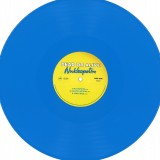
subsequently released in different versions - track existing / versions / durations / artwork - in eight other countries between 1996 and 1998. It contains the singles ‘Rebel Rebel’ and ‘Sex Drive’. The album was not released in the UK, until a re-worked version was included within the ‘Sophisticated Boom Box MMXVI’ box set in 2016. This vinyl edition replicates the original Japanese version, which features longer versions ‘Nukleopatra’ and ‘Sex Drive’, along with rerecorded versions of ‘Unhappy Birthday’ and ‘Gone Too Long’, which appeared on “Fan the Flame (Part 1)”. This special 25th Anniversary Edition of “Nukleopatra” is the first time that the album has been commercially released on vinyl in its original configuration, with original playing durations and will be pressed on 180g heavyweight blue colour vinyl.
Big Crown Records is proud to present Adult Themes, the latest full length offering from El Michels Affair. This album takes the band's "Cinematic Soul" aesthetic literally and sends the listener on a journey through a whirlwind of moods and energies. With their 2005 debut album Sounding Out The City, EMA spearheaded an instrumental funk / soul movement that inspired a slew of bands and even lead to the creation of a few independent record labels. El Michels has since lent his signature sound to artists from Adele to Dr John, Lana Del Rey to Aloe Blacc, and a who's who list of others. In 2016 he co-founded Big Crown Records and has since produced the lion's share of its output. A short stint as the touring band for Wu Tang Clan in 2007 led to the cult classics Enter The 37th Chamber (2009) and Return To The 37th Chamber (2017). Adult Themes marks the long awaited, highly anticipated return to an album of original compositions from El Michels Affair. In 2017 in between producing, playing, and recording on other artists' records Leon Michels began creating compilations of short interludes intended to be sampled by hip hop producers. Some of these wound up becoming songs by Jay Z & Beyonce, Travis Scott, and Don Toliver. These minute-long snippets were inspired by the dense moody work of `60s composers like David Axelrod, and Francois de Roubaix, as well as Moondog's brand of classical jazz. Michels was having so much fun creating these instrumental / orchestral nuggets that he decided to expand on some of the ideas and create what would become the soundtrack for a movie that has yet to be made, an imaginary film entitled "Adult Themes." The album plays like the colors on an artists pallet. Songs like "Rubix" and "Villa" are densely orchestrated with the hard-hitting drums that El Michels Affair is known for. On "Life of Pablo", Leon's son makes his first appearance on record and intros a song with an epic arrangement and a moving mood. "Hipps" is a drum heavy ballad that could've easily fit on EMA's debut record, Sounding Out the City. Other compositions like "The Difference" and "Kill The Lights" are bare, melodic mood pieces with sparse drums and sophisticated chord movement. All of these tunes come together to make perfect backgrounds for dialogue and action. One of the beautiful things about instrumental music is that the listener can decide what the narrative is. With Adult Themes El Michels Affair has created a "choose your own adventure" in musical form.
THE ONLY DIFFERENCE BETWEEN ONE AND NONE IS N TRANS HUMAN OBJECT (THO) //////////////////////////////////////////////////////////////////// THE SUPERIOR FUNCTION ************************************************ X1N SAYS: //////////////////////////////////////////////////////////////////// IN THE VAST SURFACE OF ALL MATHEMATICAL EQUATIONS, ONE CAN SENSE EVENTS WHICH SEEM TO COME FROM OTHER DIMENSIONS - RIPPLES AND PATTERNS. THE ZERO POINT NINE INFINITE NUMBER LINE NEVER REACHES ONE, YET IS ONE, NONETHELESS. 0.9999... READ THAT SEQUENCE LIKE A MANTRA. A MANTRA OF DEATH. //////////////////////////////////////////////////////////////////// “I TALK IN ALPHA NUMERALS” ************************************************ ### denotes “end”. No more messages to follow.
Los Angeles based hardcore punk band Entry shall release their debut full length, Detriment via Southern Lord on 17th July on LP and digital formats. This follows their sold-out 7” No Relief on Dune Altar.
Entry started as a project between Sara G and Clayton Stevens (of Touché Amoré) inspired by the likes of Discharge, Minor Threat, Converge, Tragedy, The Cramps, and The Exploited. The punk community at large is as inspiring as it has ever been to them.
Compact and ferocious, Detriment is a diverse album and a breath of fresh air in the genre. The debut showcases Entry’s appreciation for different aspects of punk and hardcore, and their imaginative songwriting that is condensed into nine succinct musical statements of intent.
As a collective, Entry firm belief in the power of punk and the uniting nature of music, and with Detriment they reflect themselves and their community with integrity and authenticity, this caught the ears of Southern Lord label owner Greg Anderson. He remarks "The unhinged intensity of Entry’s live performance at the last Power of the Riff fest blew me away. They embody many of the characteristics of powerful underground music that I have been obsessed with since my youth!.”
Entry are:-
Sean Sakamoto- Bass Guitar
Sara G- Vocals
Chris Dwyer-Drums
Clayton Stevens- Guitar
Bass player Sean Sakamoto plays in the indie pop band Sheer and is a recording engineer in LA, while drummer Chris Dwyer is also a recording engineer in LA, Sara’s musical origins come from punk bands in Pennsylvania, and Clayton also continues to play guitar in Touche Amore on Epitaph Records.
Entry have played the Olympia Hardcore Festival, and Ceremony's Homesick festival in Los Angeles. Opening for bands like Career Suicide, Krimewatch, Sunn, Dangers, Despise You, Sect, and Show Me The Body.
All sounds recorded at various locations in Europe, South America and at EMS, Stockholm using the Buchla 200 modular synthesizer.
soar, all sounds recorded with Klara Lewis in Montreal 2018
Mastered by Russell Haswell. January 2020
Cut at Schnittstelle, Berlin by Andreas Kauffelt, January 2020
Image : Mark Hogben
Layout: Nik Void
The last two years have seen me maintaining an association with an unusual bedfellow, death. The loss of Mika Vainio, as well as three members of my own family, has had a profound effect on me and spurred a lengthy reflection on life, death, and everything in between.
Parallelly, while studying the philosophy of science, I came across shadow photons:
"Tangible photons are the ones we can see or detect with instruments whereas shadow photons are intangible (invisible) detectable only indirectly through the interference effects on the tangible photons.
There is no intrinsic difference between tangible and shadow photons: each photon is tangible in one universe and intangible in all the other parallel universes.
They travel at the speed of light, bounce off mirrors, are refracted by lenses, and are stopped by opaque barriers or filters of the wrong colour. Yet, they do not trigger even the most sensitive detectors. The only thing in the universe that a shadow photon can be observed to affect is the tangible photon that it accompanies. This is the phenomenon of interference.
Shadow photons would go entirely unnoticed, were it not for this phenomenon and the strange pattern of shadows by which we observe it.
Thus the existence of a seething, prodigiously complicated hidden world of shadow photons has been inferred."*
I have drawn a parallel between shadow photons and death. The interference phenomena, parallel universes, and how shadow photons affect tangible photons they accompany, offer, in my opinion, similarities, an unknown universe which is death and how we, remaining tangible human beings, are affected. This quest has led me to be more willing to accept chaos in my life and to conclude that Death is perfection, everything else is relative.
Black Truffle’s documentation of the prolific recent work of legendary American composer Alvin Lucier continues with Works for the Ever Present Orchestra. This is a very special release for the composer, as it presents pieces written for the thirteen-member Ever Present Orchestra, formed in 2016 exclusively to perform Lucier’s works. At the heart of the ensemble are four electric guitars, an instrument Lucier began composing for in 2013 with Criss-Cross (recorded by two core members of the Ever Present Orchestra, Oren Ambarchi and Stephen O’Malley, for whom it was composed, on Black Truffle 033). Through the use of e-bows, the guitars take on a role akin to the slow sweep pure wave oscillators heard in many of Lucier’s works since the early 1980s, but with added harmonic richness. Like much of Lucier’s instrumental music, the pieces recorded here focus on acoustic phenomena, especially beating patterns, produced by the interference between closely tuned pitches. The work presented here is some of the richest and most inviting that Lucier has composed. Though all of the pieces clearly belong to the same continuing exploration of the behaviour of sound in physical space and make use of related compositional devices, each takes on a strikingly different character. Titled Arc, for the full ensemble of four guitars, four saxophones, four violins, piano and bowed glockenspiel inhabits a world of sliding, uneasy tones, punctuated by a single piano note. Where Double Helix, for four guitars, rests on a pillow of warm, low hum, EPO-5, for two guitars, saxophone, violin, and glockenspiel possess a limpid, crystalline quality. Accompanying the four new compositions are two adaptations of existing pieces for radically different instrumentation, demonstrating Lucier’s excitement about the new possibilities suggested by this dedicated ensemble. Works for the Ever Present Orchestra is an essential document of the current state of Lucier’s continuing exploration, as well as offering a seductive entry-point for anyone who might yet be unacquainted with his singular body of work.
Presented in a deluxe gatefold sleeve with cover artwork and liner notes from Alvin Lucier. Includes a download code featuring hi-res vesions of the LP material. The download code also includes the bonus Adaptions for the Ever Present Orchestra featuring two pieces (“Two Circles” and “Braid”) that are not included on the LP version. Mastered by Rashad Becker. Design by Lasse Marhaug.
Ghent's Steiger are a piano trio, but not in the classical sense. With their versatile style, influenced by different musical genres such as jazz, rock, pop, classical and electronic music, they try to find a balance between composition and improvisation through the use of experimentation and electronics.
Considered pioneers of the Belgian jazz crossover scene, Steiger have been active for 6 years and have recently found themselves performing at major jazz venues in Flanders, picking up numerous accolades along the way.
The trio's highly anticipated sophomore album 'Give Space', released 14th September on Sdban Ultra, was recorded at 7 different locations, with the music composed to fit and fight these locations within a dialogue of acoustics, atmospheres and appetition. Field recordings, reverbs, ambient sounds, all collected within the search for the unpredictable, were given space within this dialogue as the essential part of the encounter. As a result, the locations emerge somewhat as a fourth member of the trio. The music - sometimes fixed, sometimes completely free - takes on an ever-changing journey into their multi-faceted world.
Multidisciplinary NYC artist Gavilán Rayna Russom launches her own label Voluminous Arts, dedicated to highlight electronic and experimental artists whose work challenges fixed categories of genre and categorization. Her aim is to create a platform for multidisciplinary work and events. The inaugural release being her second solo album as Gavilán Rayna Russom 'Secret Passage', following up last years 'The Envoy, an homage to the East Side Rail Tunnel in Providence, Rhode Island, and the friendships she made there.
In Rayna’s words:
“I grew up in Providence, Rhode Island in the 1970’s and 80’s. The booming jewelry and textile industries of the previous decades had pulled out by that point. The Italian mob ran most details of the day to day operations of the city. As kids coming up in that environment, before the internet, me and the people I hung out with didn’t know anything else and we worked with what we had to entertain ourselves. We found places that had been forgotten by market interests and made them spaces of creative community building. One of the most special of these places was the East Side Rail Tunnel. Running for almost exactly one mile beneath the city’s streets, the tunnel and nearby Crook Point Bridge were unsupervised autonomous zones where I tasted the possibilities of a world without surveilance. The tunnel was particularly important in my creative development because not only was it a marginal zone apart from monetized spaces of creative consumption, but it also had specific experiential properties. It had a bend in it which meant that when you got to the middle of it you were in complete darkness, and I learned quickly that when you spend enough time in complete darkness you start to hallucinate, which I liked. The acoustics were also remarkable; long natural delays and harmonic-reinforcing reverberances. Making any sound in there added layers of acoustic effects which made noises physical and fluid and, combined with the complete darkness, absolutely dissolved boundaries between internal and external experience. I started hanging out there when I was 14 and continued to return there regularly until development, gentrification and policing eventually made it inaccessible. By the mid ‘90s it was sealed off with progressively more impenetrable barriers. Nowadays it looks very different. This music is about some of the significant experiences I had in this beautifully neglected place and the people I had them with.”
‘Reality Tunnels’ is a concept that was originally introduced by Robert Anton Wilson in his 1983 book ‘Prometheus Rising’. In essence, the concept of a reality tunnel relates to an idea on how we create our own perspective – the subjective filter that we each apply to the world around us; the things we perceive and what our consciousness deems worthy of attention, IE what we see and hear is entirely relative to what we do not.
At points angular and uncompromising with levels in the red, frequencies pushed out and EQ curves stretched into strange new shapes, Pinch mixes both low and hi fi on this boldly distinct sonic statement. It sees him flexing years of production skills – but unconventionally so – knowing well that safe predictability and rounded polish don’t get the most interesting results.
Dark trip hop Bristolia segues into blistering jungle on album opener ‘Entangled Particles’, before planet-hopping onto the spiky insidious grimestep of ‘All Man Got’, featuring the rugged rasp of OG warhorse Trim.
Beginning a triptych of future techno, ‘Accelerated Culture’ offers the album’s most relatively straightforward moment, albeit one of scorching, anthemic dancefloor heat. Delving deeper into the vortex is the synapse sparking wobbler ‘Returnity’, before ‘Finding Space’ reaches to the cosmos’ far-flung, glowing outlands.
Back to an urban reality is ‘Party’, where a subtly menacing sense of dread is ignited by Killa P’s incremental flow, which ramps-up and pairs-back the intensity in unexpected ways. Still moving freely between different realities, ‘Back To Beyond’ is beautiful gloaming ambience, executed with equal fine-tuned grace as the genre’s masters.
Jamaican vocalist Inezi lends sweet tones to the slow burning, roots-meets-modern-bass spiritual ‘Change Is A Must’, and on ‘Non-Terrestrial Forms’ an atmospheric, misty steppers intro segues stealthily into fiercely dystopian, amen-fuelled jungle tekno; marking one of several surprise attacks on the album, where a subtle-slight-of hand shoots the intensity level dynamically up.Closing as it begins, the album is bookended by a piece that recalls the dark, intricate soundscapes of Massive Attack’s ‘Mezzanine’ and Tricky’s ‘Maxinquaye’ – found here in ‘The Last One’s scorched, smoky rocker.
Hit the vinyl double pack for an exclusive and quite unique sounding 120bpm glitchy techno roller featuring man like Trim once again and live cello recordings.
‘Reality Tunnels’ is a concept that was originally introduced by Robert Anton Wilson in his 1983 book ‘Prometheus Rising’. In essence, the concept of a reality tunnel relates to an idea on how we create our own perspective – the subjective filter that we each apply to the world around us; the things we perceive and what our consciousness deems worthy of attention, IE what we see and hear is entirely relative to what we do not.
At points angular and uncompromising with levels in the red, frequencies pushed out and EQ curves stretched into strange new shapes, Pinch mixes both low and hi fi on this boldly distinct sonic statement. It sees him flexing years of production skills – but unconventionally so – knowing well that safe predictability and rounded polish don’t get the most interesting results.
Dark trip hop Bristolia segues into blistering jungle on album opener ‘Entangled Particles’, before planet-hopping onto the spiky insidious grimestep of ‘All Man Got’, featuring the rugged rasp of OG warhorse Trim.
Beginning a triptych of future techno, ‘Accelerated Culture’ offers the album’s most relatively straightforward moment, albeit one of scorching, anthemic dancefloor heat. Delving deeper into the vortex is the synapse sparking wobbler ‘Returnity’, before ‘Finding Space’ reaches to the cosmos’ far-flung, glowing outlands.
Back to an urban reality is ‘Party’, where a subtly menacing sense of dread is ignited by Killa P’s incremental flow, which ramps-up and pairs-back the intensity in unexpected ways. Still moving freely between different realities, ‘Back To Beyond’ is beautiful gloaming ambience, executed with equal fine-tuned grace as the genre’s masters.
Jamaican vocalist Inezi lends sweet tones to the slow burning, roots-meets-modern-bass spiritual ‘Change Is A Must’, and on ‘Non-Terrestrial Forms’ an atmospheric, misty steppers intro segues stealthily into fiercely dystopian, amen-fuelled jungle tekno; marking one of several surprise attacks on the album, where a subtle-slight-of hand shoots the intensity level dynamically up.Closing as it begins, the album is bookended by a piece that recalls the dark, intricate soundscapes of Massive Attack’s ‘Mezzanine’ and Tricky’s ‘Maxinquaye’ – found here in ‘The Last One’s scorched, smoky rocker.
Hit the vinyl double pack for an exclusive and quite unique sounding 120bpm glitchy techno roller featuring man like Trim once again and live cello recordings.
Mooring the 'Train Of Thought' at Hamburger Hafen, Latvia's R_R_ delivers aquatic ambience, buoyant electronics and tidal rhythms on the Growing Bin. Hold this shell(ac) to your ears and you’ll hear the sea…
As we hasten towards the inevitable Waterworld of the next century, Latvian composer, sound artist and lecturer Reinis Semēvics charts our safe passage to dry land with his debut album 'Train Of Thought'. Inspired by the rhythmic movement of water and how its rippled reflections bend our perception, Reinis sculpts an immersive sound collage - a precise mixture of field recordings and self-made sounds which swell and swirl as we bathe in their beauty.
Bookended by the Baltic's roar at the Bay of Rīga, 'Train Of Thought' drifts from the harbour to the open sea, conveying the restful calm and frenetic power of a body of water throughout. Misty pads and delicate piano conjure lapping waves and blue skies, bubbling sequences ripple up from the deep and cascading melodies fall around hypnotic rhythms, each distinct droplet offering a different feeling and mood. One moment flows into the next, nine rivers pouring into a single ocean of sonic bliss.
The alias R_R_ is a tribute to his grandfather, the composer Ģederts Ramans, whose influence helped set Reinis' sonic journey in motion. We're very happy he's decided to stop off in the Growing Bin, and we're sure you will be too.
Patrick Ryder