Fideles is the joint moniker of Italian duo Daniele Aprile and Mario Roberti, who have carved out a niche for their distinctive brand of deep, techy house on noted labels such as Defected, Be As One, and Marco Resmann's Upon You, among others. Here on their first outing for Poker Flat Recordings, the duo cook up four courses of lean, focussed tech-house for Steve Bug's seminal imprint. 'Detuned' starts the journey - an edgy, tense groove exhibiting the boy's masterful sound design and use of space to create a thick, intoxicated atmosphere. 'I'm Rude' is more direct - a thumping bass drum introduces a low slung bass groove, slowly evolving and mutating into a true party-starter. 'Worthy' uses similar building blocks but delivers a different vibe altogether, revelling in a minimalist production aesthetic and cheeky bass riff. 'Ran Baran', the title track, is another lesson in great production - each element perfectly balanced to create an atmosphere of controlled mayhem - which is exactly the response this entire EP aims to instigate on dancefloors.
Buscar:differ ent
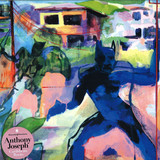
Strut team up for the first time with respected French label Heavenly Sweetness for the brand new album by the inspired poet, novelist and musician, Anthony Joseph.The Caribbean is an influence that runs through Joseph's discography, obliquely or headon, suggested or on full display. It resonates on each of his albums, from the furious trance of 'Bird Head Son' to the more polished 'Time'. On 'Caribbean Roots', he has now decided to turn a guiding thread and a reference point into a communications cable - a powerful bond that makes light of distance and braves the seas to link his island to that of his friends in the Caribbean arc, dancing to the strains of tumbélé and mendé only a few miles
from Port of Spain where people live it up to rapso and soca beats. Caribbean Roots' represents a return to his roots for Anthony Joseph, who has always remained true to a powerful, deep-seated sense of his Caribbean identity. Having started
out as a joint project with the outstanding percussionist Roger Raspail (Cesaria Evora, Papa Wemba, Kassav), 'Caribbean Roots' swiftly grew into a creative force incorporating
the rhythms, sounds and vibes that rock the Caribbean from San Fernando, Scarborough, Kingston and Les Abymes to Port-au-Prince and Havana. Backed by a band made up
of a blend of local musicians, the album attempts to unite the different islands into a single entity whilst ensuring that the identity of each is in no way diluted by the mix instead creating a richer and stronger alloy. The saxophones of Shabaka Hutchings (The
Heliocentrics) and Jason Yarde, the trumpet of Yvon Guillard (Magma), the bass of Mike Clinton (Salif Keita) and the trombone of Pierre Chabrèle (Creole Jazz Orchestra) all combine to form a group of Caribbean All Stars to which Andy Narrell, the master of the steel pans, brings ringing drum beats. The album features bursts of catchy rhythms and slow percussive riff progressions, as on a film soundtrack, incandescent voodoo funk and rhythmic high-speed frenzies shot through with free-jazz sax. This reunion of the Caribbean diaspora was never meant to come up with a formula divisible into eleven separate tracks - its goal was to explore and discover new sounds. And all of this under Anthony Joseph's guidance, as he spins his lyrical blend of afro-futurism and surrealism, commemorating the Caribbean people's sometimes violent resistance to colonialism. Anthony Joseph, one moment a chronicler reciting his text against a background of simple percussion, the next a storyteller possessed by the power of a hypnotic bassline, then an adventurer chanting among mangroves where the rhythm section and the brass have created an impenetrable thicket. At turns, an MC too, strutting to a fat, throbbing groove in vocal tandem with Sly Johnson or David Rudder to pay tribute to Mighty Sparrow, the undisputed and indisputable king of calypso
Lunapark is the trio of Burkhard Ballein, Klaus "Schlips" Gebauer, Reinhard "Zoppen" Benisch from Wuppertal, Germany. Formed in 1981 when the boys were dissatisfied with their surrounding musical environment. They packed their instruments and a cassette recorder and set off to create their own brand of Neue Deutsche Welle (NDW "New German Wave'). Their influences included The Beatles, Colloseum, Roxy Music, Frank Zappa as well as Sex Pistols, Ian Dury & The Blockheads, Blondie and The Cure. Gefangene Vögel' ('Prisoner Birds') is their debut album released by Intakt Records, Stuttgart in 1982. Utilizing a simple set up of guitar, bass, drums, drum-computer, Korg MS-10 and Korg MS-20 they recorded 10 tracks that make up the album. Songs bridge the Belgian-type industrial and cold sounds with NDW quirkiness. In the vein of Sad Lovers and Giants, and Schleimer K they blend post-punk and new wave music with electronic influences. All songs are sung in German with monotone vocals and epitomized the urban Zeitgeist of the Cold War. All songs have been remastered for vinyl by George Horn at Fantasy Studios in Berkeley. The vinyl comes housed in a replica of the original jacket design, which features a drawing of birds on a grid. There are 4 different color versions of the screen printed jacket: blue, yellow, magenta and turquoise. Each LP includes a copy of the double sided 11x11 insert that was included with the original pressing with lyrics and photos.
Series-A was the duo of Sam Anderson aka DJ Maestro and Dave Webb aka Kid Fresh. Sam and Dave both grew up listening to the sounds of the Electrifying Mojo on WJLB in Detroit. They met in 1983 at a DJ gig that they were both hired to play. In 1986, they collaborated on the Nu-Sound II Crew project. After developing a friendship with Juan Atkins, they became hip to the emerging new club sounds that were to become electro and techno.Their subsequent project, Series-A, was named after different car model numbers, but also hints at the evolution of humankind into a new species.
In 1987, Series-A recorded the single Evolution 5 Technology' at Spectrum Sounds Studio in St. Clair Shores, Michigan. Their set up was a vocoder, E-mu Emulator III, Roland 909 drum machine, and an Otari 24-Track recorder. They landed a record deal with Satellite Records in Burbank, California, which had been founded by Pete Moore of The Miracles. After pressing 50 promotional copies, the label ran into financial problems, and the record never reached a full release. Taking cues Kraftwerk, Grand Master DST, Grandmaster Flash & Jam Master Jay, Series-A created dark electro beats in an era when sampling appeared to be the future of music. Lyrically the song addresses our species' entry into the technological age. For this EP reissue, the 7' Mix and Dub Mix are included on the A-side. On the flip is a new remix by prolific Ann Arbor producer JTC, an alias of Tadd Mullinix (aka Dabrye, SK-1, & Charles Manier). JTC speeds up and expands the song to seven minutes. Drawing on influences from Ron Hardy to Jeff Mills, he drives around suburban techno landscapes while simultaneously launching the listener into deep space.
All songs have been remastered for vinyl by George Horn at Fantasy Studios in Berkeley. The jacket is specially designed by Eloise Leigh and features a cyborg fossil motif with RGB color band and gradients. Each copy includes a post card with with notes.
The new Analog Solutions 018 , label owned by the Spanish producer Eduardo de la Calle, will be released in May.This time presenting a various artists, by Kristina and ORBE, that combine an ep with a personal character, full of floating arrangements and inherently techno flavor, but sophisticatedly Dub. It seems that the label Analog Solutions will take refuge next references on collaborations lauching a series of various artists so better to be alert .
Different artists will take the place like Japanese Takairo Oishi, already on catalog reference 015 from the spanish label, and also appear in the reference 019 coming soon.
On side A we have 2 tracks of ORBE, the first A1 titled "Modern Cicles it is certainly an exercise in resilience and compromised to the authentic,
where Fernando Sanz aka ORBE develops a track infinite and penetrating where arrangements certainly exemplify the finest and purist made in Spain techno.
The second ORBE track A2 , entitled "Beyond The Ubiquity" reflects the good moment that Madrid based producer ORBE is going on with , and drops certainly an epic ideal for closing sets track with melodic nuances and highly useful for high voltaje DJ,S .
The novel but solid Kristina opens side B1 with his tool "Hydragea", where again, based dub elements, manages to build a disciplined rhythmic atmosphere , at the same time delicate, and that will delight lovers techno more fluctuating.
In the side B2 kristina it attack with "Dicentra" .A extremely funk track with multiple hi hats variants, and where the first minute of listening past, one enters a deep cerebral hypnotism .Dicentra is without any doubt one of the highlights of the record, where Kristina synthesized based revers again and again succulent and repetitive sounds, which make the reference number 18 Analog Solutions certainly Essential to find a place in the case of any dj.
Who would have thought that Gerd Janson and Phillipp Lauer, aka The Tuff City Kids, delivering a 'Rocker' mix for Alter Ego, wich is not only one of their best up to this date remixwork, but also probably one of the biggest electro-summerhits in 2016. The Tuff City Kids production work is quite similary eclectic like in Roman Flügel and Jörn Elling Wuttke's original version. They know exactly how to juggle with different styles, until they come up with a fresh new sound that transforms an ordinary rave into an unforgettable happening. In this case they are mixing real performed krautrockdrums, 90's prototrance-balearicstrings and an unexpectedly new, enthusiastic way of working with Alter Ego's trademark melodyhook. This melody-theme is dripping formally out of every programmed bass and synthesizer line without beeing to cheesy, superficial or over the top. Even their 808 electro-remix for the track Gate 23 is keeping to the premise of the legendary New York punk rock band The Ramones, that a good party track should not illustrate the effects of psychedelic drugs, the music has to be the pill itself. The rich details and playfulness of the mixes are showing Gerd Janson and Phillipp Lauer as real fans of the original versions.In the same spirit, they are trying to melt pop-appeal, art-sensibility and clubhit-function in one piece of vinyl.
You can call them a »supergroup«, but Moderat understands that it's the »group« aspect that makes them interesting.
Gernot Bronsert, Sebastian Szary (aka Modeselektor) and Sascha Ring (aka Apparat) have been working together as a trio almost as long as their two separate projects have existed. We've seen their collaboration grow from »laptop boy-band,« (as Ring playfully puts it) in 2003—with computers synched using software Ring himself had written, because at the time, »there was just no live performance software around.«
Ring confesses that Moderat wasn't »really meant to be a recording act ,« with Bronsert agreeing that, »it was really just about fun.« This maybe explains the six-year break that followed Moderat's first EP before they finally returned in 2009 with their selftitled debut album. Intent on creating something that contrasted with their own projects, the group started the cycle which blossoms on their second album, aptly titled II, culminating now in the trilogy's completion, III. Whereas I was the combination of two separate entities, II brought the members closer together, and in III, the final chapter in the trilogy, Moderat sounds like one band.
Both Szary and Ring will tell you that Moderat moved progressively from making tracks towards a more traditional writing approach of making songs - a process more fully realized on III. That's partly why the vocals have become more prominent. Mostly, you hear Ring singing (there are no guests this time), as he so often does as Apparat, but listen closely to »Ghostmother« to hear Bronsert and Szary backing him up. Stepping out of their comfort zone is the kind of thing that helped create their interplay between pop and electronics; doing it right won them the Resident Advisor Best Live Act honor as early as 2009, and they continue to gain popularity while remaining independent and underground.
Szary describes the idea behind Moderat as, »imagin(ing) yourself sitting in the cinema and watching a movie with an incredible soundtrack.« This is true with Moderat in general, but III in particular pairs an emotional pull with sensual imagery, creating dynamic sound and depth with lyrics such as »the calming scent of lavender fills the air,« or »burning bridges light my way.« You'd have
to ask them whether they're intending to manipulate the listener in the same way that John Williams or Hans Zimmer might with traditional orchestras.
One of the best parts of Moderat is their use of electronics to achieve orchestral diversity. They update the songwriting tradition with an intriguing palette, borne of careful attention and skill, informed by their »experiences with sounds of nearly 25 years of suband club culture.«
Let's not forget that these three were brought together by Berlin's now legendary rave scene. With this as their common foundation as individuals, III signifies Moderat's maturation in modern pop — an achievement shared under their collective belt.
Bronsert explains that, »the new album isn't based on jams. We went into the studio and knew exactly what we needed to do.« This is reflected in the sophisticated themes explored in the music. Take »Ghostmother,« which ponders inner peace, acceptance, fear of the unknown and how facing that fear often reveals something not so scary. Or »Running,« which is about being part of a mass that constantly needs to move to function, but doesn't have the power to decide the direction of motion. Or how about the wisdom of »Reminder,« which recognizes the world for its flaws and our role we've each played in that, but choosing to act differently and light the way to something better.
Given that, it's a bit of an understatement when Bronsert says, »I'd say our music has definitely matured.« Successful in their own endeavors, now they've mastered the »group«. It doesn't mean the end of Moderat, but it does mean they'll have to find something else to excel in.

+ Downloadcode!
The first Late Night Tales release of 2016 is a very special project by Sasha.
Imagine listening to music inspired by Frahm, Richter and Steve Reich, but made by one of the UK's leading house and techno DJs. Away from the hubbub of the club, the craziness of Ibiza, there's a contemplative side to everybody. Forget the beats and the sweat and the billowing anthems; this quiet, undulating, at times pastoral piece is less about songs and anthems and more about texture and atmosphere. 'Scene Delete' is a side of Sasha you've never heard before. I love post-minimalist modern classical, I love to listen to something completely different that's quite hypnotic as well. It almost purges the system.
About three years ago, my collaborators David Gardner and ThermalBear and I wrote a song called 'Bring On The Night'. I sent it to Ultraista and within a few days she sent it back with this amazing vocal on, with Nigel Goodrich playing keyboards. We tried to do club mixes but we just couldn't get it right. So it sat there doing nothing.
Tracks like this kept building up, until finally last summer my frustration boiled over. We'd made so many tunes that I couldn't remember the names of half of them: What was that thing with a bass sound and a string line It drove me mental. At the same time as we were logging these tracks, I was listening to the Jon Hopkins' Late Night Tales and I thought a lot of the music we'd been working on was in the same vibe. So I sent the music over to Late Night Tales and they really liked it.
Initially, I thought we'd just do a Late Night Tales compilation with maybe a few pieces of my own music. But as we went through everything we'd worked on in the last two years, we realised we had about 50 pieces of music. So we started editing and compiling: 'Scene Delete' is the end result.' - Sasha, January 2016
Think of 'Scene Delete' as somewhere between a mix album, an artist album and a gentle stroll through the soundtrack in your mind. Make sure you switch off the lights before you enter.
'Sidetracking - Part 1: Prologue' is the first vinyl taste of Jona's de- but album project for Alex Niggemann's forward-thinking AEON la-bel. The musical puzzle will be completed in February 2016 with the release of a second vinyl instalment, featuring 6 more original tracks, and the full 10-track album on CD format. Created over the course of two highly creative years, the concept for 'Sidetracking' was for Jona to invite some of his musician and producer friends to collaborate with him in the studio and compli- ment his album's solo productions. This impressive coming together (to be fully revealed over the coming months) features Varoslav (Rue de Plaisance, Paris), Usio (Studio Barnhus), David K (Cocoon), Bo- livian percussionist Daniel Aguilar, Italian pianist Giovanni Verga, and Edinburgh-based producer The Reverse Engineer. Driven by his desire to explore new sound perspectives and ideas, Jona has carefully forged his career path by consistently creating exciting and forward-thinking music. His previous label outings: 'Traffic' on 'Lost Tapes Volume 1' (AEON010) and 'Gemini EP' (AE- ON016) have seen him fine-tune his own unique sound. By incor- porating a wide range of styles into his tracks, Jona strives to break down unnecessary boundaries and explores new ideas and ways to ignite that hallowed dancefloor flame. It is therefore no wonder that his collaborative creations for 'Sidetracking' have yielded such stimulating aural delights. Fittingly, the album prologue opens with a track whose style is heav- ily influenced by the jazz music that Jona was so in love with dur- ing his formative years. Calling on the somewhat mysterious Usio (whose 'Kuwa Huru' LP on Studio Barnhus should be checked by everyone) to join him in a studio jam, has resulted in 'The Chase', an utterly compelling afro-beat influenced percussive groove, topped with swirling funk-fuelled stabs and strings, mesmerising chiming piano, and a large helping of pure, hip-swinging goodness. Taking 'The Chase' on an entirely different and yet perfectly com- plimentary twisted trip, AEON family members Simone Sinatti and Marco Paladin (aka Speaking Minds) conjure up a futuristic technoid disco demon that is all about throbbing energy, sweat, darkness and hissing smoke machines - perfect ingredients for an unforget- table strobelight serenade. Changing the mood entirely and cutting the tempo to a dublicious skank, 'Transmission Breakdown' sees Jona's experimental creative juices in full flow, as he teams up with Edinburgh-based digital com- poser and sound artist Dave House (aka The Reverse Engineer) for a delightfully hazy downtempo jam. Both as an artist and a DJ, Manchester's Marcus Intalex has been at the forefront of soulful, musical drum & bass for what seems like forever. A passion for techno has always run deeply through his music and under his Trevino moniker he is also a powerful creative force (check his recent 'Front' album to get the full picture). Here, he takes 'Transmission Breakdown' on a magical excursion, filled with subtle, hypnotic, evolving energy, anchored with an irresistible pul- sating bassline throb - a perfectly synergetic interpretation to round off Jona's 'Sidetracking' album prologue in style.
- 1: In My Heart For A While 06:44
- 2: Omens 03:46
- 3: Once Upon A Time 0:26
- 4: Tomorrow's Plan 06:39
- 5: A Safe Place 03:42
- 6: Sweet Motherfucker Blues 0:5
- 7: Life Beyond The Wall 04:1
- 8: No More Prohibited Games 06:17
This 8 track acoustic guitar album is a big change for the experimental musician Maurizio Abate. After many years of psychedelic albums in which improvisation was combined with a creative recording process, he composed an entire album based on a more traditional method: acoustic guitar solo.
During winter 2014 he organized a series of italian screenings preview of the documentary ' In Search of Blind Joe Death: The Saga of John Fahey' and that occasion encouraged Maurizio to experience the guitar solo language.
After playing these compositions at live shows, Maurizio decided to record the tracks in an almost definitive way, nevertheless the live interpretation of the songs is always different and mutating.
He recorded alone in his house between Christmas 2014 and new year's day on a reel tape recorder, performing acoustic guitar and, in a couple of songs, electric guitar and harmonica. "Loneliness, Desire and Revenge" it's an intimate and confidential album, it evokes moods and emotions of the musician during the past 2 years.
- A1: Actress - Xoul Particles (Prins Thomas Version)
- A2: Blacknecks - Don't Dream It Be It (Prins Thomas Version)
- B1: Box Saga - Zen And The Art Of Deadlines (Prins Thomas Edit)
- B2: Joachim Holm & Alejandro Mosso - Tre Melodi (Prins Thomas Version)
- C1: Hieroglyphic Being - Imaginary Soundscapes 9 (Prins Thomas Version)
- C2: Blacknecks - Don't Dream It Be It (Prins Thomas Short Version)
- D1: Ü - The Subdubba Beat (Stockholmia Glue Mix - Prins Thomas Edit)
Dear Vinyl Enthusiast / DJ,
The tracks on this 2 X 12" received some special individual treatment which I hope you'll enjoy listening to or playing in your local disco as much as I did making the. Box Saga has been a firm favourite of mine for a good 20 years already and although it's baggy pants and loose groove is exactly why I love it so much I thought it would be fun to do a slightly different take on it.
Ü is a recent fave of mine but as the record is super long and has a very DJ-unfriendly ambient intro, I gave it a couple of chops and hope you're brave enough to bring it to the dancefloor where it belongs. The tracks by Joachim Holm & Alejandro Mosso, Actress, Hieroglyphic Being and Blacknecks are all quite sparse to begin with and with the approval of all involved you can now smile or cringe at these "Versions" where I "join the band" on some of my recent favourite records. Thanks to the artists and labels involved for letting me use their music.
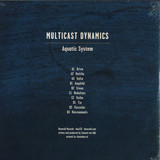
"Aquatic System"" is the second installment of the series, written and composed in two remote geographical places - namely at waters in Finland and Fuerteventura. Inspired by the complexity of water, its movement, various forms, inhabitants and hidden energy, the album was assembled mainly using synthesizers and processed field recordings of the ponds, streams, lakes and oceans of the different locations. With a vibrant story and conceptualization the focus lies in taking the listener on a observing, thoughtful and reflective journey through the aquatic system of our waters. Aquatic System opens with an impression of a frozen surface imagining icy and calm underwater movements underneath. Soon a slow process of melting begins and while the water starts to move in tiny streams of sound, small lifeforms evolve, curiously sending out small pulses in their flowing and constantly moving habitat. The aquatic nature awakens. Zooming out to larger waters high frequencies arise and colliding forms become audible. Larger marine life forms can be faintly heard when entering a much wilder environment, sensing sound-swirls of wind, foaming water tops and impressive large waves crashing on dark rocks. Finally ending at the shore, where the great ocean appears on the horizon, the environment is surrounded with moisture. From the calm reflective landscape derives an inward moment, recalling the organic and atmospheric quality of the sound journey. ""Aquatic System"" has been developed into an audiovisual performance together with visual artist Emilia Kwiatkowska and was performed several times in Spain and Finland, before the music has been finalized for the tracks.
After starting up the infamous Invite's Choice podcast series in 2011, Tim van Paradijs (a.k.a. Invite) notes that the time feels right to contribute to the techno scene in a totally different way. The long cherished wish of starting up a recordlabel under the Invite moniker and thus propagating his view on electonic music is now to be fulfilled.
Phonology is a deep and droning track which lends itself perfectly for building tension. Plenary is a more repetitive track with less of a deep vibe than the A-side track, but nonetheless is a track that manages to form a bridge between deep tracks and more straight forward ones. The EP is concluded by a short, funky and frivolous track dubbed Bisonspoor. All together the first Invite's Choice Records EP is a very versatile and thought through record with three tracks that stand alone and somehow still manage to form one entity.
- A1: John Kameel Farah - Fugue And Toccata On Hold
- A2: Ana Maria Rodriguez - Pocket Songs For Violoncello & Live Electronics
- A3: Zeitblom - Ikon
- A4: Eliav Brand - Individual Stuff
- A5: Guido Möbius - Entertain Premium
- B1: Juliana Hodkinson - Ring A Ring
- B2: Alex Paulick - Jingle Bells
- B3: Ari Benjamin Meyers - Telekom Ii For 2 Baritone Saxophones
- B4: Adi Gelbart - Musical Offering Against Telecommunication For
- B5: Magnetic Tape, Bass Clarinet And Electronics
- B6: Patric Catani - Baka Baka Dam
There used to be a time when ring tones were important. You were easily recognizable as one of the few people actually owning one of these new gadgets called ›mobile phone‹ (or ›handy‹ as the Germans say). Later you could make an important distinction by choosing a ›cool‹ ring tone...
In May 2014 the Festival »Doofe Musik« (»Stupid Music - Songs for Dreaming, Sedation and Forgetting«) took place at Haus der Kulturen der Welt (HKW) in Berlin. As part of the »Anthropocene Project« the festival focussed on escapism and the special function of music when retreating from reality. Detlef Diederichsen, curator at HKW, and Holger Schulze, Head of Sound-Studies-Lab Berlin, decided to not only focus on music which music lovers usually hate, e.g. ›Schlager‹, German folk music, Light Jazz, but also on ring tones.
The audio logo of Deutsche Telekom has been part of Germany's mobile phone culture from the very beginning so it acted as a starting point to question the usual concepts for ring tones. Using Christian Kellersmann's idea of the »Pocket Symphony« ten artists were invited to come up with adaptations of Telekom's audio logo. The results were performed for the first time during »Stupid Music« and once again in October of the same year when most of the recordings you can find on the album were made.
As you will hear: The short motif, as simple and unforgettable as it is, is ideal musical material.Everyone knows it, everyone has some sort of connection to it and these ten different versions, these ten different positions, open up the most varied possibilities for associations.
It is time that we take the ring tone seriously again. As the most reduced musical form that is the most-widely available in the whole world it contains enormous and unrealised potential!
For more than a decade, The Bunker New York has been a nexus point for the transnational techno community.
A chance meeting at The Bunker in 2011 brought together Gunnar Haslam and Johannes Auvinen (also known as Tin Man), who became fast friends and collaborators soon after, conceiving a joint project called Romans. The Bunker New York is proud to present Romans' Ambulare Aude, a collection of atmospheric acid techno tracks following the project's debut on Auvinen's own Global A in 2014."The Roman theme opens a world to explore beyond both of our past endeavours," says Auvinen, explaining
the conceptual genesis of the collaboration. "In the same way Ennio Morricone may have conceived the 'Spaghetti Western' genre by fusing together various contemporary motifs and moods to conjure the spirit of a past era, we're imagining stories and scenes from the Roman era, trying to manifest narratives while celebrating the distortions we see looking through the murky lens of time." And while Morricone may be a conceptual reference point for Romans, their sound is anything but—instead offering up a pair of murky, psychedelic acid-etched cuts (Emona, Delmenium) buffered by a gradually unfolding up-tempo floor-burner
(Coptos).
The record is the result of several extended improvisational jam sessions in Vienna and Brooklyn in which both
artists would play off of each other in the studio. Accordingly, each of the three tracks have a slight aleatory
air about them, as though both artists are being led down an unforeseen musical path, not entirely certain of
where it leads. This culminates in Delmenium, the record's B-side, a true techno journey, featuring an emotional, metallic synthesizer coruscating against a melancholy background.
"I like to think what we make sounds simultaneously like both of us and neither of us. We both push each other
in different ways," Haslam says, recounting their production process. Auvinen adds that "(Collaboration) offers a chance to hear from someone else's perspective. Working with others, I'm often reminded of how radically different the way people hear things, and relate to them in a musical context, can be."
Japanese imprint, Apt. International's project, TOKYO HOUSE UNDERGROUND presented Tony Lionni, entitled 'Loving You'. Lionni has had an impeccable record of releases, cropping up on revered labels such as Versatile, Ostgut Ton, Aesthetic Audio and Wave in the past three years so his releases are always worthy of note, and this for Japanese imprint Apt. International is no different.
Among a thousand projects, Para One is back on the dance floor with 'Club", a new album which was not meant to be one, but believe it or not: it's serious stuff! 'The 'Passion' album is the background for this, as I decided to reshape it for my live act, explains Para One. I've rebuilt the tracks entirely, making live versions for festivals and bigger clubs. Then I found myself with a totally different album. It's not a live album. The tracks have been modified and reinterpreted. It's my tribute to Soulwax's 'Night Versions". Subtlety was not really an option, it had to hit kind of hard. The tracks had to sound real in a club situation and people are now meant to dance to them! It's also a 'treasure hunt' kind of record with many references. It sounds like my DJ sets, when I mix many things and styles, old and new, because that's how a club should sound. It's a place where memories belong.' The pop, melancholic and highly danceable 'Passion", was meant to be listened to at home or on quiet dance floors, but 'Club' only retains the melodies and vocal hooks. It smells like sweat, joy and abandoned bodies. Packed with English acid house piano, huge beats, elegiac vocals, references to UK Garage, EDM filtered french touch and house, 'Club' dives into the heart of dance music. It's a 3.0 rave emblem, a daring record to make people dance without selling out.
Seule une étude concise des différents mouvements automates de la musique électronique et leurs constantes permet de les subsidier par des séquences pré enregistrées plus ou moins longues et des les varier dans leurs assemblages via dans un premier temps des outils informatiques simples avec des contrôleurs appropriés. Réunir l'esprit d'un studio d'une période, endroit, d'un style, d'un type de machines ou de marques, la multitude des genres et styles à travers sampling ou reproduction, les possibilités sont presque infinies dans un maigre espace après de longues heures de travail. Une sensibilité suffisamment entrainée peut les naviguer. Ainsi le glorieux "rétro boy" avec sa boite à rythme et son synthétiseur, manifeste de la préhistoire de la techno, tout comme plusieurs personnes manipulant ces machines ne sont qu'un simulacre de ces groupes musicaux des siècles précédents. L'artiste en sa matière assemblée, construite et mutante, lui seul touche à l'individu dans son plus proche appareil. Dans l'enfance de la musique électronique dansante, le musicien reproduit l'autrefois essentiellement acoustique dansant directement sur un petit ensemble d'appareils et ne pouvant qu'agir sur de faibles transformations sonores, restreint à des possibilités de son par les ingénieurs d'une firme parait bien triste dans l'échec de la libération de ses semblables. Aujourd'hui par le biais de la multitude des supports et leur consultation facilité par les nouveaux médias, naviguer entre pratiques d'autrefois et connaissances de ces anciennes cultures tout en les combinant au mode d'aujourd'hui permet le rassemblement de la culture d'une lignée dont le point vectoriel semble remonter vers la naissance d'un certain assemblage physique qui engage un peu près toujours un certain ensemble de mouvements déclenchés autour d'un axe sensible ici non seulement à l'interaction sonore dans un isolement provoqué mais aussi dans le rapport du corps dans l'environnement construit autour d'une énergie artificielle ayant pour but principal le déclenchement de couches successives de vents à modulation de fréquences variées et pulsées à de multiples échelles par la sensibilité humaine de plusieurs personnes à plusieurs époques et rassembler autour d'un même esprit festif harmonieux. Ainsi, c'est l'enregistrement de ces performances que nous vous proposons dans son grand esprit dérivé à l'architecture économique proposée par la société d'aujourd'hui.
"Between Stars" is the debut album from Barcelona based Venezuelan producer and DJ Maurice Aymard. More than two years in the making, 'Between Stars' has been a labour of love for Aymard as he travelled the globe to collaborate with musicians and singers in Barcelona, Berlin, London and Venezuela who could help to bring his vision to life. Released on Aymard's own Galaktika Records (Garnica, James Teej & more), 'Between Stars' was recorded entirely live and features contributions from the likes of Brazilian star Gui Boratto, Columbian singers Andrea and Paulo Olarte, Argentian guitarist Mariano Godoy and many more, the resulting album takes the house music template and expands it to a grandiose level. In an age when anything that isn't packed full of buzzsaw bass and 'sick' drops gets labelled as Deep House, "Between Stars" is the real deal, and from the first bars of the albums opening (and title) track, 'Between Stars' quickly establishes itself as something truly special, a 'house' album that not only works as a coherent whole but sounds as good at home, by the poolside or in a club at 4am. If 'live' house albums have in the past had a tendency to verge on the polite, Aymard's skill as a producer and experience as a DJ keeps things rooted in club culture and nearly every track off 'Between Stars' deserves to find its way into DJ sets over the coming months. Rather than smooth things out the live instrumentation instead adds an energy to the tracks and the subtle touches, that the likes of guitarist David Rondon brings to 'El Final', lift the album up to another level altogether. Since moving from Venezuela to Spain and launching Galaktika Records, Aymard has become an integral part of the European house music scene. With releases on the likes of Berlin's Moodmusic, Hamburg's Einmusika and Denmark's Tic Tac Toe Records, and remix credits for artists such as Mario Basanov, Compuphonic and Combo, Aymard has built a reputation for delivering quality underground house music and with his debut album Aymard looks set to secure his position as one of the scene's most innovative artists.