Featuring what may be his only recordings on the Prophet keyboard,
these once lost performances expand the omniverse of Ra across a
stellar set of lengthy cuts! All recorded in a single day and finally making
their terrestrial debut, pressed on colored vinyl and packaged with a
Prophet keyboard brochure plus notes from Ranthropologist Brother
Cleve!What happens when a Prophet meets a Prophet? The answer lies
within these grooves
Amongst the hundreds of recordings issued by Sun Ra and his Arkestra, under
their various guises, the majority were recorded in concert or in makeshift studios
such as their early 1960s set- up at NYC's Choreographer's Workshop. Beyond
those, roughly 22 albums were recorded at Variety Recording Studio in New
York's Times Square. However, on August 25, 1986, Sun Ra and cohorts entered
Mission Control, a state- of- the- art 24- track studio north of Boston, which was
teeming with electronic keyboards and otherworldly sound generators. Nestled
within that arsenal was a brand- new digital ultra keyboard — the Prophet VS
("Vector Synthesizer").Of all the keyboards Ra played throughout his half-century
career, the Prophet was one of the most sophisticated. There's no evidence that
he had played either of the instrument's earlier incarnations, the Sequential
Circuits Prophet-5 and Prophet-10. Created using microprocessors, a then- new
technological advance, under the auspices of engineer Dave Smith in 1978, the
Prophet-5 revolutionized electronic music as the first polyphonic and, most
importantly, programmable synthesizer.Ra was intrigued by the Prophet (surely by
the instrument as well as by the name). Recorded during a single day, it's about
time that these once lost performances have now been found.It was a joy and a
thrill to be sitting at the console hearing this music for the first time, especially
with my fingers on the faders and knobs of the mixing desk. We watched the
oxide fly off the 2" tapes during playback, making this our one chance to digitize
before they metamorphosed into dust. Welcome to the new Sun Ra album….35+
years after it was recorded. The Omniverse has expanded once again.— Brother
Cleve (1955 - 2022)
Search:digital mode
In an age where most contemporary bluesmen strive to mimic the past and pattern their music after the greats, Keb' Mo' is content to be himself. Original, charismatic, and immensely gifted, the guitarist/vocalist (born Kevin Moore) brings country blues in the late 20th century on his stunning self-titled Epic debut, which quickly climbed the charts and turned the former backing instrumentalist into a household name. Replete with gritty textures, close-up vocals, and resplendent acoustics, Mobile Fidelity's scintillating version of this 1994 set finally possesses the fidelity that brings Mo's Delta strains out of the backwoods and onto a lively back porch.
Half-speed mastered from the original tapes, this numbered edition 180g LP represents the very first time that Mo's watershed album has been given a much-needed sonic facelift. Gone are the hazes that obscured his singing, artificial ceilings that blunted the highs, and digital fog that interfered with the multitude of illuminating tones, details, and notes. What's revealed is startling intimacy and soothing emotion, Mo's gorgeous vocal timbres and inflections given equal space with his guitar, harmonica, and pace. Finally, a great-sounding contemporary blues record that doesn't resort to derivative recycling and bland revivalism.
The son of Southern parents, Mo' channels his heritage via a batch of superb folksy songs that relax, refresh, and regale. While he's since traveled in a more commercialized pop-oriented direction, Mo's initial salvo is nothing but raw, pure blues played with unbridled passion, tremendous conviction, and what is best deemed the essence of heart and soul. Keb' Mo' engages with a compelling mix of tradition and modernity, the headliner refraining from any attempt at assuming an artificial personality and instead basing his reputation on quality songs. As such, Mo's material resonates with deep, mellow vibes and extraordinary National steel guitar work, which complements his fluid, acoustic finger-picking and soulful strumming.
Mo' occasionally teams with an ensemble. But this record is mostly all about the basics: guitar, voice, and harmonica. Tunes such as "Victims of Comfort" and "Angelina" testify on behalf of his phenomenal country-blues songwriting; his covers of Robert Johnson's "Come On In My Kitchen" and "Kindhearted Woman Blues" speak to his reverence for the past. Shuffles, ballads, dance songs – Mo nails them all.
Keb' Mo' remains one of the finest blues albums made in the post-Stevie Ray Vaughan era. Don't miss this American gem that so many have since tried to copy.
Black Vinyl[30,88 €]
Qntal veröffentlichen nach langem Warten mit „Time stands still“ ein neues Album, dass seine Hörer atemlos zurücklassen wird. Die sphärisch anmutenden 11 neuen Albumtracks zeigen mal wieder, dass Qntal Morderne und Mittelalter in Perfektion verschmelzen können.
Erhältlich als: Digipak CD, Vinyl, Lenticular Digipak & Digital
Auf dem neuen Album „Time stands still“ wenden sich Qntal mit ihren modernen Arrangements wieder verstärkt unserer Zeit zu. Die Virtuosität ihrer Musik, verbunden mit den organischen Klängen der elektronischen Musikanteile, zeigt einmal mehr, dass Qntal Meister ihres Faches sind. „Time stands still“ ist die perfekte Verschmelzung von Moderne und Mittelalter und schafft den Brückenschlag von Tanzbarkeit und Avantgarde.
Purple Marbled Vinyl[33,40 €]
Qntal veröffentlichen nach langem Warten mit „Time stands still“ ein neues Album, dass seine Hörer atemlos zurücklassen wird. Die sphärisch anmutenden 11 neuen Albumtracks zeigen mal wieder, dass Qntal Morderne und Mittelalter in Perfektion verschmelzen können.
Erhältlich als: Digipak CD, Vinyl, Lenticular Digipak & Digital
Auf dem neuen Album „Time stands still“ wenden sich Qntal mit ihren modernen Arrangements wieder verstärkt unserer Zeit zu. Die Virtuosität ihrer Musik, verbunden mit den organischen Klängen der elektronischen Musikanteile, zeigt einmal mehr, dass Qntal Meister ihres Faches sind. „Time stands still“ ist die perfekte Verschmelzung von Moderne und Mittelalter und schafft den Brückenschlag von Tanzbarkeit und Avantgarde.
The word datasal paints inner pictures for most people growing up in Sweden during the 1990’s. The datasal (a classroom for computers) was an ordinary classroom with few changes to fit the school’s 10 newly leased computers. The room represented the change of times in Sweden during this period: the fixed institutions and the awaiting digital flood wave.
The music of Datasal sounds captures the feeling of printing a downloaded picture of your favorite hockey player or music artist or the expectations building up as you wait for the modem to log in to interact with the thousands of users of the internet in 1995. The two tracks on this release manifests the excitement but also the bit of fright you felt connecting to the world in the mid 90’s - a time when the internet still was fun.
The sound is built around repetitive sequencer loops and programmed beats where electric bass, electric guitar and flute improvise around a theme, creating a sound that is best described as cosmic flute house. Datasal is an harmonic reminder of a time where digital progress seemed less harmful than today.
Kings Bell, first made available to the world on CD and digital on November 1, 2011, is now being released on a 12" vinyl courtesy of Before Zero Records. This LP joined the best of St Croix with the best of Jamaica: an amazing lineup of players spearheaded by the venerable Jamaican production maestro Andrew "Bassie" Campbell. The result of this collaboration is Kings Bell – a modern roots masterpiece. As Vaughn Benjamin's first-ever full-length collaboration with a Jamaican producer, Kings Bell was a historic release and features some of the greatest musicians the genre has ever seen including Leroy "Horsemouth" Wallace, Earl "Chinna" Smith, Squidley Cole, Mikey "Boo" Richards and Sticky Thompson.
The driving musical force behind the album, producer and bassist Andrew "Bassie" Campbell has crafted beautiful rhythms that truly compliment the deep lyrics of Vaughn Benjamin. The power and authenticity of Andrew Bassie's productions stand out from the mass of slickly-produced modern roots coming out of Jamaica today. Much of the music was recorded organically in Jamaica at Tuff Gong Studio, with additional overdubs, vocal recording and mixing completed at I Grade's studio in St. Croix. The result is a collection of songs that capture not only the essence of classic roots from the hands and minds of some of the individuals who have literally helped build the genre, but also the urgency and innovation of the present time. In more than seventy albums and in over twenty years of Midnite music nothing like this cross-fertilization of Jamaican classic roots tradition mixed with St. Croix's own deep roots tradition has ever happened, making "Kings Bell" a glowing highlight in the expansive catalogue of Vaughn Benjamin. A catalogue born from a non-stop movement in pursuit of progressing his craft and delivering his message to the world. One of Benjamin's most fruitful stops along his journey was with I Grade Records, headed by producer/engineer/multi-instrumentalist Laurent "Tippy I" Alfred, regarded by many as some of the finest work of his career.
2022 Repress
After an intriguing appearance on Lobster Theremin's PLUR compilation in 2020, New York's Talker prepares his debut on Cheeky Sneakers with four varying cuts of emotive breakbeat and squelchy electro NRG.
"Information" takes the swaying aesthetics and waved basslines of contemporary breaks and wraps it in a digital ribbon; a periodic dip into a post-humanoid world where information is no longer something we consume, but something we have become. Delicate melodies swirl above the clouds leading the raver to their inevitable peak, before large kicks and percussive power sparks the fuse with a flurry of gun fingers and hands ascending towards new heights.
"Da Business" again wraps its electronic sequence in a modern blanket with elements of grime, garage and electro taking it in turns to wow and delight; a distinctive, lairy UK energy moulds together with ice-like synth work on an emotional trip that packs a punch, before the B-side is introduced on "X", a squelching cut of acid-electro made for late nights and strobe lights.
"Echolation" finishes things off the way it stated - cinematic breakbeat that invites the listener to take a moment for themselves on the dancefloor, looking inward for moments of private contemplation as the euphoria is pushed increasingly outward.
On March 5, 2020, Ukrainian modern metal juggernauts JINJER played one of their last shows before the world went on a global lockdown due to the Covid-19 pandemic, making it a historical event in the band’s successful career, just as they intended to take the world by storm by supporting their critically acclaimed new album, Macro, on their extensive world tour, starting in Australia. “It was a time when we all thought things will be alright. Plans were set! Heads full of hopes! Just a few days before everything came crumbling down and to a screeching halt... It was one of the last metal shows on the planet. It was one of the first and sadly one the last shows of the Macro World Tour - so we were extremely lucky to have this on record and film alike”, comments the band. Having recently been streamed in its entirety as part of the Slipknot founded Knotfest weekly concert streaming series, the ferocious live performance screamed for an audio release as well, documenting what club culture had been just a few months ago, aching to come back as soon as possible. Including hits such as “Teacher, Teacher!”, “On the Top” and “Pisces”, Live In Melbourne will be available digitally as well as on CD, various Vinyl colors and as a deluxe edition. 1. SINGLE - EN “A powerful socio-political statement kicks off a thrilling live experience - “Teacher, Teacher!” is as violent as educating!” 2. SINGLE - EN “With it’s ten ton groove and message, “Sit Stay Roll Over” from JINJER’s pummeling debut album is a song like an earthquake - especially in this brutal live version!” 3. SINGLE - EN “JINJER’s most personal song performed in the most intense way - heavier and more captivating than ever!”
- A1: Delgado Intro
- A2: Slow Down
- A3: Shouts To The Mobb / Medusa (Ft. Conway The Machine)
- A4: This What Ya Want?
- A5: Breath Of Air (Ft. Ransom)
- A6: Trim The Fat (Ft. Stove God Cooks)
- A7: Skipping Town
- B1: Breezin In A Porsche
- B2: First Kill
- B3: Roc Reunion (Ft. Eto)
- B4: Mobb Bop (Ft. G4Jag)
- B5: Real Vs. Whatever (Ft. Bun B & T.f.)
- B6: Pirate Lords (Ft. Knowledge The Pirate)
- B7: 4 Point Play
- B8: Delgado Outro
Black Vinyl[31,22 €]
The wait is over! Delgado, the ten-track collaboration album by Flee Lord & Roc Marciano is now available on vinyl with bonus tracks from the delxue digital version! Originally released in August of 2021, Delgado was produced entirely by Roc Marciano, with the veteran artist / producer providing a blend of versatile beats for the Lord Mobb General to spit his patented street raps over. With features from long time collaborators such as Conway the Machine, Ransom, Stove God Cooks and DJ Boogieman, Delgado received both commercial and critical acclaim and now this fan favorite is available on wax! HotNewHipHop had this to say about the album: “On this one, Flee is in absolute beast mode, bodying each instrumental that Marci serves up with fire and fury. At this point, it’s going to be hard to deny Flee a spot at the best current lyricist table, especially after he delivers inspired performances on ‘This What Ya Want?’ and the minimalist ‘First Kill’.”
Afro-Finnish band Maajo return with their third album, "Water of Life," a fluid celebration of various influences. Supported by two preceding singles, "Better Days" and "Unelmissani," the album is the group's first release with the Brooklyn, NY-based tastemaker label Wonderwheel Recordings. Maajo's signature Afro-Balearic sound meets late eighties new age and fusion, with touches of modern soul. The addition of two band members, Waina and Gilbert K, as well as featuring artists Issiaka Dembele and Ismaila Sané, has rooted the album's stories in a diverse range of backgrounds, featuring vocals in no less than six different languages.
Gilbert K's drum grooves pay tribute to the late Tony Allen's legendary heritage and the percussion experiments on a more melodic and atmospheric tip. Cold synth pads and 303 squeaks blend with warm guitars, fretless bass, and Issiaka Dembele's sublime kora harps and balafon mallets. "Water of Life" shows a band at its maturation point, reaching the cross-cultural coalescence of Finnish-African sound that's ready for the dancefloor or home-listening.
The three vocalists take centre-stage on the album: Waina hails from Zambia and sings in Nyanja, English and Finnish; a renowned musician in Zambia for over two decades who now calls Finland home, Waina wrote a song that reached the finals of the 2020 Afrimusic contest. Gilbert K primarily sings in his native Mauritian Creole while comprising part of the percussion line. He made his way to Finland by way of South Africa and China, eventually winning the Voice of Finland show. Gilbert K has played with such legends as Tony Allen, Andy Summers, Diana King, and Suzanne Vega. Ismaila Sané is from the Casamance region of Southern Senegal and sings in Wolof (a widely-spoken language in West Africa) on "Ndekete," and in Jola (a smaller language in Casamance) on "Èwàn".
Maajo is a sonic, linguistic, and cultural melting pot that has come together in Tampere, Finland, like a tropical breeze from the cold north. Their musical explorations lead from equatorial soundscapes to the woods and moods of their native Scandinavia. African influences, electronic beats and organic rhythms, ethereality and the sounds of nature all make up the patchwork sound of Maajo.
Not only is Maajo's music a way of travelling to faraway places, the songs themselves have travelled all over the globe. Maajo has evolved from a sample-based electronic music project to a full-sized band, including African vocalists and musicians. The group has put out two full-length albums and three EP's on Queen Nanny records, in addition to a release on German label Permanent Vacation. Maajo has received the remix treatment from artists such as Luke Vibert and Call Super, and has toured festivals and clubs internationally. The band has built a dedicated international following having been championed by the likes of Gilles Peterson (Worldwide FM), Tom Ravenscroft (BBC Radio 6), and Tim Sweeney (Beats In Space), while they've been featured by KEXP (Song of the Day), Resident Advisor, Ransom Note, and Pan-African Music.
"Water of Life" is out on Wonderwheel Recordings October 14th, 2022, both digitally and as an exclusive, limited-run 2xLP.
d 04: Better Days (Kumba) feat. Waina & Gilbert K
(Hardway Brothers, Break Mode, Justin Robertson, Mr BC mixes)
The Brightonian Balaeric scene is very much in the spotlight here as South Coast label Higher Love Recordings join forces with Perry Granville, aka Hotel Pellirocco's Dave Sibley, for six sizzling bits of wonky dance floor action. Tow of the tunes have been released digitally before but here they get polished up and pressed to wax alongside a couple of remixes. 'Sailing Ships' is a textural, dark and heavy chugger that Hardway Brothers flip into way more dubbed out and spacious. Then come four versions of 'New Arp' - the acid-laced Break Mode remix, an icy electro original, a mind-melting Justin Robertson Deadstock 33s remix and a biker disco bumper from Mr BC.
Quoth is the brainchild of Alex Egan (Utter) and Mike Smaczylo (Half Edge). Singular in focus, this newly minted (sub)label harnesses the pair’s diverse and expansive tastes in weird and hallucinatory sonics, aimed squarely at the dancefloor. We're very proud to present ‘Barney’s Maze’, a four-track EP of twisted techno, drawing influence from IDM, bass, and older strains of textural music.
‘Barney’s Maze’ is the work of Nottingham producer Coralie (aka Steven Randall). It fell on our ears strangely dislocated from time and place. Its sound world is utterly modern, technical and weird; mangled sonics slip deftly out of reach of easy categorisation. But the spirits evoked feel ancient, spectral resonances of a psychedelic continuum older than memory.
Haunting voices predominate: human, not too human, but captured and distorted by technology, cut from any source of context and voided of meaning. The sonic spaces conjured here are cavernous; great cathedral-like structures resonating with the collapsed centuries of digital time. Broken techno rhythms roll echoing in an artificial void with synthetic voices, raised to synthetic heavens. Strains of the sacred glimmer within a form that’s entirely profane, the most human of constructs.
It’s a stunning EP - moody, atmospheric and gorgeous, each track a world unto itself, but fully primed for the dance. We recommend it wholeheartedly.
Coralie tells us it’s dedicated to his dog.
Available on hand stamped vinyl, limited to 200 copies (including insert), and digital formats. Mastered by Beau Thomas at Ten Eight Seven.
Many Worlds Interpretation is a collection of cosmic Americana for electronics, guitar, and percussion culled from Jon Iverson’s extensive home-studio archive. 1984, Los Osos, California. In a small cinderblock cottage, hand-painted with bright psychedelic flora, Jon Iverson created vibrant new worlds. He spent long days and nights immersed in sound, perfecting home recording on his 8-track reel-to-reel, combining his love for kosmische and Berlin School electronics with an infatuation with ethnographic sounds and expansive guitar music. In a duo with fellow sonic traveler Thomas Walters, Iverson released missives from the studio on a self-titled LP released on country legend Guthrie Thomas’ Eagle Records. That release featured
three electro-acoustic compositions (“Naningo”, “River Fen”, and “Fox Tales”) as well as a gathering of guitar duo tapestries. Many Worlds Interpretation re-imagines those interplanetary works alongside several unreleased compositions that also feature synthesizer, guitar, and percussion, creating a re-visioned album which leans into Iverson’s electronic studio wizardry.
All songs have been carefully transferred from analog tape to high resolution digital, retaining their vintage studio warmth, but mixed and mastered for modern ears and audio systems. The album is pressed at 45rpm, further enhancing the audiophile experience.
Artist Statement
I worked in a Harley Davidson parts warehouse in the summer of 1976 in the San Francisco Bay Area. The goal was to save enough money to buy transportation for college and a Teac 4 track 1/4" reel to reel tape machine. By September there was a rusting monkey-vomit green car in the driveway and shiny new Teac with a Sony condenser microphone in the bedroom. At this point I had been playing guitar for a dozen years and like most children of the sixties, dreamed of joining
a band.
Went to college instead to study business.
But all was not lost. 1978-1979 was spent as Weird Al Yankovic's roommate and we recorded and created enough songs to play shows around San Luis Obispo, California, where we were attending college. Many of those recordings have yet to be heard by the public, including the first performances of My Bologna and many other parodies of pop songs of the day. We sent tapes to Dr. Demento, we auditioned for The Gong Show and were barred from playing at the local college after one memorable performance. Wild times.
I, however, was more intent on working on "serious" music, with albums from Vangelis, Tangerine Dream and Jean Michel Jarre providing inspiration. DJing at the local college radio station and then public radio outlet provided exposure to an endless stream of obscure albums (Sky Records from Germany was a particular favourite). Most of them would never make it to the air, but my buddies and I would pass them around like exotic treasure.
Fast forward a couple more years and I had picked up a Mini-Moog and eventually a Prophet V synthesizer as well as starting a collection of instruments from around the world. The Teac and synths formed the basis for a growing DIY studio that had taken over a modest-size garage (pictured on the cover) that had been converted into a two room cottage in Los Osos, California.
The Teac was eventually joined by a rented Otari 1/2" 8-track and then finally a vintage MCI JH-100 2" 16-track. The compositions on this album were recorded on these three machines between 1982 and 1989. At some point an Apple II computer with Alpha Syntauri sound card and keyboard were added and then later the first personal computer sampling hardware/software kit, the Decillionix DX-1. The DX-1 forms the rhythm track for “Fox Tales” and the Alpha Syntauri was programmed to create the pulsing synth for “Naningo”. “River Fen” was tracked with both the Alpha Syntauri and the Prophet V.
I knew this music wasn't commercial, but didn't care. It was inspiring working with the first computer-based synths and semi-pro gear. Home studios were still rare in the early 80s until the Tascam Portastudio blew the DIY door wide-open. But I was more interested in sound quality so stuck with reels of tape instead of lower fidelity cassettes.
During the time these songs were recorded, I was also collaborating with my good friend and mandolinist, Tom Walters. “River Fen”, “Naningo” and “Fox Tales”, were solo recordings that also ended up on the first Iverson & Walters album, First Collection. The other four pieces on this new LP were never fully finished or released until now.
— Jon Iverson, September 2022
- A1: Carlos Cutaia - Operativo
- A2: El Signo - Dimensiones Ocultas (Ric Piccolo Edit)
- A3: Ultimate Warriors - Running Away From You
- B1: Abaddon - No Es Computable
- B2: Toby - Ain’t That Better (Harari Edit)
- B3: The Originals - Vamos A La Playa
- B4: Mike Ribas - Secuencia Sin Consecuencias
- C1: Adalberto Cevasco - Reencuentros N° 2
- C2: Los Músicos Del Centro - Esquirlas
- C3: Divina Gloria - Mediterranée Club
- D1: Mike Ribas - Como Son Los Retratos (Harari Edit)
- D2: Delight - I Wanna Make You Mine
- D3: Gaita - Mueve Tu Cuerpo
- E1: Donald - A Ver, A Ver (Ric Piccolo Edit)
- E2: Bad Girls - Dance To Dance
- E3: Carla Rab - Sexy Films
- F1: Los Músicos Del Centro - Aire De Trópicos
- F2: Jorge López Ruiz - De Mamá Candombe
- F3: Jorge Alfano - Fuego
Soundway’s telescope to forgotten and lesser known musical realms extends to Argentina on a brand new, triple vinyl compilation, Síntesis Moderna: An Alternative Vision Of Argentinian Music 1980-1990.
A digital rewilding of computer and synth powered music, dripping with an impressive variety of influence, from Italo disco, electro-funk, post punk, tango, ambience, jazz-fusion, Afro-folk and techno pop. The record is a cultural document of a musical decade transformed after the lifting of restrictions of English language music post Falklands War, and the end of Argentina’s military dictatorship.
Toronto’s Dan Lee steps out of the spotlight and into the producer’s chair on the new collaborative Lee Paradise LP, Lee Paradise & Co., due October 28 2022 on Telephone Explosion. Lee Paradise & Co. follows 2020’s critically acclaimed The Fink LP, and finds Lee flipping the shadowy nihilism of the project’s previous releases upward into a sort of cybernetic universality. This is Dan Lee in producer mode, veering away from the pursuit of a singular musical direction rooted in personal vision, towards of a process rich in collaboration, emotional expansion and tonal exploration.
Starting off as a set of mood-focusedinstrumental sketches drafted by Dan on his own, the compositions began coloringthemselves in after he started sending the tracks out to collaborators, asking them to contribute without much in the way of direction or intention. With help from an ensemble cast of artists including Carlyn Bezic (Jane Inc.), Jonathan Pappo (Scott Hardware, No Frills, Ducks Ltd), Scott Hardware, Isla Craig, Victoria Cheong (New Chance), Jay Anderson, Charise Aragoza & Lukas Cheung (Mother Tongues) and Daniel Woodhead (Moon King), nearly every aspect of this album’s creation eventually became open to collaboration, from musical performances, lyric writing, and vocals all the way through to mixing and mastering.
Sonically, the record is still unmistakably Lee Paradise: a widescreen polyrhythmic psychedelia that melts, bubbles, whirrs and klanks; the sound of the human and the machine grooving in accordance towards new futures. The album’s sonic palette is at once synthetic, warm and extraterrestrial. Arpeggiated square wave melodies dance in lockstep with crunching hi-hats, digital bells and chimes fall like crystal rain in stereo above plush pads and gurgling bass figures. Used to finishing the records on his own, Lee mixed this album with Montreal’s Asher Gould-Murtagh and the results are spacious, dusty and dubbed out. “Carnival” sets the scene with it’s stuttering, busted funk groove and ribbons of aqueous vocal harmony from New Chance’s Victoria Cheong. “Raffles”(featuring one of Daniel’s two vocal performances on the record) radiates a mellow optimism in its solar-warped balearic bliss. The album’s final track, “Youngish” is a gliding, melancholic downtempo instrumental thumper saturated in a kaleidoscopic array of lysergic tones. As always, the record anchors itself to the dancefloor with the screwed-down electro of “Cement”, the swinging midnight afterglow of “Leaving” and “CS2X”’s fluttering rave arpeggios.
Lee Paradise & Co. is the sound of an expert producer and sound sculptor conceding to the elusive flows of inspiration, knocking genre conventions askew and hopscotching between a variety of styles, musical identities and sound worlds with absolute panache.
Clear Vinyl Remastered Version
First vinyl pressing of Baroque by Japanese composer and multi-instrumentalist Susumu Yokota. The full length album was originally released by United Sounds Of Blue in 2014, a subdivision of Frogman Records in CD format. Now it is being re-released by Barcelona-based record label Modern Obscure Music as a double LP and in digital format. Baroque is one of the most significant albums of Susumu signed under his original name, and this is the first time the album will be pressed on a double LP 12". Yokota, was an eclectic, highly prolific electronic musician and composer from Japan who died in 2015 at 54. "There is always fear, rage, and ugliness existing behind beauty. I have been trying to express ki-do-ai-raku (the four emotions: joy, anger, sorrow, and happiness) through music. I would like to express even one's hidden emotion with reality. It's my eternal goal." Baroque is a clear example of this, thought the deep listeing of the album you can experiment all of that feelings in just one record and feel how his music infulenced the next generation of producers during the two next decades till today. The Tokyo-based artist devoted his time and creative energy to achieving this goal, and the result is a vast discography that begins with banging early acid house tracks in the 1990s, moves across the next two decades to include deep house and Detroit-influenced techno, a stunning run of ambient electronic albums and, in his last decade, a glorious confluence that wove his various skills into a series of borderless electronic records. Modern Obscure Music team is really excited to bring this gem to the light, Baroque is remastered and distributed in two 12" to be played in clubs and home sound-system bringing the best quality of sound to have the best experience. Susumu Yokota (?? ? Yokota Susumu, or ???·??? Susumu Yokota (April 22,1960 - March 27, 2015) Also known by the pseudonyms Stevia and Ebi, among other.
OVERVIEW: Following both a global pandemic and an acclaimed, landmark debut album, inimitable Irish Alt-Folk act Junior Brother returns today with details of his
new album The Great Irish Famine, and a new single titled “No Snitch”. The album follows his much lauded 2019 Pull The Right Rope and is out 2nd September via multidisciplinary Irish label Strange Brew.
The Great Irish Famine leaps boldly forward into an exciting new chapter, and into a shaken new world - staggeringly profound, brutally beautiful in its epic sweep. The lead single “No Snitch” - which is released digitally with a 7” release to follow – is an intoxicating first taste of this new material. A track of towering, bruised catharsis, Kealy’s emotive and powerful vocals fluctuate across the tracks temperamental instrumentation which is both at once tumultuous and calming. The single is also accompanied by a dark and surreal new video
Speaking about the themes across the album Kealy further explains, "I was very conscious to bring each element of the debut into this follow-up, but dramatically dig ten times deeper and stretch ten times further down into each avenue”. “No Snitch" soars amidst darkly comic self-reflection ("This Is My Body"), anxious reflexes on modern living ("No Country For Young Men"), and the painful role the past plays in a nation's present ("King Jessup's Nine Trials").
Patterns of Perception returns with a snapshot of the Finnish scene: a collection of fast psychedelic techno from Helsinki artist HOMI with a slow-burning remix from VC-118A. Recorded at his studio space in Helsinki, HOMI's V?litila EP begins with three tracks of percussive, acid-tinged techno, primed for peak time. The B-side features a remix of the title track V?litila from Dutch-born and now Finland-based VC-118A, delivering a winding, slow-burning counterweight to Homi's dancefloor-oriented original. The digital edition includes a bonus fifth track of quirky breakbeat techno from HOMI titled SmallBisnes. Inspired by fast '90s techno in the vein of Detroit legend Rod Modell, the record is at turns delicate yet powerful, high energy yet melancholic. It also marks a turning point for the artist, coinciding with a shift away from a pure jamming approach and an expansion of his music-making techniques in studio, adding greater depth and complexity to his output.
Red vinyl LP. Lars Finberg, confirmed genius guy and poet laureate of sunken 21st century Rock, acts as manager in perpetuity of THE INTELLIGENCE, primary vehicle for his prolific creative swirl and a project that has taken on new shapes across myriad trials and shifts. The project began in his Seattle bedroom – a lad and his Tascam cassette 8 track – with the classic Boredom & Terror and has now landed in his Los Angeles studio apartment – an urchin and his Tascam digital 12 track – with Lil’ Peril, a new album that finds Finberg 1000% back at the controls. Over the course of 11 albums (!), The Intelligence has established a backbone that boogies through revolutions, allowing each jam-crammed dispatch to feel and sound admirably unique. The angular sharp shocks heard in earlier years have steadily evolved into the ballooning grooves heard on more recent releases (including Finberg’s recent solo work). Lil’ Peril is a dreamy gamble that captures this current bubbling penchant in The Intelligence’s inaugural homemade mode. With inspirational templates as far-flung as LES PAUL, THE SPECIALS, LEE PERRY and MARY FORD, Lil’ Peril pulls off the absurd shift “from ‘No-Wave SANTANA’ to ‘SCREAMERS recorded by JON BRION’”. Playing shoulder parrot to studio engineers has no doubt informed Finberg’s approach to home recording, specifically in how much further he can go without wincing budget-minded eyes staring him down. This is immediately sensed on the opener “Maudlin Agency,” which begins with canned minimal bleep and closes with a full recreation of the “Brass Monkey” hook. These surprise-attack conclusions are a running current throughout the Lil’ Peril’s program and demonstrates that the main lesson Finberg has learned in The Intelligence is to never reel it in. Centerpiece banger “My Work Here Is Dumb” ranks among the finest Intelligence moments existent and an apex in Finberg’s songcraft, boasting a bonkers arrangement and a thematic gnaw that is both brutal and playful. The collection closes with the epic “Soundguys,” a suite cut-up that fuses CAN and STEELY DAN into one of the most dastardly tunes available for consumption in the plague age. As Finberg himself states, “They may say this is ‘lo-fi’, but I say it’s ‘no-CGI’”. “The band disintegrated, so it devolved back to the core idea: if I do every aspect, it’s indestructible.” 20 years on and Finberg has finally let everyone know what The Intelligence actually means! All those wily experiments and warm flubs have come back full circle and the shit’s pure goddamn gold. Proof positive that there is always some sort of cute trouble, farcical tragedy and Lil’ Peril at play with The Intelligence. - Mitch Cardwell, 2022. Tracklisting: 01 Maudlin Agency 02 70's 03 Keyed Beamers 04 Purification 05 My Work Here Is Dumb 06 Lil Peril 07 Frog Prints In Preset City 08 Portfolio Woes 09 Soundguys
At the crossroads of ritual, industrial, and electronic music, there exists a niche where many experimenters are blurring the lines between genres. Among them are the three members of Nze Nze (UVB76 and Sacred Lodge). Summoning sequenced machines, digital samplers, and multi-effects, they make instrumentals collide with guttural vocals and warrior tales from Fangs mythologies (the vernacular language of Central Africa), arranging it all to create hybrid, unclassifiable, and disorienting pieces.
The fundamentals of radical electronic music are there, but the production is on the level of the great free-jazz records, allowing it to claim a heritage far beyond modern-day offerings.
Country Girl marked a distinct sonic shift with the band, as the EP was the first group of songs written in their new home in rural Massachusetts. The novel isolation of the Northeast gave Jae and Augustus plenty of time to write and explore new sounds, while reminiscing about their time in the south. The move also put the band within driving distance of New York City which was another important factor in their progression. The band attributes partial influence on Country Girl EP to their frequent shows in Manhattan and Brooklyn. Playing parties like Nothing Changes and Lost Enterprises gave them access to a vibrant new music community. From industrial to noise table techno, the band was enamored by the raw sound and fearless attitude of the artists and crowds alike. The sound of Country Girl is defined by these two worlds that the band existed within - their quiet, modest life in small town Massachusetts and their speedfueled weekends in New York. Country Girl Uncut includes the complete track list of songs from this time period. The album is out on the band’s imprint “Nude Club” on digital, cd, tape, and vinyl formats.
On his fourth solo album, much as in Oh! (2020), the French composer, pianist and vocalist follows his ongoing exploration of the crossroads between poetry and songs, piano and synth, old-time verses and contemporary sounds. Inspired by the rhythms, effects and speech patterns of urban music, he also delivers, with a warm and moving voice, the texts of three poetesses from the past.
Since 2013, Ezéchiel Pailhès has been crafting a unique French synth pop. On his first three albums, he switched between songs inspired by poetry, instrumental ballads and electronica with hummed
choruses. This latest record is a collection of eleven new songs, two of which he wrote: "Opaline" and "Ni toi, ni moi" (neither you nor me). The others are adaptations of poems written in the 16th, 18th and
19th centuries by French poetesses Louise Labé (1524-1566), Marceline Desbordes-Valmore (1786- 1859) and Renée Vivien (1877-1909).
Poetesses from the past...
From classical music to songs, poetry adaptation is an old French tradition. "My universe has always embraced the musicality of this literary genre," the artist recalls. He actually started this project in 2017 with poems and sonnets by William Shakespeare, Pablo Neruda, Victor Hugo and above all Marceline Desbordes-Valmore, who can be heard again on songs such as "Dors-tu?" (Are you sleeping?),
"Élégie" or "L'attente" (The wait). A figure of romanticism, the author left her mark on the early 19th century through the quality of her texts and her formal inventions, particularly praised by Balzac, and
apparently a decisive influence on Verlaine and Baudelaire. "Marceline's poetry is very musical," says Ezéchiel admiringly. "Her use of rhythm and repetition sounds great and takes on a new perspective when set to music. In fact, she wrote some of her texts with singing in mind.”
“Ces longs secrets dont l'amour nous accuse, Viens-tu les rompre en songe à mes genoux ? Dors-tu, ma vie ! ou rêves-tu de moi ?”
“These long secrets for which love accuses us, Do you come to my knees to break them in a dream?
Are you sleeping, my life! or do you dream of me” (“Dors-tu ?”, after “Les pleurs” (the tears), 1833)
Besides her, we find the more famous, and rebellious, Renée Vivien, whose texts inspired three songs, "Regard en arrière" (Looking backwards), "Mélopée" (Melopoeia) and "La fille de la nuit" (The
night girl). Sometimes nicknamed "Sapho 1900", this figure of lesbian culture and, more broadly, of female genius, combined in her work the themes of desire, dreams, melancholy and the relationship with nature.
“Ta forme est un éclair
Ton sourire est l’instant Tu fuis, lorsque l’appel
T’implore, ô mon Désir !”
"Your shape is a spark of lightning
Your smile, the very moment
You flee, when the calling
Begs you, O my Desire!"
(After “Parle-moi, de ta voix pareille à l’eau courante” (Speak to me, with a voice like flowing waters) and “Ta forme est un éclair” (Your shape is a spark of lightning), Renée Vivien, 1901)
Lastly, with "Tant que mes yeux" (As long as my eyes), Ezéchiel was inspired by a 1555 poem by Renaissance poet Louise Labé, whose main topic explored female love, physical and spiritual desire,
and the torments and pains they generate.
" At the start of the project ", Ezéchiel continues, " I was interested in many poets, men and women, past and present, before my selection was narrowed down to these three female authors. Their works,
often written in difficult or secret conditions, express a raging romanticism, a passionate soul, fuelled by desperate and tormented love. I found it interesting, as a man coming from another world and time, to face this otherness, to trade viewpoints. Obviously, I could loudly claim that the album was the result of a concept, that it reflects today's world, and that it allows me to explore the notion of gender,
giving visibility to the work of a few women, while at the same time pairing these ancient texts with a more modern and rhythmic music, and obviously, there is some truth in that. But more than anything, I
wanted to serve the text itself, to express the emotion and connection I felt with these works.”
Today's rhythms and prosody...
Ezéchiel Pailhès combines texts from French literature with electronic music, its effects and rhythms, as well as a form of scansion that echoes rap, R&B or the current fusion between hip hop and pop,
which is part of our musical background and that of younger generations. "I wanted to cross-reference texts from the beginning of the century with this type of music. I wanted to use today’s techniques to tell the tale of different daily lives and experiences.
The album is thus marked by contemporary electronic orchestrations, in which he drops his favourite instrument, the piano, and his digital collage technique to use more extensive synth melodies, enhanced by drum machines, bringing a gentle and bright vibe to the romantic texts. Lastly, we can hear slight digital tones of Auto-Tune, which Ezéchiel uses sparingly and inventively.
Beyond its sophistication, the term "melopoeia" means a "sung declamation", a "recitative song", sometimes interpreted in a monotonous way. On this album, it could also refer to a sense of phrasing, which does not come from rap, but rather from jazz, Ezéchiel's first love. " In the past, I tried to hide my jazz culture, but it naturally came back on this new album, as can be heard, for instance, in Regard en arrière.” With its verses anchored in our literary memory, the following track "Mélopée", perfectly illustrates the album's vision. It manages to transcend eras, mixing past romanticism with a modern
prosody, fuelled by the nonchalance of hip hop and the warm chords of jazz.
“Qu’un hasard guide enfin mon désespoir tranquille
Vers l’eau d’une oasis ou les berges d’une île,
Où je puisse dormir, mon voyage accompli,
Dans la sécurité profonde de l’oubli”
"May chance guide my quiet sorrow, at last
To the water of an oasis, the shores of an island,
Where I may sleep, having traveled my way,
In the safe depths of oblivion".
(After “Sillages” (Trails), René Vivien, 1908)
Jake Mehew's debut album Sage is a modern and contemporary take on spiritual jazz, a truly exceptional record from the eclectic and highly talented Leeds' artist.Whilst staying within the ethos of spontaneous, unedited performance, Mehew constantly pushes and manipulates the genre's boundaries.The recognisable and lush sound of the Fender Rhodes, layered on a bed of punchy, percussive, grooves, provides the bedrock for powerful improvisations, running alongside Meyhew's subtle analogue synth manipulation and production.
Sage was workshopped over one frantic lockdown week in August 2020. It's a truly honest experience of seven days of hard work, a multi tracked record, made without using overdub to capture the true energy of the performance.True to the spirit of albums made in a pre digital era Mehew set out to capture ideas, interaction and performance at their inception rather than post production.
Jake Mehew is an up and coming composer, performer and producer based in Leeds, UK. His work combines principles of free improvisation with the technological considerations of the avant-garde. Using a combination of acoustic instruments, modular synthesisers and samplers Mehew creates rich, meditative soundscapes that envelop the listener in an immersive sound field.
"Formed more than three decades ago in 1989 only to fall into a slumbering hibernation lasting until last year, Swedish hard rock outfit NESTOR decided to reunite, reinvent the iconography of rock and restore its glory in 2021 with their debut album – yes, their debut album – Kids in a ghost town. With friendship as the fundament of this unique, seemingly unbreakable bond, NESTOR are back for good and better than ever! Upon its initial release, NESTOR’s acclaimed first album, Kids in a ghost town, sent their fans on a journey back in time to the 80s, both in sound and spirit, as well as with their completely self-produced music videos – all of which spurred a nomination for a Swedish Hard Rock/Metal Grammis-Award! This is an album of such impressive scale in fact, that Napalm Records has decided to re-release Kids in a ghost town in various exclusive edition, set for release on September 30, 2022! NESTOR embraces influence from the 80s with a sense of nostalgia and authenticity. With glossy production, NESTOR takes you straight back to the golden age of rock music, openly displaying their influences – from Bon Jovi and Aerosmith to Journey and Foreigner. With over 30 years of existence, NESTOR turn back time while being one of the hottest newcomers of modern rock music, with millions of streams on Spotify and hundreds of thousands of views on YouTube to boot, even having shared stages with the almighty ALICE COOPER, hard rock powerhouse H.E.A.T. and supporting the legendary KISS in Stockholm on their 2022 stadium tour! The re-release of Kids in a ghost town includes the critically acclaimed full-length album as digital album, CD, Black Vinyl LP and cassette tape, as well as a limited edition wooden boxset (+ exclusive 7"" sun yellow transparent vinyl, 3 guitar picks, CD - Digisleeve & wristband) and Die Hard red transparent vinyl (+ exclusive 7"" vinyl & patch)." Single Blurb: "Swedish rock ambassadors NESTOR embrace influences from the 80s with a sense of nostalgia and authenticity on their single ""Signed in Blood""! With glossy production, NESTOR takes you straight back to the golden age of rock music - openly displaying their influences - from Bon Jovi and Journey to Aerosmith. NESTOR turn back time while being one of the hottest newcomers of modern rock music with millions of streams on Spotify alone! "
- 1: Don't Let Them Take You Down (Beautiful Day!)
- 2: In The Modern World
- 3: Tomorrow Tonight
- 4: Broken Radio
- 5: Prisoners Of Paradise
- 6: Black Haired Girl
- 7: Lucinda
- 8: Love Streams
- 9: Little Star
- 10: Bastards Of Young
- 11: Happy Ever After (Since You're In Love 2007)
- 12: Ny Nights
- 13: Aftermath
- 14: The Angel To The Slave
This is a remastered reissue of Jesse Malin’s third album, Glitter in the Gutter, originally released in 2007 on Green Day’s Adeline Records. The album has been unavailable for years, and has never appeared digitally until now. The album features Bruce Springsteen, Ryan Adams, Jakob Dylan, and more on various tracks. It also includes a bonus track, ‘The Angel To The Slave,’ which has never been released. In the words of Jesse Malin, “I am really happy to have it out there in the world again.”
Nach einer fünfjährigen Auszeit, in der er sich ganz unterschiedlichen Musikprojekten widmete, kündigt Squarepusher sein nächstes Studioalbum "Be Up A Hello" an. Für das neue Album setzte Tom Jenkinson nach vielen Jahren erstmals wieder auf dieselbe digitale und analoge Hardware, mit der er in den frühen 1990ern seinen Trademark-Sound definierte. Die Verwendung der Vintage-Synthesizer und -Effekte (inkl. eines Commodore Vic-20) markiert eine radikale Kehrtwende für den Briten, der auf dem Vorgänger "Damogen Furies" noch komplett auf moderne Tools und die neueste Software setzte, von ihm selbst im Laufe von 15 Jahren programmiert und optimiert. Das Ergebnis klingt vor allem ausgelassen, wenn Tom astreine Breakbeat-Tunes wie "Nervelevers" und "Terminal Slam" – klassisches Dancefloor-Material – vom Stapel lässt. Düstere Tracks wie "Vortrack" und "Mekrev Bass" belegen derweil, dass er nach wie vor ein Faible für perfekt ausbalancierten Psycho-Overload hat. Insgesamt verweist "Be Up A Hello" auf die Ära der DIY-Raves in Essex, deren Ekstase, Ausgelassenheit und Hemmungslosigkeit die ganze Herangehensweise von Tom nachhaltig prägen sollten.
The Brothers From Different Mothers (BFDM) boss man Judaah next in line on the AMX series. He goes full sludge mode on Side A, starting with strictly low slung beats, tinged with dub/experimental influences before finishing up with some vocal percys. Side B starts with some electro / bailefunk crossovers, moving into a Jersey and Balt influenced section and then taken down a notch to finish.
Full AW by Ciaran Birch with double sided J-card & on body cassette printing.
No digital.
- 1: Zadar
- 2: Prasine Coast
- 3: Wild Encounter
- 4: Briçal De Mar
- 5: Windward Fort
- 6: Lady Lottie
- 7: Turquesa
- 8: Nanga
- 9: The Canopath
- 10: Tamer Encounter
- 11: Mokupuni
- 12: Anak Volcano
- 13: Dr. Hamijo
- 14: Giant Banyan
- 15: Wreck Of The Narwhal
- 16: Corrupted Badlands
- 17: Belsoto Encounter
- 18: Mines Of Mictlan
- 19: Quetzal
- 20: Dojo Master
- 21: Kakama Cenote
- 22: Kupeleleza
- 23: Jino Gap
- 24: Vumbi
- 25: Max
- 26: Nuru Lodge
- 27: Tasa Desert
- 28: The Battle Of Uhuru
- 29: General X
- 30: Uhuru
- 31: Neoedo
- 32: Iwaba
- 33: Onsenshima
- 33: Ryokan
- 34: Ku No Hosomichi
- 35: Miyako Village
- 36: Sacred Lake (Feat. Mioune)
- 37: Telobos
- 38: Loch Aduar
- 39: Lochburg
- 40: Meadowdale
- 41: Cromlech
- 42: Properton
- 43: Forest
- 44: Castle
- 45: The Final Encounter
- 46: The Arbury Reel
Black Screen Records is excited to announce that Damián Sánchez' chill and joyful orchestral soundtrack to Crema's massively multiplayer creature-collection adventure Temtem will be available on limited edition 3xLP Picture Disc vinyl. You get 47 songs and the three starters Crystle, Smazee and Houchic in one beautiful trifold set with gorgeous artwork by Alex Muñoz and Cristina Jiménez. The vinyl and CD both come with a download card for the full digital soundtrack including all tracks. ABOUT THE SOUNDTRACK: Temtem's original game soundtrack is a melodic journey through the adventures on the Airborne Archipelago. A mixture of musical styles and flavors ranging from the chill and joyful orchestral sounds from Deniz to the most vivid and chrer-ish celtic dances from Arbury, through the folk and peacefulness of Omninesia, the mysterious glassy mallets of Tucma, the warm drums and flutes of Kisiwa, and the modern-versus-traditional Asian tunes in Cipanku. Discover the traditions of each isle through its instrumental palette and melodies, and vibe with the rhythms of the combat themes while you become the greatest Temtem tamer. The aim of this physical edition it's always been to give our fans not only another way of listening to Temtem's soundtrack, but to make a piece of art they would love to display on their shelves or even hang on a wall. Both teams at Crema and Black Screen Records worked really hard for a long time to cherry-pick the best ideas and come up with these incredibly beautiful editions. We are really proud of these products and we really hope you enjoy them! - Damián Sánchez ABOUT THE GAME: Temtem is a massively multiplayer online adventure where you'll get to explore the colorful and exciting Airborne Archipelago with all your friends and other players! Discover, tame and battle the Temtem that inhabit these islands, and maybe save the Archipelago in the process? Temtem offers a lengthy story campaign in a fully online world, and the possibility of playing the entire adventure in Co-op with a friend; a rich, complex, RNG-free combat experience, and competitively oriented gameplay, with challenges for all play styles; a bustling economy and trading environment; advanced character customization, housing and a myriad of ways to express yourself!
Sanna Mun debuts on her imprint, Katabasis, with a three techno cut EP (vinyl & digital).
Sanna Mun is an interdisciplinary artist based in Berlin. Her approach to production is inspired by her work as an archaeologist, using digital modeling and field recordings of ancient sites to extract their psychoacoustics. Sanna's multifaceted sound ranges from ambient to mental and classic techno. Her sense for organically evolving motifs drives her live sets, which resolve to induce a state of meditation. Sanna's music has already received support from O Phase, Developer, and other mainstay techno names.
Katabasis started out as an experimental techno event at Sameheads in Neukolln, Berlin in collaboration with local musicians and visual artists. The vision behind the project is to springboard underrepresented artists reinventing minimal, hypnotic and early techno. Its name and imagery derive from Western esotericism, rooted in Sanna's experience as an archaeologist specializing in occult sciences. The label's first release features tracks exploring Pythagoras' musica universalis, planetary frequencies informed by her studies with Luz Peuscovich.
- 1: L'anomalie
- 2: Assault
- 3: Steinmeck
- 4: Histoire D'un Conflit
- 5: Hémizygote
- 6: Critique De L'effacement
- 7: Le Bouffon Moderne
- 8: Tonalités Cosmiques Pour Anorexie Mentale
- 9: White Horse Against Ufo's
- 10: Eine Andere Magische Stadt
- 11: Loop
- 12: Loop
- 13: Loop
- 14: Loop
- 15: Loop
- 16: Loop
- 17: Loop
- 18: Loop
- 19: Loop
- 20: Loop
- 21: Loop
- 22: Loop
The music on this long-awaited solo vinyl album by legendary tape artist Jérôme Noetinger was recorded live in the studio with no overdubs. Signals were sent through tube broadcast monitors and picked up with room microphones. Produced by Tobias Levin. Cover by Meeuw.
Long-time touchstone of international experimental music presents his monolithic (and first) solo vinyl »Sur Quelques Mondes Étranges« on Felix Kubin’s Gagarin Records. Jérôme Noetinger is known to most for the audio-visual trio Cellule d’Intervention Metamkine, alongside his countless recorded & live collaborations, compositions for radio & stage, and breathtaking multi-channel diffusions in the acousmatic tradition.
Discovering the ReVox B77 tape machine as his tool for live electro-acoustic music in 1987, Noetinger has doggedly investigated his instrument over 35 years, establishing him as a vital contemporary composer/performer of the medium. His work is radical and interrogatory, using a pan-historical array of analogue devices to construct soundworlds which sidestep digital monochrome, landing in a galaxy of simmering malfunction, dynamic physicality & rhythmic debris. Programming Le 102 in Grenoble for over a decade, as well as directing Metamkine distribution for over three, his encyclopaedic knowledge of manifold sonic traditions is on display here; unified by a staunch discipline, impressive dedication and flat rejection of empty trends.
The results synthesise his tireless timbral research into 11 striking sonic investigations which combine modern studio possibilities with years of performance experience worldwide. An ominous malaise hovers over proceedings; yet it never feels nihilistic, presenting solutions which electrify the listener with ecstatic discovery. The perceptual orchestration therein - from throwing our ears right against the body of the tape machine to flinging them into cavernous space alive with the aurally strange - is both delirious & calming. Noetinger is all too aware things are bad, but his drive for discovery and joyous belief in music somehow coruscates brilliantly through contemporary gloom.
Meticulously recorded & produced with Tobias Levin in Hamburg, Sur quelques mondes étranges presents a detailed & rich vocabulary both real & unreal: gesture & repetition, structure & collapse, familiar & uncanny all dance with each in the most pumping discothèque concrète in this universe. This is a powerful and exacting statement from an elegant composer & extraordinary musician who has humbly dedicated his life to his practice.
– Anthony Pateras
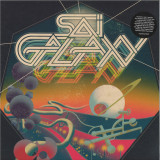
As the name suggests, Sai Galaxy represents a star-studded
cluster of artists from around the world – their varied styles
colliding to form a refreshing fusion of classic Afrobeat, disco
and West African funk.
Drawing from the influence of 70s and 80s Nigerian artists
such as Nkono Teles, Jake Sollo and Mike Umoh, the Sai
Galaxy collective is on a mission to reproduce the analogue
warmth and groove from those decades. Consequently, they
lean heavily on 70s production techniques - free from the
predictable rigidity of digital sequencing.
Spearheaded by Australian multi-instrumentalist Simon
Durrington (from Digital Afrika), the members include
Olugbade Okunade - former trumpet player from Seun Kuti’s
Egypt 80 - as well as guests Gabriel Otu, Ray Lédon and
Vanessa Baker.
While the EP seeks to reflect 70s production, glimpses of
contemporary elements can be found in the arrangements
and harmonies, at times reminiscent of modern artists such as
Lord Echo, Bosq and Voilaaa.
As Durrington believes: “dance is vital to health and
community”. And with an EP that urges you to dance from
start to finish, consider Sai Galaxy a cosmic tonic for the
modern lifestyle.
Boogie Angst is proud to announce Boogie Beats Volume 3; the third installment in their critically acclaimed,club-orientatedcompilation series. Known for showcasing fresh new talent as well as industry titans, Boogie Beats has become a well-lovedshowcasefor both dance floors and home playlists alike.
Kraak & Smaak - Fittipaldi
Opening track Fittipaldi is the previously released Euro heater by label heads Kraak & Smaak. Magnificent Clavinet parts sway hand-in-hand against the diced wall of electronic goodness. Classic sounds brought into the present-day. Named after the famous Brazilian 70s F1 driver, Fittipaldi is a nostalgic, nu-disco groover ready to bridge the classic-to-modern gap in any club this summer.
Steven Kimber - I Wanna Be The One (Drop Out Orchestra Remix)
Next up is a Steven Kimber song, by way of a gorgeous Drop Out Orchestra remix. Drop Out Orchestra are the reigning edit kings of the soulful disco scene. Taking on the Birmingham-based vocalist and producer Steven Kimber's I Wanna Be The One,they managed to turn it into a brilliant yacht-house infused bouncer. Beach-proof from the get go, we wouldn't be surprised to hear this one tear up some island clubs this summer.
King Mutapa - Gimme That Funk
Third in line for Boogie Beats Volume 3 is South-African producer King Mutapa with the ever so shiny Gimme That Funk. Heavily influenced by 70s Disco, Funk and Boom Bap, King Mutapa expertly sprinkles funk chops over the shiniest groove we've heard in ages. Moving through several parts of the song, it's clear to hear that Mutapa's the King of bounce and will steadily continue this trajectory into his fresh career.
Pontchartrain - Cheap Plants
Detroit-based producer Pontchartrain (of Kolours LTD., Delusions of Grandeur, Whiskey Disco, Toy-Tonics and Razor-n-Tape fame a.o.) rain steps up to the plate with Cheap Plants; a bouncy and classy house number which could only have come out of the Motor City. Exuberating percussion parts sway ear-to-ear, whilst the mesmerizing piano stabs stay ever present, providing a steady backbone for the menagerie of lively synth swirls.
FUTVRST - The Feeling
New, mysterious Californian indie-vibed and post-disco duo FUTVRST light up the night with The Feeling. Swirling disco chops under laid with an infectious bassline, all dancing around an irresistible arpeggio sequence. FUTVRST takes us back to the blog house days with this one, and we can't wait to hear what's next for them.
The five songs are rounded off with the longer, original mix of Fittipaldi, plus an extended version of the I Wanna Be The One remix—all set to suit your DJ needs.
Listening through the featured tracks it's clear to hear that the compilations are always a brilliant indicator of the label's variety and broad scope in the electronic music scene, whilst always being undeniably funky and danceable. With exciting times ahead for the Netherlands-based label, the Boogie Beats series always feel like a little homecoming.
'Various Artists – Boogie Beats Vol. 3' is out via Boogie Angst on all digital platforms on April 8, with a limited edition vinyl 12" coming soon after.
Black Truffle is thrilled to announce Drumming Up Trouble, the first release of previously unissued music by Alvin Curran on the label. Collecting works recorded between 2018-2021 and a side-long epic dating back to the early 80s, as the title suggests, Drumming Up Trouble focuses on a hitherto almost unknown aspect of Curran’s encyclopaedic and omnivorous musical world: his experiments with sampled and synthesised percussion. As Curran’s wonderful, wildly sweeping liner notes make clear, his fascination with drumming belongs to the radical investigation of music’s fundamental elements that has marked his output since the beginnings of MEV, who aimed (as he says in a recent interview) to return ‘in some collective way to a non-existent start time in the history of human music’. Whatever kind of music our proto-human ancestors played, he writes, ‘drums were front and centre in the mix. Drums rule!’
In a paradox typical of Curran’s approach, Drumming Up Trouble interrogates this most ancient dimension of music with contemporary technology. On the first side, we hear recent pieces performed using the sampling software and full-size MIDI keyboard setup Curran has refined since the 1980s. Two of them are wild real-time improvisations, primarily utilising an enormous bank of hip-hop samples. Building from polyrhythmic layers of drum machine fragments to wild cacophonies of clashing vocal samples, scratching, and frantic pitch shifting, these energetic and at times hilarious pieces occupy a space somewhere between John Oswald’s Plunderphonics, Pat Thomas and Matt Wand in the Tony Oxley Quartet, and the propulsive Kudoro/Grime fusion of Lisbon’s Príncipe label. They are improvisations are accompanied by two austere, minimal compositions realised in collaboration with Angelo Maria Fallo: ‘End Zone’ for orchestral bass drum and high oscillator, and ‘Rollings’, where a snare roll is gradually stretched and filtered by digital means into ‘floating electronic gossamer’.
The incredible breadth of Curran’s output makes it pretty unlikely that a listener familiar with his work would be surprised to find it branching out in a new direction. But no degree of familiarity with his work can really prepare for side B’s epic and bizarre ‘Field it More’. It’s perhaps best to let the maestro describe this unhinged and infectious offering in his own words: ‘It features an 8 bar funky minimal riff à la James Brown, played on synth and an-out-of-tune piano, synced to a pre-paid patch on the Roland drum machine. Over this is laid a heavily processed track of the voices of dancer Yoshiko Chuma and movie-maker Jacob Burckhardt discussing an upcoming performance of theirs at the Venice film festival, capped by a track of my playing an increasingly out of control blues over the top of all of the above’. Only Pekka Airaksinen’s Buddhas of the Golden Light comes to mind as a reference point that might even vaguely compare to this wild home-brew of drum-machine funk, mad improvisation and squelching electronics, which eventually dissolved into a massive, layered cluster. Ancient and modern, synthetic and human, hysterical and rigorous, Drumming up Trouble is 100% Curran.
- A1: Let The Light In (Feat Douglas Dare)
- A2: Wknd (Feat Liz)
- A3: Don't Wanna Dance With U (Feat Albertina)
- A4: Sweat (Feat Liz)
- B1: X Hopeless Romantic (Feat Little Boots)
- B2: Remember To Forget Me (Feat Chester Lockhart)
- B3: Joyful Death (Feat Tyler Matthew Oyer)
- B4: Remember 2 Forget Me (Feat Douglas Dare - Piano Version)
SONIKKU announces the release of their new album ‘Joyful Death’, via Bella Union. “I love songs that make you want to cry and dance at the same time,” says Tony Donson, the London-based musician who records as SONIKKU. That sense of unfettered release and liberation drives their new album, ‘Joyful Death’. A fluent, fertile and full-colour hybrid of vibrant Italo-house, liquid synth-pop, righteous disco and French philosophical asides, it’s an album that signals the emergence proper of SONIKKU - a fully formed dancefloor artist. It’s also a farewell of sorts, perhaps, but with an emphatic rebirth at its heart. “This album feels like a transformation in the sense that I’m creating the music I’ve always wanted to make. A fully realised, coherent pop record that showcases my craft as a song-writer and producer.” Total control of their craft is swiftly asserted on ‘Let The Light In’, where the
influences of lost-in-music disco and the Pet Shop Boys merge under vocals from immersive, exploratory British singer-songwriter Douglas Dare. The pace accelerates as ‘WKND’ gets into a groove pitched somewhere between Madonna, Daft Punk and Indeep, with LA future-pop singer LIZ primed for dancefloor abandon on vocals. Meanwhile, SONIKKU’s independent intent is firmly asserted on the freestyle-inspired ‘Don’t Wanna Dance with You’, where singer Aisha Zoe coolly brushes off unwanted advances in favour of dancefloor pleasures.
LIZ assumes vocal duties again for ‘Sweat’, a song fully equipped to make dancefloor devotees do as its title suggests. Dreamily melodic evidence of SONIKKU’s dynamism (and love of melancholy Swedish electro-pop queen Robyn) beckons on ‘X Hopeless Romantic’, where Little Boots contributes a sweetly loved-up vocal over a sublimely
infectious chorus. Pummelling synths signal a dramatic shift of pace on the almost electro-darkwave dash of ‘Remember To Forget Me’, where actor/singer Chester Lockhart presides over a summit meeting between Depeche Mode and New Order. Performance artist Tyler Matthew Oyer takes the vocals for the Italo-disco-inspired title-track, a vividly imagined album manifesto - of sorts - inspired to varying degrees by an 1892 poem, French thinker Gilles Deleuze’s concept of the “body without organs” and a 1997 anime called The End Of Evangelion. Finally, that grand piano takes over as Dare returns, presiding over an achingly stripped-back version of ‘Remember To Forget Me’. With help from friends and artists they admires on vocals, ‘Joyful Death’ is a hugely confident and self-contained leap forward for SONIKKU after his time as a feted DJ. Having moved from Derby to London at the age of 18, Donson worked as an intern (at MTV, Dazed & Confused, SHOWstudio and elsewhere) then turned to DJing (from
London to Tokyo, Paris and Berlin) after they were signed to London label Lobster Theremin. Though they continues to DJ regularly at Tottenham’s LGBTQ rave-up Adonis, they have extra ambitions in mind: “I love DJing but I’m more looking forward to developing a live show.” LP pressed on mint green vinyl with digital download.
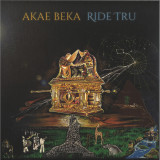
Akae Beka's inimitable style of rich, deep, multi-layered songwriting, uncompromising devotion to RasTafari and soulful healing melodies developed over decades performing with St. Croix based band Midnite and countless recordings. At the point of his untimely passing in 2019, he had released over 70LP's. He is without a doubt one of the most prolific reggae artists ever known.
The stellar production trinity that is Zion I Kings have been involved collectively and individually in creating some of the most highly regarded contributions to the vast Akae Beka catalogue. Ride Tru, originally released digitally and on CD in 2014, stood every chance disappearing into the all eclipsing shadow of the LP released by them earlier that year, Beauty for Ashes, which had been named by iTunes as the reggae album of the year. A monumental achievement for undiluted, uncompromising RasTafari roots reggae music this side of the millennium. So needless to say, the bar was high and Vaughn Benjamin and Zion I Kings must have known that, as they managed to raise it higher again.
Ride Tru continues in the same form, rootsy, soulful, refreshingly polished and authentically raw, the threads of anciency that any devout reggae lover will be looking for and the threads of modernity that keep it alive and appealing in the modern day. A uniquely regal tapestry that has become synonymous with music created from the unity of Zion I Kings and Vaughn Benjamin
Following 8 years of anxious anticipation, for the countless Akae Beka fans that are also vinyl connoisseurs, this LP is now being released on as a 12" vinyl LP courtesy of Before Zero Records. This offers the listener not only the chance to enjoy this LP in an analogue form, but also the chance to hold the artwork as a 12" square masterpiece, created by the hands of Ras Marcus, the artist who gave the powerful visual presence that became synonymous to much of the I Grade / Akae Beka works over the years.
“How does an artist follow an album considered by many to be the best reggae album of 2014?..... you get right back in the studio with the same brilliant production team and follow that album a few short months later with one that nearly eclipses it entirely.”
Midnight Raver — Worldareggae
“...remarkable for the clarity of Tippy’s mix and the contrast between the hardness of Lloyd Richards’ drums and the softness of the guitars, keyboards and brass. The woozy analogue warmth of an old Augustus Pablo production – Son of Jah Dub - for Worry Free demonstrates how well Vaughn sits on the sounds of the original masters (an avenue that should be pursued further). Another veteran guest is the late Style Scott - who beats out one of his final patterns on How I & I Carry On.”
Angus Taylor — United Reggae
- A1: Turning Poison Into Medicine
- A2: Drones (Feat Kendrick Lamar, Snoop Dogg, Ty Dolla Sign & James Fauntleroy)
- A3: Leave Us Be
- A4: Work It Out (Feat Cordae)
- A5: This Morning (Feat Arin Ray & Smino)
- A6: Tapped (Feat Channel Tres & Celeste)
- A7: Reflection (Feat James Fauntleroy)
- B1: Leimert Park
- B2: Griots Of The Crenshaw District (Feat Hit Boy, Kamasi Washington & Robert Glasper)
- B3: Evil Eyes (Feat Yg & Malaya)
- B4: Sick Of Cryin' (Feat Leon Bridges & D Smoke)
- B5: Don't Let Go
- B6: Listen (Feat Kim Burrell, James Fauntleroy & Robert Glasper)
Terrace Martins neuestes Projekt Drones beschreibt der Künstler als "Black Disneyland" - eine Mischung aus überdimensionalen, farbenfrohen Charakteren, die als Avatare von Emotionen in kleinen Welten innerhalb einer größeren Welt funktionieren. Um seine Vision zum Klingen zu bringen, rief Martin - ein dreimaliger Grammy-Nominierter, der einige der größten Namen der Rap-Szene von Los Angeles sowie legendäre Genre-Pioniere wie Herbie Hancock und Clark Terry produziert hat und gleichzeitig Teil des West Coast Get
Down ist (zu dem auch Kindheitsfreund Kamasi Washington, Bass-Architekt Thundercat und andere moderne musikalische Koryphäen gehören) - Freunde, Nachbarn und Kollaborateure an. Kendrick Lamar , Snoop Dogg , Ty Dolla $ign und James Fauntleroy tauchen im Titeltrack auf und meditieren zu Slinky Funk und R&B darüber, wie wir in Beziehungen als Automaten funktionieren können. Die Töne, für die Martin bekannt ist, tauchen auf "Griots of the Crenshaw District" auf, einer instrumentalen Jazzexplosion, die von Grammy-Gewinner
Hit-Boy produziert wurde und bei der Martin, Tenorsaxofonist Kamasi Washington und Urban Maestro Robert Glasper verschlungene Noten in die Luft blasen. Aber es macht auch Platz für Songs wie das butterweiche "This Morning" von Arin Ray und Smino und "Reflection", James Fauntleroys digitalisiertes Plädoyer für Sehnsucht und Sinnlichkeit in einem ruhigen Sturm
New pressing of 500 on black vinyl with download. “Dub Housing" appears harsh, impenetrable and repellent... it seems to be working on some hidden internal logic, from some parallel (and disquieting) universe. On subsequent listens, the "logic," if indeed the tapping of the subconscious and intuition can be called "logic," becomes clearer; the album remains baffling, infuriating, haunting, menacing and ferociously funny...” Jon Savage, Melody Maker / “A voyage into unchartered space. Unfathomable, inscrutable, unmissable” Uncut / Pere Ubu reissue their second album ‘Dub Housing’ on Fire Records. Originally released in 1978, the same year as their debut ‘The Modern Dance’, Pere Ubu continue to tear up the rule book, chew it up and spit it out with glorious splendour. Mesmerising critics, fans and musicians along the way, their follow up has been repeatedly regarded as one of their best and captures Pere Ubu in one of their earliest incarnations. ‘Dub Housing’s assaultive noises and melodic rock still annihilates the senses setting Pere Ubu apart from their peers with vision and an inimitable ability to push boundaries. For this reworking, Paul Hamann at Suma has transferred from the original 2-track analogue mix tapes to digital at the highest resolution available, which is at least four times the resolution of the original. The tracks have carefully been re-mastered by sonic architect Brian Pyle so as to capture the unique qualities within.
After the intriguing collaborative efforts on their debut EP “Tender Trance” and the follow-up EP “Sueño”, DJ Gigola and Kev Koko are back with a 3-track record. Continuing their hybrid production style, this time, they are joined by rapper Perra Inmunda. Perra’s fast paced flow and staccato rhymes blend seamlessly with Kev Koko’s signature groove. Together with DJ Gigola's airy, ethereal chorus vocals, the result is a playful exploration of modern music that picks up right where the previous EPs left off: blurring lines between techno, pop, and now also, rap. Lyrically, the EP examines three different aspects of love. Sweaty dances on the floor, kisses lost on the way home and the solitude of being left unanswered; it seems only fitting they chose the title “No Es Amor”. The EP will be released on "Live From Earth Klub" on 8 April 2022 in both digital and physical formats.
Dewa Alit, Bali’s master of contemporary Gamelan composition, returns to Black Truffle with Chasing the Phantom, presenting two recent works played by the composer’s Gamelan Salukat, a large ensemble that performs on instruments specially built to his designs, using a unique tuning system that combines notes from two traditional Balinese Gamelan scales. Alit explains that the ensemble’s name suggests “a place to fuse creative ideas to generate new, innovative works” and both compositions demonstrate the composer’s ability to wring stunning new possibilities from variations on the traditional Gamelan ensemble. While using familiar elements of Balinese Gamelan music, such as unison scalar melodies and stop-start dynamics, Alit’s music is overflowing with harmonic, rhythmic, and timbral inventions, the latter often facilitated by unorthodox playing techniques.
“Ngejuk Memedi”, an English translation of which gives the LP its title, results from Alit’s reflection on the complex relationship between tradition and modernity in Balinese culture, particularly in the way that belief in the phantoms or spirits known as ‘memedi’ are shared through social media using digital technologies. Embodying this uncanny co-existence, the opening passages of the piece are at once immediately recognisable in their use of the metallophones of the Gamelan ensemble and strikingly reminiscent of electronics in their timbre and movement. At points, what we hear seems to have been fragmented with digital tools, or even to originate in some incessantly glitching DX7. Short melodic figures loop irregularly, with the ensemble splintering into polyrhythmic shards before unexpectedly recombining for intricate unison passages. After several minutes of this manically tinkling metallic sound world, the metallophones are joined by drums for a meditative passage of lower dynamics, as the uniformly high pitch range explored in the opening sections gradually opens up to include resonant low gong hits. Recovering some of the manic energy of the opening, but now enhanced with the full range of percussion, the piece weaves through a series of tempo changes to a stunning passage of rapid-fire melodies and ringing chords that sweep across the metallophones, their unorthodox tuning creating complex clouds of wavering harmonies.
“Likad”, written during Covid-19 lockdowns, channels anxiety and uncertainty into musical form, resulting in a piece that, even by Alit’s standards, is stunning in its complexity and the virtuosity it demands of Gamelan Salukat. Its opening section is perhaps most remarkable for its mastery of texture, with rapid transitions between dry, muted strikes and metallic shimmers calling to mind the use of filters in electronic music. At points, the complex irregular repetitions of short melodic patterns, where the music seems to get stuck or be suddenly interrupted by a skip, recall the mad sampler works of Alvin Curran or the skittering surface of prime period Oval more than anything familiar from acoustic percussion music. Moving through a dizzying series of twists and turns, the piece ends with a majestic sequence of chords possessing an almost hieratic power. A major statement from a radical contemporary composer, one cannot help but agree with Alit when he sees Chasing the Phantom as an answer to the “question of the future of Gamelan music”.
- A1: Resemblage (Parasamblaz)
- A2: Cobra Wages Shuffle (Off! Schable W Gure!)
- A3: Few, Far Chaos Bugles (Uff Bosch Gra Walese)
- A4: Flashcube Fog Wares (Glucha Affera Slow)
- A5: Flight To Sodom (Lot Do Salo)
- B1: Tonight There Is Something Special About The Moon (Jaki Ksiezyc Dzis Wieczor)
- B2: If All Things Were Turned To Smoke (Gdyby Wszystko Stalo Sie Dymem)
- B3: Anti-Antiphon (Absolute Decomposition) - Anty-Antyfona (Dekonstrukcja Na Calego) (Absolute Decomposition)
Matmos are one of the most prominent experimental electronic artists working today, crafting work by creating new conceptual frameworks and immediately testing those frameworks’ absolute limits. For ‘Regards/Ukłony dla Bogusław Schaeffer’ they’ve focused on another artist known, in large part, for doing the same.
Bogusław Schaeffer was one of the first Polish artists creating electronic music. In step with American contemporaries like John Cage and Morton Feldman, he worked across the boundaries of classical composition, electronic experimentation and radical theatre, in playfully form-breaking ways.
Matmos are not the first ones to recognize the power of his catalogue, from ‘Solo’ (a 2008 documentary that garnered numerous international awards), to the annual Shaeffer’s Era Festival (most recently celebrated simultaneously in Warsaw and Los Angeles), Bogusław Schaeffer’s work continues to inspire.
‘Regards/Ukłony dla Bogusław Schaeffer’, however, was not just inspired by his work. Matmos were given access to the entirety of Schaeffer’s recorded works to use as they saw fit, commissioned by the prestigious Instytutu Adama Mickiewicza. They re-assembled and re-combined these recorded works with modern instrumentations in a way that only Matmos could, and what emerged is a composite portrait of the utopian 1960s Polish avant-garde and the contemporary dystopian cultural moment regarding each other across a distance.
Vinyl packaged with digital download card.