All of us carry a piece of where we’re from with us, but these parcels of fallow land often in a uniquely mysterious way become the prey that nourishes our aspirations. Agnès Gayraud a refined thinker by day that transforms into la Féline at night left Tarbes many years ago in search of greener pastures. After making a name for herself with Adieu l’Enfance (2014), Triomphe (2017), and Vie Future (2019), the author and musician has evolved once again. Her latest release Tarbes reinvents the circle of life and challenges our preconceived notions. She welcomes us to her hometown with sweet and clear melodies over the backdrop of an electronic hum, reminiscent of Mark Twain classic Tom Sawyer. Tarbes is no more than a listen away. Physically prevented from returning to her hometown by the viral threat we all know all too well, Agnès found her way back with a small Electone home organ. The constraints of off-peak hours that called for some DIY savvy, slowly but surely, roused her spirit. With a drum machine, a bass and a guitar, she succeeded in making the young girl inside her smile again. With 13 songs and just as many adventures Tarbes is a concept album that tells the story of a young woman’s formative years, as spent in her hometown. The returning hymn doesn’t only imprint nostalgia, it paints the full emotional portrait of a town. Because for Agnès, Tarbes is not just her theater, but her whole world, showing how fiercely protective she is of her hometown in the song Solazur. Under a magnifying glass of emotion, and with the sentimental testimony that is La Panthère des Pyrénées, the artiste shows us the skeletons in our own closets. Tarbes, more than a brief stopover in a rail journey to the coast, broaches issues that touch on abandonment, desertification, aging and redevelopment that many French towns and cities face today. Alexandre Guirkinger’s photographs serve as album art that illustrates this strangely unique singularity. While fine-tuning this collection of stories, in an oh-so-intimate album where solitude rips away the mask of confidence, Agnès found solace in uniting with other spirits. For 3 songs Tarbes, Jeanne d’Albret and Fum, inspired by an Occitan poem of Louisa Paulin (1888-1944), she invited the young voices of Conservatoire Henri Duparc a building she knows intimately, despite never feeling allowed to enter as a child to breathe the energy of their adolescence into this record. She also collaborated with Lyon’s own François Virot to imbue his delicate rhythms into her work, as well as Belgian guitarist Mocke Depret. Lastly, La Féline entrusted the last production stages to her eternal partner in music, Xavier Thiry, with Stéphane “Alf” Briat on the mixing board. The final piece has a complex tranquility, surrounded by non-verbality, with Jeanne d’Albret, Louisa Paulin and the Pyrénées safeguarding Agnes’ secrets. With the calm reassurance of her metamorphoses, La Féline delivers a slice of silence to her town, serving as both her cradle and theater. Tarbes’ Théâtre des Nouveautés is where Agnès Gayraud, La Féline, has decided to present Tarbes to its residents on October 14, 2022. While “nouveautés” evokes newness, this theater is reminiscent of a future which is already outdated, where modernity is only vague and fictional, carrying reminders of French haute-kitsch accordionist Yvette Horner, whose parents were the caretakers of what was then called the Cani Eldorado a bastion of virtue through the 30s, with its lineup of Catholic films. However, by the 60s, it would have become a temple of pornographic cinema. Tarbes, “Les Nouveautés”, end card. In the mid 90s, then 16 years old, Agnès discovered the volatile dust and the ghosts of the past that were hidden in this apostate theater. This phantom bequeathed song the teenager with the gift of her undeniable talent at her first appearance on stage a high school performance of a guitar-laden ballad sung in Spanish, a language her Andalusian mother has infused her with. On October 14, 2022, Agnès returns to the stage, bass in hand and joined by François Virot (drums), Mocke Depret (guitar), Léa Moreau (keyboard) and the Conservatoire de Tarbes singers to perform the album in its entirety
Buscar:discover me
On behalf of re:discovery records, it is with great excitement that we announce the 3rd and last EP of the set highlighting the music of 1990's Norwegian electronic act Neural Network. Part 3 hones in on their unreleased album that was never formely named. The band and those in the industry who heard it felt it was their best music yet. There were label suitors for this album including a top tier Belgian label but sadly things did not work out as that label folded. And this project was left on DAT's.
Of the 9 tracks we chose, there were 4 we felt would most fit the vinyl medium and the theme of the first 2 EP's. These fit in with music like B12, Stasis and As One for some lofty comparisons and we think it fit's perfectly in that esteem company. The Detroit-esque beautifully somber 'Lambent' sounds almost 'Tedra' like from Kenny Larkin. 'Jetstream' is pure melodic robotic funk from the future. The side B track 'Floatation' coming in at just over 18 minutes and is a prime example of the sci-fi music they so wonderfully produced. This 3 record series is a great example of re:discovery records' mission to present the past for the future. All feature amazing artwork from UK's Grid Pattern complete with insert that features info on the music and their history. Bring back the Chill Out Rooms!
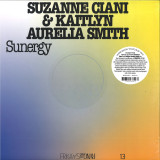
Sunergy brings together synthesists Kaitlyn Aurelia Smith and Suzanne Ciani for the thirteenth installment of FRKWYS, RVNG Intl.'s intergenerational collaboration series. For this edition, a panorama of the Pacific Coast provides the place and head space for a musical appreciation and consideration of a life-giving form vast and volatile with change. Fortuitously (as is the freaky way), Smith and Ciani were discovered to be neighbors in the small coastal community of Bolinas, California. The two had become close friends, bonding over their experience as woman musicians and, more unusually, their shared passion for the Buchla synthesizer. The music of Sunergy embraces this kinship, with Ciani and Smith respectively performing on the Buchla 200 E and the Buchla Music Easel, two modern configurations of the innovative instrument developed in the '60s by Don Buchla.
Sunergy was recorded in the Bolinas home where Ciani has lived for the last twenty-four years. Her living room overlooks the Pacific Ocean from a cliffside perch, creating an idyllic, inspired setting for music making. Setting up their synths side-by-side, Ciani and Smith took turns keeping time and freely improvising for the album sessions. As a complete piece, Sunergy is shaped by slow, pulsing forms and sinuous, melodic sequences that conjure both an oceanic world and the unlimited sound made possible by modular processing.For her part, Ciani has long been a Buchla voyager. Suzanne proselytized the potential of Don's synthesizer instruments in the '60s and '70s, performing her own compositions before introducing synthesized jingles and sound effects to household audiences. Ciani then achieved wide recognition for her debut album Seven Waves, a collection of colorful, classical song-like melodies fluidly working with harmonic textures and sounds of the ocean shore. Since its 1982 release, Seven Waves has become an important chapter of the ambient canon within which contemporary artists like Smith have developed their own synth syntax. Smith was born just a few years after the appearance of Seven Waves, growing up in Orcas Island, Washington. A place of profound natural beauty, the islands would inform Tides, her first instrumental collection from 2014. Smith composed Tides as an accompaniment for Yoga classes, ultimately freeing her from conventional songwriting into the exploratory, synth-based compositions demonstrated in ecstatic variety on 2016's Ears. Despite the serene setting where Sunergy was realized, the album does not romanticize a complete oneness with nature. Smith and Ciani use their collaborative ground to reflect on the unstable forces at play across the Bolinas horizon. Sunergy takes stock of Bolinas in the 21st century, a once-thriving artist's refuge now vulnerable to real estate pressure extending from affluent San Francisco, and more irreparably, the specter of climate change erasing its many waterfront habitats.
A diametric dynamic is present in Sunergy, a somber meditation amidst the intense cultural and solar forces transforming the landscape, and a hopeful assertion of the surviving creative culture of Bolinas. Far from rehashing the gentle grace of the artists' seminal works, Sunergy instead seeks to awaken and bear witness, employing the Buchla waveforms to mirror the infinite rhythms of the ocean and our essential relationship to it.
Kaitlyn Aurelia Smith and Suzanne Ciani's Sunergy will be released on September 16, 2016 on LP, CD, and digital formats. An accompanying documentary by Sean Hellfritsch will be offered in tandem.
Last year BABYMETAL concluded their 10-year journey culminating in the celebration of the formation of the revered Japanese metal band with the vinyl release of their retrospective album 10 BABYMETAL Years. Later they released a cryptic video that announced BABYMETAL will be "sealed" from the world until further notice. Today, BABYMETAL break the seal, making their return to Earth. Their official website has revealed a LEGEND MAP depicting all of BABYMETAL"s future activities, including the news that BABYMETAL"s first concept album THE OTHER ONE will be released worldwide on Friday, March 24th, 2023. The concept album reveals the other side of the BABYMETAL story that until now remains untold. A total of 10 songs have been discovered within THE OTHER ONE restoration project, with each song representing a unique theme based on 10 separate parallel worlds that they have discovered. Full length audio of each of the 10 songs will finally be revealed when fans get their hands on the album next March. Leading up to the concept album"s release, five pre-release digital singles will be available worldwide for download and streaming, each respectively scheduled to release in October 22, November 22, January, February 23, and March 23.
Elias Devoldere is the drummer in bands such as Nordmann, Hypochristmutreefuzz, Suwi, Robbing Millions, and John Ghost. Following an ep, Kaiku, released last summer, Bloomed > Exploded is his debut full length as a solo artist. Besides writing and singing, he composed, played, recorded, and produced the bulk of the ten songs himself. 'Everything blooms', he explains the title of his first album. 'Until it explodes, and something else is able to grow from it'. In this case, what came full cycle is an intimate coming-of-age album of intangible atmospherics, crisp melodies, and understated rhythmical patterns.
BLOOMED >
'As a kid, I just wanted to play football, you know?', says Elias. 'But when I was eight years old, my parents made me choose between drawing school and music school'. And thus began a dedication to rhythm for Elias. At 18, he enrolled at the Royal Academy of Fine Arts in his hometown of Ghent, opting for a jazz education. 'Not because I aspired to become a master 'jazz drummer', but to learn music, to become a good musician'. It was at the academy that, after an impromptu jam session, Nordmann first came together. The exhilarating instrumental quartet went on to win second place at the prestigious Humo's Rock Rally in 2014, and released three albums to critical acclaim, with a new one in the works.
Devoldere, in the meantime, had completed his degree with a craving - ironically - for music. 'I was in over my head with jazz for such a long time, and went on an epic discovering spree. Moses Sumney, James Blake, Kendrick Lamar, Connan Mockasin... Lots of stuff I had missed over the years. In a way, I reconnected with the kind of music I was into before jazz dominated my life. Pink Floyd was my first love, for instance, and later Radiohead proved to be a game changer. Diving back into those kind of sounds, I was feeling the urge to follow my old dreams, of being a solo artist - or something more than 'just' a drummer, anyway. So I bought a guitar, an interface for my laptop, and started writing'.
EXPLODED
When he released his 5 track ep Kaiku in the summer of 2021, it summarised a lot of firsts for Elias. First time writing lyrics, first time as a lead vocalist, first time recording his own songs all by himself. The songs had been around for a while, but taking those leaps took a long time. 'Making the ep helped me to find my voice, in every way possible'. Still, in the aftermath of the pandemic, the songs on Bloomed > Exploded sprouted in a time of upheaval. 'Musically the album is quite serene, gentle even. But the themes speak of internal unrest and uncertainty. There are a lot of questions on the album, as it turned out. Duality, as the title suggests, coming from the struggle between a wish to turn everything upside down and a search for peace. Honestly: the prospect of my 30th birthday was messing with my head too'.
Recording during a period of solitude in France, Elias initially relied heavily on synthesizers and drum machines. 'Explode / Boalis was one of the first songs I wrote for this album, and pivotal for its atmosphere, based mostly on electronic elements. Later, I did use 'real' drums on most of the other songs, though, and contributions from other musicians, but the overall mood is very cohesive'. 'Pure', that's how Bruno Ellingham, the UK engineer who mixed the album, described it. Much to the delight of Elias, who reached out to Ellingham because of his previous work with bands such as Massive Attack and Portishead. 'Hearing the end result, I thought he really captured the essence of the original demo's. For me, that adds to this album being a sincere reflection of my true self. 'Take a dive/ Into the place where it's more quiet', as I sing in the last song, that kind of sums it up for me'.
The incongruous, yet glorious, creative partnership between Nancy Sinatra and Lee Hazlewood was well underway when the two singular artists reunited to record 1972’s Nancy & Lee Again, a follow-up to their bestselling duet debut, Nancy & Lee. Nancy, the eldest daughter of Frank Sinatra, had been working with the Oklahoma-born songwriter since 1965, when she topped the pop charts with “These Boots Are Made For Walkin’.” Over the next five years, the two artists forged a prolific relationship in the studio, with Hazlewood writing and producing many of Nancy’s solo hits. Soon, the duo found success with a series of duets, including “Sand,” “Summer Wine,” and “Some Velvet Morning” – all of which appeared on their highly-influential 1968 debut.
Not long after the critical acclaim and chart success of Nancy & Lee died down, however, Hazlewood unexpectedly relocated to Sweden, leaving his musical partner in the proverbial dust. America, meanwhile, was in the midst of a cultural shift, as the Vietnam War waged on. By the turn of the decade, the musical landscape had changed significantly. “Trivial music and not profound music became unimportant,” recalls Nancy, speaking to Hunter Lea. “It was a tough time.” And yet, despite the circumstances, the stars somehow aligned for the duo to record some of their most magnificent music together.
Returning to Los Angeles for the project, Hazlewood – who reprised his role as producer – chose to take a new direction with the duo’s sophomore album. Nancy recalls, “It was more dramatic; it was more fun to do, more challenging to do…. It was more grandiose.” For the lush, orchestral arrangements, they collaborated with Larry Muhoberac (an original member of Elvis Presley’s TCB band, whose early ‘70s credits also included Barbra Streisand, Neil Diamond, and Lalo Schifrin) and Clark Gassman, who had worked on Hazlewood’s 1970 LP, Cowboy in Sweden. Backing vocals from brothers John and Tom Bahler, who remain two of the most recorded singers in history, added additional texture to several songs.
The big sound that Nancy describes above is exemplified in the album’s cinematic opener, “Arkansas Coal (Suite).” Clocking in at nearly six minutes long, the dynamic overture tells the tale of an ill-fated coal miner (sung by Hazlewood), while Nancy adjusts her vocals to sing as both the miner’s daughter and his wife. Hazlewood’s knack for vivid, nuanced storytelling shines throughout Nancy & Lee Again, particularly in “Paris Summer,” which details the conflict that a married woman faces, as she engages in a passionate affair. Another highlight is the country-inspired hit, “Did You Ever,” which was released as the album’s lead single. After it landed at No.2 on the U.K. pop charts, the song served as an alternate title track in several countries, including LP pressings in the U.K., Germany, and Canada.
One of the most emotionally-charged moments on Nancy & Lee Again is a cover of Dolly Parton’s “Down From Dover.” The heartbreaking tune tells the tale of a pregnant teenager, who has been abandoned by her lover and her family and ultimately gives birth to a stillborn baby. While Parton’s 1970 version was sung from the teenager’s point of view, Hazlewood and Sinatra transformed the country song into a duet. Hazlewood, who offers the man’s side of the story, sings in a notably deeper octave than his signature baritone.
Another poignant selection is “Congratulations,” which describes a soldier coming home from Vietnam. “His face has grown old and his eyes have grown cold/And they tell you of where he has been/Congratulations, you sure made a man out of him,” Hazlewood sings, pointedly. Nancy, who performs as the vet’s wife, argues that the song had a deeper meaning for her duet partner. “Lee started out a hawk, he was an army guy, so he was all for the war in the beginning. We didn’t talk about it, but at some point, he changed radically. ‘Congratulations’ was almost like an apology from him. I don’t want to put words in his mouth, but it was as though he was saying ‘I’m really sorry.’”
The song “Friendship Train” could also be interpreted as an apology of sorts – this time to Nancy. “You’ve been hurt and I’ve been hurt/Now we’re living pain,” the tune opens. When Hazlewood moved to Sweden without telling his longtime musical partner, Sinatra was understandably upset. “I felt pretty betrayed. I mean, who does that? Who just up and disappears like that? I’ll never understand it,” she reveals. But the uplifting duet – a slice of ‘70s pop perfection – offers reaffirming words of love between friends. “Lee felt things very deeply and tended to express his feelings in song instead of in real life,” explains Nancy.
The 10-track album closes with the stripped-down “Got It Together.” Backed by an acoustic guitar, the song is equal parts playful and candid, as the duo has an impromptu, spoken-word conversation about their lives. “I wish that we’d quit getting so old,” laments Nancy, who later shares her wish to have children (she would do so in the next few years). Hazlewood, meanwhile, attempts to remedy his past wrongdoings – this time asking his partner, “Can I go back to Sweden?” With that, Nancy gives her blessing.
This definitive reissue of Nancy & Lee Again also includes two bonus tracks. Both are stylistic departures for the duo – but fit right in with the psychedelic pop of the era. The first one, “Think I’m Coming Down,” is a harmony-filled reflection on a toxic relationship. “I think that was one of [Lee’s] drug things. I don’t mean that he used drugs; I mean that he was trying to be part of that culture. Trying to be hip,” explains Nancy, who delivers an emotive vocal performance on the solo track. Also included is “Machine Gun Kelly,” penned by a staple of the 70s singer-songwriter movement, Danny Kortchmar (James Taylor, Carole King, Linda Ronstadt). Recorded several months after the release of the album, the song found Nancy reuniting with Billy Strange, who arranged many of her solo albums, as well as Nancy & Lee. Sinatra and Hazlewood first performed “Machine Gun Kelly” during their residency at Las Vegas’ Riviera Hotel in February 1972 (later released as a concert documentary on Swedish television). While the recording has long remained a career favorite of Nancy’s, it would be decades before it was officially released.
Nancy & Lee Again remains a creative high point in the careers of Sinatra and Hazlewood and, upon its release, garnered rave reviews from Billboard, Record World, and Cash Box, among others. Yet, Nancy & Lee Again never received the spotlight it so utterly deserved. “We didn’t have label support at all in those days,” recalls Nancy. “Without the strength of a label, records die. We were old. We were old-fashioned. We were just not what was happening. It’s a very ageist kind of business.” Nevertheless, she adds, “I think it’s a very good album. I think it’s timeless.” Now, after years of being a sought-after rarity, this gem in the Sinatra-Hazlewood canon can finally get its due.
Five decades later, Nancy’s legacy only continues to grow, as new generations discover her impressive catalog (which boasts nearly 20 studio albums – her duets with Hazlewood among them – and dozens of charting singles, including the theme song to the 1967 James Bond film, You Only Live Twice). In 2020, Sinatra was recognized by her peers when “These Boots Are Made For Walkin’” was inducted into the GRAMMY® Hall of Fame. That same year, Sinatra partnered with Light in the Attic for Nancy Sinatra: Start Walkin’ 1965-1976, a definitive survey of her most prolific period. LITA has also reissued Sinatra’s classic debut, Boots, and her iconic, 1968 album with Lee Hazlewood, Nancy & Lee. The label looks forward to celebrating Nancy over the coming years with a variety of special releases, exclusive merchandise, and more.
The incongruous, yet glorious, creative partnership between Nancy Sinatra and Lee Hazlewood was well underway when the two singular artists reunited to record 1972’s Nancy & Lee Again, a follow-up to their bestselling duet debut, Nancy & Lee. Nancy, the eldest daughter of Frank Sinatra, had been working with the Oklahoma-born songwriter since 1965, when she topped the pop charts with “These Boots Are Made For Walkin’.” Over the next five years, the two artists forged a prolific relationship in the studio, with Hazlewood writing and producing many of Nancy’s solo hits. Soon, the duo found success with a series of duets, including “Sand,” “Summer Wine,” and “Some Velvet Morning” – all of which appeared on their highly-influential 1968 debut.
Not long after the critical acclaim and chart success of Nancy & Lee died down, however, Hazlewood unexpectedly relocated to Sweden, leaving his musical partner in the proverbial dust. America, meanwhile, was in the midst of a cultural shift, as the Vietnam War waged on. By the turn of the decade, the musical landscape had changed significantly. “Trivial music and not profound music became unimportant,” recalls Nancy, speaking to Hunter Lea. “It was a tough time.” And yet, despite the circumstances, the stars somehow aligned for the duo to record some of their most magnificent music together.
Returning to Los Angeles for the project, Hazlewood – who reprised his role as producer – chose to take a new direction with the duo’s sophomore album. Nancy recalls, “It was more dramatic; it was more fun to do, more challenging to do…. It was more grandiose.” For the lush, orchestral arrangements, they collaborated with Larry Muhoberac (an original member of Elvis Presley’s TCB band, whose early ‘70s credits also included Barbra Streisand, Neil Diamond, and Lalo Schifrin) and Clark Gassman, who had worked on Hazlewood’s 1970 LP, Cowboy in Sweden. Backing vocals from brothers John and Tom Bahler, who remain two of the most recorded singers in history, added additional texture to several songs.
The big sound that Nancy describes above is exemplified in the album’s cinematic opener, “Arkansas Coal (Suite).” Clocking in at nearly six minutes long, the dynamic overture tells the tale of an ill-fated coal miner (sung by Hazlewood), while Nancy adjusts her vocals to sing as both the miner’s daughter and his wife. Hazlewood’s knack for vivid, nuanced storytelling shines throughout Nancy & Lee Again, particularly in “Paris Summer,” which details the conflict that a married woman faces, as she engages in a passionate affair. Another highlight is the country-inspired hit, “Did You Ever,” which was released as the album’s lead single. After it landed at No.2 on the U.K. pop charts, the song served as an alternate title track in several countries, including LP pressings in the U.K., Germany, and Canada.
One of the most emotionally-charged moments on Nancy & Lee Again is a cover of Dolly Parton’s “Down From Dover.” The heartbreaking tune tells the tale of a pregnant teenager, who has been abandoned by her lover and her family and ultimately gives birth to a stillborn baby. While Parton’s 1970 version was sung from the teenager’s point of view, Hazlewood and Sinatra transformed the country song into a duet. Hazlewood, who offers the man’s side of the story, sings in a notably deeper octave than his signature baritone.
Another poignant selection is “Congratulations,” which describes a soldier coming home from Vietnam. “His face has grown old and his eyes have grown cold/And they tell you of where he has been/Congratulations, you sure made a man out of him,” Hazlewood sings, pointedly. Nancy, who performs as the vet’s wife, argues that the song had a deeper meaning for her duet partner. “Lee started out a hawk, he was an army guy, so he was all for the war in the beginning. We didn’t talk about it, but at some point, he changed radically. ‘Congratulations’ was almost like an apology from him. I don’t want to put words in his mouth, but it was as though he was saying ‘I’m really sorry.’”
The song “Friendship Train” could also be interpreted as an apology of sorts – this time to Nancy. “You’ve been hurt and I’ve been hurt/Now we’re living pain,” the tune opens. When Hazlewood moved to Sweden without telling his longtime musical partner, Sinatra was understandably upset. “I felt pretty betrayed. I mean, who does that? Who just up and disappears like that? I’ll never understand it,” she reveals. But the uplifting duet – a slice of ‘70s pop perfection – offers reaffirming words of love between friends. “Lee felt things very deeply and tended to express his feelings in song instead of in real life,” explains Nancy.
The 10-track album closes with the stripped-down “Got It Together.” Backed by an acoustic guitar, the song is equal parts playful and candid, as the duo has an impromptu, spoken-word conversation about their lives. “I wish that we’d quit getting so old,” laments Nancy, who later shares her wish to have children (she would do so in the next few years). Hazlewood, meanwhile, attempts to remedy his past wrongdoings – this time asking his partner, “Can I go back to Sweden?” With that, Nancy gives her blessing.
This definitive reissue of Nancy & Lee Again also includes two bonus tracks. Both are stylistic departures for the duo – but fit right in with the psychedelic pop of the era. The first one, “Think I’m Coming Down,” is a harmony-filled reflection on a toxic relationship. “I think that was one of Lee’s drug things. I don’t mean that he used drugs; I mean that he was trying to be part of that culture. Trying to be hip,” explains Nancy, who delivers an emotive vocal performance on the solo track. Also included is “Machine Gun Kelly,” penned by a staple of the 70s singer-songwriter movement, Danny Kortchmar (James Taylor, Carole King, Linda Ronstadt). Recorded several months after the release of the album, the song found Nancy reuniting with Billy Strange, who arranged many of her solo albums, as well as Nancy & Lee. Sinatra and Hazlewood first performed “Machine Gun Kelly” during their residency at Las Vegas’ Riviera Hotel in February 1972 (later released as a concert documentary on Swedish television). While the recording has long remained a career favorite of Nancy’s, it would be decades before it was officially released.
Nancy & Lee Again remains a creative high point in the careers of Sinatra and Hazlewood and, upon its release, garnered rave reviews from Billboard, Record World, and Cash Box, among others. Yet, Nancy & Lee Again never received the spotlight it so utterly deserved. “We didn’t have label support at all in those days,” recalls Nancy. “Without the strength of a label, records die. We were old. We were old-fashioned. We were just not what was happening. It’s a very ageist kind of business.” Nevertheless, she adds, “I think it’s a very good album. I think it’s timeless.” Now, after years of being a sought-after rarity, this gem in the Sinatra-Hazlewood canon can finally get its due.
Five decades later, Nancy’s legacy only continues to grow, as new generations discover her impressive catalog (which boasts nearly 20 studio albums – her duets with Hazlewood among them – and dozens of charting singles, including the theme song to the 1967 James Bond film, You Only Live Twice). In 2020, Sinatra was recognized by her peers when “These Boots Are Made For Walkin’” was inducted into the GRAMMY® Hall of Fame. That same year, Sinatra partnered with Light in the Attic for Nancy Sinatra: Start Walkin’ 1965-1976, a definitive survey of her most prolific period. LITA has also reissued Sinatra’s classic debut, Boots, and her iconic, 1968 album with Lee Hazlewood, Nancy & Lee. The label looks forward to celebrating Nancy over the coming years with a variety of special releases, exclusive merchandise, and more.
Gaïsha is the collaboration between the Belgian-Moroccan singer Aïcha Haskal and some exquisite musicians, bringing you oriental & psychedelic grooves. Aicha Haskal’s voice is smooth and warm, and switches seamlessly between Arabic chants, parlando and even rap. The diverse background of the musicians (Absynthe Minded, Sylvie Kreusch, Va Fan Fahre, Echoes of Zoo, De Beren Gieren) results in a brilliant melting pot of styles, ranging from cabaret to spaghetti westerns and eastern elements.
Their first album will be released on the 24th of March 2023. In November they dropped the single ‘Ana Aïcha’. An ode to the singer’s name, spreading a clear message: gender equality. The melody translates this protest into a great psychedelic oriental trip.
The previous track ‘Ghalat’ got some promising reviews:
•“Who is a fan of the music of Altin Gün, has a nice discovery with this new single from the Ghent based Gaïsha.” - Indie Style
•“The rhythm, synths and groove seem western, but otherwise everything about this track exudes an eastern melancholy. And when Haskal switches to French, you imagine yourself somewhere in a shisha bar in cosmopolitan Paris.” - Damusic
•“Sounds like: an Arab-psychedelic cracker with a pinch of funk and Serge Gainsbourg” - Cutting Edge
- 1: Sea Breeze
- 2: Hercules
- 3: Heat Haze
- 4: Bicycle Ballet
- 5: The Downs
- 6: Ramblers' Dance
- 7: Greyfriars
- 8: Blackfriars
- 9: St Nicholas
- 10: St Katherine
- 11: St Leonard
Oliver Cherer is back with a new Gilroy Mere record which follows on from his other much lauded Clay Pipe releases (The Green Line, Adlestrop and last year’s D Rothon collaboration, Estuary English).
Over the last two decades Ollie has released numerous collections of music in an ever shifting array of modes, from folktronic, singer-songwriter styles through psychogeographic electronica to jazz-tinged, confessional ghost-pop and most recently, the “guitar tainted machine rock disco” of Aircooled.
Gilden Gate is an album of two halves. Side 1 ‘Rising’ celebrates the sun-drenched beaches, pastures and heaths of rural Suffolk, whereas Side 2 ‘Falling’ explores the underwater world of the lost city of Dunwich and its five church spires.
Oliver says:-
“A few years ago I discovered the lost city of Dunwich. I’d made a trip to Suffolk to shoot a short film about Sizewell Nuclear Power Stations and stayed in the old Coastguard’s Cottage on Dunwich Beach within sight of Minsmere Nature Reserve and the power plants. It’s a wild, sleepy place of pines and heath and North Sea winds and a strangely mysterious air – Sutton Hoo is nearby and Eno’s reference to the very beach that I was staying on made perfect sense. In the small museum at Dunwich I learned that this tiny hamlet had once been a major medieval city of international trade. It seemed unlikely and even now, knowing Dunwich as a small village, I find putting what I know about the place into perspective as a city a certain kind of impossible.
It seems that over a period under the influence of the weather, natural erosion and market rivalry the thriving harbour port was inundated by the North Sea and eventually slipped into and under it. The city of churches was lost and all the spires engulfed and toppled. What remains are the few houses, and the ruin of Greyfriars crumbling inexorably down the cliff and exposing the bones of buried monks as the graveyard follows the building’s stones into the sea.
There are local legends surrounding the site including stories of fishermen hearing the bells of lost churches and seeing the ghostly, lighted city beneath their boats as they return to the shore.
Gilden Gate is named for one of the entrances to the old city and is a musical meditation on Dunwich past and present. Frances Castle’s beautiful sleeve art depicts the surface and the sub-marine, the warm and the cold, the past and the present. The glass rises and the glass falls and in the background there are sirens, fog horns, church bells and Eno, and on the sea bed there are the scattered remains of a once great city.”
On behalf of re:discovery records, it is with great excitement that we announce the 1st of a 3EP set highlighting the music on 1990's Norwegian electronic act Neural Network. In 1993-1995 they released 2 full albums or Origo Sound that featured label mates Biosphere. In 1993 they opened up for Prodigy and shared the bill with other seminal acts like AFX, Autechre, Orbital and H.I.A among other heavyweights. However, their 2 full albums 'Brain-State-In-A-Box' & 'Modernité' did not get picked up by any other label or distributer and their popularity stayed regional. In fact a 3rd album was never released (Until part 3 comes from this series!) and sadly they went their separate ways to form other electronic acts in 1997. We hope to shine a bright light on their early music. Side A features the wonderful aquatic adventure in 'Aqueous' followed by a shift into the sci-fi realm with the mysterious 'Mechanical Heart'. Two great examples that show off the group's deep post rave sound for the future. A real melding of styles. All 3 EP's have inserts where the band shares their memories of the early days.
All these tracks in the series are placed on vinyl for the first time with fantastic artwork by UK's Grid Pattern. Dare to Dream! Its not only our credo at re:discovery records but it's also our goal in hearing music that was made for the stars.
Exploring the unknown can be both exciting and intimidating, and that's exactly what electronic music producer Oleka, captures in his new underground industrial techno EP, "Xenisation” on Snork Enterprises.
This four-track release follows a traveler as he ventures into unfamiliar territory, where every step is a new discovery. From pulsing beats to metallic soundscapes, the EP takes listeners on a journey through the highs and lows of traveling to a new place. "Xenisation" sets the stage with its accentuated beat and crisp synths, evoking the feeling of a long journey ahead. "Fjord" takes the listener on a journey to the furthest reaches with its driving futuristic rhythms. "Sudor" ratchets up the intensity with its pounding drums conveying the sense of excitement and anxiety that comes with exploring new worlds. Finally, “Point Nemo” brings the journey to a close.
"Xenisation" is a must-listen for fans of underground industrial techno. Oleka's signature sound is on full display in this snorky crafted release, making it another thrilling addition to a decent techno collection.
Als Secret Discovery 2006 in die Zeitmaschine stiegen, ahnten sie noch nicht, dass sie 17 Jahre später, im Jahr 2023, mit einem neuen Album aussteigen würden. Dabei herausgekommen sind 9 brandneue Songs – über Liebe, Hass und menschliche Abgründe sowie über soziale und gesellschaftliche Missstände.
Von atmosphärisch, melodiös und indielastig bis hin zu brachial, metallisch und hart präsentieren sich die Songs in alter Secret-Discovery Manier mit einem guten Schuss musikalischer Reife. Eingängige Hooks, hypnotische Melodien zwischen Nostalgie und Aggressivität, eingebettet in runde Arrangements und expressive
Harmonien - auf den Punkt gebracht durch Kai Hoffmanns charismatische Stimme.
Charakteristisch ist die für die Secrets typische perfekte Symbiose aus Rock und Elektronik.
Auch als Special Edition im Digipack erhältlich! Aufgepeppt mit 3 nagelneuen Bonustracks als Ergänzung zum Standard Album sowie 2 Remixen und eine bearbeitete Version des Songs „In My Life“ der Band „Alice2“. ’In my Life’ ist eine extended Version mit einem Gitarrensolo von keinem geringeren als Gitarrenlegende Axel Rudi Pell!
Die 2 Remixe von ’Dein Reich’ könnten unterschiedlicher nicht sein: Eine Electronic Dark-Dance Version sowie eine Extended-Guitar Version von Dirk Riegner , der unter Anderem bei Peter Heppner für die Keyboards verantwortlich ist.
Veils Of Transformation 1972 - 1980 is a collection of the earliest works of Gregory Kramer, one of the 20th century masters of textural electronic music. This collection is available on CD and cassette with liner notes from Gregory Kramer and Kaitlyn Aurelia Smith, who first brought this fascinating work to the attention of Important Records.
“Greg is one of the pioneers of electronic music and these pieces are unique opportunities to discover how intricate and dynamic early synthesizers are.” Kaitlyn Aurelia Smith
Kramer developed a musical language focused on continuous transformation of timbre, yielding a continuity of attention. This musical language, formed of timbral change, is a compelling aesthetic in its own right and a source of meditative experience. The four works on this album share a deep sense of order derived not from organizing pitches or rhythms, but from the evolution of timbre itself.
Gregory Kramer (b. 1952) is a pioneering electronic composer, inventor, researcher, teacher and author. In 1975 he co-founded Electronic Musicmobile, a synthesizer ensemble later renamed Electronic Musicmobile, a series of synthesizer concerts in New York from which he formed the Electronic Art Ensemble, a highly regarded all electronic quartet. His work extended to developing synthesizers and related equipment. Kramer also co-founded the not-for-profit arts organization Harvestworks in New York City. He is recognized as the founding figure of the intensely cross-disciplinary field of data sonification. Since 1980, Kramer teaches Buddhist meditation.
The four compositions collected here each represent Kramer’s unique approaches:
The structure of Meditations on 32 Parts of the Body (1978) is derived from the means of its production. Recording 5 people chanting an ancient meditation text, then layering to gradually achieve more than one million voices. The layering was all done using analogue tape recorders. The decomposition of the sound reflects the anomalies of tape machines out of sync, and the build up of artifacts from the audio tape itself, such as uneven response curves and tape hiss, are all engaged as musical materials.
Role (1972) was generated using one complex patch on a large hybrid Buchla 200/100 system. Emerging from a zeitgeist that valued pure synthesis as a combined artistic and technological research. At the time this piece was realized its as exceedingly difficult to produce electronic sounds that were internally complex.
Blue Wave (1980) is built on Kramer’s timbral development technique Veils Of Transformation which allows for disparate timbres to be woven into a continuously developing sound.
Monologue (1977) is a virtuosic performance of a massive patch on a Buchla/Electron Farm hybrid electronic instrument. Built into the patch is a pathway for continuous transformation of voice and voltage-controlled synthesizer. The blunt, raw and sometimes harsh sounds of this piece reflect an attitude prominent among composers that music can, or even should, be difficult, contrary to what’s already been done and, by all means, new.
Death Is Not The End's 333 sub-label follows the reissue of Devon Russell's Darker Than Blue LP late last year with a first-time reissue of a veritable reggae-dancehall holy grail - Robert Ffrench's 1985 LP 'Wondering'.
Pioneering artist and producer (and cousin of the late, great Pat Kelly) Robert Ffrench was born in central Kingston in 1962, recording his first records in 1979 at the age of 17. Coming out off the back of a slew of roots & early dancehall-style 45s cut with a wide range of producers thoughout the early '80s, the Wondering LP followed closely after two acclaimed LP sets ('Showcase' produced with Lord Koos & 'The Favourite' for Ossie Thomas' Black Solidarity label - plus a split showcase LP with Anthony "Gunshot" Johnson for Jah Thomas' Midnight Rock label).
Ffrench would write and produce the Wondering LP himself in it's entirity, laying down the tracks at Herman Chin-Loy's Aquarius & Michael Carroll's Creative Sounds studios with the help of engineer Christopher Daley. Representing the sound of an artist first confidently sriking out on his own, the album elegantly mixes a classic rub-a-dub & lovers rock-inspired sound with nascent digi-esque flourishes. It boasts an enviable list of contributors too, incl. Sly & Robbie, Dwight Pinkney, Robbie Lyn, Nelson Miller (Burning Spear) and Ronald "Nambo" Robinson among others, with Beres Hammond also providing backing vocals in places.
Following the release of Wondering, Ffrench would continue to write and produce, soon after releasing two further self-produced LPs for Edgar White's Parish label - and founded his own 'France' label in the late 80s, through which his productions would start to hit big, most notably alongside Courtney Melody on 'Modern Girl', and with US rapper Heavy D on the track 'More Love'. Robert's productions released through later label 'Ffrench' would go on to boast the cream of the crop of dancehall artists throughout the 90s and early 2000s, and he is often credited with discovering Buju Banton (producing his first single "Ruler" on the Stamina riddim). Ffrench is still actively producing music of his own to this day, having released singles 'Everyday of My Life' and 'Black Is a Colour' in late 2022 and Feb 2023 respectively, available through all digital platforms now.
333, under exclusive license from Robert Ffrench.
Portland is a project born of instant connection, yet it’s also one
that has survived some of the darkest life can throw at them.
Dreamy songwriting bathed in beauty, the Belgian two-piece
thrive on pure expression, infusing their beatific, ethereal work
with incredible honesty. New album, ‘Departures’, pushes them
to the brink, forcing them to open up as never before, and in the
process discover themselves all over again.
The story starts almost a decade ago. Sarah Pepels was new in
town, a music student attempting to make some roots. Hearing
music coming from down the corridor in her student home, she
knocked, and met Jente Pironet for the first time. One
conversation led to the next, and within hours they were writing
together, playing each other their ideas and sharing some
profound secrets. “We shared the same passions,” she reflects.
“We became best friends, soul mates… and the band emerged
from that.”
The two won the prestigious De Nieuwe Lichting prize - one of
Belgium’s top honours for young songwriters - before releasing
their precocious debut album ‘Your Colours Will Stain’ in 2019.
Word quickly spread on their hazy dream pop - reminiscent of
Beach House or School Of Seven Bells - but the pandemic
pulled the shutters down on their burgeoning careers. As Jente
puts it: “We went through some difficult times, I guess. The
pandemic was very isolating for us both, and as a result the
music took on board those emotions.”
‘Departures’ was born of this. Put simply, it’s magnificent - all
the promise of their earlier work realized, it drifts between the
grace of Slowdive and a sense of classic songwriting that
recalls everyone from Fleetwood Mac, say, to Angus and Julia
Stone. Sonically beautifully and emotionally gripping, it’s a
profound song cycle, the work of musicians digging deeper than
ever before.
For fans of Beach House, Angus & Julia Stone, Mazzy Star,
Ben Howard.
Portland is a project born of instant connection, yet it’s also one
that has survived some of the darkest life can throw at them.
Dreamy songwriting bathed in beauty, the Belgian two-piece
thrive on pure expression, infusing their beatific, ethereal work
with incredible honesty. New album, ‘Departures’, pushes them
to the brink, forcing them to open up as never before, and in the
process discover themselves all over again.
The story starts almost a decade ago. Sarah Pepels was new in
town, a music student attempting to make some roots. Hearing
music coming from down the corridor in her student home, she
knocked, and met Jente Pironet for the first time. One
conversation led to the next, and within hours they were writing
together, playing each other their ideas and sharing some
profound secrets. “We shared the same passions,” she reflects.
“We became best friends, soul mates… and the band emerged
from that.”
The two won the prestigious De Nieuwe Lichting prize - one of
Belgium’s top honours for young songwriters - before releasing
their precocious debut album ‘Your Colours Will Stain’ in 2019.
Word quickly spread on their hazy dream pop - reminiscent of
Beach House or School Of Seven Bells - but the pandemic
pulled the shutters down on their burgeoning careers. As Jente
puts it: “We went through some difficult times, I guess. The
pandemic was very isolating for us both, and as a result the
music took on board those emotions.”
‘Departures’ was born of this. Put simply, it’s magnificent - all
the promise of their earlier work realized, it drifts between the
grace of Slowdive and a sense of classic songwriting that
recalls everyone from Fleetwood Mac, say, to Angus and Julia
Stone. Sonically beautifully and emotionally gripping, it’s a
profound song cycle, the work of musicians digging deeper than
ever before.
For fans of Beach House, Angus & Julia Stone, Mazzy Star,
Ben Howard.
- 1: Bazooka Tooth
- 1: 2 N.y. Electric / Hunter Interlude
- 1: 3 Easy
- 1: 4 No Jumper Cables
- 1: 5 Limelighters / Flunkadelic Interlude (Feat. Camp Lo)
- 1: 6 Super Fluke
- 1: 7 Cook It Up (Feat. Party Fun Action Committee)
- 1: 8 Freeze / Honeycomb Interlude
- 1: 9 We're Famous (Feat. El-P)
- 1: 0 Babies With Guns
- 1: The Greatest Pac-Man Victory In History
- 1: 2 Frijoles
- 1: 3 :35 / Ketamine U.s.a. Interlude (Feat. Mr. Lif)
- 1: 4 Kill The Messenger
- 1: 5 Mars Attacks
Originally released in 2003, Bazooka Tooth was the fourth studio album by Aesop Rock. It features production by Blockhead, El-P (Run The Jewels), and Aesop Rock himself. Guest features include El-P (Run The Jewels), Camp Lo, Mr. Lif, and Party Fun Action Committee. On Bazooka Tooth, Aesop's dizzying delivery and oscillating growl paired well with the production, delivering more apocalyptic angst and future-funk flavor than its predecessors. Buried within these sawtooth grooves, listeners have discovered a plethora of Aesop's keen observations on the state of the industry, the state of the world and the state of humanity.
With his new album, Gecko Turner confirms that he is a standout artist in the global groove scene, a must for the outernational sounds aficionados.
Somebody From Badajoz is the fifth studio album in his much lauded discography and his first in seven years, eagerly anticipated by both his fans and himself: "this business of dedicating yourself to music and making songs... it's a long game."
With the release of his first two, remarkable, albums, Guapapasea! (2003) and Chandalismo Ilustrado (2006), Gecko started cultivating what one astute journalist defined as Afro-maduran soul—the "maduran" bit referencing Extremadura, a region in central-western Spain.
Badajoz, Gecko's birthplace, is the biggest city in the area, on the border with Portugal, by the Guadiana River. It is a place that oozes history, where there is constant movement at the border, and people's character is friendly and open-minded with foreign habits.
Gecko's Afro-maduran soul isbuilt on Afro-American music and drenched in Brazilian, African, Latin American and Jamaican sounds. There are also echoes of a youth marked in equal parts by our man's admiration for the Beatles and the flamenco that could be heard everywhere in Badajoz in the seventies. It makes for a singular sound and a musical language of its own—spicy, succulent, full of nuances, but with a very personal flavour.
The album opens with the Nigerian talking drums of Twenty-twenty Vision, (neo) soul in a magical falsetto, carried by a sumptuous orchestral arrangement with a cinematic flavour: "I'd been thinking about doing something called 'Twenty-twenty Vision' for some time, making a play on words with the vision we have of the world after the year 2020 and the medical expression, which, in ophthalmological terms, means 'normal or complete vision.' Beyond that particular song, I think that's the mood of the album: a look at society in the twenties of the 21st century and the feelings and demons it produces."
It's followed by De Balde, a very special song born from a posthumously discovered lyric by the great writer Carlos Lencero, a regular collaborator of Camarón, Pata Negra, and Remedios Amaya, and also from Badajoz. While conceived as a fandango, Gecko has moulded it into his sound in such a seamless way it now seems as if the words could only have been written to be embraced by the percussion, brass, and backing vocals heard on the album. It's the only lyric on Somebody From Badajoz not written by Turner, still it sits rather comfortably with the rest, sharing the same emotivity and sensitivity, as well as the trademark humour and irony.
Other tracks see more protagonism for the rhythm.The beat-driven Ain't No Fun Preachin' to the Choir features Gecko's vocals walking the thin line between singing and talking over a phenomenal afro-disco-funk-infused trailblazer. In Am I Sad? it's impossible to not bob your head to the queen of Papatosina's mongrel rhythm, as close to the banks of the Guadiana river as it is to the shores of the Mississippi. Qué Siesta Tan Buena, He Babeao Y To! is an ode to the snooze in true Afro-Maduran fashion. And in Come And Try, the Caribbean influence is evident—lovers' rock that invites you to dance in good company.
In these songs, and throughout the album, for that matter, the musicians accompanying Gecko, who himself plays many of the instruments as well, shine brightly. All hailing from Extremadura, Javi Mojave (percussion), Álvaro Fdez 'Dr. Robelto' (bass), and Rafa Prieto (guitar) have been carrying him with delicate forcefulness since he started out as a solo artist. At the same time, the wonderful and essential voices of Deborah Ayo, Astrid Jones, Fani Ela Nsue, and Miriam Solís give the album a sunny variety of colours. And there are many more—a sensational group of musicians contributes dazzling harmonic bursts to many of the songs. The palette of sounds is very diverse and rich in textures and nuances, including, for example, the ngoni, bells, and various repurposed kitchen utensils.
The groove is always around, moving between the magical border sound of Everybody Knows Somebody From Badajoz and Little Dose, the silky soul of The Sibariteo Appreciation Society, and the exultant celebration of End Of The World (which surprisingly sees Gecko turning to the occasional use of autotune), a piece that could be used for the final credits of a Monty Python film and, in fact, closes the album.
Gecko Turner has done it again with Somebody From Badajoz, looking to the future without losing sight of the roots. In times of upheaval all over the globe, when people are looking for purity, he delivers a formidable piece of work: risky, optimistic in spite of everything, and with a decidedly bastard sound. Let's rejoice.
Coming straight from the United States, soul music became an essential genre in the mid-1960s. In France, Claude François, marked by the discovery of serial hits from the legendary Tamla-Motown label of Detroit, became one of its first promoters. Proposed in their French adaptations, the pulsating rhythms and irresistible melodies from the Four Tops, the Supremes and other champions of soul music spread across France. On stage, Claude François also adopted the spectacular performances of his models from across the Atlantic and surrounded himself with the Claudettes, dancers-choristers echoing the famous Ikettes of Ike & Tina Turner. An exceptional showman and performer! Ads –London Macadam Reviews –London Macadam, R2
- A1: Cream - I Feel Free
- A2: Buffalo Springfield - For What It's Worth
- A3: The Chiffons - He's So Fine
- A4: Davie Jones With The King Bees - Liza Jane
- A5: Canned Heat - Going Up The Country
- A6: Sandie Shaw - Long Live Love
- A7: The Delfronics - Didn't I (Blow Your Mind This Time) (Blow Your Mind This Time)
- A8: Rare Earth - Get Ready
- A9: Glenn Campbell - Gentle On My Mind
- B1: The Byrds - Eight Miles High
- B2: Procol Harum - A Salty Dog
- B3: Jackie Deshannon - The Weight
- B4: Jimmy Cliff - Wonderful World, Beautiful People
- B5: Strawberry Alarm Clock - Incense & Peppermints
- B6: Tina Mason - You Can Have Him
- B7: Chuck Berry - You Never Can Tell
- B8: Whistling Jack Smith - I Was Kaiser Bills Batman
- C1: The Spencer Davis Group - Keep On Running
- C2: Joe Cocker - Delta Lady
- C3: Satana - Evil Ways
- C4: Dana Gillespie - You Just Gotta Know My Mind
- C5: Harry Nilson - Everybodys Talkin
- C6: Marvin Gaye - I Heard It Through The Grapevine
- C7: Lesley Gore - Its My Party
- C8: Sam Cooke - (What A) Wonderful World (What A)
- C9: Quicksilver Messenger Service - Who Do You Love Pt.1
- D1: The Hombres - Let It Out (Let It All Hang Out) (Let It All Hang Out)
- D2: The Move - I Can Hear The Grass Grow
- D3: Janis Joplin With Big Brother & The Holding Company - Piece Of My Heart
- D4: The Walker Brothers - Make It Easy On Yourself
- D5: Aretha Franklin - Chain Of Fools
- D6: 13Th Floor Elevators - You're Gonna Miss Me
- D7: Cat Stevens - The First Cut Is The Deepest
- D8: Tommy Roe - Dizzy
- D9: Melanie - Beautiful People
Vol.1[39,87 €]
The Decades Collected compilations are part of the Collected compilation series, which is a collaboration between Universal Music and Music On Vinyl. The compilations bring together the biggest names of each decade, combined with forgotten hits and less discovered gems, giving the listener an experience of listening to their favourite tunes while uncovering new musical grounds at the same time.