Immerse yourself in an electrifying fusion of analog textures and experimental soundscapes. This record is a bold, underground exploration where Electro, Techno, and Experimental collide in an uplifting yet distorted sonic journey. Crafted with an unwavering commitment to authenticity, the tracks embody the raw, unpolished energy of analog gear, delivering a gritty, dynamic experience. The artists--Filmmaker, Hanniball III, DJ Nephil, Mule Driver, Porosty, and DJ Sigils--bring their uncompromising vision to the forefront, creating a soundscape that rejects mainstream conventions. This record isn't shaped by market trends or hype; it's a pure expression of underground artistry, designed to break boundaries and let creativity flow untethered. With each track, the listener is invited into a world where the unexpected thrives, and where the only rule is to push the limits of sound.
Cerca:distort
The Gentle Spring are a new group, formed by Michael Hiscock, Emilie Guillaumot and Jérémie Orsel. Michael has an illustrious pop history, having been a founder member of The Field Mice, possibly the most beloved band on Sarah Records in the 1990s. And with The Gentle Spring, it seems that history is repeating itself…
When Michael and his friend Bobby Wratten formed The Field Mice, the two of them very quickly created a set of songs whose emotional honesty, raw guitars and perfect pop melodies pierced the hearts of a generation of indiepop fans, kids who were unmoved by the posturing of mainstream indie, and who didn’t want to spend time in fields dancing at 24-hour raves. The Field Mice were the band who defined the meaning and the spirit of Sarah Records. Defiantly in love with pop, defiantly un-macho, defiantly…sensitive. And now, remarkably, Michael has done it again. With his new musical partner Emilie, The Gentle Spring have created a fresh new iteration of indiepop music. Once again, the songs are unafraid of raw emotions, brutally honest and is still in love with big pop melodies.
They are still….sensitive. But life is seen through a different lens now. There is wisdom, there is experience, and there is the ability to look back at the world with a mixture of regret and joy. These are very adult songs, and the arrangements reflect this. Rich acoustic guitars and Emilie’s haunting keyboard have replaced hectic drum machines and urgent distortion. And there is a third element to this music. Jérémie Orsel’s sophisticated guitar adds textures and melodies that give these songs a real depth, while maintaining an enigmatic distance, never quite overwhelming the vocal line. So things are clearer now.
But feelings are just as strong. The pain of unrequited love that made Field Mice songs so poignant hasn’t gone away. In some ways, the thought of roads not taken is more profound when experienced in retrospect. I Can’t Have You As A Friend entertains this notion, still moved by the allure of a different life, but shuddering with fear at what might have happened. Also still haunted by the past, The Girl Who Ran Away conjures up the ghost of a previous failed relationship, which threatens to undermine happiness in the present. In Severed Hearts, sung by Emilie, there is the stark recognition that some endings really are final: sometimes there can be no reconciliations. But the song cleverly moves on from this: it acknowledges that, even after the worst emotional loss, you have to pick yourself, you will move on. It’s sophisticated and it’s mature – but it will still break your heart. Sugartown is another song that plays this trick on you. It insists that there will always be lightness and shade. It warns you against complacency, but does it so kindly that you feel like you’ve been embraced. When Michael’s and Emilie’s vocals combine in the final chorus, telling us that we don’t live in Sugartown, you know they are right – and yet the sweetness of the singing makes you feel that – just for a moment – you do.the band perform as a trio and have already found a keen audience in France, where they are based. During a short tour of the UK in January, to coincide with this release, British audiences will get their first opportunities to see The Gentle Spring play these new songs live
- A1: Somewhat Damaged
- A2: The Day The World Went Away
- A3: The Frail
- A4: The Wretched
- B1: We're In This Together
- B2: The Fragile
- B3: Just Like You Imagined
- B4: Even Deeper
- C1: Pilgrimage
- C2: No, You Don't
- C3: La Mer
- C4: The Great Below
- D1: The Way Out Is Through
- D2: Into The Void
- D3: Where Is Everybody?
- D4: The Mark Has Been Made
- E1: 10 Miles High
- E2: Please
- E3: Starfuckers, Inc
- E4: Complication
- E5: The New Flesh
- F1: I'm Looking Forward To Joining You, Finally
- F2: The Big Come Down
- F3: Underneath It All
- F4: Ripe
Nine Inch Nails' The Fragile is an intense and haunting masterpiece that pushes the boundaries of industrial rock. The album, released in 1999, showcases Trent Reznor's raw and emotional songwriting, exploring themes of isolation, anxiety, and self-destruction. The tracks range from aggressive and chaotic to delicate and introspective, creating a dynamic and immersive listening experience. With its intricate layers of electronic beats, distorted guitar riffs, and haunting vocals, The Fragile is a powerful and thought-provoking album that solidified Nine Inch Nails' status as one of the most influential and innovative bands in the industrial rock genre.
- Point Fortuna
- Racoon Island
- Fleur Pond
- Bayou La Chute
- Cyprien Bay
- Yellow Cotton Bay
- Locust Pond
- Grace Pond
The Weeks Island project began in 2018 when, itching for something during a break from his gig playing guitar for the Grammy-winning Cajun group Lost Bayou Ramblers, Jonny Campos ventured to his bandmate's house and recorded a series of deep, amoebic, ambient pedal steel passages across two afternoons. It wasn't all heavy, though: he paid that bandmate, Kirkland Middleton, in Cane's chicken strips. The tracks on Droste are named for bodies of water that no longer exist, their names wiped from maps thanks to the disintegrating shorelines of Southern Louisiana. That feeling of impermanence hangs over this record - the tracks don't so much begin and end as slip in and out of your consciousness. It can be a serene passive listen or a deep one that marinates long after the runout. Droste originally appeared on Nouveau Electric Records, run by another Rambler, Louis Michot, in 2020, digitally and on cassette. DFA picked it up via an connection from LCD Soundsystem's Korey Richey, and began a years-long process to cut the record to vinyl, a task made difficult by the sharp pedal steel and waves of harmonic distortion that color the music. After more than a few tries and the addition of three brand new tracks, Bob Weston at Chicago Mastering Service nailed it, and it was pressed beautifully at Furnace Record Pressing in Alexandria, VA.
In the heart of the neon-washed ruins, the citys pulse was electronic faint, rhythmic, controlled. The rebellion moved like shadows, fragmented, but growing. Among them, The Echo shifted no face, no identity, just whispers of someone who was everywhere and nowhere.
It could become anyone, blend into any crowd, disappear in plain sight. To the rebels, The Echo was the key. A shapeshifter with the ability to infiltrate the Systems command center, the nerve of the AI-controlled city. But in the silence between the beats of a distorted festered.
Was The Echo their weapon, or their silent executioner?
Merzbild Schwet, the second album opus released in 1980, is considered one of Nurse With Wound's major releases, and is part of the famous "Silver Edition" on Rotorelief Records, with a luxurious chrome-plated cover in double Gatefold sleeves, and sumptuous 200g vinyl discs issued in 300 copies on silver and black vinyl, and 700 copies on black vinyl.
The first track, Futurismo, begins with clanking rhythms, record skip clicks, and horn riffs before veering off into a crazed quilt of women singing, laughing, and talking in French. About halfway through, wild screeches of distortion disrupt the piece, and then more bizarre sounds take over before the piece ends with a collage of over modulated electronic hum and rambling piano. The other cut, Dada X, goes further into weirdness with lots of silences, creepy creaking noises, tones that build up and collapse, and scattered spoken word in French and English from Eve Libertine from the political punk band Crass, and the piece certainly lives up to the Dada of its title.
Writing music, for singer-songwriter and producer Fine, “feels like being entrusted with a secret.” On Rocky Top Ballads, the Copenhagen-based musician’s debut album, these secrets take the form of minimalist compositions that search for glimpses of beauty in the everyday. Recorded, produced, and mixed by Fine, the album is a mystical soundtrack to a captivating songwriter’s explorations of process and intuition.
“The whole album is about the moments when you see a crack in something,” Fine explains, “where you briefly see another side of yourself or of someone you've known forever.”
Fine grew up in Denmark’s rural Northern Jutland; there, her father’s guitar and banjo playing formed the sonic backdrop of her childhood. In the years since, her musical curiosity has led her to work across a range of styles and sounds. In her early twenties, she became part of Danish electronic trio Chinah, which released three albums. You might also have caught her sampled vocals on the joyfully rollicking Two Shell song “Home,” from 2021. Then, last year, she — along with Erika de Casier and Smerz — co-wrote three songs for the massive, critically lauded K-pop group New Jeans. Fine is also a part of Clarissa Connelly Canons group back home in Denmark, and writes music under the moniker Coined with composer and songwriter Astrid Sonne.
But Rocky Top Ballads is a turn back towards a more personal, stream-of-consciousness songwriting style. Fine wrote and recorded these songs sporadically over the course of the last few years. In light of Chinah’s collaborative, piecemeal production style, Fine craved a more organic, intuitive process for these songs. Her work on the record combines sample-based production with the sounds of instruments she and her collaborators could hold in their hands, ones that inspired free-flowing improvisation: electric and acoustic guitar, even the Ensoniq keyboard that was in her childhood home. The resulting songs are equally inspired by the country and folk of her childhood, the hazy beauty of Mazzy Star, the avant-garde pop of Dean Blunt, and the songwriting of ’90s singer-songwriters like Suzanne Vega.
Fine describes her songwriting process as a “magical thinking method”: being in contact with the present moment and pretending as if she already knows the song she’s about to write. Many of the songs on Rocky Top Ballads use the original takes of Fine’s vocals, an attempt to capture a song’s initial essence and avoid disturbing the song’s generative idea as much as possible. You can hear that well-preserved spark on songs like “Losing Tennessee,” a minimalist and wistful reflection on the inherent loss and change of growing older. She wrote other tracks, like the piano-led “Whys” and the woozy “Coasting,” through a process of cutting and layering her improvisations, carefully merging multiple musical snippets into newly seamless compositions. And the stunning closing track “A Star” is the product of a slow process of evolution: beginning as an understated expression of sincerity before dissolving into a rich, distorted guitar-driven exploration.
As a songwriter and producer, Fine’s work often peers into the universes of experience that can be hidden inside a fragmentary moment. Sometimes she explores this literally — as in “Days Incomplete,” which she built off a short sample from “A Star.” This impulse — to zoom in, to recontextualize, to excavate — threads throughout her lyrics, too. What happens, her songs ask, when we pay close attention to those everyday images and physical realities we might otherwise ignore: the sky, the rain, the sun, the sea? On the spacious and swoony “Big Muzzy,” with its gentle sway and Cocteau Twins-inflected vocals, Fine sings about watching the “summer turn blue”; the grooving, propulsive “Remember The Heart” is a love letter to the sea where she grew up. In her airy voice, Fine traces meandering melodies that continually unspool with fresh insights.
A particular mantra guided Fine’s songwriting throughout the creation of Rocky Top Ballads: “Everything has potential.” In these songs, small moments are worthy of deep contemplation, and gentleness can evoke worlds of emotion. The resulting songs offer a gift of momentary pleasure, flowing and unhurried as a gentle breeze.
Marissa Lorusso
- A1: Pedro The Lion “B” (Lync Cover)
- B1: Lync “B” (Original)
Pedro The Lion Covers “B” By Lync. Lync “B” Original Version On The Flip Side. One-Time Retail Pressing Limited To 450 Copies. Pressed On Opaque Purple Vinyl, Includes Download Coupon. The early ‘90s Olympia trio Lync harnessed the same raw energy and passionate discord of the era’s San Diego and DC chapters of post-hardcore while building their songs on the foundation of the Pacific Northwest indie rock scene’s clever hooks and sophisticated melodies. In celebration of the recent reissue of Lync’s sole LP, These Are Not Fall Colors, singer-songwriter David Bazan has re-envisioned the album opener “B” under his Pedro the Lion moniker, stripping away the celebratory distortion and riotous clamor of the original for a hushed acoustic rendition in line with Bazan’s most austere slow-core moments. Paired together as a 7” single on Suicide Squeeze Records, these two versions of “B” highlight the multifaceted power of the original song, with Pedro the Lion’s version elevating its fundamental melodic weight, idiosyncratic chord structure, and poetic power, and the original Lync version reminding us how their distinctive brand of expressive dissonance and adrenalized execution transformed their cerebral pop songs into jagged masterpieces of the post-Nevermind punk underground
2024 Reissue
Samuel van Dijk releases his third album as VC-118A on Delsin Records. It dives deep into the sonic narrative of VC-118A --who is also known as Mohlao-- and mixes up his unique sounds with evocative musical imagery. An album that goes from sparse, mysterious grooves to shiny underwater electro to frazzled and distorted techno via absorbing passages of ambient and overdriven machine workouts. It marks his first original work on Delsin, having released his distinctive brand of electro and techno on Frustrated Funk, Radio Matrix and Tabernacle before now.
Sweetheart is the first Cassie Ramone album in ten years, a crowning glory for a singular artist who has forged a unique path through the underground. Breaking out in the late 00s with the revered Vivian Girls, to her current status as a traveler on the
heartworn highway, Cassie Ramone has survived and thrived. Sweetheart is Ramone's greatest recorded statement to date:
focused songwriting shot through with American tragedies, distorted guitars and tear-stained fretboards. Recorded with
collaborator Dylan White in Richmond, VA in the latter's Valley Structures barn studio between December 2023 and March
2024, Sweetheart is Ramone's songwriting rendered direct but with a sweeping cinematic quality. Smeared with reverb and
scintillating like stars in the pitch black night, these songs fulfill the promise of Ramone's songwriting prowess.
Ranging from heart-stealers like I'm Going Home or Joy to the World to the riotous guitar scree of the titular Sweetheart,
Ramone's songwriting here is raw and direct, bolstered by White's perfectly balanced instrumentation. White's work on
Sweetheart blows up Ramone's songs to epic proportions, with waves of shoegazed guitars crashing and cresting with
emotion. As a result, Sweetheart fits effortlessly in with the best of Ramone's work with Vivian Girls and The Babies. With the
emotional vulnerability at its core, Sweetheart is Cassie Ramone emerging as one of the most honest and vital songwriters of
the underground.
Sweetheart, released on White and Ramone's new CD-R Records, builds on Cassie Ramone's legacy as a DIY pioneer. With Vivian Girls, Ramone and her bandmates forged a distinctive sound from 80s Punk, Shoegaze and 60s Girl Groups, delivering it with a dedication to world-building and Do It Yourself pragmatism. CD-Records and this first release are a continuation of Ramone's mission to maintain creative and aesthetic control over her art, communicating directly and honestly. Sweetheart may
also be the best record of her career.
Released on Cassie Ramone and Dylan White's label CD-R Records
- A1: Distorted Clamor 21 52
- B1: Sweet Elephant 08 43
- B2: The Horizon Did It 05 45
- B3: Electromagnetic Ride 09 58
- C1: Your Hand In My Peace 05 27
- C2: And The Volcano 07 18
- C3: Hat Lives In Me 04 54
- D1: Quiet Races 06 59
- D2: Reen Stones 04 09
- D3: Look For What Is In Me From The Earth 05 04
- D4: Memory Crusher 06 45
'Distorted Clamor', the latest full-length album from legendary Spanish ambient composer Suso Saiz. Marking his eighth release with our label, the album showcases Saiz at his spellbinding best, continuing a prolific creative phase in a career that spans over 40 years.
Building upon 'Resonant Bodies' and 'Nothing Is Objective', his most recent full length releases for Music From Memory, Saiz's dedication to experimentation and conceptual approach to sound lie at the centre of 'Distorted Clamor'.
Discussing his process and the concept behind the album, Saiz says: “Thousands of beings cry out for their lives, for the sustainability of their habitats, for their future. Their
clamouring together generates a distorted, deafening and incomprehensible noise. Trying to go deeper into that distortion and understand all the voices and discover the strength and beauty in all of them. This was the first image I had when I started composing Distorted Clamor. Can distortion and all those sounds (clicks, clips, ticks, tocs, pluks, crashes) that we normally discard, generate beauty? This question has also accompanied the entire whole project.”
The transit of sound through various materials is also central to the work, with Saiz using water, wood, and metals as filters and sound-transforming pedals. The album was created without the use of synthesizers, relying entirely on acoustic sounds that were transformed in an unnatural way to achieve something completely new.
Spanning eleven compositions, Saiz's mastery of timbre and ability to paint layers of sound with the subtlest of touches stand out unmistakably to the listener. As always, his radiant drones are a nest of hidden feelings; they glisten with complex emotions and textures, teasing out moods of vulnerability and hope.
Sleeve art and design by Michael Willis.
- Baby B.a.b.y. (Carla Thomas)
- Erotica
- Alguien Para Amar Somebody To Love (Jefferson Airplane)
- Ah Ah Ah Ay
- Rollin' And Tumblin' (Muddy Waters)
- Uno De Estos Dias Some Of These Days (Brenda Lee)
- Carmesi Y Trebol Crimson And Clover (Tommy James & The Shondells)
- Eres Tu Baby It's You (The Beatles)
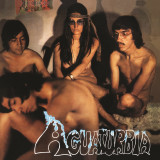
"Aguaturbia" (1970) is an essential album to understand the construction of what we know today as Chilean rock. This very influential album is raw and dynamic, featuring heavy rhythms, distortion, and exceptional phased female vocals reminiscent of Jefferson Airplane. It comprises original compositions and electrifying renditions of songs brought to fame by the likes of Tommy James & The Shondells, The Beatles and, of course, Jefferson Airplane elevating these classics to new heights of intensity and rhythmic allure. We are thrilled to make this outstanding LP available again after many years out of stock. Aguaturbia's debut album was originally released in 1970 and showcases one of South America's most significant psychedelic bands from the late 60s and early 70s. Their influence in their native Chile -and beyond- was groundbreaking. It was played live in 1969 on 3 tracks, and it became an icon of transgression due to its unbridled musical aesthetics and cover art that - for the time of its irruption - meant a clear defiance of the conservative logics lived in Chile, which saw in the nudity of the cover a challenge to morality and good manners. The album is raw and dynamic, featuring heavy rhythms, distortion, and exceptional phased female vocals reminiscent of Jefferson Airplane. Guitarist Carlos Corales shines and when he played solos at the gigs, the effect on the audience was silence and euphoria at the same time, they couldn't believe what they heard. Everything was done with a professional attitude. In fact, Carlos Corales (guitar) and Willy Cavada (drums) were both professional musicians who had made a previous career in rock and roll bands. The LP showcases breathtaking moments, like Willy Cavada's masterful drum solo in 'Ah Ah Ah Ay' captured flawlessly in a single take. Dive into the sensual psychedelic journey of 'Erotica,' where Denise's alluring vocals dance harmoniously with Carlos' electrifying guitar. Plus, don't miss their thrilling renditions of 'Somebody to Love' and 'Crimson and Clover'-each track elevating classics to new heights of intensity and rhythmic allure. This album is more than music; it's an invitation to experience sheer auditory bliss! "Aguaturbia" is an essential album to understand the construction of what we know today as Chilean rock.
Hunger Anthem is an indie rock band from Athens, Georgia with an unabashed penchant for distortion drenched, gritty, tightly executed power pop immediacy, deeply rooted in a lo-fi approach and ever-evolving, bearing an evident DIY punk rock work ethic and ethos Started as a solo project of singer/songwriter Brendan Vaganek in Buffalo, NY. Lift was recorded by Mike Albanese (Maserati, Bit Brigade, The Bad Ends, Life In Vacuum) and mastered by Joel Hatstat (Archers of Loaf, Jeff Rosenstock, Worriers). It's borne of love and sweat, and pulls deeply from the well of observation, longing, acceptance, and perseverance.
Who is Isabelle Lewis, anyway?
What kind of music does she make? Is she an opera singer? Does she write pop songs? Does she compose ethereal ambient soundscapes? Does she play chamber music on the violin? Is she producing dark, electronic beats?
Well… yes. But Isabelle Lewis is not so much a person as a project. Isabelle’s debut album, Greetings, credits a trio of composer–performers at its heart: producer Valgeir Sigurðsson, vocalist Benjamin Abel Meirhaeghe, and violinist Elisabeth Klinck. The sound of the elusive Isabelle Lewis is heard most clearly in the push and pull between them, the three-way tension that gives the album its musical and emotional drive.
Each of the three brings more to the collaboration than those epithets might imply. Elisabeth’s solo performance practice incorporates composition, improvisation, live electronics, and a close command of bowing and fingering techniques that make her fiddle sing, whisper or whistle as required. Benjamin is a self-taught countertenor - keening, crooning, and swelling to a voluptuous sensuality—but also an interdisciplinary stage director and performer. Well known for his work as a producer and studio collaborator, and as a composer of scores for film and stage, Valgeir’s solo discography interweaves meticulously crafted electronics, drones, noise, and other digital elements with acoustic instruments and vocals recorded with naked, unflinching clarity.
But the extravagant theatricality Benjamin brings to the aptly titled “Drama”—also featuring a heroic violin solo from Elisabeth—grapples against the thudding bass of the implacable digital backdrop. On “Mother, Shelter Me” Valgeir’s austere and detailed production throws the hushed violin and vocals into stark relief. The result is an exquisitely uncanny juxtaposition of past and present, human and mechanical, like a Rococo treasure viewed under cold fluorescent lights, or an 18th-century automaton slowly opening its clockwork eyes.
Even the lyrics seem somehow out of time. On “O Solitude,” Benjamin goes so far as to quote an entire song by the first great English opera composer, Henry Purcell, verbatim. No stranger to Purcell’s music, which has made its way into Benjamin’s theatrical productions as well, here Isabelle Lewis removes Purcell’s melodies and harmonies and sets the text, Katherine Phillips’s 17th century translation of a poem by Antoine Girard de Saint-Amant, to new music whose heightened, archaic character nevertheless seems haunted by Baroque ghosts.
Throughout the album, the outsized emotions and timeless archetypes of Benjamin’s lyrics feel like relics from some half-forgotten past—from the neatly rhymed couplets of “Fisherman,” a seemingly straightforward (but still somewhat askew) character study, to the abstraction of “Moonshell,” whose words seem like the fragments of some ancient, lost lament. It is just another of many ways in which Isabelle Lewis carefully distorts the listener’s notions of time. On a more micro level, time can stop for a moment of weightless, drifting ambience, and then plunge forward as the cloud of harmonies suddenly lock into tempo with the drop of the bass or the change of a chord. Or else that weightless moment is allowed to be, as in the aptly named prologue and epilogue to these Greetings (“Voicemail”/“…and farewell”), or in the interstitial tracks that bind the album together, connecting its dramatic peaks with expanses of meditative stasis.
The album as a whole is elegantly shaped, swelling from an intimate, interpersonal statement into something deeper and more spacious. The first half of the album leans slightly towards self-contained pop songcraft and ticking beats, while side B jumps off from “O Solitude” into the almost symphonic grandeur of songs like “Moonshell” or the instrumental “Not the water, air, or the dirt.”
But as it progresses, the contrasts only grow more sublime: antique and postmodern, human and machinelike. The ominous weight of the droning sub-bass and trombone (guest player Helgi Hrafn Jónsson) only makes the interplay between vocals and violins (guest player Daniel Pioro joining Elisabeth) seem more delicate and vulnerable. The ethereal string tremolos of “Moonshell” seem to pull against the heavy, shuddering electronics and layers of crooning vocals.
And that, in short, is where you will find Isabelle Lewis. Like an ancient stone archway, or a delicate house of cards, the architecture of Greetings is held together by the tension between opposing forces. Not just in Elisabeth’s playing, Benjamin’s singing, or Valgeir’s arrangements and production but in the conflict and contrast that generates the synergy between them.
Oh—Isabelle says hi, by the way. She’s looking forward to meeting you.
Following the release of Co-Accused's VA006 EP this summer, the Glasgow promoters and label heads pick out one of the last release’s heady talents for his own solo EP. UK wonky techno and jacked-up-riff master Luke’s Anger presents Corporate Hell EP for release this December, busting out with bare back to basics raw jam energy. Known for bringing an edge of fun and funk to techno, Luke’s been a big feature of Jerome Hill’s much respected Don’t Records, also released by Sunil Sharpe’s Earwiggle and high-spec club trax imprint Sneaker Social Club.
‘Corporate Hell’ opens the release with a bumping four four stomper, driven by a screaming melody line that lifts the dancefloor energy from the off. ‘The Sentinel’ follows with yet another big dancefloor moment made up of super slick machine funk, hammering away with grimy distortion.
Over on the B Side, the rawest of the raw ‘UFOh No!’ drives up the intensity in classic wonky techno style, off kilter melodies riff beside a shuffling beat lifting the levels another notch. To close out the EP the heady peak time pace of the EP stays lifted with bleep techno mover ‘Haffa Bar Jack’ in what’s a pure and relentless-to-the-end banger. This is classic Luke’s Anger material, made for the DJ and dance floor at its core.
You could call Wishy's story a lucky one. After prior monikers and iterations, Wishy was born as a kaleidoscope of alternative music's semi-recent history, with traces of shoegaze, grunge and power-pop swirling together. On Triple Seven, Indiana songwriters Kevin Krauter and Nina Pitchkites' musical synergy proves itself to be a rare one-the kind that sounds like someone striking gold. Part sly wink and part warm gratitude, it's only fitting their much anticipated full length debut is titled Triple Seven, where Wishy's penchant for indelible hooks is couched equally in pillowy atmospherics and scathing distortion. By day Krauter works as a music teacher, giving drum and guitar lessons to students, while Pitchkites is a seamstress by trade and often makes embroidered merch for the band. Coming up in a scene defined by hardcore and emo, Krauter and Pitchkites instead found themselves writing melodies in their heads while driving to work, pulling music from the air and arriving at a blearier, more ethereal interpretation of Midwest expanse. Initially, their music oscillated between hazy dream-pop and heavier alt-rock. The subject of their songs create a loose web of vignettes and snapshots, capturing Krauter and Pitchkites in a whirlwind couple of years _ exiting the pandemic, embarking on an embryonic project, making sense of their musical pasts while forging a musical future alongside one another, each of them on a journey of self-acceptance and self-understanding. Sometimes gorgeous, sometimes festering, and always cathartic, Triple Seven is a vibrant and exhilarating document of self-discovery with the scope and heft of the bygone big-budget rock albums that inspired it.
In 2012, Army of God released a cult cut of cold wave: “Salvation”. This was the only EP by the partnership of Aroy Dee and Miss Jagroe, the only EP until now that is.
Army of God are back, after more than a decade the duo return with Endless Skies. Analogue warmth is sliced by surgical synth stabs and bittersweet strings, Jagroe’s unmistakable voice echoes into the distance with the beseeching mantra of “until the music dies”. Aroy Dee’s edit of the title piece fortifies drums for the floor, emotion is further stripped from the already deadpan lyrics as melodies bleed into distorted wonder. The black streak that characterises Army of God turns a shade darker for the flip. A throbbing bass is inked by off-kilter keys, clusters of claps piercing the thicket of static and chilling chorus of “Fear the Night”. Venturing ever deeper into the night, the darker version will set speaker cones shaking and shivering.
Juddering and trembling, basslines are bolstered with vocals invoking the very darkest regions of the dancefloor.
Sgt Papers are a punk rock duo of brothers Ivan and Felipe Garcia from Hermosillo, Sonora, in the heart of the desert in Mexico. They started in 2017 releasing their first album “Sgt. Papers Lonely Psych Punk Band” independently, creating a buzz in the local independent rock scene and the independent scene in the US. They began touring the US playing both clubs and festivals. They followed this with two more albums in 2019 and 2021 while the same time helping grow the rock scene in Hermosillo. Their following grew along with the band. Their approach to recording and touring has been very DIY. The band’s sound is a combination of psych, garage, punk all played with plenty of distortion.
- Buffalo
- Toothless
- Uglie
- Shelley
- Frankenstein
- Rip
Second EP from Bristol indie pop six-piece, Hamburger. ‘Beat Back The Ghouls’ sees the band take their sound in a more lush, subtle and layered direction, developing skilfully on the raw songwriting ability offered in their debut. On this record Hamburger create a more complex and sophisticated sound, flitting masterfully between driven guitar hooks, emotive lilting melodies, singalong angst-fuelled hits, and warm dreamy fuzz. ‘Beat Back The Ghouls’ is a record packed with songwriting craft. Each track is a finely-tuned pop song, with catchiness, beautiful melodic turns and delicate harmonic progressions at its heart. The soft, layered vocals add a wonderful contrast to the distorted, driven guitars, as they explore themes such as longing, want and alienation. If you’ve heard Hamburger before, ‘Beat Back the Ghouls’ will mark a new, more refined experience, a band finding itself fully-grown. If you haven’t heard them before, this record is an opportunity not to be missed. Limited to 300 copies on black vinyl.
Producer, designer, publisher, filmmaker, all-round scene phenom - Lasse Marhaug returns with his first album since relocating from Oslo to the Arctic Circle, surveying his 35-year career for a set of grizzled, doom-pocked rhythms and foghorn drones pulled from the aether. Expansive and hard to categorise, it's a precision-tooled set of ice-cold tonal productions that heavily lean into Mika Vainio’s rhythm experiments, with extra levels of growling bass and curious noises to send us deep into the uncanny.
Lasse Marhaug has put his mark on literally hundreds of albums - working with artists like Jenny Hval, Merzbow, Jim O'Rourke, Kevin Drumm, Hilary Woods - so many others - yet he still regards himself as a primarily visual artist who got diverted into an occasionally different path. If his last album 'Context' was a kiss goodbye to decades of life in Oslo, 'Provoke' turns a new page, but one that draws heavily from memories of the distant past, reflecting on the way the topographies of Norway's frozen north helped shape his creative worldview. Weaving electronics into environmental recordings captured in the bleak Arctic winter, the album was mixed during the Polar night season, when, for two straight months, the sun never rose past the horizon. Somehow, even at its bleakest, Marhaug avoids the usual aesthetic signifiers for this kinda thing, finding elements of queered beauty in all the severity, juxtaposing elements that shine a bright light on all the odd spaces in-between.
A consideration of noise music's place in 2024, and whether it can still be a tool for subversion when its aesthetics have been so commodified, ‘Provoke’ also refernces an experimental '70s Japanese art magazine that attempted to define a new language for photography. Operating somewhere between these two guiding poles, Lasse feels his way through a subtly altered mode of expression, a new approach to familiar concepts. Album opener ‘Plates’, for example, gives it the full Ø treatment, like some exceptional ‘Oleva’-outtake, but , eventually, shards of interference start to exhale like horses blowing, creating uncanny sensations that hit through ambiguous feeling rather than sheer noise terror. Ritualistic, corporeal - hard to know what you’re listening to and why it makes you feel that certain way - so much more than just machine cycles optimised for their ultimately hollow brutalist aesthetic.
Marhaug paints vivid pictures from a carefully chosen palette, drawing us into a soundworld that's rich with contradictions and contrasts. Even the relatively deafening 'New Topographics' offsets its wall of distortion with a muffled, perforating kick drum, cutting into the noise like a knife through butter. And all of this preparation makes the album's lengthy centrepiece 'Monochrome Head' even more impactful; hinging on a Pan Sonic-like alloy of bass and drums, the track snowballs through tempered feedback and improv scrapes and whistles that pick up into an orchestral din. Marhaug accents the bluster with rhythmic hums that gather in momentum until they're almost oppressively heavy, as if everything's about to collapse.
A masterclass in quietly subversive world-building, 'Provoke' invites us to peer at an expansive sonic landscape and marvel at its intricacies, but this time around there's a Lovecraftian behemoth lurking somewhere beneath its icy surface.