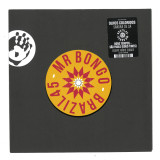
Limited Edition Yellow vinyl repress.
Two huge edits by Gospel Soul music authoritarian Greg Belson & veteran edit crew, Situation member Paulo Fulci.
Greg Belson has been the host of The Divine Chord Gospel Show since 2011, and has shared his record collection to an ever growing worldwide audience.
Over the last 4 years, he's assembled DJ tours around Europe to spread the gospel directly to the dancefloors of more discerning clubs, and it was at Glastonbury Festival specifically the NYC Downlow stage that he met Paulo Fulci. 'Born Again' became a reality and in the Summer of 2017, was road tested on Belson's tour of 50 dates over 3 months.
His work as a compiler of releases on Cultures of Soul & Harmless Records have garnered support from all sides of the music industry from The Guardian to BBC Radio 6 Music.
Now as 'Divine Situation', Belson & Fulci are returning to the underground sound with a slew of edits, starting with these back to back club-tested heavy hitters.
Suche:dj paulo
- A1: Intro/Love (Feat Coco Maria)
- A2: Casa Loca (Feat Baldo Verdú)
- A3: The Cheeky One (Feat Coco Maria)
- A4: Cachetón
- A5: Sabrohito (Feat Coco Maria)
- A6: Gwely & Môr (Feat Elan Rhys)
- A7: Vamonos! (Feat Coco Maria)
- A8: El Cañon (Feat Baldo Verdú)
- A9: The Mountains Of The Mind (Feat Coco Maria)
- A10: Padre Tiempo (Feat Luzmira Zerpa)
- B1: El Konto (Feat Coco Maria)
- B2: Esa Tristeza (Feat Nina Miranda &Amp; Little Barrie)
- B3: Bom Dia! (Feat Coco Maria)
- B4: Oh Minha Querida (Feat +2`S)
- B5: A Secret Rendez-Vous (Feat Coco Maria)
- B6: Sempre Amor (Feat Elan Rhys)
- B7: For All The Side Chicos & Chicas (Feat Coco Maria)
- B8: Maybe Man (Feat Silvia Machete)
- B9: Hay Esperanza (Feat Coco Maria)
- B10: She`s In L A. (Feat. Young Gun Silver Fox)
- B11: Todo Chévere (Feat Baldo Verdú, Coco Maria & Don Leisure)
By it's very nature "Radio Chevére", the new album by Rio 18 and their host of guests cannot be categorized simply: at once both a Latin mixtape and a radio show, it's also an internationalist love letter, an offering to the goddess of Tropical Music and all that it encompasses. Ambitious, yes. Foolhardy, possibly. But sincere, committed and FUNKY? Definitely.
With the voice of guest DJ Coco Maria as our guide, "Radio Chévere" takes us on a journey through myriad musical styles and stories. Stopping off at Uruguay, Brazil, Venezuela, Colombia, Mexico, California, New York and countless other sonic destinations via Samba, Salsa, Funk, Cumbia, Joropo, Disco, Psychedelic and Electronic stylings, "Radio Chévere" is also a musical metaphor for migration - a journey from one continent, one life to another.
This album features songs in no less than four languages (Spanish, Portuguese, Welsh and English) and includes collaborations with Brazilian legends the +2's (Moreno Veloso, Kassin and Domenico Lancellotti) on the tender samba ballad, "Oh Minha Querida", transatlantic Yacht Rock gods Young Gun Silver Fox ("She's In LA"), "Sao Paulo's finest" Silvia Machete on the sweaty funk "Maybe Man" and Venezuelan Llanera and Joropo queen Luzmira Zerpa sings "Padre Tiempo", set to an incessant Afro-Venezuelan pulse. Why this torrent of eclectica now? Having recorded three albums in Welsh, predominantly inspired by Brazilian music, Rio 18 founder, Carwyn Ellis had a hard time following 2021's "Yn Rio": "We'd made a concept album with an orchestra. How do you follow that?" he says. "So I retreated to my laboratory, learned as much new music as I could, started learning Spanish too, and ended up writing tunes in a bunch of languages and styles, all of which reflected things I've learned or experienced over the last couple of years."
Since the group's inception in 2018, on the suggestion of Chrissie Hynde when he toured South America as a member of the Pretenders, Carwyn has been on a voyage of musical discovery through the styles of that continent. And in those five years he learnt a lot! But in a radical new move, Carwyn has stepped back from the mic, preferring to focus on writing and producing, handing over the vocal duties to band members Baldo Verdu (Venezuela) and Elan Rhys (Wales) plus a host of collaborators. "They can sing and express what I'm feeling so much better than I can, and both Elan and Baldo bring an authenticity and strength to our songs that surprise and elevate me. Collaborating with so many other inspiring artists on this album has helped us to grow and assimilate more styles - we're halfway through our next album already."
Rio 18 is an internationalist collective with Celtic and Latin roots and love at their core. With eye popping carnivalesque cover art by the brilliant Colombian graphic artist, Yoda, "Radio Chévere" is both timely and timeless.
Two 1980s Brazilian boogie bombs from Sandra de Sá and Equipe Rádio Cidade get a remastered reissue as part of Mr Bongo Brazil 45’s series.
Sandra de Sá’s ‘Olhos Coloridos’ is an ‘80s MPB/boogie jam, taken from her self-titled 1982 LP on RGE Brazil, that sits perfectly alongside the likes of Tim Maia, Marcos Valle, Robson Jorge and Lincoln Olivetti. No surprise then that Lincoln Olivetti and Robson Jorge feature on the track, backed by some of the members from Banda Black Rio. A joyous combination of funk basslines and dreamy Rhodes that marry with jubilant horns and Sá’s incredible vocal tones.
On the B side, Equipe Rádio Cidade ‘Bons Tempo Sao Paulo (Good Times)’ was originally released on a rare promo only 7 inch from 1980. Giving a Brazilian boogie makeover to Good Times by Chic / Rapper’s Delight by Sugarhill Gang, the track is voiced by radio DJs from Sao Paulo wishing their listeners a Merry Christmas and Happy New Year.
This replayed version, heavy on the clavinet with a samba-infused, cuica-laced percussion breakdown, gives a true Brazilian spin on one of the most distinctive melodies out there.
Remastered with refreshed artwork.
More Brazilian brilliance from Barefoot Beats...
Man of the moment, Aroop Roy takes a break from his busy touring schedule to serve up a super cool slice of deeply hypnotic magic. Totally bem gelada!
On the flip side, Belem born, but now Sao Paulo based DJ and producer Bernardo Pinheiro returns to Barefoot Beats and absolutely destroys the dance floor with this peak-time euphoric Brazilian Disco anthem.
All delivered on beautiful, LTD edition 10inch vinyl pressing.
BELEZAAAAAA!
Vamos!
Bruno Berle, the young songwriter and poet originally hailing from Maceió, the capital of Brazil’s Alagoas state, crafts songs that are simple, direct, and full of tender nuance. With his first album No Reino Dos Afetos (which translates to "In the Realm of Affections” and was released in 2022), Berle firmly established himself as a unique and important voice in the burgeoning scene of new Brazilian artists making a global impact, including peers like Ana Frango Elétrico, Tim Bernardes, Bala Desejo, Sessa and more. Now back with his second album, No Reino Dos Afetos 2, he stretches that further.
Bruno Berle’s music lives between two worlds – a traditional Brazilian folk talent steeped in history, and a contemporary, dreamy electronic pop; the result is songwriting that’s genre-bending, intentional, iconoclastic and consuming, spacious and sinewy and singular, a striking reflection of its composer while leaving space for the listener to settle in. The album follows Bruno’s relocation to São Paulo, and the songs are a reflection of his past and present. A rebuke of former categorizations of his work in Brazilian music scenes, and an idea of where his music can move, unfettered.
Berle’s music is purposeful in being a true portrait of himself, and a reflection of the music, art, and fashion scenes he personally moves through. Berle aims to provide an entrypoint for Black queer joy in his music, in his storytelling, in his presence and vision as a creative. For him, it feels subversive to be playing MPB laced with dubstep and lo-fi, a sort of intentional sacrilege, capturing a dialogue of modernity in traditional music.
Berle wrote most of the arrangements and co-produced his new album, Reino Dos Afetos 2 with longtime friend and musical partner Batata Boy, who is also from Maceió; the album was recorded in Rio de Janeiro, Maceió, and São Paulo, his new home, and picks up the conversation begun in 2022 on Berle’s debut album No Reino dos Afetos. Both records are the result of a nonlinear but coherent seven-year music creation process culminating in these albums, holding hands across space and time.
“Tirolirole,” the first single from the record, was released at the end of 2023; sun-soaked rhythms and soft voice coat the song, the lilting refrain of “Tirolirole” throughout – hushed, gentle, but somehow almost tactile, a golden-hour moment unlocked in the mind. “Tirolirole” is a triumphant future classic about the temporality of a blossoming love, with Bruno’s stunning vocal soaring over melodies which ebb and flow like the waters on the Atlantic shore. Of the track, Berle explains: “Despite ‘Tirolirole’ being an expression that evokes my childhood, just like the light words about nature, the harmony, and the poetry are epic, carrying a great hope for love.”
In fact, the guiding theme of No Reino dos Afetos 2 is a relationship, unfolding in the arc of a weekend. It traverses the innocence of an early young love, how that can be formative, can stretch on to take new shapes, or shape you. The album happens at the genesis of meeting someone and falling for them, before the relationship is thrown into overdrive – set in a big city, against a backdrop of major life changes, rising energy, the sound of São Paulo.
Something transcendental emerges in “Dizer Adeus,” with an arrangement that echoes a gospel atmosphere (evangelical and Catholic environments were pivotal to Berle’s upbringing). On “É Só Você Chegar,” piano and flute gracefully intertwine, a dance, while “Quando Penso” skews sparser, the voice-and-guitar minimalism somehow cultivating an entirely different shape – somehow both cozy and melancholy, with the background sound of a rainy day. Coupled with the lo-fi aspects that shape much of the album’s personality in the vocals and the production, No Reino Dos Afetos 2 is meticulously elaborated by Berle’s sonic alchemy, like on the mid-album instrumental “Sonho,” which feels like floating. “It’s the apex. It’s when lovers are sleeping together,” Berle explains of the feeling he wanted to encapsulate in the song.
On “Love Comes Back” Berle interprets Arthur Russell, the late Iowa musician who only reached greater visibility after he died in 1992. “His way of making music is similar to mine,” Berle explains. “He sings in a more fragile way, has more of an experimental way of recording, letting ‘chance’ appear in the final work.”
Even so, Berle doesn’t want his music to be buried in sentimentality – and the purposefulness of his craft serves as a sort of north star. The production, the arrangements, his restraint and intentionality in crafting his songs feel just as vital as their emotional cores. His songwriting is amorphous, fluid, an encompassing genre-bending movement in-and-of-itself, quietly daring. The songs are often in conversation with other works – drinking in fountains as diverse as the filmmaking of Ingmar Bergman, the poetry of Walt Whitman, the rhythm of Djavan, and the painting of Maxwell Alexandre. Musically he weaves together a rich tapestry of Brazilian folk, UK 2-step garage/dub, trip hop and sun soaked west coast songwriters; something akin to the worlds of Milton Nascimento, Arthur Russell, James Blake, Feist, and Sade colliding into one. But even then No Reino Dos Afetos 2 floats separately, a romanticism driven by a simplicity and intimacy, an open-ended possibility, Berle’s singularity as an artist at the helm of the ship.
As mood changers go, this track is up there with the best. Last year whilst DJing with miche at Shapes festival in the snow-capped mountains of Switzerland, a breathtaking yet ominous Alpine sky suddenly became a picture postcard moment. The clouds parted and a double rainbow formed, as miche dropped Studio Rio's bossa nova remake of Bill Withers’ all-time classic 'Lovely Day'. From there, the dancefloor shifted gears and morphed into full-swing feel-good vibes, in a beautiful, spontaneous moment nobody could have planned for.
Mr Bongo now proudly presents a reissue of this brilliant, bossa-channelling Bill Withers reinterpretation from Studio Rio’s 2014 release ‘The Brazil Connection’. Masterminded by the German Grammy award-winning Berman Brothers, the project was born out of their deep love of Brazilian music. “Our goal was to bring the Brazilian joie de vivre to iconic performances by well-known artists. What would these classic songs sound like had they been recorded in the studios of Rio de Janeiro in the first place, with the best Brazilian musicians and arrangers?” the brothers reflect.
Capturing the life force of Brazil, the beating heart that is its music, they set out to find the musicians who would fit best with their concept. Landing in Rio in 2013 a series of coincidences led to them being introduced to their idols Marcos Valle and Roberto Menescal, who both agreed to come on board. The Berman Brothers also wanted to find some of the musicians who recorded with one of Brazil’s most influential composers Tom Jobim. “Fifty years after Jobim made the music that really defines bossa nova, we found that many of his sidemen were still active, including Paulo Braga of Jobim’s famed rhythm section. It was magic; everything just fell into place.”
There's no question that the original of ‘Lovely Day’ is up there as one of the most feel-good, spirit-lifting anthems of all time. Here the brothers, with the help of a whole host of Brazil’s finest musicians, rework Bill’s soul-fuelled groove into a bossa nova slice of sunshine. With the blessing of Bill and Sony, they were given access to the original multitracks so they could incorporate Bill’s vocals perfectly into the new arrangement.
Joy-injected horns and bouncing double bass blend with the smile-inducing samba flavour of Pretinho da Serrinha’s cavaquinho playing. Tying it all together Torcuato Marinao who worked with the likes of Gal Costa, Gilberto Gil and Caetano Veloso, completes the line-up as arranger of the songs.
The perfect end-of-the-night track, mood lifter or soul warmer, remakes don’t get much better than this.
Bruno Berle, the young songwriter and poet originally hailing from Maceió, the capital of Brazil’s Alagoas state, crafts songs that are simple, direct, and full of tender nuance. With his first album No Reino Dos Afetos (which translates to "In the Realm of Affections” and was released in 2022), Berle firmly established himself as a unique and important voice in the burgeoning scene of new Brazilian artists making a global impact, including peers like Ana Frango Elétrico, Tim Bernardes, Bala Desejo, Sessa and more. Now back with his second album, No Reino Dos Afetos 2, he stretches that further.
Bruno Berle’s music lives between two worlds – a traditional Brazilian folk talent steeped in history, and a contemporary, dreamy electronic pop; the result is songwriting that’s genre-bending, intentional, iconoclastic and consuming, spacious and sinewy and singular, a striking reflection of its composer while leaving space for the listener to settle in. The album follows Bruno’s relocation to São Paulo, and the songs are a reflection of his past and present. A rebuke of former categorizations of his work in Brazilian music scenes, and an idea of where his music can move, unfettered.
Berle’s music is purposeful in being a true portrait of himself, and a reflection of the music, art, and fashion scenes he personally moves through. Berle aims to provide an entrypoint for Black queer joy in his music, in his storytelling, in his presence and vision as a creative. For him, it feels subversive to be playing MPB laced with dubstep and lo-fi, a sort of intentional sacrilege, capturing a dialogue of modernity in traditional music.
Berle wrote most of the arrangements and co-produced his new album, Reino Dos Afetos 2 with longtime friend and musical partner Batata Boy, who is also from Maceió; the album was recorded in Rio de Janeiro, Maceió, and São Paulo, his new home, and picks up the conversation begun in 2022 on Berle’s debut album No Reino dos Afetos. Both records are the result of a nonlinear but coherent seven-year music creation process culminating in these albums, holding hands across space and time.
“Tirolirole,” the first single from the record, was released at the end of 2023; sun-soaked rhythms and soft voice coat the song, the lilting refrain of “Tirolirole” throughout – hushed, gentle, but somehow almost tactile, a golden-hour moment unlocked in the mind. “Tirolirole” is a triumphant future classic about the temporality of a blossoming love, with Bruno’s stunning vocal soaring over melodies which ebb and flow like the waters on the Atlantic shore. Of the track, Berle explains: “Despite ‘Tirolirole’ being an expression that evokes my childhood, just like the light words about nature, the harmony, and the poetry are epic, carrying a great hope for love.”
In fact, the guiding theme of No Reino dos Afetos 2 is a relationship, unfolding in the arc of a weekend. It traverses the innocence of an early young love, how that can be formative, can stretch on to take new shapes, or shape you. The album happens at the genesis of meeting someone and falling for them, before the relationship is thrown into overdrive – set in a big city, against a backdrop of major life changes, rising energy, the sound of São Paulo.
Something transcendental emerges in “Dizer Adeus,” with an arrangement that echoes a gospel atmosphere (evangelical and Catholic environments were pivotal to Berle’s upbringing). On “É Só Você Chegar,” piano and flute gracefully intertwine, a dance, while “Quando Penso” skews sparser, the voice-and-guitar minimalism somehow cultivating an entirely different shape – somehow both cozy and melancholy, with the background sound of a rainy day. Coupled with the lo-fi aspects that shape much of the album’s personality in the vocals and the production, No Reino Dos Afetos 2 is meticulously elaborated by Berle’s sonic alchemy, like on the mid-album instrumental “Sonho,” which feels like floating. “It’s the apex. It’s when lovers are sleeping together,” Berle explains of the feeling he wanted to encapsulate in the song.
On “Love Comes Back” Berle interprets Arthur Russell, the late Iowa musician who only reached greater visibility after he died in 1992. “His way of making music is similar to mine,” Berle explains. “He sings in a more fragile way, has more of an experimental way of recording, letting ‘chance’ appear in the final work.”
Even so, Berle doesn’t want his music to be buried in sentimentality – and the purposefulness of his craft serves as a sort of north star. The production, the arrangements, his restraint and intentionality in crafting his songs feel just as vital as their emotional cores. His songwriting is amorphous, fluid, an encompassing genre-bending movement in-and-of-itself, quietly daring. The songs are often in conversation with other works – drinking in fountains as diverse as the filmmaking of Ingmar Bergman, the poetry of Walt Whitman, the rhythm of Djavan, and the painting of Maxwell Alexandre. Musically he weaves together a rich tapestry of Brazilian folk, UK 2-step garage/dub, trip hop and sun soaked west coast songwriters; something akin to the worlds of Milton Nascimento, Arthur Russell, James Blake, Feist, and Sade colliding into one. But even then No Reino Dos Afetos 2 floats separately, a romanticism driven by a simplicity and intimacy, an open-ended possibility, Berle’s singularity as an artist at the helm of the ship.
Nick Leon, Swimful, DJ Znobia. One of the first artists from outside of Africa to sign to Hakuna Kulala, WULFFLUW XCIV brings his borderless productions to the label's ongoing Whitelabel series following a slew of dancefloor agitations from T5UMT5UMU, Menzi & Scratchclart, and others. "Toxica EP" builds on the mutant fusion of 2020's acclaimed "Ngoma Injection", stripping back the woozy psychedelia and chromium ambience and replacing it with pure soundsystem pressure. 'Take a Ride' bends acid techno machinery around rubbery East African rhythms, anchoring block party hedonism with a 4/4 bump that wouldn't be out of place in Kreuzberg and vocal shakes straight from São Paulo. But this isn't a mindless mashup of aesthetics, its a conversation with the world's fringe agitators, using stylistic and rhythmic strokes to highlight commonality, not exclusivity. Hakuna Kulala's own Chrisman appears on 'Tetemeka', and the two producers adapt the syrupy tarraxinha inversions the Congolese engineer perfected on last year's "Makila" full-length. Low, resonant gqom atmospheres underpin the entire track, but WULFFLUW XCIV's squeaky toy synths prevent it from slipping into darkness. Elsewhere 'Kluck' distorts the timeline completely, wedging flute-led Latin American tribal sounds into a riddim vs. trap superstructure, and 'Exp' sublimes speed dembow into delirious trance and minimal techno vapors. The boundaries between dance subgenres are slowly dissolving, and WULFFLUW XCIV's digital-era intermixture sounds like the cyberpunk carnival we're all desperately in need of
It’s quite amazing that in a world that has become increasingly digital and where ‘stuff’ has become invisible, vinyl has made such a spectacular comeback.
Yet it is very likely also one of the main reasons for its resurgence. People like to collect. The physical aspect of playing a record adds to the listening experience and creates memories.
An album can take you back to an important time or place. And buying a new record is a great way of supporting a favorite artist and their label. That’s also the reason why new generations of music lovers have embraced vinyl.
This new edition of Passion for Vinyl tells these stories. It’s about the records that inspire people. The way they shaped their lives. How they sparked them to pick up an instrument,
become a DJ, or start a label, pressing plant or YouTube channel.
Passion for Vinyl features exclusive interviews with Blue Note recording artist Gregory Porter, CEO of Linn Gilad Tiefenbrun, Bettina Richards of Thrill Jockey Records,
YouTube personality Melinda Murphy, Beggars Group US president Nabil Ayers, Ben Blackwell of Third Man Records, Classic Album Sundays’ Colleen ‘Cosmo’ Murphy,
Liz Dunster of Erika Records, Robert Trujillo of Metallica, DJ, collector and label owner Gilles Peterson, Jenn D’Eugenio of Gold Rush Vinyl and Women in Vinyl,
Bad Seed member Warren Ellis, Paulo Jr. of Sepultura, Chad Kassem of Acoustic Sounds, and many others.
This book offers close to 30 interviews with a very diverse cast of characters. They have in common a deep love of music.
Passion for Vinyl shares the unique experience of making, buying, collecting, and enjoying vinyl. Its purpose is to inspire.
Passion for Vinyl is written by the Dutch author, music journalist, audiophile, and vinyl collector Robert Haagsma.
- Needed That - A Boogie Wit Da Hoodie , Pnb Rock
- Food For Thought
- B.r.o. (Better Ride Out) (Feat. Roddy Ricch)
- Take Shots (Feat. Tory Lanez)
- Water (Drowning Pt.2) (Feat. Kodak Black)
- Money Conversations
- Turn Off The Radio
- Last Time (Feat. G Herbo)
- I Need It
- Ballin
- Emotions
- Bounce Back
- Come Here
- Damn Homie (Feat. Lil Durk)
- Friends With Benefits
- Chanelly (Feat. Don Q)
- February
- Regular
- Soul Snatcher
- 24: Hours (Feat. Lil Durk)
- Man In The Mirror
- Back It Up
- Playa (Feat. H.e.r.) (Bonus)
A Boogie Wit da Hoodie veröffentlicht Vinyl-Version seines aktuellen Albums " Me vs. Myself ".
Die Doppel-LP ist ab 20. Oktober im Handel erhältlich.
Der globale Multi-Platin-Superstar A Boogie Wit da Hoodie ist seit seinem Erscheinen in der Szene im Jahr 2016 eine Kraft, mit der man rechnen muss. Der aus der Bronx stammende Rapper wurde von der New York Times als "der vielversprechendste junge Rapper, den die Stadt seit einiger Zeit hervorgebracht hat" bezeichnet und kann bis heute fast 18 Milliarden globale Streams und über 50 RIAA-Platin- und Gold-Zertifizierungen vorweisen.
Mit einem dynamischen Katalog weltbekannter Hits ("My Shit", "Drowning (feat. Kodak Black)", "Swervin", "Look Back At It" und mehr) und drei von der Kritik gefeierten Alben (HOODIE SZN, THE BIGGER ARTIST und ARTIST 2.0) hat A Boogie bewiesen, dass er einer der hellsten Stars der Musikindustrie ist.
A Boogie ist auch einer der gefragtesten Kollaborateure der Musikbranche und hat mit einer Vielzahl von Künstlern zusammengearbeitet, von Ed Sheeran, Maroon 5 und Khalid bis hin zu Chris Brown, DJ Khaled, Paulo Londra, Meek Mill, Pop Smoke und vielen anderen.
Rolling up on Leipzig’s finest disco emporium, Riotvan, Mexican sensations Kalexis and Paulor make their debut with a fresh four track selection on their ‘In Between’ EP.
Well, ok. Not strictly a debut. Our Mexico maestro, Paulor, did feature on the third instalment of our Familiar Faces series back in 2020, and now he’s back, as one half of our new cosmic couple. As resident DJ of the legendary Futuro Primitivo he has soundtracked the nights for so many and showcased his own music on Life And Death, DGTL, Kompakt and more.
Partner-in-shine, Kalexis. A supreme selector. Deadly behind the decks and an artist who finally cut her production teeth with 2021’s ’Neptune Rising’, now readies her latest work… Right here on Riotvan.
The pair ease us in with the beatless opener ‘Going Through The Void’, before hitting us square in the chest with the growling stomp of ‘Energy’. On the flip they entice with the electrified folk feels of ‘Lashes’, before the rotor-blade drone of ‘Magnetic’ closes the EP.
PUTAS VAMPIRAS Vol.1 is the debut release of PUTAS VAMPIRAS, a DJ and producer who is an icon of Sao Paulo's queer underground scene.
As the organizer and mother of the infamous VAMPIRE HAUS raves and its community of vampires, her work is a celebration of DIY culture, resistance and an unapologetic commitment to inclusion and the freedom of the Brazilian LGBTQIA+ community.
Over the last decade VAMPIRE HAUS has become much more than a rave, its an aesthetic, a mind-set and a movement that spans across the whole of Latin- America. After almost 10 years, it is finally debuting as a record label.
In this first release, PUTAS VAMPIRAS reimagines post-punk attitudes and the frenzied energy of a rock and roll mosh pit through the lens of the queer Sao Paulo underground. The album's tracks were built to withstand the heat of the VAMPIRE HAUS raves, and to satisfy the legions of dissident ravers, drag monster queens, techno lovers, and "vampiras" from all around the world. She describes her sound as VAMPIRE TECHNO, the perfect soundtrack to a kinkier and queerer alternative reality version of Tony Scott's "The Hunger" movie.
All the tracks on this compilation are anthems at the VAMPIRE HAUS raves and part of PUTAS VAMPIRAS' live performances in recent years, with the track "Puta Vampira Bixa Loka" becoming the soundtrack of LGBTQ freedom and empowerment in Sao Paulo.
Using a hybrid setup of analog drum machines, modular synths and vinyl during her performances, PUTAS VAMPIRAS made thousands of "vampiras" dance like there was no tomorrow.
She has performed on BOILER ROOM and extensively toured across the world, playing amongst many places in the UK, USA, India, Turkey, Ukraine, Chile, and Paraguay and being the first Brazilian to perform a hardware live set on the main floor of Berghain.
PUTAS VAMPIRAS has become a household name and a symbol of LGBTQ+ empowerment, liberation, and resistance and her music will carry the VAMPIRE TECHNO spirit into more corners of the world.
We complete 2019 with the "Sky, Horse and Catch EP" by label boss Noema himself.
On his quest to 'Bring the Jams', the world traveling DJ delivers two stunning tunes, streaked with percussion that he recorded on a trip to Sao Paulo.
Last but not least, Noema's EP comes along with a mind-bending remix by our favourite Romanians Khidja.
The title track translates a 90's Detroit House Groove to the present day and adds Cuica, Berimbau and several other Brazilian drums on top. Riding the complex groove, you encounter eccentric synths, mysterious soundscapes and of course the horse, on this 11 minute long hack.
'Minhocao' trades the horse for a racing car and takes you on a cruise on the same-named elevated highway that leads through the city of Sao Paulo. Surrounded by driving beats, guitar single-notes, massive synth-bass howls and a gritty Moog theme, this jam is a hell of a joyride!
Khidja strips down the original title track to its core and creates a solely percussive version in a half-time groove. By adding a virtuoso Qanon/Saz-like sound the tune develops an arabesque flavour with a dubby bass as the cherry on the top.
C75 Cassette Tape
‘Speaking Things’, the new album from Isabassi, is a collection of highly detailed industrial music examining her singular perspective on rhythm and texture. Through brittle percussion, supernatural atmospheres and astonishing bass power, the Brazilian composer and artist explores a conversational narrative on the first full length Super Hexagon release.
About Isabassi:
Isabassi is a Brazilian electronic music composer and DJ based in Berlin. Highly influenced by industrial and rough sounds from the surroundings of Sao Paulo and the German capital, her musicality translates this aggressive environment through harsh and erratic drummings and dark textures. Aiming a sort of ritualistic experience, she explores different rhythms patterns to move body and soul, letting visceral impulses come to the surface.
Brazil’s Bruno Furlan returns to Hot Creations with his fresh two-track EP, ‘Bongoloco’.
A DJ and producer whose recent studio endeavours have seen him release material on Black Book Records, Fool’s Gold and Material, Bruno Furlan is an artist at the centre of Brazil’s recent explosion of names within the house and tech house landscape. Based in São Paulo, the bubbling talent has built on his early experiences within the Brazilian electronic music scene to make appearances at global events such as Dirtybird Campout and AMF Festival. Following
an impressive debut on the label with his two-track ‘The Speakers Pump Like This’, late January brings a return to Jamie Jones’ Hot Creations imprint as he serves up two fresh dancefloor-leaning cuts across his ‘Bongoloco’ EP.
Title track ‘Bongoloco’ takes cues from its name and showcases a skittering percussion-driven production built for peak-time hours as warped drum fills and vibrant vocal calls inject an abundance of energy. Keeping things moving, the rolling ‘Vai’ delivers a slick accompaniment to the package, serving up an anthem built for bustling terraces worldwide.
- 1: Turpe Est Sine Crine Caput
- 2: Não Fale Com Parede
- 3: Espêlho
- 4: Lem - Ed - Êcalg
- 5: Ôlho Por Ôlho, Dente Por Dente
- 6: Metrô Mental
- 7: Teclados
- 8: Salve-Se Quem Puder
- 9: Animália
Módulo 1000 were not messing around when they made 'Não Fale Com Paredes’. It holds its own, not just as a raw, heavy, experimental “Brazilian” psychedelic rock album, but as a raw, heavy, experimental psychedelic rock album, full-stop!
Formed in Rio de Janeiro in 1969, Módulo 1000 honed their craft as the house band in clubs and resorts in São Paulo where they predominantly covered American artists such as Jimmy Hendrix as well as British giants, Led Zeppelin. After acquiring a taste for fame following the performance of one of their tracks at the Rio International Song Festival, the band focussed their attention on composing original material. Their manager, Marinaldo Guimarães, encouraged the band to explore their experimental and creative sides. This, in parallel with the explosion of experimental music in Brazil, resulted in the band performing alongside heavyweights such as O Têrço; there was a happening in the air.
Módulo 1000 recorded just one album. Released on Top Tape records in 1972, it featured Eduardo Leal on bass, Candido Faria on drums, Daniel Cardone on guitar, violin and vocals, and Luiz Paulo Simas on organ, piano, and vocals. 'Não Fale Com Paredes' was produced by the popular DJ, Ademir Lemos, and came housed in a fold-out cover featuring tripped-out artwork and design by Wander Borges. However, due the uncompromising nature of its wild, heavy psychedelic rock sound, the album was destined not to be played on the radio in Brazil. Rumours suggest that the label didn't understand the album, and as a result, it wasn't promoted or marketed. Thus, like many other underground cult classics, it was lost in the ether, only later to be rediscovered by a new audience at a different time.
One thing is certain, you definitely know when you've heard Módulo 1000. The sound is raw, heavy and at points quite aggressive, more Black Sabbath than Os Mutantes. It floats between psychedelic rock, prog rock, early metal, and dare we say, displays elements of proto-math-rock.
The band’s discography includes a 7" single, as well as their music being featured on several compilations for Odeon Records, additionally they released a 7" single under their alias 'Love Machine' for Top Tape Records. These compositions are included as bonus tracks on the CD version of our reissue.
Repress incoming...
Number 94 in the Brazil45 series is one for the Brazilian boogie lovers out there.
The vocal and instrumental group Os Carbonos from São Paulo had a long career that straddled the 60s, 70s and 80s. 'Pássaro Selvagem' is taken from the latter years of their career. Its a bass driven, boogie-funk groove (with a bassline not too dissimilar to Queen 'Another One Bites The Dust') that is Brazilian boogie at its finest. Taken from the B-side to a 7" campacto released in 1981 on Copacabana records, its proven to be a favourite of Luke Una and we foresee it becoming a staple in your DJ box for years to come too.
The B-side comes from one of our all-time favourite artists, the mighty Sandra Sa. Sandra is a wonderful vocalist, her intense and recognisable style is one of THE voices of the Brazilian boogie golden era. Check out her classic album 'Vale Tudo' (MRBLP230) on Mr Bongo for further proof of her credentials here. 'Palco Azul' is also taken off a 7" single from 1981 and is a feel-good dancefloor groover with punchy brass stabs, warm keys and uplifting chord changes. It contains all the right elements that we have come to associate with that knockout late 70s / early 80s Brazilian sound.
Zopelar arrives on Tartelet with Charme - an album of effervescent machine funk harking back to a golden era of Brazilian party music, releasing October 21st.
The era of interest for Sao Paulo’s Pedro Zopelar begins in the 1980s in Rio de Janeiro, when a particular phenomenon caught on at suburban parties which became known as Charme. “Charme was like a mix of slow boogie, RnB and new jack swing,” explains Zopelar. “DJ Corello started calling ‘charme’ the moment of the party when he played slow grooves and felt that the people started dancing differently, with sexier synchronized moves. Some years later, charme evolved from an awaited moment of a night to a whole movement of parties just playing that kind of music. On this record I tried to make something that brings this emotional feeling to my music in a modern way.”
Much like the original genre-not-genre he drew inspiration from, Zopelar’s approach across his latest LP spans different moods and tempos. There’s blissful, sultry mystery lingering around ‘Clara’ and ‘Do You Feel?’ while OSAGIE lends some chops to the exquisite, Rompler-powered synth funk of ‘Chain Net’. The lead singles ‘Shibuya’, ‘Charme’ and ‘Passado’ all tap into varying shades of deep house, from slinky City Pop-tinted loungers to peak-time dance pop and Larry Heard-influenced flavours, with the constant being Zopelar’s immaculate production and the unbridled warmth of his compositions.
Continuing the Latin-rooted theme of the album, the artworkconception of Charme was realized by multidisciplinary artist and curator Ode, showcasing a popular style of street paintings made by anonymous artists throughout Latin America. It’s not about graffiti-culture but a popular solution utilized by small restaurants, bars and other establishments to use their own walls for commercial purposes, hiring artists to paint food and drink menus or other information about their products.
With an emotional sincerity stemming from his move to reconnect with the Brazilian dimension of his creative background, Charme arrives as Zopelar’s heartfelt celebration of life and music, of sentimental moments shared and good times enjoyed.
The long-running Kompakt imprint will release an EP by German DJ and producer Sascha Funke in September. Sharing five tracks that traverse quirky house and techno, Treets marks Funke’s monumental return to Kompakt since his Zug um Zug two-tracker in 2014.
Speaking about Treets, Funke says he is "very happy to be back on the mothership Kompakt" after an eight-year break. As one would expect with Funke, the EP fits the cosmic world of Kompakt to a tee. The title track conveys a weird, tripped-out atmosphere as an alien-like vocal burbles between an acid bassline and squeaky percussion. It's a tantalising glimpse of Funke's freaky underworld. E_Plus follows a similar wonked-out vein, only this time, the vibe is ominous. Funke pairs an orchestral vocal with bleepy pads and signature acid-drenched melody — a solid offering oddball of energy. On Alles Paletti, a 2-step drum pattern and string of bright claps create a sunny soundscape, complemented by a robust bassline and ethereal synth notes. It's fairytale house music, the kind only Funke can produce. The penultimate track Haus More is subdued, as chugging drums slither between a wobbly melody. The Other Version feels futuristic, as Funke goes full-force electro. Extra-terrestrial vocals return, but the pace is cranked up by strident sound FX and thudding drums. An eccentric end to an eccentric EP.
Sascha Funke is a Berlin-based producer and DJ with two decades' worth of releases building his back catalogue. BPitch Control, Turbo Recordings, Endless Flight, Running Back, and several more esteemed imprints have released his work. Today, he continues to create sleek sounds that weave various genres from house, techno, disco, Krautrock, wave, electro and unclassified anomalies. As a DJ, Funke is just as free-wheeling as his productions. He's played E1 in London, Caos in São Paulo and Renate in Berlin, amongst others, displaying his sweeping sound to a worldwide audience. Having been exposed to euro-dance pop as a youngster, you can hear flashes from the genre stitched throughout his work but blended in a way that's quintessential to Funke. Never one to change his sound according to the latest trend, Funke stays true to his creative vision — one of the most significant challenges for producers today.
Das traditionsreiche Kompakt-Imprint wird im September eine EP des deutschen DJs und Produzenten Sascha Funke veröffentlichen. Mit fünf Tracks, die sich durch schrulligen House und Techno auszeichnen, ist “Treets” Funkes monumentale Rückkehr zu Kompakt seit “ Zug um Zug” im Jahr 2014.
Im Gespräch über Treets sagt Funke, er sei "sehr glücklich, nach acht Jahren Pause wieder auf dem Mutterschiff Kompakt zu sein". Wie bei Funke nicht anders zu erwarten, passt die EP hervorragend in die kosmische Welt von Kompakt. Der Titeltrack vermittelt eine seltsame, abgedrehte Atmosphäre, wenn eine außerirdisch anmutende Stimme zwischen einer Acid-Bassline und quietschenden Perkussionsinstrumenten dahinplätschert. Es ist ein verlockender Einblick in Funkes freakige Unterwelt. “E-Plus” geht in eine ähnliche Richtung, nur dass dieses Mal die Stimmung bedrohlich ist. Funke paart einen orchestralen Gesang mit bleepigen Pads und seiner typischen Acid-getränkten Melodie - ein solides Angebot voller Energie. Auf “Alles Paletti” schaffen ein 2-Step-Drum-Pattern und eine Reihe heller Claps eine sonnige Klanglandschaft, die durch eine robuste Bassline und ätherische Synthesizernoten ergänzt wird. Das ist märchenhafte House-Musik, wie sie nur Funke produzieren kann. Der vorletzte Track Haus More ist zurückhaltend, da tuckernde Drums zwischen einer wackeligen Melodie schlittern. “Treets (The Other Version)” fühlt sich futuristisch an, weil Funke hier voll auf Elektro setzt. Der außerirdische Gesang kehrt zurück, aber das Tempo wird durch schrille Soundeffekte und stampfende Drums angezogen. Ein exzentrisches Ende für eine exzentrische EP.
Sascha Funke ist ein in Berlin ansässiger Produzent und DJ mit einem Backkatalog von zwei Jahrzehnten an Veröffentlichungen. BPitch Control, Turbo Recordings, Endless Flight, Running Back und einige andere angesehene Labels haben seine Arbeiten veröffentlicht. Heute kreiert er weiterhin geschmeidige Sounds, die verschiedene Genres wie House, Techno, Disco, Krautrock, Wave, Electro und unklassifizierte Anomalien miteinander verweben. Als DJ ist Funke genauso freizügig wie seine Produktionen. Er hat unter anderem im E1 in London, im Caos in São Paulo und im Renate in Berlin aufgelegt und seinen mitreißenden Sound einem weltweiten Publikum vorgestellt. Da er schon als Jugendlicher mit Eurodance in Berührung kam, sind in seiner Arbeit immer wieder Anklänge an dieses Genre zu hören, die aber auf eine Art und Weise vermischt werden, die ganz typisch für Funke ist. Niemals verändert Funke seinen Sound nach dem neuesten Trend, sondern bleibt seiner kreativen Vision treu - eine der größten Herausforderungen für Produzenten heutzutage.
HIGHLIGHTS: 1984 Brazilian electro funk/early rap by Sao Paulo crew Electric Boogies, recorded under the influence of New York's B-Boy culture and local artists like Black Juniors, Villa Box_ First time vinyl reissue. DETAILS: Following the success of the early Brazilian rap artists Black Juniors, Villa Box, Buffalo Girls_ Electric Boogies emerged out of Sao Paulo, Brazil, as a crew devoted to breakdancing under the influence of New York's B-Boy culture. They would record "Break Mandrake" in 1984, originally released on RGE Records. This single has two fabulous electro-funk tracks, side A is vocal and on the flipside we find the instrumental version with some extra keys that give it a more jazzy touch. DJ Irai Campos would provide the scratches while the arrangements and keyboards were credited to Eduardo Assad, who also worked with Black Juniors, Sasha and others.