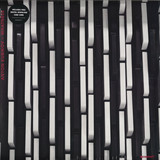
-LTD. 180G RED VINYL-
Jonathan Bree's fourth album `After The Curtains Close' sees the producers trademark orchestral pop take a few unexpected turns both into the experimental and into kitschy territory populated by some of his french heroes of the 1960s. The end result is an album that retains Bree's musical DNA while being fun and varied. What could be described as Bree's `sleazy' album could also be described as Bree's break-up album. Dealing with the break-down of a major relationship Bree opens up to reveal a year of loneliness and mental trauma while also channelling positive feelings by embracing sex and sleaze in his music, subject material more traditionally reserved for the single man. Bree strikes a great balance here between darkness and silliness and he does this without appearing snide, which is a line some artists can seem all too happy to cross. Bree's vocals are on display in a full range of styles, his baritone croon jumps octaves and everywhere in between across the 12 tracks and he is even present singing his own back-up vocals in child like falsetto. Opening track `Happy Daze' is a ray of heady sunshine and wall of strings celebrating worrying about nothing else while in a lovers arms. First single `Waiting on The Moment' has been accurately described as a celebratory break-up song, with cynical and slightly mean lyrics set to a grand and danceable 80s pop arrangement. Bree celebrates new romantic encounters with fun orchestral pop songs full of double entendres ('Heavenly Visions', 'Kiss My Lips' feat Princess Chelsea, '69' feat Crystal Choi) and his talent for writing for the female lead vocal has not been so obviously on display since his work with The Brunettes, also evident on 'Meadows in Bloom', a tragic Shangri-La's inspired narrative about the pitfalls of sleeping with the drummer, in which Britta Phillips (Luna) takes lead vocal duties.
Поиск:dna orchestra
Все
Re-release of the record originally released on 2016-02-05!
Remastered and cut by Rashad Becker at D&M Berlin and presented in an exact replica sleeve of the original 1966 release by Stephen O'Malley.
sales information: Black Truffle is honoured to present the first vinyl reissue of the classic debut album from AMM, AMMMusic. Coinciding with the 50th anniversary of its recording in 1966, this reissue makes one of the cornerstones of the experimental music tradition available again in its original form, replete with Keith Rowe's beautiful pop art cover and the terse aphorisms by the group that served as its original liner notes. A testament to the interaction between the experimental avant-garde and the countercultural underground, the album was originally released on Elektra, recorded by Jac Holzman (the label's founder, responsible for signing The Doors, Love, and The Stooges) and produced by DNA, a group that included Pink Floyd's first manager Peter Jenner. (Pink Floyd paid tribute to AMM's influence on their improvisational sensibility with the track 'Flaming' on their debut album, named after the piece that occupies AMMMusic's first side, 'Later During a Flaming Riviera Sunset').
Formed in 1965 by three players from the emerging British jazz avant-garde - Keith Rowe and Lou Gare had played with the great progressive big band leader Mike Westbrook and Eddie Prévost played in a post-bop group with Gare - AMM quickly evolved from a free jazz group into something decidedly more difficult to categorise. By the time these recordings were made, two more members had joined the group: another Westbrook associate, Lawrence Sheaf, and the radical composer Cornelius Cardew. Then at work on his masterpiece of graphic notation Treatise, Cardew brought with him extensive experience of the post-serialist and Cageian currents in contemporary composition. Using a combination of conventional instruments and unconventional methods of sound production (most famously Keith Rowe's prepared tabletop guitar, but also prepared piano and transistor radio), the group performed improvised pieces often running for over two hours and ranging from extended periods of silence to terrifying cacophonies.
Evan Parker famously described the improvisational logic of AMM's music as 'laminal', in contrast to the 'atomistic' approach more common among the generation of British improvisers (Bailey, Rutherford, Stevens and co.) to which he himself belonged. AMM improvised in layers: layers of sound subtly rising and falling or abruptly starting and stopping without being propelled by the implied pulse of free jazz improvisation. Rather than a pulse, AMM's music began with the sound of the room in which it was played, the Cageian anarchy of silence. By embracing the non-synchronous simultaneity of layered sound, AMM was able to create a musical container into which nearly anything could be incorporated at any moment: on AMMMusic, long tones sit next to abrasive thuds, the howl of uncontrolled feedback accompanies Cardew's purposeful piano chords, radios beam in snatches of orchestral music (and, on the LP's second side, an extended fragment of 'Mockingbird').
AMM's clearest break with jazz-based improvisation concerned the idea of individuality. Where improvised music has tended to foster the development of idiosyncratic stylists who move freely from one group to another, AMM, initially through an engagement with eastern philosophy and mysticism and later though a politicized communitarianism, sought to develop a collective sonic identity in which individual contributions could barely be discerned. In the performances captured on AMMMusic
the use of numerous auxiliary instruments and devices, including radios played by three members of the group, contribute to the sensation that the music is composed as a single monolithic object with multiple facets, rather than as an interaction between five distinct voices.
- Francis Plagne
The long awaited third album from much loved vintage synth maestros Billy Bainbridge and Mike Johnston, finally finds its home on Ghost Box Records. This is unironically joyful and melodic electronica; informed by library music, music for children’s TV and a deep passion for the history of music technology.
Plone are very much part of Ghost Box’s DNA. They were a central part of the 90s retro-futuristic scene in Birmingham that included Broadcast and Pram and to which the label has always had strong ties through graphic designer and co-manager, Julian House. They are also cited by the label’s other boss, Jim Jupp, as a major influence on his work as Belbury Poly.
The band was formed as a three-piece in the mid-90s and their debut single, Press a Key, was championed by John Peel. The first album, For Beginner Piano, was released on Warp Records in 1999. Their warm, witty and unfunky music stood out from the crowd, almost in defiance of the moody and masculine post-rave electronica of their contemporaries.
A selection of bootlegged demos from the early 00s was rumoured to be the follow up album, but it never materialised. After that Billy went on to tour with Broadcast and later formed Seeland with another former band member Tim Felton (also of Ghost Box’s Hintermass). Meanwhile Mike formed the ZX Spectrum Orchestra, released solo singles as Mike in Mono and was a member of The Modified Toy Orchestra.
Twenty years on and Plone have reconvened as a duo with a third album, Puzzlewood. It’s compiled from material recorded at various points since the “lost album”, right up to the present day.
(en) While the last Kompakt offering from legendary Russian synthesists SCSI-9 dates back to 2008, when the duo released their album Easy As Down' (KOMPAKT CD 068), co-founder and techno/house virtuoso ANTON KUBIKOV kept himself busy cultivating his own label Pro-Tez Records - and establishing a career as solo artist with a clear penchant for dub-infused soundscapes and ambient music. WHATNESS is Kubikov's first solo full-length under his proper name, weaving airy and iridescent sonic tapestry that takes up where his excellent contributions to our Pop Ambient compilations left off.
ANTON KUBIKOV's special ear for ambience and tonal spaces was always an integral part of SCSI-9's musical DNA that would alternate between tight dance workouts and vast melodic range - but it's as a solo artist that he truly started to explore these spaces, following mysterious sonic trails into foggy, reverb-heavy territory. Kubikov's contributions to the several instalments of our Pop Ambient compilation series announced the arrival of a promising new project in our talent pool - a promise more than satisfied with the immersive sound bath of first solo outing WHATNESS.
Going from the richly layered electronic drones of LIQUID MIRROR or ENTRANCE to the lush ambient dub of OTHER THE SEA and KURT'S FOREST, or the minimalist, evocative piano of OKTOBER and PIA, the album covers lots of stylistic ground, but remains committed to its overall aesthetic of misty mountains and serene valleys. With the endearing APRIL, a true Pop Ambient classic from the 2016 compilation (KOMPAKT 345 CD 128) makes a welcome return, priming the canvas for the subtle bass throb of NORTH and its charming synth bell orchestra. Masterfully refining and extending his sonic pallet on WHATNESS, ANTON KUBIKOV can claim his spot among the very best of today's ambient composers.
(de) Obwohl die letzte Kompakt-Offerte aus dem Studio der legendären russichen Synthesizeristen SCSI-9 schon eine Weile zurückliegt - 2008, um genau zu sein, mit dem Album Easy As Down' (KOMPAKT CD 068) -, hat Co-Gründer und Techno/House-Virtuose ANTON KUBIKOV nicht auf der faulen Haut geaalt, sondern sein eigenes Label Pro-Tez Records gepflegt - und eine Karriere als Solo-Künstler mit klarem Drang zur verdubbten Tonlandschaft und Ambient-Musik in die Wege geleitet. WHATNESS ist seine erste Solo-Album-Veröffentlichung unter eigenem Namen und webt einen luftigen wie schillernden Klangteppich, der genau da weitermacht, wo Kubikovs exzellente Beiträge zu unserer Pop Ambient Compilation-Reihe aufgehört haben.
ANTON KUBIKOVs besonderes Ohr für Ambientes und tonale Räume war schon immer integraler Bestandteil von SCSI-9s musikalischer DNA, die gerne zwischen fokussierter Tanzathletik und ausufernden Melodieräumen changiert - doch erst als Solo-Künstler macht er sich daran, diese Räume wirklich auszuloten und geheimnisvollen Klangspuren in neblige, hallende Gegenden zu folgen. Kubikovs Gastspiele auf mehreren Ausgaben unserer Pop Ambient-Serie deuteten auf ein vielverprechendes neues Projekt im Talentpool hin - ein Versprechen, das mit dem mitreissenden Klangbad von WHATNESS mehr als erfüllt wird.
Von den reichhaltig verschichteten elektronischen Drones von LIQUID MIRROR oder ENTRANCE zum üppigen Ambient-Dub von OTHER THE SEA und KURT'S FOREST, oder dem minimalistischen, andeutungsreichen Klavierspiel auf OKTOBER und PIA erstreckt sich das Album über viel Stilgebiet, bleibt aber der eigenen Ästhetik dunstiger Gebirgszüge und einsamer Täler true. Mit dem überaus reizenden APRIL macht ausserdem ein echter Pop Ambient-Klassiker von der 2016er Ausgabe (KOMPAKT 345 CD 128) seine Aufwartung und bereitet den Boden für den subtil pochenden Bass von NORTH nebst charmantem Synthieglockenorchester. Meisterhaft veredelt und aufgebohrt, ist ANTON KUBIKOVs Klangpalette auf WHATNESS Grund genug ihm einen Platz zwischen den besten Ambientkomponisten unserer Tage zu sichern.