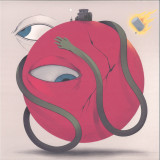
Cerca:do santos

- A1: Salinas - "Tenha Fe, Pois Amanha Um Lindo Dia Vai Nascer" (2 52)
- A2: Elza Soares - "Pulo, Pulo" (2 08)
- A3: Sonia Santos - "Speed" (4 15)
- A4: Osmar Milito - "Rita Jeep" (2 20)
- A5: Wilson Simonal - "Zazueira" (3 10)
- A6: Osmar Milito - "Quem Mandou" (2 27)
- B1: Doris Monteiro - "Se Voce Quiser Mas Sem Bronquear" (3 00)
- B2: Wilson Simonal - "Que Pena" (2 54)
- B3: Osmar Milito - "Morre O Burro, Fica O Homem" (2 31)
- B4: Os Originais Do Samba - "La Vem Salgueiro" (3 23)
- B5: Os Brazoes - "Carolina, Carol Bela" (2 06)
- B6: Wilson Simonal - "Crioula" (3 18)
- C1: Claudette Soares - "Eles Querem E Amar" (2 43)
- C2: Os Incriveis - "Vendedor De Bananas" (3 46)
- C3: Wilson Simonal - "Brasil, Eu Fico" (2 15)
- C4: Cyro Aguiar - "Rei Do Maracatu" (2 02)
- C5: Wilson Simonal - "Resposta" (3 09)
- C6: Elza Soares - "Mas Que Nada" (2 25)
- C7: Wilson Simonal - "Pais Tropical" (3 30)
- D1: Os Originais Do Samba - "Cade Tereza" (4 34)
- D2: Marijo - "Fio Maravilha" (3 53)
- D3: Os Originais Do Samba - "Tenha Fe, Pois Amanha Um Lindo Dia Vai Nascer
- D4: Os Brazoes - "Que Maravilha" (2 26)
- D5: Os Mutreteiros Grilados - "Cosa Nostra" (4 31)
- D6: Os Originais Do Samba - "Falador Passa Mal" (3 13)
25
Jorge Ben is surely one of the world’s greatest all-round musical artists. He is internationally renowned and vastly influential as a vocalist, musician, performer and phenomenal songwriter. Famed for penning ‘Taj Mahal’, which was the source for Rod Stewart’s ‘Do You Think I’m Sexy?’, and also ‘Mas Que Nada’, one of Brazil’s most iconic anthems, Jorge Ben is a powerful musical force. A simple glance at his impressive back catalogue reveals a master of his craft, with a depth and quality that is seldom paralleled.
For 'Tudo Ben' we take a side-step, focusing on Jorge Ben’s songs that have been performed by other artists. Complied by Mr Bongo, Greg Caz and Sean Marquand, this collection features the Brazilian legends Elza Soares, Claudette Soares, and Wilson Simonal, alongside prodigious artists such as Marijô, Os Brazoes, and Doris Monteiro to name but a few. The selection covers a wide range of genres including samba, bossa nova, MPB and batacuda workouts. Many of the songs featured have become staples in Mr Bongo DJ sets over the years and are some of our most loved classics. As with many of history’s great songwriters, Jorge Ben’s songs transcend genres and styles, they can be covered and reinterpreted, yet the quality of the writing holds up to the standard of the original.
In the dark days of the mid to late 2000s when the end of vinyl seemed inevitable, Mr Bongo released 'Tudo Ben' on CD only. Years later, we finally get to put this right and present it for the first time on vinyl with alternative artwork by Mr Krum.

- Dreams Of Dreams
- Careful Crossers
- Daisy
- Life Coach
- Sideswiper
- The Illinois
- Treeton
- Davy Crockett
- Welcome Wagon
- Dorian
Fang Island's debut record, long out of print and back in stock as daisy pink splatter coloured vinyl in gatefold jacket LP via Joyful Noise, defined the sound of danc-y/math-y indie rock of the early 2010s alongside contemporaries Lightning Bolt, Titus Andronicus, and Japandroids. Fang Island described their music as the sound of "everyone high fiving everyone." No matter where they went, Fang Island's up-with-people approach made them a subversive art project by default. At a time when the belligerent noise-rock of Lightning Bolt and The Body defined Providence, Fang Island played major-key guitar harmonies and flashy tapping riffs. When people tried to call them "math-rock," they thought of themselves as "recess rock." Fang Island shared bills with uber-buzzy bands like Yeasayer and Chairlift at Cake Shop and Santos Party House, crucibles for Brooklyn hype at the turn of the aughts; but their most impactful co-sign came from Andrew WK. At least until Fang Island earned an unexpected Best New Music review at Pitchfork; in the style of the time, the group - now including drummer Marc St. Sauver and guitarist Nick Sadler - were thrust from playing "literally empty shows" at hot dog stands in Ohio to becoming the toast of SXSW and starting their North American tour with psych-rock idols the Flaming Lips in an Atlantic City casino. They would later play sprawling amphitheaters with Stone Temple Pilots, and in perhaps the best demonstration of their ability to wield pop smarts to guitar pyrotechnics, both Matt & Kim and Coheed & Cambria.

11
Tip!
Polido has been fantasizing with the idea of free music throughout his artistic career. Free from restraints, logos, musical genres, but also from this modern obsession with narratives, plans, business plans, algorithms and bubble wrapped ideas for comfort of those of you that can’t breathe without everything making sense.
“Hearing Smoke” has nothing of that. It has been four years since Holuzam released the double album “A Casa e os Cães / Sabor a Terra” and for four years I have been daydreaming about what would come next. This is it, eleven new pieces about the future of the future of music. It is the result of years of study, research and sound consolidation. Sound as matter, mutating, transforming, absorbing all around, a shapeshifting entity connecting with the principles of freedom.
"Polido has been researching Portuguese contemporary composition, its very own sounds and ideas. Its origins, the web of repression, tension and censorship before the April 25th revolution in 1974; secondly, as an afterthought, freedom, equality and a unique sense of community and belonging screaming through the music. He absorbed those states of mind and made an album that listens to the current world and presents globalization as a mental trap.
If the music that inspired him somehow comes from a post-colonial world, “Hearing Smoke” questions how we can create something new in this permanent state of cultural colonization, where new trends or forms of music only thrive if they are accepted by the dominant cultures. The physical world has been transformed, but ideas like “world music” or “ghetto music” still show that dominance, the Strange can only be accepted if it incorporates the rules and codes of that dominant force. What I am saying is that it is hard for Portuguese musicians to present themselves as original. They will never have that credit unless the music relates to something that exists in another
realm. Never for their benefit, but for the power of association. I may sound arrogant here, but Polido is unique, original, one of a kind (all those words, all those redundant synonyms). I knew it four years ago when I got lost in the way “A Casa e os Cães” is assembled and how he makes something memorable out of the most commonplace conversations. “Hearing Smoke” continues the flow and puts us in the centre of these ever evolving masses of sound.
Somehow his music finds you, it starts speaking with you until it asks you to be a part of it. Polido’s beats and harmonics are combined in such a tender way that you mellow out while listening to these beats - thinking of the brilliant “Saque”. Even when he exposes you to something more harsh - “Canto D’Amorte” or the closing moments of the last track “Custa A Crer” - there’s still a cradle effect.
But what keeps me returning to this album is how it seems to transform in my ears. Not every time I listen to it, but while I am listening to it. The sound seems to move, embracing me and controlling my inner thoughts. These start to move along at the same pace, with the same feeling of cloudiness. Nothing new here, the thing is how it feels different from time to time, how the music, because of something that changes or moves, comes as a catharsis/revelation. It drives me nuts how the beats come and go in tracks like “Fogo Firme (Encomendação)” or “The More I Think, The Less I Can Speak“, leaving everything suspended and, simultaneously, relieved. When dramatic - ”Prova De Existência“ - it is sad af and gorgeously epic.
Trap, bass music, dubstep, ambient, hauntology and contemporary music flow side by side here, no pushing around, free of interpretation, and you are free to feel or listen to whatever you want in “Hearing Smoke”. That’s free music for you. Not a hard concept, something for you to enjoy, feel, reflect about. This is what the future will sound like."
André Santos // Holuzam

Multifaceted San Francisco psyche-delic band It’s A Beautiful Day drew on aspects of folk, classical, jazz and world music, their outstanding differences driven by the lead vocalist and violinist David LaFlamme, his keyboardist wife Linda, and harmony singer Patti Santos. This engaging compilation joins the anthem ‘White Bird’ and the spirited ‘Hot Summer Day’ with ‘Don And Dewey’ (based on ‘Wring That Neck’ by Deep Purple, who nicked one of their musical themes for the intro to ‘Child In Time’), plus the previously unreleased ‘Summer Blues’ and ‘You Are The Sun’ – this stunner’s a must for all It’s A Beautiful Day fans!

- Gabriel Huentemil - Por David
- Ema Madariaga - Por Sodoma Y Gomorra
- Javier Salinas - Por Despedimiento De Angelito
- Santos Rubio - Por Nacimiento
- Osvaldo _Chosto_ Ulloa - Por Salomón
- Domingo Pontigo - Por Padecimiento
- José Millahuino Castro - Por Noé
- Iván Saavedra - Por Muerte
- Alfonso Rubio - Por José
- Honorio Quila - Por Nacimiento
10

Aventura is an American bachata group that broke into the mainstream with their 2002 hit "Obsesión (featuring Judy Santos)". With a line-up comprising Romeo Santos, Lenny Santos, Henry Santos and Max Agende Santos, they are regarded as one of the most influential Latin groups of all time. They have sold out many arenas including the world famous Madison Square Garden. Aventura has been nominated for awards such as American Music Awards, the Latin Grammy Awards, Billboard Latin Music Awards, and Premio Lo Nuestro.

Black Truffle is pleased to announce the first vinyl reissue of Trancedance, a wild slice of Swedish Afro-fusion from Christer Bothén, originally released in 1984. A major figure in Swedish jazz and improvised music since the 1970s, often heard on bass clarinet and tenor sax, Bothen studied doso n’koni (the large six-stringed ‘hunter’s harp’ of the Wasulu) in Mali in 1971-2 before turning to the guinbri (the three-stringed lute of the Gnawa/Gnauoua) in Marakesh later in the decade. In between, he performed extensively with Don Cherry during his Organic Music Society period and taught Cherry the doso n’koni. In the later 70s and 80s he worked with the most important figures in the distinctive Swedish jazz-rock-world fusion scene, joining Archimedes Badkar for their African-influenced Tre and participating in Bengt Berger’s legendary Bitter Funeral Beer Band. Many of the musicians who played on the Bitter Funeral Beer Band’s ECM LP (including Berger on drums, Anita Livstrand on voice and percussion and Tord Bengstsson on piano, violin and guitar) joined Bothén for one of the sessions that produced Trancedance, the first release under his own name, dedicated to his compositions. The other session introduced his seven-piece group Bolon Bata, heard on the second track of each side. The title track opens the album with the rubbery buzzing strings of the doso n’goni playing a hypnotic ten beat pattern, soon joined by bass and piano before the entire nine-piece group kicks in with a rollicking Afro-jazz workout, Berger’s drums driving an intricate, winding melodic line played by the horns with Mattias Helden’s cello throwing in pizzicato slides and smears. Bothén then takes centre stage on tenor sax, soloing with a wide, vibrating tone and moving seamlessly from soaring melodies to guttural stutters. After a return to the composed horn lines and a solo from Elsie Petrén on alto sax, the piece builds to an ecstatic conclusion of yelping voices and handclaps, gradually simmering down to return to the solo doso n’koni where it began.
The hypnotic sounds of the hunter’s harp carries over to ‘Mimouna’, where it is joined by Bothen’s overdubbed guinbri. The piece develops into a haunting whispered and sung invocation, gradually building momentum until the organic textures of strings, voices, and hand percussion are ruptured by Lennart Söderlund’s distorted guitar, which brings an unmistakable touch of 1984 to the otherwise timeless sound. Joined by chicken scratch guitar and increasingly dominated by the insistent clang of three of Bolon Bata’s members on karqab (a kind of cast-iron castanet), the grove develops frenetically.
The B side opens with the multi-part epic ‘9+10 Moving Pictures for the Ear’, at over 16 minutes the record’s longest piece. Though Bothen is heard only on horns on this piece, the hypnotic repeating bass line carries on the first side’s link to African musical traditions. Using an expanded 16-piece ensemble, the music balances untethered improvisation with carefully arranged passages of knotty ensemble playing that at points suggest Mingus, Moacir Santos or some of the ambitious post-free work being done in the same years by figures like David Murray or Henry Threadgill. The piece ends with a triumphant passage of looping unison melody reminiscent of the Scandinavian folk explorations of Arbete och Fritid (whose Kjell Westling is heard on bass clarinet and soprano sax here). The sound of Bjorn Lundqvist’s fretless bass introduces the odd left turn made by the record’s final track, a spaced-out expedition into bluesy horn lines and distant guitar atmospherics set to a semi-reggae beat, perfumed by the core Bolon Bata group and bearing the appropriate title of ‘The Horizon Stroller’. A must for fans of the Swedish scene around groups like Arbete och Fritid and Archimedes Badkar, as well as any listener who has been seduced by Louis Moholo’s Spirits Rejoice!, The Brotherhood of Breath, or, more recently, the guinbri grooves of Natural Information Society, Trancedance is a lost classic ripe for rediscovery.
Repress
I lean upon this,
I lean on all of this
and I know
her dress upon my arm
but
they will not
give her back to me.
Early support: Truss, Tommy Four Seven, Truncate, Marcel Dettmann, Psyk, AnD, Pfirter, Eomac, Perc, Rebekah, Svreca, Paula Temple, Dax J, Joseph Capriati, Joachim Spieth, Henning Baer, Lag, Takaaki Itoh, Go Hiyama, D. Carbone, Par Grindvik, Max M, Wire, Paul Mac, Kriz, Octave, Drvg Cvltvre, Dimi Angelis, Joe Farr, Ryuji Takeuchi, Slam, Rivet, Gary Beck, Nuno dos Santos, Manni Dee, Luis Ruiz, Mark Morris, Mattias Woot, Mike Darkfloor, Erphun, Radial, Exium, P.E.A.R.L., Mr. Jones, Joseph Mcgeechan, Joton, UVB, Juho Kusti, Aiken, Operator, Jeff Rushin, Martyn Hare, Inigo Kennedy, Sebastian Kokow, Roberto, Shards, L.A.W, Ricardo Garduno, Space DJz, Operator, Blank Code, Patrick DSP...

HIGHLIGHTS We are happy to present here two Tropical versions of massive disco hits that retain all the party spirit of the originals. 'Da Ya Think I'm Sexy' (Rod Stewart) by La Cumbia Moderna de Soledad is a playful mix of the old and the modern that guarantees some dancefloor heat each time the needle hits the surface of the vinyl, and the Machuca Cumbia rendition of Bee Gees 'Stayin' Alive' becomes a dancefloor winner full of hypnotic percussions and guitars. A perfect follow-up to the acclaimed previous singles in our 'Tropical 45s series' that so far has included recordings by the likes of Jimmy Salcedo or Sebastiao Tapajos/Pedro Dos Santos. DESCRIPTION Few melodies have been played so many times on radio, movies or TV commercials as these two compositions from the golden age of mainstream disco music. Top international hits and iconic milestones of an era, both songs are immediately recognizable after just a few chords by almost anyone on this planet. These two compelling tropical versions retain all the party spirit of the originals, guaranteeing some dancefloor heat each time the needle hits the surface of the vinyl. A perfect follow-up to the acclaimed previous singles in our 'Tropical 45s series' that so far has included recordings by the likes of Jimmy Salcedo or Sebastiao Tapajos/Pedro Dos Santos. In the rendition of Rod Stewart's 'Da Ya Think I'm Sexy' we find a playful mix of the old and the modern made by Pedro "Ramayá" Beltrán, signed under his project La Cumbia Moderna de Soledad; a group from Barranquilla, Colombia, that recorded a set of songs that exudes both tradition and innovation. Machuca Cumbia, a Colombian studio band under the direction of "Cachaco" Brando, add some unexpected cumbia arrangements to the Bee Gees 'Stayin' Alive ', resulting a dancefloor winner full of hypnotic percussions and guitars that, at times, even recall other genres such as surf.

- A1: Goodbye Jackie Dandelion
- A2: Larry Bird
- A3: Cabra Drive
- A4: Bambi Feat Gotts Street Park
- A5: Woof Feat Biig Piig
- A6: Johnny Mcenroe Feat Wiki
- A7: Yoko Oh No!
- A8: Fat Ronaldo/Covent Gardens
- B1: Wagyu
- B2: Rainy Days
- B3: What If? Feat Charlotte Dos Santos
- B4: Citizen Kane
- B5: Peekaboo
- B6: Phantom Of The Afters
- B7: Heaven Shouldn't Have You
15
PHANTOM OF THE AFTERS is the 3rd album from Irish rapper Kojaque, out on his very own Soft Boy Records. With landmark projects Deli Daydreams and Town’s Dead, that saw him 2x nominated for Choice Music Prize, receive support from Radio 1, 1xtra, 6Music, support Loyle Carner & Lana Del Rey and headline festivals across Ireland, Kojaque changed the rap landscape (and Irish culture) for good. Collaborations on his latest project include Biig Piig, Wiki, Charlotte Dos Santos and Gotts Street Park. The album traces blurred outlines of childhood trauma, depression, grief and love, interweaving the physical and emotional journey of central character Jackie Dandelion with bigger questions about immigrant identity, homesickness, cultural stereotypes and ultimately the reconciliation of self. Kojaque has created a cinematic-universe that is bigger in scope but also more tender and intimate in approach than ever before. It’s this willingness to be vulnerable - grotesque, even - that’s captured in the album’s iconic artwork, which subverts the bigoted depictions of Irish caricatures in 19th and 20th century Punch Magazine cartoons and sees this particular Phantom of the Opera remove not just those distorted masks, but also his own.
With songs that are cocksure and contemplative, brutally honest but also refreshingly myth-making, PHANTOM OF THE AFTERS marks a new era from Kojaque: one of his generation’s most unique talents. In suitably audio-visual style, the album traces blurred outlines of childhood trauma, depression, grief and love. It interweaves the journey of central character Jackie Dandelion from Dublin to London with bigger questions about immigrant identity, homesickness, cultural stereotypes and ultimately the reconciliation of self. It’s this willingness to be vulnerable - grotesque, even - that’s captured in the iconic artwork, which subverts the bigoted depictions of Irish caricatures in 19th and 20th century Punch Magazine cartoons and sees this particular Phantom of the Opera remove not just those distorted masks, but also his own.
The record drops alongside one of its more brooding moments, ‘WHAT IF?’: a soulful ode to anxiety, and the crippling impact of fear in moving forward in life or your relationships. “I’ve been obsessed with Charlotte Dos Santos ever since I heard her project Cleo,” Kojaque comments. “She’s just got such a distinct voice and sound. I sent the track over hoping she’d be into it and she sent me back a near perfect hook.” A fully independent artist, Kojaque has brought a stellar lineup of guests together on his latest work: from Biig Piig, Charlotte Dos Santos and NY rapper Wiki (who featured on ‘JOHNNY MCENROE’) to Gotts Street Park (‘BAMBI’) plus production credits such as Calvin Valentine (Ryan Beaty), Tony Seltzer (Eartheater, Freddie Gibbs) and Karma Kid (Hak Baker, Shygirl).
PHANTOM OF THE AFTERS will see Kojaque continue to blaze a trail around the world. He first came to prominence with the genre-bending concept record Deli Daydreams: it became the first mixtape to ever be nominated for the Choice Music Prize, and demonstrated his prowess not only as a polymathic artist, but DIY label-head (co-founding Soft Boy Records, which was subject to a Boiler Room documentary) and visual artist (Kojaque has received a prestigious Royal Hibernian Academy Award for his film-making). Even as the rest of the world sat up and paid Irish Art some long-overdue attention, Kojaque’s creative output has remained thrillingly uncompromising. Tour-de-force debut album Town’s Dead examined everything from gentrification, masculinity and mental health to a gnarly love-triangle unfolding on New Year’s Eve, held together by a multi-hyphenate attitude. Once again nominated for the Choice Prize, Kojaque played a sold-out UK & European headline tour around the restrictive local lockdowns, with the album landing additional support across the likes of Radio 1, 1xtra, 6Music, plus shows with Lana Del Rey and Loyle Carner (who also sampled Kojaque on hugo). With his landmark projects to date, Kojaque changed the rap landscape (and Irish culture) for good. On PHANTOM OF THE AFTERS, you sense he’s just getting started.

12
'Lunático' wurde mit einer Vielzahl Studiogästen in Buenos Aires und Paris aufgenommen. Inkl. Sängern wie Caceres, Jimi Santos, Koxmoz und vor allem Cristina Vilallonga sowie in Zusammenarbeit mit dem argentinischen Pianisten Gustavo Beytelmann und Calexico aus Tucson.

- A1: Antonio Carlos Jobim& Roberto Paiva - Um Nome De Mulher
- A2: Maysa - Outravez
- A3: Carlos Lyra - Ciúme (Dá Um Geito)
- A4: Sérgio Ricardo - Maxima Culpa
- A5: Silvia Telles - Sóemteusbraços
- A6: João Gilberto - Brigas, Nuncamais
- A7: Lúcioalves - A Sobrinha Da Judite (On The Sunny Side Of The Street)
- A8: Johnny Alf - Rapaz De Bem
- A9: Elizete Cardoso &Moacyrsilva -Palhaçada
- B1: Paulo Alencar & His Brazilian All-Stars - Ideas
- B2: Laura Villa - Corcovado
- B3: Walter Santos - Samba Só
- B4: Agostinho Dos Santos - A Felicidade
- B5: Shorty Rogers & His Giants - Chega De Saudade (No More Sadness)
- B6: Stan Getz & Charlie Byrd - O Pato
- B7: Sérgio Ricardo - Pernas
- B8: Lalo Schifrin - Bossa Em Nova York
17
The Music Lovers collection brings you a cool selection of Bossa Nova hits for our greatest plaisure!

- A1: Baba Says Cool For Thought
- A2: Free Chilly
- A3: Go Go Gadget Flow
- A4: The Coolest
- A5: Superstar
- B1: Paris, Tokyo
- B2: Hi-Definition
- B3: Gold Watch
- B4: Hip-Hop Saved My Life
- B5: Intruder Alert
- C1: Streets On Fire
- C2: Little Weapon
- C3: Gotta Eat
- C4: Dumb It Down
- D1: Hello/Goodbye (Uncool)
- D2: The Die
- D3: Put You On Game
- D4: Fighters
- D5: Go Baby
Lupe Fiasco's The Cool (commonly referred to as The Cool) is the second studio album by American rapper Lupe Fiasco. It was released on December 18, 2007 by 1st & 15th Entertainment and Atlantic Records. It was recorded between 2006 and 2007, with Lupe Fiasco himself and Charles Patton (Chilly) serving as executive producers. The concept album The Cool is based on the song and a title character from his debut album Food & Liquor (2006).
The album features guest appearances by Gemini, Snoop Dogg and Matthew Santos, while production was handled by Patrick Stump, Soundtrakk and Unkle, among others. The album debuted at #15 on the U.S. Billboard 200, selling 143,407 copies in its first week.
The album debuted as the number one rap record and lasted for 9 weeks. As of 2022, the album was certified platinum by the Recording Industry Association of America (RIAA). At the 2009 Grammy Awards, the album was nominated for Best Rap Album.

9
Quartabê’s identity was built upon the metaphor of the classroom: the group sees itself as a school class, which chooses its own teachers from among great masters of Brazilian music. Assuming that the learning and creative processes have in common experimentation and play, the quartet is characterized by its bold versions coupled with irreverent performance.
In addition woto its sound, marked by the group’s various music references - from the São Paulo avant-garde movement to the free improvisation, passing through pop and electronic music - Quartabê also stands out for the formation composed mostly of women who, besides instrumentalists are also arrangers, composers, singers and improvisers - which is unusual in Brazil and it has high political relevance in a music scene where positions of creation and power are still held disproportionately by men. The band started its studies by recording a first album about the work of maestro Moacir Santos, “Lição # 1: Moacir” (2015). After performing this show in Brazil and Europe, the group took a break to record ‘Depê’ (2017), also dedicated to the oeuvre of Santos. In 2018 Quartabê released their third album, starting new studies: “Lição # 2: Dorival”, which was released by the Natura Musical / label RISCO

- A1: Intro
- A2: Drumgita
- A3: Ancient Boogie (Mantra)
- A4: Artnam
- A5: Mantra
- A6: (One) Boogie Home Going
- B1: Going Home Boogie (One)
- B2: Un Minuto (One)
- B3: Un Minuto (Two)
- B4: Going Home Boogie (Two)
- B5: Going Home Boogie (Three)
- C1: Drumsong (One)
- C2: Drumsong (Two)
- C3: Drumsong (Three)
- C4: Strumelody
- D1: Drumelody (One)
- D2: Drumelody (Two)
- D3: Ydolemurd
- D4: Hum Drum Dring (One)
- D5: Hum Drum Dring (Two) (The Freedrum Song)
20
Occasionally, you find music outside the commercial mainstream, outside of everything – the music of visionaries, eccentrics, inventors, loners, the keepers of secrets, the path-finders. Moondog, Daphne Oram, Harry Partch are from this mould. And so too is Lori Vambe.
New on Strut, the first ever reissue of Vambe’s privately pressed original albums from 1982, Drumland Dreamland and Drumgita Solo. A self-taught drummer, inventor, and sonic experimentalist, Lori Vambe is a unique figure in British music. Creator of his own instrument, the drumgita (pronounced ‘drum-guitar’) or string-drum, Vambe intended to create a kind of music that had never been made in order to pursue access to the fourth dimension.
Vambe was born in Harare, Zimbabwe and his father, Lawrence Vambe, was a noted Zimbabwean journalist and author. Moving to London in 1959, Vambe immersed himself in the Brixton squat movement of the early 1970s, teaching himself to drum and creating a short-lived performance group, The Healing Drums of Brixton (Vambe, the sculptor Alexander Sokolov and outsider musician Michael O’Shea). Vambe later had a dream-vision involving a feeling of ecstasy while playing an unknown instrument that extended from his own umbilical cord; the instrument would manifest itself as the drumgita. In 1982, he privately produced a pair of home recordings, the diptych set Drumgita Solo and Drumland Dreamland, releasing them on his own label Drumony. On these records, he rejected any commercial aesthetic and employed tape effects, temporal shifts, reversed sound and overdubbing to investigate space-time and access the fourth dimension. Combining layered drums with the rhythmic throb of the drumgita and, on Drumland Dreamland, an improvised piano performance by Brazilian concert pianist Rafael Dos Santos, the albums are both hypnotic and perturbing.
Both albums were cut at Portland Studios by Chas Chandler and stand as a concealed monument of Black British experimental music. 500 copies of each record were originally pressed, and both were released together. The albums were never performed live.
For this first ever reissue of Drumland Drumland and Drumgita Solo, Strut presents the two albums in their original artwork, housed in a deluxe slipcase including an additional 8-page 12”-sized booklet featuring unseen photos, liner notes and an interview with Lori Vambe by The Wire magazine writer Francis Gooding. Both albums are fully remastered by The Carvery.

8
Lendas is the Brazilian guitarist Fabiano do Nascimento’s fifth album for Now-Again Records. Like his previous albums Prelúdio and Ykytu, Lendas features do Nascimento’s compositions, this time with orchestral arrangements by Vittor Santos and also special participation by Arthur Verocai. Vittor Santos is a composer, arranger, trombonist and music producer from Rio de Janeiro, who has worked in Brazilian music for over thirty years. Do Nascimento and Santos met in Rio in 2017 during the recording of Do Nascimento’s hero, and 70s and 80s Brasilian guitar catalyst Carioca Freitas album Aquarelas. The two bonded over a mutual appreciation for Do Nascimento’s uncle Lúcio and the Bossa Nova star Leny Andrade, both of whom largely influenced Do Nascimento’s musical foundation. In Santos, Do Nascimento found an arranger who was sensitive enough in his orchestrations that he could create an orchestral dialogue between stacks of strings and Do Nascimento’s plaintive plucking. It was only natural to invite the highest regarded, now legendary, 1970s Brasilian arranger, Arthur Verocai, to contribute. Verocai, who had worked with Do Nascimento on his forays in Los Angeles, was pleased to participate. In this way, the circle of old and new, so crucial in Do Nascimento’s work, comes together and flows outwards. “Lendas” translates from Portuguese as "legends,” but the literal translation itself doesn’t describe this album. With Lendas, Do Nascimento recalls memories from places that no longer exist; from fever dreams in the Amazon; from parts of the world we might never see or engage, but can imagine through music. Fabiano Do Nascimento’s Brazilian guitar meets a full orchestra arranged by Vittor Santos and with special participation by Arthur Verocai and his string quartet. Lush yet lively, standing alongside Jorge Ben’s work with Verocai, and Tom Jobim and Baden Powell’s work with Vinicius de Moraes..

8
Far Out Recordings proudly presents Hermeto Pascoal’s remarkable self-titled debut album. Recorded in 1970 at A&R studios in New York, the album features certified North American titans including Ron Carter, Hubert Laws, Joe Farrel and Googie Coppola, and Brazilian stars Airto Moreira and Flora Purim (who also produced the album).
While it was Hermeto’s first album released under his own name, he had spent the decade or so prior making a name for himself in Brazil and internationally as a composer, arranger and instrumentalist with groups including Sambrassa Trio, Quarteto Novo and Brazilian Octopus, before going on to work with (amongst countless others) Edu Lobo, Antonio Carlos Jobim, Donald Byrd, Airto Moreira and Miles Davis, who allegedly called Hermeto “one of the most important musicians on the planet”.
With Hermeto’s otherworldly orchestral arrangements, ghostly vocal performances from Flora Purim and Googie Coppola, and the inimitable drumming and percussion stylings of Airto Moreira, Hermeto easily rivals some of the oft-celebrated MPB albums of the early 1970s, sitting somewhere between the string-heavy magic of Arthur Verocai’s 1972 debut and the unplacable early experimentalism of Pedro Santos’ 1968 album Krishnanda.
With his phenomenal natural musical genius and a ceaseless sense of creative freedom, Hermeto is widely known for using unconventional objects to make music. In the album’s sleeve notes, Airto highlights the track “Velório (Mourning)” explaining how Heremto filled 36 apple juice bottles with different amounts of water and tuned them to precise pitches in order to create the beguiling harmonies heard.
The reissue of Hermeto Pascoal’s Hermeto, follow’s Far Out’s recent unveiling of a previously unheard Hermeto Pascoal live concert Planetario da Gavea from 1981, and 2017’s release of Hermeto Pascoal’s lost 1976 studio album: Viajando Com O Som.
Hermeto will be available on vinyl LP and CD from the 20th May 2022 via Far Out Recordings.

“Crystal Motion” were a vocal quartet of Cape Verdean descendancy from New Bedford Massachusetts. The group’s original members being lead vocalist “Kevin Gomes”, Kevin’ s cousin, Rodney “Skeeta” Santos, Daniel “Buddy” Monterio and John Paris, the man responsible for coining the group’s eventual performing name “Crystal Motion”.
Entering a local now defunct recording studio “Metcalf’s” the grouped recorded the Kevin Gomes penned demonstration song, the sweet soul ballad “There’ll Be Another”.
A copy of this song was eventually submitted to the recently formed Independent Recording Studio, “Omega Sound Productions” in Philadelphia, PA. The label was owned by Frank Fioravanti who having just hit paydirt with William DeVaughn’s smash hit “Be Thankful For What You Got” continued with his policy of supporting up and coming talent and upon hearing Crystal Motion’s demo decided to offer them a recording contract. Although deciding against using their submitted demonstration song (which was to remain unissued) Fioravanti chose to record the group on a song he had co-written with another Philly writer and recording artist Pal Rakes, the title of the song was “You’re My Main Squeeze (Part 1 & 2)” an exciting disco dance orientated song that Frank released on them in 1975 on his Sound Gems label imprint. The song became a minor hit in Boston MA, Providence RI and Philadelphia areas also receiving extensive airplay in Atlanta GA and Houston TX. John Paris was to leave the group being replaced by a longtime friend of the other group members Douglas “Dougie” Mendes. With attention coming from the producers of “American Band Stand” and “Soul Train” the group toured the East coast circuit throughout 1975 and 1976 in preparation for an upcoming album project which was never finished before lead singer Kevin Gomes left for unforeseen personal reasons and ultimately the group broke up. Little did “Crystal Motion” know at the time but their solitary 45 release was finding a new audience across the pond in the UK with “You’re My Main Squeeze” being championed by inspirational DJ Colin Curtis in the hallowed halls of Blackpool Mecca, a timeless classic that never fails to bring a smile to the listening audiences faces even to this day.
Returning to the groups unfinished Sounds Gems album project only one track was ever completed, the Fioravanti/Rakes composition “Million Dollar Baby” which along with “There’ll Be Another” has been licensed from their respective owners and paired together for a long overdue 45 release for your delectation. With ‘Crystal Motion’s’ “You’re My Main Squeeze” cult and anthemic status being forever assured with Northern/Modern Soul devotees we’d like to think the discovery and release of these two slightly differing Sweet Soul offerings will garner and enhance the group’s wider appeal with the growing aficionados of the Chicano, Group Harmony and Lowrider genres, Enjoy.