white & blue marbled vinyl
With his first release as EBM outfit Voltage Control on Antler Subway in 1989, Utrecht-based Arno Peeters can easily be considered one of the Dutch Dance pioneers.
Influenced by hip hop, electro and acid house, and his uncontrollable urge to experiment, he moved on to produce techno. Disappointed by the genre s conventions, he rather suddenly stopped with dance music altogether around 1995, letting a wealth of DATs with unreleased material collect dust in his studio.
To our great pleasure, U-TRAX was allowed to pick some nuggets from these archives, resulting in this Titanic EP and an album later this year.
Arno started experimenting with sound at very young age, resulting in his first cassette releases with experimental soundscapes in 1983. In 1986 he joined the notable Centre for Electronic Music (CEM), where he was able to take his experiments to a new level in a professional studio-environment.
In his techno episode , he recorded several 12 -es and CDs as Sp@sms and The Implant, and as part of Random XS, Urban Electro, African Nightflight and The AWAX Foundation, with most of his records being released on the famous DJAX label.
After turning his back on techno, he applied himself to more experimental music again. In 1996, he created AeroSon, a 40-minute sound collage that won him the first prize in the category Composers Under 30 at a high-brow international contest for electro-acoustic music. This piece was later released on the prestigious Mille Plateaux label.
Since then, his focus has shifted away from releasing music, towards working more project-based: on remixes, compilations and interactive (installations, video, sound design), building himself a successful career as radio maker, teacher and engineer, contributing to several award-winning documentaries and podcasts.
This EP is a nice cross section of Arno s dance productions, serving you some acid, techno and electro.
Titanic V1 was originally created to be a Random XS track, the techno band he formed in 1991 with Sander Friedeman. It was performed during their live set at one of the G.U.R.U. parties, organized by U-TRAX label boss DJ White Delight and label artist P.A. Presents.
This acid track was remixed into a techno monster when Friedeman replaced the 303 with a 101 and added a ton of delay on the bass drums, resulting in the woofer destroying Titanic (Underwater Dub).
The flipside sees a rare post-1995 recording by Arno: CEM Traxx 1. As the title suggests, this melancholic electro gem was created using the intricate machinery of the CEM Studio. Originally created as one half of a two-part composition for some project in 2003, it was never released before.
The EP closes with a typical Arno brainchild, the tongue-in-cheek acid banger XD5 Acid Master, from 1994. Tracks like this happen if you leave Arno unattended with a rather un-hip machine like the Kawai XD-5: he turns it inside out and uses it for things it was never intended for. Buckle up!
All tracks have been produced by Arno Peeters and mastered by Ruud Lekx. Label art by Botterman Ontwerp.
Buscar:document one
- A1: Wildcat
- A2: Elevator Shaft
- A3: Salal Harvest Chant
- A4: Broken (Everything Is Broken) (Everything Is Broken)
- A5: My Nest
- A6: I'm Crowded
- A7: Blue Ears
- A8: Baked Potato
- A9: Lucifer Peacock Raven
- B1: Oyster Mushrooms
- B10: Chase The Badger
- B11: Polecat That
- B2: Tukwila Joe
- B3: That Big Thing
- B4: Orange Peel
- B5: High Falutin' Blue Rasputin
- B6: Silver Moon Duck
- B7: Bobcat & Turkey
- B8: Ocean Trip (Ocean Shores) (Ocean Shores)
- B9: Railroad Maypole
Originally released on cassette in 1993 and now for the first time on vinyl, this is an incredible document from a teenage Arrington de Dionyso. All the seeds of his 30+ career are engrained on these fully formed Tascam recordings. "Bobcatflamethroat" was originally released as "Pine Cone Alley Cassette #9" in August of 1993. The songs were recorded on a Tascam Porta-One 4 Track cassette studio inside a secret area in the basement of the College Activities Building at the Evergreen State College, known as "Happyland". This album has never before seen a digital release of any kind, however there is one song "Everything is Broken" which later became part of the original "canon" of Old Time Relijun after that band was formed in 1995. That song was re-recorded on the first Old Time Relijun album "Songbook Vol. I" released in 1997. I still dig most of the tunes on this one- these were all written and recorded while preparing to welcome a new young life into the world (my daughter Lucinda, born August 22, 1993). So while not specifically "Children's Music" per se, the tunes are wild, hopeful, optimistic yawps of playful abandon for all ages. There are a number of "inside jokes" that only would have made sense to the very tight knit inner circle hat I considered my "core" group of friends at that point in my life. I also think there are more than a few "hits" on here. I was 18 years old! Anyone who has followed the last thirty years of my musical career should find something of interest and delight on this album. For some reason I chose to record most of the guitar and bass parts "direct" without an amplifier- I'm not sure why I did that but it's a unique sound in retrospect. There's a decent dose of throatsinging and other odd vocal techniques, proving that I dove deep into this territory of vocal exploration at a very young age. Also plenty of mouth harps, flutes, kazoos, and clarinet, although this was just BEFORE I bought my first bass clarinet. The song "Kite Dragon Hypnosis" showcases the very first time I EVER recorded anything with a saxophone! The lyrics are reflective of my interests in the theories of "Ethnopoetics" as put forth by Jerome Rothenberg in many of his books such as "Shaking the Pumpkin" and "Technicians of the Sacred", as pathways to understanding the universality of myth and shamanism as connective threads through human poetic expression. And yes, if you know something about the Evergreen State College, I did indeed receive 16 credits for working on this album.
- A1: Earthquake
- A2: King Of Nothing
- A3: Armadillos
- A4: Pterodactyl
- A5: Wine & Milk
- A6: Cooking
- A7: Cantharellus Cibarius
- A8: Sparassis Radica
- A9: Five Golden Keys
- A10: Qiyamat
- A11: Coprinus Comatus
- A12: Last Winter
- B1: Theogeny
- B10: Venerate Decay
- B2: Happyland
- B3: Black Cat
- B4: Muff Eating Dinosaur Crocodile
- B5: The Assasins
- B6: Little Red Riding Hood
- B7: The Deep Lake
- B8: Pirate Radio
- B9: Amanita Muscaria
Originally released on cassette in 1994 and now for the first time on vinyl, this is an incredible document from a teenage Arrington de Dionyso. All the seeds of his 30+ career are engrained on these fully formed Tascam recordings. From Arrington: "Orga Ar is how Old Time Relijun came into being. It was the first time I ever had a "real" drummer (Bryce Panic) come in to give me some tracks to build songs with, and then I had Aaron come in and play upright bass on one tune (Qiyamat). When they heard the tape they both asked me if I had ever thought about starting a band and getting some shows organized. It's so weird to imagine now, because I really didn't have my shit together to do the kind of live performance I wanted to do all by myself. So the idea was that we would start with the songs on the tape but allow them to "breathe" in the live setting. I think at first I really wanted the band to be mostly improvisational, and just using the lyrics as a way to have continuity. But after a lot of trial and error in setting up our own shows we decided that having a more structured setlist had better results in getting people to dance. The Olympia scene at that time was kind of "anti-dance party"- most of the punk shows downtown were heavily politicized and were more about the connected activism than about the music per se. For me at the time, I felt like the REAL "political statement" that needed to be made was for the music to be an affirmation of one's physicality, that movement and enthusiasm were both OK and sometimes necessary for self-and-social liberation. We weren't popular at all in the "scene" until years later, in fact all of our US tours were disastrous until we were invited to tour in Europe by an Italian fan who organized everything in 12 different countries. In pre-internet era Olympia, our only aims were playing fun shows for our friends, with little regard for reaching the outside world."
Legendary Utrecht DJ and producer P.A. Presents (Peter Aarsman) returns with his first new release since 2000 with this vintage techno stunner, Swirling Gas. This EP also marks the first new music on U-TRAX in more than 21 years, kicking the label s comeback into a higher gear.
Peter ironically is the only artist on U-TRAX that actually is born and bred in the city of Utrecht. Even more irony lies in the fact that he hasn t lived in the city (or stadsie in Utregs, the local dialect) for the past 25 years.
Peter knew he wanted to be a DJ since he was ten years old, in a time when this was still a very unusual career to dream about. Long before house music had landed in Europe, Peter was fiddling around with disco and italo 12 -es and all those years of training is what made him the superior DJ that he still is today. In terms of skills, flair, energy and feel for the dance floor, there are probably not a lot of DJs that can rival with Peter.
While the era of house of techno of the late 80s and the 90s brought him countless DJ gigs, his reputation didn t cross the city borders much, until he bought his first gear and started producing techno music himself. Again, his DJ background proved helpful with producing his tracks, as most of his tracks are dancefloor orientated and usually have an impeccable timing.
Peter debuted with the mini-album Salicylic Acid on U-TRAX in 1993, followed by the Flight Stimulator EP a year later. Both are classics today, but neither brought him as much fame as his 12 Entangled did on Deviate, a record label that was started by a couple of our friends from Utrecht a year prior to U-TRAX. Entangled made it to many charts and compilation albums, including Carl Craig s mix CD as part of !K7 s DJ-Kicks series.
Besides two releases on U-TRAX and three 12 -es on Deviate, Peter recorded a full length album for the latter label. Unfortunately, before the album ever saw the light of day, Deviate closed their doors and the tracks remained on the shelves for the next 17 or so years. These tracks still sound surprisingly fresh and original today and we are super excited to be able to release some of them on this Swirling Gas EP!
The title track Swirling Gas obviously gets its name from the documentary sample that the track kicks off with. The almost heartbeat-like electro rhythms, layered choruses and dreamy synths will give you goose bumps all the way to the soles of your feet.
Raw is quite another thing, but way more complicated and sophisticated than the title suggests. An in-your-face electro bass drum pattern supports layer after layer of additional rhythms, some even touching on salsa, and then big fat layers of pulsating synths take you away into deep space. A unique track that will instantly reward the DJ that has the guts to play it for her/his audience.
Drum Magic on the flipside is exactly that: a magic techno trip built around complicated syncopated drum rhythms, which should serve the adventurous DJ well as a foundation for mixing all sorts of weird stuff on top of. We can t wait to see videos appear with creative mixing ideas.
Final track Freaky is opening with some heavy pounding, yet jumpy beats before it opens up into a bit of a space trip around the 3 minute mark. Though the track has a touch of the Basic Channel sound, its echoing synth tones are very distinct and will light up any venue, no matter how big.
All tracks have been revamped and edited into more current lengths by DJ Zero One, blessed by DJ White Delight and mastered by Thee J Johanz. Label art by Bonk Artwork.
Legendary Utrecht DJ and producer P.A. Presents (Peter Aarsman) returns with his first new release since 2000 with this vintage techno stunner, Swirling Gas. This EP also marks the first new music on U-TRAX in more than 21 years, kicking the label s comeback into a higher gear.
Peter ironically is the only artist on U-TRAX that actually is born and bred in the city of Utrecht. Even more irony lies in the fact that he hasn t lived in the city (or stadsie in Utregs, the local dialect) for the past 25 years.
Peter knew he wanted to be a DJ since he was ten years old, in a time when this was still a very unusual career to dream about. Long before house music had landed in Europe, Peter was fiddling around with disco and italo 12 -es and all those years of training is what made him the superior DJ that he still is today. In terms of skills, flair, energy and feel for the dance floor, there are probably not a lot of DJs that can rival with Peter.
While the era of house of techno of the late 80s and the 90s brought him countless DJ gigs, his reputation didn t cross the city borders much, until he bought his first gear and started producing techno music himself. Again, his DJ background proved helpful with producing his tracks, as most of his tracks are dancefloor orientated and usually have an impeccable timing.
Peter debuted with the mini-album Salicylic Acid on U-TRAX in 1993, followed by the Flight Stimulator EP a year later. Both are classics today, but neither brought him as much fame as his 12 Entangled did on Deviate, a record label that was started by a couple of our friends from Utrecht a year prior to U-TRAX. Entangled made it to many charts and compilation albums, including Carl Craig s mix CD as part of !K7 s DJ-Kicks series.
Besides two releases on U-TRAX and three 12 -es on Deviate, Peter recorded a full length album for the latter label. Unfortunately, before the album ever saw the light of day, Deviate closed their doors and the tracks remained on the shelves for the next 17 or so years. These tracks still sound surprisingly fresh and original today and we are super excited to be able to release some of them on this Swirling Gas EP!
The title track Swirling Gas obviously gets its name from the documentary sample that the track kicks off with. The almost heartbeat-like electro rhythms, layered choruses and dreamy synths will give you goose bumps all the way to the soles of your feet.
Raw is quite another thing, but way more complicated and sophisticated than the title suggests. An in-your-face electro bass drum pattern supports layer after layer of additional rhythms, some even touching on salsa, and then big fat layers of pulsating synths take you away into deep space. A unique track that will instantly reward the DJ that has the guts to play it for her/his audience.
Drum Magic on the flipside is exactly that: a magic techno trip built around complicated syncopated drum rhythms, which should serve the adventurous DJ well as a foundation for mixing all sorts of weird stuff on top of. We can t wait to see videos appear with creative mixing ideas.
Final track Freaky is opening with some heavy pounding, yet jumpy beats before it opens up into a bit of a space trip around the 3 minute mark. Though the track has a touch of the Basic Channel sound, its echoing synth tones are very distinct and will light up any venue, no matter how big.
All tracks have been revamped and edited into more current lengths by DJ Zero One, blessed by DJ White Delight and mastered by Thee J Johanz. Label art by Bonk Artwork.
Scuba begins a new project with London vocalist and producer DOMiNii, who makes his debut with ‘Diivorce’.
Paul Rose (aka Scuba) has long since explored cross-genre sounds, blending disparate elements and mining nostalgia to create cool moods and moments of pure escapism. Over four critically acclaimed albums and mix CDs for DJ Kicks, fabric, and Ostgut Ton, he’s established himself as one of the industry’s most respected artists and tastemakers. He’s continued to evade musical pigeonholing over the course of his career, never hesitating to challenge himself with new creative endeavours. The fresh sonic direction expressed on ‘Diivorce’ is one he’s been developing since 2018, when he took an indefinite break from the full-time DJ circuit.
‘Diivorce’ is a collaboration with debut artist DOMiNii, a vocalist and producer who takes influence from the likes of Wang Chung, David Newman, Arthur Russell, and The Blue Nile. Although he appeared uncredited with backing vocals on Scuba’s ‘Forgive Me’, which initially came out last summer, ‘Diivorce’ marks his first official release.
Covering areas as varied as power pop, indietronica, exuberant house, and classic rock, the project seemingly touches as many points as it can think of, something Rose acknowledged in a recent interview where he stated that “we made so many tracks, with no real set direction, so with this record I just wanted to pick a limited number that kind of showed where we’d been. We are working on something now that I’d call a ‘proper album’, which I think will come out in 2022, Diivorce is something I see as a documentation of a period of time.”
The project includes illustrations by French artist Virginie Kypriotis who tells the story of ‘Diivorce’ through the eyes of DOMiNii, detailing a world of abandonment and separation against a backdrop of a faded paradise. Rose was first acquainted with Kypriotis’ work through her iconic illustration ‘A Night at Berghain’, which was later used by the club as their official flyer artwork in December 2017.
The vinyl edition of ‘Diivorce’ includes previously unreleased (and vinyl-exclusive) track ‘Tricks’, and is packaged in a limited edition, numbered, screen-printed sleeve.
The very first live stream on 9128.live broadcast from the studio of Rafael Anton Irisarri, as he and Thomas Meluch (Beno�t Pioulard) pieced together a completely live improvisation, christening the newly created 9128 airwaves and setting the bar for many more live takeovers. With one album between them as Gailes, and profound work individually (also together as Orcas), Rafael and Thomas are masters of the ambient craft, combining intricate field recordings, guitar, pedals, vocals and heady reverb across a 40-minute non-stop immersive listen, split into two 20-minute sides for the inaugural 9128 vinyl release. The 9128 label aims to document significant live performances by artists that previously performed on the 9128.live platform. With recordings initially created for a singular collective listening moment, and often as part of a festival or takeover weekend, label recordings will re-present this music for further listening across various formats that best suit each release. Gailes - Session Two, will be available as a digital download and 12", printed in a reverse-board die-cut sleeve, black vinyl.
Following the critical acclaim of the 2020 compilation Pyramid Pieces, The Roundtable return with a second offering of modernist jazz from Australia. Another vital document further examining the nation's jazz scene during the late 1960s and 70s. A fertile period that witnessed the birth of an independent movement and the development of a distinct Australian jazz sound. While continuing to focus on the modal forms explored in Volume 1, this second edition shifts direction slightly, this time also surveying other post-bop modes representative of the scene including soul jazz, avant-garde ballet music and Eric Dolphy-inspired free jazz.
Again featuring tracks from the esteemed independent imprints Jazznote and 44 Records, the collection also offers never before published pieces from less obvious Australian jazz groups. Compositions by internationally renowned musicians including Bob Bertles (Nucleus/Neil Ardley), Bruce Cale (The Spontaneous Music Ensemble/Prince Lasha) and Allan Zavod (Frank Zappa) alongside pillars of the local scene, Charlie Munro and Ted Vining plus the lesser-known yet formidable free jazz unit 'Out To Lunch'. Pyramid Pieces 2 is another timely insight into the evolution of the incredible yet obscured Australian modern jazz movement.
A compilation of Australian modern jazz. 1969-1980
Rare modal, soul-jazz and free jazz from artists including The Charlie Munro Trio, Bob Bertles Moontrane, The Bruce Cale Quintet and The Ted Vining Trio.
Tip-on sleeve featuring artwork from renowned Australian modernist painter James Meldrum.
Nostalgia is a hell of a drug. No one in particular is renowned for that cliched statement, but when something is so universal, who cares who said it? And is there anything more nostalgia inciting than a blurry film, bursting with colours but aged just perfectly so that you know, it's from a past which will never return. Het Jaarronde, a 1977 short film by Dutch amateur filmmaker Jan van Keulen is a picture perfect study of Dutch rural life. Filmed at an observer's distance it, as the title states, follows the Netherland's throughout the year. It's not bombastic and grand like 1967's John Fernhout film, Sky Over Holland. Instead it's modest, even shy, as if afraid to document too much because to document means to acknowledge change and loss.
For the second time, Nous'klaer and The Netherlands Institute for Sound and Vision's RE:VIVE initiative have teamed up for a split 12" featuring two new film scores of Nous'klaer staple, Mattheis and newcomer Ranie Ribeiro. Each artist was given half the film to compose for, resulting in two sonically disparate pieces that are emotionally twinned. Mattheis offers a lush, heart melting wave of pianos and synths and field recordings to appease his own inner-nostalgia, as the images struck an immediate chord with his childhood and youth in Goeree Overflakkee, South-Holland.
Ranie Ribeiro, known under his solo moniker for his slamming chopped beats and earlier club oriented releases as D-Ribeiro unveils his talents as a harpist for the first time. His work, is an encapsulation of a calm autumn day. A work in the present rather than a reflection on the past. But as the day fades into night, one can't wish for it to stay, just a little bit longer, because who knows what tomorrow is going to bring?
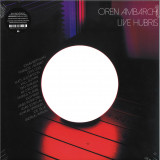
Black Truffle is pleased to announce Live Hubris, documenting the hypnotic and electrifying live performance of Oren Ambarchi’s 2016 LP Hubris by a fifteen-strong band at London’s Café Oto. Over three days in May 2019, Oto toasted Oren Ambarchi at 50/Black Truffle at 10 with Ambarchi and a large group of close friends and collaborators in a series of performances that interspersed existing projects with new collective endeavours, culminating with this: fourteen members of the extended Black Truffle family together on stage, joined by one special virtual guest, to translate the intricately studio-constructed layers of Hubris into a muscular live band workout.
Operating with only the bare minimum of pre-gig preparation after the planned afternoon rehearsal had to be wrapped up prematurely due to noise complaints, the gargantuan group lurches into motion with a 21-minute rendition of ‘Hubris Part 1’, powered by the pulsating electronics of Konrad Sprenger (the ‘ringmaster’ at the ensemble’s core) and no less than seven electric guitars spinning a web of intricately interlocking palm-muted polyrhythms. The layers of closely related but metrically distinct lines create ripples of shifting accents, flickering changes in emphasis that ricochet along the endless central pulse. Gradually building in density, this motorik continuum becomes the backdrop for the haunting tones of Eiko Ishibashi’s processed flute and an extended feature from long-distance guest Jim O’Rourke on guitar synth.
After the brief interlude of the second part, where Albert Marcoeur-esque guitar arpeggios accompany a halting attempt at phone conversation, the full ensemble gears up for the epic side-long rendition of ‘Hubris Part 3’. Now joined by the astonishing triple drum line-up of Joe Talia, Will Guthrie and Andreas Werliin, the layered pulse of the opening piece becomes a burning funk-fusion groove. Beginning on a medium simmer, the ensemble initially stick to its pulsating one-note mantra, over which Ambarchi unfurls a beautiful example of his signature shimmering Leslie-toned guitar harmonics, eventually joined by Ishibashi’s flute and some brooding, distorted dissonance from Julia Reidy’s guitar. Building steadily for the first nine minutes, the heat then rises dramatically with a first, gloriously loose chord change: with the all drummers now rolling and tumbling like a twice-cloned Jack DeJohnette circa 1970, Mats Gustafsson enters on baritone, his tortured roars and shrieks driving the band to peaks of insane intensity. Finally, the exhausted ensemble drops out, leaving only the jagged, skittering fuzz of Ambarchi’s guitar, brought to an abrupt conclusion at the command of crys cole. Arriving on hot pink vinyl with artwork by Lasse Marhaug and an extensive selection of live photos by Ivan Weiss and Fabio Lugaro, Live Hubris brings this ambitious and outrageous evening of music to the safety of the home stereo.
Recorded in a pool house surrounded by an evergreen oak tree forest just outside of Madrid; musician and composer Oliver Patrice Weder’s second artist album ‘The Pool Project’ combines textural and meditative sounds that touch on global influences from jazz, ambient and modern composition. In conjunction with the album, Spitfire Audio has released ‘The Pool Project’ sound library, inviting composers and producers to reimagine, recreate or completely pull apart Oliver’s sound world to facilitate their own vision. Capturing the unique acoustics of the pool house, the library is presented in Spitfire Audio's award-winning, easy-to-use plug-in and features a range of controls and effects. While ‘OPW’ was inspired by constant movement and travelling, ‘The Pool Project’ had quite a contrary motivation. Oliver explains “After making my debut album, it was clear for me that it was only the beginning of a long journey. I enjoy the process and idea of creating something deeply personal and connected to the situation I am in, a snapshot of time so to speak, so I had to start writing a second album sooner or later. I love change and find it very inspiring to creatively adapt to my surroundings and circumstances to see what comes out at the other end. I spent the lockdown time living in a countryside cottage just outside of Madrid, surrounded by holly oak trees. The combination of this and seeing my one year old daughter grow up, as well as expecting another baby boy, created a very unique and fruitful environment to draw inspiration from.” Confirmed press/radio: Future Music - Album review Electronic Sound - Album review Scala Radio -Ambient Track of the Week Scala Radio - Session Track/Interview Reviews: "Rich in beauty and emotion… one of the finest modern composers around" - 8/10, Future Music Mag "Sounds like a warm oasis of calm" - 8.5/10, Higher Plain Music Achievements: Recorded and toured across Europe with various bands including psychedelic rock band Time for T. Composed for the BBC. Lead composer at Spitfire Audio. In 2017, Oliver co-scored the feature film ‘The Haunted’ and made a vlog style series Inside the Score with Spitfire Audio, documenting the entire process — from meeting the director, to seeing the film shown at various international film festivals. Released OPW, a sample library and album, in 2019 with SA Recordings x Spitfire Audio. Interview with MusicTech.
- A1: Fog (Devil's Island Mix)
- A2: A Day At The Beach
- A3: Meadowlark
- A4: Heteromorph
- A5: Nautilus
- A6: Java Head
- A7: Prelude
- A8: Tuxedo Moonlight
- A9: Moonlight Marimba
- A10: Red Skies At Night
- B1: Dof Downie Woot
- B2: Open Season
- B3: The Rain On Mars
- B4: Music Box
- B5: Brothers Grimm
- B6: Rear Window
- B7: Time & Tide
- B8: Rue Du Poisson Noir
- B9: Interlude
- B10: Wireless
- B11: Bossa Nova
Composer, electronic music innovator, and Pere Ubu's original synthesist Allen Ravenstine returns to Waveshaper Media with the diptych LP (comprised of 1 EP per side) Nautilus / Rue De Poisson Noir, the final two parts in Raventine’s Tyranny of Fiction series. Waveshaper Media first came into contact with Ravenstine when we interviewed him in 2012 for our modular synthesizer documentary I Dream Of Wires.
Nautilus / Rue De Poisson Noir brings together 21 of the prodigious composer’s recent lyrical and abstract compositions collectively comprised of the sounds of analogue and digital synthesizers, alongside traditional acoustic instruments. The first 10 recordings, subtitled Nautilus, are found on Side A of this LP while the second 11, Rue Du Poisson Noir, comprise Side B.
Using a singular blend of acoustic and electronic instrumentation, each track on Nautilus, weaves its own wayward travelogue amidst stray bits of audio verité and wafting musical fragrances—by turns tropical and foreboding. Rue De Poisson Noir takes cues from its fragmentary companion both in palette and approach, slithering between cinematic intrigue, off-brand jazz, avant-garde mischief, and fried electro without ever batting an eye. Together they form a beguiling collection of hyperrealist miniatures that remains strange, restless, inquisitive and — most of all — evocative throughout.
For those in the know, Allen Ravenstine has been one of the most creative synthesizer players of the past forty-plus years. Ravenstine started out in the mid-1970s experimenting in his Cleveland apartment with an analogue EML 200 synthesizer, eventually creating a piece in 1975 that became known as Terminal Drive. While he had no intention of releasing his compositions, word got out about the kind of sounds he was experimenting with, which led to an invitation to join pioneering “avant garage” group Pere Ubu for the recording of the group’s first 45, “Thirty Seconds Over Tokyo.” He soon joined Pere Ubu full-time, bringing to the band’s sound unpredictable textures, effects, bleeps, squalls, pulsating washes of sound—whatever he felt could enhance the soundscape of the band’s performances and recordings.
By the early 1990s, Ravenstine had grown sick of the road, band infighting and the music industry in general. Deciding a change was needed, he opted to forego music altogether, making his living as an airplane pilot. His music career remained in limbo until 2012, when an interview for the I Dream Of Wires documentary, alongside Robert Wheeler who had succeeded him as Pere Ubu’s synthesist, turned into a recording session for the duo, leading to a series of collaborative releases. As well as having his 1975 Terminal Drive recordings released to great acclaim in 2017, Ravenstine has been prolific in recent years, with Nautilus / Rue De Poisson Noir now marking his 4th solo full-length.
clear vinyl / incl. poster
The music of Parallax is part of the foundation of Zodiak Commune Records since 1998. With ZC002 - Sinister Projects EP- and ZC005 - Occult Technology EP, Parallax created timeless underground anthems which are being reflected in the Archive EP. With previously unreleased live recordings, this EP is a well-preserved document of the past whilst being relevant in today's underground techno and acid scene. Parallax his live set was recorded at the legendary "old" Effenaar (Acid City Eindhoven, The Netherlands) while the Zodiak Commune's 10th anniversary was being celebrated. With its massive and no-nonsense acid-techno sound, Parallax transformed the dancefloor into a vortex, fueling up people with positive energy while taking them on his musical journey. A nostalgic journey that will make you crave for more timeless underground bliss! With 2002 Live Pt1 being over 12 minutes long a true story is being told. Enjoy this fine release of the purest acid-techno around!
2003 Live Pt1
A dark entrance, heavy basses that make the roof rattle, the smell of stale beer and sweaty people who all seem to speak another language but listen to the same... Those of seemingly soulless beats, but which ultimately take you closer to one self and each other than most religions have managed to realize...
Enjoy 12:30 minutes of storytelling!
1998
Clashing raw 303's, brutal beats colliding mid-air, ear piercing percussion. The soundtrack of the battle of 1998 is all but merciful, sending shivers down your spine.
2003 Live Pt2
Time seizes to exist. Beats provide the energy needed on a journey so loud there is no choice but to join. Guided by musicians, they who make you walk but not go anywhere but inside. Rebel minds choose to renounce their disobey, for their worries to be taken far, far away.
- A1: Columbia (Live At Knebworth)
- A2: Acquiesce (Live At Knebworth)
- A3: Supersonic (Live At Knebworth)
- B1: Hello (Live At Knebworth)
- B2: Some Might Say (Live At Knebworth)
- B3: Roll With It (Live At Knebworth)
- B4: Slide Away (Live At Knebworth)
- C1: Morning Glory (Live At Knebworth)
- C2: Round Are Way (Live At Knebworth)
- C3: Cigarettes & Alcohol (Live At Knebworth)
- C4: Whatever (Live At Knebworth)
- D1: Cast No Shadow (Live At Knebworth)
- D2: Wonderwall (Live At Knebworth)
- D3: The Masterplan (Live At Knebworth)
- E1: Don’t Look Back In Anger (Live At Knebworth)
- E2: My Big Mouth (Live At Knebworth)
- E3: It's Gettin' Better (Man!!) (Live At Knebworth)
- F1: Live Forever (Live At Knebworth)
- F2: Champagne Supernova (Live At Knebworth)
- F3: I Am The Walrus (Live At Knebworth)
3LP[125,17 €]
This year marks 25 years since Oasis’ two iconic record breaking live concerts at Knebworth Park in Hertfordshire on the 10th and 11th August 1996. The shows were both the pinnacle of the band’s success and a landmark gathering for a generation of young people. Released alongside the cinema debut of the feature length documentary film of the event, ‘Oasis Knebworth 1996’ is the definitive live recording featuring a setlist packed with stone cold classics album taken from across both nights of the concert, from the opening salvoes of ‘Columbia’ and ‘Acquiesce’, to ‘Champagne Supernova’, ‘Don’t Look Back In Anger’, ‘Live Forever’, an orchestra backed ‘I Am The Walrus’, and ‘Wonderwall’ the first song from the 1990’s to reach over one billion streams on Spotify and universally loved anthem.
Paz en La Tierra is a result of a search by the Meridian Brothers & Conjunto Media Luna of the heart of something that can be called a 'power format' of Colombian Caribbean music; Accordion , Guacharaca, Caja, Congas, Electric bass, and vocals.
Departing from this idea, and casually working with the music of a documentary on the famous singer Diomedes Diaz, Iván Medellín (accordionist of Conjunto media luna), and Eblis Álvarez from the Meridian Brothers, embarked on a new work building a sound exclusively on the traditional format, searching for several spaces between the lines in the universe of accordion in Colombian music.
The duo departed from the basic: the line of vallenato, the most famous in the country but not the only one, the line of sabanero music more of the lands of Sucre and Córdoba inclined towards cumbia, bullerengue, son vallenato among other airs fed the group's ideas. The Barranquilla center deserves a separate mention, due to its cosmopolitan approach, using all kinds of influences, from the Caribbean islands to ancient rhythms or even modern rock and funk, also used as an inspiration for this record.
In the process, new ways of melody appeared and new ways of expression emerged. Although the rhythms used in the record are rooted in the traditional, the duo glitched those rhythms turning them into new directions in the style, using exclusively the past references to transmute the sound into something that looks inside a parallel future.
Using several theatrical situations, alterations in musical structures, and slight deformations of the traditional harmony (a tonal center and its dominant) the result of "Paz en la Tierra" is enigmatic and charming, and at the same time directed towards the dance floor keeping the past alive and flourishing the essence of the tradition.
This album is a critical meditation on variations of Orientalism practiced by Arabs themselves, as well as those who were born and raised within the diaspora. It originally began as a documentation of extended drum techniques, but eventually morphed into a project of more ambitious scope. Having an open timeframe, Julius Masri gave himself reasons to include all the instruments he obsessively picked up and learned over the years. The work accumulated intentions and guiding principles, and it became rather autobiographical in nature. Some of the tracks either refer to or were recorded in the actual physical spaces he grew up near, in Tripoli, Lebanon during the 1980s. The "Arabic Room" of the title refers to the sitting room in his family‘s house that was decked out in hyper orientalist exoticism, mashing together furniture, fixtures, paintings from all over the Arabic speaking world. The sitting room, or salon, is common in Lebanese homes made specifically to host and entertain guests. Rimsky-Korsakov's Sheherazade and other western made Orientalist cultural artifacts not only had ubiquitous presence in the house, but also found their way onto tv shows and commercials. After moving to the US, his parents recreated this room in their home. Additionally, his father's generation was one that saw their country transform from a post-agrarian trading society after WWII to a center of banking and finance within the span of a few decades. The sense of some lost Eden like innocence of the interwar years permeated much of the media that was available to him growing up there. This album is neither ironic nor some judgmental pronouncement. Call it critical nostalgia. For Masri, there isn't much difference between this form of exotic fantasy creation, and his own adolescence steeped in comic books and listening to bands like Voivod. They both seem to him part of what's known in German as Fernweh, "a nostalgia for a place one's never been". All instruments are performed by Masri himself, (drums, Egyptian rababa, Azeri kamancheh, circuit bent electronics, keyboards, hammered dulcimer, and vocals). Genre-hopping is foundational to the album’s ethos; jazz, metal, experimental, electro-chaabi, and sound collage all appear within the framework of Arabic music, creating the sense of adventurous possibilities best associated with well curated mixtapes. Julius Masri is a Philadelphia based multi-instrumentalist and performer/composer, originally born in Tripoli, Lebanon. The Arabic Room is his debut solo-album. Currently he is working and playing with members of the Sun Ra Arkestra. The album will be released on vinyl only in an edition of 300 copies.
"Circuit" is a recorded document of improvised music and the inaugural release on Pattern Dissection — an independent record label, radio show and concert organiser from Berlin. Dag Magnus’s down-tuned drum set builds the ground for relentless legwork and hectic wrestling, shaking the floor when confronted with Farida’s high string slaps on the bass guitar, which they occasionally swap for droning vibrations and scorching fingerpicking, neither shying away from a heavy riff nor stripped back momentum. Liz’s synth is an idiosyncratic creature of its own, birthing sounds rarely graspable but utterly fascinating, swift in taking turns and always one step ahead of any expectation.
Recorded on July 28th 2020 in Berlin at their second meeting as a band, that was initiated by a live gig six months earlier. All music was improvised and performed in a room with six microphones.
Mixed by Christoph Berg & mastered by Stephan Mathieu. Lacquer cut by Mike Grinser. Pressed at Pallas on 140g vinyl, wrapped in a 350g reverse-printed cardboard sleeve with A6 photo-card inside, including a download code. Artwork by Talita Santos & design by Espacioblanco. Photography by Stefan Lingg.
High-quality reissue of holy grail 70s Brasil Funk LP, a real Killer record which sounds like nothing else with an incredible combination of tracks mixing Brazilian popular music (MPB), regional Folk, Soul and Funk!
Di Melo's debut album was originally released in 1975 and it's a fusion of genuinely Brazilian rhythms with Funk, Soul and the right amount of psychedelia. Di Melo is one of the main Brazilian Soul Music artists, seen by many as talented and musically creative as his peers Jorge Ben and Tim Maia. Di Melo went missing in action from 1976 to 1997, the year his song "A Vida em Seus Mtodos Diz Calma" was on the collection "Blue Brazil" from Blue Note record label. The word on the streets was that he was dead until 2011, when the documentary called "Di Melo, o Imorrvel" (Di Melo, the immortal) was released. In this 2021 edition the album contains the original 1975 insert with lyrics plus photos from personal family archives and for the first time the full credits with all the name of every single musician who tookpart,among them, Hermeto Pascoal.
Echolocation is the debut album by Pamela Z, the pioneering Bay Area intermedia composer and performance artist. Written and recorded over three years, and self-released and distributed on cassette in 1988, Echolocation is genre-defying document of Z’s earliest experiments with live voice and delay, and the impetus of an artist’s three decade search for sounds yet unfelt.
Born and raised in Buffalo, New York, Z traded one snowy backdrop for another to attend the University of Colorado in Boulder at the tail end of the 70s, where she pursued a degree in music while taking local gigs covering Joni Mitchell and Malvina Reynolds b-sides on an acoustic guitar. While a host at KGNU, Z discovered a vast world of avant-garde music in the community radio station’s library, and was inspired to create towards, and alongside, the fringe sounds she pulled from the stacks and broadcast. This revelation intersected with a new era of accessible and affordable instruments and home recording technology, and a diversifying community of artists self-releasing music on cassette and finding an audience through underground publications.
Z moved again to San Francisco in 1984, legally changed her last name, and furthered her practice of vocal processing in live environments. A city simultaneously nurturing and stratifying the free spirit of the two decades prior, Z assumed an immediate role in the Bay Area’s interdisciplinary performance art scene, and began curating Z Programs, her own concert and event series.
The forthcoming latest edition of the popular compilation series featuring long-lost vintage 60s-70s proto-metal and stoner rock singles, Brown Acid: The Thirteenth Trip will be available on Halloween 2021. Check out the first single "Run Run", released in 1970 by Montreal hard rockers Max is available to hear & share via Metal Injection HERE. (And, direct YouTube and Bandcamp)
The Brown Acid series is curated by L.A. label RidingEasy Records and retailer/label Permanent Records. Read interviews with the series curators via Paste Magazine HERE and LA Weekly HERE.
About The Thirteenth Trip:
Max, from Montreal, QC — originally known as Dawn, before Tony Orlando & Dawn forced a name change — kick things off with “Run Run” from their lone 1970 single. It’s a hard-hitting rocker with scale climbing crunching guitars and powerful Bonham-esque drumming. Sadly, the band didn’t last long due to poor management and various other factors, so this is the only surviving document according to guitarist Gerry Markman. And what a document it is, paired with the A-side “The Flying Dutchman.”
You might remember Ralph Williams and the Wright Brothers from their track “Never Again” on Brown Acid: The Tenth Trip. Here they make their return to the series with the A-side of their 1972 Hour Glass Records 45, which sounds like Blue Cheer mangling Roy Orbison’s “Pretty Woman” (that’s right, several years before Van Halen actually did so.) Alas, Ralph and these Wright Brothers soon disappeared from terrestrial airspace.
“Feelin’ Dead” is extremely heavy blues from this also extremely rare 1974 single by Detroit, MI’s Master Danse, which was only released as a promo 45. Think Led Zeppelin’s “Since I’ve Been Loving You” and you’re on the right track. A little dose of Hendrix acid blues and a heartfelt groove, and you’ll wonder why this single never even made it to official release. The unavoidable tell in the lyric, “help me get this damn thing out of my arm” hints at the post-Vietnam heroin epidemic as a potential clue why we never heard more from Master Danse.
Folks, Gary Del Vecchio is “Buzzin’” hard on this one, and from what sounds like an in-studio party of yelps and chatter at the start of the song, it seems that the whole band was in on the festivities. The funky blues riff, reminiscent of Led Zeppelin’s “Heartbreaker” and rollicking rhythmic changes certainly keep the buzz a rollin’.The recording is technically credited as Gary Del Vecchio with Max, though not the same band as the one that kicks off this Trip.
John Kitko’s 1973 heavy psychedelic rager “Indecision” is the only recording known to exist by the mysterious artist. The Twin Record Productions release features a different artist, Tom Poff on the B-side, which is truly a shame, considering the smoldering ashes Kitko leaves of the turntable by song’s end. It starts out more like a late 60s Acid Rock jam before leaping into a blazing double-time gallop, whipped into a frenzy by wailing, neck-pickup guitar squeals and Kitko’s barely audible howls.
Tampa, FL’s Bacchus made their Brown Acid debut way back on the very first Trip with “Carry My Load.” This 1972 B-side, “Hope” is a huge sounding swinging rocker replete with roadhouse piano bolstering the chunky riffs and confident vocals. After relocating to Southern California a few years later, the band morphed into Fortress, an 80s melodic metal act whose Hands In The Till album of Pomp Rock on Atlantic Records still draws chatter today.
Orchid’s “Go Big Red” is perhaps the most garage-y sounding offering here, with loose rhythms and straightforward stop-and-start riffing. Nonetheless, the stomping energy and fried-amp guitar tone make this one a charming skull thwack. The band’s 1973 single on American records, backed with a cover of Johnny Russell and Voni Morrison’s “Act Naturally” (popularized by Buck Owens and the Buckaroos) is their only release, so the world never did see this Orchid fully blossom.
By the title alone of Dry Ice’s “Don’t Munkey with the Funky Skunky” you know you’re in for a good time. The 1974 barnstormer seems aimed to the novelty tunes crowd, with its kooky lyrics and silly-voiced spoken catchphrase break, “peeyew, you’ll be sorry if you do.” But, the Ohio band’s maniacal drumming, crunching guitars and, of course, drug euphemistic lyrics make it a shoo-in for the Brown Acid series of erudite rock’n’roll.
Good Humore’s swaggering 1976 rocker “Detroit” is a slick and smooth paen to the Motor City. It most likely doesn’t predate “Detroit Rock City” by Kiss, also released in 1976, and it has more rock’n’roll swing, but it could fit comfortably alongside the era’s arena anthems. Not much else is known about the one-off release on P.V. Records, but songwriter Mike Moats is noted to also have been a recording engineer in later years and this well produced track sounds like a labor of love.