Formed in the late ‘80s, hip-hop group 3rd Bass gained recognition for their clever wordplay and socially-conscious lyrics, which helped distinguish themselves in an era dominated by gangsta rap! This 2-pack of 3rd Bass ReAction Figures includes articulated, 3.75” scale figures of the group’s frontmen Prime Minster Pete Nice and M.C. Serch, and comes with walking cane and wad of cash accessories. If you miss out on this 3rd Bass ReAction Figure 2-pack you’re definitely going to get The Gas Face!
Cerca:domin
After The Velvet Underground cut three albums for the jazz-oriented Verve label that earned them lots of notoriety but negligible sales, the group signed with industry powerhouse Atlantic Records in 1970. Label head Ahmet Ertegun supposedly asked Lou Reed to avoid sex and drugs in his songs, and instead focus on making an album "loaded with hits." Loaded was the result. It was the group's swan song, with Reed leaving the group shortly before its release. With John Cale long gone from the band, Doug Yule highly prominent (he sings lead on four of the ten tracks), and Maureen Tucker absent on maternity leave, this is hardly a purist's Velvet Underground album. Still, AllMusic gives the album 5 Stars and Pitchfork calls it a "perfect rock 'n' roll record — 40 minutes long, five songs to a side, and not a single wasted note." Loaded is the sort of proper album that feels like a greatest hits collection, with each track thoroughly inhabiting and mastering a dominant rock archetype. Although the songs "Sweet Jane" and "Rock & Roll" distinguished the band as a "seminal proto-punk" act, "The trifecta of 'Who Loves the Sun,' 'Sweet Jane' and 'Rock & Roll' is among the best three-song openings on any rock and roll record," wrote Paste contributor Jeff Gonick Analogue Productions has given Loaded the deserving full reissue treatment: Pressed on 180-gram vinyl at Quality Record Pressings, and housed in a tip-on old style gatefold double pocket jacket by Stoughton Printing.
Before Shotgun Willie, Willie Nelson had struggled to gain widespread recognition as a solo artist, despite having written many successful songs for other artists. Nelson's big break came when he signed with Atlantic Records in 1973. The pivotal moment in his career came after Atlantic Records executive Jerry Wexler, known for his work with artists like Ray Charles and Aretha Franklin, took an interest in Nelson's music. Wexler saw potential in Nelson's unique approach to country music and signed him to the label. With the creative freedom offered by Atlantic Records, Nelson was able to record Shotgun Willie with the artistic freedom he had long desired. The album's unconventional sound and honest lyrics resonated with both critics and fans.
Shotgun Willie marked a new beginning for Willie Nelson's career, and it set the stage for his subsequent albums and his emergence as one of the most influential and iconic figures in the history of country music. The recording was one of the first albums of outlaw country — a new subgenre of country music and an alternative to the conservative restrictions of the Nashville sound, the dominant style in the genre at the time
The album — the first to feature Nelson with long hair and a beard on the cover — gained him the interest of younger audiences. It peaked at No. 41 on Billboard's Top Country Albums and the songs "Shotgun Willie" and "Stay All Night (Stay A Little Longer)" peaked at Nos. 60 and 22 on Hot Country Songs respectively.
We are so pleased to bring you this deluxe 180-gram 45 RPM 2LP Analogue Productions (Atlantic 75 Series) reissue of the timeless Willie Nelson classic, Shotgun Willie. Cue it up and prepare to be transported!
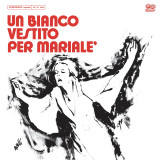
Directed in 1972 by Romano Scavolini, "Un Bianco Vestito Per Mariale'" features a cast with some familiar faces from the Italian thriller genre like Evelyn Stewart and Ivan Rassimov. The film was scored by a great name of the Italian film music scene, Fiorenzo Carpi, whose music was superbly arranged and conducted with his own and unique great style by Bruno Nicolai. Originally released on vinyl by Gemelli in 1975, three years after the release of the movie, this score is dominated by the Mariale' theme both with Piano and orchestra and Edda Dell'Orso's voice and orchestra versions, and also features several lounge and tensive themes. Long out of print, we are proud to bring this beautiful soundtrack back on vinyl as a limited edition of 500 copies, including the instrumental version of "Mariale'" and an alternative arrangement of "Garden Party", available on vinyl for the first time.
Jon Hopkins' neues Album RITUAL ist ein 41-minütiges Epos, das das musikalische Bindeglied zwischen seinen Vorgängeralben Immunity von 2013 und Singularity von 2018 und dem Music For Psychedelic Therapy von 2021 ist. Es besteht aus Subs die klingen, also of sie aus einer Höhle kämen, hypnotischem Schlagzeugspiel und transzendenten Melodien. Das spannungsgeladene, eindringliche und letztlich triumphale Werk ist ein Höhepunkt der Themen, die er in seiner 22-jährigen Karriere erforscht hat, und bildet das kinetische Gegenstück zu Music For Psychedelic Therapy von 2021.
RITUAL ist ein einziges Stück, das sich in acht Kapiteln entfaltet und durch Tiefe und Kontrast besticht. Mit Zeremonien, spiritueller Befreiung und der Reise des Helden als Inspiration, zapft es eine uralte und ursprüngliche Energie an und wird am 30. August von Domino veröffentlicht.
SIDE D:
Etched / BLANK
Jon Hopkins' neues Album RITUAL ist ein 41-minütiges Epos, das das musikalische Bindeglied zwischen seinen Vorgängeralben Immunity von 2013 und Singularity von 2018 und dem Music For Psychedelic Therapy von 2021 ist. Es besteht aus Subs die klingen, also of sie aus einer Höhle kämen, hypnotischem Schlagzeugspiel und transzendenten Melodien. Das spannungsgeladene, eindringliche und letztlich triumphale Werk ist ein Höhepunkt der Themen, die er in seiner 22-jährigen Karriere erforscht hat, und bildet das kinetische Gegenstück zu Music For Psychedelic Therapy von 2021.
RITUAL ist ein einziges Stück, das sich in acht Kapiteln entfaltet und durch Tiefe und Kontrast besticht. Mit Zeremonien, spiritueller Befreiung und der Reise des Helden als Inspiration, zapft es eine uralte und ursprüngliche Energie an und wird am 30. August von Domino veröffentlicht.
SIDE D:
Etched / BLANK
- A1: Wise Man
- A2: Skylarka
- A3: Wild Man Street
- A4: Cow Town Skank
- A5: Northern Sound
- A6: Convention
- A7: The Joker From La Boka
- B1: Legs Man
- B2: Greenwich Farm
- B3: Girls Town
- B4: Tip Toe
- B5: Gold Coast
- B6: Boys Town
repress !
If one band could be cited for the emergence of Ska music, that band would be the Skatalites.
Formed around June 1965 and built around the many musicians that had honed their craft at the Alpha Boys School in Kingston, Jamaica. The early line up consisted of Don Drummond (Trombone), Roland Alphonso (Tenor Saxophone), Tommy McCook (Tenor Saxophone), Johnny ’Dizzy’ Moore (Trumpet), Lester Sterling (Alto Saxophone), Jerome ’Jah Jerry’ Hines (Guitar), Jackie Mittoo (Piano), Llyod Brevett (Bass) and Llyod Knibbs (Drums).
Named originally The Satellites after the big news of the day, the Soviet space satellite. They became The Skatalites when band member Tommy McCook introduced a play on the characteristic ‘Ska’ sound, made by the guitar when following the’ after beat’ of the music.The group had already cut its musical teeth by playing under various guises around the Jamaican island in numerous ‘hotel bands’. When the big Sound System operators Sir Coxsane Dodd, Duke Reid and King Edwards needed new material to play out with and their usual source of the material, American R & B records were drying up. They turned to this pool of musicians to back up their main singers of the day. Delroy Wilson, Alton Ellis and Lord Creator to name but a few. Also to cut the many instrumental tracks they needed usually under the tutor ledge of Don Drummond, official band leader and main musical director. Their knowledge of the old mento tunes and an understanding of Jazz and R&B music somehow blended to make this musical sound that was to dominate the island from the early 60’s up until around 1966 when the sound would slow down to what we now know as Rocksteady.
The time span of the Skatalites career considering their output of litually 100’s of sides of music, was a relatively short one of just over two years. We have delved into the vaults of Wirl Records and have selected some tunes that show the dexterity of the band and what great sounds this group of musicians were capable of producing and the high quality they maintained. They recorded before they were named as a collective The Skatalites, when personal and financial problems became an issue the band split into two halves. Jackie Mittoo and Roland Alfonso going on to form The Soul Brothers band for Coxsone Dodd. Tommy McCook moving over to work with Duke Reid as musical director. Sadly, Don Drummond suffering for years from depression would see his career cut short ending in Belle Vue hospital in 1969.
But while together they cut some of the finest Ska Sounds to be found on record. We hope you enjoy this set as much as we have in putting it together.
So, stand Up, Listen Hard and do the Ska……
“I want it to feel like you’re right there in the room with us.” And in 10 songs and 40 minutes, Wunderhorse capture the raw power and energy that has set them apart as one of the most formidable live acts of recent years. With rugged hooks, unfiltered noise, and fierce melodic sensitivity, Midas rips up the script of traditional second albums and establishes the band as an endlessly addictive and rousing generational talent.
In late 2022, the release of their debut album Cub saw singles ‘Purple’ and ‘Leader of the Pack’ dominate radio airwaves. Landmark performances filling Glastonbury’s Woodsies Tent (FKA John Peel Stage) and selling out London’s Kentish Town Forum months in advance followed tours with Pixies and Fontaines D.C. and stadium appearances with Sam Fender, signalling the band’s arrival as one of the most prominent and exciting new guitar acts in the UK.
With Grammy Award-winning producer Craig Silvey (The Rolling Stones, The National, Florence + The Machine) on board for their sophomore record, the band looked to do something different. Their goal – in the very same studio that Nirvana put In Utero to tape and PJ Harvey recorded the Mercury Prize-nominated Rid of Me – was to push themselves outside of their comfort zones.
“There’s absolutely no faking on this record,” ends Slater, “it's not supposed to be perfect; it’s supposed to be a snapshot, even if it is a bit of an ugly portrait. That's how it was then, and that's how you're gonna see it.” And it sounds like you’re right there in the room with them.
Black Metal, Symphonic grandeur and Deathcore brutality collide in the majestic new album from A WAKE IN PROVIDENCE. 'I Write To You My Darling Decay' is a swathing monster of a record, citing influences from all across the heavy spectrum. As one of the established veterans of the Blackened Deathcore movement, AWIP are now here to set their sights on total domination as they rise to the upper echelons of the genre.
- Despertemos En America
- Querida Miusi
- Sabor De Amigo
- Como Aprendi A Soportar Tus Inseguridades
- Tema De Los Titulos
- Transeuntes
- El Revolver Es Un Hombre Legal
- Lo Mas Bello Esta En Cualquier Lugar
- Tu Vas A Ser (Youre Gonna Be)
- El Secreto De La Vida (O Segredo Da Vida)
- Brians Coral (Dedicado A Brian Wilson)
- Buscando En El Bolsillo Del Alma
- En La Tierra, El Sol
- Cuecas Song
- El Casamiento De Los Musicos
- La Palabra Desnuda (The Naked World)
- La Mascara Se Encendio
- Cancion Para Domingo Cura
- Para Mi Suerte
- Titulos Para Un Documental No Realizado
- Tierra, Viento & Fuego
Amazing compilation of Litto Nebbia's recordings from 1971-1988, a magical and prolific time in the career of the Argentine artist and in the history of his record label, Discos Melopea, including different sounds, from jazz to Brazilian rhythms or experimental textures. Hip-hop artists and producers such as The Alchemist, Jay Electronica and DJs such as Gilles Peterson have openly declared their admiration for Nebbia, generating great interest in his records among collectors around the world. This double-LP compilation, first one ever released in Europe, comprises twenty one recordings taken from some of his best-known albums and also rarities, tracks previously unavailable on vinyl and songs taken from his most obscure albums, the vast majority never reissued on vinyl before. This compilation, the first to be released in Europe, is a subjective look into his fascinating work. It has no historical biographical pretensions or completist aspirations. The selection includes forays into different sounds, from jazz to Brazilian rhythms or experimental textures, which show the rich variety present in Litto Nebbia's vast discography. This collection of songs extends throughout the period 1971-1988, a magical and prolific time in the career of Litto Nebbia and in the history of his record label, Discos Melopea. It comprises twenty one recordings taken from some of his best-known albums, "Bazar de los milagros", "Canciones para cada uno", "Toda canción será plegaria" and also rarities, tracks previously unavailable on vinyl and songs taken from his most obscure albums, the vast majority never reissued on vinyl before.
Bomp Records of Burbank, California was likely the most significant American independent record label of the 1970s. In 1979 Voxx was founded as a subsidiary of Bomp as a specialty label for '60s-styled garage and psychedelic inspired music and was home to the debut album of the Pandoras. The Pandoras really got started back in 1982 when triple threat Paula Pierce (guitar, vocals AND songwriter) met singer and guitarist Debbie Mendoza at Chaffey College Rancho Cucamonga, one of those dozens of small communities that make up the greater Los Angeles area. According to stories told around the campfire, Paula had posted an advertisement on the bulletin board inside the college's cafeteria. The ad was both simple and direct: Wanted: female musician to jam with. As legend has it, the ad also stressed a keen interest in 60's garage punk music. Debbie answered Paula's ad, and soon the two girls were bringing guitars to school and holding impromptu jam sessions between classes. A little later that year, Paula brought in Gwynne Kahn on keyboards and second guitar, and Debbie convinced drummer Casey Gomez to join. People who were around at the time pinpoint December 1982 as the official beginning of the Pandoras as a band. The Pandoras didn't waste any time getting down to business. They started gigging regularly, and their repertoire of tasty garage nuggets expanded substantially, fueled both by Paula's talented songwriting and also no doubt by her relationship with Unclaimed frontman Shelley Ganz and his extensive knowledge of obscure 60's gems. The Pandoras unleashed their first recordings on the world in 1983 with the "I'm Here, I'm Gone" EP on Moxie records. It was a meaty slab of girls in the garage punk rock, and while maybe not as polished as subsequent efforts, it clearly showed off the talent of the band. Greg Shaw had been alerted to the band a few months earlier, and always one to know a good thing when he heard it, he quickly signed them. "It's About Time" saw the light of the day in 1984 on Voxx Records and became one of the first and best efforts of authentic 1960's-styled garage punk to emerge from the revival scene. It was pure garage gold! Today, 40 years after its original release date, we are thrilled to reissue this essential '80s garage punk gem as part of a series of releases celebrating Bomp! 50th anniversary. Our issue includes 3 bonus tracks and liner notes by Gravedigger V's John Hanrattie. "Paula Pierce refused to play it cute. On The Pandoras' debut album she out-snarled, out-screamed, out-fuzzed and out araged the male-dominated competition-like a well-aimed go-go boot to the jugular." - Mike Stax, Ugly Things Magazine "As good a '60s punk record as any contemporary combo is likely to make." - Trouser Press
Black Vinyl[23,32 €]
“I want it to feel like you’re right there in the room with us.” And in 10 songs and 40 minutes, Wunderhorse capture the raw power and energy that has set them apart as one of the most formidable live acts of recent years. With rugged hooks, unfiltered noise, and fierce melodic sensitivity, Midas rips up the script of traditional second albums and establishes the band as an endlessly addictive and rousing generational talent.
In late 2022, the release of their debut album Cub saw singles ‘Purple’ and ‘Leader of the Pack’ dominate radio airwaves. Landmark performances filling Glastonbury’s Woodsies Tent (FKA John Peel Stage) and selling out London’s Kentish Town Forum months in advance followed tours with Pixies and Fontaines D.C. and stadium appearances with Sam Fender, signalling the band’s arrival as one of the most prominent and exciting new guitar acts in the UK.
With Grammy Award-winning producer Craig Silvey (The Rolling Stones, The National, Florence + The Machine) on board for their sophomore record, the band looked to do something different. Their goal – in the very same studio that Nirvana put In Utero to tape and PJ Harvey recorded the Mercury Prize-nominated Rid of Me – was to push themselves outside of their comfort zones.
“There’s absolutely no faking on this record,” ends Slater, “it's not supposed to be perfect; it’s supposed to be a snapshot, even if it is a bit of an ugly portrait. That's how it was then, and that's how you're gonna see it.” And it sounds like you’re right there in the room with them.
WRWTFWW Records is wonderfully proud to announce the long anticipated official reissue of Chrysalide (1978), the sole album from French multi-instrumentalist and enigmatic genius Michel Moulinié. The krautrock/ambient/minimalism paragon is available as a limited edition LP with one never-heard bonus track. It is sourced from the original reels and housed in a heavy 350gsm sleeve.
Originally released in 1978 on Ange and Jean-Claude Pognant's mythical prog rock label Crypto,
Chrysalide is a fusion of minimalist meditations, cosmic soundscapes, and ambient with a human warmth, carried by a profoundly beautiful and unique use of twelve-string guitar, bass, and violin.
Ideal for an introspective listening experience, the hypnotic Kosmische Musik of Michel Moulinié belongs to the same psychedelic family as Manuel Göttsching’s Inventions For Electric Guitar, Mike Oldfield’s Tubular Bells, early Tangerine Dream, and Steve Hillage’s innovative guitar mastery. WRWTFWW listeners might also be reminded of the label’s seminal French release, Dominique Guiot's L'Univers de la Mer, which makes a great spiritual pairing with Chrysalide.
Escape into the vast universe inside yourself :
High Roller Records, black vinyl, ltd 300, insert, download code, 425gsm heavy cardboard cover, Cloven Hoof aus den Midlands gehören wohl zu den legendärsten Bands der gesamten New Wave Of British Heavy Metal Bewegung. Die Ursprünge der Gruppe gehen auf das Jahr 1979 zurück, als sie sich zunächst unter dem Namen Nightstalker formierte. Im Jahr 1981 wechselte die Band jedoch zu ihrem neuen Namen: Cloven Hoof. Der ursprüngliche Sänger David Potter, der Gitarrist Steve Rounds, der Schlagzeuger Kevin Poutney und der Hauptdarsteller Lee Payne am Bass nahmen die Bühnencharaktere 'Earth', 'Fire', 'Water' und 'Air' an. Nachdem sie Demo-Versionen von Songs wie "Return Of The Passover" und "Nightstalker" aufgenommen hatten, veröffentlichten Cloven Hoof 1982 ihre erste 12"-Vinyl-EP "The Opening Ritual" auf Elemental Music. 1984 wurde das selbstbetitelte Cloven Hoof-Album veröffentlicht, gefolgt von "Fighting Back" (1986), "Dominator" (1988) und "A Sultan's Ransom" (1989). Nach der Trennung in den 1990er Jahren kehrten Cloven Hoof 2006 in neuer Besetzung und mit einem neuen Album namens "Eye Of The Sun" zurück. Im Jahr 2014 wurde "Resist Or Serve" aufgenommen, gefolgt von "Who Mourns For The Morning Star?" (2017), beide auf High Roller Records. Das Album war eine Art Wendepunkt für die Band, da sie damit zum ersten Mal in ihrer Karriere in Nordamerika auf Tour gehen konnte. Seitdem haben Cloven Hoof zwei weitere Studioalben veröffentlicht, "Age Of Steel" auf Pure Steel Records im Jahr 2020 und "Time Assassins" auf FM Revolver zwei Jahre später.
Mit Songs wie "Do What Thou Wilt", "Sabbat Stones" und "The Summoning" markiert ihr brandneues Album "Heathen Cross" die Rückkehr zu High Roller Records. "Wir sind jetzt wieder da, wo wir hingehören", schmunzelt Lee Payne. "Heathen Cross" ist Cloven Hoofs bisher düsterstes und schwerstes Album! Es hat die satanischen Untertöne unseres Debütalbums, aber mit dem besten Sänger, den die Gruppe je hatte. Für mich persönlich ist es mit Abstand mein liebstes Cloven Hoof-Album. Wir wollten den Geist und die übernatürliche Majestät des Debütalbums wieder einfangen. Wir haben mit den Fans gesprochen und ihnen das gegeben, was sie am meisten wollten: eine Rückkehr zu den Wurzeln der NWOBHM. Sie werden es lieben!" Der Bassist ist in der Tat voll des Lobes für den neuen Sänger der Band, der ausgerechnet einen gewissen Harry "The Tyrant" Conklin verpflichtet hat: "Harry Conklin ist ein Weltklasse-Sänger. Er ist super engagiert und hochprofessionell und wir wussten, dass er nahtlos in die Band passen würde. Seine stimmliche Leistung auf dem neuen Album hebt die Band in neue Höhen, und ich kann es kaum erwarten, dass die Fans ihn hören. Harry ist ein erstaunlicher Sänger, er ist so vielseitig. Er kann hoch, tief und immer mit Kraft und Leidenschaft singen. Er weiß, wie man einen Song lebt und verkauft. Harry ist wie ein Schauspieler, der eine Geschichte erzählt, niemand interpretiert meine Texte so wie Mr. Conklin. Ich kann ihn nicht genug loben. Wir hätten schon vor Jahren zusammenarbeiten sollen."
Lee Payne - Bass Guitar, Harry (The Tyrant) Conklin - Lead Vocals, Luke Hatton - Lead Guitar, Chris Coss - Lead Guitar, Ash Baker Drums / Backing Vocals, Chris Dando - Keyboards / Backing Vocals
repressed !
Oxia's classic 'Domino' gets reworked for it's ten year anniversary - in 2 vinyl parts. A decade after initially seeing the light, Oxia's now classic 'Domino' get's reworked to celebrate it's anniversary. The new release features a new cut by Oxia himself as well as several remixes by none other than Frankey & Sandrino, Robag Wruhme and Matador. The EP will be released through Agoria's newly found record label Sapiens on February 24th.
Ten years ago the track made waves in the international dance music circuit, striking up chords with techno, trance and house DJs alike to quickly become an all-time classic. Having never expected the track to reach the status that it his, it's a very dear project to Oxia and he needed quite some persuading to give in and let Agoria and his team create something that was worthy of the original.
The set of tracks are the first officially commissioned remixes by Oxia ever. "Finding remixers took some time, the amazing Frankey & Sandrino who's track 'Acamar' is my absolute favourite of 2015, Matador that just launched his Rukus label as well is the multi-talented ex label mate at Kompakt Robag Wruhme. They are all incredibly gifted and fortunately patient enough to wait for this EP" - OXIA
One look at the axe-wielding marauder (drawn by famed heavy metal illustrator Edward Repka) on the front of this album and you know it’s not for the faint of heart. Canadian metal band 3 Inches of Blood’s musical attack (an appropriate term indeed) featured a unique, dual lead vocal line-up of Cam Pipes on “clean” vocals and Jamie Hooper on “screaming” vocals, with bludgeoning guitars (okay, axes) provided by Sunny Dhak and Bobby Froese (Dhak, Froese, and drummer Matt Wood left after this album to form Pride Tiger). Though this record came out in 2004 on the Roadrunner label, it wears its ‘80s metal allegiances on its sleeve, harkening back to the vein-popping intensity of vintage Judas Priest and Accept. Remastered on its 20th anniversary for an orange and black “ashen dawn” vinyl pressing, with a full-color inner sleeve sporting lyrics. Storm the castle!
- A1: The Original Way (Feat. Freddie Foxxx)
- A2: Duck Down
- A3: Drug Dealer • A4. Like A Throttle
- B1: Build And Destroy
- B2: Ruff Ruff (Feat. Freddie Foxxx)
- B3: 13 And Good
- B4: Poisonous Products
- C1: Questions And Answers
- C2: Say Gal
- C3: We In There
- C4: Sex And Violence
- D1: How Not To Get Jerked
- D2: Who Are The Pimps?
- D3: The Real Holy Place
- D4: 13 And Good (Remix)
In the early 1990s gangsta rap was becoming more popular. KRS-One took to the mic and continued to write socially conscious raps resulting in the hard-hitting 1992 album Sex And Violence which would be the fifth and final studio album under the Boogie Down Productions name. Produced by KRS-One, Pal Joey, Kenny Parker, D-Square, and Prince Paul, the album explores the darkest sides of the American urban landscape and psyche, with KRS as narrator, detailing all sides of the matrix. While singles like the alarming drum-driven "Duck Down" and the funky-as-hell "We In There" got most of the attention in ‘92, the deeper sequence reveals plenty of additional gems: the history lesson of the dark and dusty "Drug Dealer"; "Ruff Ruff", with scowling MC favorite Freddie Foxxx (aka Bumpy Knuckles); the grooving "Questions and Answers," and the frantic record industry track "How Not To Get Jerked." The album kicks off with an intro skit featuring KRS-One as a DJ in panic needing vinyl which at the time was a dying format while cassettes and CDs became the dominant format. Thirty-two years later vinyl DJs and Hip-Hop vinyl collectors no longer need to panic. Get On Down in partnership with Sony Music's CERTIFIED is proud to bring back to vinyl this underrated gem in the BDP catalog. Featuring one of the dopest album covers by American artist Robert Williams, Sex and Violence is pressed on colored vinyl and packaged in a gatefold jacket with full lyrics.
2024 Repress
Finders Keepers invite you to witness the incredible first ever Buchla synthesiser concerts/demonstrations providing a distinctive feminine alternative to The Silver Apples Of The Moon if they had ever been presented in phonographic form. This is history in the remaking.
This spring Finders Keepers Records are proud to release an archival project that not only redefines musical history but boasts genuine claim to the overused buzzwords such as pioneering, maverick, experimental, groundbreaking and esoteric, while questioning social politics and the evolution of music technology as we've come to understand it. To describe this records as a game-changer is an understatement. This record represents a musical revolution, a scientific benchmark and a trophy in the cabinet of counter culture creativity. This record is a triumphant yardstick in the synthesiser space race and the untold story of the first woman on the proverbial moon. While pondering the early accolades of this record it's daunting to learn that this record was in fact not a record at all... It was a manifesto and a gateway to a new world, that somehow never quite opened. If the unfamiliar, modernistic, melodic, pulses, tones and harmonics found on this 1975 live presentation/grant application/educational demonstration had been placed in a phonographic context alongside the promoted work of Morton Subotnick, Walter Carlos or Tomita then the name Suzanne Ciani and her influence would have already radically changed the shape, sound and gender of our record collections. Hopefully there is still chance.
In short, Suzanne was a self-imposed twenty-year-old employee of the Buchla modular synthesiser company, San Francisco's neck and neck contender to New York's Moog. Buchla was run by a community of festival freaks and academic acid eaters whose roots in new age lifestyles and the reinvention of art and music replaced the business acumen enjoyed by its likeminded East Coasters. In the eyes of the consumer the creative refusal to adopt rudimentary facets like a piano keyboard controller rendered the Buchla synthesiser the more obscure stubborn sister of the synth marathon, steering these incredible units away from the mainstream into the homes and studios of free music aficionados, art house composers and die-hard revolutionaries. Championed and semi-showcased by composer Morton Subotnick on his albums The Bull and Silver Apples Of The Moon, Buchla's versatility began to open the minds of a new generation, but the high-end design features and no-compromise modus operandi was often confused with incompatibility and, in the pulsating shadow of Moog's marketing, the revolution would not be televised nor patronised. Suzanne Ciani, as one of the very few female composers on the frontline (and also providing the back line) did not lose faith.
These concerts' are the epitome of rare music technology historic documents, performed by a real musician whose skills and academic education in classical composition already outweighed her male synthesiser contemporaries of twice her age. At the very start of her fragile career these recordings are nothing short of sacrificial ode to her mentor and machine, sonic pickets of the revolution and love letters to an absolutely genuine vision of and 'alternative' musical future. In denouncing her own precocious polymathmatic past in a bid to persuade the world to sing from a new hymn sheet, Suzanne Ciani created a bi-product of never before heard music that would render the pigeon holes ambient' and futuristic' utterly inadequate. Providing nothing short of an entirely different feminine take on the experimental records' of Morton Subotnick and proving to a small, judgmental audience and jury the true versatility of one of the most radical and idiosyncratic musical instruments of the 20th century. These recordings have not been heard since then.
The importance of these genuinely lost pieces of electronic musics puzzle almost eclipses the glaring detail of Suzanne's gender as a distinct minority in an almost exclusively male dominated, faceless, coldly scientific landscape. Those familiar with Suzanne's work, a vast vault of previously unpublished non-records', will already know how the creative politics in her art of being' simultaneously reshaped the worlds of synth design, advertising and film composition before anyone had even dropped a stylus in her groove. Needless to say this record, finally commanding the archival format of choice, courtesy of the Ciani and Finders Keepers longstanding unison, was not the last first' with which this hugely important composer would gift society, and the future of a wide range of exciting evolving creative disciplines.
You have found a holy grail of electronic music and a female musical pioneer who was too proactive to take the trophies. With the light of Buchla and Ciani's initial flame Finders Keepers continues to take a torch through the vaults of this lesser-celebrated music legacy shining a beam on these non-records' that evaded the limelight for almost half a century. You can't write history when you are too busy making it. With fresh ink in the bottomless well, let's start at the beginning. Again. You, are invited!
Marking its first decade of activity, Blume returns with the first ever vinyl reissue of the seminal “New Music for Electronic and Recorded Media”, from 1977, the third and final instalment in a suite of releases that includes James Tenney’s “Postal Pieces” and Ben Vida’s “Vocal Trio”. Unquestionably among the most important collections of experimental music to emerge during the 20th Century, “New Music for Electronic and Recorded Media” is the original feminist presentation in its context, releasing the work of Johanna M. Beyer, Annea Lockwood, Pauline Oliveros, Laurie Spiegel, Megan Roberts, Ruth Anderson, and Laurie Anderson under its collective banner. Includes newly commissioned liner notes by Jennifer Lucy Allen and Bradford Bailey.
Since its founding back in 2014, Blume has carved a unique place in cultural landscape, issuing free standing works, spanning the historical and contemporary, that represent singular gestures of creativity within the field of experimental sound. Joining their broad efforts in building networks of context and understanding that already includes the efforts of efforts of Werner Durand, Sarah Hennies, Bruce Nauman, John Butcher, Jocy de Oliveira, Mary Jane Leach, Valentina Magaletti, Alvin Curran, Julius Eastman, Alvin Lucier, and others, Blume delivers their third release in their first suite of releases for 2024, the fist ever vinyl reissue of the seminal “New Music for Electronic and Recorded Media” compilation, originally issued by Thomas Buckner's 1750 Arch Records in 1977. Out of print for decades on vinyl and arguably the most important feminist statement in the history of experimental music, illuminating the work of Johanna M. Beyer, Annea Lockwood, Pauline Oliveros, Laurie Spiegel, Megan Robert, Ruth Anderson, and Laurie Anderson - in a number of cases representing their recording debuts - during a crucial moment in the history of experimental music. Blume’s brand new edition - complete with newly commissioned liner notes by Jennifer Lucy Allen and Bradford Bailey, as well as reproducing Charles Amirkhanian’s original accompanying text - radically shifts perceptions of the past and present day with its truly revolutionary sounds.
Issued by Thomas Buckner's 1750 Arch Records in 1977, and out of print nearly the entire time since, “New Music for Electronic and Recorded Media” can be understood within two simple frameworks. On one hand, it is an astounding document of the landscape of experimental music toward the end of the 1970s. On the other, it is a historically significant feminist statement, being the first collection of experimental music entirely dedicated to female composers, a number of whom were grossly under-celebrated at the time, but have since gone on to be regarded as among the most important composers of their generation.
The eight pieces gathered by “New Music for Electronic and Recorded Media” - Johanna M. Beyer’s “Music of the Spheres”, Annea Lockwood’s “World Rhythms”, Pauline Oliveros’ “Bye Bye Butterfly”, Laurie Spiegel’s “Appalachian Grove I”, Megan Roberts’ “I Could Sit Here All Day”, Ruth Anderson’s “Points”, and Laurie Anderson’s “New York Social Life” and “Time To Go (For Diego)” - might be regarded as the first cohesive vision of alternate proximity or expression of experimental music to what has always been a frustratingly male dominated environment, and to the tropes, temperaments, and sensibilities that have been historically perceived to define it. It is an expanded vision of truth. While the presence of feminine sensibilities and temperaments in experimental music, however they may present themselves, were anything but new in 1977, “New Music for Electronic and Recorded Media” was the first opportunity, beyond the temporal limitations of live performance, to view them collectively, rather than as individualised expressions within a larger body of similar gestures (as was the case of Oliveros’ inclusion in Odyssey’s 1967 “New Sounds In Electronic Music” and “Extended Voices” compilations) where they might be confused for something else; to regard and celebrate a radical notion of feminine sonority for its unique characteristics and through its interrelations.
While its historical significance and groundbreaking nature can not be debated in its totality, nearly half a century on “New Music for Electronic and Recorded Media” remains compelling in both its musicality and the palpable sense of its lasting influence. Every composition across the album’s two sides is not only engrossing and deeply compelling - feeling as fresh and relevant as the day it was laid to tape - but clearly tangible in their lasting influence. Viewed in context, the album’s eight works feel like breath of fresh air when compared to much of what came before, and laid the groundwork for much of what was to come, introducing a new, often more holistic temperament and more sensitive and inclusive sensibility into the landscape of experimental music.
Particularly in the case of Annea Lockwood, Pauline Oliveros, Laurie Spiegel, Ruth Anderson, and Laurie Anderson, it's hard to throw ourselves back in time and imagine a moment when these composers rested in a fairly marginalised corner of the creative landscape. Blume’s brand new edition of “New Music for Electronic and Recorded Media” - complete with newly commissioned liner notes by Jennifer Lucy Allen and Bradford Bailey, as well as reproducing Charles Amirkhanian’s original accompanying text - brings us back to this confounding moment and points us toward a crucial moment of change set forth by these incredible composers and their sounds. Absolutely seminal and not to be missed.
Comes with insert and download coupon.
Imagine a Latin remake of Back to the Future. The mad scientist is Arsenio Rodriguez (the godfather of salsa) and the young student who travels through time with him is Eblis Alvarez (Meridian Brothers). This album can only be described as the perfect soundtrack for that movie that never was.
After the massive buzz generated by his first solo album, Mentallogenic, Alex Figueira got back in the studio to work in a more collective fashion this time, carefully assembling the second album of his largest project to date, Conjunto Papa Upa; a team of 6 musicians, spanning 3 generations of some of the best talent in the Latin and avant-garde scenes.
In an era where tropical music is dominated by purely electronic and rhythmically uniform sounds, the ten songs encompassed in “Fruta Madura” (“Ripe Fruit”) wander through the most diverse tempos, rhythms, and motifs effortlessly. A real breath of fresh air that gracefully incorporates soul, funk, jazz, psychedelia, and electronics into a solid tropical, irresistibly polyrhythmic foundation, without ever succumbing to the many genre clichés.
The distinctive production and catchy songwriting of Figueira shine in a very distinctive light on this second full-length. Living up to his reputation (Miles Cleret, founder of Soundway Records, called him “one of the scene's truly authentic and eccentric producers”), he takes the opportunity to show he’s not afraid to keep walking his own path.
Taking the band for a wild ride through the traditions of Africa, America, and the Caribbean; contrasting them with a ridiculously wide plethora of vintage, contemporary, and futuristic sounds, and pivoting on the exuberant musicality displayed by his musicians; the result leaves no doubt: this album is destined to be considered a future classic of the exciting tropical psychedelic music of the 21st century.
Addressing the most diverse themes in this new collection of songs, things take on a much more mature tone, as the title clearly suggests.
The opening track “El segundo es más sabroso” (“The second one is tastier”) sets the tone in the most assertive way imaginable, with the band boldly declaring, through multiple metaphorical references (laid upon a crazy mix of Dominican merengue, Detroit techno, classic and free jazz, dub, and electro), that the bar will be set higher with this second album.
The remaining compositions touch upon the most diverse subjects, with a fair dose of humor, sarcasm, and postmodern “magic realism”. “El Algoritmo” (The Algorithm) is a parranda-cumbia hybrid (for lack of a specific term) about the omnipresence of technology in our lives. The sophisticated Latin soul of the titling track “Fruta Madura” makes a case for the beauty of the maturity process. Some key philosophical teachings of Marcus Aurelius (the role of causality, the impositions of “the logos” and the importance of self-control) get a twisted cumbia treatment on “Reos del Deseo” (Prisoners of Desire). “No le pongas Coca-Cola” (“Don’t put Coca Cola in it”) shows us the most satirical side of the band, accusing those who mix Coca Cola with Rum of committing "sacrilege", on a powerful base of Dem Bow (the grandfather of Reggaeton), intertwined with touches of soul, salsa, and Cuban comparsa.
"Háblame Claro" (“Talk to me clearly”) is a story of heartbreak that evokes in its first part the spirit of the erotic salsa of the 80s (a subgenre deeply despised by purists), and after an unexpected samba interlude, leads to the hardest salsa of the 70s (a subgenre adored by purists), to end up in the surprising form of pure Afro-Cuban ceremonial music.
“Tu mamá tenía razón” ("Your Mom Was Right") is an attempt to exalt the spirit of the Latin American soap opera in the key of “acid bachata”, to recount a real-life case, witnessed by the band on countless occasions: the partying woman who arrives at the show accompanied by her bitter husband, who obviously does not like to dance. A very cheeky song to talk about the very serious and pertinent topic of female empowerment.
“La misma vaina” (“The same thing”) with its indescribable blend of bantú, candomblé, and Mozambique rhythms with abstract synthesizers, is an ode to adventure in favor of the aversion to taking risks and seeking predictability.
“Amigas picadas” (“Salty friends”) is another humorous song recounting another real-life case witnessed by the band on countless occasions: a love encounter sabotaged by the girlfriend's friends, who all happen to fancy the same guy. A jazzy take on the ancient Dominican rhythm of pambiche (grandfather of merengue), with generous psychedelic touches, resembling the classy late 60s releases of Guadeloupe's legendary producer / label owner Henri Debs.
“Vinimos a hablar” (“We came to talk”) takes sarcasm to the highest level, to ridicule the absurdity (also experienced by the band firsthand) seen in live music venues where people pay a ticket to go and have conversations that could be carried out much better on any bar, where no band is playing. The music alternates between a delicate melody with loose, sparse percussion and a full-on, pumping Angolan semba, with a techno kick drum included; bringing things to an apotheotic grooving finale, where the peculiar swing of Venezuelan calypso from the Callao region is thrown on top of all the precedent elements; closing the album in the most uplifting, “end of the carnival parade” feel.
The artwork is a delicate and impactful oil painting by Colombian artist Kevin Simón Mancera, who has collaborated many times with the label before (“Maracas, tambourines and other hellish things” tape and the Lola’s Dice LP).
What the experts are saying:
“Alex (Figueira) dove into this work with a brutal cohesion between lyrics and synths. Timbre poetry, sound poetry (you name it). And that, superimposed on his always impeccable percussive base, confirms the title of “avant-garde visionary of our beautiful Latin music”".
EBLIS ALVAREZ (MERIDIAN BROTHERS)
“Papa Upa's infectious quirkiness is a balm against boredom. A mature album, but without an expiration date”.
GLADYS PALMERA
“Here there is a lot of strength, drum, cadence and psychedelia, lost dance rhythms, united in an intercontinental Latin/African/and Caribbean journey, a unique winning combination that we could consider the new “Ritmo Figueira”.
DISCODELIC
Conjunto Papa Upa are:
Alex Figueira - Timbales, percussion, vocals.
Gerardo Rosales - Congas, percussion, vocals.
Ramón Mendeville - Bongos, percussion, vocals.
Randy Winterdal - Bass.
Andrew Moreno - Guitar.
Nico Chientarolli - Organ, piano, synths.
All songs written by Alex Figueira.
Arranged and performed by Conjunto Papa Upa.
Recorded, produced, mixed and mastered by Alex Figueira at Heat Too Hot, Amsterdam.