Originally released in 1995, Message From Home is a captivating fusion of hip-hop grooves, African rhythms, and spiritual depth, showcasing the unparalleled artistry of jazz saxophonist Pharoah Sanders. Produced by the legendary Bill Laswell, this album brings together a remarkable ensemble of musicians, including kora virtuoso Foday Musa Suso, keyboardist and vocalist Bernie Worrell, acoustic bassist Charnett Moffett, electric pianist and vocalist William Henderson, guitarist Dominic Kanza, and keyboardist Jeff Bova. Tracks include the mystical jazz hypnotic groove “Our Roots (Began in Africa)” plus five more mesmerizing soundscapes.
Now, for the first time since its original 1995 release, Message From Home is reissued on Music On Vinyl.
quête:domin
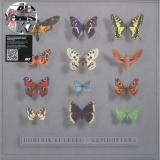
Lepidoptera - the scientific name for butterflies, meaning "scale-winged" - is also the title of the seventh studio album by renowned music producer, bestselling author, ecologist, and knowledge mediator Dominik Eulberg. More than just an album, Lepidoptera is an artistic manifesto: a celebration of butterfly diversity and a profound ecological statement. Set for release via !K7 Records, Lepidoptera blends his signature sound with an urgent ecological message. It marks the pinnacle of a music career spanning over three decades. Eulberg"s fascination with butterflies began in early childhood and has since become a lifelong passion. Drawing from years of experience as a producer and DJ, Eulberg presents his most technically ambitious work yet. At the heart of Lepidoptera are twelve native butterfly species, handpicked by Eulberg from the 3,700 known species in his homeland. Each track is inspired by one species, shaping the album"s structure and grounding its creative focus. The result is a richly textured and immersive journey that moves fluidly between pulsating, danceable rhythms, ambient soundscapes, and orchestral flourishes.
East Kilbride’s Scott Fraser finally comes good on a 25 year promise to his younger self with his debut solo album on his own label DX Recordings out of London. This record represents the closing of this chapter and the opening of a new one.
A truly international and collaborative project pulling together the help and talent of friends around the world with mastering by Radioactive man Keith Tenniswood, cut by Frank Merritt at The Carvery and world class US visual art and design legends, Tim Saccenti and Nick Martin on photography, artwork and design.
Limited to 300 solid red heavyweight vinyl copies, brown kraft sleeves; individually hand stencilled and numbered by the artist, printed inserts feature a collection of moments and images from the last 25 years - the studio, the equipment, the people and the places that came together to make this release. Japanese rice paper inner sleeves.
Limited edition hand printed screen print by Niall Greaves at Newbridge Print Studios in Newcastle on the first 30 copies exclusively available via the DX Recordings Bandcamp page.
Musically diverse, crossing styles, flavours and moods, threaded meticulously with razor sharp Roland TR606 programming and glued together with a Space Echo, Expanded opens with the sub aquatic funk of ‘Eden And After’. Side one takes you through banging electro on ‘Energy In Constitution’, the dark dub techno of ‘To The Letter Of My Oath’, leaves you disappearing through a black hole on ‘The Path Of Helium Rain’ and the sound of aliens talking through FM synthesis on ‘Collected Stills’. On side two: a slice of dark, heavy instrumental hip hop gets things started with ‘Where Is That Perception? ‘. Next we get into some straight 4/4 club techno with cut up drums and bumping baseline in ‘Mi Dominante’ before moving through some blissed out Detroit vibes on ‘Earth Looking Inwards’, a rough as you like TR606 driven experimental electro groover ‘Object of Life’ and finally closing out with the Ectomorph inspired stark electro of ‘Steel (NB_BLOOD cut)’.
Mastered by: Keith Tenniswood at Curve Pusher, Hastings
Cut By: Frank Merritt at The Carvery, London
Distributed by: Rubadub, Glasgow
Artwork by: Timothy Saccenti, Nicholas Martin, Scott Fraser
Photography by: Kate Green, Javier Gonzalez, Scott Fraser, Timothy Saccenti
Solid red vinyl (300 copies), 30 coming with a limited edition screen print designed by Timothy Saccenti, Nicholas Martin and Scott Fraser, hand screen printed by Niall Greaves at Newbridge Print studios in Newcastle.
“Where Animals Play” is the second General Dynamics album, arriving two years after their successful debut LP “Weaponize Your Dreams”. This second manifestation is the logical and brutal continuation of their distinct sound; menacing vocals splayed across an array of precision sampling, destructive percussion and finessed synth work. The duo (consisting of members SARIN + QUAL) embodies, assimilates and re-interprets the ethos & defiance of industrial & cyberpunk culture, taking their approach to new, harsh extremes. Their most recent hallucinatory output is a broad rejection of the current & dominant global trajectory; one that seeks to enslave and destroy humankind via an unhinged amalgamation of fascism, deregulated capitalism & the exploitative use of emerging technology.
- 01: Tafese Tesfaye - The Dove &Amp; The Pigeon
- 02: Yetemwork Mulat - Heathen &Amp; Earth
- 03: Alemu Aga - The World Is But A Place Of Survival
- 04: Sosena Gebre Eyesus - Save Us From Our Death
- 05: Abiy Seyoum - The Last Judgement
- 06: Tafese Tesfaye - You Who Take Good Care Of Me
- 07: Sosena Gebre Eyesus - When I Say Your Name
- 08: Akalu Yossef - Who Can Doubt
- 09: Abiy Seyoum - We Are All Mortals
- 10: Yetemwork Mulat - The Second Coming Of Christ
- 11: Akalu Yossef - Our Father
- 12: Alemu Aga - Song Of Praise Played With A Plectrum
LP 2x12"[28,36 €]
The begena is a large ten-stringed lyre which is part of the traditional Amharic heritage of Ethiopia. The Amharas, who have long formed the politically and culturally dominant people of Ethiopia, mainly inhabit the central and northern part of the country. In the majority, they follow the monophysite Orthodox Tewahido Church established in the early fourth century AD.
Music plays a very important part in the life of the church. Most of the liturgy is sung and, contrary to secular music, it is accompanied by percussion instruments only. The begena occupies a special place because it is the one melodic instrument exclusively dedicated to the spiritual repertory. Because of its mythical origin, it is highly respected. Tradition holds that the begena was given to king David by God, and brought to Ethiopia by Menelik I, together with the Ark of the Covenant. It has always been the instrument of kings and nobles. Played by pious men and women of letters, it never became widespread. But it never disappeared either, not even under the Derg regime (1974-1991) which had banned the instrument.
Among Amhara string instruments, the begena is the most carefully crafted, especially with regard to the ornately sculpted crossbar. Its ten gut strings are cleaned and twisted several times. The characteristic buzzing timbre equalled by no other Amhara instrument is due to the enzirotch, that is, small bits of leather placed between each string and the bridge. This plays an important part in the sound production by creating a brief contact between the string and the upper rim of the bridge, thus modifying the vibrating properties of the string. In this manner, the spectrum of the sound is considerably enhanced (up to over 10 kHz).
The begena is a very powerful instrument, it keeps the devil thirty steps away, and its presence in the home wards off malicious spirits. Priests and preachers recommend its presence, especially during Lent (Fassika Tsom) when the Orthodox Amharas ponder their sins and repent. Because of its spiritual import, the begena generates intense emotion. According to some musicians, playing the begena brings them into direct contact with God or the Virgin Mary. The religious role of the begena is underscored by the shape of the instrument, each part symbolises an important element of the faith. The crossbar for instance, which reaches across the entire width of the instrument, represents God who is above all things. The belly which "gives birth" to the sound represents the Virgin Mary, and the ten strings recall the Ten Commandments.
Recorded by Stéphanie Weisser in Addis Ababa, Ethiopia, March 2002-December 2005.
Mastered by Renaud Millet-Lacombe.
Issued under license from VDE-Gallo, Switzerland.
dxrvo, hailing from Hannover, Germany, has made a name for himself in the electronic music scene by creating hypnotic, minimalist, and atmospheric techno sets. His music takes the dance floor on a captivating journey, characterized by driving beats, rhythmic basslines and repetitive sounds. With performances at renowned venues such as Tresor Berlin, PAL Hamburg, Doka Amsterdam, Watergate Berlin, and Terminal Lyon, he showcases his presence in theinternational techno landscape. As a founder of the Kollektiv Synergie, dxrvo is committed to inclusive events and the promotion of diverse artists. His production skills are evidenced by successful releases on labels like SYXT, Room Trax, Modern Minimal, and NYXII. More than just a DJ, dxrvo is an architect of sonic experiences, continuously redefining the boundaries of electronic music.
Linear Phase
With a two-decade career in music production, Carlos, better known as Linear Phase, has become an established artist in the global techno scene. His eclectic sound proposal, ranging from ambient / drone, through minimal / deep / hypnotic, to raw techno, has earned him the recognition of both critics and the public. His prolific career is reflected in the more than 50 releases under his belt in the last 5 years on several internationally renowned labels such as Molecular, Planet Rhythm, Newrhytmic, Drumcode LTD or Edit Select, to name a few, thus consolidating his presence in the global scene. His 5 years of experience in the world of modular eurorack has allowed him to develop a unique and personal sound, characterized by its depth, textures and enveloping atmospheres. In addition to his role as a producer, Linear Phase is co-creator of the Barcelona Modular Society, a space dedicated to the exploration and dissemination of experimental electronic music. Linear Phase is currently developing the creation of both its own label and its new studio, which will become a creative hub oriented to host all kinds of activities related to techno production. This space will feature the participation of renowned national and international producers, consolidating his commitment to the scene and his vision for the future.
Innmenal
Innmenal is a DJ and producer from Pinamar, Argentina. Resident from FAS Producciones he focuses into hypnotic sounds and chaotic rhythms. He has been playing across the Argentinian coastline spreading his sounds characteristics. With continous work and dedication Innmenal's tracks can be found in labels such as Concepto Hipnotico, Apical Records and Diffuse Reality. His first album called Metatron's Cube was released this year on the Diffuse Reality's Label. Another album is planned over this year along other releases on other labels. His last track Winds Of change was released on the label Modern Minimal with some support coming from Rødhad, Svreca, Developer, Richie Hawtin, Slam, Justine Perry, Arnaud Le Texier, Distant Echoes, Dax J, Hugo Rolan and more. He has shared the decks with Mariano DC doing warm up during last year. With more than 10 years behind the decks he's still digging into the deep hypnotic sounds with some agressive percussions to give the listener a journey through his cosmic sounds. So far Innmenal has been active in various labels like Diffuse Reality, Modern Minimal, KPLR, Space Travel, Rowan Underground and Habitat Musical.
Qaypz
Qaypz is a DJ and producer hailing from Arlon, Belgium. As a child of the 90s dance music era, his journey into electronic music began in 2000, ignited by his first I Love Techno Festival experience in Belgium and the underground rave scene that was thriving in his hometown Liège, where Jungle and D'n'B from UK were dominating. This era made Qaypz start mixing on turntables and embracing vinyl culture in 2003. Today, he's versatile, seamlessly transitioning between turntables, CDJs and DAW-based setups, incorporating hardware and controllers for a hybrid mix performance style. In his early years, he organized local rave parties and later moved to Eupen, the capital of East Belgium, where he founded the collective Krank'm'Haus. Qaypz's passion for underground sounds is evident in his productions. He crafts dark, industrial tracks characterized by powerful kicks, somber melodies and a driving rhythm. His performances have graced notable locations such as The Ground Club in Luxembourg, The Liquid Club in Malta and The Kulturzentrum Alterschlachthof in Eupen as well as underground events like La Nature, Eupen Musik Marathon Festivals in East Belgium and the Rummelstilzchen’s illegal rave party in Berlin-Rummelsburg just before the building demolition the day after. Qaypz is currently focusing on his label development and continue producing and mainly releasing his music on Krank'm'Haus Records.
For its sixth release, Rio de Janeiro’s Onda Boa label sees founder Joutro Mundo, step up once again - this time reviving and re-vibing Netinho’s independent 1980s bop, “Du Du Du Domingo”.
Netinho first made his mark in the 1960s as the drummer for Brazilian beat icons Os Incríveis, then again in the 1970s with the heavier, lysergic sounds of Casa das Máquinas. By the 1980s, he had turned toward a new vision, inspired by the spiritual group Amor e Caridade. Released on his own imprint, Manancial do Amor, 1982’s Apartamento 97 – Projeto Amor & Caridade Vol. 2 brought together heavyweights Zé Rodrix, Faísca, and Manito to expand on this funky, pop-rock chapter first introduced with 1980’s Amor & Caridade Vol. 1.
According to Netinho, a year passed in search of inspiration for the follow-up LP before he began receiving notes and poems through his medium, dictated to her by his “protector.” Following that divine intervention, the album’s songs were completed in just two days—including the standout track, “Du Du Du Domingo,” an ode to the beauty of a Sunday afternoon after the toils of the workweek.
Side A presents the original track, lovingly remastered, in all its stripped-down, idiosyncratic glory. A bubbling synth bass paired with a nimble electric bass line set the stage for the plunky synth melody that defines this anomalous yet infectious gem—before giving way to a samba break and a wafting crowd noise that instantly transports you to a sunny Sunday by the sea.
On the B-side, Joutro Mundo injects a new vitality into the track with crisp hi-hats, a thumping kick, and other subtle studio magic. The samba break is brought forward, while the electric bass line—previously bubbling beneath the surface—rises to center stage around the three-minute mark. True to form, Joutro Mundo avoids the obvious, drawing on his deep crates and production sorcery to conjure up yet another gem for the balearic heads and other lovers of left-field dancefloor deviance.
- A1: Tafese Tesfaye - The Dove &Amp; The Pigeon
- A2: Yetemwork Mulat - Heathen &Amp; Earth
- A3: Alemu Aga - The World Is But A Place Of Survival
- B1: Sosena Gebre Eyesus - Save Us From Our Death
- B2: Abiy Seyoum - The Last Judgement
- B3: Tafese Tesfaye - You Who Take Good Care Of Me
- C1: Sosena Gebre Eyesus - When I Say Your Name
- C2: Akalu Yossef - Who Can Doubt
- C3: Abiy Seyoum - We Are All Mortals
- D1: Yetemwork Mulat - The Second Coming Of Christ
- D2: Akalu Yossef - Our Father
- D3: Alemu Aga - Song Of Praise Played With A Plectrum
Cassette[16,18 €]
The begena is a large ten-stringed lyre which is part of the traditional Amharic heritage of Ethiopia. The Amharas, who have long formed the politically and culturally dominant people of Ethiopia, mainly inhabit the central and northern part of the country. In the majority, they follow the monophysite Orthodox Tewahido Church established in the early fourth century AD.
Music plays a very important part in the life of the church. Most of the liturgy is sung and, contrary to secular music, it is accompanied by percussion instruments only. The begena occupies a special place because it is the one melodic instrument exclusively dedicated to the spiritual repertory. Because of its mythical origin, it is highly respected. Tradition holds that the begena was given to king David by God, and brought to Ethiopia by Menelik I, together with the Ark of the Covenant. It has always been the instrument of kings and nobles. Played by pious men and women of letters, it never became widespread. But it never disappeared either, not even under the Derg regime (1974-1991) which had banned the instrument.
Among Amhara string instruments, the begena is the most carefully crafted, especially with regard to the ornately sculpted crossbar. Its ten gut strings are cleaned and twisted several times. The characteristic buzzing timbre equalled by no other Amhara instrument is due to the enzirotch, that is, small bits of leather placed between each string and the bridge. This plays an important part in the sound production by creating a brief contact between the string and the upper rim of the bridge, thus modifying the vibrating properties of the string. In this manner, the spectrum of the sound is considerably enhanced (up to over 10 kHz).
The begena is a very powerful instrument, it keeps the devil thirty steps away, and its presence in the home wards off malicious spirits. Priests and preachers recommend its presence, especially during Lent (Fassika Tsom) when the Orthodox Amharas ponder their sins and repent. Because of its spiritual import, the begena generates intense emotion. According to some musicians, playing the begena brings them into direct contact with God or the Virgin Mary. The religious role of the begena is underscored by the shape of the instrument, each part symbolises an important element of the faith. The crossbar for instance, which reaches across the entire width of the instrument, represents God who is above all things. The belly which "gives birth" to the sound represents the Virgin Mary, and the ten strings recall the Ten Commandments.
Recorded by Stéphanie Weisser in Addis Ababa, Ethiopia, March 2002-December 2005.
Mastered by Renaud Millet-Lacombe.
Issued under license from VDE-Gallo, Switzerland.
- A1: Land Of Confusion
- A2: No Son Of Mine
- A3: Driving The Last Spike
- B1: A | Dance On A Volcano
- B1: B | The Lamb Lies Down On Broadway
- B1: C | The Musical Box (Closing Section)
- B1: D | Firth Of Fifth
- B1: E | I Know What I Like (In Your Wardrobe)
- C1: Throwing It All Away
- C2: Fading Lights
- D1: Jesus He Knows Me
- D2: Home By The Sea
- E1: Hold On My Heart
- E2: Domino Principle
- E3: Domino
- E4: Drum Duet
- F1: I Can't Dance
- F2: Tonight, Tonight, Tonight
- F3: Invisible Touch
- F4: Turn It On Again
Several years after a 12” for the Unrelatable imprint, Marco Passarani opens a new chapter with F.F.O.M., a work of extra-terrestrial tales that feel grounded, where the hard, dirty work of the people continues on a different planet. The scenery changes, but the story stays the same: broken dreams on arid ground.
Linking back to his early Nature Records releases, Passarani blends experimentation with an unshakable sense of groove, weaving a more abstract narrative without losing the dancefloor pulse. While distinct from his Studiomaster output, the project shares the same DNA, fusing digital and analog textures until the boundaries dissolve.
True to the raw spirit of pure techno and imbued with the unmistakable nuances of the Roman school, F.F.O.M. is both a nod to the past and a step into uncharted territory, where Martian dust meets earthly sweat.
Each track paints a fragment of this imagined frontier: Tales Of Truth reveals shadowy landscapes hiding the real nature of the so-called new promised land; Alone in the Depth drifts through liquid scenery, a classic TR-808 pulsing deep beneath unknown oceans; Clouded Shore distills the numeric essence of groove in a subtle nod to Kraftwerk; Dominion erupts into the fierce struggle for supremacy over the new territories; Passione Orbitale tells of love for the unknown and voyages toward otherworldly sunsets; Exploration Noises echoes the spirit of Ixora from Passarani’s first Nature Records release, with manic, melancholic SH-101 lines riding electro rhythms.
The digital edition includes two exclusive miniatures, fleeting transmissions from the edge of this Martian settlement.
Wrong Filament embodies Robert Piotrowicz's creation of fictional traditional music - not studied but invented, a utopian and oniric construct that becomes tangible in sound. These imagined traditions act as communal forces of music-making, resisting dominant structures of power.
The album unfolds in six dense compositions built on rhythm, repetition and minimal melodic gestures that draw on archetypal patterns of Eastern European traditions. Entirely synthetic yet strikingly instrumental in character, they develop as autonomous sound events, expanding into multi-part forms that evoke the physicality of ensemble performance - as if played by an imagined community of musicians.
Rather than reconstruction, Piotrowicz invents forged dances - a pre-techno of sorts, where complex meters and dense textures point to a parallel history of collective sound beyond industrial uniformity. They imagine a utopian and fictional genealogy of collective sound: one where industrial modernity yields to more unstable, communal energies.
This is celebratory music with invocatory charge: calls to dance, echoes of ceremony, microtonal melodies shaped by emotional weight, and traces of Eastern ornamentation stretched through synthetic means. Wrong Filament sacralises performance through sound alone, spinning a world where spectres of collective experience vibrate against the limits of rupture and resistance.
These pieces confront the traces of violence inscribed in body and memory, yet also affirm freedom, emancipation and integration. They manifest celebration, identity and resistance while opening a path toward liberation and shared needs that exceed social, private and intimate categories.
An elusive cult gem resurfaces through Glossy Mistakes. Originally released in 1986, L'Empire Des Sons is an otherworldly blend of synth pop, folk experimentation, and cinematic percussive layers-dreamlike, poetic, and wildly ahead of its time. L'Empire Des Sons was a fleeting yet powerful transmission from the fringes of the French underground-an album that blurred genre lines and evaded easy classification. Fusing experimental folk, lo-fi synth pop, and avant-garde textures, the record exists in its own sonic universe: poetic, layered, and fiercely independent. Formed in Saint-Étienne by percussionist and composer Dominique Lentin (Dagon, Fille Qui Mousse) and first-time vocalist Bipé Redon, L'Empire Des Sons emerged from the vibrant DIY spirit of the early 1980s. Their paths crossed during the interdisciplinary project L'Opéra Quotidien, and what followed was an intuitive, deeply collaborative process. "I would bring in lyrics and my voice," Bipé recalled, "and Dominique would shape the music around the atmosphere or rhythm suggested by the words." The result is a collection of songs that feel both meticulously constructed and completely free. Ethnic percussion, marimbas, xylophones, and synthesizers dance around Bipé's surreal, fragmented lyrics-little sonic postcards from imagined worlds. There's a theatricality here, but it never feels forced; rather, it's playful, intimate, and raw. Despite their inventiveness, L'Empire Des Sons remained a well-kept secret-circulating only in select avant-garde circles and eventually becoming an extremely sought-after collector's item. Now, thanks to Glossy Mistakes, this lost artifact returns to the world with new life: remastered from the original tapes, pressed on vinyl for the first time with extended liner notes. L'Empire Des Sons was never meant to be boxed in. Like the quote from Brian Eno that opens their liner notes-"For the world to be interesting, you have to be manipulating it all the time"-their music resists stasis. It evolves, shifts, surprises. And now, it finally gets the audience it always deserved.
- A1: Inner Light (3 34)
- A2: Last Rite (3 31)
- A3: Rise (6 17)
- A4: Edz (2 31)
- A5: Towerfall (2 57)
- B1: Lost Light (3 42)
- B2: Forge Ahead (4 13)
- B3: Battle Stations (4 31)
- B4: Utopia Fallen (3 35)
- B5: Lost Sector (3 19)
- C1: Journey (7 16)
- C2: View From Orbit (2 19)
- C3: Red Legion (3 13)
- C4: New Dawn (2 14)
- C5: What We Fight For (3 09)
- D1: Leviathan (2 36)
- D2: The Wilds (6 55)
- D3: Holliday (4 46)
- D4: The Farm (3 57)
- D5: Be Brave (3 36)
Tauche ein in den epischen Sound von Destiny 2 mit der Original-Soundtrack-Collection von Volume 1. Diese Sammlung enthält die Musik aus der ersten großen Kampagne "Die Rote Schlacht" und bietet dir mehr als eine Stunde legendärer Musik auf zwei schwarzen LPs.Das Gatefold zeigt Artwork-Illustrationen, die die drei Hüter-Klassen inmitten der Ruinen der Roten Schlacht darstellen. Zusätzlich erhältst du eine Sammelkarte mit Artwork von Dominus Ghaul, dem Antagonisten der Roten Schlacht, sowie Commander Zavala von den Hüter-Vanguard - und ein Code für das exklusive Destiny 2-Ingame-Emblem "Drop the Needle".
- 1: When The Night Falls
- 2: I'm Rowed Out
- 3: The Immediate Pleasure
- 4: My Degeneration
- 5: Man With Money
- 6: You're Too Muc
- 7: Good Day Sunshine
- 8: Please Don't Cry
- 9: When The Night Falls (Demo)
- 10: I'm Rowed Out (Demo)
- 11: The Immediate Pleasure (Demo)
- 12: My Degeneration (Alternate Version)
- 13: Radio London Jingle
- 14: The Pupils - Route 66
- 15: Shakin' All Over
- 16: When The Night Falls (Demo 2)
Retrospective of British mod / fReakBeat / pop-aRt heroes the eYes including all their cult classic 45s (“When the night falls”, “i’m RoWed out”, “MY degeneRation”...) plus cool rare tRacks souRced fRoM demos and acetates.
foRmed in london in 1964, the eYes took the earlY feedback experiments and pop aRt iMage of bands like the Who one step further. the band wore dyed parkas in various pastel colouRs and bRightly colouRed rugBY shiRts with huge eye symBols on the chest.
theiR raw, eneRgetic sound and distinctive stYle comBined aggRessive, fuzz-dRiven guitaR riffs with catchy melodies and a Youthful defiance that captuRed the eneRgy of the london mod scene. theiR music bRidged rawness fReakBeat with the eMeRging psYchedelic sound that would dominate the latteR half of the decade.
tracks like the feedback-laden “When the night falls” oR the fuzzed-out “you’re too Much” sounded YeaRs ahead of its time and they would influence the mod, garage revival and indie / shoegaze scene of the folloWing decades.
the eYes only released a handful of singles betWeen 1965 and 1966. theY disBanded in 1967 and unfortunatelY they never released a full album during their shoRt lifespan. heRe it is!
*ReMastered sound / *eight-page color insert with liner notes by paul “smiler” andeRson and rare photos / memorabilia / *doWnload card
- A1: Priestess 5 24
- A2: Peace 4 25
- A3: Missionary Bell 4 24
- A4: Miss Mabee 3 09
- B1: Home At Last 3 24
- B2: I'm Not Ashamed 4 41
- B3: Who Removed The Cellar Door? 6 00
- B4: A Girl Named Dogie 4 40
- C1: Asphodel 4 42
- C2: I Never Dream About Trains 5 31
- C3: Van Wyck Expressway 3 24
- C4: Lola Montez Danced The Spider Dance 7 01
- D1: Juvenile 3 59
- D2: Diamonds In The Mine 3 19
- D3: Strawberry Moon 4 02
- D4: Interior Live Oak 5 57
Cass McCombs kehrt zu Domino zurück mit einem neuen Album "Interior Live Oak"!
Am 15. August erscheint Cass McCombs' neues Album Interior Live Oak bei Domino. Es ist sein persönlichstes Werk - und gleichzeitig eine Rückbesinnung: reduziert, konzentriert, aber mit dem ganzen Gewicht von über zwanzig Jahren musikalischer Entwicklung. Der Impuls kam durch die Rückkehr zu Domino und die Auseinandersetzung mit frühen Arbeiten im Rahmen der Reissue-Kampagne und des Archivalbums Seed Cake on Leap Year. McCombs arbeitete dafür erneut mit langjährigen Weggefährten wie Jason Quever (Papercuts) und Chris Cohen in der Bay Area, später kamen in New York Beiträge von u.a. Matt Sweeney und Mike Bones dazu. Interior Live Oak verbindet neue Klarheit mit vertrauter Tiefe. Trotz dunkler Themen bleibt der Grundton hoffnungsvoll - als würde McCombs nicht nur von Extremen singen, sondern als jemand, der sie durchlebt hat.
Prolific duo Years of Denial return to Veyl with another genre bending, dance floor ready EP titled Love Cuts.
Acting as a transit between 2023’s Suicide Disco 2 and the forthcoming Suicide Disco 3, Love Cuts explores the various angles of love - ranging from the digital to the forbidden, toxic to erotic and beyond. A blend of death rock, future goth, EBM and rave, we once again find the project’s poetic, powerful lyrics fusing with motorized beats and 4x4 rhythms.
Kicking things off is the shadowy, death rock inspired, "Devil In a Skirt", an infectious ballad about a temptress that may not be what she seems. Next up, "Affaire de Coeur" delivers body fuelled stabs which elegantly bleeds into "Hide & Sick", a more high energy cut, set to scorch the floor. "We Are The Party" keeps the pulse pounding with your next EBM anthem while "In Your Bed" shatters sonic boundaries and leaves things drenched in acid rave. "AI Lover" closes things out with more future goth rave energy which acts as both a warning and a desire for more.
Love Cuts builds on Years of Denial’s previous work while setting the stage for what’s to come. Commanding vocals and dominating beats transmit a powerful message of both the dystopian and euphoric. Remaining uncategorizable, the project continues to evolve their unique sound while burning a path toward the future.