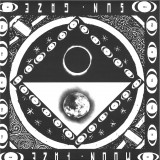
The debut album from writer and artist Holly Childs and artist Gediminas Žygus formerly known as J.G. Biberkopf.
Initiated in 2017, Hydrangea grew out of a series of performances emphasising conspiracies and the designer realities that they generate. Navigating a tangle of digitally induced subjectivities and relationships, Hydrangea sees Childs & Žygus amidst a continuously evaporating world in which narratives dissolve, leak, fold in on themselves and loop.
Childs & Žygus ask: As individuals are siloed online, can rifts in reality ever be reconciled? Is history a form of science fiction? And are narrators ever reliable? The process of creating Hydrangea was defined by the search for a form to bind fiction, poetry, and musical experience. Its narrative is influenced by technical instructions, lectures and whispered conversations, in which slippage and floating focus can create new meanings in the listener that weren’t intended by the speaker.
Aspects of physical and informational security including passwords, codes, locks and obstacles speak to the ways in which meaning or material can be locked, unlocked or instrumentalised for a range of potential outcomes. Hydrangea reflects on the Machiavellian strategies of political ideologists such as Steve Bannon, Aleksandr Dugin and Vladislav Surkov who have made use of contemporary and postmodern artistic strategies to design narrative uncertainty—covertly braiding together questionable truths, slippery narratives and bespoke reinterpretations of history for undisclosed political ends.
"Hydrangea’s Just the Password Though, Right?"
Childs & Žygus employ a musical language that layers their cumulative practices and experiences. The compositions are cinematic and spatial, working with the illustrative qualities of Disneyesque string melodies and taking cues from Maurice Ravel’s impressionistic piano works.
The work is also influenced by both artists’ lifelong experiences of rave culture, beginning for Žygus during childhood in newly independent Lithuania, spending time juggling Disney and happy hardcore cassettes on the family stereo, and for Childs as a preteen in Australia, tagging along with her sisters to doofs and warehouse parties. Initiated while the artists were both working between Amsterdam and Rotterdam in 2017, the work also draws on Dutch gabber music.
Hydrangea’s development has been influenced by collaboration with artists and filmmakers Metahaven, who created the album art.
Holly Childs is a writer and artist. Her research involves filtering stories of computation through frames of ecology, earth, memory, poetry, and light. She is the author of two books: No Limit (Hologram) and Danklands (Arcadia Missa); and has presented her work at ICA (London), Stedelijk Museum (Amsterdam), Trust (Berlin), Elam School of Art (Auckland) and more.
Gediminas Žygus is an artist working within the fields of sound, documentary and performance. Their practice assembles a spectrum of influences deriving from architecture, ecology, ethnography, science studies, and media theory. As J.G. Biberkopf, their releases have found homes on Knives and Danse Noire. Žygus has performed at Barbican Centre (London), Berghain (Berlin), Sonic Acts (Amsterdam), and Centre Pompidou (Paris), among others. credits
Suche:doof x
Triangulating a slinky signal to a square mile off the Swan River, Glowing Pin bring us ‘Pentagon Palette’, a master blast of frequency adjusted house, swamp stomp and chakra charmers from Australian newcomer Jonus Eric.
Though opening brace ‘The Cult’ and ‘Collect’ made first contact back in 2014, a loose connection between Perth and Hamburg hindered progress before ‘Mirrors’, ‘Emulator’ and ‘Waterfall’ walked across the web in 2019 to round out a dope debut release from this house auteur. Specialising in mind altering sound design and melodic flair, Jonus generates a neon swamp on ‘The Cult’, serving up a psychoactive roller caked in radioactive fuzz and insectile fizz. Thick bass swells and circular marimba make for a hypnotic rhythm, while a shapeshifting vocal and moody keyboard riff drag us back towards terra firma. The paradisiac refrain of ‘Collect’ soon sounds out through the jungle with a euphoric haze,
its sub-tickling bass and acid gurgle riding hyperactive drum programming as the track warps in the humidity. Soaked in serotonin and brisk at 137 BPM, ‘Mirrors’ burns off the mist to offer an airy update on the French Touch template. Though frazzled circuitry and dislocated vox serve this one with a twist, the chiming pianos and bouncy beat are still best enjoyed in a Golf GTI in the summertime. Jonus reaches for the lasers via the restless rhythm and rave sirens of ‘Emulator’, a fresh take on the funky house of the late nineties updated with unexpected breaks, squealing feedback and treated vocals usually found on a Four Set banger.
Next it’s off to the chillout room for ‘Waterfalls’, a fourth-world tone poem describing crystal caves, undiscovered wildlife and a holographic waterfall. Ditching the doof, and letting those colours tesselate, Jonus offers a +2 bump to your mana, before the post punk bassline, growling EBM vocal and off key organs of ‘YR Mind’ combine for a confrontational bonus track, only available in digital format.
The dawn of Multi Culti's astrological epic assault kicks off with exotic neo-hippie modulations from Von party, Red Axes, and 'The Australians' - Dreems, Ccolo, Nick Murray & Kris Baha.
In pole party position of A1 on Vinyl #1 is 'Wet Raga' from Cult Leaders VON PARTY & DREEMS - This sprawling, 13-minute, raga-sampling main-room odyssey powers us into sunrise...and the journey begins. Prolific maestros RED AXES then kick things into darker territory with Boosha Gdola, a squelchy bleep-fest straight out of the Israeli underground. On the flip (which could be titled 'The Oz side') DREEMS comes up to bat again with the herbal Sine 'O' The Tymes, squeezing the groove into an acid genie bottle, bumping along with a few lazy cowbells in tow, until finally giving us melodic finish. Masterful. We are all feeling this one.
Fellow Australian doof dingos NICK MURRAY & KRIS BAHA bring up the tempo, toting electrified guitars, and hypnotic grooves that speak to a lifetime of overhearing digeridoos.
Finally, Ccolo sends us off with F33lings, a curious mix of lush ambient electronics and bush-ready downtempo acid.
- A1: John Kameel Farah - Fugue And Toccata On Hold
- A2: Ana Maria Rodriguez - Pocket Songs For Violoncello & Live Electronics
- A3: Zeitblom - Ikon
- A4: Eliav Brand - Individual Stuff
- A5: Guido Möbius - Entertain Premium
- B1: Juliana Hodkinson - Ring A Ring
- B2: Alex Paulick - Jingle Bells
- B3: Ari Benjamin Meyers - Telekom Ii For 2 Baritone Saxophones
- B4: Adi Gelbart - Musical Offering Against Telecommunication For
- B5: Magnetic Tape, Bass Clarinet And Electronics
- B6: Patric Catani - Baka Baka Dam
There used to be a time when ring tones were important. You were easily recognizable as one of the few people actually owning one of these new gadgets called ›mobile phone‹ (or ›handy‹ as the Germans say). Later you could make an important distinction by choosing a ›cool‹ ring tone...
In May 2014 the Festival »Doofe Musik« (»Stupid Music - Songs for Dreaming, Sedation and Forgetting«) took place at Haus der Kulturen der Welt (HKW) in Berlin. As part of the »Anthropocene Project« the festival focussed on escapism and the special function of music when retreating from reality. Detlef Diederichsen, curator at HKW, and Holger Schulze, Head of Sound-Studies-Lab Berlin, decided to not only focus on music which music lovers usually hate, e.g. ›Schlager‹, German folk music, Light Jazz, but also on ring tones.
The audio logo of Deutsche Telekom has been part of Germany's mobile phone culture from the very beginning so it acted as a starting point to question the usual concepts for ring tones. Using Christian Kellersmann's idea of the »Pocket Symphony« ten artists were invited to come up with adaptations of Telekom's audio logo. The results were performed for the first time during »Stupid Music« and once again in October of the same year when most of the recordings you can find on the album were made.
As you will hear: The short motif, as simple and unforgettable as it is, is ideal musical material.Everyone knows it, everyone has some sort of connection to it and these ten different versions, these ten different positions, open up the most varied possibilities for associations.
It is time that we take the ring tone seriously again. As the most reduced musical form that is the most-widely available in the whole world it contains enormous and unrealised potential!