For our second release, circuit|breaker quips back the stacked offering of CBRK001 with another dynamic double LP, exhibiting some of the best local and international talent that’s cropped up on our radar over recent years.
The label is as driven as ever to build a bridge between our community and the wider electronic
music domain, giving artists a platform to preach the sound that speaks to them, and this release is but another stepping stone towards greatness, for us and for them.
CBRK002 opens up with a rolling, gritty number that could only be Fergus Sweetland, as metallic voices beckon forth on ‘Untitled (ARP 1.02)’. Hasvat Informant, whose thunderous reputation precedes him, then storms the barn with the explosive ‘Abispa Ephippium’. The B-side shifts gears to Goa’s Dotdat and his frantically groovy track ‘Holo’, followed by a gorgeous minimal number by Berlin-based Pino Peña – Mia’s Pocket; one that’s sure to get summer dancefloors pumping.
The C-side of the record contains two heaving tracks, the C1 from the prominent force of Cloudy Ku with ‘A Room of One’s Own’, and the C2 from the dark visage that is disgrays with
‘Turmstraße’. The final side of the record has Amsterdam legend Juan Sanchez open the filter with a warm, jacking submission in ‘Indulge’, while the Berliner Marsch takes us home with a
devious timbre that will have bodies glued to the floor on ‘Into You’.
Search:dr break
Jade Hairpins waste no time fulfilling their second album's titular demand. From its harmony-drenched opening note to its baroque-anthemic conclusion, Get Me the Good Stuff is positively loaded with musical ideas, an absurdist buffet of sound and aesthetic that comes with one hell of a floorshow as the Hairpins stack those ideas higher and higher, almost daring them to crash to the floor. Instead, those elements - punksploitation, power pop, baggy, funk, and Italo disco are just some touchstones - are not only held aloft, they defy gravity and convention. These pyrotechnics are, in true Jade Hairpins fashion, something of a sleight of hand. While the music swaggers and gallops, Get Me the Good Stuff grapples with anxiety and self-doubt, obfuscating pain and alienation with sparkling wit and some straight-up ravers. Get Me the Good Stuff opens with one of those, "Let It Be Me," in which Jonah Falco shouts lyrics about being alone with one's shortcomings against guitars, synths, and harmonized vocals that are on the verge of closing in. The song is just over 90 seconds long, hitting with the gnarled-barb ferocity of punk and the gleeful insanity of theatrical art rock. It is, in other words, overwhelming. Or it would be if Jade Hairpins - Jonah Falco and Mike Haliechuk - weren't remarkably nimble in their ability to bring unity to sounds by placing them in competition against each other. When those sounds are adjacent, like the glam and disco that saturate "Drifting Superstition," the thrill of those universes colliding in the heat of an absolutely filthy clavichord line turns its lyrics, about the habit of solving personal problems by ignoring them, into a winner's anthem on the order of Bowie or Hot Chocolate. Get Me the Good Stuff arcs towards unequivocal joy as Falco, Jade Hairpins' primary lyricist, breaks these cycles and attempts to run away with his dreams. The arc is roughly analogous to how the album came to fruition. Four years removed from Harmony Avenue, an album of material that proved too strong to be contained within the narrative universe of Fucked Up's Dose Your Dreams, Jade Hairpins have gelled as a live act - with Tamsin M. Leach and Jack Goldstein centering them on stage - and planted their flag in the UK punk scene in which Falco has embedded himself. Working out new material live, Falco noticed that crowds were digging into his unfinished lyrics, and the album tightened around the anxieties of being in the spotlight, of being worthy of attention. At times, those songs are eager to please, like the album's title track in which a winking self-deprecation rubs up against the self-congratulatory bombast of Freddie Mercury, Falco simultaneously turning heads as a shooting star and a burning car. Elsewhere, as in "Better Here Than in Love," Jade Hairpins pitch themselves towards creating gorgeous soundscapes that exist nowhere else, channeling postpunk through the glimmering haze of '80s Japanese electronic music. Theatrical and personal, absurd and true-to-life, playful and serious, Get Me the Good Stuff is album of tremendous personal and artistic growth that signposts towards dozens of potential futures to come. It's not only worth the attention, it continuously rewards it.
Jade Hairpins waste no time fulfilling their second album's titular demand. From its harmony-drenched opening note to its baroque-anthemic conclusion, Get Me the Good Stuff is positively loaded with musical ideas, an absurdist buffet of sound and aesthetic that comes with one hell of a floorshow as the Hairpins stack those ideas higher and higher, almost daring them to crash to the floor. Instead, those elements_punksploitation, power pop, baggy, funk, and Italo disco are just some touchstones_are not only held aloft, they defy gravity and convention. These pyrotechnics are, in true Jade Hairpins fashion, something of a sleight of hand. While the music swaggers and gallops, Get Me the Good Stuff grapples with anxiety and self-doubt, obfuscating pain and alienation with sparkling wit and some straight-up ravers. Get Me the Good Stuff opens with one of those, "Let It Be Me," in which Jonah Falco shouts lyrics about being alone with one's shortcomings against guitars, synths, and harmonized vocals that are on the verge of closing in. The song is just over 90 seconds long, hitting with the gnarled-barb ferocity of punk and the gleeful insanity of theatrical art rock. It is, in other words, overwhelming. Or it would be if Jade Hairpins_Jonah Falco and Mike Haliechuk_weren't remarkably nimble in their ability to bring unity to sounds by placing them in competition against each other. When those sounds are adjacent, like the glam and disco that saturate "Drifting Superstition," the thrill of those universes colliding in the heat of an absolutely filthy clavichord line turns its lyrics, about the habit of solving personal problems by ignoring them, into a winner's anthem on the order of Bowie or Hot Chocolate. Get Me the Good Stuff arcs towards unequivocal joy as Falco, Jade Hairpins' primary lyricist, breaks these cycles and attempts to run away with his dreams. The arc is roughly analogous to how the album came to fruition. Four years removed from Harmony Avenue, an album of material that proved too strong to be contained within the narrative universe of Fucked Up's Dose Your Dreams, Jade Hairpins have gelled as a live act_with Tamsin M. Leach and Jack Goldstein centering them on stage_and planted their flag in the UK punk scene in which Falco has embedded himself. Working out new material live, Falco noticed that crowds were digging into his unfinished lyrics, and the album tightened around the anxieties of being in the spotlight, of being worthy of attention. At times, those songs are eager to please, like the album's title track in which a winking self-deprecation rubs up against the self-congratulatory bombast of Freddie Mercury, Falco simultaneously turning heads as a shooting star and a burning car. Elsewhere, as in "Better Here Than in Love," Jade Hairpins pitch themselves towards creating gorgeous soundscapes that exist nowhere else, channeling postpunk through the glimmering haze of '80s Japanese electronic music. Theatrical and personal, absurd and true-to-life, playful and serious, Get Me the Good Stuff is album of tremendous personal and artistic growth that signposts towards dozens of potential futures to come. It's not only worth the attention, it continuously rewards it.
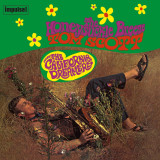
Repress! Before he developed into a star composer and arranger, Tom Scott was an ambitious 19 year-old saxophonist looking for his big break in 1967. The opportunity came when legendary jazz label Impulse paired Scott with 9-piece vocal group The California Dreamers and allowed the young musician to take the helm as a band leader, with The Honeysuckle Breeze as the spectacular result. This rare and long out-of-print album features Scott leading a stellar lineup of sessions players—Bill Plummer (sitar), Glen Campbell (guitar) and Carol Kaye (bass) among them—through warm, smooth versions of songs by The Beatles (“She’s Leaving Home”), Donovan (“Mellow Yellow”), Joan Baez (“North”) and Jefferson Airplane (“Today”), which many will recognize from it’s sampling in the Pete Rock & CL Smooth classic “T.R.O.Y.” Resurrected, refurbished and remastered by the talented folks at Get On Down, Scott’s debut record sparkles with a high quality digital audio transfer from the original master tapes and is packaged in a gatefold paste-on case with a dust sleeve and obi strip. Don’t let this “Breeze” pass you by.
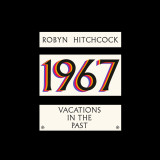
Robyn Hitchcock is a rock’n’roll surrealist. Born in London on March 3rd, 1953 he describes his songs as “pictures you can listen to”. As much a child of Dali, De Chirico, and JG Ballard as of his 1960s musical heroes, he is a master of the absurd, reveling in the beauty of the unexpected. His first publicly visible band The Soft Boys (1976 - 81) has remained an influential art-rock touchstone for generations of musicians. “I just want to be an obscure cult fringe,” he told the NME in 1978; the NME didn’t believe him, but he’s been true to his ambition. Without ever breaking the surface of pop culture Hitchcock has floated at a tangent to the mainstream for nearly 5 decades. His songs have been performed by REM, The Replacements, Neko Case, Gillian Welch & David Rawlings, Lou Barlow, Grant Lee Phillips, Sparklehorse, and Suzanne Vega with the Grateful Dead among others. A confirmed outsider, he nonetheless has devoted listeners around the world who attend his concerts, and also tune into the online streaming shows Robyn seasonally does with his wife, the singer Emma Swift. In 1996 he was the subject of Jonathan Demme’s in-concert film, ‘Storefront Hitchcock’. Robyn Hitchcock came of age in the 1960s when he attended Winchester College, an eccentric hothouse boarding school in the south of England. This is the subject of “1967”, which is both a memoir and an album, due for release in June this year. The memoir is a book “1967: How I Got There And Why I Never Left”, describing how the music of Bob Dylan, The Beatles, Jimi Hendrix and others drastically transformed the direction of his life when he left home for this strange new world. The companion record album “1967: Vacations In The Past” is a selection of the (mostly) hit songs of that year, re-recorded acoustically by Robyn with the help of some friends in Cambridge, San Francisco, and Sydney. He is currently preparing new material to release in 2025. “I like to keep busy”, he says: “We have all eternity to not exist”.
‘Mount Elephant’ is organic psychedelia at its finest. Italian multi-instrumentalist Alessio
Ferarri’s third Upupuyāma record and first on Fuzz Club finds inspiration in traditional
Bhutanese music, Thai disco and Anatolian psych, by way of the lysergic acid-folk, ‘70s
kosmische and stoner-rock that has always coursed through the project – dream-like
instrumentals always threatening to breakdown into blasts of fuzzed-out riffing.
Electric Lady Studios: A Jimi Hendrix Vision is the latest in-depth project from Experience Hendrix, encompassing 5 LP / 1 Blu-Ray of previously unreleased music Jimi Hendrix recorded at his newly created recording facility in 1970. The deluxe box set offers 39 tracks (38 previously unreleased) that were recorded by the new-look Experience (Billy Cox on bass, Mitch Mitchell on drums) at Electric Lady Studios between June and August of 1970, just before the legendary musician’s untimely death the following month.
The project also includes 20 newly created 5.1 surround sound mixes of the entire First Rays Of The New Rising Sun album plus three bonus tracks “Valleys Of Neptune,” “Pali Gap,” and “Lover Man”. The Blu-ray includes the critically acclaimed, full-length documentary Electric Lady Studios: A Jimi Hendrix Vision. The film chronicles the creation of the studio, rising from the rubble of a bankrupt Manhattan nightclub to state-of-the-art recording facility inspired by Hendrix’s desire for a permanent studio. Directed by John McDermott and Produced by Janie Hendrix, George Scott and McDermott, the film features exclusive interviews with Steve Winwood who joined Hendrix on the first night of recording at the new studio, Experience bassist Billy Cox, and original Electric Lady staff members who helped Hendrix realize his dream. The documentary includes never-before-seen footage and photos as well as track breakdowns of Hendrix classics such as “Freedom,” “Angel” and “Dolly Dagger” by recording engineer Eddie Kramer. The 5LP’s were pressed on audiophile grade vinyl by Quality Record Pressings and the box set includes an extensive booklet filled with unpublished photos, Hendrix’s handwritten song drafts, and comprehensive liner notes.
The Heads’ Simon Price returns to his kandodo project with 'theendisinpsych'; "primitive pieces of psychedelic tuneage+years of wasted time=43 minutes of headphone bliss." It's the follow up to the 2019 collaboration with Wayne Maskell and Hugo Morgan, Kandodo 3 – K3, but this time back in solo-mode. He is now relocated in Northumbria, and has recorded the album himself in his home studio, drawing on his wide collection of music/instruments and the rural environment for inspiration. The new album fizzes and crackles with a verve that will activate the “turn on, tune in, drop out” sense in all listeners… Simon explained the album in a focused/out of focus track by track way… is this Price’s paean to his obsession with Bowie? chamba7 - octave mandolin through fuzz, tambo beat, in praise of Bowie compilations. chamba is malawian weed theendisinpsych - bought a reel to reel tape off ebay in 2005, ('Bowie radio interview tape, USA, 1970, 3 minutes?') then bought a machine to play it on in 2015. Heard the words and laid them onto a fuzzy break bed. Thought it all too relevant to today, prophetic David from his 'hippy' days (not a prophet or a stone age man) fuzzy oceans - played on 1 string spamjo, bouncing echo over 70's drum machine, 'we've fucked the oceans' freefalling - rolling cello and hissing cymbals with vocoder dreams comes with african/stationtostation artwork stylings for the sleeve..pre-apocalypse blues (and pinks), the world isn't going a good way a sumptuous 4 course sonic supper, tuck in.
The debut album from Paris Paloma, 'Cacophony' follows (and includes) her breakthrough single 'labour'. Written around themes of feminine rage, societal expectations on women and deeply embedded misogyny, the album continues the deep consideration and dissection of Paris' own experiences and observations as a woman. 'labour', and subsequent singles including 'as good a reason', have seen her lyrics and music resonate deeply with an every growing fanbase. The 700+ fans at her sold out London show were termed a 'politely loving coven', capturing the sense of community and female energy which Paris inspires. Unheard tracks such as 'his land' are emotive and cinematic, while the gloriously climactic 'the last woman on earth' has become a fan favourite already via TikTok.
- A1: Tonpei Hidari - Tonpei No Hey You Blues
- A2: Chu Kosaka & Ultra - Kimagure Party
- A3: Kazushi Inamura - Go Yojin
- A4: Fumio Karashima - American Tango
- B1: Takao Uematsu - Mysterious Jump
- B2: Maximum - Ashita Tenki Ni Nare
- B3: Jun Miyauchi - Heartbreak Highway
- B4: Hiroshi Murakami & Dancing Sphinx - Baby, It`s Trivial
- For this brand new chapter in the highly acclaimed Wamono series, DJ Chintam goes digging into the vaults of one of the most revered Japanese labels, Trio Records, and unearths some killer drum breaks, dope bass lines and funky horns, for an essential selection of jazz funk fusion and rare groove vibes produced on Trio between 1973 and 1981!
- 180g heavy vinyl pressing, reverse board jacket.
- Fully licensed Trio Records masters.
- Mastering and lacquer cut by Jukka Sarapää at Timmion Cutting Lab, Helsinki, Finland.
- Signature artwork by Yoxxx.
---
After many years working as a buyer for several record stores, DJ Chintam opened his own Blow Up shop in 2018 in Tokyo's Shibuya district. A member of the Dayjam Crew and a specialist of soul, funk, rare groove and disco music, Chintam is also an expert of the home-brewed Wamono grooves. He supervised and wrote the legendary Wamono A to Z records guide book together with DJ Yoshizawa Dynamite.
For this brand new chapter in the highly acclaimed Wamono series, our man Chintam goes digging into the vaults of one of the most revered Japanese labels: Trio Records. Established in 1969 by audio manufacturer Trio Electronics, now known as Kenwood, the label - and its subsidiaries such as Showboat and Trash - released high quality music spanning a large variety of genres including rock, jazz, fusion, soundtracks and popular songs, until its end in 1984. Through the eight tracks selected here, Chintam unearths some dope drum breaks, heavy bass lines and funky horns, for an essential selection of jazz funk fusion and rare groove vibes produced on Trio between 1973 and 1981.
Put the needle on the record, turn up the volume and dig right now into the Wamono sound - the cream of the Japanese jazz, funk, soul, rare groove and boogie music developed throughout the years since the sixties in Japan!
---
180GWALP05 - Manufactured and distributed by 180g.
Suburban Base legend Mark XTC is back! Starting out at The Hacienda, and working in the mighty Eastern Bloc record store at the height of the rave scene, DJ XTC was on every major Rave flyer nationwide throughout the period. Going on to form Da Intalex with partner Marcus Intalex, releasing incredibly influential Drum & Bass during the earliest stages of its evolution. Mark XTC is currently a resident on Kool FM continuing to bring cutting edge music to a worldwide audience.
Collectors that have his Subbase releases Intalex Productions presents The X, and Ill Figure can now grab the next instalment! A four track EP of banging tunes celebrating the golden eras of Rave and Drum & Bass!
Genuine uncovered unreleased DATs from the period, Mark breaks down some info on these hidden gems!
'Unite' - Mark made this in the mid/ late 90s after working with vocalist Charmaine. Big distorted bass, 'Amen' drums and his trusty EMU sampler.
'To The Beginning' - Another late 90s creation, adding some P-Funk to the Amen drums with a Sub Bass filling the tune with heavy vibes.
'Oldskool Massive' - A more recently made dedication to the classic Belgium techno of early rave, with heavy 4/4, acid riffs and of course those distorted stabs and hoovers.
'Taking It Back' - Mark made this in 1998, and even then was taking you back to that classic 94 Jungle sound and loops.
>
Brooklyn underground rap heroes Tanya Morgan drop a two-track heatrock of a 7-inch that lights up dancefloors while maintaining their true-school status with clever wordplay and progressive beats.
Since breaking on to the blog-era rap scene in 2006 with their debut LPMoonlightingand solidifying their status in 2009 with the now-legendaryBrooklynati, Tanya Morgan has represented the best of underground hip-hop. Your favorite rapper's favorite group, they combine trademark witty wordplay with tough, headnodding beats that demand rewinds and repeat listens. Bouncing back in recent years withRubber Souland other one-off cuts, the duo of Donwill and Von Pea has teamed with producer 6th Sense and quietly set about building the next chapter of their rock-solid legacy.
"Move It Or Lose It" is the latest manifestation of Tanya Morgan, a cut that is neither throwback nor trend chasing, but does double duty on the dancefloor as well as a headphone banger. Irresistibly funky, with Mathien's guitar and vocal the icing on top, and riding at a perfect tempo to get dancers bubbling, it got immediate attention from DJs when the group teased the digital version online.
The double A-side single continues on the flip with "Don't Look Up," another grown-man rap (as Von Pea asks, "How you want the old me acting brand new?") set to 6th Sense's progressive uptempo beat that recalls Q-Tip's adventurous recent productions, and featuring Mia Jae on vocals driving the chorus. Donwill's commentary on getting older and wiser in the music industry hits home to any of us who've been around the block: "Slow growth while the roots spread / Somebody said rap group's dead / They prolly wrote it as a sponsored ad."
Both cuts are primed to move feet and represent the continued lineage of quality underground hip-hop, proudly coming straight from the heart of Brooklyn as a collab with BK-based indy vinyl masters Names You Can Trust.
Slush Records are back for their second outing, remastering and rereleasing Sedona’s highly sought-after 1995 track, ‘Pulsation’. A portal to the underground of the ‘90s, Sedona’s original mixes and the remix from Robert Vaughan, fuse progressive house, trance and breakbeat, each oscillating to their own unique frequency. Not stopping there, Slush Records enlist the expertise of Seoul-born, Amsterdam-based Naone for a mesmerising new remix that harnesses all of that early ‘90s energy, with a fresh dynamism.
The story of Sedona begins with Dale Charles and Benny Blanco. As a touring DJ and buyer at Boston Beat Records in the mid ‘90s, Dale Charles was in diggers paradise. Freestyle was big business at the time and as a progressive house and breaks DJ, Dale couldn’t help but notice how good the drum programming was on some of the tracks. He spent endless hours trawling through the shops near 10,000 freestyle records, hoping to find that elusive secret weapon.
One day Dale found the break he was searching for and took it to Benny’s studio. Benny was an aspiring DJ and, more crucially, a producer with a conveniently concreted basement apartment he was slowly filling with synths, samplers and drum machines. Sampling and chopping up this gem of a break, utilising two TB-303’s that Benny recorded live for the acid lines and creating that signature throbbing arp on a Roland JD-800, the basis of ‘Pulsation’ was born.
The duo created a series of different mixes to tweak the feeling of the track. The ‘Ascending Mix’ and ‘Sinister Mix’ bookend this reissue. The former, a club-focussed cut with subtle to squelching 303 lines, rumbling sub bass frequencies and pulsating arps that anchor the track, as the sacred drum break fires your brain into trance-infused euphoria. The latter, an ominous slice of teleportational ambient electronica, sucking you into a wormhole of galactic synthesis and dream-state harps.
The first of the remixes sees Slush draft in the progressive wizardry of Naone to provide a fresh new take on the track. Leaning into the otherworldly ‘90s atmosphere of the original, Naone radiates the pulsating theme through swelling synth stabs and a driving acid bassline. Switching up the feel with an electro-tinged drum beat, she distorts the acid dials till the track explodes into a dystopian realm of twisted techno.
The second is Robert Vaughan’s ‘Test Tube’ mix from the original 12 Inch. A no-nonsense prog headspinner, that garnered plays from the likes of Sasha and Digweed. An acclaimed DJ and producer across the ‘90s, with releases on the likes of Space Records and Metropolis, Vaughan injected the track with added breakbeat energy and swirling, tripped-out breakdowns to masterful effect.
A timeless dancefloor classic, expertly remastered and reissued with a remix that both honours and updates the original.
- A1: Hosanna (Meridian)
- A2: First Born (Redeemed)
- A3: When Angels Speak Of Love
- A4: Doubleupptown (Larocque)
- A5: W-I-S (Above Every Other)
- A6: Pistol Poem (Leadbelly)
- A7: Whip Appeal (Pipn8Ez)
- A8: Seven Trumpets
- A9: Giz'aard ($Uckets)
- A10: Helpmeet (Iyadunni)
- B1: Flir2A
- B2: U&Me (Decemberseventeen)
- B3: Illbethere, 4Everandever
- B4: Alàáfía (Cita's World)
Original Cover[27,52 €]
Honour's debut album is a ligament stretching from Lagos to London and to New York, curling across the diaspora and brushing the darker hues of blues, hip-hop, free jazz, ambient, gospel with Christian mythology and Yoruba folklore. As cinematic as it is painterly, Alàáfíà is a meditation on themes of life, death and love that pulls inspiration from the unexpected poetic profundity of casual conversations, field recordings, literature, ephemera, or personal archives. The result is an impressionistic vision in Black and Blur that both exhausts and implicates language_substantiating a mythos proposed by Fred Moten that sublimates boundaries between everywhere and nowhere; history and the present; the individual and the universal. Alàáfíà delineates a gothic landscape cut by overdriven beats, swooping orchestral blasts, choral bursts and ear- splitting fuzz, where the fleshly and spiritual realms commune. Dedicated to Honour's late grandmother, the title track began to take form after their last embrace and remains steeped in her influence and spirit_a tape-saturated composition that starts in Lagos and ends in London's smoke-stained cityscape, the song's dream-like quality developed out of the artist's grief and PTSD coping with this loss. Beneath the stretched guitar drones and stuttering loops, their grandmother's shared faith bubbles to the surface. "When Angels Speak of Love," borrows its title from two works by Sun Ra and bell hooks, respectively. Sculpting echoes of praise music into disorienting spirals perforated with syrupy DJ Screw-inspired breaks and sharp splinters of melancholic guitar, "When Angels Speak of Love" engages a conceptual dialogue with the spirits of both late thinkers, folding them into Honour's pantheon of ancestral guides. The album's ninth track, "Giz Aard ($uckets)," is a dirge of regimented drums which anchor this somber melody as it whirls into a blizzard of heartache, uncertain if its consequence will be death or eternal joy. The album's sole lyrical offering, "Pistol Poem (Lead Belly)," begins with a darkly humorous bar, "He went thru hell and back/ came back/ 2 get the strap," that swells into a haunting allegory based on the life of Philip "Hot Sauce" Champion. A modern take on the Blues, Honour's lyrics reify the artist's status as a student of both literature and popular culture, crossbreeding the artist's clever wordplay with additional references to Richard Pryor, Robert Johnson, Kelly Rowland & Bryon Gysin. Setting core principles of hip-hop, R&B, jazz and gospel music to atemporal soundscapes and compositions, Honour crafts a record that marinates in its own knotty contradictions. The ghosts that sit on the artist's shoulders have never been more tangible than with this emotive debut.
ZeroZero return to Flexout after their smash hit single with MC GQ last year. ‘Too Much Acid’ is the duo’s debut EP on Flexout and features man of the moment Teej on remix duties for their cult classic that has since been championed by Laurent Garnier and features on a very special forthcoming VA in conjunction with Fabric. The 2 original solo tracks on the EP come in the form of ‘Confidence’ and ‘Too Much Acid’ both tracks have been supported by the biggest names in Drum & Bass including Break, QZB, Simula and Alix Perez. Last but not least the lads have enlisted Drum & Bass royalty in the form of London vocalist Riya on the unique, groovy roller that is ‘Thinking Over It’ a track that beautifully blurs the boundaries between light and dark.
- A1: Blunt Later For It (Stephen Brown Remix)
- B1: Vincent Desmont Thrust It (Markus Suckut Remix)
- B2: The Cruiser The Venue (Sawlin Remix)
- C1: B+A+D Moon, Sea And Waves (Alek S Remix)
- C2: B+A+D Moon, Sea And Waves (Alek S D-Town Edit)
- D1: Blunt 1Non1 (Joe Metzenmacher Remix)
- D2: Vincent Desmont Archensweet (Ashcaa Remix)
- E1: Ashppe Flexit (Drexl Remix)
- E2: Ashppe Fudge It (Simon Ferdinand Remix)
- F1: Ashppe Let's Do It (Alpha Gpc Remix Dub Mix)
- F2: Ashppe Let's Do It (Redrop Remix)
VDR Remixes: Beyond Music
The concept for this remix album evolved gradually through various encounters and exchanges. Despite its complexity, the project would not have come to fruition without the firm dedication of each artist involved.
Artists were given the freedom to select any track from my discography for their remix. With no directives, the LP's magic emerged from their unique styles and creative visions, resulting in a diverse palette of tones and rhythms.
The first record opens with Stephen Brown's electrifying remix of Blunt's "Later For It," originally released on Bright Sounds. Stephen's reinterpretation infuses the track with dark, captivating techno.
On the B-side, Markus Suckut presents his masterful adaptation of "Thrust It," a track marking my first release. Following this, Sawlin transforms "The Venue" from The Cruiser series, infusing it with his signature 'Made by Sawlin' style.
The second record continues with two compelling versions of "Moon, Sea and Waves" by Alek S. These reinterpretations—one dub techno and the other Detroit-oriented—offer a unique and immersive vision of the B+A+D tracks, originally released on Newmont.
On the flip side, Joe Metzenmacher delivers a daring electro remix of "1NON1" on D1, followed by Sicaa's bass music rendition of "Archensweet" on D2.
The third record is entirely dedicated to remixes of the Ashppe series, which I hold dear. Drexl provides a powerful breakbeat cut of "Flexit," a true bomb. Simon Ferdinand from Polycarp Records, with whom I had the pleasure of working, captures the punch and melancholy of "Fudge It". The LP concludes with two Dub 3.0 adaptations of "Let's do it" by Anthony Cacharron, using the aliases Alpha GPC and Redrop, ending on an exploratory high note.
A heartfelt thank you to all the remixers for their boundless creativity and commitment to this project
- Hole In One 04:34
- Call Your Mom 03:59
- Girly Face 04:16
- From The Streets 04:27
- Fo Sho 04:10
- Aces 04:41
- Careless Whisper 05:34
- Right Place, Right Time 04:33
- I Don't Know 05:12
Delvon Lamarr Organ Trio—or as it is sometimes referred to, DLO3—specialize in the lost art of “feel good music.” The ingredients of this intoxicating cocktail include a big helping of the 1960s organ jazz stylings of Jimmy Smith and Baby Face Willette; a pinch of the snappy soul strut of Booker T. The M.G.’s and The Meters; and sprinkles Motown, Stax Records, blues, and cosmic Jimi Hendrix-style guitar. It’s a soul-jazz concoction that goes straight to your heart and head makes your body break out in a sweat.
The band features organist Delvon Lamarr, a self-taught virtuosic musician, with perfect pitch who taught himself jazz and has effortlessly been able to play a multitude of instruments. On guitar is the dynamo Jimmy James who eases through Steve Cropper-style chanking guitar, volcanic acid-rock freak-out lead playing, and slinky Grant Green style jazz. From Reno, Nevada is drummer Dan Weiss (also of the powerhouse soul and funk collective The Sextones). Dan’s smoldering pocket-groove drumming locks in the trio’s explosive chemistry.
Founded by Lamarr’s wife and manager Amy Novo, the trio started from humble beginnings in 2015, but since then has released two Billboard charting albums and toured the world to sold out venues. The trio returns now with their second studio album, I Told You So, with even heavier grooves and more confidence. It may have been several years since their most recent studio effort, but they haven’t missed a beat.