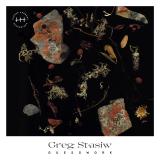
Experimental musician Greg Stasiw presents his debut album of radiant, free-flowing electronics ‘Guesswork’. Music for psychoactive exploration made over a four year period, incorporating ambient, minimalism, intricate sound design & Japanese environmental music. An exceptional listening experience of wonder, tranquility, melancholy & discovery, contemplating the relationship between sound & space.
Greg Stasiw is an experimental musician, visual artist and writer from New England, Northeastern USA. An itinerant polymath, Stasiw has spent time living, working and traveling in New York, Tokyo, Toronto, Paris, Boston, and Bratislava. As well as studying anthropology, animation and illustration, Stasiw has always had a close connection with music.
His earliest musical involvements started with ambient music on Sunday drives, microcassettes, the Windows 98 Sound Recorder and free play with Casio keyboards. Then came a formative procession of piano lessons, orchestras, choirs, taiko, metal, indie rock, tinnitus, and ultimately; the acquisition of music production software.
With his debut album ‘Guesswork’, the aural and visual inspirations that underpin Stasiw's creative life intersect, in a pure, radiant soundworld of space, depth and immaculate clarity. Futuristic, pellucid soundscapes incorporating ambient, minimalism, intricate sound design, and Japanese environmental music are deftly arranged with evanescent chimes, serene tone float, suspended organ notes and curious sci-fi resonances.
Like stepping into some space age meditation garden, if soundtracked by the likes of Hiroshi Yoshimura, Harold Budd, Norman McLaren, and Pauline Anna Strom, the thirteen tracks of ‘Guesswork’ create an exceptional listening experience of wide-eyed wonder, sleek tranquility, gentle melancholy, and singular discovery.
Search:dr res
- 01: Full Blood Count Analyzer
- 02: Automated Instrument Rinse System
- 03: Mri Scanner
- 04: Anaesthetic Machine
- 05: Meti Human Patient Simulator - Mannequin Breathing
- 06: Simman Essential Mannequin
- 07: Cardiac Monitor
- 08: Lee Silverman Voice Treatment
- 09: Haemoglobin A1C Analyzer
- 10: Anaesthetic Machine 2
- 11: Infusion Pump (Alaris Plus)
- 12: Heater Fan
- 13: Phacoemulsifier – Suction And Ultrasound During Cataract Surgery (Two Perspectives)
- 14: Robotic Pharmacy - Manually Restocking Supplies
- 15: Ct Scanner
- 16: Pharmacy Label Printer
- 17: Dialysis Machine
- 18: Draeger Oxylog 3000 Plus
- 19: Meti Human Patient Simulator – Powering Up Of Bellows That Control Mannequin&Apos;S Artificial Lungs
- 20: Orthopantomograph Op 00
- 21: Helium Cooler For Mri Scanner
- 22: Coagulation Analyzer
- 23: Meti Hps Mannequin
- 24: Ophthalmology
- 27: Ultrasound Scanner
- 28: Operating Theatre
- 29: Beckman Coulter Access 2 Analyzer
- 30: Geiger Counter (Berthold Lb124)
- 31: Automated Mailroom (Opex Mail Matrix)
- 32: Wall Mounted Suction Unit
- 33: Dialysis Machine 2
- 25: Sysmex Sp1000I Automated Slide-Maker
- 26: Agv (Automatic Guided Vehicle)
Vinyl[22,48 €]
Death Is Not The End reissue Mark Vernon's sought-after 2013 collection Sounds of a Modern Hospital on vinyl & cassette formats.
Whilst every effort has been made to record the subject in as great a degree of isolation as possible, the sound recordings you will hear on this record were made in a real working hospital and not under controlled conditions. Therefore, on occasion, you may hear some unavoidable background noise, conversations and other extraneous sounds.
All recordings were made by Mark Vernon at Forth Valley Royal Hospital, Larbert, Stirling Community Hospital and Falkirk Community Hospital between 2011 and 2013.
- A1: Rust Compassionate
- A2: Ceremonial Coffee
- A3: Neon Percolators
- B1: Demon Traces / Armchair Revolution / Angel Trail (Slight Return)
Recorded during lockdown and previously only available as a CDr self-released in an edition of 99 in 2022, 'The Sympathy Portal' collects four tracks (one of which is divided into three parts) that make full use of Edward Ka-Spel’s command of melodies, cosmic churn, subtle field recordings, percolated vocals, hypno-rhythms, tempered noise, broken clocks, atmospheric keyboards, uncoiling springs and carefully hewn dynamics. Coupled to often despairing or melancholic lyrics, the album ultimately forms a fantastic addition to a body of work from this hardworking artist usually found at home fronting The Legendary Pink Dots and apparently barely able to rest when not engaged in commitments to them. Here is what he says himself about 'The Sympathy Portal': “'The Sympathy Portal' was created as 2020 drifted into 2021 with the world in the grip of a pandemic. He studied charts on TV, horrified by statistics, temporarily free from a lockdown but well aware that we'd be back in our cubicles soon enough. It was hard to be positive in such an environment and this album reflects much of the fear and tension of the time. But the last song, 'Angel Trail ( Slight Return)', was intended to offer some genuine hope, having been revived for the release after first appearing in a different form on The Legendary Pink Dots' '9 Lives to Wonder' back in 1994.” The album pays testament to a troubled and troubling time that now, a mere few years on, strangely appears like the grand entrance to a series of heavily dark periods we are still desperate to crawl from. It could be argued that the angel trail Edward so eloquently refers to is something that needs to be found more than ever and that, thankfully, his music helps to illuminate this despites its mostly distressed overtones.
Away from the confines of a now hard-to-find and long sold out CDr, Lumberton Trading Company brings this album back as a vinyl release that’s limited to 300 and is scheduled to appear in February 2026.
Mia Zapata was the greatest rock singer of her time. She may have likely been the greatest blues singer in punk rock history, the woman who married the 78 and the '78. Tragedy did not make this true. Mia Zapata made this true, and the ferocious, spring-loaded shrapnel frame that was built around her by Andy Kessler (guitar: metronomic and furious), Matt Dresdner (bass: fluid, punching, beat-addicted and melodic), and Steve Moriarty (drums: martial and explosive) - who, with Mia, combined to form The Gits - made it true. The Gits were formed at Antioch College in Yellow Springs, Ohio in mid-1986, grabbing and swapping pieces of art, thrash, noise, punk rock, classic rock, and all the sorts of magical silly and bookish jingle bells that an old-school liberal arts education handed you; for the next few years they worked on turning it all into something tough, sensitive, both brutal and kind. Andy, Matt, Mia, and Steve moved to Seattle in middish 1989, landing in a house on Capitol Hill where they (and fellow travelers) wood-shedded and rehearsed for the next few years. The Gits put out three EPs in 1990 and '91 before signing with C/Z Records and releasing their first full-length album, Frenching the Bully. Seattle quickly claimed the quartet as their own and embraced the Gits blend of ferocious fangs and soft heart, the slug/slap of the guitars, and the gorgeous, soft underbelly of the poetic emotions. These qualities not only fit in with the doe-eyed/sharp-clawed grunge ethos but earned the Gits the respect of their peers, including Nirvana, who tapped them to open a major local show in 1990. Then other stuff happened, and their frantic, confessional barbed-heart snowball began rolling up hill very, very fast; the Gits "quickly" (hah! After half a decade learning to implode and explode hearts and stomping their boots on manifold beer-softened, Marlboro-weeded wood stages!) inspired rapture, awe, and the levitation that happened when peak emotion meets peak grindage in front of amps spitting out something that sounded like the mad marriage of Bolan swagger and Dischord tension_ all fronted by a genuinely incomparable woman who held her heart in her mouth and shared it, in all its celebration and fear, without hesitation. The Gits were an angry, inflamed slinky fully in tune with and tuned by the Bessie Patti Smith of her time, truly the only singer who could summon Joplin, Poly Styrene, Sam Cooke, Iggy Pop and Ian MacKaye all in the same goddamn song. In 1993, less than four weeks after accepting an offer from Atlantic Records, Mia died. I leave it at that, because this is not about death; it's about an extraordinary life. I do not say, "You should have been there," I say, "We are lucky so many of us were, and I am so glad we have this extraordinary evidence of the power and gifts of Mia and the Gits that you now can hold in your hands." And I note that Frenching the Bully, this extraordinary testament to the soul, shock, fury and feeling of the Gits, has been long out of print on vinyl and CD, and this new edition - remastered by legendary Seattle engineer Jack Endino - joyfully rectifies that. -Tim Sommer
- 1: Intro
- 2: I Wanna Be With You (Feat. Marina B)
- 3: Sungalz (Feat. Marina B)
- 4: Rest Easy
- 5: Easy, Easy
- 6: Wake Up (Feat. Marina B)
- 7: When Will I See U (Feat. Kim Foxen)
- 8: It's Not Over (Feat. Shoshy)
- 9: Ah Ha
- 10: The Deep
Brooklyn duo The Still Brothers is a musical project of childhood friends Evan Heinze (The Shacks/Big Crown) and Andrew LeCoche (Ula Ruth). Heinze has toured with the likes of Khraungbin, Lee Fields and Cut Chemist, while LeCoche’s old band once opened for Paul Simon and Edie Brickell. A former student of Madlib’s uncle Jon Faddis, LeCoche has scored music for Netflix and Patagonia and sound design for Twitter, Patron, and Marvel. Signing to Lewis Recordings in 2020 the band’s first single ‘The Deep’ was instantly picked up by Steve Lamacq on BBC 6 Music who regularly plays it to this day. ‘Wake Up’ featuring the vocals of Marina B. spent six weeks on the BBC 6 Music playlist gaining support from Lauren Laverne, Gilles Peterson, Mary Anne Hobbs, Craig Charles, Huey Morgan, Cerys Matthews, Don Letts, Tom Ravenscroft and Guy Garvey. Lockdown didn’t slow down the band’s creativity with many tracks on their self-titled debut EP recorded remotely. Two such tracks were the collaborations with London based singer/songwriter Shauna Kelly aka Shoshy. ‘It’s Not Over’ and ‘Crazy’ were released on 7” and both received BBC radio support. Marina B stepped back on the mic with the upbeat hit ‘I Wanna Be With You’, a dancefloor filler mixed by St. Frances Hotel (producer for Michael Kiwanuka). The b-side ‘Sungalz’ is a hazy dream pop number that started life as an instrumental jam
- Walpurgisnacht 1996
- Shadow Sun
- Cemetery Youth
- A Dismal Romance
- She Haunts The Night
- Thicker Than Darkness Itself
- In Despair We Trust
- Death, That Elusive Mistress
- Hollow
- Full Moon Therianthropy
- Reburial
Conceived as a return to the music that shaped his formative years, the project draws its energy from late-night introspection, creative renewal, and a distinctly crepuscular sensibility. Initially conceived as a solo project, LOCUS NOIR is set to evolve into a fully-fledged band . Musically, LOCUS NOIR blends Type O Negative gloom, The Fields of the Nephilim mysticism, and Paradise Lost melancholy, all infused with a post- punk edge.
The result is a sound that feels both contemporary and timeless -- a modern interpretation of what Gothic Metal can be. On debut album 'Shadow Sun' , band main songwriter and vocalist Ben steps fully into a melodic, haunting vocal register, merging the theatrical delivery of Peter Murphy with subtle echoes of the late Peter Steele. The lyrics move between the esoteric and the intimate: love and death, desire and decay, nocturnal excess and the bitter aftertaste of parties stretching well past dawn.
- A1: Lazy Love
- A2: The Best
- A3: Like The Sun
- A4: Bitter Medicine
- A5: Hunned Bandz
- B1: Natural
- B2: The Blue Sky
- B3: Sundays
- B4: Perfect
- B5: This Time
Sundays is the debut full length from Oakland-based Tanukichan, aka multi-instrumentalist Hannah van Loon. At surface level, the album sounds just how the title describes: hazy, dreamy, reflective, just like a lazy Sunday afternoon. Upon second and third listens, the dreamy music unveils a deeper world: an ever present sense of longing, an endless state of summer and a period of instability that plagues us all at one point or another in our lives.
Raised in San Francisco, van Loon started out making classical, bluegrass and jazz music as well as playing in numerous bands in the area before deciding to make something more personal. What started with a few unfocused demos, with van Loon playing all the instruments herself in her house, became a studio experience and viable collection of music after her friend Anthony Ferraro of Astronauts, Etc. introduced her to Company Records founder Chaz Bear (Toro Y Moi, Les Sins). After collaborating on her 2016 EP Radiolove, van Loon and Bear set out to make a much more sonically cohesive release, with both the producer and artist playing all the instruments on the record. The result is a slice of dream pop that could only come from the combination of the laid back atmosphere of California and the nostalgic and often difficult memories that are generally associated with coming of age.
To van Loon, the tracks of Sundays are a form of contemplation and approaching life’s issues from a different and less complicated perspective. “Sometimes for me, it feels easier to write songs about things than to talk. A lot of things in life are layered and paradoxical, but with songs it always seems simpler.”
Opening track “Lazy Love” sets the stage, sonically and lyrically, for the rest of the album, combining vulnerable lyrics with gorgeous, fuzzy tones. Above pummeling synths and guitar tones, van Loon sings “you know I'd do anything/don't you know I try my best/if I could wake up when the sun is rising” showing the album’s constant theme of balancing always wanting to be the best person you can be, while also feeling a low level joy at letting life play out as it wants to. “Natural” is a track that feels perfect for a road trip, a track that hums away with a driving beat, culminating in the sheer excitement of finally having a night alone with someone you’ve loved for a while, among many highs and lows: “a window too bright/it's natural sunlight/grey fades to white lie/kiss you tonight/it's natural delight/help me feel right.” The tracks collectively address a deep rooted sense of yearning for someone, something new, while also feeling content with your life; a realization that maybe the places you’ve always belonged aren’t where you should be anymore, that suddenly you might be looking for something completely different.
“I settled on the name Sundays as the title of the record because it encapsulated how the record felt to me,“ van Loon says. “I was thinking about the laziness, and dreamy clarity that you can feel after a late night, waking up having to face the world with a new perspective.” Sundays encapsulates this feeling, a nostalgic way of looking at the world, waking up feeling like a slightly different person than before, looking back on life, not sure if you can tackle what’s next, but doing your best, day in and day out
Impatience is thrilled to present Leaving Memory, the latest album-length work by Piper Spray and Lena Tsibizova. Leaving Memory is a searing distillation of the duo’s ouevre - it’s eleven prismatic electronic seances combining for a mind warping wormhole with it’s own internal (il)llogic, where pop, ambient, and industrial music convene beneath a rugged HD of digital processing and brain fog. Equally rosy with nostalgia as it is ominously forward looking, Leaving Memory defies easy categorization and makes for an astounding, confounding listen.
By turns violently abrasive and disarmingly touching, Piper and Lena deploy sounds that fracture and disintegrate, burn up and explode, synthetic supernovas that give the record an unmistakable, inimitable texture. Song structures often abide by their own blueprint - heading in one direction before making an abrupt dive elsewhere. Bursts of vibrant colour lurk below layers of grayscale noise. Unidentifiable voices deliver secret messages from the murk. When rhythm’s emerge they ground the tracks to some unknown terrain and invigorate.
Lame Line veers towards the sweeter end of their spectrum, a hazy plaintive repetition increasingly lashed with friction, before Exit erupts with clanging rhythm and shards of distortion. Diagnosis is an almost sweet alt-pop song, Lena’s vocals yearning beneath a dubby shuffle, while Keeper Of The Void’s possessed incantations open up to a ripping, fried climax. Beryl Grey releases the pressure gauge, a gently lilting drift arpeggiating as the sun sets, and Lost Cars sweats through claustrophobic drones and bird song before the clouds part on a serene scene. Leaving Memory closes with Shin, offering a genuinely sweet resolution and a gentle landing back down to earth of either footsteps or fireworks, swelling synthesized horns and woodwinds, a kiss on the cheek for making it out the other side.
On Leaving Memory, Piper Spray & Lena Tsibizova share their uniquely discordant take on freaky music for unsettled minds, an intensely energized set that offers a deeply evocative, unimaginable otherworld for adventurous ears.
Piper Spray and Lena Tsibizova have been producing music together since 2020. Leaving Memory is the first to be presented in the LP format. Piper has previously released music via Orange Milk, Hausu Mountain and Gost Zvuk, as well as his own Singapore Sling Tapes label. Lena works predominantly as a photographer, and together Piper and Lena have released music via radio.syg.ma and Kartaskvazhin. Both make music as part of Air Krew, who have released music on the Echotourist and Motion Ward labels. They’re both currently based nowhere.
Leaving Memory was written, produced and mixed by Piper Spray and Lena Tsibizova, and mastered by Sergey Podluzhniy. Cover photo by Lena Tsibizova, design and layout by Justin Sloane.
Hidden away amidst the bustle of Rio de Janeiro’s Catete neighbourhood is a small alleyway behind a cast iron gate. At its end is Bairro Saavedra, the courtyard surrounded by Neo-colonial houses where Brazilian guitar virtuoso Fabiano do Nascimento spent much of his childhood. Built in 1928, this secluded neighbourhood with its wooden shutters, tiled floors and tranquil benches, provides the inspiration for the title of Do Nascimento’s new album VILA, a collaborative project with a sixteen piece orchestra led by trombonist and arranger Vittor Santos.
Recorded between Rio de Janeiro and Los Angeles, VILA is grand, tender, warm, playful and nostalgic. On this stunningly ambitious work, the delicate compositions led by Nascimento's guitar, which sits central in the mix, are surrounded by Santos’ breathtaking orchestral arrangements which swirl in all directions: complimenting, questioning, responding; in constant conversation.
Like the eclecticism of the architecture Do Nascimento grew up surrounded by, his music straddles many worlds at once. He is known as a Brazilian acoustic guitar master and as such has collaborated with Arthur Verocai, Airto Moreira and Itibere Zwarg. But equally at home in Los Angeles's jazz and experimental music scenes, Do Nascimento is also known for his work with artists like Sam Gendel and Carlos Nino.
Vittor Santos is an arranger and Trombonist who has worked extensively with many of the greats of Brazilian music, including João Donato, Marcos Valle, Toninho Horta, and Elza Soares.
=====================================
Credits:
Fabiano do Nascimento – 6, 7 and soprano guitars.
All orchestral arrangements and production by Vitor Santos.
Recorded at Electro-Sound studio, Los Angeles and Estúdio Fibra, Rio de Janeiro
Engineered by Jason Hiller and Garbiel Lucchini
Mastered by Mike Bozzi
Oboe – Francisco Gonçalves
Contrabaixo – Rodrigo Villa
Drums – Márcio Bahia
Violino - Ricardo Amado
Violino – Thiago Teixeira
Violin – Daniel Albuquerque
Violin – Márcio Sanches
Viola – Ivan Zandonade
Viola – Dhyan Toffolo
Cello - Hugo Pilger
Cello – Janaína Salles
Double Bass – Rômulo Gomes
Clarinet – José Batista
French Horn – Philip Doyle
Trombones - Vittor Santos
Violin – Daniel Guedes
French artist Trypheme debuts on Impatience with “Odd Balade”, a darkly-hued collection of songs drawn from human delicacy and dreamworld mythology.
“Odd Balade” is Trypheme’s most ambitious and boldest record to date - both lyrically and musically. The album’s thirteen tracks resist rigid genre boundaries and flutter from medieval folk realms, sprawling synths, gothic 80s wave, leftfield pop, haunted vocals, mutant electronica to reverbed guitars - all reflected through her own shadowy prism. Especially album closer “A Walk In The Vercors” evokes a soothing serenity that echoes the sonic balm of Julee Cruise.
Trypheme’s musical repertoire trends heavily electronic and somewhat abstracted, but on “Odd Balade”, the artist slips into the role of the modern troubadour with a shift to a more poetically and personal songwriting that is infused with symbolism and dreamlike fantasies. The connective tissue of the album is the audacity to love and the vulnerability that ensues. As intimate and introspective as the lyrics are, the themes remain universal and human to the core: the fear of losing a loved one, the melancholia of leaving places and t“the fear of losing a loved one, the melancholia of leaving places and the cycles of life. The record was largely composed in Chars, stirred by the French village’s eerie atmosphere and frequent trips to the seaside in Brittany, where Trypheme resides. Drawing inspiration from the rugged terrain of the seaside landscapes, the writings of Allen Ginsberg and Mark Fisher and the hyperrealist art of Scott Prior, Trypheme uses her songs to depict life with broad strokes of rhythm.
On “Odd Balade” Trypheme consolidates herself as a gifted, nimble songwriter, masterly producer and subtly powerful vocalist. The record combines her skill for crafting lush, alien sound worlds and efficient, alluring arrangements with stealthily devastating songs. Belin’s voice becomes a key ingredient, appearing on eleven of Odd Balade’s thirteen tracks, by turns heavily manipulated, sampled and replayed as a form of percussion, or basically bare.
“Odd Balade” is the manifestation of Trypheme’s roving artistic practice, a ceremonial-grade sacrament cast in a rich nocturnal glow. Pairing the mundane with the mythic, the album stays true to its core: odd and strangely familiar.
RIYL - Riding off into the sunset to an unknown destination, hauntology, present, tales told by the fireside, hot summer rain, adventures, to feel a warm presence when you are walking in the forest or in the mountain, coastal landscapes, sailor’s stories, slow motion, vitesse, heavy blossoms, colors, the warmth of the sun, the tenderness of the moon, getting lost in unfamiliar streets, city’s lights, motorway rest area by night, magic numbers, rendez-vous, picnic, serendipity, poetry, the smell of old records and old books.
Tiphaine Belin has been releasing music as Trypheme since 2016. Odd Balade was written and produced by Belin, and mixed by Belin and Abel Roux. It was mastered by Amir Shoat. Cover art photography is by Ariane Kiks, with art direction by Ariane Kiks in collaboration with Mathilde Chaize.
In an engrossing lattice of polyrhythmic beat science and deep atmospheric meditation, Samurai Music is thrilled to welcome Marco Shuttle to the fold for the Sumud EP.
Since his early years locked into the 00s London techno scene, Marco Sartorelli has developed as an artist entirely on his own terms. Through the rush of new ideas and cross-pollination that has characterised cutting-edge techno over the past 20-odd years, Sartorelli has travelled as Marco Shuttle from one considered stylistic concept to the next. On his own Eerie label and across expansive releases for respected outposts such as Spazio Disponibile, Incensio and Astral Industries, he's taken an exploratory approach to rhythm and spatial design while always drawing on intentional thematic frameworks, creating distinctive and immersive dance music in the process.
As Samurai Music continues to celebrate the rich seams of inspiration where deep techno and drum & bass intersect, Sartorelli's malleable, mysterious strain of drum work fits right in and sets a captivating tone for the label's operations in 2026. 'Sumud' is a steely drum mantra dealing in fractured patterns with the primal patina of the early Artificial Intelligence era, while 'Las Dunas de Taroa' leans on gently pulsing melancholia undulating at a half-time pace. 'Iso 50' taps into raw, analogue minimalism once more, evoking the sound of Roman Flugel's Ro70 records in their icy, alien formation. Completing the set, we're guided towards the tense electronica of 'Polylayering What I've Got', where uneasy melodic chimes interlock with intricately programmed drum machines.
There's a distinct sense of golden-era, mid-90s electronica coursing through Sumud EP, but Sartorelli shrouds the classic tools at his disposal in his subtle signature atmospherics, pushing towards a plain of expression that transcends time.
"deathcrash’s third album, Somersaults, glimmers with an everyday euphoria. The London-based slowcore/ post-rock quartet has always had an affinity for building worlds only to crush them. From their breakout EP, People thought my windows were stars (2021), through two critically acclaimed studio albums, Return (2022) and Less (2023), they have been both the architects and the destroyers, the creationists and the ones manning the flood barrier. But, recorded between Black Box Studio in the Loire Valley and Haggerston’s Holy Mountain, Somersaults is almost joyful.
Its ten tracks are more vocal heavy than any of the band’s catalogue – think Mark Linkous via The Kinks – but lyrically, Somersaults resists revelation. For all its abrasion, phrases appear half-swallowed, broken off at the edge of meaning, consumed by the smaller textures of living. “Thirty, no career, it fucking worries me / And doing the band doesn’t help,” Banks sings in ‘NYC’. But, “This life is the best life,” he finishes in ‘CMC’ on top of the ambient white noise of an office printer, thankful that the band is still there, “still making noise in the doorway.”
Their role as caretakers of Duster, Low and Codeine’s slowcore lineage is all across Somersaults – songs scud to a narcotic crawl, sound monolithic and inwards before spotlighting a crystalline nothing. Cathartic builds are muddied with tenderness, the bass a heavy grounding, the drums an exhausted heartbeat grasping for air. But more so than ever, even the silence feels collaborative – a gesture of communal trust – friends celebrating the room they’ve made for each other’s ghosts, and some of the biggest, brightest songs they’ve made to date."
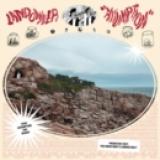
"Western Massachusetts band Landowner play abrasively-clean minimalist punk. Singer Dan Shaw started Landowner in 2016, writing and recording the project's debut Impressive Almanac with a practice amp and a laptop drum machine. Shaw's initial concept was a made-up genre called “weak d-beat”, meant to sound intentionally absurd “as if Antelope were reading the sheet music of Discharge”. When Shaw joined with his current bandmates in 2017, they translated these early experiments in restraint, minimalism, and caricatured hardcore as a live band. This provided Landowner with its own unique set of blueprints: the guitars “slap hard” without using any distortion or effects, the rhythm section is tight, fast, and repetitious, and the song structures make space for lyrics that reflect on the global systems and dark absurdities our lives are tangled in. Comparisons could be made to The Fall, Lungfish, or Uranium Club, but across their five albums, they make it clear: Landowner just sound like Landowner.
Assumption is the band's fifth album. Sonically, it captures the vibrancy and intensity of their live performances. The album title “Assumption” encapsulates the album's multi-layered themes. We make assumptions, taking in information online through an overload of decontextualized snippets and headlines, and then quickly form conclusions, or we allow artificial intelligence to do the thinking for us. Assumption is the sound of a band that established its own musical identity and has reached a place of tightness with an ease gained from years of playing together, sounding mechanically precise and at the same time fully human. It may be the band's most cohesive and fully realized work to date."
Aspen Edities is pleased to present Aerial, the third album of the experimental quartet Oker.
Whereas their album debut Husene våre er museer (2018) and its follow-up Susurrus (2021) focused on collective and individual compositions, Aerial features two longform pieces of fully improvised music, sculpted from the recognizable acoustic sound palette that the quartet has developed across a decade of extensive touring. The titles, Aerial, Equinoctial Tide and Crepuscular Rays refer to meteorological and planetary phenomena, and in Oker’s interplay we hear light, wind, clouds, and tidal cycles transpire as shimmering, roaring, rubbing, coalescing and diverging environments of sound. The sonic stoicism and minimalism in their expression is challenged by frictioning micro-chaoses, combining to create calm, winding paths of musical detail and form. Echoing our planet and its meteorological reality, Aerial yields both consistency and perpetual change.
Bringing together some of the most compelling musicians from the Norwegian improvised music scene, Oker operates as an acoustic experimental quartet devoted to the amalgamation of improvised and composed modes of expression. Their music combines fine-tuned tonalities, deconstructed grooves, acoustic noise and other sonic events, taking their rather conventional instrumentation as a point of departure. Textures in gradual change coexisting with responsive and spontaneous gestures create a varied but coherent musical ecosystem which can be airy or dense, dry or blooming. A certain minimalist or stoic approach to sound production is an overarching and recurring element in all of Oker’s music, differentiating their sound from the majority of music in the field of improvised music or free jazz.
On and on, the beat goes on. Sound System culture plays a huge part in the history of House music, shaping Mysticisms, its founders and the music it brings into the spotlight. Continuing the dive into that history, in all its forms and permutations, Tranquil Elephantizer’s 1995 classic Zombie Dawn is reissued here in its original form.
A name that has been getting noticed on recent releases for the likes of legendary San Francisco collective Wicked Records and Manchester’s cult Red Laser label, the project has, in fact, been around for several decades.
Morphing out of the late 80s Acid House revolution, members Alexis Worrall, brothers Caspar and Darius Kedros and focal point, David Jenkins aka DJ Shakra came together in the South London melting pot of free parties and DIY anything is possible ethos.
Born of a collaboration between the short-lived Camberwell Butterflies project – featuring Alexis Worrall and DJ Shakra amongst others – and the Kedros’ bothers downtempo/trip hop forbears Slowly. With a shared label, on the ground-breaking Chill Out Records, and Thursday late-night encounters at London’s legendary Megatripolis club, they decided to pool studio resources and Tranquil Elephantizer was born.
Mixing lo-fi 808 heavy analog jams of the Butterflies, with the studio sophistication from the Slowly crew, sparked something new and Zombie Dawn was the first result. Local producer Crispin J Glover dropped by the studio, riding high with his Caucasian Boy project’s hypnotic Northern Lights (featuring DJ Shakra on Roland 303) – recently out on Strictly Rhythm – he offered to remix both Zombie Dawn and the Slowly album cut No Slo Dub for release on his own Matrix label and an underground hit on the London and West Coast 90s party scene was born.
Coming in the original “Saxmental Mix”, alongside Glover’s storming “Nu Dawn Club Mix” Zombie Dawn was a correlation of the past, present and future in one record. The history of British House can be heard in the bumpin’ nature of the beats, the sharp hats encompassed around dub overtones that give it added warmth. The slightly quirky, left field touches of the tracks, set against the then weekly overload of sharp US imports, brought the mix of influences from the Tonka and Sugarlump Sound Systems they had partied and been involved with, on to vinyl, adding touches of jazz keys and disco’s heritage for good measure.
A bedfellow for the emerging UK House sound coming on the likes of Luxury Service (Rob Mello / Zaki Dee), Other (A Man Called Adam / DJ D) and Nuphonic (Faze Action / Idjut Boys), that shaped and defined London clubs and far beyond. Some 30 years later, with a new album on the way, here is debut Tranquil Elephantizer’s release, remastered especially for this reissue, ready to bring that optimistic thinking back.
Tranquil the Mystery.
Idriss D returns to Memento Records with his brand new track "Oct. 13", kickstarting the label's 20th anniversary in 2026, a year that will see quite a few special events to celebrate this milestone.
True to his musical roots and upbringing, Idriss heads right into experimental territory here, merging different styles and vibes: echoes of the upbeat mid '00s Minimal Techno craze fuse masterfully with sci-fi sounds and robotic vocals, with glitchy percussions and an infectious funky bassline creating an irresistible groovy rhythm. It's a track that boldly encapsulates the history of the label, from its raw beginnings in Italy's underground clubs to the more sophisticated latest outputs, a nod to its past while looking at the future.
Mr. Marc Houle is onboard here on remix duties: the man responsible for tracks like Bay Of Figs and Techno Vocals graces the release with an outstanding production. Slightly speeding up the pace, Marc adds spacey acid synth melodies and frenetic vocal loops drenched in delay, making this even trippier and more energetic than the original.
Black and House Music fan Munir Nadir rounds off the EP with a personal rendition playing squelchy keyboard arpeggios and hard slapping synth stabs, bringing a musical live-session feel to his contribution.
Following his well-received label debut Sideways, Seliga returns to Trance-Atlantyk with his latest release, Lush. This four-track package features three versatile club cuts alongside a heavyweight remix from fellow mustache-sporting maestro, Pablo Bozzi.
The title track, “Lush,” continues the dreamy-yet-euphoric path blazed on his previous record, expertly blending dubbed-out tech house rhythms with evocative, Orbital-esque soundscapes and sparkling melodic leads. Taking the energy up a gear, Pablo Bozzi delivers a remix that remains respectful to the original’s core while injecting it with his trademark high-octane “bozziness” and playful nods to speed garage.
On the B-side, “Tech House 3000” offers a more direct, straightforward club banger. Reminiscent of the early-2000s tech house sound, the track is seasoned with tripped-out bleeps and classic dub sirens for a psychedelic touch. Finally, the EP rounds out with “That HOR Track,” a piece originally drafted for Seliga’s live set during Trance-atlantyk’s HÖR takeover. It serves as a sophisticated take on classic 90s house, driven by that iconic Korg M1 organ bassline, syncopated percussion, and sweet, luscious synth pads.
"On its Various 2 compilation, Altered Circuits returns with a gripping four-track selection by an equal number of distinct-voiced artists. Perrax En La Calle sees tINI merge sturdy drums, arpeggiated basslines, and ominous synth work. She knows what makes the floor tick blindfolded, and keeps the energy high here, channelling electronic body music and Italo into a contemporary club knockout. Up next is Ionic, a fusion of quirky, pointillist hooks that play call and response, driven by 909 kicks and a sub pattern underneath. Mogwaa spellbinds, and often pulls the rug only to reveal more intricate melodic needlework -- it's done so nimbly and enticingly, there's no way not to get drawn in. On the flip side, rising talent Desiree Falessi joins with the peak time Scandal. Statically-charged basslines mesh with reverb-drenched percussion salvos, and as slinky pads and subtle theme variations emerge, the intensity builds toward a tipping point. Closer Flex features a sharp arpeggiated bassline that funnels through misty, LFO-steered synths, scattered alarm-like melodies, muffled vocals, and gated-reverb snares. When classic high-pass modulation intermezzos are introduced, Monile demonstrates how sparse means, when deployed precisely, can sustain considerable tension."
Promising/Youngster returns to Analogical Force with Navaras EP, a four-track release showcasing the Spanish artist's refined approach to emotive, club-focused electronica. Drawing from idm, electro, braindance and distorted sound design, the EP balances depth and intensity with sonic precision, blurring the lines between styles in a way that has become a defining trait of his sound. Crunchy basslines, weighty low-end and dreamy pads intertwine with analog and digital textures, resulting in a set of timeless tracks full of power and subtle beauty. Navaras EP feels equally at home on late-night systems and in focused listening settings. The promise has matured into presence.
Originally released in 1988 on the compilation Acid Tracks Vol. 3 via Needle Records, "The Other Side" has long been recognised as a potent example of early Chicago acid house. Now, more than three decades later, the track receives its first official 12" release - and, crucially, its first release with the original artists correctly credited. While historically attributed to Maurice Joshua, "The Other Side" was in fact produced by Da Posse (Hula Mahone), with vocals by Martell. This forthcoming release marks the first time that the original production has been properly acknowledged and presented in its intended standalone 12" format, restoring authorship to the artists responsible for the record's creation. The release is issued by Island Life Records, a Bali-based label with a growing reputation for carefully curated projects that bridge foundational dance music history and contemporary club culture. By formally reintroducing "The Other Side" with accurate credits, Island Life Records contributes an important corrective to the historical record of Chicago house and acid house music. Musically, "The Other Side" remains a striking artefact of its era: minimal, hypnotic, and emotionally charged, balancing raw machine-driven groove with an atmospheric vocal presence. It exemplifies the experimental, DJ-led ethos of late-1980s Chicago, where tracks were built for function, feeling, and longevity on the dancefloor rather than commercial visibility. The release is accompanied by a set of new remixes that respectfully extend the track's legacy into the present day. Remix duties come from Island Life Records founder Garry Todd under his Clouds Of Kouros alias, Johnny Aux (one half of Paranoid London), and Age Of Hyperion, with the digital including a remix from Garry Todd, each offering a distinct contemporary interpretation while retaining the spirit and tension of the original recording. This release stands not only as a long-overdue physical edition, but as a historically significant moment: the first time the original production has been released on 12", and the first time the correct creative contributors have been formally recognised.