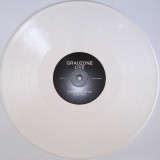
WRWTFWW Records is very happy to release Swiss cult band Grauzone’s recording of their April 12th 1980 live show at Gaskessel in their hometown of Bern. The 9-track album, documenting the very beginnings of the group, is available as a limited edition white vinyl LP in heavy 350gsm sleeve with special artwork by band member Stephan Eicher.
Experience the early Grauzone days, live from Bern, Switzerland, with a concert recorded at legendary local venue Gaskessel, with Martin Eicher on guitar and vocals, Christian G.T. Trüssel on bass, Marco Repetto on drums, Stephan Eicher on synth, and Claudine Chirac on saxophone. The performance is a true time capsule of the early 80s underground, showcasing the punk side of Grauzone with renditions of songs that were never officially released, as well as future fan-favorite “Moskau”. A piece of Swiss music history, This limited release is a must have for all Grauzone fans and DIY archivists.
About Grauzone:
The pioneering band from Bern (Switzerland) had a short-lived but highly-regarded career which birthed a cult discography that still fascinates and resonates today. Consisting of core members Martin Eicher, Stephan Eicher, and Marco Repetto, and on-and-off participants Christian GT Trüssel, Claudine Chirac, and Ingrid Berney, the elusive group broke new grounds in the early 80s, experimenting with punk and industrial music, early techno sounds, minimalism, new wave, pop, and various electronics. With an innovative and polished approach to design, visuals, performance, and all around style and philosophy on top of their superb music, the constantly transforming unit developed a whole experience - the Grauzone experience: wild and unpredictable, yet sophisticated and cohesive, or as Swiss music historian Lurker Grand would call it, "an Art band with a Punk attitude".
Completely rejecting the music industry rules and refusing to play the game of promotion, touring, release schedules, and TV appearances even though they had a multi-platinum international hit with the song "Eisbär", the band quickly disintegrated in full convention-defying glory, leaving behind an inspiring music legacy for the world to discover and discover again, one generation after the other.
Stephan Eicher went on to be, arguably, the most successful Swiss musician ever, with an international career extending from pop chanson to experimental escapades and collaborations with Moondog, artists Sophie Calle and Sylvie Fleury, and author Martin Suter among many other luminaries. Marco Repetto flourished as a techno and ambient producer, releasing multiple projects including releases on Aphex Twin’s Rephlex label.
Search:dr res
Stepping up to the plate for the second release of our catalog, we are pleased to share 'Aura Protocol', a four-track collection that taps into the emotive and melodic depths of 90s influenced progressive house from Mexico based Producer, Mahkina.
The A1 track ‘God, How Do I Handle This’ kicks off the EP with an introspective mood, blending atmospheric pads and hypnotic bass-lines. The deep, melodic structure recalls the emotional core of 90s prog, while evolving into an intricate tapestry of sounds. The second track ‘Flavour & Spice’ plays into Mahkina's latin roots. A fusion of playful percussion, and lush chord progressions, evoking the vibrant energy of classic 90s house, with an added modern twist from the artist's production style.
Flipping over to the B-Side, ’Sacoodelo" takes listeners to a well placed euphoria. Combining driving rhythms with evolving loops and rich synth work, its experimental side takes influence from the rhythmic structures of classic trancey house. The final track ‘Connected’ feels like the emotional and sonic culmination of the EP. Taking the listener on a more expansive journey, weaving through moments of tension and release via atmospheric build-ups, emotional breakdowns, and a sense of resolution toward the end.
RLF002 is a well represented embodiment of Mahkina's ability to fuse classic styles with contemporary sounds, resulting in an immersive, dynamic listening experience that resonates with both the heart and the body.
New Traditions is a collection of pipe music, electronic music, mouth music and folk music from five emerging and prominent Scottish artists.
It started in Sutherland with a recording of The Waters of Kylesku. “Do you learn any Gaelic at the school?” asks Hamish Henderson of Christine Stewart. “No,” she answers. “That’s a shame,” he responds, “Isn’t it?” she says. Then she sings. Her voice is of the peat itself, grown from the earth as the language was. It soars raptor-like above drenched ground and scoured pink rock.
Next, to Nancy Dorian, a linguistic missionary of sorts, who came from America to watch a language die. She charted the decline of Gaelic in a cluster of Sutherland villages from 1963 to 2020 when the terminal native speaker passed. Gaelic has origins in nature, with each letter of the alphabet named after a tree. It seems significant that the land of the north is now all-but devoid of forest.
Enter Alan Lomax, who travelled the world documenting indigenous music. Material from his archives feature on (fucking) Moby’s platinum selling Play. Despite the record’s worldwide commercial success we know very little of the music he essentially exploited.
Then musician Martyn Bennett, who built tracks around Lomax recordings of Scots and Gaelic voices, and did so with love that shared his blood with the cancer that killed him. His records both popularised and preserved obscure indigenous Scottish music.
This collection of tunes has similar intent: to consolidate ephemeral words in physical grooves - real as the rigs that still scar the earth - but also a desire to interpret. These versions have the greatest reverence for the originals at heart, but like the architecture of a great gallery, serve to protect and elevate.
EP 2 Green Vinyl[25,17 €]
12" RED Color Vinyl / With Black Solid Jacket and Large Sticker
The Unofficial Edits & Overdubs by Joaquin Joe Claussell
Finally comes the first of a two-part forthcoming EP's, Extended Versions taken from the highly successful Joe Claussell Afro Edits & Overdubs Series previously released on LP and CD.
Influence of hallucinations induced by chewing roots from the iboga plant on the works of Joaquin Joe Claussell's Edits & Overdubs IBOGA Compilation. The iboga plant is indigenous to the humid, tropical climates of West Central Africa, including Gabon, Cameroon, Congo, and Angola, which are home to the 2nd largest rainforest in the world. It has been used for centuries in spiritual initiation ceremonies and practices, particularly by the Bwiti tradition and religion in Gabon.
Joaquin Joe Claussell was inspired by these influences and went into the studio to create a compilation of edits and overdubs of African vibrational sounds and rhythms. The result is a collection of nine compositions that showcase the future possibilities of this influential work.
Tested for months on dance floors across the globe every on this complication are sure to continue setting dance floors on fire where ever spun.
Extended Versions Cuts Taken Limited Vinyl EP featuring selected cuts from the compilation. Listen loudly and enjoy the experience!
Thank You for Listening
- A1: Pharoah Jones
- A2: Ghost Gospel
- A3: Ill Feeling
- A4: Capital Punishment
- A5: Do Not Adjust
- A6: Cool Green Trees
- A7: Chill Scratch
- A8: Poisonous Fumes
- A9: Welcome Aboard The Starship
- B1: Keep On Runnin
- B2: Sounds Impossible
- B3: Painted Faces
- B4: The Knew Style
- B5: Chicken Wing Blues Sauce
- B6: Kool Breeze
- B7: Sexx Bullets
- B8: Soul Child
- B9: Take Off Runnin
- B10: Centurian
- B11: Bozack
- B12: Church
- B13: Splash One
- B14: Hank
- B15: 73 Goatee
"Chasing the funky symphonies that filled my head and my dreams..."
December 25th, 2023 - an Instagram post. Stimulator Jones shared half a dozen FIRE tracks from his beat tape archive. We were immediately drawn to the rough hewn boom bap.
"I'd release that", Rob commented.
Hours of material was shared and the result is this: Cool Green Trees (1999-2005). A collection of beats and loops Stimulator Jones created between the ages of 14-20 at home in his basement, bedroom and computer room in Roanoke, Virginia.
You will not believe the profound soulful genius contained within these naive schoolboy melodies.
December 25th, 1998 - 25 years ago to the day and his much-coveted Yamaha SU10 sampler was finally bestowed upon young Stimmy AKA Sam Lunsford: "I immediately hooked up a CD Walkman to the input jack and looped the beginning two bars of Grover Washington Jr.'s "Mercy Mercy Me". I don't know what exactly was so thrilling about hearing two measures of music repeating over and over but it was so infectious and hypnotizing and enthralling to me. I'll never forget that ecstatic rush of making my first loop - an uncontrollable, gleeful smile plastered all over my face." When you hear the pocket breakbeat symphonies featured here on Cool Green Trees, you'll feel the same sense of frisson.
In the wake of his Stones Throw breakthrough - Exotic Worlds & Master Treasures - Stimulator Jones was pegged by many as a 90s throwback artist. However, he literally IS a 90s artist. He's been recording music most of his life and he's now 40. He created the bulk of Cool Green Trees as a teenager. Everything before 2004 was recorded when Sam was still in school. He was in 8th grade when he made the 1999 tracks - he didn't even have his learner's permit. This album is a snapshot of a young man in a simpler time. Things were still mysterious back then and he was flying blind, relying on his ears and having to figure things out for himself: "I had no road map for becoming a beatmaker. I have been collecting music since I was a kid, I am a lifelong digger and seeker of cool and interesting sounds. I was there in the golden age of Hip Hop, and while I may have been a suburban white kid in Roanoke, Virginia, I was tuned in and I bought so many classic albums when they came out. I was attracted to Hip Hop because of the musical and poetic quality. I was hypnotized by the rhythms, partially because I was a drummer. I didn't brag about collecting my breakbeat records or making beats - it was something I did in isolation. It wasn't something I generally wanted to bring attention to and it didn't really score me any cool points. I certainly wasn't flexing on social media about it."
Hell, he can do that now!
Opener "Pharoah Jones" was inspired by Yesterday's New Quintet and Madlib's ability to capture that classic 70s sound whilst playing all the instruments. Sam created this one stoned afternoon by laying down a 2 bar loop and a shaker loop on his Yamaha SU700 sampler. He hung a microphone from the ceiling and played his Yamaha Stage Custom drum kit over the top before adding ender Rhodes and playing his dad's Selmer tenor sax through an Electro Harmonix Memory Man echo pedal. Yes! Up next, "Ghost Gospel" utilises a dope loop from a gospel record and adds some soul-funk drums overtop, whilst working that filter knob. Says Sam: "The loop reminded me of something Ghostface would rap over. The sample was in 3/4 waltz time but I flipped it for a 4/4 groove, a technique I picked up from RZA. "Ill Feeling" uses sped-up pieces from a dusty old funk record and putting them over a classic NOLA drum loop; gain chopping up a slow, bluesy 3/4 time signature and bending it to a 4/4 groove. Classy shit. "Capital Punishment" features drums tapped in live, inspired by MF Doom's Special Herbs series. "Do Not Adjust" consists loops found on a compilation of 70s French music at Happy's Flea Market, a classic Roanoke digging spot.
The sublime, evocative title track, "Cool Green Trees" was created when Sam was still living at home. He dumped samples off his SU10 into the family desktop and arranged them in a demo version of Pro Tools: "This track was sort of my ode to the DJ Shadow style of sample based production. Super spacey, slow, and moody. The heavily filtered drums were inspired by Alec Empire's 'Low on Ice' album. I later added some scratches and sounds from a Spider Man storybook record." "Chill Scratch" snags the final bit of a bossanova record and pairs it with a drum loop before adding experimental scratching run through an Electro Harmonix Memory Man echo pedal. "Poisonous Fumes" was made using a sampler, mixer and a turntable; a kind of mixtape beat collage with added scratches and sounds from various records. Using dialogue from superhero records was a nod to Madlib. "Welcome Aboard The Starship" is dark, downtempo trip-hop with a spooky bent. Sam paired a slow, hard drum loop with a guitar sample grabbed off a psychedelic rock record. To finish, he added various backwards sounds and weird atmospheric effects and a little scratching. Swoon.
Side B opens with "Keep On Runnin", made on a borrowed Roland SP202 sampler. Having always loved the sound of the Lo-Fi filter on those machines, reminiscent of the Emu SP1200, Sam always imagined Del or another of the Hieroglyphics crew rapping over this beat. You can certainly hear why. "Sounds Impossible" sees Sam experimenting with layering multiple kick samples at different volumes to create patterns similar to those heard by Showbiz and Lord Finesse during their God-level 1995 period. "Painted Faces" was made by chopping up a REDACTED record which he had gotten from Happy's Flea Market and paired it with a REDACTED drum loop. By the time Sam recorded "The Knew Style", he had acquired a shitty old 1960s portable turntable off eBay. It didn't function properly when he bought it but his brother opened it up, cleaned it out and got it working: "I remember he told me that there was a bunch of sand inside of it when he opened it up, as if its previous owner had taken it to the beach. I would take that turntable on my Happy's Flea Market digs so I could preview records...that's how I found this loop."
"Chicken Wing Blues Sauce" loops up a classic blues joint and pairs it with some REDACTED drums. A bit of filtering and arranging et voilà! "Kool Breeze", from 1999, is one of Sam's oldest surviving beats, as is "Sexx Bullets". The Roots sampled the same record, leaving Sam frustrated yet vindicated. "Soul Child" was an early SU10 creation, looping a dusty old Soul Children 45 and pairing it with 70s rock drum loops to great effect. "Take Off Runnin" was another loop found digging with a portable turntable. Paired with some boom bap drums it makes for a hypnotic head-nod groove. "Centurian" was intended to be a little beat interlude a la Pete Rock. The sample is from a sun-dappled soft-psych record and it's paired with a Robin Trower drum loop that just happens to fit perfectly. Sometimes you slap things together kind of haphazardly and magic happens. "Bozack" was the first beat Sam made using Pro Tools, his first foray into using chopped sounds instead of loops, an exciting new world. "Church" is beat interlude using a Phil Upchurch loop with the "Long Red" drums - a favourite break of Dilla et al. Sam was really on a tear in late 2004, probably because he was unemployed and phoneless and able to just make beats all day. He made "Splash One" on a borrowed Yamaha SU700 and again was experimenting with tapping the drums in live with his fingers, instead of using a loop or sequenced pattern. Channeling 9th Wonder, Sam used a water splash sound effect from a Batman record as a percussive element, hence the title (also a 13th Floor Elevators reference). The main loop is a backwards portion of one of his favourite Roy Ayers songs.
"Hank" is another fun little beat interlude thing, created on a borrowed Roland SP202 sampler with the fantastic Lo-Fi effect that resembled the Emu SP1200 at a fraction of the price. "73 goatee", from 99, is another of his oldest surviving beats, created in his bedroom with his Yamaha SU10 and his brother's Vestax MR-300 4-track recorder: "This one will always feel special. I can remember having a feeling all the way back then on the night that I created it that this was a solid beat with a catchy loop. There was something in the Fender Rhodes melody that resonated with me emotionally, and I had never heard a producer sample that portion before. I felt like I had found my own unique sound, my own unique loop. It came from an Ahmad Jamal '73. I actually even recorded myself rapping and scratching over this beat way back then, I still have that version in all its imperfect sloppy glory."
Sam explains just how much these tracks mean to him: "They all have immense historical and sentimental value and I'm proud of them. These beats come from an innocent, simple time when I was just figuring out how to craft these sounds. They're something very personal to me. They are the initial part of a journey that I really was taking *alone*. There was no YouTube. I couldn't Google shit. I didn't even know any other beatmakers, producers or DJs in my town that could teach me anything. It was always just me, alone, in a room with some equipment - chasing the funky symphonies that filled my head and my dreams. What I was doing wasn't cool. Most of my peers thought I was a weirdo and couldn't care less. Creating these sounds was an anti-social endeavour. In a sense, I felt like it was me against the world, and all I had to instruct and assist me were the recordings produced by my heroes - RZA, DJ Premier, Erick Sermon, Beatminerz, Showbiz, Diamond D, Beatnuts, Prince Paul, The Bomb Squad, Pete Rock, Q-Tip, E-Swift, Mista Lawnge, DJ Shadow, Cut Chemist, Peanut Butter Wolf, El-P and so many more...I dedicate this collection to them, and to my older brother Joe who has always been a musical and technical guiding light for me.
This was a time before every kid was a self-described producer and beatmaker, before everyone had a DAW, before Kanye and "chipmunk soul", before Red Bull beat battles, before there was any social media beyond chat rooms and AOL Instant Messenger, before Soundcloud, before SP-404 mania, before lo-fi beats to study to, before Splice, before targeted ads for MIDI chord packs, etc. In 99 when I told people that I had a sampler and made beats I was mostly met with bewildered confusion and indifference. Kids and adults alike would wonder why I got this weird machine for Christmas instead of something worthwhile like a Playstation or a mountain bike or even a guitar for that matter because at least that could be used to make "real music". Back then, sampling was still not widely respected as an art form - it was seen as lazy, talentless and unoriginal at best and outright criminal theft at worst. I had gotten respect for playing drums and guitar and things of that nature but this was a step in the wrong direction in the eyes of many."
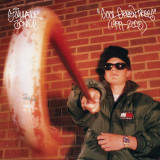
The cover photo is a picture of Sam standing on his back porch in the latter part of 1998, just before he got his first sampler. He was 13 years old, in 8th grade. His dad took the picture with his 35mm film camera: "I actually wanted to be pointing my dad's .22 pistol at the camera lens but he wouldn't let me. He gave me an old walking cane to use instead. The Tommy Hilfiger puffer jacket came from the lost and found at William Fleming High School where my mom worked as a secretary. I was thrilled when she brought it home because we never spent money on expensive name brand clothing like that - we were for the most part strictly a sale rack, bargain bin, thrift store, yard sale, flea market kind of family when it came to clothes. My watch is some cheap off-brand fake gold department store watch." Mastering for this vinyl edition was overseen by Be With regular Simon Francis and it was cut by the esteemed Cicely Balston at Abbey Road Studios to be pressed in the Netherlands by Record Industry.
- Caramelized Onions (You Bet!)
- Poor Guy Misunderstood
- Justice Complice
- Before And After
- Word On The Rink
- Bbq All-Dressed
- Hitler, Satan & Associates Llp
- Operating Thetan: Unknown
- Your Favourite Meal
- Word On The Swing
"Word on the Street" ist das amerikanische Debütalbum der kanadischen Avant-Pop-Singer-Songwriterin und Performance-Künstlerin Elle Barbara und geht auf das Konto von Elle Barbara's Black Space - einer Gruppe von Instrumentalisten aus Montreal, die Barbara zusammengerufen hat, um mit anderen schwarzen Musikern ins Gespräch zu kommen und dabei nicht den Erwartungen an den Klang schwarzer Musiker zu entsprechen. "Word on Street" wurde von Elle Barbara in enger Zusammenarbeit mit Renny Wilson geschrieben, komponiert, arrangiert und produziert. Renny Wilson hat das Album über einen Zeitraum von acht Jahren aufgenommen, bearbeitet und abgemischt, in denen Elle, eine schwarze Trans-Person, sich sozial und medizinisch neu orientieren musste, während sie von Sozialhilfe lebte und sich häufig von nur 11 CAD pro Woche ernährte. In diesem Sinne ist "Word on the Street" ein Sieg gegen Klassenkampf und Vetternwirtschaft und ein unverschämtes Zeugnis dafür, wie eine einkommensschwache, von der Sozialhilfe unterstützte, schwarze Mann-zu-Frau-Transsexuelle mittleren Alters es geschafft hat, alle Ressourcen zu nutzen, um die Musik zu machen, die ihr vorschwebt, und die Konventionen der Musikindustrie völlig zu ignorieren. "Word on the Street" ist auch vehement radikal und unabhängig; ein Meisterwerk der DIY-Prog-High-Production, inspiriert von der Art und Weise, wie das Konsumverhalten und die gegenwärtige technologische Zeit dazu führen, dass sich unser Leben verschlechtert und wir uns zunehmend voneinander entfremdet fühlen. Mit einer breiten Palette von Einflüssen, darunter Todd Rundgrens "A Wizard, a True Star", Prince and the Revolution mit "Purple Rain" und "Running Out of Time" von Rexy, beschwört jeder Track auf "Word on the Street", abgesehen davon, dass sie sehr melodisch sind, einzigartige Bilder herauf, die sich aus scheinbar unvereinbaren Bildern zusammensetzen, wie z. B. korrupte Justizsysteme, die Prophezeiungen von Nostradamus und das Eishockeyteam Montreal Canadiens. "Word on the Street" ist eine gemischte Tüte, deren verschwörerische Ästhetik eine antikonsumistische Haltung verbirgt, die zum Widerstand gegen den Aufstieg der künstlichen Intelligenz und anderer Werkzeuge der technologischen Unterdrückung aufruft und außerhalb der aktuellen Überwachungssysteme arbeitet, was wiederum mit Elle Barbaras Vorstoß für Low-Tech-Unterstützung wie Vinyl-Schallplatten übereinstimmt.
- Judgement Day
- Fast Pace
- Under The Streetlight
- Doesn't Matter Much Now
- Midnight Ferry
- Brassic
- Gaslight
- Don't Stand Alone
- Streetrat Skallywag
- Parasite
- It's A Mad World, Baby
- Doing Time
- Celine
- See You Around
- Bottom Shelf
50 years after the genre turned the music world upside-down, GRADE 2 bring the raw power of old school punk to a new generation. Their second release on Tim Armstrong"s legendary Hellcat Records is a thumping 15 track tour de force melding the uncompromising ethos of punk with the howl of contemporary injustice, personal identity and frustrations of Gen-Z youth, authentically told by three lads with punk coursing through their veins. Formed on their native Isle of Wight when they were just 14 years old, Jack Chatfield (guitar & vocals), Jacob Hull (drums) and Sid Ryan (bass & vocals) honed their craft covering punk pioneers before creating a sound uniquely theirs: ten years on, the eponymous Grade 2 is their magnum opus. The new album was produced by the band along with Tim Timebomb (Armstrong) and T.J. Rivers at Armstrong"s Ship Rec Studio in Los Angeles. "Returning to Ship Rec Studio resparked that magic dynamic" says guitarist Jack Chatfield. "When we"re in there I feel like we reach our full potential. Tim would offer tweaks and tips for some songs, while others he"d compliment as finished first time we played them." "We worked flat-out recording this record," says drummer Jacob Hull, "but we never felt pressured, Tim keeping us in the zone to make the best tunes of our lives.
Noumena is the second volume of music capturing percussionist Tim Barnes in a variety of collaborative settings recorded in extraordinary circumstances over the past few years. Since the 90s, he has collaborated with a range of talents in the indie rock, improvised & experimental music scenes. In 2021, Tim was diagnosed with early onset Alzheimer"s at the age of 54, and he and his family went public with this immediately. The response from Tim"s network of friends and musical peers was overwhelming, and, beginning in late 2021, collaborative recordings were undertaken, coordinated and assembled by Tim"s longtime friend Ken (Bundy) Brown, with whom Tim had worked in the past as a member of the group Pullman, early pioneers of the new Americana movement in the indie scene of the late 90s. The recordings for Noumena feature the playing of Joshua Abrams, Oren Ambarchi, Ken Brown, John Dieterich, Darin Gray, Glenn Kotche, Robert Carlos Lange, Ro(b)//ert Lundberg, Douglas McCombs,, Matt Mehlan, Rob Mazurek, Tara Jane O"Neil Jim O"Rourke, Chad Taylor, Thollem, Britt Walford and Mike Watt. As with Lost Words, Noumena cuts a dramatic swath through a sweep of music styles, all of which are deepened by Tim"s versatile, intensely stimulated percussive feel.
NON EXCL LP , Black Vinyl
The Soulful Trio, a band from Barcelona made up of three musicians with an international background (Spain, Holland, Argentina, USA, France) after playing their repertoire live in different venues for several months, with their songs well shot, have decided to record "Said & Done", in one of the best studios of Barcelona, nine original compositions of Soul-Jazz with derivations towards funk and blues.
Music reminiscent of the classics of the Hammond B3 organ trio such as Jimmy Smith, Jack McDuff, Lonnie Smith, Richard “Groove” Holmes or Big John Patton, reinventing the sound and bringing it closer to today with their vibrant fusion of genres full of energy.
Enjoy this instrumental Soul-Jazz album with these young veterans Homero Tolosa (drums), Pablo Sánchez (guitar) and Lucas Herrera Fernández (Hammond B3) in all their splendor with their respective instruments including the exciting & dynamic sounds of the Hammond B3, the great electric guitar groove of solos and huge variety of rhythms, playing a music that is always intense and made from their hearts.
- 1: Echo-Logik
- 2: Bass Temprature
- 3: Train To Transylvania
- 4: Emperor Dub
- 5: Mother Dubber
- 6: The Orientalist
- 7: Hempro 905
- 8: N 1 Station
- 9: Rajaskank
- 10: Lysergic Sound Of Dub
- 11: Antivitrolles Dub
- 12: Dubiously
With Bass Temprature, rediscover on one single CD the first three vinyl EPs by High Tone: Bot Dub Seasons, Low Tone, and Bass Temperature-a total of 12 tracks that propelled the Lyon-based group into the ranks of electro-dub heavyweights. In addition to these two reissues, four extra tracks have been added, making for a 12-track album just as compelling as it's predecessor. It marks a shift toward a more roots-oriented sound while remaining firmly grounded in the electro-dub genre. The album opens with Echo-Logik, a warrior-like chant followed by a driving bassline that makes you want to move-DJ Twelve's scratches laid over the groove offer a brilliant showcase of the band's talent. The title track, Bass Temprature, follows-perhaps the least striking piece, though that's only relative given the strength of the rest. Worth noting are the mystical vocal samples in Train to Transylvania, evoking vampires and devils, while N1 Station brings a heavy psych sound, a more energetic beat, and moments that border on hard-tek. Other influences also emerge, such as the strong Eastern vibe in The Orientalist. As always, High Tone delivers a stunning dub album sure to delight ears tired of the everyday noise pollution that surrounds us.
- Les Maîtres Fous Part I
- Les Maîtres Fous Part Ii
LTD DIM GLEAM ED[24,79 €]
Haunting, discordant and deeply unsettling, `Les Maîtres Fous' (`The Mad Masters') was written by French post-metal collective Year of No Light in response to French filmmaker Jean Rouch's controversial 1950's docufiction of the same name. Commissioned by Musée Du Quai Branly in Paris for their 2012 `L'Invention Du Sauvage' exhibition, trance-metal pioneers Year of No Light approached the ritual practices of the Hauka movement as depicted in the film and responded with their uniquely hypnotic heaviness. Performed only twice, once at the exhibition on the 6th January, 2012 and again in Bordeaux on the 29th January, 2015; this release is a live recording of the second and final performance of `Les Maîtres Fous'. Whilst Year of No Light have a long history of collaboration with forward-thinking filmmakers and visual artists, the sensitivity of this documentary's problematic subject matter and the intensity of the band's performance made this performance both a physically and emotionally demanding experience; something that can be keenly felt upon listening. Founded in September 2001 by a collection of Bordeaux's heavy scene stalwarts as an ongoing side project encompassing elements of sludge metal and shoegaze, Year of No Light released their debut album, Nord, in 2006 to critical acclaim. The subsequent years however saw a significant lineup change with the band replacing their vocalist with a third guitarist to become a fully instrumental sextet incorporating aspects of black metal, drone electronica and dark ambient into their already formidable sound. 2010's four track epic Ausserwelt and the 2013 follow up Tocsin saw Year of No Light distilling their punishing sound even further; stalling the tempo to a glacial crawl and tuning guitars ever downwards to new uncharted depths. Consolamentum, the band's first full-length release in nine years and their first with Pelagic Records, brought the outfit's crushing double-drumming percussion to the fore as a masterclass in dynamic control saw Year of No Light embrace the highest highs and the lowest lows of the intervening years. Now approaching their 25th anniversary, `Les Maître Fous' is a pressing reminder that, despite the band's long and ongoing journey, Year of No Light have never been afraid to experiment, to take risks, to square up to life's ugliness and look it straight in the eye. FOR FANS OF Neurosis, Cult of Luna, SWANS, ISIS, Russian Circles, My Bloody Valentine, Chelsea Wolfe
Haunting, discordant and deeply unsettling, `Les Maîtres Fous' (`The Mad Masters') was written by French post-metal collective Year of No Light in response to French filmmaker Jean Rouch's controversial 1950's docufiction of the same name. Commissioned by Musée Du Quai Branly in Paris for their 2012 `L'Invention Du Sauvage' exhibition, trance-metal pioneers Year of No Light approached the ritual practices of the Hauka movement as depicted in the film and responded with their uniquely hypnotic heaviness. Performed only twice, once at the exhibition on the 6th January, 2012 and again in Bordeaux on the 29th January, 2015; this release is a live recording of the second and final performance of `Les Maîtres Fous'. Whilst Year of No Light have a long history of collaboration with forward-thinking filmmakers and visual artists, the sensitivity of this documentary's problematic subject matter and the intensity of the band's performance made this performance both a physically and emotionally demanding experience; something that can be keenly felt upon listening. Founded in September 2001 by a collection of Bordeaux's heavy scene stalwarts as an ongoing side project encompassing elements of sludge metal and shoegaze, Year of No Light released their debut album, Nord, in 2006 to critical acclaim. The subsequent years however saw a significant lineup change with the band replacing their vocalist with a third guitarist to become a fully instrumental sextet incorporating aspects of black metal, drone electronica and dark ambient into their already formidable sound. 2010's four track epic Ausserwelt and the 2013 follow up Tocsin saw Year of No Light distilling their punishing sound even further; stalling the tempo to a glacial crawl and tuning guitars ever downwards to new uncharted depths. Consolamentum, the band's first full-length release in nine years and their first with Pelagic Records, brought the outfit's crushing double-drumming percussion to the fore as a masterclass in dynamic control saw Year of No Light embrace the highest highs and the lowest lows of the intervening years. Now approaching their 25th anniversary, `Les Maître Fous' is a pressing reminder that, despite the band's long and ongoing journey, Year of No Light have never been afraid to experiment, to take risks, to square up to life's ugliness and look it straight in the eye. FOR FANS OF Neurosis, Cult of Luna, SWANS, ISIS, Russian Circles, My Bloody Valentine, Chelsea Wolfe. The Dim Gleam edition is kind of a beige vinyl colour
- Intro
- Witch Doctor
- Iron Horse / Born To Lose
- Leavin’ Here
- Vibrator
- Leavin’ Here
- Vibrator
- Help Keep Us On The Road
- The Watcher
- The Watcher
- Motörhead
Black Vinyl[88,19 €]
1976, ein Jahr nach der Gründung der Band, stand die bahnbrechende Besetzung von Motörhead fest. Die „Drei-Amigos“-Ära von Motörhead – Lemmy (Bass/Gesang), Fast Eddie Clarke (Gitarre) und Phil „Philthy Animal“ Taylor – schlossen sich zusammen und begannen ihre außergewöhnliche Reise an die Spitze der Hardrock-Elite. Im August 1976 traf sich die Band im legendären Manticore Studio von Emerson, Lake & Palmer in Fulham, um zu proben und die neue Besetzung zu präsentieren. Dort nahmen sie zum ersten Mal gemeinsam auf. 49 Jahre später wurde das lange verschollene Band entdeckt, entstaubt und in all seiner Pracht restauriert, um das 50-jährige Bandjubiläum zu feiern. Erhältlich als klassische schwarze 1-LP, CD und als Deluxe-2-LP-Bookpack. Alle Formate enthalten zusätzliche alternative Takes und Instrumentalstücke für einen einzigartigen Einblick in die Entstehung dieser legendären Band. Darüber hinaus enthält das Deluxe-Bookpack eine zusätzliche Bonus-LP – den klassischen Bonus „Live: Blitzkrieg on Birmingham ’77“ sowie eine Bonus-7-Zoll-Platte mit zwei bisher unveröffentlichten LiveTracks von Barbarellas Birmingham 1977. Außerdem gibt es ein 24-seitiges Booklet mit Linernotes von Kris Needs, unserem langjährigen Kollaborateur.
3x12" Vinyl[155,04 €]
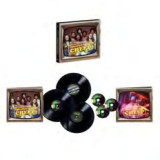
In den frühen 70er Jahren war Fernsehen ein wichtiges Mittel, um Musiker in den eigenen vier Wänden bekannt zu machen. Frank Zappa, der mit seiner Tournee-Lichtshow und seinem Bühnenaufbau voll ausgestattet war, versuchte, Videomaterial für seine eigene Fernsehproduktion aufzunehmen, um es den großen Sendern anzubieten. Genau wie bei den Dreharbeiten zu The Roxy Performances Monate zuvor gab es technische Probleme, die letztendlich dazu führten, dass das Filmmaterial beiseite gelegt wurde. 50 Jahre später, mit den Fortschritten bei den Bearbeitungswerkzeugen für die Nachbearbeitung, präsentieren wir ”Cheaper Than Cheep”. Dieses neue 2-stündige Konzertprogramm bietet klassische Auftritte der Mothers-Besetzung von 1974, direkt von den neu restaurierten Original-Audio- und Videoband-Mastern aus dem Archiv. Die offzielle Zappa-Veröffentlichung Nr. 130 erscheint in einer speziellen, limitierten Super Deluxe-Edition mit dem remasterten Konzertvideo und brandneuem Dolby Atmos, 5.1 Surround sowie Stereo-Mix auf einer Blu-ray, dem Stereo-Soundtrack auf 2 CDs und 3 LPs auf 180 Gramm schwarzem Vinyl, einem ausführlichen Booklet mit seltenen, bisher unveröffentlichten Bildern und Linernotes von Ruth Underwood und Joe Travers, alles in einem ausziehbaren Schuber verpackt. Weitere Formate sind eine komplette 2-CD + Blu-ray und ein eigenständiger Soundtrack auf 3 LPs auf 180 Gramm schwarzem Vinyl
3x12" Vinyl[63,24 €]
In den frühen 70er Jahren war Fernsehen ein wichtiges Mittel, um Musiker in den eigenen vier Wänden bekannt zu machen. Frank Zappa, der mit seiner Tournee-Lichtshow und seinem Bühnenaufbau voll ausgestattet war, versuchte, Videomaterial für seine eigene Fernsehproduktion aufzunehmen, um es den großen Sendern anzubieten. Genau wie bei den Dreharbeiten zu The Roxy Performances Monate zuvor gab es technische Probleme, die letztendlich dazu führten, dass das Filmmaterial beiseite gelegt wurde. 50 Jahre später, mit den Fortschritten bei den Bearbeitungswerkzeugen für die Nachbearbeitung, präsentieren wir ”Cheaper Than Cheep”. Dieses neue 2-stündige Konzertprogramm bietet klassische Auftritte der Mothers-Besetzung von 1974, direkt von den neu restaurierten Original-Audio- und Videoband-Mastern aus dem Archiv. Die offzielle Zappa-Veröffentlichung Nr. 130 erscheint in einer speziellen, limitierten Super Deluxe-Edition mit dem remasterten Konzertvideo und brandneuem Dolby Atmos, 5.1 Surround sowie Stereo-Mix auf einer Blu-ray, dem Stereo-Soundtrack auf 2 CDs und 3 LPs auf 180 Gramm schwarzem Vinyl, einem ausführlichen Booklet mit seltenen, bisher unveröffentlichten Bildern und Linernotes von Ruth Underwood und Joe Travers, alles in einem ausziehbaren Schuber verpackt. Weitere Formate sind eine komplette 2-CD + Blu-ray und ein eigenständiger Soundtrack auf 3 LPs auf 180 Gramm schwarzem Vinyl
After decades of DJ-ing and recording for acts in the Dutch underground hip-hop scene (like Osdorp Posse, Def P & Beatbusters, Onderhonden) and being a mainstay of events like Rauwe School and In Full Effect, DJ Daan releases his first solo record. Six atmospheric instrumental tracks sprinkled with some mild turntable action, meant to sit back and chill out to.
Efter ett år av kreativitet och musikalisk utforskning är det dags för det nystartade bandet Östersjöar att släppa sin debutvinyl, helt enkelt betitlad Östersjöar. Skivan släpps på Coop Records Gotland och fångar bandets unika sound som beskrivs som ett tåg som rör sig framåt, med krautiga influenser och en driven rytmik. Musikaliskt påminner Östersjöar om en fusion av Joy Divisions kyliga, pulserande rytmer och Hawkwinds expansiva ljudlandskap, där varje spår är en atmosfärisk och hypnotisk resa. Skivan spelades in live under en decemberkväll i den mytomspunna Sandkvie Studion, där bandet tillsammans med producent Mattias Bärjed (gitarrist i Soundtrack of Our Lives och Refused ), Mikael Lyander och Samuel Wizèn bakom mixerbordet fångade bandets äkta DNA i stunden.
- A1: Free State Fence
- A2: The Surfer
- A3: Prayer For Civilisation
- A4: Hillbrow 1
- A5: Hillbrow 2
- B1: Hippo In Town
- B2: Independence Day
- B3: Don't Dance
- B4: Crossed Cheques
- B5: September 1984
This is an album made during a crucial period in South Africa’s history during which there was a palpable feeling of a slow turning towards the collapse of the apartheid state side by side with an increasingly well-organised culture of resistance through the formation of the United Democratic Front (UDF) and various affiliated bodies. However, as a result, there was increased pushback from the state security establishment, a turning to dirty tricks and the formation of hit squads whose members murdered and tortured many of our friends and created chaos throughout South Africa as well as neighbouring countries.
This album is situated in this political environment however it took advantage of the new do-it-yourself music technologies available at that time. Technologies that made it possible to make and release records without interference from traditional record company executives. Two musician friends of mine pooled their resources after their respective bands had broken up. Ivan Kadey (National Wake) and Lloyd Ross (Radio Rats) built an 8-track recording studio control room and fitted it out in a second hand caravan and called it Shifty. They parked it in a garage attached to the only house left in a demolished and derelict mining village near Soweto on the outskirts of Johannesburg.
All the work on this album was completed there, mainly after hours and mostly alone where I enjoyed an exhilarating freedom to develop a whole new set of musical skills and ideas, incorporating my love of a wide range of music I’d grown up with. Influences of 1970s progressive/kraut/and psychedelic rock combined with mbaqanga bass styles, early reggae/dub and Indian tabla rhythms. Stockhausen, early Zappa and Holgar Czukay were radio text and shredding influences, and Chris Cutler’s band Henry Cow & Art Bears helped me see a way to political expression. Mostly though was the exciting post-punk and no-wave music coming through to us from Europe and America: bands like This Heat, the Mekons, Raincoats, Sonic Youth and Pere Ubu were immensely important to me as was my reading from the period: J.M.Coetzee’s first 3 novels are strong influences on Free State Fence; the stark landscape, superstition, ritual, and sexual repression are in many of his settings. JG Ballard was a constant presence throughout that period, especially whilst living in such a surreal environment, surrounded by mine dumps, but mostly I think the whole French post-modern philosophical movement—Derrida, Foucault and of course, Baudrillard’s Simulacra and Simulation—set out a new sense of possibilities, possible ways to express oneself, ways to think, and ways to try and analyse the political intersection of public and private life. Most important at that time was the influence of sound recordings I had made and experiences garnered from working as a sound recordist on documentary films. These financed my work and later the studio and were consistent employment throughout the 1980s. Film work also enabled me to experience much of South Africa that was hidden from most. The track Independence Day is a good example; drawn from some time spent in the rural homeland of Venda. This then was the first full length Kalahari Surfers album, completed in summer of 1984 it was taken to EMI pressing plant but rejected by the cutting engineer as being ""political, pornographic and anti religious"". Chris Cutler at Recommended Records took up the challenge and released the album through his label. He wrote the original liner note