Synth pioneer and musical polymath, Wally Badarou is a genius. But you know that already. A vinyl version of his majestic Colors Of Silence has been craved by the Balearic cognoscenti ever since its low-key 2001 release. Indeed, when we first started work on Be With, we asked some pals with exquisite taste what their dream release would be. We asked Balearic legend Moonboots and, without hesitation, he said Colors Of Silence by Wally Badarou. We didn't know Wally had made this album. And most still don't. But that's about to change.
Colors Of Silence is ostensibly a new age album. As ever though, Wally's sophisticated synth textures and expressive keyboard runs are so full of character, so full of life, that this work of art transcends any easy genre categorisation. It's simply stunning, throughout. It sounds like A.r.t. Wilson or Suzanne Kraft, with traces of CFCF and Jonny Nash. But it was made a good decade earlier than the work of these modern giants. Sometimes, it doesn't seem far from some Larry Heard albums.
Island Records founder Chris Blackwell's friend Nathalie Delon asked Wally to provide music for the yoga DVD she was to release. Lack of time on both sides made them agree on using "quality demos" Wally had in his ideas bank. It's understandable why Colors Of Silence remains somewhat of a lost gem. As Wally explains: "Total lack of promotion made it an 'intimate' release, which was exactly what I was looking for: just a buzz-maker and time-buyer that would allow me to concentrate on the real thing as soon as I'd have time, which could also turn into a rare collecting item later, once the final versions made their way to success. You never know."
Over the years, Colors Of Silence has become a true cult record for the ambient/Balearic heads.
The beguiling but brief "Dance In The Dust" is the shuffling, hyper-percussive, hypnotic opener. It gives way to the deep serenity of "Amber Whispers". It's a gliding, divine, mini melodic masterpiece. It'll make you swoon in its extreme beauty. The bright and breezy "Where Were We" follows, a tropical, reggae-tinged bounce through the islands.
The uptempo groove is maintained on the keys-drizzled soca-funk of "The Lights Of Kinshasa" before Side A is rounded out with "Pictures Of You". It starts with stately, melancholic, unadorned piano and this alone would make for a beautiful song. But Wally always gives us that bit extra and he effortlessly introduces warm, dreamy pads and minimal, slo-mo percussion to augment a frankly stunning piece of work.
Ushering in Side B, Wally's mesmeric piano playing is to the fore again, in the intro to uber-chilled "Serendipity For Two". The playing becomes more mellifluous as the track progresses and adds warmth through exotic percussion, woodwind, sweeping synths and digi-drums. It has echoes of, er, Echoes. It segues seamlessly into the more propulsive, wavy "Smiles By The Millions". If you're not nodding and grinning along widely to the gently throbbing bassline underpinning this, we can't help you. The meditative "Higher Still" follows, cinematic in feel and ever so slightly sinister with the strings. It sounds particularly Badalamenti-esque, if you ask us.
That unmistakable, almost peculiar Badarou funk - so lyrical, so texturally rich and so rhythmically spacious - is all over "Oriental". Next up, "Days To Wonder" brings the serenity back, insistent yet melodic keys, as if played in a place of worship, coupled with birdsong, conjure a kind of instant nostalgia for halcyon days of youth. The contemplative "Dawn Of Europa" is a sombre, beatless, ambient journey whilst the glorious, too-brief "Crystal Falls" features soft percussion and sparkle before fully glistening with some gentle head-nod beats. Wally brings this incredible collection to a mellow, tender close with the graceful "Purple Lines".
There can be few artists more under-appreciated given their vast influence than Wally Badarou. His solo work practically defined the sound of the Balearic DJs of the 1980s, and thus the more sophisticated sound of dance culture thereafter. A synth specialist, Badarou was the long-time associate of Level 42. He was one of the Compass Point All Stars (with Sly and Robbie, Barry Reynolds, Mikey Chung and Uziah "Sticky" Thompson), the in-house recording team of Compass Point Studios responsible for a series of albums in the 1980s recorded by Grace Jones, Tom Tom Club, Mick Jagger, Black Uhuru, Gwen Guthrie, Jimmy Cliff and Gregory Isaacs. Badarou's keyboard playing could also be heard on albums by Robert Palmer, Marianne Faithfull, Herbie Hancock, M (Pop Muzik), Talking Heads, Manu Dibango and Miriam Makeba. He also produced Fela Kuti. Phew!
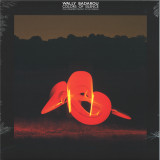
Meticulously remastered and cut by both Simon Francis and Cicely Balston respectively, it has been pressed to the highest possibly quality at Record Industry in Holland. Special thanks must go to Apiento from Test Pressing who first introduced us to Wally and facilitated all those early zoom meetings. It couldn't have happened without his help. Not least on pulling the art together, too, which features striking original photography by Mads Perch. Benji Roebuck of Roebuck Press did his thing brilliantly in art working the whole package to completion. All in all: essential.
Поиск:dr res
Все
Eight decades in and Charles Hayward (This Heat, Camberwell Now) isn’t slowing down, he’s picking up the pace. Following on from a sensational string of gigs and festival performances, his latest endeavour - Abstract Concrete - is now primed to release this astounding self-titled debut via state51 Conspiracy.
The band features the luminous cast of Agathe Max (Mésange, UKAEA) on viola, Otto Willberg (Yes Indeed, Historically Fucked) on bass, Roberto Sassi (Snorkel, Glenn Branca) on guitar, Yoni Silver (Hyperion Ensemble, Steve Noble) on keyboards and, of course, Charles himself on drums and vocals. With this undeniable experimental pedigree, it’ll likely come as one hell of a surprise that this group are now responsible for one of the most persuasive and hook-laden avant pop albums of the year.
Orbiting Human Circus' new album is called Quartet Plus Two. What is Orbiting Human Circus? It is the continuing evolution of Julian Koster (Neutral Milk Hotel, The Music Tapes), whose music and storytelling under this moniker have encompassed immersive theater and a Night Vale Presents podcast, as well as more traditional albums. Central to the album are the "two" referenced in the title: North and Romika, the singing saws, whom Koster doesn't "play" so much as encourage. "I think saws sing like angels," says Koster. "I always have. Since I was a little boy. When you encourage them to sing, they do so earnestly and beautifully. It's an honest and real sound." The origins of Quartet Plus Two are as magical and seemingly unlikely as everything else in Koster's career. While walking through New York's Central Park, he stumbled upon Gauvain Gamon and Kolja Gjoni_a standup bass player and drummer, respectively_playing Gershwin and Mingus, and a musical partnership was born. Pianist Benji Miller rounds out the titular quartet, with Koster's longtime collaborators Robbie Cucchiaro (horns) and Thomas Hughes (orchestral arranging and chimes) of The Music Tapes also contributing to the record. The music they make together is at once familiar and unrecognizable, as Koster and Orbiting Human Circus interpret jazz compositions by Irving Berlin, Duke Jordan, George and Ira Gershwin, and others, alongside Koster's three originals. The use of the term "composition" is intentional and speaks to Koster's relationship with the music of Quartet Plus Two in far more evocative terms than "cover" or "standard." "To me it was always magical that there were these people called `composers' who created symphonies and popular songs for other people to breathe into life and existence all over the world and throughout time," he explains. "They traveled into our homes as sheet music, endless recorded interpretations, or were passed from hand to hand, village to village, like folk tales, changed by every hand that touched them. That music was something that came to life in our own living rooms and lives, songs that our grandmothers might have sung in a choir that we might sing just as earnestly. I just think it's nice, and I would love to share that feeling in any way we can."
Brueder Selke, a polyinstrumental composer duo originally from East Berlin, consistently enriches the repertoire of their two primary instruments: cello and piano. Their independent curator role shines through as they frequently host boutique concerts and happenings, featuring both established and emerging artists during their yearly Q3Ambientfest.
'Go East' marks a significant milestone in the long-term collaboration of Brueder Selke, two brothers who grew up on the socialist side of the Berlin Wall. The tracks are driven by the essential components of a restored Piano-Strings machine, along with two electronic organs named Sandy and the ET6-1, and a E-Piano, all manufactured by Vermona in the late 1970s and early 1980s.
Their innate sense of interplay, developed during their upbringing in GDR times, stems from a deep-rooted longing for connection and exchange with like-minded musicians and individuals. Through their music, they convey ideas that embrace a universal duality, showcasing how diverse elements harmoniously complement each other. The album encompasses a wide range of atmospheric moods, from intimate classical chamber music to expansive textural landscapes created by these now rarely intact socialist synthesizers, with their parameters mimicking strings and keyboard instruments. In this ironic and thoughtful manner, Sebastian and Daniel once again skilfully let their main instruments, cello and piano, merge into one another.
'Go East' aptly reflects the artist's profoundly experimental yet accessible approach, making it their 8th duo album. The 2x2 recordings were produced in their Klingenthal Studio in Potsdam in February 2022.
- Derived From The Trout Mask In A Tentative Manner 04:55
- The Dissolution Of Time 08:57
- Abdication 05:02
- The Alphabet Of Steps 06:23
- Les Cycles Extatiques 06:52
- The Geometry Of Rhythmics 05:26
- At The Margin Of Moments 06:37
- Through The Deserts Of Postmodernity 09:36
- Stereometry Of Moving Bodies 06:27
- Suspecting Metaphysical Symbols 07:28
After two years, Carl and Andreas present their second album, and once again, it opens up a wide associative space for us. What strikes us initially is the uncommon instrumentation: a church organ, harpsichord, glass tubes, and more. Like their first album (The Aporias of Futurism), it is mysterious and dark. But it also carries a strong touch of rebellion and adrenaline, sometimes quite pointedly. The pieces are now shorter and feature intricate yet irresistible rhythms. The impact is immediate, yet it maintains a sense of solemnity and ceremony. The Apollonian complexity of the rhythms and subtle melodic interweavings is transformed into a Dionysian, ecstatic, hypnotic, and at times tribal context. "Music for Unknown Rituals" oscillates between primitive instincts and avant-garde intrigues.
The process began in Döblitz, a small village on the Saale river in Germany, inside an old church that houses an organ built in 1886 by Johann Adolph Ibach. Carl and Andreas gained access and secluded themselves there for a few days, accompanied by the organ, an instrument made of glass tubes, and a set of modular synthesizers. After recording the basic tracks in Döblitz, the work continued in Munich and Berlin. Carl played electric guitars, harpsichord, bass, metallophone, xylophone, Indian harmonium, and various percussive instruments. Andreas added layers of electronic sounds, noises, and atmospheric drones. He also created percussive structures extracted and derived from recorded material of technical and industrial noises, which contrasted with the acoustic drums played by Carl. The antithetical approach continues with the dichotomous arrangement of the instruments, often panned hard left and right in the stereo field, creating an antiphonic communication. Some parts, especially the use of the electric guitar, evoke memories of the psychedelic sixties. However, this is anything but a nostalgic album—these musical references are merely remnants, set pieces, and fragments used from a contemporary, post-modern, post-youth-cultural, and post-romantic perspective.
Although Andreas and Carl continue on their chosen path of composing music with an almost literary narrative structure, this album is conceptually and formally completely different from their first effort. If “The Aporias of Futurism” was a revolutionary manifesto (in a pataphysical sense), "Music for Unknown Rituals" is more like the implementation in action; it is the practical application of the previous statement. To put it another way, if "The Aporias of Futurism” was the conceptual manifesto of a dark utopia of modernity, "Music for Unknown Rituals" is the staging of free will surrendering to the myths and catharsis of a Greek tragedy. And in response to this, the artwork features a leitmotif of histrionics with hands, the hands being the first and intuitive part of the body to express something: a ritual, a prayer, a defeat...
— Andreas Gerth is one half of Driftmachine, and Carl Osterhelt is part of F.S.K and collaborates with Hans-Joachim Irmler of Faust. Both became connected through their participation in the Tied & Tickled Trio.
- A1: From The Sun
- A2: Swim And Sleep (Like A Shark)
- A3: So Good At Being In Trouble
- A4: One At A Time
- A5: The Opposite Of Afternoon
- A6: No Need For A Leader
- A7: Monki
- A8: Dawn
- A9: Faded In The Morning
- A10: Secret Xtians
- B1: Swim And Sleep (Like A Shark)
- B2: Faded In The Morning
- B3: So Good At Being In Trouble
- B4: Swing Lo Magellan
- B5: Puttin' It Down
- B6: Two Generations Of Excess
- B7: Waves Of Confidence
Unknown Mortal Orchestra came to life in basements and bedrooms, the musical vision of Portlander-via-New Zealand Ruban Nielson that fused guitar-god riffs, choppy percussion, soul and funk. II, the sophomore album from UMO, emerged in an era rampant hedonism and isolationism and became the blueprint for everything Nielson has become renowned for. It was, and is, the solidification of Unknown Mortal Orchestra as an endlessly intriguing, brave and addictive band. Ten years on, it's back with an expanded edition. Written during a punishing, debauched touring schedule during which Nielson feared for both his sanity and health, II illustrates the emotional turmoil of life on the road, painting surrealist, cartoonish portraits of loneliness, love and despair. These conflicting themes are evident immediately; on the album's sleeve is an unnerving image of Janet Farrar, the famous British witch, Wiccan, author and teacher of witchcraft. The chilling refrain of opener "Into The Sun" sees Nielson deliver the line "Isolation can put a gun in your hand," softly, his words starkly intelligible above a warm, slow-burning melody that quickly brands itself onto your brain. His playful imagery ("I'm so lonely I've gotta eat my popcorn all alone") mirrors the melody, before a solo that borders on psychotropic ends II`s introduction. UMO is unafraid to dig deeper than the rest, their intoxicating, opiate groove bringing rock'n'roll's exaggerated myths to life. And as it unfolds, II does find Nielson reenergized. "One At A Time" and "Faded In The Morning" boast dizzying choruses and instrumentals; these crusty hunks could have been excavated from a lost 1960s treasure trove. "Monki" unravels over seven minutes like the yarn from a stoner's cardigan with an eye-frying pattern. "Dawn" is a minute of disconcerting noise that stands out between the nooks and crannies of the choruses, guitar solos, groove-heavy bass and drums that were recorded live by newly-recruited drummer Greg Rogove and Kody Nielson in a move away from the electronic percussion employed on album one. II closes with "Secret Xtians," a tender observational puzzle that fizzes to a satisfied end. In celebration of the album's 10th anniversary Nielson's complete collection from the II era is finally available in one compilation, and features the five acoustic tracks from the Blue EP as well as two additional B-sides. Unknown Mortal Orchestra was once Nielson's closeted concern. With an album that uses his singular musical imagination and extraordinary talent to parade his emotions with unyielding honesty, it is now a fully realized band operating at the peak of its powers ten years on.
- A1: Till The End Of The Day (1965)
- A2: Preservation (1974)
- A3: David Watts (1967)
- A4: This Time Tomorrow (Alternate Take, 2020 Mix) (1970)
- A5: A Well Respected Man (1965)
- A6: Monica (1968)
- A7: Scrapheap City (1974)
- B1: Lola (1970)
- B2: Sunny Afternoon (1966)
- B3: Animal Farm (1968)
- B4: Creeping Jean (1969)*
- B5: Two Sisters (1967)
- B6: See My Friends (1965)
- B7: Money Talks (2023 Mix) (1974)
- C1: Rainy Day In June (1966)
- C2: Dedicated Follower Of Fashion (1966)
- C3: Where Are They Now? (2023 Mix) (1974) **
- C4: Wicked Annabella (1968)
- C5: Susannah's Still Alive (1967)*
- C6: 20Th Century Man (1971)
- C7: Sitting By The Riverside (1968)
- D1: New Victoria Suite - Everybody's A Star (Starmaker) (Live, 2023 Mix) (1975) **
- D2: New Victoria Suite - Slum Kids (Live, 2023 Mix) (1975) **
- D3: New Victoria Suite - (A) Face In The Crowd (Live, 2023 Mix) (1975) **
- D4: Holiday Romance (1975)
Part 1[27,31 €]
Erlebe die zeitlose Anziehungskraft von The Kinks mit der Best Of "The Journey - Part 2". Eine aufregende Odyssee durch die ikonischen Hits der Band, darunter das elektrisierende "Till The End of The Day", das überschwängliche "David Watts", die sonnengetränkten Vibes von "Sunny Afternoon" und die rebellische Hymne "20th Century Man", sowie viele, viele mehr.
Diese Veröffentlichung enthält drei unveröffentlichte, neu abgemischte Live-Tracks von den legendären "New Victoria Suite"-Aufführungen, die euch in die erste Reihe bringen, um die rohe Energie und musikalische Brillanz der Band zu hören.
Um die Magie von "The Journey Part 2" noch zu verstärken, enthält diese Veröffentlichung wunderschön gestaltete Linernotes von der Band selbst. Sie beleuchten die bemerkenswerte Reise der Band, den kreativen Prozess, denkwürdige Anekdoten und das bleibende Vermächtnis der Kinks und geben einen Einblick in die Welt der Band und die Geschichten, die hinter diesen zeitlosen Klassikern stehen.
Für die ultimativen Kinks-Fans gibt es auch eine 2CD-Version mit einer erweiterten Tracklist. So wird sichergestellt, dass jeder Fan in den Genuss dieser geschätzten Klassiker und seltenen Live-Perlen kommt.
Lass dich von der Nostalgie anstecken und genieße die unvergleichliche Klangwelt der Kinks.
After the release of their highly successful self-titled album in summer 2021 (#1 in Germany and Spain etc.), HELLOWEEN -- one of the most respectable German metal exports and pioneers of German melodic speed metal -- are finally bringing their new anthems to the packed arenas, leading them all around the globe with their »United Forces« tour. The creators of the albums »Keeper Of The Seven Keys, Pt. I & II« (87‘/88‘), which are considered to be among the most successful German metal records of all time and are reckoned internationally as absolute milestones of power metal, haven’t only cemented but even expanded their status as giants of the scene. Caused by the pumpkinheads‘ aforementioned triumphant wave of success, the group’s back catalogue albums are also more in demand than ever which is why Atomic Fire are now set to release a series of brand new vinyl editions including the following hot HELLOWEEN records: »The Dark Ride« (2000), »Rabbit Don’t Come Easy« (2003), »Keeper Of The Seven Keys - The Legacy« (2005), »Gambling With The Devil« (2007), »Straight Out Of Hell« (2013), »My God-Given Right« (2015), and last but not least their latest offering »Helloween« (2021).
A Flor de Piel, the new album from singer-songwriter and composer Maria Monica Gutierrez (aka Montañera), is a meditative journey of self-discovery across oceans, time, and the traditional confines of genre. Originally from Bogota, Colombia, Gutierrez began the album as a way to explore her identity after a difficult move to London left her feeling untethered in a strange new place. The result is an examination of the immigrant's experience through a rich sonic lens of ambient pop textures, inspired by sources as disparate as Colombian traditional music, traditional Senegalese music, and whalesong from the depths of the Atlantic. The album begins with the title track "A Flor de Piel," Gutierrez's indelible vocals floating above a vast expanse before being joined by deep, silky bass and the plucks of a koto-like stringed instrument. "The song was inspired by traditional Japanese music," Gutierrez explains, "It's about making my heart a little lighter; I know that inside of me I can be as light as mist in heat, I can be fragile as the song of a sparrow." That sentiment perfectly encapsulates much of what makes A Flor de Piel so special. The album comes with a message of healing for all people, without forgetting the centuries of struggle and hurt that form the bedrock of modern society. The track "Santa Mar," for instance, is inspired by the musical traditions of afro-pacific women in Colombia, and the crucial role that they play as peacebuilders in the region. Backed by a hypnotic beat, the song features contributions from marimba player Cankita, alongside Las Cantadoras de Yerba Buena, an all-female vocal group that utilizes traditional Afro-Colombian music to preserve their history and promote peace. Standout track "Como Una Rama" is a futuristic take on bullerengue, a traditional style of music and dance originally developed by Maroon communities on Colombia's Caribbean coast. Deeply affecting, the song combines Gutierrez's indomitable voice with electronics that recall Steve Reich's rhythmic minimalism. "Cruzar," the final track on the album, feels almost like a lullaby, with a meditative harmonic style and trance-like vocal melody. "The lyrics," Gutierrez explains, "are a personal reminder of what is important to me: healing, letting go, breathing, evaporating, forgetting, changing, crystallizing." Across the 40-odd minutes of A Flor de Piel, Gutierrez triumphs at recontextualizing traditional sounds and sentiments into a modern form using synth-based and electronic textures. It's a fitting representation for the personal struggles that the artist endured during her move to London. Rather than dwelling solely on the past Guitierrez uses A Flor de Piel to summon the strength of past generations, and forge a new path forward. As she describes it, "The album has accompanied me through inner journeys of finding myself in a new territory _ of redefining myself, of remembering who I am _ in a strange place." As we drift towards an increasingly frightening and uncertain future, perhaps Montañera's A Flor de Piel is exactly what we need: something to give us strength, to bring us peace, and to accompany our journey into a strange new place.
- Neath The Shadow, Down The Meadow
- Leaves Lying On Each Side
- By The River, Flowers Shiver (Fading Dying In Their Pride)
- Someone Straying, Long Delaying
- Sad The Parting Down The Lane
- I Must Leave You Someone's Saying
- Till The Roses Come Again
- As I Wander, I Will Ponder (On A Happy By And By)
- On A Summer Over Yonder (With Joy To You And I)
- Sunshine Over Clover Blossom On The Meadow Wide
- Summer's Fingers Sweetly Linger (Everywhere On Every Side)
- Someone's Roaming In The Gloaming
- Happy Hearts That Feel No Pain
- All Their Sadness Turned To Gladness
- Now The Roses Come Again
Black Vinyl[30,67 €]
Bachman has a dedicated fan base who is tightly focused on his next steps. While he has always been restless with his art, his stylistic changes in 2020's "Axacan" demonstrated - and excited - many within that fan base as to how transformative his work and vision can be for "traditional" music in these modern times. This fresh work continued with 2022's "Almanac Behind". "When The Roses Come Again" is a perfect next step to this trendline, a synthesis of tradition and abstraction. In other words, it is yet another vivid reimagining of what a "traditional" album can be in modern times. On this LP Bachman takes acoustic guitar, banjo, fiddle and mouth harp alongside oscillators, drum apps and more to construct one-man string band compositions. Integrating technology as a tool for collage, as well as acoustic instruments that pre-date all of us, Bachman excitingly creates an album that has as much to do with Terry Riley, Laraaji, Eno’s late 70’s ambient albums, and 75 Dollar Bill, as it does the Carter Family, Stanley Brothers, and Hobart Smith. "When The Roses Come Again" is destined to thrill those who have been so enamored with Bachman's past exciting turns as well as pull new folks into the folks who are excited by new sounds.
“More than anything, I wanted to make an album that was generous, that was useful,” says Ben Folds. “I want you to finish this record with something you didn’t have when you started.” Indeed, Folds’ masterful new collection, What Matters Most, isn’t so much a statement as it is an offering, an open hand reaching out to all those wounded and bewildered by a world that seems to make less and less sense every day. Recorded in East Nashville with co-producer Joe Pisapia, the album marks Folds’ first new studio release in eight years, and it’s a bold, timely, cinematic work, one that examines the tragic and the absurd in equal measure as it reckons with hope and despair, gratitude and loss, identity and perspective. The songs are bittersweet here, hilarious at times, but often laced with a quiet sense of longing and dread: a text message goes unanswered; an old classmate descends into the dark depths of internet conspiracies; a relationship unravels in the middle of a lake. And yet, taken as a whole, the result is an undeniably joyful record that refuses to succumb to the weight of the world around it, an ecstatic reminder of all the beauty and promise hiding in plain sight for anyone willing (and present enough) to recognize their moments as they arrive.
New West Records is proud to present Strange Country, the new full-length album from the young and gifted cousin-duo Kacy & Clayton. The ten-song collection was recorded over seven freezing Canadian winter days at Ghetto Box Studios, a historic community hall turned studio. The product of a lifetime of deep kinship, the record showcases the purity and astounding beauty of Kacy Anderson's voice, one that has been notably compared to Fairport Convention's Sandy Denny. Only Clayton Linthicum's intricate guitar work, expert time changes and vocal harmonies could forge the foundation for Kacy's voice to soar even higher - the result being an enormously satisfying and organic album. Drawing a wide swath of inspirations ranging from the Greenwich Village folk scene to the ancestral music of Southern Appalachia and the British Isles, the cousins fashion songs steeped in those traditions, simultaneously paying homage and building on those sounds.
In the late 1970’s Athens, Georgia was buzzing with a raw but sophisticated music scene. The turn of the decade began producing new sounds from bands like the B-52’s, R.E.M. and Art-Rock luminaries, Pylon. Before they were a band, Pylon were art-school students at the University of Georgia: invigorated by big ideas about art and creativity. In 1980 the band released its first record, Gyrate and began touring across the country in support of the release. Following the critical acclaim of Gyrate, Pylon went back into the studio. They gleefully pulled their songs apart and put them back together in new shapes, revealing a band of self-proclaimed non-musicians who had transformed gradually but noticeably into real ones. The resulting album was, Chomp. Now, more than three decades later, both studio recordings have been remastered from their original audio tapes and are set for release on New West Records.
“I feel like there are two sides of me,” says the Nashville-based singer-songwriter and guitar virtuoso known as Sunny War. “One of them is very self-destructive, and the other is trying to work with that other half to keep things balanced.” That’s the central conflict on her fourth album, the eclectic and innovative Anarchist Gospel, which documents a time when it looked like the self-destructive side might win out. Extreme emotions can make that battle all the more perilous, yet from such trials Sunny has crafted a set of songs that draw on a range of ideas and styles, as though she’s marshaling all her forces to get her ideas across: ecstatic gospel, dusty country blues, thoughtful folk, rip-roaring rock and roll, even avant garde studio experiments. She melds them together into a powerful statement of survival, revealing a probing songwriter who indulges no comforting platitudes and a highly innovative guitarist who deploys spidery riffs throughout every song. Because it promises not healing but resilience and perseverance, because it doesn’t take shit for granted, Anarchist Gospel holds up under such intense emotional pressure, acknowledging the pain of living while searching for something that lies just beyond ourselves, some sense of balance between the bad and the good. Featuring: David Rawlings, Allison Russell, Jim James, Micah Nelson
- Guitars, Cadillacs 4:01
- Smoke Along The Track 3:41
- T Know 4:07
- Home Of The Blues 3:10
- 1: 00Miles 4:24
- Please, Please Baby 3:22
- Little Ways 3:03
- Honky Tonk Man 3:02
- Streets Of Bakersfield 3:29
- Buenas Noches From A Lonely Room (She Wore Red Dresses) 4:37
- Always Late With Your Kisses 2:29
- Little Sister 3:52
- I Sang Dixie 3:23
- Will Kill Me 4:23
Twentysomething Dwight Yoakam was literally the new kid in country music when he stepped onto the Austin City Limits stage in October 1988. But even then, as he has ever since, he was doing things his own way. Dwight was born in a small Kentucky town and grew up listening to mountain and bluegrass music, and unlike most of the mainstream country-pop crooners of the eighties, he almost single-handedly revived the rockabilly / honky tonk / hillbilly sound that was one of the cornerstones of country music’s formative years. Early on he discovered the fabled “Bakersfield” sound of the 60’s and adopted it as his own, in the tradition of country legends Merle Haggard and Buck Owens. Buck, in fact, became his hero and friend. When Dwight was playing a fair in Bakersfield, he stopped by Buck’s office and coaxed him into playing a few songs with him onstage that night. The result was a lasting friendship and their historic duet, “Streets Of Bakersfield.” Much like his heroes, Dwight has been true to his roots and breaking new ground for almost 20 years. - Terry Lickona (Producer Austin City Limits)
Dalmata Daniel welcomes Filmmaker and Petros Spatharos for the eighth part of their split series. This obscure 3-3 track vinyl is the debut of the Columbian music maker on the label. However, for the Athens-based producer it's a return after his participation on "Dalmata Daniel eats Lahmacun" compilation. But this project isn't their first collaboration, because Petros released his first album on Body Musick, Filmmaker's own imprint.
Filmmaker probably doesn't really need to be introduced to those who are comfortable with contemporary underground music. In less than five years he has composed and released a huge and relevant oeuvre by himself or on labels such as the UK-based Opal Tapes, Dutch Tartarus, Greek Phormix or the German Veyl, etc. To add Dalmata Daniel to this list is kind of a dream come true for the label, because they have been following his musical journey since the beginning. And no doubt, his side of the vinyl is another testament to his already perfected sound. What you recognise from the first moment of this noisy, industrial, sometimes dissonant ebm driven electro, infused with a film noir atmosphere and total darkness.
While on the flip side, Petros Spatharos keeps the obscurity going, which is the real link with his split partner's music. Only his sound is clean, not chaotic, but rather underworld techno with an extremely restrained tempo and some beyond-the-grave acid screams. That's how this inferno journey will be complete with full of dark emotional atmospheres and hypnotic textures.
Black Vinyl[21,13 €]
Bathed in a green haze, the crowd oozed to the mutant rock and roll roaring from the basement's dusty depths — everything and everyone was sweaty and sticky. But as Speedy Ortiz crammed into the back corner, their grins just inches away from ours, D.C.’s Dougout became a moshed-and-sloshed sauna of 20-somethings delirious on rock euphoria.
After spending much of the new millennium bored out of my skull by network soap indie, Speedy Ortiz — not to mention its pals in Pile, Ovlov, Grass is Green and the rest of New England’s burgeoning basement scene — was rock's wild howl. The songs were unpredictable, yet weirdly memorable, swaggering with a winky and wry sense of self. Riffs would twist with a topsy tenderness, then slam a ruptured discord. Sadie Dupuis' sphinxian-yet-sensitive lyrics were not only matched but accentuated by her coil-sprung vibrato. How could Speedy Ortiz not immediately become my new favorite band?
What began as a short-lived solo project recorded in Dupuis' off-hours as a rock camp counselor became a four-piece band in Northampton, Mass., by the end of 2011: Dupuis on guitar and vocals with drummer Mike Falcone, bassist Darl Ferm and guitarist Matt Robidoux. They made cool mixtapes, cracked inside jokes and gushed about teenagers that opened for them on tour. They freaked out (via LiveJournal) when they met the bassist from Polvo or Helium's Mary Timony, but also rolled their eyes at '90s indie-rock comparisons. The band's first single — the gender-bending got-laid grunge yowler "Taylor Swift'' — elicited that rare response of the simultaneous giggle and headbang. The Sports EP amped up the taut yet rubbery riffery.
Released July 9, 2013, Major Arcana is filled with wedding chapel exorcisms, oiled-down attractants and criminally twisted puny little villains — this is Dupuis' haunted lexicon as she scales the toxic Aggro Crag of a breakup. And while Dupuis wrote these songs, the band's convulsing arrangements and diverse influences sprawled the squigglier edges of feedbacked fuzz to mete out matters of the heart. Falcone — who, it's worth noting, has a knack for vocal harmony — swung as much as he smashed the drums. In easily tipoverable songs, Ferm's burly bass and percussive overdubs gave the unruly glee its momentum. Robidoux ripped skronky guitar solos and countered Dupuis' riffs with decorative splatter. Over a four-day marathon session at Sonelab in Easthampton, recording engineer Justin Pizzoferrato sparked the studio imagination of Speedy Ortiz — not only leaning into gritty tones but layer-caking dense dynamics that made these songs pop and pulverize.
For all her sweet-toothed seething, Dupuis was not easy on herself. Everyone's allowed the idiot growing pains of your 20s and the misery that follows, but I can only imagine the emotional exhaustion that playing these songs on the road, night after night, must have wrought. "But you left something on my lips: a mark so sick," she repeats over the doomy destruction that ends the album. Thinking back to the many Speedy Ortiz shows I caught in those early years, including an unofficial after-after party for my own wedding, "MKVI" often served as the noisy down-and-out closer — heads would bang in solidarity as the crowd became co-authors in the chaos, the biting phrase now a hex, Speedy Ortiz forever our coven. —Lars Gotrich
To celebrate the 10th Anniversary of Major Arcana, Speedy Ortiz release a remastered edition on Carpark Records.
- A1: Step Up (Ft. Joseph Cotton & Bellyman)
- A2: Reggae Music And Love (Ft. Alborosie & Yami Bolo)
- A3: Fi Di Youths (Ft. Skarra Mucci)
- A4: Quieren Mas (Ft. Alika & Blackout Ja)
- A5: Enough (Ft. Liam Bailey)
- A6: Love On Tap (Ft. Alo Wala)
- B1: Rasta Corner (Ft. Ghetto Priest)
- B2: Don't Stop (Ft. Afu-Ra & Ruffian Rugged)
- B3: Do Good (Ft. Million Stylez)
- B4: No Sabes Na (Ft. Tracy De Sà)
- B5: This World Is A Hell (Ft. Jolly Joseph)
- B6: Dub And Bass (Ft. Caporal Negus)
- B7: Piki Piki (Ft. Dynamq)
With 2 solo albums («Digital Pixel » in 2016 and « Bass Attack » in 2018 ), a dozen of EPs and more than 800 shows performed all over the globe, the most international French beatmaker in the world of Reggae is back on November 2023 with his brand new album « Step Up », in which he pushes further the fusion between Reggae and Bass Music. With « Step Up » Manudigital made his music evolves toward more electronic and hybrid productions. He navigates between musical genres like no one does, inviting guests from all over the world. Armed with his bass, MPC and synthesiser, Manudigital surrounded himself with no less than 17 hand-picked artists to make his productions their own. « (…) I was already working on my upcoming album and I thought I would keep this small Reggae loop to take it to another style, fully electronic which has given my new album’s DNA » - Manudigital about the track « Step Up » The album opens with the eponymous explosive track « Step Up » featuring veteran Jamaican deejay Joseph Cotton and British Drum & Bass MC Bellyman, author of the successful YouTube video series « Carz Barz ». Among the artists of the British underground musical scene, Reggae/Soul genius Liam Bailey has been invited on the Pop-infused Digital Reggae track « Enough » which will delight the lovers of soulful Reggae. Manudigital also reminds us Reggae has always be his first love and, after having produced Alborosie and Protoje’s hit « Strolling » a few years ago, he proposed the Sicilian MC to collaborate with Jamaican artist Yami Bolo on the track « Reggae Music and Love ». A big tune built upon a classic digital riddim in the Jamaican way, a catchy chorus carried by the high voice of Yami Bolo and the legendary flow of Alborosie of the verses. Cult band Asian Dub Foundation’s singer Ghetto Priest takes also part of the project with « Rasta Corner », MC Caporal Negus joins Manudigital on « Dub and Bass » and on tour, and Jolly Joseph sings on « The world is Hell » for the Reggae Dub tracks of the album. In terms of surprises, Manudigital takes pleasure in inviting benchmark artists in each musical genres, walking through Lo Fi Hip-Hop’s path with the Dancehall President aka Skarra Mucci on « Fi Di Youths », Baile Funk with Punjabi-American rapper Alo Wala and their song « Love on Tap » or even Afrobeat with Dynamq for the last song « Piki Piki ». Finally, whereas Manudigital will soon celebrate his career 10th anniversary and as his name resonates in sound systems from all over the world, we appreciate each risk taken and each nod to Reggae Culture, wondering what his next shape will be. First parts of response on November 17, 2023 with the release of
Faitiche releases the album Improvisations And Edits, Tokyo 26.09.2001 on vinyl for the first time. For the original 2002 CD on Soup-Disk and Sub Rosa (Audiosphere), Jan Jelinek and the Japanese trio Computer Soup (Satoru Hori – trumpet, Osamu Okubo - toys & electronics, Kei Ikeda - toys & electronics) presented eight tracks all recorded one afternoon in the trio’s living room in Tokyo. They are excerpts from a joint group improvisation that subsequently underwent rudimentary editing, on which Jelinek and Computer Soup worked separately.
Jelinek met the three musicians at his first concert in Japan in 2001, at Tokyo’s Yellow club, where Computer Soup performed as the support act. Delighted by their free improvisation on pocket-sized electronic toys, trumpet and oscillators, he arranged to meet Hori, Okubo and Ikeda a few days later for a session at their apartment. The resulting three-hour recording, made on their living room floor, formed the basis for Improvisations and Edits. A few days later, Jelinek returned to Berlin. Over the following months, they separately chose passages from the recording that were then edited and assembled into an album.
Formed in Tokyo in 1996 as a quintet (including Shusaku Hariya and Daisuke Oishi), Computer Soup began by performing with acoustic instruments on the streets of Shibuya. Ikeda und Okubo soon switched instruments, and from then on the group’s minimalistic but densely woven sound was defined by electronic toys, oscillators and Satoru Hori’s trumpet. Their first album was released in 1997 on the Japanese label Soup Disk. Eight further releases followed.
From the reviews of Improvisations and Edits, Tokyo 26.09.2001 in 2003:
"The mind-blowing first track Straight Life is perhaps the best example of what the album has to offer. Jelinek's trademark smears and washes occupy the midrange, like ghosted images of Joe Zawinul's electric piano floating quietly in the wind. DSP jazz modes are set against a walking bassline (possibly computer generated) and a gently tooted trumpet complete with Harmon mute, a dead ringer for Miles Davis' Prestige-era ballads. The effect is something like a three-dimensional film, with different realities on each layer; images of what jazz was manage to interact with a real-time demonstration of all it could be."
pitchfork, 2003
"Improvisations and Edits is a warm and mellow Ambient release with beautiful glitch fragments, static noise bursts and real trumpet intersections. However, there are times where it is the exact opposite, mainly effect-laden, overdriven and bouncy with a lack of melodies and focus, so be aware of these specific tracks."
ambientexotica, 2003
"Often deliciously dreamy and hazy, Improvisations and Edits is like listening to an exceptional instrumental jazz performance while half-conscious or under some sort of chemical influence. Computerised blips and bleeps, loops and treatments and murky sonic skips curl up around desolate horn notes and scattered instrumental noises that culminate in elegant music."
exclaim.ca, 2003



