Together, they veer from pummelling odd time signatures and downtuned riffs into ascendant, widescreen climaxes that subvert tired black metal tropes.
Ballantyne is an in-demand performer, playing guitar for DEBBY FRIDAY's breakout album GOOD LUCK (Sub Pop), writing and performing electronic music as City, and performing endurance performance art with Chinese collective TRANCE. The result is an ideological and sonic crystallization that pushes Anti- God Hand's cosmic black metal into something still more emphatic, distinctive, dynamic.
Cerca:dr res
- Hello, Jukebox
- Buddies
- Staying Standing
- Biscuits & Gravy
- The Devil's Side
- Dreaming About Water
- Quitting Time
- To Love And Forget
- 50: (If You're Lucky)
- Cry Mercy
- Twilight On The Plains
The six members of The Howdies each bring a unique musical background that combines to create a singular sound. Their Athens, Ga home has long been an artistic haven for all genres of music and an open forum for shared expression.
The result is a place where outsiders flourish and the rules of musical tradition are often bent or even broken with a wink and a smile. Produced by David Barbe and T. Hardy Morris and recorded at Chase Park Transduction, only Athens could create a group like The Howdies and a record like Howdies All Around. A little bit loose, a little bit home made but over flowing with the love of friendship and the sheer joy of creating something new.
Belgium based band formed by BEAR & Cobra The Impaler guitarist James Falck, alongside his Set Things Right bandmate Kristof Du Jardin, with Strains drummer Simon Janssen & bassist Lieven Casters.
Integrity is the word of choice when describing this new project. Initially created by the former Set Things Right guitarist alongside fellow STR bandmate and current BEAR & Cobra The Impaler guitarist James Falck, the pair set out to create music close to their hearts, with the intention of spilling them in the process. Something that has proven both cathartic and painful.
Digging up certain memories and emotions that, in some cases, would normally be better off buried, resulted in the pair spending a number of years writing an exuberant amount of music together. Their close and deep friendship, combined with their previous work together in their previous band, provided their work ethic with a strong foundation for the music they had dreamed of making ever since meeting, 10 years ago.
The line-up was subsequently completed by Strains drummer Simon Janssen & bassist Lieven Casters, who bring their own influences and tastes to the table to create something intrinsically unique. This can be seen clearly, not only from a musical perspective, but also visually and aesthetically. Together they form the musical collective now known as MANKIND. An expression of catharsis, a light in the tunnel, a way out of the darkness through confrontation.
Jaheim H. Hoagland, known professionally just as Jaheim, is best described as an R&B singer, but as all his releases are post millennium, the term has a different usage now to the style of the 50s/60s/70s that once used the genre. A resident of Hillsborough Township, New Jersey, and the grandson of 1960s soul singer Hoagy Lands which gives him Cuban, African and Native American blood, plus a fine musical heritage.
His recording career started with Divine Mill Records (a division of Warner Bros. Records) and his debut album “Ghetto Love” was released in 2001 to great acclaim. His follow-up album “Still Ghetto” (2002) spawned two hit singles, “Put That Woman First” and “Fabulous”, that both went platinum, and his third album “Ghetto Classics” (2006) topped the US Billboard chart selling over 153,000 copies in its first week. He then was signed to Atlantic Records in 2007 and his success continued with another three albums, and his final album to date, “Struggle Love” (2016) was released through BMG on his own label Julie’s Dream. To date he has received three Grammy nominations and sold over 5 million records worldwide.
The tracks selected for their 7” debuts are “Just In Case”, which was from the 20-track album “Ghetto Love” and did actually get released on a 12” being a massive favourite at the more progressive soul events, and “Diamond In Da Ruff” from “Still Ghetto”, which was also released on 12” vinyl.
"Ethik" kann man getrost als das bislang facettenreichste, modernste und frischeste ARTEFUCKT Album beschreiben. Ehrlich, echt und authentisch, wie bisher jedes Album der 2015 von André Doney in Rheinberg gegründeten Band.
Die Vorproduktion zu "Ethik" begann Anfang diesen Jahres. Durch den plötzlichen Tod des Schlagzeugers Uli wurde diese jedoch unterbrochen, da emotional vorerst nicht an eine Weiterarbeit zu denken war.
Nach der Beisetzung schrieb André in Gedenken den Song "Abendmahl", welch half die emotionale Brücke zu überwinden und die Arbeit am neuen Album wieder aufzunehmen.
"Ethik" entstand schließlich ab Juni diesen Jahres im "Illuminiated Music Studio" des Produzenten Jörg Wartmann, und dem "Soundart Recording Studio" von Alexander Lysjakow. Im letzteren wurden unter anderem die Drums eingespielt. Diesen Part übernahm nach Ulis Tod Martin Winde.
Wie auch alle bisherigen ARTEFUCKT Alben spiegelt auch "Ethik" quasi einen Lebensabschnitt, verarbeitet erlebtes, reflektiert, schaut nach vorn, träumt, lacht, weint, liebt, hasst, teilt aus, steckt ein, erfreut, trauert, macht Mut…steckt einfach voller Emotionen und Leben.
RIYL: The Fall, Royal Trux, The Dead C, Shirley Collins, ’70s British progressive rock, Dean Blunt.
Throughout their legendary, decade-long run, the Shadow Ring were an enigmatic force on the international musical sub-underground. Before their disbandment in 2002, this shambolic rock outfit, formed by a group of rowdy teenagers in southeast England, left behind a mighty run of eight LPs, a handful of 7"s, and a spate of raucous live shows and cryptic zine appearances on both sides of the Atlantic, all which have bolstered their enduring word-of-mouth mystique. Beginning this year with the first-ever vinyl pressing of the self-released pre-Shadow Ring tape The Cat & Bells Club (1992), Blank Forms Editions is conducting a systematic retrospective of the storied group, including a multi-year LP reissue effort and a forthcoming comprehensive CD box set and an over five hundred page book. Recorded in summer of 1994 at S.H.P studios (frontman Graham Lambkin’s parents’ home), the group’s sophomore record Put the Music In Its Coffin is a more sinister, saturnine affair than their debut City Lights. Coffin was many listeners’ introduction to the Shadow Ring, who had hitherto self-released their music, courting a steady stable of international fans through the magazine and mail-order catalog Forced Exposure. For their follow-up, the duo reached out to the ascending Philadelphia label Siltbreeze, whose eclectic roster of sneering, low-fidelity rock and noise connected disparate subterranean scenes from rust-belt America to the English Midlands, Dunedin, and beyond. As luck would have it, Siltbreeze proprietor Tom Lax was already a fan of the band’s first record and arranged to release both a 7” and their “difficult second album.” The connection proved to run deeper than vinyl within six months, Lax would pick up the pair from the airport for their spring 1995 US tour. This episode marked not only their first trip to the States but their first live performances at all, formally introducing the Shadow Ring to the American underground and solidifying the allure of the Folkestone pair. From the get-go, the record has a menacing, vile ambience. Its opening track “Horse-Meat Cakes,” inspired by an anecdote by pulp author Philip K. Dick about how he and his wife subsisted off low-grade pet food when he first arrived in San Francisco, sets the tone lyrically and sonically. Subsequent tracks are filled with Rabelaisian body horror and sinewy, haptic diction. “I try to pass out vital organs, convinced that they are waste,” intones Lambkin in “Heart, Liver & Lungs,” before a chorus of detuned guitars kicks in, nearly drowning out the speaker’s account of consuming chevaline intestines. Later songs similarly detail vernacular cooking (“Caribbean Porridge,” about a cornmeal hangover cure), bodily processes (“Nocturnal Middle Rumbles,” about nighttime defecation), and creaturely conflict (“Crystal Tears” and “Spin The Animal Dial”). The album’s makeshift percussion and teenaged rawness resembles the verve of City Lights, while its screeching strings and gnarly distorted vocals give it a sparse, miasmic atmosphere that look towards the uncompromising, otherworldly experimentation of the band’s Hold Onto I.D. (1996) and Lighthouse (1997), making this one of the Shadow Ring’s most distilled musical statements
Shortly after the great Envision EP (Xistence 001) Dublin based Phil Robertson DJ/Producer alias Arbilla back with it’s second release on his own imprint Xistence Records. This 4 tracker EP brings some dark Detroit Techno where classic meets the modern sound. The title track “Moving Forward” is from the deeper side of techno, futuristic synth melodies with heavy claps and bleeps.
Detroit’s techno legend, lifetime member of Underground Resistance, master of the darkness James Pennington aka Suburban Knight on remix duty... pure Detroit machine funk, more groove oriented version with filthy bass. Flip side track called Windjana is solid but with a classic claps/hihats which driving by a massive bassline.
Life Scenario with dark melodies,heavy percussions, and killer bassline inspired by James’ sound and shows mad respect & much love for Motor City underground.
- A1: フェイド・アウト = Fade Out
- A2: つるつるの壺 = Lift The Lid
- A3: おっさんとおばはん = Old Man, Old Woman
- A4: ダムダム弾 = Dumdum Bullet
- A5: 夢の中へ = Into Dreams
- A6: メシ喰うな!= Don't Eat Food!
- B1: ライト・サイダーB (スカッと地獄) = Light Cider/Right Sider B (The Refreshing Road To Hell)
- B2: インロウタキン = Inrotakin
- B3: 305
- B4: メリーゴーラウンド = Merry-Go-Round
- B5: 気い狂て = Gonna Crack
High-octane tour-de-force by legendary post-punk group, INU. Widely considered in Japan to be one of the all-time greatest punk records, 1981's Don’t Eat Food! remains shockingly unknown to the rest of the world. Led by literate but unhinged Machida Machizo, a magnetic stage presence who sang in a thick Osaka dialect that sounded like nothing else at the time, INU took Japan by storm in the late '70s with their powerful and often belligerent live show. Their membership changed frequently but INU's final lineup -- the group that recorded Don't Eat Food! -- was sharp as a knife, and the band's airtight debut still wows forty years later.
It's hard to describe INU's unique sound in comparison to other bands, but maybe imagine a more fidgety Richard Hell & The Voidoids jamming with PiL? Better yet, just listen for yourself.
This first-ever fully-licensed edition has been remastered from the original tapes and cut by Kevin Gray and includes an 8-page booklet with never-before-seen photos, lyrics in English and Japanese, and liner notes by Syojiro Ishibashi in English and Japanese.
Rainbow Generator are Australia’s first true experimental electronic music group. Consisting of David Labuschagne AKA Mojo, and Rob Greaves AKA Ras. Starting in the mid-70’s, the pair took it upon themselves to begin exploring the possibilities of the sonic dimension and with an ‘open mind’ began investigating the interface between psyche and sound.
In 1976 David established the ‘Lectric Loo’ studio in Woolloomooloo, Sydney. Known to the ‘heads’ as simply the “Loo”, the 3-story building was owned by the Department of Main Roads, and slated for demolition. So, it was that the entire block became a haven for squatters, and while Mojo had the main 3-story building to himself, the rest of the buildings were taken by a hotch-potch of people that included Anarchists, a Clown School and a collection of other random squatters.
Recording in the ‘Lectric Loo’ provided them the ability to record freely. In 1975 they began to experiment, putting Mojo’s Fender Strat through effects pedals, playing with sounds while manipulating shortwave radio stations and also challenging convention by playing the insides of instruments. By 1976 they had built a kit synthesizer and shortly after purchased a full Roland 100 Synthesiser set-up and were on their way.
In 1978, with little resources, or any form of distribution they released their sole LP ‘Dance of the Spheres’. As Mojo puts it, “we were intent on making music with whatever we could beg, borrow, buy, and liberate. Albeit with scant regard for the rules or conventions or niceties of the game. Ultimately, it was all an act of love, of joy. Not just an adventure; it was a musical odyssey”.
This odyssey continued their exploration of the interface between psyche and sound.
Fusing genres and boundaries, Dance of the Spheres incorporates elements of 70’s psych and folk with spoken-word and of course the emerging sounds of the synthesizer and drum machines. Furthermore, the addition of traditional instruments such as the didgeridoo and the classical Indian instrumentation technique of a Raga add a timeless layer, all seamlessly complementing the other elements and launching the album to another dimension.
Didattica is the first album from Zetas, a female rap duo coming straight out of the city of Salerno, on the south west coast ofItaly. Entirely produced by beatmaker, rapper and DJ/producer Tonico 70, a true veteran of Southern Italian hip-hop,the full-lengthdebut isreleased on DJ's Choice, a partner label of Four Flies Records.
Born between the 90s and 2000s, rappers Annarella and Miriade were exposed to the world of underground hip-hop from an early age, jamming and freestyling. Rather than going for the sounds of trap and auto-tune that are so popular in their age group, however, they immediately embraced the spirit of old school rap, withitsboom bap vibes. As suggested by the album's title itself (which translates as 'teaching' or 'learning') they view of rap as a school – that is, as an art form where constant training is key if you want to stay true to your values and identity.
With the help of producer Tonico 70, Zetas have created a record that is fresh and contemporary, while paying tribute to the past.They rap about everyday urban life in the exuberant dialect and slang of their native city, delivering raw rhymes with a tightand very expressiveflow, while Tonico70 uses a classic sampling approach but also incorporates real instruments into his beats–Antonio D'Apolito's guitar, Peppe Maiellano's keyboards, Giuseppe Desiderio's bass and Giuseppe Limpido's drums.
The result is an excitingcombination of funk, soul, dub, R'N'B, reggae, and even electronic influences,one where deep bass and syncopated rhythms blend wonderfully with the melody, urgency and authenticity of dialect rhymes.
Kraut synth funk explosion from the sci-fi, library & soundtrack specialists.
DIY funksters break into museum, steal modular moog and record proto-electro-punk with dusty live drums, wild percussion and out-of-control analog synth sequencing onto Tascam 8-track tape.
Following their debut 'Space Voyage' for Warner Chappell's music library and the outernational soundtrack LP 'Occhio Occhio', the U.K. based trio return with a darker, heavier edge on their new full-length 'Synchronization'.
The soundtrack to a strange and mysterious dystopian future Immersed in the sounds of arpeggiated vintage synths, full fat drum breaks and fuzz guitars. At times the album is reminiscent of post punk with hints of boom bap hip hop and as the album progresses the listener is transported to the dance floors of Berlin's underground raves. In an age that sees AI increasingly omnipresent, Eleven76 take control of the technology, creating a hybrid, genre spanning, production style that could only come from their hive mind.
The trio surrounded themselves with an enviable array of vintage synths and modern classic studio toys, with Paul Elliott and Anthony Donje at the helm of patching, connecting and bringing these analog beasts to life, while Timmy Rickard continued to lay down the grooves as the heart of the rhythm section. The result is SYNCHRONIZATION, of synth and drums, pictures and sounds, man and machine – and of your heart and brain if you're ready to get synchronized.
Introducing the eagerly awaited second instalment of Fabio's meticulously curated collection of liquid Drum & Bass classics - 'Generation Liquid.'
Fabio, a true legend in the music industry for over three decades, kickstarted his illustrious career as a Pirate Radio DJ in the mid-80s. Throughout the years, he masterfully evolved his style across various musical genres, ranging from Dub and Hip Hop to House, until he ultimately solidified his position as one of the pioneering forces behind Jungle and Drum and Bass. Fate played a remarkable role in Fabio's extraordinary musical journey. Serendipitously, he landed a pivotal spot on the pirate radio station Phase One, all thanks to a connection through a close friend. This opportunity allowed Fabio to showcase his raw talent and hone his early skills. As destiny continued to guide him, Fabio formed a powerful partnership with Grooverider, and together, they soared to fame, headlining numerous major outdoor raves and orbital M25 parties during the late '80s acid house boom. The duo's magnetic presence and innovative sound captivated audiences, setting them apart as trailblazers in the electronic music scene.
As club culture blossomed, Fabio and Grooverider became the distinguished residents at the iconic club night RAGE, hosted at Heaven in the heart of London. Their influence was immense, as they were credited with moulding the early Jungle sound and orchestrating the world's first-ever weekly Jungle night. Fabio's unwavering passion and dedication to music have not only left an indelible mark on the industry but have also inspired countless aspiring artists. His boundless creativity and willingness to push the boundaries continue to shape the ever-evolving landscape of electronic music, solidifying his status as a true pioneer and a living legend.
After the Jungle scene declined and underwent a distinct shift in sound and style, Fabio took the initiative to establish London's first dedicated soulful deep Drum and Bass night, known as Speed. Week after week, Fabio shared the decks with LTJ Bukem, and their skilful sets eventually garnered immense popularity, drawing in not only junglists but also celebrities, club kids, record label A&R representatives, and the who's who of the West End at that time. When the curtain fell on Speed Fabio's legacy continued to flourish with the inception of his legendary Swerve weekly residency at The Velvet Rooms, which later relocated to the iconic club, The End. The influence of Swerve was profound, serving as a catalyst for the creation of influential labels like Hospital Records, Tony Coleman (also known as London Elektricity) became a regular attendee, further contributing to the scene's growth and innovation.
The term 'Liquid', was born out of Fabio's deep admiration and support for his protégé, the talented Northern Irish producer and DJ, Dominick Martin, famously known as Calibre. This inspiration led to the creation of his acclaimed 14-year radio show on BBC Radio 1, 'The Liquid Funk Show', which drew from Calibre's masterful productions that Fabio likened to "liquid gold" for the ears. Through this show, Fabio played a crucial role in breaking numerous iconic records, and artists such as Chase & Status, High Contrast, and many many more.
Now, 'Generation Liquid' takes the baton from the legacy of Speed, Swerve, and 'The Liquid Funk show', capturing the essence of the era and the soulful, deeper music that Fabio has championed throughout his illustrious career. This meticulously curated collection celebrates records that embody the spirit of soulful D&B, making it a must-have for anyone who has followed Fabio's musical journey since the vibrant days of the 1990s up until now.
The second volume of this immersive exploration into the soulful realm of Drum & Bass is just as indispensable as its predecessor. It boasts a curated collection of rarities, timeless classics, and straight-up anthems from the vibrant liquid D&B scene. Esteemed artists such as DJ Marky, Calibre, Calyx & TeeBee, and dBridge all contribute to what is undeniably becoming a seminal anthology of the subgenre. The track selection and seamless programming are expertly guided by none other than Fabio himself, providing listeners with a nostalgic glimpse into the electrifying atmosphere of being right on the dance-floor at iconic events Speed and Swerve.
Jdotbalance left the moon and the sky for a city that works. This is their first offering for the ESP Institute. On side A, 'Sublimate' combines two aspects of a digital pipe and mallet assortment—both as the percussive base for a groove, and as an interstitial layer where inherent resonances are massaged into melody. Bubbles and squeaks dance around the sound-stage periphery, occasionally pierced by high frequency statements, presenting as either ghostly yelps from the aether or as bursts of kaleidoscopic shards. A third of the way through the track, the instrumentation truly does sublimate, crystallizing into a new self—bolder and naughtier, abandoning its pensive optimism for a detour around the spectrum's dark end. On the flip, 'Precipitate' continues with its predecessor's primer of metallic percussion, but accelerates the pace to reveal Jdot’s attitude leaning toward cunty malice. The kick drum relentlessly pounds us as 16th note droplets metamorphose from chrome-dipped hail into full-blown acid wind. As intensity retreats beneath the digital rubble and the track draws to a close, so does our stream of Jdot’s consciousness. These two songs will accelerate your nervous system.
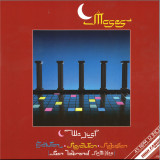
Brace yourself for a trifecta of Ben Liebrand interpretations on Moses – We Just, each one leaving an indelible imprint on this iconic Italo Disco anthem. With his deft touch, Ben infuses the track with a modern twist, showering it with his signature drums and analog wizardry. The result? A colossal sonic experience of this Romano Musumarra produced anthem, that resonates deep within your soul, paying homage to the song’s origins, its entrancing melodies, its pulsating rhythms, and above all, its sheer originality. Close your eyes and surrender to the nostalgia of bygone days, whisked away on a euphoric journey to the vibrant 80s. The ‘Our Evolution” mix, featured on the B-Side, being almost 12 minutes long! Prepare to be dazzled by the unparalleled brilliance of this outstanding Italo Disco reinvention!
Dogstar – guitarist/vocalist Bret Domrose, drummer Robert Mailhouse and bassist Keanu Reeves – epitomize the quintessential Southern California storytelling rock band they’ve always been in their hearts, making deeply resonant music that literally comes from Somewhere Between the Power Lines and Palm Trees. Nearly a quarter century after what seemed to be their final album, Happy Ending (released in 2000), Dogstar has reformed and taken a great creative leap forward, establishing an entirely new path. “Our earlier records were almost in the wrong decade,” says Robert Mailhouse. “Looking back, it’s almost like we started a Seventies band that somehow got lost in the Nineties. When everybody else was shouting, we were trying to tell stories because in Bret, we’ve always had a singer-songwriter in the Jackson Browne tradition. But people kept saying `grunge’ because of the times we were in – or maybe because of the clothes we were wearing.” “This music just sounds like us,” says Bret Domrose with a smile. “One of the things I love about this album is the variety of feel,” says Keanu Reeves. “Every song is not the same – you can hear our diverse influences and a lot of different tones here. And I feel like finally on this album, we’ve managed to take all those influences and our passion for playing together and once and for all turned it all
into Dogstar.”
Dogstar – guitarist/vocalist Bret Domrose, drummer Robert Mailhouse and bassist Keanu Reeves – epitomize the quintessential Southern California storytelling rock band they’ve always been in their hearts, making deeply resonant music that literally comes from Somewhere Between the Power Lines and Palm Trees. Nearly a quarter century after what seemed to be their final album, Happy Ending (released in 2000), Dogstar has reformed and taken a great creative leap forward, establishing an entirely new path. “Our earlier records were almost in the wrong decade,” says Robert Mailhouse. “Looking back, it’s almost like we started a Seventies band that somehow got lost in the Nineties. When everybody else was shouting, we were trying to tell stories because in Bret, we’ve always had a singer-songwriter in the Jackson Browne tradition. But people kept saying `grunge’ because of the times we were in – or maybe because of the clothes we were wearing.” “This music just sounds like us,” says Bret Domrose with a smile. “One of the things I love about this album is the variety of feel,” says Keanu Reeves. “Every song is not the same – you can hear our diverse influences and a lot of different tones here. And I feel like finally on this album, we’ve managed to take all those influences and our passion for playing together and once and for all turned it all
into Dogstar.”
From the grey-skied isles and horse farms of British Columbia comes the second volume of Crystal Dorval aka White Poppy’s “Paradise Gardens” trilogy: Sound Of Blue.
Originally conceived back in 2016, the album was then recorded, finessed, abandoned, resurrected, overdubbed, and finally mixed into nine refinements of daydream shoegaze and therapeutic pop, born from bedroom epiphanies and long winters of the heart.
From slowdive reverie (“Apathy,” “Melancholic Serenity”) and color wheel psychedelia (“Time”) to spiral chorale (“Happy”) and finger-picked drift (“Wiser”), Dorval’s songcraft moves between escape and acceptance, tracing delicate melodies from undercurrents of loss, light, and solitude. It’s music for memory gardens and pastel horizons, dreaming of bliss and distance, but bound to the here and now: “Thinking about leaving here forever / thinking about leaving here for good / but I keep holding on for something / hoping that it could get better than this / what’s one more night?”
On October 15th & 16th 2020, drummed Daniel Villarreal was joined by guitarist Jeff Parker and bassist Anna Butterss for two afternoons of recording in the backyard of Chicali Outpost in Los Angeles. For all three musicians, it was the first ensemble recording session they"d done in-person since the pandemic locked the world down just seven months prior. Some choice moments from the sessions made it onto Villarreal"s critically-acclaimed 2022 album Panamá 77, bust most of the music remained unreleased. Lados B is a deep dive into the high-level spontaneous music made by Villarreal, Parker and Butterss across those two days in 2020. Villarreal is heard leading the group through various rhythmic modes and structures for improvisation - flow as informed by the Latin soul of Fania Records as it is by the otherworldly trance of Brain Records - while Parker and Butterss draw on their extensive experience playing free together (as heard on Parker"s recently-released Mondays at the Enfield Tennis Academy, and the LA side of Makaya McCraven"s 2018 LP Universal Beings) to build harmonic buoys for their spontaneous melodicism. The result is a beautifully vivid illustration of context, creativity, and collective composition from a particularly rich moment in history.
Throughout their legendary, decade-long run, the Shadow Ring were an enigmatic force on the international musical sub-underground. Before their disbandment in 2002, this shambolic rock outfit, formed by a group of rowdy teenagers in southeast England, left behind a mighty run of eight LPs, a handful of 7"s, and a spate of raucous live shows and cryptic zine appearances on both sides of the Atlantic, all which have bolstered their enduring word-of-mouth mystique. Beginning this year with the first-ever vinyl pressing of the self-released pre-Shadow Ring tape The Cat & Bells Club (1992), Blank Forms Editions is conducting a systematic retrospective of the storied group, including a multi-year LP reissue effort and a forthcoming comprehensive CD box set and an over five hundred page book. Recorded and self-released by the group's own Dry Leaf Discs in 1993, City Lights is the debut record of the then duo Graham Lambkin and Darren Harris_an assured arrival statement teeming with stripling angst and ambition. Lifelong chums Lambkin and Harris were barely nineteen and living at home in the seaside town of Folkestone, Kent, with few overhead expenses. The two were freshly employed as a forklift operator at a hardware store and an aide at a home for children with disabilities, respectively, affording them the time and funds to commit to a proper full-length release. Frontman Lambkin describes the album as a "microscopic examination of leisure activities, this time centered around a nightclub," a conceit surging through its lyrics, song titles, cover art (depicting an audience of cats and mice at the Leas Club, a Folkestone fixture), and flip side (replete with fictional bandmates and pseudonymous liner notes). On a recently-acquired secondhand guitar, Lambkin plays repetitive, brooding licks that form the record's backbone, weaving in and out of sync with Harris's free-form percussion and the pair's sing-song poetry. Tracks range from unraveling nursery-rhyme ditties to extended jams awash with Casiotone and toy piano noodling. The duo's musical hobby-horses work themselves in: the influence of Mark E. Smith's breathless deadpan, the headless outer-edges of ESP-Disk's back catalog, the eerie atmospherics of Hirsche Nicht Aufs Sofa, and the deconstructed rock tunes of the Dunedin scene are all detectable, although there is a sui generis quality to the Shadow Ring's artless temerity. "I've got to see and taste those city lights," intones Lambkin on the album's title track_indeed, this is a record of naked drive and pent-up desperation, and a shimmering glimpse of what's to come. For Fans of The Fall, Royal Trux, The Dead C, Shirley Collins, '70s British progressive rock, Dean Blunt.
- 1: Chariots Of Pumpkins (Halloween Iii)
- 1: 269Th St. Bridge (Escape From New York)
- 1: 3The Alley (War) (Big Trouble In Little China)
- 1: 4Wake Up (They Live)
- 1: 5Julie's Dead (Assault On Precinct 3)
- 1: 6The Shape Enters Laurie's Room (Halloween Ii)
- 1: 7Season Of The Witch (Halloween Iii)
- 1: 8Love At A Distance (Prince Of Darkness)
- 1: 9The Shape Stalks Again (Halloween Ii)
- 1: 0Burn It (The Thing)
- 1: Fuchs (The Thing)
- 1: 2To Mac's Shack (The Thing)
- 1: 3Walk To The Lighthouse (The Fog)
- 1: 4Laurie's Theme (Halloween)
Blue Vinyl[24,79 €]
By now everyone should know, John Carpenter is not only a celebrated filmmaker but also a musical maestro whose soundtracks have become syn - onymous with the genres of horror, suspense, and science fiction. His innate talent for composition and his deep understanding of how music can elevate storytelling have left an indelible mark on the world of cinema, and a haunt - ing presence in people's record collections. Anthology II continues the celebration of his compositional genius via an ex - cellently sequenced collection of some of his most iconic pieces of music from his extensive filmography, all newly recorded with his musical collaborators Daniel Davies and Cody Carpenter . The compilation opens with "Chariots of Pumpkins" from Halloween III that perfectly captures the eerie essence of the cult classic film with its pulsating synths and haunting melodies. The listener is engulfed by a sense of unease and anticipation, before being thrust into "69th St. Bridge" from Escape From New York , a dynamic track that encapsulates the futuristic and gritty nature of the film via the use of throbbing bass lines, driving rhythms, and electronic textures. The record has also an isolating tone as it skulks through ambient leaning tracks such as "Fuchs" and "To Mac's Shack" from The Thing, and "Walk to the Lighthouse" from The Fog, all of which display a slower tempo, foreboding undertones and an ethereal atmosphere that feels like a distant whisper. All of which has been cautiously laid in preparation to the grand finale. The iconic and instantly recognizable "Laurie's Theme" from the original Halloween . Its simple yet menacing piano melody which has become synonymous with the horror genre, concludes the album by striking fear into the hearts of listeners. These tracks represent just a fraction of John Carpenter 's impressive musical repertoire. With each haunting note and pulsating beat, his soundtracks continue to resonate with audiences, forever etching his name in the annals of film music history.