Experimental black metal from Brooklyn featuring the conductor of the Glenn Branca Ensemble. For fans of Krallice, Mizmor, Liturgy. Also featuring member of Pyrrhon, Weeping Sores, Glorious Depravity, and Seputus. There’s a real sense of loss on Brooklyn experimental black metalists Scarcity’s debut album Aveilut, an inescapable presence of the realities of death. Multi-instrumentalist Brendon Randall-Myers (conductor of the Glenn Branca Ensemble since Branca’s passing) wrote Aveilut while processing the sudden deaths of two people close to him, tracked it while caught in Beijing’s first lockdown of 2020, and finished it while surrounded by the overwhelming plague visuals of New York’s early COVID peak. Back in Brooklyn, vocalist Doug Moore (of Pyrrhon, Weeping Sores, Glorious Depravity, and Seputus) soon found himself in the midst of an equally bleak lockdown experience—living next to a funeral home when New York City was America’s COVID epicenter. From conception through development, tangible death surrounded Aveilut. The result of such a profound closeness with death is this grief-stricken release, which takes its name from the Hebrew word for mourning. 72-note octaves, alternate tunings, psychoacoustic phenomena and macro-phrases embody the hugeness of loss, the inexplicable space of death’s void that Randall-Myers faced both on a personal and existential scale. Together with Moore’s gripping vocal delivery and stark lyrics, the album takes the form of a hyperobject, an entity with such vastness and reach that it’s difficult for the human mind to comprehend. Consisting of one 45-minute composition, the music is black metal roughly in the vein of Jute Gyte, Krallice, Mare Cognitum, and Enhare—with hefty doses of post-Branca microtonal guitar abuse, and a cinematic scope that draws on Randall-Myers’ work with orchestras. Aveilut’s mathematical abstraction and lyrical focus on the greatness of the void breed raw emotion, attempting to represent a catastrophe, the vastness and inevitability of things outside one’s control, as well as a direct expression of grief, a kind of requiem. Though born of Randall-Myers and Moore’s intense intimacy with absence, Aveilut is an attempt to present a harrowing universal representation of death’s true form. Tracklist: 1 I 2 II 3 III 4 IV 5 V
Search:dr res
Moody Blue Vinyl. RIYL: Codeine, Mazzy Star, Bedhead, Red House Painters, Low & American Music Club. Previously unreleased 16-track recordings that predates Spain’s 1995's landmark “The Blue Moods Of Spain". Includes original studio version of "World Of Blue" featuring Petra Haden on violin. Re-mixed and re-imagined by Kramer for Shimmy-Disc. The LP “World of Blue” features Merlo Podlewski on guitar. I first met Merlo in 1994. My sister Rachel Haden, who had been working with him at the Rhino Records store in Westwood, knew I was looking for a new guitarist for my band, and introduced us. Merlo is one of those guitarists whose playing is so smooth and effortless he makes anyone feel like they can play. He had an instinctual grasp of harmony and theory, which brought a great counterpoint to the technical knowledge and finesse of lead guitarist Ken. Spain played their first official L.A. gig with Merlo at a club called Pan, which shortly thereafter changed its name to Spaceland. We opened for Beck and That Dog. We played at Spaceland a lot and at other small clubs and coffee joints like the Troy Cafe (owned by Beck’s mom), Congo Square Coffee House in Santa Monica, Alligator Lounge, and others. At a certain point that year we were ready to record our first 7” single, and I reserved some time at Poop Alley. Poop Alley didn’t seem like the ideal recording setting. The walls and floors were made of concrete, and there was no soundproofing. The mixing board was in a loft up this steep staircase with no guard rails. But it worked somehow. On the particular day we recorded basics there was a rain storm which you can clearly hear in the background. The ceiling was so high there almost wasn’t a ceiling. A steep curving staircase with no guardrail led up to a loft area where the console was located, and next to it, on a custom-built, guardrail-less ledge, a queen-sized bed where Tom slept. I paid for the session with weed I grew in my closet. We set up and it started raining. Tom put a microphone outside. After tracking was finished, Petra came over and overdubbed violin. There was a cushioned area where I remember sitting during mixdown. We stayed good friends with Tom. We recorded a couple more songs with him the following year. Tom recorded lots of bands at Poop Alley. My sisters’ band That Dog, Beck, the Rentals, Rod Poole, Tom’s band Waldo the Dog Faced Boy, and many others. There were parties in the alley. There would be a keg of beer. Everyone was well-behaved. The most dangerous it got was when Kenny asked Beck if he was a Scientologist. I remember laughter and happiness the most from those parties. Not long afterwards Tom shut down the studio. Luckily for us, the tapes still exist. On those tapes are five songs, all of which are represented here. “I Lied” and “Her Used-To-Been” were released on the 7”, the remaining three have never been released before now. I can’t remember who I sent copies of the 7” to but shortly after it came out I got a call from an A&R executive at Geffen inviting me to their offices to talk. “I love your songs,” I remember him saying to me, “but my boss David Geffen won’t let me sign you because he doesn’t know how to market you.” Eventually a label that did want to sign us got in touch with me. Restless Records, they had decent distribution, so I said to myself, “Why not?”. This eventually led to the recording that produced our debut LP “Blue Moods of Spain”. Track listing: A1. Her Used-To-Been A2. Phone Machine A3. I Lied B1. Dreaming of Love B2. World of Blue
Green Marble Vinyl[26,26 €]
Now available in green marble vinyl. 'Gettin' by on Gettin' Down" is the
follow up to Sam Morrow's career-defining third record 'Concrete and
Mud', a staple of Americana radio on both sides of the Atlantic, with
outlets like Rolling Stone and NPR singing the album's praises
'Gettin' By on Gettin' Down' is a modern album that revisits and reshapes the
primordial sounds of hip- shaking rock & roll. These nine songs are rooted in
grease, grit, and groove, from the swampy soul of "Round 'N Round" to the funky
syncopation of "Rosarita" to the hook-laden rock of "Money Ain't a Thing". There's
hardly an acoustic guitar in sight; instead, amplifiers and guitar pedals rule the
roost, with everything driven forward by percussive rhythms that as much to R&B
as country music. Written and recorded in the wake of 'Concrete & Mud's'
acclaimed tour, 'Gettin' By on Gettin' Down' doubles down on the electrified fire
and fury of Sam Morrow's live shows, with a road-ready band joining him on every
song. Co- Produced with Grammy nominated producer Eric Corne. Musicians
include alumni from bands like Lucinda Williams, Dwight Yoakam, Merle Haggard,
Jacob Dylan and John Mayer. The album was recorded at The Doors' Robby
Krieger's studio.
Black Vinyl[20,97 €]
Now available in green marble vinyl. 'Gettin' by on Gettin' Down" is the
follow up to Sam Morrow's career-defining third record 'Concrete and
Mud', a staple of Americana radio on both sides of the Atlantic, with
outlets like Rolling Stone and NPR singing the album's praises
'Gettin' By on Gettin' Down' is a modern album that revisits and reshapes the
primordial sounds of hip- shaking rock & roll. These nine songs are rooted in
grease, grit, and groove, from the swampy soul of "Round 'N Round" to the funky
syncopation of "Rosarita" to the hook-laden rock of "Money Ain't a Thing". There's
hardly an acoustic guitar in sight; instead, amplifiers and guitar pedals rule the
roost, with everything driven forward by percussive rhythms that as much to R&B
as country music. Written and recorded in the wake of 'Concrete & Mud's'
acclaimed tour, 'Gettin' By on Gettin' Down' doubles down on the electrified fire
and fury of Sam Morrow's live shows, with a road-ready band joining him on every
song. Co- Produced with Grammy nominated producer Eric Corne. Musicians
include alumni from bands like Lucinda Williams, Dwight Yoakam, Merle Haggard,
Jacob Dylan and John Mayer. The album was recorded at The Doors' Robby
Krieger's studio.
Improvisation, composition, language and culture meet, merge and
influence each other
Under The Surface knows no boundaries. On their extraordinary third album, the
group reflects on their own background and finds their own "folk".After the
group's first two completely free-improvisation albums, Under The Surface (2017)
and Trinity(2019), both nominated for an Edison, the nextstep for Under The
Surface is a fully composed album: Miin Triuwa.
Under The Surface was formed in 2015 and since then the band has enjoyed a
great deal of international success. Drummer Joost Lijbaart recognised the
group's potential early on and organized more than 200 concerts in 25 countries
on 4 continents: from Africa to South America, Asia, the Middle East and Europe.
Inspired by their many travels and the cultures they encountered, the group
developed a unique improvisation language thatcombines jazz, folk, ethnic and
electronic music.
With Miin Triuwa, Under The Surface embarks on a new musical journey with
compositions by guitarist Bram Stadhouders. He wrote a suite of eightpieces in
which the characters and qualities of the band members are transcendent. The
constantly changing improvisations that are so characteristic of the band are now
captured in a powerful musical statement that showcases what the band stands
for. Instead of traveling to other worlds, in this project the group looks inward and
explores how their own roots influence their music.
Under The Surface has a common drive to find the universal essence of different
cultures. Thus, for this album the connection was made with theband's own
"forgotten" language, Old Dutch. With the help of historical linguist PeterAlexander Kerkhof and the Dutch Language Institute, Sanne Rambags carried out
research and wrote beautiful lyrics for the album in Old Dutch. This is the
language that was spoken in the Netherlands from circa 600 to 1150 CE and
sounds similar to Gaelic and Icelandic. Below is a short excerpt from Track 3,
"Fear and Trembling," from the album Miin Triuwa.
ARCHITECTS have delivered their 10th studio album; an arena-ready
opus entitled, the classic symptoms of a broken spirit , the follow up to
their 2021 breakout album For Those That Wish To Exist, which hit #1 on
the UK sales chart.Finding yourself with a UK Number One album and
selling out arenas is enough for some to repeat a winning formula
Architects however, are forever moving forward. "It was definitely validating and
felt really cool for like a day," recalls drummer, producer and songwriter Dan
Searle of hitting the top spot with For Those That Wish To Exist."For a lot of the
bucket list things you reach in any career, there's a momentary gratification then
you're like, 'What next?' You just move on. By the time the album came out, my
head was already in the mindset of 'broken spirit'. That was where I was at."
Searle notes how it was their albums Lost Forever/ Lost Together, All Our Gods
Have Abandoned Us, and Holy Hell that really "cemented what the band was
about" and "took them to a new level" as a rock powerhouse and leaders of the
UK's metalcore scene – making it all the more "daunting" to reinvent themselves
on the records that would follow. "I wanted to make this album with a different
aesthetic. We were enjoying working with the synths and doing stuff that we
hadn't done before."
As a band who never stop writing, the kernels of the songs that make up the
classic symptoms of a broken spirit were already in progress before the ink had
time to dry on the artwork of their last record. Architects were on a creative roll,
and the record was born of that creative freedom. Produced by Dan Searle and
guitarist Josh Middleton, with additional production from frontman Sam Carter at
Decon's Middle Farm Studios and their own Brighton Electric Studios before being
mixed by Zakk Cervini, the band were buoyed by finally being back in a room
together after their last album was made mostly remotely due to COVID
restrictions. The result was something altogether more "free, play - ful and
spontaneous," Searle explains.
Carter agrees: "This one feels more live, more exciting and more fun – it has that
energy. We wanted it to be a lot more industrial and electronic. That was the main
mission. They can sit side-by-side: Mr. Electronic and Mr. Organic."
One of the most distinctive recordings of the early 2000s, Jon Brion's one
and only solo album Meaningless is a master course in power popinspired art rock songwriting and production
Uniting psychedelic rock, classic songwriters, tape loop soundscapes, and
chiming folk jangle, the record offers a vivid backdrop for Brion's wry
observations on love, reality, and the elusive quality of meaning €"all that plus a
mind-bending Cheap Trick cover. More than two decades later, its emotional core
remains undiminished by year's spent in the major label wringer, both before and
after its creation. Like his work with artists including Aimee Mann, Fiona Apple,
and Elliott Smith, Brion's songs offer depth and resonance, and like his
soundtrack work on films like Magnolia, Punch Drunk Love, I Heart Huckabees,
and Eternal Sunshine of the Spotless Mind, its scope is widescreen. Remastered
and artist approved, Meaningless can finally be heard the way Brion intended.
RESTLESS SPIRITs zweites Album, "Blood of the Old Gods", wurde vom bekannten US-Metal-Blog Invisible Oranges als "eine turboaufgeladene, allumfassende Extrapolation von Sabbath-Doom mit einem fiesen Charakter und einem absoluten Monopol auf rechtschaffene Riffs in allen Tempi, Formen und Größen" gelobt. Das US-Trio wagte auf diesem Album das Experiment, eine zusammenhängende Erzählung über die 39 Minuten alles zertrümmernde Schwere zu legen. Mit dem passenden Artwork des berühmten Pulp-Malers Frank Frazetta verwebt "Blood of the Old Gods" erhabene Klanglandschaften und eindringliche Momente zu einem bleibenden Eindruck. RESTLESS SPIRIT wurden erst im Jahr 2018 gegründet, doch das Trio aus Long Island, New York hat bereits zwei Alben und vier EPs auf dem Buckel. Obwohl sie Einflüsse von BLACK SABBATH über TYPE O NEGATIVE bis hin zu THE SWORD nennen, bahnte sich die Band ihren eigenen Weg durch den Untergrund der US Metal Szene. Mit wüsten Riffs, die sich in den Ohren wurmen, fühlen sich RESTLESS SPIRIT sowohl im Stoner Metal, aber auch in Doom und Sludge wohl. Dabei tauscht das Trio die strenge Gitarren-Fuzz-Diät gegen einen sehr abwechslungsreichen, melodischen Ansatz ein. Die Band konnte mit "Blood of the Old Gods" mittlerweile mehrmals auf Tour gehen und wird im Winter 2022/23 erneut auf den Bühnen stehen. RESTLESS SPIRIT arbeiten derzeit bereits hart an ihrem dritten Album, das im Jahr 2023 weltweit über Magnetic Eye Records erscheinen soll.
Recital publish an album of lost Derek Bailey sessions recorded with his friend and collaborator Charlie Morrow. In 1982, Bailey and Morrow organized a series of live concerts and studio sessions around New York. This new LP is a boiled-down rendering of the master tapes that lived dormant in Charlie’s archive, until now.
Throughout the album, Bailey and Morrow are joined by a rotating cast of New Wilderness players including frame drum percussionist Glen Velez, sound poet Steve McCaffery, publisher and artist Carol E. Tuynman, composer Patricia Burgess, and multimedia artist Michael Snow. The results are surprising and marvelous.
The energy of the live concert, which makes up the first half of the record is particularly exciting, with Morrow and McCaffery’s visceral sound poetry and Glen’s frame drum echoing off of Derek’s fret stabs, and Carol, Patricia, and Michael’s horns swirling through the air between. A very raw and intense recording.
The second side of New York 1982, is a session recorded at The Record Plant, and is clearly more ‘produced’ with panning and tape echo processing, plus experiments with water whistles and other devices.
Derek Bailey stands out for personal achievements as a guitarist and for his way of bringing together performance meetings ranging from duos to large ensembles. Working across style and genre, his music and musical unions have inspired the breakdown of boundaries, embracing all flavors of musicians as improvisers. Players focusing on the moment, “without memory.”
LP Edition of 400 copies on 175gram black vinyl, including an 8-page booklet with program notes and artwork.
Derek Bailey - Acoustic Guitars
Charlie Morrow - Trumpet, Ocarina, Voice
Glen Velez - Percussion
Patricia Burgess - Saxophone (1,3,6)
Steve McCaffery - Voice, Saxophone (1,3)
Carol E. Tuynman - Trumpet (1,3,6)
Michael Snow - Trumpet (3)
Gondwana Records announces Horizons the debut album from Jasmine Myra, produced by Matthew Halsall, it's an elevating debut record of understated beauty
Jasmine Myra is a Leeds-based saxophonist, composer and band leader Her original instrumental music has a euphoric and uplifting sound, influenced by artists as diverse as Kenny Wheeler, Bonobo and Olafur Arnalds and like Mammal Hands and Hania Rani her music has a special, emotive quality that draws the listener into her world. Matthew Halsall first heard Myra's music in 2019 shortly before the pandemic hit, signing her to Gondwana Records and producing her beautiful debut album, Horizons.
"I was immediately drawn to Jasmine's music. I could hear jazz, electronica in her music but with a deep, honest, emotional quality. I was really impressed with her skills as a composer and bandleader, that she is open and intelligent enough to bring all those influences together, to make something fresh and original. We were also delighted to work with a young artist from the North of England. London is often seen as the place to be, but cities like Manchester and Leeds are full of creative musicians too, and that sense of local community is at the heart of our values as a label."
Myra came-up through the bustling, creative Leeds music scene and her music draws on the sense of community that permeates life in the city and which is notable for a strong DIY ethos in its musical community. She attended Leeds Conservatoire and played with the Leeds based Abstract Orchestra, a jazz big-band, led by tutor Rob Mitchell that explores the synergy between jazz and hip-hop found in the recordings of Madlib, MF Doom of J Dilla. Indeed, Myra cites MF Doom and Soweto Kinch as early influences on her own music. It was in her last year at the conservatoire that Myra started to consider leading her own group and started to really think about what her own music might sound like and her first band featured guitarist Ben Haskins and drummer George Hall who both feature on Horizons and her band draws heavily on the Leeds community featuring rising stars such as pianist Jasper Green and harpist Alice Roberts.
Myra also mentions local legend, Dave Walker, who owns an instrument repair shop called 'All Brass and Woodwind' which is right next to the music college. She worked there while studying and he introduced her to a lot of local musicians. Walker also has his own line of saxophones (played by Shabaka Hutchins, Pete Wareham and Nubya Garcia), and gifted Myra the saxophone she plays on Horizons. It was Walker who encouraged Myra to apply for Jazz North Introduces, a scheme that supports emerging jazz artists in the North of England and Myra credits her winning a place, in 2018,with helping her grow in confidence.
" It gave me the opportunity to start gigging outside of Leeds, which I was very keen to do. I was quite surprised by people's reaction to the project and the support I was being shown, which helped me gain a lot of confidence. It became clear to me very quickly that being a solo artist was what I wanted to do and it was also apparent to me that mine was one of the only female-led instrumental bands on the Leeds scene, which encouraged me even more, as I wanted my project to inspire younger female musicians".
Horizons was produced by Matthew Halsall and mixed by Portico Quartet collaborator Greg Freeman, and much of the music was written during lockdown. It was a hard time for a lot of people, and initially Myra struggled mentally, deprived of shows and the connections of making music with her band and friends, but she also realised what she wanted as an artist and the result is heard on Horizons.
"I realised that my aim was to start writing music that made people feel happy and uplifted. Writing is one of my biggest passions, but I also love performing. Playing live and seeing the audience connect with my music and have a positive experience brings me so much joy".
This sense of elevation is at the heart of Horizons, together with the feeling of a journey, of reaching new ground. Prologue and Horizons were originally composed as one piece as they encapsulate Myra's own personal development as she worked on the album - taking the listener on a journey, especially Prologue; and then Horizons is that moment of release when you've reached the end goal. 1000 Miles takes inspiration from the music of Shabaka and the Ancestors. Whereas Words Left Unspoken was written after Myra's grandmother unexpectedly passed away in June, and due to Covid restrictions she was unable to visit her before she passed and say how much she loved her. Morningtide is a nod to Kenny Wheeler, particularly the track Opening from Sweet Time Suite on Music for Large and Small Ensembles but Myra also puts her own spin on it as she also does with Promise, another track influenced by Wheeler. Awakening has a calm and euphoric quality and represents that sense of problems lifting, or of reaching the other side, and New Beginnings finishes the album with a positive vibe and a sense of moving forward from darkness
This then is Horizons. A soulful, emotional and up-lifting debut from a major new voice. A snapshot of a young artist at the beginning of her journey - drawing on jazz and electronica influences to create something fresh and new. But also a celebration of her home town Leeds, and a record built on a sense of support and community before looking out to wider Horizons.
Jamie Cullum on BBC Radio 2 "...That's Jasmine Myra and 'New Beginnings', wonderful to hear new music from a new artists i've not heard before, a great new artist!"
Tom Ravenscroft on BBC 6 Music "Leeds-based saxophonist, composer and band leader Jasmine Myra. 'New Beginnings' on Gondwana Records. Compositions drawing influence by Kenny Wheeler, Bonobo, Ólafur Arnalds. Produced by Matthew Halsall"

Keiji Haino/Jim O'rourke/Oren Ambarchi
Caught in the dilemma of being made to choose” This makes the...
- 1: A Contradiction Has Started To Devour The Numerical Sequence We May Be Made Aware That Normal??? Exists Finally
- 2: Thinking Too Deeply I Skipped Over ¯¯ Three By Three
- 5: “Caught In The Dilemma Of Being Made To Choose” This Makes The Modesty Which Should Never Been Closed Off Itself Continue To Ask Itself: “Ready Or Not?” Part 1
- 6: “Caught In The Dilemma Of Being Made To Choose” This Makes The Modesty Which Should Never Been Closed Off Itself Continue To Ask Itself: “Ready Or Not?” Part 2
- 7: Overtightened The Screw Of The Password To Mystery Drowns In An Infinite Number
The renowned trio of Keiji Haino, Jim O’Rourke and Oren Ambarchi return to Black Truffle with their 11th release, “Caught in the dilemma of being made to choose” This makes the modesty which should never been closed off itself Continue to ask itself: “Ready or not?” Demonstrating once again their commitment to continual experimentation in instrumentation and approach, the record begins with a long-distance collaboration made in response to a commission from New York’s Issue Project Room in 2021 during widespread lockdowns and travel limitations. A unique piece in the trio’s extensive body of work, this side-long epic finds Haino performing on metal percussion, O’Rourke on electronics and Ambarchi on gongs and bells. Initially dominated by rapid patterns on resonant, high-pitched tuned percussion, the piece sets Haino’s dynamic and dramatic performance against a calm backdrop of cycling electronics, thrumming gong strikes and hanging bell tones. The performance develops a heightened, intensely concentrated atmosphere reminiscent of Haino’s classic Tenshi No Ginjinka or his Nijiumu project; when Haino moves to clashing hand cymbals in its second half, the piece’s ritualistic energy suggests aspects of the music of Tibetan Buddhism.
The remainder of the double LP documents the trio live at Tokyo’s SuperDeluxe (the location of all but their very first recording) in a wide-ranging set recorded in December 2017. The concert opens, in another first for the trio, with Haino on drums, O’Rourke on Hammond organ and Ambarchi on his signature Leslie cabinet guitar tones. Haino’s explosively untutored approach to the drumkit will be familiar to some listeners from the radical duo iteration of Fushitsusha heard on Origin’s Hesitation. Setting flurries of rapid activity against moments of silence, his drumming here at times suggests Milford Graves in its tumbling toms and thudding kick-drum propulsion. Accompanied by O’Rourke’s organ and Ambarchi’s guitar, which in their shared use of long tones and shifting modulation speeds almost blend into a single voice, the opening sections of this performance are some of the most magical music the trio has committed to tape thus far.
After an interlude of spoken vocals in both Japanese and English, Haino makes a dramatic entrance on guitar. Against O’Rourke and Ambarchi’s increasingly intense electronic backdrop, Haino unleashes a stunning passage of slowly moving chromatic melodies and sudden shrieking explosions bathed in distortion and reverb. By the time we reach the third side, the guitar/bass/drums power trio is established and lurches into a passage of massive, lumbering rock that threatens to fall apart at every beat, O’Rourke’s strummed chordal work on six string bass creating a harmonic density equivalent to a second guitar. An abrupt edit throws the listener in media res into a frantic locked groove grounded by fuzzed out bass patterns and caveman drums. As Haino moves through a variety of approaches, from massive edifices of stuttering fuzz to ominous swarms of feedback, the trio eventually stumble into a kind of Harmolodic military tattoo, Haino’s guitar weaving and slashing across the rhythm section’s irregular accents. Moving through an epic opening duet for O’Rourke on Hammond and Haino’s wailing guitar, the fourth side eventually ramps up into a frenetic finale of mad bass riffing, crackling snare hits and guitar squall.“Caught in the dilemma of being made to choose” This makes the modesty which should never been closed off itself Continue to ask itself: “Ready or not?” is a testament to the continuing power and invention of this trio, who continue to seek out new terrain after over a decade working together. 2LP set presented in a lavish gatefold sleeve on heavy stock along with inner sleeves containing live pics by Tsuyoshi Kamaike. Photography by Jim O’Rourke, design by Lasse Marhaug and translation by Alan Cummings.
"Under This Hunger Moon We Fell" is the new album from the uniquely talented, multi-instrumental artificer Lomond Campbell, the third and final instalment of his experiments using tape loops at the heart of his music making process. Campbell notes that "as the album was nearing completion there was a particularly dramatic Supermoon called a Hunger Moon. Apparently it has this name because it occurs right at the end of winter, when predators are at their most lethal and desperate, and those seen as less powerful are preyed upon". These themes can be clearly heard on an album that feels cold and bleak in tandem with moments of vulnerability and tenderness. "Under This Hunger Moon We Fell" stalks from the shadows with a natural, quiet confidence before exploring more carnal heaviness and occasionally brutal displays of dramatic tension. It meditates in cycles and is at both times predator and prey, conveying the balance of these relationships with its cinematic compositions. The album ranges from soft, delicate atmospheric musings such as "Bastard Wing" and "Leave Only Love Behind" to the dark electronics of "And They Are Afraid Of Her" and "Phonon For No One", which Campbell describes as "akin to a massive machine starting up, like a huge sinister power mobilising". During its gloomier moments, "Under This Hunger Moon We Fell" buries tonally ambiguous ambience underneath hazy, distorted textures created via the gradual degradation of the tape. It creates a dream-like backdrop with a moody undertone created by deep basslines and hulking percussive elements, blended with orchestral sounds that add an air of humanity. Although his music is grounded in sound it often incorporates sculpture, engineering, product design and visual art. Using a combination of hardware hacking and industrial manufacturing techniques, Lomond builds his own unique instruments and devices for creating sound which he combines with modular synths, piano and voice. The album also sees Campbell"s vocal debut on "For The Uncarved", having originally written the part for a friend. "I was supposed to be recording her album in my studio The Lengths, but she was struck down with Covid so the session was scrapped. It felt like the album needed some kind of human element so I resorted to singing the part myself". "Under This Hunger Moon We Fell" concludes a trio of albums using tape loops, which was kickstarted with an email from Lomond"s long-time friend and collaborator King Creosote. He was looking for a custom tape looping machine so Lomond set about designing and building a unique music machine, inspired by Reich and Basinski, that plays 10 second tape loops which disintegrate over time as they pass near a rotating magnetic disc. Campbell built and then tested the machine by recording a series of improvisations with it which became LUP, the first album in the trilogy.
On the eponymously titled final song of her debut album Land of No Junction, Irish songwriter Aoife Nessa Frances (pronounced Ee-fa) sings “Take me to the land of no junction/Before it fades away/Where the roads can never cross/But go their own way.” It is this search that lies at the heart of the album, recalling journeys towards an ever shifting centre - a centre that cannot hold - where maps are constantly being rewritten.
The evocative phrase is the result of a fortuitous misunderstanding. Reminiscing about childhood visits to Wales, Aoife’s musical collaborator and co-producer Cian Nugent, mentioned a train station called Llandudno Junction, which she misheard. “Land of No Junction later became a place in itself. A liminal space - a dark vast landscape to visit in dreams… A place of waiting where I could sit with uncertainty and accept it. Rejecting the distinct and welcoming the uncertain and the unknown.” Reveals Frances.
The songs traverse and inhabit this indeterminate landscape: the beginnings of love, moments of loss, discovery, fragility and strength, all intermingle and interact. Land of No Junction is shot through with a sense of mystery - an ambiguity and disorientation that illuminates with smokey luminescence. Yet, through the haze, everything comes down to what, where and who you are. Frances has built a universe full of intimacy and depth, with lyrics written through a process of free thought writing. It lends the record fluidity, each song in dialogue with the next not only through language, but the way each musical choice complements or threads into another.
Navigated by the richness of Aoife’s voice, along with the layers gently built through her collaborators’ instruments (strings, drums, guitars, keys, percussion), gives a feeling of filling up space into every corner and crack. A remarkable coherent sonic world: buoyant and aqueous, with dark undercurrents. The crossroads as a place where someone can be stuck, static in the face of the future, becomes instead an amorphous realm, where the remnants of the past and what is unknown meld together and come to an understanding. Where nostalgia and newness ebb and flow in equal measure.
- A1: Go! (Opening)
- A2: Red Drugs
- A3: Z Names
- A4: Entering The Bank (With Romance Remix By Jimmy Crash)
- A5: Clarinets
- A6: Safe Heroin (Disco 2000 Remix By Dj Keoki)
- B1: The Assembler (Words By Stephanie Rubin)
- B2: Gold
- B3: But You Must (Brothers In Rhythm Remix By Rhythm Method)
- B4: Ambient Dixie
- B5: Canaan
- B6: Flying Home (Music And Lyrics By Robin O’brien)
Flaming Vinyl[36,09 €]
• DELUXE HEAVYWEIGHT SLEEVE WITH SPOT-VARNISH AND ALTERNATIVE ARTWORK
• INCLUDING INSERT WITH LINER NOTES
• PVC PROTECTIVE SLEEVE
• 1994 BANK HEIST MOVIE PRODUCED BY ROGER AVARY & QUENTIN TARANTINO
• SCORE BY TOMANDANDY (THE HILLS HAVE EYES, THE STRANGERS)
• AVAILABLE ON VINYL FOR THE FIRST TIME
Killing Zoe is a 1994 crime / bank heist film written, directed and produced by Roger Avary and co-produced by Quentin Tarantino. Killing Zoe follows the story of a safe cracker named Zed who returns to France to aid an old friend in performing a doomed bank heist. The film was labeled by acclaimed film critic Roger Ebert as “Generation X’s first bank caper movie”. After the production of Killing Zoe, Avary and Tarantino continued their collaboration and produced both the iconic award winning movie Pulp Fiction and several radio dialogues in Reservoir Dogs.
The score to Killing Zoe was produced by Tomandandy, aka Thomas Hajdu and Andy Milburn. This duo is best known for their horror scores like The Hills Have Eyes and The Strangers amongst others and many collaborations with great artists such as Lou Reed, David Byrne, U2 and Laurie Anderson.
Killing Zoe is available on vinyl for the first time as a limited edition of 2000 individually numbered copies on flaming coloured vinyl and includes an insert with liner notes.
Vargmal Records is an independent record label and multidisciplinary platform founded by Gent Gjonbalaj. Operating from Prishtina, Kosovo, the imprint publishes hypnotic compositions of various forms, exploring the realms of electronic music and beyond. The label's debut release marks the birth of an initiative started several years ago, reflecting on a process of growth, research and refinement.
Conceived as a foundation record, the 'Classics' EP demonstrates Vargmal's concept and overall spirit. The Italian pioneer Leo Anibaldi inaugurates the label featuring two cuts on the A-side, originally produced in the early 1990s--'Muta 5' and an as yet unheard version of 'Endurance 4'--replete with Anibaldi's signature sound programming and high-octane output. On the flip, the torch is passed to another Italian master, Donato Dozzy, who takes them to another level with his peculiar and precise remix treatment. Where Anibaldi paves the way for a possible future, Dozzy applies a modern touch to the same fundamental approach--a balancing act that shows a spectrum within the conceptual framework from two different points in the continuum, transcending any individual style or place in time.
Selected by their ability to extract the full potentiality of the sound, the tracks on this release reflect a minimalist approach that is inherently resourceful and discerning, whilst maximizing effect and impact. The efficiency of the sound can be heard in the stripped-back elements, practical arrangement and execution of the creative idea. 'Muta 5' opens the EP, a throbbing mass of pressure cooker action, continuously building tension with rippling percussion lines and syncopated beats. Ahead of its time in 1993, 'Muta 5' has a raw, driving energy and commanding authority. Dozzy reworks it into a tighter, linear forma--whilst retaining the angst of the original, he applies new synth motifs and notches the speed down for extra poise. 'Endurance 4' (Version II) is a tribal workout with hallmarks of the classic Italian deep techno sound. With arching drones, chugging rhythms and dramatic narratives, 'Endurance 4' presents an idiosyncratic style and emotive character which later became the model for this sound. Dozzy's hypnotic faculty shines through on the remix, a polished re-run that elaborates on the ominous melodic theme, and lifts the sound majestically to a gliding altitude--marking the end of this record and the beginning of Vargmal's journey.
crystal clear vinyl / limited
Vargmal Records is an independent record label and multidisciplinary platform founded by Gent Gjonbalaj. Operating from Prishtina, Kosovo, the imprint publishes hypnotic compositions of various forms, exploring the realms of electronic music and beyond. The label's debut release marks the birth of an initiative started several years ago, reflecting on a process of growth, research and refinement.
Conceived as a foundation record, the 'Classics' EP demonstrates Vargmal's concept and overall spirit. The Italian pioneer Leo Anibaldi inaugurates the label featuring two cuts on the A-side, originally produced in the early 1990s--'Muta 5' and an as yet unheard version of 'Endurance 4'--replete with Anibaldi's signature sound programming and high-octane output. On the flip, the torch is passed to another Italian master, Donato Dozzy, who takes them to another level with his peculiar and precise remix treatment. Where Anibaldi paves the way for a possible future, Dozzy applies a modern touch to the same fundamental approach--a balancing act that shows a spectrum within the conceptual framework from two different points in the continuum, transcending any individual style or place in time.
Selected by their ability to extract the full potentiality of the sound, the tracks on this release reflect a minimalist approach that is inherently resourceful and discerning, whilst maximizing effect and impact. The efficiency of the sound can be heard in the stripped-back elements, practical arrangement and execution of the creative idea. 'Muta 5' opens the EP, a throbbing mass of pressure cooker action, continuously building tension with rippling percussion lines and syncopated beats. Ahead of its time in 1993, 'Muta 5' has a raw, driving energy and commanding authority. Dozzy reworks it into a tighter, linear forma--whilst retaining the angst of the original, he applies new synth motifs and notches the speed down for extra poise. 'Endurance 4' (Version II) is a tribal workout with hallmarks of the classic Italian deep techno sound. With arching drones, chugging rhythms and dramatic narratives, 'Endurance 4' presents an idiosyncratic style and emotive character which later became the model for this sound. Dozzy's hypnotic faculty shines through on the remix, a polished re-run that elaborates on the ominous melodic theme, and lifts the sound majestically to a gliding altitude--marking the end of this record and the beginning of Vargmal's journey.
"The LP "World of Blue" features Merlo Podlewski on guitar. I first met Merlo in 1994. My sister Rachel Haden, who had been working with him at the Rhino Records store in Westwood, knew I was looking for a new guitarist for my band, and introduced us. Merlo is one of those guitarists whose playing is so smooth and effortless he makes anyone feel like they can play. He had an instinctual grasp of harmony and theory, which brought a great counterpoint to the technical knowledge and finesse of lead guitarist Ken. At a certain point that year we were ready to record our first 7" single, and I reserved some time at Poop Alley. Tom Grimley converted an auto-repair shop into Poop Alley Studio. The walls and floors were made of concrete, and there was no soundproofing. The mixing board was in a loft up this steep staircase with no guard rails. But it worked somehow. On the particular day we recorded basics there was a rain storm which you can clearly hear in the background. We set up and it started raining. Tom put a microphone outside. After tracking was finished, Petra came over and overdubbed violin. There was a cushioned area where I remember sitting during mixdown. There were little stacks of Aphex 16-track tape everywhere. We stayed good friends with Tom. We recorded a couple more songs with him the following year. Luckily for us, the tapes still exist. On those tapes are five songs, all of which are represented here. "I Lied" and "Her Used-To-Been" were released on the 7", the remaining three have never been released before now." - Josh Haden
Well known as the Deep’a half of Deep’a & Biri, and a huge influential source of energy and innovation in Tel Aviv’s house and techno community, Yaron Amor goes solo for the very first time with an incredibly personal project. Introducing Zeena…
“The decision about the solo project was made during a visit to Morocco, in the main city square of Marrakesh I came across an improvised jam of 20 drummers from all over the country, the crazy rhythms they played together spontaneously amazed me and made me realize that the perfect beat I've been looking for, for so many years, was under my nose. In Arabic and Moroccan music that was constantly played in the house where I grew up…”
Home is where the soul is… Zeena translates to beauty in Moroccan and this label exists wholly to celebrate and push cutting edge Arab electronic music. It starts here with Yaron’s first solo EP. The result of an inspired creative series of recordings with drummers and musicians from Israel, Algiers, Morocco, and Berlin, across three tracks we’re taken on a beautiful excursion of emotions, tension and introspective places.
“I tried to merge together influences from the world of techno which I have been active in for almost 20 years along with the rhythms of Arabic music while paying respect to each of the genres.”
From the tension and powerful emotion of ‘The Pain Body’ (a mesmerising kick-less tableaux that would work perfectly for an intro or mid-set game-changer) to the powerful synth-laced Detroitian drive and thump of title track ‘Zeena’ via the wild rolling toms of ‘Omipresence’, this is Yaron Amor as we’ve never heard him before… Raw, honest, direct and totally at home. The middle east has played a huge role in so many inspirations, influences and sample sources since the very start of electronic music. Now its time to bring that to the fore and celebrate it on a whole new level. Zeena is that level. Stay tuned…
- A1: Dome
- A2: Glass Acc
- A3: Bläser
- A4: Zither
- A5: Audiolab
- A6: Grm
- A7: Ziegenmelker
- A8: Faust
- A9: Karelia Suite
- A10: Silver Bowl (Bohlen/Pierce)
- A11: Gong Gran
- A12: Clickey
- A13: Loop Voix Gran
- A14: Stadtpfarrkirche
- A15: Liquid Plate (17-Tet)
- A16: Gilbert Plasma
- B1: Jeph
- B2: Singing Stone K-Board (Pythagorean)
- B3: Underground Records
- B4: Morgenmelodie
- B5: Var Soundscapes
- B6: Arctic Winds
- B7: Blue
- B8: Happy Metal
- B9: Travelizer 2
- B10: One Man Crowd
- B11: V_Room 2
- B12: Kontour
- B13: Zymbol
Magazine is glad to announce the album Waves 3 by Curd Duca,
the third and last part of the trilogy Waves: Austrian electronic composer Curd Duca is widely known for his 1990es series of critically acclaimed easy listening 1-5 (Normal) and elevator 1-3 (Mille Plateaux).
After a long break from the studio, Duca has issued part 1 of the Waves series in late 2020 on Magazine. This was in fact his first album in 20 years. The Waves recordings pick up the thread of his 90s work and open up a new chapter. Again, everything is shifting constantly and all tracks are quite different (soft, rough, melodic, abstract ... ), but complement each other in a surprisingly coherent way to form an idiosyncratic universe.
While other experimental artists can sound as if they're attempting to lift lead weights over their heads, Duca is content flicking feathers into their faces. After his impressive 1990s/00s run on Normal and Mille Plateaux, Curd Duca had disappeared for 20 years before emerging from the aether last year.
The albums of the new "Waves" Trilogy represent a flawless examination of sound and texture. The Vienna-based producer still straddles high and low culture, but approaches his sonics with a more historically aware ear. So plain and resonant gong recordings are placed next to pop music loops and DSP-fractured cut-ups, and icy electronic jams nudge up against cassette warped instrumental sketches.
Waves 3 is a continuation and culmination of the series. In the final chapter, we’re drawn in with church bells on dome, but quickly transported to another era entirely with the crackly bläser and absurd zither, a tongue-in-cheek plunderphonic experiment assembled from zither samples. Duca follows this evocative run of tracks with a machine-gun blast of experimental sound, from the percussive 500 GRM to the ferric ASMR birdsong of ziegenmelker.
This is Duca at his most uncompromising, grabbing central European culture and dragging it through his array of processes. Playing the album from beginning to end opens up a weightless cut-and-paste mixtape, stitched together with expert foresight and a knowing wink to camera.
Like the best psychedelic experiences, memories are triggered and turned inside-out, and knowledge is allowed to blossom. Curd Duca has been refining his process for three decades now, and few artists have quite the same ability to challenge, provoke, and inspire.
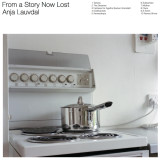
Produced by Laurel Halo and released via Norway's respected Smalltown Supersound label, Anja Lauvdal's first solo release, From a Story Now Lost, is a gorgeous musical essay reflecting on time, its perception, and lost histories rediscovered. Finally exploring her own voice after more than a decade of collaborative improvisational playing - starting at her time in jazz conservatory in Trondheim - the album is a jewel of subtle beauty and innovative detail. A freeform musician on piano, synthesizers, and electronics, Lauvdal's discography stretches back to 2013 and includes her participation in a myriad of ensembles and collaborations exploring the limits of sound and music in many forms, including noise, jazz, and more. Following her move to Oslo after graduation, she became deeply embedded in the music community there, touring with Jenny Hval as well as playing on her records. When pandemic hit and isolation was the norm, Lauvdal began working on her own, recording her improvisations in an attempt to capture something new for herself. Connecting to Laurel Halo via Smalltown's founder Joakim Haugland, the acclaimed American artist agreed to work with Lauvdal in shaping her solo record, becoming integral to its creation through all of its stages. Lauvdal credits Halo as a deep listener and gentle "thought-provoker", who contributed ideas as well as helping to shape the finished versions (Halo also worked alongside Rashad Becker on the final mix of the album). Together, they found a method of recording Lauvdal's improvisations, making small loops from those, feeding them back into the synthesizers, and making synthesizers out of the improvisations, which Lauvdal would then re-improvise with. She describes the end result, "like seeing different pieces of time around in the universe." While the record is based on Lauvdal's improvisations, some tracks were inspired Agathe Backer Grondahl, a Norwegian classical pianist and composer from the latter half of the 19th century. Lauvdal notes that Grondahl is not widely known, although her best friend Edvard Grieg is still considered Norway's most famous composer. Yet now, partly through Lauvdal, her story resurfaces and persists. "From a Story Now Lost means the story is still there," Lauvdal explains. "It hasn't gone anywhere even though nobody heard it, or maybe you're hearing it for the first time. And actually it was told a long time ago - maybe you weren't ready to hear that story at the time." This hints at the limitless nature of her music, as well as its new emotional texture. Direct in its vulnerability, immediate in its tenderness, From a Story Now Lost is a sophisticated evocation over restrained artistry spilling over with meaning.